Preparation is the key to success in any interview. In this post, we’ll explore crucial Understanding of electrical safety practices interview questions and equip you with strategies to craft impactful answers. Whether you’re a beginner or a pro, these tips will elevate your preparation.
Questions Asked in Understanding of electrical safety practices Interview
Q 1. What are the main hazards associated with working with electricity?
Working with electricity presents several significant hazards, primarily stemming from the potential for electric shock, burns, and fires. Electric shock occurs when a current passes through the body, potentially causing muscle contractions, organ damage, or even cardiac arrest. The severity depends on factors like the current’s magnitude, duration, and path through the body. Burns can result from contact with energized conductors or from arc flashes (explained further in question 5). Fires are a major concern because many electrical systems rely on combustible materials. Even a small spark can ignite flammable materials, leading to extensive damage and potential injury.
- Electric Shock: Imagine a jolt from a static electricity discharge – that’s a minor version. High voltage shocks can be lethal.
- Electrical Burns: These can be internal, from the current itself, or external, from the heat generated.
- Fires: Overloaded circuits, faulty wiring, and damaged insulation can easily start fires.
Q 2. Explain the difference between AC and DC electricity.
AC (Alternating Current) and DC (Direct Current) are the two fundamental types of electrical current. The key difference lies in the direction of electron flow. In DC, electrons flow consistently in one direction, like water flowing down a river. This is what you find in batteries. AC, on the other hand, periodically reverses its direction, flowing back and forth, like a wave. This cyclical nature is what allows for efficient long-distance transmission of power through transformers.
- DC (Direct Current): Constant voltage and current; used in batteries, some electronics.
- AC (Alternating Current): Voltage and current periodically change direction; used in power grids, homes, and most appliances.
Think of it like this: DC is like a steady stream, while AC is more like a pulsating wave.
Q 3. Describe the types of personal protective equipment (PPE) used in electrical safety.
Personal Protective Equipment (PPE) is crucial for electrical safety. The specific PPE needed depends on the task and voltage level. Common items include:
- Insulated gloves: These gloves are designed to prevent electrical current from reaching the wearer’s hands. They are rated for specific voltage levels.
- Insulated tools: Tools with insulated handles are essential to prevent shock when working with energized equipment.
- Arc flash suits: These specialized suits offer significant protection from the thermal energy released during arc flashes. They are often required for high-voltage work.
- Safety glasses or face shields: Protect eyes from flying debris or arc flash.
- Safety footwear: Insulated boots help prevent electrical shocks from ground faults.
- Hard hats: Protect the head from falling objects.
Remember: PPE alone is not sufficient; proper training and safe work practices are equally vital.
Q 4. What is lockout/tagout (LOTO) and how is it applied?
Lockout/Tagout (LOTO) is a safety procedure used to prevent accidental energization of equipment during maintenance or repair. It involves physically locking out the power source and affixing a tag to clearly indicate that the equipment is out of service and should not be operated. This ensures that the equipment is de-energized and workers are protected from electrical hazards.
Applying LOTO:
- Preparation: Identify the equipment to be serviced. Understand its power sources (main circuit breaker, etc.).
- Notification: Inform relevant personnel of the lockout/tagout procedure.
- Lockout: Use a lock to secure the power source’s switch or breaker. Each person involved should attach their own lock.
- Tagout: Clearly label the lockout device with a tag indicating the worker’s name, date, and reason for lockout.
- Verification: Verify that the equipment is de-energized using a voltage tester.
- Work Performance: Perform the maintenance or repair.
- Removal: Only the person who applied the lockout can remove their lock. This ensures everyone is accounted for.
LOTO is a critical step in maintaining safety and preventing accidents. It’s about more than just switching off the power; it’s about ensuring that power cannot be restored accidentally during work.
Q 5. Explain the concept of arc flash and its potential dangers.
An arc flash is a sudden, high-intensity electric arc that occurs when a short circuit takes place. It releases tremendous amounts of energy in the form of heat, light, and pressure, posing significant dangers to workers. The intense heat can cause severe burns, even through clothing; the bright light can cause eye damage; and the pressure wave can throw objects around, causing further injury.
Potential Dangers:
- Severe burns: The heat generated can cause third-degree burns in a fraction of a second.
- Eye injuries: The intense light can permanently damage eyesight.
- Hearing loss: The explosion can be deafening.
- Death: In extreme cases, arc flash injuries can be fatal.
Arc flash hazard analysis is crucial to determine appropriate safety measures, including PPE selection and work procedures.
Q 6. How do you determine the appropriate voltage rating for PPE?
The appropriate voltage rating for PPE is determined by the maximum voltage expected to be encountered during the task. This isn’t simply the nominal voltage of the system; it must consider potential transient voltages (surges) and other factors. PPE must always have a voltage rating that exceeds the maximum expected voltage. This information is usually found on the PPE itself. For instance, gloves rated for 1000V would not be suitable for work on a 10,000V system.
Determining the Rating:
- Voltage Survey: Conduct a thorough voltage survey to determine the highest potential voltage at the work location.
- Arc Flash Study: For high-voltage work, a professional arc flash study may be necessary to determine the incident energy level.
- PPE Selection: Choose PPE with a voltage rating significantly higher than the maximum voltage, considering the safety factor.
Never compromise on safety by using PPE with an inadequate voltage rating.
Q 7. What are the safety regulations governing electrical work in your area?
Specific safety regulations governing electrical work vary by location (country, state, province). However, common themes include adherence to national electrical codes (like the National Electrical Code – NEC in the US or similar standards elsewhere), worker training requirements, and the use of LOTO procedures. These regulations often mandate safety inspections, record-keeping, and permits for high-voltage work. Specific regulations might include:
- Licensing and Certification: Electricians often need licenses to perform certain types of work.
- Safety Training: Regular training on safe practices, including hazard recognition and PPE use, is frequently required.
- Permit-Required Work: High-voltage work typically requires a permit system to control access and ensure safety.
- Reporting Requirements: Incidents and near misses must be reported.
It’s crucial to stay informed about the specific regulations in your area and to always prioritize safety when working with electricity. Consult relevant codes and your local authority for complete information.
Q 8. Describe different types of electrical grounding techniques.
Electrical grounding is crucial for safety; it provides a low-resistance path for fault currents to flow, preventing dangerous voltage buildup on equipment and protecting people from electric shock. There are several grounding techniques:
- System Grounding: This connects the electrical system’s neutral point to the earth. Think of it as a safety valve for the entire system. A common example is the grounding of a building’s electrical service panel. This prevents voltage surges from reaching dangerous levels.
- Equipment Grounding: This connects the non-current-carrying metal parts of equipment to the earth. Imagine a metal appliance casing – if a fault occurs, the ground wire provides a path for the current to safely flow to earth, rather than shocking someone who touches the casing. This is usually done via a three-prong plug and corresponding outlet.
- Grounding Electrodes: These are conductive rods or plates driven into the earth to provide a connection to the ground. They are essential for grounding systems and equipment. The type of electrode (copper-clad steel rod, for instance) and its placement will depend on soil conditions and local codes.
Proper grounding is not just about preventing shocks; it also reduces the risk of electrical fires by diverting fault currents away from flammable materials.
Q 9. How do you identify and mitigate electrical hazards on a work site?
Identifying and mitigating electrical hazards requires a systematic approach. Start with a thorough site survey, visually inspecting all wiring, equipment, and electrical panels for damage, exposed wires, overloaded circuits, and improper grounding. Look for signs of overheating, such as discoloration or burning smells. Here’s a breakdown:
- Visual Inspection: Carefully examine all electrical equipment and wiring for any signs of damage or wear.
- Testing: Use appropriate testing equipment like multimeters to check for voltage, continuity, and ground faults.
- Lockout/Tagout Procedures: Before any work is done on electrical equipment, always follow established lockout/tagout procedures to prevent accidental energization.
- Personal Protective Equipment (PPE): Ensure workers use appropriate PPE, including insulated gloves, safety glasses, and arc-flash protective clothing where necessary.
- Environmental Factors: Consider environmental factors like moisture, which can increase the risk of electric shock. Work in dry conditions as much as possible or use appropriate safety measures if working in damp areas.
Mitigation involves addressing identified hazards, including repairing or replacing damaged equipment, implementing proper grounding, and ensuring that all work is carried out according to safety regulations and codes.
Q 10. What is the purpose of a Ground Fault Circuit Interrupter (GFCI)?
A Ground Fault Circuit Interrupter (GFCI) is a life-saving device designed to protect people from electric shock. It works by continuously monitoring the current flowing in a circuit. If even a small imbalance is detected – indicating current is leaking to ground – the GFCI rapidly interrupts the power supply, preventing a potentially fatal shock.
Imagine a scenario where someone accidentally touches a faulty appliance with a live wire. A standard circuit breaker wouldn’t necessarily trip, as the current might be too low. But a GFCI will detect that current escaping to ground and immediately cut the power, minimizing the risk of electrocution. GFCIs are particularly crucial in areas with moisture, such as bathrooms, kitchens, and outdoor outlets.
Q 11. Explain the importance of electrical safety training.
Electrical safety training is paramount to prevent accidents, injuries, and fatalities. It equips workers with the knowledge and skills to safely handle electrical equipment and work in electrically hazardous environments. Training should cover topics like:
- Hazard identification and risk assessment: Learning to spot potential dangers and understanding the risks associated with electrical work.
- Lockout/Tagout procedures: Safe de-energization of electrical equipment before maintenance or repair.
- Safe work practices: Following established procedures for working with electricity.
- Use of personal protective equipment (PPE): Understanding and properly using safety gear such as insulated gloves and safety glasses.
- Emergency response procedures: Knowing what to do in case of an electrical shock or fire.
Regular refresher courses are necessary to keep knowledge current and skills sharp.
Q 12. How do you conduct a pre-job safety briefing for electrical work?
A pre-job safety briefing for electrical work is essential. It should be conducted before any work begins and attended by all personnel involved. The briefing should cover:
- Task-specific hazards: Identifying potential hazards related to the specific task being performed.
- Control measures: Explaining the safety procedures and precautions that will be taken to mitigate the identified hazards.
- Emergency procedures: Reviewing emergency response procedures, including how to respond to electric shock, fire, or other emergencies.
- PPE requirements: Ensuring everyone understands and is using the correct PPE.
- Communication protocols: Establishing clear communication lines among the workers.
- Permit-to-work systems (if applicable): Reviewing the details of the permit-to-work system and ensuring all necessary documentation is complete.
It’s important to keep the briefing concise, clear, and engaging, ensuring everyone understands the safety procedures and is committed to working safely.
Q 13. What are the different classes of electrical fires and how are they extinguished?
Electrical fires are classified based on the type of material burning. Understanding the class helps determine the appropriate extinguishing agent:
- Class C Fires: These involve energized electrical equipment. Never use water on a Class C fire; it can conduct electricity and cause further hazards. Instead, use a non-conductive extinguishing agent like a carbon dioxide (CO2) extinguisher or a dry chemical extinguisher (ABC type).
- Class A Fires: These involve ordinary combustible materials like wood, paper, and cloth. Water is typically effective for Class A fires.
- Class B Fires: These involve flammable liquids like gasoline or oil. CO2, dry chemical, or foam extinguishers are used for Class B fires.
Always de-energize the electrical equipment before attempting to extinguish a Class C fire, if possible and safe to do so. Prioritize personal safety; if unsure about handling the situation, evacuate and call emergency services.
Q 14. Describe the procedures for responding to an electrical shock incident.
Responding to an electrical shock incident requires immediate and decisive action. The steps are:
- Break the Contact: First and foremost, quickly and safely break the contact between the victim and the source of electricity. Use a non-conductive material like a dry wooden stick or a plastic tool to push the victim away from the source. Never use your bare hands!
- Check for Responsiveness: Once the victim is clear of the electrical source, check for responsiveness. If unconscious, check for breathing and pulse.
- Call Emergency Services: Immediately call emergency medical services (911 or your local emergency number).
- CPR (if needed): If the victim is not breathing or has no pulse, begin CPR if you are trained to do so. Continue CPR until emergency medical personnel arrive.
- Post-Incident Care: Even after the immediate emergency is over, ensure the victim receives appropriate medical attention. Electrical shock can have long-term consequences, so medical follow-up is critical.
Remember, swift action is key in these situations. Proper training on first aid and CPR is highly recommended for anyone working with electricity.
Q 15. Explain the significance of electrical safety codes and standards (e.g., NEC, OSHA).
Electrical safety codes and standards, such as the National Electrical Code (NEC) in the US and Occupational Safety and Health Administration (OSHA) regulations, are crucial for preventing electrical hazards. They provide a minimum set of rules and guidelines for the design, installation, operation, and maintenance of electrical systems and equipment. Think of them as the rulebook for safe electricity. These codes aren’t just suggestions; they are legally binding in many jurisdictions and are vital for protecting workers, the public, and property from electrical shock, fires, and other potential dangers.
The NEC, for instance, details requirements for wiring methods, overcurrent protection devices (like circuit breakers and fuses), grounding, and equipment installation. OSHA, on the other hand, focuses on the workplace, outlining employer responsibilities for providing a safe electrical environment and employee training. Non-compliance can lead to hefty fines, legal repercussions, and, most importantly, serious injury or death.
- NEC: Sets technical requirements for electrical installations.
- OSHA: Enforces workplace safety regulations, including those related to electricity.
By following these codes, we ensure electrical systems are designed and maintained to minimize risks. This proactive approach is far more effective and cost-efficient than reacting to accidents after they occur.
Career Expert Tips:
- Ace those interviews! Prepare effectively by reviewing the Top 50 Most Common Interview Questions on ResumeGemini.
- Navigate your job search with confidence! Explore a wide range of Career Tips on ResumeGemini. Learn about common challenges and recommendations to overcome them.
- Craft the perfect resume! Master the Art of Resume Writing with ResumeGemini’s guide. Showcase your unique qualifications and achievements effectively.
- Don’t miss out on holiday savings! Build your dream resume with ResumeGemini’s ATS optimized templates.
Q 16. What are the common causes of electrical accidents?
Electrical accidents stem from various causes, often a combination of factors. Negligence and improper practices are major contributors. Here are some common culprits:
- Improper grounding: This is a significant risk, as it can lead to electric shock if a fault occurs. Imagine a faulty appliance; without proper grounding, the metal casing could become energized.
- Overloaded circuits: Plugging too many devices into a single circuit can cause overheating and potentially start a fire. This is like trying to squeeze too much water into a small glass – it overflows.
- Damaged insulation: Worn or frayed wiring is a common cause of short circuits and shocks. Think of insulation as a protective layer; if it’s damaged, the ‘live’ wires are exposed.
- Lack of lockout/tagout procedures: Failure to properly de-energize equipment before maintenance can result in fatal electrocution. This is critical for preventing accidental energization during servicing.
- Improper use of extension cords: Overloading or using damaged extension cords can create fire hazards and shock risks. It’s like overloading a bridge—eventually, it will collapse.
- Working on energized circuits without proper training or PPE: This is incredibly dangerous and can lead to severe injury or death. Never compromise safety when working with electricity.
Understanding these common causes is the first step towards preventing accidents. Regular inspections, proper maintenance, and thorough training are essential to mitigate these risks.
Q 17. What is the role of an electrical safety officer?
An Electrical Safety Officer (ESO) plays a vital role in ensuring a safe electrical environment. Their responsibilities are multifaceted and crucial for preventing accidents and ensuring compliance with safety codes.
- Inspections and Audits: ESO’s regularly inspect electrical systems, equipment, and work practices to identify potential hazards.
- Training and Education: They provide training to employees on safe electrical practices, lockout/tagout procedures, and emergency response.
- Enforcement of Safety Rules: ESO’s ensure that safety rules and regulations are followed and that corrective actions are taken when violations are found.
- Incident Investigation: In the event of an electrical accident, the ESO investigates the cause to prevent future incidents.
- Developing and Maintaining Safety Programs: They develop and implement comprehensive electrical safety programs, including risk assessments and emergency plans.
- Record Keeping and Documentation: They meticulously maintain records of inspections, training, and incidents.
Essentially, the ESO acts as the guardian of electrical safety within an organization, proactively identifying and mitigating risks to protect people and property. Their expertise is critical in high-risk environments.
Q 18. Describe the process of testing electrical equipment for safety.
Testing electrical equipment for safety is a crucial process that involves several steps. The specific tests depend on the type of equipment, but common methods include:
- Visual Inspection: A thorough visual check for damaged insulation, loose connections, and any signs of wear and tear.
- Insulation Resistance Test: Measures the insulation’s ability to resist current leakage. A low resistance indicates potential hazards.
- Grounding Continuity Test: Checks the effectiveness of the grounding system, ensuring that fault currents can safely flow to earth.
- Polarity Test: Verifies the correct connection of live wires (hot and neutral).
- High-Potential Test: Applies a high voltage to check for insulation breakdown in high-voltage equipment.
- Leakage Current Test: Measures small currents that might leak through insulation, indicating a potential shock risk.
These tests are performed using specialized instruments like multimeters, insulation resistance testers, and high-potential testers. Calibration and proper technique are essential to ensure accurate and reliable results. Results should be documented and compared against safety standards. Think of these tests as a comprehensive health check for your electrical equipment.
Q 19. How do you interpret electrical schematics and diagrams?
Interpreting electrical schematics and diagrams requires understanding the symbols and conventions used. These diagrams provide a visual representation of the electrical system’s layout, components, and connections. Think of them as blueprints for electrical systems.
Key elements to understand include:
- Symbols: Each component (switch, resistor, capacitor, etc.) is represented by a unique symbol.
- Lines: Lines represent the wires connecting components, indicating the flow of current.
- Reference Designators: Letters and numbers used to identify individual components for easy referencing.
- Voltage and Current Values: These values are often indicated on the diagram.
To effectively interpret a schematic, start by identifying the main components and their connections. Trace the flow of current through the circuit to understand its operation. Practice and familiarity are key to mastering schematic reading. Many online resources and textbooks offer detailed explanations of electrical symbols and conventions.
Q 20. Explain the concept of voltage, current, and resistance.
Voltage, current, and resistance are fundamental concepts in electricity, related by Ohm’s Law (V = IR).
- Voltage (V): The electrical potential difference between two points in a circuit. It’s the ‘push’ that drives the current. Think of it like water pressure in a pipe; higher pressure means more forceful flow.
- Current (I): The flow of electric charge (electrons) through a circuit. It’s measured in amperes (amps). Think of it like the rate of water flow in the pipe.
- Resistance (R): The opposition to the flow of current. It’s measured in ohms (Ω). Think of it like the friction in the pipe; more friction means less flow.
Ohm’s Law (V = IR) states that voltage is directly proportional to current and resistance. If voltage increases, current increases (assuming resistance remains constant). If resistance increases, current decreases (assuming voltage remains constant).
Understanding these concepts is crucial for electrical safety. High voltage can lead to severe shocks, while high current can cause overheating and fires. Resistance helps control the flow of current, preventing damage to components.
Q 21. What is the purpose of an electrical safety audit?
An electrical safety audit is a systematic examination of an electrical system to identify potential hazards and ensure compliance with safety codes and standards. It’s a proactive approach to preventing electrical accidents and ensuring a safe working environment. Think of it as a thorough health check for your electrical infrastructure.
The purpose of an audit is to:
- Identify potential hazards: Detect any unsafe conditions or practices that could lead to electrical accidents.
- Ensure compliance: Verify adherence to relevant safety codes, standards, and regulations.
- Improve safety performance: Recommend corrective actions and improvements to enhance electrical safety.
- Reduce risk: Mitigate the risk of electrical fires, shocks, and other incidents.
- Meet legal requirements: Demonstrate compliance with legal obligations related to electrical safety.
A thorough audit involves visual inspections, testing of equipment, review of documentation, and interviews with personnel. The findings are documented in a report that includes recommendations for improvements. Regular audits are essential for maintaining a safe electrical environment.
Q 22. Describe various types of electrical testing instruments.
Electrical testing instruments are crucial for ensuring safety and preventing electrical hazards. They allow us to assess the integrity of electrical systems and equipment. Different instruments measure different parameters, offering a comprehensive picture of electrical health.
- Multimeters: These versatile tools measure voltage, current, and resistance. Think of them as the ‘Swiss Army knife’ of electrical testing. For example, a multimeter can check if a circuit is live (detecting voltage), verify the integrity of a wire (measuring resistance), or determine the amount of current flowing through a device.
- Clamp meters: These measure current without needing to disconnect wires, making them ideal for measuring current in live circuits. This is invaluable for troubleshooting overloaded circuits without interrupting power. For example, a clamp meter can quickly identify which circuit breaker is overloaded in a panel.
- Insulation resistance testers (Meggers): These test the insulation resistance of wiring and cables, helping to identify potential shorts or deterioration. A low reading indicates compromised insulation, increasing the risk of electric shock or fire.
- Ground testers: These verify the effectiveness of grounding systems, ensuring proper current pathways in case of a fault. They’re critical for safety, as a faulty ground can lead to dangerous voltage levels on equipment casings.
- Circuit breakers and fuses testers: These check the proper operation of protective devices, ensuring they trip or blow at the correct current levels, preventing overloads and short circuits.
Choosing the right instrument depends entirely on the specific testing needs. A comprehensive electrical safety program will utilize a variety of these tools.
Q 23. How do you ensure workplace compliance with electrical safety regulations?
Workplace compliance with electrical safety regulations is paramount. It requires a multi-faceted approach incorporating regular inspections, training, and documentation.
- Regular Inspections: Scheduled inspections, ideally by a qualified electrician, are vital to identify potential hazards like damaged wiring, loose connections, overloaded circuits, or faulty equipment. These inspections should be documented thoroughly.
- Lockout/Tagout Procedures: Before any electrical work, a stringent lockout/tagout procedure must be followed, ensuring power is completely isolated and locked out to prevent accidental energization. This procedure involves visually verifying the isolation and employing locking devices to prevent others from re-energizing the system.
- Training Programs: All employees who work near or with electrical equipment need comprehensive training on safe practices, including recognizing hazards, using proper personal protective equipment (PPE), and following lockout/tagout procedures. Regular refresher courses maintain competence.
- Risk Assessments: A formal risk assessment should identify all potential electrical hazards in the workplace and implement control measures to mitigate these risks. This assessment needs to be updated regularly.
- Documentation: All inspections, training, and risk assessments must be meticulously documented and maintained to demonstrate compliance. This documentation serves as evidence of your commitment to safety.
- Compliance with Regulations: It’s crucial to stay updated on all relevant national and local electrical safety regulations and codes and ensure all practices and equipment adhere to these standards.
By combining these elements, a robust electrical safety program can significantly reduce the risk of electrical accidents in the workplace. This isn’t just a matter of compliance; it’s a moral imperative.
Q 24. Explain the concept of risk assessment in electrical safety.
Risk assessment in electrical safety is a systematic process of identifying potential electrical hazards and evaluating the likelihood and severity of harm. It’s not just about identifying the dangers, but also understanding their potential consequences. Imagine it like a detective investigating a crime scene, carefully analyzing each potential threat.
The process typically involves:
- Identifying hazards: This includes damaged wiring, overloaded circuits, exposed conductors, faulty equipment, and improper grounding.
- Evaluating risks: For each hazard, we assess the likelihood of it causing an incident and the potential severity of the consequences (e.g., minor injury, serious injury, fatality).
- Implementing controls: Based on the risk assessment, we implement control measures to eliminate or reduce the identified hazards. These measures can range from simple things like replacing damaged equipment to more complex solutions such as installing improved safety systems.
- Reviewing and updating: The risk assessment is not a one-time event; it should be reviewed and updated regularly to reflect any changes in the workplace or equipment.
A thorough risk assessment is a proactive approach that helps prevent accidents before they occur and minimizes the chance of life-altering incidents.
Q 25. How do you ensure the safety of others working near energized equipment?
Ensuring the safety of others working near energized equipment is critical. It relies heavily on communication, clear procedures, and the use of appropriate safety measures.
- Clear Communication: Establish a clear communication system to warn others of energized equipment. This may involve using warning signs, barricades, and designated safety personnel. Verbal communication is also essential, ensuring everyone understands the risks involved.
- Permit-to-Work Systems: Implement a robust permit-to-work system for high-risk tasks, allowing only authorized personnel to work near energized equipment under controlled conditions. This often involves detailed risk assessments and safety plans.
- Safe Distances: Maintain safe working distances from energized equipment based on voltage levels and other risk factors. These distances are often defined in relevant safety standards and regulations.
- Personal Protective Equipment (PPE): Ensure all personnel working near energized equipment wear appropriate PPE, including insulated tools, safety glasses, and rubber gloves.
- Supervision: Experienced supervisors should oversee all electrical work, ensuring that safety procedures are followed and addressing any potential hazards promptly.
- Emergency Response Plan: Have a clear emergency response plan in place in case of an electrical accident, ensuring swift and effective action to mitigate the incident and provide emergency medical care.
Remember, complacency is the biggest threat in electrical safety. Continuous vigilance and adherence to robust safety protocols are essential.
Q 26. Describe different methods for isolating electrical power sources.
Isolating electrical power sources is a fundamental safety precaution before any electrical work. There are several methods:
- Isolation switches: These are switches designed to completely isolate a circuit from the power supply. They should be visibly labeled and clearly identified.
- Circuit breakers: These protect circuits from overcurrents, but they can also be used for isolation, although visually confirming the circuit is de-energized with a voltage tester is still necessary.
- Fuses: These also protect circuits from overcurrents, but removing a fuse isolates the circuit. Again, verification with a voltage tester is crucial.
- Lockout/Tagout procedures: This involves isolating the power source using switches or breakers, and then applying locks and tags to prevent accidental re-energization. This is a critical step in any electrical maintenance or repair operation.
- Disconnecting the power source at the main panel: This is the most comprehensive method, but requires a thorough understanding of the electrical system to avoid causing damage or creating other hazards. It must also be verified with a voltage tester to ensure power is fully removed.
The specific method depends on the complexity of the electrical system and the nature of the work being performed. In any case, verification with a voltage tester is an absolute necessity before commencing any work on electrical equipment.
Q 27. How would you handle an electrical emergency?
Handling an electrical emergency requires swift and decisive action. The priority is to ensure the safety of yourself and others.
- Assess the situation: First, assess the scene to determine the nature and extent of the emergency and any immediate dangers. Ensure your own safety first; do not approach an energized person or equipment without proper safety measures.
- Secure the area: If safe to do so, isolate the power source using available means—circuit breaker, main switch—and then secure the area, warning others to stay away.
- Provide first aid: If someone has received an electrical shock, prioritize providing appropriate first aid, which may include CPR. Call emergency medical services immediately.
- Call emergency services: Alert emergency services (fire, ambulance) immediately, providing as much information as possible about the incident, location, and the number of people involved.
- Document the incident: Following the emergency, thoroughly document the event, including details of what happened, actions taken, injuries sustained, and any equipment involved. This is crucial for investigations and improving future safety practices.
Remember that prevention is always better than cure. Robust safety procedures and regular training significantly minimize the likelihood of electrical emergencies.
Key Topics to Learn for Understanding of Electrical Safety Practices Interview
- Fundamental Electrical Concepts: Voltage, current, resistance, power, and their relationships (Ohm’s Law). Understanding how these interact is crucial for predicting potential hazards.
- Electrical Safety Regulations and Standards: Familiarity with relevant codes and standards (e.g., NEC, OSHA regulations) demonstrates your commitment to safe practices and your knowledge of legal requirements.
- Personal Protective Equipment (PPE): Proper selection and use of PPE such as insulated tools, gloves, and safety footwear. Knowing when and why specific PPE is necessary is vital.
- Lockout/Tagout Procedures (LOTO): Understanding the process for de-energizing and isolating electrical equipment to prevent accidental energization during maintenance or repairs. This is a cornerstone of electrical safety.
- Arc Flash Hazards: Recognizing the risks of arc flash incidents and implementing preventative measures, including appropriate clothing and safety procedures.
- Grounding and Bonding: Understanding the principles of grounding and bonding to protect against electrical shocks and equipment damage. Practical application in various scenarios is important.
- Electrical Testing and Inspection Methods: Knowledge of various testing procedures (e.g., insulation resistance testing, continuity testing) to ensure equipment safety and identify potential hazards.
- Emergency Response Procedures: Knowing how to respond to electrical emergencies, including first aid procedures for electrical shock victims and reporting procedures.
- Electrical Fire Prevention and Response: Understanding the causes of electrical fires and the procedures to prevent and extinguish them.
- Risk Assessment and Mitigation: Ability to identify potential electrical hazards in a workplace and develop strategies to mitigate those risks. This demonstrates proactive safety thinking.
Next Steps
Mastering electrical safety practices is paramount for a successful and safe career in any field involving electricity. A strong understanding of these principles not only protects you and your colleagues but also demonstrates your commitment to professionalism and responsibility to potential employers. To significantly boost your job prospects, focus on creating an ATS-friendly resume that highlights your skills and experience effectively. ResumeGemini is a trusted resource to help you build a professional and impactful resume. Examples of resumes tailored to showcasing expertise in Understanding of electrical safety practices are available to guide you. Use these resources to present yourself confidently and land your dream job.
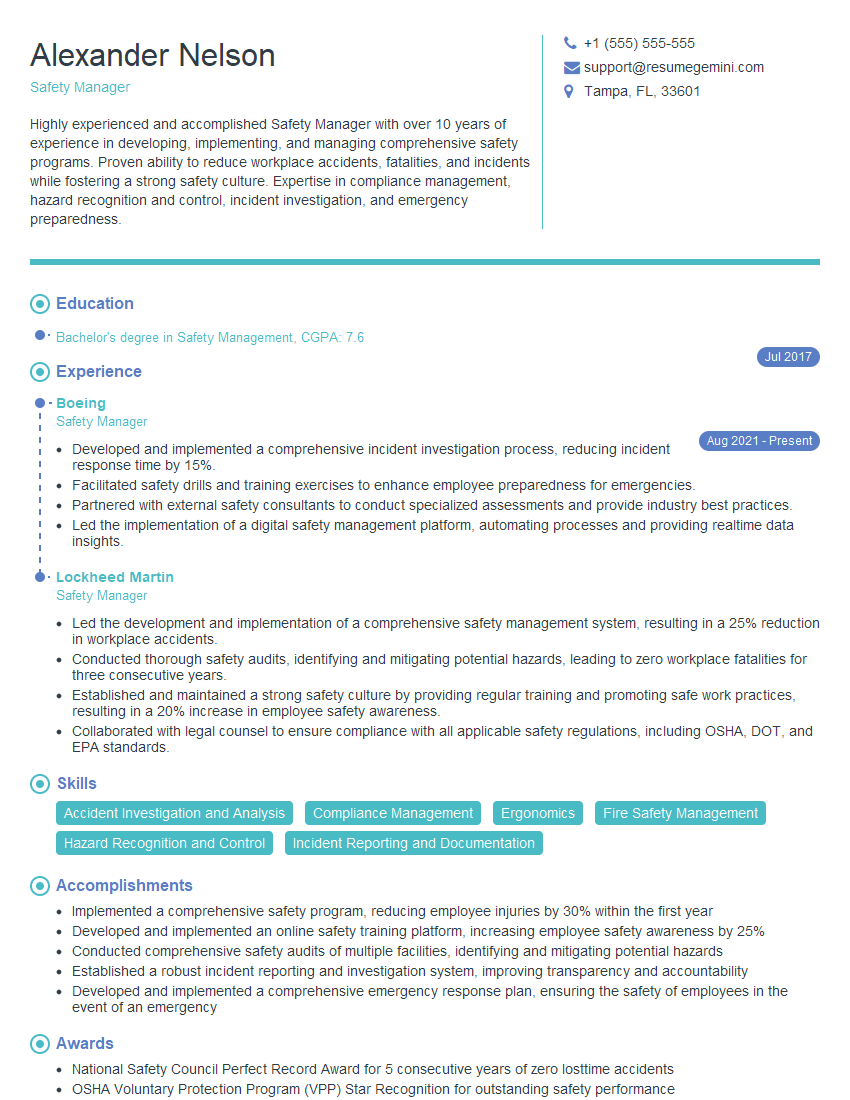
Safety Manager Resume Sample
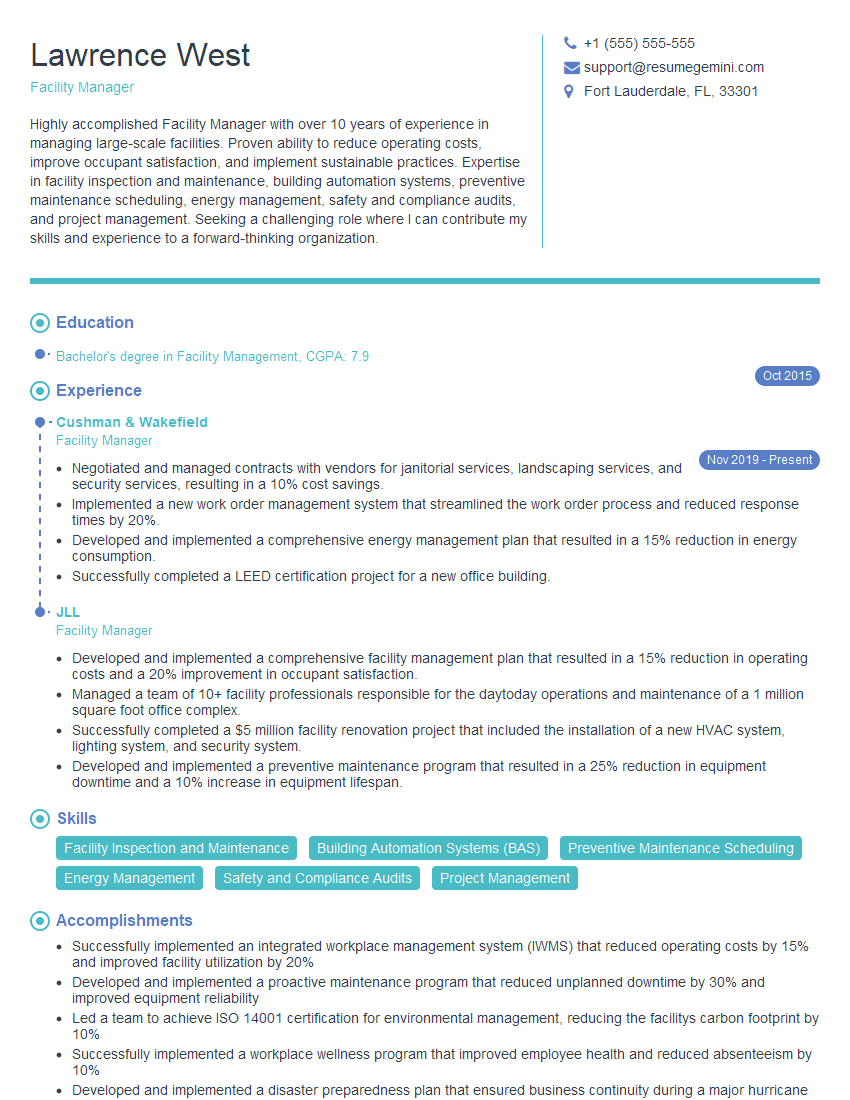
Facility Manager Resume Sample

Operations Manager Resume Sample
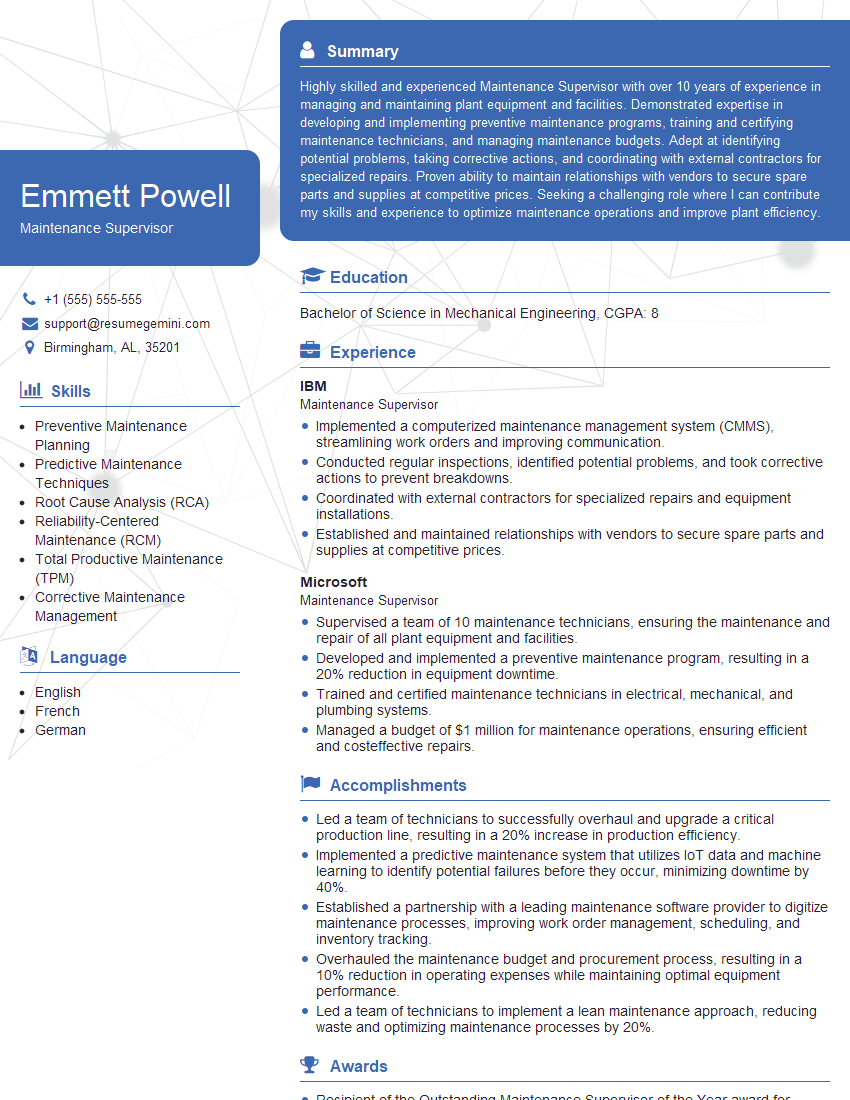
Maintenance Supervisor Resume Sample

Compliance Officer Resume Sample

Field Service Engineer Resume Sample
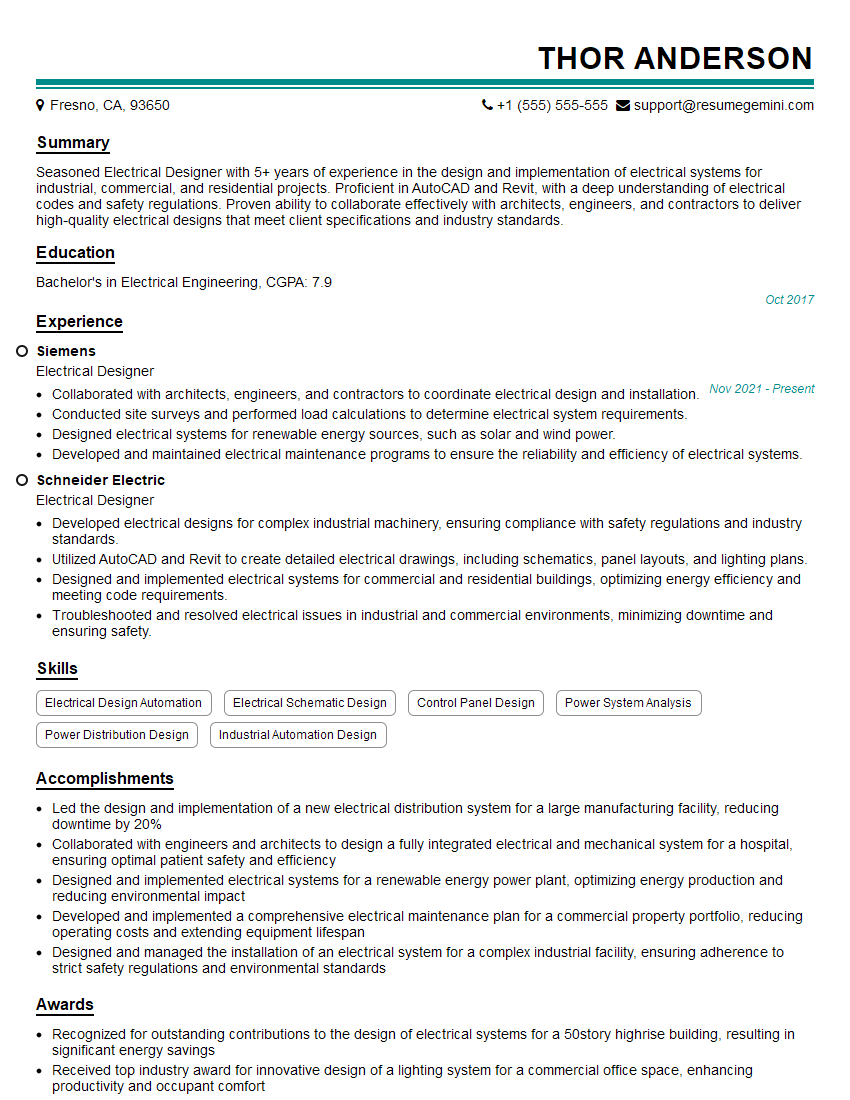
Electrical Designer Resume Sample
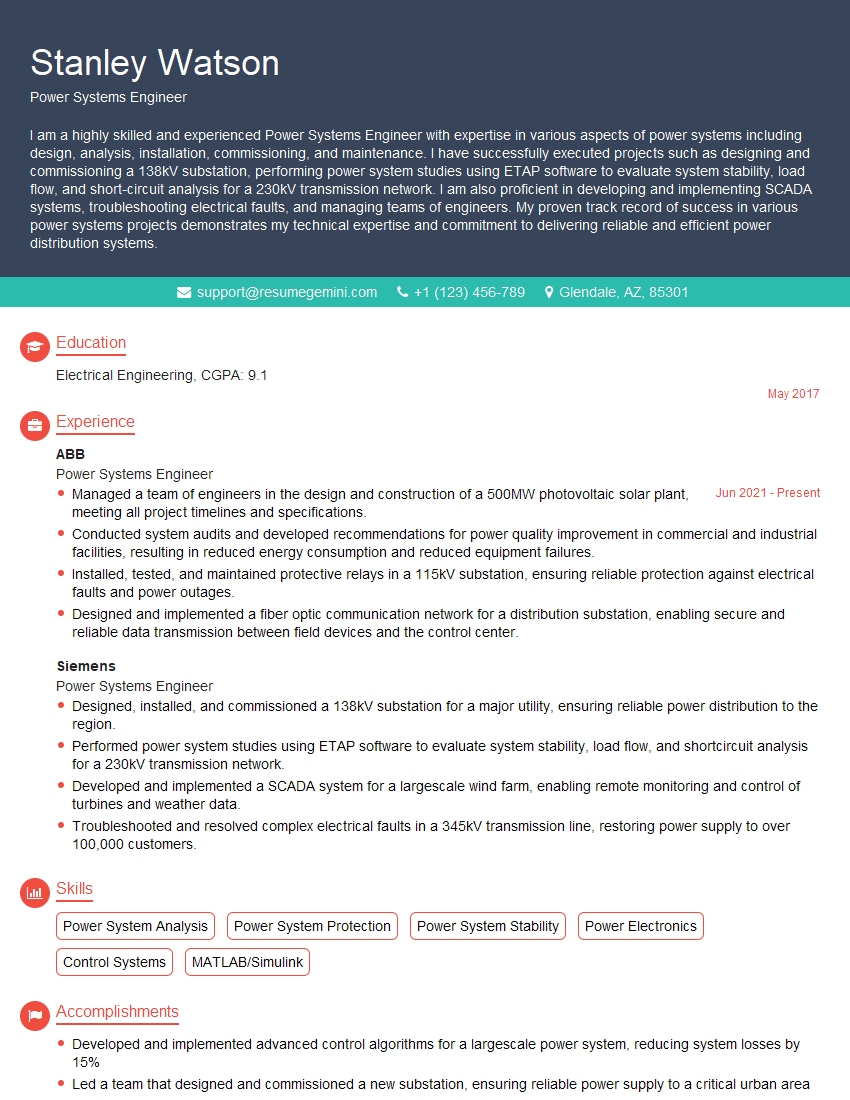
Power Systems Engineer Resume Sample
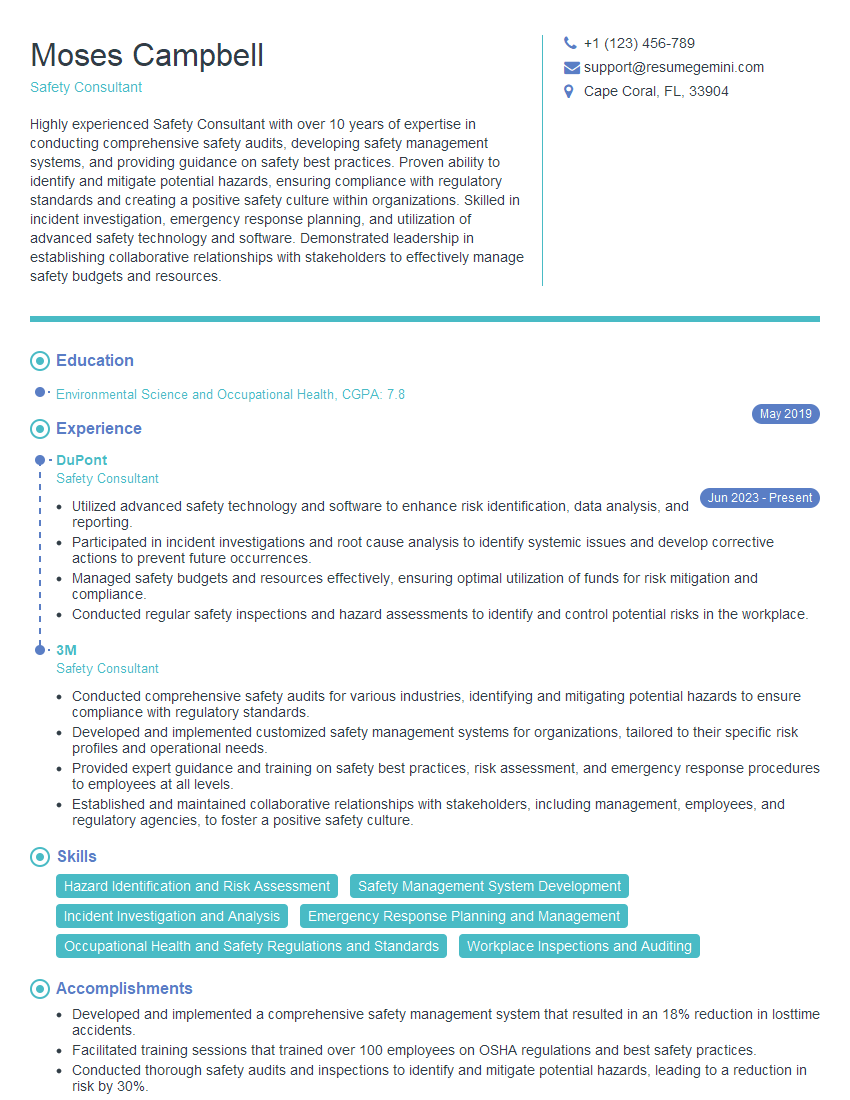
Safety Consultant Resume Sample

Control Systems Engineer Resume Sample
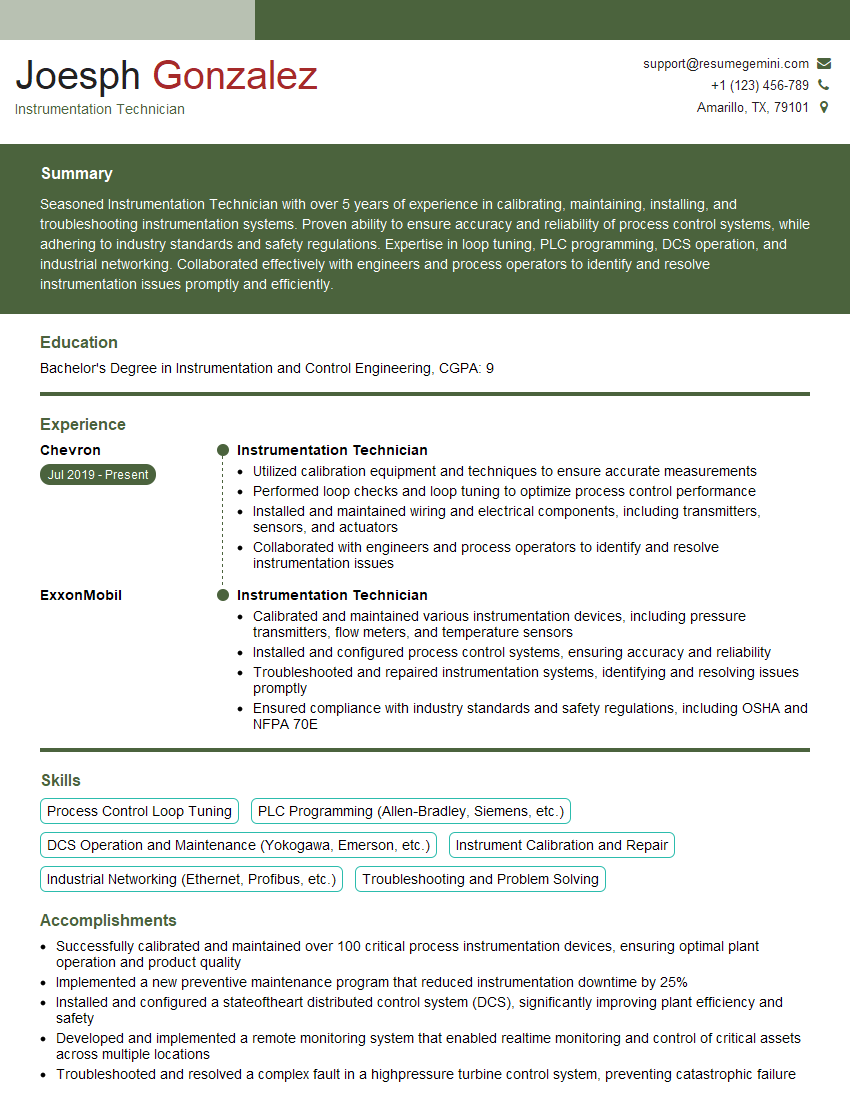
Instrumentation Technician Resume Sample
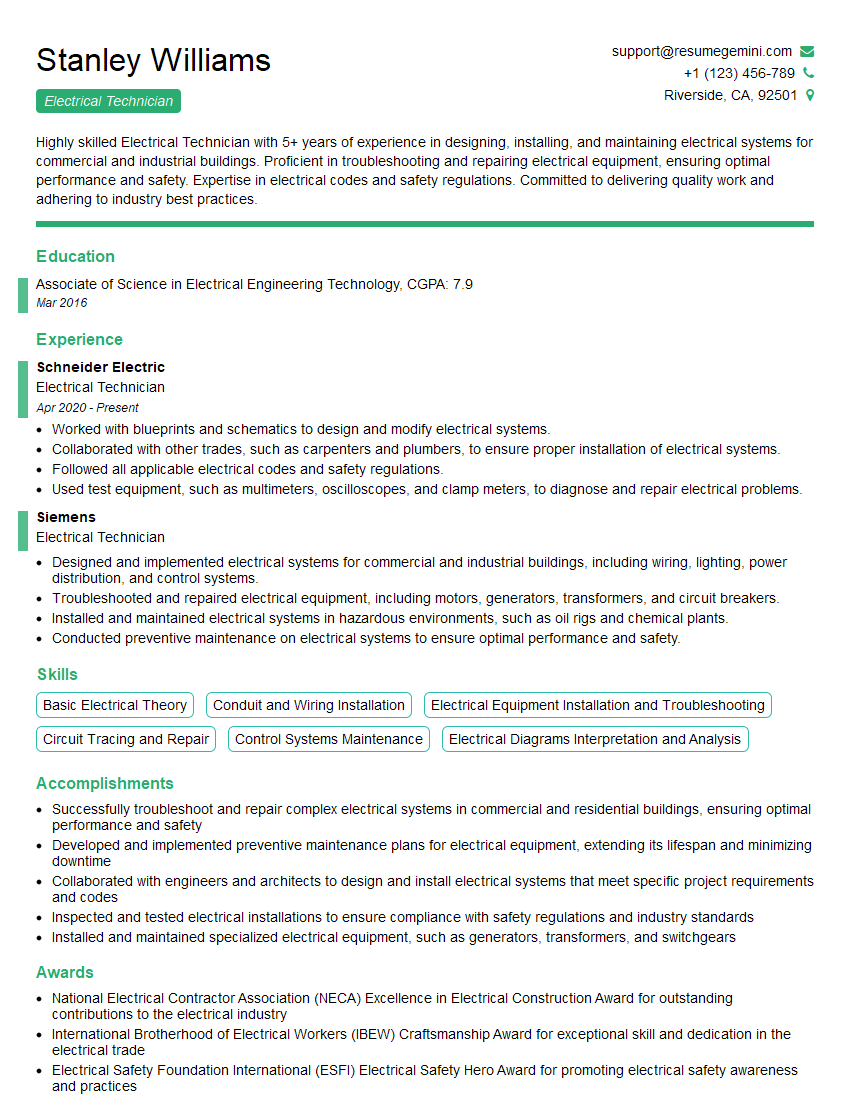
Electrical Technician Resume Sample
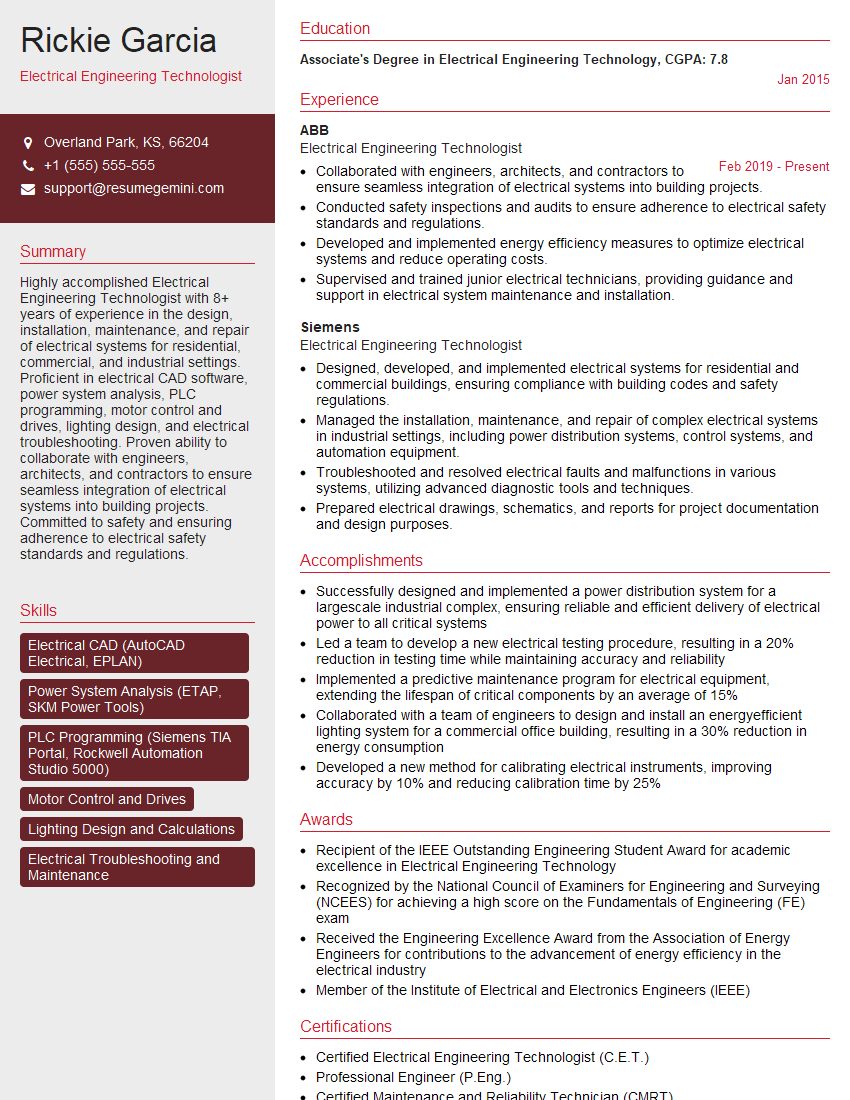
Electrical Engineering Technologist Resume Sample
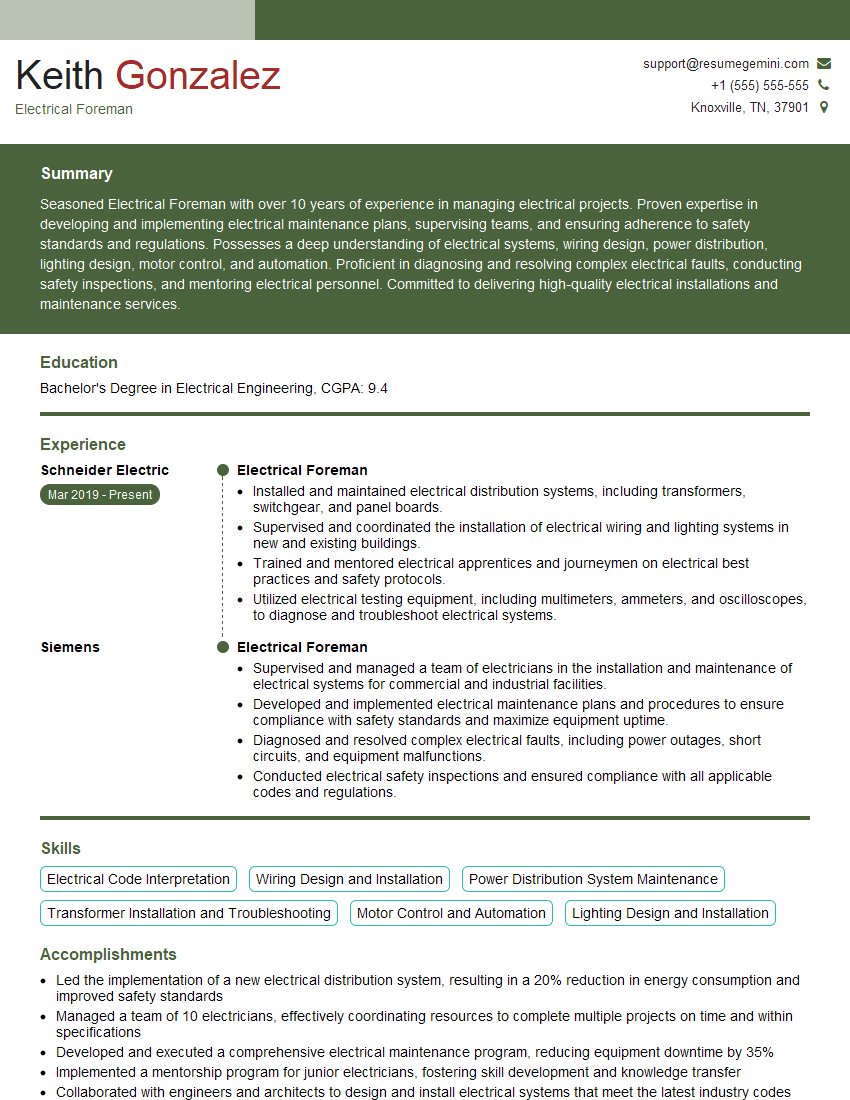
Electrical Foreman Resume Sample
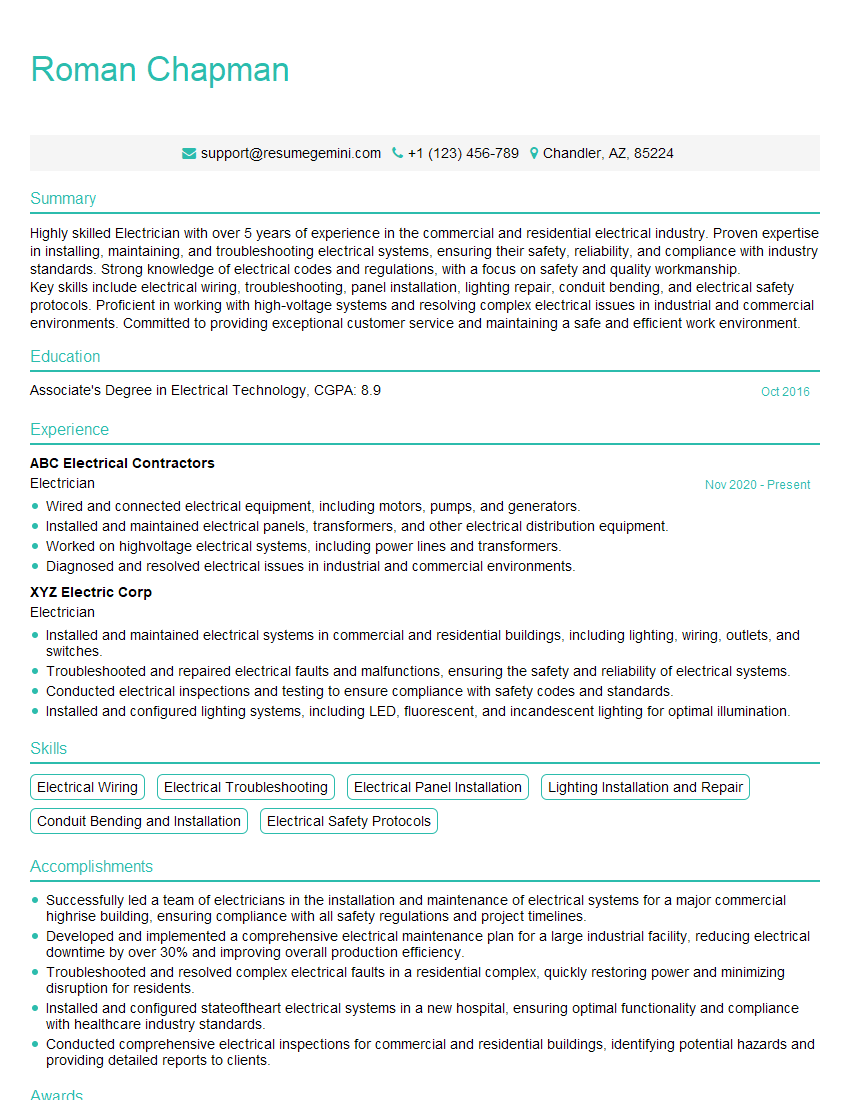
Electrician Resume Sample
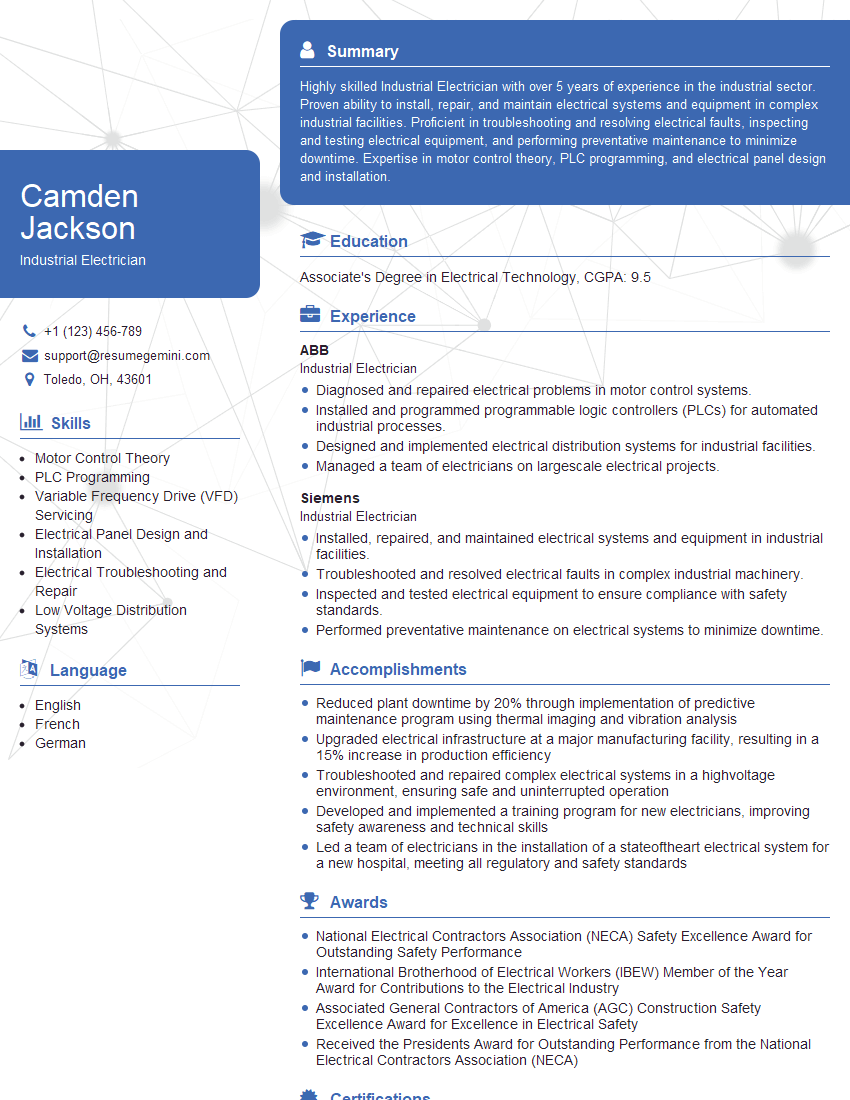
Industrial Electrician Resume Sample
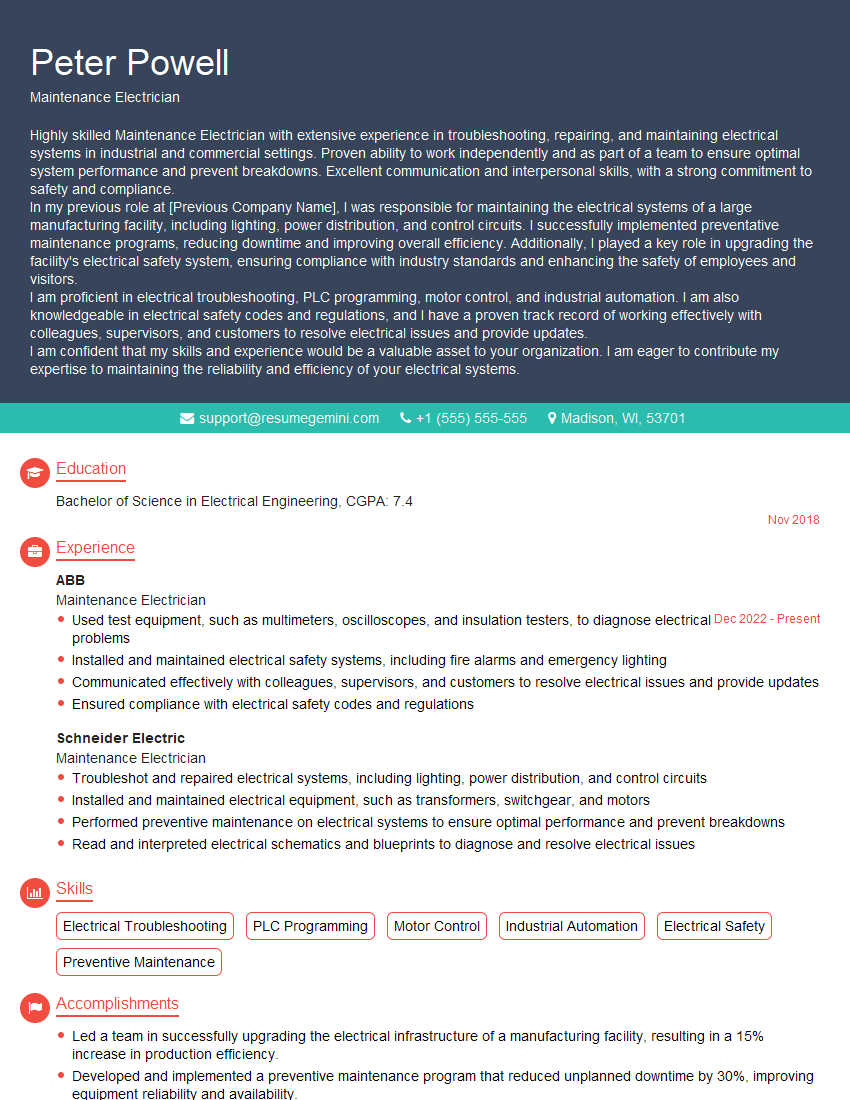
Maintenance Electrician Resume Sample
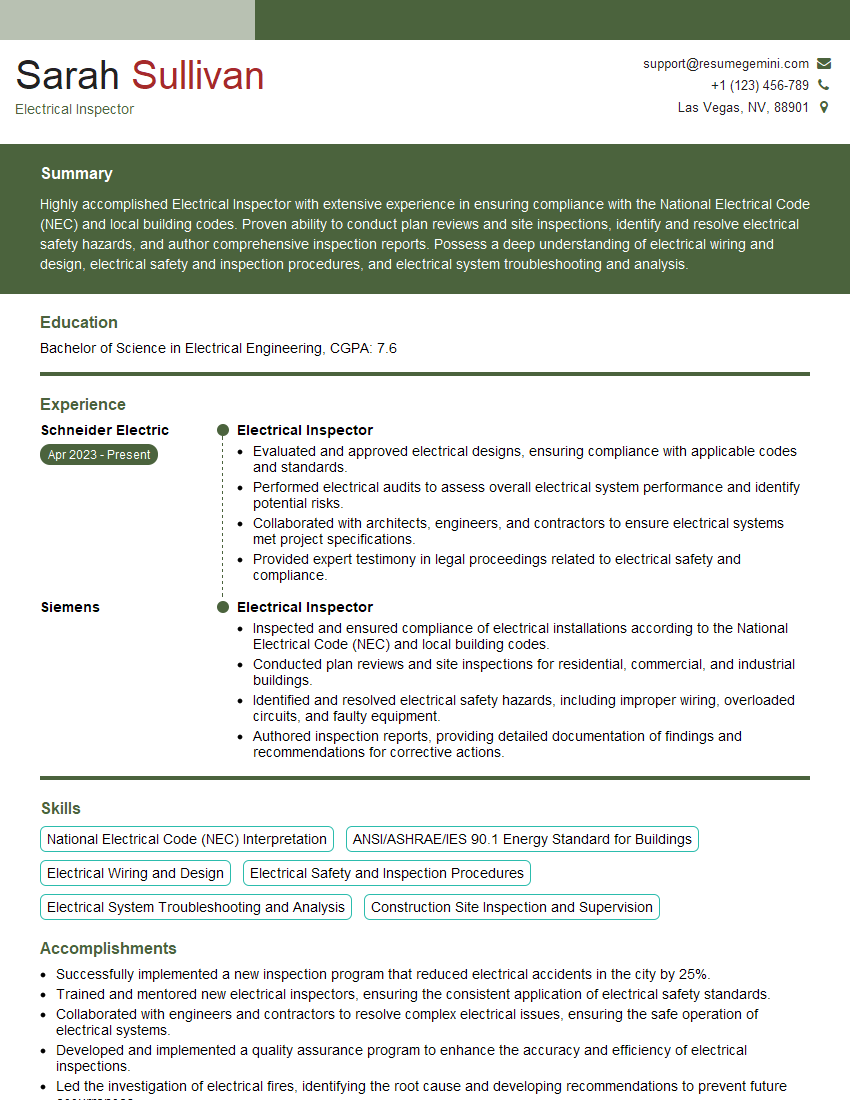
Electrical Inspector Resume Sample
- Safety Manager
- Facility Manager
- Operations Manager
- Maintenance Supervisor
- Compliance Officer
- Field Service Engineer
- Electrical Designer
- Power Systems Engineer
- Safety Consultant
- Control Systems Engineer
- Instrumentation Technician
- Electrical Technician
- Electrical Engineering Technologist
- Electrical Foreman
- Electrician
- Industrial Electrician
- Maintenance Electrician
- Electrical Inspector
Explore more articles
Users Rating of Our Blogs
Share Your Experience
We value your feedback! Please rate our content and share your thoughts (optional).
What Readers Say About Our Blog
To the interviewgemini.com Webmaster.
Very helpful and content specific questions to help prepare me for my interview!
Thank you
To the interviewgemini.com Webmaster.
This was kind of a unique content I found around the specialized skills. Very helpful questions and good detailed answers.
Very Helpful blog, thank you Interviewgemini team.