Interviews are opportunities to demonstrate your expertise, and this guide is here to help you shine. Explore the essential Understanding of International Environmental Agreements (e.g., Kyoto Protocol, Paris Agreement) interview questions that employers frequently ask, paired with strategies for crafting responses that set you apart from the competition.
Questions Asked in Understanding of International Environmental Agreements (e.g., Kyoto Protocol, Paris Agreement) Interview
Q 1. Explain the key differences between the Kyoto Protocol and the Paris Agreement.
The Kyoto Protocol and the Paris Agreement are both international treaties aimed at combating climate change, but they differ significantly in their approach and structure. The Kyoto Protocol, adopted in 1997, employed a top-down approach with legally binding emission reduction targets for developed countries only. These targets were assigned based on historical emissions, placing the burden primarily on industrialized nations. It had a rigid structure with specific commitments and penalties for non-compliance. In contrast, the Paris Agreement, adopted in 2015, uses a bottom-up approach. Each country sets its own Nationally Determined Contributions (NDCs), outlining its emission reduction targets and plans. These NDCs are not legally binding in terms of the targets themselves, but the process of submitting and regularly updating them is considered binding. This flexible approach encourages broader participation and aims to accommodate varying national circumstances and capacities.
- Kyoto Protocol: Top-down, legally binding targets for developed countries only.
- Paris Agreement: Bottom-up, nationally determined contributions (NDCs) with a focus on broader participation.
Q 2. What are the main mechanisms for achieving emission reductions under the Kyoto Protocol?
The Kyoto Protocol employed several mechanisms to achieve emission reductions. The primary mechanisms were focused on reducing greenhouse gas emissions within Annex I countries (developed countries).
- Emissions Trading: Countries could trade emission allowances, allowing those exceeding their limits to purchase credits from countries under their targets. This incentivized emissions reductions where it was most cost-effective.
- Clean Development Mechanism (CDM): Allowed developed countries to invest in emission reduction projects in developing countries and receive Certified Emission Reduction (CER) credits to count toward their targets. This promoted sustainable development and technology transfer.
- Joint Implementation (JI): Allowed developed countries to invest in emission reduction projects in other developed countries and receive Emission Reduction Units (ERUs) for their efforts.
These mechanisms aimed to create a market-based approach to reducing greenhouse gas emissions, making it economically advantageous for countries to participate in reducing their carbon footprint.
Q 3. Describe the role of the Clean Development Mechanism (CDM) under the Kyoto Protocol.
The Clean Development Mechanism (CDM) was a crucial component of the Kyoto Protocol. It allowed developed countries to invest in emission-reduction projects in developing countries and receive Certified Emission Reduction (CER) credits, which could be counted towards their Kyoto targets. Think of it as a global carbon offsetting program. For example, a developed country might finance a renewable energy project in a developing country, receiving CERs in return for the verified emissions reductions achieved by that project. This had two primary goals:
- Assisting developing countries: CDM provided funding and technology for sustainable development projects, aiding their transition to cleaner energy sources.
- Helping developed countries meet targets: It allowed developed countries to meet their emission reduction targets more cost-effectively by investing in projects where reductions might be achieved at a lower cost than domestically.
While the CDM has been criticized for some project quality concerns, it played a significant role in promoting sustainable development and facilitating technology transfer in developing nations.
Q 4. What is the significance of Nationally Determined Contributions (NDCs) under the Paris Agreement?
Nationally Determined Contributions (NDCs) are the cornerstone of the Paris Agreement. Each participating country submits an NDC outlining its planned contributions to reducing national greenhouse gas emissions. These contributions are not legally binding in terms of the specific targets, but the process of submitting and regularly updating them is. Think of them as individual national commitments to climate action. This bottom-up approach allows for flexibility, recognizing the diverse economic and developmental contexts of different countries.
The significance of NDCs lies in their ability to:
- Promote transparency and accountability: Publicly stating intended emission reductions increases accountability and encourages countries to pursue their stated goals.
- Facilitate global collaboration: Collectively, NDCs provide a global picture of climate action and enable monitoring of progress toward achieving the Paris Agreement’s overall temperature goals.
- Drive domestic policy: The process of developing and implementing an NDC often leads to the creation of domestic climate policies and strategies.
Regular updates to NDCs are crucial for ensuring ambition is raised over time as technologies improve and understanding of the climate challenge deepens.
Q 5. How does the Paris Agreement address climate finance?
The Paris Agreement recognizes the critical role of climate finance in supporting developing countries’ efforts to mitigate and adapt to climate change. Developed countries committed to providing financial resources to support developing countries in their climate actions. This includes both mitigation (reducing emissions) and adaptation (adjusting to the impacts of climate change). This financial support is often provided through various channels, including grants, loans, and investments in projects aimed at renewable energy, energy efficiency, climate-resilient infrastructure, and capacity building.
The Paris Agreement doesn’t specify precise amounts, but it emphasizes the importance of scaling up financial flows and ensuring that they are predictable, accessible, and aligned with the needs of developing countries. The agreement acknowledges the importance of public funding but also encourages the mobilization of private sector resources.
Q 6. Explain the concept of carbon pricing and its relevance to international climate agreements.
Carbon pricing is a mechanism that puts a price on greenhouse gas emissions, aiming to incentivize emissions reductions. This can be achieved through carbon taxes, where a tax is levied on emissions, or through emissions trading schemes (ETS), where allowances to emit are bought and sold. The fundamental principle is to make emitting greenhouse gases more expensive, thereby encouraging businesses and individuals to adopt cleaner technologies and practices.
The relevance to international climate agreements is significant. Carbon pricing can serve as a powerful tool to meet emission reduction targets within national frameworks, and it can promote international cooperation by creating a global carbon market. International agreements can facilitate harmonization and coordination of carbon pricing schemes to prevent leakage (emissions shifting to countries without carbon pricing) and to maximize efficiency.
However, implementation varies significantly across jurisdictions, and a lack of coordination poses challenges to achieving global emission reduction targets.
Q 7. Discuss the role of technology transfer in achieving climate goals.
Technology transfer plays a vital role in achieving climate goals, particularly for developing countries. This involves the sharing of knowledge, technologies, and practices related to climate mitigation and adaptation. For example, transferring renewable energy technologies, energy-efficient appliances, and climate-resilient agricultural techniques helps developing countries reduce their emissions and adapt to the changing climate.
International cooperation is crucial for effective technology transfer. Developed countries possess significant technological capabilities that can support developing countries’ climate efforts. However, various challenges exist, including intellectual property rights, financial constraints, and capacity building needs. Effective technology transfer requires collaborative efforts between governments, private sector actors, and research institutions to overcome these obstacles and ensure that technologies are appropriate, accessible, and affordable for developing nations.
Q 8. What are some of the challenges in implementing international environmental agreements?
Implementing international environmental agreements like the Kyoto Protocol and the Paris Agreement faces numerous hurdles. Think of it like trying to get everyone in a large family to agree on cleaning their shared house – each member has their own priorities, resources, and ideas.
- National Sovereignty: Countries are hesitant to cede control over their domestic policies to international bodies. Each nation’s political and economic priorities often clash with the needs of global environmental protection.
- Differing National Circumstances: Developing nations often lack the financial and technological resources to implement the same measures as developed countries. This disparity creates tension and challenges in establishing equitable burden-sharing.
- Enforcement Mechanisms: Many agreements lack strong enforcement mechanisms, making it difficult to hold non-compliant nations accountable. The consequences of non-compliance are often weak, leading to insufficient action.
- Lack of Political Will: Even with strong agreements, lack of political will at the national level can hinder implementation. Shifting political priorities can undermine long-term commitments.
- Scientific Uncertainty: The complex nature of environmental issues and the inherent uncertainties in climate modelling can make it challenging to agree on specific targets and policies.
For example, the Kyoto Protocol’s implementation was hampered by the United States’ refusal to ratify it, significantly impacting its effectiveness.
Q 9. How do international environmental agreements address issues of equity and justice?
International environmental agreements address equity and justice through various mechanisms, acknowledging the historical responsibility of developed nations for greenhouse gas emissions and the disproportionate impact of climate change on vulnerable countries. Imagine a group of friends who created a mess together – some contributed more to the mess than others, and some are more vulnerable to its consequences.
- Common But Differentiated Responsibilities (CBDR): This principle recognizes that developed countries, having historically emitted more greenhouse gases, bear greater responsibility for addressing climate change and providing support to developing nations.
- Financial Assistance: Developed countries are expected to provide financial and technological assistance to developing countries to help them mitigate and adapt to climate change. This includes funding for renewable energy projects, climate resilience initiatives, and capacity building.
- Technology Transfer: Agreements often include provisions for technology transfer from developed to developing countries, enabling them to adopt cleaner technologies and reduce emissions.
- Capacity Building: Support is provided for training and education to help developing countries implement climate policies and build institutional capacity.
The Paris Agreement’s focus on Nationally Determined Contributions (NDCs) reflects this commitment to equity, allowing countries to set their own targets based on their capabilities and circumstances, although still striving for a global goal.
Q 10. Describe the role of non-state actors in achieving climate goals.
Non-state actors – including businesses, civil society organizations, and local governments – play a crucial role in achieving climate goals. They act as catalysts, pushing for action even when national governments falter. Think of them as the community volunteers helping to clean up after that aforementioned messy party.
- Businesses: Companies are increasingly adopting sustainable practices, investing in renewable energy, and reducing their carbon footprint, driven by consumer demand and investor pressure.
- Civil Society Organizations (CSOs): NGOs advocate for climate action, raise awareness, monitor government policies, and engage in grassroots mobilization.
- Local Governments: Cities and regions are implementing ambitious climate plans, often exceeding national targets, through initiatives like green building codes and public transportation improvements.
- Investors: Responsible investment practices are shifting capital flows towards sustainable projects and away from carbon-intensive industries.
For example, the ‘RE100’ initiative showcases major companies committed to 100% renewable energy, demonstrating the significant impact the private sector can have.
Q 11. What is the significance of the UNFCCC in the context of international climate negotiations?
The United Nations Framework Convention on Climate Change (UNFCCC) is the overarching international treaty addressing climate change. It’s the foundation upon which all subsequent climate negotiations are built. Imagine it as the blueprint for a house, providing the framework for the rooms (agreements) built within.
The UNFCCC established the Conference of the Parties (COP), an annual meeting where countries negotiate and implement measures to tackle climate change. It provides a forum for countries to collaborate, share information, and set collective goals. The Kyoto Protocol and the Paris Agreement are both protocols under the UNFCCC, reflecting its ongoing role in shaping the international response to climate change. The UNFCCC also establishes the architecture for monitoring, reporting and verification of emissions and other relevant parameters.
Q 12. Explain the concept of common but differentiated responsibilities (CBDR).
Common but Differentiated Responsibilities (CBDR) is a cornerstone principle of international environmental law. It acknowledges that while all countries share a common responsibility to address climate change, their contributions should be differentiated based on their historical emissions, capabilities, and levels of economic development. Imagine a team project where some members have more experience and resources and therefore can contribute more than others.
Developed countries, having historically emitted a disproportionate share of greenhouse gases, bear a greater responsibility for mitigation and providing financial and technological support to developing nations. This principle recognizes that developing countries, while needing to participate in climate action, may have limited capacity to do so without assistance.
Q 13. Discuss the role of monitoring, reporting, and verification (MRV) in climate action.
Monitoring, Reporting, and Verification (MRV) is essential for ensuring the effectiveness of climate action. It’s like tracking the progress of a construction project – without regular updates, you wouldn’t know if it’s on schedule and within budget.
MRV involves systematically tracking greenhouse gas emissions, measuring the effectiveness of mitigation and adaptation measures, and verifying the accuracy of reported data. This process is crucial for building trust and transparency among nations, enabling accountability and informed decision-making. The Paris Agreement emphasizes the importance of MRV, encouraging countries to develop robust systems for tracking their progress towards their nationally determined contributions (NDCs).
Q 14. How does the Paris Agreement address loss and damage?
The Paris Agreement addresses loss and damage, which refers to the adverse impacts of climate change that cannot be avoided through adaptation. This includes extreme weather events, sea-level rise, and slow-onset events like desertification. Imagine a community facing a devastating flood – even with flood defenses, some damage is unavoidable.
While the agreement doesn’t establish a liability or compensation mechanism, it acknowledges the importance of addressing loss and damage and promotes cooperation among countries to address this critical issue. The Warsaw International Mechanism for Loss and Damage associated with Climate Change Impacts is a key component, facilitating technical assistance and action on loss and damage.
Q 15. What are the potential economic impacts of climate change mitigation and adaptation?
Climate change mitigation and adaptation carry significant economic implications. Mitigation, focusing on reducing greenhouse gas emissions, necessitates investments in renewable energy, energy efficiency technologies, and carbon capture methods. This can lead to upfront costs but potentially generate long-term savings through reduced energy bills, improved public health (from cleaner air), and avoided damages from climate impacts. However, there’s a risk of job losses in carbon-intensive industries if the transition isn’t managed carefully, requiring retraining and diversification programs.
Adaptation, on the other hand, focuses on adjusting to the already unavoidable impacts of climate change. This involves building resilient infrastructure (like seawalls against rising sea levels), improving water management systems, and developing drought-resistant crops. These measures require significant investment, but the costs of inaction (e.g., damage from extreme weather events) are far greater. Economic benefits include increased resilience, reduced vulnerability to climate shocks, and potentially new economic opportunities in green sectors like climate-resilient agriculture.
For example, the transition to renewable energy could initially disrupt traditional energy industries but create new jobs in manufacturing, installation, and maintenance of solar panels and wind turbines. Similarly, investing in resilient infrastructure might seem expensive upfront, but it can save billions in damages from hurricanes or floods down the line.
Career Expert Tips:
- Ace those interviews! Prepare effectively by reviewing the Top 50 Most Common Interview Questions on ResumeGemini.
- Navigate your job search with confidence! Explore a wide range of Career Tips on ResumeGemini. Learn about common challenges and recommendations to overcome them.
- Craft the perfect resume! Master the Art of Resume Writing with ResumeGemini’s guide. Showcase your unique qualifications and achievements effectively.
- Don’t miss out on holiday savings! Build your dream resume with ResumeGemini’s ATS optimized templates.
Q 16. Discuss the legal implications of international environmental agreements.
The legal implications of international environmental agreements are complex and vary depending on the agreement’s structure and the participating countries’ legal systems. Most agreements are treaties, meaning they become legally binding once ratified by a sufficient number of nations. These treaties can establish targets, obligations, and reporting mechanisms. For example, the Paris Agreement legally commits countries to Nationally Determined Contributions (NDCs) to reduce emissions, though the enforcement mechanism relies heavily on national implementation and international peer pressure.
Legal implications can include: disputes among nations regarding compliance, the domestic incorporation of international obligations into national law (requiring legislative changes), and the potential for trade restrictions or sanctions against non-compliant states. There’s also the question of liability and compensation for climate change impacts – a particularly contentious area with complex legal and ethical considerations. Further, customary international law, while not codified in a treaty, plays a role, creating obligations based on established state practice and opinio juris (a sense of legal obligation). Ultimately, the effectiveness of these agreements depends on the willingness of nations to comply and the mechanisms available to ensure compliance.
Q 17. How can international environmental agreements promote sustainable development?
International environmental agreements promote sustainable development by integrating environmental considerations into economic and social policies. They help achieve a balance between economic growth, social equity, and environmental protection. This is explicitly recognized in many agreements, particularly the UN Sustainable Development Goals (SDGs).
- Resource Management: Agreements like CITES (Convention on International Trade in Endangered Species) protect biodiversity, which is crucial for sustainable livelihoods and ecosystem services.
- Climate Change Mitigation: Transitioning to low-carbon economies creates new jobs, promotes innovation in renewable energy, and reduces health costs associated with air pollution, thus fostering both environmental and economic development.
- Environmental Protection: By preventing pollution and degradation, agreements contribute to human health, food security, and the sustainable use of natural resources. This allows countries to build their economies without compromising the ability of future generations to meet their own needs.
- International Cooperation: Agreements foster collaboration among nations to address shared environmental challenges, promoting technology transfer, capacity building, and financial assistance to developing countries. This helps ensure that the burden of environmental protection is shared fairly.
For example, the Paris Agreement promotes sustainable development by encouraging countries to integrate climate action into national development plans, ensuring that climate policies benefit both the environment and the economy.
Q 18. Explain the concept of a carbon offset.
A carbon offset is a reduction in greenhouse gas emissions made to compensate for emissions produced elsewhere. Imagine you’re driving a car that releases carbon dioxide. To offset those emissions, you could invest in a project that removes an equivalent amount of CO2 from the atmosphere, such as planting trees or investing in renewable energy projects. The key is that the offset must be verifiable, additional (meaning it wouldn’t have happened without the offset investment), and permanent (or at least long-lasting).
The concept is used in carbon trading schemes, allowing companies or individuals to meet emissions reduction targets by purchasing offsets. However, there are criticisms about the reliability and quality of some offset projects. Ensuring the integrity of offsets is crucial to avoid ‘greenwashing,’ where companies appear environmentally responsible without genuinely reducing their emissions. It’s important to verify the methodology used to calculate and certify emissions reductions and assess the risk of reversal (e.g., a forest fire eliminating a reforestation project).
Q 19. Describe the role of market-based mechanisms in achieving climate goals.
Market-based mechanisms play a crucial role in achieving climate goals by using economic incentives to encourage emissions reductions. These mechanisms leverage the power of the market to achieve environmental objectives more efficiently than command-and-control regulations alone. Examples include:
- Emissions Trading Systems (ETS): Cap-and-trade schemes, like the European Union Emissions Trading System (EU ETS), set a cap on overall emissions. Companies are allocated allowances, and can buy or sell them depending on their performance. This creates a market for emissions, incentivizing companies to reduce their emissions to avoid the cost of purchasing more allowances.
- Carbon Taxes: Governments can impose a tax on carbon emissions, making it more expensive for companies to pollute. This encourages businesses to invest in cleaner technologies and reduce their emissions to minimize their tax burden.
- Clean Development Mechanism (CDM): Under the Kyoto Protocol, the CDM allowed developed countries to invest in emissions reduction projects in developing countries and receive credits to offset their own emissions. Similar mechanisms exist within the Paris Agreement, but with a greater emphasis on national implementation.
The success of market-based mechanisms depends on several factors, including the stringency of the price signal (tax level or allowance cap), the design of the market rules, and the level of transparency and enforcement. It’s also important to avoid perverse incentives that could undermine the overall goal of emissions reduction.
Q 20. What are some of the key challenges in measuring and verifying greenhouse gas emissions?
Measuring and verifying greenhouse gas emissions is a complex task fraught with challenges. Accurately assessing emissions requires detailed data on energy use, industrial processes, land use change, and waste management, which are often dispersed and not consistently collected.
- Data Availability and Quality: Many countries lack the capacity to accurately measure emissions across all sectors. Data may be incomplete, inconsistent, or inaccurate, especially in developing countries.
- Methodological Challenges: Different methods exist for calculating emissions, leading to inconsistencies in reporting. Determining emissions from complex processes (like cement production) requires sophisticated modelling and estimations.
- Leakage: Emissions reductions in one area might lead to increased emissions elsewhere (e.g., shifting production to a country with less stringent environmental regulations). Accounting for leakage is critical for accurate assessment.
- Verification and Transparency: Ensuring the accuracy and integrity of reported emissions requires robust verification mechanisms and transparency in reporting methodologies. This often relies on national reporting systems and international review processes.
Addressing these challenges requires investments in data collection systems, standardized methodologies, and capacity building in developing countries. Developing transparent and reliable emission inventories is fundamental to achieving credible emissions reductions and fostering international cooperation.
Q 21. How do international environmental agreements address deforestation and forest degradation?
International environmental agreements address deforestation and forest degradation through various mechanisms. Forests play a vital role in carbon sequestration and biodiversity conservation, so their protection is critical for climate change mitigation and sustainable development.
- REDD+ (Reducing Emissions from Deforestation and forest Degradation): This initiative under the UNFCCC framework provides financial and technical support to developing countries for reducing deforestation and forest degradation. It focuses on results-based payments, rewarding countries that demonstrate verifiable reductions in emissions from forests.
- Sustainable Forest Management Practices: Agreements promote sustainable forestry practices to ensure long-term forest health and carbon storage. This involves promoting responsible logging, preventing illegal logging, and managing forests for multiple benefits beyond timber extraction.
- Protected Areas: Many agreements encourage the establishment and expansion of protected areas, safeguarding forests from conversion to other land uses.
- Combating Illegal Logging: Agreements and initiatives aim to combat illegal logging through international cooperation, improved tracking systems, and stronger penalties for offenders.
However, challenges remain in effectively monitoring forest cover, ensuring the transparency and integrity of REDD+ payments, and addressing the underlying drivers of deforestation (e.g., agricultural expansion, infrastructure development). Successful implementation requires strong governance, community engagement, and market-based incentives to support sustainable forest management.
Q 22. What is the role of capacity building in achieving the goals of international environmental agreements?
Capacity building is crucial for achieving the goals of international environmental agreements (IEAs). It essentially means providing developing nations with the resources, skills, and technologies needed to participate effectively and implement the agreements’ provisions. Without it, IEAs risk being ineffective, as countries lacking the necessary capacity may struggle to meet their commitments, leading to uneven implementation and ultimately hindering global environmental progress.
This support can take many forms:
- Financial assistance: Providing funds for projects related to renewable energy, sustainable agriculture, or climate change adaptation.
- Technology transfer: Sharing cleaner technologies and expertise with developing countries.
- Training and education: Offering workshops, educational programs, and on-the-job training to build expertise in areas like emissions monitoring, environmental management, and policy implementation.
- Institutional strengthening: Helping countries build the institutional capacity to develop and implement effective environmental policies and regulations.
For example, the Clean Development Mechanism (CDM) under the Kyoto Protocol aimed to provide financial and technological support to developing countries for emission reduction projects. While it had some successes, it also faced challenges in terms of effective capacity building and ensuring equitable distribution of benefits.
Q 23. Discuss the effectiveness of international environmental agreements in achieving their objectives.
The effectiveness of IEAs is a complex issue with no simple answer. Some agreements have achieved significant successes, while others have fallen short of their goals. Several factors influence their effectiveness:
- Enforcement mechanisms: Agreements with strong enforcement mechanisms, including penalties for non-compliance, tend to be more effective. However, international enforcement can be challenging.
- Participation: Broad participation from major emitting countries is essential for achieving global impact. Agreements lacking widespread participation are inherently limited.
- Flexibility and adaptation: IEAs need to be adaptable to changing circumstances and technological advancements. Rigid agreements may become obsolete or ineffective over time.
- Political will: Ultimately, the success of an IEA depends on the political will of participating nations to implement their commitments.
The Montreal Protocol on Substances that Deplete the Ozone Layer is often cited as a highly successful IEA. Its strong enforcement mechanisms and widespread participation led to significant reductions in ozone-depleting substances. Conversely, the Kyoto Protocol, while groundbreaking, faced limitations due to the absence of major emitters like the United States and relatively weak enforcement.
The Paris Agreement, while still relatively new, represents a significant effort toward a more inclusive and flexible approach to climate action. Its success will hinge on the level of ambition and commitment shown by individual nations and their ability to implement their Nationally Determined Contributions (NDCs).
Q 24. How can international collaboration be improved to address climate change?
Improving international collaboration on climate change requires a multifaceted approach:
- Strengthening existing mechanisms: Enhance the effectiveness of international organizations like the UNFCCC and its subsidiary bodies. This includes improving transparency, accountability, and the monitoring of national commitments.
- Increased financial support: Developed countries need to fulfill their commitments to provide financial and technological assistance to developing countries. Innovative financing mechanisms are also needed.
- Technology transfer and diffusion: Promote the transfer of clean technologies and expertise from developed to developing countries. This requires collaborative research and development efforts and addressing intellectual property rights issues.
- Diplomacy and trust-building: Foster greater dialogue, mutual understanding, and trust among nations. Addressing concerns related to national sovereignty and economic competitiveness is critical.
- Enhancing the role of non-state actors: Engage cities, businesses, and civil society organizations in climate action. Their collective efforts can significantly contribute to achieving climate goals.
For example, the establishment of the Green Climate Fund is a step towards increasing financial support for developing countries, but further progress is needed to ensure adequate and predictable funding.
Q 25. What are some of the ethical considerations related to international climate action?
Ethical considerations in international climate action are numerous and complex:
- Climate justice: Developed countries bear the historical responsibility for the majority of greenhouse gas emissions. This necessitates a commitment to provide support to developing countries, who are often disproportionately affected by climate change impacts despite contributing less to the problem.
- Intergenerational equity: Current generations have a moral obligation to protect the environment for future generations. Climate action needs to consider the long-term implications of our choices.
- Equity among nations: Differentiated responsibilities should be based on capacity and historical contributions. Developing countries often face significant constraints in undertaking climate action.
- Loss and damage: How to address the irreversible impacts of climate change, particularly in vulnerable countries, raises complex ethical questions about compensation and responsibility.
The debate surrounding loss and damage exemplifies these ethical challenges. While many developed nations acknowledge the need to address loss and damage, they are hesitant to commit to specific financial mechanisms or liabilities for fear of setting a precedent for legal claims.
Q 26. Explain the concept of climate resilience.
Climate resilience refers to the ability of a system, community, or environment to anticipate, adapt to, and recover from the impacts of climate change. It involves taking steps to minimize vulnerability and maximize the capacity to withstand and bounce back from climate-related shocks and stresses. This includes both preparedness and response.
Examples of climate resilience strategies include:
- Developing early warning systems for extreme weather events: This allows communities to prepare and evacuate when necessary.
- Investing in climate-resistant infrastructure: Building infrastructure that can withstand floods, droughts, and other extreme weather events.
- Promoting sustainable agriculture practices: Improving the resilience of agricultural systems to climate variability and change.
- Diversifying livelihoods: Reducing reliance on climate-sensitive sectors.
- Strengthening community participation: Empowering communities to participate in adaptation planning and implementation.
A resilient community might, for example, invest in drought-resistant crops, establish water storage systems, and develop community-based disaster response plans.
Q 27. Discuss the impact of international environmental agreements on specific sectors (e.g., energy, transportation).
IEAs have significantly impacted various sectors, particularly energy and transportation:
- Energy sector: IEAs have incentivized a shift toward cleaner energy sources like renewable energy and have promoted energy efficiency improvements. Carbon pricing mechanisms, such as carbon taxes or emissions trading schemes, are intended to reduce greenhouse gas emissions from the energy sector. These policies have had varying degrees of success in different countries.
- Transportation sector: IEAs have indirectly influenced the transportation sector by promoting fuel efficiency standards for vehicles, encouraging the development of electric vehicles, and investing in public transportation. However, the transportation sector remains a significant source of greenhouse gas emissions, and further action is needed to decarbonize this sector.
The Paris Agreement’s emphasis on Nationally Determined Contributions (NDCs) allows countries to tailor their strategies to their specific circumstances. Many countries’ NDCs include specific targets and policies related to energy and transportation, but the extent to which these targets are met varies significantly.
For example, the European Union’s Emissions Trading System (ETS) has played a significant role in reducing emissions from the power sector, demonstrating that market-based mechanisms can be effective in driving decarbonization, though challenges remain in expanding their scope.
Q 28. What are some innovative approaches to tackling climate change?
Innovative approaches to tackling climate change are constantly emerging:
- Carbon capture, utilization, and storage (CCUS): Technologies that capture CO2 emissions from power plants and industrial facilities and either store them underground or utilize them for other purposes.
- Green hydrogen: Producing hydrogen using renewable energy sources, offering a potential clean energy carrier for various applications.
- Next-generation renewable energy technologies: Advances in solar, wind, and other renewable energy technologies are driving down costs and improving efficiency.
- Smart grids and energy storage: Improving energy distribution and storage capabilities to maximize the use of renewable energy.
- Nature-based solutions: Utilizing natural ecosystems, such as forests and wetlands, to sequester carbon and enhance climate resilience.
- Climate-smart agriculture: Improving agricultural practices to reduce emissions and enhance resilience to climate change.
These innovative approaches, along with significant policy support and investment, are necessary to accelerate the transition to a low-carbon economy.
Key Topics to Learn for Understanding of International Environmental Agreements (e.g., Kyoto Protocol, Paris Agreement) Interview
- The Evolution of International Environmental Law: Trace the development of international cooperation on environmental issues, highlighting key milestones and shifting paradigms.
- The Kyoto Protocol: Understand its mechanisms (Emissions Trading, Clean Development Mechanism, Joint Implementation), successes, limitations, and ultimate impact on global emissions.
- The Paris Agreement: Analyze its structure (Nationally Determined Contributions, transparency framework, global stocktake), strengths, weaknesses, and ongoing challenges in implementation.
- Common but Differentiated Responsibilities (CBDR): Grasp the principle of CBDR and its application within the context of international environmental agreements, considering historical emissions and economic capacity.
- Market-Based Mechanisms: Explore the role of carbon markets and other economic instruments in achieving environmental goals, including their potential benefits and drawbacks.
- Enforcement and Compliance: Examine the challenges of ensuring compliance with international environmental agreements and the various mechanisms employed to address non-compliance.
- Adaptation and Mitigation Strategies: Differentiate between adaptation and mitigation strategies in the context of climate change and explore how these are addressed within international agreements.
- Geopolitical Considerations: Analyze how national interests, political dynamics, and international relations impact the negotiation and implementation of these agreements.
- Case Studies: Prepare examples of successful and unsuccessful implementations of international environmental agreements, demonstrating your ability to critically analyze real-world applications.
- Future Directions: Discuss the evolving landscape of international environmental cooperation and the potential for future agreements to address emerging environmental challenges.
Next Steps
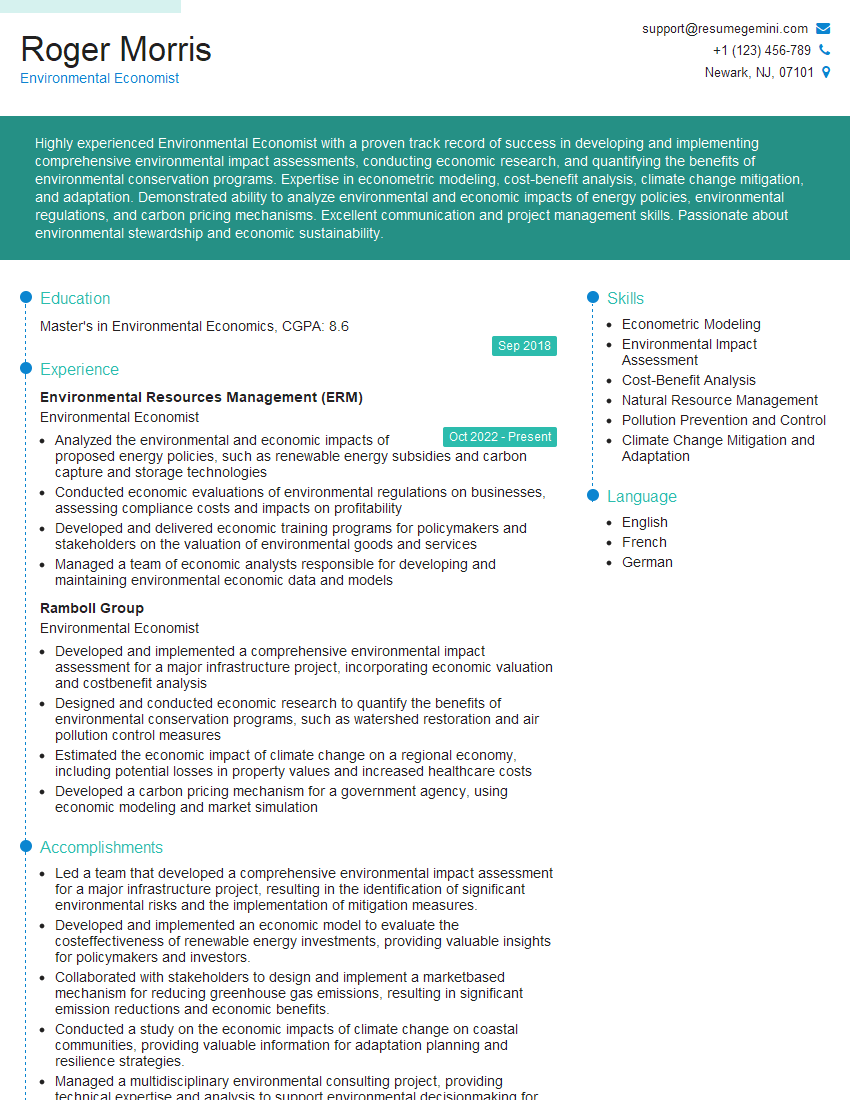
Mastering the intricacies of international environmental agreements is crucial for career advancement in fields such as environmental policy, international relations, sustainability consulting, and climate change research. A strong understanding of these agreements demonstrates your commitment to global sustainability and your ability to navigate complex policy landscapes. To maximize your job prospects, create an ATS-friendly resume that highlights your relevant skills and experience. We highly recommend using ResumeGemini to build a professional and impactful resume. ResumeGemini offers examples of resumes tailored to roles requiring expertise in international environmental agreements like the Kyoto Protocol and the Paris Agreement, helping you present your qualifications effectively.





Explore more articles
Users Rating of Our Blogs
Share Your Experience
We value your feedback! Please rate our content and share your thoughts (optional).
What Readers Say About Our Blog
To the interviewgemini.com Webmaster.
Very helpful and content specific questions to help prepare me for my interview!
Thank you
To the interviewgemini.com Webmaster.
This was kind of a unique content I found around the specialized skills. Very helpful questions and good detailed answers.
Very Helpful blog, thank you Interviewgemini team.