Cracking a skill-specific interview, like one for Understanding of the role of wildlife in ecosystems, requires understanding the nuances of the role. In this blog, we present the questions you’re most likely to encounter, along with insights into how to answer them effectively. Let’s ensure you’re ready to make a strong impression.
Questions Asked in Understanding of the role of wildlife in ecosystems Interview
Q 1. Explain the concept of keystone species and provide a relevant example.
A keystone species is a species that has a disproportionately large effect on its environment relative to its abundance. Think of it like the keystone in an arch – remove it, and the whole structure collapses. These species play crucial roles in maintaining the structure and function of an ecosystem, often by influencing the distribution and abundance of other species.
A classic example is the sea otter in kelp forests. Sea otters are apex predators that feed on sea urchins. Without sea otters, sea urchin populations explode, leading to overgrazing of kelp forests. This, in turn, decimates the kelp forest ecosystem, impacting countless other species that rely on it for habitat and food. The removal of a relatively small number of sea otters has a cascading effect throughout the entire ecosystem.
Q 2. Describe the trophic levels within a terrestrial ecosystem.
Trophic levels describe the feeding relationships within an ecosystem. Imagine a pyramid, with each level representing a different group of organisms. In a terrestrial ecosystem, we typically see:
- Producers (Level 1): These are plants and other autotrophs (organisms that produce their own food) that form the base of the food web through photosynthesis. They convert sunlight into energy.
- Primary Consumers (Level 2): These are herbivores that eat the producers. Examples include deer, rabbits, and grasshoppers.
- Secondary Consumers (Level 3): These are carnivores that feed on the primary consumers. Examples include foxes, wolves, and snakes.
- Tertiary Consumers (Level 4): These are top carnivores that prey on secondary consumers. Examples include lions, bears, and eagles.
- Decomposers (Not a specific level): Bacteria and fungi break down dead organic matter from all trophic levels, returning essential nutrients to the soil and completing the cycle.
It’s important to note that many animals are omnivores, consuming both plants and animals, making their trophic level less clear-cut. The energy transfers between levels are not perfectly efficient; a significant amount is lost as heat at each step.
Q 3. How do you assess the health of an ecosystem?
Assessing ecosystem health is a multifaceted process requiring a holistic approach. We look at several key indicators:
- Biodiversity: A high level of species richness and evenness (similar abundances of different species) usually signifies a healthy ecosystem. Low biodiversity can indicate stress or degradation.
- Species composition: The presence or absence of certain indicator species, which are particularly sensitive to environmental changes, can signal ecosystem health. For example, the presence of certain lichens can indicate clean air.
- Nutrient cycling: Healthy ecosystems efficiently cycle nutrients like nitrogen and phosphorus. Disruptions to these cycles can indicate problems.
- Productivity: The amount of biomass produced in the ecosystem reflects its overall health and capacity. Reduced productivity suggests stress.
- Trophic interactions: A balanced and diverse food web is crucial. Imbalances, such as overpopulation of a certain species, could indicate problems.
We use various techniques, including species surveys, water quality analysis, soil testing, and remote sensing, to gather data and assess these indicators. The interpretation of this data involves complex ecological modeling and analysis.
Q 4. What are the primary threats to biodiversity?
Biodiversity faces numerous threats, and these can often be interconnected:
- Habitat loss and degradation: This is arguably the biggest threat, driven by deforestation, urbanization, agriculture, and resource extraction. It directly reduces the space available for wildlife.
- Climate change: Shifting temperatures, altered precipitation patterns, and more frequent extreme weather events disrupt ecosystems and force species to adapt or migrate.
- Pollution: Air, water, and soil pollution harm wildlife directly and indirectly by contaminating their food and habitat.
- Overexploitation: Overfishing, hunting, and poaching deplete populations and disrupt ecological balance.
- Invasive species: Non-native species can outcompete native organisms, leading to population declines and even extinctions.
Addressing these threats requires a multi-pronged approach encompassing conservation efforts, sustainable resource management, and policy changes.
Q 5. Discuss the impact of climate change on wildlife populations.
Climate change poses a significant threat to wildlife populations, impacting them in various ways:
- Range shifts: As temperatures rise, species are forced to move to higher altitudes or latitudes to find suitable habitats. This can lead to competition with existing species and limit the ability of some species to adapt.
- Phenological mismatches: Changes in the timing of seasonal events (e.g., migration, breeding, flowering) can disrupt the synchronized relationships between species, such as the timing of a predator’s hunting season and its prey’s breeding season.
- Increased extinction risk: Species unable to adapt or migrate fast enough face increased extinction risk, particularly those with limited dispersal abilities or specialized habitat requirements.
- Disease outbreaks: Changes in temperature and humidity can influence the spread and prevalence of diseases affecting wildlife populations.
- Ocean acidification: Increased carbon dioxide absorption by oceans leads to lower pH, harming marine organisms, particularly those with calcium carbonate shells or skeletons.
Understanding and mitigating these impacts are crucial for effective wildlife conservation in the face of a changing climate.
Q 6. Explain the difference between habitat fragmentation and habitat loss.
Habitat loss and fragmentation are both significant threats to biodiversity but differ in their mechanisms:
- Habitat loss: This refers to the complete destruction of habitat, leaving no suitable area for wildlife. Examples include deforestation for agriculture or urbanization.
- Habitat fragmentation: This involves the breaking up of a continuous habitat into smaller, isolated patches. Roads, agriculture, and development can fragment habitats. Even though the total amount of habitat may remain the same, fragmentation isolates populations, reducing genetic diversity and making them more vulnerable to extinction.
Imagine a forest. Habitat loss would be like completely clearing the forest. Habitat fragmentation would be like cutting roads through the forest, dividing it into smaller, isolated sections.
Q 7. Describe methods used to monitor wildlife populations.
Monitoring wildlife populations is crucial for assessing their status and guiding conservation efforts. Several methods are employed:
- Visual surveys: Direct observation of animals, often used for larger, easily visible animals. This might involve counting animals from vehicles, airplanes, or on foot.
- Camera trapping: Motion-activated cameras capture images of animals, providing valuable data on species presence, abundance, and behavior.
- Mark-recapture techniques: Animals are captured, marked, and released, and then recaptured at a later time. The proportion of marked animals in the second capture helps estimate the total population size.
- Acoustic monitoring: Recording and analyzing animal vocalizations to identify species and estimate their abundance. This is particularly useful for nocturnal or elusive animals.
- Genetic analysis: DNA analysis from scat, hair, or other samples can help identify species, estimate population size, and track gene flow.
- Remote sensing: Satellite imagery and aerial photography can assess habitat extent and quality and sometimes detect animal presence (e.g., large herds).
The choice of method depends on the species being studied, the available resources, and the research questions.
Q 8. What are the ethical considerations in wildlife research?
Ethical considerations in wildlife research are paramount, ensuring the well-being of animals and the integrity of the scientific process. This involves a multifaceted approach encompassing animal welfare, minimizing disturbance, obtaining necessary permits, and considering the potential impact on the environment and local communities.
- Animal welfare: Minimizing stress and harm to animals is crucial. This includes employing humane trapping and handling techniques, adhering to strict protocols for anesthesia and euthanasia (when necessary and ethically justified), and ensuring rapid recovery and release where appropriate. For example, research involving GPS collars needs to consider the potential weight and impact on the animal’s mobility.
- Minimizing disturbance: Researchers must carefully plan their studies to reduce the disruption of animal behavior and social structures. This might involve using non-invasive techniques like camera traps or scat analysis instead of direct observation, or choosing research locations and timing to avoid sensitive periods like breeding seasons.
- Permits and regulations: All research must comply with local, national, and international regulations and obtain the necessary permits. This ensures that research is conducted legally and ethically, protecting endangered species and sensitive habitats.
- Community engagement: Wildlife research often occurs in areas with indigenous or local communities who may have traditional knowledge or vested interests in the area. It’s critical to engage with these communities respectfully, obtaining informed consent and sharing research findings in an accessible way.
Q 9. How do you design a wildlife research project?
Designing a wildlife research project is a systematic process requiring careful planning and consideration of multiple factors. It begins with a clearly defined research question and progresses through several key stages:
- Define the research question: What specific aspect of wildlife do you want to investigate? This question should be focused, measurable, achievable, relevant, and time-bound (SMART). For example, instead of ‘How does climate change affect wildlife?’, a better question might be ‘How does altered snowpack depth affect the winter survival rate of elk calves in Yellowstone National Park?’
- Literature review: A thorough review of existing literature identifies gaps in knowledge, informs methodology, and prevents duplication of effort.
- Study design: Choose appropriate methods to address your research question. This could include observational studies, experiments (e.g., manipulative experiments to test the effect of a variable), or modeling. Consider factors such as sample size, data collection techniques (e.g., mark-recapture, camera traps, genetic analysis), and statistical analysis.
- Data collection: This is the most time-consuming phase and must be conducted rigorously and accurately, adhering to the study design.
- Data analysis: Use appropriate statistical methods to analyze data and interpret the findings.
- Dissemination: Share your findings through peer-reviewed publications, conferences, and reports to contribute to the body of knowledge and inform conservation efforts.
Q 10. Explain the principles of wildlife conservation.
Wildlife conservation principles aim to protect biodiversity and ensure the long-term survival of wildlife populations and their habitats. Key principles include:
- Biodiversity conservation: Protecting the full range of species and genetic diversity within ecosystems. This recognizes that each species plays a role, and loss of any species can have cascading effects.
- Habitat protection and restoration: Conserving and restoring habitats that are essential for wildlife survival. This might involve establishing protected areas, reforestation, or controlling invasive species.
- Sustainable use of resources: Ensuring that resource use (e.g., hunting, fishing) is at a level that allows populations to maintain themselves. This involves implementing regulated harvests and promoting sustainable practices.
- Community involvement: Engaging local communities in conservation efforts. Their participation is essential for long-term success, especially in areas where wildlife and human interests intersect.
- Combating illegal wildlife trade: Tackling poaching, trafficking, and other illegal activities that threaten wildlife populations.
- Climate change mitigation and adaptation: Recognizing the impact of climate change on wildlife and implementing strategies to mitigate climate change and help wildlife adapt.
These principles work interdependently; successful conservation requires a holistic approach considering all facets.
Q 11. What are the challenges in managing invasive species?
Managing invasive species presents significant challenges because of their adaptability, rapid spread, and negative impacts on native ecosystems. Key challenges include:
- Early detection and rapid response: Early detection is crucial to prevent widespread establishment. However, this often requires extensive monitoring efforts and quick, effective action once an invasion is identified.
- Control methods: Effective control methods vary depending on the species and environment. Methods range from physical removal (e.g., trapping, manual removal) to chemical control (herbicides, pesticides), biological control (introducing natural predators or pathogens), and habitat management. However, each method has potential drawbacks and unintended consequences.
- Economic and social impacts: Invasive species can have substantial economic costs (e.g., damage to agriculture, forestry) and social impacts (e.g., threats to human health, recreation). Balancing the costs of control with other priorities can be challenging.
- Predicting future invasions: Predicting which species are likely to become invasive is difficult due to complex ecological interactions and the unpredictability of environmental change.
- Lack of resources and coordination: Effective invasive species management often requires substantial funding, coordination across agencies and jurisdictions, and public engagement.
Q 12. Describe different wildlife management techniques.
Wildlife management techniques vary widely depending on the species, its conservation status, and the specific management goals. Some common techniques include:
- Habitat management: This encompasses activities such as restoring degraded habitats, creating wildlife corridors, managing vegetation, and controlling invasive species to improve habitat quality and connectivity.
- Population regulation: This can involve hunting or trapping to control populations of certain species, particularly those causing conflicts with humans or damaging ecosystems. Strict regulations are needed to prevent overharvesting.
- Translocation and reintroduction: Moving animals from one area to another to establish new populations or boost existing ones. Careful planning and assessment of habitat suitability are crucial for success.
- Disease management: Implementing measures to prevent and control the spread of diseases within wildlife populations. This often involves monitoring, vaccination, or culling infected individuals.
- Monitoring and research: Continuously monitoring populations and their habitats to assess the effectiveness of management interventions and adapt strategies as needed. This is crucial for adaptive management approaches.
The choice of techniques should be informed by scientific evidence, ethical considerations, and stakeholder engagement to ensure the long-term well-being of wildlife and their ecosystems.
Q 13. How do you use GIS in wildlife research and management?
Geographic Information Systems (GIS) are invaluable tools in wildlife research and management. They provide a platform to integrate spatial data (location, elevation, habitat type, etc.) and analyze it to better understand wildlife distribution, movement, and habitat use.
- Habitat modeling: GIS can be used to create habitat suitability models predicting areas where wildlife is likely to occur based on environmental variables. This is important for identifying priority conservation areas.
- Movement analysis: Tracking data from GPS collars or other tracking devices can be analyzed in GIS to map animal movements, home ranges, and migration patterns. This helps understand habitat connectivity and identify potential threats.
- Spatial analysis of population data: Population density and distribution can be mapped and analyzed to reveal patterns and trends in population size and location. This helps identify areas needing management intervention.
- Visualizing spatial data: GIS allows for the creation of maps and visualizations that effectively communicate research findings to stakeholders and the public. This increases transparency and understanding.
- Conservation planning: GIS facilitates the planning and management of protected areas, identifying areas for conservation and management actions. This includes optimizing reserve designs for species conservation.
For example, R packages such as raster and sp, integrated with GIS software, can be used to analyze spatial data and build ecological niche models.
Q 14. Explain the concept of carrying capacity.
Carrying capacity refers to the maximum number of individuals of a particular species that a given environment can support indefinitely without degrading the environment’s ability to support future generations. It’s not a fixed number; it fluctuates depending on factors like resource availability (food, water, shelter), environmental conditions (temperature, rainfall), and the interactions between different species.
Imagine a pond with a limited supply of algae (the food source). A small number of fish can thrive, but if the population grows too large, they will deplete the algae supply, leading to starvation, reduced reproduction, and ultimately, a population crash. This crash reduces the pressure on the algae, allowing it to recover, and subsequently, the fish population can start to recover – until reaching the carrying capacity again.
Understanding carrying capacity is crucial for wildlife management. It helps determine sustainable harvest levels, assess the potential impacts of habitat alteration, and predict population dynamics. However, it’s important to remember that estimating carrying capacity is complex, requiring detailed ecological knowledge and consideration of environmental variability.
Q 15. What are the challenges of protecting endangered species?
Protecting endangered species is a monumental task fraught with numerous challenges. These challenges are interconnected and often require multifaceted solutions.
Habitat Loss and Fragmentation: This is arguably the biggest threat. As human populations grow and land is converted for agriculture, urbanization, and infrastructure development, the natural habitats of many species are destroyed or broken up into smaller, isolated patches. This makes it difficult for animals to find food, mates, and safe places to raise their young. For example, the orangutan population in Borneo is drastically declining due to deforestation for palm oil plantations.
Poaching and Illegal Wildlife Trade: The illegal trade in wildlife products, such as ivory, rhino horn, and exotic animal parts, fuels the decline of many endangered species. Combating this requires international cooperation, stricter law enforcement, and efforts to reduce consumer demand.
Climate Change: Shifting climate patterns are altering habitats, affecting food availability, and increasing the frequency and intensity of extreme weather events. This puts additional stress on already vulnerable populations. For instance, polar bears are facing habitat loss due to melting sea ice caused by climate change.
Human-Wildlife Conflict: As human populations expand into wildlife habitats, conflicts inevitably arise. Farmers may lose livestock to predators, while people may be injured or killed by animals defending their territory. Addressing these conflicts requires finding ways to coexist peacefully, such as implementing livestock protection measures and creating safe corridors for wildlife.
Lack of Funding and Resources: Conservation efforts require significant financial and human resources. Many organizations struggle to secure sufficient funding for research, monitoring, and on-the-ground protection.
Political Instability and Corruption: In some regions, political instability and corruption undermine conservation efforts, making it difficult to enforce laws and protect wildlife.
Successfully protecting endangered species demands a holistic approach that addresses these challenges simultaneously, involving collaboration between governments, conservation organizations, local communities, and researchers.
Career Expert Tips:
- Ace those interviews! Prepare effectively by reviewing the Top 50 Most Common Interview Questions on ResumeGemini.
- Navigate your job search with confidence! Explore a wide range of Career Tips on ResumeGemini. Learn about common challenges and recommendations to overcome them.
- Craft the perfect resume! Master the Art of Resume Writing with ResumeGemini’s guide. Showcase your unique qualifications and achievements effectively.
- Don’t miss out on holiday savings! Build your dream resume with ResumeGemini’s ATS optimized templates.
Q 16. How do you assess the impact of human activities on wildlife?
Assessing the impact of human activities on wildlife requires a multi-pronged approach combining various methodologies. We can’t simply observe a decline and assume it’s human-caused; we need rigorous data and analysis.
Population Monitoring: Tracking changes in the size and distribution of wildlife populations over time is crucial. This can be done using various techniques (discussed in question 5).
Habitat Assessment: Evaluating the extent and quality of wildlife habitats is essential. We assess habitat loss, fragmentation, degradation, and changes in habitat suitability due to factors such as deforestation, pollution, or climate change. Remote sensing techniques like satellite imagery and GIS are valuable tools here.
Disease Surveillance: Human activities can affect disease dynamics in wildlife populations. Zoonotic diseases (diseases that can be transmitted from animals to humans) are a particularly critical area of study.
Biomonitoring: Measuring various biological indicators, such as contaminant levels in tissues (e.g., heavy metals in bird feathers) or physiological stress responses, can reveal the impacts of human activities on wildlife health.
Ecological Modeling: Models can be built to project the potential impacts of future human activities on wildlife populations and ecosystems. This helps us understand potential risks and inform decision-making.
Ideally, we combine these methods to get a comprehensive picture. For example, a decline in a bird population might be linked to habitat loss (via habitat assessment) and increased pesticide exposure (via biomonitoring), creating a clearer understanding of the overall impact.
Q 17. Explain the importance of biodiversity for ecosystem services.
Biodiversity—the variety of life at all levels—underpins the functioning of ecosystems and the services they provide to humans. A diverse ecosystem is more resilient and productive.
Provisioning Services: These are the tangible goods we obtain from ecosystems, such as food (fish, crops), freshwater, timber, and medicinal plants. A diverse ecosystem ensures a stable supply of these resources.
Regulating Services: These are the benefits obtained from the regulation of ecosystem processes, including climate regulation (carbon sequestration), water purification, pollination, and disease control. A high biodiversity level ensures more efficient and robust regulation.
Supporting Services: These are the fundamental processes that underpin all other ecosystem services, such as nutrient cycling, soil formation, and primary production. Biodiversity is essential for the proper functioning of these processes.
Cultural Services: These are the non-material benefits we derive from ecosystems, such as recreation, aesthetic value, spiritual enrichment, and educational opportunities. Biodiversity enhances the richness and diversity of these experiences.
Think of a rainforest: its high biodiversity ensures stable water cycles, fertile soil, a wide range of food sources, and beautiful landscapes – all essential ecosystem services. Losing biodiversity weakens these services, making ecosystems more vulnerable to disruption and reducing their capacity to support human well-being.
Q 18. Discuss the role of wildlife corridors in conservation.
Wildlife corridors are strips of protected habitat that connect otherwise isolated patches of land. They are crucial for conservation because they allow animals to move freely between these patches, mitigating the negative impacts of habitat fragmentation.
Increased Genetic Diversity: Corridors facilitate gene flow between populations, preventing inbreeding and maintaining genetic diversity. This makes populations more resilient to environmental changes and diseases.
Enhanced Dispersal and Colonization: Animals can use corridors to find new habitats, expand their range, and colonize suitable areas.
Reduced Human-Wildlife Conflict: By providing safe passage for wildlife, corridors can reduce the likelihood of animals entering human-dominated areas, minimizing conflicts.
Climate Change Adaptation: Corridors allow species to shift their ranges in response to changing climate conditions.
For example, a wildlife corridor connecting two forested areas might allow migrating deer to move safely between their summer and winter ranges, avoiding roads and human settlements. The design and management of these corridors require careful consideration of the specific needs of the target species and the landscape context.
Q 19. Describe different methods of wildlife population estimation.
Estimating wildlife populations is challenging but crucial for effective conservation. Various methods are employed, each with its strengths and limitations.
Complete Counts: These are rarely feasible for mobile or elusive species but are ideal for easily observable, non-mobile populations. For example, counting nesting birds in a specific area.
Sampling Methods: These involve estimating the population based on samples from a subset of the habitat. Techniques include:
Line Transects: Observers walk or drive along predetermined lines, recording all animals sighted within a specified distance. Data analysis accounts for detection probability.
Quadrat Sampling: The study area is divided into smaller quadrats, and the number of animals in a subset of quadrats is counted and extrapolated to the entire area.
Mark-Recapture: Animals are captured, marked, and released. Later, a sample is recaptured, and the proportion of marked individuals provides an estimate of the total population size. This method requires assumptions about marking and recapture probabilities.
Indirect Methods: These methods estimate population size based on indirect signs of animal presence. Examples include:
Sighting Records: Using records from citizen scientists, wildlife cameras, or researchers’ observations.
Track Counts: Counting animal tracks in snow or mud.
Scat Analysis: Analyzing animal droppings to identify species and estimate abundance.
The choice of method depends on the species, habitat, and resources available. Combining multiple methods often provides a more robust estimate.
Q 20. Explain the concept of ecological succession.
Ecological succession is the gradual change in species composition and community structure of an ecosystem over time. It’s a process driven by both biotic (living organisms) and abiotic (non-living factors) factors. Think of it as a natural progression of an ecosystem from a simple to a complex state.
Primary Succession: This occurs in areas where no previous ecosystem existed, such as on bare rock after a volcanic eruption or glacier retreat. Pioneer species, such as lichens and mosses, are the first to colonize, gradually modifying the environment to make it suitable for other species.
Secondary Succession: This occurs in areas where a pre-existing ecosystem has been disturbed, such as after a forest fire or logging. The process is faster than primary succession because some soil and organisms remain. Early successional species are replaced by later successional species over time, eventually leading to a climax community.
An example of secondary succession is a forest recovering after a wildfire. Initially, grasses and shrubs colonize the burnt area. Over time, trees will grow, eventually establishing a mature forest ecosystem. The entire process can take decades or even centuries. Understanding ecological succession is crucial for restoration ecology and managing ecosystems impacted by disturbances.
Q 21. How do you analyze wildlife data using statistical methods?
Analyzing wildlife data using statistical methods is essential for drawing meaningful conclusions about population trends, habitat use, and the effects of human activities. The methods used depend on the type of data collected and the research questions being addressed.
Descriptive Statistics: These methods summarize data using measures such as mean, median, standard deviation, and frequency distributions. This gives a basic overview of the data.
Inferential Statistics: These methods allow us to draw inferences about a larger population based on a sample of data. Examples include:
t-tests and ANOVA: To compare the means of different groups (e.g., comparing population density in different habitat types).
Regression analysis: To model the relationship between two or more variables (e.g., modeling the relationship between population size and habitat quality).
Survival analysis: To analyze time-to-event data, such as the survival time of animals after a treatment or the time until extinction of a population.
Generalized linear models (GLMs): To model non-normal data, such as count data (e.g., number of animals observed) or binary data (e.g., presence/absence of a species).
Spatial Statistics: These methods are used to analyze data that have a spatial component, such as the location of animal sightings or habitat patches. Techniques include spatial autocorrelation analysis and point pattern analysis.
Time Series Analysis: This is used to analyze data collected over time, such as population trends or environmental changes. Techniques include autoregressive models and moving averages.
Software packages like R and SAS are commonly used for statistical analysis of wildlife data. The choice of statistical method should be guided by the research question, data characteristics, and underlying assumptions.
Q 22. Describe the process of developing a conservation management plan.
Developing a conservation management plan is a meticulous process requiring a deep understanding of the target species, its habitat, and the surrounding human influences. It’s akin to creating a detailed blueprint for the survival and flourishing of a specific wildlife population.
- Step 1: Assessment and Data Collection: This involves thorough research to understand the species’ population size, distribution, habitat needs, threats, and existing conservation efforts. Techniques include population surveys, habitat mapping, and analyzing existing data from government agencies and scientific publications. For example, for a dwindling tiger population, we’d assess their prey base, poaching rates, and habitat fragmentation.
- Step 2: Goal Setting and Prioritization: Based on the assessment, we define clear, measurable, achievable, relevant, and time-bound (SMART) goals. These might include increasing the population size by a certain percentage within a set timeframe, improving habitat quality, or reducing poaching incidents. Prioritization is crucial, focusing on the most pressing threats.
- Step 3: Strategy Development and Action Planning: This involves outlining specific strategies and actions to achieve the set goals. This could encompass habitat restoration, anti-poaching measures (like community patrols and improved law enforcement), captive breeding programs, or public awareness campaigns. Each action needs a designated responsible party and a timeline.
- Step 4: Implementation and Monitoring: This phase involves putting the plan into action and regularly monitoring its progress. This might involve field surveys to track population numbers, habitat monitoring, and evaluation of the effectiveness of implemented strategies. Regular reporting and adaptation of the plan based on monitoring results are critical.
- Step 5: Evaluation and Adaptive Management: Continuous evaluation is essential to determine whether the plan is meeting its objectives. If not, adjustments must be made to the strategy. This iterative process ensures the plan remains relevant and effective in the face of changing conditions.
For instance, a conservation plan for the endangered California Condor might involve captive breeding programs alongside habitat restoration and lead poisoning mitigation strategies, constantly adapting to new challenges like power line collisions.
Q 23. What are the legal and regulatory frameworks surrounding wildlife management?
Legal and regulatory frameworks surrounding wildlife management are crucial for ensuring the conservation of biodiversity. These frameworks vary by country and even by region within a country, but they generally involve a combination of laws, regulations, and policies designed to protect wildlife and their habitats.
- International Agreements: Several international treaties and conventions, like the Convention on International Trade in Endangered Species (CITES), provide a framework for protecting endangered species from international trade. CITES regulates the trade of over 35,000 species of animals and plants.
- National Legislation: Each country typically has its own national wildlife laws. These often define protected areas, regulate hunting and fishing, and address issues like poaching and wildlife trafficking. For example, the Endangered Species Act in the United States provides protection for listed threatened and endangered species.
- Sub-national Regulations: States or provinces may have additional laws and regulations pertaining to specific wildlife management issues within their jurisdictions. These can include regulations on hunting seasons, bag limits, and habitat protection measures.
- Enforcement Mechanisms: Effective enforcement is critical. This involves agencies responsible for monitoring compliance, investigating violations, and imposing penalties for infractions. Strong penalties are essential to deter illegal activities.
The effectiveness of these frameworks depends on their comprehensiveness, clarity, enforcement capacity, and public awareness. Weaknesses in any of these areas can compromise conservation efforts.
Q 24. Explain the importance of public education in wildlife conservation.
Public education is a cornerstone of successful wildlife conservation. It’s impossible to protect wildlife effectively without the support and understanding of the public. Think of it as building a strong foundation of collective responsibility for the natural world.
- Raising Awareness: Public education programs raise awareness about the importance of biodiversity, the threats facing wildlife, and the role individuals can play in conservation. This can be achieved through documentaries, educational materials, school programs, and community outreach initiatives.
- Promoting Responsible Behavior: These programs educate the public on responsible practices that minimize their impact on wildlife, such as reducing plastic waste, supporting sustainable agriculture, and avoiding disturbing wildlife habitats.
- Encouraging Participation: Public education fosters a sense of ownership and encourages people to actively participate in conservation efforts, such as volunteering for wildlife monitoring programs or supporting conservation organizations.
- Building Support for Policy: A well-informed public is more likely to support policies that protect wildlife and their habitats. This support can be crucial in influencing government decisions and ensuring the long-term success of conservation initiatives.
For example, educational campaigns emphasizing the role of pollinators in food production can significantly impact public attitudes toward pesticide use and habitat destruction. Effective communication is key; using compelling visuals and relatable stories is far more effective than simply presenting statistics.
Q 25. How do you evaluate the effectiveness of a conservation program?
Evaluating the effectiveness of a conservation program is a continuous process involving a range of methods, ensuring we are learning and adapting throughout the initiative. It’s not simply about measuring success at the end, but rather understanding whether our strategies are achieving the intended outcomes and identifying areas for improvement.
- Monitoring Indicators: We establish key performance indicators (KPIs) aligned with program goals. For example, if the goal is to increase the population size of a threatened species, we would monitor population trends through surveys, camera trapping, or other relevant methods. If the goal is improved habitat quality, we would monitor indicators like vegetation cover, water quality, or prey abundance.
- Data Analysis: The collected data is analyzed to assess progress towards the set goals. Statistical methods are frequently used to determine whether changes observed are significant and can be attributed to the conservation program or other factors.
- Impact Assessment: We assess the overall impact of the program, not just on the target species but also on the broader ecosystem and local communities. This might involve examining changes in biodiversity, habitat health, and socio-economic conditions.
- Adaptive Management: Evaluation results should inform adaptive management strategies. If the program isn’t achieving its objectives, adjustments are made to the approach, ensuring continuous improvement.
A robust evaluation plan includes clearly defined methods, timelines, and a system for reporting and disseminating results. This transparency ensures accountability and allows for learning and adaptation, resulting in more effective conservation programs.
Q 26. Describe your experience with wildlife fieldwork.
My fieldwork experience spans over 15 years, encompassing diverse projects across various ecosystems. I’ve been involved in numerous population surveys using a range of techniques, from mark-recapture studies of small mammals to aerial surveys of large mammals. For example, I participated in a project tracking the movements of endangered mountain gorillas using GPS collars, collecting crucial data on their range use and habitat preferences.
I’ve also conducted extensive habitat assessments, including vegetation surveys, soil sampling, and water quality analyses. This data is crucial for understanding the factors influencing wildlife distribution and abundance. A particularly challenging project involved assessing the impact of deforestation on a primate population in a remote rainforest. This involved navigating difficult terrain, working in extreme weather conditions, and employing advanced GIS techniques to map habitat changes.
Beyond data collection, I’ve also participated in habitat restoration projects, such as planting trees to create wildlife corridors and removing invasive plant species. This hands-on experience is invaluable, providing a direct understanding of the challenges and successes of on-the-ground conservation.
Q 27. Discuss your knowledge of specific wildlife legislation.
My knowledge of specific wildlife legislation is extensive and includes both international and national laws. I am familiar with the CITES regulations, understanding the complexities of permitting and the implications for international trade in endangered species. I’m also well-versed in the Endangered Species Act (ESA) in the United States, including the listing process, critical habitat designation, and recovery planning. This includes knowledge of the legal requirements for habitat protection and the restrictions on activities that may threaten listed species.
Beyond these key pieces of legislation, I have a strong understanding of various state-level laws concerning hunting and fishing regulations, protected areas, and wildlife management practices. I understand how these laws impact conservation efforts and the potential conflicts that may arise. My experience includes reviewing environmental impact assessments, ensuring compliance with these regulations and advising on mitigation strategies to reduce any potential negative effects on wildlife.
Keeping abreast of the evolving legal landscape is paramount. I regularly consult legal databases and professional publications to remain updated on legislative changes and their implications for conservation practices.
Q 28. How do you deal with conflict between humans and wildlife?
Human-wildlife conflict is a significant challenge in conservation. It arises when the needs of humans and wildlife overlap, leading to negative interactions. The key is to find solutions that benefit both humans and wildlife, preventing harm to either.
- Understanding the Root Causes: The first step is to understand the underlying causes of the conflict. This may involve habitat loss, leading to wildlife encroachment on human settlements; crop raiding by animals due to food scarcity; or livestock predation. A thorough investigation is critical to devise effective solutions.
- Mitigation Strategies: Mitigation strategies vary depending on the specific conflict. These can range from installing protective fences around farms to providing alternative food sources for wildlife, implementing community-based wildlife management programs, and improving human-wildlife coexistence practices.
- Community Engagement: Involving local communities in the solution-finding process is essential. This can involve educating them about wildlife behaviour, providing compensation for crop damage, and creating alternative livelihood opportunities to reduce dependence on resources utilized by wildlife.
- Conflict Resolution: Addressing human-wildlife conflict may involve negotiation and mediation between different stakeholders, including local communities, landowners, and government agencies.
For example, in areas where elephants raid crops, strategies like beehive fences (elephants dislike bees), community-based anti-poaching units, and compensation schemes for crop damage can significantly reduce conflict while protecting both human livelihoods and elephant populations. A holistic approach is crucial, combining technical solutions with social and economic considerations to achieve sustainable solutions.
Key Topics to Learn for Understanding the Role of Wildlife in Ecosystems Interview
- Biodiversity and Ecosystem Functioning: Explore the intricate relationships between wildlife species and ecosystem processes like nutrient cycling, pollination, and seed dispersal. Understand how biodiversity loss impacts ecosystem stability and resilience.
- Trophic Interactions and Food Webs: Analyze the roles of different wildlife species within food webs, including producers, consumers, and decomposers. Understand the consequences of disruptions to food webs, such as invasive species or overexploitation.
- Wildlife Conservation and Management Strategies: Learn about various approaches to wildlife conservation, including habitat restoration, protected areas, and anti-poaching initiatives. Explore the practical challenges and ethical considerations involved in wildlife management.
- Human-Wildlife Conflict and Mitigation: Examine the challenges arising from interactions between humans and wildlife, such as habitat encroachment and competition for resources. Understand strategies for minimizing conflict and promoting coexistence.
- Climate Change Impacts on Wildlife: Analyze how climate change is affecting wildlife populations and their habitats, including changes in distribution, migration patterns, and species interactions. Discuss potential adaptation and mitigation strategies.
- Data Analysis and Interpretation: Develop skills in analyzing ecological data, including population trends, habitat use, and species interactions. Practice interpreting data to inform conservation and management decisions.
- Problem-solving in Ecosystem Management: Practice applying your knowledge to real-world scenarios. Consider case studies of ecosystem challenges and develop potential solutions, considering ethical, economic, and social factors.
Next Steps
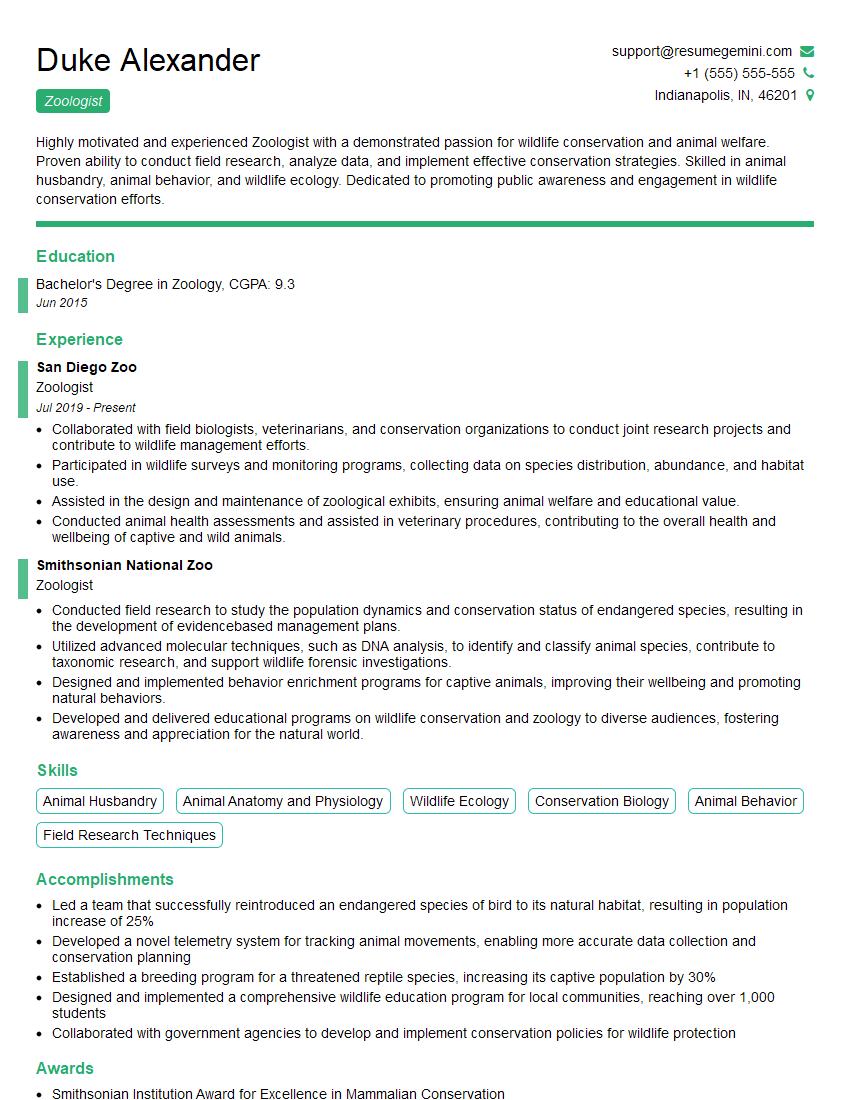
Mastering the understanding of wildlife’s role in ecosystems is crucial for career advancement in fields like conservation biology, wildlife management, and environmental science. A strong understanding of these concepts will significantly enhance your interview performance and open doors to exciting opportunities. To maximize your chances of landing your dream role, invest time in creating an ATS-friendly resume that showcases your skills and experience effectively. ResumeGemini is a trusted resource that can help you build a professional and impactful resume, tailored to highlight your expertise in this field. Examples of resumes tailored to understanding the role of wildlife in ecosystems are available to help guide you through this process.






Explore more articles
Users Rating of Our Blogs
Share Your Experience
We value your feedback! Please rate our content and share your thoughts (optional).
What Readers Say About Our Blog
To the interviewgemini.com Webmaster.
Very helpful and content specific questions to help prepare me for my interview!
Thank you
To the interviewgemini.com Webmaster.
This was kind of a unique content I found around the specialized skills. Very helpful questions and good detailed answers.
Very Helpful blog, thank you Interviewgemini team.