Interviews are opportunities to demonstrate your expertise, and this guide is here to help you shine. Explore the essential Use of Glass Handling Equipment interview questions that employers frequently ask, paired with strategies for crafting responses that set you apart from the competition.
Questions Asked in Use of Glass Handling Equipment Interview
Q 1. Describe your experience operating various types of glass handling equipment.
My experience encompasses a wide range of glass handling equipment, from basic manual handling tools like suction cups and specialized gloves to more advanced machinery. I’m proficient with forklift operation for transporting large glass sheets, including those with delicate or intricate designs. I’ve also extensively used automated robotic arms for precise placement and manipulation of glass during manufacturing processes and vacuum lifters for handling exceptionally large or thin glass pieces. For smaller, more delicate items, I’m skilled in using specialized tongs and carriers. In one project involving stained-glass window restoration, I utilized specialized suction cups and articulated arms to delicately move and position individual glass panes without causing damage.
- Forklifts: Experience operating various forklift models, ensuring safe and efficient transport of pallets loaded with glass.
- Robotic Arms: Programming and operating robotic systems for automated glass handling in high-volume production lines.
- Vacuum Lifters: Safe and efficient handling of large, heavy, and delicate glass sheets through precise vacuum control.
- Manual Handling Tools: Proficient use of suction cups, specialized gloves, and carriers for diverse glass handling needs.
Q 2. What safety measures do you follow when operating glass handling equipment?
Safety is paramount in glass handling. My approach follows a strict protocol emphasizing PPE (Personal Protective Equipment), safe handling procedures, and awareness of environmental factors. This includes consistently wearing safety glasses, gloves, and steel-toe boots. Before operating any equipment, I meticulously inspect it for any damage or malfunctions. I always ensure the work area is free from obstructions and properly lit. When using machinery, I strictly adhere to manufacturer’s operating instructions and lockout/tagout procedures for maintenance. Furthermore, I communicate clearly with my team to coordinate movements and prevent collisions. I regularly participate in safety training to stay abreast of the latest best practices and industry standards.
- PPE: Consistent use of safety glasses, gloves, steel-toe boots, and appropriate protective clothing.
- Equipment Inspection: Thorough inspection of all equipment before use, ensuring functionality and safety.
- Work Area Safety: Maintaining a clean, well-lit, and obstruction-free workspace.
- Communication: Clear and constant communication with colleagues to prevent accidents.
- Regular Training: Active participation in ongoing safety training and awareness programs.
Q 3. Explain the different types of glass and their handling requirements.
Different types of glass require specialized handling techniques due to variations in their physical properties, such as thickness, fragility, and chemical composition. For instance, annealed glass, the most common type, is relatively robust but can still chip or break if mishandled. Tempered glass, much stronger due to heat treatment, needs careful handling to avoid stress fractures that could cause shattering. Laminated glass, composed of layers bonded together, is more resistant to impact but can still be scratched or damaged. Specialty glasses, like borosilicate (used in lab equipment), require additional precautions due to their unique chemical properties. Each type demands a customized approach to prevent damage and ensure safety.
- Annealed Glass: Requires careful handling to avoid chipping or breakage, particularly at edges.
- Tempered Glass: Prone to shattering upon impact or stress; careful handling is crucial to prevent unintended fractures.
- Laminated Glass: More resistant to breakage but can still scratch or be damaged; protective measures are needed during transport and handling.
- Specialty Glasses (e.g., Borosilicate): May require special handling due to potential chemical reactivity or heat sensitivity.
Q 4. How do you identify and address potential hazards associated with glass handling?
Identifying and addressing potential hazards is a proactive and ongoing process. This begins with a thorough risk assessment of the work environment, including factors such as the type of glass being handled, the equipment used, and the physical layout of the workspace. I look for potential hazards like uneven surfaces, poorly lit areas, and obstructions that could lead to slips, trips, or falls. I regularly check for sharp edges or broken pieces of glass and immediately address them using appropriate safety measures. Furthermore, I’m vigilant about identifying potential equipment malfunctions, such as hydraulic leaks or faulty vacuum systems, and promptly reporting them for repair. A strong emphasis on preventative maintenance is essential.
- Risk Assessment: Regularly assessing potential hazards in the work environment.
- Environmental Hazards: Addressing slips, trips, falls by identifying and eliminating potential hazards.
- Equipment Malfunctions: Promptly reporting any equipment malfunction for immediate repair.
- Preventative Maintenance: Regularly scheduling maintenance to prevent equipment failures.
Q 5. Describe your experience with automated glass handling systems.
My experience with automated glass handling systems includes working with robotic arms, conveyor belts, and automated storage and retrieval systems (AS/RS). I’ve been involved in the programming and operation of robotic arms for precise placement of glass components in assembly lines and the integration of automated systems within larger manufacturing processes. This involves understanding PLC programming (Programmable Logic Controllers) to control the sequence and precision of operations. In one instance, I was part of a team that implemented a new AS/RS system, significantly improving the efficiency and safety of glass storage and retrieval. I’m comfortable working with various control systems and troubleshooting any operational issues that may arise.
- Robotic Arms: Programming, operation, and maintenance of robotic arms for precise glass handling.
- Conveyor Systems: Managing and monitoring conveyor belts for efficient glass transport.
- AS/RS: Experience with automated storage and retrieval systems for optimized glass inventory management.
- PLC Programming: Familiarity with PLC programming for system control and troubleshooting.
Q 6. How do you ensure the safe and efficient movement of glass products?
Ensuring safe and efficient movement of glass products involves a multi-faceted approach encompassing proper planning, selection of appropriate equipment, and meticulous execution of handling procedures. Prior to any movement, I carefully assess the weight, dimensions, and fragility of the glass, choosing the right equipment and techniques accordingly. This includes using appropriate padding and supports to prevent damage during transportation. I meticulously plan the route to avoid obstacles and ensure safe passage. Constant communication with colleagues helps coordinate movements and prevents collisions. Finally, regular maintenance and inspection of equipment are crucial for ensuring continued safety and efficiency.
- Careful Planning: Thoroughly assessing weight, dimensions, fragility before choosing equipment.
- Appropriate Equipment: Selecting equipment (e.g., forklifts, vacuum lifters) suitable for each task.
- Protective Packaging: Employing appropriate padding and support materials during transport.
- Safe Route Planning: Selecting routes to avoid potential hazards.
- Team Coordination: Clear communication and coordination with colleagues to prevent accidents.
- Regular Maintenance: Scheduled maintenance and inspection of equipment.
Q 7. What are the common causes of glass breakage during handling?
Glass breakage during handling stems from several factors, primarily improper handling techniques and equipment malfunctions. Common causes include dropping or impacting the glass, applying excessive force or pressure, using inappropriate equipment, and neglecting proper support during transport. Environmental factors, such as temperature fluctuations, vibrations, and impacts from other objects, also play a role. Equipment failure, including malfunctioning vacuum lifters or damaged forklifts, can lead to accidents. Lastly, improper storage, leading to instability and potential falls, can also contribute to breakage. Avoiding these issues requires a proactive and meticulous approach that emphasizes the use of the correct equipment, following proper techniques, and paying close attention to the surroundings.
- Improper Handling: Dropping, impacting, or applying excessive force to the glass.
- Inappropriate Equipment: Using unsuitable tools or machinery for the task.
- Inadequate Support: Lack of proper support during transport, leading to stress and breakage.
- Environmental Factors: Temperature changes, vibrations, and impacts from external sources.
- Equipment Malfunction: Failure of handling equipment (e.g., vacuum lifters, forklifts).
- Poor Storage: Improper storage leading to instability and potential falls.
Q 8. How do you maintain and troubleshoot glass handling equipment?
Maintaining and troubleshooting glass handling equipment requires a proactive and systematic approach. Regular inspections are crucial, checking for wear and tear on components like suction cups, rollers, and belts. Lubrication is key – proper lubrication of moving parts prevents friction, extends equipment life, and ensures smooth operation. We should also check for leaks in vacuum systems, as these can compromise the safe handling of glass.
Troubleshooting involves identifying the problem. For example, if a vacuum lifter isn’t working, we’d first check the power supply and vacuum pump. If the issue persists, we might inspect the seals for leaks or check the pressure sensors. A systematic approach, checking each component step-by-step, allows us to efficiently pinpoint and fix the malfunction. Documentation is essential; keeping detailed records of maintenance and repairs helps predict future issues and improve overall efficiency.
Think of it like maintaining a car: regular checks, lubrication, and prompt attention to any problems prevent major breakdowns and keep it running smoothly.
Q 9. Describe your experience with different types of glass handling tools.
My experience spans a wide range of glass handling tools, from simple manual tools to sophisticated automated systems. I’m proficient with various suction cups, ranging in size and material to accommodate different glass thicknesses and types. I’ve worked extensively with both manual and powered vacuum lifters, understanding the nuances of their operation and limitations. I’m also familiar with specialized tools such as glass-handling gloves, which provide grip and protection, and specialized carriers for large, delicate pieces. Furthermore, I have experience using robotic arms and automated handling systems in high-volume manufacturing environments. Each tool has specific applications and requires a level of precision and technique to avoid damage.
For example, when dealing with thin, delicate art glass, using a smaller, softer suction cup is crucial. Conversely, thicker, heavier sheets require a larger, more robust cup. Understanding these differences ensures safe and efficient handling.
Q 10. Explain the importance of following proper lifting techniques for glass.
Proper lifting techniques are paramount in preventing injury and glass breakage. Always assess the weight and size of the glass before lifting. Use appropriate lifting aids, like vacuum lifters or specialized straps, especially for heavy or large sheets. Maintain a balanced posture, keeping the load close to the body to minimize strain. Avoid twisting or reaching while lifting. Two people are often better than one for larger, heavier pieces.
A common mistake is lifting from the edges of large glass sheets, which can cause them to break. It’s important to lift from underneath, distributing the weight evenly using appropriate equipment. This is why a thorough risk assessment is always necessary. Ignoring proper techniques can lead to serious back injuries and product damage, highlighting the importance of training and adherence to safety protocols.
Q 11. How do you prevent damage to glass during transportation?
Preventing damage during transportation requires careful planning and execution. Glass must be adequately protected with cushioning material, such as foam, bubble wrap, or corrugated cardboard. Secure the glass within its packaging using straps or other restraints to prevent shifting during transit. The packaging itself needs to be sturdy enough to withstand the rigors of transportation and labeled clearly with appropriate handling instructions, such as “Fragile” and “Handle with Care”.
For example, when transporting large glass panels, we would use specialized crates with internal bracing to prevent movement. The crate itself would be labeled clearly, and the transportation method would be chosen based on minimizing vibration and shock. This could involve using specialized transport vehicles with suspension systems designed for fragile goods.
Q 12. What are the different types of glass handling machinery you’re familiar with?
My familiarity with glass handling machinery includes a wide array of equipment, including:
- Vacuum lifters: Used for lifting and moving glass sheets of various sizes and thicknesses.
- Robotic arms: Automated systems commonly found in factories to precisely handle and manipulate glass.
- Conveyor belts: Used for transporting glass sheets between different stages of production.
- Glass tilting systems: Equipment designed for safely rotating and positioning large glass panels.
- Forklifts with specialized glass handling attachments: Ideal for transporting large quantities of glass.
- Automated storage and retrieval systems (AS/RS): Efficient systems for storing and retrieving glass sheets in warehouses.
Each machine offers unique capabilities, depending on the specific application and size of the glass being handled. Understanding the operational characteristics of each machine is crucial for efficient and safe handling.
Q 13. Describe a time you had to deal with a malfunctioning glass handling machine. What did you do?
During a large-scale installation project, a vacuum lifter malfunctioned, resulting in a standstill. The lifter suddenly lost its suction, causing a large glass panel to almost fall. Following safety protocols, I immediately secured the panel using manual supports. Then, I systematically investigated the cause of the malfunction, checking the power supply, vacuum pump, and pressure sensors. I discovered a leak in one of the suction cup seals. I replaced the faulty seal, thoroughly tested the lifter’s functionality, and resumed the operation. The quick diagnosis and repair minimized project downtime and prevented any damage to the glass or injury to personnel.
This incident reinforced the importance of regular maintenance checks and the necessity of having backup procedures in place for such situations.
Q 14. How do you ensure the quality of glass during the handling process?
Ensuring glass quality during handling requires meticulous attention to detail at each stage. We begin with careful pre-handling inspection, looking for existing flaws or damage. During handling, we use appropriate equipment and techniques, avoiding unnecessary contact or pressure that could lead to chipping, scratching, or breakage. Proper storage and transportation, including the use of protective packaging and appropriate handling procedures, are equally critical. Regular maintenance of handling equipment is essential to prevent machine-induced defects.
Think of it like handling a precious artifact: gentle care, proper equipment, and a well-planned process are necessary to preserve its integrity. The quality of the final product is directly affected by the care taken during handling.
Q 15. What is your experience with different types of glass packaging and storage?
My experience encompasses a wide range of glass packaging and storage, from delicate perfume bottles to large, industrial-sized jars. I’ve worked with various materials including different types of glass (e.g., soda-lime, borosilicate), and various packaging formats (e.g., cartons, pallets, crates). I’m familiar with both automated and manual storage systems, including warehouse racking, specialized glass storage shelving designed to prevent damage, and climate-controlled environments for sensitive glass products. For example, I’ve managed the storage and handling of fragile pharmaceutical glass vials requiring specific temperature and humidity controls, as well as the bulk storage of standard glass bottles on palletized systems. My experience also includes inventory management and the implementation of FIFO (First In, First Out) systems to prevent product spoilage or obsolescence.
Career Expert Tips:
- Ace those interviews! Prepare effectively by reviewing the Top 50 Most Common Interview Questions on ResumeGemini.
- Navigate your job search with confidence! Explore a wide range of Career Tips on ResumeGemini. Learn about common challenges and recommendations to overcome them.
- Craft the perfect resume! Master the Art of Resume Writing with ResumeGemini’s guide. Showcase your unique qualifications and achievements effectively.
- Don’t miss out on holiday savings! Build your dream resume with ResumeGemini’s ATS optimized templates.
Q 16. What are the key differences in handling various types of glass (e.g., tempered, laminated)?
Handling different types of glass requires distinct approaches due to their varying properties. Tempered glass, for instance, is significantly stronger than annealed glass but shatters into small, relatively harmless pieces when broken. Laminated glass, composed of layers of glass bonded with a polymer interlayer, is highly resistant to impact and penetration, breaking into larger pieces when shattered. Therefore, tempered glass requires careful handling during transportation to prevent chipping or impact damage, potentially leading to shattering. While laminated glass is more robust, it can still be subject to scratching and delamination, and should be handled carefully to maintain its structural integrity. The key is to understand these differences and use appropriate equipment and techniques. For example, we would use soft padding for tempered glass and specialized suction cups for larger pieces of laminated glass during handling and installation.
Q 17. Describe your experience with load securing and transportation of glass products.
Load securing and transportation of glass products necessitate meticulous planning and execution to prevent damage during transit. I have extensive experience in securing loads using various methods, including dunnage (protective materials), specialized glass dividers, and stretch wrapping. I’m proficient in using different types of transport vehicles and understand the importance of selecting the right vehicle for the specific glass type and quantity. For example, when shipping delicate glassware, I’d prioritize using cushioned pallets, multiple layers of protective wrapping, and specialized suspension systems within the vehicle. I also document the securing process meticulously, noting all methods employed and the condition of the shipment before and after transport, complying with all relevant regulations. In one instance, I successfully prevented damage to a shipment of high-value art glass by designing a customized crate with internal bracing and shock absorption materials.
Q 18. How familiar are you with relevant safety regulations and standards for glass handling?
I am thoroughly familiar with a range of safety regulations and standards relevant to glass handling, including OSHA guidelines (in the US), and relevant international standards (like ISO). This includes understanding and implementing procedures related to personal protective equipment (PPE) – such as safety glasses, gloves, and steel-toe boots – safe lifting techniques, hazard communication, and emergency response protocols in case of glass breakage. I’m also well-versed in the requirements for handling specific glass types – for example, the extra precautions needed when working with chemically treated glass or glass containing hazardous materials. Regular safety training and adherence to company policies are fundamental to my work practice, ensuring a safe working environment for myself and colleagues.
Q 19. What are the common types of glass damage and how can they be prevented?
Common types of glass damage include chipping, cracking, scratching, shattering, and breakage. Chipping and scratching often occur during handling or storage due to impact or friction. Cracking can result from thermal shock (rapid temperature changes), stress from improper handling, or inherent defects. Shattering and breakage are usually caused by significant impacts. Prevention involves careful handling using appropriate techniques and equipment. This includes using protective padding, avoiding sharp impacts, and storing glass appropriately. Proper stacking and load securing during transportation are crucial. Moreover, regular inspection of glass products can help identify potential issues early, allowing for preventive measures. We often use visual inspections and sometimes non-destructive testing methods to evaluate the integrity of the glass before shipment.
Q 20. How do you identify and report unsafe conditions related to glass handling?
Identifying and reporting unsafe conditions related to glass handling is paramount to workplace safety. This involves regularly inspecting work areas for potential hazards such as broken glass, unstable stacks, damaged equipment, or inadequate lighting. If I observe any unsafe condition, I immediately report it to my supervisor using the established reporting procedure (e.g., incident report forms, immediate verbal notification). I also ensure that the area is secured to prevent accidents until the hazard is rectified. This is a non-negotiable aspect of my responsibilities; safety takes precedence above all else. Thorough documentation of the unsafe condition, the corrective actions taken, and the date and time are crucial for record-keeping and future prevention.
Q 21. How do you work effectively as part of a team during glass handling operations?
Effective teamwork is vital in glass handling operations. I actively participate in team briefings to ensure everyone is aware of the task, the handling procedures, and the safety protocols. I maintain open communication with my team members, sharing information and promptly addressing any concerns. During the operation, I follow instructions carefully and assist colleagues as needed, fostering a collaborative environment. I believe in mutual respect and open communication; when faced with a challenge, we brainstorm solutions together, ensuring efficiency and safety. For example, in one situation, a team member was struggling with a particularly heavy piece of glass. Through collaborative lifting and the use of a proper lifting mechanism, we successfully and safely moved the glass without incident, highlighting the value of teamwork in overcoming obstacles.
Q 22. Explain your understanding of glass properties and their impact on handling procedures.
Understanding glass properties is fundamental to safe and efficient handling. Glass is brittle, meaning it fractures easily under stress, and its strength varies significantly depending on type, thickness, and even the manufacturing process. It’s also transparent, which can create blind spots, and its edges can be extremely sharp, posing a significant laceration risk.
For example, annealed glass (common window glass) is relatively weak and prone to thermal shock (cracking from sudden temperature changes), while tempered glass is significantly stronger but shatters into small, relatively harmless pieces when broken. Knowing these differences dictates how we handle each type: annealed glass requires extra care during transport and storage to prevent breakage, while tempered glass, though stronger, still demands cautious handling to avoid impacts that could cause shattering.
- Brittleness: Requires gentle handling and avoidance of sharp impacts.
- Transparency: necessitates careful observation of surroundings and potential obstacles.
- Sharp edges: mandates appropriate PPE, like gloves.
- Thermal Sensitivity: demands controlled environmental conditions during transport and storage, especially for annealed glass.
Q 23. How do you prioritize safety and efficiency in glass handling operations?
Prioritizing safety and efficiency in glass handling requires a systematic approach that integrates training, proper equipment, and robust procedures. Safety is paramount; no amount of efficiency justifies risking injury. I implement a multi-pronged approach:
- Risk Assessment: A thorough assessment of all handling tasks, identifying potential hazards (sharp edges, weight, height, environmental conditions) and implementing appropriate control measures.
- Training and Competency: All personnel involved in glass handling receive comprehensive training on safe handling techniques, equipment operation, and emergency procedures. Regular refresher courses reinforce best practices.
- Equipment Selection: Choosing the right equipment for the job – from suction cups and vacuum lifters for large sheets to gloves and safety shoes for smaller pieces – is crucial. Equipment must be regularly inspected and maintained.
- Methodical Procedures: Establishing clear, step-by-step procedures for every glass handling task, ensuring consistent and safe execution. This includes proper lifting techniques, securing loads, and following traffic routes.
- Data-driven optimization: Tracking key metrics like handling time, incident rates, and equipment downtime allows for identifying areas for process improvement, enhancing both efficiency and safety.
For example, implementing a visual management system to highlight potential hazards or streamlining the handling process to minimize unnecessary movements can significantly increase efficiency while also reducing the risk of accidents.
Q 24. Describe your experience using specialized lifting equipment for handling large glass sheets.
I have extensive experience operating various specialized lifting equipment for handling large glass sheets, including:
- Vacuum lifters: These are invaluable for safely moving large, flat sheets without risk of breakage or scratching. I’m proficient in operating various models, from smaller hand-held units to larger, crane-mounted systems, ensuring proper attachment and secure handling throughout the lifting process.
- Crane systems: I’m familiar with operating overhead cranes and jib cranes equipped with appropriate lifting slings and vacuum attachments, adhering strictly to load capacity limits and safe operating procedures.
- Forklifts with glass handling attachments: I have experience using forklifts equipped with specialized glass forks or clamps for transporting palletized glass, ensuring the load is stable and secure throughout transit.
Before using any equipment, I always conduct a pre-operational inspection to ensure it’s in safe working order and check load capacity limits. For instance, when lifting an oversized sheet, I’d carefully assess its weight and dimensions to select the appropriate equipment and use additional support where needed. Safety is always the primary consideration.
Q 25. What are the potential ergonomic hazards associated with glass handling, and how can they be mitigated?
Ergonomic hazards in glass handling are significant, mainly due to the weight and awkward shapes of glass sheets. These hazards include:
- Musculoskeletal injuries: Lifting, carrying, and maneuvering heavy glass sheets can strain muscles and joints, leading to back pain, sprains, and repetitive strain injuries (RSIs).
- Eye injuries: Flying debris from broken glass poses a serious risk to the eyes.
- Cuts and lacerations: Sharp edges and broken glass fragments cause deep cuts and lacerations.
Mitigation strategies include:
- Mechanization: Using specialized lifting equipment to minimize manual handling.
- Ergonomic design: Workstations and equipment should be designed to minimize awkward postures and repetitive movements.
- Team lifting techniques: Properly trained teams should lift heavy sheets collaboratively to distribute the load safely.
- PPE: Wearing appropriate protective gear, including safety glasses, gloves, and steel-toe boots.
- Job rotation and rest breaks: Varying tasks and incorporating regular breaks reduce fatigue and the risk of injury.
For example, implementing a system of rotating tasks among workers, providing appropriate lifting assistance, and encouraging frequent rest breaks can significantly reduce the risk of ergonomic injuries.
Q 26. How familiar are you with the use of personal protective equipment (PPE) in glass handling?
I’m very familiar with the use of personal protective equipment (PPE) in glass handling. It’s an essential component of a robust safety program. The specific PPE depends on the task and the type of glass being handled, but generally includes:
- Safety glasses or goggles: To protect against flying debris and shards.
- Cut-resistant gloves: To protect hands from cuts and lacerations.
- Steel-toe boots: To protect feet from dropped objects.
- High-visibility vests: To improve visibility in busy work areas.
- Hearing protection: In environments with noisy machinery.
- Full-body protection suits: for situations involving extreme risk or handling of hazardous glass materials.
Beyond the use of PPE, I consistently emphasize proper PPE inspection and maintenance, ensuring its optimal condition and effectiveness. I also ensure all personnel are trained on proper PPE selection and usage, and regular inspections are conducted to reinforce correct usage and identify any equipment defects.
Q 27. Describe your experience with inventory management of glass materials.
My experience with inventory management of glass materials involves implementing systems to track and manage stock levels efficiently, preventing shortages or overstocking. This typically includes:
- Barcode or RFID tracking: Utilizing barcode or RFID technology to track individual sheets or bundles for accurate inventory counts.
- Warehouse management systems (WMS): Implementing a WMS to manage storage locations and optimize picking and delivery processes.
- First-in, first-out (FIFO) system: Implementing a FIFO system to ensure older materials are used first, reducing waste and spoilage.
- Regular stock checks: Conducting regular physical stock checks and reconciling them with inventory records to ensure accuracy.
- Damage tracking: Documenting and reporting any damaged materials to prevent their use and to track potential sources of damage.
For example, I implemented a system where every glass sheet was barcoded and its location recorded in a WMS. This allowed real-time inventory tracking, quicker order fulfillment, and minimized potential material loss due to misplacement.
Q 28. How do you ensure compliance with environmental regulations concerning glass handling and disposal?
Compliance with environmental regulations is critical in glass handling and disposal. This involves:
- Proper waste segregation: Separating glass waste from other materials for proper recycling or disposal.
- Recycling programs: Participating in local recycling programs for glass waste, minimizing landfill use.
- Hazardous waste disposal: Following procedures for handling and disposing of any hazardous glass materials, such as lead-containing glass, in compliance with all relevant regulations.
- Permitting and reporting: Obtaining necessary permits and submitting required reports to environmental agencies.
- Waste reduction initiatives: Implementing strategies to minimize glass waste through efficient material planning, use of precision cutting techniques, and careful handling to avoid breakage.
For instance, I have collaborated with environmental consultants to develop and implement a comprehensive waste management plan to ensure all glass waste is recycled responsibly and in line with all local, regional, and national environmental regulations. This plan includes regular audits and training to maintain compliance.
Key Topics to Learn for Use of Glass Handling Equipment Interview
- Safety Procedures and Regulations: Understanding and applying all relevant safety protocols, including personal protective equipment (PPE) usage, emergency procedures, and hazard identification related to glass handling.
- Equipment Operation and Maintenance: Detailed knowledge of various glass handling equipment (e.g., suction cups, robotic arms, conveyors), their functionalities, limitations, and routine maintenance checks.
- Glass Types and Properties: Familiarity with different types of glass (e.g., tempered, laminated, float glass), their unique handling requirements, and potential fragility considerations.
- Efficient Handling Techniques: Mastering safe and efficient techniques for lifting, moving, and placing glass sheets or products of varying sizes and weights, minimizing the risk of breakage or damage.
- Troubleshooting and Problem-Solving: Ability to identify and address common equipment malfunctions, glass damage, or operational issues, and implement effective solutions.
- Quality Control and Inspection: Understanding the importance of quality control in glass handling, including visual inspection for defects and adherence to quality standards.
- Workflow Optimization: Knowledge of optimizing glass handling workflows for efficiency, minimizing downtime, and maximizing productivity.
Next Steps
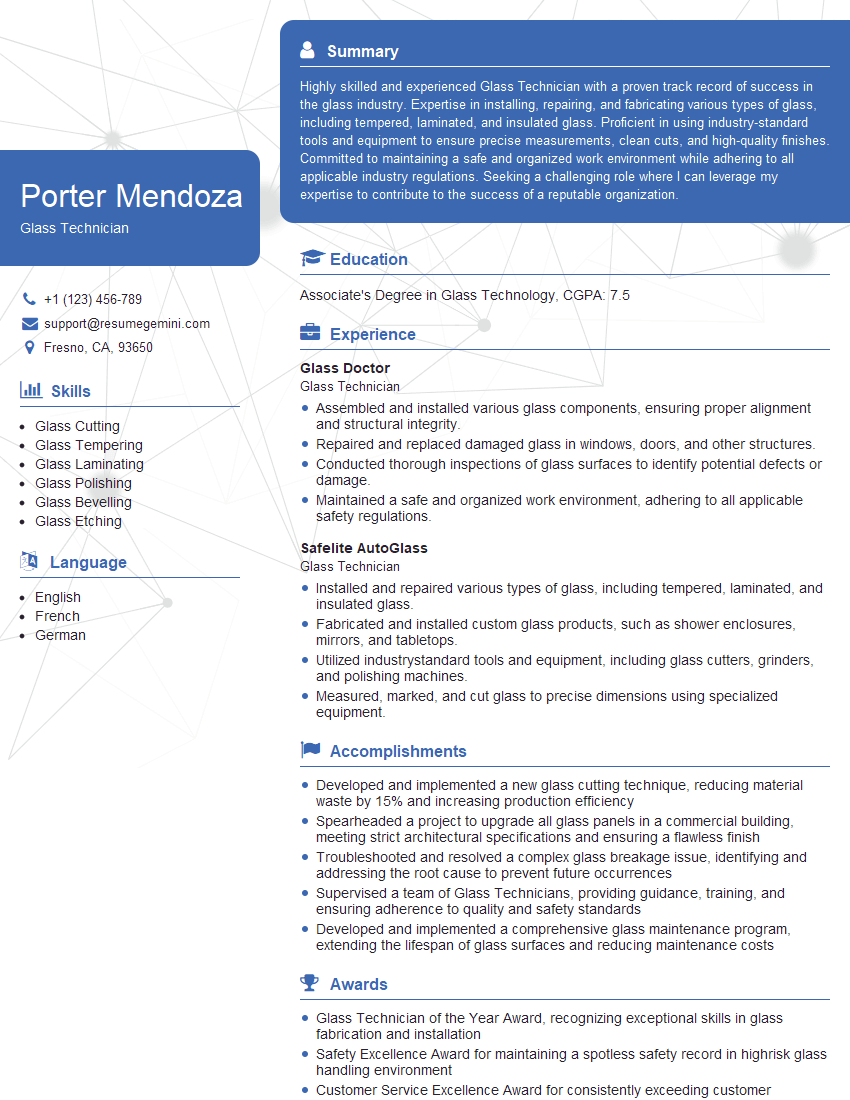
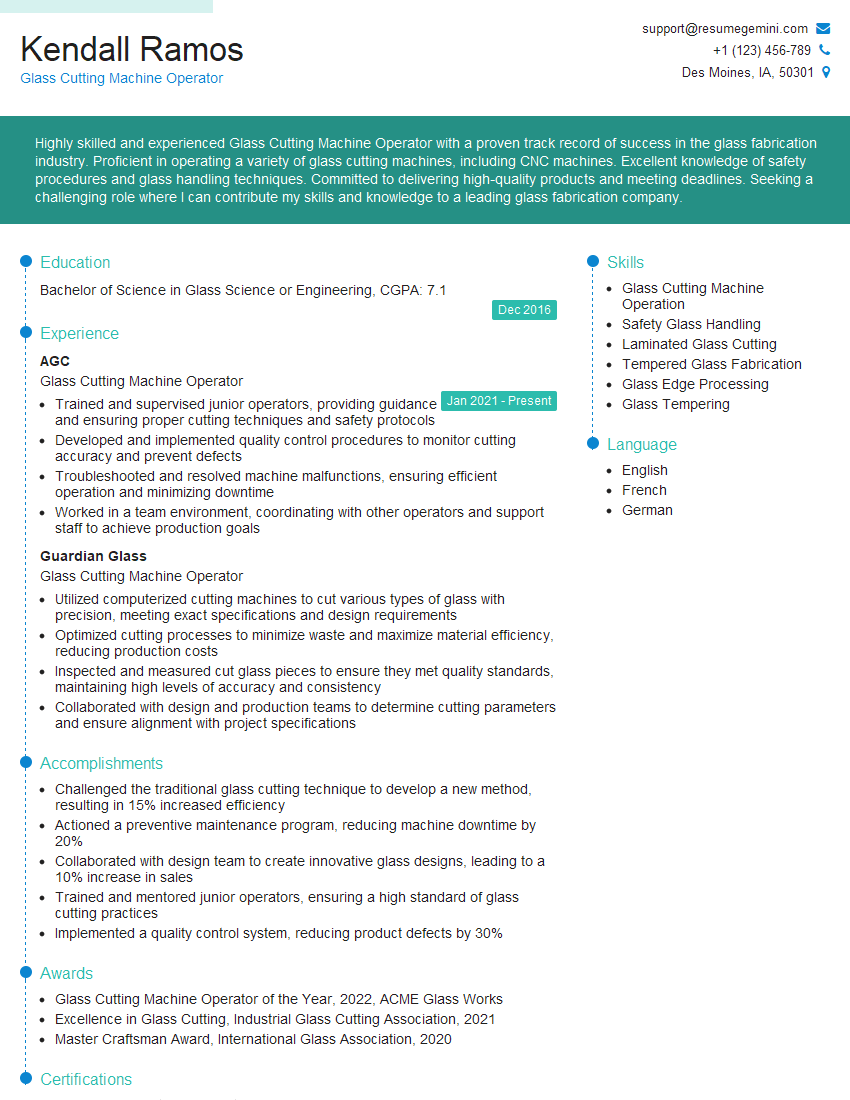
Mastering the use of glass handling equipment opens doors to exciting career opportunities in manufacturing, construction, and various other industries. A strong understanding of these techniques demonstrates your commitment to safety, efficiency, and quality, making you a highly valuable asset to any employer. To maximize your job prospects, it’s crucial to create a professional and ATS-friendly resume that effectively highlights your skills and experience. ResumeGemini is a trusted resource that can help you build a compelling resume tailored to the specific requirements of your target roles. Examples of resumes tailored to Use of Glass Handling Equipment are available to further guide your preparation.

Explore more articles
Users Rating of Our Blogs
Share Your Experience
We value your feedback! Please rate our content and share your thoughts (optional).
What Readers Say About Our Blog
To the interviewgemini.com Webmaster.
Very helpful and content specific questions to help prepare me for my interview!
Thank you
To the interviewgemini.com Webmaster.
This was kind of a unique content I found around the specialized skills. Very helpful questions and good detailed answers.
Very Helpful blog, thank you Interviewgemini team.