Feeling uncertain about what to expect in your upcoming interview? We’ve got you covered! This blog highlights the most important Valve Insulation interview questions and provides actionable advice to help you stand out as the ideal candidate. Let’s pave the way for your success.
Questions Asked in Valve Insulation Interview
Q 1. What types of valve insulation materials are commonly used?
Selecting the right valve insulation material is crucial for effective heat retention and safety. The choice depends on factors like temperature range, environmental conditions, and chemical compatibility. Common materials include:
- Calcium Silicate: Excellent for high-temperature applications (up to 1200°F/650°C), offering good thermal performance and fire resistance. Think of it as a robust, high-heat shield.
- Mineral Wool: A cost-effective option with good thermal insulation properties. It’s a versatile choice for a wide range of temperatures but might not be suitable for extremely high temperatures or harsh chemical environments. Imagine it as a reliable, all-purpose insulator.
- Polyisocyanurate (PIR): Known for its high R-value (thermal resistance), making it efficient even in thinner applications. This is often preferred for its ease of installation and good moisture resistance. Think of it as lightweight yet highly effective.
- Fiberglass: A common and relatively inexpensive material, suitable for moderate temperature applications. While effective, it’s less durable than other options and requires careful handling.
- Aerogel: A high-tech option offering exceptional insulation properties but often comes with a higher price tag. Its incredibly low thermal conductivity makes it ideal for extreme conditions. Imagine it as the ultimate insulator, top of the line!
The best material will always depend on the specific application requirements, and a thorough assessment is key.
Q 2. Describe the process of installing insulation on a gate valve.
Installing insulation on a gate valve is a meticulous process requiring precision and attention to detail. Here’s a typical step-by-step procedure:
- Preparation: Clean the valve surface thoroughly to remove dirt, grease, or any other contaminants that could hinder adhesion. This ensures proper bonding of the insulation.
- Measurement: Accurately measure the valve’s dimensions to determine the required amount of insulation material. This prevents wastage and ensures a snug fit.
- Cutting: Carefully cut the insulation material to the precise dimensions, accounting for any valve components or appendages. Proper cutting is essential for a seamless fit.
- Application: Apply the insulation material to the valve, ensuring a tight and uniform fit. For materials requiring adhesive, follow the manufacturer’s instructions carefully. Use appropriate tools, such as a utility knife or scissors, as necessary.
- Securing: Secure the insulation using appropriate fasteners, such as straps, bands, or clips. These will maintain the insulation in place, preventing it from shifting or coming loose.
- Finishing: If necessary, apply a protective outer layer, such as a jacket or sealant, to further protect the insulation and enhance its durability. This safeguards the insulation from damage and environmental factors.
Remember to always follow the manufacturer’s instructions for the specific insulation material you are using.
Q 3. What are the safety precautions for working with valve insulation?
Safety is paramount when working with valve insulation. Several crucial precautions should be observed:
- Personal Protective Equipment (PPE): Always wear appropriate PPE, including safety glasses, gloves, and respiratory protection. Some insulation materials can be irritating to the skin or lungs.
- Handling Precautions: Handle insulation materials carefully to avoid cuts or abrasions. Some materials can be brittle or fibrous, posing potential hazards.
- Confined Space Entry: If working in a confined space, ensure proper ventilation and follow all relevant confined space entry procedures. This reduces the risk of asphyxiation.
- Hot Surfaces: If working with hot valves, allow sufficient time for the valve to cool down before installing insulation. Never attempt to work on hot surfaces without proper protection.
- Lifting Equipment: Use appropriate lifting equipment for heavy insulation materials to avoid injuries and strain. This is essential for preventing workplace injuries.
- Lockout/Tagout Procedures: Follow proper lockout/tagout procedures to prevent accidental valve activation during installation. This is essential to ensuring the safety of personnel.
Safety training is crucial for all personnel handling valve insulation.
Q 4. How do you ensure proper insulation thickness for a specific valve?
Determining the correct insulation thickness is vital for optimal energy efficiency and cost-effectiveness. This is typically done through heat loss calculations, which consider factors like:
- Valve temperature: The temperature of the fluid within the valve.
- Ambient temperature: The surrounding environmental temperature.
- Valve material: The thermal conductivity of the valve’s material.
- Desired heat loss reduction: The targeted reduction in heat loss.
Using these parameters and relevant engineering handbooks or software, professionals can determine the appropriate insulation thickness needed to meet the specific application requirements. This calculation will consider factors such as the thermal conductivity of the material and the desired temperature difference.
For example, a high-temperature valve in a cold environment will require significantly thicker insulation than a low-temperature valve in a warm environment. Ignoring these calculations can lead to inadequate insulation, resulting in energy loss and potentially safety risks.
Q 5. Explain the importance of maintaining valve insulation integrity.
Maintaining valve insulation integrity is essential for several reasons:
- Energy Savings: Proper insulation minimizes heat loss, significantly reducing energy consumption and operational costs. This directly translates to financial benefits.
- Safety: Intact insulation protects personnel from burns or scalds caused by contact with hot surfaces. This minimizes safety risks.
- Environmental Protection: Reduced energy consumption contributes to a smaller carbon footprint, minimizing environmental impact.
- Equipment Protection: Insulation protects the valve from corrosion and other environmental damage, extending its service life. This ultimately minimizes maintenance and replacement costs.
- Process Efficiency: Maintaining the correct temperature of the fluid reduces the chances of process disruptions and inefficiency. It contributes to a smoother, more stable process.
Regular inspection and maintenance programs are vital for ensuring long-term valve insulation integrity.
Q 6. What are the common causes of valve insulation failure?
Valve insulation failure can stem from various causes:
- Physical Damage: Impacts, abrasions, or punctures from equipment or personnel can compromise insulation integrity. This requires careful handling and protection.
- Moisture Ingress: Water absorption reduces insulation’s effectiveness and can lead to corrosion of the underlying valve. Water-resistant materials and proper installation are essential.
- Temperature Fluctuations: Extreme temperature cycles can cause thermal stress, leading to cracking or degradation of the insulation material. Proper material selection is essential to withstand these cycles.
- Chemical Degradation: Exposure to harsh chemicals can corrode or dissolve the insulation material. Chemical compatibility testing is crucial before material selection.
- Poor Installation: Inadequate installation, including loose fittings or gaps, can reduce insulation effectiveness and allow heat loss. Proper installation training and procedures are essential.
- Age and Degradation: Over time, insulation materials naturally degrade, losing their thermal performance. Regular inspection and replacement are key to maintaining insulation integrity.
Understanding these potential causes helps in implementing preventative measures and ensuring long-term insulation performance.
Q 7. How do you inspect valve insulation for damage or degradation?
Inspecting valve insulation for damage or degradation involves a systematic approach:
- Visual Inspection: Carefully examine the insulation for any visible signs of damage, such as cracks, tears, punctures, or loose sections. This is the first and most basic inspection step.
- Moisture Check: Assess the insulation for signs of moisture ingress. Dampness or discoloration could indicate water penetration, reducing its effectiveness.
- Thermal Imaging: Use thermal imaging cameras to detect heat loss through the insulation. Areas with increased heat loss suggest potential damage or degradation. This technology allows for quick and effective detection of flaws.
- Thickness Measurement: Measure the insulation thickness at various points to ensure it conforms to the original specifications. Significant thinning indicates degradation.
- Material Testing: For critical applications, consider lab testing of insulation samples to determine their remaining thermal performance and integrity. This provides quantitative data supporting the findings of visual inspection.
Regular inspections, ideally on a set schedule, are crucial for early detection of problems and prevent premature failure of the insulation.
Q 8. Describe different insulation application methods for valves.
Valve insulation application methods depend heavily on the valve type, size, location, and the chosen insulation material. Common methods include:
- Segmented Shells/Sleeves: Pre-fabricated, often using fiberglass or calcium silicate, these are slipped over the valve body and secured with clamps or straps. This is efficient for smaller valves and offers good thermal performance.
- Wrap-around Insulation: This involves applying insulation in layers, typically using blankets or rolls of material like fiberglass or mineral wool. It’s suited to larger valves and irregular shapes, but requires skilled application to ensure uniform thickness and prevent gaps.
- Spray-applied Insulation: This method involves applying a foam insulation (like polyurethane or polyisocyanurate) using specialized equipment. It’s excellent for complex geometries and provides a seamless, continuous insulation layer. However, it requires specialized training and equipment.
- Pour-in-Place Insulation: This involves pouring a liquid insulation material (like mineral wool) into a formed cavity around the valve. It offers good thermal performance but may be more suitable for larger, less frequently accessed valves.
Choosing the right method often involves balancing cost, efficiency, thermal performance, and accessibility.
Q 9. What are the environmental considerations in selecting valve insulation?
Environmental considerations are paramount in valve insulation selection. Factors to consider include:
- Material Toxicity and Emissions: Some insulation materials release harmful gases during installation or throughout their service life. Selecting low-VOC (Volatile Organic Compound) materials is crucial, particularly in environmentally sensitive areas or indoor applications. Fiberglass, for example, needs careful handling to avoid fiber inhalation.
- Sustainability and Lifecycle Impact: Opting for recycled or recyclable insulation materials reduces environmental burden. Consider the material’s durability and potential for replacement or repair over its lifespan.
- Ozone Depletion Potential: Certain blowing agents in foam insulation can contribute to ozone depletion. Choosing materials with zero or low ODP (Ozone Depletion Potential) is essential.
- Global Warming Potential (GWP): The GWP of insulation materials reflects their contribution to climate change. Materials with low GWP are preferred.
A comprehensive life-cycle assessment (LCA) of insulation options should be part of the selection process.
Q 10. How do you handle different insulation materials (e.g., fiberglass, calcium silicate)?
Handling different insulation materials requires specific safety protocols and techniques:
- Fiberglass: Requires wearing appropriate personal protective equipment (PPE), including respirators, gloves, and eye protection, to prevent skin irritation and inhalation of fibers. Proper disposal is essential to avoid environmental contamination.
- Calcium Silicate: While generally less hazardous than fiberglass, still requires careful handling to avoid inhalation of dust during installation. It’s relatively robust and less prone to damage.
In both cases, proper surface preparation is crucial. The valve surface must be clean and dry to ensure good adhesion of the insulation. For wrap-around applications, using appropriate adhesives and securing layers with tape or straps is important. For pre-fabricated sections, ensuring proper fit and secure fastening is key. Always consult the manufacturer’s instructions for specific handling and safety procedures.
Q 11. What are the benefits of using pre-fabricated valve insulation?
Pre-fabricated valve insulation offers several significant benefits:
- Faster Installation: Pre-fabricated units significantly reduce installation time compared to field-applied insulation, saving labor costs and downtime.
- Improved Quality and Consistency: Factory-made insulation ensures uniform thickness and consistent thermal performance, reducing heat loss and improving efficiency.
- Reduced Waste: Pre-fabricated units minimize material waste compared to field-applied methods.
- Better Aesthetics: They often provide a neater, more professional finish.
- Enhanced Durability: They are designed to withstand harsh conditions and provide longer-lasting protection.
However, the choice depends on valve size and geometry. Pre-fabricated solutions are more readily applicable to standard valve sizes and configurations.
Q 12. How do you measure the thermal conductivity of valve insulation?
Measuring the thermal conductivity of valve insulation is typically done using standardized laboratory testing methods. The most common methods include:
- Guarded Hot Plate Method: This method involves placing a sample of the insulation material between two heated plates, one at a controlled higher temperature than the other. The heat flow through the sample is measured, allowing the thermal conductivity to be calculated.
- Heat Flow Meter Method: This involves placing a heat flow meter directly on the insulation sample. This device measures the heat flux through the material, which can then be used to calculate thermal conductivity.
Specialized equipment and trained personnel are required for accurate measurements. Results are usually reported in W/m·K (Watts per meter-Kelvin), indicating the rate of heat transfer through a material per unit thickness and temperature difference. The results are crucial for specifying the appropriate thickness of insulation required to achieve the desired thermal performance.
Q 13. Explain the role of jacketing in valve insulation.
Jacketing in valve insulation serves a protective role. The jacketing material encloses the primary insulation layer, offering several benefits:
- Mechanical Protection: Jacketing protects the underlying insulation from physical damage, such as abrasion or impact, extending its service life.
- Weather Protection: Jacketing provides a barrier against moisture, preventing water ingress that could degrade insulation performance.
- Improved Aesthetics: Jacketing materials can offer a more aesthetically pleasing finish to the insulated valve.
- Vapor Barrier: Some jacketing materials provide a vapor barrier, further preventing moisture penetration and improving insulation effectiveness.
Common jacketing materials include aluminum, stainless steel, or various plastics depending on the environment and application requirements.
Q 14. What are the challenges of insulating valves in confined spaces?
Insulating valves in confined spaces presents significant challenges:
- Limited Access: The restricted space makes it difficult to maneuver and apply insulation effectively, often requiring specialized tools and techniques.
- Difficult Shaping: Fitting insulation to irregularly shaped valves or pipes in a tight space can be complex, potentially requiring custom-cut insulation pieces or specialized spray-applied solutions.
- Safety Concerns: Working in confined spaces carries inherent safety risks, including restricted air circulation and potential for injury. Appropriate safety measures and potentially confined space entry procedures are mandatory.
- Material Selection Limitations: The available space might dictate the type of insulation that can be used, potentially compromising on optimal thermal performance.
Careful planning and skilled workmanship are crucial for successful insulation in confined spaces. A thorough risk assessment and appropriate safety precautions are non-negotiable.
Q 15. Describe your experience with different types of valve designs (ball, globe, gate)?
My experience encompasses all three major valve types: ball, globe, and gate valves. Each presents unique insulation challenges. Ball valves, with their spherical design, often require custom-cut insulation to perfectly fit the contours. Globe valves, with their more complex internal mechanisms, necessitate careful attention to the stem and bonnet areas to prevent heat loss. Gate valves, because of their flatter profile, are generally easier to insulate but still require attention to seal gaps for optimal performance.
- Ball Valves: Think of insulating a sphere – precision cutting and fitting of insulation is crucial. I’ve often used segmented insulation for a better fit and easier installation.
- Globe Valves: The stem and bonnet areas are notoriously difficult. We usually employ specialized high-temperature resistant materials and techniques like pre-formed insulation jackets or multiple layers of insulation to minimize heat loss.
- Gate Valves: These are relatively straightforward but still need attention to sealing to prevent heat loss through the often-overlooked flanges and valve body joints.
Career Expert Tips:
- Ace those interviews! Prepare effectively by reviewing the Top 50 Most Common Interview Questions on ResumeGemini.
- Navigate your job search with confidence! Explore a wide range of Career Tips on ResumeGemini. Learn about common challenges and recommendations to overcome them.
- Craft the perfect resume! Master the Art of Resume Writing with ResumeGemini’s guide. Showcase your unique qualifications and achievements effectively.
- Don’t miss out on holiday savings! Build your dream resume with ResumeGemini’s ATS optimized templates.
Q 16. How do you address heat loss around valve stems and bonnets?
Heat loss around valve stems and bonnets is a significant concern. We address this using a multi-pronged approach. First, we select high-performance insulation materials with low thermal conductivity, like calcium silicate or ceramic fiber, particularly for high-temperature applications. Secondly, we meticulously seal any gaps or crevices using specialized mastics or tapes designed for high-temperature applications. Finally, we often utilize specialized insulation components, like flexible sleeves or pre-molded covers, specifically designed to fit around valve stems and bonnets.
For instance, on a recent project involving high-pressure steam valves, we used a combination of ceramic fiber insulation blankets wrapped tightly around the bonnet, coupled with a flexible, high-temperature silicone sealant to seal the gaps. This provided excellent insulation and maintained a safe operating temperature.
Q 17. What are the key factors to consider when selecting insulation thickness?
Selecting the correct insulation thickness is critical for energy efficiency and safety. Several key factors determine this: operating temperature of the valve, ambient temperature, desired surface temperature, type of insulation material (its thermal conductivity), and regulatory requirements. We typically use heat loss calculations based on established formulas and industry standards to determine the optimal thickness. Thicker insulation reduces heat loss but increases costs and may affect the overall valve operation or maintenance access.
For example, if we’re dealing with a valve operating at 400°C, we’d need significantly more insulation than one at 100°C, even with the same materials. We must always consider the trade-off between reducing heat loss and practical constraints like space limitations.
Q 18. Describe your experience with insulation removal and replacement.
Insulation removal and replacement is a routine part of my work. Safety is paramount. We always follow strict lockout/tagout procedures to prevent accidental valve activation during the process. Removal involves carefully cutting and removing existing insulation without damaging the valve or creating debris. Any damaged insulation or valve components are replaced. Prior to re-insulating, the valve surface must be thoroughly cleaned and prepared for proper adhesion.
One memorable project involved removing asbestos-containing insulation from a legacy system. This required specialized protective equipment, careful handling, and disposal according to strict environmental regulations. This highlights the need for careful planning and adherence to safety protocols during both removal and replacement.
Q 19. How do you ensure proper adhesion of insulation to valve surfaces?
Proper adhesion is crucial for effective insulation. We prepare the valve surface by cleaning it thoroughly, removing any rust, dirt, or loose paint. We often use specialized primers or bonding agents recommended by the insulation manufacturer to enhance the bond. The insulation itself must be properly fitted, avoiding gaps or air pockets. We then use appropriate fastening methods like straps, ties, or adhesives depending on the type of insulation and the valve design. Careful application of adhesives according to the manufacturer’s instructions ensures a strong and lasting bond.
Think of it like applying wallpaper – proper surface preparation and appropriate adhesive are key for a seamless finish. In our case, a strong bond guarantees long-term insulation performance.
Q 20. What tools and equipment are essential for valve insulation installation?
Essential tools and equipment include:
- Safety gear (gloves, safety glasses, respiratory protection)
- Insulation knives and cutters
- Measuring tapes and rulers
- Adhesive applicators and caulking guns
- Fasteners (straps, ties, etc.)
- Specialized tools depending on the insulation type (e.g., spray foam equipment)
- Lockout/tagout devices
The type of equipment may vary depending on the specific project but safety equipment is always our top priority.
Q 21. What are the regulatory requirements for valve insulation in your area?
Regulatory requirements for valve insulation vary depending on location and the specific industry. However, common regulations often focus on safety, environmental protection, and energy efficiency. This may include compliance with OSHA standards (in the US) or equivalent regulations in other countries concerning asbestos handling, worker safety, and hazardous materials. Specific regulations regarding insulation materials, installation practices, and the prevention of heat loss might also apply depending on the application, such as those related to energy codes for industrial plants or refineries.
Staying current on local and national codes is essential, and thorough documentation of our work is crucial for compliance and auditing.
Q 22. How do you manage waste materials during valve insulation projects?
Managing waste during valve insulation projects is crucial for environmental responsibility and cost-effectiveness. Our process begins with careful planning and material estimation to minimize waste generation. We prioritize using pre-cut insulation pieces where possible, reducing material scraps. Any leftover insulation materials are carefully segregated according to type (e.g., fiberglass, mineral wool, calcium silicate) and disposed of responsibly. We often partner with recycling facilities specializing in construction waste to ensure proper handling and minimize landfill impact. For example, reusable containers are employed to collect scrap materials and avoid contamination, simplifying the sorting and recycling process. We maintain detailed records of waste generated and disposed of, adhering to all relevant environmental regulations and company policies. This allows for continuous improvement in waste management practices and accurate reporting for sustainability initiatives.
Q 23. How do you troubleshoot common insulation problems?
Troubleshooting insulation problems requires a systematic approach. We begin by visually inspecting the insulated valve for any obvious signs of damage, such as cracks, gaps, or missing sections of insulation. Next, we assess the operating temperature of the valve and compare it to the insulation’s specified temperature limits to rule out inadequate insulation thickness or material selection. If heat loss is detected, we utilize thermal imaging cameras to pinpoint the exact location of heat leakage and identify the cause. Common problems include improper installation, insufficient insulation thickness, or damaged insulation material. In one instance, we discovered that vibration was causing the insulation to loosen and crack on a high-pressure valve. The solution was to use a more resilient insulation material and reinforce the lagging with metal straps.
Q 24. Describe your experience with different types of lagging systems.
My experience encompasses a wide range of lagging systems. I’ve worked extensively with pre-fabricated, sectional lagging systems, which offer ease of installation and precise fitting. These systems are particularly useful for valves with complex geometries. I’m also proficient in applying loose-fill insulation, often mineral wool or fiberglass, which is suitable for large or irregularly shaped valves. In applications requiring high temperature resistance or superior fire protection, I’ve utilized calcium silicate lagging, which offers excellent thermal performance and fire-resistant properties. For high-vibration environments, I have used specialized lagging systems with robust construction and vibration-dampening properties. My experience extends to the installation of various cladding materials over the insulation, including aluminum sheet, stainless steel, and fiberglass reinforced plastic, tailored to the specific environmental requirements.
Q 25. What are the advantages and disadvantages of using different insulation materials?
Different insulation materials each possess distinct advantages and disadvantages. For instance, fiberglass insulation is cost-effective and readily available, but its thermal performance might be lower than other options and proper handling is required to prevent fibre inhalation. Calcium silicate, on the other hand, offers superior thermal performance and fire resistance but comes with a higher initial cost. Mineral wool provides good thermal properties and is relatively durable but can be susceptible to moisture absorption. Polyurethane foam offers excellent thermal insulation and a lightweight option, but it’s less robust against mechanical damage. The optimal material selection depends on factors such as operating temperature, environmental conditions, cost considerations, and required fire safety standards. For example, in a high-temperature, fire-sensitive environment, calcium silicate would be the preferred choice despite its higher cost, prioritizing safety and performance.
Q 26. How do you ensure the quality of your valve insulation work?
Ensuring the quality of valve insulation work involves meticulous attention to detail throughout the process. We begin with a thorough assessment of the valve’s specifications and operating conditions to select the appropriate insulation material and thickness. We strictly adhere to manufacturer’s installation guidelines during the application of the insulation. Regular quality checks are performed throughout the project, including verification of insulation thickness using calibrated measuring tools and visual inspections for any gaps, cracks, or inconsistencies. We also perform thorough testing after completion, including checking for thermal efficiency and overall integrity using thermal cameras and pressure testing where applicable. Our team is rigorously trained and certified in the appropriate insulation techniques, enabling them to execute projects to the highest standard. Detailed documentation and photographic records are kept throughout the project to maintain a transparent and verifiable record of our work.
Q 27. Describe a time you had to solve a challenging valve insulation problem.
On a recent project, we encountered a challenging situation involving a valve located in a highly corrosive environment. The initial insulation material quickly degraded due to the chemical exposure. To solve this, we first conducted a thorough analysis of the corrosive agents present in the environment. We then selected a specialized insulation material with high chemical resistance—a modified phenolic foam that would withstand these conditions. Moreover, we added a protective outer layer of chemically resistant cladding. The revised insulation system successfully protected the valve and significantly extended its lifespan, illustrating the importance of material selection and environmental consideration in valve insulation applications.
Q 28. How do you stay updated on industry best practices for valve insulation?
Staying updated on industry best practices is essential in this field. We actively participate in relevant professional organizations and attend industry conferences and workshops to keep abreast of the latest advancements in materials, techniques, and regulations. We subscribe to industry publications and online resources that provide the latest technical information and case studies. We actively participate in training programs offered by insulation material manufacturers to ensure we’re proficient in using the latest products and adhering to the most current best practices. Our commitment to ongoing professional development ensures that we deliver high-quality, safe, and environmentally responsible valve insulation solutions.
Key Topics to Learn for Valve Insulation Interview
- Types of Valve Insulation: Understanding the different materials used (e.g., fiberglass, mineral wool, calcium silicate) and their applications in various valve types and operating conditions.
- Insulation Thickness Calculation: Mastering the principles and methods for calculating the required insulation thickness to meet specific heat loss/gain requirements and regulatory standards. Practical application involves solving sample calculations and understanding the impact of variables like temperature difference and thermal conductivity.
- Installation Techniques: Familiarize yourself with proper installation procedures, including pre-installation considerations, securing methods, and quality control checks to ensure effective insulation and prevent damage to valves.
- Health and Safety Regulations: Thorough knowledge of relevant safety protocols related to working with insulation materials, including handling, disposal, and personal protective equipment (PPE) requirements.
- Thermal Performance and Energy Efficiency: Understanding the impact of valve insulation on overall system efficiency, energy savings, and environmental impact. This could involve calculations or scenario-based problem-solving.
- Maintenance and Repair: Knowing common issues related to valve insulation (e.g., degradation, damage) and appropriate maintenance and repair techniques to maintain optimal performance.
- Industry Standards and Codes: Familiarity with relevant industry standards and codes of practice related to valve insulation, ensuring compliance and best practices.
- Material Properties and Selection: Understanding the key properties of various insulation materials (e.g., thermal conductivity, density, moisture resistance) and how to select the appropriate material for a given application.
Next Steps
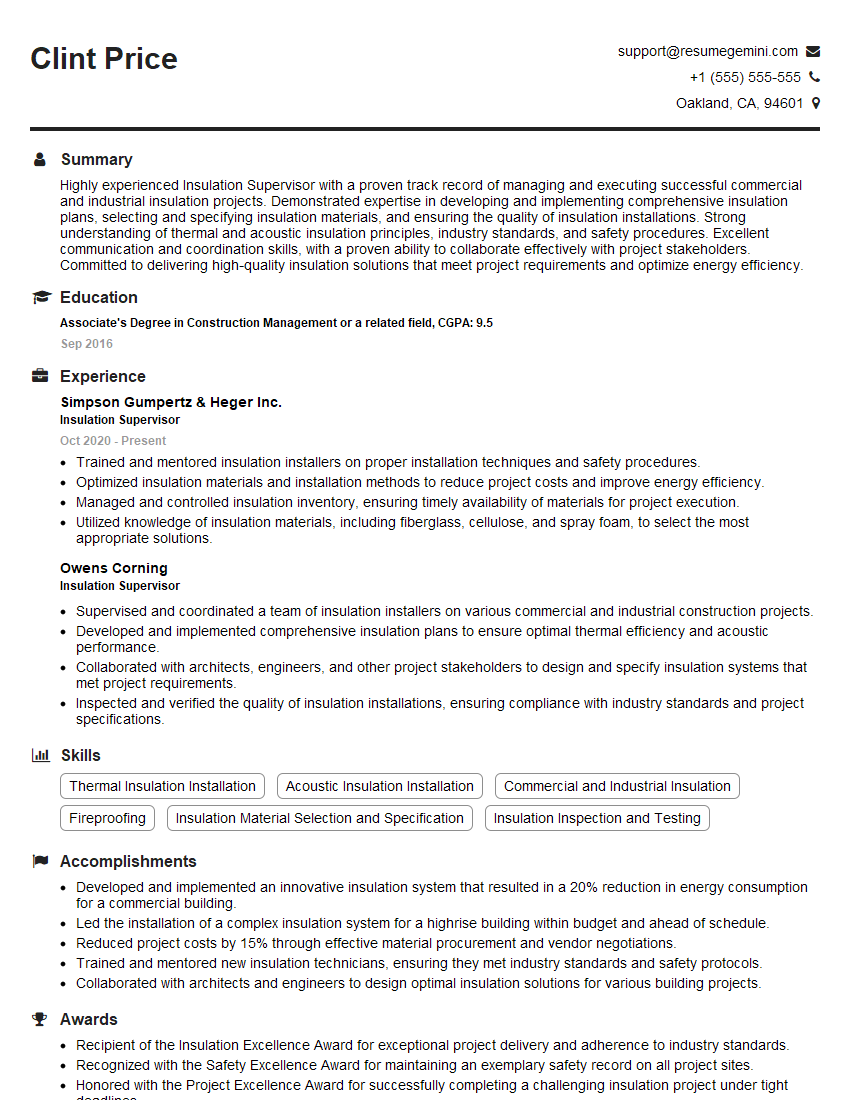
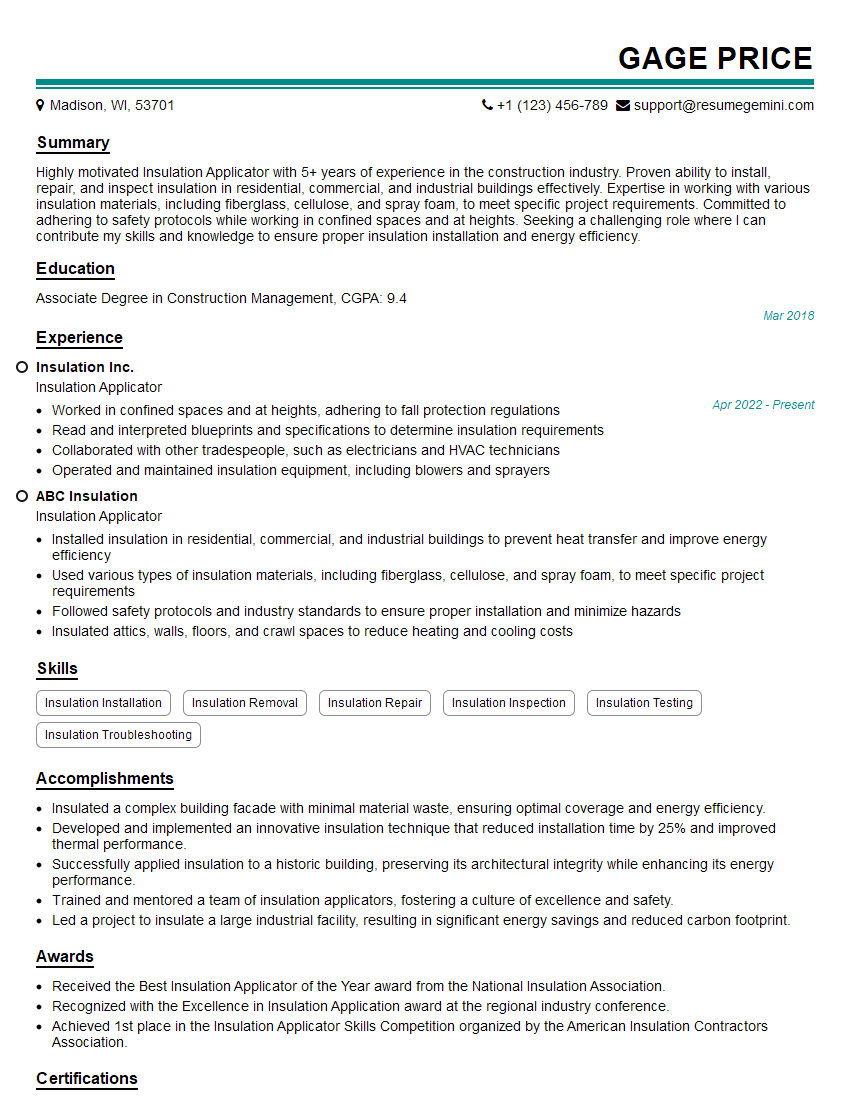
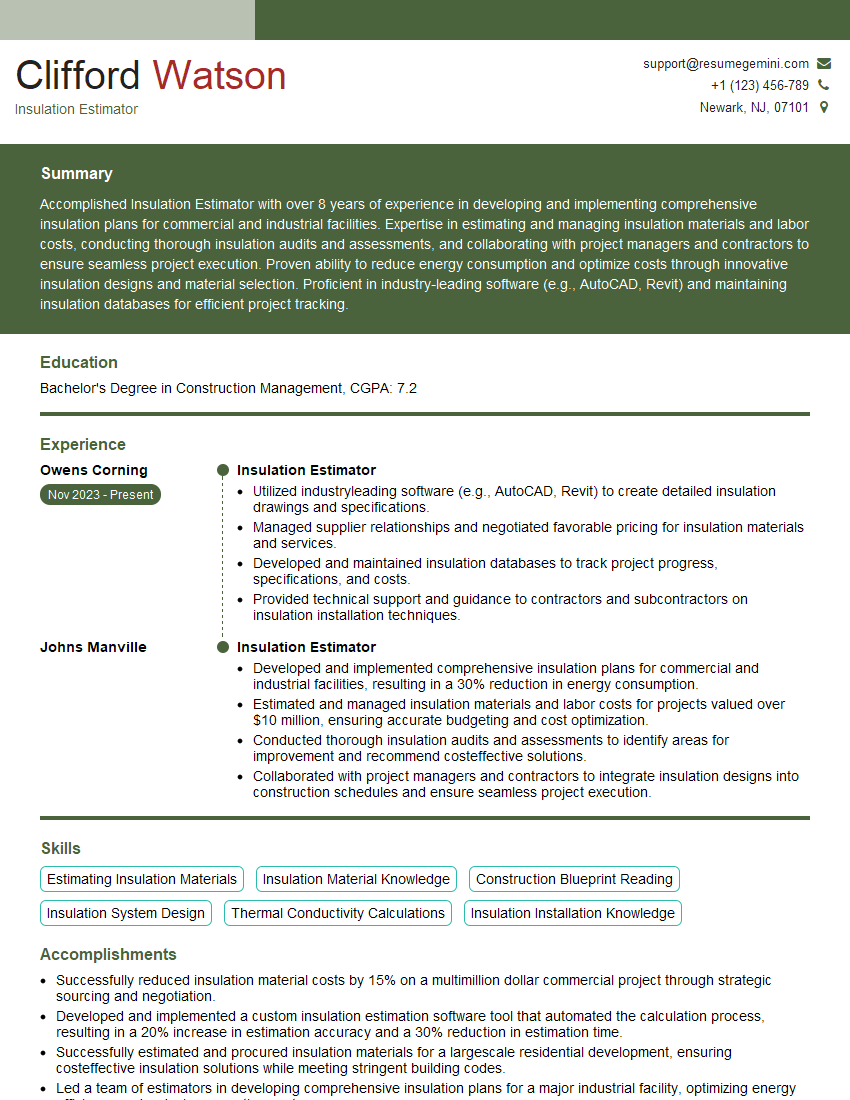
Mastering valve insulation principles and applications is crucial for career advancement in the process industries. Demonstrating your expertise through a well-structured resume is the first step. Creating an ATS-friendly resume significantly improves your chances of getting noticed by recruiters. We highly recommend using ResumeGemini to build a professional and impactful resume. ResumeGemini provides tools and resources to help you craft a compelling narrative and highlight your skills effectively. Examples of resumes tailored to the Valve Insulation industry are available to guide you.
Explore more articles
Users Rating of Our Blogs
Share Your Experience
We value your feedback! Please rate our content and share your thoughts (optional).
What Readers Say About Our Blog
To the interviewgemini.com Webmaster.
Very helpful and content specific questions to help prepare me for my interview!
Thank you
To the interviewgemini.com Webmaster.
This was kind of a unique content I found around the specialized skills. Very helpful questions and good detailed answers.
Very Helpful blog, thank you Interviewgemini team.