Interviews are opportunities to demonstrate your expertise, and this guide is here to help you shine. Explore the essential Waste Reduction and Sustainability Initiatives interview questions that employers frequently ask, paired with strategies for crafting responses that set you apart from the competition.
Questions Asked in Waste Reduction and Sustainability Initiatives Interview
Q 1. Describe your experience implementing a waste reduction program.
In my previous role at a large manufacturing facility, I spearheaded a comprehensive waste reduction program. We started by conducting a thorough waste audit to identify the types and quantities of waste generated. This audit revealed that packaging waste constituted a significant portion of our overall waste stream.
Our strategy focused on three key areas: source reduction, reuse, and recycling. For source reduction, we collaborated with suppliers to explore alternative packaging materials with less environmental impact. We transitioned from bulky cardboard packaging to lighter, more recyclable alternatives. For reuse, we implemented an internal program where reusable containers were used for internal material transport. Lastly, we invested in improved recycling infrastructure, providing clearly labeled bins throughout the facility and implementing a robust recycling program with rigorous quality control to prevent contamination.
The results were impressive: We saw a 25% reduction in overall waste within the first year, a 40% decrease in landfill waste, and a notable improvement in our overall environmental footprint. The success stemmed from a combination of effective data analysis, engaging employee training, and collaboration with key stakeholders.
Q 2. What are the key metrics you use to measure the success of a waste reduction initiative?
Measuring the success of a waste reduction initiative requires a multi-faceted approach using key performance indicators (KPIs). Some crucial metrics include:
- Waste Diversion Rate: This metric measures the percentage of waste diverted from landfills through recycling, composting, and other waste diversion methods. A higher percentage indicates a more successful program. (Formula:
(Total waste diverted / Total waste generated) * 100) - Waste Generation per Unit: This tracks the amount of waste produced per unit of product manufactured or service provided. A reduction in this metric shows improved efficiency and reduced waste generation.
- Recycling Rate: This specifically measures the percentage of recyclable materials that are actually recycled. It highlights the effectiveness of recycling programs and identifies areas for improvement.
- Landfill Waste: Monitoring the volume of waste sent to landfills directly assesses the program’s success in minimizing environmental impact.
- Cost Savings: Analyzing cost reductions associated with waste reduction, such as reduced waste disposal fees and savings on materials, provides a valuable business case for continued investment in sustainability initiatives.
Tracking these metrics over time allows for continuous monitoring, identification of improvement areas, and demonstrable evidence of program success.
Q 3. Explain your understanding of lifecycle assessment (LCA).
Lifecycle Assessment (LCA) is a comprehensive method for evaluating the environmental impacts of a product or service throughout its entire life cycle, from raw material extraction to disposal or recycling. It considers various environmental factors such as energy consumption, greenhouse gas emissions, water usage, and waste generation.
An LCA typically involves four phases:
- Goal and Scope Definition: Defining the objectives, boundaries, and methodology of the assessment.
- Inventory Analysis: Quantifying the inputs and outputs of all processes involved in the product’s life cycle.
- Impact Assessment: Evaluating the environmental impacts of these inputs and outputs using various impact categories (e.g., climate change, eutrophication).
- Interpretation: Analyzing the results and communicating findings to stakeholders.
For example, an LCA of a plastic water bottle would consider the energy used to produce the plastic, the transportation of the bottle, its usage, and finally, its disposal (landfill or recycling). This provides a holistic understanding of the environmental consequences of that product, informing decisions regarding sustainable design and production.
Q 4. How would you approach reducing food waste in a large corporate setting?
Reducing food waste in a large corporate setting requires a multi-pronged approach combining education, infrastructure improvements, and operational changes.
Strategies include:
- Employee Education and Awareness Campaigns: Conducting training sessions and promoting awareness about the impact of food waste. This could involve using posters, emails, and interactive workshops highlighting portion control and food storage techniques.
- Improved Food Storage and Handling: Implementing proper storage systems (refrigeration, appropriate containers) to maintain food quality and extend shelf life. Implementing FIFO (First In, First Out) methods to ensure older food items are used first.
- Smart Procurement and Inventory Management: Optimizing food ordering practices to minimize overstocking and spoilage. Using data-driven methods to track food consumption patterns to better predict demand.
- Composting Programs: Establishing a composting system for food scraps to divert organic waste from landfills and create valuable compost.
- Donation Programs: Partnering with local food banks or charities to donate surplus food to those in need.
- Food Waste Audits: Regularly auditing food waste to pinpoint sources and track progress towards reduction goals. This provides data-driven insights to optimize strategies.
Combining these strategies with consistent monitoring and evaluation is crucial to achieving a significant reduction in food waste within a corporate environment.
Q 5. What strategies have you used to improve recycling rates?
Improving recycling rates requires a comprehensive strategy addressing both infrastructure and behavior.
Strategies I’ve used include:
- Enhanced Recycling Infrastructure: Providing clearly labeled, conveniently located recycling bins throughout the facility, tailored to different materials (paper, plastic, glass, etc.). Investing in larger, more efficient recycling containers to accommodate higher volumes.
- Streamlined Recycling Processes: Simplifying the sorting and collection process for recyclables to reduce contamination and improve efficiency. Implementing a system for regularly emptying and cleaning recycling bins.
- Employee Training and Education: Providing comprehensive training programs on proper recycling procedures, emphasizing the importance of correctly sorting materials to prevent contamination, and highlighting the environmental benefits of recycling. Using visual aids like posters and infographics to reinforce best practices.
- Contamination Reduction Strategies: Implementing measures to reduce contamination, such as providing clear guidelines on what is recyclable and what is not, and regularly auditing the quality of recycled materials.
- Collaboration with Recycling Facilities: Establishing strong relationships with local recycling facilities to ensure proper processing of collected materials and to gain insights into market demands and best practices.
A combination of these strategies, combined with regular monitoring and adjustments based on data analysis, significantly improves recycling rates and maximizes the environmental benefits of recycling programs.
Q 6. Describe your experience with different waste diversion methods (e.g., composting, anaerobic digestion).
I have extensive experience with various waste diversion methods.
Composting is a natural process where organic waste breaks down into a nutrient-rich soil amendment. It’s ideal for food scraps, yard waste, and other biodegradable materials. I’ve implemented both in-vessel composting systems (for larger facilities) and simpler, on-site composting systems (for smaller organizations) with successful outcomes.
Anaerobic digestion is another powerful method where organic waste decomposes in the absence of oxygen, producing biogas (a renewable energy source) and digestate (a valuable fertilizer). I’ve worked with facilities utilizing this technology for large-scale waste processing, observing significant reductions in landfill waste and generation of renewable energy.
Choosing the optimal method depends on factors such as the volume and type of waste, available space, budgetary constraints, and the desired end product (compost, biogas, digestate). A thorough assessment of these factors is necessary before selecting and implementing the appropriate waste diversion method.
Q 7. What are the environmental impacts of improper waste disposal?
Improper waste disposal has severe environmental consequences, significantly impacting air, water, and soil quality.
- Air Pollution: Landfills release methane, a potent greenhouse gas, contributing to climate change. Open burning of waste releases harmful pollutants like dioxins and furans, causing respiratory problems and other health issues.
- Water Pollution: Leachate from landfills can contaminate groundwater and surface water sources, posing risks to human and ecosystem health. Improper disposal of hazardous waste can lead to direct contamination of water bodies, causing significant environmental damage.
- Soil Contamination: Improper disposal of waste, particularly hazardous waste, can contaminate soil, rendering it unsuitable for agriculture or other uses. This contamination can persist for decades, impacting soil ecosystems and potentially entering the food chain.
- Habitat Degradation: Landfills consume significant amounts of land, leading to habitat loss and fragmentation. Improper waste disposal can also affect wildlife through ingestion or contact with hazardous materials.
- Aesthetic Impacts: Accumulation of waste creates unsightly landscapes, negatively impacting the visual appeal of an area and potentially diminishing property values.
Implementing responsible waste management practices, including waste reduction, reuse, recycling, and proper disposal methods, is vital for mitigating these significant environmental impacts.
Q 8. Explain the concept of extended producer responsibility (EPR).
Extended Producer Responsibility (EPR) is a policy approach where producers are given significant responsibility for the environmental impacts of their products throughout their lifecycle, including the end-of-life stage. It shifts the onus from governments and taxpayers to the producers themselves, incentivizing them to design more sustainable products and manage their end-of-life disposal effectively.
Imagine a world where electronics manufacturers are responsible not just for making the product, but also for its recycling and responsible disposal once it’s broken or outdated. This is the essence of EPR. It works by imposing financial and/or operational responsibilities on producers, encouraging them to use less packaging, design products for easier disassembly and recycling, and even fund recycling programs. For example, a company producing plastic bottles might be responsible for collecting and recycling a certain percentage of their bottles, ensuring that they don’t end up in landfills or polluting the environment. This accountability directly impacts design choices, pushing for more sustainable materials and processes.
Q 9. How familiar are you with ISO 14001 or other environmental management standards?
I’m very familiar with ISO 14001, the internationally recognized standard for environmental management systems. I’ve been involved in several projects where we implemented and maintained ISO 14001 certification. This involved conducting environmental impact assessments, setting environmental objectives and targets, and regularly monitoring and reviewing our environmental performance. Beyond ISO 14001, I also have working knowledge of other relevant standards, such as ISO 50001 (Energy Management Systems) and various industry-specific environmental guidelines, allowing me to adapt strategies to the unique needs of different organizations and contexts.
My experience with these standards extends beyond mere compliance. I’ve used them as a framework for continuous improvement, identifying opportunities for waste reduction, energy efficiency, and overall environmental performance enhancement. Implementing these standards not only reduces environmental impact but also improves operational efficiency and enhances a company’s reputation for sustainability.
Q 10. How do you identify and prioritize waste reduction opportunities?
Identifying and prioritizing waste reduction opportunities requires a structured approach. I typically begin with a comprehensive waste audit, quantifying waste streams by type and source. This audit provides crucial data for informed decision-making. Following this, I employ a multi-pronged strategy:
- Material Flow Analysis: Mapping the flow of materials through the entire process helps pinpoint areas of significant waste generation.
- Waste Characterization: Detailed analysis identifies the composition of each waste stream, informing recycling, reuse, or treatment strategies.
- Prioritization Matrix: A matrix considering factors like waste volume, environmental impact, and cost-effectiveness allows for ranking opportunities. For instance, reducing high-volume, easily recyclable waste would be prioritized over low-volume, difficult-to-recycle waste.
- Stakeholder Engagement: Input from staff across all departments is crucial for identifying hidden waste reduction opportunities and ensuring successful implementation.
For example, in a manufacturing setting, a waste audit might reveal excessive packaging material. Prioritizing this would involve exploring alternatives such as reduced packaging, reusable containers, or more efficient packing processes.
Q 11. Describe a time you had to overcome a challenge related to waste management.
During a project involving a large-scale construction site, we faced a significant challenge with construction and demolition waste (CDW). Initial waste management practices were inefficient, leading to high disposal costs and environmental concerns. The challenge was to reduce the volume of CDW sent to landfill while adhering to strict budget constraints.
To overcome this, I implemented a three-step strategy: 1) A detailed CDW audit to precisely identify the waste streams; 2) Negotiated contracts with recycling and waste-to-energy facilities to secure better rates; and 3) Introduced on-site waste sorting and segregation, empowering workers through training and incentives. The result was a 35% reduction in CDW sent to landfills, saving the project significant funds and significantly reducing the environmental footprint. This experience highlighted the importance of proactive waste management planning, cost-effective solutions, and empowering on-site teams.
Q 12. What are some common barriers to implementing sustainable practices, and how can they be addressed?
Common barriers to implementing sustainable practices include:
- High upfront costs: Implementing new technologies or processes often requires significant investment.
- Lack of awareness or knowledge: Employees may not understand the benefits of sustainable practices.
- Resistance to change: Established routines and habits can hinder the adoption of new methods.
- Lack of measurable results: Difficulty in quantifying the benefits of sustainable practices can demotivate stakeholders.
- Insufficient regulatory frameworks: Lack of clear regulations or enforcement can discourage investment in sustainability.
These can be addressed through: cost-benefit analysis to demonstrate long-term savings, training and education programs to enhance awareness, incentive programs to encourage participation, regular monitoring and reporting to showcase progress, and advocating for stronger environmental regulations.
Q 13. How do you engage stakeholders in waste reduction efforts?
Engaging stakeholders is vital for successful waste reduction. I use a multifaceted approach:
- Communication: Clearly communicating the benefits of waste reduction, both environmentally and economically, using accessible language.
- Collaboration: Involving stakeholders in the planning and implementation phases, fostering a sense of ownership.
- Incentives: Rewarding individuals and teams for their contributions, whether through recognition programs or financial incentives.
- Training and Education: Providing comprehensive training on best practices and empowering employees to actively participate in waste reduction efforts.
- Regular Feedback and Reporting: Transparency through regular updates on progress and addressing concerns promptly.
For example, holding regular team meetings to discuss progress, showcasing success stories, and soliciting feedback helps maintain engagement and encourages a culture of continuous improvement. A well-designed communication plan ensures everyone understands the importance of participation, and recognition of efforts keeps morale high.
Q 14. What is your experience with waste audits and data analysis?
I have extensive experience conducting waste audits and analyzing the resulting data. My approach involves a combination of quantitative and qualitative methods. Quantitative analysis involves weighing and categorizing waste streams to determine volumes and composition. Qualitative analysis includes observations of waste generation processes and interviews with staff to identify root causes.
The data collected is then analyzed using various statistical tools and techniques to identify trends and patterns. This data informs the development of targeted waste reduction strategies. For instance, analyzing data from a waste audit might reveal that a particular production process generates a disproportionate amount of a specific type of waste. This knowledge can then be used to implement process changes or invest in new technologies to reduce waste generation at the source. Data visualization tools such as charts and graphs are used to effectively communicate findings to stakeholders and track progress over time.
Q 15. Explain your understanding of different waste streams and their management.
Waste streams represent the various types of waste generated from different sources. Effective waste management hinges on understanding these diverse streams and tailoring management strategies accordingly. Think of it like sorting your laundry – you wouldn’t wash your delicates with your jeans!
- Municipal Solid Waste (MSW): This is everyday trash from homes and businesses – food scraps, packaging, paper, etc. Management involves collection, transfer, and processing (landfilling, incineration, recycling).
- Industrial Waste: Generated from manufacturing processes, this can range from hazardous materials (chemicals, solvents) to non-hazardous waste (scrap metal, wood). Management necessitates specialized handling and treatment to comply with strict regulations.
- Hazardous Waste: This poses significant environmental and health risks. Examples include batteries, pesticides, and medical waste. Its management requires stringent safety protocols, specialized disposal, and often, treatment before disposal.
- Construction and Demolition (C&D) Waste: Debris from construction and demolition projects. Management focuses on maximizing recycling and reuse of materials like concrete, wood, and metal.
- Electronic Waste (e-waste): Discarded electronics like computers, phones, and TVs. Proper management is crucial due to the presence of hazardous substances. Recycling e-waste is essential for resource recovery and environmental protection.
Effective waste stream management requires a multi-pronged approach including source reduction, recycling, composting, energy recovery, and safe disposal. For example, a city might implement a comprehensive recycling program with separate bins for different materials, alongside public awareness campaigns to promote source reduction.
Career Expert Tips:
- Ace those interviews! Prepare effectively by reviewing the Top 50 Most Common Interview Questions on ResumeGemini.
- Navigate your job search with confidence! Explore a wide range of Career Tips on ResumeGemini. Learn about common challenges and recommendations to overcome them.
- Craft the perfect resume! Master the Art of Resume Writing with ResumeGemini’s guide. Showcase your unique qualifications and achievements effectively.
- Don’t miss out on holiday savings! Build your dream resume with ResumeGemini’s ATS optimized templates.
Q 16. How can technology be leveraged to improve waste management practices?
Technology plays a transformative role in enhancing waste management practices. From optimizing collection routes to improving sorting efficiency and tracking waste disposal, technology offers numerous opportunities for improvement.
- Smart Bins: Sensors in waste bins monitor fill levels, optimizing collection routes and reducing unnecessary trips. This saves fuel, lowers emissions, and improves efficiency.
- Waste Sorting AI: Computer vision and machine learning algorithms can automate the sorting of recyclables, significantly increasing accuracy and speed compared to manual sorting. Imagine robots sorting materials much faster and more accurately than humans!
- GPS Tracking of Waste Vehicles: Real-time tracking of garbage trucks helps optimize routes, reducing transportation costs and minimizing fuel consumption.
- Blockchain Technology: Enhancing transparency and traceability in the waste management supply chain. Tracking the movement of waste from generation to disposal ensures accountability and prevents illegal dumping.
- Waste-to-Energy Technologies: Advanced incineration technologies can recover energy from waste, reducing reliance on fossil fuels and minimizing landfill volume.
For example, a waste management company could use a combination of smart bins and GPS tracking to optimize their collection routes, saving resources and improving efficiency. Implementing such a system would dramatically change how we manage waste, making it faster and more sustainable.
Q 17. Describe your familiarity with different waste treatment technologies.
I’m familiar with a wide range of waste treatment technologies, each with its own advantages and disadvantages depending on the type of waste and local context.
- Landfilling: The oldest and still most common method. While cost-effective, it poses environmental risks related to leachate and greenhouse gas emissions. Modern landfills often incorporate liners and gas collection systems to mitigate these issues.
- Incineration: Waste is burned at high temperatures, reducing volume significantly. Energy can be recovered from the process, but air pollution is a concern and requires stringent emission controls.
- Composting: Organic waste is decomposed biologically, producing a valuable soil amendment. Requires proper management to avoid odor and pest problems. This is excellent for diverting food scraps and yard waste from landfills.
- Anaerobic Digestion: Organic waste is broken down in the absence of oxygen, producing biogas (a renewable energy source) and digestate (a fertilizer). This is a particularly effective method for food waste and agricultural residues.
- Mechanical Biological Treatment (MBT): A combination of mechanical separation and biological treatment to process MSW. This can improve the quality of recyclable materials and reduce the volume of waste sent to landfills.
The choice of technology depends heavily on the waste stream’s composition, available resources, and regulatory requirements. For instance, a region with a high organic waste stream might benefit most from investing in composting and anaerobic digestion facilities, reducing landfill burden and providing valuable by-products.
Q 18. What is your experience with developing and implementing a sustainability policy?
I’ve been actively involved in developing and implementing sustainability policies in various organizations. The process typically involves several key steps.
- Needs Assessment: Identifying the organization’s current environmental footprint and areas for improvement.
- Policy Development: Creating a comprehensive policy that sets clear goals, targets, and timelines for waste reduction and other sustainability initiatives. This needs buy-in from all levels of the organization.
- Implementation: Putting the policy into action. This involves training staff, investing in new technologies, and establishing monitoring systems.
- Monitoring and Evaluation: Regularly tracking progress towards the goals, identifying any challenges, and making adjustments as needed.
- Reporting and Communication: Sharing progress reports with stakeholders and communicating the organization’s sustainability achievements to build public trust and support.
In a previous role, I helped a manufacturing company develop a comprehensive sustainability policy that resulted in a 30% reduction in waste generation within two years. This was achieved by implementing waste reduction techniques throughout the manufacturing process, enhancing recycling, and introducing employee training initiatives emphasizing sustainability.
Q 19. How do you ensure compliance with environmental regulations related to waste management?
Ensuring compliance with environmental regulations related to waste management is paramount. This requires a proactive and multi-faceted approach.
- Understanding Regulations: Thorough knowledge of all relevant local, regional, and national laws and regulations is essential.
- Waste Audits: Regularly conducting waste audits to assess the organization’s waste generation and identify areas needing improvement.
- Record Keeping: Meticulous record-keeping of all waste generation, transportation, and disposal activities. This is crucial for demonstrating compliance to regulatory agencies during inspections.
- Employee Training: Educating employees about waste management procedures, regulations, and their responsibilities in maintaining compliance.
- Relationship with Regulatory Agencies: Maintaining open communication with regulatory agencies to ensure that all requirements are met and to address any concerns promptly.
For instance, if a company handles hazardous waste, it needs to comply with stringent regulations regarding storage, transportation, and disposal. This may involve obtaining permits, adhering to specific labeling and packaging standards, and using licensed hazardous waste haulers. Failure to comply can result in severe penalties.
Q 20. What is your understanding of the circular economy and its principles?
The circular economy is a model that aims to minimize waste and maximize the use of resources. It’s a departure from the traditional linear ‘take-make-dispose’ model. The core principles revolve around designing out waste and pollution, keeping products and materials in use, and regenerating natural systems.
- Design for Durability and Reparability: Creating products that are built to last and easily repaired, extending their lifespan and reducing waste.
- Reduce, Reuse, Recycle: Prioritizing waste reduction at the source, followed by reuse and then recycling or other recovery methods.
- Material Recovery and Recycling: Recovering valuable materials from waste streams and reintroducing them into the production cycle.
- Sustainable Production Processes: Employing production methods that minimize environmental impact and resource consumption.
- Closed-Loop Systems: Designing systems where waste from one process becomes a resource for another.
Imagine a clothing company designing clothes that are easily repaired, using recycled materials, and offering a take-back program at the end of the garment’s life. This is a circular approach that minimizes waste and maximizes resource utilization.
Q 21. What are some innovative approaches to waste reduction you are aware of?
Many innovative approaches to waste reduction are emerging, driven by technological advancements and a growing awareness of environmental concerns.
- Bioplastics: Plastics derived from renewable biomass resources, offering a more sustainable alternative to petroleum-based plastics. However, proper composting infrastructure is critical for their effective lifecycle management.
- Industrial Symbiosis: Creating partnerships between industries where waste from one becomes a resource for another. For example, a power plant’s ash could be used as a construction material.
- Extended Producer Responsibility (EPR): Holding producers responsible for the end-of-life management of their products, incentivizing them to design more sustainable products and improve recycling rates.
- Food Waste Reduction Initiatives: Implementing strategies to minimize food waste at all stages of the food supply chain, from farm to table. This includes improved storage, packaging, and consumer education.
- Waste-to-Products: Transforming waste into valuable new products. Examples include creating building materials from construction and demolition waste or making biofuels from organic waste.
For instance, a city might implement a food waste composting program, partnering with local restaurants and businesses to collect food scraps and transform them into a valuable soil amendment for local farms. This not only reduces landfill waste but creates a closed-loop system within the community.
Q 22. How would you handle a situation where a waste reduction goal is not met?
When a waste reduction goal isn’t met, it’s crucial to avoid blame and instead conduct a thorough root cause analysis. This involves systematically investigating why the target wasn’t achieved. Think of it like diagnosing a medical problem – you need to identify the underlying issue before prescribing a solution.
- Data Review: First, meticulously review all available data. Compare actual waste generation against projected figures. Identify trends and potential outliers.
- Stakeholder Interviews: Engage with all stakeholders – employees, contractors, and clients – to gather diverse perspectives. Their insights might reveal unforeseen challenges or obstacles.
- Process Analysis: Examine the waste reduction program’s implementation. Were there any flaws in the processes, insufficient training, or lack of resources? For example, if recycling bins were improperly labeled, it could lead to contamination and reduce recycling rates.
- Corrective Actions: Based on the analysis, develop targeted corrective actions. These might include improving communication, providing additional training, refining waste sorting procedures, or investing in new equipment. For instance, if inadequate sorting was a problem, installing clearer signage and providing more frequent training sessions can improve compliance.
- Revised Goals & Monitoring: Adjust the waste reduction targets based on the findings. Establish a revised timeline and implement a robust monitoring system to track progress and make necessary adjustments along the way.
For instance, in a previous project, we initially missed a recycling target due to insufficient employee training on proper sorting. After targeted training sessions and improved labeling, we exceeded the target in the following quarter.
Q 23. Explain your understanding of the hierarchy of waste management.
The waste management hierarchy prioritizes waste reduction strategies based on their environmental impact. The ideal scenario is to prevent waste generation altogether. Think of it as a pyramid, with the most preferred methods at the top and the least preferred at the bottom.
- Prevention: This is the top priority – designing products and processes to minimize waste from the outset. Examples include using sustainable materials, designing products for durability and repairability, and optimizing production processes to reduce scrap.
- Reduction: Minimizing the amount of waste generated. This involves strategies like source reduction (using less material), reuse (finding alternative uses for items), and repurposing.
- Recycling and Composting: Transforming waste materials into new products or using organic materials to create compost. This requires proper collection and processing systems.
- Recovery: Extracting energy from waste through processes like incineration with energy recovery. This reduces landfill burden but involves emissions considerations.
- Disposal: Landfilling, which should be the last resort due to environmental impact. Proper landfill management is crucial to minimize environmental damage.
For example, a company might switch to reusable packaging instead of disposable ones (prevention/reduction), implement a comprehensive recycling program (recycling), and only send non-recyclable waste to landfills (disposal).
Q 24. How do you measure the cost-effectiveness of a waste reduction program?
Measuring the cost-effectiveness of a waste reduction program requires a holistic approach that considers both costs and benefits. It’s not just about saving money on waste disposal; it’s about the overall economic and environmental impact.
- Cost Analysis: This includes all program expenses: personnel, equipment, training, materials, and disposal fees.
- Benefit Analysis: This includes reduced disposal costs, increased recycling revenue, potential savings on raw materials (through recycling), and positive impacts on brand reputation and regulatory compliance.
- Return on Investment (ROI): The ROI is calculated by comparing the total benefits against the total costs. A positive ROI indicates the program is cost-effective. The formula is:
(Total Benefits - Total Costs) / Total Costs. - Environmental Impact Assessment: Quantify the environmental benefits, such as reduced greenhouse gas emissions, water pollution, and landfill space usage. While difficult to directly monetize, these are important factors for assessing overall program effectiveness.
- Lifecycle Costing: Consider the long-term costs and benefits associated with the program. For example, the initial investment in new recycling equipment might be high, but the long-term savings in disposal fees and raw material costs could far outweigh it.
For example, a company implemented a new waste sorting system which had an initial investment of $10,000. However, it reduced landfill fees by $5,000 annually and increased revenue from recycled materials by $3,000 annually. This translates to a positive ROI within two years.
Q 25. Describe your experience with communicating sustainability initiatives to different audiences.
Communicating sustainability initiatives effectively requires tailoring the message to the specific audience. A technical report for regulatory bodies will differ significantly from an engaging presentation for employees or a concise social media post for the general public.
- Internal Communications: For employees, use clear, concise language, emphasizing the benefits for them, such as improved work environment, enhanced company image, and opportunities for skill development. Success stories and gamification (introducing friendly competition) can improve engagement.
- External Communications: When communicating with clients or the public, focus on the wider environmental and social benefits, highlighting the company’s commitment to sustainability. Use visuals like infographics and videos to enhance understanding.
- Regulatory Communications: For regulatory bodies, provide comprehensive data and reports demonstrating compliance with regulations. Utilize clear, factual language and avoid hyperbole.
- Choosing the Right Channels: Select appropriate communication channels for each audience. This might include company newsletters, intranet portals, social media, presentations, or formal reports.
In a previous role, I successfully engaged employees in a waste reduction program by creating a friendly competition between departments, tracking progress with a visual dashboard, and rewarding the most successful teams. This significantly improved participation and exceeded the initial waste reduction goals.
Q 26. What are some key legislation and regulations related to waste management in your region?
(Note: This answer requires knowledge of a specific region’s legislation. The following is a general example, replace with accurate information for your region.)
In many jurisdictions, waste management is governed by a combination of federal, state, and local laws. Key regulations often focus on:
- Waste Disposal Bans: Bans on specific materials in landfills (e.g., certain plastics, hazardous wastes).
- Extended Producer Responsibility (EPR): Holding producers responsible for the end-of-life management of their products (e.g., requiring manufacturers to fund recycling programs).
- Recycling and Composting Targets: Setting mandatory targets for recycling and composting rates.
- Hazardous Waste Management: Regulations for the safe handling, storage, transportation, and disposal of hazardous wastes.
- Reporting and Compliance: Requiring businesses to report on their waste generation and recycling efforts and comply with specific regulations.
Staying informed about these regulations is crucial for compliance and proactive program development.
Q 27. How do you stay current with best practices in waste reduction and sustainability?
Staying current in waste reduction and sustainability requires a multi-faceted approach:
- Professional Networks: Actively participate in professional organizations and attend conferences and workshops related to waste management and sustainability. Networking with peers allows for knowledge sharing and staying abreast of the latest trends.
- Academic Journals and Publications: Regularly review academic journals, industry publications, and government reports for research findings and best practices.
- Online Resources: Utilize reputable online resources such as government environmental agencies, non-profit organizations focused on sustainability, and industry associations to access information and reports.
- Case Studies and Benchmarking: Analyze case studies of successful waste reduction programs in similar settings to identify effective strategies and adapt them to your context.
- Continuing Education: Pursue professional development opportunities such as certifications or online courses to enhance knowledge and skills.
For example, I regularly subscribe to relevant journals and attend industry conferences to stay updated on emerging technologies and policy changes impacting waste management.
Q 28. Describe your experience with using data and analytics to inform decision-making in waste management.
Data and analytics are indispensable for informed decision-making in waste management. Using data to track waste generation, analyze waste streams, and measure the effectiveness of implemented programs is crucial.
- Data Collection: Implement a robust system for collecting accurate and reliable data on waste generation, composition, and disposal methods. This might involve weighing waste, conducting waste audits, and using smart sensors.
- Data Analysis: Use statistical methods and data visualization tools to analyze the collected data, identify trends, and pinpoint areas for improvement. This could involve identifying peak waste generation times, pinpointing sources of contamination in recycling streams, or evaluating the impact of specific interventions.
- Performance Monitoring: Track key performance indicators (KPIs) such as waste diversion rates, recycling rates, and landfill diversion rates to monitor the effectiveness of waste reduction strategies.
- Predictive Modeling: Develop predictive models to forecast future waste generation and optimize waste management strategies based on anticipated changes or trends.
- Decision Support Systems: Use data-driven insights to inform decisions on resource allocation, program design, and policy development.
In a previous project, we used data analysis to identify that a significant portion of recyclable materials were ending up in landfills due to contamination. By analyzing the types of contamination, we developed targeted interventions – improved signage, additional training, and a revised waste sorting protocol – that resulted in a 20% increase in recycling rates.
Key Topics to Learn for Waste Reduction and Sustainability Initiatives Interview
- Lifecycle Assessment (LCA): Understanding the environmental impact of products from cradle to grave. This includes analyzing material sourcing, manufacturing, use, and disposal phases.
- Waste Hierarchy: Mastering the order of preference for waste management – prevention, reduction, reuse, recycling, recovery, and disposal. Be prepared to discuss practical applications in various contexts.
- Circular Economy Principles: Demonstrate a strong understanding of designing out waste and pollution, keeping products and materials in use, and regenerating natural systems.
- Sustainable Supply Chain Management: Discuss strategies for incorporating sustainability throughout the supply chain, from sourcing raw materials to distribution and end-of-life management.
- Measurement and Reporting: Familiarize yourself with key performance indicators (KPIs) used to track progress towards sustainability goals, such as waste diversion rates and carbon footprint reductions. Be ready to discuss relevant reporting frameworks.
- Stakeholder Engagement: Understand the importance of engaging with various stakeholders (employees, customers, communities, regulators) in developing and implementing sustainable initiatives.
- Waste Reduction Technologies and Innovations: Explore emerging technologies and innovative approaches to waste management, such as anaerobic digestion, advanced recycling techniques, and waste-to-energy solutions.
- Legislation and Regulations: Be aware of relevant environmental regulations and policies related to waste management and sustainability in your target region or industry.
- Cost-Benefit Analysis of Sustainability Initiatives: Demonstrate your ability to evaluate the financial and environmental trade-offs associated with different waste reduction strategies.
- Problem-Solving and Critical Thinking: Be prepared to discuss how you would approach a real-world waste reduction challenge, showcasing your analytical and problem-solving skills.
Next Steps
Mastering Waste Reduction and Sustainability Initiatives is crucial for career advancement in a rapidly evolving landscape. Demonstrating expertise in these areas will significantly enhance your job prospects and open doors to exciting opportunities. To maximize your chances, focus on crafting an ATS-friendly resume that showcases your skills and experience effectively. ResumeGemini is a trusted resource to help you build a professional and impactful resume that stands out. Examples of resumes tailored to Waste Reduction and Sustainability Initiatives are available to guide you.
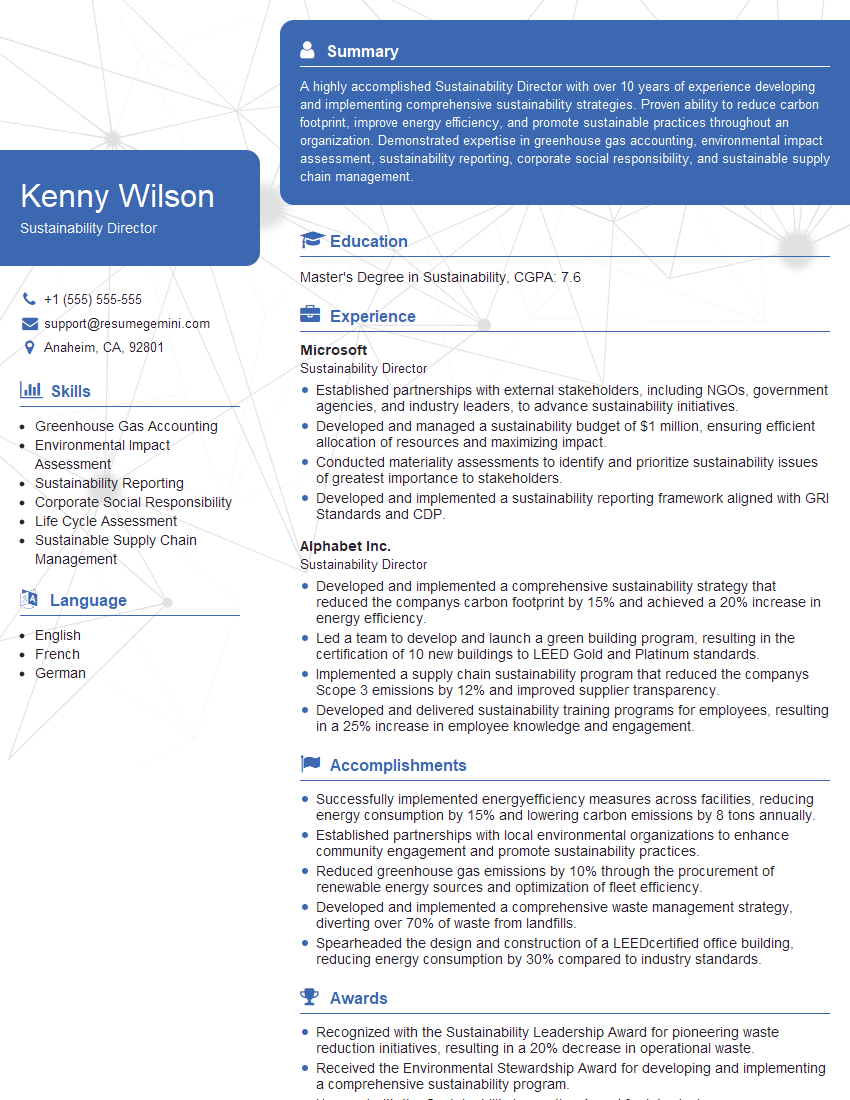
Sustainability Director Resume Sample
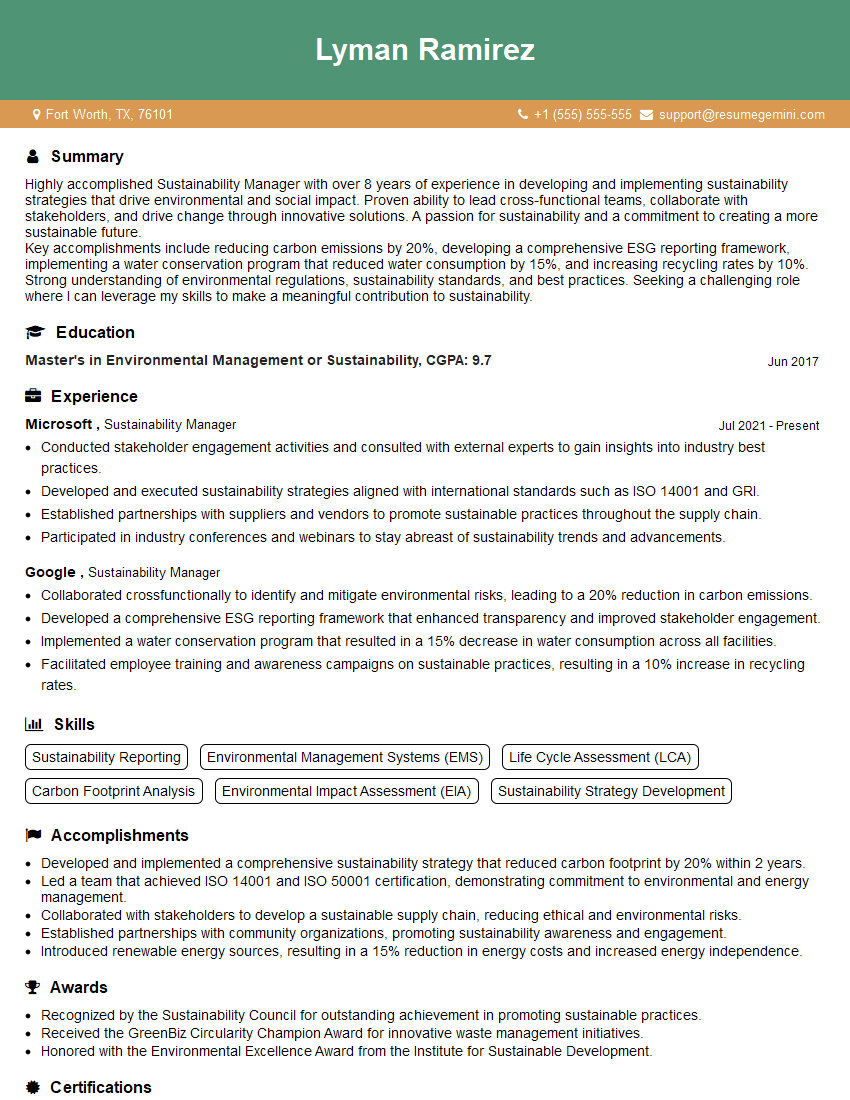
Sustainability Manager Resume Sample
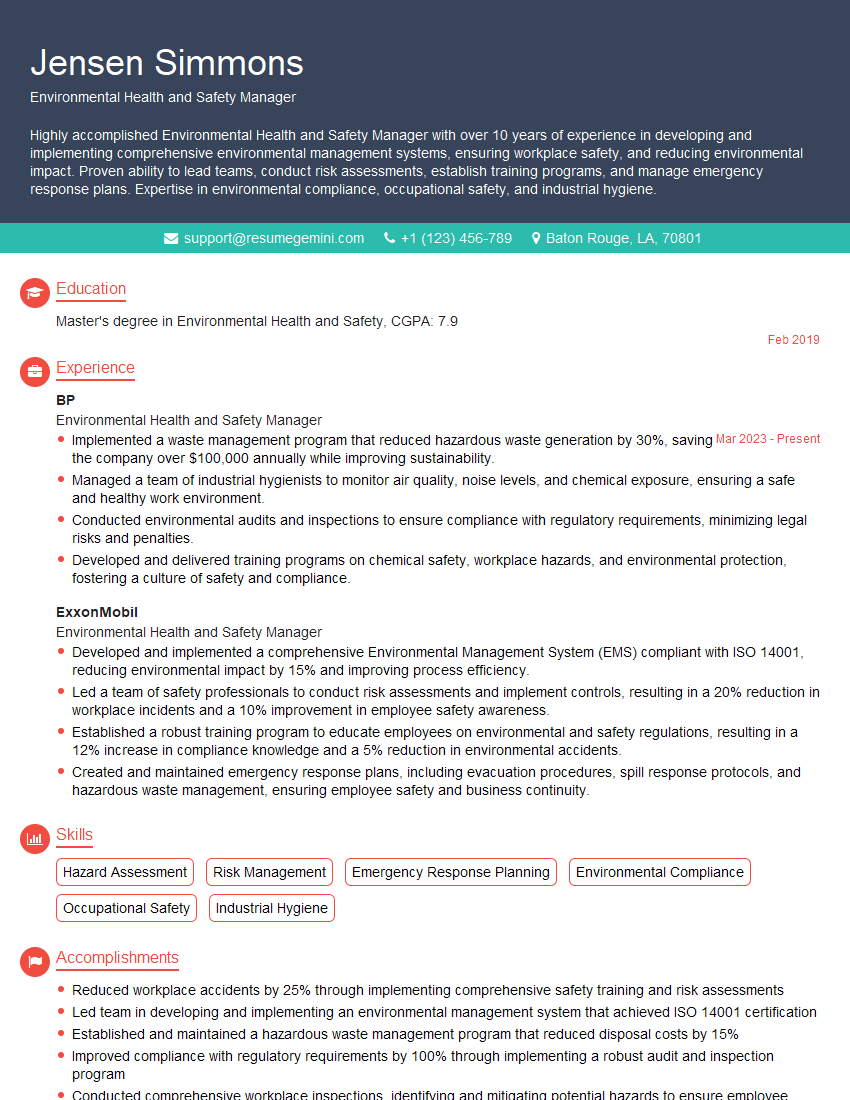
Environmental Health and Safety Manager Resume Sample
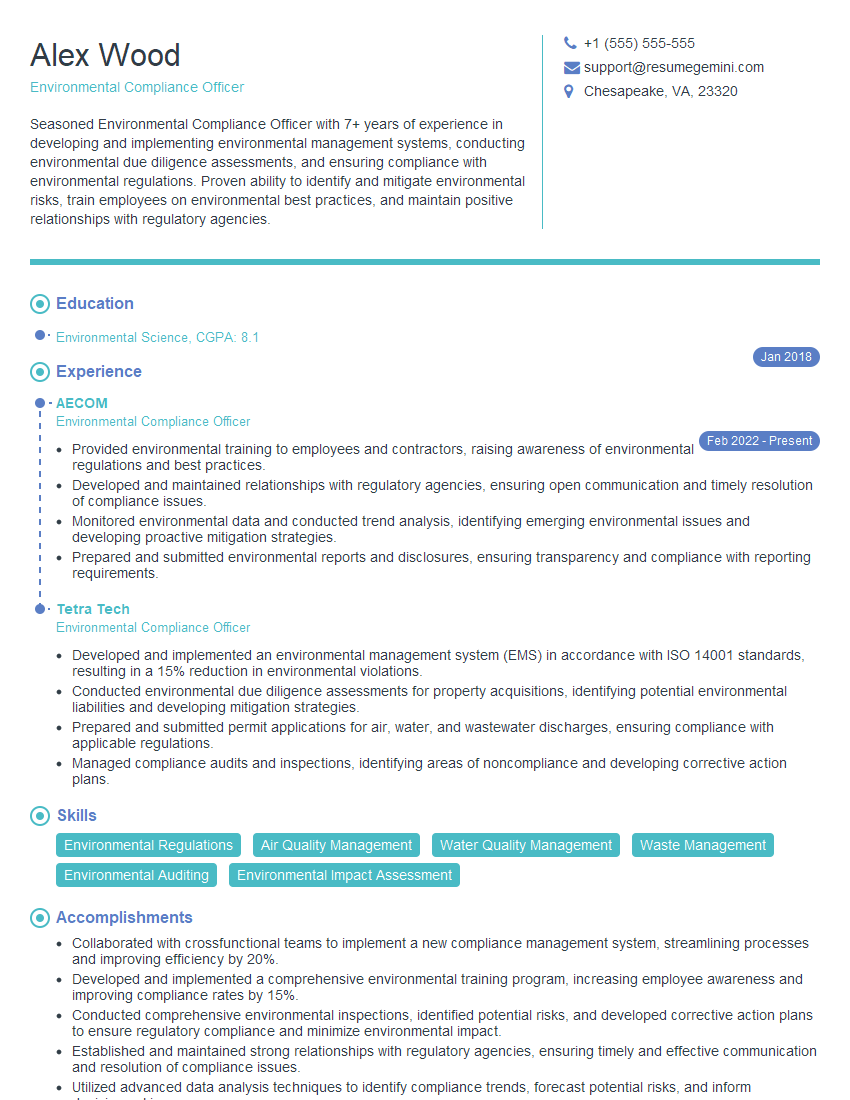
Environmental Compliance Officer Resume Sample
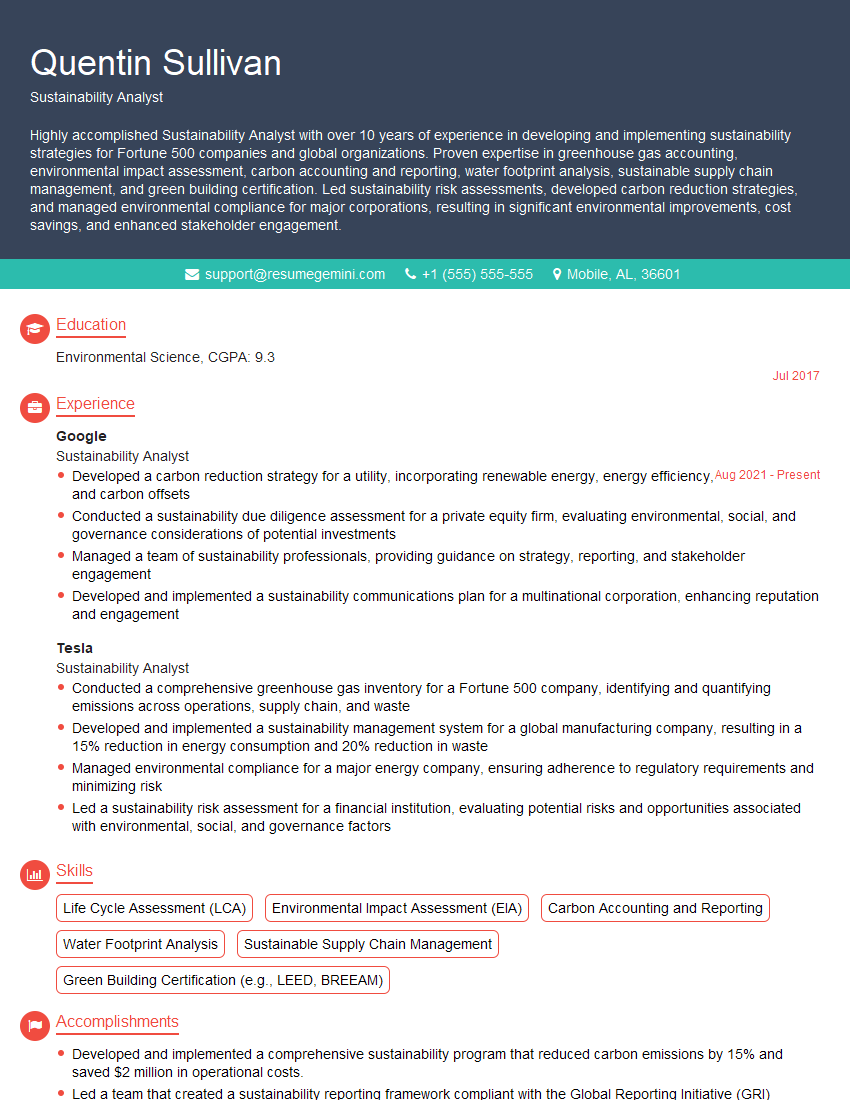
Sustainability Analyst Resume Sample

Sustainability Consultant Resume Sample
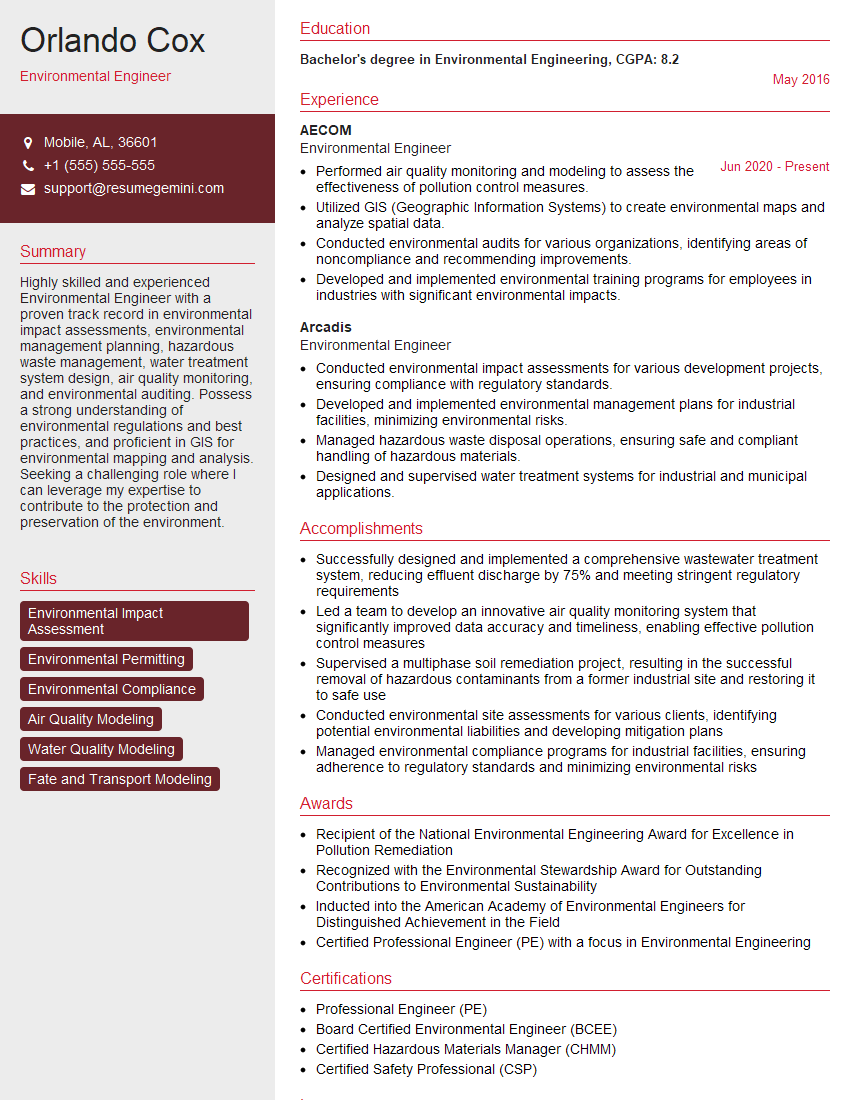
Environmental Engineer Resume Sample
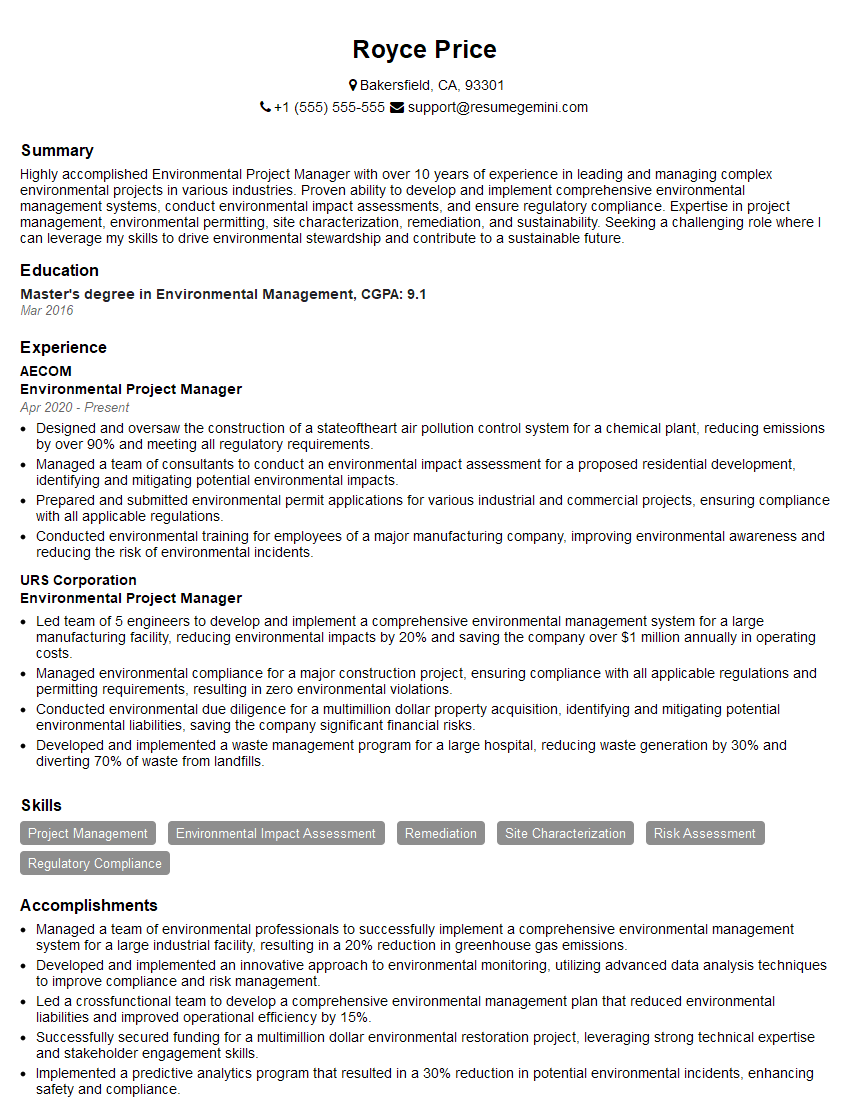
Environmental Project Manager Resume Sample
Explore more articles
Users Rating of Our Blogs
Share Your Experience
We value your feedback! Please rate our content and share your thoughts (optional).
What Readers Say About Our Blog
To the interviewgemini.com Webmaster.
Very helpful and content specific questions to help prepare me for my interview!
Thank you
To the interviewgemini.com Webmaster.
This was kind of a unique content I found around the specialized skills. Very helpful questions and good detailed answers.
Very Helpful blog, thank you Interviewgemini team.