The right preparation can turn an interview into an opportunity to showcase your expertise. This guide to Water Heater Piping and Venting interview questions is your ultimate resource, providing key insights and tips to help you ace your responses and stand out as a top candidate.
Questions Asked in Water Heater Piping and Venting Interview
Q 1. What are the common types of water heater venting systems?
Water heater venting systems are crucial for safely removing combustion byproducts and preventing dangerous pressure buildup. Common types include:
- Type B vent: A single-wall vent pipe made of galvanized steel or aluminum. It’s typically used for shorter vent runs and gas water heaters.
- Type L vent: A double-wall vent pipe, usually made of concentric aluminum or stainless steel. It offers better corrosion resistance and is often used for longer runs, higher temperatures, and situations requiring superior durability.
- CPVC (Chlorinated Polyvinyl Chloride): Used for venting water heaters that use electric heating elements, as it can handle slightly higher temperatures than other materials. It is not appropriate for gas appliances.
- PVC (Polyvinyl Chloride): Though sometimes used for drain lines, it’s generally not recommended for venting due to its lower temperature tolerance and potential for degradation under heat stress. However, special high-temperature PVC may be used in certain installations and applications.
The choice of vent type depends on factors such as fuel type (gas or electric), vent length, temperature, and local building codes.
Q 2. Explain the difference between a Type B and Type L vent.
The key difference between Type B and Type L vents lies in their construction and application. Type B vents are single-wall, meaning they consist of a single layer of metal. They’re less expensive but are suitable only for shorter vent runs and typically used with gas water heaters with lower exhaust temperatures. Type L vents are double-walled, providing superior corrosion protection and higher temperature resistance. This makes them ideal for longer vent runs, higher-temperature applications, and situations where increased safety is paramount. Think of it like this: a Type B vent is like a single layer of clothing—suitable for mild weather, while a Type L vent is like a heavy winter coat providing superior protection against the elements. For example, if a vent run is particularly long, a Type L vent would be necessary to prevent condensation and corrosion within the vent pipe, thus prolonging the lifespan of the vent system.
Q 3. Describe the proper sizing of a water heater vent.
Proper water heater vent sizing is critical for ensuring efficient venting and preventing dangerous pressure buildup. It’s governed by the water heater’s BTU rating and the length of the vent run. Undersizing can lead to insufficient venting, while oversizing is wasteful. You’ll need to consult the manufacturer’s instructions for the specific water heater and use a vent sizing chart that is approved for your local area. These charts take into account factors such as the appliance’s BTU rating, the number of elbows, the total vertical height and horizontal lengths of the venting system, and other variables that can impact venting efficiency. In the case of complex vent runs, consulting an HVAC or plumbing professional is strongly advised. Improper sizing can lead to dangerous back pressure in the appliance, leading to carbon monoxide buildup or potentially a malfunction, hence the need to always refer to local building codes.
Q 4. What are the code requirements for water heater venting in your area?
Code requirements for water heater venting vary significantly by location (city, state, and country). These codes are generally based on nationally recognized standards, but local jurisdictions frequently add or modify requirements. Always consult your local building department for the most current and accurate codes. Typical requirements include, but aren’t limited to: minimum vent diameter, maximum vent length, permitted vent materials, slope requirements (to allow for condensate drainage), required clearances around the vent pipe, and the required presence of a vent terminal or cap. Failure to adhere to local codes can lead to permit denials, installation rejection, and potential safety hazards.
Q 5. How do you identify a clogged water heater vent?
A clogged water heater vent can lead to dangerous situations, including carbon monoxide buildup. You can identify a clog by several indicators:
- Weak or nonexistent draft: Hold a lit match near the vent terminal. A strong draft should pull the flame towards the vent. If it does not, the vent system might be clogged.
- Unusual noises: Gurgling or whooshing sounds from the water heater may suggest restricted airflow.
- Pilot light repeatedly going out: Insufficient airflow can extinguish the pilot light of a gas water heater.
- Water heater malfunction: A buildup of pressure could cause the heater to shut down or fail to operate efficiently.
If you suspect a clogged vent, do not attempt to clear it yourself. Instead, contact a qualified plumbing or HVAC professional to safely inspect and resolve the issue.
Q 6. What are the safety precautions when working with gas water heaters?
Gas water heaters present significant safety risks if not handled correctly. Crucial precautions include:
- Proper ventilation: Always ensure adequate ventilation in the area surrounding the water heater. This will prevent the buildup of dangerous gas.
- Gas leak detection: Regularly inspect for gas leaks using soapy water. Never use an open flame to detect a gas leak.
- Carbon monoxide detectors: Install and regularly test carbon monoxide detectors in areas near the water heater.
- Disconnecting gas supply: Always turn off the gas supply before performing any maintenance or repair work.
- Professional assistance: For any significant repair or installation, always engage a qualified gas plumber.
- Never work on a gas water heater if you are unfamiliar with gas appliances and safety procedures. Contact a professional in this case.
Q 7. Explain the process of installing a new water heater.
Installing a new water heater is a complex process best left to qualified professionals, but here’s a general outline:
- Turn off the water supply: Shut off the water supply valves to the existing water heater.
- Drain the existing water heater: Connect a hose to the drain valve and direct it to a suitable drain.
- Disconnect the gas line (if applicable): If it’s a gas water heater, disconnect the gas supply line. This requires specialized tools and knowledge and should only be performed by a qualified gas fitter.
- Disconnect the electrical supply (if applicable): Turn off the circuit breaker for an electric water heater.
- Remove the old water heater: Carefully remove the old unit. This may require two people.
- Position the new water heater: Place the new water heater on a level surface and in the designated location.
- Connect the water supply lines: Attach the new water supply lines, ensuring they’re securely fastened and don’t leak.
- Connect the gas line (if applicable): Connect the gas supply line and check for gas leaks.
- Connect the electrical supply (if applicable): Connect the electrical supply and ensure the correct voltage is used.
- Connect the venting system: Install the vent pipe correctly and according to code.
- Test for leaks: Thoroughly check for water and gas leaks.
- Turn on the water supply and power: Once you have successfully completed all the steps, turn on the water and power sources.
- Check for proper operation: Check if the water heater is heating up properly and ensure that the gas or electrical connections are not showing any signs of overheating.
Disclaimer: This is a simplified overview. Incorrect installation can lead to serious consequences. Always consult local codes and hire a qualified professional for water heater installation.
Q 8. How do you ensure proper drainage for a water heater?
Proper drainage for a water heater is crucial to prevent damage and ensure its longevity. It involves installing a properly sized and positioned drain valve at the bottom of the tank. This valve allows for draining the tank for maintenance, cleaning, or in case of a leak. It’s important to ensure the drain line is properly sloped (at least 1/4 inch per foot) to allow for gravity drainage and is connected to a suitable drain point, such as a floor drain or a properly vented drain line. Failure to do so can lead to water backing up into the tank or even causing damage to surrounding areas.
For example, if you’re installing a new water heater, always check the manufacturer’s instructions for the specific drain valve requirements. Also, consider using a flexible drain hose for easier connection and future maintenance. Never directly connect the drain line to a sewage system without a proper trap to prevent sewer gases from entering the tank. This is important because gases from the sewage can corrode the tank over time and might even introduce contamination into your water supply.
Q 9. What are the different types of water heater connections?
Water heater connections vary depending on the type of water heater (gas, electric) and the plumbing system. Common connections include:
- Cold Water Inlet: This connects the cold water supply line to the water heater, providing the incoming cold water that gets heated.
- Hot Water Outlet: This connects the hot water supply line to distribute hot water to various fixtures throughout the house.
- Drain Valve: As discussed previously, this allows for draining the water heater tank for maintenance or repairs.
- Gas Connections (for gas water heaters): These include the gas supply line connection and a vent connection for exhaust gases. Proper sealing and connection is critical for safety and preventing gas leaks.
- Electrical Connections (for electric water heaters): These involve connecting the heating elements to a dedicated electrical circuit with appropriate amperage and grounding.
- Temperature & Pressure Relief Valve (T&P Valve): This safety device protects the tank from excessive pressure or temperature build-up by venting hot water.
It is vital to use appropriately sized pipes and fittings for each connection to ensure efficient water flow and prevent pressure issues. The use of proper thread sealant or joint compound is crucial for leak prevention.
Q 10. How do you test for gas leaks in a water heater system?
Testing for gas leaks in a water heater system requires caution and the use of appropriate tools. Never attempt this if you are not familiar with the procedures or if you suspect a leak. Always consult a qualified gas technician.
One common method uses a soapy water solution. Applying this solution to all gas connections, including the supply line and valve, will create bubbles if there is a leak. The bubbles indicate the escaping gas.
Another method uses an electronic gas leak detector. These detectors sense the presence of gas molecules and provide an audible and/or visual alarm. These are more sensitive than the soapy water method but require careful handling and adherence to the manufacturer’s instructions.
Important Note: If you detect a gas leak, immediately turn off the gas supply, ventilate the area, and contact a qualified gas technician. Never attempt to repair a gas leak yourself.
Q 11. What are the common problems encountered with water heater piping?
Common problems with water heater piping include:
- Leaks: These can stem from corroded pipes, loose connections, or damaged fittings. The type of pipe material and water quality significantly influence corrosion rates.
- Corrosion: This is especially common with older galvanized steel pipes. Corrosion can restrict water flow and eventually cause leaks. Copper or PEX pipes are less prone to corrosion.
- Sediment buildup: Minerals in the water can accumulate in the pipes, restricting water flow and potentially leading to reduced hot water pressure. Regular flushing of the water heater can help mitigate this.
- Improper sizing: Pipes that are too small can restrict water flow, leading to reduced hot water pressure and increased energy consumption.
- Incorrect installation: Issues like inadequate support or improper slope of drain lines can create problems.
Addressing these issues promptly prevents further damage and ensures efficient hot water delivery.
Q 12. How do you troubleshoot a water heater that’s not heating properly?
Troubleshooting a water heater that isn’t heating properly involves a systematic approach. Here’s a breakdown:
- Check the pilot light (gas water heaters): Ensure the pilot light is lit and burning steadily. If it’s out, relight it according to the manufacturer’s instructions.
- Check the thermostat (gas and electric water heaters): Make sure the thermostat is set to the desired temperature.
- Check the heating elements (electric water heaters): Inspect the heating elements for any damage or scaling. They may need replacement if damaged or heavily scaled.
- Inspect the gas supply valve (gas water heaters): Ensure the gas supply valve is fully open.
- Check the water supply: Verify that the cold water inlet is properly connected and that the water supply is sufficient. Low water pressure can affect heating.
- Check the T&P valve: A frequently discharging T&P valve might indicate excessive pressure, a problem that needs to be resolved before operating the unit again.
- Listen for unusual noises: Unusual noises like banging or rumbling indicate potential problems that warrant immediate attention.
If the problem persists, contacting a qualified plumber or technician is recommended. The cause could be more complex than what is easily diagnosed by a layperson.
Q 13. Describe the process of replacing a water heater.
Replacing a water heater involves several steps. This process must be carried out by qualified professionals due to safety concerns relating to gas and electricity.
- Turn off the power or gas supply: This is the first and most crucial step to ensure safety. Never work on a water heater with the power or gas supply still on.
- Drain the tank: Connect a garden hose to the drain valve at the bottom of the tank and drain the water into a suitable location.
- Disconnect the piping: Carefully disconnect the cold water inlet, hot water outlet, and drain lines. Have a collection container ready to catch any remaining water.
- Disconnect the gas line or electrical supply: Disconnect the gas line (if applicable) using appropriate tools and safety precautions. For electric water heaters, disconnect the power from the breaker box.
- Remove the old water heater: Carefully remove the old water heater from its location, making sure not to damage any surrounding plumbing or walls.
- Install the new water heater: Carefully follow the manufacturer’s instructions to install the new unit. This includes securing the unit to prevent shifting or falling, proper connections to the water and gas/electrical lines, and appropriate venting.
- Reconnect the piping: Connect the cold water inlet, hot water outlet, and drain lines, using proper sealant where necessary.
- Turn on the power or gas supply: After ensuring all connections are tight and secure, turn the power or gas back on. Turn on the water supply.
- Check for leaks: Carefully inspect all connections for any leaks.
- Test the water heater: Check that the water heater is heating properly and that the temperature and pressure relief valve is functioning correctly.
Remember, safety is paramount throughout this process. If unsure about any step, consult a qualified professional.
Q 14. What are the different types of water heater piping materials?
Several materials are used for water heater piping, each with its own advantages and disadvantages:
- Copper: A durable and corrosion-resistant material, offering excellent longevity. It’s relatively expensive but provides a long lifespan with minimal maintenance.
- Galvanized steel: A more economical option than copper but prone to corrosion over time, especially in areas with hard water. Eventually can lead to restricted flow and leaks.
- PEX (cross-linked polyethylene): A flexible plastic tubing that is becoming increasingly popular due to its resistance to corrosion and its ease of installation. It’s less expensive than copper and is not prone to the same issues as galvanized steel.
- CPVC (chlorinated polyvinyl chloride): Another plastic piping material that is suitable for hot water applications. It is resistant to corrosion and chemicals, offering a relatively low cost solution.
The choice of material depends on factors such as budget, water quality, local building codes, and personal preferences. It’s often best to consult with a qualified plumber to determine the most suitable material for your specific application. Local regulations might mandate certain piping material depending on factors such as the area’s climate and soil conditions.
Q 15. What are the advantages and disadvantages of each piping material?
Choosing the right piping material for your water heater is crucial for longevity and safety. Let’s compare common options:
- Copper: Advantages: Excellent corrosion resistance, long lifespan (50+ years), readily available. Disadvantages: Relatively expensive, can be difficult to work with (requires soldering or brazing).
- CPVC (Chlorinated Polyvinyl Chloride): Advantages: Less expensive than copper, easier to install (uses solvent welding), resists corrosion. Disadvantages: Lower temperature tolerance than copper, shorter lifespan (20-30 years), susceptible to damage from UV exposure.
- PEX (Cross-linked Polyethylene): Advantages: Flexible, easy to install (uses crimp rings or expansion fittings), resists freezing, relatively inexpensive. Disadvantages: Susceptible to damage from chemicals, may not be suitable for all high-temperature applications; lifetime varies with quality and application.
- Galvanized Steel: Advantages: Strong, durable, relatively inexpensive (though less so than CPVC or PEX). Disadvantages: Prone to corrosion and rust buildup inside the pipe over time, which can contaminate the water and reduce flow. Not recommended for potable water applications in many regions.
The best material depends on your budget, local codes, and the specific application. For example, copper is often preferred for its longevity, while PEX is a popular choice for its ease of installation in renovations. Galvanized steel is generally avoided due to corrosion risks in potable water systems.
Career Expert Tips:
- Ace those interviews! Prepare effectively by reviewing the Top 50 Most Common Interview Questions on ResumeGemini.
- Navigate your job search with confidence! Explore a wide range of Career Tips on ResumeGemini. Learn about common challenges and recommendations to overcome them.
- Craft the perfect resume! Master the Art of Resume Writing with ResumeGemini’s guide. Showcase your unique qualifications and achievements effectively.
- Don’t miss out on holiday savings! Build your dream resume with ResumeGemini’s ATS optimized templates.
Q 16. How do you calculate the proper pipe size for a water heater?
Calculating the correct pipe size for your water heater ensures adequate water flow and pressure. This involves considering the following factors:
- Water heater capacity (gallons): Larger tanks require larger pipes.
- Number of fixtures served: More fixtures mean more demand, necessitating potentially larger pipes.
- Distance from water heater to furthest fixture: Longer distances lead to increased friction loss, often demanding larger pipe sizes to compensate.
- Desired flow rate (gallons per minute): Higher flow rates require larger pipes. This is where the actual calculation is done, often using pressure drop charts provided by pipe manufacturers or plumbing codes.
In practice: You won’t typically perform complex fluid dynamics calculations yourself. Instead, you consult plumbing codes (like the IPC or UPC) and manufacturer’s recommendations. These codes usually specify minimum pipe sizes based on the water heater’s capacity and the number of fixtures. For example, a standard 40-gallon electric water heater might require 1/2-inch or 3/4-inch diameter pipes, depending on the specifics of your installation.
Undersizing pipes leads to reduced water pressure and longer wait times for hot water. Oversizing is wasteful and adds to project cost.
Q 17. Explain the importance of proper water heater insulation.
Proper water heater insulation is crucial for energy efficiency and safety. Insulation minimizes heat loss, reducing energy consumption and saving money on your utility bills.
A well-insulated water heater maintains the water’s temperature for a longer period, reducing the frequency of heating cycles. This places less strain on the heating element, potentially prolonging its lifespan. Furthermore, proper insulation prevents accidental burns from touching overly hot pipes or the tank itself.
Many modern water heaters come with factory-applied insulation, typically fiberglass or foam. However, you can enhance insulation by adding a blanket-style jacket to further minimize heat loss. Inspect your water heater’s insulation regularly and replace it if it’s damaged or degraded.
Q 18. How do you prevent water hammer in a water heater system?
Water hammer is the loud banging sound that occurs in pipes when water flow suddenly stops or changes direction. In a water heater system, this often happens when a valve closes rapidly. Here’s how to prevent it:
- Install air chambers or water hammer arrestors: These devices absorb the shock waves caused by the sudden changes in water pressure.
- Use slow-closing valves: Valves designed to close gradually minimize the impact on the water column.
- Properly support pipes: Loose or poorly supported pipes can vibrate more easily and amplify the noise of water hammer.
- Open air valves slowly: Rapid opening of valves can cause water hammer.
Think of it like this: if you suddenly stop a speeding car, it’s going to jolt. Air chambers and slow-closing valves act as cushions to prevent that jolt in your plumbing system.
Q 19. What is the purpose of a temperature and pressure relief valve?
The temperature and pressure relief valve (T&P valve) is a crucial safety device on your water heater. It’s designed to prevent dangerous pressure buildup inside the tank that could lead to an explosion.
Temperature relief: If the water temperature inside the tank gets too high (exceeding the valve’s rated temperature), the valve opens, releasing hot water and reducing pressure. This prevents overheating and potential tank rupture.
Pressure relief: If the pressure inside the tank becomes too high (due to factors like excessive heating or water expansion), the valve also opens, releasing water and relieving the pressure. This prevents the tank from bursting.
The T&P valve is a non-negotiable safety component and is mandated by building codes.
Q 20. How do you test a temperature and pressure relief valve?
Testing a T&P valve is straightforward but requires caution due to the hot water release. The test should only be done on a properly cooled water heater and only if you are familiar with water heater systems and plumbing practices. Improper testing can result in scalding.
Testing procedure: Lift the lever on the T&P valve. A small amount of water should flow. If it doesn’t, the valve might be malfunctioning and requires replacement. After testing, immediately check for any leaks around the valve.
Important Note: This is a basic test. A more thorough check often involves pressure testing the entire system. This should be done by a qualified professional using appropriate safety measures.
Q 21. What are the signs of a failing temperature and pressure relief valve?
Several signs indicate a failing T&P valve:
- Water dripping from the valve: This suggests the valve isn’t sealing properly.
- Failure to open during testing: As described above, this indicates a malfunction.
- Rust or corrosion around the valve: This may indicate a failing component that needs to be replaced.
- Scalding water unexpectedly coming from the valve: This suggests temperature-related failure and requires immediate professional attention.
If you notice any of these symptoms, DO NOT attempt to repair the valve yourself. Instead, contact a qualified plumber immediately. A failing T&P valve is a serious safety hazard.
Q 22. Explain the concept of water heater anode rods.
An anode rod is a sacrificial metal rod, typically made of magnesium or aluminum, installed inside a water heater tank. Its purpose is to protect the tank’s inner lining from corrosion. Think of it as a superhero for your water heater – it attracts the corrosive elements in your water, preventing them from damaging the tank itself. This process is called cathodic protection. The anode rod slowly corrodes instead of the tank, extending its lifespan.
The anode rod works through a process of electrolysis. The more corrosive minerals in your water, like magnesium and calcium, will react with the anode rod rather than the steel tank. The anode rod acts as a negative electrode, attracting the positively charged ions in the water, thereby preventing rust formation on the tank.
Q 23. How often should anode rods be inspected and replaced?
The frequency of anode rod inspection and replacement depends on several factors, including the water’s mineral content and the type of anode rod. Generally, it’s recommended to inspect the anode rod every year during your water heater’s annual maintenance. You should consider replacement when it’s more than half-gone or if you notice excessive corrosion.
In areas with hard water, meaning high mineral content, you might need to replace the anode rod every 2-3 years. In areas with softer water, it could last 5-7 years or even longer. A visual inspection is a good starting point. If it’s severely corroded or less than half its original length, it’s time for a replacement.
Q 24. What are the different types of water heaters (tankless, tank)?
There are two primary types of water heaters: tank and tankless.
- Tank Water Heaters: These are the traditional type, storing a set amount of hot water in a tank. They heat the water and keep it ready for use. Think of a large thermos constantly heating water.
- Tankless Water Heaters (also called on-demand water heaters): These heaters don’t store water. Instead, they heat the water directly as you need it. They are smaller and more energy-efficient than tank heaters, but their output is limited to the heat rate of the unit.
Q 25. What are the advantages and disadvantages of each type of water heater?
Each type has its advantages and disadvantages:
- Tank Water Heaters:
- Advantages: Relatively inexpensive upfront cost; consistent hot water supply up to the tank’s capacity.
- Disadvantages: Higher energy consumption due to standby heat loss; takes up more space; shorter lifespan compared to tankless heaters.
- Tankless Water Heaters:
- Advantages: Energy efficient; saves space; virtually unlimited hot water supply; longer lifespan.
- Disadvantages: Higher initial cost; may require a significant electrical or gas upgrade; limited flow rate; may require more maintenance.
Q 26. Explain the process of flushing a water heater.
Flushing a water heater removes sediment buildup at the bottom of the tank, improving its efficiency and lifespan. Here’s how:
- Turn off the power or gas supply to the water heater.
- Turn off the cold water supply valve to the water heater.
- Attach a garden hose to the water heater’s drain valve at the bottom of the tank.
- Open the drain valve slowly. The water will initially be hot; let it flow into a suitable drain.
- Open the pressure relief valve slightly, allowing air to enter the tank and facilitating the draining process.
- Once the tank is drained, close the drain valve and pressure relief valve.
- Reconnect the cold water supply and slowly turn it on. Open a hot water faucet to allow water to flow through the system. Check for leaks around the connections.
- Turn on the power or gas supply to the water heater.
Note: Always exercise caution when working with hot water.
Q 27. Describe your experience working with different types of water heater systems.
Throughout my career, I’ve worked extensively with various water heater systems, including residential and commercial applications. This ranges from standard tank heaters with gas and electric ignition systems to high-efficiency tankless units powered by gas and electric. I’ve also dealt with indirect water heaters commonly found in hydronic heating systems. My experience also includes troubleshooting issues ranging from leaks and pressure problems to temperature inconsistencies and burner malfunctions.
One memorable project involved troubleshooting a commercial building with multiple tankless water heaters where inconsistent hot water was causing major disruptions. By systematically checking each unit, we identified a faulty pressure regulator leading to reduced flow and temperature fluctuation. This experience highlighted the importance of preventative maintenance in commercial settings.
Q 28. What are your preferred methods for ensuring safe and efficient water heater installation and maintenance?
My preferred methods for ensuring safe and efficient water heater installation and maintenance revolve around a detailed, multi-step approach:
- Proper Sizing and Location: Choosing the right size water heater to meet the needs of the building and ensuring proper ventilation.
- Adherence to Codes: Strict compliance with all relevant local plumbing and electrical codes.
- Thorough Inspections: Regular inspections of all components, including the anode rod, valves, and pipes, checking for leaks, corrosion, and sediment buildup.
- Preventative Maintenance: Regular flushing of the tank, which is crucial for extending its life and efficiency.
- Proper Venting: Ensuring adequate venting to prevent dangerous carbon monoxide buildup in gas-powered heaters.
- Safety First: Always turning off the power or gas supply before any work is undertaken. Using appropriate safety equipment and following manufacturer’s instructions.
I believe a proactive approach, combining regular maintenance with careful installation, is key to maximizing the lifespan and efficiency of any water heater system, and most importantly, ensures the safety of the building’s occupants.
Key Topics to Learn for Water Heater Piping and Venting Interview
- Water Heater Types and Their Piping Requirements: Understanding the differences between tankless, tank, and heat pump water heaters and their specific piping needs (e.g., pipe sizing, material selection).
- Pipe Sizing and Pressure Drop Calculations: Applying hydraulic principles to determine appropriate pipe diameters to ensure adequate water flow and minimize pressure loss.
- Venting Systems and Code Compliance: Familiarity with different venting methods (e.g., B-vent, direct vent), understanding relevant building codes (such as UPC or IPC), and ensuring proper venting for safe and efficient operation.
- Temperature and Pressure Relief Valves (T&P Valves): Knowing the function, installation requirements, and testing procedures for T&P valves to ensure system safety.
- Expansion Tanks and Water Hammer Prevention: Understanding the role of expansion tanks in mitigating pressure surges and methods to prevent water hammer in piping systems.
- Material Selection and Corrosion Prevention: Choosing appropriate pipe materials (e.g., copper, CPVC, PEX) based on application and understanding corrosion prevention techniques.
- Troubleshooting Common Piping and Venting Issues: Developing problem-solving skills to diagnose and rectify leaks, low water pressure, and venting problems.
- Practical Applications: Understanding the real-world implications of improper installation, the importance of proper installation procedures, and the potential consequences of neglecting safety regulations.
- Industry Best Practices and Safety Regulations: Staying updated on current industry standards and adhering to safety regulations throughout the installation and maintenance process.
Next Steps
Mastering Water Heater Piping and Venting is crucial for career advancement in the plumbing and HVAC industries. A strong understanding of these concepts demonstrates your technical expertise and commitment to safety, making you a highly desirable candidate. To further enhance your job prospects, creating an ATS-friendly resume is essential. ResumeGemini is a trusted resource that can help you build a professional and effective resume, tailored to highlight your skills and experience. Examples of resumes specifically designed for Water Heater Piping and Venting professionals are available through ResumeGemini.
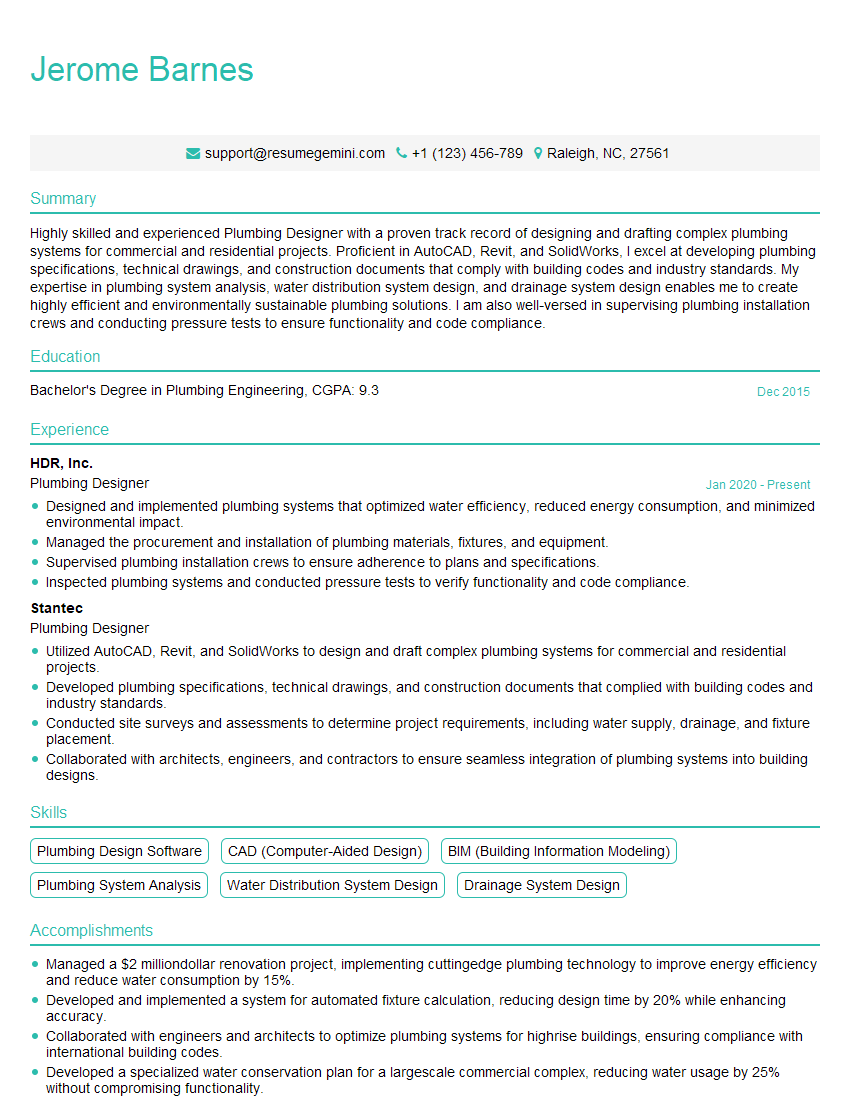
Plumbing Designer Resume Sample
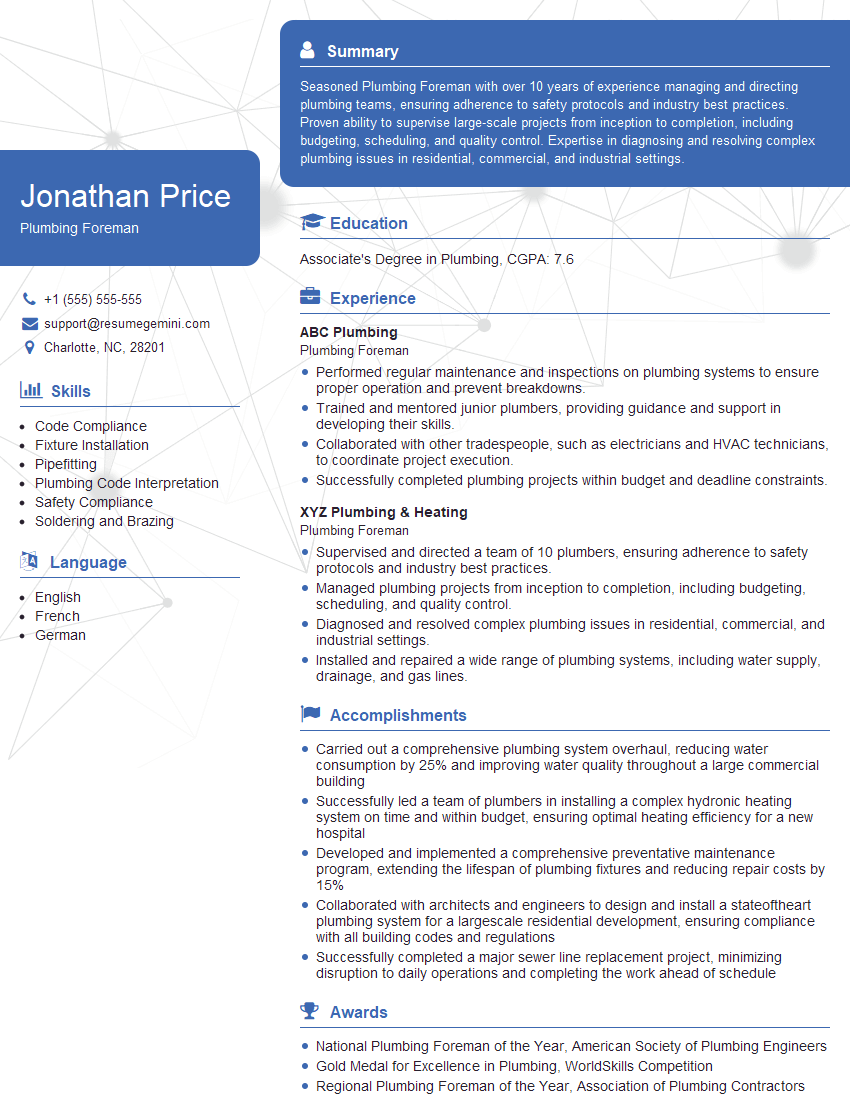
Plumbing Foreman Resume Sample

Plumbing Technician Resume Sample

Master Plumber Resume Sample
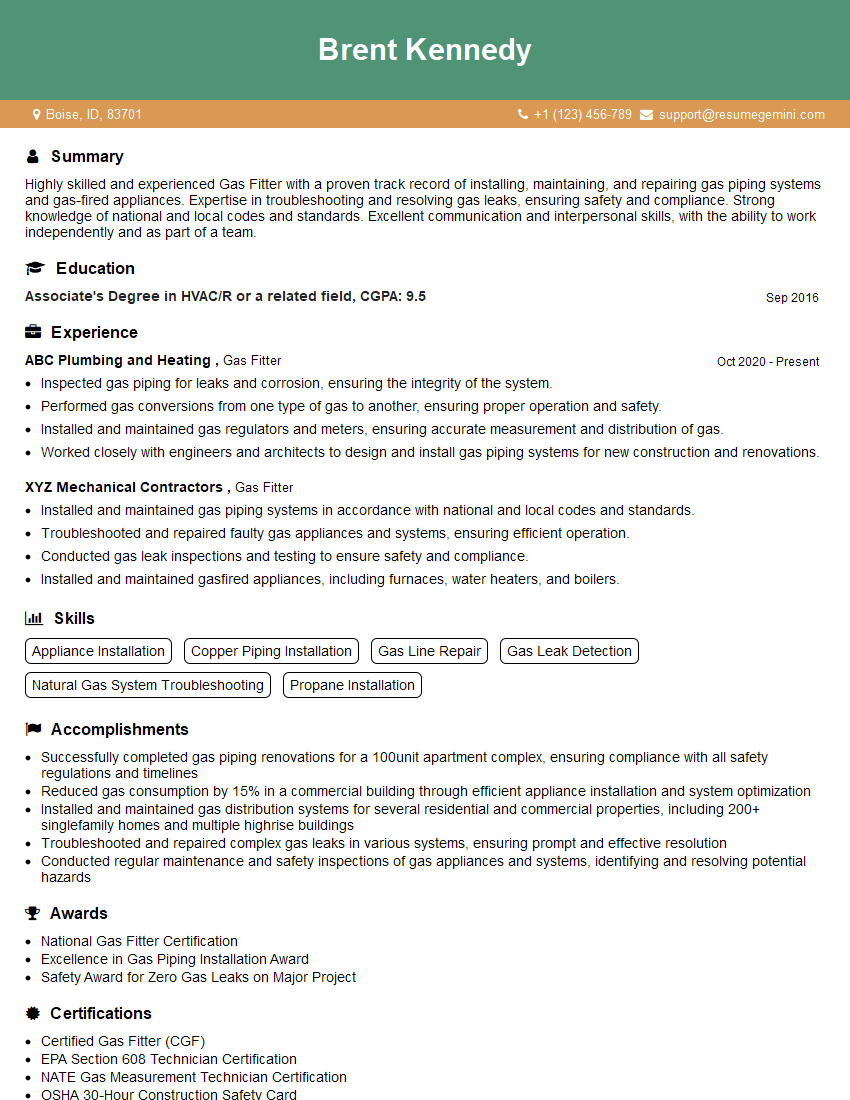
Gas Fitter Resume Sample
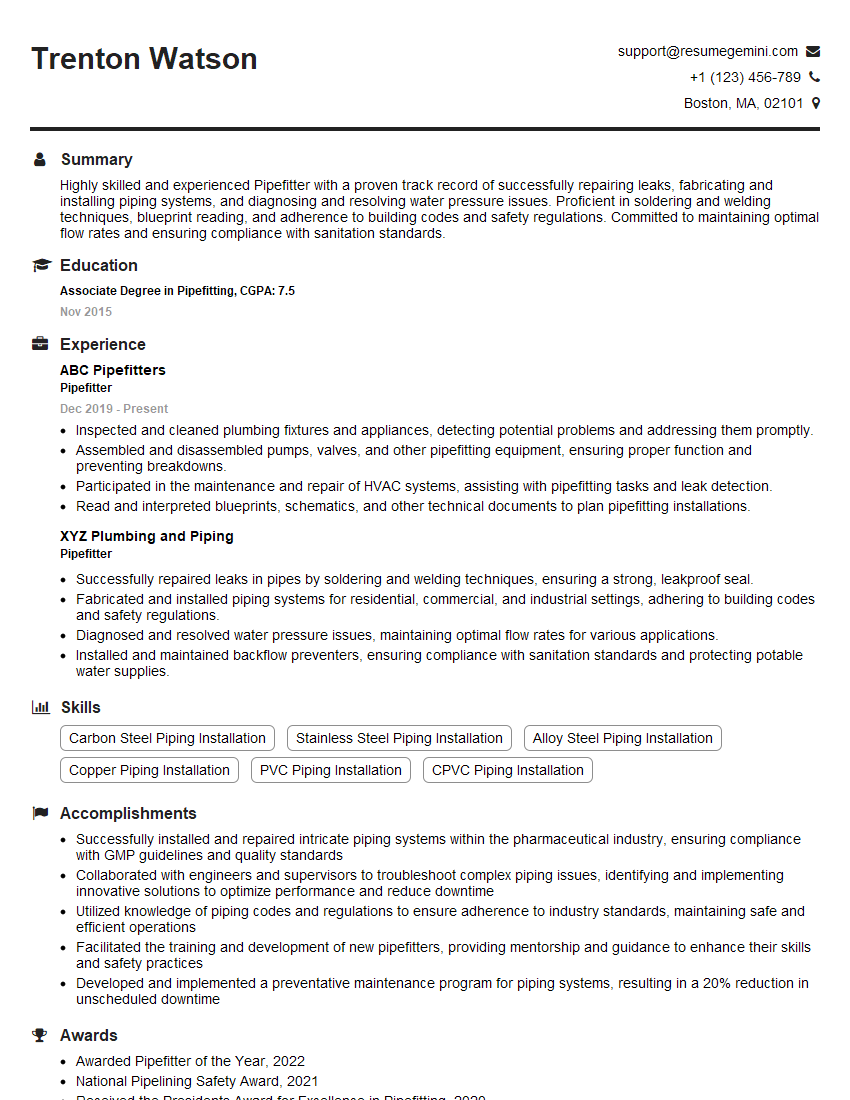
Pipefitter Resume Sample

Commercial Plumber Resume Sample
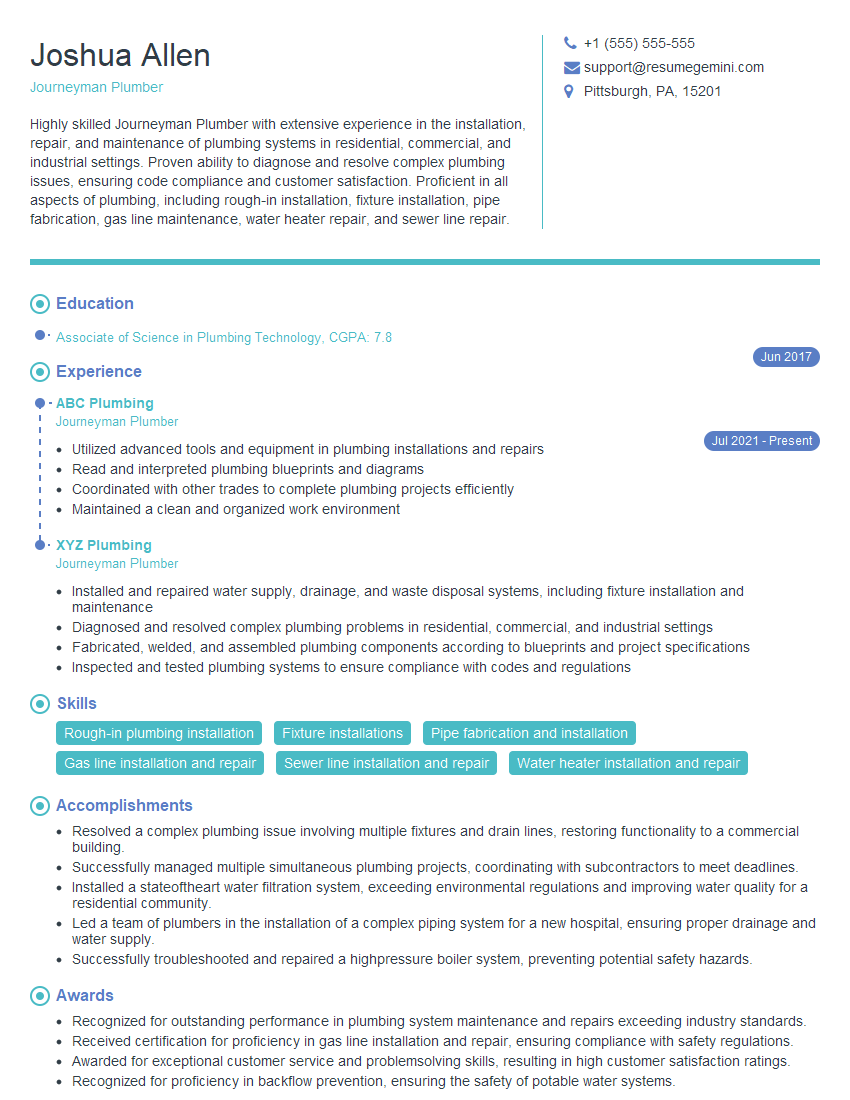
Journeyman Plumber Resume Sample
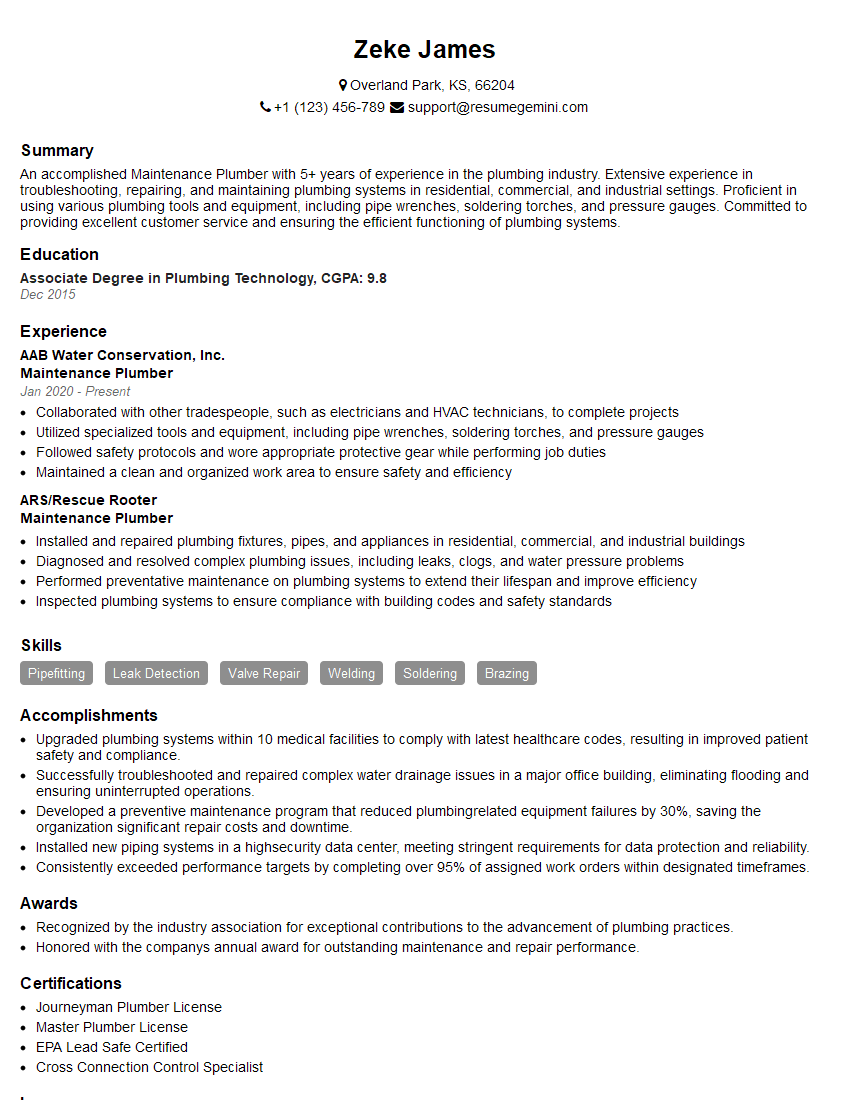
Maintenance Plumber Resume Sample

Residential Plumber Resume Sample
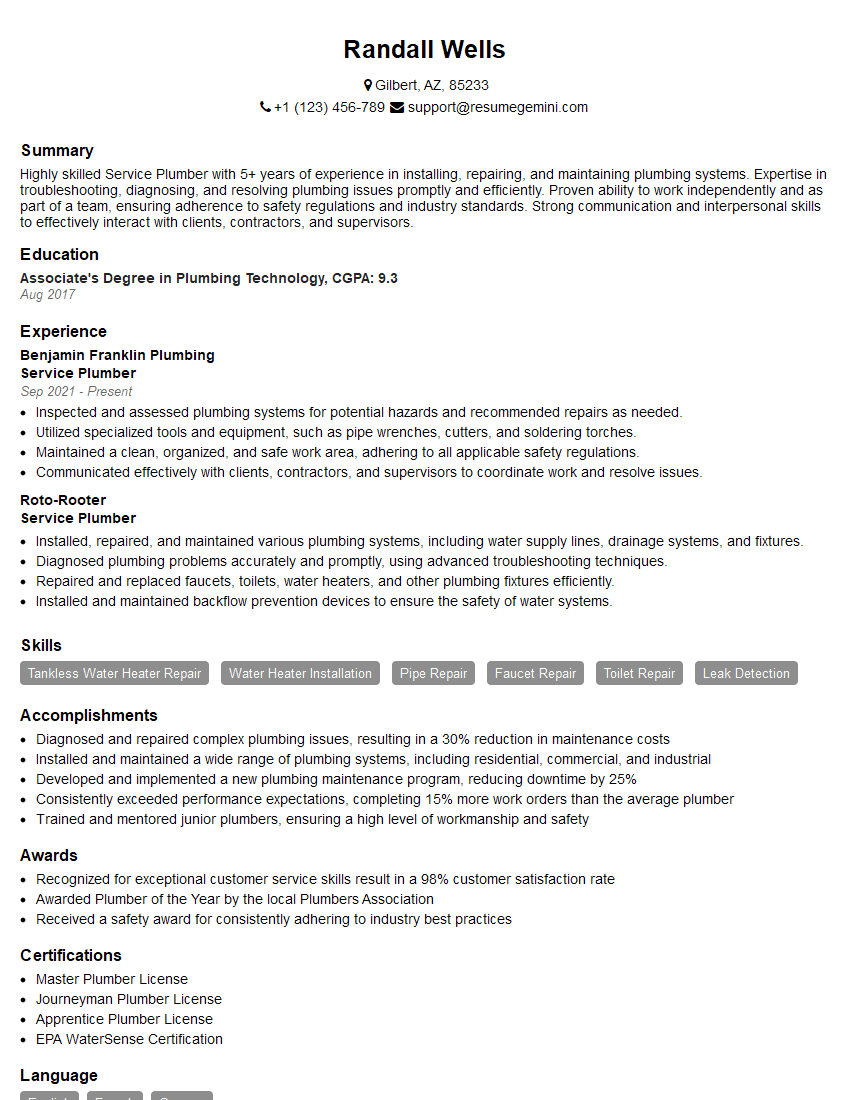
Service Plumber Resume Sample
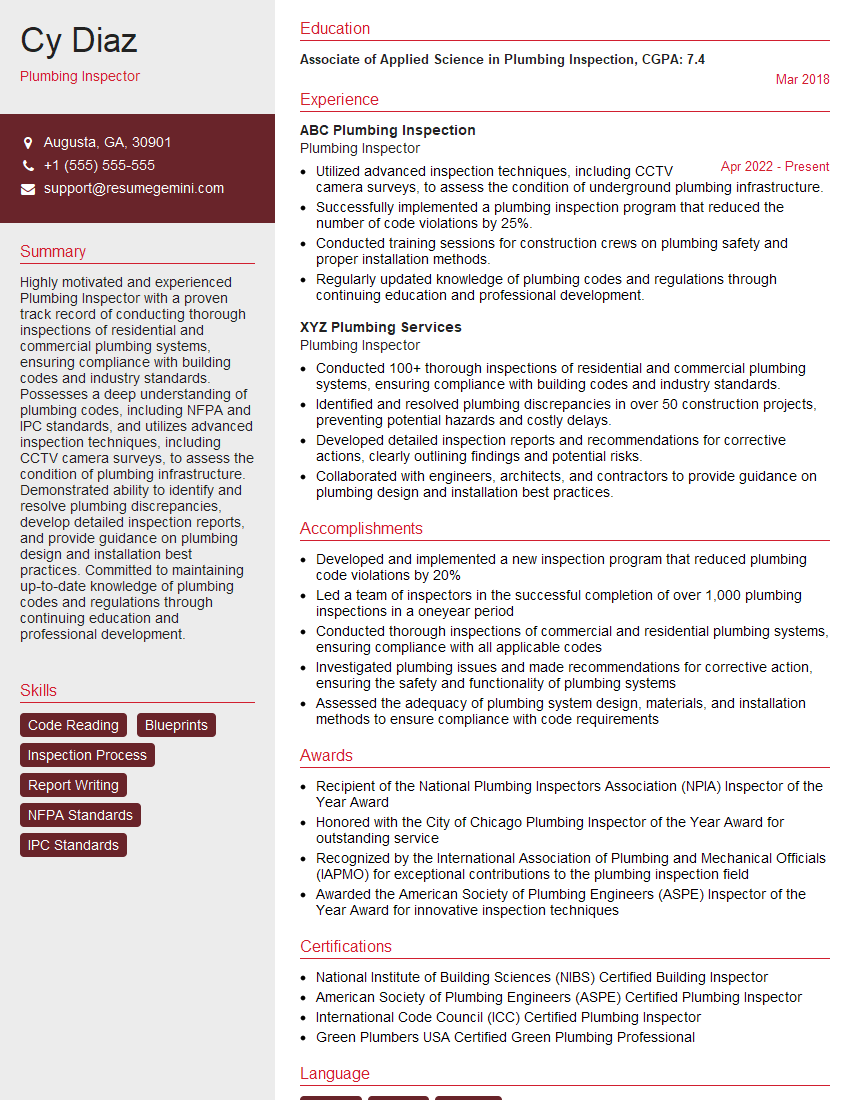
Plumbing Inspector Resume Sample
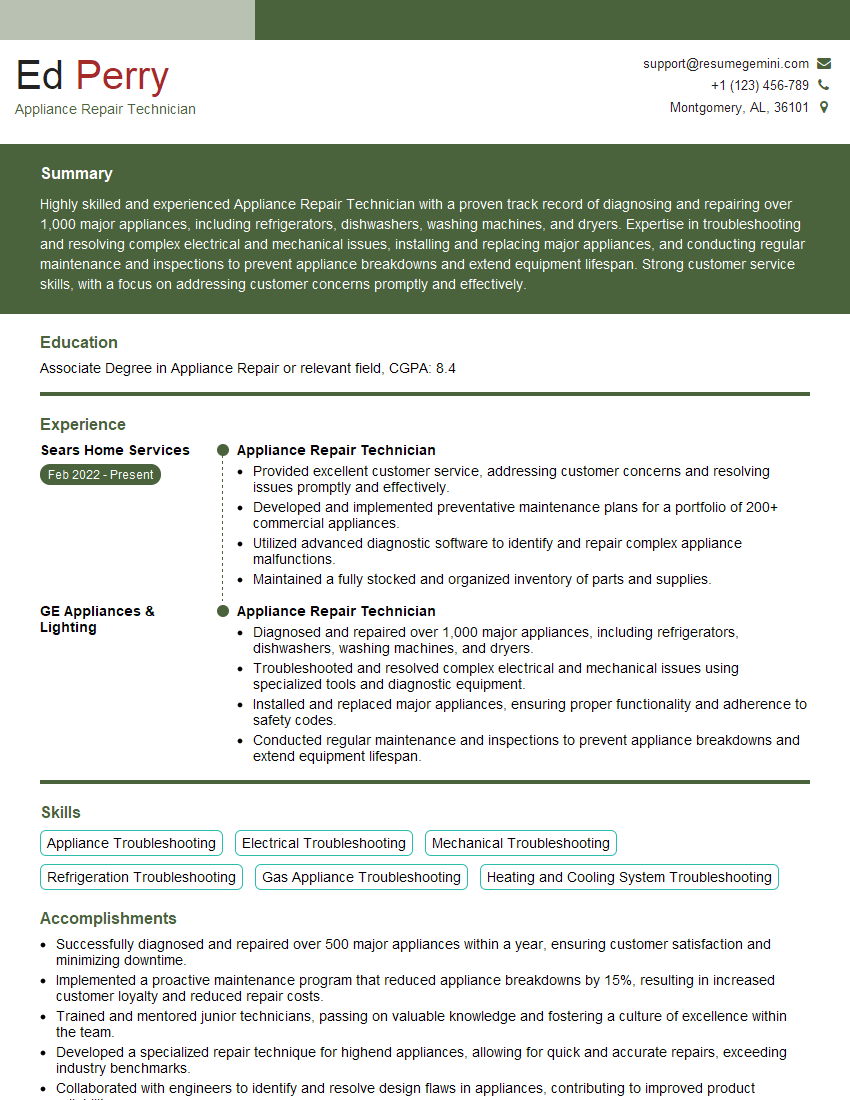
Appliance Repair Technician Resume Sample
Explore more articles
Users Rating of Our Blogs
Share Your Experience
We value your feedback! Please rate our content and share your thoughts (optional).
What Readers Say About Our Blog
To the interviewgemini.com Webmaster.
Very helpful and content specific questions to help prepare me for my interview!
Thank you
To the interviewgemini.com Webmaster.
This was kind of a unique content I found around the specialized skills. Very helpful questions and good detailed answers.
Very Helpful blog, thank you Interviewgemini team.