Are you ready to stand out in your next interview? Understanding and preparing for Water Quality and Habitat Modeling interview questions is a game-changer. In this blog, we’ve compiled key questions and expert advice to help you showcase your skills with confidence and precision. Let’s get started on your journey to acing the interview.
Questions Asked in Water Quality and Habitat Modeling Interview
Q 1. Explain the difference between point and non-point source pollution.
The key difference between point and non-point source pollution lies in the location and nature of the pollutant’s origin.
- Point source pollution originates from a single, identifiable location. Think of it like a dripping faucet – you know exactly where the water is coming from. Examples include industrial discharge pipes, sewage treatment plant outfalls, and leaking underground storage tanks. These sources are relatively easy to monitor and regulate because their location is known.
- Non-point source pollution, on the other hand, is diffuse and comes from multiple, widespread sources. Imagine rain washing pollutants off a large parking lot – you can’t pinpoint a single source. Examples include agricultural runoff (fertilizers, pesticides), urban stormwater runoff (oil, litter), and atmospheric deposition. These are far more challenging to manage because they’re dispersed and influenced by many factors.
Understanding this distinction is crucial for effective water quality management. Point sources are often addressed through direct regulation and control measures at the source, while non-point source pollution requires a more holistic approach involving land-use planning, best management practices, and public education.
Q 2. Describe your experience with various water quality models (e.g., QUAL2K, WASP, EFDC).
Throughout my career, I’ve extensively utilized various water quality models, each with its strengths and limitations. My experience includes:
- QUAL2K: A widely used one-dimensional steady-state/dynamic model, excellent for assessing water quality in rivers and streams. I’ve used QUAL2K to model dissolved oxygen, nutrient levels, and temperature changes in several river systems, specifically focusing on the impact of industrial discharge and urban runoff. One project involved using QUAL2K to predict the effect of a proposed wastewater treatment plant upgrade on downstream water quality.
- WASP (Water Quality Analysis Simulation Program): A more comprehensive, multi-dimensional model capable of simulating a broader range of water quality parameters in complex systems like estuaries and lakes. I’ve employed WASP in estuarine projects, modelling nutrient dynamics and the impact of algal blooms. The model’s ability to handle complex hydrodynamic interactions proved crucial in those applications.
- EFDC (Environmental Fluid Dynamics Code): A highly sophisticated three-dimensional hydrodynamic and water quality model. I’ve used EFDC for large-scale, highly detailed simulations, such as assessing the impact of dredging operations on sediment transport and water quality in a large bay. Its power lies in its ability to resolve fine-scale spatial variability, but it requires substantial computational resources and expertise.
My experience spans model calibration, sensitivity analysis, and scenario planning, allowing me to effectively use these tools for environmental impact assessments and management strategies.
Q 3. How do you validate and verify a water quality model?
Validating and verifying a water quality model is critical to ensuring its reliability and accuracy. It’s a two-step process:
- Verification focuses on ensuring the model’s internal consistency and that it solves the governing equations correctly. This often involves code checks, unit testing, and comparing model outputs to known analytical solutions under simplified conditions. For example, I’ve verified models by comparing simulated results to known solutions for simple advection-dispersion problems.
- Validation assesses how well the model represents the real-world system. This involves comparing the model’s predictions with observed data from the field. This requires a robust dataset of water quality parameters, measured at appropriate spatial and temporal scales. Statistical methods are crucial; I typically use measures like the Nash-Sutcliffe efficiency coefficient and Root Mean Square Error to quantify the model’s performance. Discrepancies between model predictions and observations may highlight areas needing improvement in model parameterization or structure.
A successful validation demonstrates the model’s ability to accurately reproduce observed patterns and predict future conditions, building confidence in its application for management decisions.
Q 4. What are the key parameters considered in habitat suitability modeling?
Habitat suitability modeling aims to predict the probability of a species’ occurrence within a given area based on environmental variables. Key parameters considered are:
- Physical Habitat Characteristics: Water depth, velocity, substrate type, temperature, dissolved oxygen, and light penetration. For example, salmon require specific water velocities and depths for spawning.
- Chemical Water Quality: Nutrient concentrations (nitrogen, phosphorus), salinity, pH, and the presence of pollutants. For instance, high levels of pollutants can make a habitat unsuitable for sensitive species.
- Biological Factors: Presence or absence of food sources, competitors, and predators. The availability of prey is critical for the survival and reproduction of many aquatic species.
- Spatial Data: River networks, elevation, land cover, and proximity to human disturbances. Spatial data helps understand how various habitats are interconnected and influenced by landscape features.
The specific parameters chosen depend on the target species and the research question. For instance, modelling habitat suitability for a particular fish species would require selecting parameters most influential on its life history stages (spawning, juvenile growth, adult survival).
Q 5. Explain your understanding of hydrodynamic modeling and its application in water quality studies.
Hydrodynamic modeling simulates the movement of water within a system, considering factors like flow velocity, water depth, and turbulence. It’s crucial in water quality studies because water movement directly influences the transport and fate of pollutants.
Hydrodynamic models provide the ‘transport’ component in water quality models. For example, a hydrodynamic model might simulate how a pollutant plume spreads from a point source, influenced by river currents, wind, and tides. This information is then coupled with water quality models to predict changes in pollutant concentrations over time and space. I’ve applied hydrodynamic modelling in numerous studies, for example, to assess the dispersion of contaminants from a spill or to predict the impact of dam operations on downstream flow regimes and water quality.
Using a coupled hydrodynamic-water quality model allows us to understand the complex interplay between physical processes (water movement) and chemical processes (pollutant transformation and degradation), leading to more accurate predictions of water quality conditions.
Q 6. Describe different habitat assessment methods and their limitations.
Various methods exist for assessing aquatic habitats, each with its own strengths and limitations:
- Habitat Surveys: Involve direct observation and measurement of physical and biological characteristics in the field. This provides detailed, site-specific information but can be time-consuming, expensive, and subject to observer bias.
- Index of Biotic Integrity (IBI): Uses the community structure of aquatic organisms to assess habitat quality. It’s a cost-effective, widely applicable method, but it requires expertise in taxonomic identification and can be sensitive to the selection of indicator species.
- Remote Sensing: Uses satellite or aerial imagery to map habitat characteristics. It’s useful for large-scale assessments but can have limited resolution and may not capture fine-scale details.
- Habitat Suitability Indices (HSI): These quantitative models combine multiple environmental variables to predict habitat suitability for specific species. They provide a more holistic assessment than individual metrics but require accurate data and careful model development.
The choice of assessment method depends on factors like the study objectives, available resources, and the scale of the assessment. For instance, a detailed assessment of a small, sensitive stream might use habitat surveys coupled with IBI, whereas a regional assessment of habitat quality might rely on remote sensing and HSI models. It’s essential to acknowledge and mitigate the limitations of the chosen method in the interpretation of the results.
Q 7. How do you incorporate uncertainty into water quality and habitat models?
Uncertainty is inherent in all water quality and habitat models. Ignoring it can lead to misleading conclusions and ineffective management decisions. Incorporating uncertainty can be approached in several ways:
- Probabilistic Modeling: Instead of using single values for model parameters, we use probability distributions that reflect the range of plausible values. Monte Carlo simulations are often used to generate multiple model realizations based on these probability distributions, providing a range of possible outcomes rather than a single prediction.
- Sensitivity Analysis: This helps identify which parameters have the most significant impact on model outputs. This allows us to focus our efforts on improving the accuracy of the most influential parameters, reducing overall uncertainty.
- Data Uncertainty Assessment: A critical step is to quantify the uncertainty associated with the input data. This could involve evaluating measurement errors, spatial variability, and temporal changes. Propagating these data uncertainties through the model helps estimate the range of possible outputs.
- Model Structural Uncertainty: We must also consider the uncertainties associated with the model structure itself. Different models might make different assumptions and simplifications, leading to different predictions. Comparing results from multiple models can help to quantify the uncertainty related to model choice.
By explicitly incorporating uncertainty, we produce more robust and realistic predictions and communicate the limitations of our models more effectively, leading to improved decision-making.
Q 8. What are the common statistical methods used in analyzing water quality data?
Analyzing water quality data often involves a suite of statistical methods tailored to the specific research question and data characteristics. Descriptive statistics, like mean, median, standard deviation, and ranges, provide a fundamental understanding of the data distribution. For example, we might calculate the average dissolved oxygen concentration in a river over a year to assess overall health.
Inferential statistics are crucial for drawing conclusions about populations based on samples. These include:
- T-tests and ANOVA: Comparing means of water quality parameters between different sites or time periods. For instance, comparing nutrient levels upstream versus downstream of a wastewater treatment plant.
- Correlation and Regression Analysis: Examining the relationships between different water quality variables (e.g., temperature and dissolved oxygen) or between water quality and other factors (e.g., rainfall and turbidity). A regression model could predict turbidity based on rainfall intensity.
- Time Series Analysis: Analyzing trends and patterns in water quality data collected over time. This helps to identify seasonal variations or long-term changes in pollutant concentrations.
- Principal Component Analysis (PCA): Reducing the dimensionality of datasets with many correlated variables, simplifying data interpretation and identifying underlying patterns. This is especially useful for large datasets with numerous water quality parameters.
- Non-parametric methods: Useful when data doesn’t meet the assumptions of parametric tests (e.g., normality). Methods like the Mann-Whitney U test or the Kruskal-Wallis test are examples.
Choosing the right method depends on the specific objectives of the study and the nature of the data. For instance, a non-parametric test might be chosen for skewed data, while a time-series analysis would be appropriate for longitudinal monitoring of a specific site.
Q 9. How do you handle missing data in water quality datasets?
Handling missing data is crucial for maintaining the integrity and reliability of water quality analyses. Ignoring missing values can lead to biased results. My approach involves a multi-step process:
- Identifying the extent and pattern of missing data: Understanding *why* data is missing is key. Is it random, or is there a systematic pattern (e.g., sensor malfunction during a specific period)? Visualization techniques like heatmaps can be helpful.
- Assessing the impact of missing data: A small amount of randomly missing data might have negligible effects, but large gaps or systematic missingness requires more attention. The amount and pattern of missing data influences the method chosen.
- Employing appropriate imputation techniques: If the missing data is relatively small and randomly distributed, simple methods such as mean/median imputation might suffice (although this can underestimate variability). More sophisticated methods include:
- Multiple Imputation: Creates several plausible imputed datasets, accounting for uncertainty in the imputation process. This is generally preferred for more complex scenarios.
- Regression Imputation: Uses regression models to predict missing values based on other variables in the dataset. This requires careful selection of predictor variables.
- K-Nearest Neighbors (KNN) Imputation: Predicts missing values based on the values of its nearest neighbors in the data space.
- Sensitivity analysis: After imputation, it’s vital to assess the sensitivity of the results to the chosen imputation method. If results differ significantly with different imputation methods, further investigation might be needed.
In some instances, particularly if a significant portion of data is missing, it might be necessary to exclude affected samples from analysis or to focus the analysis on variables with complete data. Always clearly document the data handling approach used.
Q 10. Explain your experience with GIS software and its application in spatial modeling of water quality and habitat.
GIS software, primarily ArcGIS and QGIS, are indispensable tools in my work. They enable the integration of spatial data with water quality and habitat information, providing a powerful framework for spatial modeling.
My experience includes using GIS to:
- Create and manage spatial datasets: Importing and georeferencing water quality sampling locations, creating shapefiles of stream networks, and incorporating land use/land cover data.
- Spatial interpolation: Estimating water quality parameters at unsampled locations using methods like Kriging or Inverse Distance Weighting (IDW). For example, creating maps of dissolved oxygen concentrations across a lake based on a limited number of measurements.
- Overlay analysis: Combining different spatial layers to identify relationships between water quality and environmental factors. For instance, overlaying a map of pollutant concentrations with habitat suitability models to identify areas of high ecological risk.
- Habitat suitability modeling: Employing GIS alongside statistical models (e.g., MaxEnt, logistic regression) to predict the suitable habitat for aquatic species based on environmental variables. These models are crucial for conservation planning.
- Visualization and reporting: Creating informative maps and charts to communicate research findings, helping to visualize spatial patterns in water quality and habitat distribution.
A recent project involved using GIS to map nutrient loading into a coastal estuary, combining point source pollution data (wastewater treatment plants) with non-point source pollution estimates (runoff from agricultural lands). This helped to identify hotspots of nutrient pollution and inform management strategies.
Q 11. Discuss the impact of climate change on water quality and aquatic habitats.
Climate change significantly impacts water quality and aquatic habitats through various mechanisms. Increased temperatures lead to reduced dissolved oxygen levels, making aquatic life vulnerable. Changes in precipitation patterns affect runoff, influencing the transport of pollutants into water bodies. More frequent and intense rainfall events increase erosion and sediment loads, degrading water clarity and habitat quality.
Other impacts include:
- Sea-level rise: Intrusion of saltwater into coastal freshwater systems, impacting the salinity and composition of aquatic habitats.
- Altered hydrological cycles: Changes in water availability and streamflow, affecting aquatic ecosystems’ structure and function.
- Increased frequency of extreme weather events: Floods and droughts can cause dramatic shifts in water quality and habitat conditions.
- Changes in species distribution and abundance: Species may migrate to more suitable habitats or experience population declines due to changing environmental conditions.
Modeling climate change impacts requires integrating climate projections (e.g., temperature, rainfall) into water quality and habitat models. This often involves coupling hydrological models with ecological models to simulate changes in water quality and habitat suitability under different climate scenarios. This helps us to anticipate future threats and inform adaptation strategies.
Q 12. How do you assess the ecological impacts of pollutants on aquatic life?
Assessing the ecological impacts of pollutants requires a multi-faceted approach that considers various levels of biological organization.
My strategy includes:
- Toxicity testing: Using laboratory experiments to determine the lethal and sublethal effects of pollutants on aquatic organisms. This involves exposing organisms to different concentrations of pollutants and measuring their survival, growth, and reproduction.
- Field surveys and biomonitoring: Collecting data on the distribution and abundance of aquatic species in areas with varying pollution levels. Changes in community composition or species richness can indicate pollution impacts. For instance, a decline in sensitive indicator species could signal degradation.
- Physiological and biochemical indicators: Measuring physiological responses (e.g., respiration rate, enzyme activity) or biochemical markers (e.g., DNA damage) in organisms to assess the sublethal effects of pollutants. These can reveal stress even when organisms appear healthy.
- Ecological risk assessment: Using quantitative models to evaluate the likelihood and severity of adverse ecological effects resulting from pollutant exposure. These assessments incorporate toxicity data, exposure data, and information on the sensitivity of different species.
- Habitat assessments: Evaluating the changes in habitat quality caused by pollutants. Factors like sediment accumulation, alteration of water chemistry, and loss of vegetation can significantly impact aquatic life.
Integrating these approaches allows for a comprehensive understanding of pollutant effects across different levels of ecological organization. This information is essential for setting water quality standards and managing pollution effectively.
Q 13. Describe your experience with different types of water quality sensors and their applications.
My experience encompasses a range of water quality sensors, each with specific applications:
- Multi-parameter probes: These measure multiple water quality parameters simultaneously (e.g., temperature, pH, dissolved oxygen, conductivity, turbidity). They are widely used for field monitoring and provide real-time data. The YSI ProDSS is a common example.
- Optical sensors: These measure water quality parameters using light absorption or scattering. For instance, fluorometers measure chlorophyll-a concentration, indicating algal biomass. Turbidimeters measure water clarity.
- Electrochemical sensors: These measure specific ions or compounds using electrochemical reactions. Ion-selective electrodes (ISEs) are used to measure the concentration of ions like nitrate or ammonium.
- Nutrient sensors: Dedicated sensors are available for specific nutrients like nitrate, phosphate, and ammonia. These are often more precise than multi-parameter probes for these parameters.
- Autonomous underwater vehicles (AUVs) and sensors: AUVs equipped with various sensors provide detailed spatial information on water quality parameters in lakes and oceans.
The choice of sensor depends on the specific parameters of interest, the required accuracy and precision, and the budget. It is critical to properly calibrate and maintain these sensors to ensure data quality. I regularly employ sensor data validation and quality control procedures.
Q 14. How do you use remote sensing data in water quality and habitat assessment?
Remote sensing data, primarily from satellites and airborne platforms, offers a powerful tool for large-scale assessment of water quality and habitat.
My applications include:
- Estimating water quality parameters: Satellites like Landsat and Sentinel provide data that can be used to estimate parameters such as turbidity, chlorophyll-a concentration (indicating algal blooms), and water temperature. Algorithms are used to process these data to derive water quality indices.
- Mapping aquatic habitats: High-resolution imagery from satellites and airborne sensors can be used to map aquatic vegetation, delineate wetland boundaries, and identify areas of different habitat types. This information is crucial for assessing habitat extent and connectivity.
- Monitoring changes over time: Remote sensing allows monitoring of water quality and habitat changes over time, facilitating the detection of trends and impacts from various factors, including pollution and climate change. Time series of satellite imagery can provide this capability.
- Integrating remote sensing with field data: Combining remotely sensed data with field measurements enhances the accuracy and reliability of water quality and habitat assessments. Remote sensing provides the broad scale while field measurements offer ground-truth validation.
For example, I have used Landsat imagery to map the extent of harmful algal blooms in a large reservoir, integrating this information with field data on nutrient concentrations and water temperature to understand the causes of the blooms. The use of remote sensing significantly increases the spatial coverage possible for water quality and habitat assessment.
Q 15. Explain your understanding of bioassessment methods for water quality.
Bioassessment methods are crucial for evaluating water quality by using biological indicators – living organisms like fish, invertebrates, algae, and macrophytes – to assess the health of an aquatic ecosystem. Instead of relying solely on chemical measurements, these methods leverage the fact that organisms integrate environmental conditions over time, providing a holistic picture of water quality.
Several methods exist, each with its strengths and weaknesses:
- Index of Biotic Integrity (IBI): This is a widely used method that combines multiple metrics of biological communities (e.g., species richness, abundance, trophic composition) to produce a single score reflecting the overall ecosystem health. A high IBI suggests a healthy ecosystem, while a low score indicates pollution or habitat degradation.
- Benthic Macroinvertebrate Surveys: These focus on organisms living in the sediments (benthos), which are sensitive to various pollutants. The presence or absence of specific indicator species, and their abundance, can reveal the level of pollution.
- Fish Community Assessments: Fish surveys evaluate the diversity, abundance, and health of fish populations. Certain species are more tolerant to pollution than others, providing valuable information about water quality.
- Periphyton Analyses: Periphyton are algae communities attached to surfaces in the water. Their composition and abundance can reflect nutrient levels and water quality.
For example, a high abundance of pollution-tolerant species like sludge worms (Tubificidae) in a benthic macroinvertebrate survey might indicate organic pollution. Conversely, the presence of sensitive mayflies (Ephemeroptera) suggests a cleaner water body. Choosing the appropriate bioassessment method depends on the specific objectives, the type of aquatic system being studied, and available resources.
Career Expert Tips:
- Ace those interviews! Prepare effectively by reviewing the Top 50 Most Common Interview Questions on ResumeGemini.
- Navigate your job search with confidence! Explore a wide range of Career Tips on ResumeGemini. Learn about common challenges and recommendations to overcome them.
- Craft the perfect resume! Master the Art of Resume Writing with ResumeGemini’s guide. Showcase your unique qualifications and achievements effectively.
- Don’t miss out on holiday savings! Build your dream resume with ResumeGemini’s ATS optimized templates.
Q 16. What are the key factors influencing nutrient cycling in aquatic ecosystems?
Nutrient cycling in aquatic ecosystems is a complex process involving the continuous movement of nutrients like nitrogen and phosphorus between different compartments (water, sediment, organisms). This cycling is essential for ecosystem productivity but can be severely disrupted by human activities leading to eutrophication.
Key factors influencing this cycling include:
- Nutrient Inputs: Runoff from agricultural lands, urban areas, and wastewater discharge significantly increases nutrient levels. Point sources (e.g., sewage treatment plants) and non-point sources (e.g., agricultural fertilizers) contribute differently.
- Water Flow and Mixing: Water movement determines the distribution and retention of nutrients within the ecosystem. Stratification in lakes can create zones with differing nutrient concentrations.
- Biological Processes: Plants, algae, and bacteria play crucial roles in nutrient uptake, transformation, and release. Photosynthesis by algae utilizes nutrients, while decomposition releases nutrients back into the water column.
- Sediment Interactions: Sediments act as a reservoir for nutrients, releasing or absorbing them based on redox conditions (oxygen levels) and other factors. Nutrient burial in sediments can temporarily reduce water column concentrations.
- Temperature and Sunlight: These factors influence the rate of biological processes affecting nutrient cycling. Higher temperatures generally accelerate nutrient cycling rates.
Imagine a lake receiving excessive phosphorus from agricultural runoff. This leads to algal blooms, reducing water clarity and oxygen levels. When algae die and decompose, the oxygen depletion can harm fish and other aquatic life, a classic example of eutrophication.
Q 17. How do you determine the appropriate spatial and temporal scales for water quality modeling?
Determining the appropriate spatial and temporal scales for water quality modeling is crucial for obtaining meaningful and relevant results. The choice depends heavily on the specific research question, the characteristics of the system being modeled, and the available data.
Spatial Scale: This refers to the area being modeled, ranging from small, localized areas (e.g., a single stream reach) to large, regional scales (e.g., an entire watershed). For instance, modeling pollutant transport in a small stream requires a finer spatial resolution than modeling water quality in a large lake or river system. The selection often involves considering factors like the extent of pollution sources, the heterogeneity of the landscape, and the spatial resolution of available data. High-resolution models are computationally demanding but offer greater detail.
Temporal Scale: This relates to the time period over which the model is run, ranging from short-term events (e.g., storm events) to long-term trends (e.g., seasonal changes, climate change impacts). A model simulating the impact of a single rainfall event might run over a few hours or days, while a model assessing long-term water quality trends would run over years or decades. The selection is guided by the research questions and the temporal variability of the water quality parameters and hydrological processes. Long-term models need to account for seasonal and inter-annual variations.
Balancing both scales is essential. A model might use a high spatial resolution for a specific area of concern while using a lower resolution for the surrounding areas to optimize computational efficiency without compromising the accuracy of the results.
Q 18. Explain your experience with data management and analysis techniques relevant to water quality modeling.
My experience with data management and analysis for water quality modeling encompasses various aspects, from data acquisition and preprocessing to statistical analysis and model calibration/validation. I’m proficient in using various software packages like ArcGIS, R, and specialized hydrological and water quality modeling software (e.g., QUAL2K, HEC-RAS).
Data Acquisition: I’ve worked extensively with diverse datasets, including water quality monitoring data (e.g., temperature, pH, nutrient concentrations, dissolved oxygen), hydrological data (e.g., streamflow, rainfall), and GIS data (e.g., land use, elevation). Data sources often include government agencies, research institutions, and private companies. Data quality control is a critical step, involving checking for errors, inconsistencies, and outliers.
Data Preprocessing: This involves cleaning, transforming, and preparing the data for use in the model. This may include interpolating missing values, handling outliers, and converting data formats. For example, I might use R to impute missing values in a water quality dataset using a K-Nearest Neighbors algorithm.
Statistical Analysis: I use statistical methods to analyze water quality data, assess correlations between variables, identify trends, and perform model calibration and validation. Techniques include regression analysis, time series analysis, and principal component analysis (PCA).
Model Calibration and Validation: I’ve developed and applied various modeling techniques to simulate water quality, and I’m experienced in calibrating and validating models using observed data. This process involves adjusting model parameters to match observed data and then using independent data to assess the model’s predictive ability. Rigorous validation is crucial for ensuring the reliability and applicability of the model results.
Q 19. Describe your experience with regulatory frameworks related to water quality management.
My familiarity with regulatory frameworks related to water quality management encompasses several key regulations and guidelines at local, national, and international levels. This includes experience interpreting and applying legislation such as the Clean Water Act (CWA) in the US, the Water Framework Directive (WFD) in Europe, and other relevant environmental regulations.
I understand the requirements for water quality monitoring, permitting, and reporting under these frameworks. I am familiar with water quality standards, effluent limitations, and best management practices (BMPs) for different industries and land uses. The CWA, for example, sets limits on pollutant discharges and establishes water quality standards for various designated uses (e.g., drinking water, recreation). Knowledge of these regulations is essential for developing water quality models that meet regulatory requirements and inform management decisions.
For example, I have experience working on projects that involved assessing compliance with effluent discharge permits, modeling the impact of proposed development projects on water quality, and designing mitigation measures to meet regulatory requirements. My experience includes using modeling outputs to support permit applications and demonstrate compliance with water quality standards.
Q 20. How do you communicate complex technical information to non-technical audiences?
Communicating complex technical information to non-technical audiences is a critical skill. I employ various strategies to ensure effective communication, focusing on clarity, simplicity, and relevance.
Visual Aids: I use graphs, charts, maps, and other visual aids to present complex data in an accessible format. A well-designed graph can convey information far more effectively than a table of numbers.
Analogies and Metaphors: I often use analogies and metaphors to explain complex concepts using familiar terms. For example, I might compare nutrient pollution in a lake to fertilizer overuse in a garden to explain eutrophication.
Storytelling: Incorporating a narrative or storytelling approach can make the information more engaging and memorable. Instead of just presenting data, I can weave a story around it to illustrate the impact of water quality issues.
Active Listening and Feedback: I actively listen to the audience to gauge their understanding and adjust my communication style accordingly. I encourage questions and feedback to ensure the audience comprehends the information.
Tailored Communication: I adapt my communication style and level of detail to the specific audience. A presentation for a group of policymakers will differ significantly from a presentation for the general public.
Q 21. What are the ethical considerations in water quality and habitat modeling projects?
Ethical considerations in water quality and habitat modeling projects are paramount. The models we develop can have significant societal and environmental impacts, requiring careful attention to ethical practices.
- Data Integrity and Transparency: Maintaining data integrity and transparency is crucial. Data should be accurately collected, processed, and documented. The methods used for data analysis and model development should be clearly described and made available for scrutiny.
- Objectivity and Impartiality: Models should be developed and applied objectively, free from bias or undue influence from external parties. This is essential to ensure that the results accurately reflect the state of the environment and are not manipulated to support a particular agenda.
- Social Equity and Environmental Justice: It’s vital to consider the potential impacts of modeling decisions on different communities and social groups. Models should be applied in a way that promotes environmental justice and does not disproportionately affect vulnerable populations.
- Limitations and Uncertainty: It’s essential to acknowledge the limitations and uncertainties inherent in models. Results should be presented with appropriate caveats, highlighting potential uncertainties and their implications.
- Confidentiality and Data Security: Sensitive data used in modeling projects must be handled with care and appropriate security measures in place to protect confidentiality.
For example, a model predicting the impacts of a dam construction project should carefully consider the potential consequences for downstream communities and ecosystems, ensuring that such impacts are communicated transparently and objectively. This could include the loss of fish habitat, increased water temperatures, and potential changes in water quality affecting agriculture or drinking water supplies.
Q 22. Describe a challenging water quality or habitat modeling project you worked on and how you overcame the challenges.
One of the most challenging projects I undertook involved modeling the impact of agricultural runoff on a sensitive estuarine ecosystem. The challenge stemmed from the complex interplay of multiple factors: varying rainfall patterns, diverse land use practices upstream, tidal influences, and the highly dynamic nature of the estuary itself. We needed to predict not only water quality parameters like nutrient levels (nitrogen and phosphorus) and dissolved oxygen, but also their effects on benthic habitats (seabed) and key indicator species like seagrass.
To overcome this, we employed a coupled hydrodynamic and water quality model (like Delft3D or similar). We broke down the problem into manageable components. First, we meticulously gathered data: rainfall records, land use maps, water quality measurements at various points, and benthic surveys. We then developed a detailed hydrological model to simulate runoff based on rainfall events and land use characteristics, incorporating factors such as soil type and infiltration rates. This runoff data was then fed into the water quality model, which simulated the transport and transformation of pollutants within the estuary. Finally, we used species-specific bioenergetics models to assess the impact of changing water quality on seagrass. The key to success was iterative model calibration and validation against field data, ensuring that the model accurately reflected real-world conditions. We also conducted a thorough uncertainty analysis to quantify the reliability of our predictions, acknowledging the inherent uncertainties in the input data and model parameters.
Q 23. What software and programming languages are you proficient in for water quality and habitat modeling?
My expertise spans a range of software and programming languages crucial for water quality and habitat modeling. I’m highly proficient in using hydrodynamic and water quality modeling packages such as Delft3D, MIKE 11, and HEC-RAS. These tools allow for simulating complex flow patterns, pollutant transport, and ecological interactions. Furthermore, I’m skilled in using Geographic Information Systems (GIS) software like ArcGIS and QGIS for spatial data analysis and visualization. My programming skills include Python, which I utilize for data processing, model pre- and post-processing, statistical analysis, and creating custom scripts to automate tasks and enhance model functionality. I also have experience with R for statistical modeling and data visualization, particularly useful in analyzing large datasets and building predictive models. Finally, I’m comfortable working with databases like PostgreSQL to manage and manipulate the substantial amounts of data involved in these types of projects.
Q 24. How do you ensure the accuracy and reliability of your models?
Ensuring model accuracy and reliability is paramount. This involves a multi-faceted approach that begins long before the model is even run. Data quality is the cornerstone: we meticulously review and clean all input data, applying quality control checks and addressing inconsistencies. We use multiple sources of data whenever possible to reduce bias and improve representation. The model itself must be thoroughly vetted, carefully choosing appropriate model parameters and structure based on the specific problem and available data. Model calibration is a critical step, where we adjust model parameters to match observed data. This often involves sophisticated optimization techniques. The model’s performance is then rigorously validated against independent datasets not used in calibration. A robust sensitivity analysis is performed to identify which parameters have the greatest influence on model output, allowing us to focus on improving the accuracy of the most critical input data. Finally, we quantify and communicate the uncertainties inherent in the model results, recognizing that models are simplifications of complex reality.
Q 25. Explain your experience with sensitivity analysis and model calibration.
Sensitivity analysis and model calibration are intertwined processes crucial for building reliable models. Sensitivity analysis helps us understand how changes in input parameters affect model outputs. For instance, in a watershed model, we might assess the sensitivity of streamflow predictions to changes in rainfall, evapotranspiration rates, or land use. We can use methods like Morris screening or Sobol’ indices to systematically evaluate this. This helps prioritize data collection efforts and model improvements, focusing on parameters with the largest impact. Model calibration, on the other hand, involves adjusting model parameters to minimize the difference between simulated and observed data. This can be achieved through various techniques, including manual adjustment, automatic calibration routines (often involving optimization algorithms like Levenberg-Marquardt), or sophisticated Bayesian methods. For example, in calibrating a water quality model, we might adjust parameters representing pollutant decay rates or mixing coefficients to best reproduce observed concentrations. Both sensitivity analysis and calibration involve iterative refinement and require substantial judgment and experience to interpret the results meaningfully.
Q 26. What are the limitations of current water quality and habitat models?
Current water quality and habitat models, while powerful, have inherent limitations. One significant limitation is the complexity of natural systems. Models inevitably simplify reality, leaving out many intricate processes and interactions. For example, they often struggle to accurately capture the effects of complex ecological interactions, such as trophic cascades or species-specific responses to environmental stressors. Data scarcity is another major hurdle. Obtaining high-quality, comprehensive data for model calibration and validation can be challenging and expensive, particularly for remote or poorly monitored areas. Furthermore, many models assume steady-state conditions or employ simplified representations of dynamic processes. This can lead to inaccuracies when applied to systems experiencing rapid change, such as those impacted by climate change or land-use alterations. Finally, the spatial and temporal scales of models often need to be carefully considered, balancing computational feasibility with the need for adequate resolution to represent key processes. Advances in computing power and data acquisition techniques are continuously improving model capabilities, but these inherent limitations remain a challenge.
Q 27. How do you stay current with advances in water quality and habitat modeling techniques?
Staying current in this rapidly evolving field requires a multifaceted approach. I actively participate in professional organizations like the American Society of Civil Engineers (ASCE) and the Society for Environmental Toxicology and Chemistry (SETAC), attending conferences and workshops to learn about the latest advancements. I regularly read peer-reviewed scientific journals and relevant technical reports. This keeps me abreast of new modeling techniques, data analysis methods, and improved understanding of ecological processes. I also actively engage in online communities and forums dedicated to water quality and habitat modeling. Continuous learning is essential in this field; I allocate time for self-study and often take online courses or workshops to hone my skills in specific areas, such as advanced statistical modeling or programming techniques. Collaborating with researchers and practitioners in the field is another critical aspect of staying current. This allows for sharing knowledge and insights, learning from others’ experiences, and gaining exposure to diverse approaches and challenges.
Key Topics to Learn for Water Quality and Habitat Modeling Interview
- Hydrological Processes: Understanding runoff, infiltration, evapotranspiration, and their impact on water quality and aquatic habitats. Consider practical applications like rainfall-runoff modeling and watershed analysis.
- Water Quality Parameters: Mastering the significance of key parameters like dissolved oxygen, nutrients (nitrogen and phosphorus), temperature, pH, and turbidity. Explore how these parameters influence aquatic life and ecosystem health. Be prepared to discuss their measurement techniques and interpretation.
- Habitat Modeling Techniques: Familiarize yourself with various modeling approaches, including GIS-based habitat suitability index (HSI) modeling, hydrodynamic models (e.g., HEC-RAS), and ecological process models. Be ready to discuss the strengths and limitations of different techniques and their applications to specific scenarios.
- Data Analysis and Interpretation: Develop your skills in statistical analysis, data visualization, and interpretation of model outputs. Practice presenting complex data in a clear and concise manner.
- Regulatory Frameworks and Standards: Understand relevant environmental regulations and water quality standards. Consider how these influence modeling approaches and project design.
- Uncertainty and Sensitivity Analysis: Learn how to assess the uncertainty associated with model inputs and outputs and perform sensitivity analysis to understand the influence of different parameters.
- Case Studies and Examples: Review successful case studies demonstrating the application of Water Quality and Habitat Modeling in real-world projects. This will help you understand how these models are used to solve practical problems.
Next Steps
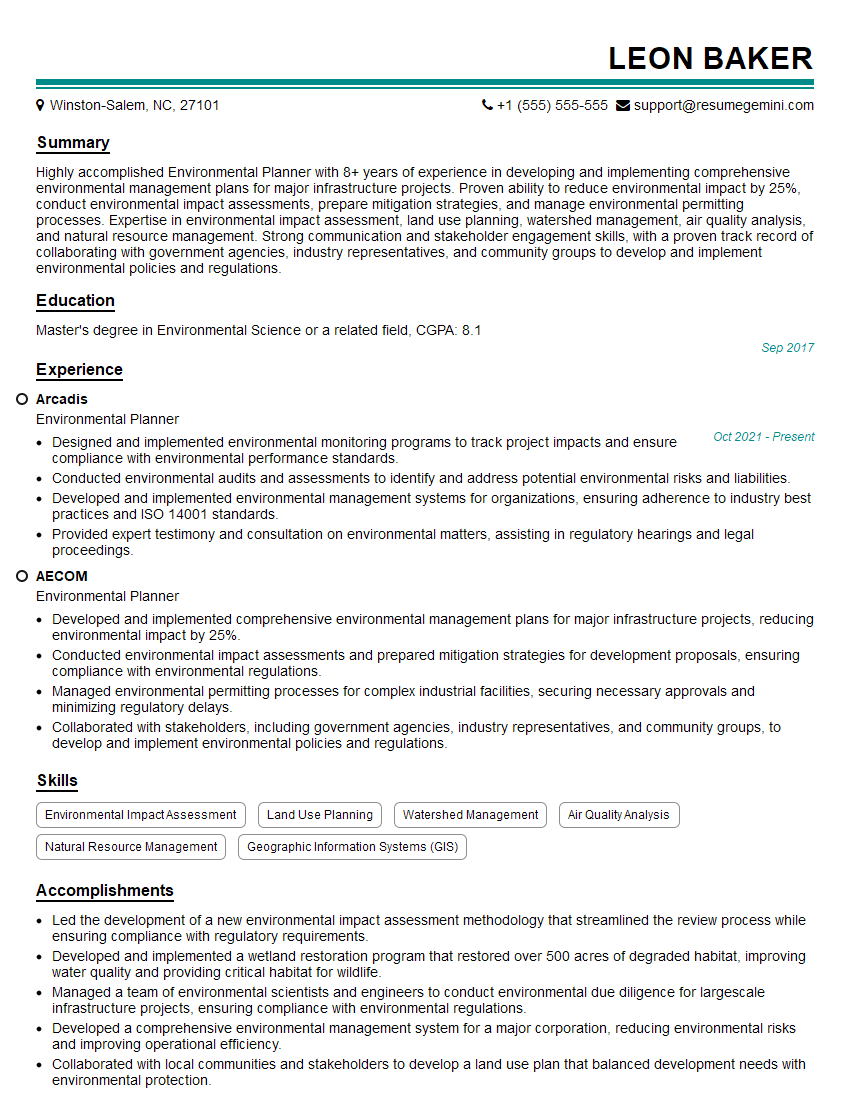
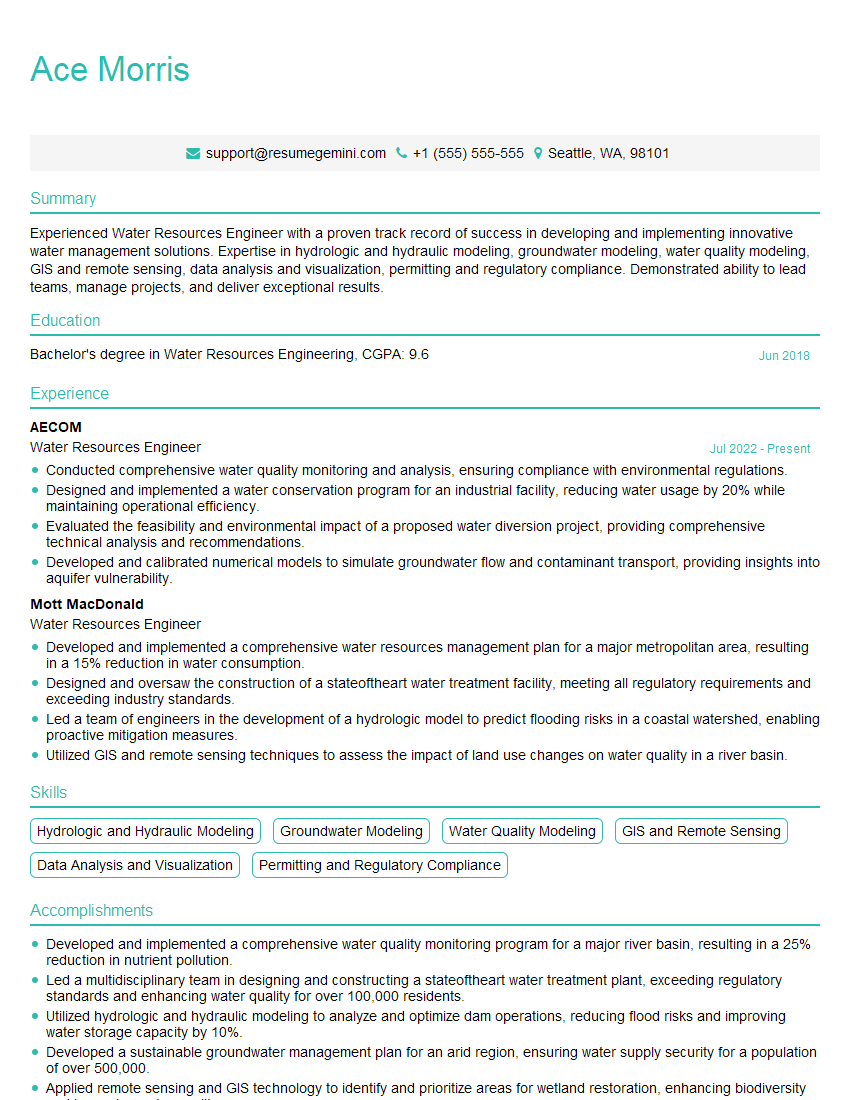
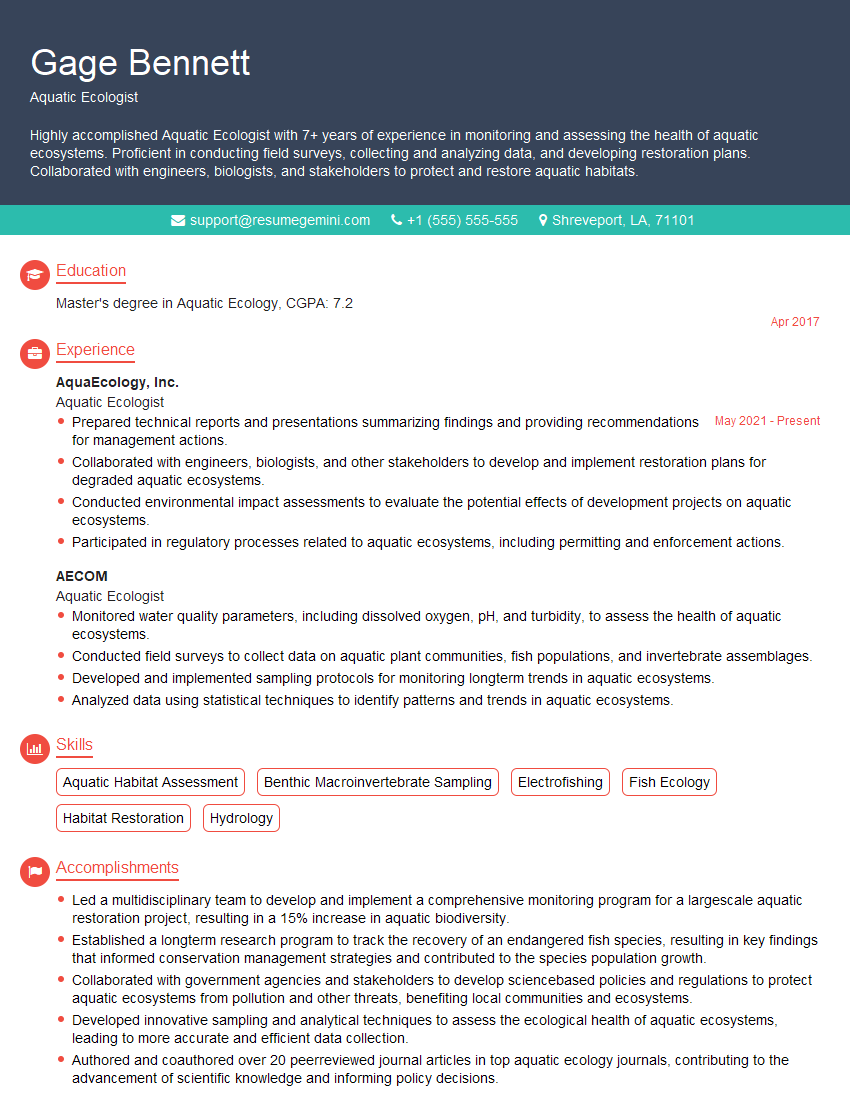
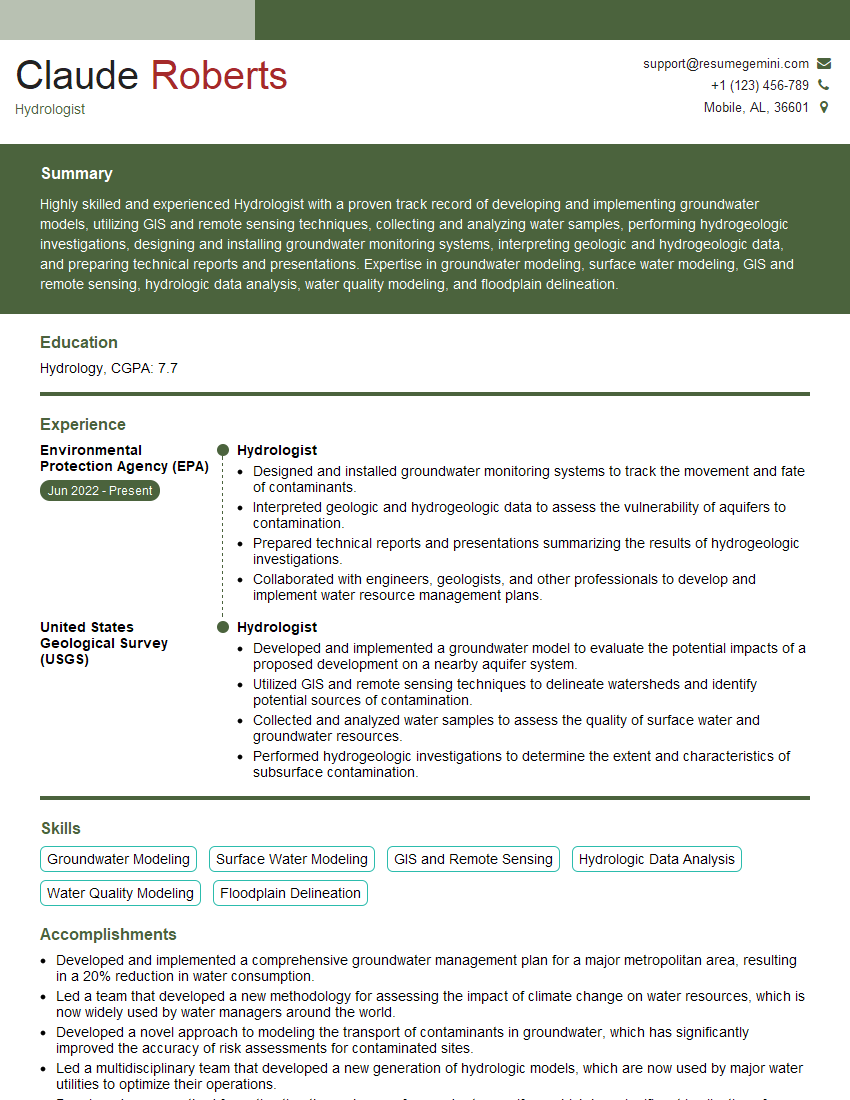
Mastering Water Quality and Habitat Modeling is crucial for career advancement in environmental science, engineering, and resource management. It demonstrates a strong understanding of complex ecological systems and the ability to apply quantitative methods to solve environmental challenges. To maximize your job prospects, create an ATS-friendly resume that effectively highlights your skills and experience. ResumeGemini is a trusted resource that can help you build a professional and impactful resume tailored to the specific requirements of Water Quality and Habitat Modeling positions. Examples of resumes tailored to this field are available through ResumeGemini to help guide your efforts.



Explore more articles
Users Rating of Our Blogs
Share Your Experience
We value your feedback! Please rate our content and share your thoughts (optional).
What Readers Say About Our Blog
To the interviewgemini.com Webmaster.
Very helpful and content specific questions to help prepare me for my interview!
Thank you
To the interviewgemini.com Webmaster.
This was kind of a unique content I found around the specialized skills. Very helpful questions and good detailed answers.
Very Helpful blog, thank you Interviewgemini team.