Interviews are more than just a Q&A session—they’re a chance to prove your worth. This blog dives into essential Water Service and Supply interview questions and expert tips to help you align your answers with what hiring managers are looking for. Start preparing to shine!
Questions Asked in Water Service and Supply Interview
Q 1. Explain the different stages of water treatment.
Water treatment is a multi-stage process designed to remove impurities and contaminants from raw water sources, making it safe for human consumption and various other uses. Think of it like a spa day for water! Each stage targets specific pollutants.
- Coagulation and Flocculation: Chemicals are added to clump together small particles (like clay and silt), making them easier to remove. Imagine using a magnet to gather scattered iron filings.
- Sedimentation: The larger, heavier clumps settle to the bottom of a large basin (clarifier) due to gravity. It’s like letting the sediment naturally sink to the bottom of a glass of muddy water.
- Filtration: Water passes through layers of filters (sand, gravel, anthracite) to remove remaining suspended solids. Picture using a coffee filter to separate coffee grounds from the brewed liquid.
- Disinfection: Chemicals like chlorine, chloramine, or UV light are used to kill harmful bacteria and viruses. This is the crucial final step to ensure the water is microbiologically safe.
- Fluoridation (Optional): In many areas, fluoride is added to help prevent tooth decay. This is a public health measure, not directly related to removing contaminants.
The specific stages and technologies used vary based on the quality of the source water and the desired level of treatment. For instance, a treatment plant drawing water from a pristine mountain spring might require less extensive treatment than one using surface water from a river.
Q 2. Describe the process of water distribution within a municipal system.
Water distribution in a municipal system is a complex network designed to deliver treated water efficiently and reliably to consumers. Imagine it as a vast circulatory system for a city.
- Transmission Mains: Large-diameter pipes carry treated water from the treatment plant to various parts of the service area. These are the major arteries of the system.
- Distribution Mains: Smaller pipes branch off the transmission mains, supplying water to smaller zones and neighborhoods. These are the smaller branches of the network.
- Service Lines: These individual pipes connect the distribution mains to individual homes and businesses. These are the capillaries in the system.
- Storage Reservoirs and Tanks: These act as buffers, storing water to meet fluctuating demands throughout the day. They’re like the heart’s chambers, storing blood before pumping it out.
- Pumping Stations: These are strategically placed to maintain sufficient water pressure throughout the network. They are the heart of the system pumping water throughout the network.
The design and operation of the distribution system must consider factors such as elevation changes, population density, and future growth. Effective management includes regular maintenance, leak detection, and pressure monitoring to ensure consistent and reliable service.
Q 3. What are the key indicators of water quality and how are they measured?
Key indicators of water quality assess its suitability for various purposes, primarily human consumption. Regular monitoring is crucial to ensure public health and environmental protection.
- Turbidity: Measures the cloudiness or haziness of the water, indicating the presence of suspended solids. Measured using a turbidimeter.
- pH: Measures the acidity or alkalinity of the water, impacting corrosion and aquatic life. Measured using a pH meter.
- Dissolved Oxygen (DO): The amount of oxygen dissolved in water, crucial for aquatic life. Measured using an oxygen probe.
- Total Dissolved Solids (TDS): The total amount of dissolved minerals and salts. Measured using a conductivity meter.
- Bacterial Counts (e.g., Coliform): Indicates the presence of fecal contamination and potential pathogens. Measured using culture techniques.
- Chlorine Residual: The amount of chlorine remaining after disinfection, crucial for maintaining microbial safety. Measured using a colorimetric test.
Different standards and limits exist for different water uses (drinking, irrigation, industrial). Regular testing ensures compliance with these standards and allows for timely intervention if water quality deteriorates.
Q 4. Explain the concept of water demand forecasting.
Water demand forecasting is the process of predicting future water consumption based on historical data, population growth projections, and other relevant factors. It’s like predicting how many customers will visit a restaurant over time.
Accurate forecasting is crucial for water utilities to plan for capacity expansion, infrastructure investments, and resource allocation. Methods include:
- Statistical Analysis: Analyzing historical water consumption data using regression models or time series analysis to identify trends and patterns.
- Demographic Projections: Estimating future population growth, which directly impacts water demand.
- Economic Factors: Considering economic growth and industrial development, influencing water usage.
- Climate Change: Accounting for the impact of changing rainfall patterns and temperatures.
Sophisticated models can incorporate multiple factors to provide robust predictions. Inaccurate forecasts can lead to water shortages or overinvestment in infrastructure.
Q 5. How do you manage water loss in a distribution system?
Water loss in distribution systems, often called non-revenue water (NRW), refers to water that is produced but not billed to customers. It’s a significant challenge for water utilities worldwide, wasting resources and impacting finances. Think of it as a leaky bucket.
Managing water loss involves a multi-pronged approach:
- Leak Detection and Repair: Utilizing technologies like acoustic listening devices and pressure monitoring systems to identify and promptly repair leaks.
- District Metering Areas (DMA): Dividing the distribution network into smaller zones with individual meters, allowing for more precise monitoring and leak identification within each zone.
- Pressure Management: Optimizing pressure levels in the distribution network to minimize leaks while ensuring adequate pressure for consumers.
- Improved Infrastructure: Replacing aging and deteriorated pipes reduces leakages.
- Customer Metering: Accurate metering of customer consumption helps identify unusual usage patterns indicative of leaks on individual service lines.
Reducing NRW requires a comprehensive strategy combining technological solutions, operational efficiency, and proactive maintenance.
Q 6. Describe your experience with SCADA systems in water management.
Supervisory Control and Data Acquisition (SCADA) systems are essential in modern water management, providing real-time monitoring and control of the entire water system. Think of it as a central nervous system for the water infrastructure.
My experience with SCADA includes:
- Data Acquisition: Monitoring various parameters, such as water levels in reservoirs, pressure in pipes, flow rates, and pump performance.
- System Control: Remotely controlling pumps, valves, and other equipment to optimize water distribution and respond to changing demands.
- Alarm Management: Receiving alerts for unusual events such as low water levels, high pressures, or equipment malfunctions. This allows for timely intervention and prevents major issues.
- Data Analysis and Reporting: Using SCADA data to analyze system performance, identify inefficiencies, and make informed decisions for system upgrades and maintenance.
I’ve worked with various SCADA platforms and have experience integrating SCADA data with Geographic Information Systems (GIS) for visualizing the water network and analyzing spatial data. This integration allows for better understanding of the system and improves decision-making.
Q 7. What are common waterborne pathogens and how are they controlled?
Waterborne pathogens are microorganisms that cause disease when ingested through contaminated water. Protecting water supplies from these pathogens is critical for public health.
- Bacteria: E. coli, Salmonella, Legionella (causes Legionnaires’ disease). These are common contaminants found in feces-contaminated water.
- Viruses: Norovirus, Rotavirus, Hepatitis A. These are smaller than bacteria and more difficult to remove.
- Protozoa: Giardia, Cryptosporidium. These are parasites that cause gastrointestinal illness. They are resistant to chlorine disinfection and can be removed by filtration or other advanced treatment methods.
Control strategies involve:
- Source Water Protection: Protecting water sources from contamination through proper land management practices and wastewater treatment.
- Water Treatment: Employing effective disinfection techniques (chlorination, UV, ozonation) and filtration to remove pathogens.
- Regular Monitoring: Continuously monitoring water quality for the presence of pathogens to ensure treatment effectiveness.
- Public Health Education: Educating the public about safe water practices to reduce the risk of waterborne diseases.
The specific control methods will vary depending on the type of pathogen and the water source. For example, Cryptosporidium requires more advanced filtration technologies than simple chlorination.
Q 8. Explain different types of water meters and their applications.
Water meters are crucial for accurately measuring water consumption. Different types cater to various needs and scales.
- Positive Displacement Meters: These meters use a chamber to trap a known volume of water, counting each chamber fill. They’re highly accurate, especially for low flows, and commonly used in residential settings. Think of it like a tiny, precise bucket that repeatedly fills and empties.
- Velocity Meters: These meters measure the speed of water flowing through a pipe. A sensor detects the flow rate, and this data is used to calculate the volume. They are better suited for larger pipes and higher flow rates, commonly seen in commercial and industrial applications. Imagine a speed gun measuring the water’s velocity.
- Compound Meters: These combine aspects of positive displacement and velocity meters. They provide accurate measurements across a wide range of flow rates, making them ideal for applications with variable demand, such as large buildings or municipalities. It’s like having a backup system for a wide range of water usage.
Choosing the right meter depends on factors like flow rate, accuracy requirements, and budget. Residential users generally use positive displacement meters due to their high accuracy at low flows, while industrial users often prefer velocity or compound meters for their capacity to handle high flow rates.
Q 9. How do you maintain water pressure in a distribution network?
Maintaining adequate water pressure in a distribution network is vital for reliable service. It’s a balancing act involving several key elements.
- Storage Reservoirs: These act as buffers, storing water during off-peak hours and releasing it during peak demand, preventing pressure drops. Think of them as giant water towers smoothing out the flow.
- Pumping Stations: These strategically located stations increase water pressure and push water through the network, especially in areas with higher elevation or greater distance from the source.
- Pressure Reducing Valves (PRVs): These valves regulate pressure in specific sections of the network, preventing over-pressurization and ensuring even distribution. They’re like smart valves that constantly adjust water flow.
- Pipe Diameter and Material: Larger diameter pipes offer less resistance, maintaining pressure over longer distances. The material also plays a role; older cast iron pipes may have higher frictional losses compared to newer materials like ductile iron or PVC.
- Regular Maintenance: Cleaning pipes, repairing leaks, and replacing aging infrastructure significantly impact pressure. Leaks are like tiny holes in a water balloon, gradually deflating the system.
Monitoring pressure throughout the network using SCADA (Supervisory Control and Data Acquisition) systems is crucial for early detection of pressure issues and proactive maintenance. This enables us to maintain optimal pressure without any disruptions.
Q 10. Describe your experience with water main repairs and replacements.
Water main repairs and replacements are crucial for maintaining system integrity and water quality. I’ve been involved in numerous projects, ranging from small repairs to large-scale replacements.
My experience encompasses:
- Leak Detection and Repair: Utilizing acoustic listening devices and ground penetrating radar to pinpoint leak locations, followed by excavation, pipe repair (using clamps or sleeves), and reinstatement.
- Pipe Bursting: This trenchless technology involves pulling a new pipe through an existing one, bursting it from the inside. This minimizes disruption, especially in densely populated areas.
- Open-Cut Replacement: In cases of extensive damage or aging infrastructure, open-cut methods are necessary, requiring thorough planning, excavation, pipe installation, and road reinstatement. This often involves coordinating with other utility companies to avoid damage to their underground infrastructure.
- Project Management: Overseeing all aspects of a project, from planning and design to execution and completion, ensuring projects adhere to budgets, deadlines, and safety regulations.
Each project necessitates careful planning, considering factors like traffic management, environmental protection, and public safety. A recent project involved replacing a century-old section of water main that was prone to frequent bursts. By utilizing pipe bursting technology, we minimized disruption, keeping service interruptions to a minimum.
Q 11. What is the role of chlorine in water treatment?
Chlorine is a vital disinfectant in water treatment, effectively eliminating harmful bacteria, viruses, and other pathogens. This ensures safe drinking water.
Chlorine’s role involves:
- Disinfection: It kills harmful microorganisms, preventing waterborne illnesses. The chlorine reacts with organic matter and forms hypochlorous acid, which is the main active disinfectant.
- Residual Disinfection: A residual level of chlorine is maintained in the distribution network to protect against recontamination. This acts as a shield against pathogens that might creep in after the treatment plant.
- Controlling Taste and Odor: In some cases, chlorine can help control undesirable tastes and odors in the water.
While effective, chlorine application must be carefully controlled. Too little chlorine won’t sufficiently disinfect the water, while too much can lead to undesirable tastes and potential health concerns. Regular monitoring of chlorine levels throughout the treatment process and distribution network is therefore critical to maintaining water quality.
Q 12. Explain the principles of coagulation and flocculation.
Coagulation and flocculation are crucial steps in water treatment, improving the removal of suspended particles and improving the overall clarity of the water.
Coagulation involves adding a chemical coagulant, such as alum or ferric chloride, to destabilize the negatively charged particles in the water. This allows them to come together and form larger clumps. Think of it like neutralizing static cling so clothes don’t stick together.
Flocculation is the subsequent process of gently mixing the coagulated water to encourage these destabilized particles to collide and form larger aggregates called flocs. These flocs are much larger and easier to remove during the subsequent sedimentation process. It’s like gently stirring the clothes after removing the static cling so larger clumps of clothes form.
The effectiveness of both processes depends on factors like the type and dosage of coagulant, mixing intensity, and water temperature. Efficient coagulation and flocculation result in clearer water with reduced turbidity and improved filtration performance.
Q 13. What are the different types of water storage reservoirs?
Water storage reservoirs are essential for ensuring a reliable water supply, particularly during periods of peak demand or supply disruptions. They come in various types, each suited to specific needs and conditions.
- Impoundment Reservoirs: These are large-scale reservoirs created by damming rivers or streams. They are often used for large-scale water storage, providing water for municipal use, irrigation, and hydroelectric power generation. Think of the massive dams creating large lakes.
- Distribution Reservoirs: These are smaller reservoirs located closer to consumption areas, providing storage capacity to meet local demands and regulate water pressure. They act as local buffers, smoothing out flow variations.
- Underground Reservoirs: These are built underground, utilizing natural or engineered formations to store water. They are often used to reduce evaporation losses and maintain water quality. Think of natural aquifers or purpose-built underground caverns.
- Elevated Storage Tanks: These are tanks positioned at higher elevations, utilizing gravity to maintain water pressure in distribution networks. They are common in urban areas where pressure maintenance is critical. They act like the water towers you see in cities.
The type of reservoir selected depends on factors like available space, hydrological conditions, water demand, and cost-effectiveness. Careful design and maintenance are essential to ensure the structural integrity, water quality, and longevity of these vital storage facilities.
Q 14. Describe the process of wastewater treatment.
Wastewater treatment aims to remove pollutants from wastewater, making it safe for discharge into the environment or reuse. It’s a multi-stage process, often involving:
- Preliminary Treatment: This involves removing large debris like sticks and rags through screening and grit removal. Think of it as pre-cleaning before the main process.
- Primary Treatment: This involves sedimentation, allowing solids to settle out of the wastewater. This reduces the organic load of the wastewater. It’s like letting the dirt settle at the bottom of a glass of water.
- Secondary Treatment: This utilizes biological processes, usually involving aerobic (oxygen-rich) microorganisms, to break down organic matter. This dramatically reduces the amount of harmful bacteria and viruses. It is like letting tiny creatures eat the remaining dirt.
- Tertiary Treatment: This is an optional advanced treatment stage to remove nutrients like nitrogen and phosphorus, along with pathogens, potentially using filtration, disinfection, or other advanced techniques. This is a refinement process for higher water quality standards.
- Disinfection: This final step utilizes chlorine, UV light, or other methods to kill remaining harmful microorganisms before the treated water is discharged.
The specific processes and technologies used in wastewater treatment vary depending on factors like the volume and characteristics of the wastewater, environmental regulations, and the intended use of the treated effluent. The treated water can be discharged back into the environment, used for irrigation, or even further processed for potable reuse.
Q 15. Explain the importance of water conservation strategies.
Water conservation is paramount for ensuring long-term water security and sustainability. It’s about using water wisely and efficiently, minimizing waste, and protecting our precious water resources. This is crucial because freshwater sources are finite, and increasing populations and climate change are putting immense pressure on these resources.
- Reduced strain on infrastructure: Conserving water lessens the demand on aging water infrastructure, reducing the need for costly upgrades and repairs.
- Environmental protection: Water conservation protects aquatic ecosystems and helps maintain biodiversity. Less water withdrawn means healthier rivers, lakes, and groundwater reserves.
- Economic benefits: Reducing water consumption translates to lower water bills for consumers and less expenditure on water treatment and distribution for municipalities.
- Improved drought resilience: Water conservation practices help communities better withstand droughts and other water scarcity events.
Examples of effective water conservation strategies include implementing water-efficient appliances, fixing leaks promptly, using drought-tolerant landscaping, and promoting public awareness campaigns.
Career Expert Tips:
- Ace those interviews! Prepare effectively by reviewing the Top 50 Most Common Interview Questions on ResumeGemini.
- Navigate your job search with confidence! Explore a wide range of Career Tips on ResumeGemini. Learn about common challenges and recommendations to overcome them.
- Craft the perfect resume! Master the Art of Resume Writing with ResumeGemini’s guide. Showcase your unique qualifications and achievements effectively.
- Don’t miss out on holiday savings! Build your dream resume with ResumeGemini’s ATS optimized templates.
Q 16. How do you address water main breaks and leaks?
Addressing water main breaks and leaks requires a rapid and coordinated response. The process typically involves several key steps:
- Detection: This often involves public reports, automated leak detection systems (acoustic sensors, pressure monitoring), and routine inspections.
- Localization: Pinpointing the exact location of the break or leak is crucial. This may involve using specialized equipment like ground-penetrating radar or simply following the path of the water.
- Isolation: The affected section of the water main needs to be isolated to minimize water loss and disruption to service. This involves closing valves strategically.
- Repair: The damaged section of pipe is repaired or replaced. This may require excavation, specialized equipment, and skilled technicians.
- Restoration: After the repair, the water main is disinfected, flushed, and the area is restored to its original condition. This involves backfilling trenches, repairing pavements, and restoring landscaping.
- Monitoring: Post-repair monitoring is essential to ensure the integrity of the repair and to identify any potential lingering issues.
For example, a large main break in a densely populated area might require a staged approach, prioritizing the restoration of service to critical facilities like hospitals before moving to other areas. Effective communication with the public is also crucial during these events.
Q 17. What is your experience with GIS mapping in water management?
Geographic Information Systems (GIS) are indispensable tools for managing water systems. My experience with GIS in water management encompasses several key applications:
- Asset Management: GIS allows for the mapping and tracking of all water infrastructure assets (pipes, valves, hydrants, etc.), enabling efficient maintenance scheduling and planning for upgrades.
- Leak Detection: GIS can integrate data from leak detection sensors to visualize leak locations and prioritize repairs.
- Water Quality Monitoring: GIS can map water quality data, helping identify contamination sources and track pollution trends.
- Service Area Mapping: GIS enables accurate mapping of service areas, helping to optimize water distribution and identify areas with low water pressure or inadequate service.
- Emergency Response: During emergencies, GIS provides crucial information for coordinating response efforts, identifying affected areas, and communicating with the public.
In a previous role, I used GIS to create a comprehensive water distribution model that helped optimize pressure zones and reduce water loss, leading to significant cost savings.
Q 18. Describe different types of pipe materials and their suitability for water distribution.
Various pipe materials are used in water distribution systems, each with its own strengths and weaknesses:
- Ductile Iron: Strong, durable, and relatively resistant to corrosion. A common choice for main lines due to its strength and longevity.
- Polyvinyl Chloride (PVC): Lightweight, easy to install, and relatively inexpensive. Often used for smaller distribution lines and service connections.
- High-Density Polyethylene (HDPE): Flexible, resistant to corrosion and impact, and suitable for challenging terrains. Increasingly popular for both main lines and service connections.
- Concrete: Historically used extensively, but less common now due to potential issues with corrosion and cracking.
- Steel: Strong, but susceptible to corrosion unless properly coated. Less frequently used in modern systems due to maintenance concerns.
The choice of pipe material depends on factors like pressure, soil conditions, the age of the system, and cost. For example, HDPE might be preferred in areas with highly corrosive soil, while ductile iron might be the better option for high-pressure main lines in areas with stable soil conditions.
Q 19. What are the regulatory compliance requirements for water quality?
Regulatory compliance for water quality is critical to protect public health and the environment. Requirements vary by jurisdiction but generally involve adherence to:
- Safe Drinking Water Act (SDWA) (or equivalent in other countries): Sets maximum contaminant levels (MCLs) for various pollutants in drinking water.
- Water Quality Standards: Specify acceptable levels of various parameters, such as pH, turbidity, and temperature.
- Treatment Requirements: Mandate specific water treatment processes to remove or reduce contaminants.
- Monitoring and Reporting: Require regular monitoring of water quality and the submission of reports to regulatory agencies.
- Emergency Response Plans: Mandate plans to address water quality issues during emergencies.
Non-compliance can result in significant penalties, including fines and legal action. Regular testing, proper treatment processes, and meticulous record-keeping are essential for maintaining compliance.
Q 20. Explain the principles of hydraulics in water distribution.
Hydraulics is the science of water in motion. In water distribution, understanding hydraulic principles is crucial for designing, operating, and maintaining efficient and reliable systems. Key concepts include:
- Pressure: The force exerted by water on the pipe walls. Maintaining adequate pressure is essential for reliable water service.
- Flow: The volume of water moving through the pipes per unit time. Proper flow management ensures adequate water supply to all consumers.
- Head Loss: The reduction in pressure due to friction within the pipes and fittings. Accurate head loss calculations are important for proper system design.
- Water Hammer: A pressure surge that can damage pipes due to the rapid closure of valves or pumps. Understanding and mitigating water hammer are crucial for system integrity.
- Network Analysis: Using computer models to simulate water flow within complex pipe networks, helping optimize system performance and identify potential problems.
For example, the design of a new water distribution system requires detailed hydraulic modeling to ensure adequate pressure and flow throughout the service area, taking into account the topography and consumer demands.
Q 21. How do you manage water quality during emergency situations?
Managing water quality during emergencies, such as natural disasters or pipeline breaks, requires immediate and decisive action:
- Assessment: Quickly assess the extent of the contamination or disruption.
- Source Identification: Determine the source of any contamination.
- Isolation: Isolate affected areas to prevent further contamination.
- Treatment: Implement appropriate treatment measures, such as chlorination or filtration.
- Monitoring: Intensify water quality monitoring to track the effectiveness of treatment measures.
- Public Notification: Inform the public about the situation and any necessary precautions (e.g., boil water advisories).
- Restoration: Implement measures to restore the water system to its normal operation.
For instance, during a flood, the water supply might become contaminated by sewage. Immediate action would involve shutting down the affected section, implementing disinfection protocols, and issuing a boil water advisory to protect public health.
Q 22. Describe your experience with water modeling software.
My experience with water modeling software spans over ten years, encompassing various platforms such as EPANET, WaterGEMS, and MIKE FLOOD. I’ve used these tools extensively for both steady-state and dynamic simulations of water distribution networks. For example, in a recent project, we used EPANET to model the impact of a proposed new housing development on an existing water system. The simulation helped us identify potential pressure drops and areas requiring infrastructure upgrades before construction even began, saving considerable cost and preventing potential service disruptions. I’m proficient in developing hydraulic models, calibrating them against field data, and using the results to optimize system performance and plan future expansions. I’m also familiar with incorporating GIS data into these models to create a more accurate and comprehensive representation of the network.
In another instance, we utilized WaterGEMS to analyze the impact of climate change scenarios on water availability and demand. This predictive modeling allowed us to proactively plan for potential water shortages and develop mitigation strategies, ensuring the long-term sustainability of the system. My expertise extends to interpreting model outputs, generating reports, and presenting findings to both technical and non-technical audiences.
Q 23. Explain the concept of water rights and allocation.
Water rights and allocation are complex legal and regulatory frameworks governing the use of water resources. Essentially, they define who has the right to use water and how much they can use. These rights can be based on several factors, including prior appropriation (first in time, first in right), riparian rights (based on land ownership adjacent to a water body), or other state-specific rules. The allocation process often involves balancing the competing needs of various users, such as agriculture, industry, municipalities, and the environment.
Imagine a river: several communities and farmers rely on it. Water rights define how much each can draw, ensuring fairness and preventing over-extraction. Government agencies play a vital role in managing water rights and allocating water based on permits, licenses, and environmental considerations. This requires careful monitoring of water levels, careful adjudication of disputes, and adaptation to changing water supplies due to factors such as climate change or population growth. My experience includes working directly with regulatory agencies to secure water rights and ensuring compliance with all relevant regulations. I understand the nuances of various legal frameworks and can effectively navigate the complexities of water allocation for optimal system performance and environmental sustainability.
Q 24. How do you handle customer complaints regarding water service?
Handling customer complaints efficiently and effectively is crucial for maintaining public trust and ensuring high customer satisfaction. Our process begins with active listening and empathy. We understand that water service disruptions can be stressful. We aim to thoroughly understand the nature of the complaint – be it low water pressure, discolored water, billing issues, or something else.
We then follow a structured approach. First, we verify the complaint. This may involve checking water pressure readings, inspecting the water main, or reviewing billing records. Depending on the issue, we might immediately dispatch a field crew for repairs or initiate an investigation to determine the root cause. We keep the customer informed throughout the process, providing regular updates on the progress of the issue resolution. Finally, we follow up to ensure customer satisfaction and document the resolution for future reference. We utilize a customer relationship management (CRM) system to track complaints, ensuring consistent service and prompt resolution. In some cases, where a recurring issue is identified, it might trigger a deeper investigation and lead to infrastructure upgrades or policy changes.
Q 25. What are the different types of water treatment chemicals used?
Water treatment utilizes a variety of chemicals to ensure safe and potable water. These chemicals serve different purposes throughout the treatment process.
- Coagulants: These chemicals, like alum (aluminum sulfate) or ferric chloride, neutralize the electrical charges of particles in the water, causing them to clump together and settle out (flocculation).
- Flocculants: These help the coagulated particles bind together to form larger, easily-removable flocs. Examples include polymers.
- Disinfectants: These kill harmful bacteria and viruses. Chlorine is the most common, but others include chloramines, ozone, and UV light.
- pH adjusters: Chemicals like lime (calcium hydroxide) or acid are used to adjust the water’s pH to an optimal level for both treatment effectiveness and public health.
- Corrosion inhibitors: These prevent corrosion of pipes and water infrastructure. Orthophosphates are commonly used.
- Fluoride: Added to improve dental health.
The specific chemicals and dosages used depend on the source water quality and the treatment plant’s design. Careful monitoring and control of chemical application are critical to ensuring water quality and preventing adverse effects.
Q 26. Describe your experience with water infrastructure projects.
I have extensive experience with water infrastructure projects, from planning and design to construction and commissioning. This includes the development of new water treatment plants, upgrades to existing facilities, and the construction and maintenance of water distribution networks. For example, I was involved in a project to expand a municipal water treatment plant to meet the growing demands of a rapidly expanding urban area. This involved designing new treatment units, upgrading existing equipment, and expanding the distribution system. My responsibilities included overseeing the design process, managing contractors, and ensuring that the project was completed on time and within budget. I understand the complexities of coordinating various stakeholders – engineers, contractors, regulators – while prioritizing quality and adherence to regulations.
Another significant project involved the rehabilitation of aging water mains. This involved assessing the condition of existing pipes, selecting appropriate materials for replacement, and coordinating the construction activities in a densely populated urban environment. These projects require a comprehensive understanding of hydraulic design, material selection, and construction management principles, all of which I possess.
Q 27. How do you assess the capacity of a water treatment plant?
Assessing the capacity of a water treatment plant involves a multifaceted approach. It’s not just about the physical size of the plant but also its operational efficiency and the quality of the source water. Several factors need to be considered.
- Design capacity: This is the maximum treatment rate the plant was designed to handle, based on engineering calculations and design criteria.
- Operational capacity: This is the actual treatment rate the plant can consistently achieve under normal operating conditions, accounting for equipment limitations and maintenance schedules.
- Source water quality: The quality of the raw water significantly impacts the treatment plant’s capacity. Higher turbidity or contaminant levels might reduce the plant’s effective output.
- Treatment process efficiency: Optimization of the treatment processes, such as flocculation, sedimentation, and filtration, plays a crucial role in determining the plant’s overall capacity.
- Equipment reliability and maintenance: Regular maintenance and timely repairs of equipment ensure optimal performance and prevent capacity reductions.
By analyzing these factors and performing regular performance evaluations, we can determine the current and future capacity of the plant and identify potential bottlenecks or areas for improvement. This allows for proactive planning for upgrades or expansion to meet future water demands.
Q 28. What is your experience with budget management in a water utility?
Budget management in a water utility is critical for ensuring the delivery of reliable and affordable water services. My experience involves developing and managing multi-million dollar budgets, encompassing capital projects, operational expenses, and personnel costs. I use a combination of forecasting, budgeting, and performance monitoring tools to ensure cost-effectiveness and resource allocation.
For instance, I developed a comprehensive budget framework that integrated performance indicators with budget allocations. This allowed us to track the progress of projects against the allocated budget and identify potential cost overruns early on. This proactive approach enabled us to implement corrective measures and prevent significant financial setbacks. I’m also proficient in utilizing financial modeling software to project future expenditures, enabling proactive planning and resource allocation. Ethical considerations and transparency are paramount in budget management, and I ensure all financial processes are compliant with relevant regulations and internal policies. Understanding the tradeoffs between capital investments, operational efficiency, and tariff adjustments is crucial for long-term financial sustainability and the delivery of excellent water services.
Key Topics to Learn for Water Service and Supply Interview
- Water Treatment Processes: Understanding various treatment methods (coagulation, flocculation, sedimentation, filtration, disinfection) and their practical applications in ensuring safe drinking water.
- Water Distribution Systems: Knowledge of pipeline networks, storage reservoirs, pump stations, and pressure management techniques. Be prepared to discuss challenges like leak detection and maintenance strategies.
- Water Quality Monitoring and Analysis: Familiarize yourself with common water quality parameters, testing methods, and interpreting results to ensure compliance with regulations.
- Water Resource Management: Explore sustainable water management practices, including conservation, reuse, and drought preparedness. Discuss the impact of climate change on water resources.
- Water Infrastructure Maintenance and Repair: Understand the lifecycle of water infrastructure components and the importance of preventative maintenance and emergency repair protocols.
- Water Legislation and Regulations: Be aware of relevant local, state, and federal regulations governing water quality, safety, and distribution.
- Problem-Solving and Troubleshooting: Prepare examples demonstrating your ability to identify, analyze, and resolve issues related to water service disruptions, quality concerns, or infrastructure failures.
- Safety Protocols and Emergency Response: Understanding and adhering to safety regulations and procedures in water service and supply environments, including emergency response plans.
- Customer Service and Communication: Discuss your approach to effectively communicating with customers about service interruptions, water quality issues, or billing inquiries.
Next Steps
Mastering Water Service and Supply knowledge is crucial for advancing your career in this essential sector. A strong understanding of these topics will significantly improve your interview performance and open doors to exciting opportunities. To maximize your job prospects, creating a compelling and ATS-friendly resume is paramount. ResumeGemini is a trusted resource that can help you build a professional resume that highlights your skills and experience effectively. Take advantage of the provided examples of resumes tailored to the Water Service and Supply industry to create a truly impactful application.
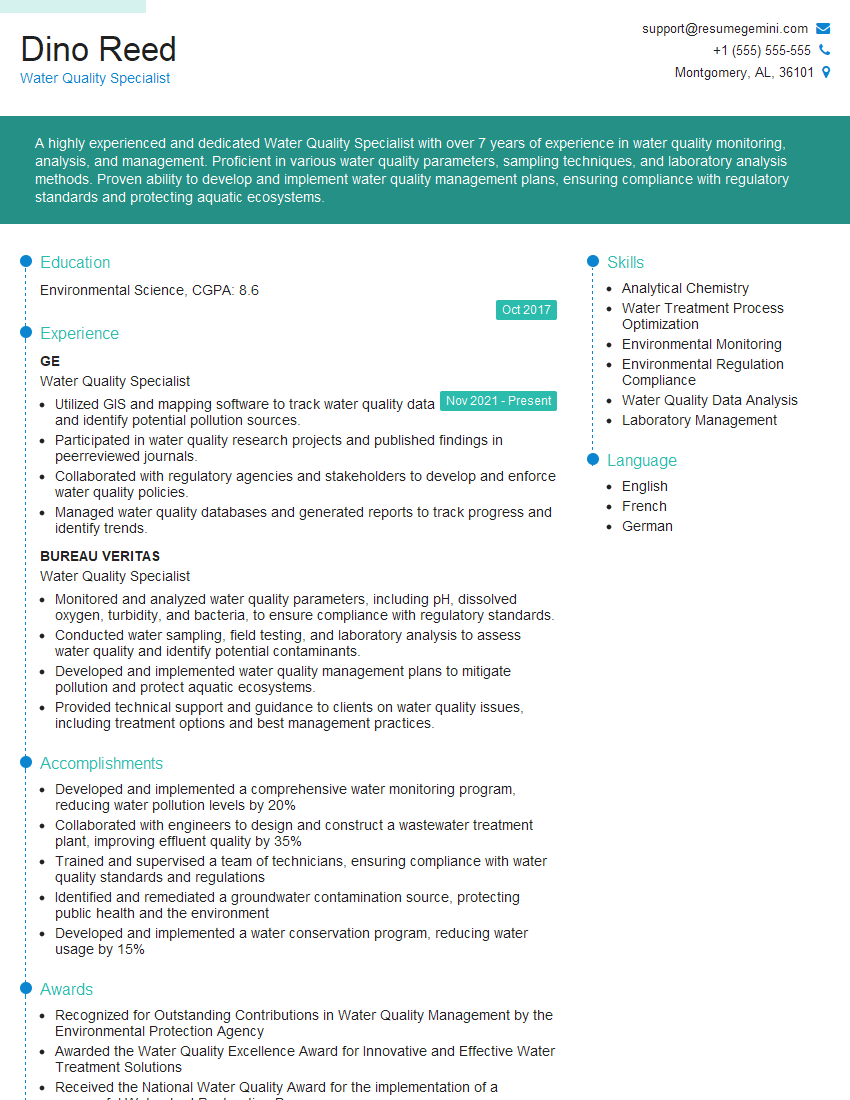
Water Quality Specialist Resume Sample
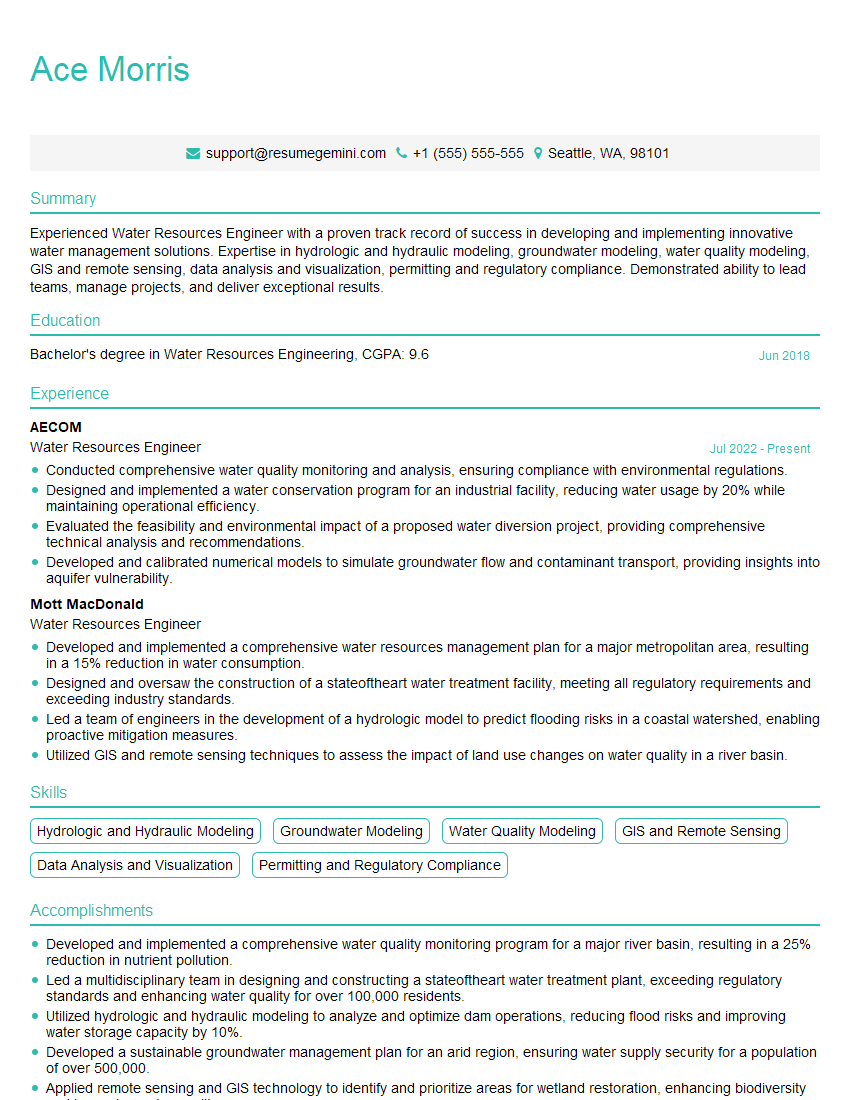
Water Resources Engineer Resume Sample
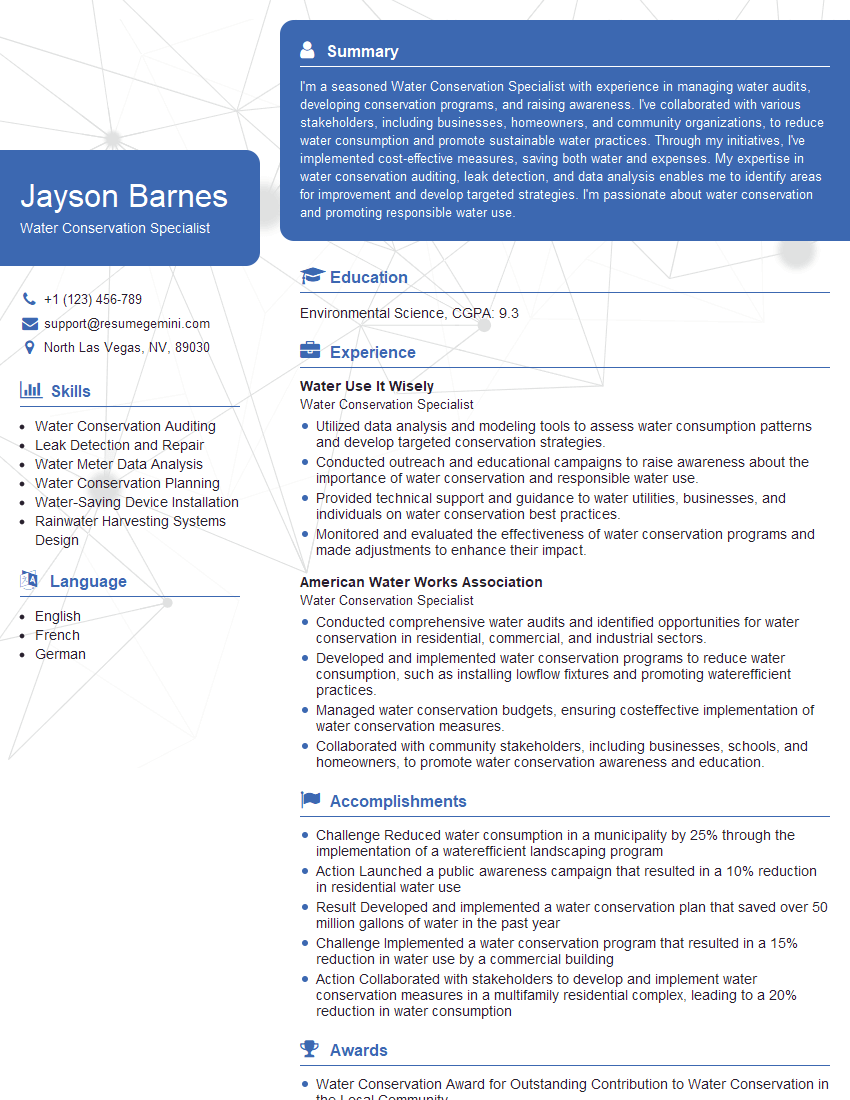
Water Conservation Specialist Resume Sample
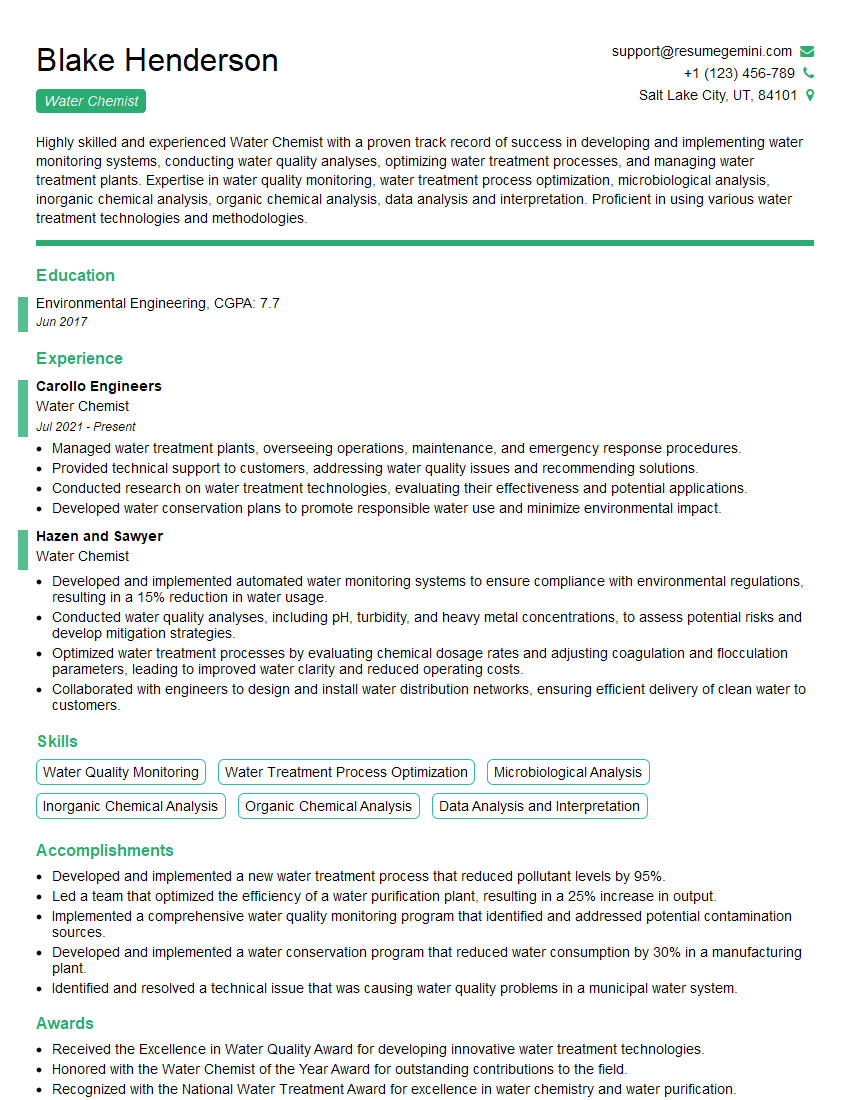
Water Chemist Resume Sample
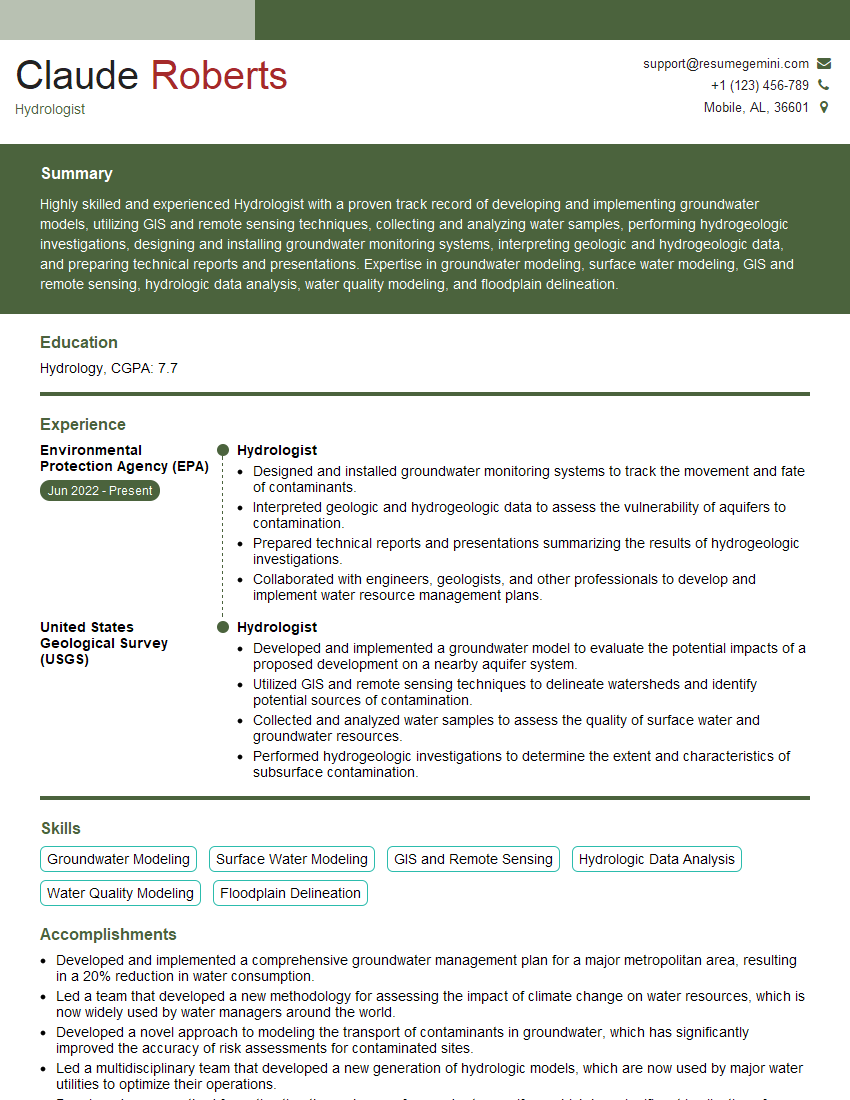
Hydrologist Resume Sample
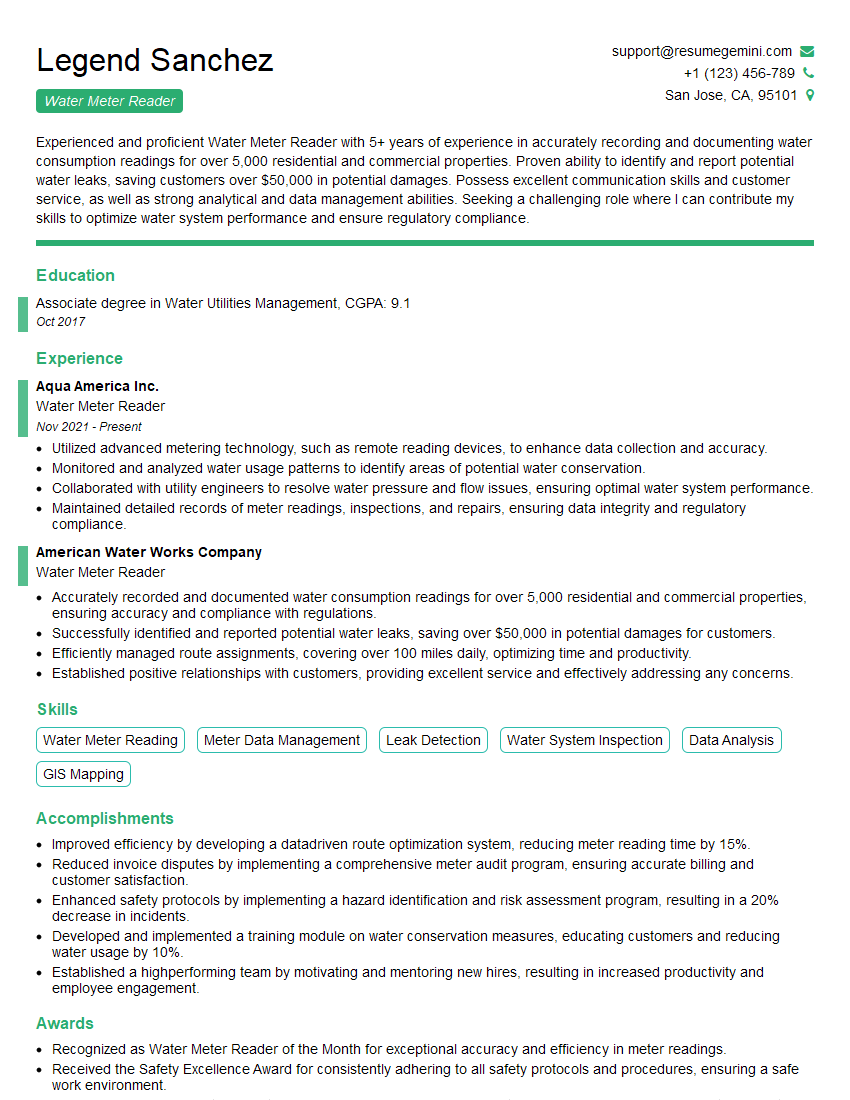
Water Meter Reader Resume Sample
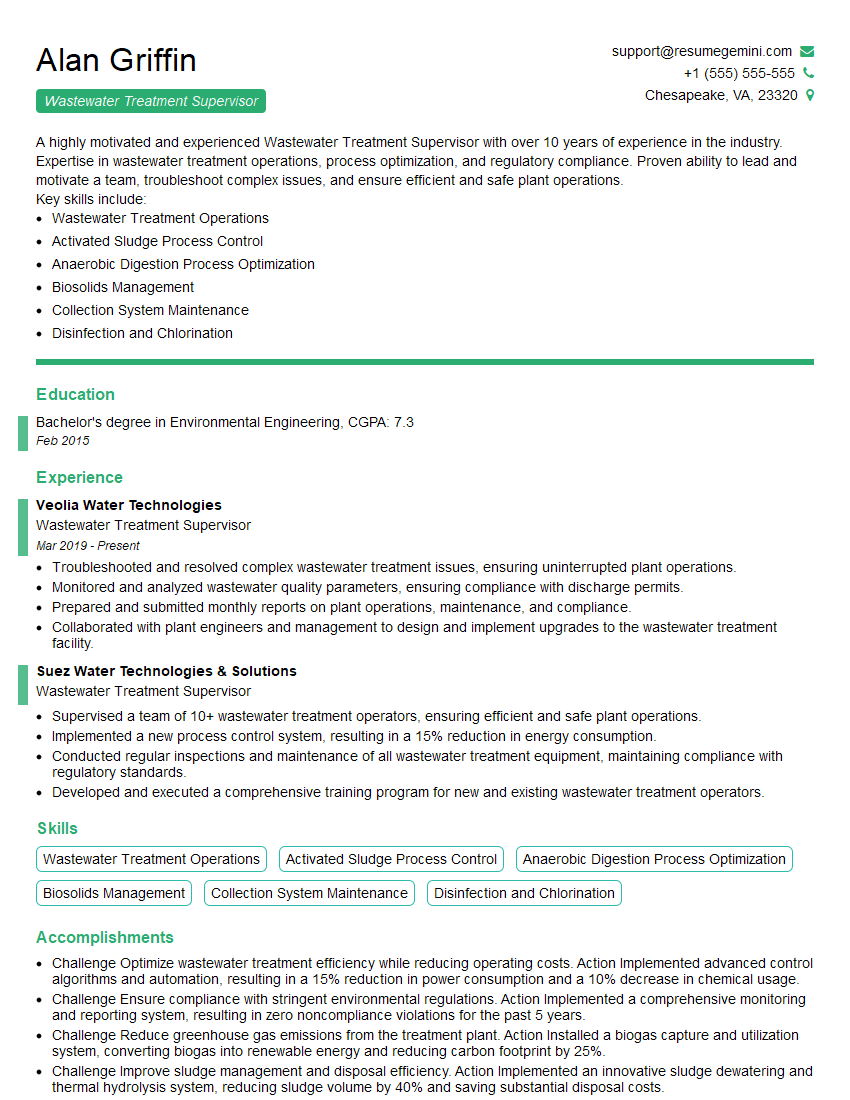
Wastewater Treatment Supervisor Resume Sample
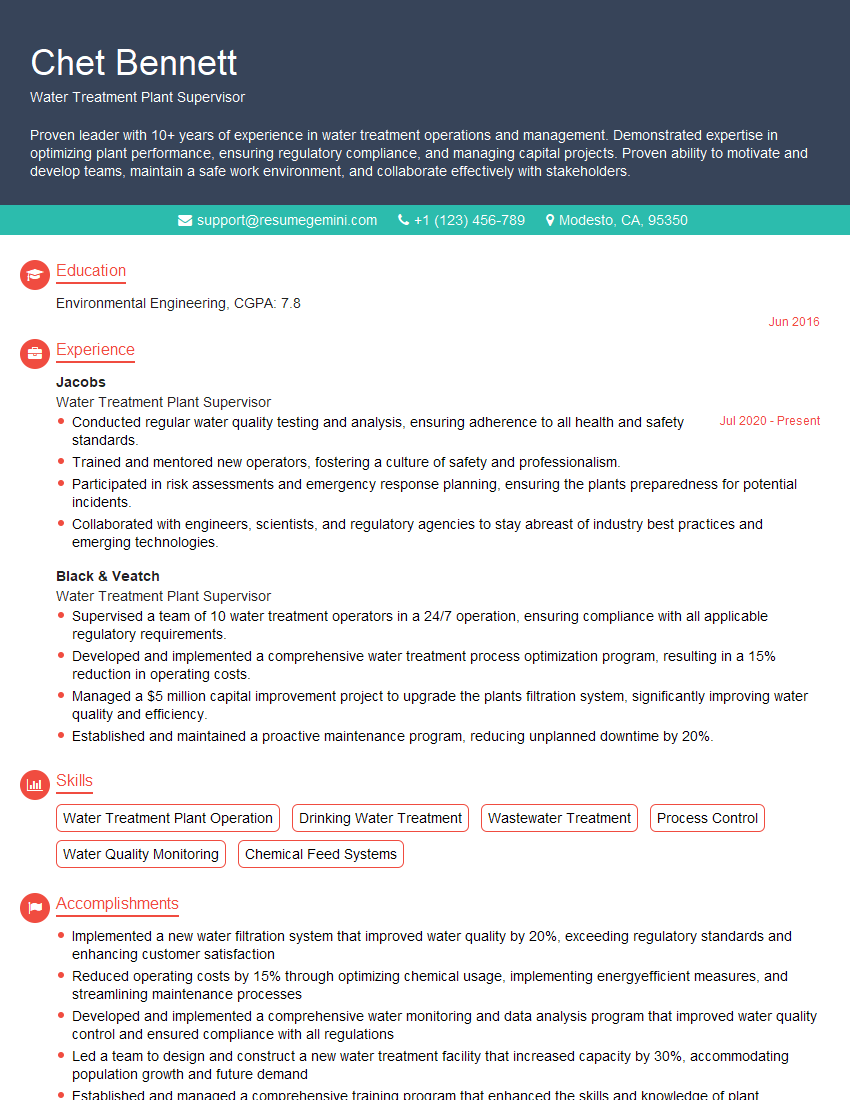
Water Treatment Plant Supervisor Resume Sample
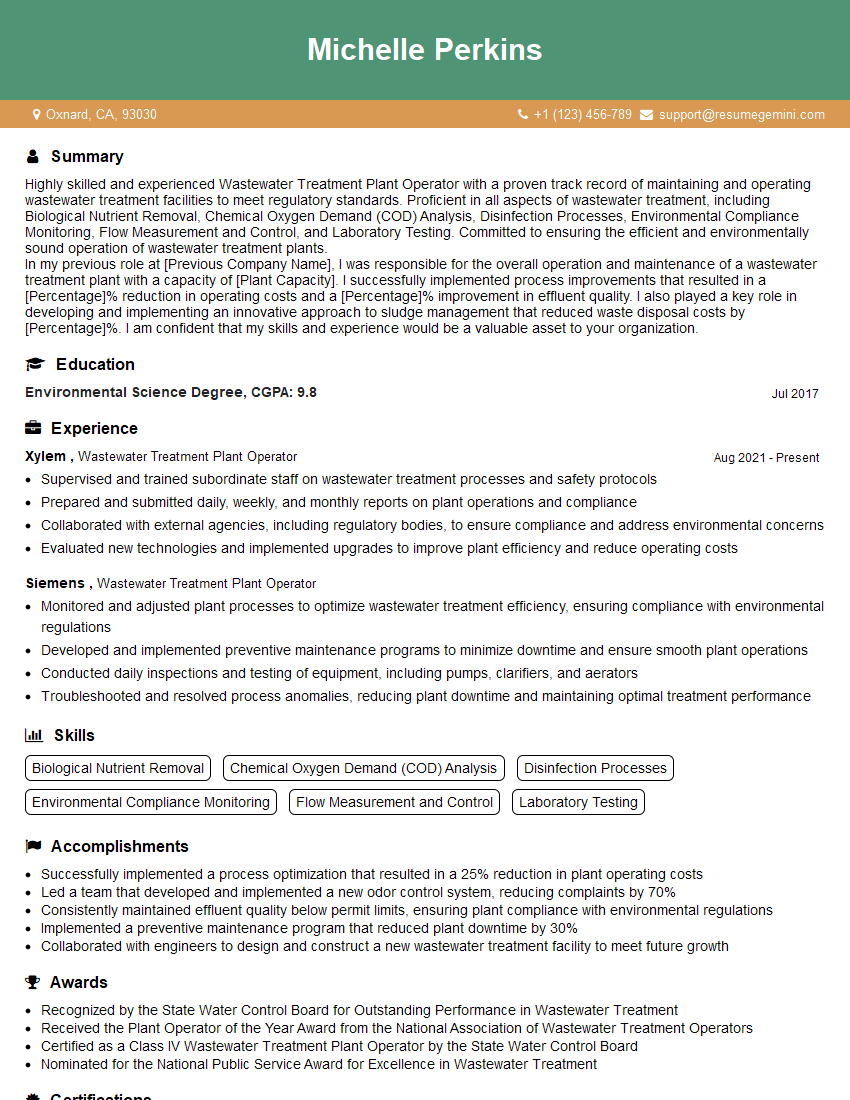
Wastewater Treatment Plant Operator Resume Sample
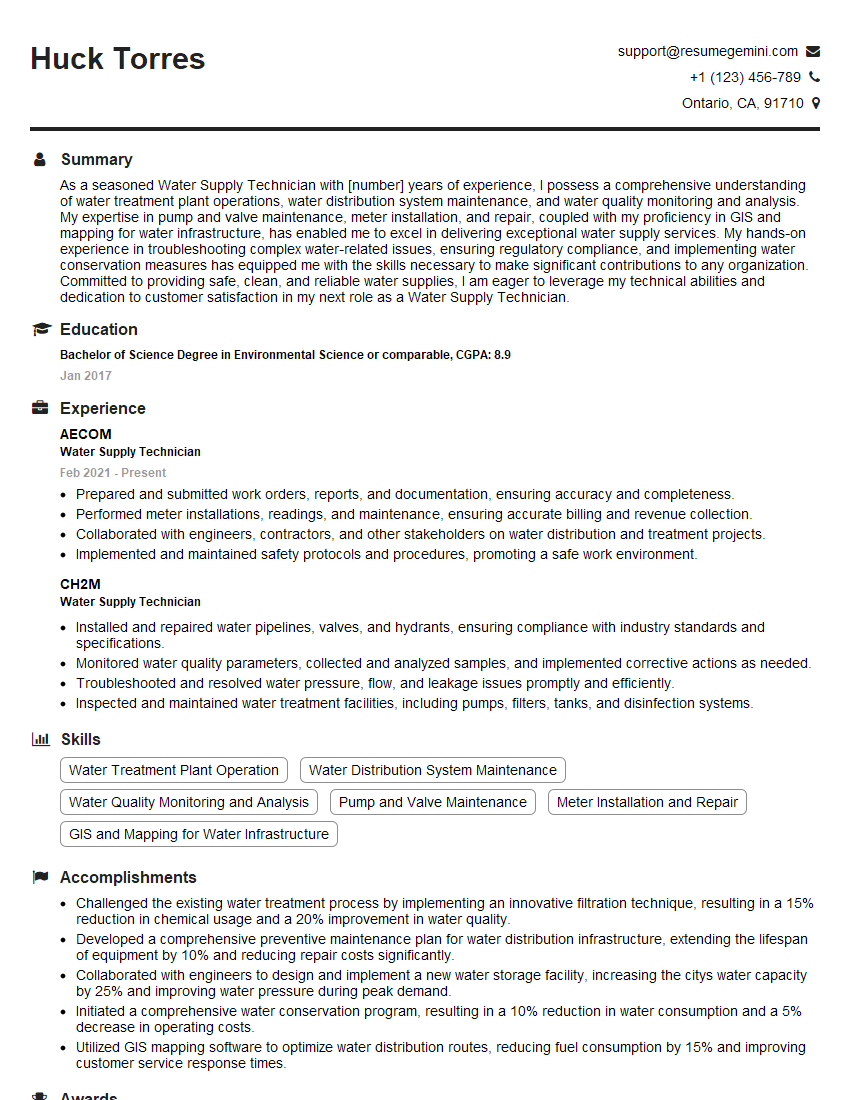
Water Supply Technician Resume Sample
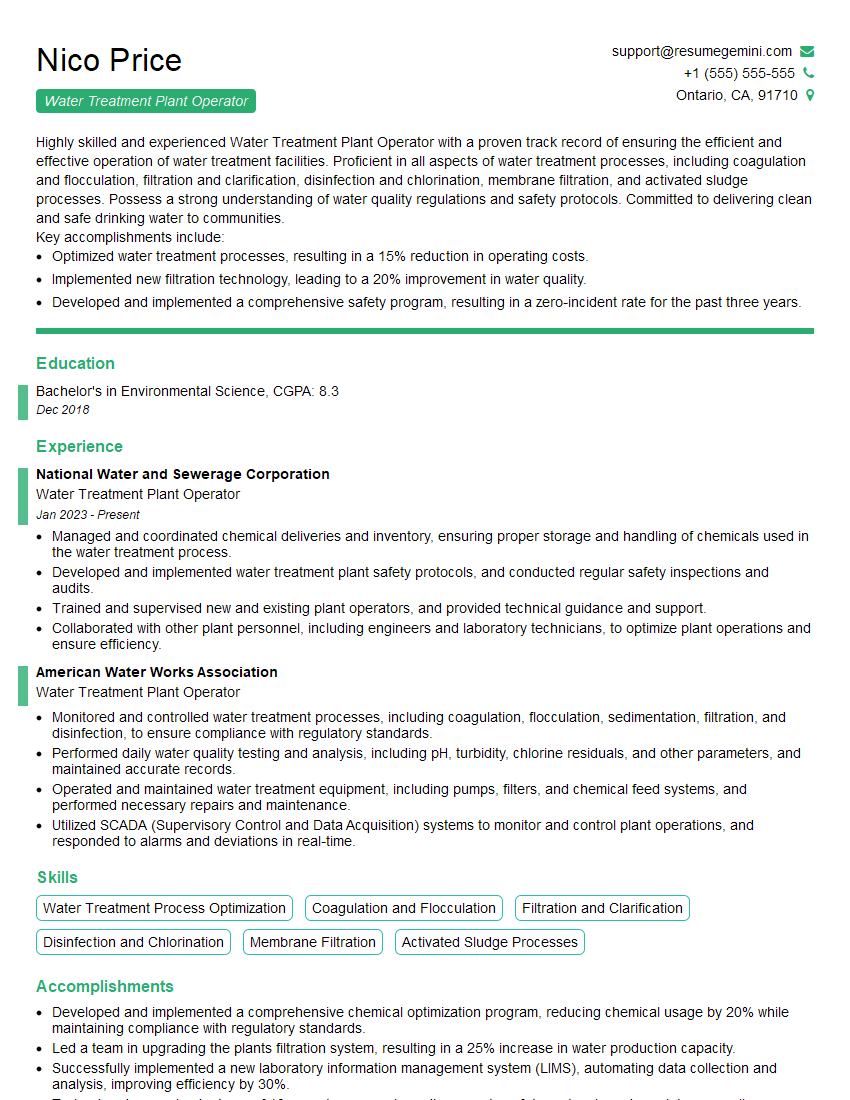
Water Treatment Plant Operator Resume Sample
Explore more articles
Users Rating of Our Blogs
Share Your Experience
We value your feedback! Please rate our content and share your thoughts (optional).
What Readers Say About Our Blog
To the interviewgemini.com Webmaster.
Very helpful and content specific questions to help prepare me for my interview!
Thank you
To the interviewgemini.com Webmaster.
This was kind of a unique content I found around the specialized skills. Very helpful questions and good detailed answers.
Very Helpful blog, thank you Interviewgemini team.