Feeling uncertain about what to expect in your upcoming interview? We’ve got you covered! This blog highlights the most important Watershed Management Planning interview questions and provides actionable advice to help you stand out as the ideal candidate. Let’s pave the way for your success.
Questions Asked in Watershed Management Planning Interview
Q 1. Define a watershed and explain its key characteristics.
A watershed, also known as a drainage basin or catchment area, is the land area that drains water, sediment, and dissolved materials to a common outlet at a point along a stream channel. Think of it like a giant natural bathtub. All the rain that falls within its boundaries eventually flows downhill towards a single point, whether it’s a river, lake, or ocean.
Key characteristics include:
- Defined boundaries: Watersheds have distinct ridges and divides that separate them from neighboring watersheds.
- Hierarchical structure: Smaller watersheds can be nested within larger ones, forming a branching network.
- Hydrologic connectivity: Water, sediment, and pollutants move through the watershed, connecting different parts of the landscape.
- Unique characteristics: Each watershed possesses unique geological, hydrological, and biological features that influence its water quality and ecosystem health.
- Dynamic system: Watersheds are constantly changing due to natural processes and human activities.
For example, the Mississippi River watershed is one of the largest in North America, encompassing a vast area and numerous smaller tributary watersheds.
Q 2. Describe the hydrological cycle and its relevance to watershed management.
The hydrological cycle describes the continuous movement of water on, above, and below the surface of the Earth. It’s a closed system, meaning water is neither created nor destroyed, just constantly recycled. This cycle is crucial for watershed management because it dictates how water flows through a watershed, affecting water availability, quality, and ecosystem function.
The cycle involves several key processes:
- Precipitation: Water falling from the atmosphere (rain, snow, hail).
- Evaporation: Water transforming from liquid to gas and entering the atmosphere.
- Transpiration: Water vapor released from plants.
- Evapotranspiration: Combined effect of evaporation and transpiration.
- Infiltration: Water soaking into the ground.
- Runoff: Water flowing over the land surface.
- Groundwater flow: Water moving beneath the surface.
Understanding the hydrological cycle helps us predict water availability, manage water resources, and mitigate the impacts of floods and droughts. For instance, knowing the infiltration rate of a soil helps us design effective stormwater management systems.
Q 3. Explain the difference between point and non-point source pollution.
The difference lies in the source of pollution:
- Point source pollution: This pollution originates from a single, identifiable source. Think of it like a dripping faucet – you know exactly where the water (and pollution) is coming from. Examples include discharges from industrial facilities, sewage treatment plants, and stormwater outfalls.
- Non-point source pollution: This pollution comes from multiple, diffuse sources and is harder to pinpoint. It’s like a widespread rain shower – the water (and pollution) comes from everywhere, making it difficult to isolate a single source. Examples include agricultural runoff, urban stormwater runoff, and atmospheric deposition.
Managing point source pollution is generally easier because regulations can target specific discharge points. Non-point source pollution control requires a more holistic approach, focusing on land management practices across the entire watershed.
Q 4. What are the common water quality parameters used in watershed assessment?
Many parameters are used to assess water quality in a watershed. These parameters help us understand the overall health of the water body and identify potential pollution sources. Common parameters include:
- Dissolved oxygen (DO): Essential for aquatic life; low DO indicates pollution.
- Biochemical oxygen demand (BOD): Measures the amount of oxygen consumed by microorganisms decomposing organic matter; high BOD indicates pollution.
- pH: Measures acidity or alkalinity; extreme pH levels can harm aquatic life.
- Turbidity: Measures water clarity; high turbidity indicates sediment pollution.
- Nutrients (nitrogen and phosphorus): Excess nutrients can cause eutrophication (algal blooms).
- Temperature: Elevated water temperature can reduce DO and stress aquatic life.
- Bacteria (e.g., E. coli): Indicates fecal contamination.
- Heavy metals (e.g., lead, mercury): Toxic pollutants that can accumulate in aquatic organisms.
The specific parameters assessed will depend on the objectives of the assessment and the potential pollution sources in the watershed.
Q 5. How do you assess the ecological health of a watershed?
Assessing ecological health involves a holistic evaluation of the watershed’s physical, chemical, and biological components. It’s not just about water quality; it’s about the overall functioning of the ecosystem. Methods include:
- Biological indicators: Assessing the abundance and diversity of aquatic organisms (fish, macroinvertebrates, algae) which reflect the overall health of the ecosystem.
- Habitat assessment: Evaluating the physical characteristics of the stream channel, riparian zone, and surrounding landscape which provide habitat for aquatic and terrestrial life.
- Water quality monitoring: Measuring various water quality parameters as discussed earlier.
- Sediment analysis: Examining the type and amount of sediment in the stream which can indicate erosion and pollution.
- Riparian vegetation assessment: Assessing the health and extent of vegetation along stream banks that provides important ecological functions.
- Use of indices: Employing indices that combine multiple indicators to provide an overall score of ecological health (e.g., Index of Biotic Integrity (IBI)).
A healthy watershed will have a diverse community of organisms, intact habitats, and good water quality. By using these assessment methods, we can identify areas of concern and prioritize conservation and restoration efforts.
Q 6. Describe various methods for controlling non-point source pollution.
Controlling non-point source pollution requires a multi-faceted approach focusing on prevention and reduction at the source. Methods include:
- Best Management Practices (BMPs) in agriculture: Implementing practices like no-till farming, cover cropping, buffer strips, and nutrient management to reduce runoff from agricultural lands.
- Urban stormwater management: Utilizing green infrastructure such as rain gardens, bioswales, permeable pavements, and green roofs to manage stormwater runoff in urban areas.
- Forest management: Implementing sustainable forestry practices to reduce erosion and protect water quality.
- Erosion and sediment control: Utilizing techniques such as contour plowing, terracing, and sediment basins to control erosion and sediment transport.
- Public education and outreach: Raising awareness among landowners and residents about the importance of water quality and encouraging them to adopt responsible land management practices.
- Regulations and incentives: Implementing policies and regulations to incentivize the adoption of BMPs and penalize activities that contribute to pollution.
Effective non-point source pollution control requires collaboration among various stakeholders, including farmers, developers, policymakers, and the public.
Q 7. Explain the concept of Total Maximum Daily Load (TMDL).
Total Maximum Daily Load (TMDL) is a regulatory tool used to restore and maintain water quality in impaired water bodies. It’s essentially a calculation of the maximum amount of a specific pollutant that a water body can receive daily and still meet water quality standards. Think of it as a pollution budget.
The TMDL process typically involves:
- Identifying impaired water bodies: Determining which water bodies do not meet water quality standards.
- Listing pollutants: Identifying the pollutants contributing to the impairment.
- Calculating the TMDL: Determining the maximum amount of each pollutant that the water body can receive daily while meeting water quality standards. This calculation considers the water body’s capacity to assimilate pollutants and the desired level of water quality.
- Allocating the TMDL: Distributing the TMDL among various pollution sources (point and non-point).
- Developing implementation plans: Creating plans to reduce pollution from different sources to meet the allocated TMDL.
TMDLs are legally binding and provide a framework for restoring impaired water bodies. They require a comprehensive understanding of the watershed’s hydrology, water quality, and pollution sources.
Q 8. What are the key components of a watershed management plan?
A comprehensive watershed management plan is like a blueprint for the health of a river system. It integrates various components to ensure the sustainable use and protection of water resources. Key components include:
- Watershed Characterization: This involves defining the geographic boundaries, identifying land use patterns (e.g., forests, urban areas, agriculture), understanding soil types, and assessing hydrological processes (e.g., rainfall, runoff, infiltration).
- Water Quality Assessment: This step analyzes the chemical, physical, and biological characteristics of water bodies within the watershed to identify pollution sources and their impact on water quality. For example, we might test for nutrient levels (nitrogen and phosphorus) that indicate agricultural runoff.
- Water Quantity Assessment: This involves analyzing streamflow data, groundwater levels, and water storage capacity to understand the availability of water resources throughout the year. Drought forecasting is a critical part of this.
- Stakeholder Identification and Engagement: A successful plan requires the involvement of all relevant stakeholders, including residents, businesses, government agencies, and environmental groups. Their input is vital for developing realistic and effective strategies.
- Goals and Objectives: Clear, measurable, achievable, relevant, and time-bound (SMART) goals and objectives are crucial. These could include reducing sediment pollution by a specific percentage or improving fish habitat.
- Management Strategies: This outlines the specific actions to achieve the goals, such as implementing best management practices (BMPs) in agriculture, restoring riparian buffers, or controlling stormwater runoff.
- Monitoring and Evaluation: Regular monitoring is necessary to track progress toward goals and identify areas needing adjustments. This involves collecting data on water quality, streamflow, and other relevant indicators.
- Adaptive Management: The plan should be flexible enough to adapt to changing conditions, such as climate change impacts or new development.
Q 9. How do you integrate GIS technology into watershed management?
Geographic Information Systems (GIS) are indispensable tools in watershed management. They allow us to visualize, analyze, and model spatial data related to the watershed. Think of GIS as a powerful map-making and analysis platform.
- Data Integration: GIS integrates diverse data sources such as elevation models, land cover maps, soil maps, water quality data, and infrastructure locations. This allows us to see how various factors interact within the watershed.
- Hydrological Modeling: GIS can be used to simulate hydrological processes, such as runoff generation, flood inundation, and groundwater flow. Models help us predict the impacts of different management strategies.
- Spatial Analysis: GIS allows us to perform spatial analysis to identify areas at risk of erosion, pollution, or flooding. For example, we can identify areas with high sediment yield that require focused conservation efforts.
- Visualization and Communication: GIS produces visually appealing maps and reports that effectively communicate complex information to stakeholders. This helps facilitate public participation and decision-making.
For instance, we might use GIS to overlay a map of impervious surfaces (roads, buildings) with a rainfall model to predict stormwater runoff volume and identify areas needing stormwater management infrastructure.
Q 10. Describe different stormwater management techniques.
Stormwater management aims to control and manage excess rainwater runoff to prevent flooding, erosion, and water pollution. Techniques vary depending on the context.
- Green Infrastructure (GI): This approach mimics natural processes to manage stormwater. Examples include rain gardens (depressed areas planted with vegetation), bioswales (vegetated channels), permeable pavements (allowing water to infiltrate the ground), and green roofs (vegetated rooftops).
- Gray Infrastructure: This involves traditional engineered structures, such as storm sewers, detention basins (holding areas for runoff), retention basins (permanently storing water), and stormwater treatment facilities.
- Best Management Practices (BMPs): These are measures implemented to reduce the quantity and improve the quality of stormwater runoff. Examples include street sweeping, erosion and sediment control measures on construction sites, and the use of vegetated buffers along streams.
- Low Impact Development (LID): This approach focuses on minimizing the impact of development on the natural hydrological cycle by preserving or replicating natural hydrologic functions. LID strategies often incorporate GI techniques.
A practical example would be using a combination of rain gardens and permeable pavements in a new residential development to manage stormwater runoff and reduce the need for large, expensive detention basins.
Q 11. Explain the importance of public participation in watershed management.
Public participation is absolutely essential for successful watershed management. It ensures that plans are relevant, accepted, and effective. Think of it as building a community consensus for a shared goal.
- Increased Ownership: When people are involved in planning, they are more likely to support and implement the resulting strategies.
- Diverse Perspectives: Stakeholders bring diverse knowledge and perspectives, enriching the planning process and leading to more comprehensive and robust solutions.
- Improved Plan Implementation: Community support facilitates successful implementation and compliance with management strategies.
- Conflict Resolution: Public participation provides a forum for addressing potential conflicts and building consensus among stakeholders.
For example, holding public forums, surveys, and workshops allows for open dialogue, addresses concerns, and generates valuable insights that might otherwise be overlooked.
Q 12. How do you assess the impact of climate change on a watershed?
Climate change significantly impacts watersheds. Increased temperatures, altered precipitation patterns (more intense rainfall and longer droughts), and rising sea levels all have consequences. Assessing this impact requires a multi-faceted approach.
- Climate Projections: Obtain regional climate projections from reputable sources (e.g., governmental climate agencies) regarding temperature, precipitation, and sea-level rise.
- Hydrological Modeling: Use climate projections as input to hydrological models to simulate the effects of altered rainfall patterns, snowmelt, and evapotranspiration on streamflow, groundwater levels, and flood risk.
- Water Quality Modeling: Assess how changes in temperature and precipitation affect water quality parameters, such as nutrient concentrations and dissolved oxygen levels.
- Vulnerability Assessment: Identify the most vulnerable areas within the watershed to climate change impacts (e.g., areas prone to flooding, drought, or water scarcity).
- Scenario Planning: Develop different management scenarios based on various climate change projections to evaluate the effectiveness of different strategies under different future conditions.
For example, a warmer climate might lead to increased evaporation, reducing water availability, and requiring adjustments to water allocation plans.
Q 13. What are the challenges in managing urban watersheds?
Managing urban watersheds presents unique challenges due to high population density, extensive impervious surfaces, and fragmented landscapes.
- Increased Runoff: Impervious surfaces (roads, buildings) increase runoff volume and speed, leading to increased flood risk and reduced groundwater recharge.
- Water Quality Degradation: Stormwater runoff carries pollutants like heavy metals, oil, and nutrients from urban areas, degrading water quality in streams and rivers.
- Heat Island Effect: Urban areas are often warmer than surrounding areas, increasing evaporation and altering stream temperatures, which can negatively impact aquatic life.
- Limited Green Space: Lack of green infrastructure limits natural stormwater management and reduces opportunities for recreation and ecosystem services.
- Complex Stakeholder Interests: Managing urban watersheds requires balancing the needs of diverse stakeholders, including residents, businesses, developers, and government agencies.
Effective management often involves integrating green infrastructure, implementing strict stormwater regulations, and engaging the public in creating a sustainable urban environment.
Q 14. Describe various methods for stream restoration.
Stream restoration aims to rehabilitate degraded stream ecosystems and improve their ecological function. Methods vary depending on the specific issues and location.
- Channel Stabilization: This involves stabilizing eroding stream banks using techniques like bioengineering (planting vegetation) or using engineered structures (rock riprap).
- Riparian Buffer Restoration: Planting native vegetation along stream banks creates a buffer zone that filters pollutants, stabilizes banks, and provides habitat.
- In-stream Habitat Improvement: This includes adding structures like large woody debris (logs and branches) to create pools and riffles, improving fish habitat and increasing biodiversity.
- Removal of Dams or Culverts: Removing obsolete dams or replacing constricted culverts can restore natural stream flow and connectivity.
- Water Quality Improvement: Addressing pollution sources upstream, such as agricultural runoff or wastewater discharges, is essential for long-term stream restoration.
An example would be using a combination of bank stabilization techniques (bioengineering) and in-stream habitat improvements (adding large woody debris) to restore a degraded stream channel and improve its ecological function.
Q 15. Explain the concept of water budgeting in watershed management.
Water budgeting in watershed management is like creating a household budget for water resources. It involves meticulously accounting for all water inflows (precipitation, surface runoff, groundwater inflow) and outflows (evapotranspiration, surface runoff, groundwater outflow, human withdrawals) within a defined watershed area over a specific period. This accounting helps us understand the water balance – the difference between inflows and outflows – and identify potential shortages or surpluses.
A simple water budget equation looks like this: Precipitation + Inflow - Evapotranspiration - Outflow - Withdrawal = Change in Storage. Each component needs to be quantified using data from various sources like rain gauges, streamflow gauges, and groundwater monitoring wells. The accuracy of the budget depends heavily on the quality and availability of this data. For instance, we might use remote sensing data to estimate evapotranspiration, hydrological models to simulate runoff, and well measurements to assess groundwater levels. This budget is crucial for informing decisions related to water allocation, infrastructure development (dams, reservoirs), and drought management.
Imagine a farming community relying on a single river. A detailed water budget can help determine how much water is available for irrigation, while ensuring enough water remains for environmental flow needs and downstream users. Without a proper budget, over-extraction could lead to conflicts and ecological damage.
Career Expert Tips:
- Ace those interviews! Prepare effectively by reviewing the Top 50 Most Common Interview Questions on ResumeGemini.
- Navigate your job search with confidence! Explore a wide range of Career Tips on ResumeGemini. Learn about common challenges and recommendations to overcome them.
- Craft the perfect resume! Master the Art of Resume Writing with ResumeGemini’s guide. Showcase your unique qualifications and achievements effectively.
- Don’t miss out on holiday savings! Build your dream resume with ResumeGemini’s ATS optimized templates.
Q 16. How do you evaluate the effectiveness of watershed management practices?
Evaluating the effectiveness of watershed management practices requires a multi-faceted approach. We don’t just look at a single indicator, but rather a suite of ecological, hydrological, and socio-economic metrics. For example, we might assess changes in:
- Water quality: Analyzing parameters like nutrient levels (nitrogen and phosphorus), sediment load, and the presence of pollutants to see if water quality has improved after implementing best management practices like riparian buffers.
- Streamflow: Measuring changes in streamflow volume and timing to evaluate the impact of practices on flood mitigation and low-flow conditions.
- Groundwater levels: Monitoring groundwater recharge and depletion rates to assess the effects on groundwater sustainability.
- Erosion rates: Assessing soil erosion rates through field surveys or remote sensing to determine the success of erosion control measures.
- Habitat condition: Evaluating the health of aquatic and riparian habitats to determine the effectiveness of restoration projects.
- Community involvement and satisfaction: Gauging community participation and assessing the perceived effectiveness of management practices through surveys and stakeholder consultations.
Often, statistical analysis and trend analysis are used to compare pre- and post-implementation conditions. Before-and-after photographs, coupled with water quality data collected over time, create compelling visuals for stakeholders and decision-makers. It’s essential to have clearly defined goals and measurable indicators at the start of any watershed management project for effective evaluation.
Q 17. What are the common regulatory frameworks governing watershed management?
Watershed management is subject to a complex web of regulations that vary significantly across jurisdictions. These regulations often stem from national water policies, international agreements (like those related to transboundary water resources), and local ordinances. Some common themes include:
- Water quality regulations: These define acceptable limits for pollutants in water bodies, often requiring permits for wastewater discharges and other pollution sources (e.g., Clean Water Act in the US).
- Water quantity regulations: These govern water allocation and withdrawals, aiming to prevent over-extraction and ensure equitable water distribution. This might involve setting minimum streamflows or allocating water rights.
- Land use regulations: These impact watershed management by controlling activities like deforestation, urbanization, and agricultural practices that can affect water quality and quantity. Zoning laws and building codes often fall under this category.
- Environmental protection regulations: These laws protect endangered species and their habitats, which are often impacted by watershed management practices (e.g., Endangered Species Act in the US).
Navigating these regulations requires collaboration among various stakeholders, including government agencies, landowners, and community groups. A well-structured watershed management plan needs to explicitly address compliance with all relevant regulations.
Q 18. How do you balance competing water uses within a watershed?
Balancing competing water uses within a watershed requires a strategic approach that considers the ecological, economic, and social dimensions of water. It’s often a complex negotiation process involving stakeholders with diverse interests. Common strategies include:
- Integrated Water Resources Management (IWRM): This holistic approach seeks to optimize water allocation across various sectors (agriculture, industry, domestic use, environment) by considering all relevant factors and involving all stakeholders in decision-making.
- Water markets: Creating markets for water rights allows for efficient allocation, enabling those who value water most to acquire it. This requires careful design to prevent market failures and ensure fairness.
- Prioritization frameworks: Establishing a prioritization framework (e.g., based on economic value, environmental sensitivity, social needs) helps allocate limited resources when competing demands cannot be fully met.
- Water conservation measures: Implementing water-efficient technologies and practices across different sectors reduces overall water demand, easing pressure on resources.
- Conflict resolution mechanisms: Developing procedures for resolving conflicts among water users is crucial, involving mediation and negotiation processes to ensure fair and sustainable outcomes.
For example, a watershed might face competition between agricultural irrigation and urban water supply. IWRM could facilitate a solution by optimizing irrigation schedules to minimize water use while guaranteeing sufficient water for the city. This might involve investments in water-efficient irrigation technologies and the development of a water-pricing structure that encourages conservation.
Q 19. Explain the principles of sustainable watershed management.
Sustainable watershed management rests on several key principles:
- Ecological integrity: Maintaining the health and resilience of the watershed’s ecosystems, ensuring biodiversity and healthy aquatic habitats.
- Social equity: Providing fair and equitable access to water resources, considering the needs of all stakeholders, and fostering community participation.
- Economic viability: Ensuring that watershed management practices are economically sustainable, considering the costs and benefits for all sectors.
- Adaptive management: Implementing a flexible and iterative approach that adjusts management strategies based on monitoring results and new scientific understanding.
- Precautionary principle: Taking a cautious approach when faced with uncertainties, avoiding actions that could have irreversible negative consequences.
- Integration: Considering the interconnectedness of various factors (hydrology, ecology, socio-economics) and integrating diverse perspectives into management decisions.
Think of it as managing the watershed as a whole system, ensuring that any actions taken today don’t compromise the ability of future generations to meet their water needs. It’s about finding a balance between human needs and environmental protection.
Q 20. Describe the role of modeling in watershed management decision-making.
Modeling plays a crucial role in watershed management decision-making by allowing us to simulate the behavior of the watershed under various conditions. This helps predict the impacts of different management strategies before they are implemented, reducing uncertainty and improving decision-making efficiency.
Models can be used to:
- Assess the impact of land use changes: Simulate how deforestation or urbanization might affect runoff, erosion, and water quality.
- Evaluate the effectiveness of different management practices: Compare the performance of various scenarios, such as implementing riparian buffers or changing irrigation techniques.
- Predict the impacts of climate change: Analyze how changes in precipitation patterns might affect water availability and water quality.
- Support water allocation decisions: Simulate the impacts of different water allocation strategies on competing water users.
- Design and optimize water infrastructure: Model the performance of dams, reservoirs, and other infrastructure projects.
The results of these models, often presented visually using maps and charts, inform discussions and help stakeholders visualize the potential consequences of their choices. They also enable a more evidence-based approach to decision-making, rather than relying on intuition alone.
Q 21. What are the different types of hydrological models used?
A wide variety of hydrological models exist, each with its own strengths and weaknesses, depending on the specific application and data availability. Here are some common types:
- Empirical models: These models are based on statistical relationships between observed data, often simpler and requiring less data than physically-based models. Examples include rainfall-runoff models based on regression analysis.
- Physically-based models: These models explicitly represent the physical processes governing water flow and transport within the watershed. They are typically more complex but can provide a more mechanistic understanding of watershed behavior. Examples include the Soil and Water Assessment Tool (SWAT) and the Hydrologic Simulation Program – FORTRAN (HSPF).
- Conceptual models: These models simplify the complex hydrological processes into a series of interconnected components (e.g., reservoirs representing soil moisture storage). They offer a balance between simplicity and realism.
- Distributed models: These models divide the watershed into smaller sub-basins or grid cells and simulate hydrological processes within each cell, providing a more spatially explicit representation of watershed behavior. SWAT is an example of a distributed model.
- Lumped models: These treat the entire watershed as a single unit and do not explicitly represent spatial variability.
The choice of model depends on factors such as the scale of the study, data availability, computational resources, and the specific research questions being addressed. Often, a combination of modeling approaches is used to gain a more comprehensive understanding of watershed behavior.
Q 22. How do you address conflicts among stakeholders in watershed management?
Addressing stakeholder conflicts in watershed management requires a collaborative and participatory approach. It’s not just about finding compromises; it’s about building consensus around shared goals and understanding diverse perspectives. I typically begin by fostering open communication through workshops and facilitated discussions. This involves actively listening to each stakeholder’s concerns, identifying common ground, and acknowledging the legitimacy of their interests, even if they appear conflicting at first.
Next, I utilize conflict resolution techniques like mediation or negotiation. These methods help stakeholders find mutually acceptable solutions. For instance, in a project involving agricultural runoff and downstream water quality, I might help farmers understand the economic benefits of sustainable farming practices while ensuring downstream users have access to clean water. This could involve exploring government incentive programs or developing water quality trading schemes.
Finally, I emphasize transparency and fairness throughout the process. This includes clearly outlining decision-making processes, sharing information openly, and ensuring all stakeholders have a voice in the final plan. Documenting all agreements and commitments is also critical to maintain accountability and build trust.
Q 23. What are the economic considerations in watershed management projects?
Economic considerations are central to successful watershed management. Projects must be financially viable and demonstrate a clear return on investment. This involves a thorough cost-benefit analysis that considers both direct and indirect costs. Direct costs include things like infrastructure development (e.g., dam construction, water treatment plants), personnel, and equipment. Indirect costs might include the opportunity cost of land use changes or the economic impact of disruptions to existing activities.
On the benefit side, we consider factors such as improved water quality leading to increased tourism revenue, enhanced agricultural yields from improved irrigation, reduced flood damage, and increased property values. Benefit-cost ratios are crucial – we need to demonstrate that the economic benefits outweigh the costs. Furthermore, we look at the distribution of costs and benefits across different stakeholder groups to ensure equity and fairness. Funding sources, from government grants to private investment, must be carefully considered. Life-cycle cost analysis helps assess long-term financial sustainability.
For example, in a project aimed at restoring riparian zones to improve water quality, we would assess the cost of planting trees and implementing erosion control measures against the economic benefits of improved water supply for downstream communities and reduced costs for water treatment.
Q 24. Describe your experience with watershed monitoring and data analysis.
My experience with watershed monitoring and data analysis is extensive. I’ve worked on numerous projects involving the collection, analysis, and interpretation of various types of data, including water quality parameters (temperature, dissolved oxygen, nutrients, etc.), streamflow data, precipitation data, and land use/land cover information. I’m proficient in using statistical software packages (like R or ArcGIS) to analyze this data, identify trends, and develop predictive models.
For example, in one project, we used long-term streamflow data to assess the impact of climate change on water availability in a particular watershed. We employed statistical modeling techniques to predict future streamflow under different climate change scenarios. This information was then used to inform water resource management decisions and develop drought mitigation strategies. We also use Geographic Information Systems (GIS) extensively to visualize and analyze spatial data, helping us understand the relationships between various factors affecting watershed health.
Data quality control is paramount. I strictly adhere to standard operating procedures for data collection, ensuring accuracy and reliability. Regular quality checks and audits are essential to maintain data integrity throughout the entire process.
Q 25. How do you ensure the long-term sustainability of watershed management initiatives?
Ensuring the long-term sustainability of watershed management initiatives requires a multi-faceted approach. It’s not enough to simply implement a project; we need to build institutional capacity and community ownership to ensure its continued success long after the initial funding ends. This involves several key elements:
- Community Engagement: Active involvement of local communities in planning, implementation, and monitoring is crucial. This fosters a sense of ownership and responsibility.
- Adaptive Management: Watershed systems are dynamic; conditions change. We need to incorporate flexibility into our plans, allowing for adjustments based on monitoring data and new information.
- Financial Sustainability: Developing sustainable funding mechanisms, including cost-effective solutions and diversified funding sources (government grants, user fees, etc.), is essential.
- Institutional Strengthening: Building capacity within relevant organizations to manage and maintain the initiative over the long term is paramount. This includes training and capacity building for local staff.
- Policy Integration: Working with policymakers to incorporate watershed management principles into broader land use and water resource management policies ensures long-term protection.
For instance, involving local farmers in developing and implementing best management practices for agriculture not only improves water quality but also ensures their continued adoption long after project completion.
Q 26. Explain your understanding of water rights and allocation.
My understanding of water rights and allocation is grounded in the legal and social contexts governing water use within a region. Water rights are legally recognized entitlements to use water from a particular source. These rights can vary significantly depending on the jurisdiction, historical use patterns, and legal frameworks (e.g., riparian rights, prior appropriation doctrine). Allocation involves distributing the available water among competing users (agriculture, municipalities, industry, environment).
The process often involves balancing competing demands and considering environmental flow requirements. This can be complex, often requiring mediation or arbitration to resolve conflicts. Water allocation decisions often involve intricate legal processes and require expertise in water law and policy. Understanding the specific legal framework of a region is critical for effective watershed management. For instance, in areas with prior appropriation systems, water rights are allocated based on the historical order of use, whereas in riparian systems, rights are based on adjacency to the water body. Effective watershed planning integrates these legal frameworks into the management strategy.
In my work, I ensure that watershed management plans comply with all relevant water laws and regulations, and I help stakeholders understand their water rights and responsibilities.
Q 27. What are the ethical considerations in watershed management?
Ethical considerations in watershed management are paramount. It’s about ensuring fairness, equity, and sustainability for present and future generations. Key ethical considerations include:
- Environmental Justice: Avoiding disproportionate impacts on vulnerable communities and ensuring equitable access to water resources.
- Intergenerational Equity: Managing resources responsibly to ensure future generations have access to clean water and healthy ecosystems.
- Transparency and Accountability: Openly communicating decisions, being accountable for actions, and ensuring stakeholder participation.
- Respect for Indigenous Rights: Recognizing and respecting the rights and traditional knowledge of indigenous communities who often have deep historical ties to the land and water.
- Precautionary Principle: Taking preventative actions to avoid potentially harmful impacts even in the absence of complete scientific certainty.
For example, in a project involving dam construction, we would carefully assess its potential impacts on downstream communities and ecosystems, ensuring mitigation measures are in place to minimize negative consequences and compensate affected parties fairly.
Q 28. Describe your experience with developing and implementing watershed management plans.
I have extensive experience developing and implementing watershed management plans. My approach involves a phased process:
- Assessment and Diagnosis: This involves characterizing the watershed’s physical, biological, and socio-economic characteristics. We collect data on water quality, streamflow, land use, and stakeholder interests.
- Problem Identification and Prioritization: We identify key water resource issues and prioritize them based on their severity and potential impact.
- Goal Setting and Strategy Development: We define clear, measurable, achievable, relevant, and time-bound (SMART) goals and develop strategies to achieve them.
- Implementation: This phase involves putting the plan into action. It includes implementing best management practices, constructing infrastructure, and coordinating with stakeholders.
- Monitoring and Evaluation: We regularly monitor the effectiveness of the plan and make adjustments as needed. This includes collecting data, analyzing results, and reporting progress.
I have successfully led teams in developing plans for diverse watersheds, considering factors such as climate change, population growth, and land use changes. For instance, in one project, we developed a plan that integrated water conservation measures, improved irrigation techniques, and riparian restoration to address water scarcity and improve water quality in a rapidly developing region. Effective communication and collaboration with stakeholders are crucial at every stage of this process.
Key Topics to Learn for Watershed Management Planning Interview
- Hydrological Processes: Understanding the water cycle within a watershed, including precipitation, infiltration, runoff, evapotranspiration, and groundwater flow. Practical application: Analyzing hydrological data to predict flood risk or assess water availability.
- Water Quality Management: Identifying and mitigating pollution sources (point and non-point) impacting water quality. Practical application: Developing Total Maximum Daily Loads (TMDLs) or designing best management practices (BMPs).
- Watershed Modeling: Utilizing various models (e.g., hydrological, water quality) to simulate watershed behavior and evaluate management scenarios. Practical application: Predicting the impact of land use changes on streamflow or water quality.
- Data Analysis and Interpretation: Proficiency in analyzing and interpreting diverse datasets (e.g., hydrological, water quality, GIS data). Practical application: Using statistical methods to assess trends in water quality or quantify the effectiveness of management strategies.
- Stakeholder Engagement and Collaboration: Understanding the importance of engaging with diverse stakeholders (e.g., landowners, regulatory agencies, community groups) in the planning process. Practical application: Facilitating workshops or public meetings to build consensus and support for watershed management plans.
- Regulatory Frameworks: Familiarity with relevant environmental regulations and permitting processes. Practical application: Ensuring compliance with Clean Water Act regulations or navigating permitting requirements for watershed projects.
- Sustainable Watershed Management Practices: Knowledge of sustainable practices for water resource management, including water conservation, stormwater management, and integrated water resource management (IWRM). Practical application: Designing and implementing sustainable solutions to address water scarcity or improve water quality.
Next Steps
Mastering Watershed Management Planning is crucial for a successful and fulfilling career in environmental science and resource management. It opens doors to exciting opportunities in consulting, government agencies, and non-profit organizations. To significantly improve your job prospects, create an ATS-friendly resume that highlights your relevant skills and experience. ResumeGemini is a trusted resource for building professional resumes that effectively communicate your qualifications to potential employers. Take advantage of the opportunity to create a compelling resume that showcases your expertise; examples of resumes tailored to Watershed Management Planning are available to help guide you.
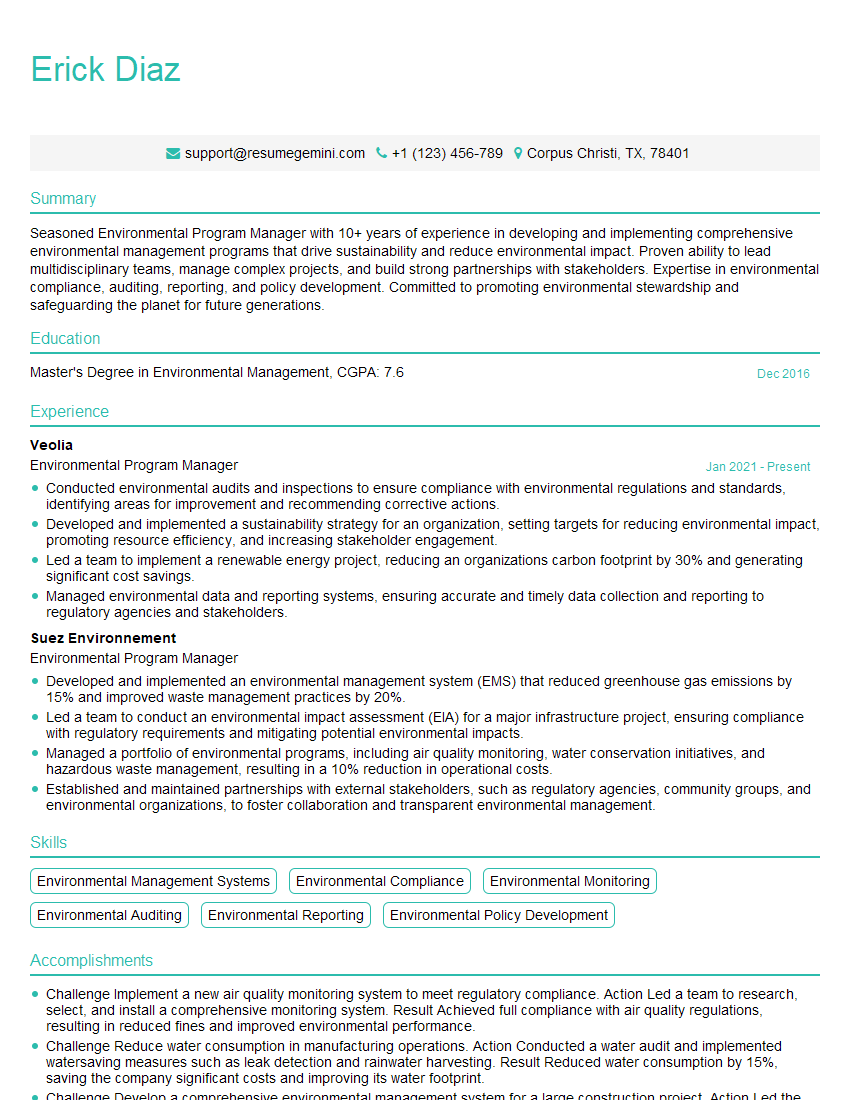
Environmental Program Manager Resume Sample
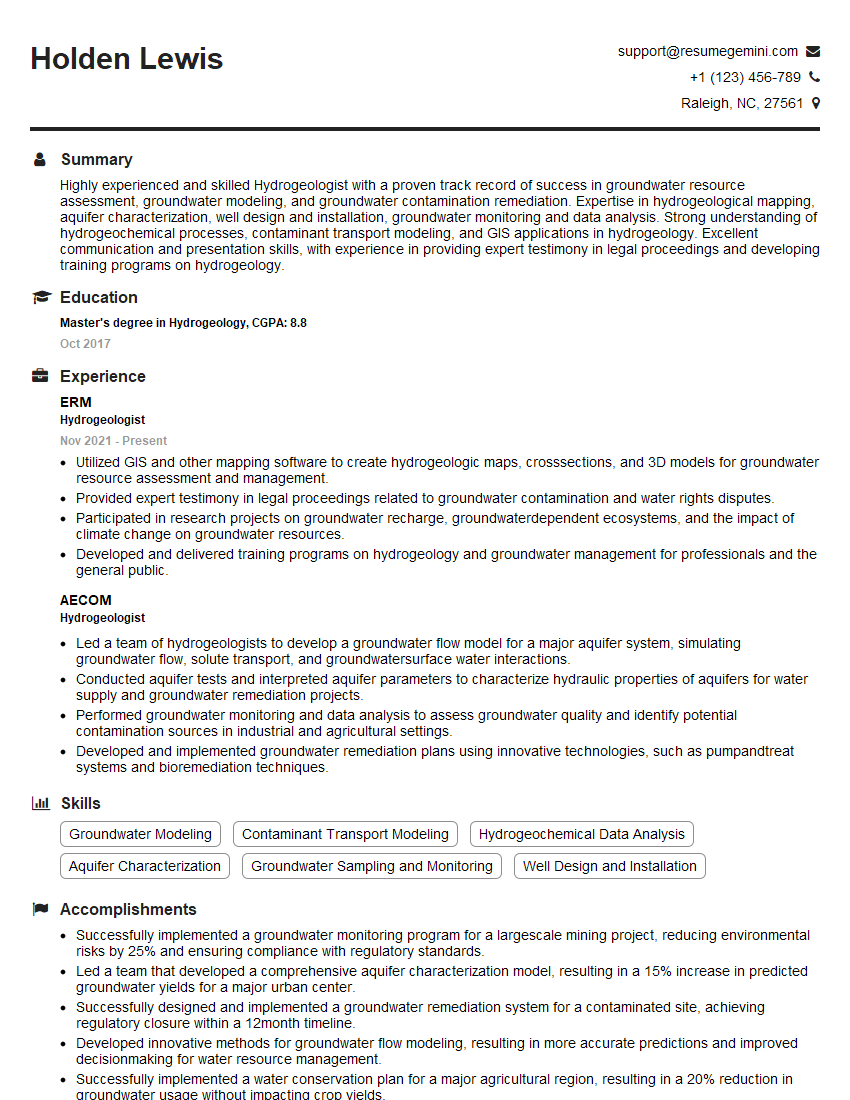
Hydrogeologist Resume Sample
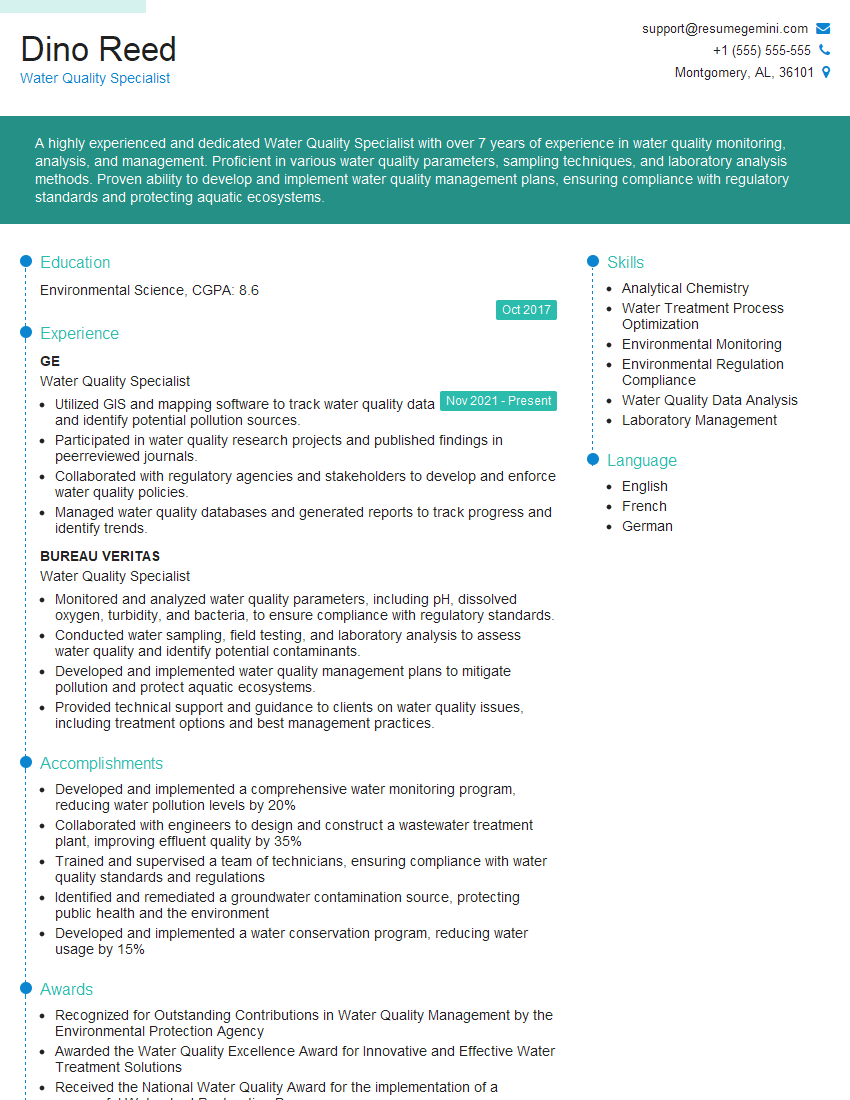
Water Quality Specialist Resume Sample
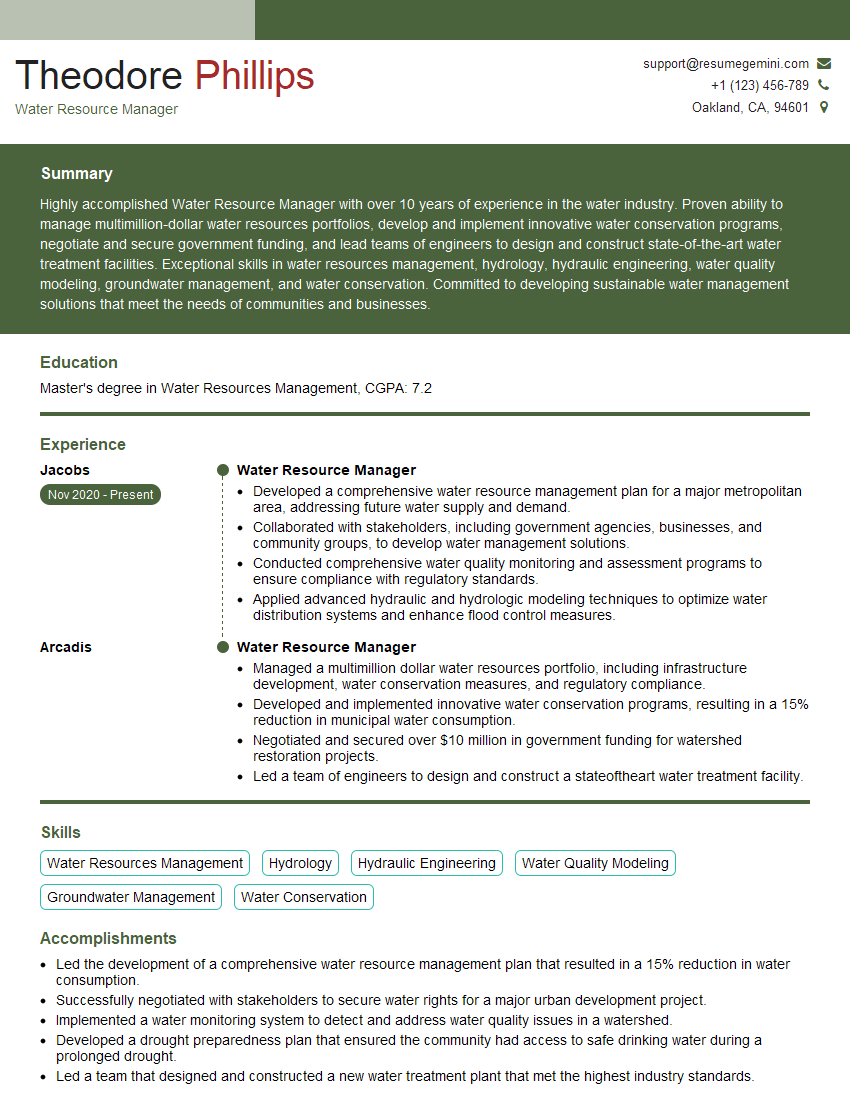
Water Resource Manager Resume Sample
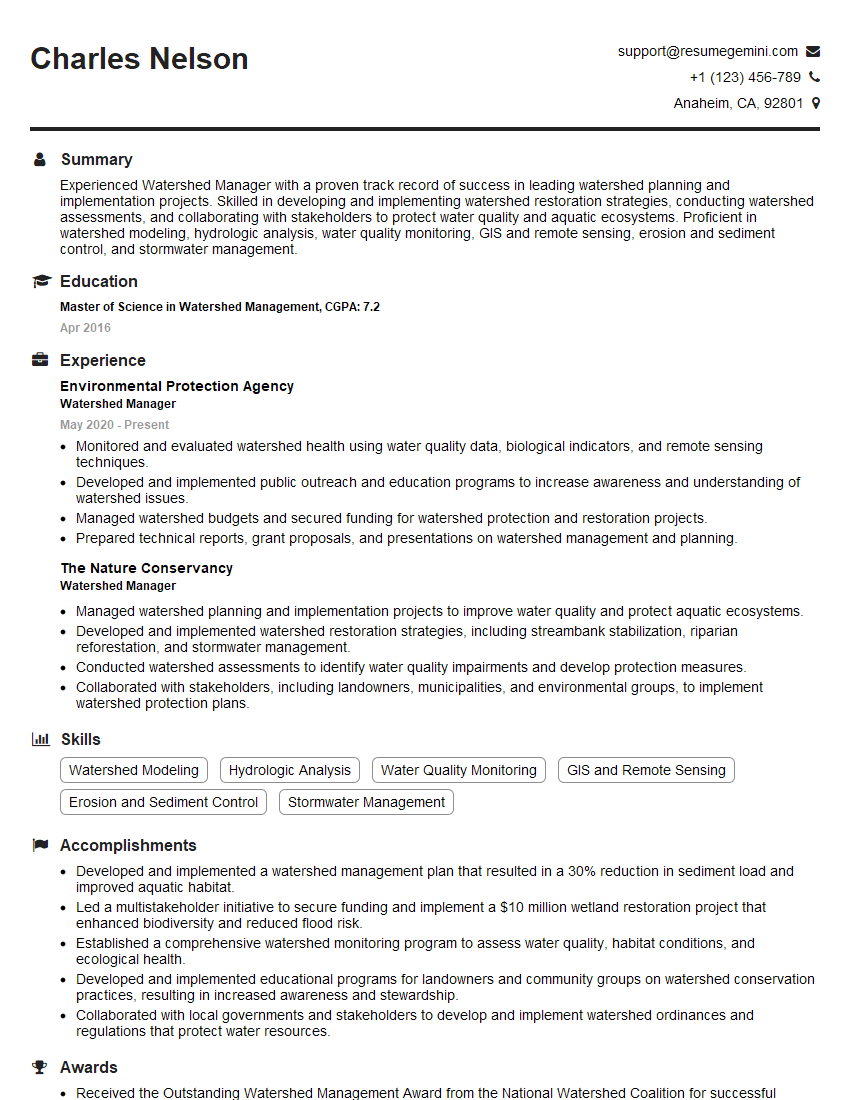
Watershed Manager Resume Sample
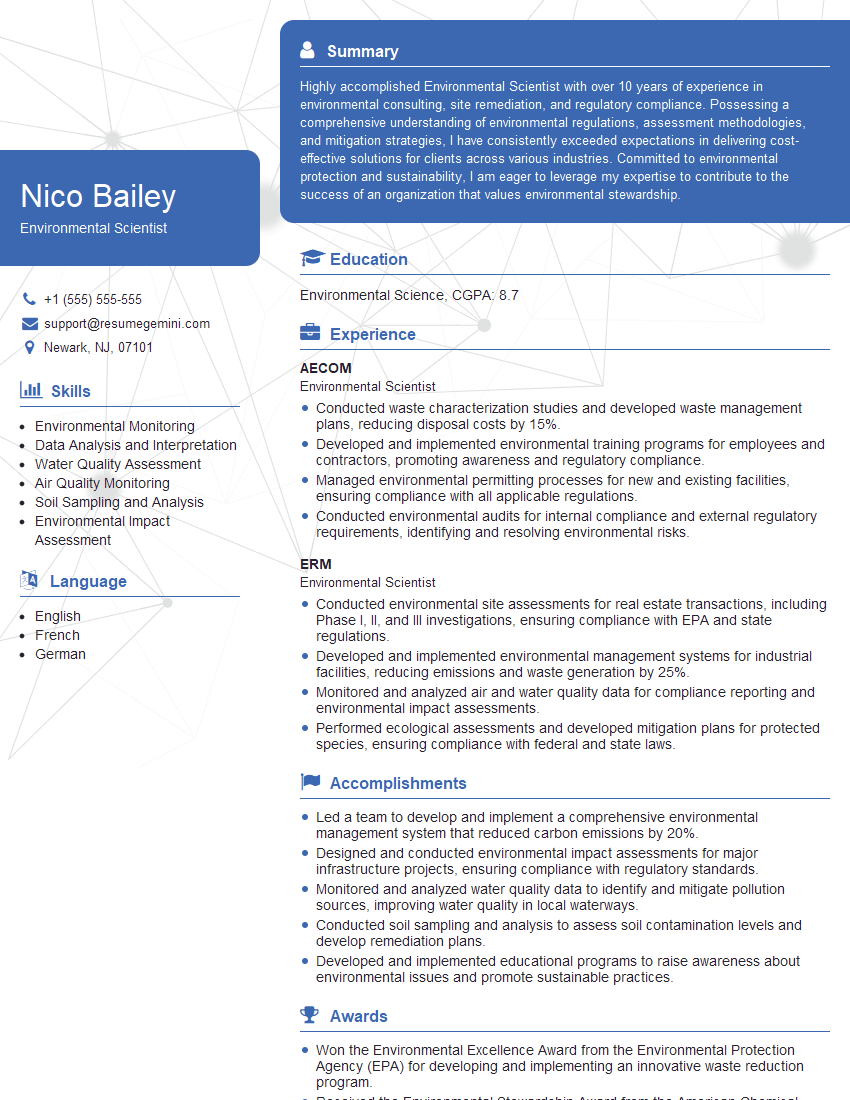
Environmental Scientist Resume Sample
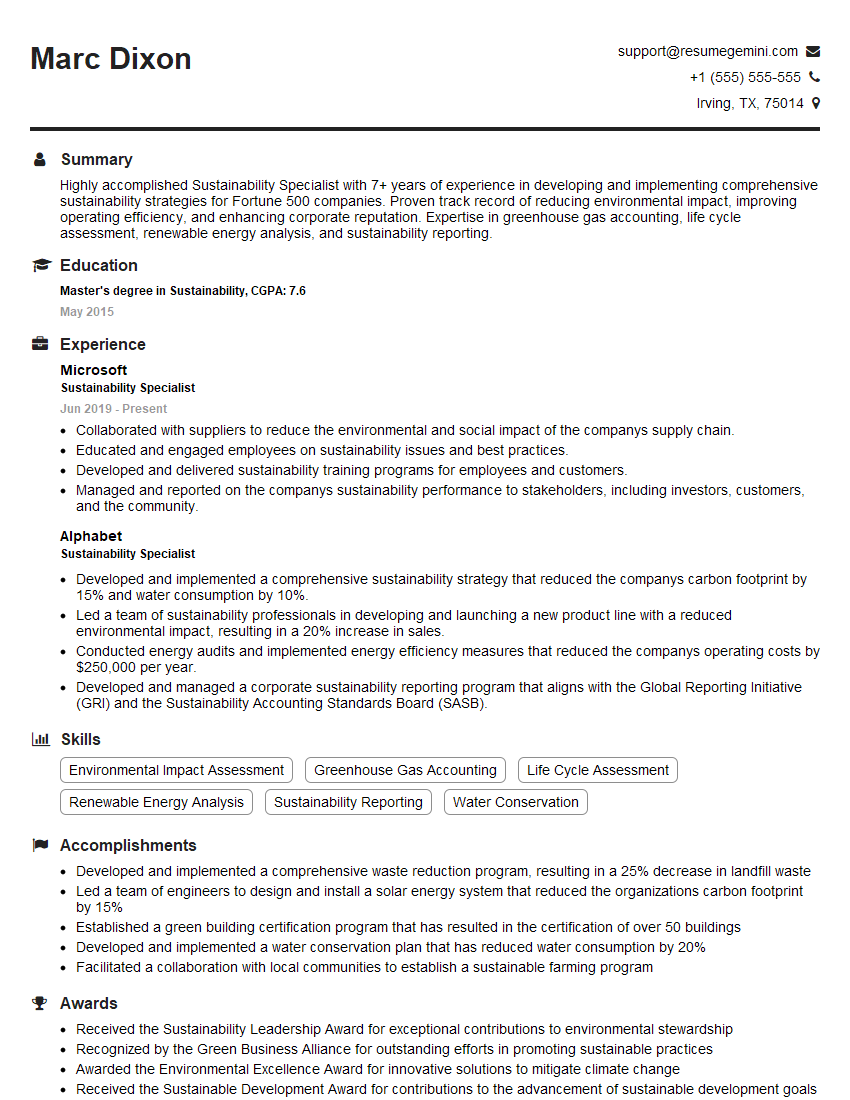
Sustainability Specialist Resume Sample
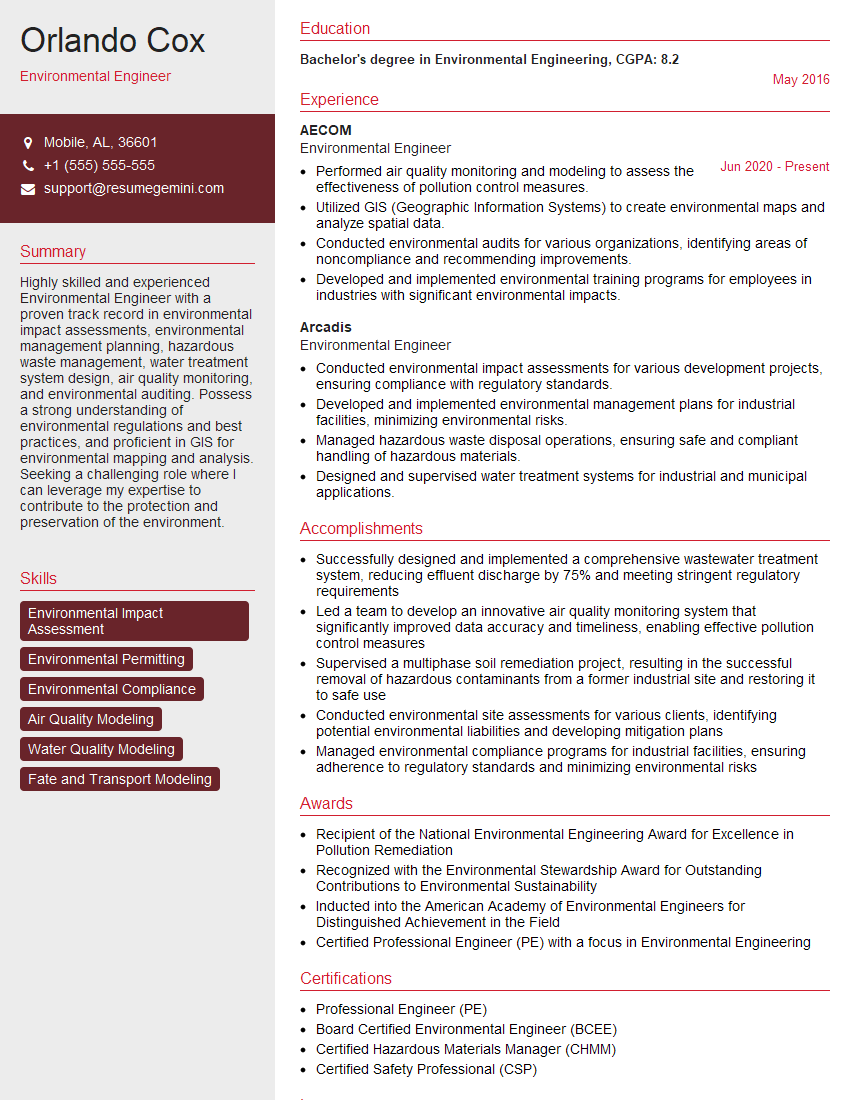
Environmental Engineer Resume Sample
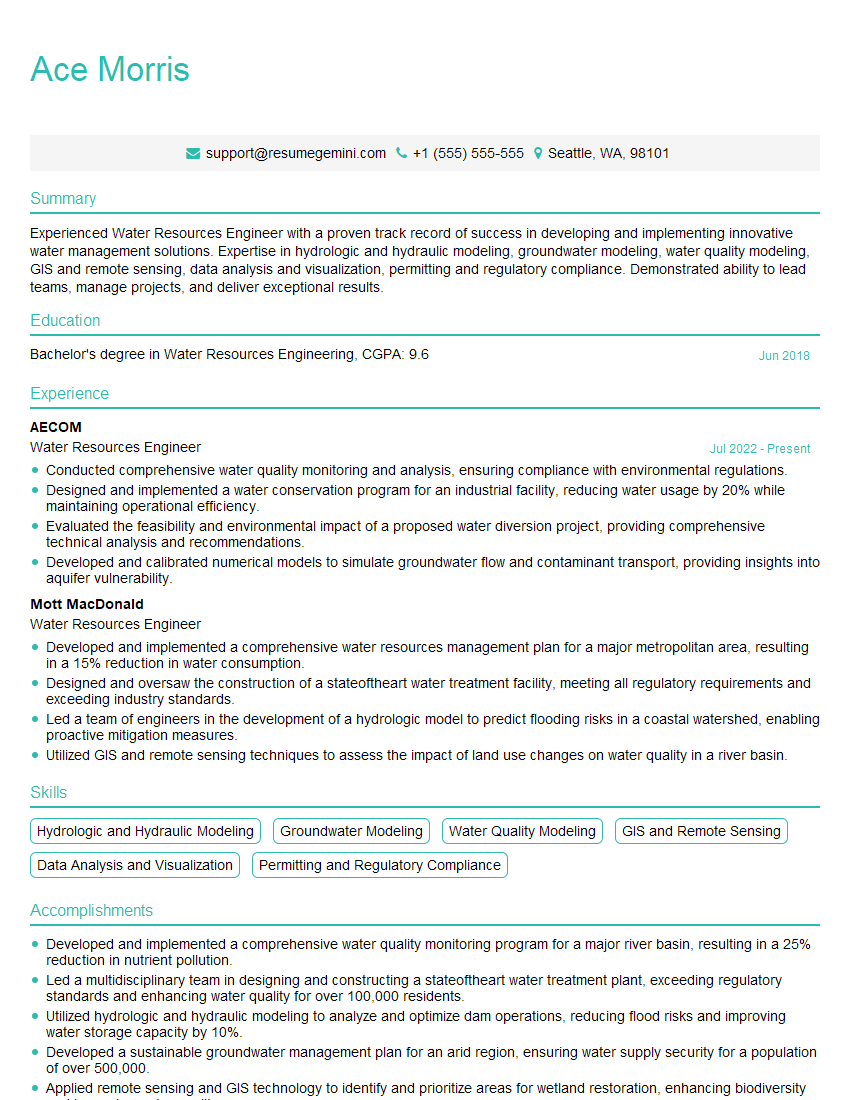
Water Resources Engineer Resume Sample
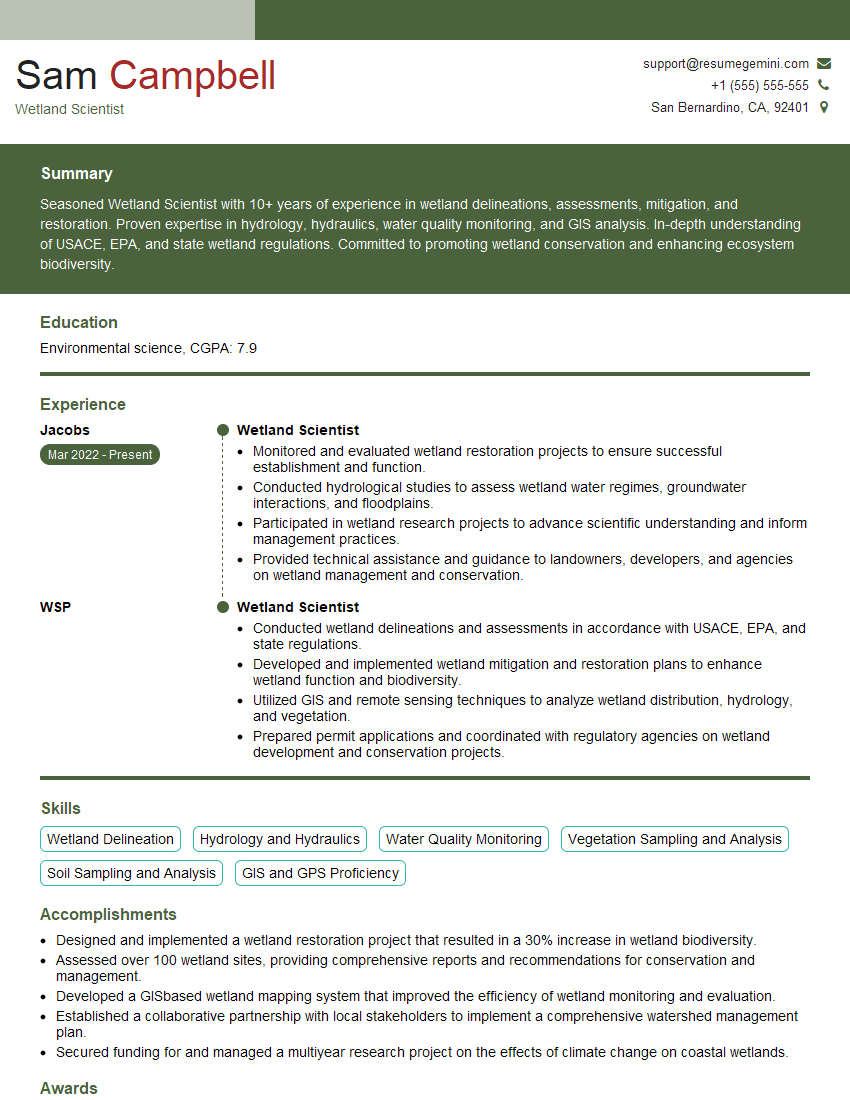
Wetland Scientist Resume Sample

Conservation Planner Resume Sample
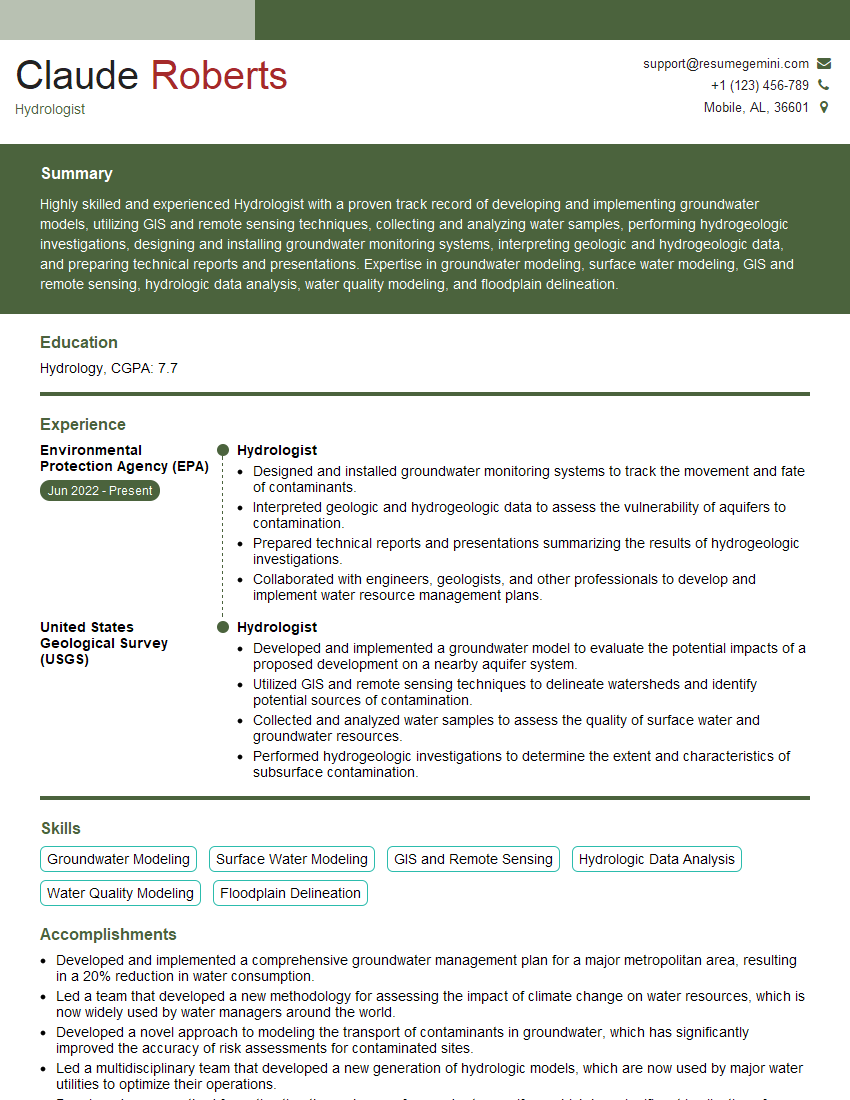
Hydrologist Resume Sample
Explore more articles
Users Rating of Our Blogs
Share Your Experience
We value your feedback! Please rate our content and share your thoughts (optional).
What Readers Say About Our Blog
To the interviewgemini.com Webmaster.
Very helpful and content specific questions to help prepare me for my interview!
Thank you
To the interviewgemini.com Webmaster.
This was kind of a unique content I found around the specialized skills. Very helpful questions and good detailed answers.
Very Helpful blog, thank you Interviewgemini team.