Interviews are more than just a Q&A session—they’re a chance to prove your worth. This blog dives into essential Watershed Restoration Planning interview questions and expert tips to help you align your answers with what hiring managers are looking for. Start preparing to shine!
Questions Asked in Watershed Restoration Planning Interview
Q 1. Describe the key components of a comprehensive watershed restoration plan.
A comprehensive watershed restoration plan is like a blueprint for healing a damaged ecosystem. It involves a multifaceted approach, addressing various aspects to improve water quality, aquatic habitat, and overall watershed health. Key components include:
Assessment and Diagnosis: This foundational step involves characterizing the watershed’s current condition. We analyze water quality data, map land use, assess habitat conditions, and identify pollution sources. Think of it as a thorough medical checkup for the watershed.
Goal Setting and Objectives: We define specific, measurable, achievable, relevant, and time-bound (SMART) goals. For example, we might aim to reduce sediment loads by 50% in five years or restore 10 acres of riparian habitat.
Restoration Strategies: This outlines the specific actions needed to achieve the goals. This could include riparian buffer planting, streambank stabilization, removal of invasive species, and implementation of best management practices (BMPs) in agriculture and urban areas.
Implementation Plan: This details the timeline, budget, responsible parties, and monitoring protocols. It’s crucial for coordinating actions and tracking progress.
Monitoring and Evaluation: We continuously monitor water quality, habitat conditions, and the effectiveness of implemented strategies. This allows for adaptive management and adjustments to the plan as needed. It’s like checking if the treatment is working and adjusting accordingly.
Stakeholder Engagement: Success depends on collaboration. We involve local communities, landowners, government agencies, and other stakeholders in the planning and implementation process.
Q 2. Explain the different types of water pollution and their impact on watershed health.
Water pollution in a watershed impacts its health significantly. We categorize pollution into several types:
Point Source Pollution: This originates from a single, identifiable source, such as a discharge pipe from a factory or a sewage treatment plant. Think of it as a concentrated leak. These are relatively easier to identify and control.
Non-Point Source Pollution: This is more diffuse and comes from multiple sources over a larger area. Examples include agricultural runoff containing fertilizers and pesticides, urban stormwater carrying oil and heavy metals, and atmospheric deposition of pollutants.
Sediment Pollution: Excessive erosion from construction sites, logging, or agriculture leads to sediment loading in streams. This smothers aquatic life, reduces water clarity, and degrades habitat.
Nutrient Pollution: Excess nitrogen and phosphorus from fertilizers cause eutrophication, leading to algal blooms, oxygen depletion, and fish kills. It’s like overfeeding a pond, causing an imbalance.
Chemical Pollution: Industrial discharges, pesticides, and other chemicals contaminate water, harming aquatic organisms and potentially humans. This can have long-term consequences on the entire food web.
Biological Pollution: Bacteria, viruses, and parasites from sewage or animal waste contaminate water, posing risks to human health and aquatic ecosystems. These are often linked to public health issues.
These pollutants cumulatively affect the watershed’s ecological integrity, water quality, and human uses.
Q 3. What are the common methods for assessing water quality in a watershed?
Assessing water quality is crucial for understanding the watershed’s health. We use various methods:
Physical Parameters: Measuring water temperature, turbidity (cloudiness), and dissolved oxygen levels provide insights into water’s physical condition. Low dissolved oxygen, for example, indicates potential pollution.
Chemical Parameters: Analyzing water samples for nutrients (nitrogen and phosphorus), heavy metals, pesticides, and other chemicals helps identify pollution sources and their impact.
Biological Parameters: Assessing the presence and abundance of aquatic macroinvertebrates (insects, crustaceans) and fish provides a holistic assessment of the ecosystem’s health. Different organisms have different sensitivities to pollution, allowing us to infer the extent of contamination.
We often employ a combination of these methods. For instance, we might collect water samples at multiple locations along a stream to identify pollution hotspots and compare data from different times of the year to track seasonal trends.
Q 4. How do you identify and prioritize restoration projects within a watershed?
Prioritizing restoration projects requires a systematic approach. We often use a combination of methods:
Problem Assessment: We identify the most significant threats to watershed health based on water quality data, habitat assessments, and stakeholder input. This might involve ranking pollution sources based on their impact.
Cost-Benefit Analysis: We evaluate the potential environmental benefits of different projects against their costs, considering factors such as implementation costs, long-term maintenance, and potential economic benefits (e.g., improved fisheries).
Risk Assessment: We consider the potential for future problems, such as climate change impacts or land-use changes. Projects that mitigate high risks are prioritized.
Stakeholder Input: Incorporating the values and priorities of different stakeholders ensures that restoration projects are socially acceptable and sustainable.
Geographic Prioritization: Targeting areas with high ecological value or significant impacts is crucial. For example, we might prioritize restoring areas that support endangered species or have high recreational value.
This multi-criteria approach ensures that restoration efforts are focused and effective.
Q 5. Discuss various stream restoration techniques and their suitability for different stream types.
Stream restoration techniques vary depending on the stream’s characteristics (size, slope, geomorphology) and the type of degradation. Common techniques include:
Channel Stabilization: Techniques like bank stabilization (using bioengineering methods such as live staking or rock vanes) prevent erosion and improve channel stability. The choice of method depends on the stream’s slope and flow regime.
In-stream Habitat Improvement: Adding structures like large woody debris (LWD) or creating riffles and pools enhance habitat complexity for fish and other aquatic organisms. LWD mimics natural processes and provides refuge and spawning areas.
Removal of Impoundments: Removing dams or other barriers allows for the restoration of natural flow regimes and improves downstream habitat connectivity.
Riparian Buffer Restoration: Planting trees and shrubs along stream banks reduces erosion, improves water quality, and provides shade, which is crucial for maintaining suitable water temperatures for aquatic life. This is often a highly effective strategy.
Water Quality Improvement: Addressing pollution sources upstream is essential for long-term stream health. This might involve implementing BMPs in agriculture or managing stormwater runoff in urban areas.
Careful site assessment is crucial for selecting appropriate techniques. A meandering, low-gradient stream requires different techniques compared to a steep, incised channel.
Q 6. Explain the role of riparian buffers in watershed health.
Riparian buffers, the vegetated areas alongside streams, are vital for watershed health. They act as a natural filter, trapping sediment, nutrients, and pollutants from runoff before they reach the stream. This improves water quality, reduces erosion, and stabilizes stream banks. Moreover, they provide shade, which is critical for maintaining cool water temperatures essential for many aquatic species. They also enhance biodiversity by providing habitat for various plants and animals. Think of them as nature’s kidneys for the watershed, filtering out impurities before they reach the main water body.
In addition to their ecological benefits, riparian buffers also provide economic advantages by reducing the need for costly engineering solutions to prevent erosion and improve water quality. They are also beneficial for carbon sequestration.
Q 7. How do you incorporate stakeholder engagement in watershed restoration planning?
Stakeholder engagement is paramount in successful watershed restoration. It ensures that projects are socially acceptable, sustainable, and effectively address the community’s needs and concerns. We incorporate stakeholder engagement through:
Public Meetings and Workshops: These forums provide opportunities for information sharing and gathering input from local communities, landowners, and other interested parties.
Surveys and Questionnaires: These tools gather broader perspectives on priorities and concerns.
Focus Groups: These in-depth discussions with specific stakeholder groups provide valuable insights into their perspectives and concerns.
Partnerships and Collaboration: Building relationships with local organizations, government agencies, and landowners is crucial for project implementation and long-term success.
Adaptive Management: Regular communication and feedback loops allow for modifications to the restoration plan as needed, ensuring its relevance and effectiveness.
Effective stakeholder engagement not only enhances the social acceptability and sustainability of restoration projects but also leverages the knowledge and resources of diverse stakeholders, leading to more effective and holistic outcomes.
Q 8. What are the key environmental regulations relevant to watershed restoration projects?
Watershed restoration projects are heavily influenced by a complex web of environmental regulations, varying by location and the specific nature of the project. Key regulations often include the Clean Water Act (CWA), which sets water quality standards and regulates pollutant discharges. The CWA’s cornerstone is the National Pollutant Discharge Elimination System (NPDES) permit, required for any discharge of pollutants to waters of the U.S. This includes stormwater runoff from construction sites and industrial facilities. Another crucial piece is the Endangered Species Act (ESA), mandating protection of listed species and their habitats, which could significantly impact project design and implementation if endangered species are present in or near the watershed. State-level regulations often complement these federal laws, adding layers of specific requirements concerning water quality, habitat restoration, and land use. For example, states might have specific rules about riparian buffer zones or wetland mitigation. Finally, projects involving federal funding or lands may necessitate compliance with additional regulations like the National Environmental Policy Act (NEPA), which requires environmental assessments or impact statements for significant actions.
Q 9. Describe the process of permitting a watershed restoration project.
Permitting a watershed restoration project is a multi-step process that often requires navigating various governmental agencies. It typically begins with a project planning phase, involving thorough site assessment, stakeholder engagement, and the development of a detailed restoration plan. This plan serves as the basis for permit applications. The next stage involves permit applications themselves. Depending on the project’s scope and location, applications might need to be submitted to multiple agencies, including the Army Corps of Engineers (for activities impacting wetlands), the Environmental Protection Agency (for NPDES permits), and state environmental agencies. The permit review and approval process can take significant time and involves rigorous evaluation of the project’s environmental impacts. Agencies may request modifications or additional information. Once permits are issued, the project implementation phase begins, closely followed by monitoring and reporting to demonstrate compliance with permit conditions and measure project success. Failure to obtain necessary permits before starting work can result in costly delays, penalties, and legal ramifications. Imagine trying to build a house without a building permit—the same principle applies to environmental restoration projects.
Q 10. How do you monitor and evaluate the effectiveness of watershed restoration efforts?
Monitoring and evaluation are critical to ensure that watershed restoration projects achieve their intended goals and to adapt management strategies as needed. This involves establishing baseline data before project implementation to understand the existing conditions. Then, ongoing monitoring tracks key indicators, such as water quality parameters (e.g., nutrient levels, dissolved oxygen), streamflow, vegetation cover, and erosion rates. Monitoring can use various methods such as water sampling, biological surveys, remote sensing, and field observations. Data analysis compares post-project data to baseline data to assess changes in the monitored parameters. Statistical methods may be used to determine whether observed changes are significant. Adaptive management is a key component, using the monitoring and evaluation results to adjust project activities or strategies based on what’s working and what needs improvement. For example, if monitoring shows that nutrient levels aren’t improving as expected, the restoration plan might be revised to include additional best management practices. A well-documented monitoring and evaluation plan is essential for demonstrating the project’s effectiveness and justifying continued investment.
Q 11. What are the common challenges encountered during watershed restoration projects?
Watershed restoration projects face numerous challenges. Funding limitations are often a major obstacle, particularly for large-scale projects. Land ownership issues can complicate project implementation if multiple landowners are involved. Stakeholder conflicts can arise due to differing perspectives and interests. Unforeseen environmental conditions, such as unexpected erosion or invasive species infestations, can disrupt project timelines and budgets. Insufficient baseline data can hinder accurate assessment of project effectiveness. Climate change impacts, like altered rainfall patterns and increased temperatures, pose ongoing challenges. For example, a drought could severely impact the establishment of newly planted vegetation. Limited technical expertise or inadequate monitoring can hinder project success. Addressing these challenges often requires careful planning, strong stakeholder communication, adaptive management strategies, and secure funding.
Q 12. How do you address conflicts between different stakeholders during watershed restoration planning?
Addressing stakeholder conflicts requires a proactive and collaborative approach. A key starting point is early and meaningful stakeholder engagement throughout the entire project lifecycle. This involves identifying all potentially affected parties—landowners, residents, businesses, government agencies, environmental groups—and actively seeking their input. Open communication channels, such as public forums, workshops, and online platforms, can foster dialogue and understanding. Conflict resolution techniques, such as mediation or facilitated workshops, can help address disagreements and find mutually acceptable solutions. Transparency and accountability are crucial; stakeholders need to be kept informed about project progress, challenges, and decision-making processes. Building trust and rapport among stakeholders through ongoing engagement is essential for successful conflict resolution. Remember, a successful project relies on building consensus and shared ownership, not just technical expertise.
Q 13. Explain the concept of Total Maximum Daily Load (TMDL).
Total Maximum Daily Load (TMDL) is a crucial concept under the Clean Water Act. It’s a calculation of the maximum amount of a specific pollutant that a water body can receive each day from all sources (point and non-point) and still meet water quality standards. Think of it like a water body’s pollution budget. If a water body consistently exceeds its TMDL for a particular pollutant, it’s considered impaired. Developing a TMDL involves several steps: identifying the pollutant causing impairment; determining the water quality standards that need to be met; calculating the loading capacity of the water body; allocating the TMDL among various pollution sources; and developing a watershed restoration plan to reduce pollution loads to meet the TMDL. TMDLs provide a scientific basis for setting pollution reduction targets and guiding watershed restoration efforts. They are essential for restoring impaired water bodies to healthy conditions.
Q 14. Describe the role of GIS in watershed restoration planning and management.
Geographic Information Systems (GIS) are invaluable tools for watershed restoration planning and management. GIS allows for the visualization and analysis of spatial data related to the watershed, such as topography, land cover, soils, hydrology, and water quality. This facilitates identifying priority areas for restoration based on factors such as erosion risk, habitat degradation, and pollutant sources. GIS supports the development of restoration plans by allowing for the overlay and integration of various datasets to assess potential restoration strategies. For example, we can model the impact of different riparian buffer designs on water quality. GIS can also be used for monitoring and evaluating restoration outcomes by analyzing changes in land cover, stream channel morphology, or water quality over time. Moreover, GIS facilitates communication and collaboration among stakeholders by providing a visual platform for sharing data and project information. It allows for better decision-making through data-driven analysis, leading to more effective and efficient restoration efforts. Think of GIS as a powerful map that not only shows the landscape but also its hidden complexities and interrelationships.
Q 15. What are the key indicators of a healthy watershed?
A healthy watershed is a vibrant ecosystem exhibiting balanced hydrological, ecological, and social functions. Key indicators include:
- Water Quality: Low levels of pollutants (e.g., nitrates, phosphates, heavy metals), clear water with sufficient dissolved oxygen, and healthy aquatic life. For example, the presence of diverse macroinvertebrate species is a strong indicator of good water quality.
- Water Quantity: Consistent streamflow throughout the year, minimal flooding or drought, and sufficient groundwater recharge. We can gauge this through streamflow measurements and groundwater level monitoring.
- Sedimentation: Low levels of sediment in streams and rivers, indicating reduced erosion. Healthy riparian buffers act as natural sediment traps.
- Riparian Health: Intact and diverse riparian vegetation (plants along the stream banks), providing shade, stabilizing banks, and filtering pollutants. A healthy riparian zone acts like a natural filter.
- Biodiversity: A rich diversity of plant and animal species, indicating a healthy and resilient ecosystem. This includes both aquatic and terrestrial species. For example, the presence of indicator species like certain fish or amphibians can signal a healthy watershed.
- Soil Health: Healthy soil with good structure, organic matter content, and infiltration capacity, reducing runoff and erosion. Soil health tests, such as measuring organic matter content and infiltration rates, help assess this.
The absence or degradation of any of these indicators suggests potential problems requiring restoration efforts.
Career Expert Tips:
- Ace those interviews! Prepare effectively by reviewing the Top 50 Most Common Interview Questions on ResumeGemini.
- Navigate your job search with confidence! Explore a wide range of Career Tips on ResumeGemini. Learn about common challenges and recommendations to overcome them.
- Craft the perfect resume! Master the Art of Resume Writing with ResumeGemini’s guide. Showcase your unique qualifications and achievements effectively.
- Don’t miss out on holiday savings! Build your dream resume with ResumeGemini’s ATS optimized templates.
Q 16. How do you assess the economic feasibility of a watershed restoration project?
Assessing the economic feasibility of a watershed restoration project requires a comprehensive cost-benefit analysis. This involves:
- Identifying Costs: This includes project design, implementation (e.g., planting trees, building riparian buffers, stream restoration), monitoring, and maintenance. Detailed budgeting is crucial.
- Quantifying Benefits: This is often the most challenging part. Benefits can include improved water quality (reducing treatment costs for downstream communities), reduced flood damage, enhanced property values, increased recreational opportunities (e.g., fishing, kayaking), and carbon sequestration. These benefits often need to be monetized through various valuation techniques.
- Using Valuation Techniques: Several methods exist for assigning monetary values to ecological services. These include market-based approaches (e.g., changes in property values), hedonic pricing (assessing the value people place on environmental amenities), and contingent valuation (survey-based methods to determine willingness to pay).
- Discounting Future Benefits: Since benefits often accrue over time, future benefits need to be discounted to their present value using an appropriate discount rate. This reflects the time value of money.
- Sensitivity Analysis: This involves testing the project’s feasibility under different scenarios, for example, variations in cost estimates or benefit levels. It ensures robustness of the economic analysis.
For example, a project restoring riparian zones might reduce downstream flood damage and improve water quality, saving a community money on flood control measures and water treatment. By quantifying these savings and comparing them to project costs, the economic viability can be assessed. Software tools can aid in this process.
Q 17. Discuss the importance of long-term monitoring in watershed restoration.
Long-term monitoring is paramount for assessing the success of watershed restoration projects and ensuring their adaptive management. It allows us to:
- Track Progress: Regular monitoring of key indicators (water quality, streamflow, vegetation cover, etc.) reveals whether restoration activities are achieving the desired outcomes.
- Detect Unexpected Changes: Monitoring can identify unforeseen challenges or problems, enabling timely adjustments to the restoration plan. For example, an invasive species might appear, requiring a change in management strategies.
- Evaluate Effectiveness of Interventions: By comparing monitored data before and after restoration, we can determine the effectiveness of specific restoration techniques. This helps refine future restoration efforts.
- Support Adaptive Management: Monitoring data informs adaptive management practices, allowing managers to adjust strategies based on the observed response of the watershed. This flexibility is crucial, given the complexity of watershed systems.
- Demonstrate Accountability: Data from long-term monitoring provides evidence of project effectiveness, which is crucial for securing funding and demonstrating accountability to stakeholders.
Imagine restoring a degraded wetland. Monitoring water quality, vegetation growth, and wildlife populations over several years will reveal if the project is improving the wetland’s function and resilience.
Q 18. Explain the concept of watershed-based management.
Watershed-based management is an integrated approach to managing natural resources within a watershed. It recognizes that the various elements within a watershed (e.g., land use, water quality, biodiversity) are interconnected. This holistic perspective enables more effective and sustainable management. Key aspects include:
- Integrated Planning: Addressing multiple resource management issues simultaneously, considering their interactions (e.g., land use changes impacting water quality).
- Collaboration and Stakeholder Participation: Involving all stakeholders (landowners, municipalities, agencies, etc.) in the planning and implementation processes.
- Holistic Approach: Managing the entire watershed as a single system, rather than focusing on individual components in isolation.
- Adaptive Management: Continuously adjusting management strategies based on monitoring data and feedback.
- Long-Term Perspective: Considering the long-term ecological, economic, and social consequences of management decisions.
For example, managing a watershed might involve coordinating efforts to control erosion on agricultural lands, protect riparian zones, and improve wastewater treatment to enhance water quality throughout the entire watershed.
Q 19. How do you address the impact of climate change on watershed health and restoration efforts?
Climate change significantly impacts watershed health, presenting new challenges for restoration efforts. Impacts include:
- Increased Frequency and Intensity of Extreme Events: More frequent and severe droughts and floods, impacting streamflow regimes, soil erosion, and water quality.
- Changes in Precipitation Patterns: Altered rainfall patterns can lead to increased runoff, decreased groundwater recharge, and changes in vegetation.
- Rising Temperatures: Higher temperatures can increase evaporation rates, lower water levels, and stress aquatic life.
- Sea Level Rise (in coastal watersheds): Saltwater intrusion can degrade freshwater resources and ecosystems.
Addressing these impacts requires incorporating climate change projections into restoration planning. This might involve:
- Selecting Climate-Resilient Species: Choosing plant species that are adapted to predicted future conditions (e.g., drought-tolerant plants).
- Designing Infrastructure for Extreme Events: Building flood-resistant infrastructure and implementing strategies to manage increased runoff.
- Improving Water Management Strategies: Optimizing water allocation and storage to cope with changing precipitation patterns.
- Enhancing Ecosystem Resilience: Creating diverse and resilient ecosystems capable of withstanding the impacts of climate change.
For instance, restoring riparian buffers with a mix of native species adapted to both drought and flood conditions will create a more resilient ecosystem that can withstand future climate variability.
Q 20. Describe your experience with different modeling techniques used in watershed analysis.
My experience encompasses a range of modeling techniques used in watershed analysis. These include:
- Hydrological Models (e.g., SWAT, HEC-HMS): These models simulate the movement of water through a watershed, considering factors like precipitation, evapotranspiration, infiltration, and runoff. They are invaluable for predicting streamflow and evaluating the impacts of land use changes.
SWAT, for example, is widely used for large-scale watershed simulations. - Water Quality Models (e.g., QUAL2K, WASP): These models simulate the transport and fate of pollutants within a watershed, helping to predict the impact of pollution sources on water quality.
QUAL2Kis commonly used for simulating water quality in rivers and streams. - Sediment Transport Models: These models simulate the movement of sediment through a watershed, helping to assess erosion and deposition patterns. They are important for designing erosion control measures.
- Geographic Information Systems (GIS): GIS is essential for spatial data analysis and visualization. I use GIS to integrate various datasets (e.g., topography, land use, soil type), creating maps and conducting spatial analyses to inform restoration planning.
- Agent-Based Models: These models simulate the interactions of various agents (e.g., landowners, government agencies) to assess the effectiveness of different management strategies under diverse stakeholder behaviors.
Model selection depends on the specific research question and data availability. Often, a combination of models is used to provide a comprehensive understanding of the watershed system.
Q 21. What are the best practices for erosion control in a watershed?
Best practices for erosion control in a watershed involve a multi-faceted approach, focusing on both prevention and remediation:
- Vegetative Cover: Establishing and maintaining a healthy vegetative cover is crucial. This includes planting trees, shrubs, and grasses, which stabilize the soil and intercept rainfall. Riparian buffers along streams are particularly important.
- Contour Farming and Terracing: These techniques slow down water flow on slopes, reducing erosion. Contour farming involves planting crops along the contours of a slope, while terracing creates level platforms on slopes.
- Conservation Tillage: Minimizing soil disturbance during tillage operations reduces soil erosion. No-till farming is a particularly effective approach.
- Cover Crops: Planting cover crops between main crops protects the soil from erosion during fallow periods.
- Filter Strips: Planting buffer strips of vegetation between agricultural fields and waterways helps filter sediment and pollutants before they enter the stream.
- Structural Measures: In some cases, structural measures like check dams or gabions (wire-mesh cages filled with rocks) may be necessary to stabilize stream banks or control erosion in particularly vulnerable areas. These are usually used in combination with vegetative measures.
- Gully Control: Erosion control in established gullies typically involves stabilization with structural measures combined with revegetation.
The specific best practices will vary depending on the local context, including soil type, slope, and climate. A site-specific assessment is essential for developing an effective erosion control plan.
Q 22. Explain the difference between structural and non-structural watershed restoration techniques.
Watershed restoration employs both structural and non-structural techniques to improve water quality and ecological health. Structural techniques involve physical modifications to the landscape, while non-structural techniques focus on policy, management, and education.
Structural Techniques: These are physical interventions designed to alter the flow of water or improve habitat. Examples include building check dams to reduce erosion, constructing wetlands to filter pollutants, re-vegetating stream banks to stabilize soil, and installing riparian buffers to reduce runoff. Think of them as the ‘hardware’ solutions.
Non-structural Techniques: These address the root causes of watershed degradation through policy changes, land-use planning, and community engagement. Examples include implementing best management practices in agriculture (like no-till farming), developing regulations to limit pollution, educating landowners on sustainable land management practices, and promoting public awareness campaigns. These are the ‘software’ solutions focusing on behavior and policy changes.
For instance, in a project I worked on in the Chesapeake Bay watershed, we used a combination of both. We installed bioretention cells (structural) to manage stormwater runoff while simultaneously working with local farmers (non-structural) to implement cover cropping techniques to reduce nutrient runoff from their fields.
Q 23. How do you prioritize the use of natural vs. engineered solutions in watershed restoration?
Prioritizing natural over engineered solutions is a cornerstone of modern watershed restoration. Natural solutions, mimicking natural processes, are often more sustainable, cost-effective in the long run, and provide greater ecological benefits. However, engineered solutions sometimes become necessary to address immediate threats or situations where natural processes alone are insufficient.
My approach involves a tiered system:
Prioritize Natural Solutions: We first assess the feasibility of using natural methods. This involves a thorough ecological assessment to identify the watershed’s natural capacity for self-repair. Examples include restoring riparian buffers, reintroducing native vegetation, and improving connectivity between different habitats. These are often less disruptive and offer long-term resilience.
Integrate Engineered Solutions Strategically: If natural solutions alone are inadequate, we carefully incorporate engineered solutions. This might involve using constructed wetlands for wastewater treatment, check dams to control erosion in severely degraded areas, or other carefully planned interventions to augment natural processes.
Monitor and Adapt: Ongoing monitoring is crucial. We track the effectiveness of both natural and engineered solutions and adapt our approach based on data and feedback. Sometimes, a hybrid approach proves to be the most efficient and effective.
In a project restoring a degraded river in the Pacific Northwest, we initially focused on replanting native trees and shrubs along the banks. After monitoring, we realized erosion was still a problem in specific areas and strategically added small rock structures to stabilize the banks without significantly altering the natural flow.
Q 24. Discuss your experience working with different types of wetlands and their restoration needs.
My experience encompasses working with various wetland types, each requiring a tailored restoration approach. The key is understanding the specific ecological functions and challenges of each type.
Palustrine Wetlands (marshes, swamps): These require careful consideration of hydrology, vegetation, and soil conditions. Restoration often involves restoring natural water flow patterns, removing invasive species, and replanting native vegetation. A project I worked on focused on restoring a palustrine wetland impacted by agricultural runoff. We implemented bioremediation techniques and restored the natural hydrology to improve water quality and support native flora and fauna.
Riverine Wetlands (floodplains): These are highly dynamic systems requiring management of river flow and connectivity. Restoration strategies often involve restoring natural flood pulses, managing sediment transport, and removing invasive species. In one project, we worked on restoring riparian buffers and improving river channel morphology to enhance the floodplain’s ecological function.
Lacustrine Wetlands (lake margins): These require attention to water quality, littoral zones, and nutrient cycling. Restoration can include controlling nutrient inputs, managing invasive species, and restoring littoral habitat. A project involving restoring a lake margin focused on controlling nutrient runoff from surrounding agriculture and improving the quality of the shallow water habitat.
The success of any wetland restoration project relies on a detailed site assessment, identification of limiting factors, and implementation of appropriate restoration techniques. It is critical to understand the ecological characteristics and threats before beginning any restoration.
Q 25. Describe the role of citizen science in watershed monitoring and restoration.
Citizen science plays a vital role in watershed monitoring and restoration, providing invaluable data and engagement. It leverages the collective power of volunteers to gather information and support restoration efforts.
Data Collection: Citizens can contribute to data collection through various activities like monitoring water quality, observing wildlife, documenting invasive species, and tracking the growth of planted vegetation. This expands the geographical reach and temporal scale of monitoring, providing more comprehensive data than professional scientists could gather alone.
Community Engagement: Citizen science fosters community ownership and stewardship of local watersheds. Involving local residents increases awareness, promotes responsible land management, and builds support for restoration projects.
Cost-Effectiveness: Citizen science significantly reduces the financial burden of large-scale monitoring programs.
For example, in a recent project, we trained volunteers to monitor water quality parameters in local streams using simple, inexpensive kits. Their data helped us track the effectiveness of our restoration efforts and identify areas needing further attention. The feeling of ownership and impact among the volunteers was truly motivating. It makes the projects sustainable and empowers the community.
Q 26. How do you communicate complex scientific information to non-technical audiences?
Communicating complex scientific information to non-technical audiences requires clear, concise language, engaging visuals, and relatable analogies. Jargon should be avoided unless absolutely necessary, and key terms must be defined.
Use simple language and avoid jargon: Replace technical terms with everyday language. For instance, instead of ‘hydrological connectivity,’ use ‘how water flows through the landscape.’
Employ visual aids: Charts, graphs, maps, and photographs can greatly enhance understanding. A picture is often worth a thousand scientific words.
Use relatable analogies: Comparing complex concepts to familiar objects or experiences makes them easier to grasp. For example, explaining nutrient runoff using the analogy of fertilizer washing away into a lake.
Tell stories: People connect with stories. Sharing real-life examples of the impacts of watershed degradation or the successes of restoration projects can make the information more memorable and impactful.
Interactive engagement: Encourage questions and discussion. Interactive sessions, workshops, or field trips are effective ways to engage audiences.
I often use storytelling and analogies to explain complex concepts during public presentations. For example, I’ve used the analogy of a leaky bucket to explain the impact of impervious surfaces on stormwater management and how restoration efforts act to patch the leaks.
Q 27. What is your experience with using remote sensing and aerial imagery in watershed assessments?
Remote sensing and aerial imagery are indispensable tools for watershed assessments, offering a broad perspective and detailed information that ground-based surveys often lack.
Large-scale mapping: Aerial imagery and satellite data allow us to map land cover, vegetation types, and water bodies across large areas quickly and efficiently. This is essential for identifying areas of degradation, assessing the extent of habitat loss, and monitoring the progress of restoration efforts.
Monitoring change over time: By analyzing time-series imagery, we can track changes in land use, vegetation cover, and water quality over time, providing crucial information on the effectiveness of restoration projects and the overall health of the watershed.
Data analysis: Software like ArcGIS and ENVI allows us to analyze remotely sensed data to extract quantitative information such as the area of wetlands, the extent of erosion, and the density of vegetation. This data informs decision-making in restoration planning.
In one project, we used LiDAR (Light Detection and Ranging) to create detailed digital elevation models of a river valley. This data helped us identify areas prone to erosion and informed the design of our stream restoration plan. Using multispectral imagery, we were also able to track the regrowth of vegetation following restoration actions, providing a quantitative measure of project success.
Q 28. Describe your experience with developing and implementing watershed restoration budgets.
Developing and implementing watershed restoration budgets requires a detailed understanding of project costs, funding sources, and financial management techniques.
Detailed cost estimation: The first step involves creating a detailed budget that includes all project costs, such as site assessment, design, construction, materials, labor, monitoring, and administration. We typically use specialized software for this.
Identifying funding sources: Securing funding is crucial. We explore various avenues, including government grants, private foundations, corporate sponsorships, and partnerships with local organizations. Grant writing and proposal preparation are essential skills.
Budget tracking and reporting: Accurate tracking of expenses is essential to ensure funds are used efficiently and to meet reporting requirements of funding agencies. Regular reports are prepared to show the progress of the project relative to budget.
Contingency planning: Unforeseen costs can arise. Allocating a contingency fund for unexpected expenses is critical to ensure project completion.
In a large-scale wetland restoration project, we secured funding from various sources, including a state environmental grant, a federal conservation program, and a private foundation. We developed a detailed budget, tracked expenses rigorously, and prepared regular progress reports. This careful financial management ensured the successful completion of the project within budget.
Key Topics to Learn for Watershed Restoration Planning Interview
- Hydrology and Water Budgets: Understanding watershed hydrology, including precipitation, infiltration, runoff, evapotranspiration, and streamflow, and their application in restoration planning.
- Water Quality Assessment and Monitoring: Methods for assessing water quality parameters (e.g., nutrient levels, sediment load, pathogens), interpreting data, and designing monitoring programs to track restoration effectiveness.
- Habitat Restoration Techniques: Practical knowledge of riparian zone restoration, wetland creation/enhancement, streambank stabilization, and the selection of appropriate techniques based on site-specific conditions.
- Geomorphology and Channel Morphology: Understanding the natural processes shaping stream channels and applying this knowledge to restore natural channel patterns and improve ecological function.
- Sediment Management: Strategies for managing erosion and sedimentation, including best management practices (BMPs) for construction sites and agricultural lands.
- Stakeholder Engagement and Collaboration: Experience in working with diverse stakeholders (landowners, agencies, community groups) to develop and implement restoration plans.
- Restoration Planning and Design: The ability to develop comprehensive restoration plans, including site assessments, feasibility studies, detailed designs, and implementation strategies.
- Permitting and Regulatory Compliance: Familiarity with relevant environmental regulations and permitting processes related to watershed restoration projects.
- Project Monitoring and Evaluation: Methods for tracking project progress, assessing effectiveness, and adapting management strategies based on monitoring data.
- Cost-Benefit Analysis and Sustainability: Evaluating the economic and environmental benefits of restoration projects and designing sustainable solutions.
Next Steps
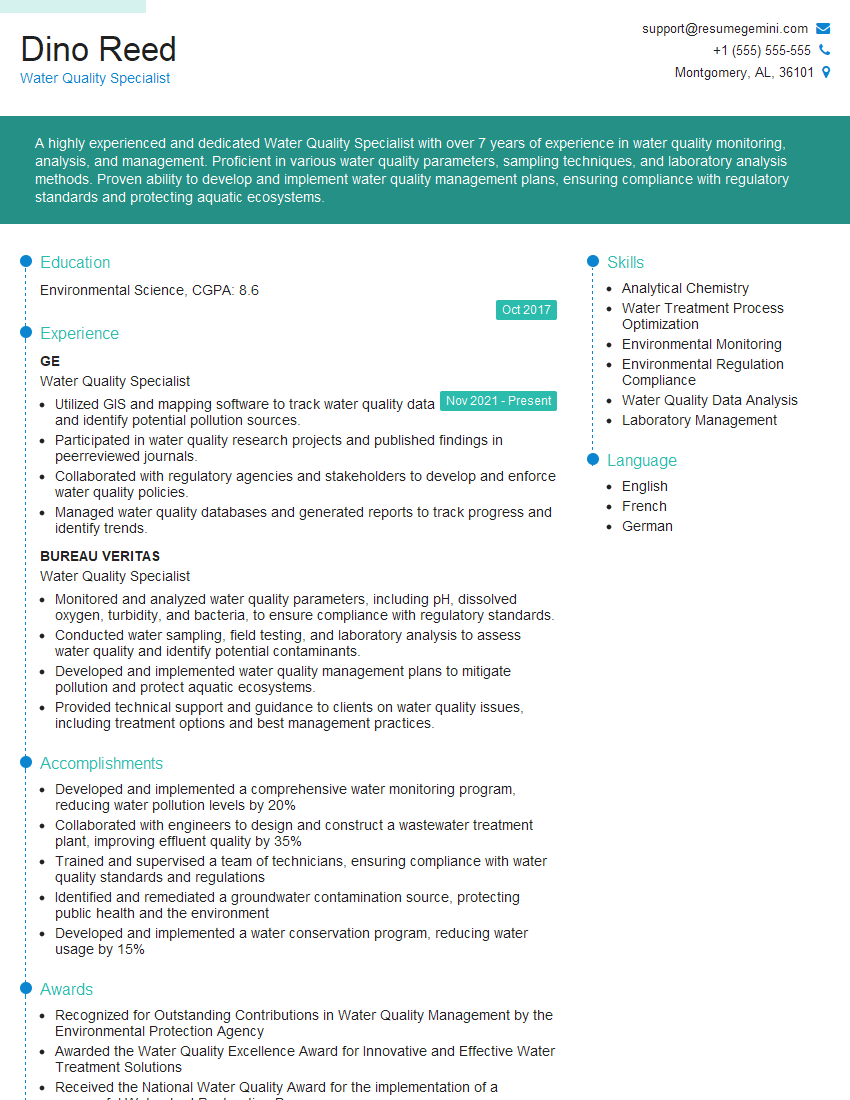
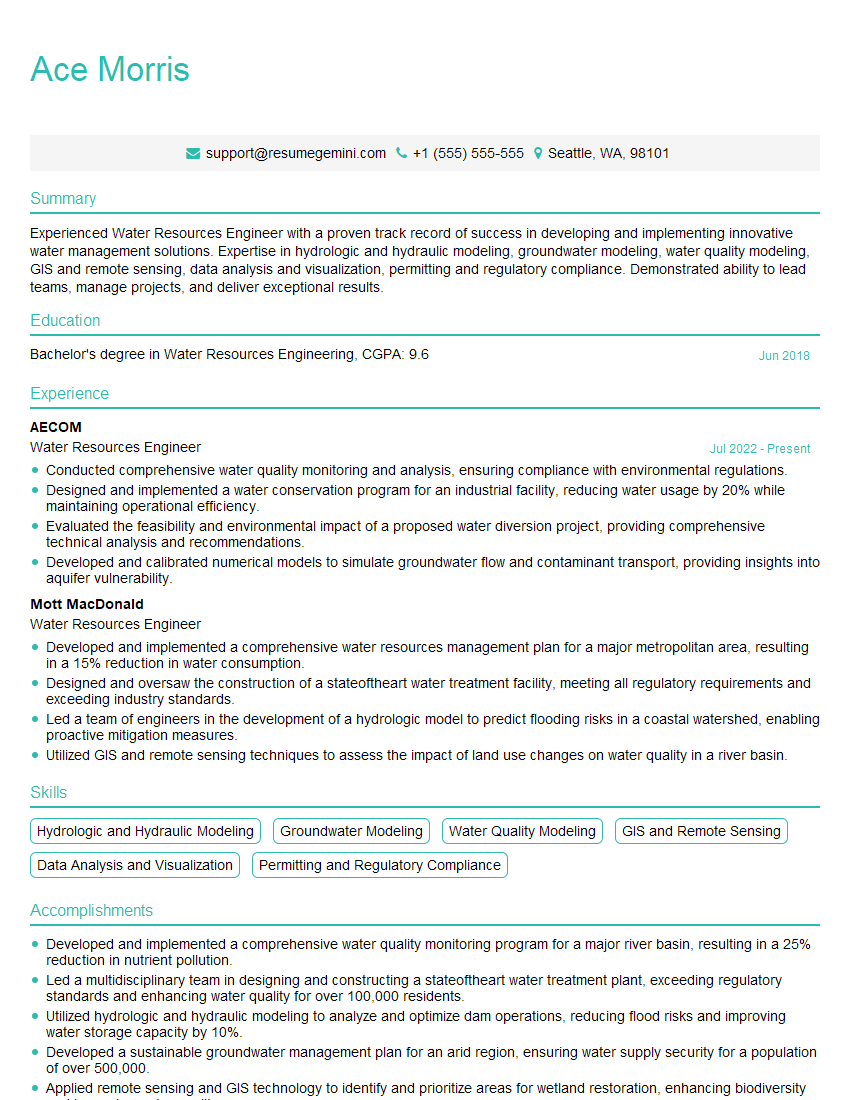
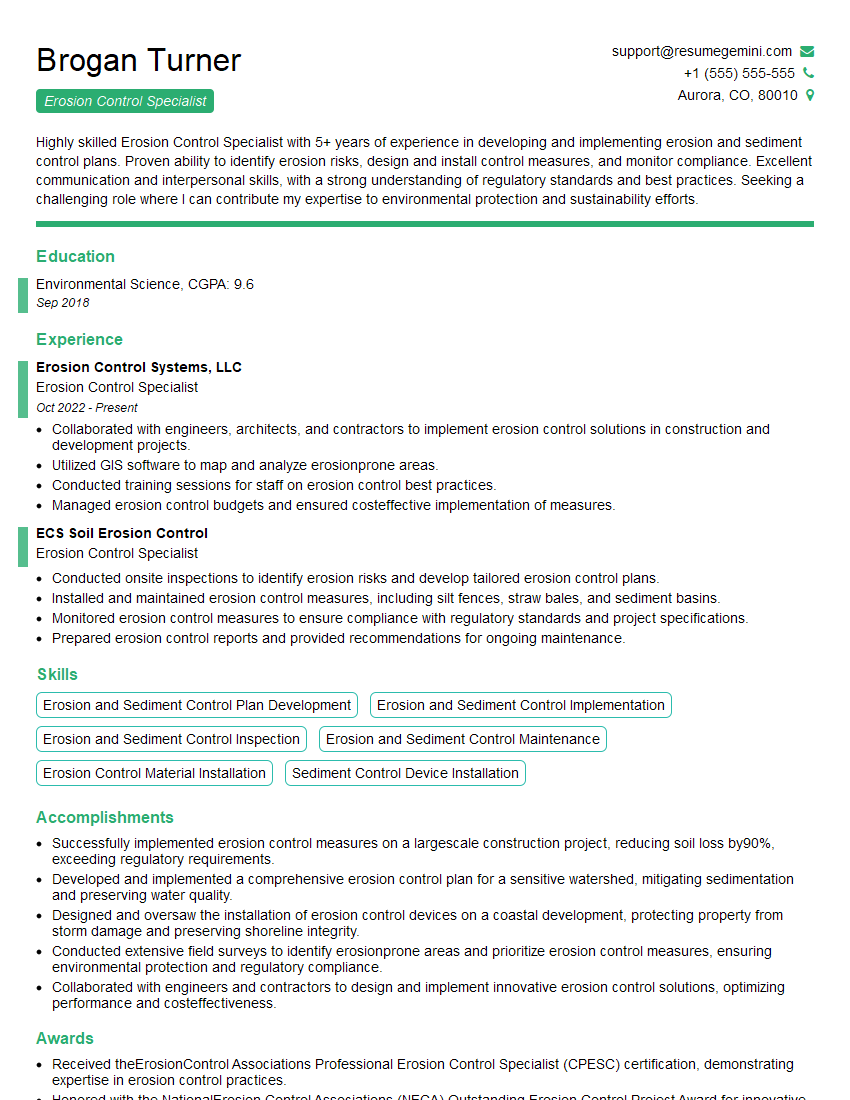
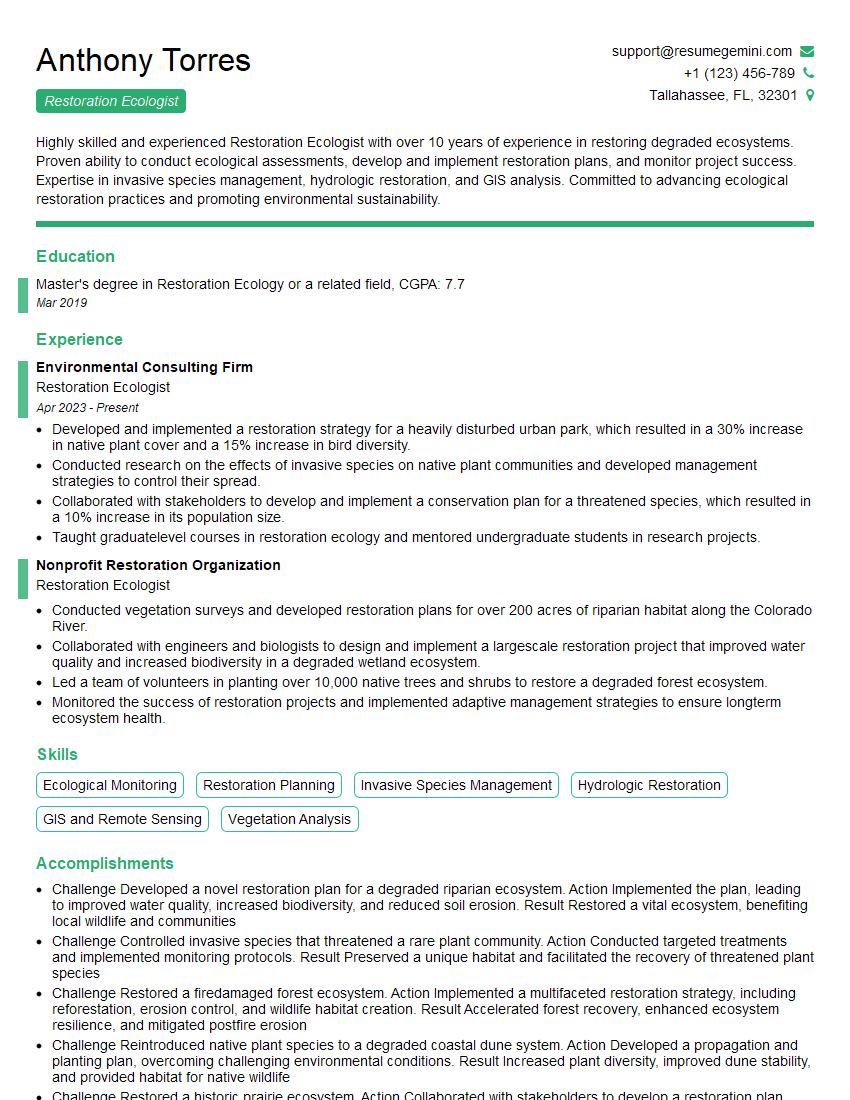
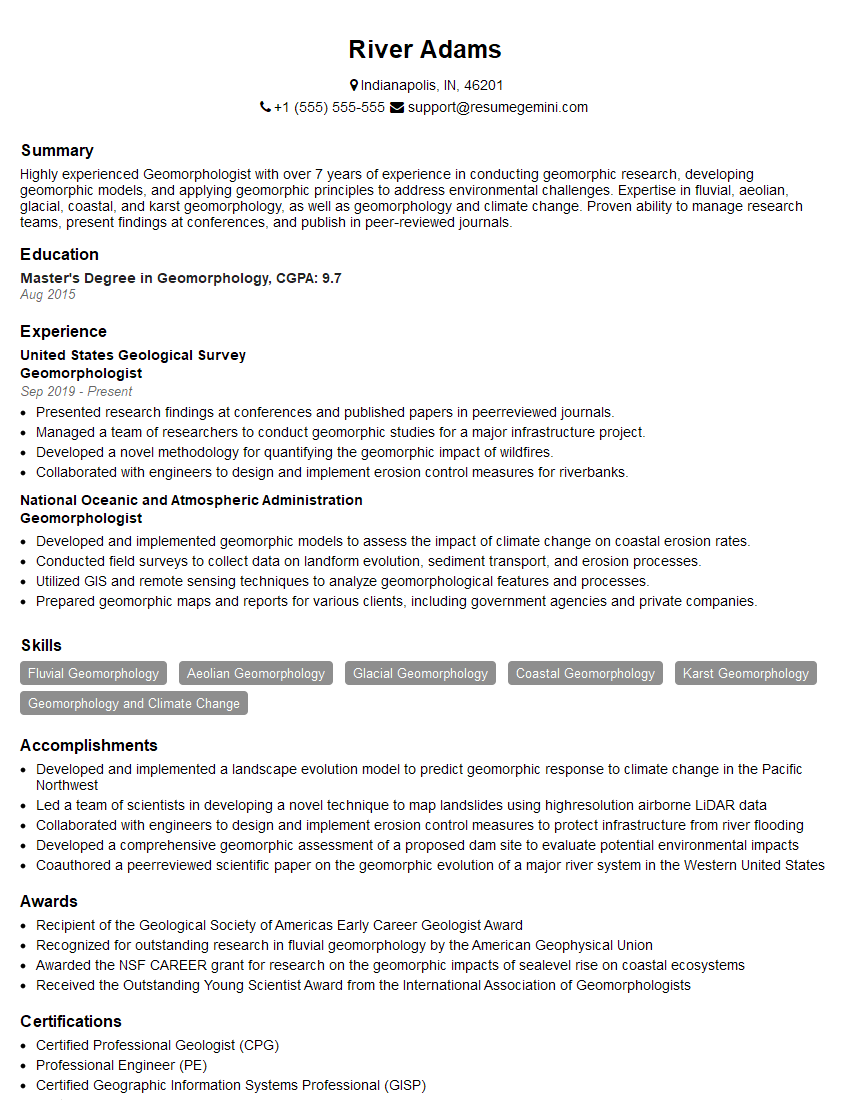
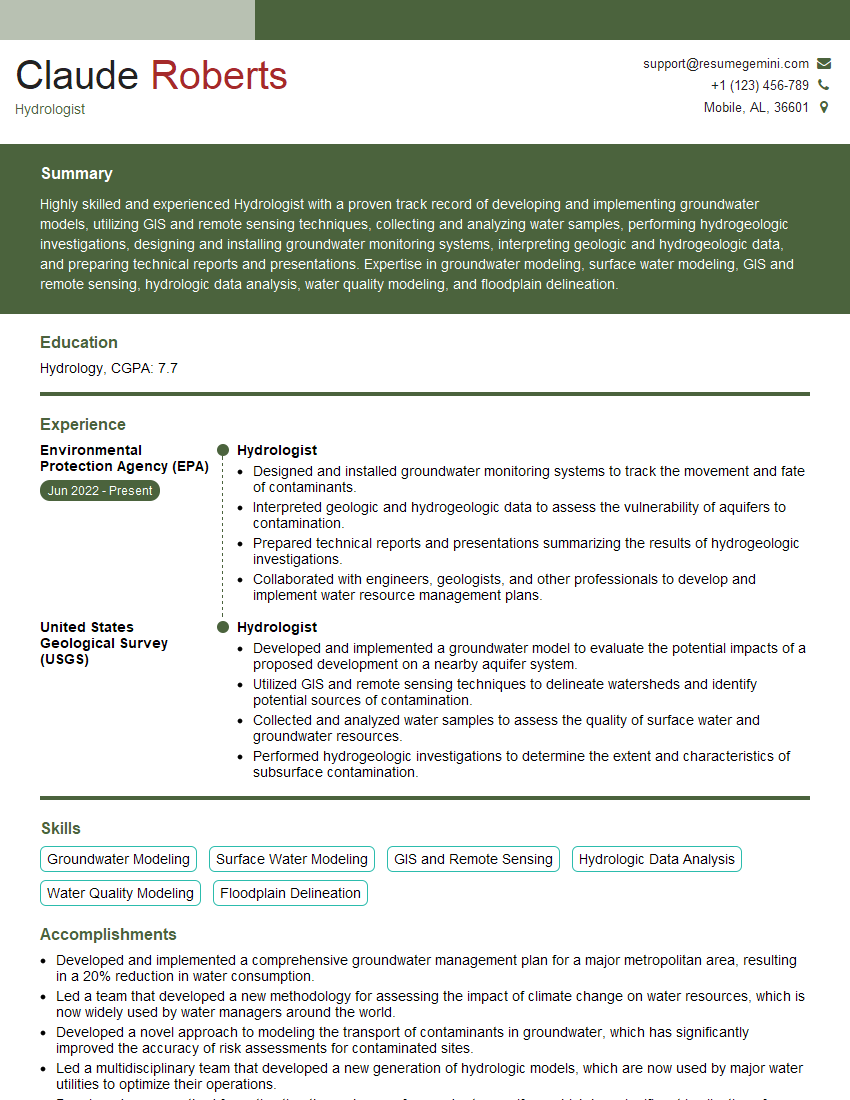
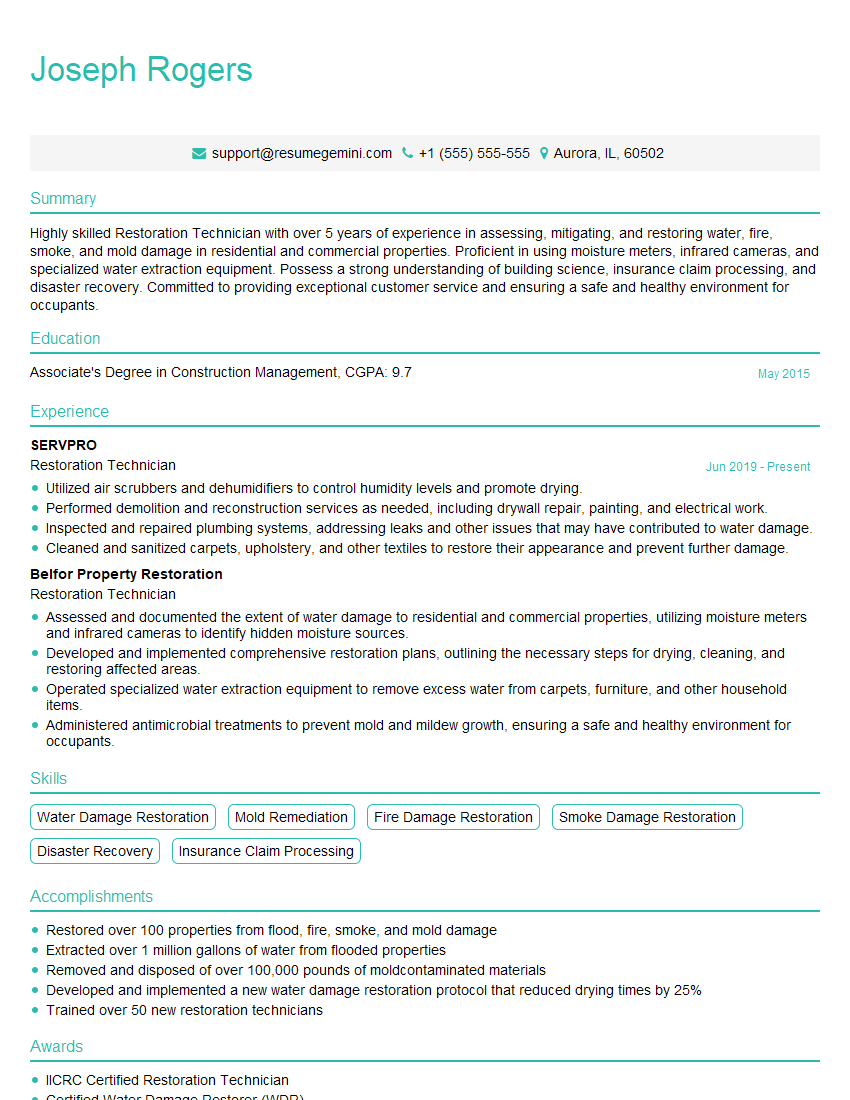
Mastering Watershed Restoration Planning opens doors to exciting and impactful careers, allowing you to contribute meaningfully to environmental conservation and community well-being. To maximize your job prospects, crafting a compelling and ATS-friendly resume is crucial. ResumeGemini is a trusted resource that can help you build a professional and effective resume tailored to highlight your skills and experience in this field. We provide examples of resumes specifically designed for Watershed Restoration Planning professionals, ensuring your application stands out. Invest time in creating a strong resume – it’s your first impression and a key step towards securing your dream role.
Explore more articles
Users Rating of Our Blogs
Share Your Experience
We value your feedback! Please rate our content and share your thoughts (optional).
What Readers Say About Our Blog
To the interviewgemini.com Webmaster.
Very helpful and content specific questions to help prepare me for my interview!
Thank you
To the interviewgemini.com Webmaster.
This was kind of a unique content I found around the specialized skills. Very helpful questions and good detailed answers.
Very Helpful blog, thank you Interviewgemini team.