The thought of an interview can be nerve-wracking, but the right preparation can make all the difference. Explore this comprehensive guide to Wellness and Recovery Planning interview questions and gain the confidence you need to showcase your abilities and secure the role.
Questions Asked in Wellness and Recovery Planning Interview
Q 1. Describe the stages of the Wellness Recovery Action Plan (WRAP).
The Wellness Recovery Action Plan (WRAP) is a personalized, self-directed process for managing symptoms and promoting wellness. It’s not a rigid, one-size-fits-all program, but rather a flexible tool individuals create to address their specific needs. The stages are iterative and cyclical, meaning individuals may revisit and adjust different parts of their plan over time.
- Developing a Wellness Plan: This initial stage focuses on identifying personal strengths, values, and goals. It involves brainstorming activities that promote well-being and defining what a healthy life looks like for the individual. For instance, this might include regular exercise, spending time in nature, engaging in creative hobbies, or maintaining a healthy diet.
- Trigger Identification: This crucial step involves pinpointing situations, thoughts, feelings, or behaviors that precede a downturn in mental health. This could be anything from specific stressful events to internal experiences like negative self-talk. Understanding these triggers allows for proactive intervention.
- Early Warning Signs: Recognizing subtle changes before a full-blown crisis is critical. This stage involves identifying early warning signs – subtle shifts in mood, behavior, or physical sensations that indicate a potential relapse. For example, changes in sleep patterns, decreased appetite, or increased irritability could be early warning signs.
- Action Plans: This is where individuals develop specific steps to take when early warning signs appear. These plans outline coping strategies, support networks, and interventions to prevent a crisis. Examples include contacting a support person, engaging in relaxation techniques, or seeking professional help.
- Crisis Planning: This addresses what to do in a crisis situation when early warning signs are ignored or the situation escalates. The plan should include details like emergency contacts, safe places to go, and procedures for accessing professional help. This could involve hospital admission procedures or contacting emergency services.
- Post-Crisis Planning: This stage focuses on what happens after a crisis. It involves self-reflection, learning from the experience, and adjusting the plan to prevent future crises. This could include processing the event with a therapist, revising trigger identification, or enhancing coping mechanisms.
The WRAP is a dynamic document; it’s continuously updated and refined as an individual’s needs change.
Q 2. Explain the principles of person-centered planning in Wellness and Recovery.
Person-centered planning in wellness and recovery prioritizes the individual’s unique experiences, strengths, goals, and values. It moves away from a deficit-based approach that focuses solely on problems and limitations, instead emphasizing the person’s potential for growth and recovery. This approach fosters collaboration and empowerment.
- Collaboration and Partnership: The individual is an active participant in every aspect of the planning process, working collaboratively with their support team (family, friends, professionals) to shape the plan.
- Strengths-Based Approach: This approach focuses on building upon the individual’s existing strengths, resources, and resilience rather than solely addressing weaknesses.
- Goal-Oriented: The plan is built around the individual’s goals and aspirations, aiming to empower them to achieve their vision of a fulfilling life.
- Self-Determination: The individual’s right to make their own choices and decisions is respected and upheld. The plan is theirs to own and manage.
- Empowerment: The process aims to empower individuals to take control of their lives and recovery journey.
For example, instead of simply focusing on managing symptoms of depression, a person-centered plan would explore the individual’s passions, interests, and support network to create a plan that builds their resilience and helps them achieve their personal goals, such as returning to work or pursuing a new hobby.
Q 3. How do you assess a client’s readiness for change in a wellness recovery context?
Assessing a client’s readiness for change involves understanding their motivation and commitment to engaging in wellness and recovery activities. It’s not a one-time assessment but an ongoing process. Several models can be used, including the Stages of Change (Transtheoretical) model.
- Precontemplation: The individual isn’t considering change, often unaware of the problem or its impact. Engagement focuses on raising awareness and exploring ambivalence.
- Contemplation: The individual is aware of the problem and considering change but isn’t committed to action. The focus is on weighing pros and cons and building motivation.
- Preparation: The individual is preparing for change, making small steps towards it. The focus is on supporting their initial efforts and providing resources.
- Action: The individual is actively making changes. Support is given to maintain momentum and overcome obstacles.
- Maintenance: The individual is maintaining changes and preventing relapse. Support focuses on relapse prevention strategies and sustaining long-term wellness.
Assessment tools such as motivational interviewing and scales measuring readiness to change can be used. Observing their behavior, active listening, and open-ended questions help to understand their level of motivation and commitment. For example, a client who consistently misses appointments may be in the precontemplation or contemplation stage, while someone actively seeking resources and participating in activities is likely in the action or maintenance stage.
Q 4. What are some common barriers to wellness and recovery, and how can they be addressed?
Many barriers can hinder wellness and recovery. Addressing them requires a multi-faceted approach.
- Lack of Access to Resources: Limited access to healthcare, mental health services, support groups, and affordable housing can be significant barriers. Solution: Advocating for policy changes, connecting individuals with available resources, and providing financial assistance.
- Stigma and Discrimination: Negative attitudes and societal biases surrounding mental health can prevent individuals from seeking help or openly discussing their experiences. Solution: Educating the community about mental health, promoting understanding and empathy, and fostering inclusive environments.
- Trauma: Past traumatic experiences can significantly impact mental health and recovery. Solution: Providing trauma-informed care, building trust, and creating a safe and supportive environment.
- Substance Use: Substance use disorders often co-occur with mental health challenges, complicating recovery. Solution: Integrated treatment addressing both substance use and mental health needs.
- Lack of Social Support: Isolation and lack of social connections can worsen mental health challenges. Solution: Connecting individuals with support groups, peer support programs, and community resources.
Addressing these barriers requires a holistic and collaborative approach, involving healthcare professionals, social workers, community organizations, and policymakers.
Q 5. Describe your experience with motivational interviewing techniques.
Motivational interviewing (MI) is a client-centered, directive counseling style that aims to elicit and strengthen motivation for change. It’s a collaborative, person-centered conversation where I guide the client to explore and resolve ambivalence about change.
- Empathy: I actively listen to understand the client’s perspective, demonstrating empathy and acceptance.
- Discrepancy: I help the client identify discrepancies between their values and behaviors, prompting reflection.
- Avoid Argumentation: I avoid directly confronting the client’s resistance, instead guiding them towards self-discovery.
- Rolling with Resistance: I acknowledge and accept the client’s resistance, reframing it as an opportunity for further exploration.
- Support Self-Efficacy: I support the client’s belief in their ability to make changes, fostering hope and optimism.
For example, if a client expresses ambivalence about attending therapy, rather than pushing them, I might use open-ended questions like, “What are some of the things that make it difficult for you to attend therapy?” or “What would need to be different for you to consider attending?” This facilitates a collaborative exploration of their ambivalence and promotes self-motivation.
Q 6. How do you incorporate trauma-informed care into your wellness and recovery planning?
Trauma-informed care recognizes the profound impact of trauma on individuals’ lives and recovery. It shifts the focus from ‘what’s wrong with you?’ to ‘what happened to you?’
- Safety: Creating a physically and emotionally safe environment is paramount. This involves ensuring predictable routines, respecting personal boundaries, and fostering trust.
- Trustworthiness and Transparency: Building trust is essential, achieved through clear communication, respecting autonomy, and avoiding retraumatization.
- Peer Support: Recognizing the importance of peer support groups and shared experiences is crucial.
- Collaboration and Empowerment: Working collaboratively with the client and respecting their choices and expertise in their recovery process is essential.
- Cultural, Historical, and Gender Issues: Considering the impact of social determinants of health, such as cultural, historical, and gender issues on trauma is fundamental.
For instance, when working with a client who has experienced trauma, I would prioritize building rapport and trust before delving into potentially triggering topics. I would also avoid using coercive language and ensure the client feels in control of the process. I’d actively incorporate the client’s strengths and resources in the wellness recovery plan.
Q 7. Explain the role of self-advocacy in wellness and recovery.
Self-advocacy is crucial for wellness and recovery. It empowers individuals to take control of their lives and health, expressing their needs and preferences effectively. It’s about knowing your rights and responsibilities and confidently communicating them.
- Understanding Your Needs: Identifying your needs, goals, and preferences is the foundation of self-advocacy.
- Communicating Effectively: Learning to clearly and confidently communicate your needs and preferences to healthcare providers, family members, and others.
- Accessing Resources: Knowing how to find and access resources and support systems.
- Setting Boundaries: Learning to set healthy boundaries and assert your needs.
- Decision-Making: Taking an active role in decision-making related to your care and treatment.
For example, a client learning to advocate for themselves might start by clearly communicating their medication preferences to their psychiatrist or asserting their need for additional support to their case manager. Self-advocacy is a skill that develops over time through practice and support.
Q 8. How do you build rapport with clients struggling with mental health or substance use disorders?
Building rapport with clients struggling with mental health or substance use disorders is paramount to successful wellness and recovery planning. It’s about creating a safe and trusting environment where vulnerability is encouraged. I achieve this through active listening, demonstrating empathy and unconditional positive regard, and fostering a collaborative relationship where the client feels empowered and heard.
Specifically, I start by validating their experiences and acknowledging the challenges they face. Instead of jumping into solutions, I begin by asking open-ended questions, allowing them to share their story at their own pace. For example, instead of asking ‘Are you depressed?’, I might ask ‘Can you tell me a bit about how you’ve been feeling lately?’ This shows genuine interest and encourages honest self-reflection.
Nonverbal communication is also crucial. Maintaining appropriate eye contact, using a calm and reassuring tone of voice, and mirroring their body language (subtly!) can create a sense of connection. Building trust takes time, and I consistently demonstrate reliability and respect for their boundaries. I make sure to follow through on commitments and clearly communicate my role and limitations. Ultimately, the goal is to establish a therapeutic alliance built on mutual respect and trust.
Q 9. What are some evidence-based interventions you utilize in Wellness and Recovery Planning?
My wellness and recovery planning utilizes several evidence-based interventions tailored to the individual’s needs and preferences. These include:
- Cognitive Behavioral Therapy (CBT): CBT helps clients identify and modify negative thought patterns and behaviors that contribute to their challenges. For example, we might work together to identify triggers that lead to substance use and develop coping mechanisms to manage cravings.
- Dialectical Behavior Therapy (DBT): DBT is particularly useful for individuals struggling with emotion regulation and interpersonal difficulties. It emphasizes mindfulness, distress tolerance, and interpersonal effectiveness skills.
- Motivational Interviewing (MI): MI is a client-centered approach that focuses on strengthening intrinsic motivation for change. It’s about guiding the client to explore their own reasons for wanting to improve their wellbeing, rather than imposing a plan on them.
- Acceptance and Commitment Therapy (ACT): ACT helps clients accept difficult emotions and thoughts without judgment, allowing them to focus on values-based actions. This helps individuals move forward with their recovery journey even when facing setbacks.
- Mindfulness-based interventions: Techniques like meditation and yoga are incorporated to promote self-awareness, stress reduction, and emotional regulation.
The choice of intervention is always personalized and depends on the individual’s specific challenges, strengths, and preferences. I often integrate multiple approaches for a more holistic and effective plan.
Q 10. Describe your experience working with diverse populations in a wellness recovery setting.
I have extensive experience working with diverse populations, including individuals from various cultural backgrounds, socioeconomic statuses, gender identities, sexual orientations, and abilities. Understanding and respecting cultural differences is critical. For example, I’ve worked with clients from immigrant communities who faced unique challenges related to language barriers, cultural stigma around mental health, and accessing resources. In these cases, I’ve collaborated with interpreters and community leaders to ensure culturally sensitive and effective care.
I’ve also worked with individuals experiencing homelessness, addressing the added complexities of unstable housing, lack of access to resources, and trauma. In these situations, collaboration with social workers, case managers, and other support services is crucial. My approach is always to create a safe space where individuals feel comfortable expressing their unique experiences and needs, avoiding stereotypes and assumptions. It’s essential to recognize the intersectionality of identities and how various factors can influence an individual’s experiences and recovery journey.
Q 11. How do you measure the effectiveness of your wellness and recovery interventions?
Measuring the effectiveness of wellness and recovery interventions involves a multi-faceted approach. It’s not enough to simply rely on client self-report, although that’s important. I utilize a combination of quantitative and qualitative methods to gain a comprehensive understanding of progress.
Quantitative measures might include standardized questionnaires and scales assessing symptoms (e.g., depression, anxiety, substance use), quality of life, and functional capacity. I regularly monitor these measures throughout the recovery process to track changes over time.
Qualitative measures involve regular feedback sessions with clients, allowing them to share their experiences and perspectives on their progress. This provides valuable insights into their subjective experiences and helps to identify areas needing adjustment. I might also collect data through observations of client behavior during therapy sessions or in group settings.
Finally, a critical component is collaboration with other professionals involved in the client’s care. Regular communication with medical providers, psychiatrists, case managers, and family members can provide a more holistic picture of the client’s progress and inform adjustments to the plan.
Q 12. How do you address relapse prevention in your wellness and recovery plans?
Relapse prevention is a crucial aspect of wellness and recovery planning. It’s not about preventing setbacks entirely—setbacks are part of the process—but about equipping clients with the skills and strategies to manage them effectively and prevent them from becoming overwhelming.
My approach focuses on several key areas:
- Identifying high-risk situations and triggers: Through collaboration with the client, we identify specific situations, people, places, or emotions that might increase the risk of relapse. This might involve journaling, keeping a relapse diary, or engaging in guided imagery exercises.
- Developing coping mechanisms: We collaboratively develop a range of coping strategies to manage cravings and high-risk situations. This might involve practicing mindfulness techniques, engaging in healthy activities, seeking support from peers or professionals, and utilizing relaxation strategies.
- Building a strong support system: Connecting clients with support groups, family members, or friends who understand their challenges and can offer encouragement and accountability is a vital component of relapse prevention.
- Developing a relapse prevention plan: This is a proactive document outlining steps the client will take if they experience a relapse. It often includes identifying early warning signs, creating a crisis plan, and establishing support networks for immediate help.
- Regular monitoring and follow-up: Ongoing support and monitoring are crucial to address any emerging challenges and provide adjustments to the plan as needed.
Q 13. What are some common relapse triggers, and how can they be managed?
Common relapse triggers vary widely depending on the individual, but some frequently encountered ones include:
- Stressful life events: Job loss, relationship problems, financial difficulties, or legal issues can significantly increase vulnerability to relapse.
- Negative emotions: Feelings of depression, anxiety, anger, or loneliness can trigger cravings or unhealthy coping mechanisms.
- Social situations: Exposure to environments or people associated with past substance use can be highly triggering.
- Physical discomfort: Pain, illness, or withdrawal symptoms can lead to relapse.
- Lack of support: Inadequate social support or isolation increases the risk of relapse.
Managing these triggers involves a multifaceted approach. It’s essential to develop coping strategies tailored to each trigger. For example, for stress-related triggers, stress management techniques like relaxation exercises, yoga, or mindfulness may be helpful. For social triggers, avoidance might be necessary initially, gradually building tolerance and social skills. For emotional triggers, developing emotional regulation skills through techniques like DBT is crucial. Having a relapse prevention plan in place and strong support systems aids in effective management of triggers.
Q 14. Explain the importance of collaboration with other professionals in wellness and recovery.
Collaboration with other professionals is absolutely essential for effective wellness and recovery. It’s a team effort, and a holistic approach is far more effective than working in silos.
For example, I regularly collaborate with:
- Psychiatrists: For medication management and addressing co-occurring mental health disorders.
- Primary care physicians: To monitor physical health and address any medical concerns that may impact recovery.
- Social workers: To address social determinants of health, such as housing, employment, and financial stability.
- Case managers: To coordinate care and ensure access to needed resources.
- Family members and significant others: To engage family members in the recovery process and provide support, using appropriate boundaries and ethical considerations.
- Support groups and peer support specialists: Peer-to-peer support provides valuable validation and shared experiences.
Regular communication and shared decision-making among these professionals ensure a cohesive and comprehensive plan tailored to the individual’s needs, optimizing chances for long-term recovery. This integrated approach prevents fragmentation of care and promotes a more positive and sustainable outcome for the client.
Q 15. How do you ensure client confidentiality and ethical considerations in your practice?
Client confidentiality is paramount in my practice. I adhere strictly to HIPAA regulations and all relevant ethical guidelines established by my professional organizations. This means maintaining the strictest privacy regarding client information, including their identity, diagnosis, treatment details, and any other personal data. I only share information with other healthcare professionals directly involved in the client’s care, and only with their explicit consent, unless legally mandated to do so (e.g., mandated reporting of child abuse).
For example, I never discuss a client’s case with anyone outside the treatment team without their permission. I also use secure electronic health records and ensure my physical workspace is kept private to prevent unauthorized access. Ethical considerations guide my practice in all aspects. I prioritize client autonomy, ensuring that they are fully informed about their treatment options and participate actively in decision-making. I also maintain objectivity and avoid any conflicts of interest that might compromise the therapeutic relationship.
Career Expert Tips:
- Ace those interviews! Prepare effectively by reviewing the Top 50 Most Common Interview Questions on ResumeGemini.
- Navigate your job search with confidence! Explore a wide range of Career Tips on ResumeGemini. Learn about common challenges and recommendations to overcome them.
- Craft the perfect resume! Master the Art of Resume Writing with ResumeGemini’s guide. Showcase your unique qualifications and achievements effectively.
- Don’t miss out on holiday savings! Build your dream resume with ResumeGemini’s ATS optimized templates.
Q 16. Describe your experience with crisis intervention in a wellness recovery context.
Crisis intervention is a critical component of wellness recovery planning. My experience involves working with clients experiencing acute distress, such as suicidal ideation, severe anxiety attacks, or psychotic episodes. The immediate goal is to de-escalate the situation and ensure the client’s safety. This often involves validating their feelings, offering support, and collaborating with them to develop a safety plan.
For instance, I once worked with a client experiencing a severe panic attack. Using calming techniques like deep breathing exercises and grounding exercises, we collaboratively identified and addressed the triggers of their anxiety. We developed a personalized crisis plan that included immediate coping strategies, contact information for support systems (family, friends, and crisis hotlines), and a list of safe places they could go. Following the crisis, we worked to develop long-term coping mechanisms and strategies to prevent future episodes.
Q 17. How do you facilitate the development of coping skills in your clients?
Facilitating the development of coping skills is central to my work. I utilize a variety of evidence-based techniques tailored to each client’s unique needs and preferences. These techniques often include cognitive behavioral therapy (CBT) strategies like cognitive restructuring (identifying and challenging negative thought patterns) and behavioral activation (engaging in enjoyable activities). I also incorporate mindfulness techniques, stress management strategies (like relaxation exercises and yoga), and problem-solving skills training.
For example, I might work with a client struggling with substance use to identify their triggers and develop alternative coping mechanisms for managing cravings. This could involve teaching them mindfulness practices to cope with stress or helping them develop a plan for navigating social situations where substance use might be tempting. We would practice these skills in session and then collaboratively track their application in real-life situations.
Q 18. What are some strategies for promoting self-esteem and self-efficacy in recovery?
Boosting self-esteem and self-efficacy is crucial for successful recovery. I achieve this by fostering a supportive and empowering therapeutic environment. I help clients identify their strengths and accomplishments, however small, and challenge negative self-talk. We set realistic and achievable goals, celebrating successes along the way to build confidence and motivation. Techniques like positive self-affirmations and journaling can also be beneficial.
For example, with a client struggling with low self-esteem due to past trauma, we might create a ‘success journal’ where they document their accomplishments, both big and small. This could be anything from completing a household chore to having a positive interaction with someone. This practice focuses their attention on their capabilities, gradually building their belief in their ability to manage challenges and achieve their goals.
Q 19. How do you support clients in accessing community resources?
Connecting clients with community resources is an essential part of my role. This involves building a strong understanding of the available resources in the area, such as support groups, mental health clinics, employment services, housing assistance programs, and financial aid organizations. I help clients navigate the complexities of the system by providing information, making referrals, and even assisting with applications or appointments, if needed.
For instance, if a client is struggling with housing insecurity, I might help them locate local homeless shelters or housing assistance programs and assist them in completing the necessary paperwork. I also regularly collaborate with other professionals such as social workers, case managers, and psychiatrists to ensure clients receive comprehensive support.
Q 20. Describe your experience with discharge planning and post-discharge support.
Discharge planning is a collaborative process that starts early in the treatment journey. I work closely with the client and their support system to develop a comprehensive plan outlining their goals, strategies for relapse prevention, and a schedule of follow-up appointments. This plan outlines how they will maintain their progress after they leave formal treatment, including access to continued therapy, medication management, and community resources. Post-discharge support involves ongoing contact, checking in regularly to offer encouragement and address any challenges they face.
For example, before a client is discharged from an inpatient program, we might arrange for them to continue therapy sessions with me on an outpatient basis. We will establish clear expectations for medication adherence and create a detailed relapse prevention plan. Regular check-in calls or meetings after discharge ensure that they feel supported and have access to help if needed.
Q 21. How do you address challenges related to medication adherence in a recovery plan?
Medication adherence is a common challenge in recovery. I address this by working collaboratively with the prescribing physician and the client to develop a medication management plan that is tailored to their individual needs and preferences. This might include strategies such as setting reminders, using pill organizers, establishing routines, and addressing any concerns or side effects they experience. Open communication and addressing potential barriers are key to achieving medication adherence.
For example, if a client is experiencing side effects from their medication, we would work together to find solutions, such as adjusting the dosage or trying a different medication. If forgetfulness is an issue, we would explore methods like using a pill organizer or setting medication reminders on their phone. Understanding the client’s perspective and addressing their concerns is crucial for successful medication adherence.
Q 22. What is your understanding of the recovery model?
The recovery model is a person-centered approach that emphasizes individual strengths and empowers individuals to lead self-directed lives. It shifts the focus from a disease or deficit model to one of hope, resilience, and personal growth. Instead of solely focusing on symptom reduction, it promotes the development of coping skills, building supportive relationships, and achieving personal goals. It recognizes that recovery is a unique journey for each individual, with varying timelines and milestones. The process is nonlinear, involving setbacks and successes, and ultimately leading to a fulfilling life despite challenges.
Think of it like climbing a mountain: There will be steep inclines, flat stretches, and maybe even some slips. The key is to keep moving forward, adjusting your strategy as needed, and celebrating each milestone along the way. The summit isn’t necessarily a complete ‘cure,’ but rather a place of self-acceptance and empowerment.
Q 23. How do you tailor your approach to meet the specific needs of diverse clients?
Tailoring my approach begins with a thorough assessment that considers cultural background, socioeconomic status, spiritual beliefs, gender identity, sexual orientation, and any other factors that might influence their experience and recovery journey. For example, working with a client from a collectivist culture might necessitate involving family members in the planning process, while a client from an individualistic culture might prefer a more independent approach. I adapt my communication style, considering preferred learning methods and potential language barriers. I also ensure resources provided are culturally appropriate and accessible.
I use evidence-based practices that are flexible and adaptable. This might involve integrating elements of cognitive behavioral therapy (CBT), mindfulness techniques, or motivational interviewing, depending on the client’s needs and preferences. A crucial component is fostering a trusting therapeutic relationship built on empathy, respect, and unconditional positive regard.
Q 24. What is your understanding of the strengths-based perspective in Wellness and Recovery?
A strengths-based perspective in Wellness and Recovery focuses on identifying and leveraging an individual’s inherent capabilities, talents, and resources rather than solely concentrating on their deficits or challenges. It emphasizes the client’s inherent resilience and capacity for growth. It involves collaboratively identifying strengths and utilizing these as building blocks for recovery. Instead of dwelling on problems, we actively seek out and cultivate positive attributes, past successes, and supportive relationships. This approach fosters hope, self-efficacy, and a sense of empowerment.
For instance, if a client struggles with substance abuse, instead of focusing solely on their addiction, we might explore their artistic talents, their strong family support system, or previous successful experiences overcoming adversity. These strengths become cornerstones of the recovery plan.
Q 25. How do you promote healthy lifestyle choices in your wellness and recovery plans?
Promoting healthy lifestyle choices is integral to Wellness and Recovery planning. This isn’t about imposing strict rules but rather guiding clients toward making informed and sustainable choices that align with their values and goals. We collaboratively develop action plans that address nutrition, physical activity, sleep hygiene, and stress management. This might involve setting realistic goals, such as incorporating a short walk daily instead of aiming for a marathon immediately, or switching to healthier meal options gradually.
I also teach coping skills for managing cravings or urges, addressing underlying emotional issues that might contribute to unhealthy habits, and connecting them with resources like nutritionists or personal trainers if needed. Regular check-ins and support are crucial to maintain progress and address any setbacks.
Q 26. What are your personal strategies for managing stress and maintaining your own well-being?
Maintaining my own well-being is essential for effectively supporting my clients. My personal strategies include regular exercise, a balanced diet, sufficient sleep, and consistent mindfulness practices, such as meditation or yoga. I prioritize regular time for hobbies and social connections, recognizing the importance of preventing burnout. Crucially, I maintain professional boundaries and utilize supervision and peer support to process challenging cases and prevent vicarious traumatization. I also regularly engage in self-reflection to identify areas needing improvement in my own self-care.
Q 27. Describe a time when you had to adapt your approach to meet the needs of a challenging client.
I once worked with a client who exhibited significant resistance and distrust towards the therapeutic process due to past negative experiences with mental health professionals. My initial approach of structured goal setting proved ineffective. I recognized the need for a shift in strategy. I started by building rapport, focusing on establishing trust through active listening and validation of their feelings. We began by exploring their interests and strengths outside of their presenting issues. This fostered a sense of connection and control, slowly creating a safe space for them to open up and engage in the therapeutic process. Gradually, we were able to integrate goal-oriented work, resulting in positive progress.
Q 28. How do you document client progress and outcomes in accordance with best practices?
Documentation is crucial for ensuring accountability, monitoring progress, and facilitating continuity of care. I maintain detailed and accurate records using electronic health records (EHR) software compliant with HIPAA regulations. Documentation includes client demographics, presenting problems, treatment goals, session summaries, progress notes, and any relevant assessments.
I utilize objective and measurable language to describe client progress, focusing on observable behaviors and outcomes. For example, instead of stating ‘client is improving,’ I might write ‘client reported a decrease in anxiety symptoms from 8/10 to 4/10 as measured by the GAD-7 scale, and actively participated in two group therapy sessions this week.’ This type of clear, precise documentation allows for effective tracking of progress and ensures continuity of care if the client transitions to another provider.
Key Topics to Learn for Wellness and Recovery Planning Interview
- Person-Centered Planning: Understanding the core principles and practical application of person-centered approaches in developing recovery plans. This includes exploring individual strengths, needs, and goals.
- Recovery Models: Familiarize yourself with various recovery models (e.g., the medical model, the wellness model, the strengths-based model) and their implications for planning. Be prepared to discuss their strengths and limitations.
- Goal Setting and Action Planning: Mastering the techniques for collaboratively establishing SMART (Specific, Measurable, Achievable, Relevant, Time-bound) goals and developing actionable steps to achieve them within a wellness and recovery framework.
- Trauma-Informed Care: Understand the principles of trauma-informed care and how to integrate them into the planning process for individuals with histories of trauma.
- Crisis Planning and Intervention: Develop your understanding of identifying potential crises, developing proactive strategies, and effective intervention techniques.
- Collaboration and Communication: Discuss effective strategies for building strong therapeutic alliances with clients, their families, and other stakeholders involved in the recovery process.
- Ethical Considerations: Be prepared to discuss ethical dilemmas that may arise during the planning process, including issues of confidentiality, informed consent, and advocacy.
- Cultural Competence: Demonstrate an understanding of cultural sensitivity and the importance of tailoring plans to meet the specific needs and preferences of diverse populations.
- Assessment and Evaluation: Discuss methods for assessing client needs, developing measurable outcomes, and evaluating the effectiveness of the implemented wellness and recovery plan.
- Documentation and Record Keeping: Understand the importance of accurate and thorough documentation practices in accordance with professional standards and legal requirements.
Next Steps
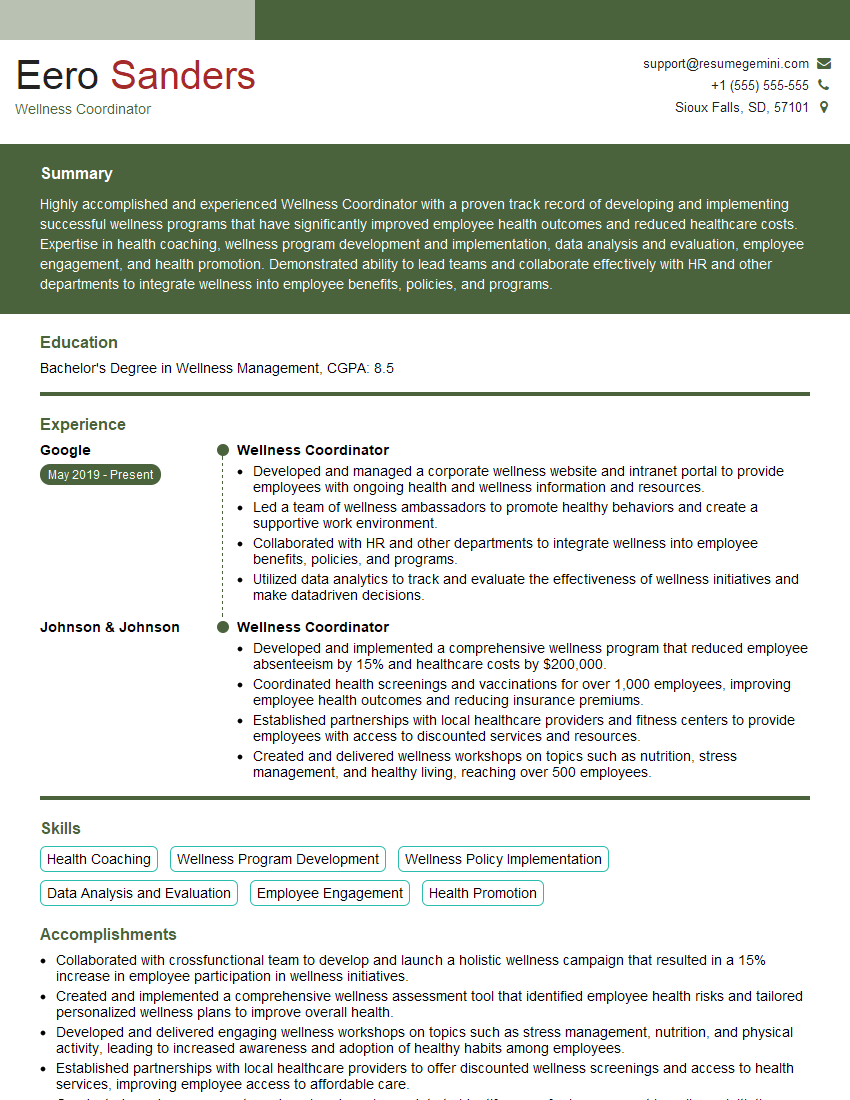
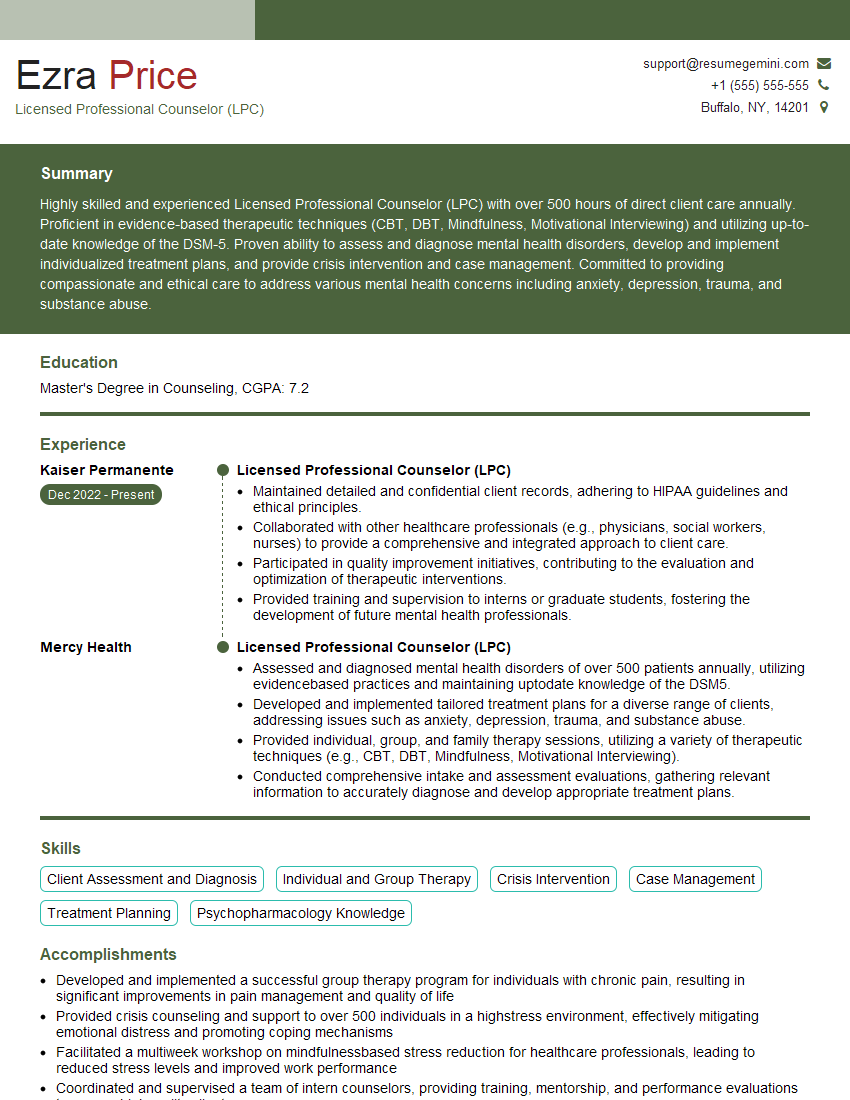
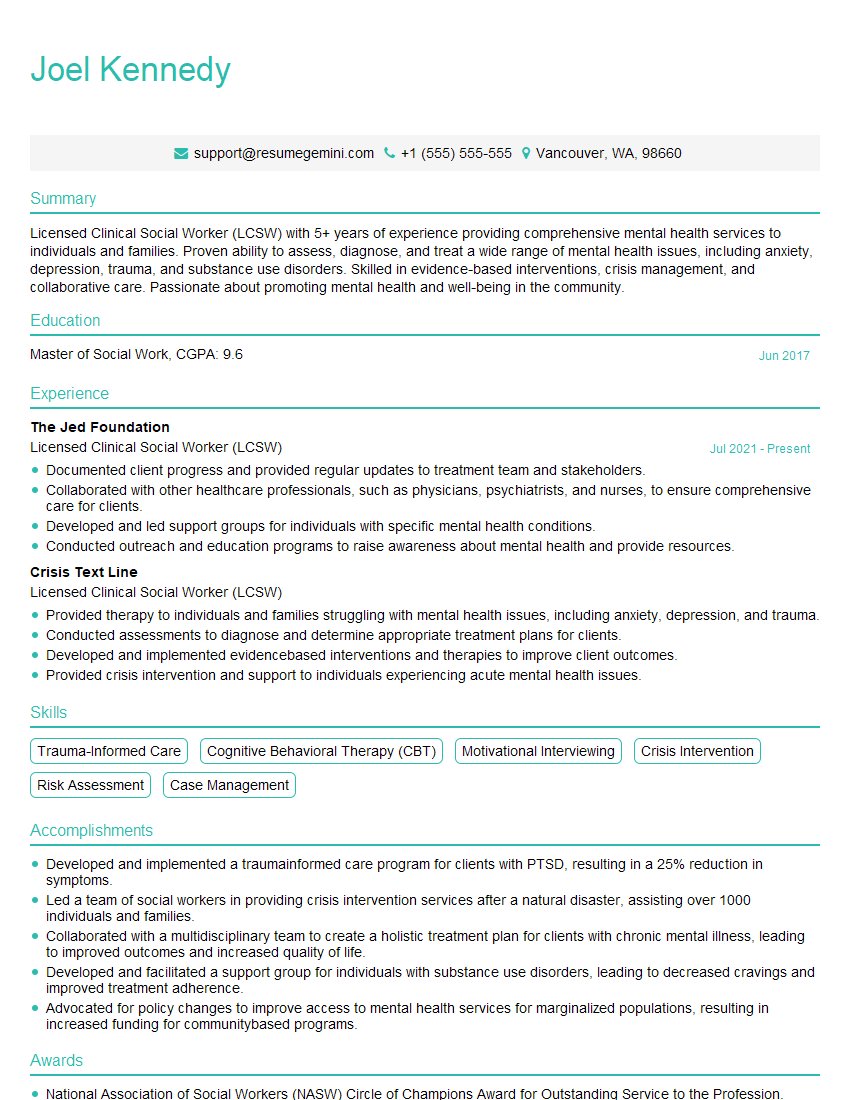
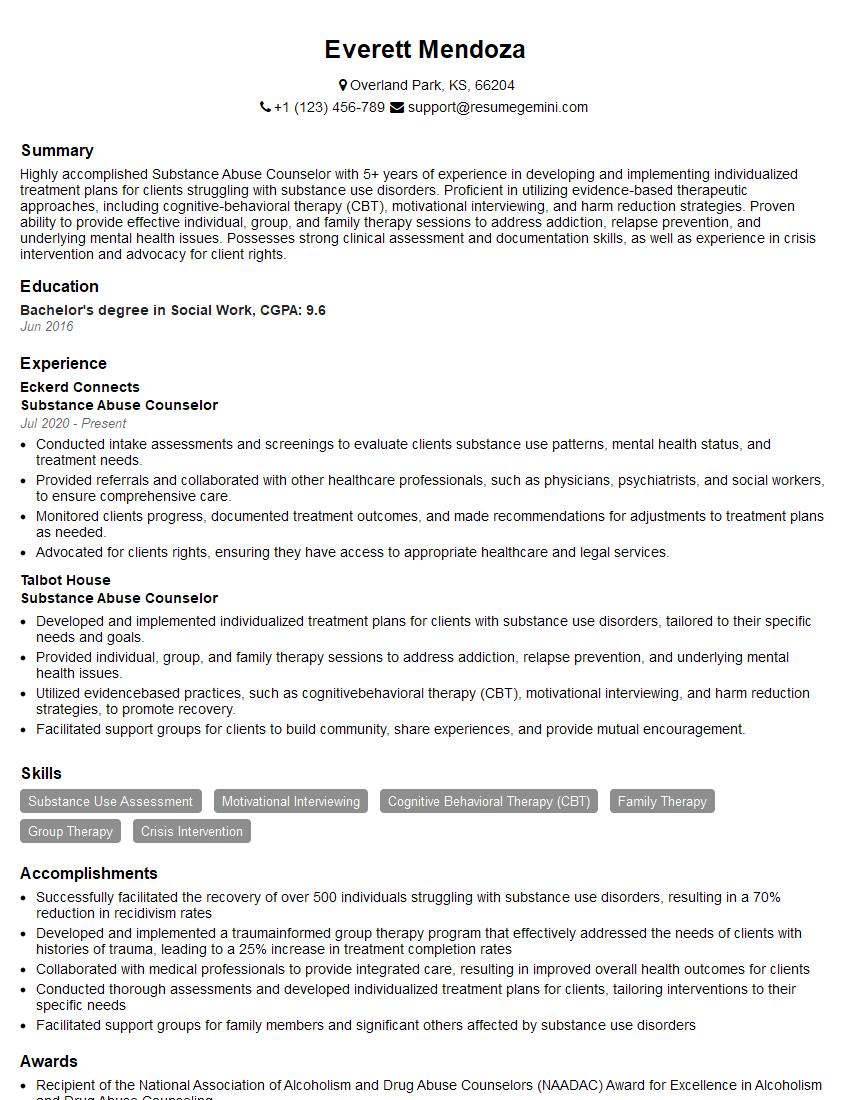
Mastering Wellness and Recovery Planning is crucial for career advancement in the helping professions. It demonstrates a commitment to client-centered care and effective intervention strategies. To significantly increase your job prospects, creating a strong, ATS-friendly resume is essential. ResumeGemini is a trusted resource to help you build a professional and impactful resume that showcases your skills and experience effectively. Examples of resumes tailored to Wellness and Recovery Planning are available to help you get started.



Explore more articles
Users Rating of Our Blogs
Share Your Experience
We value your feedback! Please rate our content and share your thoughts (optional).
What Readers Say About Our Blog
To the interviewgemini.com Webmaster.
Very helpful and content specific questions to help prepare me for my interview!
Thank you
To the interviewgemini.com Webmaster.
This was kind of a unique content I found around the specialized skills. Very helpful questions and good detailed answers.
Very Helpful blog, thank you Interviewgemini team.