Preparation is the key to success in any interview. In this post, we’ll explore crucial Wood Shaping interview questions and equip you with strategies to craft impactful answers. Whether you’re a beginner or a pro, these tips will elevate your preparation.
Questions Asked in Wood Shaping Interview
Q 1. What types of wood are best suited for intricate shaping?
For intricate shaping, woods with fine, even grain and a relatively stable nature are ideal. These woods are less likely to splinter or crack during the detailed carving process. Think of it like sculpting with clay – you wouldn’t want to use something coarse and crumbly.
- Basswood: A classic choice, incredibly soft and easy to carve, perfect for detailed relief work and small sculptures.
- Limewood: Similar to basswood, with a slightly tighter grain, offering good detail and strength.
- Maple (certain types): Some maple varieties offer a fine, close grain suitable for intricate work, though it’s harder than basswood and lime.
- Cherry: While denser, its smooth grain makes it suitable for more delicate carving, resulting in a beautiful polished finish.
Conversely, woods with coarse grains like oak or pine are generally avoided for intricate work due to their tendency to tear and chip.
Q 2. Explain the difference between hand shaping and machine shaping.
Hand shaping and machine shaping represent contrasting approaches to woodworking, each with its strengths and limitations. Hand shaping, using tools like chisels and gouges, allows for a great deal of control and precision, ideal for fine detail and artistic expression. Think of a master sculptor carefully chiseling away at marble – that’s the level of control you get with hand tools.
Machine shaping, using power tools like routers and lathes, offers speed and efficiency for repetitive tasks and larger projects. However, it requires more skill to operate safely and effectively and can lack the subtle nuances achievable with hand tools. It’s like using a power sander versus sanding by hand; one is faster, the other is more precise for detail.
Often, a combination of both methods is employed to achieve the best results. For instance, a rough shape might be created with a machine, then refined with hand tools to achieve the desired level of detail and finish.
Q 3. Describe your experience with various wood shaping tools (e.g., chisels, planes, routers).
My experience spans a wide range of wood shaping tools. I’m proficient with various chisels, from the robust mortise chisel for precise cuts to the delicate detail chisels used for intricate carving. I’m equally comfortable using planes, employing different types – smoothing planes for creating a flat surface, block planes for working on end grain, and molding planes for creating decorative profiles. My experience with routers is extensive, encompassing different bits for a multitude of shaping tasks, including creating curves, dados, and intricate decorative patterns.
I’ve also worked extensively with specialized tools like spokeshaves for shaping curves and carving tools, each requiring a specific technique for optimal results. The feel of each tool and the proper technique are crucial for achieving both efficiency and quality.
One memorable project involved carving a detailed bird from a single piece of basswood. The combination of sharp chisels and my understanding of the wood’s grain allowed me to create incredibly fine details that would have been difficult or impossible with machines alone.
Q 4. How do you select the appropriate tools and techniques for a specific woodworking project?
Tool and technique selection hinges critically on the project’s demands. The wood’s properties, design complexity, and desired finish are all key considerations.
- Wood type: Hardwoods necessitate robust tools and techniques, while softer woods allow for more delicate approaches.
- Design complexity: Intricate designs demand precision tools like sharp chisels and gouges, perhaps complemented by specialized carving tools.
- Desired finish: A smooth, polished finish may require different techniques and tools than a rustic, hand-hewn look.
For example, building a simple wooden box might only require saws, planes, and chisels. However, carving a detailed sculpture would necessitate a much wider array of specialized tools, including carving chisels, gouges, and potentially specialized power tools.
My approach is always to start with a plan, outlining the steps and required tools, and then adjust based on the challenges encountered during the process.
Q 5. What safety precautions do you take when using power tools for wood shaping?
Safety is paramount when using power tools. My safety practices are meticulous and unwavering:
- Proper machine setup: Ensuring the tool is securely clamped and properly adjusted before operation.
- Sharp blades and bits: Dull tools require more force, increasing the risk of kickback or injury.
- Personal Protective Equipment (PPE): Always wearing safety glasses, hearing protection, and a dust mask, with appropriate clothing to avoid entanglement.
- Push sticks and featherboards: Using these safety aids to keep hands a safe distance from cutting edges.
- Clear workspace: Maintaining a clean and organized work area free of clutter.
- Awareness of surroundings: Being aware of others in the workspace and avoiding distractions.
Ignoring safety procedures can lead to serious injury. A seemingly small mistake can have catastrophic consequences.
Q 6. How do you ensure accuracy and precision in your shaping techniques?
Accuracy and precision are achieved through a combination of careful planning, sharp tools, and proper techniques:
- Precise measurements and marking: Using accurate measuring tools and marking techniques to ensure consistent dimensions.
- Sharp tools: Dull tools tear the wood, leading to inaccuracies. Regular sharpening is essential.
- Proper technique: Using the right tools and techniques for the task. This comes with experience and practice.
- Test cuts: Making test cuts to check the accuracy of measurements and tool settings before committing to the final cut.
- Jigs and fixtures: Employing jigs and fixtures to ensure repeatability and precision, especially in repetitive operations.
For example, when creating a dovetail joint, meticulous marking and precise chiseling are crucial for a tight, accurate fit. A poorly executed joint can compromise the entire project.
Q 7. Describe your experience with different wood joining methods.
My experience encompasses a variety of wood joining methods, each suited to different applications and aesthetic goals:
- Mortise and tenon: A strong and durable joint, ideal for furniture construction. I’ve used both traditional hand-cut and machine-cut methods.
- Dovetail joints: A visually appealing and strong joint, often used in drawers and boxes. I’m proficient in both through and half-blind dovetails.
- Dado and rabbet joints: Simple yet effective joints used for shelving, framing, and casework.
- Butt joints: Simplest joint, often reinforced with screws, dowels, or glue.
- Finger joints: Interlocking fingers create a strong and visually interesting joint, often used in frames and boxes.
- Glue and dowel joints: Reliable and relatively simple, suitable for many applications.
The choice of joint depends on the project’s requirements for strength, appearance, and the tools available. A strong understanding of each method’s strengths and weaknesses is essential for successful woodworking.
Q 8. How do you handle wood defects or imperfections during the shaping process?
Handling wood defects is crucial for creating high-quality pieces. My approach involves a combination of careful wood selection, strategic design, and skilled repair techniques. Before starting any project, I meticulously inspect the wood for knots, cracks, warping, and other imperfections. Minor imperfections can often be incorporated into the design, adding character to the final piece. For example, a small knot might become a focal point in a chair’s armrest. Larger defects require more intervention. For cracks, I might use wood glue and clamps to reinforce the weak area. For warping, I’ll often use a moisture meter to assess the extent of the problem and may employ techniques like steaming or applying pressure to correct it. If a defect is too significant to repair effectively, I’ll choose a different piece of wood to maintain quality. It’s all about understanding the wood’s characteristics and making informed decisions to create a beautiful and structurally sound piece.
Q 9. Explain your experience with various wood finishes and their applications.
My experience with wood finishes is extensive, covering a wide range of options, each with its unique properties and applications. I frequently use oil-based finishes like tung oil or linseed oil for their durability and natural look, especially on furniture that will see heavy use. These penetrate the wood, enhancing its grain and providing protection. For a more durable and glossy finish, I often utilize polyurethane, offering superior resistance to water and scratches. Water-based finishes are also becoming increasingly popular due to their low VOC (volatile organic compound) content and ease of cleanup. I choose the finish based on the project’s purpose, the wood type, and the desired aesthetic. For example, a delicate wooden bowl might receive a food-safe oil finish, while a sturdy outdoor table would benefit from a marine-grade polyurethane. Beyond the finish itself, proper preparation – sanding to achieve a smooth surface – is paramount for a professional, long-lasting result. Applying thin, even coats, allowing ample drying time between coats, is essential for preventing runs and achieving a flawless finish.
Q 10. Describe your experience with CNC machining for wood shaping.
CNC machining has revolutionized wood shaping, offering unparalleled precision and repeatability. I have extensive experience using CNC routers for various applications, from creating intricate carvings and precise joinery to generating complex curves and three-dimensional forms. The process typically involves designing the shape using CAD software (Computer-Aided Design), then translating that design into a CNC program (G-code) that instructs the machine. I’m proficient in various CAM (Computer-Aided Manufacturing) software packages to generate the efficient toolpaths. The level of detail achievable with CNC is remarkable, allowing for the production of pieces that would be impossible to create manually with the same level of accuracy and speed. For example, I’ve used CNC to create complex moldings for architectural details and intricate components for custom furniture. While CNC is a powerful tool, my expertise lies in its integration with traditional woodworking skills. I use it effectively to create the base shape, then use hand tools to add finishing touches and ensure a high level of craftsmanship.
Q 11. How do you read and interpret woodworking plans or blueprints?
Reading woodworking plans requires careful attention to detail and an understanding of woodworking conventions. I begin by reviewing the overall design, understanding the project’s scope and dimensions. Next, I carefully examine each view (front, side, top) to fully grasp the shape and dimensions of each component. Detailed drawings often include dimensions, material specifications (wood type, thickness), and joinery details. I pay close attention to these details, ensuring I fully comprehend the intended joinery techniques (e.g., mortise and tenon, dovetail). A well-drawn plan will also include notes and specifications that clarify design choices or construction techniques. If anything is unclear, I ask questions or seek clarification from the designer to prevent mistakes. Over the years, experience has greatly enhanced my skill at interpreting plans quickly and efficiently. I always double-check my measurements and plans before cutting any wood.
Q 12. What are your methods for creating smooth curves and intricate details?
Creating smooth curves and intricate details is where the artistry of woodworking truly shines. For smooth curves, I often use a combination of techniques. A spokeshave is invaluable for shaping large curves, while smaller curves can be achieved using carving tools, files, or sandpaper. Templates can be employed to ensure consistency and accuracy across multiple pieces. For intricate details, specialized carving tools are essential, ranging from gouges and chisels to specialized carving knives. I might use a router with appropriate bits for creating repetitive details or for cutting intricate patterns in relief. The key is practice and precision. Each curve and detail requires a considered approach, starting with the rough shaping and progressively refining the form using finer tools and abrasives. Patience is key in achieving a high-quality, detailed piece; rushing leads to mistakes and an unprofessional result.
Q 13. Explain your approach to problem-solving when encountering challenges during shaping.
Problem-solving is an integral part of woodworking. My approach is systematic: First, I carefully identify the problem. Is it a design flaw, a tool malfunction, a material defect? Next, I analyze the cause. Was there an error in my measurements, a mistake in the cutting process, or was there an unforeseen property of the wood? Once the cause is identified, I develop a solution. This might involve adjusting the design, modifying the toolpath (if using a CNC machine), or applying specialized repair techniques. If the problem is significant and the solution isn’t readily apparent, I’ll consult relevant resources, including books, online forums, or more experienced woodworkers. Learning from past mistakes is vital; I maintain a log of the challenges I’ve encountered and the solutions I’ve implemented, which helps me refine my technique and avoid repeating errors.
Q 14. How do you measure and mark wood accurately for shaping?
Accurate measurement and marking are fundamental to successful woodworking. I use a combination of tools to ensure precision. For measuring, a good quality tape measure is essential, but for greater precision, I often use a combination square or a sliding bevel gauge. Marking the wood requires sharp tools and careful technique. A marking gauge is invaluable for creating consistent lines parallel to an edge, while a pencil or marking knife is used for drawing more complex shapes. For intricate work, I use templates or transfer patterns to ensure accuracy and repeatability. In addition, I constantly check my measurements and markings to verify accuracy before proceeding to the cutting or shaping stage. A small error in measurement can have significant implications later on. Attention to detail and the use of appropriate tools are fundamental for achieving precision.
Q 15. What is your experience with different types of wood glue and adhesives?
My experience with wood glues spans a wide range, from the everyday PVA (polyvinyl acetate) to more specialized options like epoxy and hide glue. PVA glues are workhorses – readily available, relatively inexpensive, and suitable for most joinery. I frequently use Titebond III, known for its water resistance and excellent clamping strength. For applications requiring superior water resistance, like outdoor furniture, I opt for exterior-grade PVA or even two-part epoxy resins. Epoxy offers incredible strength and gap-filling capabilities, ideal for repairing damaged pieces or creating strong bonds in intricate designs. Hide glue, a traditional option, is remarkable for its reversibility – it can be softened and re-applied with heat, a valuable asset for restoration work. The choice of glue always depends on the specific project needs; the wood species, the type of joint, and the intended use all influence my selection.
- PVA (Titebond III): General purpose, strong, water-resistant (exterior grade).
- Epoxy Resin: High strength, gap-filling, excellent for repairs and demanding applications.
- Hide Glue: Traditional, reversible, suitable for restoration and fine woodworking.
Career Expert Tips:
- Ace those interviews! Prepare effectively by reviewing the Top 50 Most Common Interview Questions on ResumeGemini.
- Navigate your job search with confidence! Explore a wide range of Career Tips on ResumeGemini. Learn about common challenges and recommendations to overcome them.
- Craft the perfect resume! Master the Art of Resume Writing with ResumeGemini’s guide. Showcase your unique qualifications and achievements effectively.
- Don’t miss out on holiday savings! Build your dream resume with ResumeGemini’s ATS optimized templates.
Q 16. Describe your workflow from design to finished product.
My workflow begins with design. I often sketch initial ideas, then refine them using CAD software like SketchUp or Fusion 360. These programs allow me to visualize the project in 3D, experiment with different joinery techniques, and ensure accurate dimensions. Once the design is finalized, I select the appropriate wood species, considering grain pattern, color, and hardness for the specific piece. Next comes the milling stage, where I cut the wood to rough dimensions using a bandsaw or planer. Shaping follows, using hand tools like chisels and spokeshaves, or power tools like routers and carving tools, depending on the project’s complexity and desired finish. Sanding is crucial for achieving a smooth surface, starting with coarser grits and gradually progressing to finer ones. Finally, I apply a finish, which might be oil, varnish, or lacquer, depending on the wood and intended use of the piece. Each step is meticulously planned and executed to ensure a high-quality final product.
Q 17. How do you maintain and care for your wood shaping tools?
Maintaining wood shaping tools is paramount to both safety and performance. Sharpening is key. I regularly hone my chisels and plane blades using sharpening stones, progressing from coarse to fine grits. For hand tools, I use a honing guide to maintain consistent angles. Power tools require regular cleaning – removing sawdust buildup from router bits and ensuring blade alignment. I also lubricate moving parts and check for any damage or wear. Storage is important too; tools should be stored properly to prevent rust and damage. I keep my hand tools in a well-organized tool chest, and power tools are stored in a dry, climate-controlled space.
Q 18. What is your experience with different types of wood grain and their impact on shaping?
Understanding wood grain is fundamental to successful shaping. Different grains present unique challenges and opportunities. Hardwoods like oak or maple, with their tight, interlocked grains, are strong and hold detail well, making them excellent for intricate carving. However, their density can make them more challenging to work with hand tools. Softwoods like pine or cedar, with their softer, looser grains, are easier to carve but less durable. Figured woods, such as curly maple or quilted cherry, exhibit unique patterns that can add significant visual interest to a project but may require careful consideration during shaping to avoid splitting or cracking. I always carefully assess the grain direction before undertaking any shaping, paying close attention to end grain and adjusting my techniques accordingly.
Q 19. How do you determine the appropriate wood moisture content for shaping?
Wood moisture content is crucial for preventing warping, cracking, and other problems during and after shaping. Ideally, wood should be acclimated to the ambient environment before shaping, reaching an equilibrium moisture content (EMC) appropriate for the local climate. I typically aim for 6-8% moisture content for indoor projects. A moisture meter is essential for accurate measurement. If the wood is too dry, it can be prone to cracking, and if it is too wet, it can warp or shrink as it dries. Seasoned lumber from reputable suppliers is key, but even then, a moisture check is essential to ensure the wood is suitable for working.
Q 20. Describe your experience with sharpening and maintaining hand tools.
Sharpening and maintaining hand tools is an ongoing process that requires patience and precision. I use a progression of sharpening stones, starting with a coarse stone to remove significant damage, then moving to medium and fine stones to hone a keen edge. The angle of the bevel is critical, and I maintain a consistent angle using a honing guide. For chisels and plane blades, I use a strop loaded with polishing compound for the final honing, achieving an incredibly sharp, smooth edge. Regular honing is better than infrequent heavy sharpening – it helps prevent significant damage to the tool and maintains efficiency. Cleanliness is also crucial; I always clean my tools thoroughly after each use to prevent rust.
Q 21. What software or CAD programs are you familiar with for wood shaping design?
I’m proficient in several CAD programs relevant to wood shaping. SketchUp is excellent for 3D modeling and visualization, allowing me to easily create detailed models of complex projects. Fusion 360 provides more advanced features, such as parametric modeling and CNC machining capabilities. While I primarily use these for design, the ability to generate accurate cut lists and plans is invaluable for efficient project management. Other programs I have experience with include Rhino 3D, which is powerful but has a steeper learning curve. Choosing the right software depends on the project’s complexity and my own workflow preferences.
Q 22. How do you manage your time effectively during a wood shaping project?
Effective time management in wood shaping is crucial for meeting deadlines and maintaining a productive workflow. I approach each project with a detailed plan, breaking it down into manageable tasks. This involves creating a timeline, factoring in the time needed for each step – from initial design and material selection to the final sanding and finishing. I use tools like Gantt charts or simple spreadsheets to visualize the schedule and track progress. For example, on a recent chair project, I allocated specific days for rough shaping, detail carving, and finishing. This prevents rushing and ensures quality. I also prioritize tasks based on their dependencies and critical path, ensuring that crucial steps aren’t delayed. Regularly reviewing the schedule and adjusting as needed, based on unforeseen challenges, is paramount to meeting deadlines.
Q 23. Describe a complex wood shaping project you completed and the challenges faced.
One complex project involved creating a highly detailed, life-size wooden sculpture of a majestic eagle. The challenge wasn’t just the scale, but the intricate feather detail. Achieving realism required a combination of techniques: rough shaping with chainsaws for the initial form, followed by precise carving using chisels and gouges for the feathers. The biggest hurdle was maintaining structural integrity while removing large amounts of wood to create the delicate feather patterns. I addressed this by strategically leaving key support structures within the wood during the initial shaping phase, carefully removing them only once the finer details were carved. Furthermore, I used epoxy resin in strategic locations to reinforce stress points. Another challenge was achieving a smooth transition between different feather sizes and shapes. This required numerous trial passes with sanding tools, constantly adjusting pressure and angle to avoid creating inconsistencies. The final piece was a testament to the meticulous planning and careful execution required for such an ambitious project.
Q 24. What techniques do you use to create consistent results in your wood shaping?
Consistent results in wood shaping rely heavily on precision and repetition. This begins with using accurate measuring tools and templates for consistent dimensions and shapes. For example, I always use a combination of marking gauges, calipers, and measuring tapes before beginning any shaping. I also employ jigs and fixtures to ensure consistent cuts and angles when using power tools like routers or bandsaws. Furthermore, I pay close attention to the grain of the wood and adapt my techniques accordingly. For example, following the grain direction during carving minimizes the risk of tear-out. When sanding, I use a progressive approach, starting with coarser grits and gradually moving to finer ones, ensuring each step is completed evenly across the entire surface. This methodical and repeatable process is what delivers consistently high-quality work.
Q 25. How do you ensure the structural integrity of your shaped wood pieces?
Maintaining structural integrity is paramount. I achieve this through several strategies. First, I carefully select wood species based on the project’s requirements. Hardwoods like oak or walnut are stronger and more durable for larger, load-bearing pieces. Secondly, I consider the grain direction during shaping. Avoiding cuts across the grain helps prevent weakening the piece. For complex shapes, I often incorporate reinforcing techniques like using dowels, mortise and tenon joints, or even internal supports. In the eagle sculpture, epoxy resin was used to fill cavities and reinforce weak points. Understanding wood mechanics and applying appropriate joinery techniques is key to creating sturdy and long-lasting pieces. Finally, a well-designed piece, with appropriate thickness and support structures, is the first line of defense against structural failure.
Q 26. What are your preferred methods for sanding and finishing shaped wood?
My preferred sanding and finishing methods depend on the project and desired finish. For smooth surfaces, I typically use a progressive sequence of sanding grits, starting with coarser grits (e.g., 80 grit) and gradually working my way up to finer grits (e.g., 220 grit or higher). I use both hand sanding (for detailed areas) and power sanders (for larger surfaces). For finishing, I prefer natural oils or water-based finishes for their environmental friendliness and ability to highlight the natural beauty of the wood. I always apply multiple thin coats, allowing each coat to dry thoroughly before applying the next, ensuring a smooth, even finish. The type of finish chosen depends on the piece’s intended use. For outdoor furniture, a more durable, UV-resistant finish like marine varnish might be necessary.
Q 27. How do you stay updated with the latest trends and techniques in wood shaping?
Staying current is vital in this ever-evolving field. I regularly attend woodworking workshops and conferences to learn new techniques and meet other artisans. I subscribe to woodworking magazines and online forums, engaging in discussions and sharing knowledge with other woodworkers. I also actively seek out online tutorials and videos created by experienced professionals, often finding valuable tips and tricks. Exploring different wood types and experimenting with new tools and finishes are also part of my continuous learning process. Keeping a keen eye on design trends in furniture and sculpture inspires me to push my creative boundaries while still maintaining a foundation of traditional techniques.
Q 28. Describe your experience working collaboratively on wood shaping projects.
Collaborative projects have been a significant part of my career. I’ve worked on several large-scale installations and public art pieces, where teamwork was essential. Effective collaboration relies on clear communication and well-defined roles. Before starting a project, we hold meetings to establish goals, timelines, and individual responsibilities. Open communication ensures that everyone stays informed about the project’s progress and addresses challenges proactively. For instance, in one collaborative project creating a large wooden arch, one team member focused on the primary structure, another on the intricate carving, and a third on the finishing. Respecting individual skills and expertise, while maintaining a shared vision, is key to successful collaborative work in wood shaping.
Key Topics to Learn for Wood Shaping Interview
- Wood Selection and Properties: Understanding different wood types, their grain patterns, hardness, and suitability for various projects. Practical application: Choosing the right wood for a specific design considering its strength, durability, and aesthetic qualities.
- Hand Tool Techniques: Proficiency in using chisels, planes, saws, and other hand tools for shaping and refining wood. Practical application: Demonstrating precise cuts, smooth surfaces, and detailed carving techniques.
- Machine Operation and Safety: Safe and efficient operation of woodworking machinery such as lathes, routers, planers, and band saws. Practical application: Explaining the setup and operation procedures for different machines, emphasizing safety protocols.
- Joinery Techniques: Mastery of various joinery methods (e.g., mortise and tenon, dovetail, dado) for creating strong and aesthetically pleasing connections. Practical application: Describing the advantages and disadvantages of different joinery techniques for specific applications.
- Finishing Techniques: Knowledge of different wood finishing methods (e.g., sanding, staining, varnishing, lacquering) to protect and enhance the wood’s appearance. Practical application: Explaining the process of preparing the wood surface for finishing and selecting appropriate finishes for different projects.
- Design and Planning: Ability to interpret designs, create detailed plans, and accurately measure and mark wood. Practical application: Illustrating the process of translating a design into a workable plan, including material calculations and cutting lists.
- Problem-Solving and Troubleshooting: Identifying and resolving common problems encountered during wood shaping processes. Practical application: Describing how to diagnose and fix issues like warping, cracking, or inaccurate cuts.
Next Steps
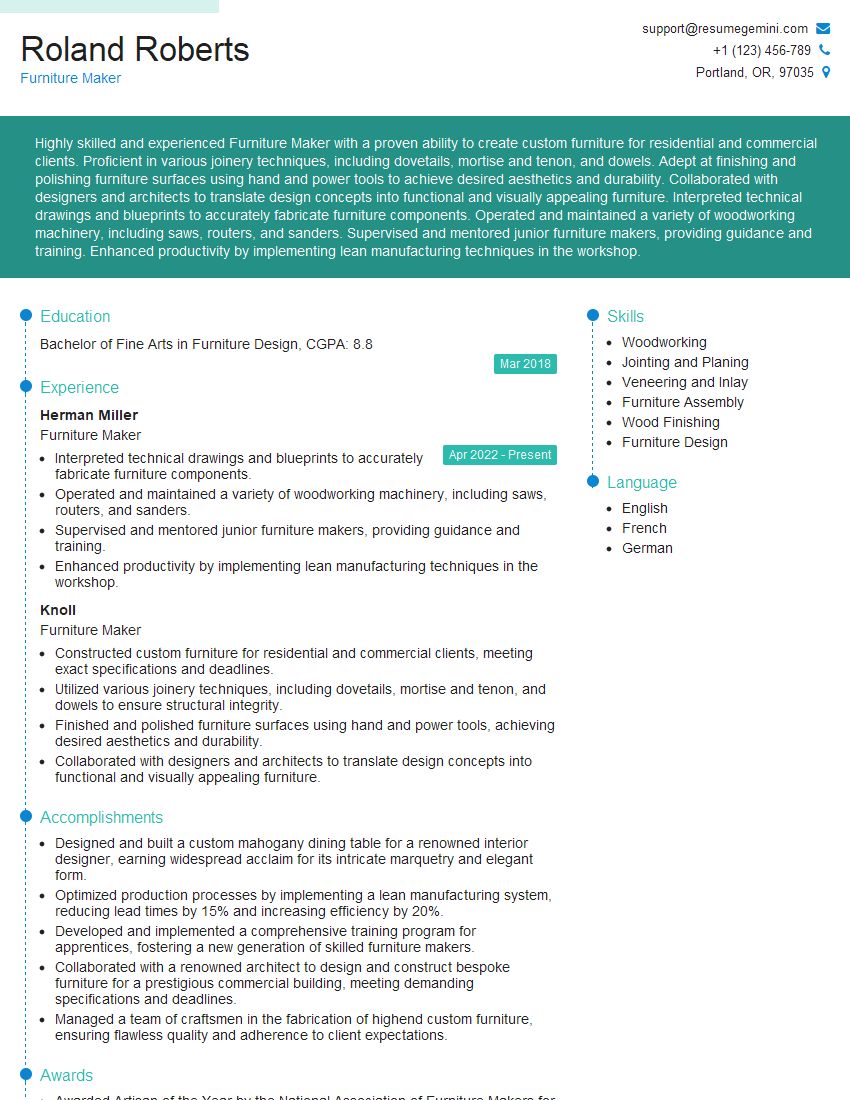
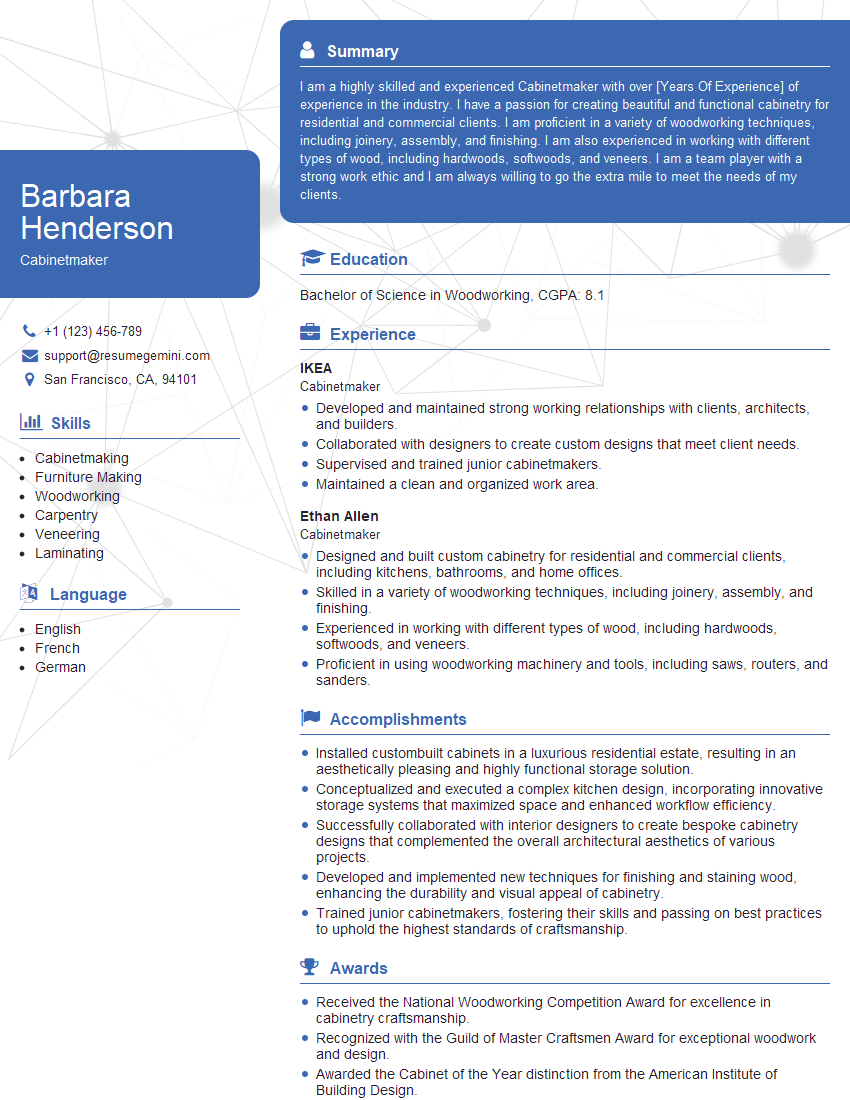
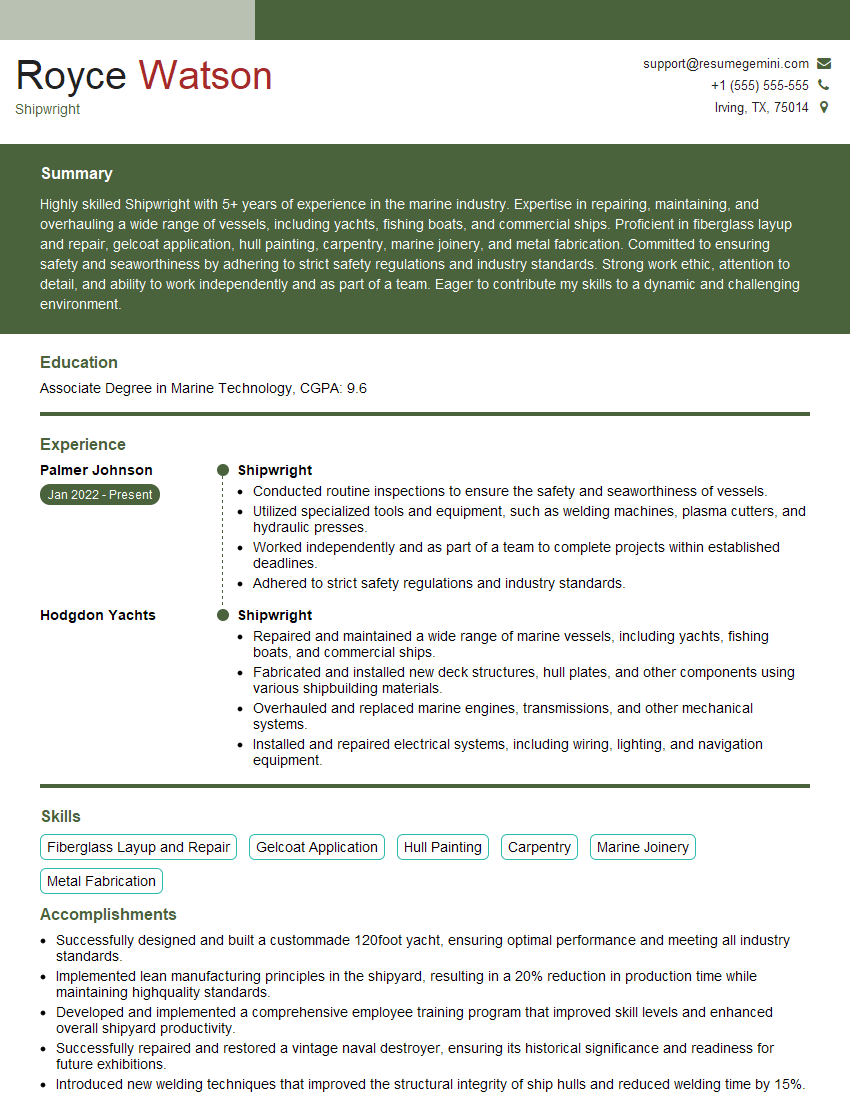
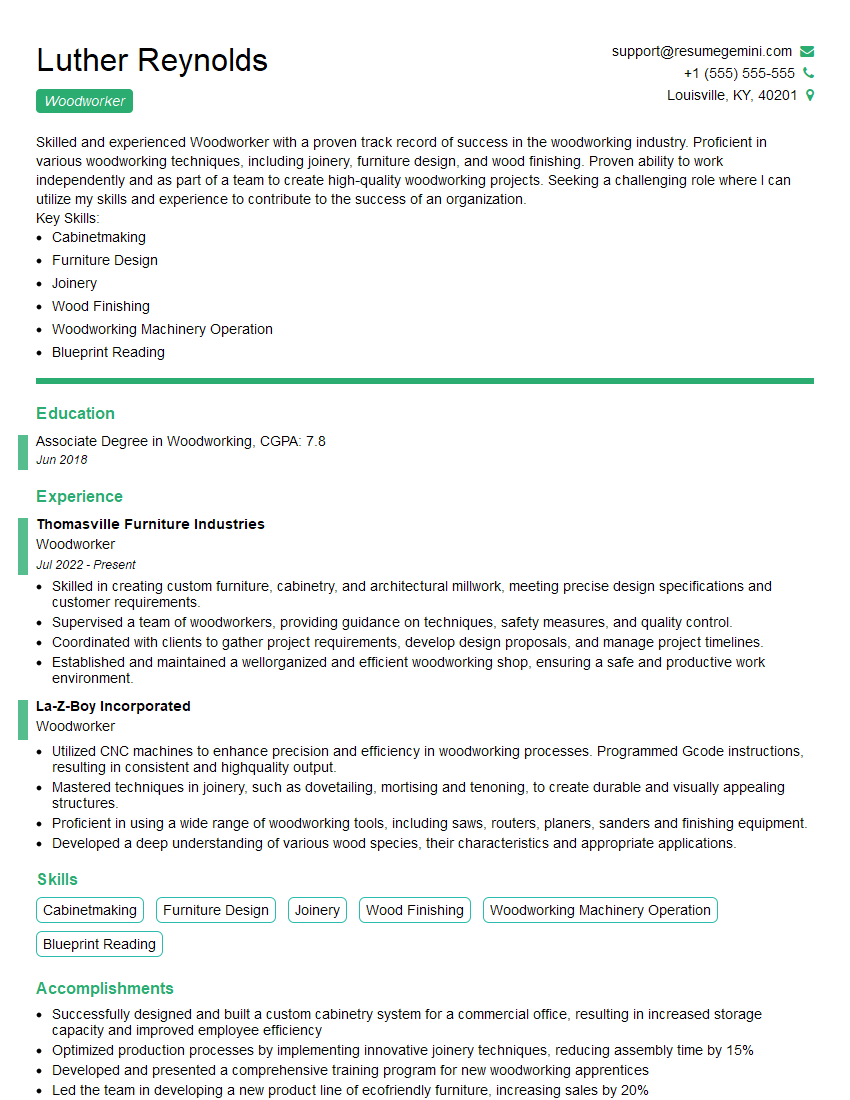
Mastering wood shaping skills opens doors to diverse and rewarding career paths in furniture making, cabinetry, sculpture, and more. To significantly improve your job prospects, focus on creating a strong, ATS-friendly resume that highlights your expertise. We recommend using ResumeGemini, a trusted resource for building professional resumes. ResumeGemini provides examples of resumes tailored to the Wood Shaping field to help you present your skills effectively and increase your chances of landing your dream job.






Explore more articles
Users Rating of Our Blogs
Share Your Experience
We value your feedback! Please rate our content and share your thoughts (optional).
What Readers Say About Our Blog
To the interviewgemini.com Webmaster.
Very helpful and content specific questions to help prepare me for my interview!
Thank you
To the interviewgemini.com Webmaster.
This was kind of a unique content I found around the specialized skills. Very helpful questions and good detailed answers.
Very Helpful blog, thank you Interviewgemini team.