Preparation is the key to success in any interview. In this post, we’ll explore crucial Zoning Code Amendment Research interview questions and equip you with strategies to craft impactful answers. Whether you’re a beginner or a pro, these tips will elevate your preparation.
Questions Asked in Zoning Code Amendment Research Interview
Q 1. Explain the process of amending a zoning code.
Amending a zoning code is a multi-step process that typically begins with an application submitted to the relevant planning or zoning authority. This application needs to clearly outline the proposed changes and their justification. The process often involves several key stages: proposal submission, staff review, public notification, public hearing, planning commission/board review, and finally, approval or denial by the legislative body (e.g., city council).
- Proposal Submission: A detailed proposal is submitted, including maps, justifications, and supporting documentation.
- Staff Review: Planning staff analyze the proposal, assessing its compliance with existing regulations, potential impacts, and feasibility.
- Public Notification: Public notice is given through various means (newspaper ads, online postings, mailings) informing affected property owners and the community about the proposed amendment and upcoming public hearings.
- Public Hearing: A formal public hearing allows stakeholders to voice their opinions and provide testimony regarding the amendment.
- Planning Commission/Board Review: The planning commission or a similar body reviews the proposal, considers public input, and makes recommendations to the legislative body.
- Legislative Body Approval/Denial: The city council or county commission ultimately votes on the amendment, either adopting it into the zoning code or rejecting it.
Think of it like revising a legal document; each step ensures fairness, transparency, and consideration of all perspectives before a change is formally implemented.
Q 2. Describe the different types of zoning amendments.
Zoning amendments fall into several categories, each addressing different aspects of land use regulation. Common types include:
- Text Amendments: These change the wording of the zoning code itself, clarifying definitions, adjusting regulations (like setbacks or height limits), or adding new regulations.
- Map Amendments: These modify the zoning map, changing the zoning classification of specific parcels of land. For example, changing a residential zone to a commercial zone or vice-versa.
- Spot Zoning: This involves rezoning a small parcel of land differently from its surrounding parcels. It’s often controversial because it can appear arbitrary and benefit a single property owner.
- Conditional Use Permits (CUPs): These allow specific uses permitted in a zoning district but under certain conditions to mitigate potential negative impacts. Think of a daycare center in a residential zone, subject to stipulations about parking, noise, and hours of operation.
- Variances: These are exceptions to the zoning code granted for specific hardship cases where strict adherence to regulations would create unnecessary difficulties.
Understanding these distinctions is critical for analyzing the impact of a proposed amendment and ensuring the process remains fair and equitable.
Q 3. How do you identify stakeholders affected by a zoning code amendment?
Identifying stakeholders impacted by a zoning code amendment is crucial for effective public engagement and transparent decision-making. This requires a multi-faceted approach:
- Geographical Targeting: Begin by clearly defining the area affected by the proposed change using the zoning map. This helps pinpoint property owners, residents, and businesses within the impact zone.
- Property Records Search: Consult public property records to identify owners of affected properties. This includes residential, commercial, and industrial landowners.
- Community Outreach: Employ public notification methods such as newspaper advertisements, online postings on the municipality’s website, and direct mail to residents within the vicinity of the proposed change.
- Stakeholder Mapping: Go beyond just property owners. Consider neighboring property owners who may experience indirect impacts, community organizations, local businesses that could benefit or be adversely affected, and relevant government agencies.
- Public Meetings and Forums: Hosting public meetings and forums is crucial for transparent engagement, allowing the community to actively participate in the decision-making process.
Imagine proposing a new highway through a residential neighborhood; identifying all stakeholders requires meticulously mapping out the area and considering those directly and indirectly impacted.
Q 4. What are the key legal considerations in zoning code amendment research?
Legal considerations in zoning code amendment research are paramount to ensuring the amendment’s validity and compliance with existing laws. Key aspects include:
- Due Process: The process must follow established legal procedures, guaranteeing fair treatment and the right to be heard for all stakeholders.
- Equal Protection: The amendment cannot discriminate against specific groups or individuals. All similar situations must be treated consistently.
- Compliance with State and Federal Laws: The amendment must comply with all relevant state and federal regulations, such as environmental protection laws, fair housing laws, and the Americans with Disabilities Act.
- Consistency with the Comprehensive Plan: The amendment should align with the municipality’s comprehensive plan, a long-term vision for land use and development.
- Takings Clause: The amendment cannot unreasonably diminish the value of a property without just compensation to the owner (Fifth Amendment of the U.S. Constitution).
- Zoning Enabling Acts: Research the specific enabling acts under which the zoning authority operates; these grant legal authority to enact and enforce zoning regulations.
Overlooking these legal aspects can result in legal challenges and invalidate the amendment.
Q 5. How do you research and analyze the impact of a proposed zoning amendment?
Researching and analyzing the impact of a proposed zoning amendment requires a systematic approach combining quantitative and qualitative methods:
- Data Collection: Gather data on existing land use, population density, traffic patterns, environmental conditions, and economic activity in the affected area.
- Impact Assessment: Analyze how the proposed amendment might change these factors. For example, will it increase traffic congestion? Will it affect property values? Will it impact environmental resources?
- Modeling and Simulation: Utilize Geographic Information Systems (GIS) and other modeling tools to project the potential impacts visually and quantitatively.
- Comparative Analysis: Examine how similar zoning amendments have affected other areas. This provides valuable insights and potential lessons learned.
- Public Input Analysis: Thoroughly review public comments and testimony to understand community concerns and support for the proposed amendment.
- Fiscal Impact Analysis: Assess the financial implications of the amendment, considering potential costs and revenues for the municipality.
For instance, a rezoning to allow denser housing could reduce traffic by encouraging more walkable communities, but may also increase demand for local services.
Q 6. What are the typical steps involved in a public hearing for a zoning amendment?
A public hearing for a zoning amendment typically follows these steps:
- Opening Statement: The presiding officer (e.g., city council member or planning commission chair) opens the hearing and explains the purpose of the meeting.
- Presentation of the Proposal: The applicant or planning staff presents the proposed amendment, explaining its rationale and anticipated impacts.
- Public Testimony: Individuals are given the opportunity to provide testimony in support of or opposition to the amendment. This often involves a structured process where speakers sign up and are given a time limit.
- Question and Answer Session: The applicant and planning staff typically answer questions from the public and the governing body.
- Closing Statements: The applicant and/or opponents can offer closing statements summarizing their positions.
- Deliberation and Decision: The governing body deliberates on the testimony and evidence presented and then votes to approve, deny, or modify the proposed amendment.
Imagine it like a courtroom; each side gets a chance to present their case, and the decision-makers carefully weigh the arguments before reaching a verdict.
Q 7. How do you interpret zoning maps and regulations?
Interpreting zoning maps and regulations requires careful attention to detail and a systematic approach.
- Map Legend: Start by thoroughly understanding the map legend, which explains the different symbols and colors representing various zoning districts (e.g., residential, commercial, industrial).
- Zoning District Boundaries: Identify the boundaries of different zoning districts on the map. Note that these boundaries can be complex and may follow natural or man-made features.
- Overlay Districts: Recognize any overlay districts, which impose additional regulations on top of base zoning districts (e.g., floodplains, historic districts).
- Textual Regulations: Consult the accompanying zoning code text to understand the specific regulations applicable to each zoning district. The map provides the general classification, and the text provides the detailed rules.
- Scale and Measurement: Pay close attention to the map’s scale to accurately measure distances and areas.
- Cross-referencing: Cross-reference information on the map with the written regulations to ensure a thorough understanding of the allowed uses and restrictions for a particular parcel of land.
Think of it like reading a blueprint; you need to understand the symbols, dimensions, and accompanying notes to interpret the design correctly. Incorrect interpretation can have significant legal and practical consequences.
Q 8. Explain the difference between spot zoning and rezoning.
The key difference between spot zoning and rezoning lies in their scope and purpose. Rezoning is a broader change affecting a significant area, often a whole neighborhood or a section of a city, altering the permitted land uses across a larger area. Think of it like repainting an entire room. Spot zoning, on the other hand, is a much smaller, isolated change affecting only a single parcel or a very small group of adjacent parcels. It’s like changing the color of just one wall in a room. Spot zoning is often criticized for being arbitrary and benefiting a single property owner at the expense of the surrounding community, potentially undermining the overall zoning plan.
Example: Rezoning might change a residential area to allow for mixed-use development, permitting both residential and commercial buildings. Spot zoning might change a single lot in a residential area to allow for a small commercial building, like a coffee shop, while the surrounding area remains residential.
Q 9. How do you handle conflicting zoning regulations?
Conflicting zoning regulations are a common challenge. Resolving them requires a systematic approach. First, I meticulously review all applicable regulations, identifying any overlaps or contradictions. This often involves referencing multiple documents: the primary zoning ordinance, any subsequent amendments, overlay districts, and any special use permits. I then determine which regulation is more specific or recent, as newer and more specific regulations typically take precedence. The principle of ‘higher-order control’ applies, where more specific rules trump broader ones. If the conflict still persists, I research the legislative history to understand the intent behind the regulations. Lastly, if clarification is still needed, I consult with legal counsel or planning department officials for guidance.
Example: Suppose a property falls within a historic district overlay that limits building height, while the general zoning allows for taller structures. The historic district overlay, being more specific, would take precedence, limiting the height irrespective of the general zoning allowance.
Q 10. Describe your experience using GIS software for zoning analysis.
GIS software is an indispensable tool in my work. I’ve extensively used ArcGIS and QGIS for visualizing zoning boundaries, analyzing land use patterns, and identifying potential conflicts. For example, I used ArcGIS to overlay zoning maps with environmental sensitivity areas to assess the potential impacts of a proposed zoning amendment. I used spatial queries to identify parcels meeting specific criteria (e.g., size, proximity to schools, existing land use) for planning purposes. Data visualization features are crucial to presenting the analysis effectively to stakeholders and decision-makers. The ability to create thematic maps, charts, and reports helps to communicate complex spatial information clearly and concisely.
Example: I created a map displaying parcels zoned for residential use within a half-mile radius of a proposed highway expansion project, providing valuable input into the environmental impact assessment.
Q 11. How do you ensure compliance with environmental regulations during zoning amendment research?
Ensuring compliance with environmental regulations is paramount. My approach involves a thorough review of relevant environmental impact statements, permits, and regulations, alongside the zoning code itself. I look for any potential conflicts or overlaps between the proposed zoning amendment and environmental protection laws. This might involve checking for proximity to wetlands, endangered species habitats, or floodplains. I often work closely with environmental consultants or relevant government agencies to assess the environmental impact of a zoning change and incorporate mitigation measures, ensuring the amendment adheres to all applicable environmental standards. Failing to do so can lead to costly delays and legal challenges.
Example: Before approving a zoning change allowing for increased density in a flood-prone area, I would ensure that appropriate drainage solutions and building codes for flood-resistant construction are incorporated.
Q 12. What are the common challenges faced during zoning code amendment research?
Common challenges include dealing with incomplete or outdated zoning maps and regulations, navigating conflicting regulations (as discussed earlier), managing stakeholder input and balancing competing interests, ensuring the amendment’s compliance with other relevant laws (environmental, building codes, etc.), and effectively communicating complex information to a non-technical audience. Furthermore, time constraints and budget limitations often pose difficulties in conducting comprehensive research and analysis.
Example: In one project, outdated zoning maps led to inaccuracies in our initial analysis, requiring significant time and effort to rectify before proceeding.
Q 13. How do you prioritize conflicting interests when reviewing a zoning amendment?
Prioritizing conflicting interests requires a fair and transparent process. I begin by identifying all stakeholders affected by the proposed amendment (residents, businesses, developers, environmental groups, etc.). Then, I thoroughly document their perspectives, concerns, and proposed solutions, often through public hearings and meetings. I analyze the potential impacts of the amendment on each group, weighing factors like economic development, environmental protection, social equity, and community character. The goal is to find a balance that is legally sound, environmentally responsible, and socially equitable, understanding that total satisfaction may not always be achievable. It’s about finding the best possible compromise.
Example: A zoning amendment proposing increased density might benefit developers but might raise concerns from residents regarding increased traffic and strain on local infrastructure. Balancing these interests might involve implementing traffic mitigation measures and enhancing local infrastructure to address resident concerns, while still allowing for controlled growth.
Q 14. Describe your experience with zoning code amendment appeals processes.
I have extensive experience with zoning code amendment appeals. These appeals often arise from disagreements on the interpretation of zoning regulations, perceived procedural errors during the approval process, or dissatisfaction with the outcome of the amendment. My role involves compiling and analyzing evidence related to the appeal, including zoning documents, meeting minutes, expert testimony, and relevant case law. I prepare comprehensive reports outlining the arguments presented by both the appellants and the respondent, identifying key legal precedents and presenting a reasoned analysis of the merits of the appeal. Clear and concise documentation is crucial in these processes. Presenting the information in a logical and easily understandable manner significantly improves the efficacy of the appeals process.
Example: In one case, an appeal was filed against a zoning amendment due to alleged procedural irregularities in public notification. My analysis of the relevant documents and procedures demonstrated that appropriate notification procedures had been followed, resulting in the dismissal of the appeal.
Q 15. How do you effectively communicate complex zoning information to non-technical audiences?
Communicating complex zoning information to non-technical audiences requires simplifying technical jargon and using visual aids. Think of it like translating a foreign language – you need to find the equivalent terms and concepts that everyone understands.
- Use plain language: Avoid terms like ‘non-conforming use’ or ‘rezoning application.’ Instead, say ‘existing building that doesn’t meet current rules’ or ‘request to change how land can be used.’
- Visual aids are key: Maps, charts, and diagrams are incredibly helpful. A map showing the zoning districts visually explains restrictions far better than a lengthy written description.
- Analogies and real-world examples: Comparing zoning regulations to rules in a building or a neighborhood helps people grasp the concepts quickly. For example, ‘Think of zoning like a set of rules for building blocks: you can only build certain types of structures in certain areas.’
- Interactive sessions: Workshops and Q&A sessions allow direct engagement, clarifying doubts and fostering understanding.
For instance, when explaining density restrictions, instead of using the term ‘Floor Area Ratio (FAR),’ I’d explain it as the maximum amount of building space allowed on a plot relative to its size, using an example of a building’s footprint compared to the lot size. This makes the abstract concept much more concrete and easily understandable.
Career Expert Tips:
- Ace those interviews! Prepare effectively by reviewing the Top 50 Most Common Interview Questions on ResumeGemini.
- Navigate your job search with confidence! Explore a wide range of Career Tips on ResumeGemini. Learn about common challenges and recommendations to overcome them.
- Craft the perfect resume! Master the Art of Resume Writing with ResumeGemini’s guide. Showcase your unique qualifications and achievements effectively.
- Don’t miss out on holiday savings! Build your dream resume with ResumeGemini’s ATS optimized templates.
Q 16. What is the role of public participation in the zoning amendment process?
Public participation is crucial for a fair and transparent zoning amendment process. It ensures the community’s voice is heard and considered before changes are implemented that directly impact their lives and property values.
- Public hearings: These provide a formal platform for residents to express their opinions, concerns, and suggestions. It allows for direct interaction with decision-makers.
- Community meetings: Informal meetings can foster discussion and understanding before formal hearings. This allows for a less formal environment for addressing questions.
- Online platforms: Websites and online portals allow for feedback submission, making participation easier for busy residents.
- Surveys and questionnaires: Gathering broader input on specific zoning proposals can provide valuable data.
Without public participation, zoning amendments risk being imposed upon the community, leading to discontent and potentially legal challenges. Effective public engagement fosters buy-in and community ownership of the process and resulting zoning regulations.
Q 17. How do you stay up-to-date on changes in zoning regulations?
Staying current with zoning regulation changes requires a multi-pronged approach. It’s an ongoing process, not a one-time task.
- Subscription to relevant publications and newsletters: Many local government websites, professional organizations (like the American Planning Association), and legal publishers provide updates on zoning changes.
- Monitoring local government websites: Regularly check the planning or zoning department’s website for notices, proposed amendments, and adopted ordinances.
- Attending relevant conferences and workshops: These offer opportunities to learn from experts and network with other professionals in the field.
- Networking with other professionals: Developing relationships with other planners, attorneys, and officials keeps you informed about emerging trends and local changes.
For example, I subscribe to the newsletters of my local planning department and the state’s municipal league, and I actively participate in regional planning association meetings. This allows me to stay well-informed about regulatory changes affecting my work and my clients.
Q 18. What software and tools do you use for zoning research?
Effective zoning research relies on a combination of software and tools. The tools depend heavily on the scope of the project and access to information.
- Geographic Information Systems (GIS) software: ArcGIS or QGIS are essential for visualizing zoning maps, analyzing spatial data, and performing overlay analysis to determine land use compatibility.
- Legal research databases: Westlaw, LexisNexis, or similar databases are crucial for accessing case law, statutes, and regulations regarding zoning and land use.
- Municipal websites: Most municipalities provide online access to zoning ordinances, maps, and related documents. This is often the primary source.
- Spreadsheet software (Excel, Google Sheets): Essential for organizing data, tracking amendments, and performing calculations related to land use analysis.
In a recent project, I used ArcGIS to analyze the impact of a proposed zoning change on surrounding properties, then used Westlaw to research similar legal cases related to density bonus programs and ultimately presented my findings in a clear report using Excel.
Q 19. Describe a time you had to navigate complex zoning regulations to achieve a project goal.
In a recent project involving the redevelopment of a brownfield site, we encountered significant challenges navigating complex zoning regulations. The site was designated as both environmentally sensitive and in a historic district. This meant we needed to comply with environmental remediation regulations as well as historic preservation ordinances, both of which imposed stringent constraints.
My approach involved:
- Thorough research: We meticulously reviewed all relevant zoning ordinances, environmental regulations, and historic preservation guidelines to identify all applicable restrictions and opportunities.
- Strategic planning: We developed a phased approach that prioritized environmental remediation first, then worked with historic preservation officials to develop a design that respected the historical character of the area.
- Collaboration and negotiation: We engaged in extensive discussions with relevant stakeholders – including environmental agencies, historic preservation commissions, and community groups – to build consensus and secure necessary approvals.
- Flexibility and adaptability: We made necessary adjustments to our plans based on feedback and revised our approach to address concerns raised by stakeholders. This resulted in obtaining the needed approvals, ultimately completing the redevelopment while meeting all regulatory requirements.
Q 20. How do you handle objections or appeals related to zoning amendments?
Handling objections and appeals related to zoning amendments requires a calm, professional approach focused on transparency and communication. The key is addressing concerns directly and thoroughly.
- Careful documentation: Maintaining meticulous records of all communications, meetings, and decisions is critical for defending against appeals. This includes minutes from public meetings, correspondence, and planning documents.
- Addressing concerns: Responsibly addressing objections with data, evidence, and clear explanations shows a commitment to fairness. This demonstrates understanding of community concerns.
- Mediation and negotiation: Attempting to resolve disputes amicably through mediation can prevent costly and time-consuming appeals processes.
- Legal representation: For complex or contentious appeals, engaging legal counsel is essential to ensure compliance with procedural rules and protect the interests of the client.
In one case, objections to a proposed height restriction were addressed by presenting a detailed traffic study that demonstrated the height increase would not significantly impact traffic flow. This evidence swayed the opposition, successfully avoiding an appeal.
Q 21. What is your understanding of the Fair Housing Act and its relevance to zoning?
The Fair Housing Act (FHA) prohibits discrimination in housing based on race, color, national origin, religion, sex, familial status, or disability. This has significant implications for zoning.
Zoning regulations cannot be used to create or perpetuate discriminatory housing patterns. For example:
- Exclusionary zoning: Regulations like minimum lot size requirements or restrictions on multi-family dwellings can disproportionately affect low-income families and protected groups, potentially violating the FHA.
- Discriminatory application of zoning: Even if a zoning regulation is facially neutral, its enforcement cannot be discriminatory. Unequal treatment of applicants based on protected characteristics is unlawful.
- Impact assessments: Before adopting zoning changes, it is crucial to conduct assessments to determine whether they would have a discriminatory impact on housing opportunities.
Understanding the FHA is crucial for ensuring that zoning regulations are fair, equitable, and do not inadvertently perpetuate housing segregation or discrimination. This requires careful consideration of the potential consequences of any zoning change.
Q 22. Explain the concept of density bonuses in zoning.
Density bonuses are incentives offered by municipalities to developers who incorporate specific features beneficial to the community into their projects. Essentially, it’s a trade-off: developers are allowed to build at a higher density than typically permitted under the existing zoning regulations in exchange for providing amenities or features that benefit the public.
For example, a developer might be allowed to build more units per acre if they include a significant amount of affordable housing, create public green spaces, or incorporate sustainable design features. Think of it like a carrot-and-stick approach: the ‘carrot’ is the increased density, allowing for higher profitability, and the ‘stick’ is the requirement to provide community benefits. This incentivizes developers to contribute positively to the neighborhood beyond just maximizing profit.
- Example 1: A city might allow a 20% increase in density for a development that includes 10% affordable housing units.
- Example 2: A developer could receive a density bonus for incorporating green roofs, reducing stormwater runoff, and improving air quality.
Q 23. How do you assess the economic impact of a proposed zoning amendment?
Assessing the economic impact of a zoning amendment requires a multifaceted approach. We need to consider both direct and indirect effects. Direct impacts include changes in property values, construction activity, and tax revenue. Indirect impacts involve changes in employment, retail sales, and overall economic growth within the affected area.
My process involves:
- Data Collection: Gathering data on property values, tax rates, construction costs, and employment figures before and after similar zoning amendments in comparable areas.
- Modeling: Using economic modeling techniques (like input-output analysis or econometric models) to project the potential impacts of the proposed amendment. This helps quantify the likely changes in key economic indicators.
- Stakeholder Consultation: Engaging with local businesses, residents, and developers to gather diverse perspectives and understand potential impacts on different groups. This qualitative input complements the quantitative modeling.
- Cost-Benefit Analysis: Conducting a comprehensive cost-benefit analysis to weigh the potential economic benefits (increased tax revenue, job creation) against the potential costs (infrastructure upgrades, public services).
For example, a zoning amendment allowing for higher-density residential development might increase property tax revenue but could also strain local infrastructure like schools and roads, requiring additional public investment.
Q 24. How do you evaluate the environmental impact of a zoning amendment?
Evaluating the environmental impact of a zoning amendment involves assessing its potential effects on various environmental factors. This includes air and water quality, energy consumption, biodiversity, and greenhouse gas emissions.
My approach incorporates:
- Environmental Impact Assessment (EIA): Conducting a thorough EIA to identify potential environmental consequences. This often involves assessing the impacts on natural habitats, water resources, air quality, and energy use.
- Sustainable Design Review: Analyzing the proposal’s alignment with sustainable design principles, such as LEED (Leadership in Energy and Environmental Design) certification standards. This focuses on energy efficiency, water conservation, and the use of sustainable materials.
- Mitigation Strategies: Identifying and proposing measures to mitigate any negative environmental impacts. For example, this might involve incorporating green infrastructure, implementing stormwater management systems, or utilizing renewable energy sources.
- Regulatory Compliance: Ensuring the amendment complies with all relevant environmental regulations and permits.
For instance, a zoning change allowing for increased building heights could increase shadowing, impacting nearby green spaces or potentially affecting local ecosystems. A well-conducted EIA would identify these issues and propose solutions, such as strategic building placement or the incorporation of green spaces to compensate for the increased shadowing.
Q 25. How do you ensure accuracy and consistency in your zoning research?
Accuracy and consistency are paramount in zoning research. My strategies focus on using reliable sources, documenting my research thoroughly, and employing a rigorous quality control process.
I achieve this through:
- Utilizing Official Sources: I rely primarily on official government websites, municipal ordinances, zoning maps, and legal documents. This ensures that the information I use is accurate and authoritative.
- Cross-referencing Information: I always cross-reference information from multiple sources to verify accuracy and identify any discrepancies. This helps avoid relying on potentially outdated or inaccurate information.
- Detailed Documentation: I maintain meticulous records of all sources used, my research methods, and the findings of my analysis. This allows for transparency, reproducibility, and the easy identification of sources for any future reference.
- Regular Audits: I conduct regular internal audits to ensure consistency and accuracy in my work. This involves reviewing my research and analysis for potential errors or inconsistencies.
Think of it like building a house—a strong foundation built on verifiable sources is crucial for a robust and reliable final product.
Q 26. Describe your experience working with different regulatory agencies.
I’ve had extensive experience collaborating with various regulatory agencies, including planning departments, environmental protection agencies, and historical preservation commissions. These collaborations often involve providing research and analysis to support their decision-making processes.
For instance, I worked with a city’s planning department to analyze the impact of a proposed zoning amendment on traffic flow. My research involved using traffic simulation software and analyzing existing traffic data to provide them with projections of potential traffic increases or decreases. In another instance, I collaborated with an environmental protection agency to evaluate the environmental impact of a development project seeking a density bonus, ensuring compliance with environmental regulations and minimizing ecological disruption.
Building strong relationships with these agencies is key. Understanding their specific requirements, processes, and priorities allows for more effective communication and collaboration, resulting in more efficient and successful outcomes for all parties involved.
Q 27. How would you handle a situation where a zoning amendment is challenged in court?
If a zoning amendment is challenged in court, my approach focuses on thorough preparation and meticulous documentation. This involves:
- Reviewing the Legal Challenge: Carefully examining the legal basis for the challenge, identifying the specific arguments and evidence presented.
- Gathering Supporting Evidence: Compiling all relevant documentation supporting the amendment, including the research, analysis, and public participation records. This demonstrates the thoroughness and legality of the amendment process.
- Expert Testimony: Preparing to provide expert testimony, presenting my research findings and analysis clearly and concisely to the court. This often involves explaining complex technical information in a manner that is understandable to non-experts.
- Collaboration with Legal Counsel: Close collaboration with legal counsel to ensure that the defense strategy aligns with the evidence and legal precedents.
The key is to be proactive, organized, and prepared. A well-documented and thoroughly researched amendment is far more likely to withstand legal challenges.
Q 28. What are your strategies for effective time management in a fast-paced zoning research environment?
Effective time management in a fast-paced zoning research environment is crucial. My strategies revolve around prioritization, efficient workflow, and the use of technology.
I utilize:
- Prioritization Matrix: I use a prioritization matrix (like an Eisenhower Matrix – Urgent/Important) to identify and focus on the most critical tasks first. This ensures that the most important research is completed in a timely manner.
- Project Management Tools: I use project management software (like Asana or Trello) to organize tasks, set deadlines, and track progress. This provides a clear overview of my workload and helps keep me on schedule.
- Time Blocking: I allocate specific time blocks for focused research and analysis, minimizing interruptions and maximizing productivity. This technique promotes deep work and reduces multitasking.
- Automation Tools: I leverage automation tools to streamline repetitive tasks, such as data entry or report generation. This frees up more time for higher-level analysis and decision-making.
Think of it like a conductor leading an orchestra: efficient time management allows for the harmonious execution of various tasks, resulting in a timely and high-quality output.
Key Topics to Learn for Zoning Code Amendment Research Interview
- Understanding Zoning Ordinances: Thoroughly grasp the structure and terminology of zoning codes, including definitions of key terms like “non-conforming use,” “variance,” and “conditional use permit.”
- Amendment Process & Procedures: Familiarize yourself with the steps involved in proposing, reviewing, and approving zoning code amendments, including public hearings and appeals processes.
- Legal Research & Interpretation: Develop skills in interpreting legal language within zoning codes and related case law. Practice identifying relevant sections and understanding their implications.
- Impact Assessment & Analysis: Learn to analyze the potential impacts of proposed amendments, considering environmental, economic, and social factors. Practice identifying potential conflicts and unintended consequences.
- Data Analysis & Visualization: Understand how to utilize data (e.g., demographic information, property records) to support or refute proposed amendments. Practice presenting findings clearly and concisely.
- Stakeholder Engagement & Communication: Develop skills in effectively communicating complex information to diverse stakeholders, including residents, businesses, and government officials.
- Ethical Considerations in Zoning: Understand the ethical implications of zoning decisions and the importance of fairness and transparency in the amendment process.
- GIS and Mapping Applications: Gain familiarity with using Geographic Information Systems (GIS) to analyze zoning data and visualize the potential effects of amendments.
Next Steps
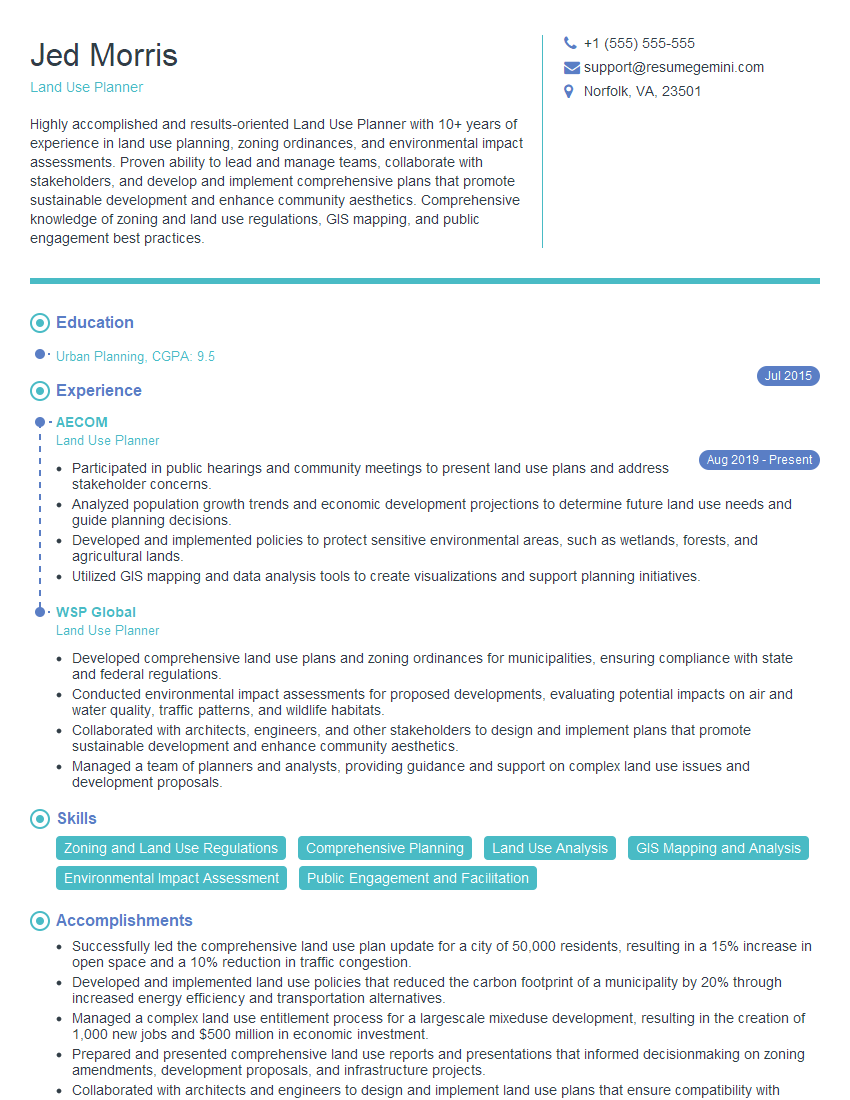
Mastering Zoning Code Amendment Research opens doors to exciting career opportunities in urban planning, land use regulation, and environmental law. To maximize your job prospects, create an ATS-friendly resume that showcases your skills and experience effectively. ResumeGemini is a trusted resource that can help you build a professional and impactful resume tailored to this specialized field. Examples of resumes tailored to Zoning Code Amendment Research are provided to help you create a compelling application.
Explore more articles
Users Rating of Our Blogs
Share Your Experience
We value your feedback! Please rate our content and share your thoughts (optional).
What Readers Say About Our Blog
To the interviewgemini.com Webmaster.
Very helpful and content specific questions to help prepare me for my interview!
Thank you
To the interviewgemini.com Webmaster.
This was kind of a unique content I found around the specialized skills. Very helpful questions and good detailed answers.
Very Helpful blog, thank you Interviewgemini team.