The thought of an interview can be nerve-wracking, but the right preparation can make all the difference. Explore this comprehensive guide to Engine Degreasing interview questions and gain the confidence you need to showcase your abilities and secure the role.
Questions Asked in Engine Degreasing Interview
Q 1. What are the different types of engine degreasers available and their applications?
Engine degreasers come in various forms, each suited for specific applications. The primary categories are:
- Solvent-based degreasers: These are powerful cleaners that effectively dissolve grease and oil. They typically contain hydrocarbons or other organic solvents. Applications include heavy-duty cleaning of severely soiled engines, but caution is needed due to their strong solvents.
- Water-based degreasers: These are environmentally friendlier options, utilizing surfactants and emulsifiers to lift and suspend grease and oil in water. They are suitable for less heavily soiled engines and are often preferred for their lower toxicity. They’re good for regular maintenance cleaning.
- Alkaline degreasers: These degreasers use alkaline chemicals to saponify (turn into soap) grease and oil. They are effective on various soils and are often used in industrial settings, sometimes requiring pre-soaking or longer contact time.
- Aqueous part cleaners: Designed for immersion or spraying, these cleaners are less aggressive and often include corrosion inhibitors to protect engine components. They’re good for cleaning parts after disassembly.
The choice depends on the level of soil, the engine type (e.g., aluminum vs. cast iron), and environmental concerns. For instance, a solvent-based degreaser might be necessary for a heavily soiled diesel engine, while a water-based degreaser might suffice for a lightly soiled gasoline engine.
Q 2. Explain the process of properly degreasing an engine.
Proper engine degreasing is a multi-step process. First, prepare the engine: Disconnect the battery, cover any sensitive electrical components, and shield vulnerable areas. Next, apply the degreaser according to the manufacturer’s instructions – this might involve spraying, brushing, or immersion. Allow the degreaser to dwell for the recommended time (usually 5-15 minutes), ensuring it penetrates the grime. Then, thoroughly rinse the engine using a high-pressure washer (if appropriate – see below) or a strong stream of water. Finally, allow the engine to dry completely before reassembly or starting.
Think of it like washing your car, but on a much larger and more complex scale, requiring more caution and specialized tools.
Q 3. What safety precautions must be taken when using engine degreasers?
Safety is paramount when working with engine degreasers. Always wear appropriate personal protective equipment (PPE), including:
- Eye protection: Safety glasses or goggles are essential to prevent chemical splashes.
- Gloves: Chemical-resistant gloves protect your hands from irritation and absorption of harsh chemicals.
- Respiratory protection: A respirator is crucial when working in enclosed spaces or with solvent-based degreasers to prevent inhaling harmful fumes.
Work in a well-ventilated area. Avoid spraying degreaser near open flames or sparks. Never mix different types of degreasers. Dispose of used degreaser and rinse water responsibly, according to local regulations. Proper ventilation is key to avoiding harmful fumes. Always read and follow the manufacturer’s safety data sheet (SDS) before using any engine degreaser.
Q 4. How do you choose the appropriate degreaser for different types of engines and soils?
Choosing the right degreaser depends on several factors. The type of engine material (aluminum, cast iron, plastic) influences the choice, as some degreasers can damage certain materials. The level of soiling dictates the degreaser’s strength. Heavy grease and oil buildup requires a stronger degreaser, while light grime might respond well to a milder solution.
For example, a delicate aluminum engine might need a water-based degreaser to avoid corrosion, whereas a heavily soiled cast-iron diesel engine could benefit from a solvent-based degreaser. Always check the degreaser’s compatibility with the engine’s materials before application.
Q 5. What are the environmental concerns associated with engine degreasing and how can they be mitigated?
Environmental concerns related to engine degreasing primarily involve the disposal of used degreasers and rinse water. Solvent-based degreasers, in particular, can contaminate soil and water if not disposed of properly. Even water-based degreasers, while generally less harmful, can still contain chemicals that impact the environment.
Mitigation strategies include using biodegradable degreasers, properly containing and disposing of wastewater, and recycling used degreaser containers where possible. Choosing water-based products and adhering to local environmental regulations minimizes environmental impact.
Q 6. Describe your experience with high-pressure washing in engine degreasing.
High-pressure washing is a very effective tool for removing loosened grease and grime after degreaser application. However, it needs careful application. The pressure needs to be appropriate to avoid damaging engine components. The nozzle should be kept at a safe distance to prevent damage. Excessive pressure can strip paint or damage seals. Furthermore, the wash should be followed by thorough drying to prevent corrosion. I’ve found that using a fan or compressed air helps ensure efficient drying.
In my experience, high-pressure washing significantly reduces the time and effort involved in the cleaning process, but it requires skill and caution to avoid damage. It is not always the best method, especially when dealing with delicate parts.
Q 7. How do you handle degreasing engines with sensitive electronic components?
Degreasing engines with sensitive electronic components requires extra care. Thoroughly cover or mask these components with plastic sheeting or waterproof tape before applying any degreaser. Use a low-pressure spray method or a gentle brush to avoid direct contact with electronics. Opt for water-based or less aggressive degreasers to minimize the risk of damage. Always refer to the manufacturer’s recommendations for cleaning procedures for the specific electronic parts or systems.
Using a water-based degreaser and avoiding direct spray onto electronics, coupled with adequate protection, significantly lowers the risk of damage. Post-cleaning inspection of the components and thorough drying are critical.
Q 8. What are the common problems encountered during engine degreasing and how do you solve them?
Engine degreasing, while effective in restoring engine cleanliness, can present several challenges. One common problem is incomplete degreasing, leaving behind stubborn grease and grime. This often happens when using a degreaser that isn’t strong enough for the type of soil, or when the degreasing time is insufficient. Another issue is damage to sensitive engine components. Aggressive degreasers or high-pressure cleaning can harm seals, wiring, and painted surfaces. Finally, improper disposal of used degreasers poses significant environmental risks.
To solve these problems, a multi-pronged approach is necessary. First, proper degreaser selection is crucial. Choose a degreaser specifically designed for automotive use, considering the type of soil (oil, grease, etc.) and the engine components’ sensitivity. Second, pre-cleaning can significantly improve degreasing efficiency. Using a brush or pressure washer to remove loose dirt before applying the degreaser helps the degreaser penetrate more effectively. Third, adequate dwell time allows the degreaser to break down the grease and grime. Finally, thorough rinsing with clean water is essential to remove all traces of the degreaser, preventing residue buildup. Always refer to the manufacturer’s instructions for safe and effective use.
For example, I once encountered a severely soiled engine where a standard degreaser wasn’t sufficient. By pre-cleaning with a parts washer and then using a stronger, solvent-based degreaser with extended dwell time, followed by thorough rinsing, I achieved complete degreasing without harming the engine components. Always remember safety precautions: eye protection, gloves, and proper ventilation are essential.
Q 9. What is the proper disposal method for used engine degreasers?
Proper disposal of used engine degreasers is paramount to environmental protection. Never pour used degreasers down the drain or into the soil. This contaminates waterways and harms the environment. The correct method depends on the specific degreaser’s composition and local regulations.
Most engine degreasers are classified as hazardous waste due to their chemical composition. They should be collected in designated containers, labeled appropriately, and disposed of through a licensed hazardous waste disposal facility. Many automotive repair shops and parts stores have partnerships with these facilities. Always check your local regulations and follow the instructions provided on the degreaser’s label for specific disposal procedures. Improper disposal can result in hefty fines and severe environmental damage.
Think of it like this: a small amount of spilled oil can contaminate a large area. Similarly, a seemingly small quantity of improperly disposed degreaser can have a far-reaching negative impact.
Q 10. How do you ensure complete degreasing and avoid residue buildup?
Ensuring complete degreasing while avoiding residue requires a systematic approach. The key is to combine proper degreaser selection with careful application and thorough rinsing. Using a degreaser specifically formulated for automotive applications is the first step. Choosing the right concentration is equally important – too weak, and it won’t be effective; too strong, and it may damage engine components.
Pre-cleaning, as mentioned earlier, helps tremendously. Remove as much loose dirt and grime as possible before applying the degreaser. Apply the degreaser according to the manufacturer’s instructions, paying attention to areas with heavy buildup. Allow sufficient dwell time for the degreaser to penetrate and break down the grease and oil. Finally, thorough rinsing is absolutely crucial. Use high-pressure water to remove all traces of the degreaser, ensuring no residue is left behind. Inspection after rinsing is also vital to confirm complete removal.
For instance, I once used a parts washer with an integrated degreaser system to clean a complex engine assembly. The combination of the parts washer’s agitation and the degreaser’s efficacy resulted in incredibly thorough cleaning, leaving the engine components spotless and residue-free.
Q 11. Explain your experience with different degreasing techniques (e.g., immersion, spraying, etc.).
My experience encompasses various degreasing techniques, each with its own advantages and limitations. Immersion degreasing involves submerging the engine component (or smaller parts) in a degreasing tank. This method is highly effective for smaller parts, ensuring thorough cleaning. However, it’s not suitable for larger engines or components that cannot be submerged. Spray degreasing utilizes high-pressure spray equipment to apply the degreaser. This method is more efficient for larger engines and areas that are difficult to reach. However, care must be taken to avoid damaging sensitive engine components due to high pressure.
Manual cleaning, often involving brushes and degreasing solutions, is useful for detailed work and in cases where immersion or spraying is not feasible. While it’s labor-intensive, it provides precise control and minimizes the risk of component damage. I’ve also utilized ultrasonic cleaning for smaller, intricate parts, leveraging cavitation to remove contaminants effectively. Each technique demands a different level of safety awareness, and the choice is often dictated by the component’s size, complexity, and material.
Q 12. How do you determine the appropriate degreasing time for different applications?
Determining the appropriate degreasing time depends on several factors: the type and amount of soil, the degreaser’s strength, the temperature, and the material being cleaned. There’s no one-size-fits-all answer. Always consult the degreaser’s instructions, which usually provide recommendations for different applications. However, experience plays a crucial role. I’ve learned to assess the degree of soiling and adjust the dwell time accordingly.
For example, light oil stains might only require a few minutes of contact time, while heavy grease buildup may necessitate a longer dwell time, perhaps 15-30 minutes or even longer. Regular observation during the process helps determine when the degreaser has effectively loosened the contaminants. If the contaminants aren’t breaking down adequately, an increase in dwell time or a stronger degreaser might be necessary. Remember, excessive dwell time can potentially damage sensitive components, so careful monitoring is essential.
Q 13. What are the different types of cleaning equipment used in engine degreasing?
A wide array of cleaning equipment is used in engine degreasing, each suited for different applications. Parts washers are invaluable for smaller components, providing efficient and consistent cleaning. Pressure washers are essential for larger engines and allow for effective removal of loosened contaminants. Ultrasonic cleaners provide exceptional cleaning for intricate and small components. Spray bottles are suitable for manual applications, providing precise control of degreaser application. Finally, simple tools like brushes and scrapers are essential for pre-cleaning and assisting in the removal of stubborn contaminants.
The choice of equipment depends on the specific job and the available resources. In a professional setting, a combination of these tools is often used to achieve optimal results. For instance, a combination of a parts washer and pressure washer is highly effective for a comprehensive cleaning process; the parts washer for the more delicate components and the pressure washer for the larger assemblies.
Q 14. Describe your experience with maintaining and troubleshooting degreasing equipment.
Maintaining and troubleshooting degreasing equipment is critical for efficient and safe operation. Regular maintenance extends the life of the equipment and ensures its continued performance. This includes regular cleaning of equipment, checking for leaks and ensuring proper functioning of nozzles and pumps (for pressure washers). For parts washers, regular filter changes are crucial to maintain cleaning efficacy.
Troubleshooting commonly involves addressing issues such as clogged nozzles, pump malfunctions, and heating element problems (in heated parts washers). Regular inspections and preventative maintenance minimize downtime and ensure the equipment operates optimally. Understanding the equipment’s operational principles and having access to maintenance manuals are invaluable. For example, I once resolved a pressure washer issue by simply replacing a worn-out nozzle; a simple fix that prevented a significant service disruption. This demonstrates the importance of preventative maintenance and knowing your equipment.
Q 15. How do you assess the effectiveness of the degreasing process?
Assessing the effectiveness of an engine degreasing process relies on a combination of visual inspection and, in some cases, quantitative measurements. Visually, we look for a significant reduction in grease and grime on all engine components. This means a clean engine block, free of oil residue, a spotless valve cover, and clean engine bay surfaces. The absence of greasy film and the restoration of the engine’s original metallic sheen are key indicators of success. For more rigorous assessments, we might use techniques such as weighing parts before and after degreasing to quantify the amount of removed grease, although this is less common for on-site engine degreasing. A crucial aspect is the thoroughness of the cleaning—we ensure no grease is left behind in hard-to-reach areas.
Career Expert Tips:
- Ace those interviews! Prepare effectively by reviewing the Top 50 Most Common Interview Questions on ResumeGemini.
- Navigate your job search with confidence! Explore a wide range of Career Tips on ResumeGemini. Learn about common challenges and recommendations to overcome them.
- Craft the perfect resume! Master the Art of Resume Writing with ResumeGemini’s guide. Showcase your unique qualifications and achievements effectively.
- Don’t miss out on holiday savings! Build your dream resume with ResumeGemini’s ATS optimized templates.
Q 16. What are the different types of solvents used in engine degreasing?
The world of engine degreasing solvents is diverse. We commonly encounter solvent-based degreasers using various hydrocarbons like kerosene, mineral spirits, or specialized blends designed for specific applications. These are effective but require careful handling due to their flammability and potential health risks. Then we have water-based degreasers which utilize surfactants (like detergents) to emulsify grease, allowing it to be easily rinsed away with water. These are generally safer and more environmentally friendly. Finally, we see citrus-based degreasers which are natural alternatives using solvents derived from citrus fruits. They’re often less aggressive but may not be suitable for extremely heavy grease build-up. The choice depends on the severity of the contamination, environmental concerns, and safety precautions.
Q 17. Explain the difference between water-based and solvent-based degreasers.
The primary difference lies in their chemical composition and cleaning mechanisms. Solvent-based degreasers dissolve grease and oil, effectively lifting them from surfaces. They are potent and work well on stubborn grime. However, they often involve volatile organic compounds (VOCs) which are harmful to the environment and pose health risks if improperly handled. Water-based degreasers, on the other hand, use surfactants to emulsify grease, forming a water-soluble mixture that is easily rinsed away. They are generally less harmful to the environment, and safer to use, but may require more scrubbing for heavily soiled engines.
Think of it like this: solvent-based degreasers are like dissolving sugar in hot coffee, while water-based degreasers are like washing away spilled sugar with soapy water. Both achieve cleanliness, but the methods and consequences are different.
Q 18. How do you protect yourself and the surrounding environment from the harmful effects of degreasers?
Protecting oneself and the environment during engine degreasing is paramount. This starts with selecting appropriate personal protective equipment (PPE), including chemical-resistant gloves, eye protection, and a respirator for solvent-based products to prevent inhalation of fumes. The work area should be well-ventilated to reduce the concentration of vapors. For solvent-based degreasers, proper disposal procedures are essential—these should never be poured down drains or into the environment. Instead, designated waste containers or recycling facilities should be used. Water-based degreasers are generally easier to manage, but proper rinsing and disposal of wastewater is still crucial to prevent water contamination.
Environmental protection also necessitates selecting environmentally friendly degreasers whenever possible. This often leads us towards water-based or biodegradable alternatives.
Q 19. What is your experience with using biodegradable degreasers?
My experience with biodegradable degreasers has been increasingly positive. While they might not always match the cleaning power of some solvent-based options for extremely heavy grime, their environmental friendliness and reduced health risks make them a preferred choice whenever possible. I’ve found that for routine engine maintenance, or less heavily soiled engines, biodegradable degreasers are perfectly adequate. Their effectiveness also improves with pre-soaking and the use of appropriate tools like brushes and high-pressure washers. The key is to select a product that matches the specific level of soiling. The slight reduction in cleaning power is often easily compensated for by improved safety and environmental impact.
Q 20. What is your experience with steam cleaning for engine degreasing?
Steam cleaning is a valuable technique in engine degreasing, particularly effective when combined with a degreasing agent. The high-pressure, high-temperature steam effectively loosens and removes grease and grime, acting as a pre-treatment before applying a degreaser. The steam’s heat helps emulsify the grease, making it easier for the degreaser to penetrate and remove the contaminants. Following up with a thorough rinsing is crucial. I’ve found steam cleaning to be especially efficient in accessing tight spaces and removing baked-on grease. However, care must be taken to avoid damage to sensitive electrical components, so protective measures are needed.
Q 21. How do you handle stubborn grease and grime during the degreasing process?
Tackling stubborn grease and grime involves a multi-pronged approach. First, I assess the type and extent of the contamination to choose the appropriate degreaser. For extremely stubborn grease, a pre-soaking period with a powerful degreaser is often crucial. This allows the chemical to penetrate and break down the grease. I then use various tools like brushes (including stiff bristle brushes for heavy grime and soft brushes for delicate areas), scrapers (carefully, to avoid scratching), and high-pressure washers to mechanically remove the loosened grease. In some cases, applying the degreaser, allowing it to dwell, then using a steam cleaner to blast away the loosened residue proves very effective. Perseverance is key – sometimes multiple applications and cleaning cycles are necessary for complete removal.
Q 22. What are the common causes of engine degreasing failures?
Engine degreasing failures often stem from inadequate preparation, incorrect chemical selection, or improper application techniques. Let’s break this down:
- Insufficient Preparation: Failing to properly mask sensitive components (electrical connectors, sensors) can lead to damage from the degreaser. Similarly, not thoroughly removing loose debris before applying the degreaser reduces its effectiveness and can leave behind a residue.
- Incorrect Chemical Selection: Using a degreaser incompatible with the engine materials (e.g., using a harsh solvent on aluminum components) can cause corrosion or damage. The degreaser’s strength also matters; too weak, and it won’t clean effectively; too strong, and it can again cause damage.
- Improper Application: Applying too much degreaser wastes product and can lead to environmental concerns. Applying it unevenly results in inconsistent cleaning. Finally, neglecting proper rinsing and drying can leave behind residue which attracts dirt more quickly than a properly cleaned engine.
For example, I once encountered a failure where a technician used a solvent-based degreaser on an engine with rubber seals and hoses, leading to swelling and cracking of the rubber. Proper pre-inspection and selecting a water-based, biodegradable degreaser would have prevented this.
Q 23. How do you ensure compliance with relevant health and safety regulations during degreasing?
Health and safety are paramount in engine degreasing. My approach always starts with a thorough risk assessment, identifying potential hazards such as chemical exposure, fire risks (from flammable degreasers), and slips/trips due to spilled fluids. This assessment dictates the necessary precautions.
- Personal Protective Equipment (PPE): This includes gloves, eye protection, respiratory protection (depending on the degreaser used), and appropriate clothing. I ensure all personnel involved use the correct PPE and know how to use it effectively.
- Ventilation: Working in a well-ventilated area is crucial to minimize inhalation of degreasing agents. For indoor work, exhaust fans or even opening windows might suffice; for larger or more enclosed spaces, dedicated ventilation systems are necessary.
- Waste Disposal: Used degreasing solutions and cleaning materials must be disposed of according to local regulations. This often involves using designated containers and working with a licensed waste disposal company.
- Emergency Procedures: Clear emergency procedures must be in place, including knowing the location of eyewash stations and fire extinguishers. The team needs to be fully briefed on emergency response protocols.
For example, when degreasing in a confined space, I would always implement a permit-to-work system ensuring that proper ventilation is in place before starting the work, and an emergency air supply is available to the workers.
Q 24. Describe your experience working with different types of engine sizes and configurations.
My experience encompasses a wide range of engine sizes and configurations, from small motorcycle engines to large truck and industrial engines. The process varies based on size and complexity:
- Small Engines: These are often relatively straightforward to degrease. They can be easily maneuvered and often require less complex masking.
- Large Engines: These present significant challenges. Disassembly might be necessary for thorough cleaning, and proper lifting equipment may be needed to handle the weight. The increased complexity requires more meticulous masking and planning.
- Different Configurations: I’ve worked on engines with various configurations – inline, V-type, radial – each requiring careful consideration of access points and potential obstructions.
I recall degreasing a large, V12 diesel engine for a heavy-duty truck. This demanded careful planning, including using specialized lifting equipment to rotate the engine for better access to all sides. A highly organized approach, precise masking techniques, and a thorough knowledge of the engine layout were crucial for success.
Q 25. What is your experience with degreasing engines in various environments (e.g., indoor, outdoor)?
I’ve degreased engines in various environments, each with its own set of considerations:
- Outdoor Degreasing: Weather conditions present challenges. Rain or strong winds can interfere with the degreasing process and affect chemical effectiveness. Proper containment measures are crucial to prevent environmental contamination. Sun exposure can also impact the degreaser’s performance.
- Indoor Degreasing: Controlled environments offer better conditions, but ventilation is still critical. Proper flooring and waste management are necessary to prevent spills and contamination. Safety considerations, such as ensuring adequate lighting and minimizing fire hazards are important.
Degreasing a small engine in a well-lit garage presents different challenges than degreasing a large engine on a construction site exposed to the elements. In outdoor settings, containment is a key focus; I often use absorbent pads to collect spills and to avoid soil contamination.
Q 26. How do you prioritize tasks when multiple engines require degreasing?
When multiple engines require degreasing, I prioritize based on several factors:
- Urgency: Engines needing immediate attention (e.g., for critical repairs or scheduled maintenance) take precedence.
- Complexity: More complex engines or those requiring special techniques are scheduled to ensure adequate time allocation.
- Availability of Resources: Prioritization accounts for the availability of necessary equipment, personnel, and chemicals.
- Environmental Considerations: Outdoor work might be prioritized during favorable weather conditions.
I typically use a Kanban-style workflow system to visually track the progress of engine degreasing projects. This facilitates easy adjustment of priorities if new, urgent requests arrive.
Q 27. Describe a situation where you had to troubleshoot a problem during the engine degreasing process.
During a degreasing job on a classic car engine, I encountered a stubborn residue that refused to come off even after multiple applications of the degreaser. This indicated either an improper degreaser selection or a different, unforeseen contaminant.
My troubleshooting involved:
- Identifying the Residue: Close examination revealed the residue was a thick, almost tar-like substance, not typical engine grime.
- Investigating the Cause: I learned the previous owner had used a sealant on a specific area which had degraded and mixed with engine oil.
- Developing a Solution: Instead of relying on degreasers, I used a specialized solvent to break down the sealant. This was followed by a thorough cleaning with a suitable degreaser and a final rinse.
This experience highlighted the importance of a thorough pre-degreasing inspection, communication with the client, and the need to have alternative solutions ready for unexpected situations. Using a less aggressive method and a solvent designed for the specific material greatly reduced the risk of damage compared to using harsher chemicals repeatedly.
Q 28. How do you document your engine degreasing work?
My documentation is thorough and compliant. It includes:
- Pre-Degreasing Inspection Report: This documents the engine’s condition before cleaning, noting any existing damage or issues.
- Degreasing Procedure Log: This outlines the degreaser used, application methods, safety precautions taken, and any special instructions.
- Post-Degreasing Inspection Report: This documents the engine’s condition after cleaning, highlighting the effectiveness of the process and noting any remaining issues.
- Waste Disposal Records: This documents the disposal of used degreasing solutions and cleaning materials, ensuring compliance with regulations.
- Photographs: Before, during and after pictures provide visual evidence of the cleaning process and results.
All documentation is stored securely in both physical and digital formats for easy retrieval and auditing. This ensures traceability and allows for easy analysis of past projects to identify areas for improvement.
Key Topics to Learn for Engine Degreasing Interview
- Chemistry of Degreasing Agents: Understanding the different types of solvents, their properties (solubility, toxicity, environmental impact), and their effectiveness on various engine components.
- Degreasing Methods and Equipment: Familiarize yourself with various techniques like immersion cleaning, ultrasonic cleaning, vapor degreasing, and pressure washing. Understand the advantages and disadvantages of each method and the types of equipment used.
- Safety Procedures and Regulations: Mastering safety protocols related to handling degreasing agents, personal protective equipment (PPE), waste disposal, and compliance with environmental regulations (e.g., OSHA, EPA).
- Engine Component Identification and Cleaning Considerations: Know how to identify different engine parts and understand the specific cleaning requirements for each (e.g., delicate sensors vs. robust engine blocks).
- Quality Control and Inspection: Learn about methods for inspecting cleaned parts for residual contaminants and ensuring they meet quality standards before reassembly.
- Troubleshooting Common Issues: Be prepared to discuss common problems encountered during the degreasing process, such as incomplete cleaning, damage to parts, or ineffective solvent action, and how to address them.
- Sustainability and Environmental Impact: Understand the environmental concerns associated with degreasing and explore eco-friendly alternatives and practices.
Next Steps
Mastering engine degreasing techniques opens doors to exciting career opportunities in automotive repair, maintenance, and industrial cleaning. A strong foundation in this field demonstrates valuable practical skills and attention to detail, highly sought after by employers. To stand out, create a professional, ATS-friendly resume that effectively showcases your skills and experience. ResumeGemini is a trusted resource to help you build a powerful resume that highlights your qualifications. We provide examples of resumes tailored specifically to the engine degreasing industry to help you get started.

Maintenance Supervisor Resume Sample
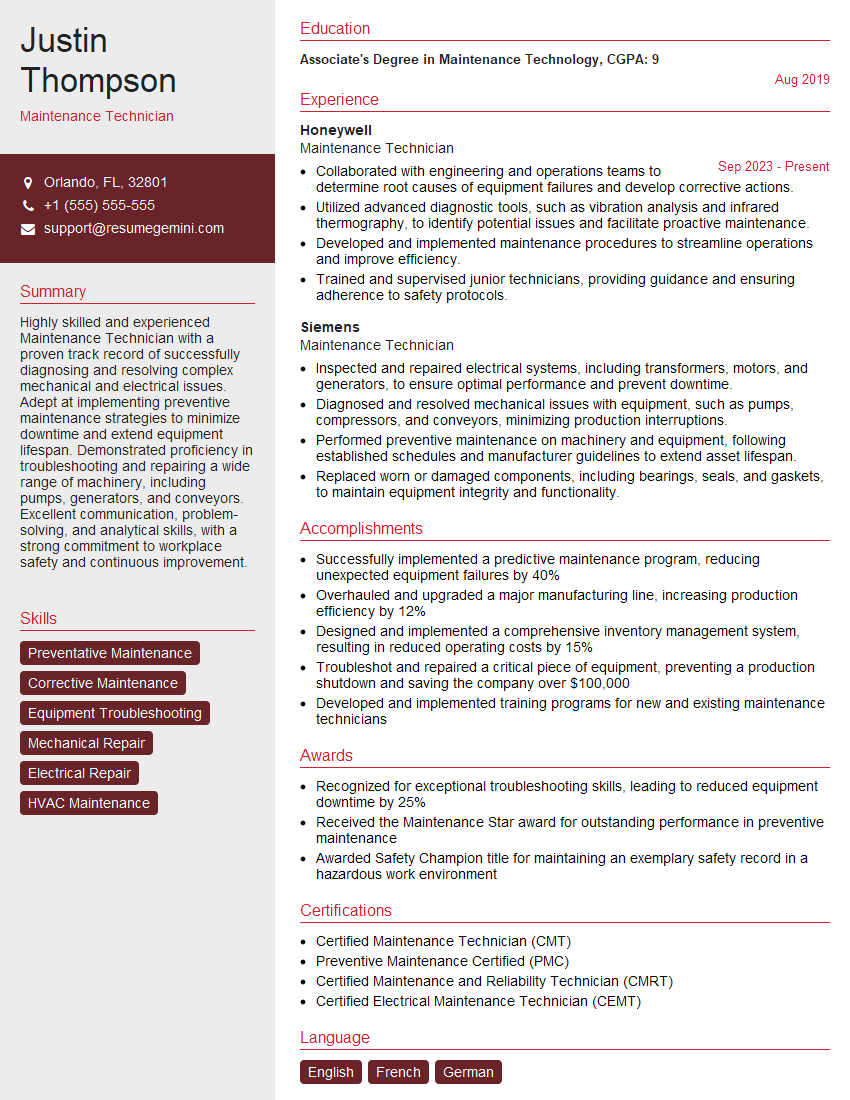
Maintenance Technician Resume Sample
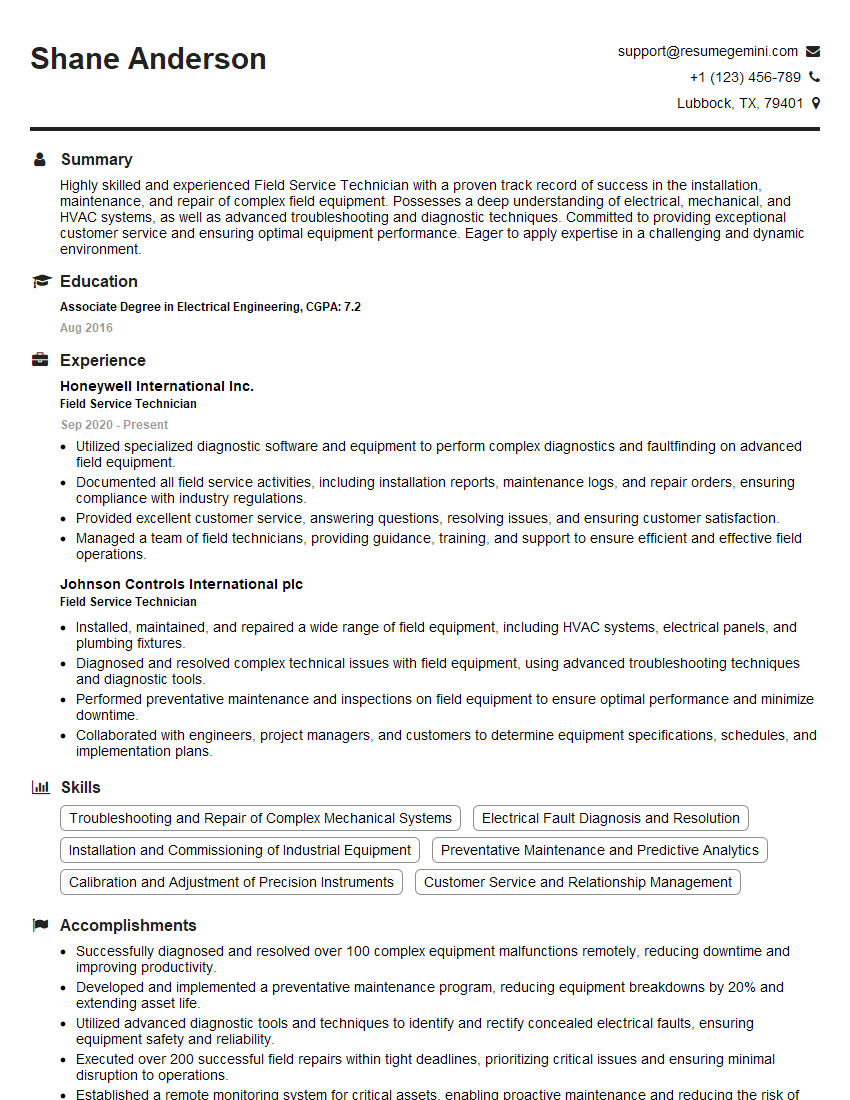
Field Service Technician Resume Sample

Service Technician Resume Sample

Lead Technician Resume Sample

Cleaning Technician Resume Sample

Industrial Cleaner Resume Sample
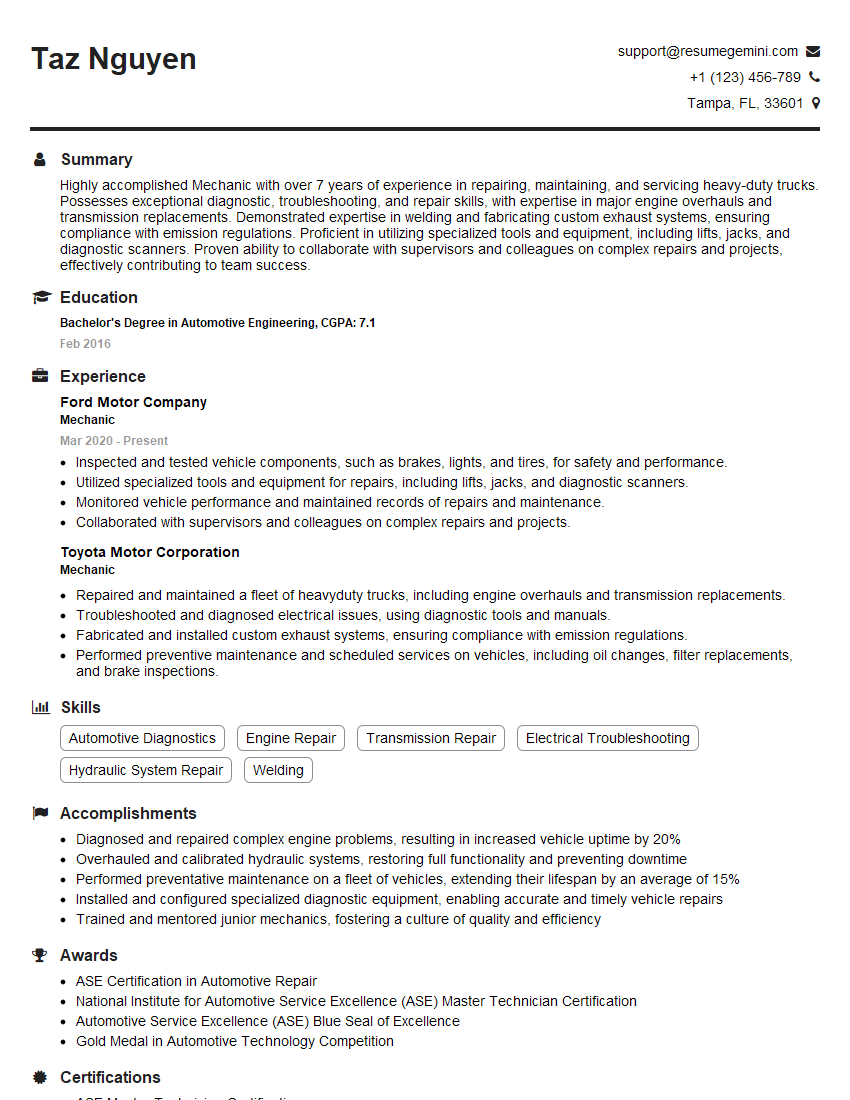
Mechanic Resume Sample

Shop Foreman Resume Sample
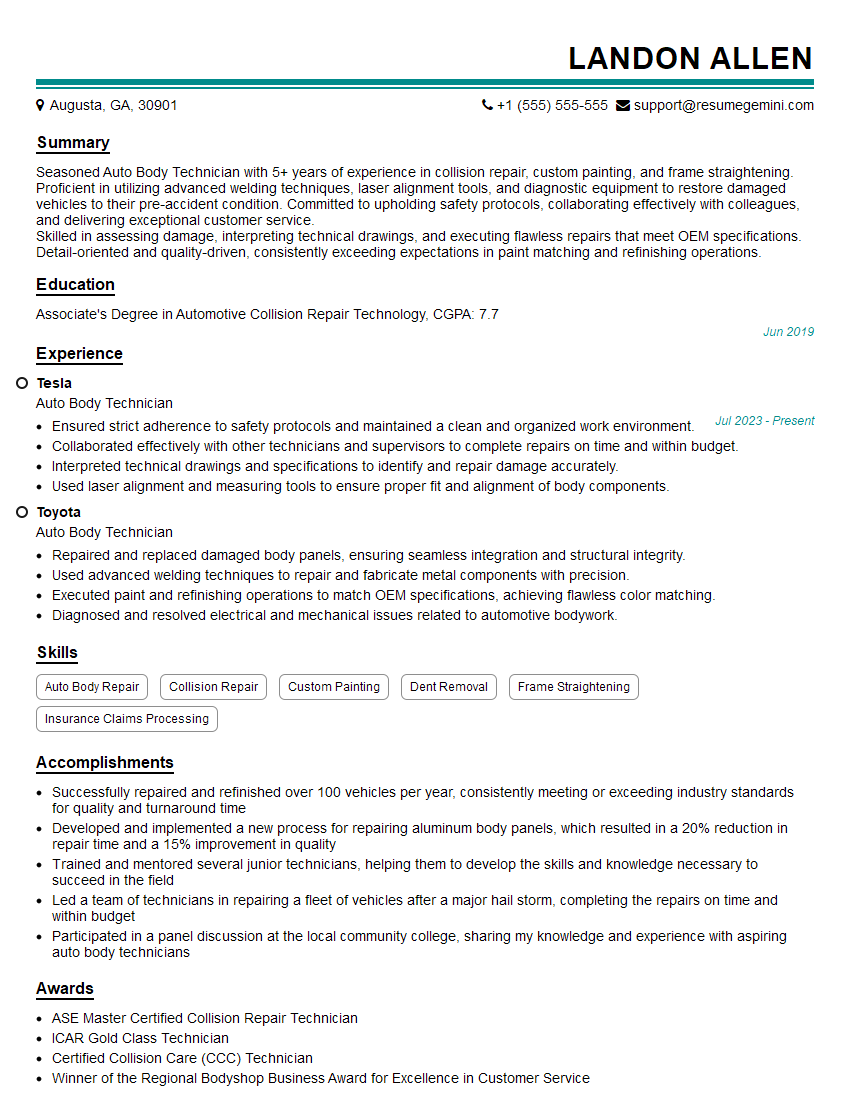
Auto Body Technician Resume Sample

Shop Technician Resume Sample

Diesel Mechanic Resume Sample
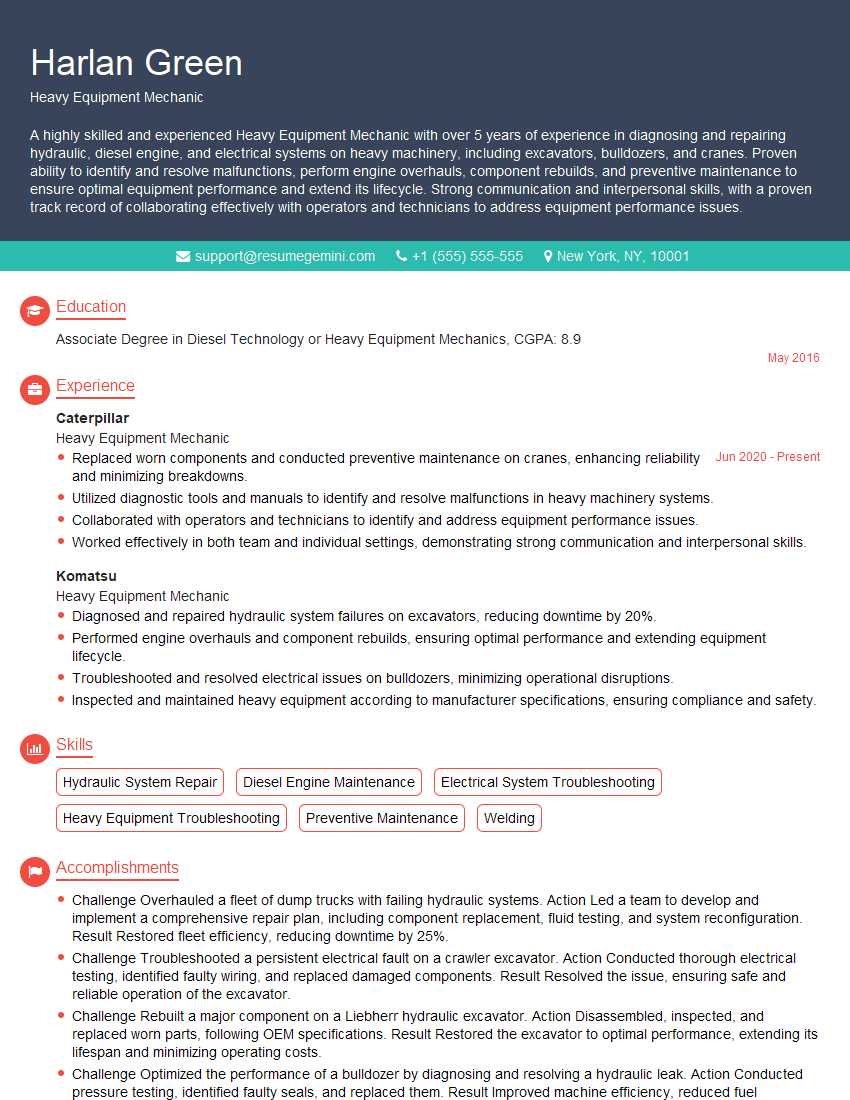
Heavy Equipment Mechanic Resume Sample
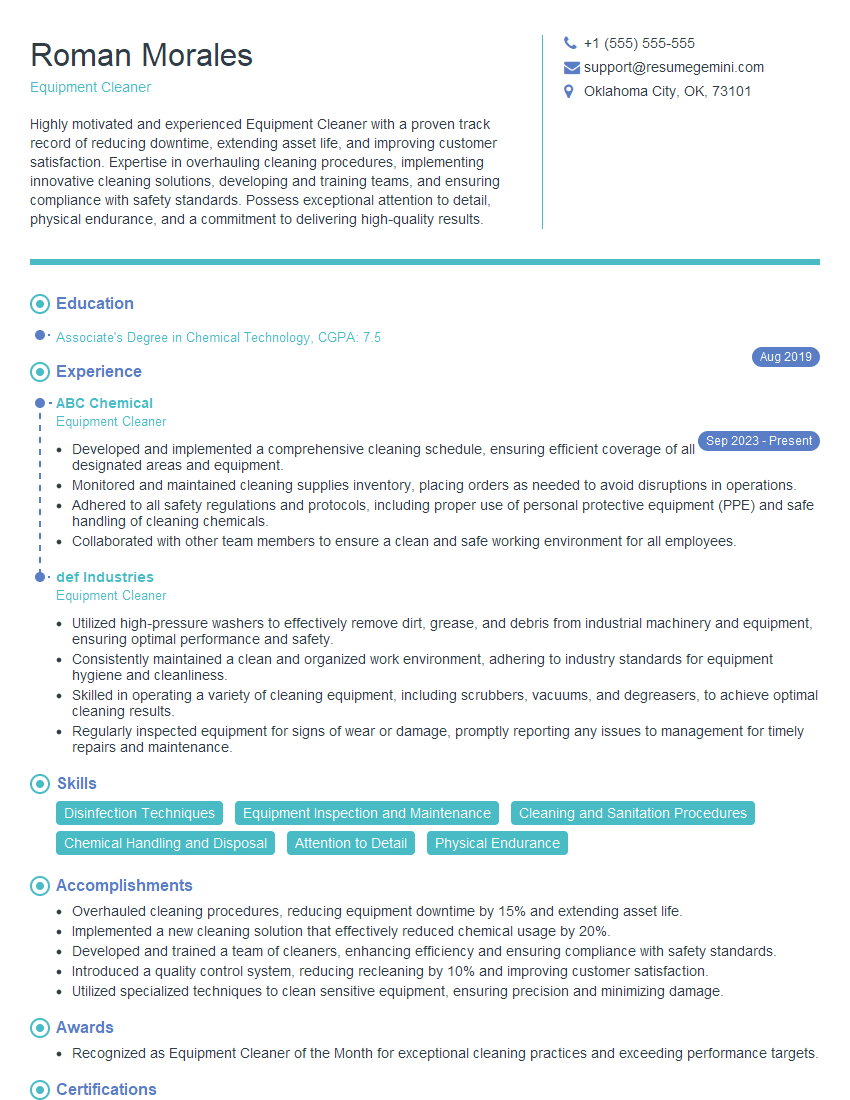
Equipment Cleaner Resume Sample

Automotive Detailer Resume Sample
Explore more articles
Users Rating of Our Blogs
Share Your Experience
We value your feedback! Please rate our content and share your thoughts (optional).
What Readers Say About Our Blog
To the interviewgemini.com Webmaster.
Very helpful and content specific questions to help prepare me for my interview!
Thank you
To the interviewgemini.com Webmaster.
This was kind of a unique content I found around the specialized skills. Very helpful questions and good detailed answers.
Very Helpful blog, thank you Interviewgemini team.