The right preparation can turn an interview into an opportunity to showcase your expertise. This guide to Histology Interpretation interview questions is your ultimate resource, providing key insights and tips to help you ace your responses and stand out as a top candidate.
Questions Asked in Histology Interpretation Interview
Q 1. Describe the process of tissue fixation and its importance in histology.
Tissue fixation is the first crucial step in histology, a process that preserves tissue structure and prevents degradation. Think of it like preserving a delicate flower – you need to stabilize it to maintain its form and color. We achieve this by using fixatives, chemical solutions that cross-link proteins and other cellular components, effectively halting the autolytic processes (self-digestion) that occur after death. Common fixatives include formalin (formaldehyde solution), glutaraldehyde, and alcohol. The choice of fixative depends on the type of tissue and the specific staining techniques to be employed. For example, formalin is widely used for its good penetration and preservation of morphology, while glutaraldehyde provides superior ultrastructural preservation for electron microscopy.
The importance of proper fixation cannot be overstated. Inadequate fixation leads to artifacts such as tissue shrinkage, distortion, and loss of cellular detail, rendering the histological analysis inaccurate and unreliable. This can have significant implications in disease diagnosis, as misinterpreted slides can lead to misdiagnosis and incorrect treatment plans.
Q 2. Explain the principles of paraffin embedding.
Paraffin embedding is a method used to prepare tissue samples for sectioning (slicing into thin sections) on a microtome. Imagine trying to slice a soft jelly – it would be difficult and the slices would be uneven. Paraffin embedding provides the necessary support to allow for the creation of very thin, consistent sections (typically 3-5 micrometers thick). The process involves several steps:
- Dehydration: The tissue is progressively dehydrated using a series of increasing alcohol concentrations, removing water from the cells.
- Clearing: The alcohol is replaced with a clearing agent, such as xylene, which is miscible with both alcohol and paraffin.
- Infiltration: The tissue is infiltrated with molten paraffin wax, replacing the clearing agent. This process usually takes place in an automated tissue processor.
- Embedding: The paraffin-infiltrated tissue is carefully oriented in a mold filled with fresh paraffin and allowed to cool and solidify, creating a paraffin block containing the tissue sample.
The resulting paraffin block provides a firm support structure, allowing for the production of thin, even sections suitable for microscopic examination. The quality of the embedding is directly related to the quality of the sections obtained, which directly influences the accuracy of the histological analysis.
Q 3. What are the different types of tissue processing methods and their applications?
Several tissue processing methods exist, each with its own advantages and disadvantages. The choice depends on factors such as tissue type, available resources, and the desired outcome. Some common methods include:
- Routine paraffin embedding (as described above): This is the most common method used for light microscopy.
- Frozen sectioning: This rapid method involves freezing the tissue, allowing for immediate sectioning without the need for processing. This is invaluable in situations requiring quick diagnosis, such as intraoperative consultations.
- Resin embedding: Used for electron microscopy, this method provides much thinner sections, revealing finer details. Specialized resins are used to achieve this superior resolution.
- Immunohistochemistry (IHC) processing: This technique involves optimizing the protocol for antibody binding to specific antigens. It requires careful attention to antigen retrieval and blocking steps.
Each method has specific applications. For instance, frozen sections are critical for rapid diagnoses during surgical procedures while resin embedding is crucial for high-resolution electron microscopy. Routine paraffin embedding remains the gold standard for most diagnostic histopathology.
Q 4. Describe the Hematoxylin and Eosin (H&E) staining technique and its purpose.
Hematoxylin and Eosin (H&E) staining is the most commonly used staining technique in histology. It’s a crucial step that transforms otherwise transparent tissue sections into visually interpretable slides. Hematoxylin, a basic dye, stains cell nuclei a dark blue or purple color, while eosin, an acidic dye, stains the cytoplasm and extracellular matrix pink or red. The differential staining of these cellular components allows for clear visualization of tissue architecture, cell types, and cellular details.
The purpose of H&E staining is to provide a general overview of the tissue structure. It’s a fundamental staining method used for routine diagnostic histopathology, providing valuable information about tissue morphology and cellular organization. It forms the basis for identifying various diseases and conditions. For instance, an H&E-stained slide can reveal the presence of inflammatory cells, cancerous tissue, or other abnormalities.
Q 5. What are the common artifacts encountered in histology and how can they be avoided?
Several artifacts can occur during tissue processing, leading to misinterpretations. These artifacts can arise from various stages, including fixation, processing, and sectioning. Some common artifacts include:
- Tissue shrinkage: Improper fixation or processing can cause tissue shrinkage, distorting the true size and shape of cells and tissues.
- Folding or tears: These can occur during sectioning, making it difficult to interpret the tissue structure.
- Precipitation of dyes: This creates granular deposits that obscure cellular details.
- Air bubbles: Entrapment of air bubbles during processing can create holes and gaps in the tissue section.
Avoiding these artifacts requires meticulous attention to detail at each step of the process. Proper fixation, careful handling of tissues, and optimal processing parameters are crucial. Regular quality control checks and experienced personnel contribute significantly to minimizing artifacts.
Q 6. Explain the importance of quality control in histology.
Quality control (QC) in histology is paramount to ensure the accuracy and reliability of diagnostic results. It involves implementing procedures and checks at every stage of the process to maintain consistent quality. QC measures encompass:
- Reagent quality: Regular monitoring of fixatives, stains, and other reagents is essential. Expired or contaminated reagents can significantly affect the results.
- Equipment maintenance: Microtomes, tissue processors, and staining equipment require regular calibration and maintenance to ensure optimal performance.
- Proper handling and labeling: Accurate identification and labeling of tissue samples are crucial to prevent errors and mix-ups.
- Internal audits and proficiency testing: Regular internal audits and participation in proficiency testing programs help identify and address weaknesses in the process.
Robust QC measures ensure that the histological reports are accurate, reliable, and contribute directly to the patient’s care. A well-structured QC program improves efficiency, reduces errors, and ultimately enhances the quality of patient diagnosis and treatment.
Q 7. How do you identify different types of tissues under a microscope?
Identifying different tissue types under a microscope relies on a combination of training, experience, and an understanding of tissue morphology. It involves recognizing characteristic features of each tissue type, such as cell shape, arrangement, and staining properties. For example:
- Epithelial tissue: Characterized by closely packed cells, forming sheets or layers. Different types of epithelium (squamous, cuboidal, columnar) can be distinguished based on cell shape and arrangement.
- Connective tissue: This tissue type displays a wide variety of cell types and extracellular matrix components. Identifying specific connective tissues like adipose, bone, and cartilage requires observing the cellular components and the properties of the extracellular matrix (e.g., collagen fibers).
- Muscle tissue: Different muscle tissues (skeletal, smooth, cardiac) can be distinguished by the shape, arrangement, and staining characteristics of muscle fibers.
- Nervous tissue: Characterized by neurons and neuroglia. Recognizing the different components of nervous tissue requires a careful examination of neuronal cell bodies, axons, dendrites, and glial cells.
Histological identification relies on a systematic approach, carefully examining cellular and extracellular components and correlating the observations with knowledge of normal and pathological tissue morphology. Proficiency requires extensive training and practice in interpreting histological slides.
Q 8. Describe the process of microtomy and the different types of microtomes.
Microtomy is the process of sectioning tissue samples into extremely thin slices, typically 3-10 micrometers thick, for microscopic examination. This requires specialized instruments called microtomes, which precisely cut through the tissue embedded in a supporting medium, usually paraffin wax. The thinness of the sections is crucial for allowing light to pass through them for observation under a light microscope.
- Rotary Microtome: This is the most common type, using a rotating wheel to advance the tissue block against a fixed knife. It’s reliable for routine paraffin-embedded tissue sections. Imagine a tiny, precise meat slicer—that’s essentially what a rotary microtome does.
- Cryostat Microtome: This type is used for frozen tissue sections. The entire instrument is kept at a sub-zero temperature, allowing for rapid sectioning of unfixed tissue. This is invaluable for rapid diagnosis, such as during a surgical procedure, because the process is much faster than paraffin embedding.
- Sliding Microtome: In this type, the knife is stationary, and the tissue block moves across it. It’s typically used for processing large or very hard tissues that might be difficult to cut on a rotary microtome. Think of it like drawing a very thin line across a block with a sharp knife.
- Ultramicrotome: This advanced instrument uses a diamond or glass knife to create ultrathin sections (less than 100 nanometers) for electron microscopy. The precision required here is significantly higher than for light microscopy.
The choice of microtome depends on the type of tissue, the desired section thickness, and the application (e.g., light microscopy versus electron microscopy).
Q 9. What are the various staining techniques used in special stains and immunohistochemistry?
Various staining techniques are employed to enhance the visualization of specific tissue components. Special stains target particular cellular structures or components, while immunohistochemistry (IHC) uses antibodies to detect specific antigens within the tissue.
- Special stains: Examples include Hematoxylin and Eosin (H&E) – the workhorse stain for general morphology, Masson’s trichrome (for connective tissue), Periodic acid-Schiff (PAS) (for carbohydrates and glycogen), and silver stains (for reticulin fibers and microorganisms). Each stain utilizes unique chemical properties to bind to specific cellular components, generating contrasting colors and revealing otherwise unseen details.
- Immunohistochemistry (IHC): IHC is used to detect specific proteins or antigens within the tissue section. It involves using labeled antibodies (e.g., with enzymes or fluorescent molecules) that bind to the target antigen. The visualization method depends on the label. For instance, an enzyme-labeled antibody might lead to a colorimetric reaction, making the antigen visible under a light microscope. The specificity of antibodies in IHC enables the identification of disease markers, specific cell types, and other vital information.
The choice of staining technique depends on the specific diagnostic question and the type of tissue being examined. For example, if a pathologist suspects a fungal infection, a special stain like Gomori methenamine silver will be used to highlight the fungal hyphae.
Q 10. How do you troubleshoot common problems encountered during tissue processing?
Troubleshooting tissue processing issues is crucial for producing high-quality histological slides. Common problems include tissue shrinkage, cracking, or incomplete staining. Identifying the source of the issue requires systematic investigation.
- Hard or brittle tissue: This often indicates inadequate fixation or excessive processing time. Solution: Optimize fixation time and reagents; reduce processing time or temperature.
- Soft or mushy tissue: This can be due to incomplete fixation or improper dehydration. Solution: Extend fixation time, ensure proper reagent changes, and verify dehydration steps.
- Incomplete staining: This could result from insufficient staining time, inadequate reagent concentration, or problems with the staining protocol. Solution: Adjust staining times, verify reagent concentrations and freshness, and carefully review and potentially repeat the staining procedure.
- Tissue detachment from slides: This is often caused by poor adhesion during the mounting process. Solution: Ensure thorough cleaning of slides, optimal drying, and appropriate use of mounting media.
A good histology technician always maintains meticulous records and systematically checks each step in the process to quickly pinpoint the source of any problems. We use control tissues alongside experimental samples to assess for any systemic issues with the equipment or reagents.
Q 11. Explain the difference between frozen section and paraffin-embedded sections.
Frozen sections and paraffin-embedded sections represent two different approaches to preparing tissue for microscopic examination, each with its advantages and limitations.
- Frozen Section: This technique involves rapidly freezing the tissue, then sectioning it using a cryostat microtome. The advantages include speed (ideal for intraoperative consultations), preservation of some tissue components (like lipids and enzymes which may be lost in paraffin processing), and avoidance of potentially toxic chemicals. However, the quality of the sections can be lower, and artifacts can be introduced due to ice crystal formation.
- Paraffin-Embedded Section: This involves processing the tissue through a series of solutions (fixation, dehydration, clearing, infiltration, and embedding in paraffin wax) before sectioning on a rotary microtome. This provides superior morphological detail, allows for archival storage, and minimizes artifacts from ice crystal formation, but is significantly more time-consuming than frozen sections. This method allows for higher-quality staining, and thus more detailed microscopic analysis.
The choice between these methods depends entirely on the clinical needs. For rapid diagnosis during surgery, a frozen section is preferred, while detailed morphological assessment usually requires paraffin embedding.
Q 12. Describe the safety precautions you take while working in a histology laboratory.
Safety is paramount in a histology laboratory due to the presence of hazardous chemicals and sharp instruments. Strict adherence to safety protocols is essential.
- Personal Protective Equipment (PPE): Lab coats, gloves, eye protection, and appropriate respiratory protection (e.g., fume hoods for certain chemicals) are always worn.
- Chemical Safety: Proper handling and disposal of hazardous chemicals (formaldehyde, xylene, alcohols) are strictly adhered to, following all relevant safety data sheets (SDS) and institutional guidelines. We maintain a detailed inventory of all chemicals and regularly review the SDS.
- Sharp Objects: Careful handling of blades, knives, and needles is paramount. Sharps containers are always readily available and used appropriately. All sharps are disposed of according to institutional policy.
- Biohazard Safety: Proper handling and disposal of all biohazardous materials according to institutional and regulatory guidelines (e.g. infectious specimens) are critical. Decontamination procedures are carefully followed for all equipment and work surfaces.
- Emergency Procedures: We are all trained in emergency procedures, including the location and use of safety showers, eyewash stations, and fire extinguishers.
Regular safety training and adherence to these practices significantly reduce the risks associated with working in a histology laboratory.
Q 13. How do you maintain and calibrate histology equipment?
Regular maintenance and calibration of histology equipment are vital for producing high-quality results and ensuring the longevity of the instruments.
- Microtomes: Regular cleaning, lubrication, and adjustment of the knife holder and specimen chuck are crucial. Calibration involves checking the section thickness using a micrometer. We usually conduct a daily quality check and a full service by a qualified technician on a schedule recommended by the manufacturer.
- Automated Tissue Processors: These require routine checks of reagent levels, proper function of the paraffin dispenser, and monitoring of the temperature. Regular cleaning and maintenance by the manufacturer is crucial. We log all reagent changes and monitor the system’s performance carefully.
- Staining Equipment: Automated stainers and slide dryers require regular cleaning, maintenance of reagent levels, and calibration of timing mechanisms. We have regular preventative maintenance schedules for all automated equipment.
- Microscopes: Regular cleaning of lenses, appropriate lighting checks, and occasional professional servicing are needed to ensure the best image quality. We also have a daily quality control system where we inspect slides under the microscope.
Detailed logs are kept for all maintenance activities, including calibration and service records. Preventive maintenance is far more cost-effective than reactive repairs.
Q 14. What are the quality assurance measures you implement in your work?
Quality assurance measures in histology are crucial for ensuring the accuracy and reliability of diagnoses. These measures encompass multiple steps in the workflow.
- Pre-analytical phase: This includes proper tissue handling, fixation, and processing. We employ standardized procedures, use quality control tissues, and maintain meticulous records to monitor and ensure the quality of these steps.
- Analytical phase: This refers to the staining and microscopic examination. We use quality control slides in each staining batch to check for consistency. We have established and documented standardized staining protocols and perform regular checks to assess for variation.
- Post-analytical phase: This involves result reporting and record-keeping. All slides are reviewed by multiple pathologists for quality control and consistency. We maintain a comprehensive system for archiving and retrieving slides and reports.
- External Quality Assurance (EQA): Regular participation in EQA programs allows for comparison with other labs and identification of areas for improvement. This involves sending anonymized samples to external labs, allowing us to compare our results.
- Internal Audits: Regular internal audits evaluate compliance with established procedures and identify areas needing improvement.
By implementing these quality control measures, we aim to minimize errors, ensure reliable results, and deliver high-quality histopathological services.
Q 15. How do you handle and document discrepancies or errors?
Discrepancies or errors in histology interpretation are addressed with a rigorous, multi-step process prioritizing patient safety and accurate reporting. First, I meticulously re-examine the slide, comparing it with initial observations and notes. If the discrepancy persists, I consult additional staining techniques if needed, such as special stains to highlight specific tissue components or immunohistochemistry to identify particular proteins. I may also review the clinical history to ensure the interpretation aligns with the patient’s clinical presentation.
Should the uncertainty remain, I consult with a senior colleague or pathologist for a second opinion. This collaborative approach leverages the collective expertise of the team and ensures a comprehensive evaluation. Thorough documentation is crucial throughout this process. All discrepancies, consultations, and final interpretations are meticulously documented in the patient’s pathology report, including reasons for any revisions or changes in the diagnosis. This provides transparency and aids in quality control and auditing, ultimately ensuring patient care is not compromised.
For example, I once encountered a discrepancy in interpreting a lymph node biopsy. My initial assessment indicated benign hyperplasia, but upon further review and special stains, I discovered features suggestive of lymphoma. This prompted consultation with a senior pathologist who confirmed my revised interpretation, leading to a significant change in patient management.
Career Expert Tips:
- Ace those interviews! Prepare effectively by reviewing the Top 50 Most Common Interview Questions on ResumeGemini.
- Navigate your job search with confidence! Explore a wide range of Career Tips on ResumeGemini. Learn about common challenges and recommendations to overcome them.
- Craft the perfect resume! Master the Art of Resume Writing with ResumeGemini’s guide. Showcase your unique qualifications and achievements effectively.
- Don’t miss out on holiday savings! Build your dream resume with ResumeGemini’s ATS optimized templates.
Q 16. What is your experience with digital pathology and image analysis?
I have extensive experience with digital pathology and image analysis, utilizing various software platforms for whole slide imaging (WSI) review and quantitative analysis. My experience includes reviewing WSI cases, measuring cellular and tissue features, and employing image analysis tools for automated detection of cellular changes and morphometric quantification. I am proficient in using image analysis software to perform tasks such as counting cells, measuring tissue areas, and quantifying the expression of biomarkers in immunohistochemistry studies. This enables improved efficiency and objectivity in analysis, providing more precise diagnostic and prognostic information.
For instance, in a recent study on prostate cancer, I utilized image analysis software to quantify the Gleason score on digital slides, obtaining a more objective and reproducible result compared to traditional manual assessment. This allowed for a more precise prediction of disease aggressiveness and treatment planning. I also have experience in using AI-powered tools for automated detection of cancer cells in various tissue types, streamlining the diagnostic process.
Q 17. Explain your understanding of different types of microscopy techniques (e.g., brightfield, fluorescence).
Different microscopy techniques provide unique perspectives on tissue morphology. Brightfield microscopy is the most common technique, using transmitted light to visualize tissue stained with dyes like hematoxylin and eosin (H&E). H&E staining highlights the nuclei (blue/purple) and cytoplasm (pink/red) revealing basic tissue architecture and cellular morphology.
Fluorescence microscopy employs fluorescent dyes or antibodies to visualize specific structures within cells and tissues. The sample is illuminated with light of a specific wavelength that excites the fluorophores, causing them to emit light of a longer wavelength. This is invaluable for visualizing specific cellular components or proteins, often utilized in immunofluorescence and in situ hybridization. For example, we can use fluorescence to identify specific proteins involved in cancer progression, allowing for more precise diagnostics and targeted therapies.
Other techniques, such as phase-contrast and polarized light microscopy, provide additional information, but brightfield and fluorescence are the cornerstones of histopathological examination.
Q 18. Describe your experience with immunohistochemistry (IHC) and its applications.
Immunohistochemistry (IHC) is a powerful technique that uses antibodies to detect specific proteins within tissue sections. It allows us to visualize the location and distribution of particular proteins, providing crucial information about cellular function and disease processes. Antibodies are labeled with an enzyme or fluorophore which then triggers a color reaction or fluorescence signal at the site of the target protein.
In practice, IHC is crucial for diagnosing many cancers and other diseases. For example, we use IHC to detect the presence of hormone receptors (estrogen and progesterone receptors) in breast cancer, which guides treatment decisions. Similarly, IHC is used to detect biomarkers such as Ki-67, a proliferation marker, which indicates the rate of cell division, thus providing prognostic information about cancer progression. I have extensive experience in selecting appropriate antibodies, optimizing staining protocols, and interpreting IHC results, contributing significantly to accurate diagnosis and patient management.
Q 19. How do you interpret different histological features and their clinical significance?
Interpreting histological features requires a systematic approach combining knowledge of normal tissue architecture and recognition of pathological changes. I begin by assessing overall tissue architecture, looking for abnormalities in the organization and arrangement of cells and tissues. I then examine individual cells, noting changes in size, shape, and nuclear features. Nuclear atypia, such as increased size, hyperchromasia (darker staining), and irregular shape, often indicates malignancy.
The clinical significance of histological features is heavily context-dependent. For example, inflammation may suggest infection or autoimmune disease, while cellular proliferation might signal cancer. I use a combination of morphological features and clinical information (patient history, symptoms, and other diagnostic tests) to form a comprehensive interpretation. My interpretation considers specific histological patterns, for instance, identifying granulomas in tuberculosis or the presence of specific cells in inflammatory bowel disease. Accurate interpretation is crucial in directing treatment strategies and predicting patient outcomes.
Q 20. Describe your experience with in situ hybridization (ISH).
In situ hybridization (ISH) is a molecular technique used to visualize the location of specific nucleic acid sequences (DNA or RNA) within cells and tissues. It employs labeled probes – single-stranded DNA or RNA sequences complementary to the target sequence – that hybridize (bind) to the target nucleic acid. The label, often a fluorescent dye or enzyme, allows visualization of the target sequence under a microscope.
ISH is widely used for the detection of infectious agents (viruses, bacteria), identification of genetic abnormalities (e.g., chromosomal translocations in cancer), and assessment of gene expression. For example, ISH can be used to detect the presence of Epstein-Barr virus in lymphomas or to assess the expression of specific oncogenes in cancer cells. My experience includes performing ISH assays, optimizing probe selection, and interpreting the results to provide valuable diagnostic information. I use various ISH techniques, including fluorescence in situ hybridization (FISH), a commonly employed method for detecting chromosomal abnormalities.
Q 21. Explain your experience with different types of tissue samples (e.g., biopsies, surgical specimens).
I have significant experience handling various tissue samples, including biopsies (small tissue samples obtained through needle aspiration or incisional techniques) and surgical specimens (larger tissue samples obtained during surgical procedures). Each type of sample presents unique challenges and requires specific handling techniques. Biopsies are often small and fragile, requiring careful processing to prevent damage during embedding and sectioning. Surgical specimens, on the other hand, are larger and may require special techniques for orientation and sectioning to ensure all relevant areas are examined.
The handling and processing of tissues must follow strict protocols to maintain tissue integrity and prevent artifacts that could affect the interpretation. These protocols include proper fixation to preserve tissue structure, embedding in paraffin wax for sectioning, and staining with appropriate dyes. Each sample type requires careful attention to detail throughout this process. I have experience in gross examination (macroscopic evaluation) of tissue samples, identifying key features before microscopic examination to aid in the diagnostic process, regardless of the sample’s origin or size.
Q 22. How do you manage and prioritize multiple tasks in a fast-paced laboratory environment?
In a fast-paced histology lab, effective task management is crucial. I employ a combination of strategies, prioritizing tasks based on urgency and importance using methods like the Eisenhower Matrix (urgent/important). This helps me to quickly identify what needs immediate attention (e.g., urgent biopsies) versus what can be scheduled (e.g., routine staining). I also utilize digital tools like task management software to create to-do lists, set deadlines, and track progress. Furthermore, effective communication with colleagues is vital; I proactively inform team members of my workload and any potential delays, ensuring smooth workflow and preventing bottlenecks. For example, if a particularly complex case arrives, I’ll communicate this to the team and potentially re-prioritize to ensure timely processing.
Q 23. Describe your experience with laboratory information systems (LIS).
I have extensive experience with various Laboratory Information Systems (LIS), including [mention specific LIS systems used, e.g., Cerner, Epic, Sunquest]. My proficiency encompasses all aspects of LIS usage, from sample accessioning and tracking to result entry and reporting. I’m adept at utilizing the system for managing workflows, generating reports, and ensuring accurate data entry. For instance, I’m experienced in using LIS to track specimen turnaround times, identify bottlenecks in the process, and generate quality control reports. My understanding extends to troubleshooting system errors and working with IT support to resolve any technical issues. This ensures seamless integration of the LIS into our daily lab operations and facilitates efficient communication between different lab departments.
Q 24. How do you ensure the accuracy and reliability of your results?
Accuracy and reliability are paramount in histology. We achieve this through meticulous adherence to standardized operating procedures (SOPs), rigorous quality control measures, and continuous monitoring. This includes regular instrument calibration and maintenance, using positive and negative controls in all staining procedures, and implementing proficiency testing. For example, we utilize a blinded quality control program where a set of slides are reviewed by multiple histotechnologists, ensuring consistency in interpretation. Furthermore, meticulous record-keeping, detailed documentation of every step, and regular internal audits are crucial for maintaining accuracy and traceability. If discrepancies arise, a thorough investigation is launched to identify and correct the root cause, ensuring the integrity of our results.
Q 25. Explain your understanding of regulatory compliance in a histology laboratory.
Regulatory compliance is central to our operations. We strictly adhere to regulations such as CLIA (Clinical Laboratory Improvement Amendments), CAP (College of American Pathologists) accreditation standards, and any other relevant local or national guidelines. This involves maintaining detailed records, participating in proficiency testing programs, ensuring proper safety protocols are followed, and regularly updating our SOPs to reflect the latest regulations. We conduct internal audits to ensure continuous compliance. For instance, we meticulously track and document all reagents, equipment maintenance, and personnel training records. Non-compliance is viewed seriously and addressed promptly to protect patient safety and the integrity of our laboratory.
Q 26. How do you stay updated with the latest advancements in histology techniques?
Staying current in the rapidly evolving field of histology is crucial. I regularly attend professional conferences, such as those organized by the American Society for Clinical Pathology (ASCP) and the United States and Canadian Academy of Pathology (USCAP), and participate in continuing education courses. I also actively read peer-reviewed journals, like the Journal of Histotechnology and Modern Pathology, to remain informed about new techniques, technologies, and best practices. Furthermore, I actively participate in professional organizations and online forums dedicated to histology, allowing me to network with other professionals and exchange knowledge and experience. This commitment to continuous learning ensures I can apply the most effective and up-to-date methodologies in my work.
Q 27. Describe a time you had to troubleshoot a complex histological problem.
I once encountered a case where unusual artifacts were present on immunohistochemical (IHC) staining, hindering accurate diagnosis. Initially, I suspected issues with the antibody or staining protocol. My systematic approach involved first verifying the antibody’s functionality using positive and negative controls. Finding those were acceptable, I then examined the tissue processing steps, looking for inconsistencies like inadequate fixation or dehydration. Upon reviewing the tissue processing log, I discovered a malfunction in the automated tissue processor during the paraffin embedding stage, which had compromised the tissue integrity in some areas. Once the issue was identified, the affected batch was removed, and the processor was repaired. This experience highlighted the importance of thorough record-keeping and a methodical approach to troubleshooting complex histological problems.
Q 28. Explain your experience with training and mentoring junior staff.
I have considerable experience in training and mentoring junior staff, including histotechnologists and lab assistants. My approach focuses on a combination of practical training and theoretical knowledge. This involves hands-on instruction in various staining techniques, microscopy, and quality control procedures. I also provide mentorship in problem-solving and critical thinking skills. I use a combination of formal lectures, demonstration, and shadowing to facilitate learning. Regular feedback sessions and constructive criticism are vital components of my training strategy. I also encourage a supportive and collaborative learning environment where trainees feel comfortable asking questions and sharing their challenges. My goal is to foster a competent, confident, and capable histology team.
Key Topics to Learn for Histology Interpretation Interview
- Tissue Preparation and Staining Techniques: Understanding the processes involved in preparing tissue samples for microscopic examination, including fixation, embedding, sectioning, and various staining methods (e.g., H&E, special stains) and their impact on interpretation.
- Microscopic Anatomy of Tissues and Organs: Mastering the identification and differentiation of various tissue types (epithelial, connective, muscle, nervous) and their organization within organs. Practical application includes recognizing normal histological features and differentiating them from pathological changes.
- Cellular Pathology: Understanding cellular adaptations, injuries, and death (necrosis, apoptosis). This includes recognizing inflammatory responses, neoplasia (benign and malignant), and other pathological processes at the cellular level.
- Diagnostic Interpretation: Developing the skill to integrate microscopic observations with clinical information to arrive at a diagnosis. This involves recognizing subtle changes and correlating them with the patient’s presentation and history.
- Image Analysis and Reporting: Familiarizing yourself with techniques for documenting and reporting histological findings, including the use of digital microscopy and image analysis software. Accurate and concise reporting is crucial.
- Common Artifacts and Pitfalls: Understanding potential sources of error in tissue processing and interpretation to avoid misdiagnosis. This includes recognizing artifacts introduced during processing and knowing how to differentiate them from actual pathological changes.
- Specific Organ Systems: Depending on the role, you might focus on specific organ systems (e.g., gastrointestinal, renal, hepatic). Develop a thorough understanding of their normal histology and common pathologies.
Next Steps
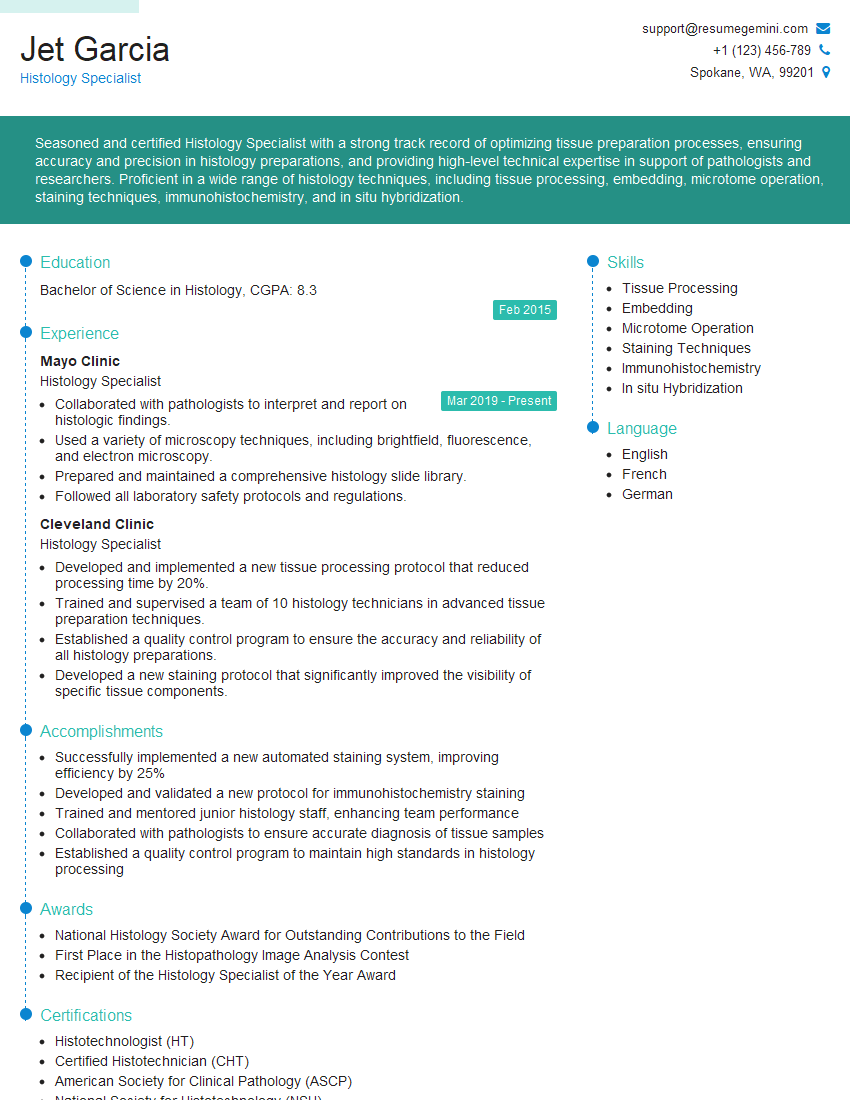
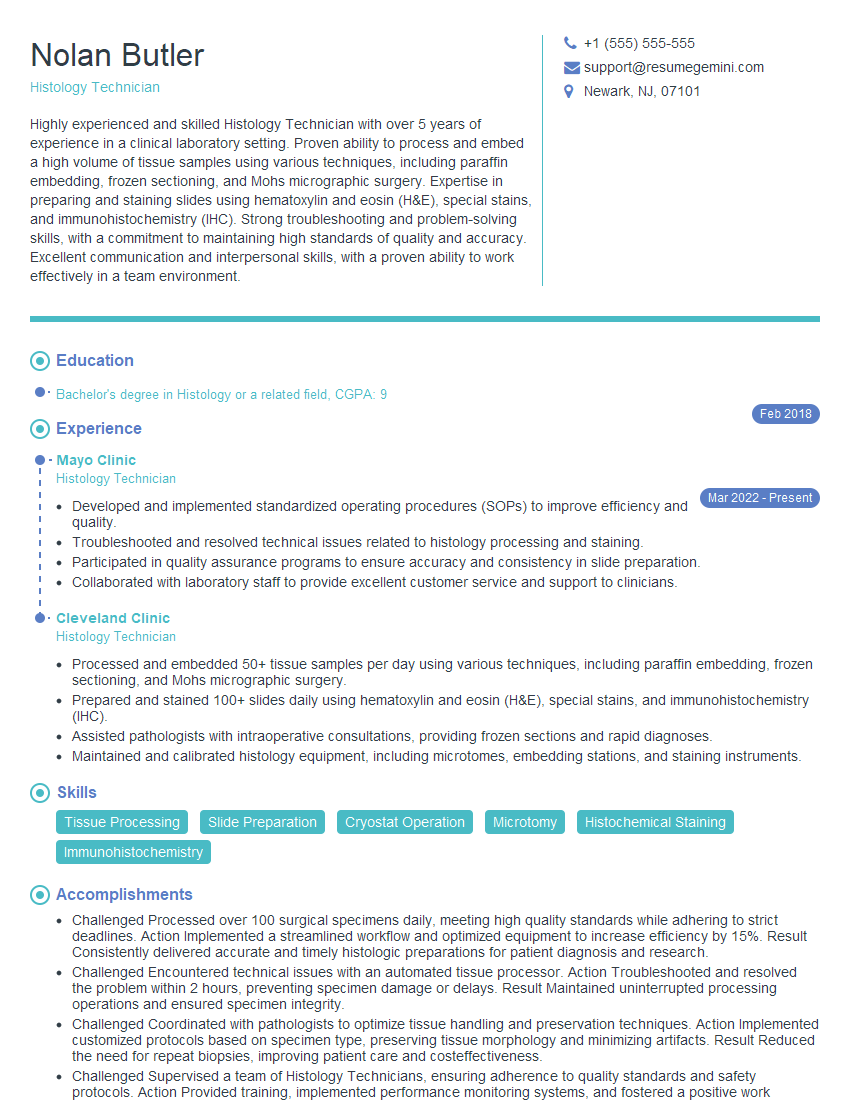
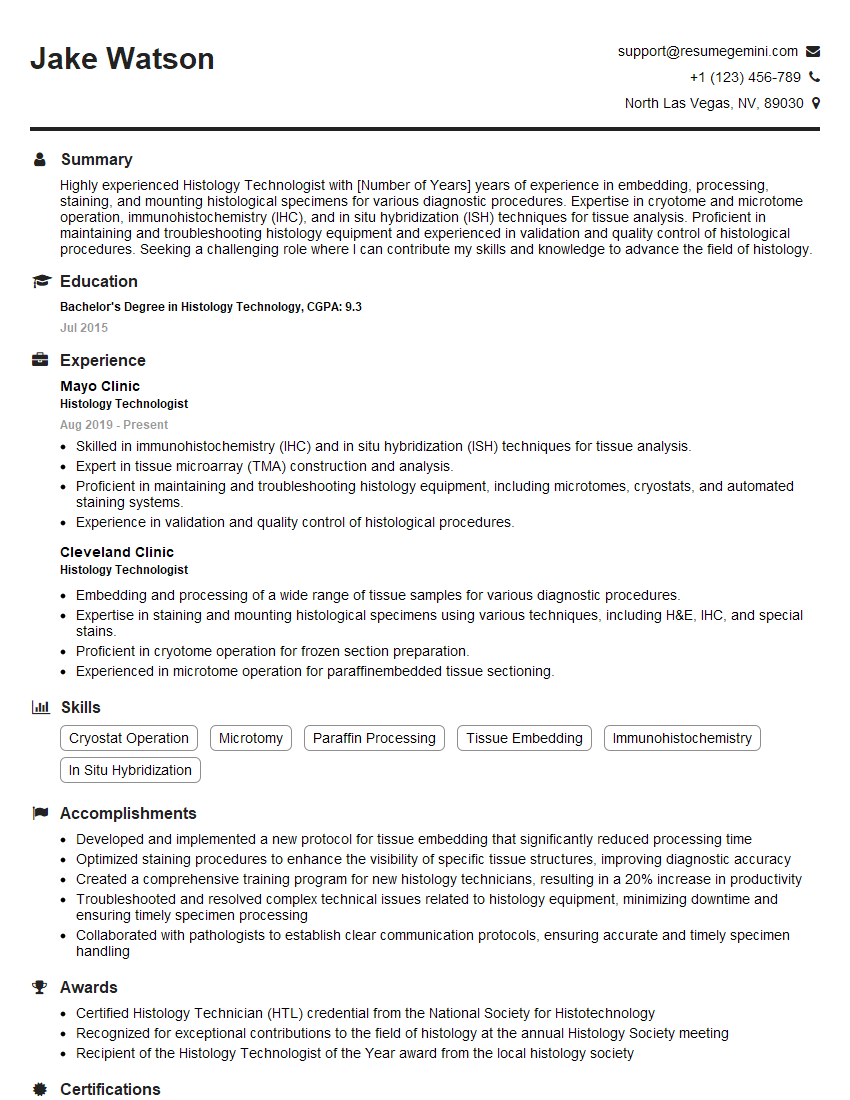
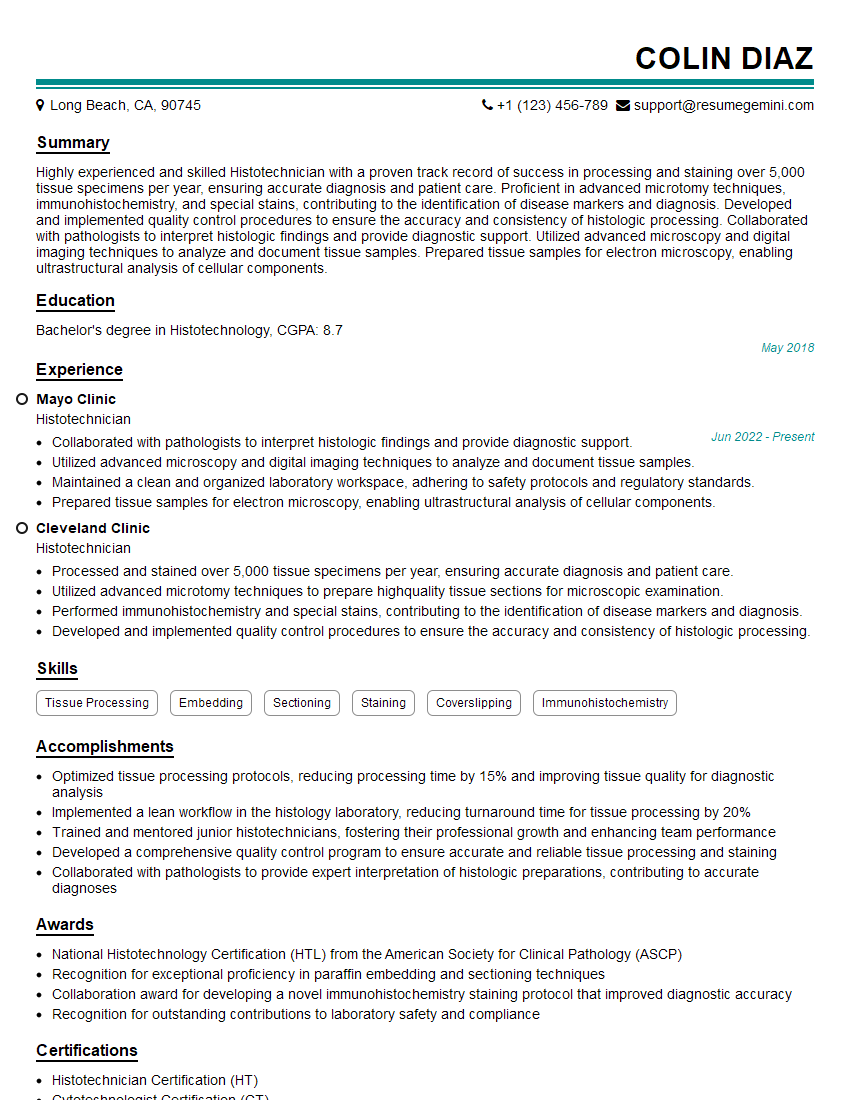
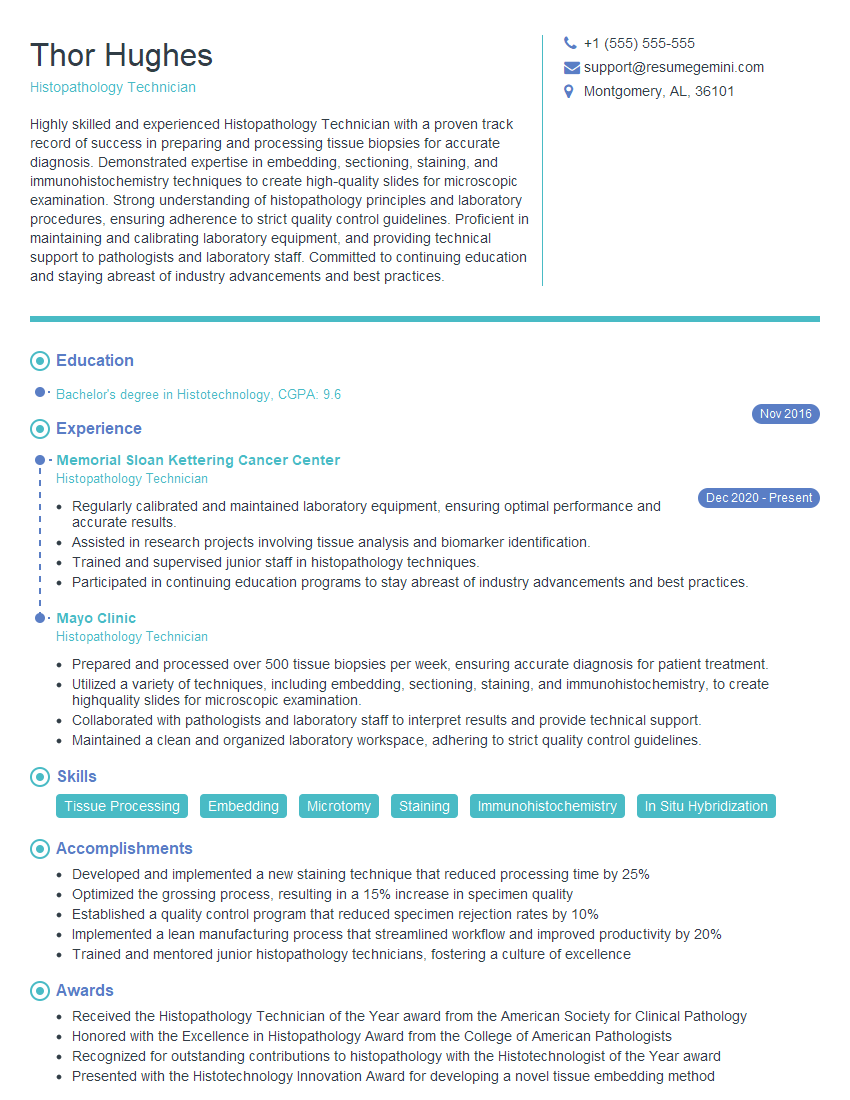
Mastering Histology Interpretation is crucial for career advancement in pathology, research, and related fields. A strong foundation in this area opens doors to exciting opportunities and demonstrates your expertise. To maximize your job prospects, it’s essential to present your skills effectively. Creating an ATS-friendly resume is key to getting your application noticed. ResumeGemini is a trusted resource to help you build a compelling and effective resume that highlights your abilities. Examples of resumes tailored to Histology Interpretation are available to guide you through the process.
Explore more articles
Users Rating of Our Blogs
Share Your Experience
We value your feedback! Please rate our content and share your thoughts (optional).
What Readers Say About Our Blog
To the interviewgemini.com Webmaster.
Very helpful and content specific questions to help prepare me for my interview!
Thank you
To the interviewgemini.com Webmaster.
This was kind of a unique content I found around the specialized skills. Very helpful questions and good detailed answers.
Very Helpful blog, thank you Interviewgemini team.