Every successful interview starts with knowing what to expect. In this blog, we’ll take you through the top Stormwater Management System Design interview questions, breaking them down with expert tips to help you deliver impactful answers. Step into your next interview fully prepared and ready to succeed.
Questions Asked in Stormwater Management System Design Interview
Q 1. Explain the principles of stormwater management.
Stormwater management aims to mimic the natural hydrological cycle as closely as possible, minimizing the negative impacts of urbanization on water resources. The core principles revolve around managing rainfall runoff to prevent flooding, erosion, water pollution, and groundwater depletion. This is achieved by reducing the volume, rate, and pollutant load of runoff. Think of it like this: before development, rainfall would naturally infiltrate into the ground, be absorbed by vegetation, and slowly release back into the system. Urbanization replaces permeable surfaces with impermeable ones (like roads and buildings), leading to rapid runoff. Stormwater management seeks to restore some of that natural balance.
- Reduce Runoff Volume: Employing techniques to capture and store rainfall before it becomes runoff.
- Reduce Runoff Rate: Slowing down the speed at which water flows into streams and rivers, preventing flash floods.
- Improve Water Quality: Filtering pollutants from runoff before it enters waterways, safeguarding water quality.
- Protect Groundwater Resources: Encouraging infiltration to replenish groundwater supplies.
Q 2. Describe different types of stormwater control measures (SCMs).
Stormwater control measures (SCMs) are a diverse set of practices designed to manage stormwater. They range from simple green infrastructure to more complex engineered systems. Here are some examples:
- Bioretention Cells/Rain Gardens: Depressed areas filled with soil and vegetation that filter and retain stormwater.
- Detention/Retention Basins: Engineered ponds that temporarily store runoff, allowing it to slowly release.
- Permeable Pavements: Pavement that allows water to infiltrate through it.
- Green Roofs: Roofs covered with vegetation to absorb rainfall.
- Vegetated Swales: Channels designed to convey stormwater while providing filtration and infiltration.
- Infiltration Trenches: Underground trenches filled with gravel or other porous media to absorb water.
- Constructed Wetlands: Engineered wetlands that utilize plants and microorganisms to remove pollutants.
The choice of SCM depends on factors like site conditions, budget, and regulatory requirements.
Q 3. How do you design a stormwater detention basin?
Designing a stormwater detention basin involves several steps. First, we must accurately estimate the runoff volume using hydrological models like the Rational Method or the SCS Curve Number method. This calculation considers factors such as rainfall intensity, drainage area, and the runoff coefficient of the area. The basin’s size is then determined to accommodate this volume. We use hydraulic modeling software to analyze the basin’s outflow rate, ensuring it meets regulatory discharge limits. The design includes an outlet structure (typically a riser pipe or orifice) to control the release rate. Key design elements also include the basin’s bottom elevation, freeboard (extra height to account for surges), embankment slope stability, and erosion control measures. A detailed site survey is crucial to determine the best location, considering factors like soil conditions, proximity to existing infrastructure, and environmental impacts. Finally, sediment removal mechanisms might be incorporated to maintain the basin’s functionality over time. Think of it like designing a temporary reservoir for storm water.
Q 4. What are the key design considerations for a bioretention cell?
Bioretention cells, also known as rain gardens, are designed to mimic natural hydrological processes. Key design considerations include:
- Soil Selection: Using a well-draining soil mixture with appropriate porosity and infiltration capacity is vital for effective water retention and filtration.
- Plant Selection: Native vegetation suited to the local climate is chosen for their ability to tolerate fluctuating water levels and remove pollutants. Plant diversity enhances the system’s resilience.
- Underdrain System: A carefully designed underdrain system manages excess water to prevent saturation and potential issues like ponding.
- Filter Media: A layer of filter media (such as sand or gravel) helps to remove sediment and pollutants before water reaches the underlying soil.
- Size and Shape: The dimensions should be calculated to handle the design storm based on local rainfall data. The shape can vary to optimize infiltration and aesthetics.
- Maintenance: A plan for regular maintenance is crucial to ensure the cell’s long-term performance, including periodic cleaning and plant replacement.
Q 5. Explain the concept of Low Impact Development (LID).
Low Impact Development (LID) is an approach to stormwater management that emphasizes mimicking natural hydrological processes through distributed, smaller-scale interventions. The goal is to minimize impervious surfaces and manage runoff at its source. Instead of relying on large, centralized systems like detention basins, LID employs techniques like permeable pavements, rain gardens, and green roofs to infiltrate and treat stormwater close to where it falls. Think of it as a distributed solution that minimizes the impact of urbanization on the natural hydrological cycle.
LID benefits include reduced runoff volume and peak flows, improved water quality, groundwater recharge, and aesthetic enhancements.
Q 6. How do you calculate the runoff coefficient for a given area?
The runoff coefficient (C) represents the fraction of rainfall that becomes runoff. It’s determined based on the land cover and its impermeability. It ranges from 0 (no runoff) to 1 (all rainfall becomes runoff). There isn’t one single formula, but various methods exist. One common approach involves using tables or charts based on land use classifications (e.g., residential, commercial, forested). These tables provide typical C-values for various surface types. For instance, an asphalt parking lot might have a C-value of 0.9, while a grassy field may have a C-value closer to 0.2. For a complex area, you’d calculate the weighted average C-value by dividing the area into smaller sections with known C-values, multiplying each section’s area by its C-value, and summing the results, then dividing by the total area. Specialized hydrological software simplifies this calculation, providing more sophisticated models and accounting for factors like soil type and antecedent moisture conditions.
// Example: Weighted average C-value calculation let area1 = 1000; // sq ft, C-value = 0.9 (asphalt) let area2 = 500; // sq ft, C-value = 0.2 (grass) let totalArea = area1 + area2; let weightedC = (area1 * 0.9 + area2 * 0.2) / totalArea; console.log(weightedC); // Output: weighted average C-valueQ 7. Describe the hydrological cycle and its relevance to stormwater management.
The hydrological cycle describes the continuous movement of water on, above, and below the surface of the Earth. It involves processes like precipitation (rain, snow), evaporation (water turning into vapor), transpiration (water released from plants), infiltration (water soaking into the ground), runoff (water flowing over the surface), and groundwater flow. Stormwater management is deeply intertwined with the hydrological cycle because urbanization alters these natural processes. Impermeable surfaces reduce infiltration and increase runoff, leading to increased flood risks and water pollution. Effective stormwater management aims to restore a more natural balance, minimizing the disruption caused by development. This might involve techniques that promote infiltration, reduce runoff volume, and enhance water quality, helping to maintain a healthier and more sustainable hydrological cycle.
Q 8. What are the key components of a stormwater management plan?
A comprehensive stormwater management plan (SWMP) is crucial for controlling and mitigating the adverse effects of stormwater runoff. It’s essentially a blueprint outlining how to manage rainwater in a specific area. Key components include:
- Characterisation of the watershed: This involves mapping the area, identifying land uses (residential, commercial, industrial), soil types, and existing drainage patterns. Think of it like creating a detailed map of the landscape and its features that influence water flow.
- Hydrologic and Hydraulic Analyses: These analyses quantify stormwater runoff volume and flow rates using rainfall data and watershed characteristics. We use these to predict how much water will flow where and when. This is like forecasting a flood – we use data to predict its size and impact.
- Water Quality Assessment: This determines the pollutants present in the runoff, identifying sources like fertilizers, pesticides, oil, and sediment. It’s similar to a blood test, checking for contaminants.
- Best Management Practices (BMPs): These are structural and non-structural measures to control runoff volume and improve water quality. Examples include bioswales, rain gardens, green roofs, detention ponds, and permeable pavements. These are like the treatment solutions, each tailored to address specific problems.
- Implementation Plan: This outlines the steps for installing and maintaining the chosen BMPs, including timelines, budgets, and responsibilities. It’s the project plan – ensuring everything is done correctly and on time.
- Monitoring and Maintenance Program: This section defines how the effectiveness of the implemented BMPs will be evaluated and maintained over time. This is like regular check-ups on your stormwater system, ensuring it remains effective.
Q 9. How do you assess the water quality impacts of stormwater runoff?
Assessing water quality impacts involves a multi-step process. We start by identifying potential pollution sources within the watershed, such as roads, industrial areas, or agricultural lands. Then, we collect water samples from various points within the stormwater system – before and after BMPs, if present. These samples are then analyzed in a lab to determine the concentrations of various pollutants, such as total suspended solids (TSS), nutrients (nitrogen and phosphorus), heavy metals, and bacteria. We compare the pre- and post-BMP water quality data to quantify the effectiveness of the implemented controls in reducing pollution. For example, a significant reduction in TSS after a constructed wetland indicates successful sediment removal. We may also use water quality models to simulate the impact of different land use changes or BMP designs. Imagine it like comparing before-and-after photos of a patient after receiving treatment.
Q 10. Explain the role of infiltration in stormwater management.
Infiltration, the process of water soaking into the ground, plays a vital role in stormwater management by reducing runoff volume and improving groundwater recharge. Think of it like a sponge absorbing water. When rainwater infiltrates, it reduces the amount of water flowing into storm drains and waterways, thus lessening the risk of flooding. In addition, infiltration allows the soil to filter out pollutants from the water, enhancing water quality before it reaches groundwater. Common methods to enhance infiltration include using permeable pavements, rain gardens, and infiltration basins. These are like creating more sponges in the ground to absorb more water.
Q 11. Describe different methods for modeling stormwater runoff.
Several methods exist for modeling stormwater runoff, ranging from simple to complex.
- Rational Method: A simple, empirical method suitable for small watersheds and estimating peak runoff rates. It’s quick but less accurate for complex scenarios. Think of it as a rough estimate.
- SCS Curve Number Method: Another empirical method widely used for estimating runoff volume based on soil type, land use, and rainfall. This provides a better estimate than the rational method but still relies on simplified assumptions.
- Hydrologic Modeling Software (HEC-HMS, SWMM): These are sophisticated software packages that simulate the entire hydrologic process, including rainfall, infiltration, evapotranspiration, and runoff routing. These are powerful tools providing detailed simulations but require more data and expertise. Think of them as advanced weather forecasting models.
The choice of method depends on the project’s complexity, data availability, and required accuracy. A small residential development might use the Rational Method, while a large urban area would require a more detailed model like SWMM.
Q 12. What are the regulations and permitting requirements for stormwater management in your area?
Regulations and permitting requirements for stormwater management vary significantly by location. In my area (Note: This answer needs to be customized based on the specific geographic location), we are governed by [Insert relevant local, state, or federal regulations and agencies here, e.g., the Clean Water Act, local municipal ordinances, etc.]. These regulations typically mandate the preparation of a SWMP for development projects exceeding a certain size or impacting sensitive water bodies. The permitting process usually involves submitting detailed plans, including hydrologic and hydraulic analyses, water quality assessments, and descriptions of the proposed BMPs. Permits are granted based on a review of the SWMP to ensure compliance with environmental protection goals. Failure to obtain necessary permits can result in fines and project delays.
Q 13. How do you design for flood mitigation in stormwater systems?
Designing for flood mitigation involves several key strategies within the stormwater system. The goal is to manage runoff volume and flow rates to prevent flooding. This includes:
- Sizing detention and retention basins: These structures temporarily store excess runoff, releasing it slowly to prevent downstream flooding. Think of them as reservoirs that dampen flood peaks.
- Increasing conveyance capacity: Ensuring adequate sizing of pipes, channels, and other conveyance infrastructure to handle increased runoff volumes during storm events. It’s like widening a road to accommodate more traffic.
- Implementing low-impact development (LID) practices: LID techniques, such as rain gardens and permeable pavements, infiltrate and slow down runoff, reducing the volume reaching downstream channels.
- Floodplain mapping and analysis: Identifying flood-prone areas and designing infrastructure to avoid or minimize impacts in these zones. It’s like checking a map to avoid construction in a hazardous area.
- Upstream controls: Managing runoff volume and flow at its source reduces the total runoff reaching downstream areas.
A combination of these strategies is usually employed, depending on the specific characteristics of the watershed and the desired level of flood protection.
Q 14. What software are you proficient in for stormwater modeling and design?
I am proficient in several stormwater modeling and design software packages. My expertise includes:
- HEC-HMS (Hydrologic Engineering Center’s Hydrologic Modeling System): For hydrologic modeling and simulation of rainfall-runoff processes.
- SWMM (Storm Water Management Model): A comprehensive model for simulating urban stormwater systems, including runoff, drainage infrastructure, and water quality.
- AutoCAD Civil 3D: For design and drafting of stormwater infrastructure, such as pipes, channels, and basins.
- ArcGIS: For geographic information system (GIS) analysis, creating watershed maps and managing spatial data.
I am also familiar with other relevant software, and my skillset allows me to adapt to different software based on project needs.
Q 15. Explain your experience with hydraulic modeling software (e.g., HEC-RAS, SWMM).
Throughout my career, I’ve extensively utilized hydraulic modeling software, primarily HEC-RAS and SWMM, for designing and analyzing stormwater systems. HEC-RAS (Hydrologic Engineering Center’s River Analysis System) is particularly useful for modeling larger systems, rivers, and floodplains, while SWMM (Storm Water Management Model) excels at simulating urban drainage networks, including the intricate interactions of pipes, channels, and various control structures.
For example, in a recent project involving a large-scale urban development, I used HEC-RAS to model the impact of the development on downstream flooding. We analyzed different scenarios, incorporating various mitigation measures, to ensure the project met regulatory requirements for flood risk reduction. In another project focusing on localized flooding in a smaller neighborhood, SWMM was ideal for its precise simulation of the intricate network of streets and drainage infrastructure. We used the model to optimize the design of a new detention basin to reduce peak flows and mitigate flooding.
My expertise extends beyond simply running these models; I understand the underlying hydraulic principles, allowing me to effectively interpret results, validate model outputs against field data, and calibrate models for improved accuracy. I’m proficient in using both the graphical user interfaces and scripting capabilities of these programs, enabling efficient and robust analysis.
Career Expert Tips:
- Ace those interviews! Prepare effectively by reviewing the Top 50 Most Common Interview Questions on ResumeGemini.
- Navigate your job search with confidence! Explore a wide range of Career Tips on ResumeGemini. Learn about common challenges and recommendations to overcome them.
- Craft the perfect resume! Master the Art of Resume Writing with ResumeGemini’s guide. Showcase your unique qualifications and achievements effectively.
- Don’t miss out on holiday savings! Build your dream resume with ResumeGemini’s ATS optimized templates.
Q 16. How do you manage stormwater in urbanized areas?
Managing stormwater in urbanized areas requires a multifaceted approach that considers both conventional and green infrastructure solutions. The goal is to minimize the impact of rainfall on the environment and infrastructure. It starts with a thorough understanding of the watershed and its characteristics, including rainfall patterns, soil types, and existing infrastructure.
- Conventional Infrastructure: This often includes a network of pipes, culverts, ditches, and detention basins to convey stormwater runoff to receiving waters. The design of these elements considers peak flow rates, water quality, and flood control. Proper sizing and maintenance are crucial for effective performance.
- Green Infrastructure (GI): GI solutions mimic natural processes to manage stormwater at the source. Examples include rain gardens, bioswales, green roofs, and permeable pavements. These techniques reduce runoff volume, improve water quality, and provide other environmental benefits like improved air quality and habitat creation.
- Integrated Approach: The most effective approach combines both conventional and green infrastructure. Conventional infrastructure addresses the larger scale conveyance of runoff, while GI tackles smaller scale runoff control and water quality improvements closer to its source.
For instance, in a recent project, we integrated rain gardens and bioswales into a new residential development. These features reduced runoff volume by approximately 30%, improving the performance of the downstream conventional drainage system and reducing the risk of flooding.
Q 17. Describe your experience with green infrastructure implementation.
I have extensive experience with green infrastructure (GI) implementation, having designed, constructed, and monitored various GI projects. My experience encompasses a wide range of GI techniques including rain gardens, bioswales, permeable pavements, and green roofs. I understand the crucial design considerations for each technique, such as soil selection, plant species, sizing, and maintenance requirements.
For example, in one project, we implemented a series of rain gardens in a park to manage stormwater runoff from adjacent streets. The design included selecting native plant species adapted to the local climate and soil conditions, ensuring the long-term sustainability of the system. We also conducted post-construction monitoring to evaluate the performance of the rain gardens in terms of water quality improvement and runoff reduction. The results showed significant reductions in pollutant loads and peak flows, demonstrating the effectiveness of the implemented GI solution.
My experience extends to working with stakeholders, including developers, engineers, and community members, to integrate GI into larger development projects, ensuring that these features are appropriately sized, maintained, and integrated with existing infrastructure.
Q 18. What are the challenges in integrating green infrastructure into existing infrastructure?
Integrating green infrastructure into existing infrastructure presents several challenges. Space constraints in urban areas often limit the feasibility of large-scale GI implementation. Existing underground infrastructure, such as pipes and utilities, can complicate the installation of GI features. Furthermore, maintaining GI requires a different approach than conventional infrastructure, necessitating long-term maintenance planning and community involvement.
- Space Limitations: Finding adequate space for rain gardens or bioswales in densely populated areas can be difficult. Innovative solutions, such as using smaller, distributed GI features or incorporating GI into existing landscape elements, are often necessary.
- Conflicts with Existing Infrastructure: Utility conflicts are common, requiring careful coordination and potentially costly adjustments. This necessitates thorough site assessments and utility locating prior to design and construction.
- Maintenance and Long-Term Sustainability: Green infrastructure requires ongoing maintenance, including plant care, soil management, and periodic cleaning. This requires robust maintenance plans and potentially engaging community members for ongoing upkeep.
- Cost Considerations: The initial costs of GI can sometimes be higher than conventional solutions. However, the long-term benefits, including reduced maintenance costs and environmental advantages, often outweigh the initial investment.
Addressing these challenges requires a holistic and collaborative approach, integrating GI design with existing infrastructure plans and developing comprehensive maintenance strategies.
Q 19. How do you address the impacts of climate change on stormwater management?
Climate change is significantly impacting stormwater management, leading to increased rainfall intensity and frequency. We must adapt our strategies to address these challenges. This involves designing stormwater systems with greater capacity to handle larger and more frequent rainfall events.
- Increased Design Rainfall: Stormwater infrastructure needs to be designed to accommodate higher design rainfall intensities, reflecting the projected changes in precipitation patterns.
- Enhanced Drainage Capacity: Existing systems may require upgrades to increase their capacity to prevent flooding.
- Real-Time Monitoring and Control: Implementing real-time monitoring systems can help optimize stormwater management during extreme events.
- Resilient Infrastructure: Choosing materials and designs that can withstand extreme weather events is crucial.
- Watershed-Scale Planning: Adopting a watershed-scale approach is vital to address the cumulative impacts of runoff.
For example, a recent project incorporated climate change projections into the design of a new stormwater detention basin. We increased the basin’s storage capacity based on projected future rainfall scenarios, ensuring it can handle more intense storms.
Q 20. Explain your experience in stormwater system maintenance and inspection.
Stormwater system maintenance and inspection are critical for ensuring the long-term effectiveness and safety of the infrastructure. Regular inspections, both visual and instrumental, are necessary to identify and address potential problems early. This includes checking for blockages, erosion, structural damage, and other issues.
- Regular Inspections: A schedule of routine inspections, perhaps annually or biannually, should be established and followed.
- Preventative Maintenance: Cleaning catch basins, clearing debris from channels and pipes, and repairing minor damage prevent larger problems.
- Instrumental Inspections: Utilizing tools like CCTV cameras to inspect the interior of pipes can detect structural defects or blockages unseen by visual inspection.
- Data Management: Maintaining accurate records of inspections, repairs, and maintenance activities is crucial for tracking system performance and identifying trends.
In a past project, we implemented a comprehensive inspection and maintenance program for a large stormwater system. This program included regular inspections, preventative maintenance, and a detailed record-keeping system. This proactive approach significantly reduced the frequency of major problems, preventing costly repairs and ensuring the system’s reliable operation.
Q 21. How do you ensure compliance with stormwater regulations?
Ensuring compliance with stormwater regulations requires a thorough understanding of applicable local, state, and federal regulations. This involves incorporating regulatory requirements into the design, construction, and operation of stormwater systems. Key aspects include obtaining necessary permits, implementing appropriate best management practices (BMPs), and monitoring system performance to ensure compliance.
- Permitting: Obtaining all necessary permits prior to construction is essential. This often includes National Pollutant Discharge Elimination System (NPDES) permits.
- Best Management Practices (BMPs): Implementing appropriate BMPs for erosion and sediment control, water quality treatment, and runoff volume reduction is crucial.
- Monitoring and Reporting: Regular monitoring and reporting of system performance, often required by regulatory agencies, demonstrates compliance.
- Record Keeping: Maintaining accurate and complete records of all aspects of the stormwater management system is vital for demonstrating compliance.
In my experience, proactive compliance is key. This involves developing a comprehensive compliance plan early in a project, integrating regulatory requirements into the design process, and establishing a strong monitoring and reporting program.
Q 22. Describe a project where you had to troubleshoot a stormwater management problem.
One project involved troubleshooting persistent flooding in a newly developed residential area. Initial design incorporated a series of detention basins, but post-construction, we observed frequent overflows during moderate rainfall events. My investigation began with a thorough site visit, examining the basin dimensions, inlet/outlet structures, and surrounding topography. We found the problem wasn’t with the basin design itself, but with the insufficient capacity of the connecting pipes. The pipes were undersized, creating a bottleneck effect and leading to backup and overflow. Furthermore, the inlets were poorly located, leading to inefficient water collection.
Our solution involved a three-pronged approach: First, we replaced the undersized pipes with larger diameter ones to increase flow capacity. Secondly, we relocated some of the inlets to improve the efficiency of water collection and reduce the strain on the system. Finally, we implemented a comprehensive cleaning program to remove debris that might have been accumulating in the pipes and basins, affecting their efficiency. This multi-faceted approach effectively resolved the flooding issues, demonstrating the importance of considering the entire stormwater system, not just individual components.
Q 23. How do you communicate complex technical information to non-technical audiences?
Communicating complex technical information to non-technical audiences requires a clear and concise approach, avoiding jargon whenever possible. I use analogies and relatable examples to explain abstract concepts. For instance, when explaining hydrological modeling, I might compare it to predicting the water level in a bathtub based on the inflow and outflow rates. Visual aids, such as charts and diagrams, are invaluable tools. I also break down complex information into smaller, digestible chunks, focusing on the key takeaways. Active listening and encouraging questions are critical to ensure understanding and address any concerns. Finally, I tailor my language and the level of detail to the audience’s specific knowledge base. A presentation to city council members would differ greatly from a presentation to a group of elementary school students.
Q 24. What are the economic considerations in stormwater management design?
Economic considerations are paramount in stormwater management design. The initial capital costs of constructing infrastructure (e.g., detention basins, underground storage tanks, green infrastructure) are significant. These costs need to be weighed against the long-term operational and maintenance expenses, such as regular cleaning, inspection, and potential repairs. Furthermore, the potential costs associated with environmental damage from flooding or water pollution need to be factored in. A cost-benefit analysis (CBA) is a vital tool to evaluate different design options. A CBA compares the total costs of a project (construction, operation, maintenance) against the benefits (flood damage reduction, improved water quality, property value increase). Life-cycle cost analysis (LCCA) is another useful method that considers the total cost of ownership over the entire lifespan of the system. In some cases, innovative financing mechanisms such as green bonds or public-private partnerships (P3) may help fund projects and distribute costs effectively.
Q 25. How do you prioritize different stormwater management objectives (e.g., water quality, flood control)?
Prioritizing stormwater management objectives requires a multi-criteria decision analysis (MCDA). This framework systematically weighs the relative importance of different objectives (flood control, water quality, environmental protection, aesthetics) based on stakeholder input, regulatory requirements, and available resources. For example, in a densely populated urban area, flood control might be prioritized over water quality improvements. However, in a sensitive ecological area, preserving water quality might be the paramount concern. Weighted scoring systems are often used to rank different design options, assigning weights to each objective based on its importance. The option with the highest weighted score is chosen. This approach provides a transparent and justifiable method for decision-making, ensuring that resources are allocated to achieve the most critical objectives.
Q 26. Describe your experience with GIS in the context of stormwater management.
GIS (Geographic Information System) is an indispensable tool in stormwater management. It provides a visual representation of the drainage system, allowing for efficient data management and analysis. I use GIS to create and analyze hydrological models, delineate drainage basins, assess the location and extent of flooding, and identify areas prone to erosion. GIS also enables the integration of various data sources, including topography, land use, soil type, and infrastructure information, to create comprehensive maps and analyses. For example, I’ve used GIS to overlay rainfall data with elevation data to pinpoint areas at high risk of flooding and identify potential locations for stormwater control measures. Furthermore, GIS is crucial for stakeholder communication, allowing for the clear and concise presentation of complex technical information in an easily digestible visual format.
Q 27. What are the future trends in stormwater management?
Several trends are shaping the future of stormwater management. One is the increasing integration of green infrastructure (GI) solutions, such as rain gardens, bioswales, and green roofs. These nature-based solutions offer multiple benefits: they reduce runoff, improve water quality, mitigate the urban heat island effect, and enhance aesthetics. Another trend is the growing use of real-time monitoring and data analytics to improve the efficiency and resilience of stormwater systems. Smart sensors and advanced modeling techniques are enabling more accurate predictions of rainfall and runoff, helping to optimize system operations and prevent flooding. Finally, there’s an increased focus on climate change adaptation, with stormwater systems being designed to withstand more intense and frequent rainfall events. This involves considering projected future rainfall patterns and incorporating design features to accommodate increased runoff volumes.
Key Topics to Learn for Stormwater Management System Design Interview
- Hydrology and Hydraulics Fundamentals: Understanding rainfall intensity-duration-frequency curves, runoff calculations (rational method, SCS curve number method), and the principles of open channel flow and pipe flow are crucial.
- Design of Stormwater Control Measures (SCMs): Become proficient in designing various SCMs, including detention basins, retention basins, bioretention cells, infiltration trenches, and constructed wetlands. Understand their design criteria and practical applications in different site contexts.
- Water Quality Management: Familiarize yourself with the principles of pollutant removal mechanisms within different SCMs and best management practices (BMPs) for reducing pollutant loading from stormwater runoff.
- Modeling and Simulation: Gain experience with hydrological and hydraulic modeling software (e.g., HEC-HMS, SWMM) to simulate stormwater runoff and evaluate the effectiveness of various design options. Understand the limitations and assumptions of these models.
- Regulatory Compliance: Know the relevant local, state, and federal regulations and permitting processes related to stormwater management. This includes understanding environmental regulations and permitting requirements.
- Sustainable Stormwater Management Practices: Demonstrate knowledge of green infrastructure approaches, low impact development (LID) techniques, and sustainable site design principles for managing stormwater runoff.
- Cost Estimation and Project Management: Understand the process of estimating project costs and developing project schedules for stormwater management projects. Familiarity with construction practices is beneficial.
- Problem-Solving and Design Optimization: Be prepared to discuss your approach to solving real-world stormwater management challenges, demonstrating your ability to analyze problems, develop solutions, and optimize designs for cost-effectiveness and environmental performance.
Next Steps
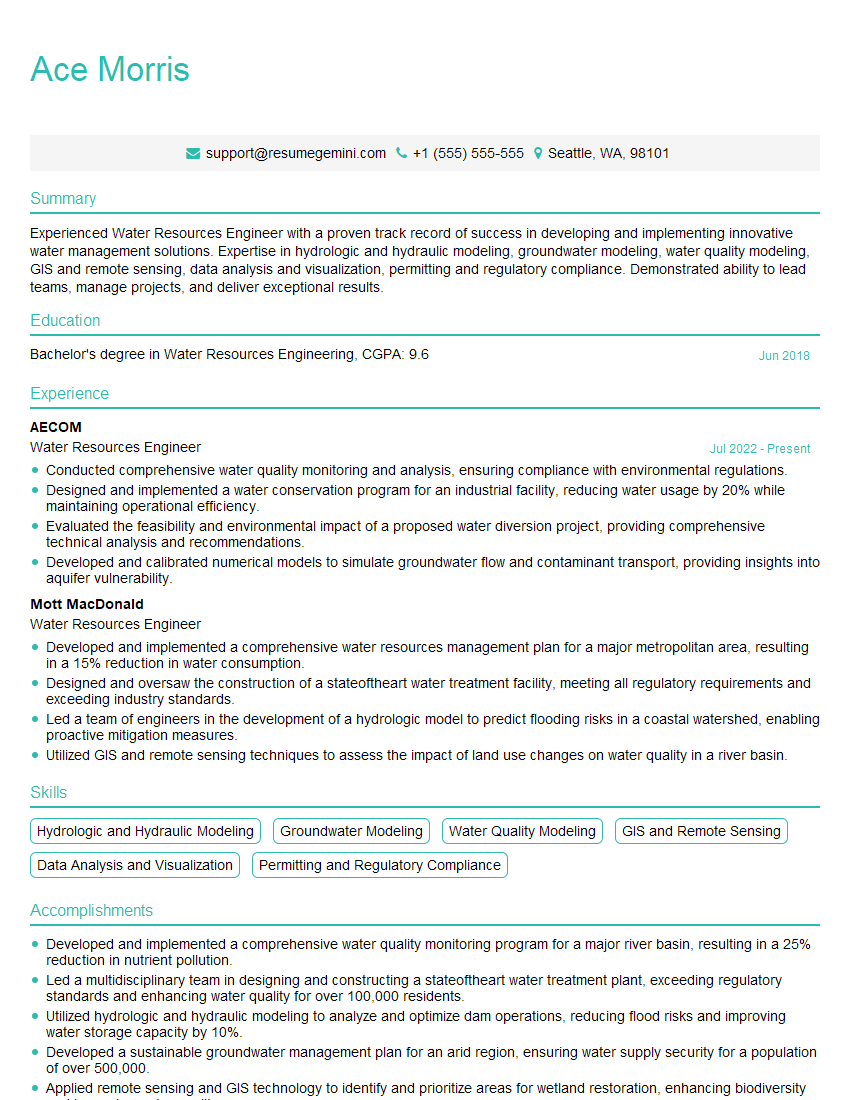
Mastering Stormwater Management System Design opens doors to exciting and impactful careers in environmental engineering and consulting. A strong understanding of these principles significantly enhances your marketability and positions you for leadership roles in this crucial field. To maximize your job prospects, create an ATS-friendly resume that highlights your skills and experience effectively. We highly recommend using ResumeGemini to build a professional and impactful resume. ResumeGemini offers a streamlined process and provides examples of resumes tailored to Stormwater Management System Design, helping you present your qualifications compellingly. Take the next step in advancing your career today!

Explore more articles
Users Rating of Our Blogs
Share Your Experience
We value your feedback! Please rate our content and share your thoughts (optional).
What Readers Say About Our Blog
To the interviewgemini.com Webmaster.
Very helpful and content specific questions to help prepare me for my interview!
Thank you
To the interviewgemini.com Webmaster.
This was kind of a unique content I found around the specialized skills. Very helpful questions and good detailed answers.
Very Helpful blog, thank you Interviewgemini team.