Interviews are opportunities to demonstrate your expertise, and this guide is here to help you shine. Explore the essential Drainage and Water Management interview questions that employers frequently ask, paired with strategies for crafting responses that set you apart from the competition.
Questions Asked in Drainage and Water Management Interview
Q 1. Explain the difference between surface water and groundwater drainage systems.
Surface water drainage systems manage the flow of water over the land surface, while groundwater drainage systems deal with water that infiltrates the soil and collects beneath the surface. Think of it like this: surface drainage is like cleaning up a spill on your kitchen counter – you wipe it up immediately. Groundwater drainage is more like dealing with a slow leak under your sink – you need to address the source and manage the accumulation.
Surface water drainage involves features like ditches, channels, gutters, and storm sewers to collect and convey rainfall runoff. It’s crucial for preventing flooding in urban areas and protecting infrastructure. It’s a relatively fast-acting system.
Groundwater drainage, on the other hand, focuses on lowering the water table through techniques such as subsurface drains, well points, and drainage galleries. This is vital for managing waterlogged areas, stabilizing foundations, and preventing seepage into basements. It’s a slower-acting system, impacting water levels over time. The two systems often work in conjunction – surface drainage prevents overloading the groundwater system.
Q 2. Describe various methods for stormwater management.
Stormwater management employs various methods to control and mitigate the impacts of stormwater runoff. The goal is to minimize flooding, erosion, and water pollution. These methods can be broadly categorized as:
- Conventional drainage systems: These involve pipes, channels, and culverts to quickly convey stormwater to receiving water bodies. This approach is often seen in densely developed areas. However, it can lead to increased downstream flooding and pollution if not managed carefully.
- Green infrastructure: This sustainable approach uses natural systems to manage stormwater. Examples include rain gardens, bioswales (vegetated channels), permeable pavements, and green roofs. These solutions infiltrate, evapotranspirate (water loss from plants), and filter stormwater, reducing runoff volume and improving water quality. Think of a rain garden as a sponge soaking up the excess water.
- Retention and detention ponds: These engineered ponds temporarily store stormwater, reducing peak runoff flows and allowing for controlled release. Retention ponds store water permanently, while detention ponds release the water gradually.
- Water harvesting: Collecting rainwater for beneficial use, such as irrigation or toilet flushing, reduces the load on the drainage system.
The best method depends on the specific site conditions, rainfall intensity, land use, and environmental regulations.
Q 3. What are the key considerations in designing a sustainable drainage system?
Designing a sustainable drainage system (SuDS) requires careful consideration of several factors to minimize environmental impact and promote long-term sustainability. Key considerations include:
- Water sensitive urban design (WSUD) principles: Integrating natural processes into the design, minimizing impervious surfaces, and promoting infiltration and evapotranspiration.
- Minimizing runoff volume and peak flows: Employing techniques that reduce the amount of water entering the drainage system and spread out the flow over time.
- Improving water quality: Using filtration methods to remove pollutants before the water enters receiving water bodies.
- Protecting ecosystems: Avoiding negative impacts on wetlands, streams, and other sensitive habitats.
- Community engagement and education: Involving local stakeholders in the planning and implementation process to ensure acceptance and understanding.
- Cost-effectiveness: Balancing the upfront costs with the long-term benefits of reduced maintenance and environmental damage.
- Adaptability to climate change: Designing systems that are resilient to future changes in rainfall patterns and increased storm intensity.
A sustainable system will aim to mimic natural hydrological processes as closely as possible to create a more resilient and environmentally friendly approach to drainage management.
Q 4. How do you calculate the hydraulic gradient in a drainage system?
The hydraulic gradient is the slope of the water table or energy line in a drainage system. It represents the change in hydraulic head per unit distance. It’s essentially how steep the water is ‘flowing’ underground or in a pipe. A steeper gradient means faster flow. We calculate it using the following formula:
Hydraulic Gradient (i) = (h1 - h2) / L
Where:
h1is the hydraulic head at point 1 (e.g., water level in a well).h2is the hydraulic head at point 2.Lis the horizontal distance between point 1 and point 2.
For example, if the water level in one well is 10 meters and in another well 50 meters away it’s 8 meters, the hydraulic gradient would be:
i = (10 - 8) / 50 = 0.04
This indicates a relatively gentle slope. The hydraulic gradient is a crucial parameter in determining groundwater flow rates and designing drainage systems to ensure efficient water removal.
Q 5. Explain the principles of Manning’s equation and its application in drainage design.
Manning’s equation is an empirical formula used to calculate the flow rate in open channels and pipes. It’s a fundamental tool in drainage design. The equation is:
Q = (A * R^(2/3) * S^(1/2)) / n
Where:
Qis the flow rate (m³/s)Ais the cross-sectional area of flow (m²)Ris the hydraulic radius (A/P, where P is the wetted perimeter) (m)Sis the slope of the energy line (often approximated by the channel bed slope) (m/m)nis Manning’s roughness coefficient (dimensionless), which accounts for the frictional resistance of the channel walls.
Application in drainage design: Manning’s equation helps determine the required size of channels, pipes, and culverts to accommodate a given design flow rate. By inputting the known parameters (slope, roughness, and desired flow), we can solve for the required area, which then dictates the dimensions of the drainage structure. For example, designing a storm drain pipe for a specific catchment area would involve using Manning’s equation to find the necessary diameter to handle the expected runoff during a design storm event.
Q 6. What are the different types of culverts and their suitability for various applications?
Culverts are structures that carry water under roads, railways, or other obstacles. Different types exist, each with varying suitability:
- Pipe culverts: These are the most common type, using circular, elliptical, or rectangular pipes made of concrete, metal, or plastic. They’re versatile and suitable for a wide range of flows and soil conditions. The choice of material depends on factors like strength, corrosion resistance, and cost.
- Box culverts: These are large, rectangular structures typically used for larger flows or where greater headroom is needed. They offer greater structural strength and easier access for maintenance.
- Arch culverts: These are curved structures often used in situations with limited headroom or where a more aesthetically pleasing design is desired. They can handle high flows and are particularly useful in areas with high water tables.
- Bridge culverts: Used for extremely large flows, essentially functioning as small bridges with a culvert integrated into the design.
Suitability depends on factors including the size and frequency of flows, soil conditions, environmental considerations, and aesthetic requirements. For instance, a small stream crossing a minor road might only need a simple pipe culvert, while a larger river crossing a highway would require a box or arch culvert, or even a bridge culvert. Hydrologic and hydraulic analysis are crucial in selecting the appropriate culvert type and size.
Q 7. Describe the process of designing a retention pond.
Designing a retention pond involves a multi-step process:
- Hydrologic analysis: Determine the size and frequency of design storms and estimate the volume of stormwater runoff to be managed. This often involves using rainfall intensity-duration-frequency (IDF) curves.
- Hydraulic design: Determine the required pond storage volume to accommodate the design storm runoff. This involves designing the pond’s geometry (size, shape, depth) to ensure adequate storage capacity without causing undue flooding upstream.
- Water quality design: Incorporate features like a vegetated buffer strip, a forebay (an area designed to settle out sediment), and an outflow structure with filtration to remove pollutants from the runoff.
- Structural design: Design the earthwork, embankment, and other structural components of the pond to ensure stability and prevent erosion. This considers soil properties and potential seepage.
- Permitting and regulatory compliance: Obtain all necessary permits and approvals from relevant authorities, ensuring compliance with environmental regulations.
- Construction and monitoring: Oversee the construction process to ensure that the pond is built according to the design specifications. Post-construction monitoring will assess the pond’s effectiveness in managing runoff and water quality.
Careful consideration of environmental factors and local regulations is paramount. A well-designed retention pond not only controls flooding but can also provide habitat for wildlife and improve water quality.
Q 8. Explain the role of infiltration basins in stormwater management.
Infiltration basins are a crucial component of stormwater management, designed to mimic the natural hydrological cycle. They act as temporary storage areas for stormwater runoff, allowing it to slowly infiltrate back into the ground. This process reduces the volume of water entering the drainage system, mitigating flooding and erosion. Think of them as giant, engineered sponges.
The effectiveness of an infiltration basin depends on several factors, including soil permeability, basin size and design, and the rate of stormwater inflow. A well-designed basin will have sufficient porosity and permeability in the underlying soil to absorb the captured water effectively. For instance, a basin in an area with clay soil will likely require more extensive pretreatment (e.g., removal of sediment and debris) to prevent clogging and maintain infiltration capacity.
In practical terms, infiltration basins are often used in residential developments, commercial sites, and even larger-scale projects to manage stormwater runoff and replenish groundwater supplies. They offer a sustainable approach to stormwater management compared to traditional conveyance-based systems.
Q 9. What are the common problems associated with aging drainage infrastructure?
Aging drainage infrastructure faces a multitude of problems, often leading to inefficient and unsustainable water management. Common issues include:
- Pipe deterioration: Pipes made of materials like cast iron or clay can corrode, crack, or become blocked by root intrusion over time, reducing flow capacity and increasing the risk of failure and collapse.
- Infiltration and exfiltration: Cracks and joints in aging pipes allow for both infiltration (groundwater entering the pipe) and exfiltration (wastewater leaking out), contaminating water sources and compromising the structural integrity of the system.
- Sedimentation: Over time, sediment builds up in the pipes, decreasing their conveyance capacity and necessitating costly cleaning or replacement.
- Capacity issues: Increased urbanization and climate change often lead to greater stormwater runoff volumes than what the aging infrastructure was originally designed to handle.
- Inadequate maintenance: Lack of regular inspection and maintenance allows small problems to escalate into larger, more expensive repairs.
These problems can lead to flooding, erosion, water pollution, and public health risks. Addressing these issues through proactive maintenance, strategic upgrades, and innovative solutions is critical for ensuring the long-term sustainability of our drainage systems.
Q 10. How do you assess the hydraulic capacity of an existing drainage system?
Assessing the hydraulic capacity of an existing drainage system involves a multi-step process that combines field investigations and modeling. It begins with a thorough site assessment to collect data on the existing infrastructure.
Steps involved include:
- Mapping: Creating detailed maps of the drainage network, including pipe diameters, lengths, slopes, and locations of inlets, manholes, and outlets.
- Field Surveys: Inspecting the physical condition of the pipes and appurtenances to identify any defects or blockages. Flow measurements can be taken during storm events to quantify the actual discharge rates.
- Hydraulic Modeling: Using specialized software (e.g., SWMM, InfoWorks) to simulate the flow of water through the drainage network under various rainfall scenarios. The model takes into account pipe characteristics, surface runoff rates, and other relevant factors to estimate flow velocities, water depths, and potential flooding areas.
- Data Analysis: Evaluating the model’s output to determine the system’s capacity and identify any bottlenecks or areas of concern. This involves comparing modeled results to the observed field data.
For example, a model may reveal that a particular section of pipe is prone to exceeding its capacity during intense rainfall, necessitating upgrades such as pipe enlargement or the addition of storage facilities. The assessment provides critical data for informed decision-making regarding maintenance, repair, and upgrades.
Q 11. Explain the concept of water table management.
Water table management involves controlling the level of groundwater to prevent issues like flooding, soil erosion, and damage to infrastructure. It’s essentially about balancing the input and output of water in a given area.
Techniques used in water table management include:
- Drainage systems: Installing subsurface drains, ditches, and other drainage infrastructure to lower the water table.
- Pumping: Using pumps to remove excess groundwater from specific areas.
- Recharge basins: Creating artificial recharge basins to replenish groundwater supplies during periods of excess rainfall.
- Water conservation: Implementing measures to reduce water consumption, reducing the demand on groundwater supplies.
Consider a coastal region experiencing saltwater intrusion due to over-extraction of groundwater. Implementing a managed aquifer recharge scheme, where excess surface water is strategically infiltrated into the aquifer, can help maintain a desirable freshwater lens and prevent saltwater from contaminating the water supply. The management techniques employed need to be carefully tailored to the specific hydrogeological conditions of the site.
Q 12. What are the environmental regulations related to stormwater discharge?
Environmental regulations concerning stormwater discharge vary depending on location, but generally aim to protect water quality and minimize the environmental impacts of urban runoff. Key aspects include:
- National Pollutant Discharge Elimination System (NPDES) permits (US): In the United States, the NPDES program requires permits for stormwater discharges from municipal separate storm sewer systems (MS4s) and industrial facilities. Permits specify limits on pollutants like sediment, nutrients, and heavy metals.
- Water Quality Standards: Most jurisdictions have water quality standards that set limits on the concentration of various pollutants in receiving waters (lakes, rivers, oceans). Stormwater discharges must comply with these standards.
- Best Management Practices (BMPs): Regulations often mandate the implementation of BMPs to reduce pollutant loadings from stormwater runoff. These can include green infrastructure elements (rain gardens, bioswales), detention basins, and erosion and sediment control measures.
- Erosion and Sediment Control Plans: Construction sites often require detailed erosion and sediment control plans to prevent soil erosion and associated water pollution during construction activities.
Non-compliance can lead to significant penalties, including fines and enforcement actions. Staying informed on local regulations and implementing appropriate BMPs is essential for compliance and environmental protection.
Q 13. Describe different types of drainage pipes and their material properties.
Drainage pipes come in various types, each with its own material properties influencing durability, cost, and suitability for specific applications. Here are some common examples:
- High-Density Polyethylene (HDPE): A lightweight, flexible material offering excellent corrosion resistance and long lifespan. It’s commonly used in applications where flexibility is needed, such as trenchless installations.
- Polyvinyl Chloride (PVC): A rigid, durable material with good chemical resistance. It’s less flexible than HDPE, but readily available and cost-effective for many applications.
- Ductile Iron: A strong and durable material offering high load-bearing capacity. Excellent for situations requiring high strength and resistance to heavy traffic loads. But it’s susceptible to corrosion in aggressive soils.
- Concrete: A strong and relatively inexpensive material, but it can be susceptible to cracking and infiltration if not properly constructed and maintained.
- Clay: A traditional material but susceptible to damage from root intrusion and less resistant to corrosion than the other alternatives. Its use is declining with the advent of more durable materials.
Material selection depends on factors such as soil conditions, traffic loads, project budget, and desired lifespan. For instance, in areas with highly corrosive soils, HDPE or ductile iron pipes with appropriate coatings might be preferred over PVC or concrete.
Q 14. How do you conduct a drainage site assessment?
A drainage site assessment is a crucial first step in any drainage project, providing the foundation for design, construction, and maintenance. It involves a thorough investigation of the site to identify existing drainage conditions, potential problems, and suitable solutions.
Key steps in a drainage site assessment include:
- Topographic survey: Creating a detailed topographic map of the site to determine elevations, slopes, and water flow paths.
- Soil investigation: Analyzing soil properties, such as permeability and bearing capacity, to assess infiltration rates and the suitability of different drainage materials. This often involves soil borings and lab testing.
- Hydrological analysis: Determining the amount and frequency of rainfall in the area to estimate runoff volumes and design drainage systems with appropriate capacity. This can include analysis of existing rainfall data and the potential impact of climate change.
- Existing drainage system evaluation: Inspecting the condition and capacity of any existing drainage infrastructure. This involves assessing the hydraulic capacity of pipes, channels, and other elements.
- Environmental assessment: Identifying environmentally sensitive areas and potential impacts of the proposed drainage system. This may include considerations regarding wetlands, endangered species, and water quality.
- Regulatory review: Determining relevant regulations and permits that apply to the project. This can involve consultation with local and regional authorities.
For example, in assessing a site for a new housing development, a comprehensive site assessment might reveal areas with low permeability soils requiring alternative drainage solutions like increased pipe size or the incorporation of infiltration basins. Such assessment ensures the project’s drainage system is both effective and environmentally responsible.
Q 15. Explain the importance of hydraulic modeling in drainage design.
Hydraulic modeling is crucial in drainage design because it allows us to simulate the flow of water through a drainage system before construction. Think of it like a virtual test run. Instead of building the system and hoping it works, we can use software to predict how water will move through pipes, channels, and other components under various conditions. This helps us to optimize the design, ensuring it effectively manages water flow and prevents flooding or other issues.
By simulating different rainfall scenarios and system configurations, we can identify potential bottlenecks, assess the capacity of various components, and ensure the system meets the required performance standards. For example, we might model different pipe diameters to determine the optimal size that prevents overflows during peak rainfall events. Or we might model the impact of a proposed development on an existing drainage system to predict potential flooding risks.
Career Expert Tips:
- Ace those interviews! Prepare effectively by reviewing the Top 50 Most Common Interview Questions on ResumeGemini.
- Navigate your job search with confidence! Explore a wide range of Career Tips on ResumeGemini. Learn about common challenges and recommendations to overcome them.
- Craft the perfect resume! Master the Art of Resume Writing with ResumeGemini’s guide. Showcase your unique qualifications and achievements effectively.
- Don’t miss out on holiday savings! Build your dream resume with ResumeGemini’s ATS optimized templates.
Q 16. What software are you proficient in for drainage design and analysis?
I’m proficient in several industry-standard software packages for drainage design and analysis, including:
- HEC-RAS: A powerful hydrodynamic modeling system used for simulating water flow in rivers, streams, and drainage channels. It’s especially useful for larger-scale projects.
- SWMM (Storm Water Management Model): A widely used model for simulating urban stormwater systems. It allows for detailed analysis of various components like pipes, inlets, and storage areas.
- InfoWorks ICM: A comprehensive integrated catchment management model that handles a broad range of water-related challenges, including drainage.
- AutoCAD Civil 3D: I utilize this for the design and drafting aspects of the projects, creating detailed plans and specifications.
My expertise extends beyond just using the software; I understand the underlying hydraulic principles and can interpret the results effectively to make informed design decisions.
Q 17. Describe your experience with designing drainage systems for different soil types.
Designing drainage systems for different soil types is critical, as soil properties significantly influence water infiltration and runoff. For instance, sandy soils have high permeability, allowing water to infiltrate readily. This requires less extensive drainage infrastructure compared to clay soils, which have low permeability and lead to higher surface runoff, necessitating more robust drainage design.
My experience includes projects in various soil types. In one project involving highly permeable sandy soil near a coastal area, we designed a system emphasizing subsurface drainage with perforated pipes to collect and direct water away from sensitive areas. In another project involving clay soils in a hilly region, we utilized a combination of surface channels, swales (shallow ditches), and underground pipes to manage the high runoff volumes and minimize erosion.
I always consider soil infiltration rates, shear strength, and potential for erosion when designing for a specific soil type and incorporate appropriate design parameters to mitigate risks.
Q 18. How do you handle unexpected challenges during a drainage project?
Unexpected challenges are inevitable in any large-scale project. My approach to handling them involves a structured process:
- Immediate Assessment: Quickly identify the nature and extent of the problem. This often involves on-site inspection and data gathering.
- Risk Assessment: Evaluate the potential consequences of the issue and prioritize actions to mitigate risks.
- Problem Solving: Explore various solutions, weighing their feasibility and cost-effectiveness. This may involve consulting with specialists, reviewing design documents, and coordinating with contractors.
- Implementation & Monitoring: Implement the chosen solution carefully and monitor its effectiveness. Regular site visits and data collection are crucial here.
- Documentation: Thoroughly document the entire process – the challenge, the solution, and the lessons learned. This allows for improved practices in future projects.
For example, encountering unforeseen bedrock during excavation required a redesign of the pipe layout and the engagement of specialized drilling equipment. Open communication with the client throughout the process was vital to ensuring project success.
Q 19. Explain the design considerations for drainage in urban areas.
Urban drainage design presents unique challenges due to high levels of impervious surfaces (roads, buildings), high runoff rates, and complex infrastructure. Key design considerations include:
- Increased Runoff: Impervious surfaces drastically reduce infiltration, leading to increased runoff volumes and velocities. Drainage systems must be sized to accommodate these larger flows.
- Combined Sewers: Many older urban areas have combined sewer systems (carrying both stormwater and wastewater). These can overflow during intense rainfall, leading to pollution. Sustainable solutions often involve separating stormwater and wastewater systems.
- Water Quality: Urban runoff contains pollutants from roads, rooftops, and other sources. Best Management Practices (BMPs) such as green infrastructure (rain gardens, bioswales) are crucial for improving water quality.
- Hydraulic Capacity: The design must ensure sufficient capacity to handle peak rainfall events, avoiding flooding of streets and buildings.
- Integration with Existing Infrastructure: New drainage systems must seamlessly integrate with existing infrastructure, minimizing disruption and maintaining functionality.
Proper planning and sustainable solutions are crucial for mitigating the risks associated with urban drainage.
Q 20. What is your experience with different types of pumps used in drainage systems?
I have experience with various pump types used in drainage systems, each suited for specific applications:
- Submersible Pumps: These are installed directly in the water and are ideal for pumping from deep pits or wet wells. They are often used in lift stations to pump wastewater or stormwater to higher elevations.
- Centrifugal Pumps: These pumps use a rotating impeller to increase the velocity of water. They are versatile and commonly used in drainage systems, especially for larger volumes of water.
- Axial Flow Pumps: These pumps move large volumes of water with a relatively low pressure increase and are suitable for applications requiring high discharge rates, such as flood control.
- Vertical Turbine Pumps: Used for high-head applications, where water needs to be lifted to considerable heights. They are often found in pumping stations for large drainage projects.
Selecting the appropriate pump type requires careful consideration of factors like flow rate, head (vertical distance the water needs to be lifted), and the characteristics of the water being pumped.
Q 21. Describe your experience with GIS and its application in drainage projects.
GIS (Geographic Information System) plays a vital role in drainage projects, offering a powerful platform for data visualization, analysis, and management. I leverage GIS extensively throughout the project lifecycle.
Data Integration: GIS allows integrating various datasets, including topography, land use, soil types, pipe networks, and rainfall data. This comprehensive view is crucial for informed design decisions.
Spatial Analysis: We use GIS for spatial analysis to identify flood-prone areas, assess catchment areas, and optimize the location of drainage infrastructure. For example, we can use GIS to model the spread of floodwater from a particular storm event.
Project Management: GIS provides a platform for managing project data, facilitating communication and collaboration among project stakeholders. It allows for easy access to project maps, reports, and other relevant information.
In a recent project, GIS was instrumental in identifying areas with inadequate drainage capacity, leading to targeted improvements in the design.
Q 22. Explain your understanding of water quality parameters and their relevance to drainage.
Water quality parameters are crucial in drainage design and management because they directly impact the environment and the effectiveness of the drainage system. Understanding these parameters allows us to predict and mitigate potential issues.
- pH: Measures acidity or alkalinity. Extreme pH levels can corrode infrastructure and harm aquatic life. For example, acidic runoff from mining operations can significantly lower the pH in a receiving water body.
- Dissolved Oxygen (DO): Essential for aquatic life. Low DO, often caused by pollution from stormwater runoff carrying fertilizers or sewage, can lead to fish kills and ecosystem degradation.
- Turbidity: Measures water clarity. High turbidity, usually caused by sediment from construction sites or erosion, reduces light penetration, affecting aquatic plant growth and overall water quality.
- Nutrients (Nitrogen & Phosphorus): Excessive nutrients from fertilizers can cause eutrophication, leading to algal blooms which deplete oxygen and harm aquatic life. This is a common issue in urban drainage systems.
- Heavy Metals: Contaminants like lead, mercury, and cadmium can be carried by stormwater runoff and accumulate in sediments, posing risks to human and environmental health. For instance, runoff from industrial areas can introduce heavy metals into drainage systems.
- Bacteria & Pathogens: Presence of bacteria like E. coli indicates fecal contamination, posing a health risk. Stormwater runoff from areas with failing septic systems or livestock operations can introduce significant levels of pathogens.
By monitoring these parameters, we can implement appropriate treatment measures like bioswales, constructed wetlands, or filtration systems to improve water quality before it enters receiving waters.
Q 23. How do you ensure the safety of workers during drainage construction?
Worker safety is paramount in drainage construction. My approach involves a multi-layered safety plan, starting with pre-construction risk assessments.
- Pre-Construction Risk Assessment: Identifying potential hazards such as trench collapses, confined space entry, electrocution from underground utilities, and heavy machinery operation.
- Site Safety Plan: This plan details specific control measures like trench shoring, proper PPE (Personal Protective Equipment) usage, lockout/tagout procedures for equipment, and regular safety training for all workers.
- Regular Safety Inspections: Daily inspections by supervisors to identify and address any emerging hazards, ensuring that the safety plan is consistently followed.
- Emergency Procedures: Clear communication of emergency procedures, including designated emergency contacts and evacuation plans, is crucial.
- Communication & Training: Regular safety training and open communication between workers and supervisors fosters a strong safety culture. This includes training on hazard recognition, safe work practices and emergency response procedures.
- Compliance with Regulations: Adherence to OSHA or equivalent local regulations is vital to ensure compliance with all safety standards.
For instance, in a recent project, we utilized a trench box system for all trench excavations exceeding 4 feet, significantly reducing the risk of trench collapse. This proactive approach resulted in a zero-incident safety record on that particular project.
Q 24. What are the key factors influencing the selection of drainage materials?
Material selection for drainage systems is critical for longevity, cost-effectiveness, and environmental impact. The choice depends on several key factors:
- Hydraulic Conductivity: The material’s ability to transmit water. Highly permeable materials like gravel are suitable for infiltration systems, while less permeable materials like concrete pipes are used for conveyance systems.
- Strength & Durability: Materials must withstand the stresses of soil loads, traffic, and environmental conditions (freeze-thaw cycles, chemical attack). For example, high-density polyethylene (HDPE) pipes are increasingly popular due to their strength and resistance to corrosion.
- Cost-Effectiveness: Balancing material cost with long-term maintenance costs is important. While initial costs for durable materials might be higher, they may reduce long-term replacement costs.
- Environmental Considerations: Using recycled materials or materials with low environmental impact is increasingly prioritized. Permeable pavements, for example, minimize runoff and improve water quality.
- Project Specific Requirements: Site conditions, like soil type and groundwater levels, dictate the suitability of specific materials. For example, in areas prone to subsidence, flexible materials might be preferred.
In one project, we used recycled concrete aggregate for the base of a bioswale, reducing material costs while promoting sustainability. The selection ensured that the material met the required hydraulic conductivity and strength characteristics for the application.
Q 25. Describe your experience in managing budgets and timelines for drainage projects.
Budget and timeline management are crucial for successful drainage projects. My experience involves a meticulous approach beginning with accurate cost estimations and detailed scheduling.
- Detailed Cost Estimation: Thorough quantity surveying, considering material costs, labor costs, equipment rental, and contingency factors.
- Realistic Scheduling: Creating a detailed project schedule using tools like Gantt charts, considering potential delays and incorporating buffer time for unforeseen circumstances.
- Regular Monitoring & Reporting: Tracking project progress against the schedule and budget, identifying potential deviations early on.
- Value Engineering: Identifying opportunities to optimize costs without compromising project quality or functionality. This might involve selecting alternative materials or construction methods.
- Risk Management: Identifying potential risks (e.g., weather delays, material shortages) and developing mitigation strategies.
- Communication & Collaboration: Regular communication with stakeholders (clients, contractors, subcontractors) is essential for keeping the project on track.
In a recent project, we successfully completed the project under budget by implementing value engineering strategies, such as using prefabricated components instead of on-site construction, leading to significant time and cost savings.
Q 26. How do you communicate technical information effectively to non-technical stakeholders?
Effective communication with non-technical stakeholders requires translating complex technical information into easily understandable terms.
- Visual Aids: Using diagrams, maps, and charts simplifies complex concepts. For example, a simple diagram illustrating the flow of stormwater through a drainage system is more effective than a lengthy technical description.
- Analogies & Metaphors: Relating technical concepts to everyday experiences helps stakeholders understand the information easily. For instance, comparing a drainage system to the circulatory system of the human body can help people visualize its function.
- Plain Language: Avoiding jargon and using clear, concise language ensures everyone understands the message.
- Active Listening: Listening attentively to stakeholder concerns and addressing them appropriately helps build trust and ensures that everyone is on the same page.
- Interactive Presentations: Using interactive tools like demonstrations or site visits can greatly enhance understanding.
I once explained the benefits of a new drainage system to a community group by using a simple analogy of a clogged drain in a kitchen sink, making the concept relatable and understandable.
Q 27. Explain your understanding of the principles of hydrology.
Hydrology is the study of water movement on, in, and above the Earth’s surface. Understanding its principles is foundational to effective drainage design.
- Hydrologic Cycle: Understanding the continuous movement of water through evaporation, precipitation, infiltration, runoff, and transpiration is crucial for predicting water flow patterns.
- Rainfall Intensity & Duration: These factors determine the volume and rate of runoff, influencing the design capacity of drainage systems. We use rainfall intensity-duration-frequency (IDF) curves to determine design rainfall events.
- Infiltration & Percolation: The ability of the soil to absorb rainfall affects the amount of runoff generated. Soil type, land use, and antecedent moisture conditions influence infiltration rates.
- Runoff Generation & Flow: Understanding how runoff is generated and how it travels across the landscape is essential for designing efficient drainage networks.
- Watershed Hydrology: Analyzing the characteristics of a watershed, including its size, topography, and land use, helps in predicting the volume and timing of runoff from a specific area.
For example, in designing a drainage system for a new development, we use hydrologic models to simulate runoff from different rainfall events, ensuring the system can handle the anticipated flows. This involves considering factors such as watershed area, rainfall intensity, soil infiltration rates and land cover.
Q 28. Describe your experience with regulatory compliance in drainage projects.
Regulatory compliance is a critical aspect of drainage projects. My experience encompasses navigating diverse regulations and permitting processes.
- Environmental Regulations: Understanding and complying with regulations related to water quality, wetlands protection, and endangered species protection is crucial. This often involves obtaining permits from environmental agencies.
- Construction Regulations: Adhering to building codes, safety regulations, and local ordinances related to excavation, trenching, and other construction activities.
- Permitting Process: Navigating the complex permitting process, including preparing applications, providing necessary documentation, and responding to agency comments.
- Stormwater Management Regulations: Complying with regulations related to stormwater management, including the implementation of best management practices (BMPs) to reduce pollution from runoff.
- Post-Construction Monitoring: Conducting post-construction monitoring to ensure that the drainage system meets the required performance standards and complies with the permit conditions.
In a recent project, we ensured regulatory compliance by working closely with the relevant agencies throughout the design and construction phases. This proactive approach avoided delays and ensured smooth project completion.
Key Topics to Learn for Drainage and Water Management Interview
- Hydrology and Hydraulics: Understanding rainfall patterns, runoff calculations, and hydraulic modeling for drainage design. Practical application: Designing effective drainage systems for urban areas or agricultural land.
- Drainage System Design: Familiarity with various drainage infrastructure components (pipes, culverts, ditches, swales) and their design considerations. Practical application: Selecting appropriate pipe sizes and materials based on site conditions and flow requirements.
- Water Management Techniques: Knowledge of sustainable water management practices like rainwater harvesting, water reuse, and infiltration techniques. Practical application: Developing strategies for reducing stormwater runoff and improving water quality.
- Groundwater Management: Understanding groundwater flow, well design, and the impacts of drainage on groundwater levels. Practical application: Assessing the environmental impact of drainage projects on groundwater resources.
- Environmental Regulations and Permitting: Familiarity with relevant environmental regulations and the permitting process for drainage and water management projects. Practical application: Ensuring projects comply with all applicable environmental regulations.
- Problem-Solving and Analytical Skills: Ability to analyze complex hydrological data, identify potential problems in existing drainage systems, and develop innovative solutions. Practical application: Troubleshooting drainage issues in existing infrastructure and proposing cost-effective solutions.
- GIS and Data Analysis: Proficiency in using GIS software for data analysis, visualization, and modeling of drainage systems. Practical application: Creating maps and visualizing drainage patterns to inform design decisions.
- Project Management and Communication: Understanding project management principles and the ability to effectively communicate technical information to both technical and non-technical audiences. Practical application: Managing project timelines, budgets, and stakeholder expectations.
Next Steps
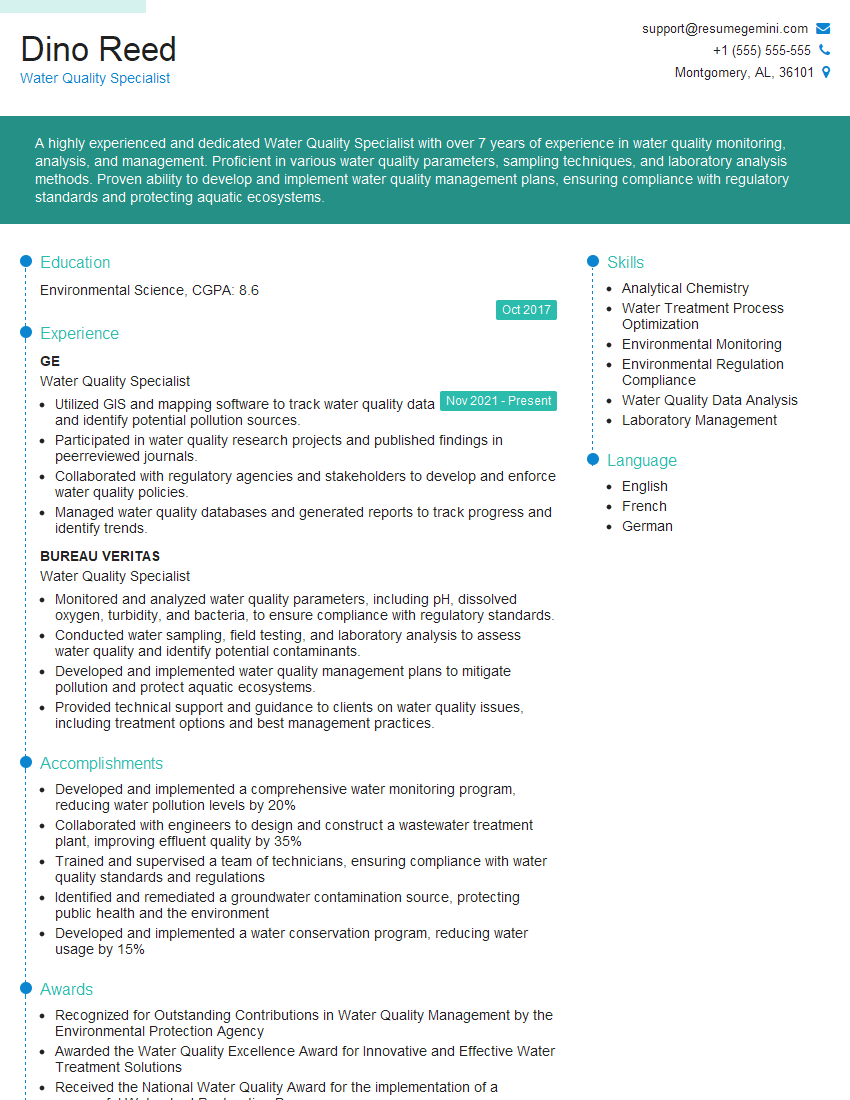
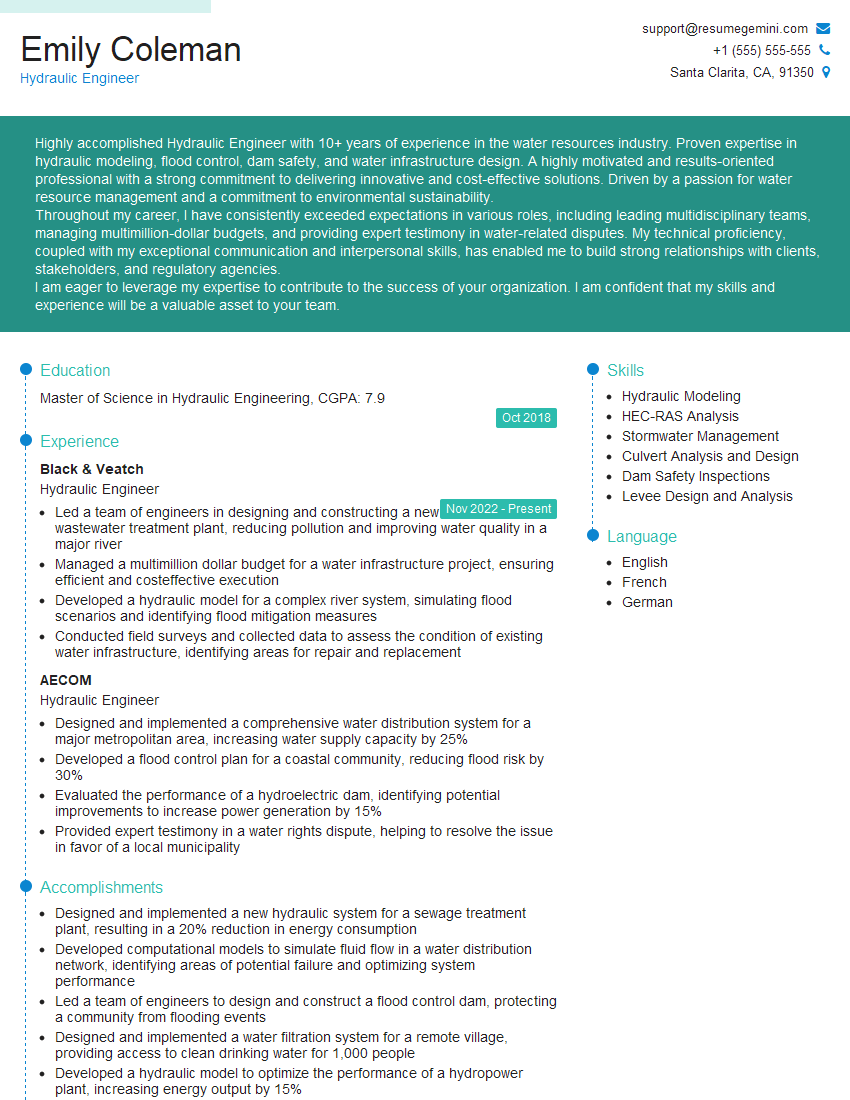
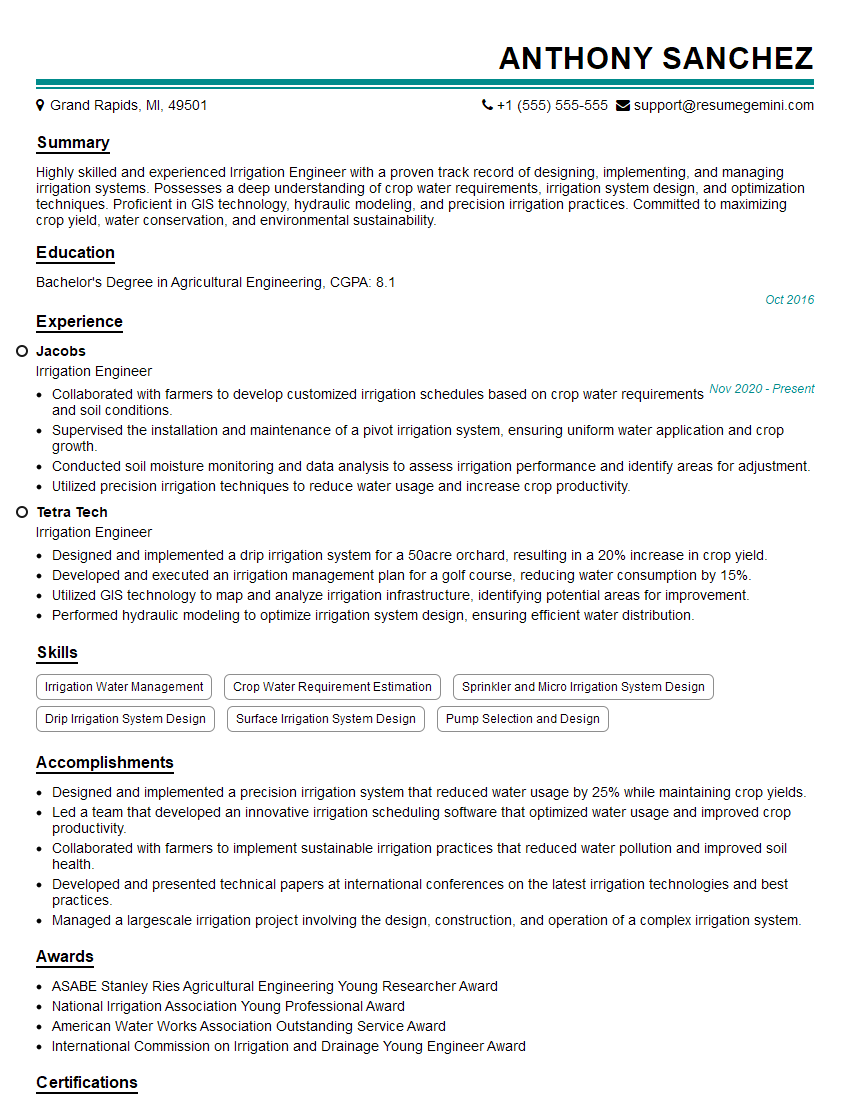
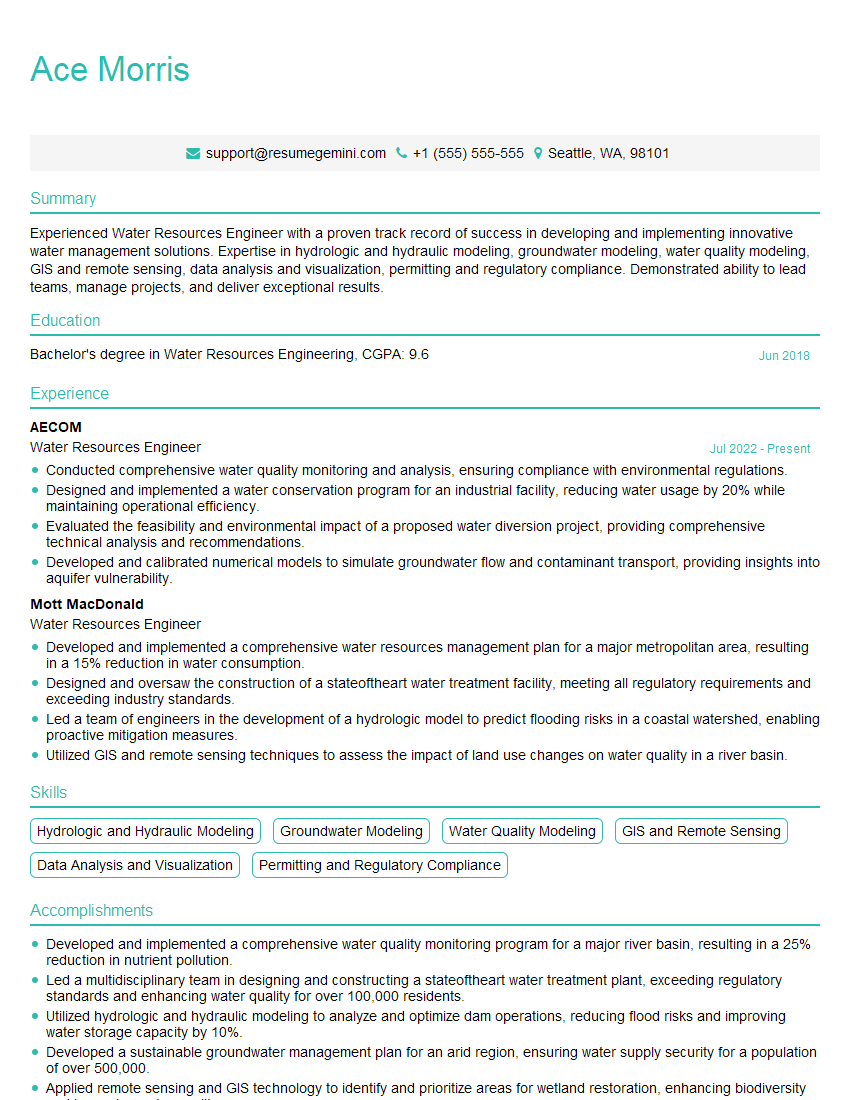
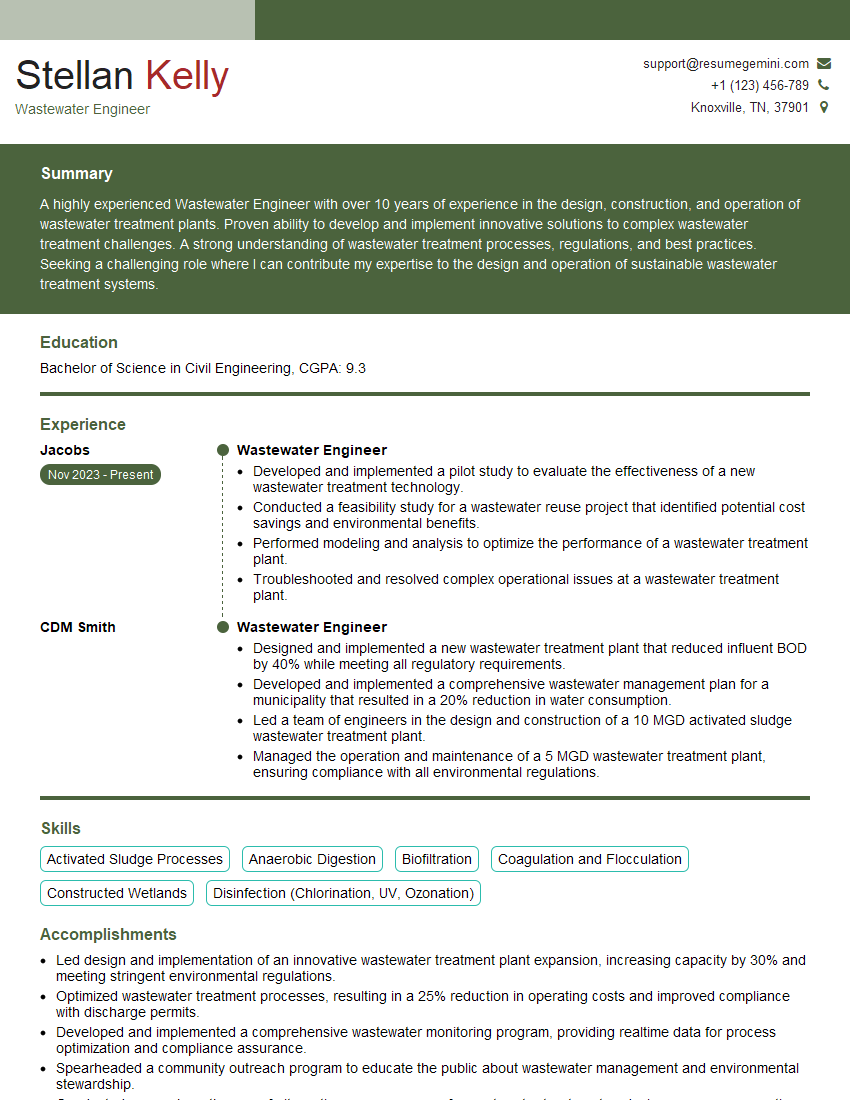
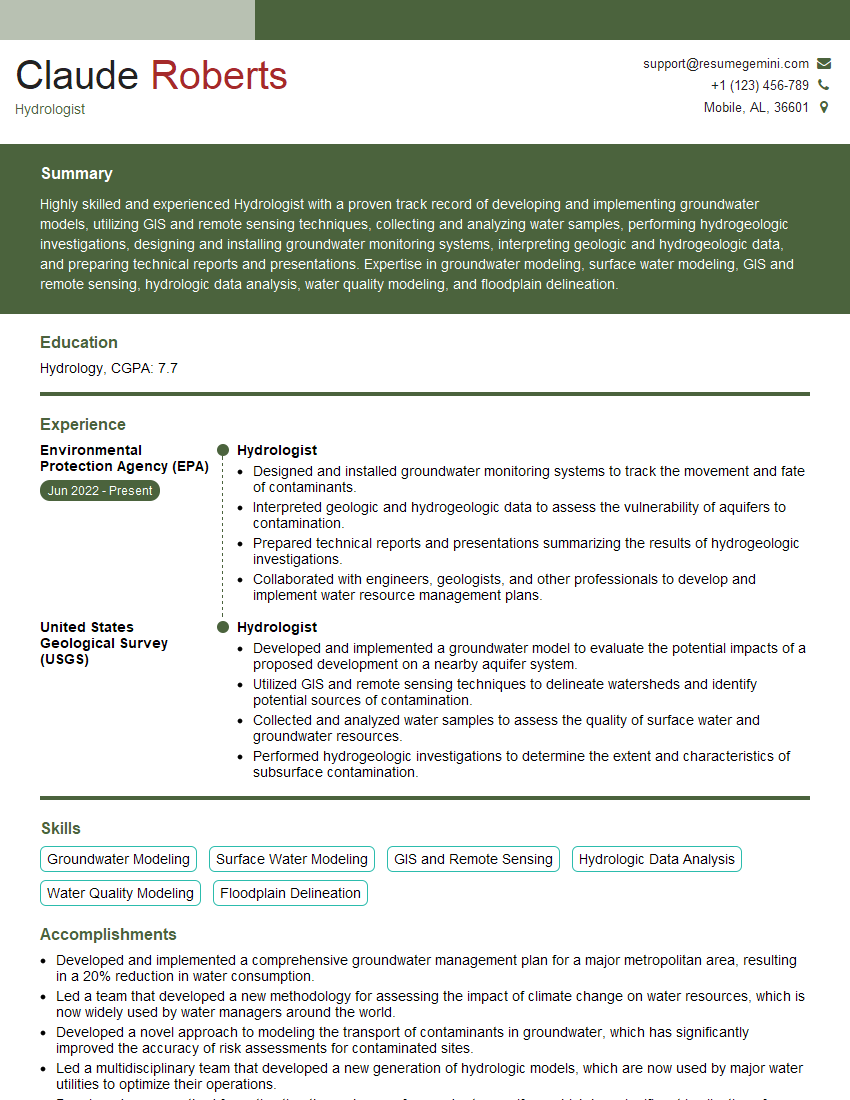
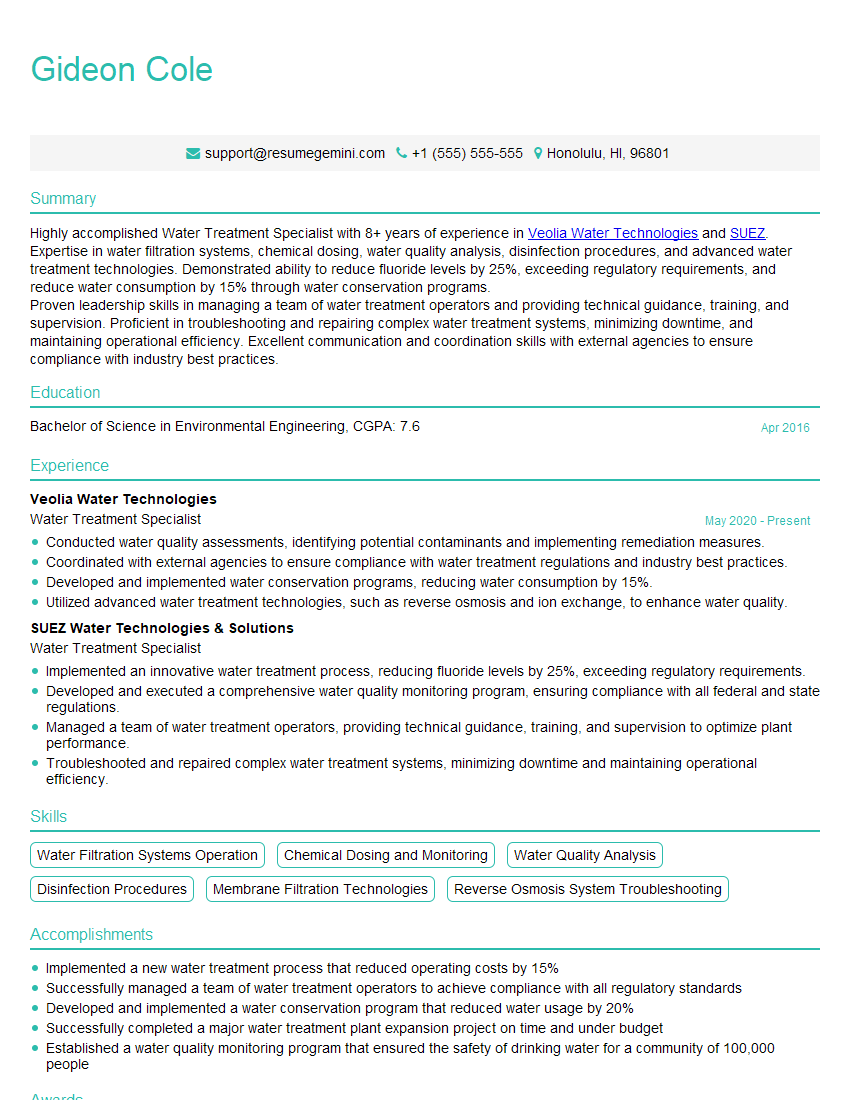
Mastering Drainage and Water Management opens doors to a rewarding career with significant impact on communities and the environment. To maximize your job prospects, crafting an ATS-friendly resume is crucial. A well-structured resume highlights your skills and experience effectively, increasing your chances of getting noticed by recruiters. We highly recommend using ResumeGemini, a trusted resource for building professional resumes. ResumeGemini can help you create a compelling narrative that showcases your expertise. Examples of resumes tailored to Drainage and Water Management are available to guide you.

Explore more articles
Users Rating of Our Blogs
Share Your Experience
We value your feedback! Please rate our content and share your thoughts (optional).
What Readers Say About Our Blog
To the interviewgemini.com Webmaster.
Very helpful and content specific questions to help prepare me for my interview!
Thank you
To the interviewgemini.com Webmaster.
This was kind of a unique content I found around the specialized skills. Very helpful questions and good detailed answers.
Very Helpful blog, thank you Interviewgemini team.