Preparation is the key to success in any interview. In this post, we’ll explore crucial Waste Minimization and Management interview questions and equip you with strategies to craft impactful answers. Whether you’re a beginner or a pro, these tips will elevate your preparation.
Questions Asked in Waste Minimization and Management Interview
Q 1. Describe your experience with different waste sorting methods.
Waste sorting methods are crucial for effective waste management. They categorize waste streams to facilitate recycling, composting, and proper disposal. My experience encompasses various methods, including manual sorting, automated sorting, and source separation.
- Manual Sorting: This involves human workers visually inspecting and manually separating waste into different categories. It’s common in smaller facilities or for specific waste streams like e-waste, where careful handling is required. I’ve overseen projects employing manual sorting for construction and demolition waste, meticulously separating recyclable materials like wood and metal from general waste.
- Automated Sorting: This uses technologies like optical sorters, magnetic separators, and eddy current separators to automatically sort waste based on physical properties like size, shape, color, and magnetic susceptibility. I’ve worked with facilities employing automated systems for municipal solid waste, significantly increasing sorting efficiency and reducing labor costs compared to manual methods. For instance, an optical sorter can identify and separate plastic bottles from other materials with remarkable accuracy.
- Source Separation: This relies on individuals and businesses separating their waste at the point of generation. It’s highly effective but relies on public education and compliance. I’ve developed and implemented source separation programs for residential areas, involving detailed community engagement, providing clear labeling for bins, and offering educational workshops.
Choosing the right method depends on factors like the type and volume of waste, available resources, and desired level of purity for recycling streams. Often, a combination of methods is most effective.
Q 2. What are the key principles of waste hierarchy?
The waste hierarchy prioritizes waste management strategies to minimize environmental impact. It’s a ranked order of preferred options, starting with the most environmentally beneficial. Imagine it like a pyramid, with each level representing a less desirable option.
- Prevention: This is the top priority – avoiding waste generation altogether through design changes, product lifespan extension, and reduced consumption. Think about designing products for durability and easy repair instead of planned obsolescence.
- Minimization: Reducing the amount of waste generated. This could involve optimizing production processes to generate less scrap or switching to reusable containers instead of single-use packaging.
- Reuse: Finding new applications for existing items before they become waste. Reusing packaging, donating used clothing, and repairing broken items are all examples of reuse.
- Recycling: Transforming waste materials into new products. This conserves resources and reduces landfill space. Recycling paper, plastic, and glass are common practices.
- Recovery: Extracting energy or other valuable resources from waste through processes like anaerobic digestion or incineration with energy recovery.
- Disposal: The least desirable option – sending waste to landfills, which generates greenhouse gasses and occupies valuable land.
Following the waste hierarchy ensures that we exhaust all environmentally sound options before resorting to disposal.
Q 3. Explain the concept of Life Cycle Assessment (LCA) in waste management.
Life Cycle Assessment (LCA) is a holistic approach to evaluating the environmental impacts of a product or process throughout its entire life cycle. In waste management, LCA helps determine the best approach for handling specific waste streams.
It considers all stages, from raw material extraction and manufacturing to use, waste management, and ultimate disposal. For example, an LCA of plastic bags might examine the energy used in manufacturing, the emissions during transportation, the potential for recycling, and the environmental impact if disposed of in a landfill.
The LCA typically quantifies impacts across various categories like greenhouse gas emissions, resource depletion, and water pollution. This comprehensive analysis enables informed decision-making, allowing us to compare different waste management options and identify the most sustainable solutions.
For instance, comparing the LCA of landfilling organic waste versus composting it would highlight the significant reduction in methane emissions and potential for soil enrichment achieved through composting.
Q 4. How do you calculate waste diversion rates?
Waste diversion rate measures the proportion of waste materials diverted from landfills through recycling, composting, and other recovery methods. It’s a key indicator of a waste management program’s success.
The calculation is straightforward:
Waste Diversion Rate = (Total Waste Diverted / Total Waste Generated) x 100%
For example, if a city generates 100 tons of waste and 60 tons are diverted through recycling and composting, the waste diversion rate is (60/100) x 100% = 60%. A higher diversion rate indicates greater effectiveness in reducing landfill burden.
Q 5. What are some common challenges in implementing a waste reduction program?
Implementing a waste reduction program faces several common challenges:
- Lack of Public Awareness and Participation: Educating the public about proper waste sorting and disposal practices is crucial but can be challenging. Many people lack the knowledge or motivation to actively participate.
- Insufficient Funding: Effective waste management requires significant investment in infrastructure, technology, and education. Budget constraints often hinder implementation.
- Technological Limitations: Some waste streams are difficult or expensive to recycle, and the technology for processing them might not be readily available or cost-effective.
- Political and Regulatory Barriers: Obtaining permits and navigating complex regulations can delay or even prevent the implementation of waste reduction initiatives.
- Contamination of Recycling Streams: Improper sorting leads to contamination, which reduces the value and marketability of recycled materials. This is a persistent challenge that requires continuous education and quality control measures.
Addressing these challenges requires a multi-faceted approach, combining public education, technological advancements, policy reforms, and strong stakeholder engagement.
Q 6. Describe your experience with different types of waste treatment technologies.
My experience spans various waste treatment technologies, each with its strengths and limitations.
- Incineration with Energy Recovery: This involves burning waste at high temperatures to generate electricity or heat. It significantly reduces waste volume but raises concerns about air emissions. I’ve worked on projects where rigorous air pollution control measures were crucial to mitigate these environmental impacts.
- Anaerobic Digestion: This biological process breaks down organic waste in the absence of oxygen, producing biogas (a renewable energy source) and digestate (a soil amendment). I’ve been involved in designing and implementing anaerobic digestion facilities for food waste, significantly reducing landfill burden and generating renewable energy.
- Mechanical Biological Treatment (MBT): MBT pre-processes waste to separate recyclable materials and reduce the volume of waste going to landfill or incineration. I’ve used MBT facilities to improve the efficiency of waste processing and maximize recycling rates.
- Landfilling: While the least desirable option, modern landfills utilize engineered liners and gas collection systems to minimize environmental impacts. I have experience in landfill management, focusing on minimizing leachate generation and methane emissions.
The choice of technology depends heavily on the waste stream’s composition, local regulations, and economic feasibility. Often, a combination of approaches is most effective.
Q 7. Explain the role of composting in waste management.
Composting is a natural process that decomposes organic waste materials like food scraps, yard waste, and agricultural residues into a nutrient-rich soil amendment called compost. It plays a vital role in diverting organic waste from landfills, reducing greenhouse gas emissions, and improving soil health.
Composting reduces the volume of waste sent to landfills, conserving space and reducing the production of methane, a potent greenhouse gas. The resulting compost can then be used to enrich soil in gardens, parks, and agricultural lands, improving soil fertility and reducing the need for synthetic fertilizers.
There are various composting methods, from simple backyard composting using bins to large-scale industrial composting facilities employing sophisticated technologies. I have experience designing and implementing both residential and commercial composting programs, optimizing processes for efficiency and quality control. Properly managed composting systems can significantly improve sustainability initiatives and resource management strategies.
Q 8. How would you design a recycling program for a manufacturing facility?
Designing a recycling program for a manufacturing facility requires a systematic approach, focusing on source reduction, reuse, and recycling. It begins with a thorough waste audit to identify the types and quantities of waste generated.
- Material Stream Analysis: We’d categorize waste into recyclable materials (plastics, metals, paper, cardboard, etc.), compostable materials (organic waste), and non-recyclable/hazardous waste. This forms the basis for designing separate collection systems.
- Infrastructure Development: This involves installing clearly labeled bins and containers at strategic points throughout the facility for each waste stream. Color-coding and signage are crucial for easy identification. We’d also consider the need for balers or compactors to reduce storage space and transportation costs.
- Employee Training and Engagement: A successful program relies heavily on employee participation. Comprehensive training would cover waste sorting procedures, proper disposal methods, and the importance of waste reduction. Incentives and gamification techniques can boost engagement.
- Recycling Partner Selection: We need to find reliable recycling partners who can process the collected materials efficiently. Factors to consider include proximity, processing capabilities, and market prices for recycled materials. Negotiating contracts that are financially and environmentally beneficial is key.
- Monitoring and Evaluation: Regular monitoring of the program’s performance, including waste diversion rates (percentage of waste recycled or composted) and cost savings, allows for continuous improvement. Data analysis helps identify areas needing attention and adjustments.
For example, in a previous project with a food processing plant, we implemented a program that successfully diverted over 70% of waste from landfills through improved sorting practices, a new composting system, and partnering with a local recycling facility specializing in food-grade materials.
Q 9. What are the regulatory requirements for hazardous waste management in your area?
Hazardous waste management regulations vary significantly by location. In my area (Note: Replace with your specific area and relevant regulations), we are governed by [Name of Relevant Agency, e.g., EPA, state environmental agency] regulations. These regulations cover various aspects, including:
- Manifest System: The generation, transportation, and disposal of hazardous waste must be meticulously documented using a manifest system, ensuring proper tracking and accountability.
- Storage Requirements: Hazardous waste must be stored in designated areas that meet specific requirements for containment, secondary containment, labeling, and compatibility to prevent leaks or spills.
- Treatment, Storage, and Disposal Facilities (TSDFs): Disposal of hazardous waste is strictly regulated, and it must be transported to and handled by permitted TSDFs.
- Employee Training: Employees handling hazardous waste must receive comprehensive training on safety procedures, emergency response, and regulatory compliance.
- Spill Prevention Control and Countermeasures (SPCC): Plans must be in place to prevent and respond to spills of hazardous materials.
- Record Keeping: Detailed records of all hazardous waste management activities must be maintained for a specified period.
Non-compliance can lead to significant penalties, including fines and legal action. Staying abreast of these regulations and maintaining meticulous records is crucial for responsible and compliant hazardous waste management.
Q 10. Explain your experience with waste audits and their purpose.
Waste audits are a critical first step in any effective waste management program. They involve a systematic assessment of the types, quantities, and sources of waste generated within a facility or organization. The purpose is to gather data that informs the design and implementation of tailored waste reduction and recycling strategies.
My experience with waste audits has included everything from small office buildings to large manufacturing plants. The process typically involves:
- Planning and Scoping: Defining the scope of the audit, identifying key stakeholders, and developing a sampling plan.
- Data Collection: Weighing and categorizing waste streams, and observing waste generation practices. This can involve on-site sampling, reviewing waste disposal records, and interviewing personnel.
- Data Analysis: Analyzing the collected data to identify trends, key waste generators, and opportunities for waste reduction and recycling.
- Reporting: Preparing a detailed report summarizing the findings, including recommendations for improvement and implementation plans.
A recent waste audit I conducted for a university campus revealed a significant opportunity to increase recycling rates by implementing a more comprehensive composting program for food waste and better signage in common areas.
Q 11. How do you measure the effectiveness of a waste management program?
Measuring the effectiveness of a waste management program requires a multifaceted approach that goes beyond simply tracking waste disposal quantities. Key metrics include:
- Waste Diversion Rate: The percentage of waste diverted from landfills through recycling, composting, or other waste reduction methods. This is a primary indicator of program success.
- Cost Savings: Tracking the reduction in waste disposal costs achieved through waste reduction and recycling efforts demonstrates financial benefits.
- Environmental Impact: Measuring the reduction in greenhouse gas emissions, water consumption, and other environmental impacts associated with waste management demonstrates environmental stewardship.
- Compliance Rate: Ensuring compliance with all relevant environmental regulations demonstrates responsible waste management.
- Employee Engagement: Tracking employee participation and feedback indicates the program’s success in gaining buy-in and achieving operational efficiency.
For instance, in one project, we tracked these metrics over a year and demonstrated a 25% reduction in landfill waste, a 15% decrease in disposal costs, and a measurable reduction in carbon footprint. This quantifiable evidence showcased the program’s effectiveness and value to the organization.
Q 12. Describe your experience with waste data analysis and reporting.
My experience with waste data analysis and reporting involves utilizing various tools and techniques to transform raw data into actionable insights. This typically includes:
- Data Collection and Management: Using spreadsheets, databases, and specialized waste management software to collect, organize, and manage waste data from various sources.
- Data Analysis: Employing statistical methods to identify trends, patterns, and anomalies in waste generation, composition, and disposal. This often involves calculating key performance indicators (KPIs) such as waste diversion rates and cost savings.
- Data Visualization: Creating charts, graphs, and dashboards to present data in a clear and concise manner, facilitating easy understanding and communication of findings.
- Reporting: Preparing regular reports summarizing key findings, highlighting achievements, and identifying areas for improvement. These reports are tailored to the specific needs and interests of the stakeholders.
For example, using data visualization, I’ve been able to effectively communicate complex data relating to waste reduction initiatives to both technical and non-technical audiences, leading to more informed decision-making and improved resource allocation.
Q 13. How do you communicate complex waste management issues to non-technical audiences?
Communicating complex waste management issues to non-technical audiences requires simplifying complex concepts and using clear, concise language, free of jargon. I typically use the following techniques:
- Analogies and Storytelling: Using relatable examples and stories to illustrate key concepts and make them more engaging. For example, comparing the amount of waste generated to familiar objects or quantities makes the scale of the problem more easily understood.
- Visual Aids: Employing charts, graphs, and infographics to visually represent data and complex information in an accessible format.
- Plain Language: Avoiding technical terms and using everyday language to explain concepts. If technical terms are necessary, defining them clearly and simply is essential.
- Interactive Presentations: Engaging audiences through interactive presentations that encourage questions and discussions, making the information more memorable.
- Focus on Benefits: Highlighting the benefits of waste reduction and recycling, such as cost savings, environmental protection, and positive brand image.
By focusing on the practical implications and benefits, I’ve found that non-technical audiences are more receptive to complex information and more willing to participate in waste management initiatives.
Q 14. What are some innovative waste management solutions you are aware of?
The field of waste management is constantly evolving, and several innovative solutions are emerging. Some noteworthy examples include:
- Anaerobic Digestion: This process breaks down organic waste in the absence of oxygen, producing biogas (a renewable energy source) and digestate (a valuable fertilizer). This offers a sustainable solution for organic waste management and renewable energy production.
- Chemical Recycling: This involves using chemical processes to break down plastics into their building blocks, allowing them to be repurposed into new materials. This addresses the challenge of recycling complex plastic waste streams.
- AI-Powered Waste Sorting: Artificial intelligence is being used to improve waste sorting efficiency and accuracy. Automated sorting systems using image recognition can identify and separate various materials with greater precision than manual sorting.
- Waste-to-Energy Technologies: Advanced technologies are being developed to convert non-recyclable waste into energy through processes such as gasification or incineration with energy recovery. This reduces landfill dependence and provides a renewable energy source.
- Extended Producer Responsibility (EPR) Programs: These programs hold producers responsible for the end-of-life management of their products, incentivizing them to design more sustainable and recyclable products.
The adoption of these innovative solutions can significantly improve waste management practices, reduce environmental impact, and create economic opportunities.
Q 15. How do you address resistance to change when implementing new waste management initiatives?
Resistance to change is a common hurdle in implementing new waste management initiatives. People are often comfortable with existing routines, even if inefficient. Addressing this requires a multi-pronged approach focusing on communication, education, and engagement.
- Communication: Transparency is key. Clearly communicate the why behind the changes – emphasizing benefits like cost savings, environmental improvements, or compliance requirements. Explain the process step-by-step, addressing concerns proactively.
- Education: Provide thorough training to staff on new procedures, emphasizing the practical aspects and benefits. Hands-on training and demonstrations are particularly effective.
- Engagement: Involve stakeholders early in the process, soliciting feedback and addressing their concerns. This can be done through surveys, focus groups, or regular updates. Celebrating small successes and recognizing contributions boosts morale and buy-in.
- Incentivization: Consider implementing incentives or rewards for participation and successful implementation of new practices. This could be anything from recognition awards to financial bonuses.
For example, when implementing a new composting program, we held workshops to educate employees about composting methods, addressed concerns about odor and space, and provided clear guidelines and designated areas for composting. Regular feedback sessions ensured continuous improvement and helped address any emerging issues promptly.
Career Expert Tips:
- Ace those interviews! Prepare effectively by reviewing the Top 50 Most Common Interview Questions on ResumeGemini.
- Navigate your job search with confidence! Explore a wide range of Career Tips on ResumeGemini. Learn about common challenges and recommendations to overcome them.
- Craft the perfect resume! Master the Art of Resume Writing with ResumeGemini’s guide. Showcase your unique qualifications and achievements effectively.
- Don’t miss out on holiday savings! Build your dream resume with ResumeGemini’s ATS optimized templates.
Q 16. Explain your experience with different types of waste containers and their selection criteria.
My experience encompasses a wide range of waste containers, from simple bins to specialized receptacles for hazardous waste. The selection criteria depend on several factors:
- Waste Type: Different waste streams (recyclables, organic waste, hazardous waste) require different containers. Recyclables might need clearly labeled bins to prevent contamination, while hazardous waste necessitates leak-proof containers with specific markings.
- Volume and Frequency of Waste Generation: A high-volume generator would require larger capacity bins, possibly with automated collection systems. Frequency of waste generation dictates the type of collection system needed.
- Location and Accessibility: Indoor and outdoor locations have different requirements. Indoor containers should be easy to maneuver, while outdoor bins should be weather-resistant and secure.
- Cost and Durability: While durable containers are essential for longevity, cost-effectiveness should also be considered. Selecting a balanced solution that is both durable and affordable is key.
- Ergonomics and Safety: Containers should be designed for safe and easy handling, avoiding injuries to waste handlers. Consider features like wheels and ergonomic handles.
For example, in a hospital setting, we implemented color-coded sharps containers for safe disposal of needles and syringes, along with separate containers for regular clinical waste, infectious waste and pharmaceutical waste, each chosen to meet specific safety and regulatory requirements.
Q 17. What are the best practices for waste segregation at source?
Effective waste segregation at source is paramount for successful waste management. It reduces contamination, simplifies recycling, and facilitates efficient waste processing. Best practices include:
- Clear Labeling and Signage: Use clear, consistent labeling and signage indicating what materials should go into each container. Visual cues like pictures in addition to text can be very helpful.
- Designated Collection Points: Strategically place labeled containers at convenient locations to encourage easy segregation. The closer the bins are to the point of waste generation, the better.
- Training and Education: Regularly train and educate employees and residents on proper waste segregation techniques. Provide easy-to-understand guidelines and materials.
- Regular Audits and Feedback: Conduct regular audits to monitor compliance and identify areas for improvement. Feedback mechanisms, such as suggestion boxes or surveys, can help fine-tune the process.
- Contamination Control Measures: Provide clear instructions on how to handle potentially contaminating items. For example, rinsing out containers before disposal can significantly minimize contamination.
In a previous project, we introduced a color-coded system for waste segregation in an office building, using clearly labeled bins for paper, plastics, organic waste, and general waste. We conducted training sessions, placed signage prominently, and regularly monitored the bins for contamination. This resulted in a significant increase in the amount of materials successfully recycled.
Q 18. How do you handle emergencies related to waste spills or leaks?
Waste spills or leaks pose significant environmental and health risks, requiring prompt and effective response. A well-defined emergency response plan is crucial. This typically includes:
- Immediate Containment: Prevent the spread of the spill by using absorbent materials (e.g., spill pads, sand) to contain the affected area. If possible, prevent it from entering drains or waterways.
- Notification and Evacuation: Notify relevant authorities (e.g., emergency services, environmental protection agency) and evacuate personnel from the affected area if necessary.
- Personal Protective Equipment (PPE): Ensure personnel involved in cleanup wear appropriate PPE, such as gloves, masks, and protective clothing.
- Cleanup and Remediation: Follow established protocols for cleanup, utilizing specialized equipment if needed (e.g., vacuum trucks for liquid spills). Proper disposal of contaminated materials is critical.
- Post-Incident Assessment: Conduct a post-incident assessment to identify the root cause of the spill and implement preventative measures to avoid future occurrences. Document the incident thoroughly.
For example, a chemical spill in a laboratory triggered our emergency protocol, including immediate containment using spill kits, evacuation of the lab, notification of the emergency response team and the use of specialized cleaning equipment. A detailed post-incident report aided in identifying weaknesses in our chemical handling procedures and led to improved safety protocols.
Q 19. Explain your experience with waste transportation and disposal procedures.
Waste transportation and disposal procedures must adhere to strict regulations to ensure environmental protection and public safety. My experience involves:
- Manifest System: Utilizing manifest systems to track the movement of hazardous waste from generation to disposal, ensuring proper documentation and accountability.
- Transportation Regulations: Ensuring compliance with transportation regulations (e.g., DOT regulations for hazardous materials) by using appropriately licensed and equipped haulers.
- Disposal Facility Selection: Selecting permitted disposal facilities that meet all regulatory requirements and have the capacity to handle the specific types of waste.
- Secure Transportation: Implementing secure transportation procedures to prevent spills, leaks, and unauthorized access to waste during transit.
- Waste Tracking and Reporting: Using software and other systems to track waste generation, transportation, and disposal, enabling efficient reporting and compliance monitoring.
In one project, I worked with a team to implement a comprehensive waste tracking system that integrated with the transportation and disposal company’s database. This allowed for real-time monitoring of waste movements, ensuring compliance and providing valuable data for improving our waste management program.
Q 20. How do you ensure compliance with environmental regulations related to waste management?
Ensuring compliance with environmental regulations is a cornerstone of responsible waste management. This involves:
- Staying Updated on Regulations: Keeping abreast of all applicable federal, state, and local regulations, including changes and updates.
- Permitting and Licensing: Obtaining all necessary permits and licenses for waste generation, storage, transportation, and disposal activities.
- Record Keeping: Maintaining accurate and complete records of all waste management activities, including waste characterization, quantities, transportation manifests, and disposal documentation.
- Regular Audits and Inspections: Conducting internal audits and cooperating with external inspections by regulatory agencies to ensure compliance.
- Reporting and Compliance: Submitting timely and accurate reports to regulatory authorities as required. Proactively addressing any deficiencies identified through audits or inspections.
We developed a comprehensive compliance program that included regular training sessions for staff on environmental regulations, automated record-keeping systems, and a dedicated compliance officer who monitors updates and ensures our operations remain compliant. This proactive approach has minimized our risk and ensured we are meeting our environmental responsibility.
Q 21. What is your experience with developing and implementing waste management policies?
Developing and implementing waste management policies involves a systematic approach, starting with a thorough needs assessment. This includes:
- Needs Assessment: Identifying the types and quantities of waste generated, existing waste management practices, and opportunities for improvement.
- Policy Development: Creating a comprehensive waste management policy that aligns with regulatory requirements and organizational goals, addressing aspects like waste segregation, storage, transportation, and disposal.
- Stakeholder Engagement: Involving all relevant stakeholders – employees, residents, contractors – in the policy development process to ensure buy-in and effective implementation.
- Implementation Plan: Developing a detailed implementation plan outlining timelines, responsibilities, resource allocation, and performance indicators.
- Training and Communication: Providing comprehensive training to staff and residents on the new waste management policy and procedures.
- Monitoring and Evaluation: Regularly monitoring the effectiveness of the policy through audits, data analysis, and stakeholder feedback, making adjustments as needed.
I recently spearheaded the development and implementation of a zero-waste policy for a large manufacturing facility. This involved a comprehensive audit of existing practices, the development of a tailored policy, extensive employee training, and the implementation of several new recycling and waste reduction initiatives. The resulting decrease in waste generation and increased recycling rate demonstrated the success of the policy.
Q 22. Describe your experience using waste management software or databases.
My experience with waste management software and databases is extensive. I’ve worked with several systems, from simple inventory tracking tools to sophisticated platforms capable of analyzing waste streams, predicting future waste generation, and optimizing waste collection routes. For example, I utilized a system called “WasteWise” which allowed us to track waste generation by source, type, and disposal method. This provided crucial data for identifying areas for improvement, such as reducing packaging waste from a specific supplier. Another system I’m familiar with uses predictive modeling to forecast waste volumes, enabling proactive adjustments to our collection schedules and preventing overflows or service disruptions. The key advantage of these databases is the ability to generate insightful reports, showing trends, costs, and environmental impact, leading to data-driven decision-making.
In one particular project, we used a custom-built database to monitor the effectiveness of our composting program. This involved tracking the quantity and quality of compostable materials collected, the amount of finished compost produced, and the costs associated with the process. The data collected allowed us to fine-tune our program and demonstrate its environmental and economic benefits to stakeholders.
Q 23. How do you integrate waste minimization into the overall business strategy?
Integrating waste minimization into a business strategy isn’t just about reducing waste; it’s about building a sustainable and competitive advantage. I approach this by first conducting a thorough waste audit to understand the current waste streams, quantify waste generation, and identify the main contributors. Then, I develop a tailored waste minimization plan aligned with the company’s overall strategic goals. This might involve implementing lean manufacturing principles, promoting the use of recycled materials, improving product design for reduced packaging, and investing in resource recovery technologies.
For example, in my previous role, we integrated waste minimization into the company’s sustainability report, highlighting our reduction targets and the positive impact on our environmental footprint. This transparent approach resonated well with investors, customers, and employees. Ultimately, a robust waste minimization strategy is a cost-saving measure, enhances brand reputation, and improves operational efficiency, aligning with the core business objectives.
Q 24. Explain your experience with cost-benefit analysis for waste management projects.
Cost-benefit analysis (CBA) is crucial for justifying waste management investments. I use a structured approach, identifying all relevant costs (e.g., implementation, operation, maintenance, disposal) and benefits (e.g., reduced disposal fees, resource recovery revenue, improved environmental performance, enhanced brand image). These are then quantified using appropriate metrics, and discounted to present value to account for the time value of money. I utilize a variety of software tools to support this process, including spreadsheets and specialized CBA software.
For instance, when evaluating the feasibility of installing a new on-site composting system, we conducted a detailed CBA. This included estimating the costs of equipment, installation, operation, and maintenance against the savings from reduced disposal fees and potential revenue generation from compost sales. The analysis clearly demonstrated the financial viability of the project, leading to its successful implementation. A well-executed CBA provides the necessary financial justification to secure approval and funding for waste management projects.
Q 25. How do you identify and address potential risks associated with waste management?
Identifying and addressing risks associated with waste management is vital. This involves a proactive approach, considering potential hazards across the entire waste management lifecycle. Common risks include environmental contamination, legal non-compliance, health and safety issues for workers, and reputational damage. I use risk assessment methodologies, such as Failure Mode and Effects Analysis (FMEA) to systematically identify, analyze, and evaluate potential risks. This process involves determining the likelihood and severity of each risk, prioritizing them based on their impact, and implementing mitigation strategies.
For example, in a project involving hazardous waste management, we conducted a thorough risk assessment, identifying risks such as improper handling, accidental spills, and inadequate storage. This led to the implementation of stringent safety protocols, specialized training for personnel, and improved monitoring systems, minimizing the probability and impact of any incidents.
Q 26. Describe a situation where you had to solve a challenging waste management problem.
One challenging situation involved a sudden increase in hazardous waste generation at a manufacturing facility due to a change in production processes. The existing waste management system was overwhelmed, creating significant risks. To solve this, I initiated a multi-step process. First, a thorough investigation was carried out to determine the cause of the increased waste generation and identify the hazardous components. This involved working closely with the production team and reviewing their updated processes. Next, we explored various disposal options, considering factors such as cost, environmental impact, and regulatory compliance. This resulted in contracting with a specialized hazardous waste disposal company with the necessary permits and expertise. Finally, we implemented improved process controls to minimize future hazardous waste generation, including training programs for employees on proper waste segregation and handling procedures. The implementation of these measures resolved the issue quickly and effectively, preventing potential environmental damage and legal consequences.
Q 27. What are your strategies for continuous improvement in waste management practices?
Continuous improvement in waste management is paramount. My strategies include regular monitoring of key performance indicators (KPIs), such as waste generation rates, recycling rates, and disposal costs. We use data analysis to track progress and identify areas for improvement. I regularly review and update our waste management plans, incorporating lessons learned and adapting to changing regulations and best practices. Additionally, employee engagement and training are essential. We encourage feedback from employees, recognize their contributions, and provide continuous training on waste reduction, segregation, and safe handling techniques.
We regularly conduct internal audits to verify compliance with regulations and identify any gaps in our processes. The results of these audits are used to develop corrective actions and implement improvements to our programs. Benchmarking against industry leaders helps us set ambitious targets and discover innovative solutions.
Q 28. How do you stay current with best practices and advancements in waste management technology?
Staying current with best practices and technological advancements in waste management is crucial. I actively participate in industry conferences and workshops, subscribe to relevant professional journals and publications, and maintain membership in professional organizations like the Institute of Waste Management. I also utilize online resources and databases to keep abreast of new technologies and regulations. This continuous learning enables me to adapt and improve our strategies, ensuring our waste management programs remain effective and efficient.
For instance, I recently learned about a new anaerobic digestion technology which offers a more efficient method for processing organic waste. By staying informed, I can assess the potential benefits of such technologies and determine if they are suitable for our operations.
Key Topics to Learn for Waste Minimization and Management Interview
- Waste Characterization and Auditing: Understanding different waste streams, conducting waste audits to identify sources and quantities, and analyzing waste composition for effective management strategies.
- Waste Reduction Strategies: Exploring practical applications like source reduction, reuse, and recycling programs. This includes understanding the principles of the waste hierarchy and implementing them in various settings (e.g., industrial, municipal).
- Waste Treatment and Disposal Technologies: Familiarizing yourself with various technologies such as composting, incineration, anaerobic digestion, landfill management, and their environmental impacts. Be prepared to discuss the pros and cons of each.
- Lifecycle Assessment (LCA): Understanding how to assess the environmental impact of products and processes throughout their entire lifecycle, from raw material extraction to disposal, and how this relates to waste minimization.
- Legislation and Regulations: Knowing relevant environmental laws, regulations, and compliance requirements related to waste management in your target region. This includes understanding permits and reporting obligations.
- Waste Management Planning and Implementation: Developing and implementing comprehensive waste management plans, including budgeting, resource allocation, and stakeholder engagement.
- Sustainable Waste Management Practices: Discussing circular economy principles, sustainable waste management practices, and the role of innovation in achieving zero-waste goals.
- Economic and Social Aspects of Waste Management: Understanding the economic benefits of waste reduction and recycling, as well as the social implications of waste management practices on communities.
- Data Analysis and Reporting: Demonstrating proficiency in analyzing waste data, creating reports, and presenting findings to stakeholders effectively.
- Problem-Solving and Decision-Making: Be prepared to discuss how you approach complex waste management challenges, considering various factors like cost, environmental impact, and regulatory compliance.
Next Steps
Mastering Waste Minimization and Management opens doors to a rewarding career with significant impact on environmental sustainability. To maximize your job prospects, it’s crucial to present your skills and experience effectively. Creating an ATS-friendly resume is essential for getting your application noticed. ResumeGemini is a trusted resource that can help you build a professional resume that highlights your qualifications. Examples of resumes tailored to Waste Minimization and Management are available to guide you. Investing time in crafting a strong resume significantly improves your chances of landing your dream role in this important field.
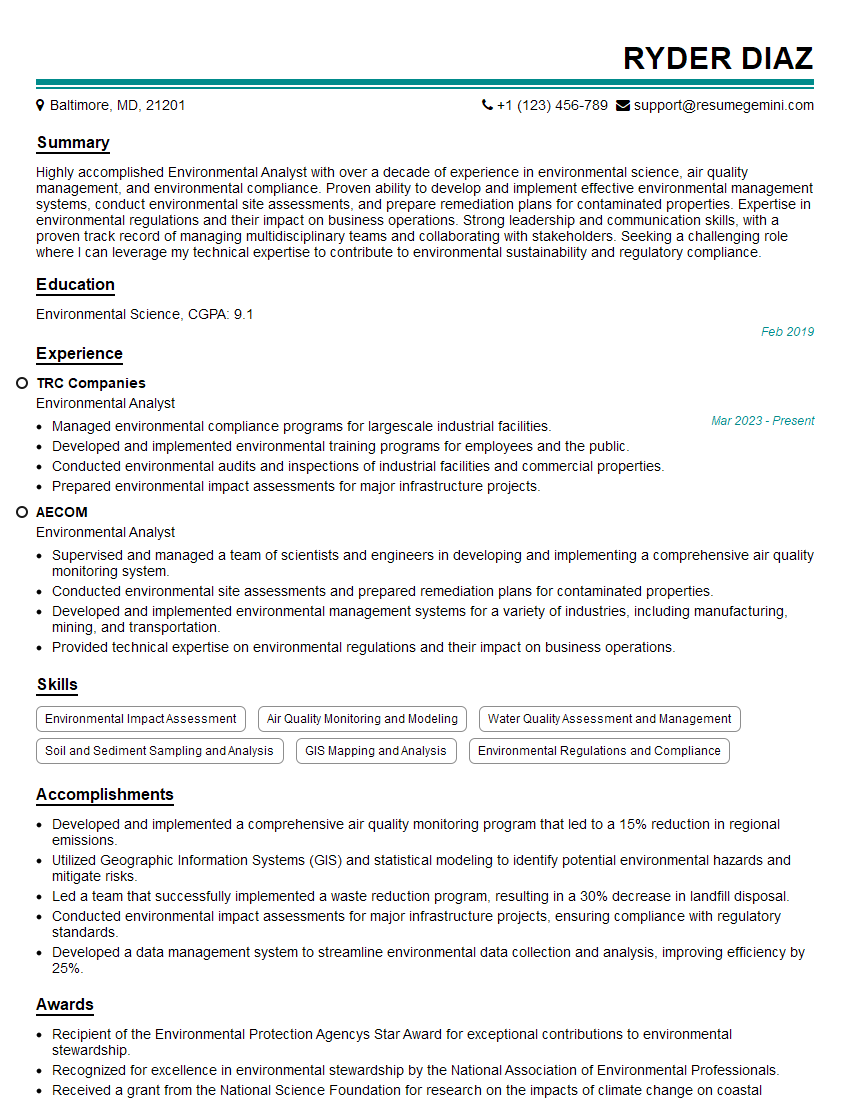
Environmental Analyst Resume Sample
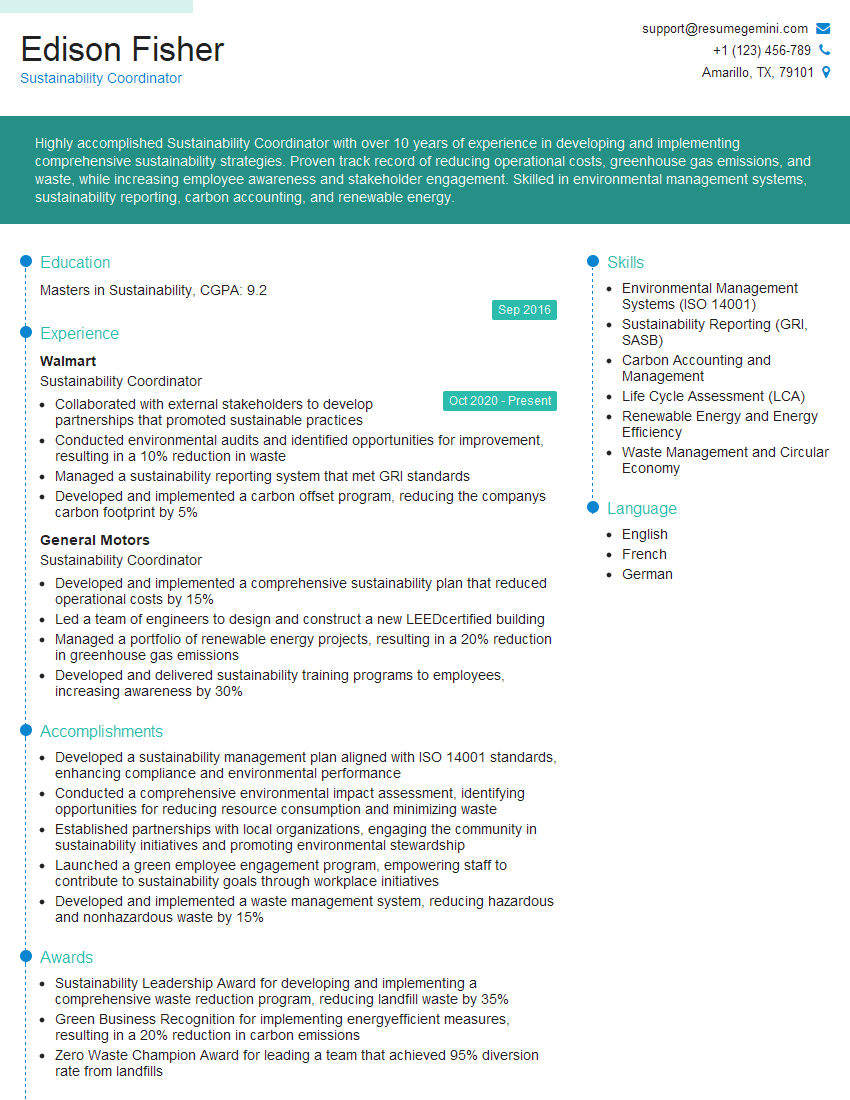
Sustainability Coordinator Resume Sample
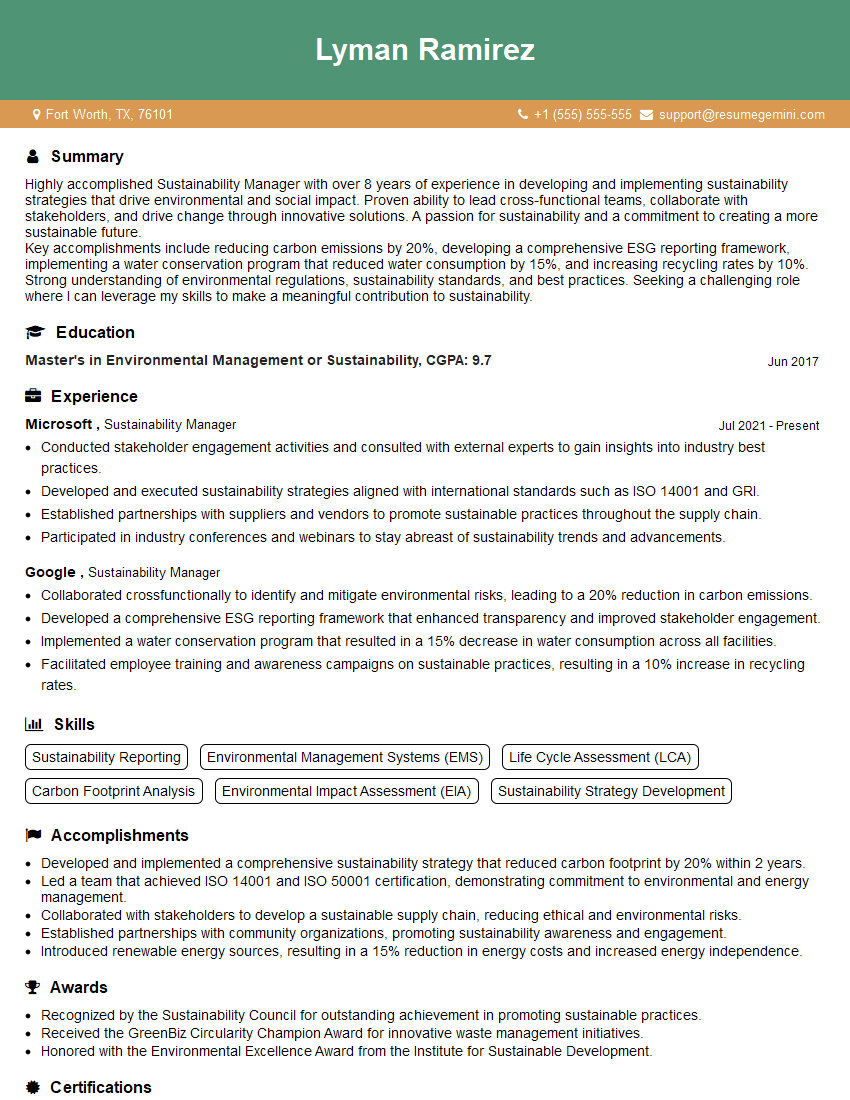
Sustainability Manager Resume Sample
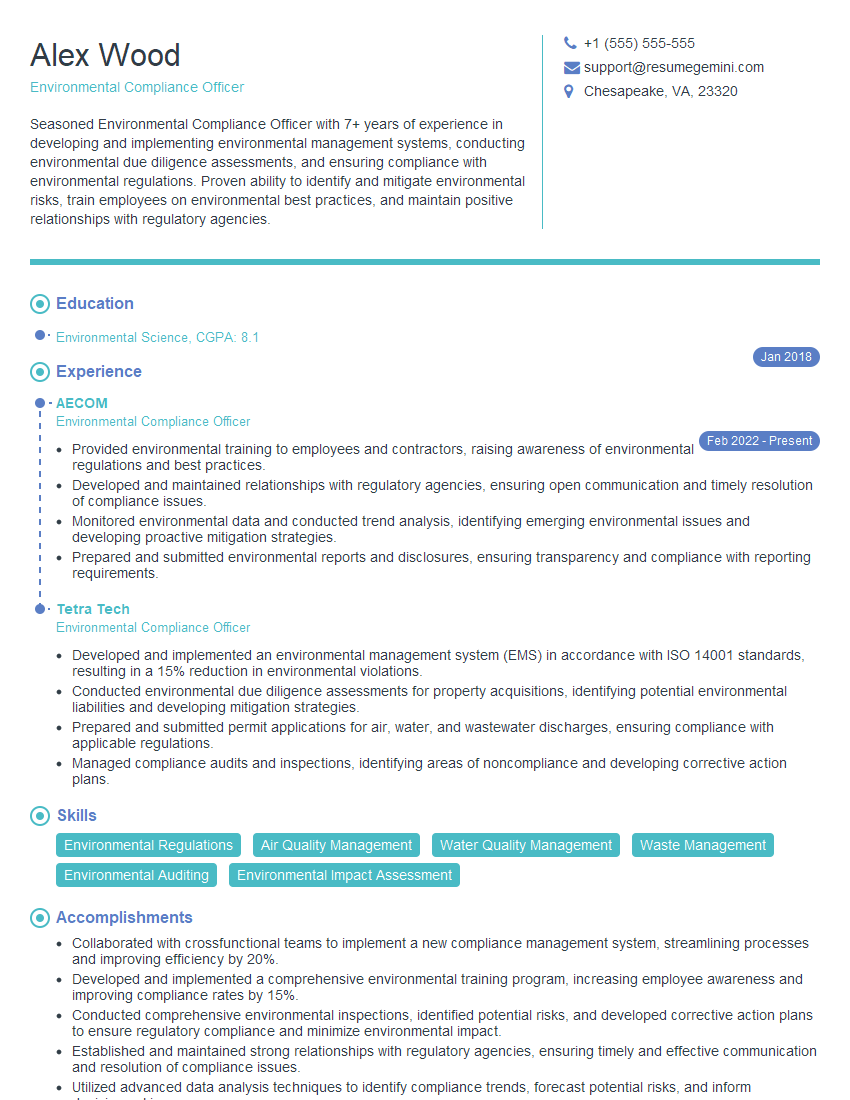
Environmental Compliance Officer Resume Sample
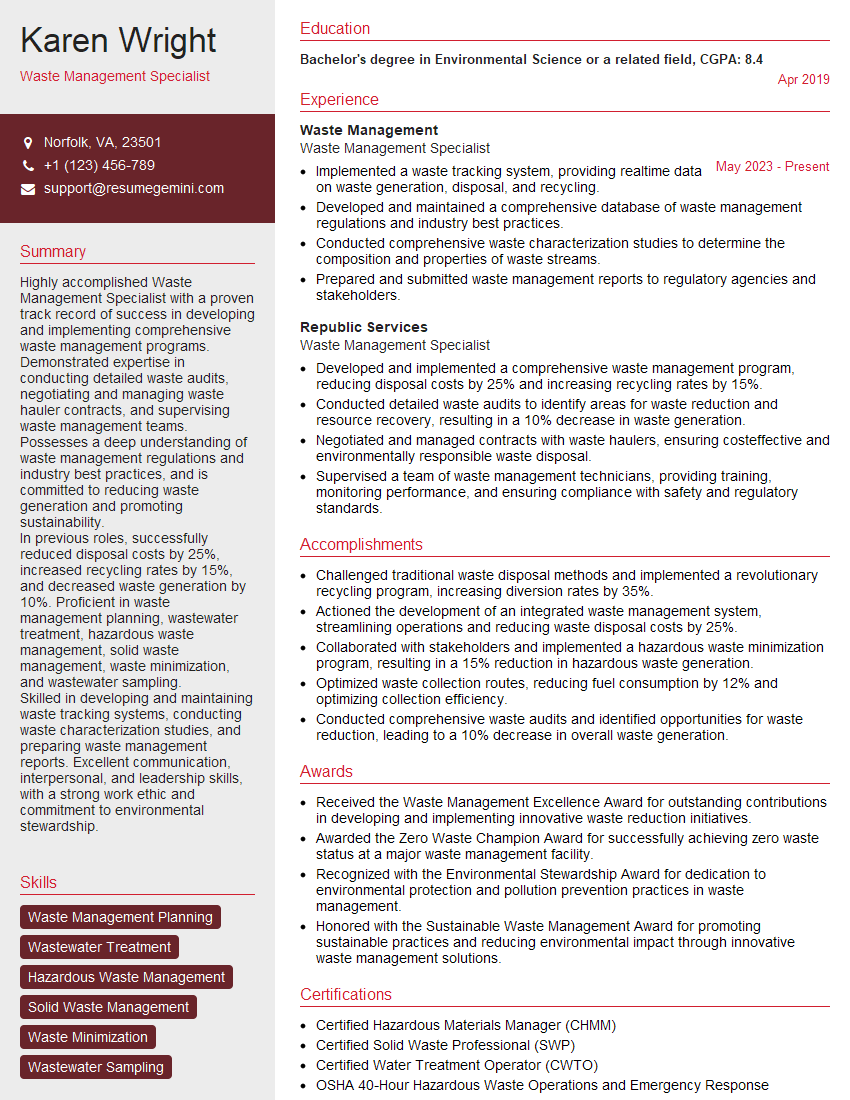
Waste Management Specialist Resume Sample

Sustainability Consultant Resume Sample
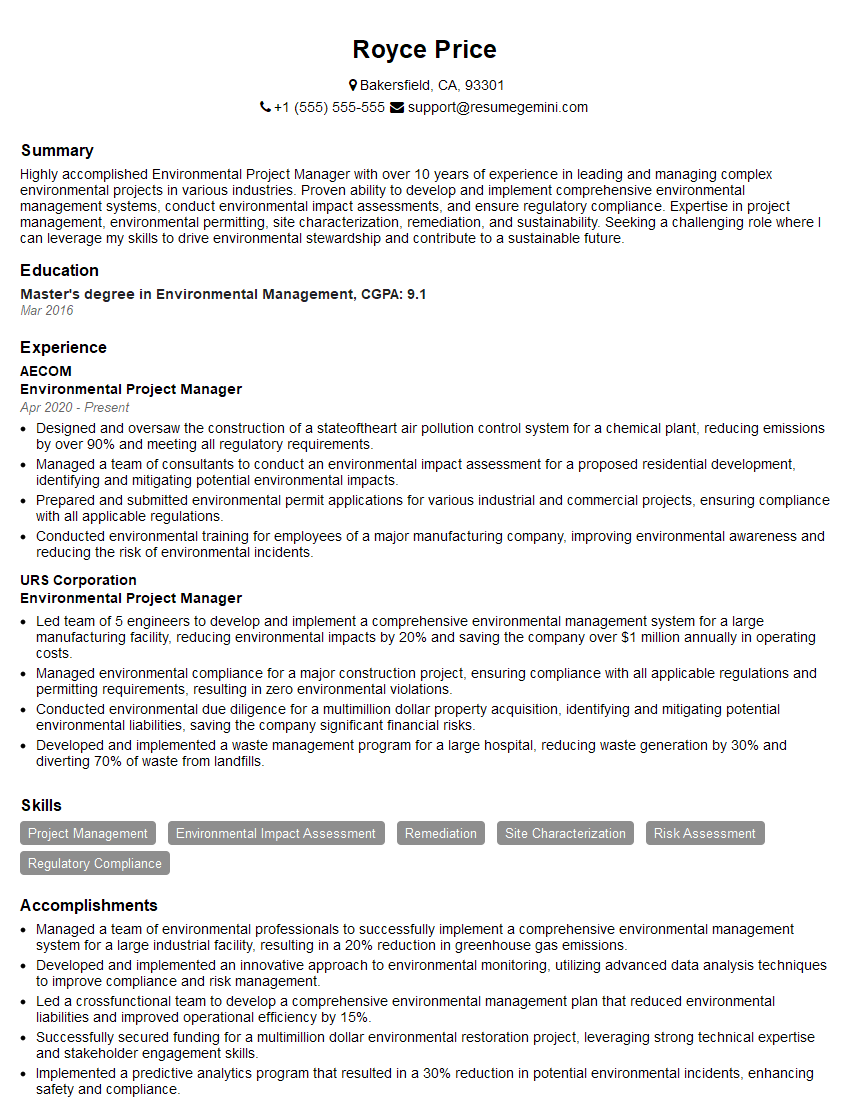
Environmental Project Manager Resume Sample
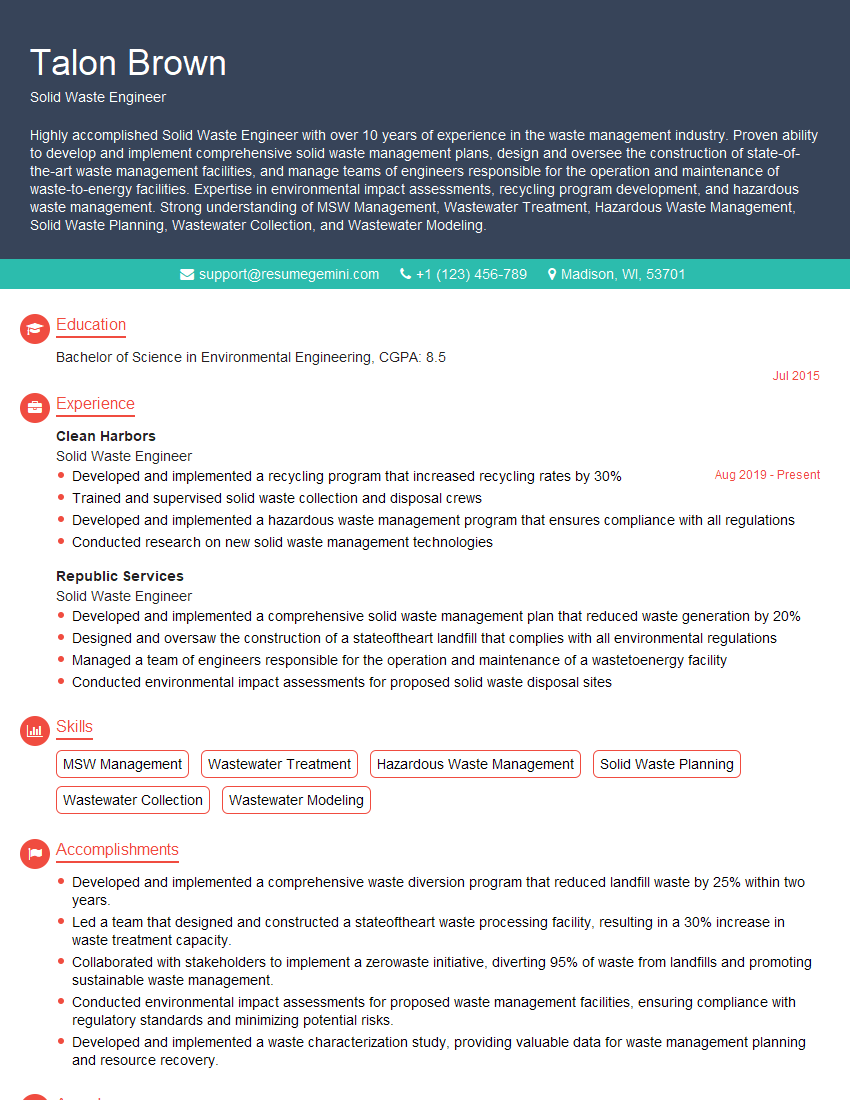
Solid Waste Engineer Resume Sample
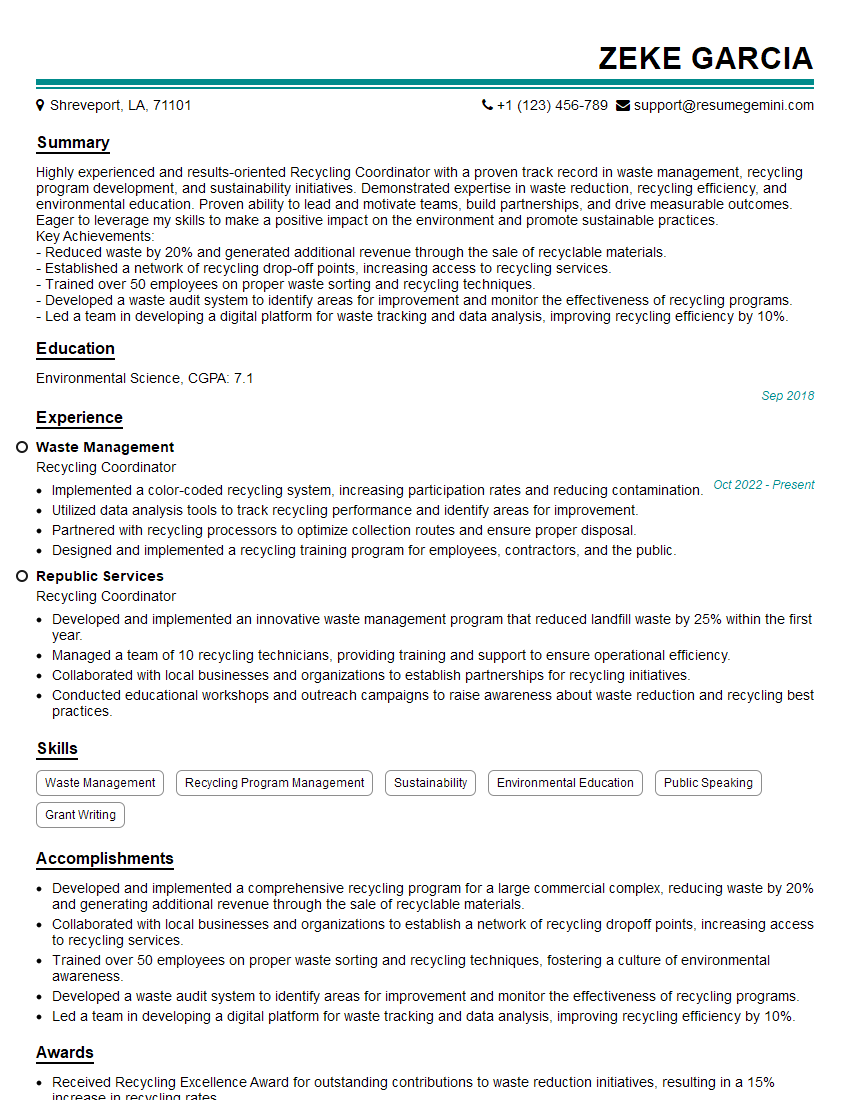
Recycling Coordinator Resume Sample
Explore more articles
Users Rating of Our Blogs
Share Your Experience
We value your feedback! Please rate our content and share your thoughts (optional).
What Readers Say About Our Blog
To the interviewgemini.com Webmaster.
Very helpful and content specific questions to help prepare me for my interview!
Thank you
To the interviewgemini.com Webmaster.
This was kind of a unique content I found around the specialized skills. Very helpful questions and good detailed answers.
Very Helpful blog, thank you Interviewgemini team.