Interviews are more than just a Q&A session—they’re a chance to prove your worth. This blog dives into essential Environmental Policy and Decision-Making interview questions and expert tips to help you align your answers with what hiring managers are looking for. Start preparing to shine!
Questions Asked in Environmental Policy and Decision-Making Interview
Q 1. Explain the difference between environmental policy and environmental law.
Environmental policy and environmental law are closely related but distinct concepts. Environmental law consists of the specific rules and regulations, often codified by legislation, that aim to protect the environment. These are legally binding and enforceable. Think of them as the specific instructions. Environmental policy, on the other hand, is the broader set of principles, goals, and strategies used to guide decision-making related to environmental protection. It sets the overall direction and framework within which laws are created and implemented. It’s the overarching plan.
For example, a country might have an environmental policy focused on reducing carbon emissions. This broad policy then leads to the creation of specific environmental laws, like regulations on vehicle emissions or mandates for renewable energy sources. The policy is the vision; the laws are the tools to achieve that vision.
Q 2. Describe the process of conducting an Environmental Impact Assessment (EIA).
An Environmental Impact Assessment (EIA) is a process used to identify, predict, evaluate, and mitigate the biophysical, social, and other relevant effects of development proposals prior to major decisions being taken and commitments made. It’s like a pre-flight check for a major project.
- Screening: First, the project is screened to determine if an EIA is required based on pre-defined criteria.
- Scoping: This stage identifies the key environmental issues and determines the scope of the EIA. It involves consultations with stakeholders.
- Impact Analysis: This involves predicting the potential environmental impacts (positive and negative) of the project. This often uses specialized software and models.
- Mitigation Measures: Based on the impact analysis, mitigation measures are proposed to reduce or eliminate significant negative impacts.
- Reporting: A comprehensive EIA report is prepared, documenting the entire process and findings.
- Review: The EIA report is reviewed by government agencies and other stakeholders.
- Decision-Making: Based on the EIA report and review, a decision is made whether to approve the project, with or without modifications.
- Monitoring: Even after approval, monitoring is crucial to ensure that the predicted impacts are accurate and mitigation measures are effective.
Imagine building a dam. An EIA would assess the impact on water flow, fish populations, local communities, and potentially even the climate.
Q 3. What are the key components of a successful environmental management system (EMS)?
A successful Environmental Management System (EMS) is a set of processes and practices that an organization uses to minimize its environmental impact and improve its environmental performance. Think of it as a company’s environmental to-do list and accountability system.
- Environmental Policy: A clear statement of the organization’s environmental commitment and objectives.
- Planning: Identifying environmental aspects and impacts, setting targets and objectives, and developing action plans.
- Implementation and Operation: Putting the plans into action, providing resources, and training staff.
- Checking and Corrective Action: Monitoring environmental performance, conducting audits, and implementing corrective actions to address shortcomings.
- Management Review: Regularly reviewing the EMS’s effectiveness and making improvements.
A successful EMS needs strong leadership commitment, effective communication, and continuous improvement. ISO 14001 is a widely recognized standard that provides guidelines for establishing and maintaining an EMS.
Q 4. How do you evaluate the effectiveness of an environmental policy?
Evaluating the effectiveness of an environmental policy requires a multi-faceted approach. There’s no single magic bullet.
- Monitoring and Evaluation Indicators: Establish clear indicators related to the policy’s goals (e.g., reduced air pollution, increased renewable energy). Track these indicators over time.
- Data Analysis: Use statistical methods to analyze the data collected, looking for trends and patterns. Has the policy had the intended effect?
- Impact Assessment: Assess the broader impacts of the policy, both intended and unintended. Has it created any unintended negative consequences?
- Stakeholder Feedback: Gather feedback from various stakeholders (businesses, communities, environmental groups) to understand their experiences with the policy.
- Cost-Benefit Analysis: Compare the costs of implementing the policy with the benefits achieved. Is the policy cost-effective?
For instance, evaluating a policy to reduce carbon emissions might involve monitoring greenhouse gas levels, analyzing energy consumption data, and surveying public opinion.
Q 5. Explain the concept of cost-benefit analysis in environmental decision-making.
Cost-benefit analysis (CBA) is a systematic approach to comparing the costs and benefits of different policy options. It’s a crucial tool for making informed environmental decisions. It helps answer the question: “Is the environmental benefit worth the economic cost?”
The process typically involves:
- Identifying costs and benefits: This includes both monetary costs (e.g., implementation costs, lost economic opportunities) and non-monetary benefits (e.g., improved air quality, biodiversity conservation). Often, non-monetary benefits need to be assigned monetary values using techniques like contingent valuation.
- Quantifying costs and benefits: Assigning monetary values to all costs and benefits, whenever possible.
- Discounting future costs and benefits: Future costs and benefits are worth less than present costs and benefits, so a discount rate is used to adjust them to present values.
- Comparing net present value: Calculating the net present value (NPV) of each policy option by subtracting the present value of costs from the present value of benefits. The option with the highest NPV is generally preferred.
For example, when deciding whether to build a new power plant, a CBA might compare the costs of building and operating the plant to the benefits of increased energy production, weighed against the environmental damage caused by emissions.
Q 6. Discuss the role of stakeholder engagement in environmental policy development.
Stakeholder engagement is essential for successful environmental policy development. It ensures that policies are relevant, effective, and accepted by the people they affect. It’s about collaboration, not just consultation.
Effective stakeholder engagement involves:
- Identifying stakeholders: Identifying all individuals and groups that may be affected by or have an interest in the policy.
- Communication and Consultation: Providing stakeholders with information about the policy and seeking their input through various methods (e.g., public hearings, surveys, focus groups).
- Collaboration and Participation: Working with stakeholders to develop and refine the policy. This could involve joint working groups or participatory decision-making processes.
- Transparency and Accountability: Being open and transparent about the policy development process and being accountable to stakeholders for decisions made.
For example, developing a policy on waste management would require engaging with residents, businesses, waste management companies, and environmental groups. Ignoring any of these groups could lead to a policy that is ineffective or even actively resisted.
Q 7. What are some common environmental regulations you are familiar with?
Many environmental regulations exist at local, national, and international levels. Some common examples include:
- Clean Air Act (U.S.): Regulates air emissions from stationary and mobile sources.
- Clean Water Act (U.S.): Regulates water pollution from point and non-point sources.
- Endangered Species Act (U.S.): Protects endangered and threatened species and their habitats.
- Kyoto Protocol and Paris Agreement: International treaties aimed at reducing greenhouse gas emissions.
- REACH (Registration, Evaluation, Authorization and Restriction of Chemicals) (EU): Manages the risks posed by chemical substances.
- Basel Convention: Controls the transboundary movement of hazardous wastes.
These regulations vary in their specific requirements and enforcement mechanisms, but they all aim to improve environmental quality and protect human health.
Q 8. Describe your experience with environmental auditing.
Environmental auditing involves a systematic and independent examination of an organization’s environmental performance against a set of predefined standards, regulations, or best practices. My experience encompasses conducting audits across various sectors, including manufacturing, energy, and agriculture. This includes reviewing environmental management systems (EMS), assessing compliance with permits and regulations, identifying environmental risks and liabilities, and recommending improvements. For example, I recently led an audit of a manufacturing plant, where we evaluated their waste management practices, energy efficiency measures, and compliance with air emission standards. We found inconsistencies in waste segregation and identified opportunities for reducing energy consumption through process optimization. The audit resulted in a comprehensive report with actionable recommendations, which the plant is now implementing to improve their overall environmental performance. Another project involved a large-scale agricultural operation where we assessed their water usage and pesticide application practices against sustainable agriculture guidelines. This involved field surveys, data analysis, and stakeholder interviews to create a detailed audit report outlining areas for improvement in water conservation and integrated pest management strategies.
Q 9. How would you address a conflict between environmental protection and economic development?
Balancing environmental protection and economic development is a crucial challenge in modern environmental policy. It’s not a zero-sum game; true sustainability necessitates finding synergies between the two. A key approach is to incorporate environmental considerations into economic decision-making from the outset. This includes things like conducting thorough environmental impact assessments (EIAs) before initiating major projects, promoting green technologies and sustainable practices through incentives and regulations, and integrating environmental costs into economic models. For example, a government might incentivize renewable energy development through tax breaks and subsidies, which simultaneously boosts the economy (creating jobs in the renewable energy sector) and reduces carbon emissions. Another approach is embracing a circular economy model, which aims to minimize waste and maximize resource utilization. This can create new economic opportunities through recycling, reuse, and resource recovery, while simultaneously reducing the environmental burden. Ultimately, effective solutions require stakeholder engagement, transparent decision-making processes, and a long-term perspective that recognizes the interconnectedness of economic prosperity and environmental health.
Q 10. What is your understanding of sustainable development?
Sustainable development is a concept that aims to meet the needs of the present without compromising the ability of future generations to meet their own needs. It’s a holistic approach that integrates economic growth, social equity, and environmental protection. The Brundtland Report (Our Common Future) is a landmark document that defined this concept and highlighted its three interconnected pillars: environmental sustainability (responsible resource management, pollution control, biodiversity conservation), economic sustainability (fair and equitable distribution of resources, economic growth that benefits all), and social sustainability (health, education, social justice, community development). For example, a sustainable city might invest in renewable energy, public transportation, green spaces, and affordable housing, thus improving air quality, reducing traffic congestion, fostering community cohesion and ensuring economic opportunities for its residents. The crucial aspect is finding a balance between these three pillars. A successful sustainable development initiative must not focus on only one aspect at the expense of the others.
Q 11. Explain the principles of the precautionary principle in environmental management.
The precautionary principle in environmental management states that when there is a potential for serious or irreversible environmental harm, lack of full scientific certainty should not be used as a reason for postponing measures to prevent environmental degradation. This principle emphasizes proactive measures to prevent harm, even in the absence of complete scientific understanding of the risks. It’s a risk management approach that prioritizes precaution. For example, if a new chemical is introduced into the environment and there is some evidence suggesting potential harm to wildlife, even if the evidence is not conclusive, the precautionary principle would advocate for taking measures to restrict or limit the use of that chemical until further research can confirm its safety. This avoids potentially irreversible damage that may become evident only later. The principle is often invoked in situations with uncertain risks but potentially severe consequences, encouraging a cautious approach to environmental protection.
Q 12. Describe your experience using environmental data analysis tools.
My experience with environmental data analysis tools is extensive. I’m proficient in using GIS software (such as ArcGIS) for spatial data analysis, visualizing pollution patterns, and modeling environmental impacts. I also utilize statistical software (R, Python with libraries like Pandas and Scikit-learn) for analyzing environmental monitoring data, conducting statistical modeling (regression, time series analysis) to identify trends and relationships in environmental datasets, such as air quality data or water quality parameters. I also have experience with specialized environmental modeling software to predict the impacts of climate change or pollution events. For example, in one project, I used R to analyze air quality data collected from multiple monitoring stations across a city to identify pollution hotspots and assess the effectiveness of air pollution control measures. In another project, I used ArcGIS to map deforestation patterns over time and identify drivers of deforestation to help inform conservation strategies. These tools are essential for understanding complex environmental systems and informing evidence-based decision-making.
Q 13. How do you prioritize competing environmental concerns?
Prioritizing competing environmental concerns requires a systematic approach. I typically utilize a multi-criteria decision analysis (MCDA) framework, which involves identifying all relevant environmental concerns, assigning weights based on their relative importance (often through stakeholder consultations or expert judgments), and evaluating the potential impacts of different management options. This often involves assigning scores based on factors such as severity of the problem, urgency, cost-effectiveness of solutions, feasibility of implementation and potential long-term effects. Factors like scientific evidence, public health considerations, and economic impacts all feed into the weighting process. For example, in a scenario where there’s a conflict between protecting a wetland habitat and expanding agricultural land, an MCDA framework can help systematically evaluate these competing interests, considering factors such as the ecological significance of the wetland, the economic benefits of agricultural expansion, and the potential environmental consequences of wetland loss. The result is a prioritized list of actions based on their overall value and feasibility.
Q 14. How familiar are you with life cycle assessment (LCA)?
Life cycle assessment (LCA) is a standardized methodology for evaluating the environmental impacts of a product, process, or service throughout its entire life cycle, from raw material extraction to end-of-life disposal. I have extensive experience conducting and interpreting LCAs. This involves identifying all the stages in the life cycle, collecting data on resource use, emissions, and waste generation at each stage, and evaluating the environmental impacts (e.g., greenhouse gas emissions, water consumption, toxicity). LCA software is frequently used to facilitate data management and impact assessment calculations. For example, I’ve used LCA to assess the environmental impacts of different packaging materials for a consumer product, comparing the impacts of using plastic, paper, or biodegradable materials across the entire life cycle. The results guided the company’s decision towards a more environmentally friendly packaging option. LCAs provide a holistic and comprehensive view of environmental impacts, helping inform environmentally sound decisions in product design, manufacturing, and consumption.
Q 15. What is your experience with environmental remediation projects?
My experience with environmental remediation projects spans over 15 years, encompassing a wide range of contaminated sites. I’ve been involved in projects ranging from small-scale soil remediation using bioremediation techniques to large-scale cleanup efforts involving industrial hazardous waste. For example, I led a team that successfully remediated a former manufacturing site contaminated with PCBs using a combination of excavation and soil washing. This involved detailed site assessments, risk assessments, regulatory compliance, contractor oversight, and community engagement. Another project involved the remediation of groundwater contamination through pump and treat methods, which required a deep understanding of hydrogeology and contaminant transport modeling. Throughout my career, I’ve emphasized sustainable remediation practices, minimizing environmental impact and prioritizing human health.
- Site Assessment and Characterization: Thorough investigation to define the extent and nature of contamination.
- Remediation Strategy Development: Selection of appropriate technologies based on cost-effectiveness, environmental impact, and regulatory requirements.
- Project Management and Oversight: Managing contractors, budgets, and timelines while ensuring compliance with all regulations.
- Regulatory Compliance: Working closely with regulatory agencies to secure necessary permits and approvals.
- Risk Assessment and Management: Identifying and mitigating potential risks to human health and the environment.
Career Expert Tips:
- Ace those interviews! Prepare effectively by reviewing the Top 50 Most Common Interview Questions on ResumeGemini.
- Navigate your job search with confidence! Explore a wide range of Career Tips on ResumeGemini. Learn about common challenges and recommendations to overcome them.
- Craft the perfect resume! Master the Art of Resume Writing with ResumeGemini’s guide. Showcase your unique qualifications and achievements effectively.
- Don’t miss out on holiday savings! Build your dream resume with ResumeGemini’s ATS optimized templates.
Q 16. How do you communicate complex environmental issues to non-technical audiences?
Communicating complex environmental issues to non-technical audiences requires careful planning and a strategic approach. I use several techniques to make information accessible and engaging. Firstly, I avoid technical jargon and instead use clear, concise language and relatable analogies. For instance, when explaining carbon sequestration, I might use the analogy of a sponge absorbing water to illustrate how plants absorb CO2 from the atmosphere. Secondly, I utilize visuals like charts, graphs, and infographics to present data in a digestible format. Thirdly, I tailor my communication to the specific audience, considering their level of understanding and their interests. For example, when speaking to a community group about a proposed landfill, I’d focus on the potential impacts on their health and property values, rather than delving into complex engineering details. Lastly, I encourage two-way communication by actively listening to audience questions and concerns, fostering a collaborative discussion rather than a one-sided presentation. I believe that effective communication is crucial for building trust and support for environmental initiatives.
Q 17. What is your understanding of climate change mitigation and adaptation strategies?
Climate change mitigation focuses on reducing greenhouse gas emissions to limit the extent of global warming. This involves transitioning to renewable energy sources (solar, wind, hydro), improving energy efficiency, promoting sustainable transportation, and implementing carbon capture and storage technologies. Adaptation, on the other hand, focuses on adjusting to the unavoidable impacts of climate change that are already occurring or are expected in the future. This includes developing drought-resistant crops, constructing seawalls to protect coastal communities, improving water management strategies, and creating early warning systems for extreme weather events. Both mitigation and adaptation are crucial and interconnected. Effective climate action requires a comprehensive approach that addresses both aspects, recognizing that we need to both reduce emissions and prepare for the impacts that are already underway.
For example, the development of resilient infrastructure that withstands extreme weather events, such as flooding and heatwaves, is a key adaptation strategy. The implementation of carbon pricing mechanisms, such as carbon taxes or cap-and-trade systems, is a critical mitigation tool.
Q 18. Describe your experience with environmental permitting processes.
My experience with environmental permitting processes is extensive. I’ve navigated the complexities of obtaining permits at both the state and federal levels for a variety of projects, including construction, industrial operations, and waste management facilities. This involves understanding the specific requirements of different environmental regulations, such as the Clean Water Act, the Clean Air Act, and the Resource Conservation and Recovery Act (RCRA). The process typically begins with a thorough environmental assessment to determine the potential environmental impacts of the proposed project. Based on this assessment, I prepare detailed permit applications, including comprehensive environmental impact statements, which are submitted to the relevant regulatory agencies. Throughout the process, I manage communication and negotiations with regulatory agencies, addressing any concerns or deficiencies in the application. I understand the importance of thorough documentation and proactive communication to ensure a smooth and efficient permitting process. Delays in obtaining permits can lead to significant project cost overruns and delays, hence meticulous planning and proactive communication are crucial.
Q 19. How do you stay updated on current environmental regulations and policies?
Staying updated on current environmental regulations and policies requires a multi-faceted approach. I regularly review publications from organizations such as the Environmental Protection Agency (EPA), state environmental agencies, and professional organizations like the Society of Environmental Toxicology and Chemistry (SETAC). I subscribe to relevant newsletters and journals, attend conferences and workshops, and actively participate in professional networks. I also utilize online databases and legal research tools to access the latest regulatory updates and case law. Staying informed is not a one-time effort but an ongoing process that requires consistent effort and dedication. It’s critical for ensuring compliance, identifying opportunities for improvement, and adapting to evolving environmental challenges.
Q 20. Explain the concept of environmental justice.
Environmental justice is the fair treatment and meaningful involvement of all people regardless of race, color, national origin, or income with respect to the development, implementation, and enforcement of environmental laws, regulations, and policies. It recognizes that certain communities, often marginalized or low-income communities, disproportionately bear the burden of environmental hazards, such as pollution from industrial facilities or exposure to toxic waste. Environmental justice seeks to address these disparities by ensuring equitable access to clean air, water, and a healthy environment for all. This involves considering the cumulative impacts of multiple environmental stressors on vulnerable communities and proactively incorporating environmental justice considerations into policy-making and project planning. A key aspect of environmental justice is community participation and engagement, ensuring that affected communities have a voice in decisions that affect their environment and health.
Q 21. What are some common challenges in implementing environmental policies?
Implementing environmental policies often faces several challenges. Political hurdles are common, with conflicting interests among stakeholders often hindering progress. Economic constraints can limit the resources available for implementing ambitious environmental programs. Technological limitations may restrict the feasibility of certain solutions, especially in the face of rapidly evolving environmental challenges. Lack of public awareness and support can make it difficult to garner public buy-in for necessary changes. Enforcement challenges, particularly in monitoring and addressing violations, can also undermine policy effectiveness. Furthermore, the complexity of environmental systems makes it difficult to predict and manage all potential consequences of policy interventions. Overcoming these challenges requires a multi-pronged approach involving strong political will, public education, technological innovation, and effective monitoring and enforcement mechanisms. It also requires finding solutions that balance environmental protection with economic development and social equity.
Q 22. How do you handle disagreements with colleagues regarding environmental decisions?
Disagreements are inevitable in collaborative environmental decision-making. My approach focuses on respectful dialogue and evidence-based reasoning. I believe in fostering a collaborative environment where diverse perspectives are valued.
First, I ensure everyone understands the underlying scientific data and the potential environmental impacts. We might use shared documents, visualizations, or even role-playing scenarios to achieve common understanding. Then, I facilitate structured discussions, encouraging colleagues to clearly articulate their concerns and the rationale behind their positions. This often involves active listening, asking clarifying questions, and summarizing key points to avoid misunderstandings.
If consensus proves elusive, I advocate for a structured decision-making process, possibly using a multi-criteria decision analysis (MCDA) approach to weigh different factors and arrive at a justifiable solution, even if not everyone’s preferred outcome. Transparency is key throughout the process, ensuring everyone understands the rationale behind the final decision. For example, in a disagreement over the best location for a new wind farm, we might use a GIS-based model to assess the trade-offs between energy production, bird migration patterns, and visual impacts, making the decision transparent and data-driven.
Q 23. Describe your experience working with interdisciplinary teams on environmental projects.
I have extensive experience working within interdisciplinary teams, which is crucial in environmental work. These teams often include ecologists, economists, engineers, policymakers, and community representatives. My role involves bridging the gap between these different perspectives.
For instance, in a project assessing the impact of a dam on a river ecosystem, my experience involved coordinating the efforts of hydrologists who modeled water flow, biologists who studied the impacts on fish populations, and sociologists who surveyed the local communities’ views on the dam’s construction. Successful collaboration requires clear communication, a shared understanding of project goals, and well-defined roles and responsibilities. We regularly hold joint meetings, utilizing collaborative software tools to share data and track progress. The key is to actively listen to each discipline’s insights and integrate them into a holistic understanding of the problem and its solutions. This approach ensures we account for all relevant factors and develop more comprehensive and effective environmental solutions.
Q 24. What are the ethical considerations in environmental decision-making?
Ethical considerations are paramount in environmental decision-making. They involve questions of fairness, sustainability, and accountability. We must consider the potential impacts on both present and future generations, as well as different social groups.
- Environmental Justice: Decisions should not disproportionately burden vulnerable populations. For example, siting polluting industries near low-income communities is ethically problematic.
- Intergenerational Equity: We have a moral obligation to protect the environment for future generations. This means considering long-term consequences, not just short-term gains.
- Precautionary Principle: When scientific understanding is incomplete, it’s better to err on the side of caution, prioritizing environmental protection to avoid irreversible damage.
- Transparency and Accountability: Decision-making processes should be transparent, allowing public participation and scrutiny. Those responsible for environmental decisions should be held accountable for their actions.
These ethical principles guide my approach, ensuring that decisions are not only technically sound but also morally justifiable.
Q 25. How do you measure the success of an environmental program?
Measuring the success of an environmental program requires a multi-faceted approach, going beyond simple outputs.
We use a range of indicators, including:
- Ecological Indicators: Changes in water quality, air quality, biodiversity, or habitat restoration.
- Socioeconomic Indicators: Changes in public health, economic activity, community well-being, and job creation (in cases where the program aims to create green jobs).
- Policy Indicators: Changes in policy compliance, enforcement, and public awareness.
For example, evaluating the success of a wetland restoration project would involve monitoring changes in waterbird populations, water quality parameters, and public access. These data would be compared against baseline data collected before the project started. We also use quantitative methods like cost-benefit analysis to evaluate the economic efficiency of the program. Regular monitoring and evaluation are essential for adaptive management, allowing us to adjust strategies based on performance data. The ultimate goal is to demonstrate clear environmental improvements alongside positive societal outcomes.
Q 26. Describe your experience with environmental modeling and simulation.
I have extensive experience utilizing environmental modeling and simulation to predict and assess the impacts of various environmental policies and interventions. These models help us visualize complex scenarios and make data-driven decisions.
For example, I’ve used GIS (Geographic Information Systems) software to map habitat fragmentation and assess the impact of land-use changes on biodiversity. I’ve also worked with hydrological models to predict the effects of climate change on water resources. Such models use algorithms and equations to represent the real world, allowing us to run ‘what-if’ scenarios and test various management strategies. For example, a simple model could use water_level = rainfall - evaporation - runoff to simulate water levels in a reservoir. More complex models often use programming languages like R or Python combined with specialized software packages.
The key is understanding the limitations of these models – they are simplifications of complex systems. Therefore, model results should be interpreted carefully, considering the assumptions and uncertainties involved. Model validation and sensitivity analysis are crucial to ensure reliability.
Q 27. What is your understanding of circular economy principles?
The circular economy is a model of production and consumption that aims to minimize waste and maximize resource utilization. It moves away from the traditional linear ‘take-make-dispose’ model towards a closed-loop system where resources are kept in use for as long as possible, extracting maximum value before eventually being recovered and regenerated.
Key principles include:
- Design out waste and pollution: Products should be designed for durability, repairability, and recyclability from the outset.
- Keep products and materials in use: Through reuse, repair, refurbishment, and remanufacturing.
- Regenerate natural systems: Mimicking natural processes to restore and regenerate resources.
This approach reduces environmental impact by minimizing resource extraction, waste generation, and pollution. Implementing circular economy principles requires changes across all sectors, including industry, government, and consumers. For example, a circular economy approach to plastic packaging would involve designing recyclable or compostable packaging, improving recycling infrastructure, and reducing plastic consumption through reusable alternatives.
Q 28. How would you approach the development of a new environmental policy?
Developing a new environmental policy involves a structured, multi-stage process.
- Problem Definition and Analysis: Clearly define the environmental problem the policy aims to address. This involves gathering data, conducting scientific assessments, and engaging with stakeholders to understand the context and impacts.
- Policy Goal Setting: Establish specific, measurable, achievable, relevant, and time-bound (SMART) goals. These goals should be consistent with broader environmental objectives, such as reducing greenhouse gas emissions or improving air quality.
- Policy Instrument Selection: Choose appropriate policy instruments to achieve the set goals. These can include regulations, economic incentives (e.g., carbon taxes, subsidies), voluntary agreements, and information campaigns.
- Stakeholder Engagement: Involve all relevant stakeholders throughout the process – government agencies, industry, non-governmental organizations (NGOs), and the public. This ensures the policy is effective, equitable, and enjoys public support.
- Implementation and Monitoring: Develop a plan for implementing the policy, including resource allocation, enforcement mechanisms, and monitoring indicators. Regular monitoring allows for adaptive management and adjustments to ensure the policy is achieving its goals.
- Evaluation and Review: Regularly evaluate the policy’s effectiveness, using the monitoring data and stakeholder feedback. This may lead to revisions or adjustments to improve performance.
Each stage requires careful consideration of technical, economic, social, and political factors. For example, developing a policy to reduce carbon emissions would involve scientific assessments of emissions sources, economic analyses of the costs and benefits of different mitigation strategies, public consultations to gather feedback on policy options, and ongoing monitoring of emission levels and policy effectiveness.
Key Topics to Learn for Environmental Policy and Decision-Making Interviews
Ace your interview by mastering these key areas of Environmental Policy and Decision-Making. We’ve broken down the essentials to help you shine.
- Environmental Policy Frameworks: Understand the structure and function of national and international environmental policies, including legislative processes, regulatory mechanisms, and policy instruments (e.g., taxes, subsidies, cap-and-trade).
- Environmental Impact Assessment (EIA): Learn how to conduct and interpret EIAs, focusing on methodologies, data analysis, and mitigation strategies. Practice applying this knowledge to real-world case studies.
- Cost-Benefit Analysis (CBA) in Environmental Decision-Making: Master the techniques of CBA, including the identification and valuation of environmental costs and benefits, and the application of discounted cash flow analysis.
- Stakeholder Engagement and Communication: Develop your skills in facilitating effective communication and collaboration among diverse stakeholders with varying interests and perspectives in environmental policy debates.
- Environmental Economics and Valuation: Understand the economic principles underlying environmental policy, including concepts like externalities, market failures, and the valuation of ecosystem services. Explore different valuation methods.
- Sustainable Development Goals (SDGs) and their Integration: Familiarize yourself with the SDGs and how they inform environmental policy and decision-making at local, national, and global levels.
- Climate Change Policy and Mitigation/Adaptation Strategies: Understand the science behind climate change and the various policy approaches to mitigation and adaptation, including carbon pricing mechanisms and renewable energy policies.
- Environmental Governance and Institutional Frameworks: Explore the role of different institutions (governments, NGOs, international organizations) in environmental governance and policy implementation.
- Environmental Law and Regulations: Gain a foundational understanding of relevant environmental laws and regulations to effectively navigate the legal aspects of environmental policy.
- Problem-Solving and Critical Thinking: Practice analyzing complex environmental problems, identifying trade-offs, and developing effective solutions that consider ecological, economic, and social factors.
Next Steps
Mastering Environmental Policy and Decision-Making is crucial for a successful and impactful career. It demonstrates a comprehensive understanding of complex issues and your ability to contribute effectively to solving them. To significantly boost your job prospects, create an ATS-friendly resume that highlights your skills and experience. ResumeGemini is a trusted resource to help you build a professional and impactful resume that gets noticed. We provide examples of resumes tailored to Environmental Policy and Decision-Making to help you get started.
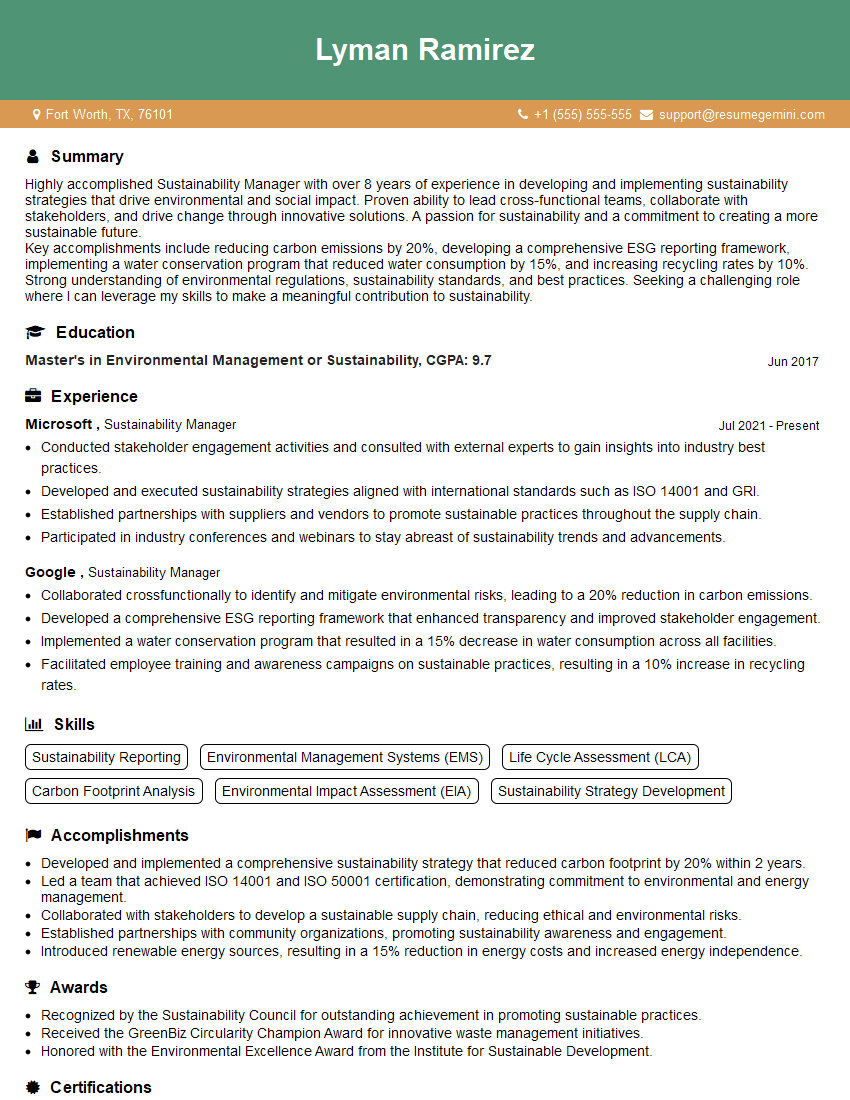
Sustainability Manager Resume Sample
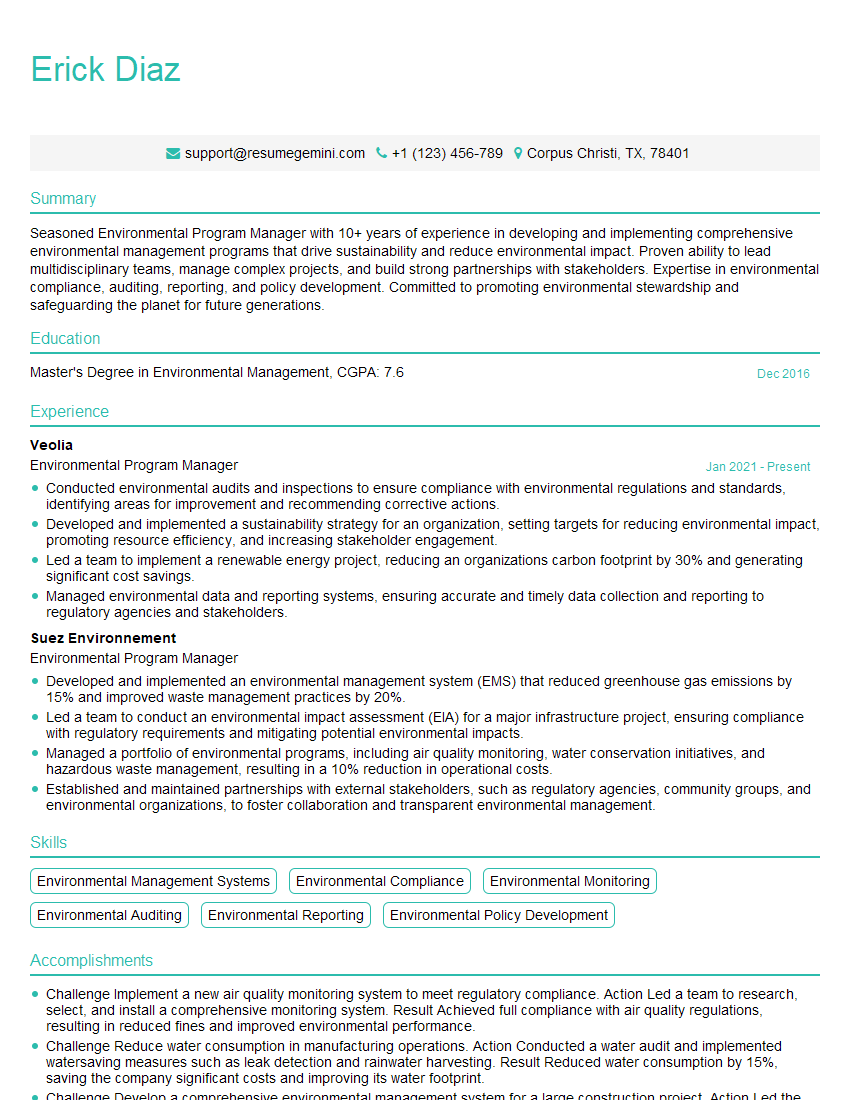
Environmental Program Manager Resume Sample
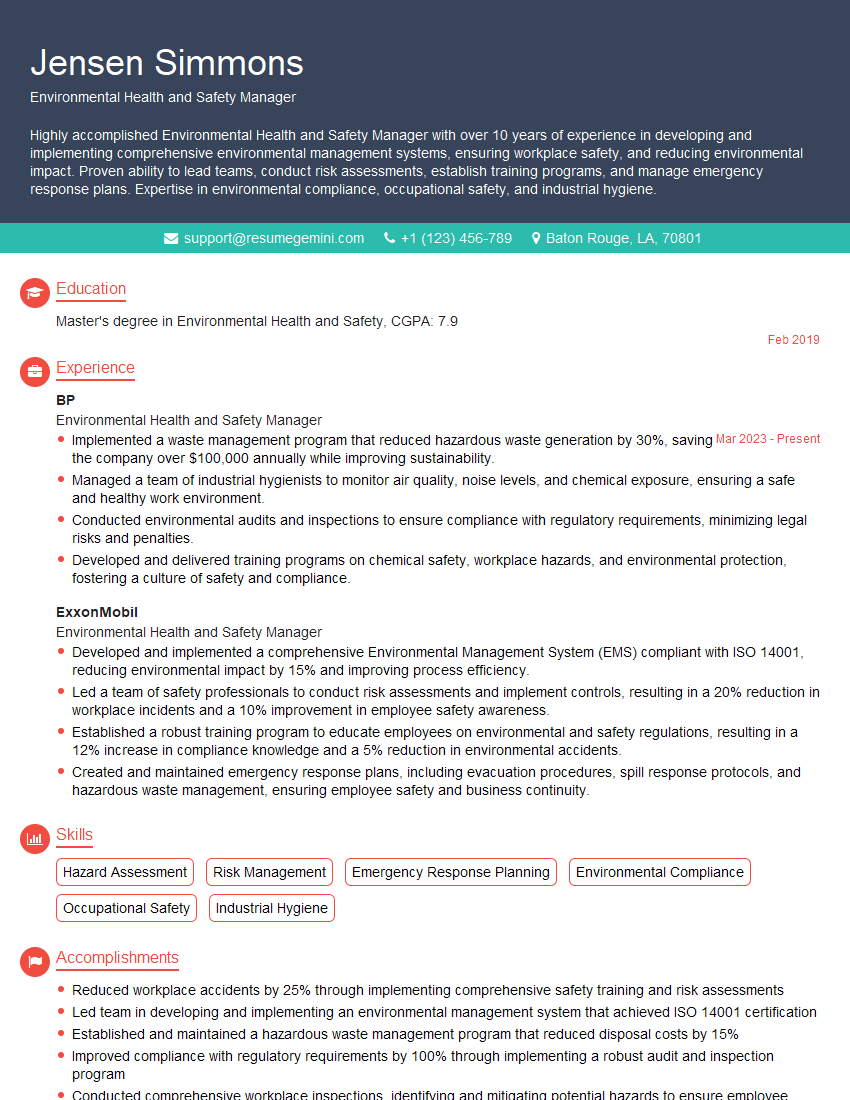
Environmental Health and Safety Manager Resume Sample
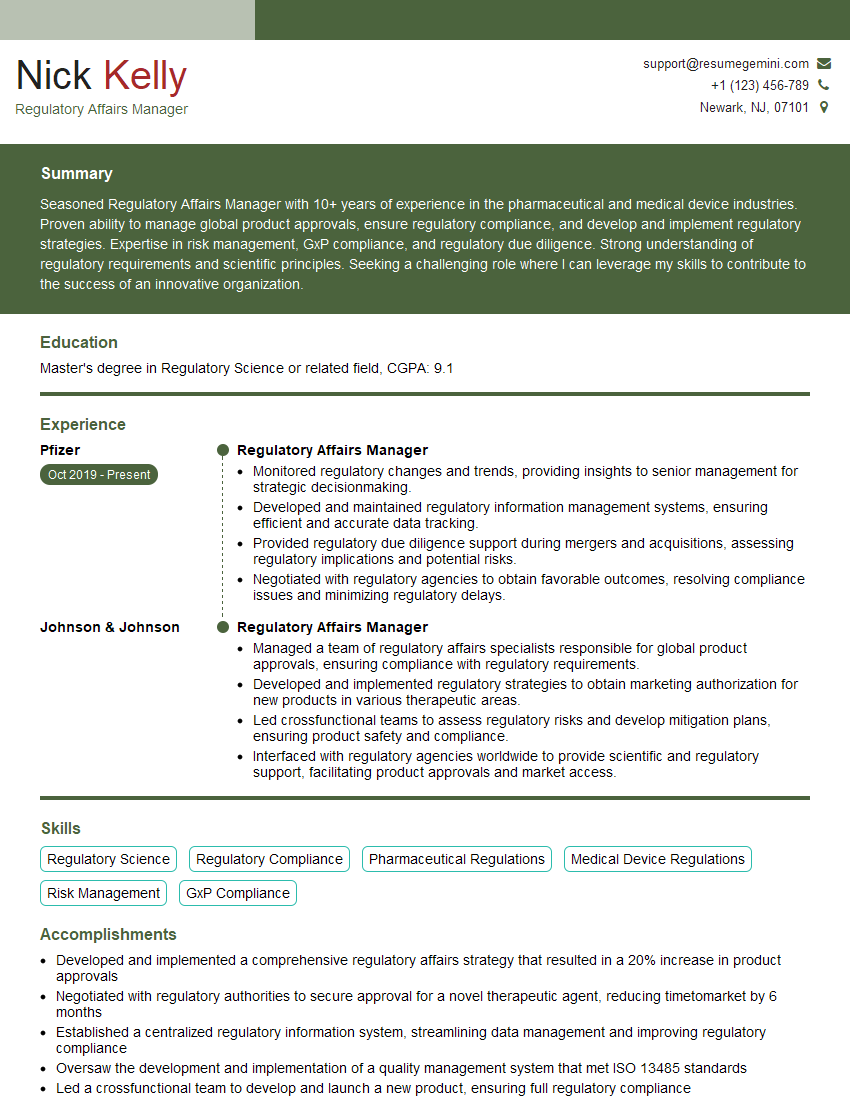
Regulatory Affairs Manager Resume Sample
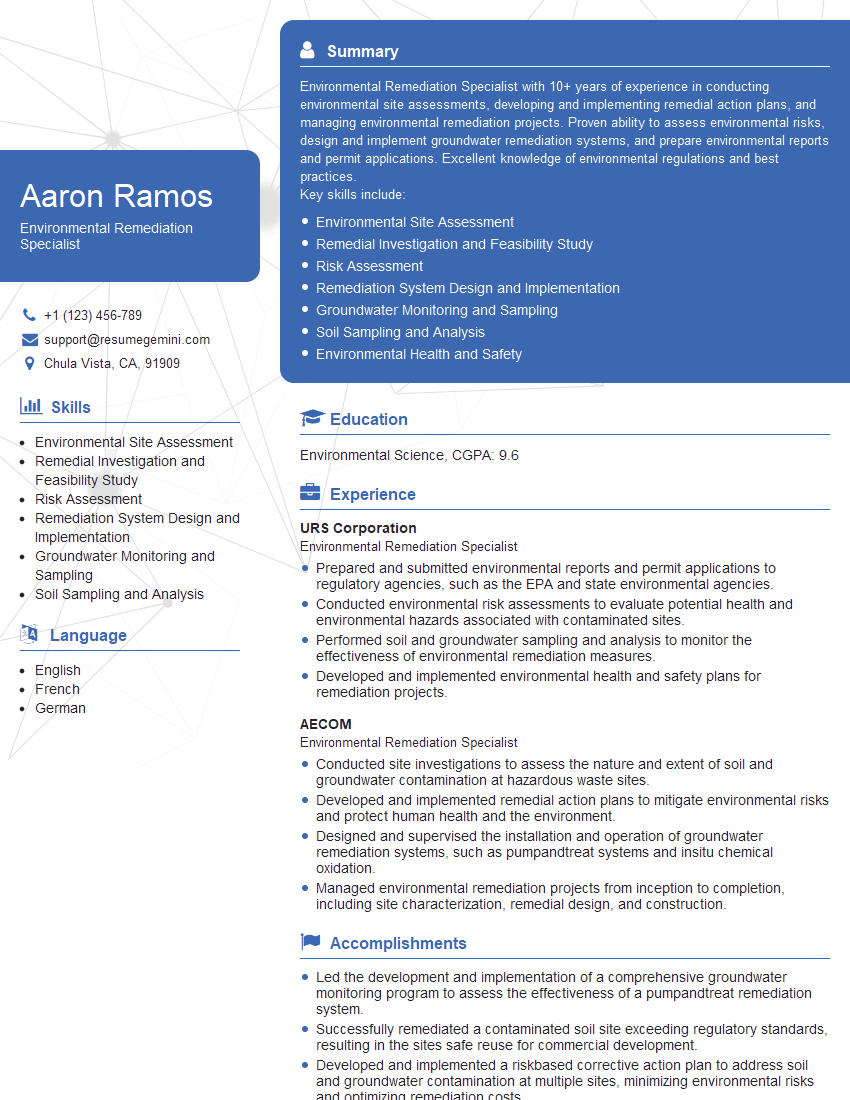
Environmental Remediation Specialist Resume Sample
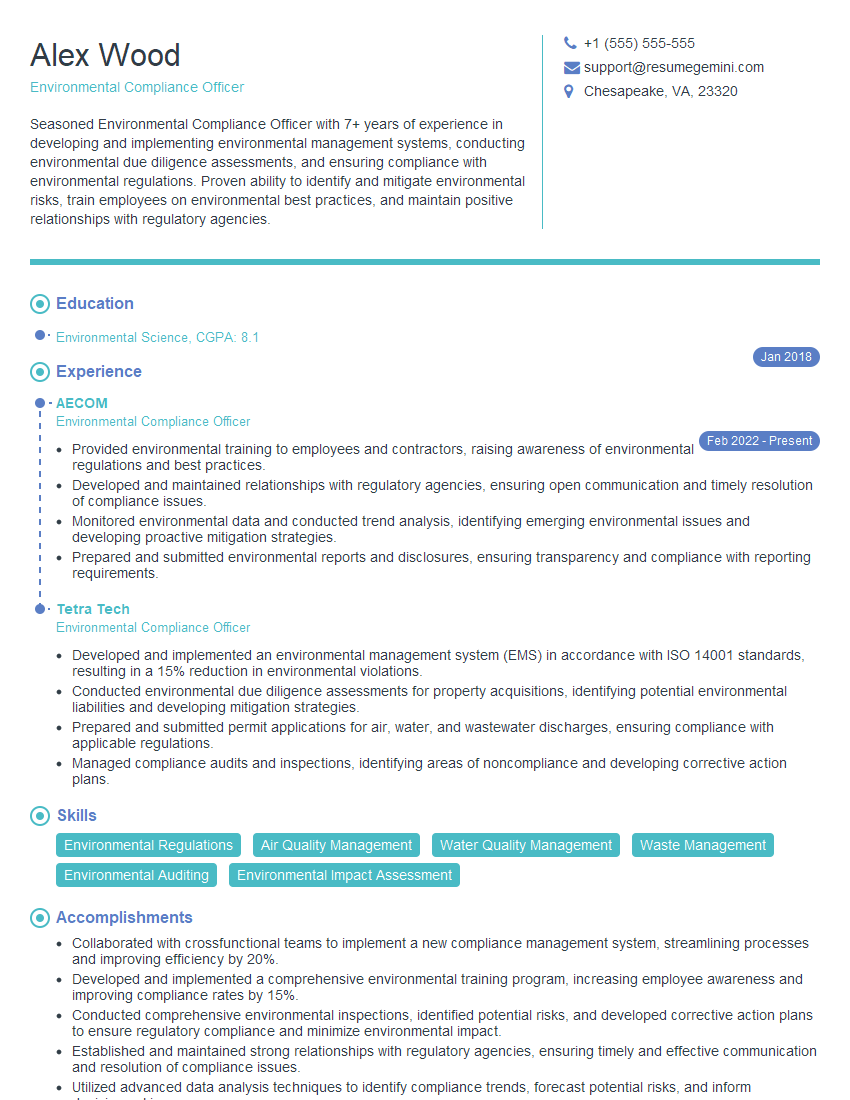
Environmental Compliance Officer Resume Sample
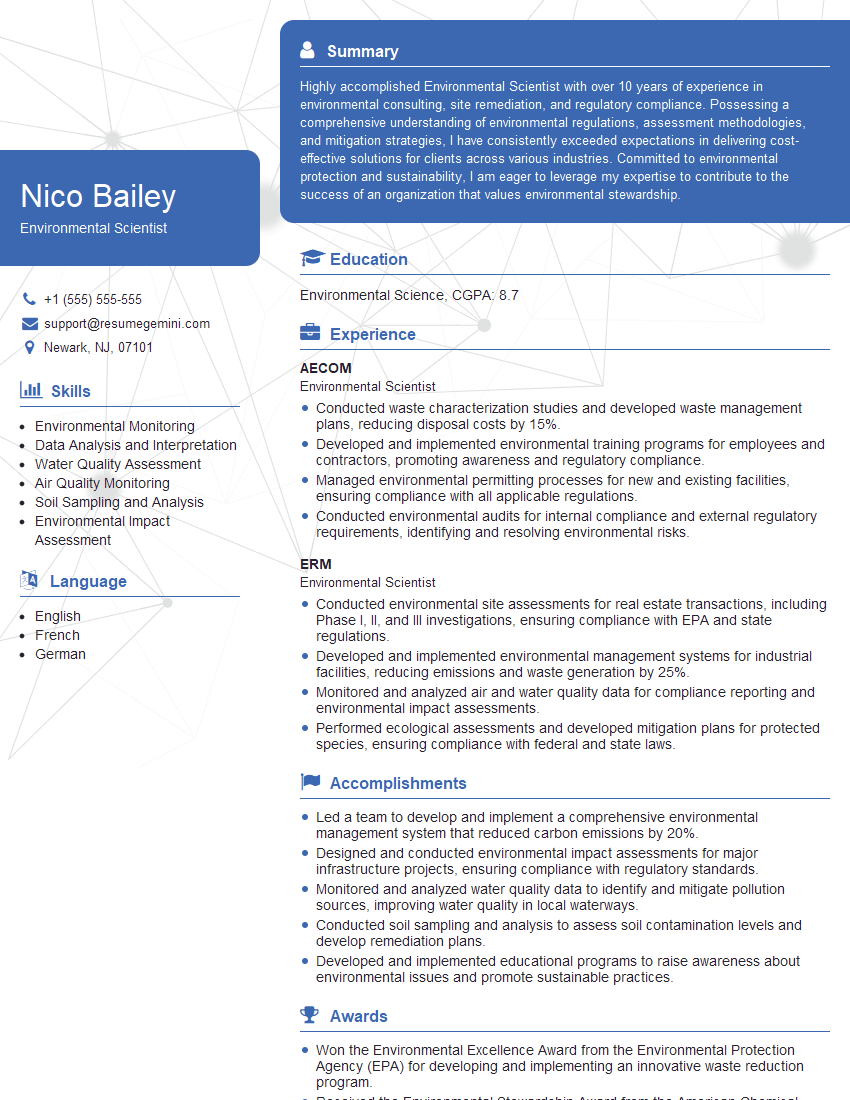
Environmental Scientist Resume Sample
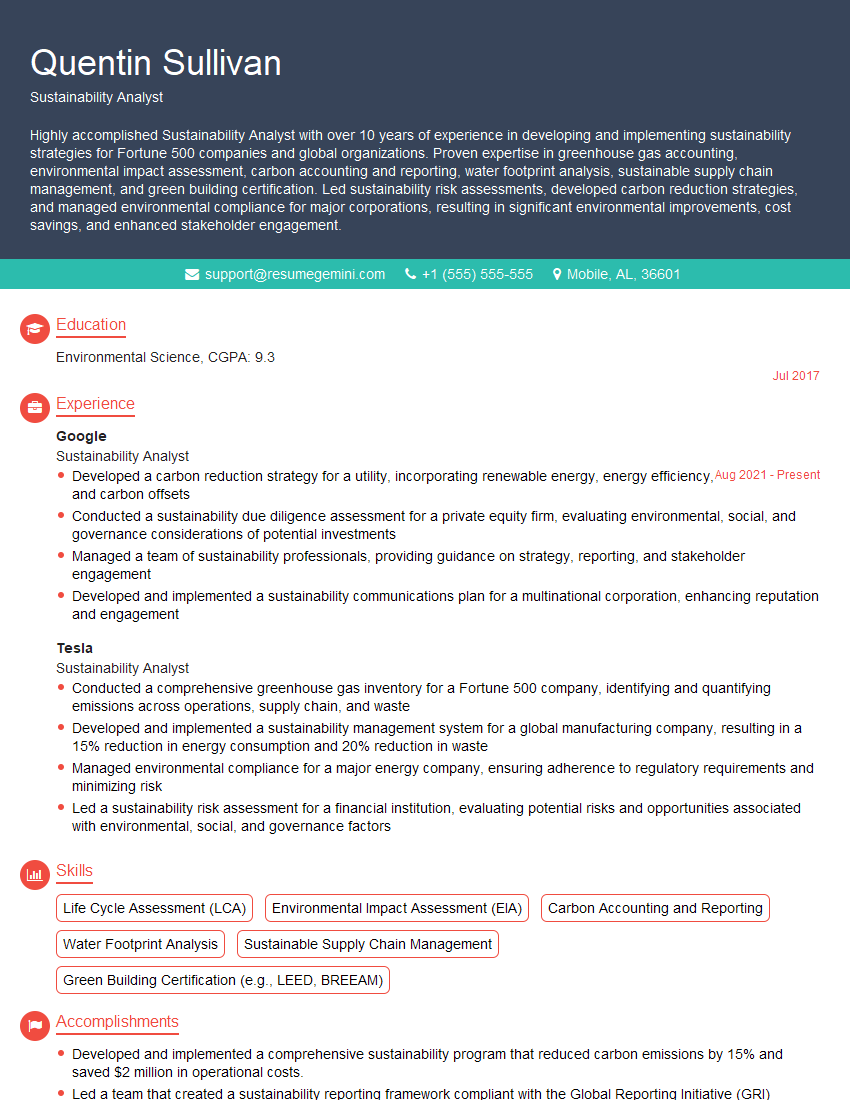
Sustainability Analyst Resume Sample

Sustainability Consultant Resume Sample
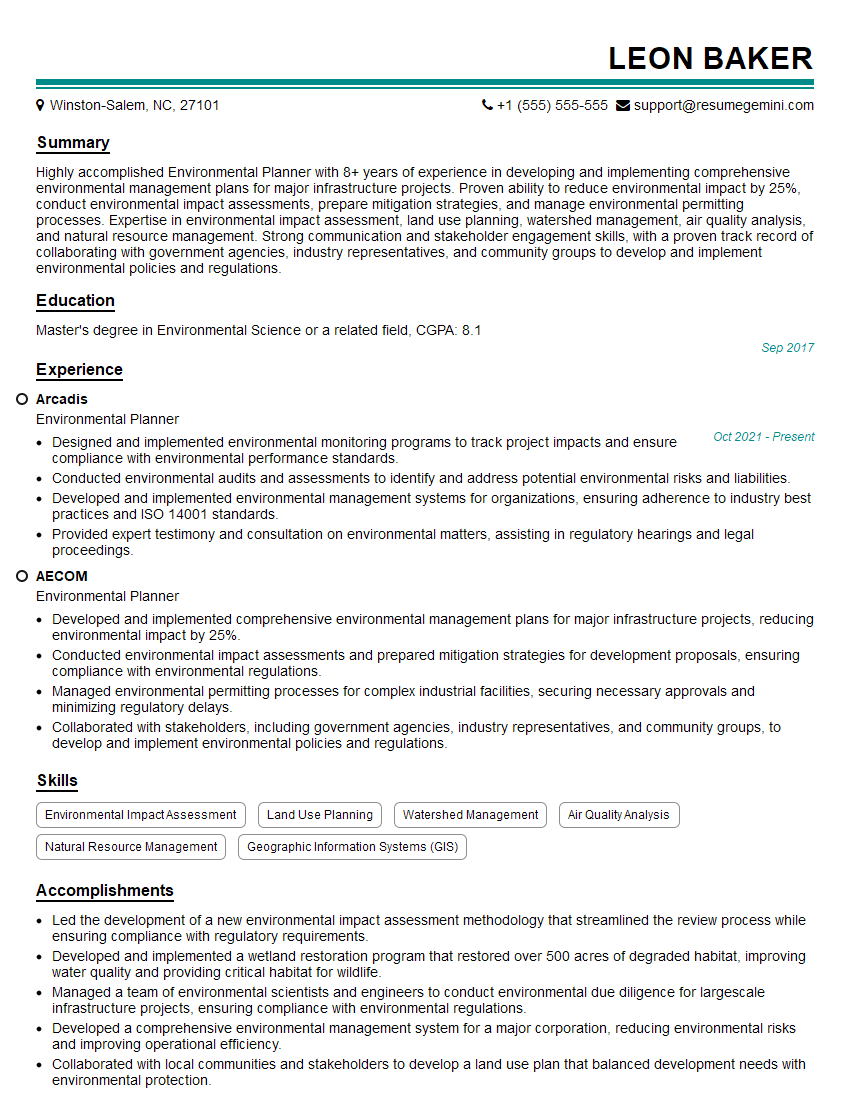
Environmental Planner Resume Sample
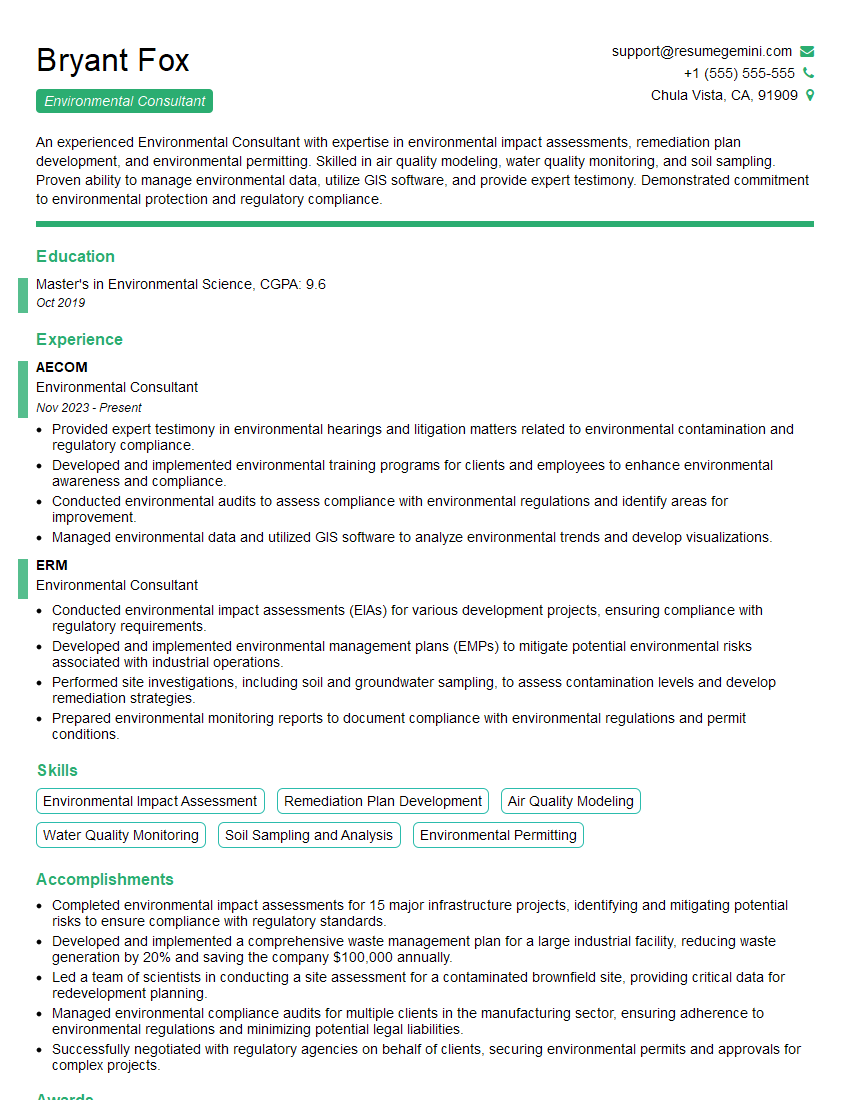
Environmental Consultant Resume Sample
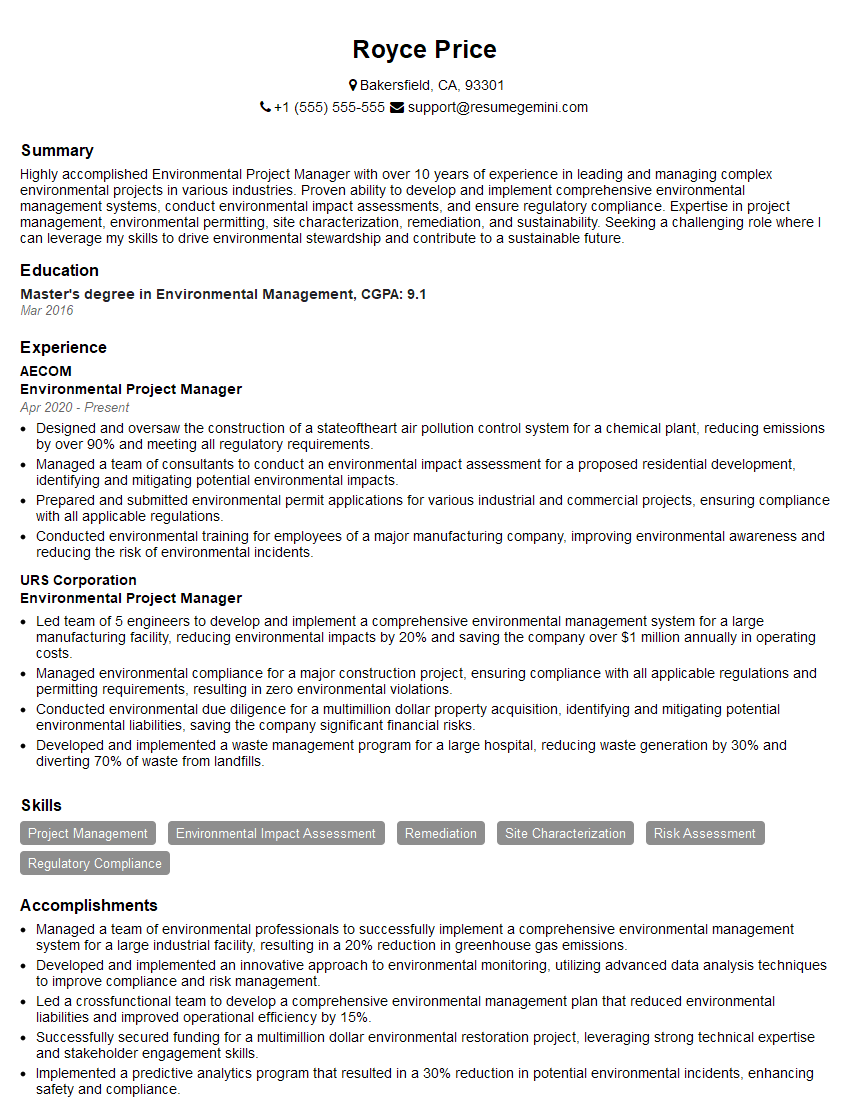
Environmental Project Manager Resume Sample
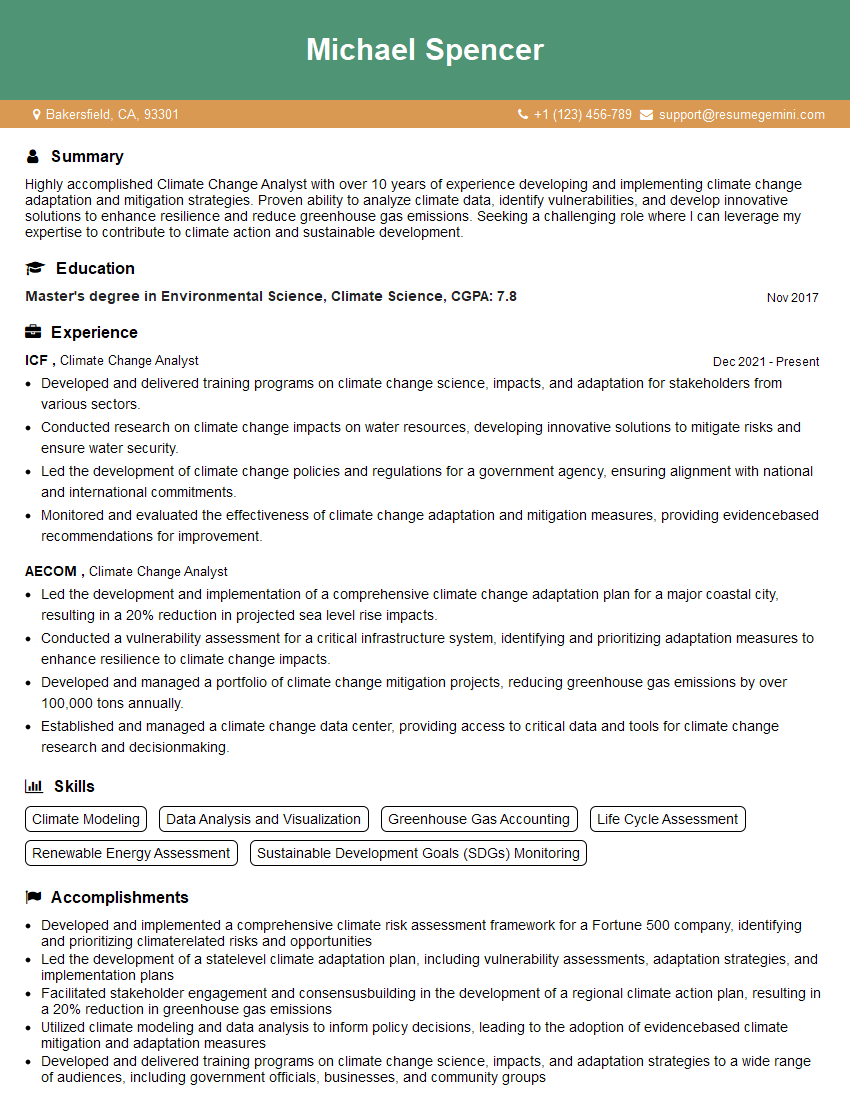
Climate Change Analyst Resume Sample
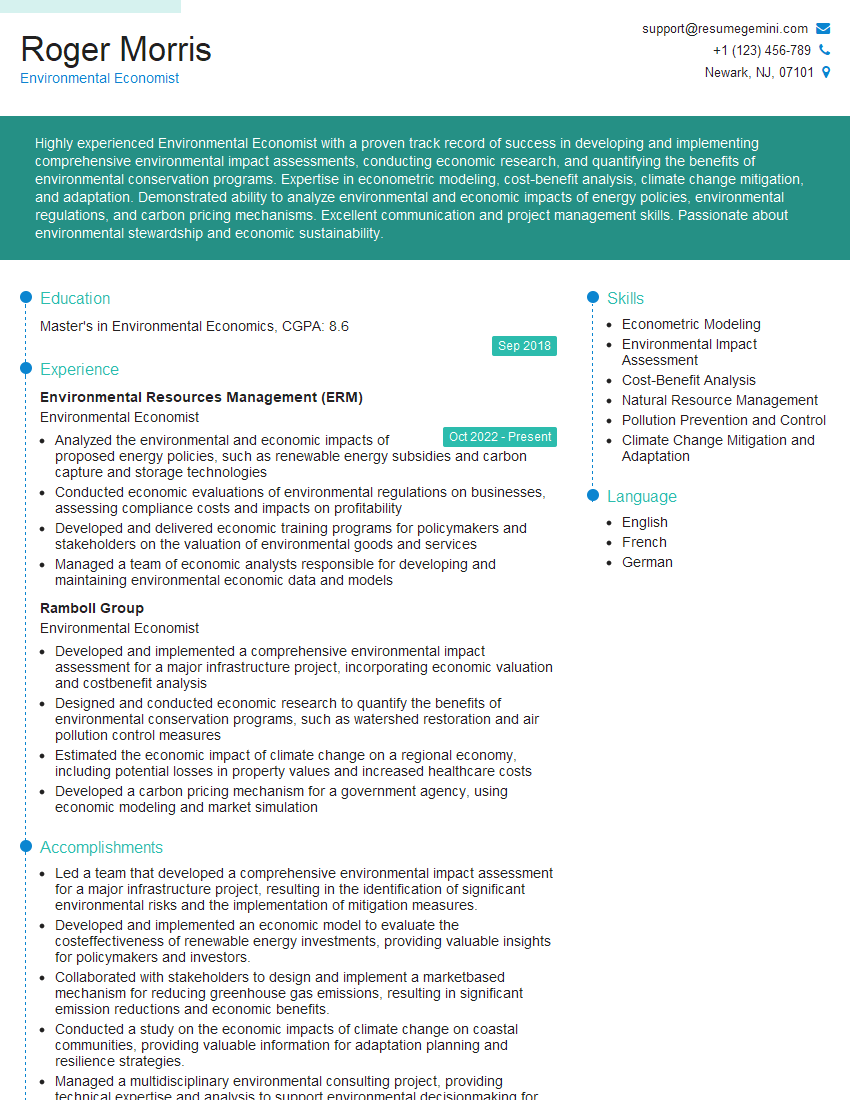
Environmental Economist Resume Sample
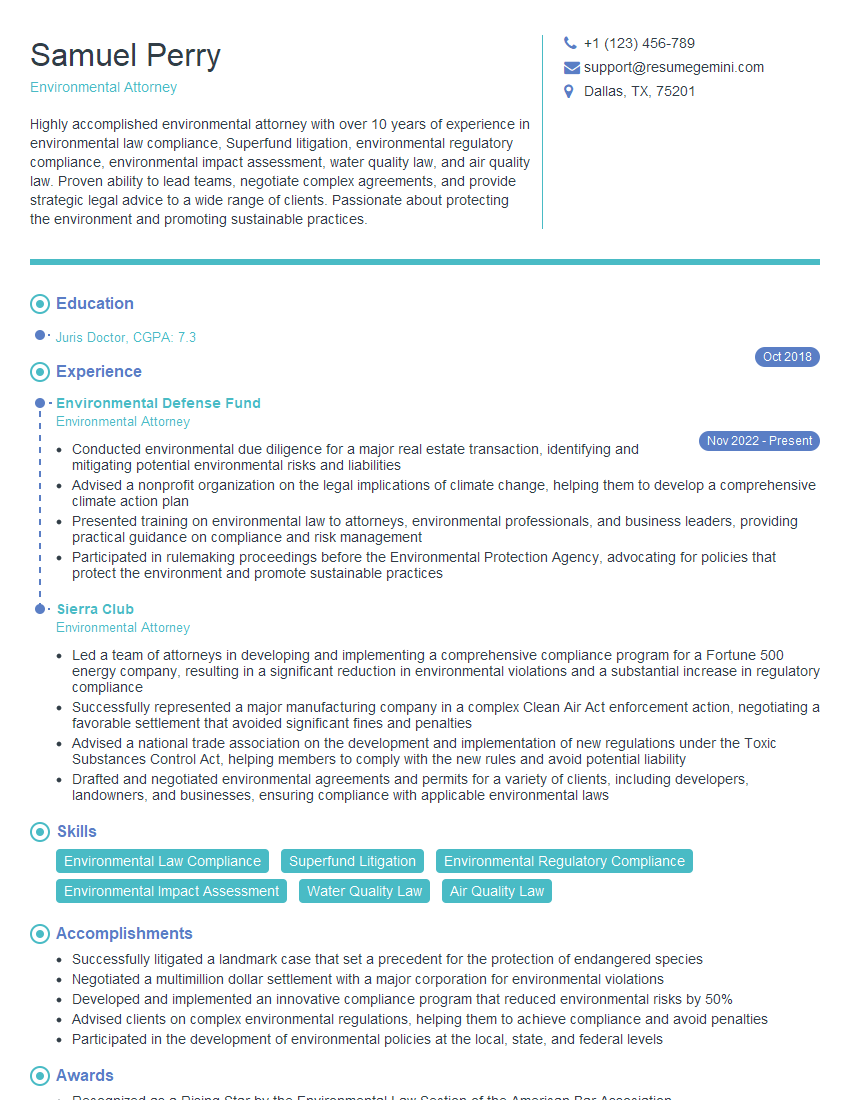
Environmental Attorney Resume Sample
- Sustainability Manager
- Environmental Program Manager
- Environmental Health and Safety Manager
- Regulatory Affairs Manager
- Environmental Remediation Specialist
- Environmental Compliance Officer
- Environmental Scientist
- Sustainability Analyst
- Sustainability Consultant
- Environmental Planner
- Environmental Consultant
- Environmental Project Manager
- Climate Change Analyst
- Environmental Economist
- Environmental Attorney
Explore more articles
Users Rating of Our Blogs
Share Your Experience
We value your feedback! Please rate our content and share your thoughts (optional).
What Readers Say About Our Blog
To the interviewgemini.com Webmaster.
Very helpful and content specific questions to help prepare me for my interview!
Thank you
To the interviewgemini.com Webmaster.
This was kind of a unique content I found around the specialized skills. Very helpful questions and good detailed answers.
Very Helpful blog, thank you Interviewgemini team.