Cracking a skill-specific interview, like one for Environmental Economics and Market Mechanisms, requires understanding the nuances of the role. In this blog, we present the questions you’re most likely to encounter, along with insights into how to answer them effectively. Let’s ensure you’re ready to make a strong impression.
Questions Asked in Environmental Economics and Market Mechanisms Interview
Q 1. Explain the concept of externalities and provide an example in environmental economics.
Externalities occur when the production or consumption of a good or service impacts a third party not directly involved in the transaction. These impacts can be positive (positive externalities) or negative (negative externalities), and they’re not reflected in the market price. In environmental economics, we frequently encounter negative externalities, where the cost of environmental damage is borne by society at large, not just the producer or consumer.
Example: A factory releasing pollutants into a river. The factory benefits from producing goods, and consumers benefit from consuming them. However, the pollution harms the river ecosystem, impacting downstream communities who may face increased health risks or reduced recreational opportunities. This environmental damage isn’t reflected in the price of the factory’s goods, creating a negative externality.
Q 2. Describe the Coase Theorem and its limitations in resolving environmental problems.
The Coase Theorem suggests that if property rights are well-defined and transaction costs are low, private bargaining can lead to an efficient solution to externalities, regardless of the initial allocation of property rights. Imagine two neighbours: one runs a noisy factory, and the other wants peace and quiet. If the neighbour who wants quiet has the right to silence, they can negotiate with the factory owner for compensation to tolerate the noise. If the factory owner has the right to operate noisily, the quiet neighbour can pay them to reduce noise. The efficient outcome (the level of noise that maximizes the total benefit to both parties) will be reached through negotiation.
Limitations: The Coase Theorem is often impractical in environmental contexts due to high transaction costs. For example, negotiating with millions of people affected by climate change is impossible. Additionally, clearly defining property rights over environmental resources like clean air or water is incredibly challenging. The theorem also struggles with situations involving large numbers of actors and asymmetric information where one party has more knowledge than the other.
Q 3. What are the main differences between Pigouvian taxes and cap-and-trade systems?
Both Pigouvian taxes and cap-and-trade systems are market-based instruments designed to address negative externalities, specifically pollution. However, they differ significantly in their approach.
- Pigouvian taxes (or pollution taxes): These are taxes levied on the amount of pollution generated. The tax level is set to internalize the external cost of the pollution. Producers will reduce pollution until the marginal cost of abatement equals the tax.
- Cap-and-trade systems (or emissions trading schemes): These set a limit (cap) on the total amount of pollution allowed. The government then issues permits allowing firms to emit a certain amount. Firms can buy and sell these permits, creating a market for pollution allowances. The price of the permits is determined by supply and demand, incentivizing firms to reduce emissions cost-effectively.
The main difference lies in the certainty of the environmental outcome. Cap-and-trade ensures a specific pollution reduction target, while Pigouvian taxes ensure a certain price per unit of pollution, but the total amount of pollution reduction is uncertain.
Q 4. How does a carbon tax affect market equilibrium?
A carbon tax increases the cost of emitting carbon dioxide. This shifts the supply curve of goods and services that generate carbon emissions upward, reducing the quantity demanded at each price point. The new market equilibrium will have a higher price and a lower quantity of carbon-intensive goods and services. This higher price reflects the true cost of production, incorporating the environmental damage caused by carbon emissions. Consumers will likely shift their consumption towards lower-carbon alternatives.
The exact effect on market equilibrium depends on the elasticity of demand and supply for the carbon-intensive goods. If demand is inelastic (consumers are not very sensitive to price changes), the quantity reduction may be smaller, and the price increase may be larger. If demand is elastic, the quantity reduction will be larger, and the price increase smaller.
Q 5. Explain the functioning of an emissions trading scheme (ETS).
An Emissions Trading Scheme (ETS) works by setting a cap on total emissions of a specific pollutant, typically greenhouse gases. The government then allocates or auctions allowances representing the right to emit a certain quantity of the pollutant. Companies that emit below their allocated allowance can sell the surplus to other companies exceeding their limit. This creates a market where allowances are traded based on supply and demand, leading to a cost-effective approach to emission reduction. Companies with lower abatement costs will reduce their emissions and sell allowances; those with higher abatement costs will buy allowances.
Think of it like a commodity market: the price of allowances will reflect the marginal cost of abatement across different firms. This ensures efficient pollution control, as emission reductions are achieved where they are cheapest.
Q 6. What are the challenges in designing and implementing effective ETS?
Designing and implementing effective ETSs present several challenges:
- Setting the cap: Determining the appropriate emissions cap requires careful scientific assessment and balancing environmental goals with economic impacts. A cap too high will not achieve sufficient emission reduction; a cap too low can lead to excessive costs for businesses.
- Allowance allocation: The initial allocation of allowances can be politically contentious. Different allocation methods (e.g., auctions, grandfathering) have different distributional effects.
- Market liquidity: A well-functioning ETS requires sufficient trading volume and liquidity to ensure efficient price discovery. Too few participants can lead to price volatility and market manipulation.
- Leakage: Emissions reductions in one region may be offset by increased emissions in other regions if firms relocate to areas with less stringent regulations (carbon leakage).
- Enforcement and monitoring: Effective monitoring and enforcement mechanisms are crucial to prevent cheating and ensure compliance with the cap.
Q 7. Discuss the role of market-based instruments in achieving environmental sustainability.
Market-based instruments (MBIs) such as Pigouvian taxes, cap-and-trade systems, and payments for ecosystem services play a vital role in achieving environmental sustainability. They provide economic incentives for individuals and firms to adopt environmentally friendly behaviors. By internalizing the environmental costs of pollution or rewarding environmentally beneficial actions, MBIs help to align private incentives with societal goals. They are often more efficient than command-and-control regulations, allowing for greater flexibility and innovation in achieving environmental targets. The appropriate choice of MBI depends on the specific environmental problem, the characteristics of the affected industries, and the policy objectives.
Examples of successful applications include the European Union Emissions Trading System (EU ETS), which has significantly reduced greenhouse gas emissions in the power sector, and various payment schemes for ecosystem services like reforestation or watershed protection. MBIs are not a panacea, but when implemented well, they can be powerful tools for advancing environmental sustainability.
Q 8. How can you evaluate the cost-effectiveness of different environmental policies?
Evaluating the cost-effectiveness of environmental policies requires a comprehensive approach that goes beyond simply comparing the costs of implementation. We need to consider both the costs of the policy and the benefits it generates in terms of environmental improvements. This often involves comparing different policy instruments to achieve the same environmental outcome. For example, we might compare a carbon tax to a cap-and-trade system in reducing greenhouse gas emissions.
Cost-effectiveness analysis typically involves:
- Identifying the policy goal: Clearly defining the environmental problem and the desired level of improvement (e.g., reducing PM2.5 levels by X%, decreasing carbon emissions by Y tons).
- Quantifying the costs: This includes direct costs (e.g., administrative costs, monitoring, enforcement) and indirect costs (e.g., impacts on industries, changes in consumer behavior). Detailed economic modeling is often employed to estimate these costs.
- Estimating the environmental benefits: This is often the most challenging aspect. We need to quantify the environmental improvements in monetary terms, which might involve techniques like contingent valuation or hedonic pricing (explained further in response to question 4).
- Comparing cost per unit of environmental improvement: Ultimately, the most cost-effective policy will achieve the desired level of environmental improvement at the lowest cost. We might express this as cost per ton of CO2 reduced, for instance.
Example: Imagine comparing a command-and-control regulation mandating specific pollution control technologies versus a market-based instrument like an emission trading scheme. A cost-effectiveness analysis would compare the total cost of each approach relative to the resulting reduction in pollution.
Q 9. What are the key factors to consider when determining the optimal level of environmental regulation?
Determining the optimal level of environmental regulation involves a delicate balancing act between environmental protection and economic efficiency. The goal isn’t to eliminate all pollution or environmental damage—that’s often impractical and prohibitively expensive—but rather to find the point where the marginal benefits of further regulation equal the marginal costs.
Key factors to consider include:
- The nature of the environmental problem: Is it a local, regional, or global problem? How severe are the potential consequences? What are the potential irreversible effects?
- The costs of regulation: This includes the direct costs of implementation and the indirect costs (e.g., job losses, higher prices for consumers).
- The benefits of regulation: These need to be carefully quantified, often in monetary terms, using techniques like contingent valuation or avoided costs (health impacts avoided, for example).
- Technological feasibility: Are there technologies available to effectively reduce the environmental problem at a reasonable cost?
- Distributional impacts: How will the regulation impact different groups (e.g., low-income households, specific industries)? Addressing potential inequities is crucial.
- Uncertainty: Environmental and economic systems are complex and subject to uncertainty. Sophisticated modeling techniques are often used to address this uncertainty.
Example: Setting the optimal level of sulfur dioxide emissions requires considering the costs of abatement technologies for power plants versus the health benefits (reduced respiratory illnesses) from lower pollution levels. The optimal level is reached where the cost of reducing one additional unit of SO2 is equal to the health benefits gained from that reduction.
Q 10. Explain the concept of the social cost of carbon.
The social cost of carbon (SCC) represents the economic damages associated with emitting one additional ton of carbon dioxide (or equivalent greenhouse gases) into the atmosphere. It encompasses the present and future costs of climate change impacts, such as sea-level rise, extreme weather events, agricultural losses, and damages to human health. It’s not simply a measure of direct costs; it incorporates a wide range of indirect and long-term effects.
Calculating the SCC is complex and involves several steps:
- Climate modeling: Estimating how much additional CO2 emission will affect global temperatures and other climate variables.
- Impact assessment: Quantifying the effects of these climate changes on various sectors (agriculture, health, infrastructure, etc.).
- Economic valuation: Converting these impacts into monetary terms using various methods (e.g., damage functions, contingent valuation).
- Discounting: Applying a discount rate to future damages to reflect the fact that money today is worth more than money in the future.
The SCC is a crucial input in cost-benefit analyses of climate change mitigation policies. By incorporating the SCC, policymakers can better evaluate the economic efficiency of various strategies to reduce greenhouse gas emissions. Different organizations use different models and assumptions, leading to varying estimates of the SCC. This variation highlights the uncertainty inherent in these estimations.
Q 11. What are the different methods for valuing environmental goods and services?
Valuing environmental goods and services is a significant challenge in environmental economics, as many of these goods (clean air, biodiversity, scenic views) are not traded in conventional markets. Various methods are used to assign monetary values:
- Market-based methods: These methods rely on observed market behavior. Examples include:
- Hedonic pricing: This technique analyzes how the price of a market good (e.g., houses) is influenced by environmental attributes (e.g., proximity to a park, air quality). By isolating the impact of the environmental attribute, we can estimate its value.
- Travel cost method: This method estimates the value people place on recreational sites by analyzing the costs they incur to visit (travel expenses, time).
- Non-market valuation methods: These methods attempt to elicit people’s preferences for environmental goods directly, often through surveys. Examples include:
- Contingent valuation: This involves asking people how much they would be willing to pay (WTP) or accept (WTA) for changes in environmental quality in a hypothetical market. It’s important to design these surveys carefully to avoid bias.
- Choice experiments: Respondents are presented with different scenarios with varying levels of environmental goods and services and asked to choose their preferred option. This method helps to understand the trade-offs people make.
- Revealed preference methods: These methods observe people’s choices in situations where environmental factors are a component of the decision. Examples include the travel cost method and hedonic pricing.
The choice of valuation method depends on the specific environmental good or service and the availability of data.
Q 12. Describe the concept of benefit-cost analysis in environmental policy.
Benefit-cost analysis (BCA) is a systematic approach to comparing the benefits and costs of a proposed environmental policy. It’s a crucial tool for informing policy decisions by providing a quantitative framework for evaluating whether the policy is economically justified. The core idea is to compare the net present value of the benefits of the policy to the net present value of its costs.
Steps involved in a BCA:
- Identify all benefits and costs: This includes both quantifiable and qualitative aspects.
- Quantify benefits and costs: Use monetary values whenever possible. This might involve using the valuation methods discussed previously (hedonic pricing, contingent valuation, etc.).
- Discount future benefits and costs: Future benefits and costs are discounted to reflect the time value of money. The choice of discount rate is crucial and can significantly affect the results.
- Compare net present value (NPV): The NPV is calculated by subtracting the present value of costs from the present value of benefits. A positive NPV suggests the policy is economically efficient.
- Sensitivity analysis: Investigate how the results change with variations in key assumptions (e.g., discount rate, benefit estimates).
Example: BCA could be used to evaluate the economic viability of a wetland restoration project. Benefits might include increased carbon sequestration, improved water quality, and enhanced recreational opportunities. Costs would include land acquisition, construction, and ongoing maintenance. The BCA would determine whether the present value of benefits exceeds the present value of costs.
Q 13. How can you account for uncertainty in environmental economic modeling?
Uncertainty is inherent in environmental economic modeling. We face uncertainty about future environmental conditions, economic growth, technological advancements, and the effectiveness of policies. Ignoring this uncertainty can lead to flawed policy recommendations.
Methods for addressing uncertainty in environmental economic modeling include:
- Scenario analysis: Evaluating the policy under various plausible scenarios (e.g., high emissions, low emissions, rapid technological change). This gives a range of possible outcomes rather than a single point estimate.
- Probability distributions: Assigning probability distributions to key parameters (e.g., discount rate, future emissions) to capture their uncertainty. Monte Carlo simulation techniques can then be used to generate a distribution of possible outcomes.
- Robustness analysis: Testing the sensitivity of the results to changes in key assumptions or model parameters. A robust policy recommendation is one that remains favorable across a wide range of plausible scenarios.
- Adaptive management: Implementing policies that allow for flexibility and adjustments based on new information and monitoring results.
Example: In modeling the impacts of climate change, there is uncertainty around the climate sensitivity (the temperature response to a given increase in greenhouse gas concentrations). Using probability distributions for climate sensitivity in the model and performing Monte Carlo simulations helps to produce a range of possible economic damages, providing a more realistic assessment of the risks.
Q 14. What are the ethical considerations in environmental economics?
Ethical considerations are paramount in environmental economics. Decisions regarding environmental protection often involve trade-offs, and these trade-offs have implications for different groups of people (current generations, future generations, different socioeconomic groups). Key ethical considerations include:
- Intergenerational equity: How should we balance the needs of the present generation with the needs of future generations who will inherit the consequences of our actions (e.g., climate change)? This often involves careful consideration of discounting future benefits and costs.
- Distributional equity: How are the costs and benefits of environmental policies distributed across different segments of society? Environmental policies can disproportionately affect vulnerable groups (e.g., low-income communities, developing countries).
- Precautionary principle: In situations of scientific uncertainty, should we err on the side of caution and take preventative actions to avoid potentially irreversible environmental harm?
- Environmental justice: Ensuring that environmental protection efforts are fair and equitable for all communities, especially those historically marginalized.
Example: The debate over climate change policy reflects many of these ethical considerations. The costs of mitigation might fall more heavily on certain industries or countries, while the benefits of avoiding climate change will be enjoyed by all (although disproportionately by future generations). Balancing these considerations requires careful ethical reflection and potentially innovative policy instruments.
Q 15. Discuss the role of discounting in long-term environmental decision-making.
Discounting is a crucial concept in environmental economics because it reflects the fact that a dollar today is worth more than a dollar in the future. This is due to factors like inflation, investment opportunities, and the inherent risk associated with future uncertainties. In long-term environmental decision-making, like evaluating the costs and benefits of climate change mitigation, discounting impacts how we weigh present costs against future benefits. A high discount rate gives greater weight to present consumption and undervalues future environmental protection, potentially leading to inaction on problems like climate change that have long-term consequences. Conversely, a lower discount rate acknowledges the importance of preserving environmental assets for future generations. The choice of discount rate is highly debated, as it implicitly reflects ethical judgments about intergenerational equity. For example, if we are assessing the costs of building a dam today versus the future benefits of hydroelectric power and flood control, a higher discount rate might make the dam project seem less worthwhile. However, a lower discount rate might prioritize the long-term environmental and social benefits over immediate economic gains.
Career Expert Tips:
- Ace those interviews! Prepare effectively by reviewing the Top 50 Most Common Interview Questions on ResumeGemini.
- Navigate your job search with confidence! Explore a wide range of Career Tips on ResumeGemini. Learn about common challenges and recommendations to overcome them.
- Craft the perfect resume! Master the Art of Resume Writing with ResumeGemini’s guide. Showcase your unique qualifications and achievements effectively.
- Don’t miss out on holiday savings! Build your dream resume with ResumeGemini’s ATS optimized templates.
Q 16. How does environmental regulation affect firm behavior and investment decisions?
Environmental regulations significantly influence firm behavior and investment decisions. They create incentives for companies to adopt cleaner production technologies, reduce pollution, and improve resource efficiency. Regulations like emission standards or carbon taxes increase the cost of polluting, forcing firms to either internalize these costs or find ways to reduce their environmental impact. This can lead to innovations in cleaner technologies and processes, creating new market opportunities and potentially driving economic growth in green sectors. For instance, the introduction of stricter fuel efficiency standards for automobiles prompted automakers to invest heavily in hybrid and electric vehicle technology. Conversely, firms might choose to relocate to areas with less stringent regulations, potentially leading to environmental injustice, or they could choose to lobby against stricter regulations. This highlights the importance of designing effective and efficient regulations that balance environmental protection with economic considerations.
Q 17. Explain the concept of the environmental Kuznets curve.
The Environmental Kuznets Curve (EKC) is a hypothesized relationship between environmental degradation and economic growth. It suggests that as a country’s income per capita increases, environmental degradation initially rises, reaches a peak, and then declines. This is based on the idea that at early stages of development, environmental concerns are secondary to economic growth, but as economies mature and people’s incomes rise, they have a greater demand for environmental quality. The EKC is often visualized as an inverted U-shaped curve. However, it’s crucial to note that the EKC is empirically contested, and its applicability varies across different pollutants and countries. For example, while it might hold true for some air pollutants, it may not apply to greenhouse gas emissions, where the environmental impact can be global and long-lasting regardless of economic development stage. The EKC also doesn’t account for the scale of global environmental problems; even if developed countries reduce their emissions, the total environmental burden can still increase if developing countries experience high growth.
Q 18. What are the potential impacts of climate change on economic activity?
Climate change poses substantial risks to economic activity. Rising temperatures, more frequent extreme weather events (hurricanes, droughts, floods), and sea-level rise can cause significant damage to infrastructure, disrupt supply chains, reduce agricultural productivity, and increase health risks. These impacts can lead to losses in GDP, increased poverty, and displacement of populations. For example, increased frequency and intensity of hurricanes can damage coastal properties and disrupt tourism, leading to economic losses. Changes in rainfall patterns can negatively affect agricultural yields, impacting food security and prices. Furthermore, climate change can exacerbate existing inequalities, disproportionately affecting vulnerable populations and regions. While adaptation strategies can help mitigate some impacts, the costs of these strategies can be substantial, highlighting the need for global mitigation efforts to reduce greenhouse gas emissions.
Q 19. How can market mechanisms be used to address biodiversity loss?
Market mechanisms, such as payments for ecosystem services (PES) and biodiversity offsets, can be effective tools in addressing biodiversity loss. PES involves rewarding landowners or communities for managing their land in ways that benefit biodiversity. For example, a government or a private company might pay farmers to maintain or restore habitats that support endangered species. Biodiversity offsets allow developers to compensate for biodiversity loss caused by a project by investing in conservation or restoration efforts elsewhere. For example, a company building a highway that destroys habitat could fund habitat restoration in another location. These market mechanisms offer incentives for conservation, creating a financial value for biodiversity that might otherwise be ignored. However, effective implementation requires careful design and monitoring to ensure that offsets are truly additional and that the ecological integrity of protected areas is maintained. Challenges include accurately valuing biodiversity, ensuring transparency and accountability, and preventing unintended consequences.
Q 20. Describe the role of international agreements in managing transboundary environmental problems.
International agreements play a vital role in managing transboundary environmental problems, such as climate change, ocean pollution, and ozone depletion. These agreements establish common goals, provide frameworks for cooperation, and create mechanisms for monitoring and enforcement. The success of international agreements depends on the commitment of participating countries, the effectiveness of enforcement mechanisms, and the ability to address the diverse interests and capacities of different nations. For instance, the Montreal Protocol on Substances that Deplete the Ozone Layer demonstrated the effectiveness of international cooperation in addressing a global environmental problem. However, challenges remain in achieving universal participation and ensuring equitable burden-sharing, as seen in the ongoing negotiations surrounding climate change mitigation under the UNFCCC. The effectiveness of these agreements often relies on a combination of legally binding targets, financial and technical assistance, and mechanisms for dispute resolution.
Q 21. What are the limitations of using GDP as a measure of economic well-being in relation to environmental sustainability?
Gross Domestic Product (GDP) is a widely used measure of economic activity, but it has significant limitations as an indicator of overall economic well-being, particularly when considering environmental sustainability. GDP only measures the monetary value of goods and services produced within a country’s borders and doesn’t account for the depletion of natural resources, environmental degradation, or social costs. For example, logging a forest increases GDP in the short term, but it doesn’t account for the long-term loss of ecosystem services, such as carbon sequestration or biodiversity. Similarly, pollution from industrial activity is not reflected in GDP unless it involves spending on pollution control. Therefore, a high GDP doesn’t necessarily translate into a high quality of life or environmental sustainability. Alternative indicators, such as the Genuine Progress Indicator (GPI) or the Human Development Index (HDI), attempt to address this limitation by incorporating factors like environmental quality, resource depletion, and income inequality into their calculations, providing a more holistic view of economic well-being.
Q 22. How can you measure the effectiveness of an environmental policy?
Measuring the effectiveness of an environmental policy is crucial to ensure its success. It’s not a simple ‘yes’ or ‘no’ but involves a multifaceted assessment. We need to define clear, measurable objectives upfront—what are we trying to achieve? Are we aiming to reduce greenhouse gas emissions by a certain percentage? Improve air quality to meet specific standards? Increase biodiversity in a particular ecosystem?
Once objectives are set, we employ various methods. Quantitative methods involve analyzing numerical data. For example, we might track changes in pollution levels using monitoring stations, compare energy consumption before and after implementing a carbon tax, or analyze the success of a protected area in increasing endangered species populations. Qualitative methods focus on non-numerical data, such as conducting surveys to understand public perception of a policy, interviewing stakeholders to assess their experience, or analyzing policy documents to evaluate their implementation. A comprehensive evaluation often combines both. Finally, we need to consider cost-benefit analysis to weigh the economic costs of the policy against its environmental benefits – this can often be challenging, but is incredibly important for resource allocation.
For instance, evaluating the effectiveness of a cap-and-trade program for reducing sulfur dioxide emissions would involve analyzing changes in SO2 levels in the atmosphere alongside tracking the market price of emission permits and the compliance rate of emitting industries.
Q 23. Describe different types of environmental impact assessments.
Environmental Impact Assessments (EIAs) are systematic processes used to identify and evaluate the potential environmental impacts of a proposed project or activity. They’re crucial for making informed decisions about development, ensuring sustainability, and preventing environmental damage. Several types exist, each with a unique focus:
- Strategic Environmental Assessment (SEA): This broad-scale assessment examines the potential environmental effects of policies, plans, and programs before detailed project-level decisions are made. Imagine a government planning a large-scale infrastructure project like a new highway system – an SEA would look at the cumulative impacts on air quality, habitat loss, and water resources across the entire network.
- Environmental Impact Statement (EIS): Often a legal requirement for large-scale projects, an EIS provides a detailed analysis of potential environmental impacts and proposes mitigation measures. Think of a proposed dam—an EIS would assess its effects on downstream ecosystems, water availability, and local communities.
- Rapid Environmental Assessment (REA): Used for projects with time constraints, REAs prioritize speed and practicality, often focusing on immediate or high-impact concerns. An example might be a short-term emergency response following a natural disaster.
- Life Cycle Assessment (LCA): This comprehensive assessment examines the environmental impacts of a product or process across its entire life cycle – from raw material extraction to disposal. Consider a reusable shopping bag; an LCA would analyze the environmental costs of its manufacturing, use, and ultimate recycling or disposal compared to plastic bags.
The choice of assessment type depends on the scale, complexity, and urgency of the project. All share the goal of informing decision-making to minimize harmful environmental consequences.
Q 24. What are some common critiques of market-based environmental policies?
While market-based environmental policies, such as carbon taxes and cap-and-trade systems, offer a potentially efficient way to reduce pollution, they face several critiques:
- High Transaction Costs: Setting up and administering these markets can be expensive, particularly for complex systems. The costs of monitoring emissions, verifying compliance, and resolving disputes can outweigh the benefits in some cases.
- Distributional Issues: Market-based solutions can disproportionately impact low-income households. For example, a carbon tax can increase the price of energy, affecting those least able to afford higher energy costs. This raises equity concerns and necessitates policy adjustments, such as using tax revenue to subsidize low-income consumers.
- Hot Spots: Emissions might concentrate in certain areas if not carefully designed. If firms in a region are allowed to buy pollution permits, a ‘race to the bottom’ might occur, where regions with weaker environmental regulations attract polluting industries. Careful consideration of permit allocation and regional variations is key.
- Uncertainty and Volatility: The price of emission permits in cap-and-trade systems can fluctuate, creating uncertainty for businesses and making long-term investment planning difficult. This volatility can hinder investment in cleaner technologies.
- Difficult to value ecosystem services: Many environmental benefits, like biodiversity or clean water, are not easily traded in a market setting. This makes it harder to accurately price these aspects in the policy.
Addressing these critiques requires careful policy design, including robust monitoring, transparent mechanisms, and supplemental measures to ensure equity and avoid unintended negative consequences.
Q 25. Explain the concept of greenwashing and how it undermines market-based solutions.
Greenwashing is the deceptive practice of making an unsubstantiated or misleading claim about the environmental benefits of a product, service, or company. It undermines market-based solutions by creating a false sense of environmental responsibility, deceiving consumers, and hindering the success of genuinely sustainable businesses.
For instance, a company might claim their product is ‘eco-friendly’ without providing any evidence or using vague terms like ‘sustainable’ without clear definition. They might highlight small efforts (e.g., using recycled packaging) while ignoring much larger environmental impacts (e.g., unsustainable production processes). This misinformation distorts the market, allowing less environmentally responsible firms to compete unfairly and reducing consumer incentives to choose genuinely sustainable options.
Market-based solutions, like eco-labeling programs, rely on accurate information to function effectively. Greenwashing disrupts this by creating confusion and eroding consumer trust. To counter greenwashing, stronger regulations, independent verification of environmental claims, and increased consumer awareness are essential. Third-party certification programs can help to increase accountability.
Q 26. Discuss the role of technology in mitigating environmental problems.
Technology plays a pivotal role in mitigating environmental problems. From renewable energy sources to advanced waste management systems, technological innovation is crucial for building a sustainable future.
Renewable energy technologies, such as solar, wind, and geothermal, offer alternatives to fossil fuels, reducing greenhouse gas emissions. Energy efficiency improvements in buildings, transportation, and industry minimize energy consumption, lessening environmental impact. Advanced waste management techniques, including recycling, composting, and waste-to-energy conversion, reduce landfill waste and minimize pollution. Precision agriculture uses technology to optimize resource use, reducing water and fertilizer consumption while improving crop yields. Carbon capture and storage (CCS) technologies aim to capture CO2 emissions from power plants and industrial facilities and store them underground, potentially mitigating climate change.
However, technology is not a silver bullet. Its development and deployment require significant investment and may face technical challenges. Moreover, technological solutions must be integrated with sound environmental policies and societal changes to achieve lasting environmental benefits. Simply developing new technology isn’t enough; we need policies that support its widespread adoption and discourage environmentally damaging practices.
Q 27. What are the implications of environmental regulations for international trade?
Environmental regulations significantly impact international trade. Differing environmental standards across countries can create trade barriers and lead to disputes. A country with stricter regulations might face an economic disadvantage if its competitors in countries with lax environmental rules can produce goods at a lower cost. This is known as a ‘carbon leakage’ effect, where pollution simply shifts to another location.
Trade agreements can incorporate environmental provisions, either directly (e.g., specific limits on emissions) or indirectly (e.g., provisions for environmental cooperation). International environmental agreements, like the Paris Agreement on climate change, aim to coordinate global efforts to address environmental problems. However, achieving international consensus on environmental standards and enforcement remains a significant challenge.
The World Trade Organization (WTO) plays a critical role in resolving trade disputes related to environmental regulations. Navigating the complex interplay between trade and environmental concerns requires careful consideration of economic competitiveness and environmental sustainability. Finding a balance is crucial for fostering global cooperation on environmental protection without stifling economic growth.
Q 28. How can behavioral economics inform the design of effective environmental policies?
Behavioral economics offers valuable insights into designing more effective environmental policies. It recognizes that people don’t always act rationally, often influenced by biases, heuristics, and social norms.
For instance, understanding framing effects – how information is presented – can improve communication about environmental issues. Instead of emphasizing the costs of action (e.g., ‘carbon tax’), we can highlight the benefits (e.g., ‘investment in clean energy’). Loss aversion, the tendency to feel the pain of a loss more strongly than the pleasure of an equivalent gain, suggests framing environmental policies in terms of what we stand to lose (e.g., degraded ecosystems) can be more persuasive than focusing on the gains from adopting environmentally friendly practices.
Social norms significantly impact behavior. Promoting pro-environmental actions as the ‘norm’ can encourage adoption. Defaults also play a significant role; people tend to stick with default options. Automatically enrolling citizens in green energy programs or setting default energy-saving settings in homes can increase participation. Incentives, feedback, and nudges are all powerful tools. For example, providing real-time feedback on energy consumption or offering rebates for energy-efficient appliances can motivate people to adopt environmentally conscious behavior.
Key Topics to Learn for Environmental Economics and Market Mechanisms Interview
- Externalities and Market Failure: Understanding how environmental problems arise from market failures due to externalities (e.g., pollution). Explore concepts like Pigouvian taxes and Coase Theorem.
- Cost-Benefit Analysis (CBA): Applying CBA to evaluate environmental projects and policies. This includes identifying and quantifying both costs and benefits, often involving discounting and sensitivity analysis.
- Environmental Valuation Techniques: Mastering methods for assigning monetary values to environmental goods and services (e.g., contingent valuation, hedonic pricing, travel cost method). Understand the strengths and limitations of each.
- Cap-and-Trade Systems: Deep dive into the design and implementation of emissions trading schemes, including allowance allocation, market monitoring, and potential challenges like banking and borrowing.
- Environmental Regulations and Policy Instruments: Analyze the effectiveness of different policy instruments (e.g., taxes, subsidies, standards) in achieving environmental goals. Consider factors such as compliance costs and enforcement.
- Sustainable Development and the Circular Economy: Discuss the economic principles underlying sustainable development and the role of market mechanisms in promoting a circular economy.
- Climate Change Economics: Understand the economic implications of climate change, including the social cost of carbon and the economics of climate mitigation and adaptation.
- Natural Resource Economics: Explore the economic principles governing the optimal use of natural resources, considering issues like depletion, sustainability, and common-pool resources.
- Behavioral Economics and Environmental Decision-Making: Analyze how psychological factors influence environmental choices and how these insights can be used to design more effective policies.
Next Steps
Mastering Environmental Economics and Market Mechanisms significantly enhances your career prospects in a rapidly evolving field. A strong understanding of these concepts is crucial for roles in environmental consulting, policy analysis, research, and the burgeoning green economy. To maximize your chances of landing your dream job, creating a compelling and ATS-friendly resume is essential. ResumeGemini is a trusted resource that can help you build a professional resume tailored to highlight your specific skills and experience. Examples of resumes tailored to Environmental Economics and Market Mechanisms are available to help you get started. Invest in your future – craft a resume that showcases your expertise and makes you stand out from the competition.
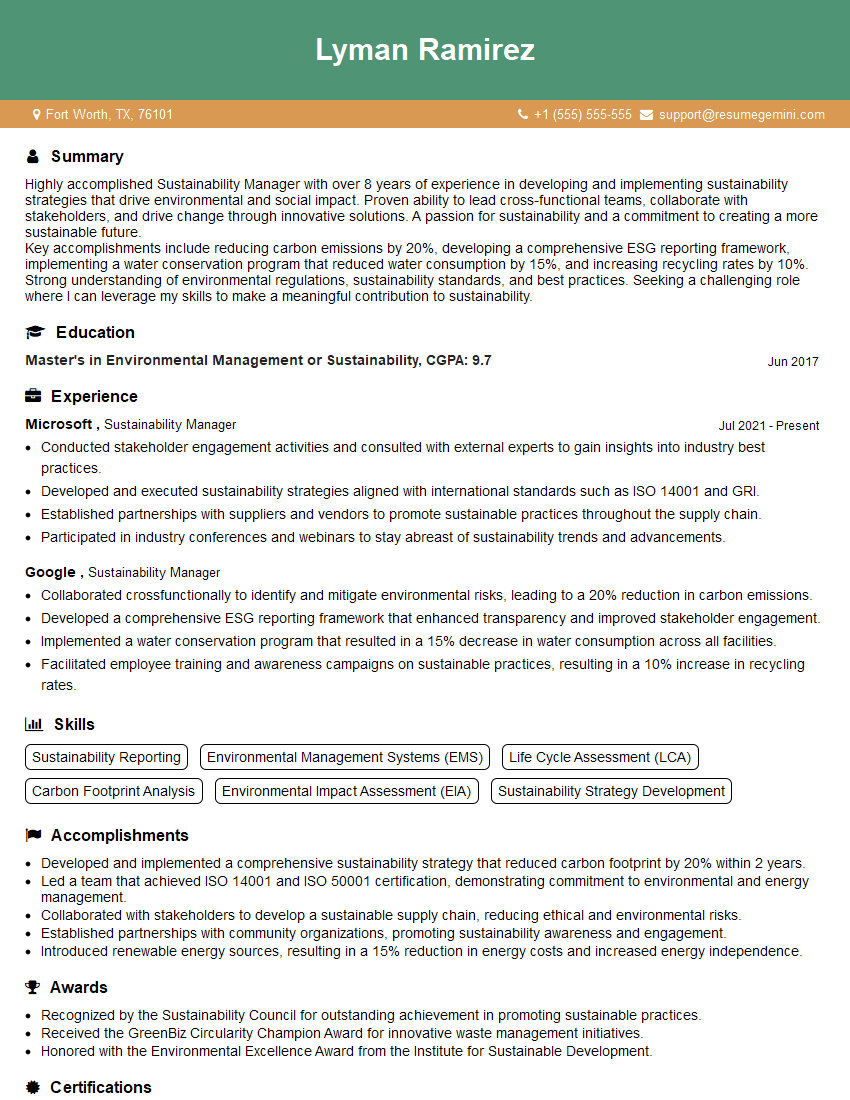
Sustainability Manager Resume Sample
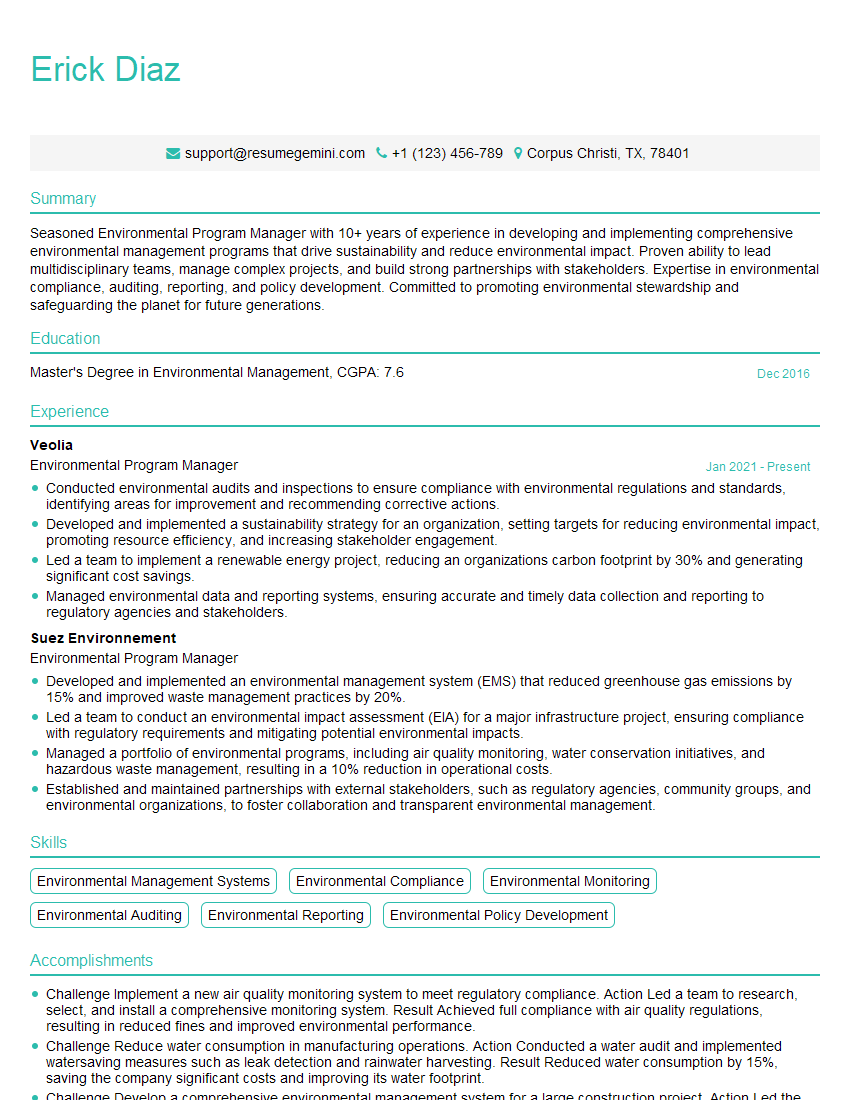
Environmental Program Manager Resume Sample
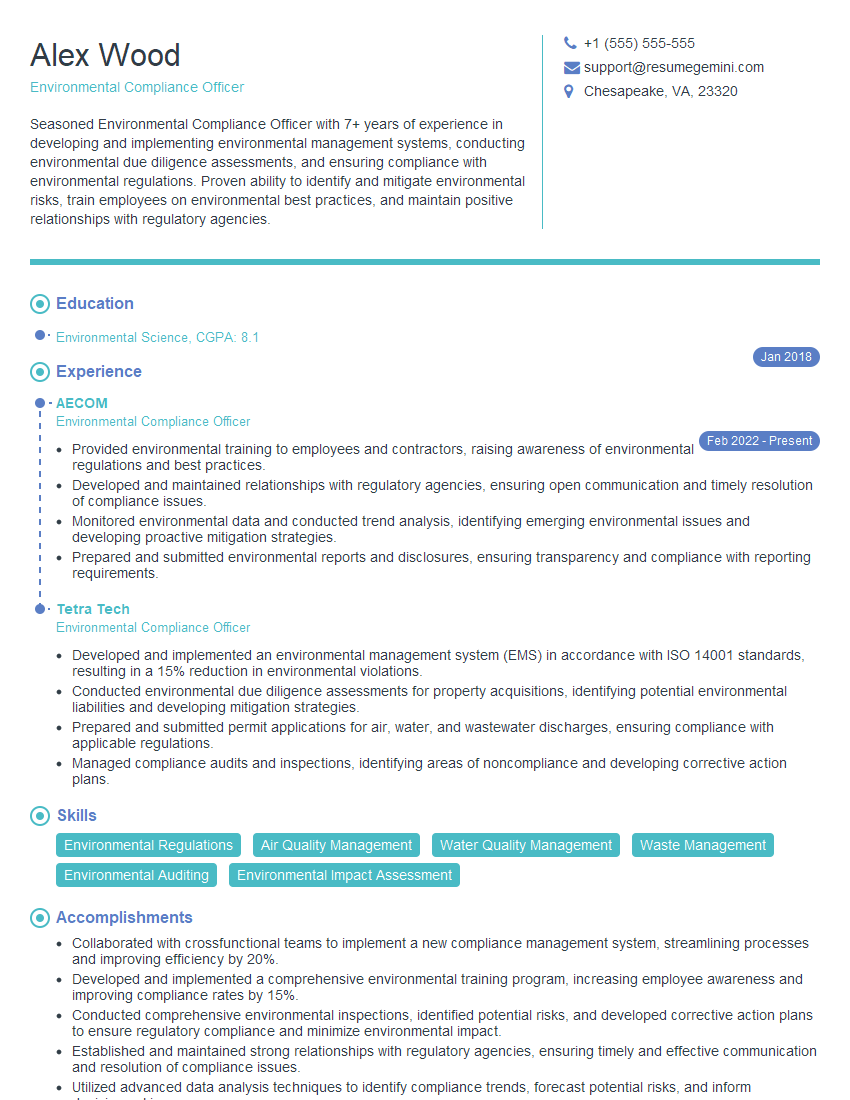
Environmental Compliance Officer Resume Sample

Sustainability Consultant Resume Sample
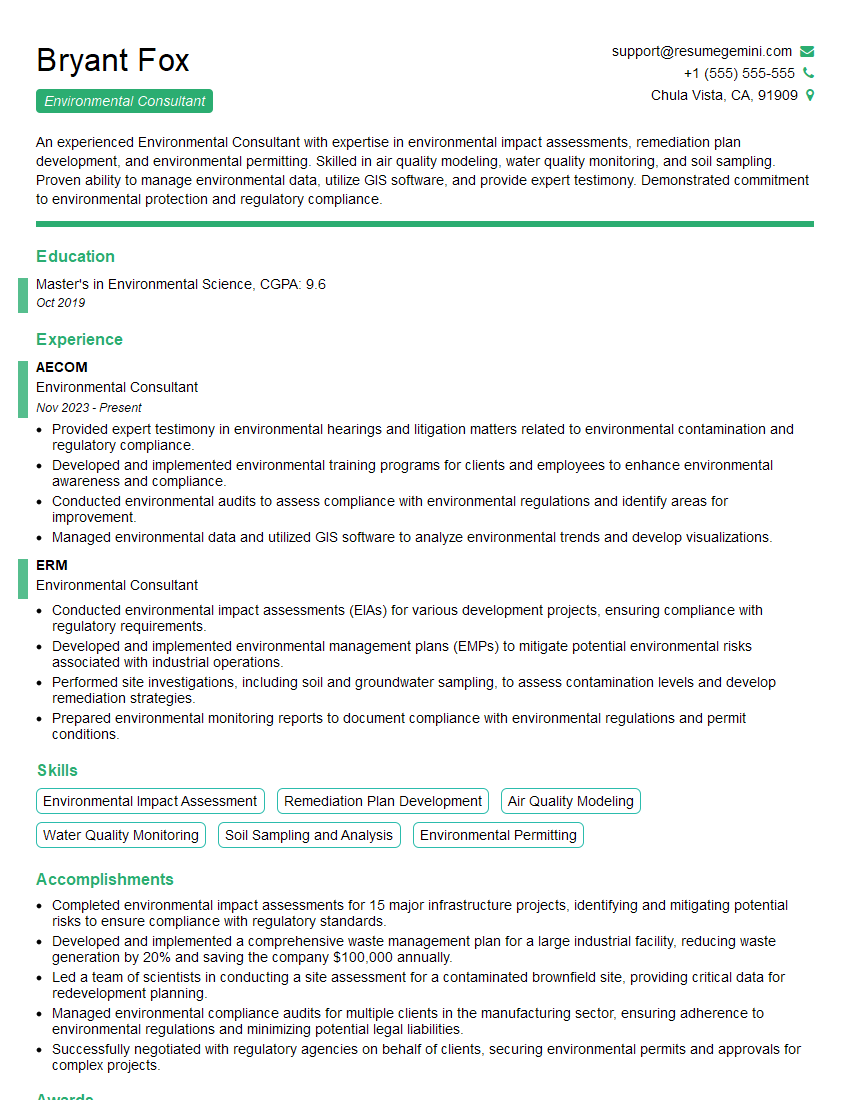
Environmental Consultant Resume Sample

Environmental Project Manager Resume Sample
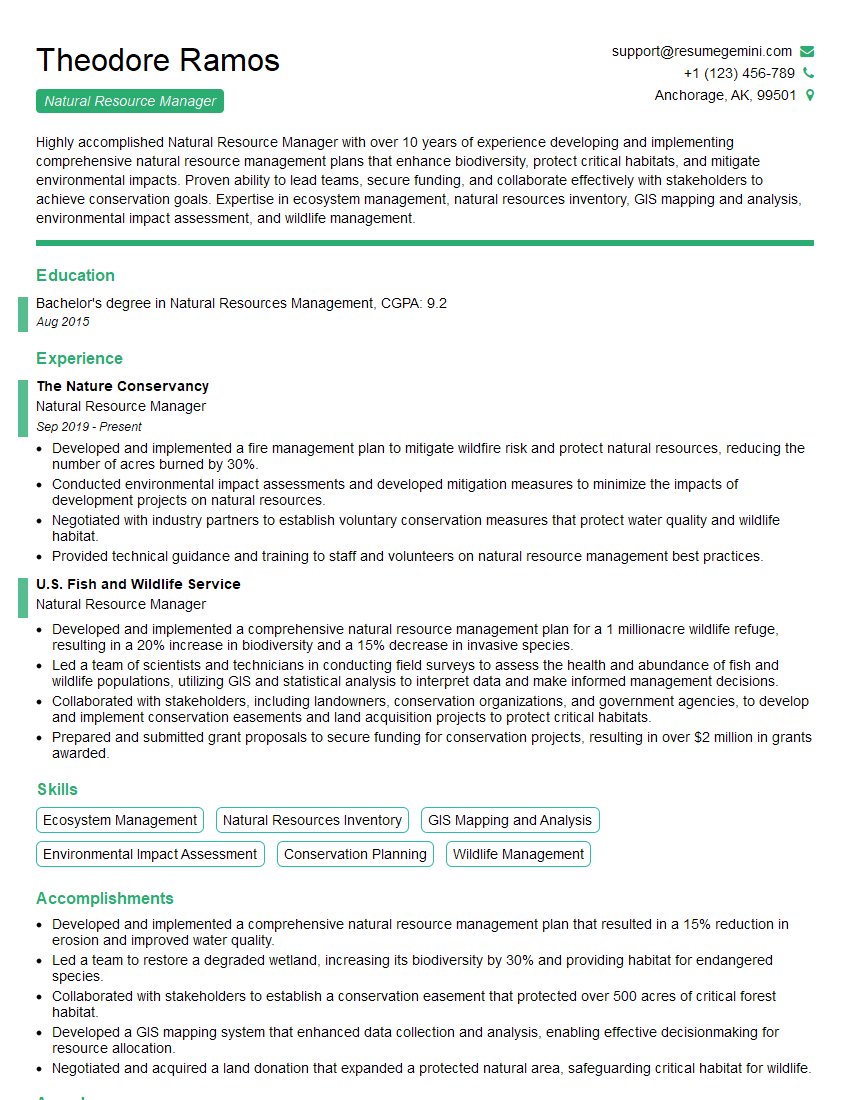
Natural Resource Manager Resume Sample
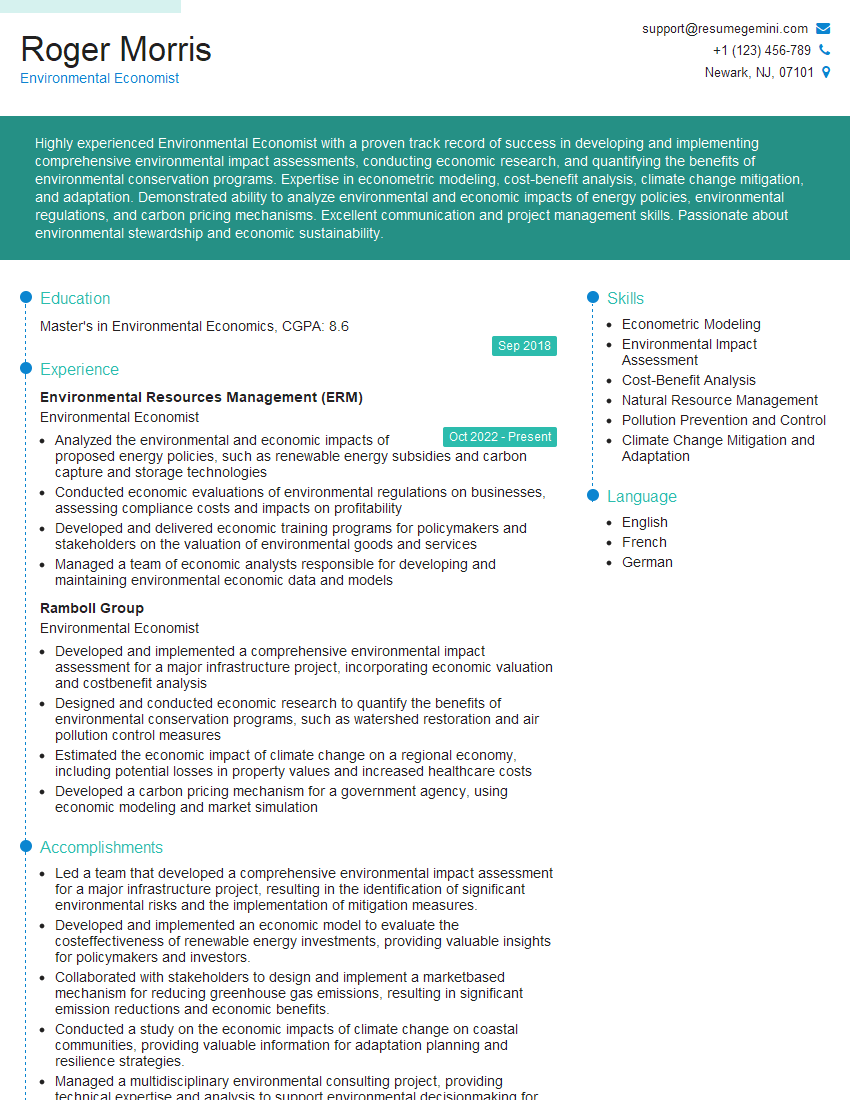
Environmental Economist Resume Sample
Explore more articles
Users Rating of Our Blogs
Share Your Experience
We value your feedback! Please rate our content and share your thoughts (optional).
What Readers Say About Our Blog
To the interviewgemini.com Webmaster.
Very helpful and content specific questions to help prepare me for my interview!
Thank you
To the interviewgemini.com Webmaster.
This was kind of a unique content I found around the specialized skills. Very helpful questions and good detailed answers.
Very Helpful blog, thank you Interviewgemini team.