Interviews are opportunities to demonstrate your expertise, and this guide is here to help you shine. Explore the essential T-bar Ceiling Installation interview questions that employers frequently ask, paired with strategies for crafting responses that set you apart from the competition.
Questions Asked in T-bar Ceiling Installation Interview
Q 1. What types of T-bar ceiling systems are you familiar with?
T-bar ceiling systems, also known as lay-in ceiling systems, come in various types, primarily differentiated by their grid material and design. The most common are:
- Standard T-Grid: This is the most prevalent type, using a galvanized steel grid with a simple, easily installed ‘T’ shaped frame. It’s cost-effective and versatile.
- Fine-Grid: This uses a narrower grid system, resulting in a more refined appearance, often used in higher-end applications. The smaller grid allows for more design flexibility.
- Concealed Grid: Designed to hide the grid entirely, creating a seamless, cleaner look. The tiles are often carefully trimmed or special clips are used to ensure the grid remains hidden.
- Exposed Grid: In this system, the grid itself becomes a design element. Different materials, colors, and finishes can be incorporated into the grid to create a visually interesting effect. It’s often used in modern or industrial design styles.
- Specialty Grids: These include grids with integrated lighting or sound-dampening features. They provide added functionality beyond the basic structural support.
The choice depends largely on budget, aesthetic preferences, and the specific requirements of the project. For instance, a retail space might opt for a fine-grid system for a clean look, while a warehouse might utilize a standard T-grid for its durability and affordability.
Q 2. Describe the process of installing a T-bar ceiling grid.
Installing a T-bar ceiling grid is a methodical process requiring precision and attention to detail. Here’s a step-by-step guide:
- Planning and Preparation: Accurately measure the ceiling area and determine the grid layout. Ensure you have all necessary tools and materials.
- Main Runners Installation: Install the main runners (longitudinal supports) along the longest dimension of the ceiling, ensuring they’re perfectly level using a laser level or level. Secure them to the ceiling joists or using appropriate hangers.
- Cross Tees Installation: Install the cross tees (transverse supports) perpendicular to the main runners, maintaining consistent spacing and ensuring they’re tightly connected to the main runners.
- Grid Adjustment: Check and adjust the grid to ensure perfect alignment and levelness throughout the entire structure. Small adjustments can be made by gently tapping the grid members.
- Tile Installation: Once the grid is complete, carefully insert the ceiling tiles into the grid, making sure they fit snugly and evenly.
Think of it like building a framework for a picture. The main runners and cross tees create the structure, and the tiles are the picture itself. Each piece must be correctly positioned for the final result to be perfect.
Q 3. How do you ensure proper alignment and levelness during installation?
Maintaining proper alignment and levelness is crucial for a professional-looking T-bar ceiling. Here’s how we ensure this:
- Laser Leveling: A laser level provides the most accurate method for establishing a perfectly level plane for the main runners. This is especially important in large spaces.
- String Line: For smaller areas, a string line can be used to establish a level reference line for aligning the grid components.
- Level: A standard level is used to verify the levelness of each main runner and cross tee after installation.
- Measuring and Marking: Accurate measurements and markings are essential to ensure consistent spacing between the grid members. Using measuring tapes and marking pencils helps maintain alignment.
- Grid Adjustments: Minor adjustments can be made to the grid members by gently tapping them into place. However, major misalignments may indicate an error in the initial layout.
Imagine building a house – if the foundation isn’t level, the whole structure will be off. Similarly, a level T-bar ceiling requires meticulous attention to alignment from the start.
Q 4. What safety precautions do you take when installing T-bar ceilings?
Safety is paramount when installing T-bar ceilings. The following precautions are always taken:
- Proper Personal Protective Equipment (PPE): This includes safety glasses, gloves, and sturdy work boots to protect against falling objects and sharp edges.
- Fall Protection: When working at heights, harnesses and fall arrest systems are always used. This is crucial to prevent falls, even with relatively low ceiling heights.
- Tool Safety: Tools are used correctly and are regularly checked for damage. Damaged tools can increase the risk of injury.
- Lifting Assistance: For heavier components, mechanical lifting devices like a scissor lift or cherry picker are used to eliminate strain and risk of injury.
- Clear Work Area: Maintaining a clear work area ensures unobstructed movement and reduces the risk of accidents. All unnecessary materials and debris are removed from the installation zone.
Safety isn’t just a precaution; it’s a fundamental principle. A safe work environment ensures a smoothly executed project and protects both the workers and the property.
Q 5. Explain the importance of using the correct grid and tile sizes.
Using the correct grid and tile sizes is essential for a proper and aesthetically pleasing installation. Incorrect sizes can lead to several problems:
- Poor Fit: Using mismatched sizes results in gaps between tiles or a loose fit, creating an unprofessional appearance.
- Structural Instability: Improper sizing can compromise the structural integrity of the ceiling, potentially leading to sagging or damage.
- Difficulty in Installation: Mismatched sizes can make installation significantly more difficult, causing frustration and potential delays.
- Aesthetic Issues: Mismatched sizes disrupt the uniformity of the ceiling, creating an uneven and unappealing look.
It’s like trying to force a square peg into a round hole – the result won’t be pretty or stable. Accurate measurements and the selection of correctly sized grid and tiles are crucial steps in achieving a successful project.
Q 6. How do you handle uneven ceilings or obstructions during installation?
Uneven ceilings or obstructions present challenges, but they’re manageable with proper planning and techniques:
- Ceiling Leveling: For minor unevenness, shims can be used to level the grid. For significant unevenness, a suspended ceiling system may be necessary to create a level surface.
- Obstruction Workaround: Obstructions like pipes or ductwork require careful planning. The grid may need to be cut and modified to accommodate these obstacles. This often requires accurate measuring and precise cutting to avoid creating gaps.
- Custom Grid Design: In complex situations with many obstructions, a custom grid design may be needed to efficiently navigate around them. This requires detailed planning and potentially custom fabrication of grid members.
- Supplemental Support: Additional support structures might be needed for areas with unevenness or significant weight load to prevent sagging.
Handling unevenness and obstructions demands creativity and problem-solving. It’s like building a puzzle where some pieces are missing or uniquely shaped – you have to find creative ways to make it all fit together perfectly.
Q 7. What are the different types of ceiling tiles used in T-bar systems?
T-bar systems accommodate a wide variety of ceiling tiles, each with unique properties:
- Mineral Fiber Tiles: These are the most common type, known for their affordability, sound absorption, and fire resistance.
- Metal Tiles: These offer durability and a contemporary look, available in various materials like aluminum or steel, and finishes.
- Gypsum Tiles: These provide excellent fire protection and sound absorption, often preferred in areas with stringent fire codes.
- Wood Tiles: These offer a warmer, more natural aesthetic, but require careful maintenance and may be less durable than other options.
- Acoustic Tiles: Specifically designed to improve sound absorption, these tiles are often used in theaters, offices, and other areas where sound control is crucial.
The choice of tile depends on factors like budget, desired aesthetic, sound requirements, and fire safety standards. For instance, a school might opt for acoustic and fire-resistant tiles, while a modern office might choose sleek metal tiles.
Q 8. How do you calculate the amount of materials needed for a T-bar ceiling installation?
Calculating the materials needed for a T-bar ceiling installation involves a precise measurement process. First, you need to determine the total ceiling area in square feet. This is done by measuring the length and width of the room and multiplying them together. Remember to account for any obstructions like ductwork or existing fixtures that might reduce the actual tile area.
Next, you need to determine the number of T-bar grid components. The grid consists of main runners (long beams) and cross tees (shorter beams) which create a grid pattern. Manufacturers provide detailed specifications detailing the spacing between runners and cross tees (usually 2 feet or 2.4 feet on center). By dividing your room dimensions by this spacing, you can estimate the number of runners and cross tees required. Always add extra to allow for cuts and potential errors.
Finally, calculate the number of ceiling tiles needed. This is done by dividing the total ceiling area by the area of a single ceiling tile. Again, adding extra tiles (around 5-10%) accounts for cuts and damage during installation. Always check the exact tile dimensions from the manufacturer as they can vary slightly.
Example: A room is 12ft x 15ft. The area is 180 sq ft. Using 2ft x 2ft tiles, you’d need 180 sq ft / 4 sq ft/tile = 45 tiles. Adding 10% extra, you’d order 49-50 tiles.
Q 9. What are the common problems encountered during T-bar ceiling installation and how do you resolve them?
Common problems in T-bar ceiling installation often relate to improper planning or execution. Uneven surfaces are a frequent issue. If the existing ceiling isn’t level, the T-bar grid won’t sit properly, leading to an uneven final look. The solution is to use shims to level the grid before attaching it to the structure. This requires careful and precise measurement and adjustment.
Another issue involves incorrect grid layout. Failing to account for obstructions, doorways, or lighting fixtures can lead to significant challenges mid-installation and necessitate rework. Pre-installation planning, including detailed measurements and a schematic layout, is critical to avoid this.
Finally, poor quality materials or inadequate tools can cause problems. Using damaged T-bars or low-quality tiles can impact the final aesthetics and longevity. Always use reputable suppliers and high-quality materials. Similarly, using the wrong tools or techniques can result in damaged tiles or a poorly installed grid.
Q 10. How do you ensure proper sound absorption with acoustical ceiling tiles?
Achieving proper sound absorption with acoustical ceiling tiles involves selecting the right tiles and ensuring proper installation. Acoustical tiles are rated by their Noise Reduction Coefficient (NRC). A higher NRC rating indicates better sound absorption. For instance, an NRC rating of 0.80 means it absorbs 80% of sound energy.
Beyond the NRC, the tile’s density and construction play a crucial role. Denser tiles generally offer better sound absorption. The installation itself is also crucial. Leaving gaps between tiles or installing them unevenly will reduce their effectiveness. Proper installation involves ensuring a snug fit within the grid to minimize any sound leakage.
Consider the application. In a noisy environment like a recording studio, higher NRC tiles are essential. In a quieter office setting, a lower NRC tile might suffice. This highlights the importance of selecting the appropriate tile based on your specific needs and environment.
Q 11. Describe your experience with different types of ceiling tile materials.
My experience encompasses a wide variety of ceiling tile materials, each with its own advantages and disadvantages. Common materials include mineral fiber tiles, which offer good sound absorption and are relatively inexpensive. However, they are less resistant to moisture.
Metal tiles are durable and water-resistant, ideal for areas prone to moisture like bathrooms or kitchens. They also have a clean modern aesthetic but may not offer the same level of sound absorption as mineral fiber.
I’ve also worked with fiberglass tiles, which provide excellent sound absorption and are lighter than mineral fiber tiles. However, they can be more expensive. The choice of material often depends on budget, the environment, and the desired aesthetic.
Q 12. What tools and equipment are essential for T-bar ceiling installation?
Essential tools and equipment for T-bar ceiling installation include a measuring tape for precise measurements, a level for ensuring a level grid installation, a utility knife or shears for cutting tiles and T-bars, a screwdriver for securing grid components, and a safety harness and fall protection system in case of elevated work.
In addition to these, you’ll also need pliers for manipulating T-bars, a hammer for occasional fastening, and a pair of tin snips for cutting metal components. For larger projects, a scissor lift or scaffold might be necessary to reach the ceiling safely and effectively. The proper selection of tools, aligned with safety precautions, is vital for successful and safe project completion.
Q 13. How do you maintain the safety of yourself and others during installation?
Safety is paramount in T-bar ceiling installation. Working at heights demands the use of proper fall protection equipment, including a safety harness and lanyard secured to a sturdy anchor point. I always inspect the equipment before starting the work to ensure it’s in good condition.
Proper personal protective equipment (PPE) like safety glasses, gloves, and sturdy footwear is crucial to prevent injuries from falling debris or sharp objects. Clear communication with team members is also critical to ensure everyone is aware of their surroundings and potential hazards.
Before beginning any work, I always assess the workspace for potential risks and implement necessary precautions. This might include erecting barricades or ensuring adequate lighting. I always comply with all relevant safety regulations and company policies.
Q 14. Explain your experience with fire-rated ceiling systems.
My experience with fire-rated ceiling systems involves understanding and installing systems that meet specific fire safety codes. Fire-rated ceiling tiles and grid components are specifically designed to restrict the spread of fire and smoke. They often have higher density and incorporate fire-resistant materials.
The installation process for fire-rated systems requires meticulous attention to detail to ensure the integrity of the fire barrier. Any gaps or improperly installed components could compromise the fire rating. Careful adherence to manufacturer’s instructions and relevant building codes is crucial.
I have worked with various fire-rated systems, ensuring compliance with building codes and using materials certified for fire safety. This often involves understanding and working with different fire ratings (e.g., hourly ratings) depending on the project’s specific requirements. Accurate documentation of materials used and installation procedures is also essential.
Q 15. How do you handle waste disposal during and after the installation?
Waste disposal is paramount for a clean and efficient T-bar ceiling installation. We meticulously separate materials from the outset. This includes categorizing waste into recyclable materials like cardboard and metal scraps, and non-recyclable materials such as damaged ceiling tiles and packaging. We use clearly labeled bins to maintain organization on the worksite.
During the installation, we regularly clear debris to maintain a safe working environment. Smaller pieces are swept up and bagged immediately, while larger items are removed at the end of each work day.
After the installation, all waste is transported to a designated disposal facility according to local regulations. We ensure that hazardous materials, if any, such as asbestos-containing materials (if discovered during initial assessment) are handled with extreme caution and disposed of following strict environmental protocols, always involving licensed professionals. We document every step of the process for accurate record-keeping and accountability.
Career Expert Tips:
- Ace those interviews! Prepare effectively by reviewing the Top 50 Most Common Interview Questions on ResumeGemini.
- Navigate your job search with confidence! Explore a wide range of Career Tips on ResumeGemini. Learn about common challenges and recommendations to overcome them.
- Craft the perfect resume! Master the Art of Resume Writing with ResumeGemini’s guide. Showcase your unique qualifications and achievements effectively.
- Don’t miss out on holiday savings! Build your dream resume with ResumeGemini’s ATS optimized templates.
Q 16. Describe your experience working with blueprints and specifications.
I have extensive experience interpreting blueprints and specifications for T-bar ceiling installations. My process begins with a thorough review of the drawings, identifying key details such as ceiling grid layout, tile dimensions, lighting fixtures, and fire-rated sections. I cross-reference these details with the accompanying specifications to understand the material requirements and installation standards.
For example, recently I worked on a project with complex integrated lighting. The blueprints indicated specific recessed locations for LED panels, and the specifications detailed the exact wattage and mounting requirements. My understanding of these documents allowed me to precisely plan the layout of the grid system, ensuring proper support for the fixtures and alignment with the architectural design. Any ambiguities are clarified with the architect or project manager before proceeding with the installation.
Q 17. What is your approach to quality control during and after installation?
Quality control is a core aspect of my work. It starts with verifying the condition and quantity of materials upon delivery. I carefully inspect tiles for defects and ensure grid components meet specifications. During installation, I regularly check the alignment and level of the grid system, using laser levels for precision. This prevents unevenness and ensures the final ceiling looks professional.
After installation, a thorough inspection verifies the proper installation of tiles, lighting fixtures, and any other integrated elements. We pay special attention to the seams, ensuring a seamless and aesthetically pleasing finish. I document every step of the quality control process with photographs and detailed reports, addressing any issues and resolving them before final sign-off. This proactive approach guarantees client satisfaction and minimizes potential future issues.
Q 18. How do you manage your time effectively to meet deadlines?
Effective time management is crucial for meeting deadlines in ceiling installations. I employ several strategies including detailed project planning, efficient task sequencing, and effective communication. Before starting any project, I create a detailed schedule that breaks down the work into manageable tasks. This schedule accounts for material delivery, installation phases, and quality control checks. I continuously monitor progress against the schedule and make necessary adjustments as needed.
For instance, in a recent large-scale project, I broke down the work into daily sub-tasks, such as grid installation for one section of the building each day, followed by tiling the next. This allowed us to maintain steady progress and easily manage any unforeseen delays. Proactive communication with the team and the client ensures that everyone is aware of the progress and any potential delays are addressed promptly.
Q 19. Describe your experience with working in teams and collaborating with others.
I thrive in team environments and value collaborative work. My experience includes working alongside electricians, HVAC technicians, and other tradespeople. Effective teamwork requires clear communication, mutual respect, and a shared commitment to project success. I actively participate in team meetings to ensure everyone is informed and aligned on the project’s goals and timeline.
For example, on a recent project where lighting fixtures were incorporated into the ceiling design, I worked closely with the electricians to coordinate the installation of wiring and fixtures. We established clear communication channels and coordinated our tasks to minimize conflicts and ensure a smooth, efficient, and safe installation process. Open and honest communication is vital in ensuring efficient and collaborative working relationships.
Q 20. How do you handle unexpected challenges or changes during a project?
Unexpected challenges are inevitable in any construction project. My approach involves assessing the situation, developing solutions, and communicating effectively with the team and the client. I address each issue methodically, systematically analyzing the problem and exploring various solutions. This ensures informed decisions and effective problem resolution.
For instance, if we discover unforeseen obstructions during installation, such as an unexpected pipe or ductwork, I immediately assess the situation to determine the best course of action. This might involve adjusting the grid layout, rerouting elements, or consulting with the architect or engineer to find the most appropriate solution. Documentation and clear communication throughout the process are essential in managing these changes effectively and transparently.
Q 21. What is your understanding of building codes and regulations related to ceiling installations?
I possess a strong understanding of building codes and regulations related to ceiling installations. This includes fire safety codes, accessibility standards (ADA compliance), and local building ordinances. I am familiar with the requirements for fire-rated ceilings, the appropriate use of materials, and the installation methods that ensure compliance.
Prior to any installation, I thoroughly review the relevant codes and regulations to ensure the project adheres to all applicable standards. This includes verifying that the materials used meet fire-safety standards, and that the installation techniques are compliant with local building codes. Staying updated on the latest codes and regulations is critical to ensuring safe and compliant installations.
Q 22. How do you ensure proper ventilation in a suspended ceiling system?
Proper ventilation in a suspended ceiling system is crucial to prevent moisture buildup, mold growth, and the accumulation of heat, all of which can impact the structural integrity of the ceiling and building health. We achieve this through several methods.
- Plenum Access: Designing the system to allow access to the plenum (the space above the ceiling) for inspection and maintenance. This is often done using easily removable ceiling tiles.
- Dedicated Vents: Installing dedicated ventilation systems within the plenum itself, which might involve strategically placed vents or fans to circulate air. The location and sizing of these vents need to be calculated based on the size and layout of the space to ensure adequate airflow.
- Airflow Consideration: During the design phase, considering the natural airflow patterns within the building. We ensure the ceiling design doesn’t restrict air circulation, potentially creating dead zones.
- Material Selection: Selecting ceiling tiles and grid materials with appropriate ventilation properties. Certain materials may be less prone to trapping moisture and heat.
For example, on a recent project in a humid climate, we incorporated several strategically placed vents into the plenum to combat the high humidity levels. This prevented moisture damage and ensured a healthy environment for the occupants.
Q 23. What experience do you have with integrated lighting in T-bar ceiling systems?
Integrating lighting into T-bar ceiling systems is a common practice that requires careful planning and execution to ensure both functionality and aesthetics. My experience encompasses various lighting types.
- Recessed Fixtures: I’ve extensively worked with recessed lighting fixtures, where the lights are embedded within the ceiling tiles. This requires precise cutting of the tiles to accommodate the fixture and ensures proper sealing to maintain the ceiling’s integrity. I’ve used both incandescent and LED fixtures, always choosing those that meet the energy efficiency and safety requirements of the project.
- Surface-Mounted Fixtures: I’m also proficient with surface-mounted fixtures, which are attached to the T-bar grid itself. This option is faster to install but might not be as aesthetically pleasing as recessed lighting.
- Linear Lighting Systems: I’ve worked with integrated linear lighting systems, often used for larger spaces to achieve a uniform and modern look. This requires careful planning to ensure even light distribution.
In one project, we integrated LED panel lights into a large office space using a recessed approach. The project required precise measurements and meticulous tile cutting to achieve a flawless, even light distribution across the ceiling.
Q 24. Explain your experience with the installation of different types of access panels.
Access panels are essential for maintaining and accessing equipment within the ceiling plenum. I’ve worked with several types.
- Standard Access Panels: These are typically hinged panels that blend seamlessly with the ceiling tiles, allowing easy access to the plenum.
- Fire-Rated Access Panels: I have experience installing fire-rated access panels, which are critical for safety in specific locations. These panels are designed to contain fire and smoke spread for a given duration.
- Custom Access Panels: I’ve worked on projects requiring custom-sized access panels to fit specific needs, like larger equipment or unusual ceiling layouts. This requires careful planning and precise measurements.
One project involved installing fire-rated access panels above a server room to ensure quick access for maintenance while maintaining fire safety. This required careful coordination with the building’s fire safety plan.
Q 25. How do you troubleshoot problems with sagging or uneven ceilings?
Sagging or uneven ceilings are common problems that can result from various factors like incorrect installation, overloading, or material defects. Troubleshooting involves a systematic approach.
- Inspection: Thorough visual inspection to identify the areas of sagging and the extent of the problem. This may involve checking for loose or broken components of the grid system or overloaded areas.
- Load Assessment: Assess the load on the ceiling – ensuring it doesn’t exceed the design specifications. This often involves checking the weight of equipment, insulation, and other materials within the plenum.
- Grid Examination: Inspect the T-bar grid system for damaged or misaligned components. Loose or broken components need to be repaired or replaced.
- Support System Check: Check the main suspension system (wires or hangers) for looseness, damage, or insufficient support. Additional support might be needed to correct sagging areas.
- Remedial Actions: Depending on the cause, the solution could involve tightening loose components, adding additional supports, replacing damaged sections of the grid, or even re-installing part or all of the ceiling.
In one instance, we discovered that a section of the ceiling was sagging due to inadequate support from the main suspension system. We added extra hanger wires to evenly distribute the load, effectively resolving the problem.
Q 26. Describe your experience in working at heights safely.
Safety is paramount when working at heights. My experience includes extensive training and adherence to strict safety protocols.
- Fall Protection: I always use appropriate fall protection equipment, such as harnesses, lanyards, and safety nets, ensuring they are properly inspected and in good working condition. This is especially crucial when working on high ceilings.
- Scaffolding and Lifts: I’m proficient in using scaffolding and lifting equipment such as scissor lifts and boom lifts, and ensure they are used correctly and are properly secured to the structure.
- Proper Training: I’ve undergone extensive training on working at heights, including risk assessment, emergency procedures, and the proper use of safety equipment.
- Regular Inspections: Before commencing work, I always inspect the work area for potential hazards and ensure that all safety measures are in place.
For instance, during a recent project in a high-ceilinged warehouse, we used a combination of scaffolding and harnesses to ensure worker safety at all times. Safety briefings and regular inspections were carried out to maintain a safe working environment.
Q 27. How do you ensure proper electrical wiring integration with T-bar ceilings?
Integrating electrical wiring with T-bar ceilings requires meticulous planning and execution to ensure safety and compliance with electrical codes.
- Proper Routing: Electrical wiring must be routed within the plenum in accordance with local electrical codes. This often involves using conduit or cable trays to protect the wiring and organize it for easy access and maintenance.
- Junction Boxes: Junction boxes are strategically located within the ceiling to accommodate connections and splices. These must be accessible for inspection and maintenance.
- Grounding and Safety: All electrical wiring must be properly grounded to ensure safety. Regular inspections and testing of the wiring are crucial.
- Coordination: Close coordination with electricians is essential to ensure the correct placement of wiring and junction boxes, particularly before the ceiling is fully installed.
In a previous office building project, we meticulously planned the wiring layout with the electricians, ensuring all cables were properly routed, grounded, and protected within the ceiling space before the installation of the T-bar grid. This prevented any accidental damage during the ceiling installation and ensured compliance with electrical safety standards.
Q 28. What is your familiarity with different types of suspension systems (e.g., wire, hanger wire)?
My experience encompasses various suspension systems used for T-bar ceilings. The choice of system depends on several factors including ceiling height, load requirements, and budget.
- Wire Suspension Systems: These systems use wires attached to the building structure to support the T-bar grid. They are suitable for lighter loads and are often cost-effective for lower ceilings. The wires must be correctly tensioned to provide adequate support.
- Hanger Wire Systems: These systems use individual hanger wires attached to the building structure to support the T-bar grid. They’re more versatile than simple wire systems, suitable for heavier loads and uneven ceiling heights. Careful planning and placement of the hangers are essential for even load distribution.
- Channel Suspension Systems: These systems use a main channel that runs along the ceiling perimeter, offering robust support and enabling easier grid alignment, especially in large spaces.
A recent project in a high-ceilinged atrium required a robust hanger wire system to support the weight of the ceiling and integrated lighting fixtures. Careful planning of hanger wire placement was crucial to distribute the load evenly and ensure the structural integrity of the ceiling.
Key Topics to Learn for Your T-bar Ceiling Installation Interview
- Understanding T-Bar Ceiling Systems: Types of grids (main tee, cross tee, suspension systems), materials (steel, aluminum), and their applications in different settings.
- Installation Process: Detailed steps from layout and grid measurement to the installation of tiles, including proper techniques for leveling and alignment. Consider the importance of safety protocols at each stage.
- Tools and Equipment: Familiarity with common tools used in T-bar ceiling installation, their proper usage, and safety precautions. This includes understanding when specialized tools might be necessary.
- Troubleshooting and Problem-Solving: Diagnosing common installation issues (uneven ceilings, damaged tiles, grid misalignment), and implementing effective solutions while adhering to building codes and safety regulations.
- Code Compliance and Safety Regulations: Understanding relevant building codes and safety regulations related to ceiling installation, ensuring compliance, and prioritizing workplace safety.
- Working with Different Tile Types: Experience with various ceiling tile materials (mineral fiber, acoustic, metal) and their unique installation requirements.
- Measuring and Planning: Accurately calculating materials needed, creating effective layout plans, and adapting to unforeseen on-site challenges.
- Teamwork and Communication: Collaboration with other tradespeople on a construction site and effectively communicating project needs and potential obstacles.
Next Steps: Build Your Winning Resume
Mastering T-bar ceiling installation opens doors to a rewarding career with opportunities for growth and specialization. To maximize your job prospects, creating a strong, ATS-friendly resume is crucial. An effectively written resume highlights your skills and experience, making you a standout candidate. We strongly recommend using ResumeGemini to build a professional and impactful resume. ResumeGemini provides a user-friendly platform and offers examples of resumes tailored specifically to T-bar ceiling installation professionals, helping you present your qualifications effectively.

Construction Contractor Resume Sample

Construction Superintendent Resume Sample
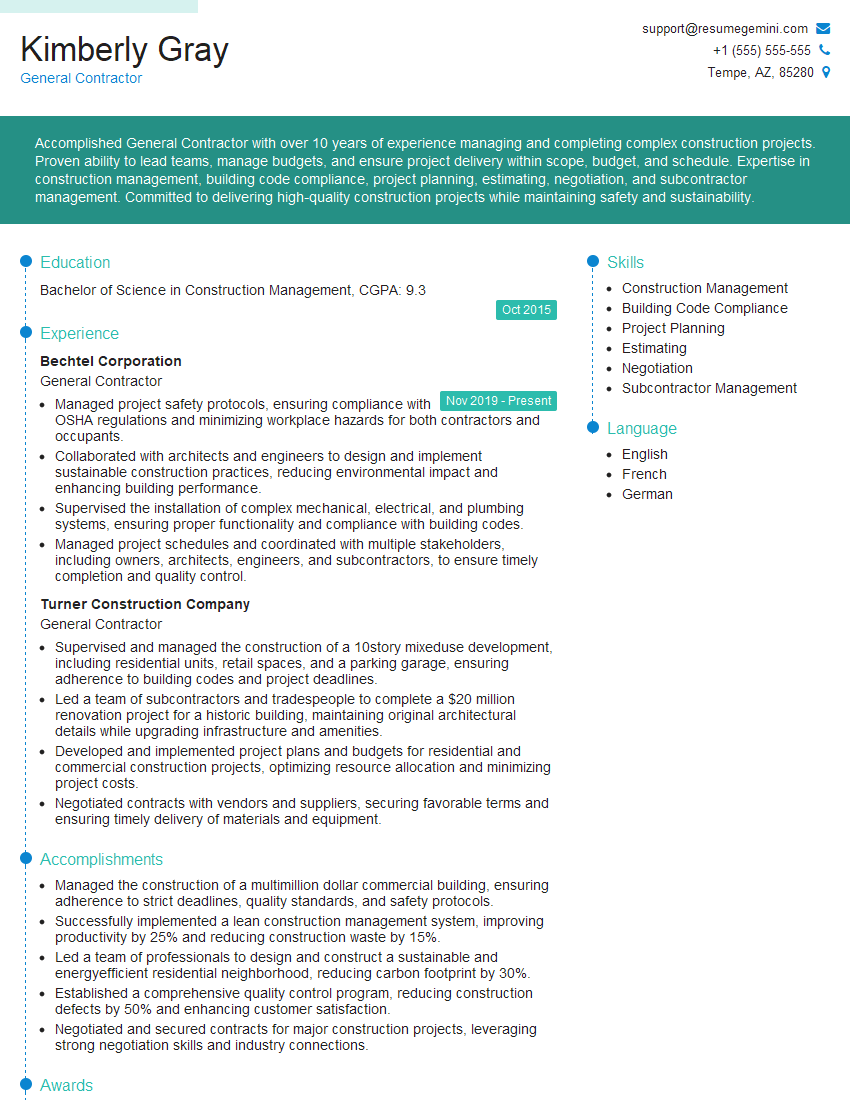
General Contractor Resume Sample

Project Manager Resume Sample
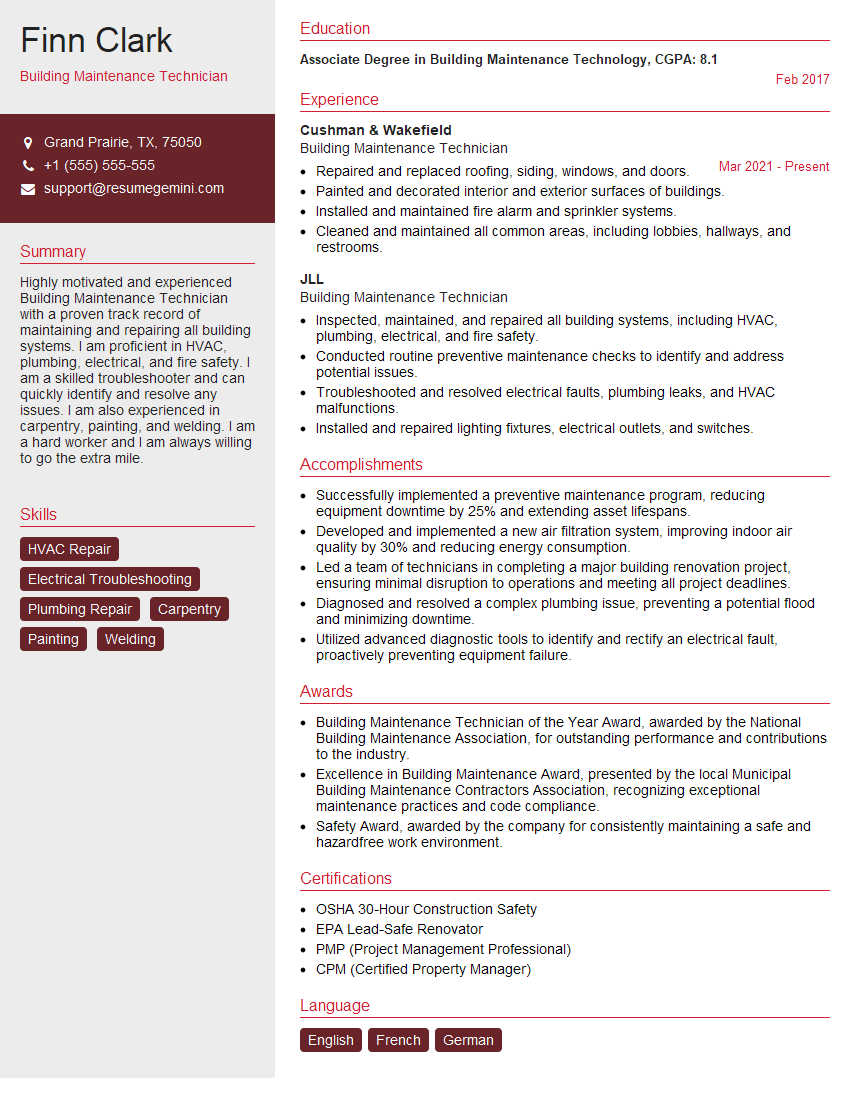
Building Maintenance Technician Resume Sample

Foreman Resume Sample
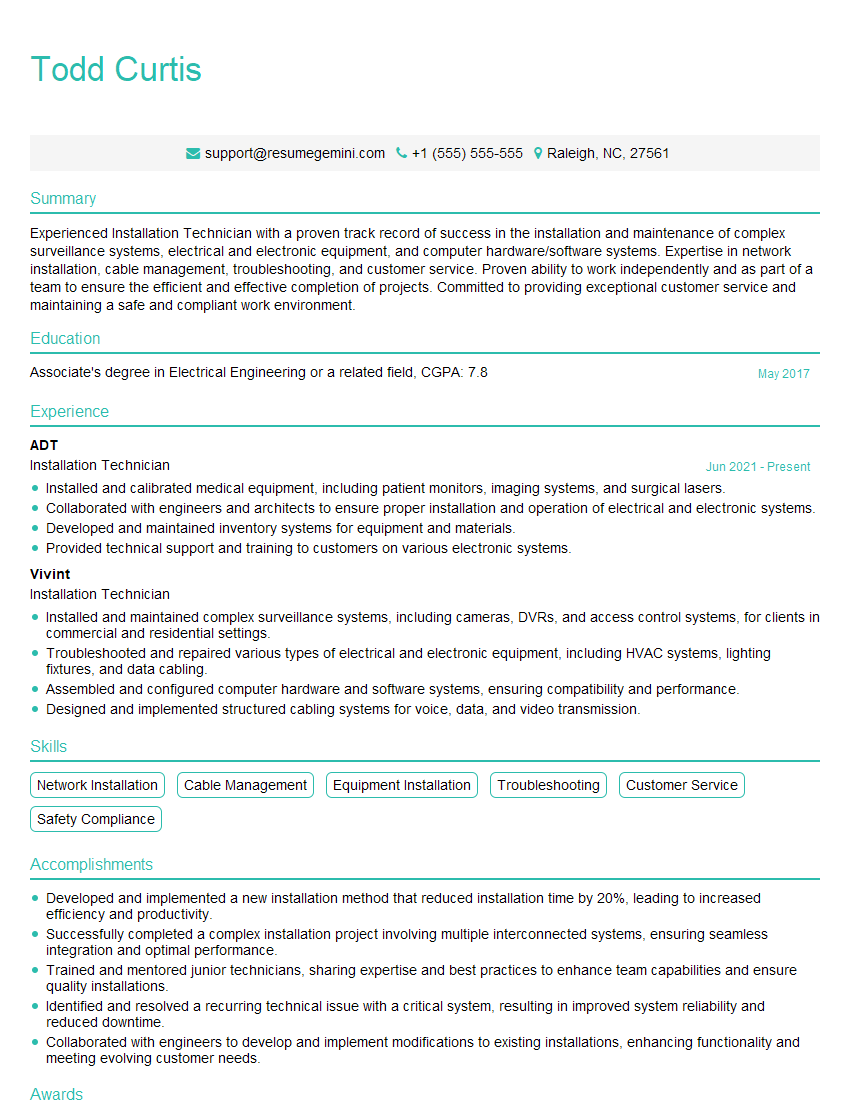
Installation Technician Resume Sample

Finish Carpenter Resume Sample
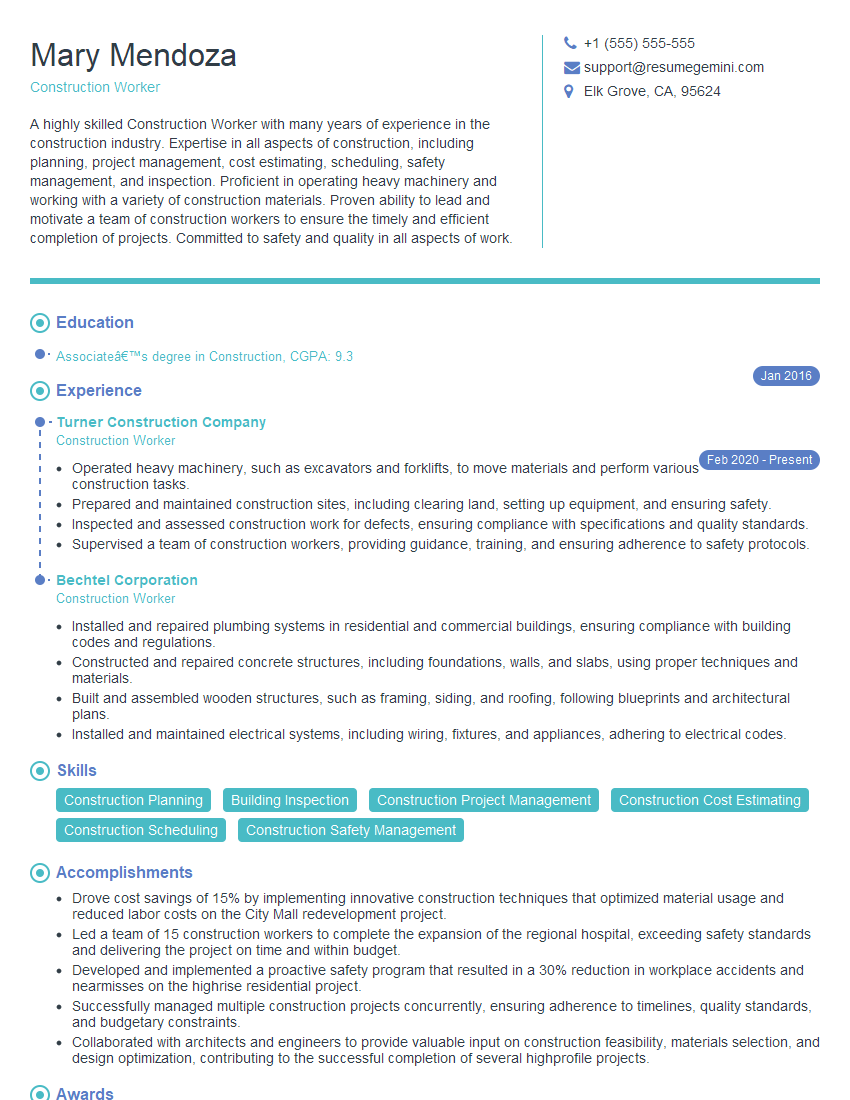
Construction Worker Resume Sample
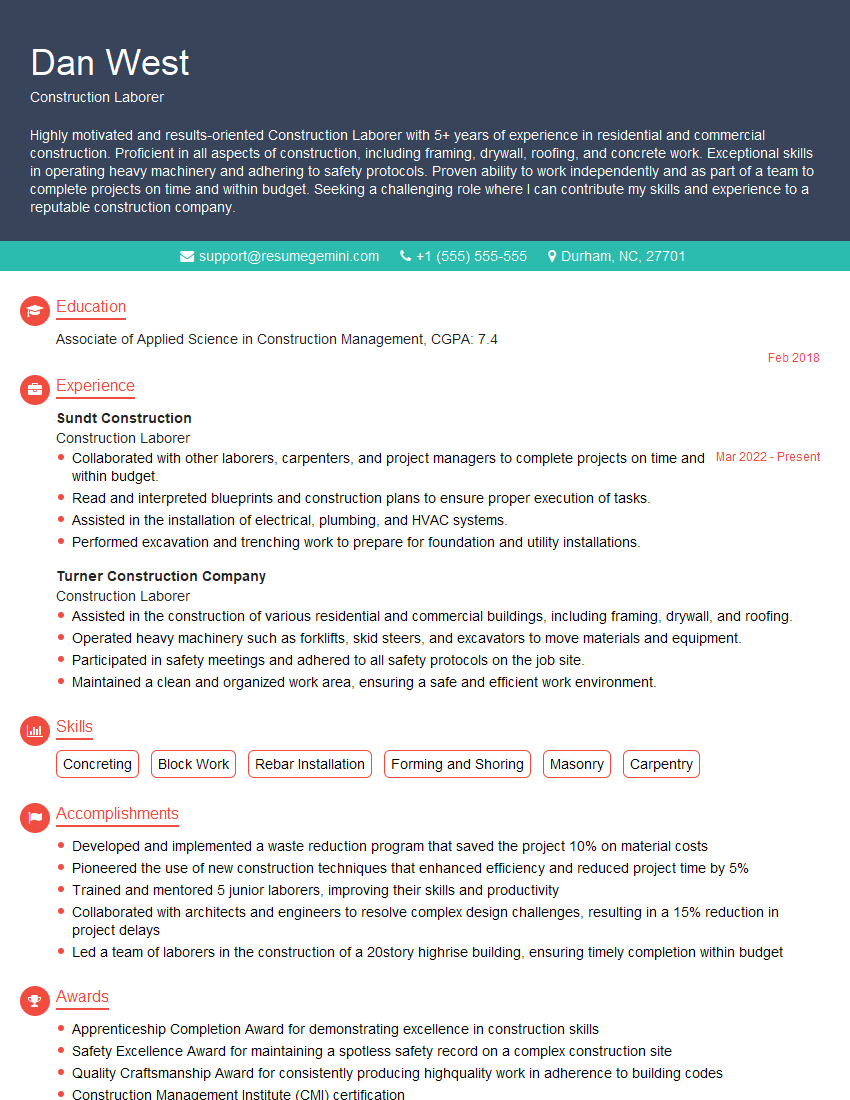
Construction Laborer Resume Sample
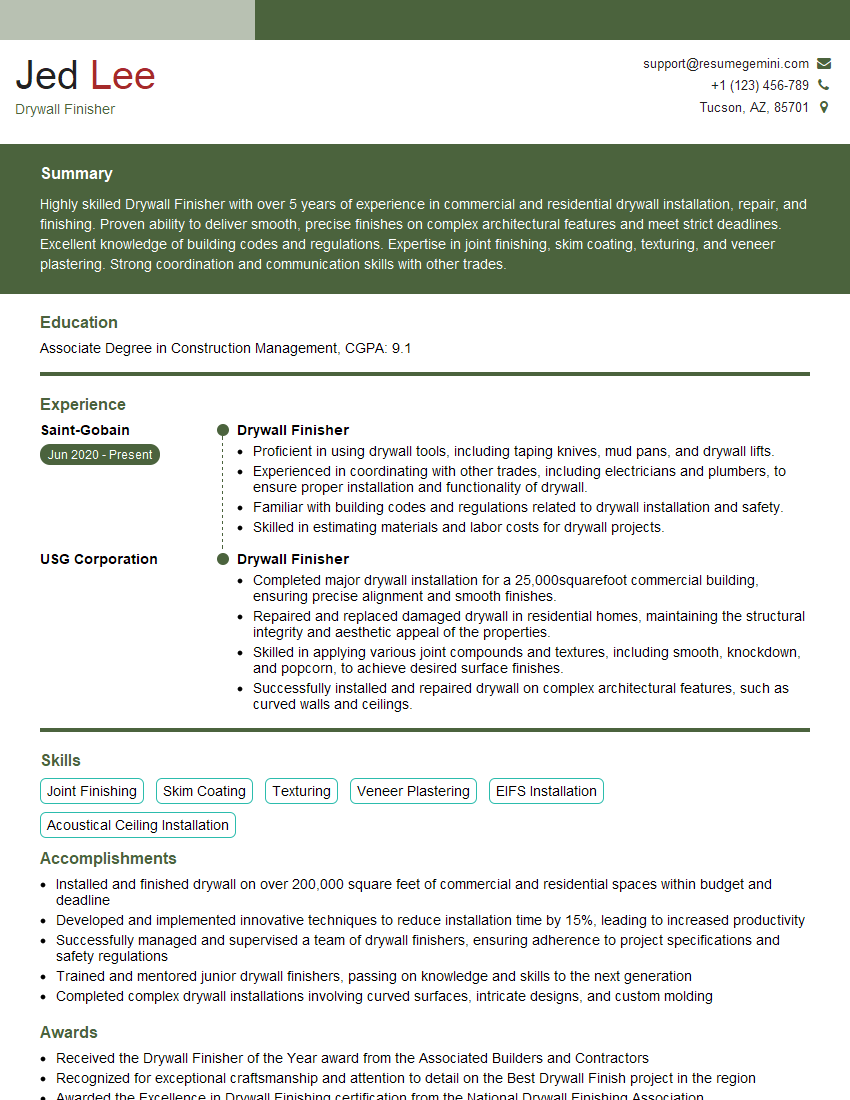
Drywall Finisher Resume Sample
Explore more articles
Users Rating of Our Blogs
Share Your Experience
We value your feedback! Please rate our content and share your thoughts (optional).
What Readers Say About Our Blog
To the interviewgemini.com Webmaster.
Very helpful and content specific questions to help prepare me for my interview!
Thank you
To the interviewgemini.com Webmaster.
This was kind of a unique content I found around the specialized skills. Very helpful questions and good detailed answers.
Very Helpful blog, thank you Interviewgemini team.