Interviews are more than just a Q&A session—they’re a chance to prove your worth. This blog dives into essential Wildlife Survey Design and Implementation interview questions and expert tips to help you align your answers with what hiring managers are looking for. Start preparing to shine!
Questions Asked in Wildlife Survey Design and Implementation Interview
Q 1. Explain the different sampling methods used in wildlife surveys.
Wildlife surveys employ various sampling methods to estimate population parameters efficiently. The choice depends on factors like species behavior, habitat characteristics, and research objectives. Common methods include:
- Complete Count: Suitable for small, easily observable populations. Imagine counting all the penguins on a small island. However, this is rarely feasible for most wildlife.
- Random Sampling: Study units (e.g., quadrats, transects) are selected randomly within the study area. This minimizes bias but requires a large sample size for accuracy. Picture randomly placing quadrats across a forest to count birds.
- Systematic Sampling: Study units are selected at regular intervals. For instance, setting up transects every 100 meters across a grassland. This is efficient but susceptible to bias if the pattern aligns with an environmental gradient.
- Stratified Sampling: The study area is divided into strata (subpopulations) based on relevant characteristics (e.g., habitat type). Random sampling occurs within each stratum. This improves precision by accounting for heterogeneity. Think of sampling birds separately in forest, grassland, and wetland areas.
- Cluster Sampling: Clusters of study units are randomly selected, and all units within the selected clusters are sampled. This is cost-effective but may have lower precision than other methods. For instance, randomly selecting several forest patches and sampling all trees within those patches.
- Distance Sampling: Measures the distance of detected animals from a transect line to estimate abundance. Frequently used for elusive species. It relies on the assumption that detection probability is related to distance.
The optimal method is determined by balancing feasibility, cost, accuracy, and the specific research question.
Q 2. Describe the process of designing a wildlife survey, from initial planning to data analysis.
Designing a wildlife survey is a multi-step process:
- Define Objectives and Scope: Clearly state the research questions. What species are you studying? What are you trying to measure (abundance, density, distribution)? What is the geographic scope?
- Literature Review: Examine existing research to understand the species’ ecology, behavior, and previous survey methodologies.
- Study Area Selection: Choose a representative area considering accessibility, habitat heterogeneity, and logistical constraints.
- Sampling Design: Select appropriate sampling methods (as discussed in the previous question), considering species characteristics and resources.
- Data Collection Methodology: Determine data collection techniques (e.g., direct observation, camera traps, mark-recapture). Develop standardized protocols to ensure consistency among observers.
- Pilot Study: Conduct a small-scale trial run to test the methods and refine protocols before full-scale implementation.
- Data Collection: Collect data according to the established protocols, ensuring accurate recording and proper data management.
- Data Analysis: Use appropriate statistical methods to analyze the collected data. This may involve estimating population size, density, or analyzing distribution patterns.
- Report Writing: Document the methods, results, and conclusions in a clear and concise report.
For example, a survey aiming to assess the impact of habitat fragmentation on a bird population might involve stratified sampling (different habitat types) and distance sampling to account for detectability issues. The final report will provide insights into the population size and its spatial distribution across various habitats.
Q 3. What are the key considerations for selecting appropriate sampling techniques for a specific species?
Selecting appropriate sampling techniques hinges on several species-specific factors:
- Species Behavior: Nocturnal animals might require night-vision cameras, while elusive animals necessitate distance sampling methods. Highly mobile species may necessitate mark-recapture techniques.
- Habitat Characteristics: Dense vegetation might necessitate line transects or camera traps, while open areas may allow for point counts or quadrat sampling.
- Abundance and Distribution: Rare species may require intensive sampling efforts, potentially using more sensitive methods like genetic analysis. Widely dispersed species might require larger sample areas and potentially cluster sampling.
- Detectability: The probability of detecting an individual depends on factors such as species size, coloration, and behavior. Methods like distance sampling explicitly account for detectability.
- Resources: The available time, budget, and personnel influence the feasibility of different sampling methods.
For instance, studying elusive leopards requires camera traps or scat analysis, whereas a survey of abundant squirrels in a park could utilize quadrat sampling.
Q 4. How do you account for bias in wildlife survey data?
Bias in wildlife survey data can severely affect results. Addressing bias requires careful planning and rigorous data analysis. Sources of bias include:
- Observer Bias: Differences in observer skill and experience. Standardized training and protocols mitigate this. Blinding (observers unaware of the study’s hypothesis) can also be helpful.
- Sampling Bias: Non-random sampling design. Using stratified or other appropriate sampling methods is crucial. Careful site selection and random point placement reduce this.
- Detection Bias: Unequal probability of detecting individuals across the study area. Distance sampling corrects for this by accounting for detectability.
- Edge Effect: Higher detection probabilities near habitat edges. Appropriate sampling designs (avoiding edge habitats) and statistical correction help.
Statistical modeling and analysis often include techniques to account for known biases. For example, incorporating detection probability in abundance estimation models addresses detection bias. Careful consideration of potential biases during study design and implementation is essential for reliable results. A robust analysis will also explicitly mention the potential for remaining biases and their limitations.
Q 5. Discuss the importance of spatial and temporal considerations in survey design.
Spatial and temporal considerations are vital in wildlife survey design as they significantly impact accuracy and interpretation of results.
- Spatial Considerations: The study area should be appropriately sized and representative of the species’ habitat. Heterogeneity within the area needs to be considered during sampling design (e.g., stratified sampling). GPS technology is crucial for accurate spatial location of observations. Mapping of habitats is also essential.
- Temporal Considerations: Wildlife populations fluctuate seasonally and diurnally. Surveys should consider these variations by selecting appropriate sampling times. For instance, breeding seasons might be crucial for reproductive studies, while migration periods may require specific sampling strategies. Multiple surveys across different seasons provide a better understanding of population dynamics.
Ignoring these factors can lead to inaccurate conclusions. For example, a survey conducted only during the day might miss nocturnal species, while a survey focusing on a single season might miss the peak population size or specific behavioral events.
Q 6. Explain how you would determine the appropriate sample size for a wildlife survey.
Determining appropriate sample size involves balancing precision, cost, and feasibility. Several factors influence this:
- Desired Precision: How much error are you willing to accept in your estimates? Higher precision requires larger sample sizes.
- Population Variability: More variable populations require larger sample sizes for reliable estimates.
- Confidence Level: The probability that the true population parameter falls within the estimated range. Higher confidence levels necessitate larger sample sizes.
- Detection Probability: Lower detection probability necessitates larger sample sizes to compensate for missed individuals.
Power analysis, using statistical software, is frequently used to determine the appropriate sample size based on these parameters. This analysis considers factors like the desired level of statistical power (the probability of detecting a true effect), the effect size you’re trying to detect, and the variability of your data. Failing to have sufficient sample size might lead to Type II error (failing to detect a real difference).
Q 7. What software and tools are you proficient in for wildlife data analysis and GIS?
My proficiency in wildlife data analysis and GIS includes experience with several software packages:
- R: A powerful statistical programming language widely used for data analysis, modeling, and visualization. I’m adept at using packages such as
veganfor community ecology analysis andspandrgdalfor spatial data management. - Program MARK: Specifically designed for analyzing mark-recapture data for population estimation.
- Distance: Software specifically developed for distance sampling analysis.
- ArcGIS: A comprehensive GIS software for spatial data management, analysis, and mapping. I’m proficient in creating maps, managing spatial data, and performing spatial analyses.
- QGIS: An open-source GIS software offering similar functionalities to ArcGIS.
I also have experience with data management using databases such as PostgreSQL/PostGIS.
Q 8. Describe your experience with different types of wildlife survey equipment.
My experience with wildlife survey equipment is extensive, spanning a wide range of technologies. I’m proficient in using both traditional and cutting-edge tools. Traditional methods include camera traps – which I’ve used extensively for monitoring elusive species like jaguars and clouded leopards – and binoculars and spotting scopes for direct observation surveys. I’m also experienced in using acoustic monitoring equipment, deploying recorders to capture calls of bats or frogs, allowing for species identification and abundance estimation. More advanced techniques include GPS tracking collars for studying animal movement and habitat use. I’ve worked with GPS collars on various species, from wolves to migrating birds, analyzing their movement data to understand their home ranges and dispersal patterns. Finally, I’m familiar with drone technology for aerial surveys, particularly useful for large-scale habitat mapping and counting large aggregations of animals like nesting seabirds.
- Camera Traps: Excellent for shy or nocturnal animals. Data analysis involves identifying individual animals and estimating population density based on capture rates.
- Acoustic Monitoring: Offers a less invasive way to detect species presence and abundance, particularly useful in areas where visual observation is difficult. Software programs are crucial for analyzing the recordings.
- GPS Tracking Collars: Provide invaluable data on animal movement and behavior, but require careful consideration of ethical implications like potential collar impacts on the animals.
- Drones: Allow for large-scale surveys that are less time-consuming and less intrusive than ground-based surveys, however require appropriate permits and considerations for wildlife disturbance.
Q 9. How do you ensure data quality and accuracy in a wildlife survey?
Data quality and accuracy are paramount in wildlife surveys. My approach focuses on meticulous planning and rigorous fieldwork. Before starting any survey, a detailed protocol is developed, specifying the survey method, sampling design, data collection procedures, and quality control measures. For example, in a population count, we establish clear criteria for individual identification to avoid double-counting. In the field, we utilize standardized data sheets and digital data loggers to minimize errors. We also employ rigorous quality control checks throughout the data collection process; multiple observers independently collect data for the same survey location, providing a means for comparing the data and addressing discrepancies. After data collection, we conduct thorough data cleaning and error checks before analysis. This includes identifying outliers and missing values which may need imputation. We also use appropriate statistical methods to account for potential biases and uncertainties.
Q 10. How do you handle missing data in wildlife surveys?
Handling missing data is a crucial aspect of wildlife survey analysis. Ignoring missing data can lead to biased results. The best approach depends on the pattern and extent of missingness. If the missing data is completely random (MCAR), simple methods like listwise deletion or mean/median imputation might suffice. However, if the missingness is related to the value itself (MAR) or is missing not at random (MNAR), more sophisticated methods are needed. I often employ multiple imputation techniques, generating multiple plausible datasets to account for the uncertainty introduced by missing data. In situations where missing data is substantial or non-random, I explore alternative analysis techniques that can accommodate missing values, such as maximum likelihood estimation. The choice of method is justified and documented.
For instance, if camera trap images are missing due to equipment malfunction in a particular area, we might use spatial modeling to predict the abundance in that area based on data from neighboring locations, considering the likely habitat suitability. Detailed explanation and justification of the imputation method used is crucial for transparency and repeatability.
Q 11. What are the ethical considerations involved in conducting wildlife surveys?
Ethical considerations are central to my work. Minimizing disturbance to wildlife and their habitats is paramount. We adhere to strict guidelines regarding animal welfare, following all relevant permits and regulations. This includes using methods that are as non-invasive as possible and taking measures to reduce stress on animals. For instance, when using camera traps, we strategically place them to minimize disturbance to wildlife. We also obtain necessary permits to ensure we comply with all regulations. Furthermore, data confidentiality and responsible data management are crucial. We protect the privacy of landowners and stakeholders, ensuring data is used only for the intended scientific purposes and appropriately anonymized.
For example, if a study requires capturing animals for tagging, we work with experienced wildlife handlers and veterinarians to ensure the animals are handled humanely and safely. The capture method is chosen based on minimizing stress and the potential for injury. The animals are also monitored post-release to ensure a complete recovery.
Q 12. Explain your experience with different types of wildlife capture and handling techniques.
My experience with wildlife capture and handling techniques encompasses a range of methods, always prioritizing animal welfare. I’m proficient in using mist nets for birds, and various live traps for small mammals. For larger mammals, we may employ dart guns for immobilization, working exclusively with licensed and experienced personnel with veterinary supervision. These procedures must always be carried out under appropriate permits and with all the necessary safety measures in place. Each capture method requires specific training and adherence to strict protocols. Post-capture handling involves careful measurement and data collection, applying tags or collars if necessary before swift and safe release back into their natural environment.
For instance, when using mist nets for birds, it’s crucial to check the nets frequently to minimize the time birds are held, and careful handling ensures no injuries during banding or measurement.
Q 13. Describe your experience with mark-recapture studies.
Mark-recapture studies are a powerful tool for estimating population size and other demographic parameters. My experience includes designing and implementing these studies using various marking techniques, from uniquely numbered tags to PIT (Passive Integrated Transponder) tags for individual identification. I’m adept at analyzing data using appropriate statistical models, such as the Lincoln-Petersen estimator or more sophisticated models for closed or open populations, accounting for factors like capture probabilities. The success of a mark-recapture study relies heavily on the assumptions of the chosen model, the accuracy of the marking process, and the avoidance of biases introduced during capture, marking, and recapture. Careful consideration of these factors is critical for producing reliable results.
For example, in a study of small mammal populations, we might use individually numbered ear tags for marking. We would then conduct multiple trapping sessions to estimate population size and survival rates. Data analysis would include estimating capture probabilities and adjusting for potential biases.
Q 14. How do you assess the effectiveness of a wildlife survey after it is completed?
Assessing the effectiveness of a wildlife survey involves several steps. Firstly, we compare the survey results to the objectives defined at the outset. Did the survey achieve its goals in terms of data quality and quantity? We evaluate the precision and accuracy of our estimates, considering the sources of error and uncertainty. Secondly, we assess the efficiency of the survey. Was the survey cost-effective? Did the chosen methodology yield sufficient data within the available resources? Thirdly, we reflect on the logistics and challenges encountered. Were there any unexpected issues that influenced the outcome? Finally, we compare our results with those from previous studies or from other sources, evaluating the consistency and reliability of the data obtained. This process of evaluation is iterative and informs the design and implementation of future surveys.
For instance, if a survey aimed to estimate the abundance of a specific bird species, we would evaluate the accuracy of the estimate, considering factors such as sampling error and potential biases. We would also evaluate whether the survey methodology was efficient in terms of cost and time. The findings would then be compared with previous surveys to establish trends and identify areas for improvement.
Q 15. What are the limitations of using camera traps for wildlife surveys?
Camera traps are a powerful tool for wildlife surveys, offering a non-invasive way to monitor animal activity. However, they have limitations. One significant issue is sampling bias. Camera traps only capture animals that are within their range and that are active during the period of deployment. Nocturnal animals might be underrepresented, and shy species might avoid the cameras altogether. Additionally, image quality can be affected by weather, lighting conditions, and vegetation density, making species identification challenging. Furthermore, data analysis can be time-consuming and labor-intensive, requiring careful scrutiny of thousands of images to identify and count individuals. Finally, cost can be a limiting factor, especially for large-scale surveys requiring many cameras and long deployment periods. For instance, in a study of elusive snow leopards, cameras might capture more readily observable species like blue sheep, leading to a skewed representation of the community structure. Similarly, poor lighting could lead to misidentification of species.
Career Expert Tips:
- Ace those interviews! Prepare effectively by reviewing the Top 50 Most Common Interview Questions on ResumeGemini.
- Navigate your job search with confidence! Explore a wide range of Career Tips on ResumeGemini. Learn about common challenges and recommendations to overcome them.
- Craft the perfect resume! Master the Art of Resume Writing with ResumeGemini’s guide. Showcase your unique qualifications and achievements effectively.
- Don’t miss out on holiday savings! Build your dream resume with ResumeGemini’s ATS optimized templates.
Q 16. Discuss the advantages and disadvantages of using different indices for measuring wildlife populations.
Different indices offer various advantages and disadvantages in measuring wildlife populations. Abundance indices, such as counts of scat or tracks, are relatively easy and cost-effective to collect, but they provide only an estimate, not a precise count, and are prone to error depending on factors like detectability. Relative abundance indices, like camera trap capture rates, provide a measure of relative abundance among different species or sites but again don’t give precise population sizes. Density indices, such as capture-mark-recapture studies, offer more robust population estimates, but they are significantly more complex, expensive, and time-consuming. For example, while track counts in a tiger survey can be a quick way to get an idea of presence and relative abundance, mark-recapture techniques using GPS collars would be necessary for a more accurate population estimate, but require significantly more resources and expertise. The choice of index depends on the research question, available resources, and the characteristics of the target species.
Q 17. How do you incorporate citizen science data into wildlife surveys?
Citizen science data can significantly enhance wildlife surveys by expanding spatial and temporal coverage, and reducing costs. However, careful planning and quality control are crucial. I typically incorporate citizen science data through a structured program. This involves training volunteers, providing clear protocols (e.g., standardized data sheets, photography guidelines, and location recording using GPS), ensuring data quality through regular checks and validation, and using appropriate statistical methods to account for potential biases in data collection. For example, I’ve worked on a project tracking monarch butterfly migration where we used a citizen science app to collect data on butterfly sightings across North America. The data were rigorously checked for errors and combined with professional survey data for a more comprehensive understanding of migration patterns.
Q 18. How do you ensure the safety of both researchers and wildlife during surveys?
Ensuring safety for both researchers and wildlife during surveys is paramount. This involves meticulous risk assessment, planning, and adherence to strict safety protocols. For researchers, this includes appropriate training on handling equipment, dealing with potential hazards (e.g., dangerous animals, challenging terrain), and implementing safety measures such as working in teams and using communication devices. For wildlife, this involves minimizing disturbance and stress. This means selecting survey methods with low impact (e.g., camera trapping over direct observation), avoiding sensitive habitats during breeding seasons, and maintaining a safe distance from animals. For example, when surveying endangered primates, we use binoculars and maintain a substantial distance from habituated individuals to avoid causing stress. The welfare of the animals is the primary concern.
Q 19. Explain your experience with habitat mapping and analysis.
My experience with habitat mapping and analysis is extensive. I’m proficient in using GIS software (e.g., ArcGIS, QGIS) to create maps, analyze spatial data, and conduct habitat suitability modeling. I often incorporate remote sensing data (e.g., satellite imagery, aerial photography) along with field surveys to assess habitat characteristics such as vegetation type, land cover, and elevation. This information is essential for understanding species distribution, habitat preferences, and designing effective conservation strategies. For instance, in a recent project, we used habitat suitability models to predict the potential distribution of a rare bird species, which guided the selection of priority areas for conservation interventions.
Q 20. How do you interpret wildlife survey data to make management recommendations?
Interpreting wildlife survey data involves a multi-step process. Firstly, I assess the quality of the data, identifying and addressing any biases or errors. Then, I use appropriate statistical analyses to analyze the data, considering the type of data collected and the research questions. This might involve descriptive statistics, abundance estimations, occupancy modeling, or other advanced techniques. The results are then contextualized within the wider ecological setting, considering factors like environmental conditions, human activities, and species interactions. Based on the findings, I develop specific management recommendations, which might include habitat restoration, population augmentation, or changes in land-use practices. For example, if a survey shows declining populations of a key species, I may recommend the establishment of protected areas or the implementation of anti-poaching measures.
Q 21. How do you communicate wildlife survey results to both technical and non-technical audiences?
Communicating wildlife survey results effectively requires tailoring the message to the audience. For technical audiences (e.g., scientists, managers), I use scientific reports, journal articles, and presentations with detailed statistical analyses. For non-technical audiences (e.g., the public, policymakers), I employ simpler language, visuals such as maps and charts, and engaging narratives to convey the key findings and their implications. It’s important to highlight the relevance of the findings and to present the information in a way that is easily understood and memorable. For example, when communicating findings to policymakers, I emphasize the economic or social benefits of conservation actions based on the survey results.
Q 22. Describe your experience with regulatory compliance in wildlife surveys.
Regulatory compliance is paramount in wildlife surveys. It ensures ethical and legal conduct, protecting both the species under study and the environment. My experience encompasses navigating diverse regulations, from obtaining necessary permits (e.g., research permits, collecting specimens) to adhering to guidelines on animal handling, data privacy, and endangered species protection. For instance, when surveying endangered sea turtles, I’ve had to ensure all activities adhered strictly to the Endangered Species Act, including minimizing disturbance to nesting sites and adhering to specific protocols for tagging and data collection. This involved liaising with relevant governmental agencies like the US Fish and Wildlife Service and securing all necessary approvals well in advance of fieldwork. Failure to comply can result in significant penalties, project delays, and damage to professional reputation.
Another example involves working within the guidelines of the Institutional Animal Care and Use Committee (IACUC) when conducting research involving animals. This requires detailed protocols, ensuring ethical treatment of animals, and regularly reviewing and updating procedures to ensure compliance.
Q 23. What are some common challenges in conducting wildlife surveys in remote or challenging terrain?
Remote and challenging terrains present numerous obstacles in wildlife surveys. Accessibility is often the primary hurdle; difficult terrain can limit access, requiring specialized equipment (e.g., all-terrain vehicles, helicopters, drones) or physically demanding travel, potentially compromising safety. Weather conditions can significantly impact fieldwork, causing delays or necessitating adjustments to survey methods. For example, during a snow leopard survey in the Himalayas, unpredictable weather patterns significantly impacted our ability to traverse the terrain and conduct observations consistently. Communication limitations in remote areas pose another challenge, hindering real-time data sharing and collaboration among team members. Furthermore, logistical challenges like securing supplies, obtaining permits for remote areas, and finding skilled local personnel can greatly impact project timelines and costs. Dealing with a lack of infrastructure, like unreliable power sources for equipment, adds complexity. Another major challenge is the increased potential for safety hazards such as wild animal encounters or unpredictable environmental conditions like flash floods or rockfalls.
Q 24. How do you address unexpected events or challenges during a wildlife survey?
Unexpected events are inevitable in wildlife surveys. My approach emphasizes preparedness and adaptability. A well-defined contingency plan is crucial, addressing potential scenarios like equipment failure, adverse weather, or unforeseen animal behavior. This plan includes alternative methods, backup equipment, and communication protocols. For instance, during a bird migration study, we experienced a sudden and severe storm. Our contingency plan involved securing equipment, relocating to a safer area, and switching to a less weather-sensitive data collection method. Adaptability is key; a rigid approach can be detrimental. I encourage open communication among team members, fostering a culture where challenges are addressed collectively and creatively. Regular monitoring of weather forecasts and environmental conditions is crucial for proactively mitigating potential problems. Documentation of any deviations from the original plan, including the rationale for changes, is essential for maintaining data integrity and transparency.
Q 25. Describe your experience using statistical software for analyzing wildlife data.
I have extensive experience using statistical software packages like R and SAS for analyzing wildlife data. My proficiency encompasses data cleaning, exploratory data analysis, model building (e.g., generalized linear models, mixed-effects models, capture-recapture models), and data visualization. For example, I’ve used R to analyze camera trap data, employing occupancy modeling techniques to estimate the abundance and distribution of elusive species. This involved using packages like unmarked and creating visualizations using ggplot2 to present findings effectively. In another project, I used SAS to analyze population trends of a particular bird species over time, utilizing time series analysis to detect significant changes and understand underlying drivers of population fluctuations. My expertise extends to statistical programming, allowing me to automate data processing and customize analyses to address specific research questions. Proficiency in these tools is fundamental for rigorous data analysis and reporting in wildlife research.
Q 26. How do you incorporate climate change considerations into wildlife survey design?
Climate change significantly impacts wildlife populations and habitats. Incorporating climate change considerations in wildlife survey design necessitates a holistic approach. First, we need to carefully select the study area considering projected changes in habitat suitability and species distribution, utilizing climate models and projections to anticipate potential shifts. Second, the survey design should include parameters reflecting climate variables such as temperature, precipitation, and extreme weather events. Data on these variables should be collected during the survey to enable analysis of their influence on wildlife responses. Third, the long-term monitoring aspect is crucial to detecting long-term population responses to climate change. Finally, we need to account for potential changes in species interactions and ecosystem dynamics in our analyses, as climate change can alter competitive relationships or introduce novel stresses on wildlife. For example, in a study on mountain goats, we incorporated climate data to assess the influence of changing snowpack on foraging behavior and survival rates.
Q 27. How do you evaluate the potential impact of a wildlife survey on the target species?
Minimizing the impact of wildlife surveys on the target species is ethical and crucial. A thorough risk assessment is essential before initiating any fieldwork. This includes identifying potential risks to the species such as habitat disturbance, stress from human presence, and potential disease transmission. Mitigation strategies need to be implemented to minimize these risks. These could include using non-invasive methods such as camera trapping or acoustic monitoring, limiting the number of researchers and survey duration, employing appropriate handling techniques, and maintaining a safe distance from animals. A robust ethical framework guides my approach, prioritizing animal welfare. I also incorporate measures to prevent habitat disturbance, such as using established trails and minimizing vegetation damage. Post-survey monitoring may be necessary to assess the effects of the survey on the species and habitat, ensuring long-term preservation. Ethical considerations extend to obtaining informed consent where necessary, working closely with local communities and stakeholders, and transparency in reporting our methods and results.
Q 28. Describe your experience with writing reports and publications based on wildlife survey data.
Effective communication of research findings is critical. My experience encompasses writing comprehensive reports and scientific publications based on wildlife survey data. I’m skilled in preparing reports that are concise, accurate, and tailored to different audiences (e.g., scientific community, land managers, policymakers). I follow established scientific writing guidelines, ensuring clarity, objectivity, and transparency. This includes documenting methods thoroughly, presenting results using appropriate statistical analyses, and drawing clear conclusions based on the available evidence. I’ve authored several peer-reviewed publications in scientific journals, presenting research on diverse topics like species distribution modeling, population dynamics, and conservation management. Experience in preparing presentations and delivering talks to both scientific and non-scientific audiences enables effective dissemination of information and promoting awareness of wildlife conservation issues. Furthermore, data visualization techniques are crucial for creating visually compelling presentations and figures for reports and publications, aiding in communicating complex findings effectively.
Key Topics to Learn for Wildlife Survey Design and Implementation Interview
- Study Design Principles: Understanding different sampling methods (e.g., random, stratified, systematic), sample size calculation, and power analysis to ensure robust and statistically sound results.
- Species-Specific Survey Techniques: Familiarize yourself with appropriate methods for various species and habitats, including camera trapping, mark-recapture, point counts, and transect surveys. Consider the pros and cons of each approach.
- Data Collection and Management: Mastering data organization, accurate recording, and efficient data management techniques, including the use of GIS software and databases. Be prepared to discuss data quality control and error mitigation strategies.
- Data Analysis and Interpretation: Demonstrate your understanding of statistical analysis relevant to wildlife surveys, including population estimation techniques, abundance indices, and habitat use analysis. Be ready to explain your analytical approach and interpret findings in a clear and concise manner.
- Ethical Considerations: Discuss the ethical implications of wildlife surveys, including minimizing disturbance to animals, obtaining necessary permits, and adhering to best practices for animal welfare.
- Survey Implementation Challenges: Prepare to discuss logistical considerations, resource management, and potential challenges encountered during fieldwork, such as difficult terrain, inclement weather, and equipment malfunctions. Highlight your problem-solving skills in overcoming these obstacles.
- Report Writing and Communication: Practice presenting your findings clearly and concisely, both orally and in writing, tailoring your communication to different audiences (e.g., scientists, managers, the public).
Next Steps
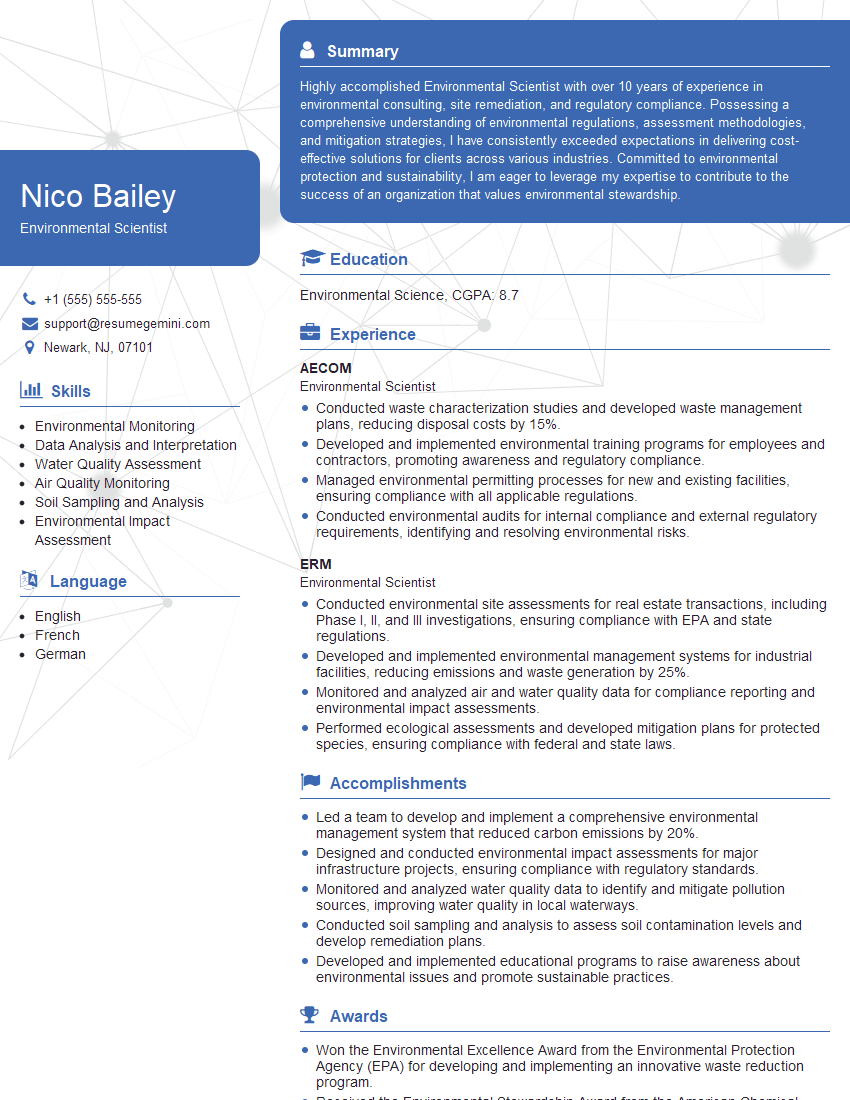
Mastering Wildlife Survey Design and Implementation is crucial for advancing your career in conservation, research, and environmental management. It demonstrates your ability to collect reliable data, analyze complex ecological systems, and contribute to informed decision-making. To maximize your job prospects, crafting an ATS-friendly resume is essential. ResumeGemini can be a valuable tool to help you build a professional and impactful resume that highlights your skills and experience effectively. We provide examples of resumes tailored to Wildlife Survey Design and Implementation to help you get started.






Explore more articles
Users Rating of Our Blogs
Share Your Experience
We value your feedback! Please rate our content and share your thoughts (optional).
What Readers Say About Our Blog
To the interviewgemini.com Webmaster.
Very helpful and content specific questions to help prepare me for my interview!
Thank you
To the interviewgemini.com Webmaster.
This was kind of a unique content I found around the specialized skills. Very helpful questions and good detailed answers.
Very Helpful blog, thank you Interviewgemini team.