Preparation is the key to success in any interview. In this post, we’ll explore crucial Installation of Microwave Antennas interview questions and equip you with strategies to craft impactful answers. Whether you’re a beginner or a pro, these tips will elevate your preparation.
Questions Asked in Installation of Microwave Antennas Interview
Q 1. Explain the process of aligning a microwave antenna.
Aligning a microwave antenna is a critical process that ensures optimal signal transmission and reception. It involves precisely pointing the antenna towards the receiving antenna to minimize signal loss and maximize data throughput. This is achieved through a combination of precise physical positioning and electronic fine-tuning.
The process typically starts with a preliminary alignment using survey data and site maps to get a rough estimate of the antenna’s orientation. Then, we use sophisticated equipment like a spectrum analyzer and a power meter to measure the signal strength. Small adjustments to the antenna’s azimuth (horizontal) and elevation (vertical) angles are made iteratively, constantly monitoring the signal strength. Optimization software often assists in this process by providing real-time feedback and suggesting adjustments.
Think of it like aiming a laser pointer – you need to be incredibly precise to hit your target. Even a slight misalignment can result in a significant reduction in signal quality. We often utilize advanced techniques such as signal sweep analysis to ensure the beam is properly centered and focused on the receiving antenna.
Q 2. Describe different types of microwave antennas and their applications.
Microwave antennas come in various shapes and sizes, each designed for specific applications. Here are a few common types:
- Parabolic Antennas (Dish Antennas): These are the most common type, characterized by their parabolic reflector that focuses the microwave signal into a narrow beam. They offer high gain and directivity, making them ideal for long-distance point-to-point links. I’ve used these extensively in backhaul networks for cellular towers.
- Horn Antennas: These antennas have a flared waveguide that radiates the signal. They offer a wider beamwidth compared to parabolic antennas, making them suitable for applications where precise aiming isn’t crucial or for use in less obstructed environments.
- Helical Antennas: These antennas produce a circularly polarized signal, which is less susceptible to signal fading caused by polarization mismatch. They are frequently used in satellite communications.
- Reflector Antennas (Cassegrain and Gregorian): These use a secondary reflector to focus the signal onto the primary reflector, improving performance and efficiency. They’re often used in high-power applications where superior beam shaping is needed.
The choice of antenna depends heavily on the specific application, distance, frequency, and environmental conditions. For instance, a high-gain parabolic antenna is ideal for a long-distance point-to-point link between buildings, while a horn antenna might be more suitable for shorter-range applications with limited line-of-sight.
Q 3. What safety precautions are crucial during microwave antenna installation?
Safety is paramount during microwave antenna installation. High-powered microwave signals can be hazardous, and working at heights adds another layer of risk. Key precautions include:
- Proper Personal Protective Equipment (PPE): Always wear safety harnesses, hard hats, and safety gloves when working at heights. Eye protection is essential to prevent injury from debris.
- RF Safety Training: All personnel involved should receive proper training on RF safety and understand the potential hazards of microwave radiation. We always adhere to strict safety protocols and monitor the RF power levels throughout the installation process.
- Fall Protection: Implementing robust fall protection measures, such as safety nets and anchor points, is crucial, especially when working on elevated structures.
- Weather Considerations: Avoid working in stormy weather conditions. Wind can significantly impact antenna stability and safety during installation.
- Grounding and Bonding: Ensure proper grounding and bonding to prevent electrical shocks and protect against lightning strikes. This is a critical step that often gets overlooked, but is vital.
In my experience, a thorough risk assessment and a well-defined safety plan are critical for minimizing risks during antenna installation. The well-being of our team always comes first.
Q 4. How do you troubleshoot signal loss in a microwave link?
Troubleshooting signal loss in a microwave link involves a systematic approach. We start by identifying the potential causes, which could range from simple issues like misalignment or cable damage to more complex problems like atmospheric interference or equipment malfunctions.
The troubleshooting process typically involves:
- Visual Inspection: Check for any obvious physical damage to the antennas, cabling, or supporting structures. Look for things like bent or damaged antennas, loose connectors, or signs of rodent damage.
- Signal Level Measurement: Use a spectrum analyzer to measure the signal strength at both ends of the link. Low signal levels indicate a problem somewhere along the path. We also check the signal-to-noise ratio (SNR).
- Alignment Verification: Verify the antenna alignment using survey data or alignment tools. Even a small misalignment can cause significant signal loss.
- Cable Testing: Check for any faults or breaks in the transmission cables using a Time-Domain Reflectometer (TDR). A broken cable can obviously prevent a signal from getting through.
- Atmospheric Conditions: Consider atmospheric factors like rain, fog, or snow, which can affect signal propagation. Heavy rain is a common culprit.
- Equipment Malfunction: Test the transmitter and receiver units to ensure they are functioning correctly. This might involve swapping out components to isolate the faulty one.
By systematically investigating these areas, we can pinpoint the source of the signal loss and implement the appropriate corrective measures.
Q 5. What tools and equipment are essential for microwave antenna installation?
Essential tools and equipment for microwave antenna installation include:
- Antenna Alignment Tools: These include precise surveying equipment (total stations, GPS receivers), optical alignment tools, and signal analyzers.
- Cable Testing Equipment: Time-Domain Reflectometers (TDRs) and cable testers are essential for checking the integrity of the coaxial cables.
- RF Power Meters: These measure the signal strength and ensure the system is operating within safe limits.
- Spectrum Analyzers: These instruments analyze the frequency spectrum and identify interference sources.
- Lifting Equipment: For installing heavy antennas, cranes, winches, and other lifting equipment may be needed.
- Hand Tools: Standard hand tools such as wrenches, screwdrivers, and cable cutters are also essential.
- Safety Equipment: This includes safety harnesses, hard hats, safety gloves, and fall protection equipment.
- Communication Equipment: Two-way radios are important for maintaining clear communication between crew members during installation.
The specific equipment needed will vary depending on the project’s complexity and scale. Larger, more complex projects will require more specialized equipment and a larger team.
Q 6. Explain the concept of Fresnel zone clearance.
The Fresnel zone is the ellipsoidal area surrounding the direct path between two antennas. Maintaining sufficient clearance within this zone is crucial for minimizing signal loss and multipath interference. Multipath interference occurs when the signal takes multiple paths to reach the receiver, leading to signal degradation and fading.
Imagine throwing a ball to a friend. If there’s an obstacle (like a tree) in the direct path, the ball might not reach your friend. Similarly, obstacles in the Fresnel zone can block or deflect the microwave signal, reducing signal strength. The first Fresnel zone is the most important, and we must ensure sufficient clearance to prevent significant signal degradation. We typically aim for at least 60% clearance, but this value can vary depending on the frequency and other factors.
Calculating the Fresnel zone radius involves considering the distance between the antennas and the operating frequency. There are online calculators and software available that simplify this calculation. Failure to maintain adequate Fresnel zone clearance can lead to significant signal attenuation and unreliable communication. It’s a critical factor in microwave link design and installation.
Q 7. How do you calculate path loss in a microwave link?
Path loss in a microwave link represents the reduction in signal strength as it travels from the transmitting antenna to the receiving antenna. Several factors contribute to path loss, including distance, frequency, atmospheric conditions, and antenna characteristics.
Calculating path loss can be done using the Friis transmission equation:
Path Loss (dB) = 20log10(d) + 20log10(f) + 32.45 - Gt - Gr
Where:
dis the distance between the antennas (in kilometers).fis the frequency (in GHz).Gtis the gain of the transmitting antenna (in dBi).Gris the gain of the receiving antenna (in dBi).
This equation provides an estimate of the free-space path loss. However, in real-world scenarios, additional losses due to atmospheric attenuation, diffraction, and other factors need to be considered. These additional losses are often determined through empirical models or propagation prediction software. Accurate path loss calculation is essential for designing microwave links that meet the required performance parameters.
Q 8. What are the common causes of microwave antenna misalignment?
Microwave antenna misalignment significantly degrades signal quality and link performance. Several factors contribute to this. Think of it like trying to aim a laser pointer – even a slight shift can drastically affect where the beam lands.
- Environmental Factors: Wind, ice, and snow accumulation can physically move the antenna, altering its aim. I’ve personally encountered instances where heavy snowfall shifted an antenna by several degrees, resulting in a complete signal loss.
- Settlement: Over time, the supporting structure (tower or pole) can settle, leading to gradual misalignment. This is especially prevalent in areas with unstable soil conditions.
- Improper Installation: Incorrect alignment during initial installation is a common cause. This highlights the critical importance of precise surveying and meticulous installation procedures.
- Thermal Expansion: Temperature fluctuations can cause expansion and contraction in the antenna structure and mounting hardware. This is particularly relevant in regions with significant temperature variations.
- Mechanical Damage: Physical impacts or vibrations from external sources (like nearby construction) can knock the antenna out of alignment. Robust mounting systems are crucial to mitigate this.
Identifying the cause of misalignment involves careful inspection of the antenna, its mounting, and the surrounding environment. Using tools like a theodolite or alignment kits ensures accurate measurements and correction.
Q 9. Describe your experience with different types of antenna mounts.
My experience encompasses a broad range of antenna mounts, each suited to different applications and environmental conditions. Choosing the right mount is critical for stability, longevity, and signal quality. It’s like choosing the right foundation for a building – the wrong one will lead to problems down the line.
- Pole Mounts: These are simple and cost-effective for smaller antennas and lower wind load conditions. I’ve used them extensively in less demanding environments.
- Rooftop Mounts: Designed for mounting on buildings, these mounts offer stability but require careful consideration of structural integrity and wind loading. I’ve worked on projects where we had to reinforce the rooftop structure to ensure the antenna’s safety.
- Tower Mounts: For larger antennas and high-elevation installations, tower mounts provide exceptional stability and wind resistance. This type of mount requires specialized knowledge and safety precautions, including fall protection.
- Wall Mounts: These are suitable for smaller antennas installed on walls. However, wall stability needs to be carefully assessed to prevent the antenna from swaying or falling.
The selection of a mount depends on several factors including antenna size and weight, wind loading, location, and environmental conditions. A thorough site survey is essential to determine the optimal mount type.
Q 10. How do you ensure proper grounding of a microwave antenna system?
Proper grounding is paramount for safety and performance in a microwave antenna system. It protects equipment from lightning strikes and prevents electrical surges, ensuring both safety for personnel and equipment longevity. Think of it as a safety valve for your system.
Grounding involves connecting the antenna system to a low-impedance ground path. This usually entails:
- Grounding Rod: Driving a copper-clad steel ground rod deep into the earth.
- Ground Wire: Using heavy-gauge copper wire to connect the antenna, its mount, and all equipment to the ground rod. The wire should be properly sized for the application and protected from damage.
- Grounding Blocks: Utilizing grounding blocks to ensure efficient connections and minimize corrosion.
- Grounding Continuity: Regular inspection to ensure the continuity of the grounding path. Corrosion can be an issue, especially in harsh environments.
I always adhere to strict grounding procedures to ensure the safety and reliability of the system. I regularly check for continuity and address any corrosion issues promptly.
Q 11. Explain the importance of site surveys before installation.
A thorough site survey is the cornerstone of a successful microwave antenna installation. It’s like drawing up blueprints for a building – you need to understand the terrain before you start construction. It allows you to identify potential problems and optimize the installation for optimal performance.
A site survey involves:
- Obstacle Identification: Identifying any obstructions (trees, buildings, hills) that could affect signal propagation. This often involves using specialized software and equipment like path profiling tools.
- Terrain Analysis: Assessing the terrain for suitability, considering factors such as soil conditions, wind load, and accessibility.
- Regulatory Compliance: Ensuring compliance with local regulations and obtaining necessary permits.
- Power Availability: Confirming availability and capacity of the power supply.
- Environmental Factors: Considering factors such as weather, temperature extremes, and potential hazards like lightning.
A well-conducted site survey minimizes risks, reduces installation costs, and ensures optimal link performance. Many costly mistakes can be avoided with a proactive approach.
Q 12. What are the key performance indicators (KPIs) for a microwave link?
Key Performance Indicators (KPIs) for a microwave link are crucial for evaluating its performance and ensuring reliable communication. These indicators help track the health and efficiency of the link, similar to a doctor monitoring a patient’s vital signs.
- Signal-to-Noise Ratio (SNR): A measure of the strength of the signal relative to noise. A higher SNR indicates better link quality.
- Bit Error Rate (BER): The number of bit errors that occur during data transmission. A lower BER indicates higher accuracy.
- Availability: The percentage of time the link is operational. High availability is critical for uninterrupted service.
- Latency: The time delay in data transmission. Lower latency is crucial for real-time applications.
- Power Levels (Tx/Rx): Measuring the transmit and receive power levels ensures optimal signal strength and avoids saturation or signal weakness.
Regular monitoring of these KPIs allows for proactive maintenance, troubleshooting, and optimization of the microwave link, preventing outages and ensuring high-quality communication.
Q 13. Describe your experience with different types of coaxial cables.
Coaxial cables are the arteries of a microwave antenna system, carrying the RF signal between components. Choosing the right cable is critical for minimizing signal loss and ensuring signal integrity. It’s analogous to choosing the right pipe for a water system – the wrong size or material will result in loss of flow.
- RG-58: A smaller, more flexible cable often used for shorter runs, but it has higher losses than other options at microwave frequencies.
- RG-213: A larger, more rigid cable commonly used for longer runs and higher power applications. It exhibits less signal attenuation.
- LMR-400/600 Series: Low-loss cables with excellent performance, often preferred for longer distances and critical applications. They’re more expensive but provide superior signal integrity.
- Fiber Optic Cable: For very long distances, fiber optic cables minimize signal loss and offer greater bandwidth compared to coaxial cable, although they require additional equipment at both ends.
The selection of a coaxial cable depends on factors such as frequency, cable length, power levels, and environmental conditions. A poorly chosen cable can result in significant signal loss and degraded performance.
Q 14. How do you interpret a microwave antenna installation drawing?
Interpreting a microwave antenna installation drawing requires a systematic approach and a thorough understanding of the relevant technical specifications. It’s like reading a detailed map for a construction project – every detail is crucial.
To interpret a drawing, I focus on:
- Antenna Specifications: The type, gain, frequency, and polarization of the antenna.
- Mounting Details: The type of mount, its orientation, and its height above ground.
- Cable Routing: The path of the coaxial cables, including their lengths, connectors, and any grounding points.
- Grounding System: The details of the grounding system, ensuring its correct connection to the antenna and the earth.
- Alignment Requirements: Specific azimuth and elevation angles needed for optimal signal alignment.
- Equipment Specifications: Details on other components like the radio units and power supplies.
Using the drawing, I can create a detailed installation plan, ensuring all components are correctly positioned and connected, ultimately leading to a functional and reliable microwave link.
Q 15. What are the challenges of installing microwave antennas in challenging environments?
Installing microwave antennas in challenging environments presents unique hurdles. These environments often lack readily available infrastructure, posing difficulties in terms of access, power supply, and grounding. For example, mountainous terrain can make transportation of equipment extremely difficult, requiring specialized vehicles and potentially manual labor for the final stages of installation. Similarly, extreme weather conditions like high winds, ice, or heavy snow can significantly impact safety and the structural integrity of the antenna mount. Furthermore, remote locations often lack reliable power sources, demanding careful consideration of backup power systems and efficient energy consumption. Finally, the environmental impact must be minimized, especially in sensitive ecosystems, requiring careful site selection and environmentally-friendly installation practices.
- Access Limitations: Helicopter lifts may be necessary for mountainous or otherwise inaccessible locations.
- Power Supply: Solar panels, generators, and battery banks might be required in areas without grid power.
- Environmental Concerns: Minimizing land disturbance and preserving the natural landscape is crucial in environmentally sensitive areas.
Career Expert Tips:
- Ace those interviews! Prepare effectively by reviewing the Top 50 Most Common Interview Questions on ResumeGemini.
- Navigate your job search with confidence! Explore a wide range of Career Tips on ResumeGemini. Learn about common challenges and recommendations to overcome them.
- Craft the perfect resume! Master the Art of Resume Writing with ResumeGemini’s guide. Showcase your unique qualifications and achievements effectively.
- Don’t miss out on holiday savings! Build your dream resume with ResumeGemini’s ATS optimized templates.
Q 16. How do you handle unexpected issues during installation?
Unexpected issues are inevitable in any installation project. My approach involves a combination of proactive planning and reactive problem-solving. Before commencing installation, a thorough site survey is essential, identifying potential risks. This includes evaluating the terrain, weather conditions, and existing infrastructure. During the installation process, I meticulously document every step, ensuring accurate record-keeping for troubleshooting. Should unexpected problems arise, like faulty equipment or unforeseen site challenges, my first step is to thoroughly assess the situation and identify the root cause. I always prioritize safety, ensuring that no action jeopardizes the safety of myself or the team. I then consult technical documentation, utilize troubleshooting guides, and if necessary, contact the manufacturer for assistance. Documentation of the problem and its resolution is crucial, contributing to valuable lessons learned for future projects. For instance, if we encounter unexpected ground instability, we would immediately halt the installation and consult with a geotechnical engineer to assess the situation and propose a safe and reliable solution, possibly requiring a different mounting configuration.
Q 17. Describe your experience with testing and commissioning microwave links.
Testing and commissioning microwave links is crucial for ensuring reliable communication. This process involves several steps, starting with careful alignment of the antennas to optimize signal strength. Specialized test equipment, such as spectrum analyzers and power meters, is used to measure signal quality, including signal-to-noise ratio (SNR), carrier-to-noise ratio (CNR), and bit error rate (BER). These measurements are compared against the system specifications to confirm that the link meets performance requirements. Furthermore, we conduct extensive testing under various weather conditions to ensure robustness. I have experience with various testing methodologies and equipment, including those used for both point-to-point and point-to-multipoint microwave links. For example, during a recent project, we identified a significant performance degradation due to unexpected multipath interference. By carefully analyzing the signal using a spectrum analyzer, we determined the source of the interference and implemented corrective measures by adjusting antenna alignment and potentially adding filters to minimize interference. The final step is to prepare a comprehensive test report, documenting all measurements and the overall link performance.
Q 18. What are the regulatory compliance requirements for microwave antenna installations?
Regulatory compliance is paramount in microwave antenna installations. These regulations vary by country and region but typically address issues such as frequency allocation, power limits, and environmental impact. Before commencing any installation, I conduct a thorough review of the applicable regulations, obtaining all necessary permits and licenses. This includes submitting detailed technical plans outlining the proposed antenna configuration, frequency usage, and power levels. Furthermore, we conduct Electromagnetic Compatibility (EMC) tests to ensure the installation doesn’t interfere with other radio services. Compliance with safety standards is strictly adhered to, including proper grounding and shielding to prevent electromagnetic radiation hazards. For example, in the US, installations must comply with FCC regulations, while in Europe, the regulations might fall under ETSI standards. Non-compliance can result in hefty fines and even legal action. Detailed records of all regulatory compliance efforts are maintained as part of the project documentation.
Q 19. Explain your understanding of RF safety regulations.
RF safety regulations are designed to protect individuals from harmful exposure to radio frequency (RF) radiation. These regulations specify maximum permissible exposure levels (MPE) depending on frequency and exposure time. Understanding these regulations is crucial for ensuring the safety of installation personnel and the general public. Before initiating installation, I thoroughly review the relevant RF safety guidelines and implement appropriate safety measures, such as using appropriate Personal Protective Equipment (PPE) and ensuring that antenna installations remain within the defined safety zones. Regular monitoring of RF levels near the antenna is also critical. For instance, we use RF survey meters to confirm that radiation levels comply with the required limits. Any areas exceeding the MPE require additional shielding or other mitigation strategies to be implemented. Detailed records of safety procedures and monitoring results are maintained, providing evidence of RF safety compliance. Neglecting RF safety can result in serious health consequences for individuals, and legal penalties for those responsible for the installation.
Q 20. How do you ensure the structural integrity of antenna mounts?
Structural integrity is critical for the longevity and performance of the antenna mount. The design and installation of the mount must withstand environmental stresses such as wind, ice, and seismic activity. This requires a thorough understanding of structural engineering principles and the selection of appropriate materials and fastening techniques. The type of mount will depend on various factors such as the antenna size, weight, and location. The design must be strong enough to support the antenna under extreme conditions, preventing any tilting or collapse. Before installation, I always perform a thorough site assessment to evaluate the ground conditions and the potential for environmental loading. Thorough calculations are made to ensure sufficient strength and stability. During installation, we meticulously check the structural integrity of the mount and use high-quality materials and fasteners designed to withstand the expected environmental loads. Regular inspections after installation are performed, checking for any signs of deterioration or structural weakness. Failing to ensure structural integrity can lead to antenna damage, communication outages and potential safety risks.
Q 21. Describe your experience with different types of microwave equipment.
My experience encompasses a wide range of microwave equipment, including various antenna types (parabolic, horn, and phased arrays), microwave radio units (both indoor and outdoor), and associated accessories like waveguides, coaxial cables, and power supplies. I’m familiar with different frequency bands, from low-band to high-band microwave frequencies, and have experience working with various manufacturers’ equipment. Furthermore, I have expertise in troubleshooting and repairing various microwave components and systems. This includes identifying faulty components, replacing parts, and optimizing system performance. For example, I’ve worked with both analog and digital microwave radios, understanding the nuances of each technology and their respective strengths and limitations. My experience with different equipment types allows me to select the most appropriate technology for a given application, ensuring optimal performance and reliability.
Q 22. How do you manage project timelines and budgets for antenna installations?
Managing project timelines and budgets for antenna installations requires a structured approach. I begin by meticulously reviewing the project specifications, site survey data, and any potential logistical challenges. This allows me to create a detailed work breakdown structure (WBS), outlining all tasks, their dependencies, and estimated durations. I then use project management software, such as MS Project or similar tools, to create a Gantt chart visualizing the schedule and identifying critical path tasks. Budgeting involves careful cost estimation for materials (antennas, cables, connectors, grounding equipment), labor (installation crews, engineers), permits, travel, and contingency. I typically use a bottom-up approach, estimating costs for each task and then aggregating them for a total project budget. Regular monitoring against the baseline schedule and budget is crucial, with proactive adjustments made as needed based on potential delays or cost overruns. For example, on a recent project involving multiple remote sites, we encountered unexpected delays due to weather. Using the project management software, we quickly re-evaluated the critical path, adjusted the schedule, and communicated the revised timeline to stakeholders. We also documented the reasons for the delays and adjusted budget allocations for travel and labor to avoid exceeding our budget.
Q 23. What is your experience with different antenna polarization types?
My experience encompasses all major antenna polarization types: linear (vertical and horizontal), circular (right-hand and left-hand), and elliptical. Understanding polarization is crucial because it directly affects signal strength and quality. Linear polarization is simpler to implement but more susceptible to signal degradation due to multipath interference. Circular polarization, on the other hand, is less affected by multipath and Faraday rotation (signal twisting due to atmospheric conditions). Choosing the correct polarization depends on factors such as the frequency band, propagation environment, and the characteristics of the receiving antenna. For instance, in a dense urban environment with lots of reflections, circular polarization is preferred to minimize signal fading. I’ve worked on projects using all these polarization types, including installing high-gain parabolic antennas with circular polarization for satellite communication and smaller, directional antennas with linear polarization for point-to-point links.
Q 24. Explain the concept of intermodulation and how to mitigate it.
Intermodulation (IM) is a nonlinear phenomenon that occurs when multiple signals with different frequencies combine in a nonlinear device, such as a poorly designed or damaged amplifier or connector, creating new signals at frequencies that are sums and differences of the original signals. These new signals are called intermodulation products and can interfere with other communication channels, causing signal degradation or even service outages. Think of it like mixing different colors of paint: you get new colors, but if you don’t carefully control it, you end up with a muddy mess. To mitigate IM, we take several steps. First, proper site surveys and equipment selection are crucial. We carefully examine the potential for strong interfering signals and choose equipment with high linearity characteristics. Next, proper cable routing and connector management are important to minimize signal leakage and reflections. We always use high-quality components and ensure proper grounding to minimize noise. Finally, regular preventative maintenance and testing with a spectrum analyzer are essential to detect and address potential IM issues before they impact service. In a recent project, we found significant IM products due to a faulty amplifier. Replacing it immediately resolved the issue and prevented a service disruption.
Q 25. How familiar are you with using spectrum analyzers and other RF testing equipment?
I am highly proficient in using spectrum analyzers, power meters, signal generators, and other RF testing equipment. Spectrum analyzers are vital for identifying signal levels, frequency responses, and intermodulation products. Power meters measure the power level of signals, ensuring the system operates within safe and efficient levels. Signal generators are used for testing the receiving system’s sensitivity and performance. My experience includes using a wide range of equipment from various manufacturers, including Agilent, Rohde & Schwarz, and Anritsu. I’m familiar with both manual and automated testing procedures, and I know how to interpret the results to ensure the installed system meets the specified performance requirements. For instance, during a recent installation, we used a spectrum analyzer to fine-tune the antenna alignment and optimize signal quality by minimizing interference and ensuring proper signal strength at the receiving end.
Q 26. Describe your experience with documenting installation procedures and findings.
Detailed documentation is paramount in our work. I meticulously document all aspects of the installation process, from initial site surveys and equipment specifications to the final testing and acceptance procedures. My documentation includes:
- Site surveys with photos and diagrams
- Equipment specifications and serial numbers
- Detailed installation procedures with step-by-step instructions
- Test results with screenshots from spectrum analyzers and other equipment
- As-built drawings showing the final antenna placement and cable routing
- Acceptance test reports that certify the system meets the requirements
Q 27. What are some common problems associated with improper antenna grounding?
Improper antenna grounding can lead to several significant problems. First, it increases the risk of lightning strikes damaging the equipment. A proper grounding system provides a low-impedance path to earth, diverting lightning currents and protecting the system. Second, poor grounding can lead to increased noise and interference, degrading signal quality and potentially causing communication outages. This is because ground currents can induce unwanted voltages and currents into the antenna and associated cabling. Third, grounding issues can create safety hazards, potentially causing electric shock to personnel. Finally, improper grounding can affect the antenna’s impedance matching, leading to reduced efficiency and signal loss. Ensuring proper grounding involves using appropriate grounding conductors, connecting them to a reliable earth ground, and regularly inspecting the system for corrosion or damage. I always follow relevant safety standards and regulations when designing and implementing grounding systems.
Q 28. How do you ensure that the installed system meets the specified performance requirements?
Ensuring the installed system meets specified performance requirements is a multi-step process. It starts with a thorough understanding of the client’s needs and the system specifications, including signal strength, bandwidth, signal-to-noise ratio (SNR), and error rate. Next, we perform meticulous pre-installation planning, selecting the right equipment, and designing a system that optimizes performance given the site conditions. During installation, we follow strict procedures to ensure proper antenna alignment, cable routing, and grounding. After installation, we conduct comprehensive testing using RF testing equipment to verify the system’s performance against the specified requirements. This includes measuring signal strength, SNR, and error rate, and comparing them to the agreed-upon specifications. We also examine the system’s behavior under various operating conditions. Any deviations from the requirements are thoroughly investigated and addressed. I always create a detailed acceptance test report documenting all test results, and I don’t consider the installation complete until the system consistently meets or exceeds the requirements outlined in the project specifications. In one instance, we discovered a slight misalignment during post-installation testing. By making minor adjustments and re-testing, we ensured the system delivered the promised performance.
Key Topics to Learn for Installation of Microwave Antennas Interview
- Site Survey and Planning: Understanding site requirements, including line-of-sight analysis, RF propagation modeling, and interference considerations. Practical application: Analyzing site maps and predicting signal strength.
- Antenna Alignment and Mounting: Mastering techniques for precise antenna alignment using various tools and methods. Practical application: Troubleshooting alignment issues and optimizing signal quality.
- RF Cable Installation and Termination: Proper cable selection, installation, and termination techniques to minimize signal loss and interference. Practical application: Identifying and resolving signal degradation caused by faulty cable connections.
- Testing and Commissioning: Performing comprehensive tests to verify signal strength, quality, and overall system performance. Practical application: Interpreting test results and identifying areas for improvement.
- Safety Procedures and Regulations: Adhering to safety regulations and best practices during installation and maintenance. Practical application: Understanding fall protection, working at heights, and RF safety protocols.
- Troubleshooting and Maintenance: Identifying and resolving common issues related to antenna performance, such as signal fading, interference, and equipment malfunctions. Practical application: Developing effective troubleshooting strategies and performing preventative maintenance.
- Understanding different antenna types and their applications: Familiarize yourself with various antenna types (e.g., parabolic, horn, patch) and their suitability for different applications and frequencies.
Next Steps
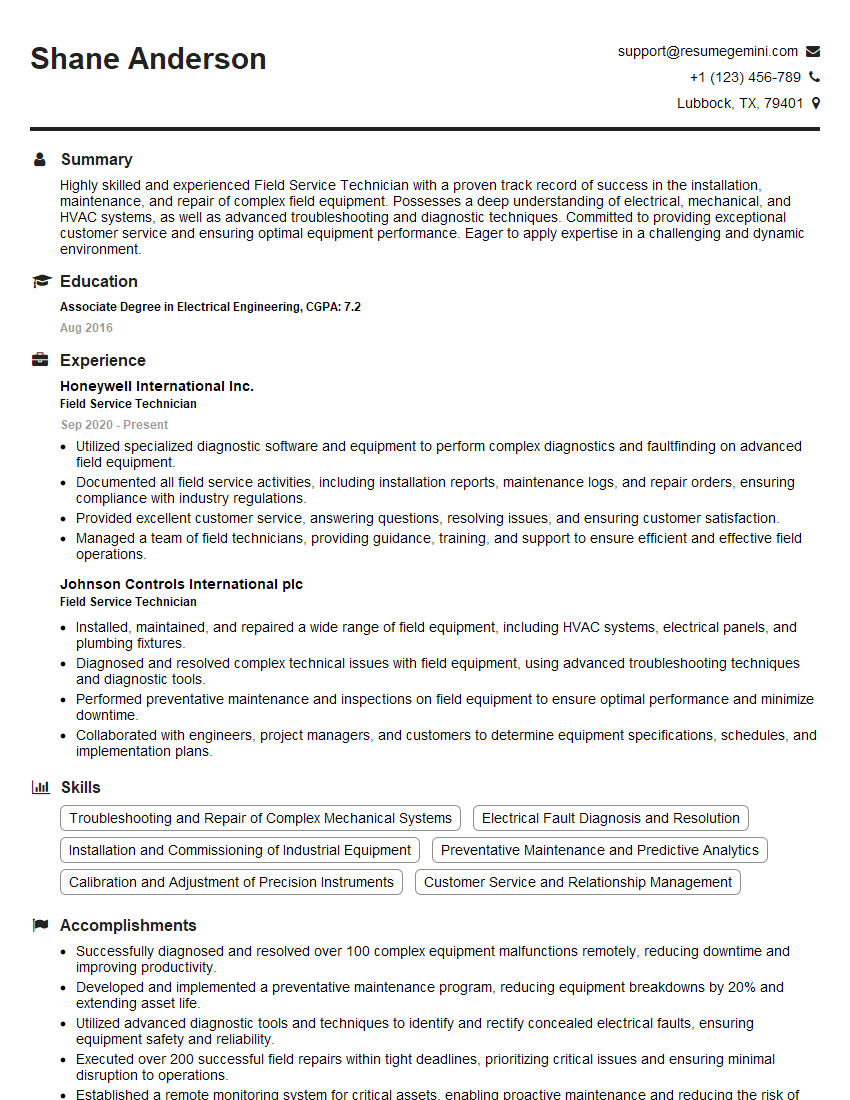
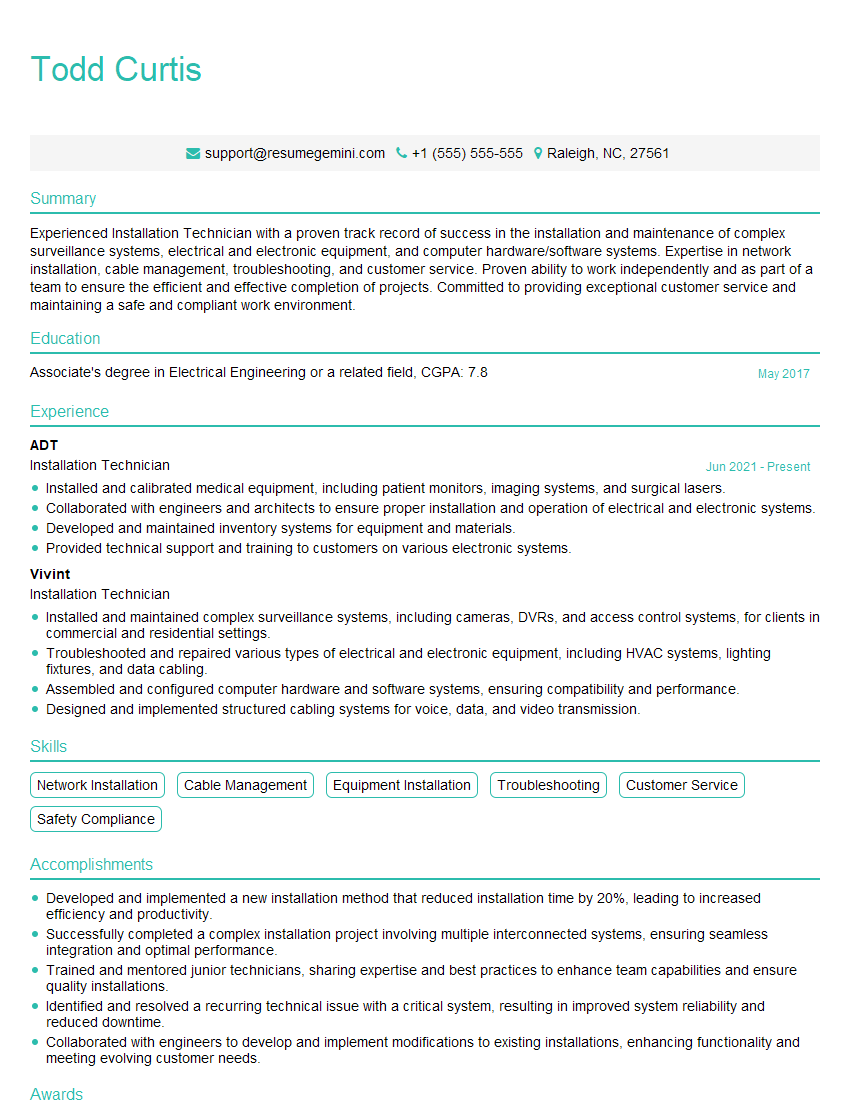
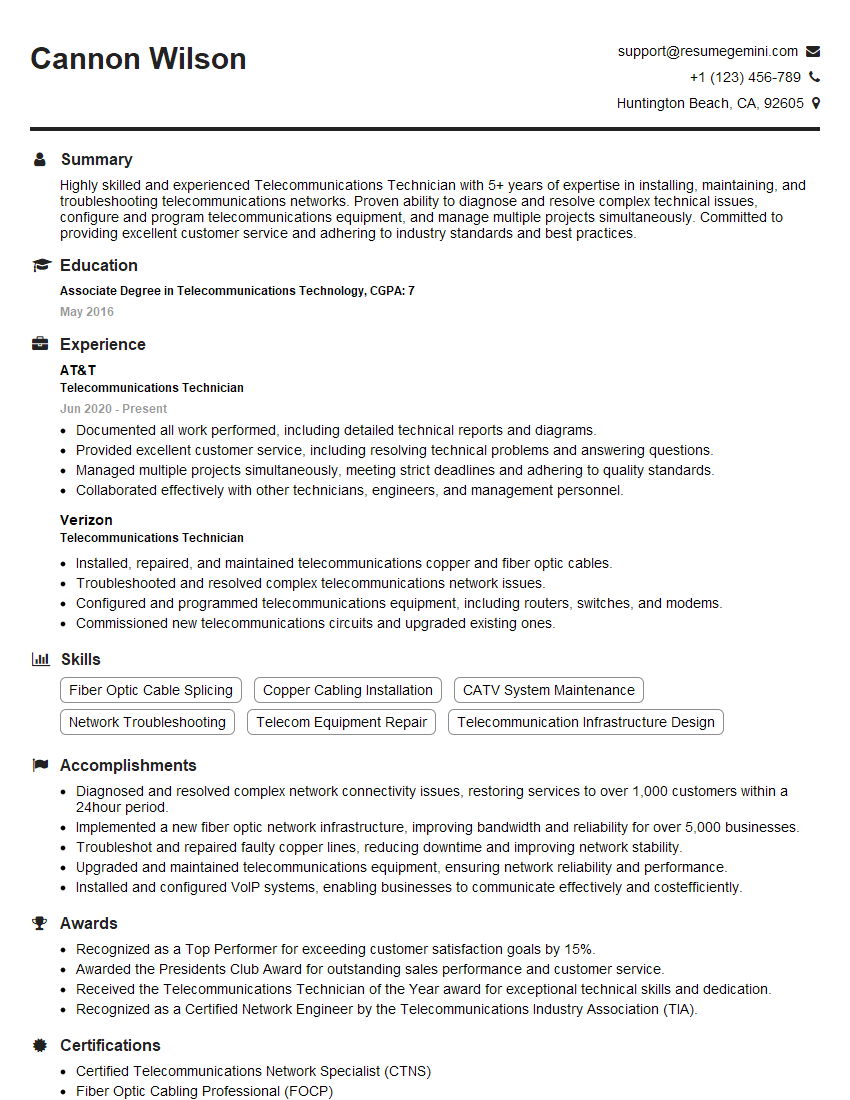
Mastering the installation of microwave antennas opens doors to exciting career opportunities in telecommunications, broadcasting, and various other industries. It demonstrates a high level of technical skill and problem-solving ability, making you a valuable asset to any team. To significantly enhance your job prospects, create a compelling and ATS-friendly resume that highlights your skills and experience effectively. ResumeGemini is a trusted resource that can help you build a professional resume tailored to the specific demands of the job market. Examples of resumes tailored to Installation of Microwave Antennas are provided to guide you in crafting your own winning application.

Explore more articles
Users Rating of Our Blogs
Share Your Experience
We value your feedback! Please rate our content and share your thoughts (optional).
What Readers Say About Our Blog
To the interviewgemini.com Webmaster.
Very helpful and content specific questions to help prepare me for my interview!
Thank you
To the interviewgemini.com Webmaster.
This was kind of a unique content I found around the specialized skills. Very helpful questions and good detailed answers.
Very Helpful blog, thank you Interviewgemini team.