Every successful interview starts with knowing what to expect. In this blog, we’ll take you through the top Wood Product Design interview questions, breaking them down with expert tips to help you deliver impactful answers. Step into your next interview fully prepared and ready to succeed.
Questions Asked in Wood Product Design Interview
Q 1. Describe your experience with different wood types and their properties.
My experience with wood spans a wide range of species, each possessing unique properties crucial for design. Understanding these properties is paramount to selecting the right wood for a specific project.
- Hardwoods: Such as oak, maple, and walnut, are known for their durability, strength, and beautiful grain patterns. Oak, for instance, is ideal for furniture requiring high impact resistance, while walnut’s rich color and fine grain make it perfect for high-end cabinetry. Maple, with its hardness and consistent grain, is excellent for flooring or intricate carvings.
- Softwoods: Like pine, fir, and cedar, are generally lighter, softer, and less expensive than hardwoods. Pine, with its readily available and workable nature, is often used for construction projects and general carpentry. Cedar is prized for its natural insect-repellent properties and pleasant aroma, making it a favorite for outdoor projects and aromatic chests.
- Exotic Woods: Species like mahogany, rosewood, and zebrawood offer unique aesthetic qualities and often exceptional strength and durability. However, sourcing and sustainability concerns are paramount with these species. Careful consideration must be given to responsible forestry practices.
I’ve worked extensively with these and other species, learning to leverage their strengths and account for their weaknesses in the design process. This includes understanding how wood behaves with changes in humidity and temperature, a crucial factor in preventing warping and cracking.
Q 2. Explain the design process you typically follow for a new wood product.
My design process for a new wood product is iterative and client-focused. It typically involves these key steps:
- Client Consultation & Concept Development: Understanding the client’s needs, budget, and desired aesthetic is the first priority. This stage involves detailed discussions to refine the product concept.
- Sketching & 2D Design: I begin with hand sketches to explore various forms and functional aspects. These sketches are refined into detailed 2D drawings, specifying dimensions and key features.
- 3D Modeling & CAD: Using CAD software (as detailed in a later answer), I create a 3D model allowing for detailed visualization, analysis, and refinement of the design. This phase is crucial for exploring different joinery techniques and overall structural integrity.
- Material Selection: Based on the design, intended use, and budget, I choose the appropriate wood species, considering its properties like durability, workability, and aesthetic appeal.
- Prototyping & Testing: I create physical prototypes, iteratively refining the design based on testing and feedback. This is where I address potential issues and ensure functionality and aesthetics meet expectations.
- Manufacturing & Finalization: Once the prototype is approved, I oversee the manufacturing process, ensuring quality control and adherence to design specifications. Final adjustments are made as necessary.
This structured approach allows for flexibility and adaptability, ensuring the final product aligns with the client’s vision and technical feasibility.
Q 3. How do you incorporate sustainability into your wood product designs?
Sustainability is a core principle in my designs. I integrate it at every stage:
- Sustainable Sourcing: I prioritize using wood from sustainably managed forests, certified by organizations like the Forest Stewardship Council (FSC). This ensures the wood is harvested responsibly, minimizing environmental impact.
- Material Optimization: Designing for minimal waste is crucial. I utilize efficient cutting techniques and explore options to use offcuts and scraps in other projects. This minimizes material waste in the production process.
- Durable & Long-lasting Designs: Creating durable products that last longer reduces the need for frequent replacements, decreasing overall environmental impact over the product’s lifetime.
- Recyclable Materials: Where possible, I incorporate other sustainably sourced and/or recycled materials, like eco-friendly finishes and packaging.
- Lifecycle Assessment: I consider the entire lifecycle of the product, from material sourcing to disposal, aiming to minimize its carbon footprint throughout.
For example, recently I designed a series of children’s toys using reclaimed wood from old pallets. This reduced waste and created unique products with a rustic charm, demonstrating the creative potential of sustainable practices.
Q 4. What CAD software are you proficient in, and how do you use it for wood product design?
I am proficient in several CAD software packages, most notably Fusion 360 and SolidWorks. These tools are invaluable for wood product design.
- Fusion 360: Its intuitive interface and powerful modeling capabilities make it ideal for complex designs. I use it to create 3D models, generate detailed drawings, and simulate assembly processes.
Example: Creating a parametric model of a chair allows me to easily adjust dimensions and explore different design variations. - SolidWorks: This software excels in creating highly detailed and accurate models. Its advanced features are useful for analyzing structural integrity and optimizing designs for manufacturing.
In addition to these, I utilize specialized CAM software to generate CNC toolpaths, ensuring efficient and precise machining.
Q 5. Describe your experience with CNC machining for wood.
My experience with CNC machining for wood is extensive. It’s a pivotal technology for achieving precise and efficient manufacturing. I’ve used CNC routers, lathes, and laser cutters for various projects.
- CNC Routing: This is the most common technique I use for creating complex shapes, curves, and intricate details in wood. I program toolpaths to precisely cut, carve, and engrave designs into the material.
- CNC Turning: Ideal for creating symmetrical shapes like legs, spindles, and bowls, CNC lathes allow for high-precision machining and surface finishes.
- Laser Cutting: I use laser cutters for intricate cutting and engraving of thinner wood pieces. This method provides precise cuts with minimal material burn.
Understanding the capabilities and limitations of different CNC machines and bit types is crucial for achieving optimal results. For example, choosing the appropriate bit diameter and feed rate is essential to avoid burning or chipping the wood.
Q 6. How do you manage the challenges of working with natural wood variations?
Working with natural wood variations presents inherent challenges, but careful planning and design strategies mitigate these issues.
- Material Selection & Grading: Selecting wood with consistent grain patterns and color reduces inconsistencies. Understanding wood grading systems allows me to choose appropriate materials for the project’s requirements.
- Design Flexibility: Incorporating design elements that accommodate natural variations, such as using live edges or embracing unique grain patterns, can turn imperfections into design features.
- Pre-finishing Inspection: Carefully inspecting the wood before final finishing allows for the selection of pieces with the most desirable characteristics or planning for the placement of imperfections in less visible areas.
- Strategic Planning: Careful planning of cuts and placement of elements can minimize the impact of variations. This may involve adjusting layouts to accommodate areas of knotting or color differences.
A recent project involved creating a table from reclaimed wood planks. The variation in color and texture of the planks was initially a concern, but I incorporated these differences into the design, creating a unique and visually appealing piece.
Q 7. Explain your knowledge of different wood joinery techniques.
My knowledge of wood joinery techniques is comprehensive, ranging from simple to complex methods. Choosing the right joint is crucial for both the structural integrity and aesthetic appeal of the piece.
- Basic Joints: I am proficient in using simple joints such as butt joints, lap joints, and dado joints, commonly used in simple constructions where strength isn’t paramount.
- Advanced Joints: For stronger and more visually appealing pieces, I often use mortise and tenon, dovetail, and finger joints. These joints are excellent for furniture and other structural applications.
- Modern Joinery: I also incorporate modern joinery techniques, such as using dowels, biscuits, and pocket screws, especially in projects requiring faster assembly or mass production.
The choice of joint depends on several factors, including the type of wood, the required strength, the desired aesthetic, and the available tools. For example, dovetail joints are strong and visually appealing but require more time and skill than simpler joints like butt joints. Understanding these trade-offs is critical for effective design.
Q 8. How do you ensure the structural integrity of your wood designs?
Ensuring the structural integrity of a wood design is paramount. It involves a deep understanding of wood properties, joint design, and the intended load-bearing requirements. I begin by selecting the appropriate wood species based on its strength-to-weight ratio, grain pattern, and resistance to decay and insect infestation. For instance, oak is excellent for structural applications due to its strength and durability, while pine is a more cost-effective option for less demanding projects.
Next, I meticulously design the joints. Strong joints are the backbone of any sturdy wooden structure. I utilize time-tested techniques like mortise and tenon, dovetail, and biscuit joints, choosing the appropriate type based on the specific load and aesthetic requirements. For example, a mortise and tenon joint is exceptionally strong for furniture legs, while a dovetail joint is both strong and visually appealing for drawers.
Finally, I perform rigorous stress analysis, either through calculations based on established engineering principles or using Finite Element Analysis (FEA) software for more complex designs. This helps to identify potential weak points and optimize the design for maximum strength and stability. This proactive approach guarantees the longevity and safety of the final product.
Q 9. Discuss your experience with wood finishing techniques and materials.
My experience with wood finishing encompasses a wide range of techniques and materials. I’m proficient in both traditional and contemporary methods, selecting the most suitable approach based on the desired aesthetic and the wood’s characteristics. I frequently work with oil-based finishes, such as tung oil or linseed oil, which penetrate the wood, enhancing its natural beauty and providing a protective layer. These are ideal for projects that emphasize the wood grain’s natural character.
For a more durable and water-resistant finish, I use polyurethane, either in a varnish or lacquer form. Polyurethane provides excellent protection against scratches, spills, and UV damage, making it perfect for high-traffic furniture or outdoor projects. I’ve also extensively used shellac, a natural resin-based finish, offering a smooth, warm finish suitable for finer details and antique restoration.
In addition to the finishing material, the application technique significantly affects the final result. I meticulously follow the manufacturer’s instructions for each product and utilize various tools such as brushes, sprayers, and rags for optimal finish quality. Careful sanding between coats is crucial to achieve a flawlessly smooth and even surface. I always strive to create a finish that not only protects the wood but also enhances its inherent beauty.
Q 10. How do you approach the design of ergonomic wood products?
Ergonomics plays a critical role in my designs, ensuring user comfort and preventing potential strain or injury. I begin by considering the human body’s anthropometric data – dimensions and proportions – to optimize the product’s dimensions and shape for the intended user. For example, designing a chair involves careful consideration of seat height, backrest angle, and armrest positioning to promote proper posture and avoid back strain.
Next, I carefully evaluate the product’s intended use. A chair for a computer workstation requires different ergonomic considerations compared to a dining chair. For the former, I’d focus on adjustable seat height and backrest, adequate lumbar support, and a keyboard tray to minimize wrist strain. For the latter, the focus would shift toward a comfortable seat depth and height appropriate for dining.
Throughout the design process, I constantly test prototypes and gather user feedback, iteratively improving the design based on real-world usage. This iterative process ensures the final product aligns with ergonomic principles, promoting user well-being and increasing satisfaction.
Q 11. Describe your process for prototyping wood products.
My prototyping process is an iterative one, starting with initial sketches and 2D designs. I then move to creating digital 3D models using CAD software, allowing me to visualize the design from all angles and identify potential issues early on. This digital model aids in material estimation and cost projections.
Following the digital model, I create a physical prototype, often using less expensive materials initially. This allows for a hands-on assessment of form, function, and ergonomics. This physical prototype might be a simplified version of the final product, focusing on key design elements.
Based on the initial prototype, I gather feedback, testing various aspects like strength, comfort, and aesthetics. This feedback drives further iterations, leading to refined designs and improved functionality. The iterative process of testing and revision continues until I am confident in the final design’s integrity and quality.
Q 12. How do you handle design revisions and client feedback?
Handling design revisions and client feedback is an integral part of the design process. I encourage open communication and actively solicit feedback throughout the project. I believe that clear and concise communication, along with a collaborative approach, leads to the best outcomes.
I carefully document all design changes and client feedback, maintaining a transparent record of the design evolution. When incorporating changes, I ensure that the revisions are integrated seamlessly into the design without compromising structural integrity or aesthetics. I also always clarify the impact of revisions on the project timeline and budget.
For major revisions, I may create updated prototypes or renderings to allow clients to visualize the changes before implementation. This iterative process, characterized by mutual understanding and a focus on achieving the client’s vision, guarantees a successful project delivery.
Q 13. What are the key considerations for designing cost-effective wood products?
Designing cost-effective wood products requires a holistic approach that considers material selection, manufacturing processes, and joint design. I start by selecting readily available and cost-effective wood species. Pine and fir are often preferred for their affordability, while still providing adequate strength for many applications.
Next, I simplify the design, minimizing the number of components and choosing joint designs that are efficient to manufacture. Avoid complex joinery that requires specialized tools or skills can drastically reduce production costs. I also explore alternative manufacturing methods, such as CNC machining, which can increase efficiency and reduce labor costs for complex shapes.
Finally, I focus on optimizing the material usage, minimizing waste, and exploring efficient packaging solutions to reduce overall costs. By carefully balancing these considerations, I can create products that are both affordable and meet the required quality and performance standards.
Q 14. How do you balance aesthetics and functionality in your designs?
Balancing aesthetics and functionality is a critical aspect of wood product design. I achieve this balance by carefully integrating form and function from the initial design phase. A visually appealing product is useless if it doesn’t perform its intended function, and conversely, a highly functional product fails if it lacks aesthetic appeal.
For example, the elegant curves of a chair not only enhance its visual appeal but also contribute to its ergonomic comfort. Similarly, the grain pattern and finish of a piece of furniture not only enhance its beauty but also protect the wood from damage. I explore the natural beauty of the wood, using its grain patterns and color variations as design elements to avoid excessive embellishment.
Throughout the design process, I continuously iterate, adjusting the design to achieve optimal functionality while maintaining aesthetic integrity. The final design reflects a harmonious blend of form and function, creating a product that is both visually pleasing and highly functional.
Q 15. Explain your understanding of wood preservation methods.
Wood preservation is crucial for extending the lifespan of wood products and protecting them from degradation caused by biological agents like fungi, insects, and bacteria, as well as environmental factors like moisture and UV radiation. Effective preservation methods aim to prevent decay, insect infestation, and weathering, ensuring the structural integrity and aesthetic appeal of the wood.
- Pressure Treatment: This is a common industrial method where wood is placed in a pressure vessel and treated with preservatives under high pressure. This forces the preservative deep into the wood cells, providing long-lasting protection. Common preservatives include chromated copper arsenate (CCA), although less toxic alternatives are now prevalent, such as copper azole and copper quat.
- Surface Treatment: This involves applying preservatives to the surface of the wood, offering less protection than pressure treatment, but suitable for less demanding applications. Methods include painting, staining, and applying wood sealants. The effectiveness depends on the type of coating and the frequency of reapplication.
- Thermal Modification: This process alters the wood’s cellular structure through heat treatment, reducing its hygroscopicity (ability to absorb moisture) and making it more resistant to decay and insects. The process can enhance dimensional stability and durability, but it’s typically more expensive than chemical treatments.
- Incising: For pressure treatment, incising is a pre-treatment step where cuts are made into the wood’s surface. This creates channels for better penetration of the preservative.
Choosing the appropriate method depends on the type of wood, intended use, budget, and environmental concerns. For example, outdoor decking would benefit from pressure treatment with a durable preservative, while interior furniture might only require a surface treatment like a protective sealant.
Career Expert Tips:
- Ace those interviews! Prepare effectively by reviewing the Top 50 Most Common Interview Questions on ResumeGemini.
- Navigate your job search with confidence! Explore a wide range of Career Tips on ResumeGemini. Learn about common challenges and recommendations to overcome them.
- Craft the perfect resume! Master the Art of Resume Writing with ResumeGemini’s guide. Showcase your unique qualifications and achievements effectively.
- Don’t miss out on holiday savings! Build your dream resume with ResumeGemini’s ATS optimized templates.
Q 16. What are some common challenges in wood product manufacturing, and how do you address them?
Wood product manufacturing faces various challenges, primarily related to material variability, processing complexities, and sustainability concerns.
- Wood Variation: Natural wood exhibits variations in grain, density, and moisture content, impacting processing and product consistency. Addressing this involves careful wood selection, grading, and potentially incorporating technologies like computer numerical control (CNC) machining to compensate for variations during processing.
- Manufacturing Defects: Knots, checks, splits, and other natural defects can affect the strength and appearance of the final product. Careful inspection, selective wood usage, and advanced joining techniques (like biscuit joints or dowels) are crucial for mitigating these issues. For instance, using a knotty piece of wood in a less visible part of a chair leg is a common practice.
- Sustainability: Sourcing wood from responsibly managed forests and minimizing waste are becoming increasingly important. Employing lean manufacturing principles, efficient material utilization strategies, and utilizing by-products (e.g., sawdust for composite materials) contribute to sustainable practices.
- Cost Management: Fluctuating lumber prices, energy costs, and labor expenses all necessitate effective cost control strategies. This involves careful planning, optimizing manufacturing processes, and exploring cost-effective materials without compromising quality.
I address these challenges by using a combination of high-quality wood selection criteria, advanced manufacturing technologies, strict quality control measures, and a commitment to sustainable practices. For example, I may use simulation software to optimize material use and reduce waste before even commencing production.
Q 17. How do you stay updated with the latest trends and technologies in wood product design?
Staying current in wood product design requires a multi-pronged approach.
- Industry Publications and Journals: I regularly read publications like Woodworking Network and Wood Industry to keep abreast of new materials, technologies, and design trends.
- Trade Shows and Conferences: Attending events like the International Woodworking Fair (IWF) allows for direct interaction with manufacturers, suppliers, and fellow designers, fostering networking and learning about the latest innovations.
- Online Resources and Databases: Websites of industry associations, research institutions (like universities with forestry programs), and online databases provide access to the latest research and technological advancements.
- Professional Networks: Engaging with online communities and professional organizations (like the American Wood Council) enables me to exchange ideas, learn from others’ experiences, and receive updates on the latest industry developments.
- Continuing Education: Pursuing relevant courses and workshops keeps my skillset sharp and allows me to expand my knowledge in specialized areas like advanced joinery techniques or sustainable materials.
For instance, recently I learned about a new type of engineered wood product with significantly improved strength-to-weight ratio, which has already informed some of my current design projects.
Q 18. Describe your experience working with different manufacturing processes for wood products.
My experience encompasses a wide range of wood product manufacturing processes.
- Traditional Woodworking: I’m proficient in hand tool techniques like planing, shaping, and joinery, along with the use of traditional machinery like lathes, band saws, and jointers. This foundation is essential for understanding the capabilities and limitations of wood as a material.
- CNC Machining: I have extensive experience programming and operating CNC routers and other CNC machines, enabling precision cutting, shaping, and engraving. This technology allows for complex designs and high-volume production with consistency.
- Laminating and Veneering: I understand the techniques involved in creating layered wood components for strength, stability, and aesthetic appeal, applying various adhesive systems and ensuring proper curing.
- Assembly and Finishing: I have hands-on experience in assembling components using various joinery methods, applying finishes (paints, stains, lacquers), and ensuring surface quality.
- Steam Bending: This process allows for creating curved shapes, adding an artistic dimension to designs. I have worked with various woods and steam bending techniques to create furniture and architectural components.
I’ve worked on projects ranging from small-scale bespoke furniture to larger-scale architectural millwork, utilizing the most appropriate manufacturing processes for each project’s specific demands. For instance, a handcrafted rocking chair would rely heavily on traditional woodworking techniques, while a large-scale paneling project might leverage CNC machining for speed and precision.
Q 19. How do you ensure the safety and compliance of your wood product designs?
Safety and compliance are paramount in wood product design. I ensure this through a multi-faceted approach.
- Material Safety Data Sheets (MSDS): I review MSDS for all materials used, ensuring they comply with relevant regulations and understanding their potential hazards. This includes adhesives, finishes, and preservatives.
- Design for Safety: My designs incorporate safety features to minimize risks of injury during use and manufacturing. For example, sharp edges are avoided or mitigated, and components are designed for secure assembly.
- Regulatory Compliance: I’m familiar with relevant safety standards and regulations (e.g., ANSI, ASTM) and ensure my designs meet or exceed these standards. This often includes testing for strength, durability, and flammability.
- Environmental Compliance: I prioritize the use of sustainably sourced wood and eco-friendly finishes to meet environmental regulations and minimize environmental impact. Proper disposal of waste materials is also meticulously planned.
- Manufacturing Process Safety: I collaborate with manufacturers to ensure their processes adhere to safety protocols, including proper use of machinery and personal protective equipment (PPE).
For instance, in a children’s toy design, I would pay particular attention to avoiding small parts that could pose a choking hazard and ensuring the finish is non-toxic.
Q 20. Discuss your understanding of material selection for various wood product applications.
Material selection is critical in wood product design. The choice of wood depends on factors like the intended application, required strength, aesthetic appeal, and budget.
- Strength and Durability: Hardwoods like oak, maple, and hickory are preferred for applications requiring high strength and durability, such as structural components or furniture. Softer woods like pine and fir are suitable for applications where strength demands are lower.
- Appearance: Wood species differ in grain pattern, color, and texture. This allows for selecting wood that complements the intended aesthetic of the design. For example, the rich grain of walnut might be selected for fine furniture, while the pale color of birch might be suited to minimalist designs.
- Workability: Some wood species are easier to work with than others. This affects the choice of manufacturing processes and the overall cost of production. Some woods are easier to machine than others.
- Cost: Wood prices vary considerably depending on species, availability, and quality. This is a significant factor in material selection.
- Sustainability: Choosing sustainably sourced wood contributes to environmental responsibility. Certifications like FSC (Forest Stewardship Council) indicate responsible forestry practices.
For example, a kitchen countertop might be made from a durable and water-resistant hardwood like maple, while the frame of a picture might be made from a less expensive, readily available pine.
Q 21. How do you estimate the cost of materials and manufacturing for a wood product?
Estimating the cost of materials and manufacturing involves a detailed breakdown of all expenses.
- Material Costs: This includes the cost of wood, fasteners, adhesives, finishes, and any other raw materials. Accurate pricing requires obtaining quotes from suppliers and accounting for potential waste.
- Labor Costs: The labor costs for different manufacturing processes are estimated based on the time required, the skill level of the workers, and the prevailing wage rates. CNC machining, for instance, might have higher labor costs per unit than hand-tool work, but it could be faster overall for high-volume projects.
- Manufacturing Overhead: This encompasses expenses such as rent, utilities, machinery maintenance, and administrative costs. These costs are usually expressed as a percentage of the direct labor costs.
- Profit Margin: A reasonable profit margin needs to be added to cover business expenses and ensure profitability.
- Waste Factor: It is crucial to include a factor to account for material waste during the manufacturing process. The level of waste can vary significantly depending on the type of wood, the complexity of the design, and the manufacturing process.
A detailed bill of materials (BOM) outlining all the necessary components and their quantities is created. This, along with labor estimates and overhead calculations, forms the basis for a comprehensive cost estimate. Software programs specifically designed for estimating costs in manufacturing are also commonly used.
Q 22. Describe a project where you had to overcome a significant design challenge.
One significant design challenge I faced involved creating a sustainably sourced, lightweight, and durable outdoor bench for a public park. The initial design, while aesthetically pleasing, proved too heavy and expensive to manufacture using traditional hardwood. The challenge was to maintain the design’s integrity while reducing the material cost and environmental impact.
To overcome this, I explored different wood species, focusing on fast-growing and sustainably harvested options like Paulownia. This wood offers a high strength-to-weight ratio. I also redesigned the joinery, opting for simpler, more efficient techniques like mortise and tenon joints instead of more complex, material-intensive ones. Finite Element Analysis (FEA) software was used to simulate stress and strain on the redesigned bench, ensuring structural integrity. This iterative process – experimenting with material choices, optimizing the joinery, and validating with FEA – ultimately resulted in a bench that met all requirements while drastically reducing material usage and cost.
Q 23. Explain your understanding of the different types of wood finishes and their applications.
Wood finishes are crucial for protecting wood and enhancing its aesthetic appeal. They can be broadly categorized into several types, each with specific applications:
- Oil Finishes: These penetrate the wood, enhancing its natural beauty and providing some protection against moisture. Linseed oil, tung oil, and Danish oil are common examples. They’re suitable for furniture, cutting boards, and other items that require food-safe finishes (when using food-safe oils).
- Varnish Finishes: These create a hard, durable, protective layer that resists scratches and moisture. They offer excellent protection but can mask the wood’s natural grain. They are commonly used on furniture, floors, and exterior applications requiring high durability.
- Lacquer Finishes: These dry quickly, offering a smooth, hard surface. They are available in various sheens and are often used on furniture and musical instruments where a smooth, durable finish is desired.
- Paint Finishes: These completely cover the wood grain, providing excellent protection and a wide range of color options. They are commonly used for exterior applications where UV protection is critical or for projects where a specific color is desired.
- Stains: These penetrate the wood, altering its color without obscuring the grain. They can be used to enhance the natural color or create a darker, more dramatic effect. They are often used in conjunction with a clear topcoat (like varnish or lacquer) for protection.
The choice of finish depends heavily on the wood type, intended use, and desired aesthetic. For example, a cutting board might benefit from a food-safe oil finish, while exterior furniture would require a durable varnish or paint.
Q 24. How do you ensure the longevity and durability of your wood product designs?
Longevity and durability in wood product design are achieved through a multi-faceted approach:
- Material Selection: Choosing appropriate wood species based on their inherent strength, durability, and resistance to decay and insects is crucial. Hardwoods like oak and maple generally offer superior durability compared to softwoods like pine.
- Joinery Techniques: Strong and well-executed joinery is paramount. Techniques like mortise and tenon, dovetail, and dowel joints provide superior strength and stability compared to simple glue-and-nail joints.
- Proper Finishing: Applying appropriate finishes protects against moisture, UV damage, and insect infestation. Choosing a finish suitable for the intended use and environmental conditions is critical.
- Design Considerations: Designing for strength and minimizing stress points are important. This might involve reinforcing certain areas, strategically placing supports, or using appropriate fasteners.
- Maintenance: Providing instructions for proper care and maintenance extends the life of the product. Regular cleaning and occasional refinishing can significantly improve longevity.
For instance, a garden bench designed for outdoor use would require rot-resistant wood (like cedar or redwood), durable joinery, and a weather-resistant finish.
Q 25. Describe your experience with designing for different wood product scales (e.g., furniture, small crafts).
My experience spans various scales of wood product design. I’ve worked on large-scale projects like custom-designed kitchen cabinets involving intricate joinery and precise measurements, requiring careful planning and coordination with manufacturing teams. Conversely, I’ve also enjoyed the detail-oriented work of designing small crafts like handcrafted wooden toys, demanding meticulous attention to detail and the selection of appropriate, often smaller, wood pieces.
The key difference lies in the level of detail and precision required. Larger-scale projects necessitate efficient manufacturing processes, standardized components, and potentially CAD modeling, while smaller projects allow for more intricate hand-crafting and individual artistry. The principles of design – functionality, aesthetics, and durability – remain consistent, but the scale dictates the specific techniques and tools employed.
Q 26. How do you use sketching and hand-drawing in your wood product design process?
Sketching and hand-drawing remain integral to my design process. They serve as a crucial bridge between initial concepts and the final digital models. I begin with quick sketches to explore different forms, proportions, and functionalities. These initial sketches are free-flowing and allow for rapid iteration and exploration of diverse ideas.
Once I have a clearer direction, I move towards more refined drawings, focusing on detailed proportions, joinery, and material choices. These detailed sketches help me visualize the final product and communicate my design intent to manufacturers or clients. Even in the digital age, hand sketching allows for a more intuitive and creative exploration of ideas, providing a tangible connection to the design that digital modeling sometimes lacks.
Q 27. Explain your familiarity with industry standards and regulations related to wood products.
I am familiar with several industry standards and regulations regarding wood products, particularly those related to safety, environmental sustainability, and manufacturing practices. This includes knowledge of:
- Formaldehyde Emissions: Regulations like CARB (California Air Resources Board) Phase 2 standards limit formaldehyde emissions from composite wood products.
- Wood Species and Sourcing: Awareness of sustainably harvested wood species and certifications like FSC (Forest Stewardship Council) is important for responsible sourcing.
- Safety Standards: Adherence to safety standards for furniture and other wood products, ensuring stability and preventing hazards like sharp edges or unstable structures.
- Manufacturing Processes: Understanding best practices in woodworking, such as safe operation of machinery and proper waste disposal.
Staying updated on these regulations is vital for creating compliant and environmentally responsible products.
Q 28. Describe your approach to managing time and resources during the wood product design process.
Effective time and resource management is critical in wood product design. My approach involves:
- Project Planning: Thorough planning, including defining clear objectives, timelines, and budgets, is the first step. This includes breaking down large projects into smaller, manageable tasks.
- Prioritization: Focusing on the most critical tasks and allocating resources efficiently. This often involves using tools like Gantt charts or Kanban boards for visualization and tracking.
- Iteration and Feedback: Building prototypes and incorporating feedback early in the process reduces rework and ensures the design meets requirements.
- Communication: Clear and consistent communication with clients, manufacturers, and other stakeholders is essential for managing expectations and resolving issues promptly.
- Resource Optimization: Choosing appropriate materials, manufacturing methods, and tools to minimize waste and maximize efficiency.
For example, using efficient joinery techniques reduces material waste and manufacturing time, contributing to both cost and time savings.
Key Topics to Learn for Wood Product Design Interview
- Wood Selection & Properties: Understanding different wood species, their grain patterns, strength characteristics, workability, and sustainability.
- Joinery Techniques: Practical knowledge of various joinery methods (e.g., mortise and tenon, dovetail, dado) and their applications in different designs.
- CAD/CAM Software Proficiency: Demonstrating experience with industry-standard software for 3D modeling, design, and manufacturing processes (e.g., SolidWorks, AutoCAD, Fusion 360).
- Manufacturing Processes: Familiarity with woodworking machinery, tooling, and techniques involved in production, including CNC machining, hand-tooling, and finishing.
- Ergonomics & User Experience (UX): Designing for comfort, usability, and safety, considering the human interaction with the final product.
- Sustainability & Environmental Impact: Understanding sustainable sourcing of wood, minimizing waste, and incorporating eco-friendly materials and processes.
- Design Principles & Aesthetics: Applying fundamental design principles like form, function, proportion, and balance to create aesthetically pleasing and functional products.
- Project Management & Communication: Experience in managing projects from concept to completion, including collaborating with teams and communicating design ideas effectively.
- Cost Estimation & Budgeting: Understanding the cost factors involved in wood product design and manufacturing, and developing realistic budgets.
- Prototyping & Testing: Experience in creating prototypes using various methods, testing designs for functionality and durability, and iterating based on feedback.
Next Steps
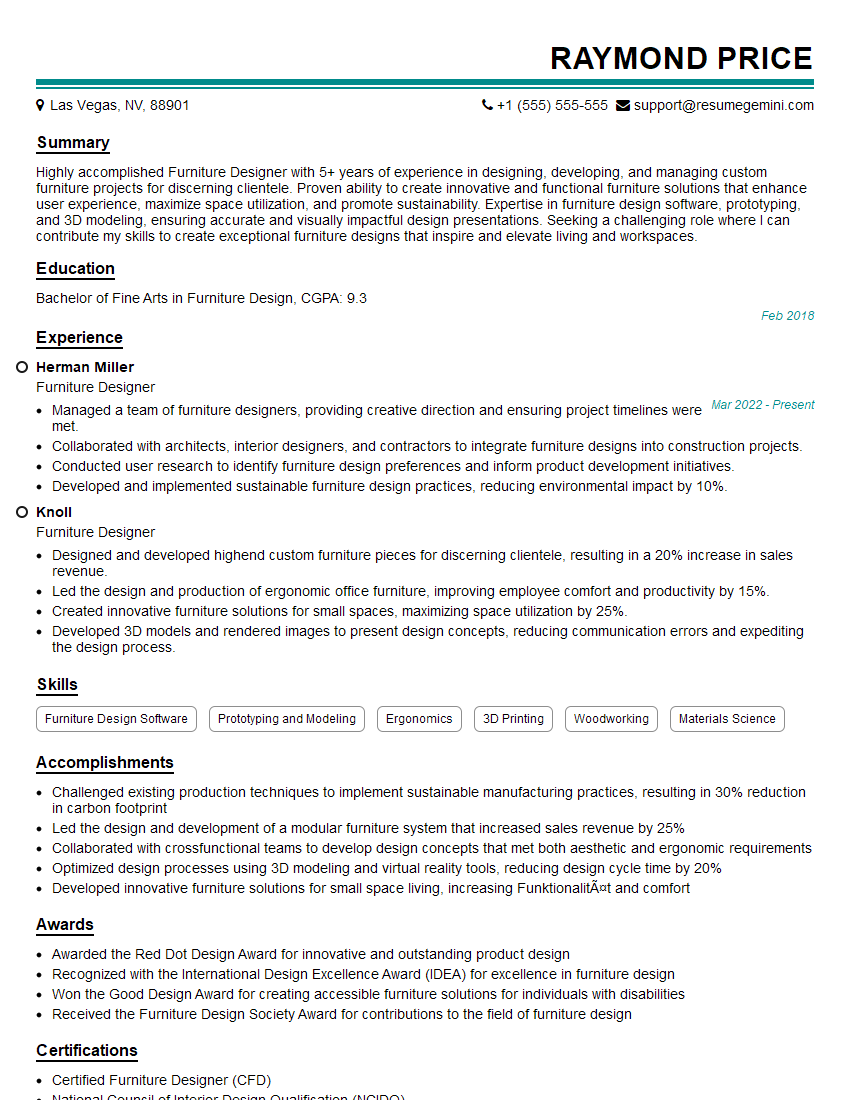
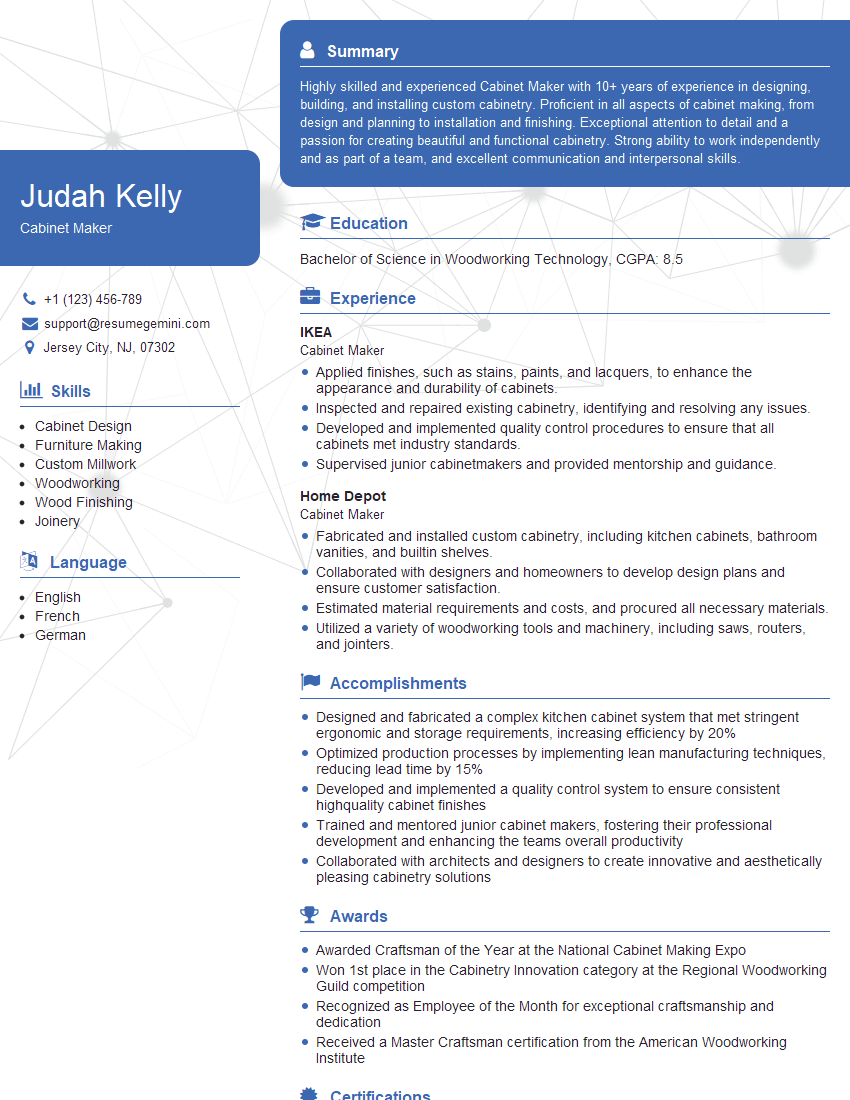
Mastering Wood Product Design opens doors to a rewarding career with diverse opportunities in furniture design, construction, manufacturing, and more. To maximize your chances of landing your dream role, a strong, ATS-friendly resume is crucial. ResumeGemini is a trusted resource to help you craft a professional and impactful resume that showcases your skills and experience effectively. Examples of resumes tailored specifically to Wood Product Design are available to guide you. Invest time in creating a compelling resume – it’s your first impression with potential employers.
Explore more articles
Users Rating of Our Blogs
Share Your Experience
We value your feedback! Please rate our content and share your thoughts (optional).
What Readers Say About Our Blog
To the interviewgemini.com Webmaster.
Very helpful and content specific questions to help prepare me for my interview!
Thank you
To the interviewgemini.com Webmaster.
This was kind of a unique content I found around the specialized skills. Very helpful questions and good detailed answers.
Very Helpful blog, thank you Interviewgemini team.