Every successful interview starts with knowing what to expect. In this blog, we’ll take you through the top Wood Industry Standards interview questions, breaking them down with expert tips to help you deliver impactful answers. Step into your next interview fully prepared and ready to succeed.
Questions Asked in Wood Industry Standards Interview
Q 1. Explain your understanding of ISO 44001 and its relevance to the wood industry.
ISO 44001 is an internationally recognized standard for collaborative business relationships. It focuses on creating a framework for managing collaborative projects effectively and sustainably. While not specifically designed for the wood industry, its principles are incredibly relevant. In the wood industry, this means optimizing relationships across the supply chain – from forestry to final product. Imagine a scenario where a sawmill collaborates with a furniture manufacturer. ISO 44001 provides a structured approach to defining roles, responsibilities, communication protocols, and risk management within this partnership, ensuring both parties benefit from a clearly defined and mutually beneficial agreement. This results in increased efficiency, reduced conflict, and improved quality throughout the supply chain.
The standard helps establish clear expectations, fostering transparency and trust. For example, it helps define shared goals, like sustainable sourcing or timely delivery, and provides mechanisms to address disagreements proactively. In essence, ISO 44001 helps the wood industry move beyond transactional relationships toward strategic partnerships, boosting overall sustainability and profitability.
Q 2. Describe the different grades of lumber and their applications.
Lumber grades are classifications based on the quality and appearance of the wood. These grades reflect the presence of knots, checks, splits, and other natural imperfections. Higher grades have fewer imperfections and are used for more demanding applications. Here’s a simplified overview:
- Select Grade: Features very few imperfections, ideal for fine furniture, high-end cabinetry, and decorative woodwork. Think of a luxurious, high-end dining table.
- No. 1 Common Grade: Allows for some small, tight knots and minor imperfections. Suitable for general construction, framing, and less visible applications in furniture. A good example would be the framing for a house or interior walls.
- No. 2 Common Grade: Contains more knots and imperfections than No. 1. Primarily used for structural applications where appearance is less critical, such as framing in less-visible areas of a building or industrial applications.
- No. 3 Common Grade: The lowest grade, with significant imperfections. Primarily used for rough construction, pallets, and other applications where appearance is not a concern. Imagine the less visible supports for a deck.
The specific grading criteria can vary slightly depending on the wood species and the governing grading rules (e.g., the grading rules of the American Lumber Standard Committee).
Q 3. What are the key aspects of sustainable forestry practices?
Sustainable forestry practices are crucial for the long-term health of forests and the wood industry. They focus on balancing environmental protection, economic viability, and social equity. Key aspects include:
- Responsible Harvesting: Employing selective logging techniques that minimize damage to the remaining forest and promote regeneration. This includes leaving seed trees and protecting wildlife habitats.
- Reforestation: Replanting trees after harvesting to ensure future timber supplies. Choosing appropriate species and using proper planting techniques are essential.
- Forest Management Planning: Developing comprehensive plans that integrate ecological, economic, and social considerations. This involves monitoring forest health, assessing timber volume, and projecting future yields.
- Biodiversity Conservation: Protecting the variety of plant and animal species within the forest ecosystem. This requires understanding the unique characteristics of the forest and employing management practices that minimize the impact on biodiversity.
- Soil and Water Protection: Implementing measures to prevent erosion, protect water quality, and maintain soil fertility. This can involve buffer strips along waterways and careful management of logging roads.
- Community Engagement: Involving local communities in forest management decisions to ensure their needs and concerns are addressed. This is crucial for promoting social equity and securing support for sustainable forestry initiatives.
Certification schemes like the Forest Stewardship Council (FSC) provide verification that timber comes from sustainably managed forests.
Q 4. How do you ensure compliance with relevant wood industry safety standards?
Ensuring compliance with wood industry safety standards is paramount. This involves a multi-pronged approach:
- Regular Safety Training: Providing comprehensive training to all workers on safe operating procedures for machinery, handling materials, and personal protective equipment (PPE).
- Proper Machine Maintenance: Regularly inspecting and maintaining all machinery to prevent malfunctions and accidents. This includes guarding equipment to prevent contact with moving parts.
- Risk Assessments: Conducting thorough risk assessments to identify potential hazards and develop control measures. This involves analyzing tasks, work environments, and processes to determine risks.
- PPE Provision and Enforcement: Providing and enforcing the use of appropriate PPE, such as safety glasses, hearing protection, respirators, and safety footwear.
- Emergency Procedures: Establishing and regularly practicing emergency procedures to handle accidents, fires, and other incidents. This may involve having clear evacuation plans and first aid protocols.
- Compliance with Regulations: Staying updated on and complying with all relevant safety regulations and standards, which can vary by jurisdiction. This requires ongoing monitoring and regular updates.
Regular safety audits and inspections are vital to maintain compliance and identify areas for improvement. A strong safety culture, where safety is prioritized above all else, is the most effective way to prevent accidents.
Q 5. Explain the importance of proper wood drying techniques.
Proper wood drying techniques are essential for preventing defects and ensuring the dimensional stability of lumber. Incorrect drying can lead to cracking, warping, and checking, significantly reducing the value and usability of the wood. The goal is to remove moisture gradually and evenly to minimize internal stresses.
Methods include:
- Air Drying: A traditional method where lumber is stacked outdoors, allowing for natural evaporation of moisture. This is a slower process, but can be cost-effective for some species and applications.
- Kiln Drying: A faster, more controlled method that uses specialized chambers to regulate temperature and humidity. This allows for precise control over the drying process, minimizing defects. This method uses higher temperatures and controlled humidity to remove moisture quickly.
The specific drying schedule depends on the wood species, dimensions, and intended use. Monitoring moisture content throughout the drying process is crucial to ensure optimal results. Using advanced moisture meters and having a good understanding of the wood’s properties are crucial for success in wood drying.
Q 6. What are the common defects found in wood and how are they addressed?
Wood is a natural material and is susceptible to various defects. These defects can impact the strength, durability, and appearance of the wood. Common defects include:
- Knots: Branches embedded in the wood. Large or loose knots can weaken the wood.
- Checks: Splits in the wood that occur during drying.
- Splits: Long cracks that extend through the wood.
- Shakes: Separations between the wood grain.
- Wane: Absence of wood on the edges of a board.
- Decay: Breakdown of the wood due to fungal activity.
- Insect damage: Damage caused by insects.
Addressing these defects depends on the severity and the intended use of the wood. Minor defects might be acceptable for certain applications, while major defects might necessitate rejecting the wood or repairing it, possibly using fillers or epoxy to consolidate damaged areas.
Q 7. Describe your experience with wood preservation treatments.
My experience with wood preservation treatments encompasses a wide range of techniques aimed at extending the lifespan of wood products by protecting them from biological agents like fungi, insects, and marine borers. I’ve worked with both water-borne and oil-borne preservatives. Water-borne preservatives, like chromated copper arsenate (CCA), are effective but environmental concerns have led to restrictions on their use in many applications. Oil-borne preservatives, such as creosote and pentachlorophenol (PCP), penetrate deeply into the wood but also have environmental implications.
In recent years, there’s been a strong shift towards environmentally friendly alternatives. I have significant experience with copper azole and other low-toxicity preservatives. The choice of treatment depends on several factors such as the wood species, the intended application (e.g., ground contact, above-ground applications), and the environmental regulations. Proper treatment requires following specific procedures to ensure effective penetration and retention of the preservative. This includes pressure treatment for effective penetration into denser wood species.
Moreover, I am well-versed in the evaluation of the effectiveness of the treatment, using methods such as visual inspection and analytical testing. Proper treatment is critical not only for protecting the wood but also for the health and safety of those who handle or come into contact with treated wood.
Q 8. What are the different types of wood adhesives and their applications?
Wood adhesives are crucial for joining wood components, and their selection depends heavily on the application’s demands for strength, durability, water resistance, and the type of wood being used. Several categories exist:
- Animal Glue (Hide Glue): Traditionally used, it’s strong and reversible when wet, ideal for fine woodworking and musical instrument repair. However, it’s not water-resistant and requires specific temperature and humidity conditions for application.
- Polyvinyl Acetate (PVAc) Adhesives (White Glue): Common and versatile, offering good strength and easy cleanup. They’re suitable for many projects but lack significant water resistance. Examples include wood glues readily available at hardware stores.
- Polyurethane Adhesives: Excellent strength and water resistance, often used in exterior applications or where high durability is critical. They are strong but have a longer curing time.
- Resorcinol Adhesives: High-strength, water-resistant adhesives favored for exterior applications and marine-grade wood projects. They are known for their exceptional bonding power, even in wet conditions. However, they are more expensive and require careful handling.
- Epoxy Adhesives: Two-part systems offering high strength, excellent gap-filling properties, and superior durability. They are ideal for repairing damaged wood and creating strong bonds in demanding situations.
For example, in constructing a high-end cabinet, I’d likely use a combination of hide glue for intricate joinery and PVAc for reinforcing larger surfaces. For outdoor decking, a polyurethane or resorcinol adhesive would be far more suitable.
Q 9. Explain the process of wood certification (e.g., FSC, PEFC).
Wood certification, such as FSC (Forest Stewardship Council) and PEFC (Programme for the Endorsement of Forest Certification), ensures that wood products originate from responsibly managed forests. The process involves several steps:
- Forest Management Certification: A forest owner undergoes an independent audit to assess their forest management practices against the certification standard’s requirements. This includes criteria for biodiversity conservation, sustainable harvesting techniques, and worker’s rights.
- Chain of Custody Certification: This tracks the wood’s journey from the forest to the final product. Businesses involved in processing, manufacturing, and distribution need to be certified to ensure traceability. This prevents illegally sourced wood from entering the supply chain.
- Third-Party Audits: Independent certification bodies conduct regular audits to verify compliance with the standards. These audits check documentation, on-site practices, and the entire supply chain.
- Certification Label: Once certified, the forest owner or company can use the FSC or PEFC label on their products, providing consumers with assurance of responsible sourcing.
Imagine a furniture manufacturer wanting to use FSC-certified wood. They need to source wood from a certified forest, have their processing and manufacturing facilities certified, and maintain accurate records to prove the wood’s origin throughout the whole process.
Q 10. How do you manage wood waste and promote sustainable practices?
Managing wood waste is paramount for sustainable practices. Effective strategies include:
- Minimizing Waste at the Source: Precise cutting techniques, optimized designs, and efficient material planning reduce waste generation.
- Recycling and Reuse: Wood scraps can be reused for smaller projects, turned into mulch for landscaping, or used as fuel for biomass boilers.
- Composting: Organic wood waste, such as sawdust and shavings, can be composted to create nutrient-rich soil amendments.
- Energy Recovery: Wood waste can be burned in biomass power plants, generating renewable energy.
- Material Substitution: Exploring alternative materials in some parts of production to reduce wood consumption.
For instance, in a sawmill, we might implement a system where sawdust is collected for fuel, larger scraps are used for pallets, and smaller pieces become mulch for local gardens, turning waste into valuable resources and reducing our environmental impact.
Q 11. Describe your knowledge of wood finishing techniques and standards.
Wood finishing involves applying coatings to enhance the wood’s appearance, protect it from damage, and improve its durability. Techniques range from simple stains and sealers to complex multi-coat systems.
- Staining: Penetrating finishes that alter the wood’s color. Oil-based stains typically offer better penetration and richer color but take longer to dry.
- Sealing: Forms a protective barrier against moisture and dirt. Shellac is an example of a traditional, natural sealer while modern options include polyurethane.
- Varnishing: A glossy, clear coating that protects against scratches and moisture, common in high-end furniture.
- Lacquering: Similar to varnishing, but often offers faster drying and improved durability. Lacquer can provide a harder, more resistant surface than varnish.
Standards like those from ANSI (American National Standards Institute) and ASTM (American Society for Testing and Materials) define requirements for the quality and performance of wood finishes, including aspects like hardness, durability, and chemical resistance. For example, an ANSI standard might specify the minimum hardness requirements for a particular type of varnish used in commercial flooring.
Q 12. What are the key considerations for selecting appropriate wood for a specific application?
Choosing the right wood involves considering several factors:
- Strength and Durability: Hardwoods like oak and maple are strong and durable, suitable for flooring or furniture. Softer woods like pine are easier to work with but less durable.
- Appearance and Grain Pattern: The aesthetic appeal varies widely. The specific grain pattern and color are important elements in the design.
- Workability: Some woods are easier to cut, shape, and finish than others. This impacts processing time and cost.
- Cost: Exotic hardwoods are significantly more expensive than common softwoods.
- Stability: The wood’s tendency to warp, shrink, or swell in response to changes in moisture content. This is crucial for outdoor or moisture-prone environments.
- Specific Application: The final use dramatically influences the choice of wood. For example, a boat hull requires a rot-resistant wood like teak, while a chopping board should be a hard wood like maple.
For instance, if building a deck, I would select a durable, rot-resistant hardwood like ipe or cedar. However, for a simple bookshelf, pine might be an appropriate choice due to its affordability and ease of workability.
Q 13. How do you interpret wood testing reports and specifications?
Wood testing reports provide crucial information on the wood’s properties. I interpret these reports by understanding the different tests conducted:
- Moisture Content: Crucial for assessing dimensional stability. High moisture content can lead to warping and shrinkage.
- Density: Indicates strength and durability; denser wood is generally stronger.
- Hardness: Measured using Janka hardness scale, it indicates resistance to dents and wear.
- Strength Properties: Tests like bending strength, tensile strength, and compression strength determine the wood’s ability to withstand different loads.
Specifications might define acceptable ranges for these properties. For example, flooring might require a minimum Janka hardness to withstand foot traffic. I use this data to ensure the wood meets the required specifications for its intended application and to identify any potential issues.
Q 14. Explain your experience with quality control procedures in wood manufacturing.
Quality control in wood manufacturing is a multi-stage process starting from raw material inspection to final product verification. Key procedures include:
- Incoming Inspection: Checking the moisture content, dimensions, and overall quality of raw materials upon delivery.
- Process Monitoring: Regular checks throughout the manufacturing process to ensure consistency in dimensions, surface finish, and adherence to specifications. This might involve visual inspection or precise measurement using tools.
- Statistical Process Control (SPC): Using statistical methods to monitor process variations and identify potential problems before they become widespread.
- Final Product Inspection: Thorough examination of the finished products to ensure they meet quality standards and specifications. This may involve visual inspection, dimensional checks, and testing for durability.
- Defect Tracking and Correction: Maintaining accurate records of defects and implementing corrective actions to prevent recurrence.
In my experience, a robust quality control system significantly reduces waste, improves product quality, and enhances customer satisfaction. For instance, implementing SPC charts to monitor the moisture content of lumber during drying helps to prevent warping and improve yield.
Q 15. Describe the different types of wood machining processes.
Wood machining encompasses a wide array of processes used to shape and finish wood. These processes can be broadly categorized into several key areas:
- Sawing: This involves cutting wood into smaller pieces using various saws like band saws (for curves and intricate cuts), circular saws (for straight cuts and ripping), and rip saws (for cutting wood along the grain). Think of it like slicing a loaf of bread – different knives (saws) for different cuts.
- Planing: Planing creates smooth, flat surfaces by removing small amounts of wood using a planer. This is crucial for creating accurate joints and ensuring a smooth finish. Imagine smoothing a rough wooden board to make it suitable for a tabletop.
- Milling: This involves shaping wood using cutters that rotate at high speed, creating intricate designs or profiles. Think of it like sculpting with a power tool – you can create very precise shapes and details.
- Turning: This process involves rotating a piece of wood against a cutting tool to create round shapes like bowls, legs, or spindles. It’s similar to a potter shaping clay on a wheel, but with wood and specialized tools.
- Routing: Using a router, this allows for precise cuts, grooves, and decorative features. It’s like using a tiny, controlled milling machine to add intricate details.
- Sanding: This is a finishing process that uses sandpaper of varying grits to smooth surfaces and remove imperfections. It’s essential for achieving a polished final product.
Each process employs specialized tools and techniques, chosen based on the wood species, desired shape, and the project’s complexity.
Career Expert Tips:
- Ace those interviews! Prepare effectively by reviewing the Top 50 Most Common Interview Questions on ResumeGemini.
- Navigate your job search with confidence! Explore a wide range of Career Tips on ResumeGemini. Learn about common challenges and recommendations to overcome them.
- Craft the perfect resume! Master the Art of Resume Writing with ResumeGemini’s guide. Showcase your unique qualifications and achievements effectively.
- Don’t miss out on holiday savings! Build your dream resume with ResumeGemini’s ATS optimized templates.
Q 16. What are your strategies for identifying and resolving quality issues in wood products?
Identifying and resolving quality issues in wood products requires a multi-faceted approach. My strategy involves a combination of preventative measures and reactive problem-solving.
- Preventative Measures: This includes rigorous inspection of raw materials upon arrival, ensuring consistent machine calibration and maintenance, and utilizing quality control checks at each stage of the manufacturing process. For instance, we might use moisture meters to ensure wood is at the correct moisture content before processing to prevent warping.
- Reactive Problem-Solving: When defects are identified, a thorough root cause analysis is conducted. This involves tracing the issue back to its origin – was it a problem with the raw material, a malfunctioning machine, or an error in the process? Once the root cause is identified, corrective actions are implemented to prevent recurrence. We might document these issues, implement new training protocols, or even invest in new equipment.
- Documentation: Maintaining detailed records of materials, processes, and quality checks allows for easy traceability of issues. If a defect appears, we can quickly review these records to find the source.
For example, if we find excessive warping in a batch of chairs, we might analyze the humidity levels during the drying process, the type of wood used, or the machine settings involved. This systematic approach allows for effective quality control.
Q 17. How do you ensure compliance with building codes related to wood construction?
Ensuring compliance with building codes related to wood construction is paramount for safety and structural integrity. My approach involves:
- Understanding Local Codes: Thorough familiarity with local building codes and relevant standards, like those from the International Code Council (ICC), is essential. These codes specify requirements for wood species, grade, treatment (e.g., pressure-treated lumber for ground contact), fastener specifications, and fire safety measures.
- Material Selection: Selecting appropriately graded and treated lumber according to the code requirements for the specific application. For instance, structural members must meet specific strength grades.
- Proper Construction Techniques: Adhering strictly to prescribed construction techniques detailed in the code and engineering specifications. This includes proper fastening, connections, and load-bearing capacity calculations. Using engineered wood products (like I-joists) is frequently part of the solution, as these can be designed for specific loads more easily.
- Inspections and Documentation: Maintaining comprehensive records of all materials used and construction processes. Cooperation with building inspectors throughout the construction process helps to ensure ongoing compliance.
By diligently following these steps, I ensure that wooden structures meet the safety and structural requirements mandated by local building codes, mitigating risk and ensuring building longevity.
Q 18. Explain your experience with using CAD software in the design of wooden structures.
I have extensive experience using CAD software, primarily AutoCAD and SketchUp, in the design of wooden structures. These tools are invaluable for creating detailed and accurate drawings, optimizing material usage, and ensuring structural integrity.
- Design and Visualization: CAD allows for the creation of 3D models that enable visualization of the final product before construction begins. This helps to identify potential problems early on.
- Precise Measurements and Drawings: Accurate measurements and detailed drawings are generated, minimizing material waste and ensuring precise construction. This reduces the need for on-site modifications and rework.
- Structural Analysis: Some CAD software packages integrate structural analysis tools which are used to determine the strength and stability of the wooden structure under various loads. This allows for informed decisions about material selection and design.
- Collaboration and Communication: CAD models facilitate easy communication and collaboration with contractors, clients, and other stakeholders. Everyone can review the plans and identify any potential issues.
For example, I recently used AutoCAD to design a custom timber-framed gazebo. The 3D model allowed me to optimize the joinery details and verify the structural strength before construction, ensuring a structurally sound and aesthetically pleasing outcome.
Q 19. Describe your understanding of different wood species and their properties.
Understanding different wood species and their properties is fundamental to successful wood product manufacturing and construction. Key properties to consider include:
- Strength and Hardness: Some woods like oak and hickory are very strong and hard, suitable for structural applications and high-wear items. Others, like balsa, are much softer and lighter, useful for model making or delicate carvings.
- Durability and Decay Resistance: Certain woods, like cedar and redwood, are naturally resistant to decay and insects. Pressure-treating enhances the durability of other species.
- Workability: Some woods are easy to work with (e.g., pine), while others are more challenging (e.g., ebony). This impacts the machining processes and tools that can be used.
- Grain Pattern and Appearance: The grain pattern significantly influences the aesthetic appeal of the wood, impacting its value and suitability for certain applications. The beauty of the grain is sometimes the primary reason for choosing a particular wood.
- Moisture Content: Wood’s moisture content significantly impacts its dimensional stability. Proper drying is critical to prevent warping, shrinking, or cracking.
My experience encompasses working with a wide range of woods, from softwoods like pine and fir, to hardwoods like oak, maple, and cherry, allowing me to select the appropriate species based on project specifications and budget considerations. Understanding these properties allows for informed material selection and construction methods, resulting in superior products.
Q 20. How do you maintain accurate records and documentation related to wood products?
Maintaining accurate records and documentation is crucial for traceability, quality control, and regulatory compliance. My approach involves a combination of digital and physical record-keeping.
- Digital Records: We utilize a computerized inventory management system to track the quantity and quality of incoming wood, the processing history of each piece, and the final product specifications. This system allows for easy retrieval of information and generates reports on material usage and production efficiency.
- Physical Records: We maintain physical files containing certificates of origin, testing results, and quality control reports. This acts as a backup and allows for visual inspection of material samples.
- Traceability: Each batch of wood is assigned a unique identifier, which is tracked throughout the entire process. This allows for full traceability, identifying the source of any issues that may arise.
- Compliance: Records are maintained to ensure compliance with industry standards, building codes, and any relevant regulations. This documentation is important for audits and legal purposes.
This comprehensive system allows us to quickly identify and address issues, improve manufacturing processes, and ensure product quality and compliance.
Q 21. What are the key challenges in ensuring product consistency in wood manufacturing?
Ensuring product consistency in wood manufacturing presents several key challenges:
- Natural Variation in Wood: Wood is a natural material, and inherent variations in grain pattern, density, and moisture content make achieving perfect consistency difficult. Even wood from the same tree can vary.
- Machine Calibration and Maintenance: Maintaining consistent machine settings and ensuring regular machine maintenance are critical to preventing variations in cuts and finishes.
- Environmental Factors: Temperature and humidity fluctuations can affect the wood’s moisture content and dimensional stability, leading to inconsistencies. Controlled environments are essential for high-quality manufacturing.
- Operator Skill and Training: Skilled operators are necessary to ensure consistent application of techniques and processes. Proper training is crucial to minimize variations introduced by human error.
- Material Sourcing and Supply Chain: Reliable sources of consistently high-quality wood are essential. Variations in the raw material will inevitably impact the final product.
Addressing these challenges requires careful attention to detail, continuous process improvement, rigorous quality control, and investment in advanced technology and skilled personnel. Utilizing statistical process control (SPC) techniques can be invaluable in monitoring and reducing variability.
Q 22. Describe your experience with developing and implementing quality control plans.
Developing and implementing quality control plans in the wood industry is crucial for ensuring consistent product quality and meeting customer expectations. My approach involves a multi-stage process, beginning with a thorough understanding of the specific product requirements and potential failure points. This includes analyzing the entire production process, from raw material sourcing to finished product delivery.
For example, in a recent project involving the manufacture of engineered wood flooring, I developed a plan that incorporated:
- Incoming inspection: Rigorous checks of moisture content, dimensional accuracy, and the absence of defects in the raw lumber.
- In-process control: Monitoring glue application, pressing parameters, and sanding processes at various stages of manufacturing to prevent defects. This involved using statistical process control (SPC) charts to track key metrics and identify potential issues early on.
- Final inspection: A comprehensive examination of the finished flooring for surface imperfections, dimensional stability, and overall aesthetics.
- Corrective actions: A defined procedure for addressing any non-conforming products or identifying the root cause of quality issues. This might involve recalibrating machinery, adjusting production parameters, or retraining personnel.
Documentation is critical; we maintain meticulous records of inspections, test results, and corrective actions. This data feeds into continuous improvement initiatives, allowing us to refine our processes and minimize defects over time.
Q 23. Explain your familiarity with relevant wood industry regulations and legislation.
My familiarity with wood industry regulations and legislation is extensive, encompassing both national and international standards. I’m well-versed in regulations related to:
- Species identification and legality: This is crucial to prevent the use of illegally harvested timber. I understand the requirements of certifications like the Forest Stewardship Council (FSC) and the Programme for the Endorsement of Forest Certification (PEFC).
- Health and safety: I’m familiar with OSHA (Occupational Safety and Health Administration) guidelines and other relevant regulations regarding workplace safety in wood processing facilities, including the use of personal protective equipment (PPE) and safe machinery operation.
- Environmental regulations: I’m knowledgeable about regulations concerning waste disposal, air emissions, and water pollution from wood processing facilities. This includes understanding the importance of sustainable practices and responsible waste management.
- Product labeling and marketing: I understand the requirements for accurate labeling of wood products, including species identification, dimensions, and treatment information.
Staying current on these constantly evolving regulations requires ongoing professional development and membership in relevant industry organizations.
Q 24. How do you stay updated with the latest developments in wood industry standards?
Staying updated on the latest developments in wood industry standards is a continuous process that requires proactive engagement. I achieve this through multiple avenues:
- Industry publications and journals: Regularly reviewing publications like Wood & Wood Products and Woodworking Network keeps me informed about new standards and technologies.
- Professional organizations: Active membership in organizations like the American Wood Council (AWC) and the International Organization for Standardization (ISO) provides access to updates, training, and networking opportunities with other professionals.
- Conferences and workshops: Attending industry conferences and workshops offers valuable insights into the latest innovations and regulatory changes.
- Online resources and databases: I utilize online databases and resources to access the latest versions of standards and regulations.
- Collaboration and networking: Maintaining a strong professional network allows for the exchange of knowledge and best practices.
This multi-faceted approach ensures I’m equipped with the most up-to-date knowledge and best practices in the field.
Q 25. Describe your experience with problem-solving in wood processing or manufacturing.
Problem-solving in wood processing and manufacturing requires a systematic approach. I’ve encountered numerous challenges, from equipment malfunctions to quality inconsistencies. My approach typically involves:
- Identifying the problem: This often involves careful observation, data analysis, and input from the production team. For example, if we see an increase in warped boards, we might investigate factors like humidity control in the drying process.
- Root cause analysis: Utilizing tools such as the 5 Whys or fishbone diagrams helps pinpoint the root cause of the problem, rather than just addressing the symptoms.
- Developing and implementing solutions: Solutions can range from adjusting machine settings or implementing new process controls to retraining personnel or investing in new equipment. If the warped boards are due to uneven drying, the solution could be improving the kiln’s controls.
- Monitoring and evaluation: Once a solution is implemented, we closely monitor its effectiveness and make further adjustments as necessary. This continuous monitoring ensures lasting improvement.
My experience has taught me that effective problem-solving in this industry relies on collaboration, data-driven decision-making, and a commitment to continuous improvement.
Q 26. How do you handle non-conforming wood products or materials?
Handling non-conforming wood products or materials requires a precise and documented process to ensure quality and minimize waste. My approach consists of several key steps:
- Identification and segregation: Non-conforming materials are immediately identified, isolated from conforming materials, and clearly labeled to prevent accidental use.
- Root cause analysis: A thorough investigation is conducted to determine the cause of the non-conformity, which helps to prevent recurrence.
- Classification of the non-conformity: We categorize the severity of the defect—minor issues might be repairable, while severe defects necessitate discarding the material.
- Corrective action: Depending on the classification, this could involve repair, rework, scrap, or a combination of actions. Documentation of these actions is critical.
- Disposition: A documented record is kept for each non-conforming item, detailing the nature of the defect, the corrective action taken, and the final disposition (e.g., repaired, scrapped, downgraded).
This approach ensures that non-conforming materials are handled effectively, minimizing waste and preventing defective products from reaching the customer.
Q 27. Explain your understanding of the importance of traceability in the wood supply chain.
Traceability in the wood supply chain is paramount for several reasons, including ensuring legality, promoting sustainability, and maintaining product quality. It allows us to trace the journey of wood products from the forest to the end consumer. This involves tracking:
- Origin of the wood: Knowing the forest of origin allows verification of legal harvesting and compliance with relevant regulations, such as FSC or PEFC certification.
- Chain of custody: Tracking the movement of the wood through the entire supply chain, from logging to manufacturing to distribution. This includes all points of transformation.
- Processing history: Recording details about the processing steps, such as drying, treatment, and manufacturing techniques, ensures quality control and allows for the investigation of any issues.
- Product specifications: Maintaining accurate records of the product’s specifications allows for proper identification and quality control.
Effective traceability systems rely on detailed documentation, barcodes, RFID tags, and robust database management systems. This ensures transparency and accountability throughout the supply chain, bolstering consumer trust and compliance with industry regulations.
Q 28. Describe your experience in conducting audits to ensure compliance with wood industry standards.
Conducting audits to ensure compliance with wood industry standards is a crucial part of maintaining quality and regulatory compliance. My experience involves leading and participating in audits across various stages of the supply chain. The process typically involves:
- Planning and scoping: Defining the scope of the audit, including the specific standards being audited and the areas to be reviewed. This may include raw material sourcing, manufacturing processes, or final product inspection.
- Document review: Thoroughly reviewing relevant documents, including quality manuals, procedures, inspection records, and certification documentation.
- On-site inspection: Conducting physical inspections of facilities, equipment, and materials to verify compliance with standards and procedures.
- Interviews: Interviewing personnel at various levels to assess their understanding of procedures and their adherence to standards.
- Reporting and follow-up: Preparing a detailed audit report outlining findings, non-conformances, and recommendations for corrective actions. Following up to ensure that corrective actions are effectively implemented.
A well-executed audit provides valuable insights into the effectiveness of a company’s quality management system, ensuring adherence to best practices and mitigating potential risks.
Key Topics to Learn for Wood Industry Standards Interview
- Wood Species and Properties: Understanding the characteristics of different wood types (hardwoods, softwoods) and their suitability for various applications. This includes knowledge of grain patterns, density, strength, and durability.
- Wood Processing Techniques: Familiarity with sawing, drying, milling, and other processes used to prepare wood for different end uses. Consider the practical implications of each technique on the final product’s quality and cost.
- Wood Preservation and Treatment: Knowledge of methods for protecting wood from decay, insects, and fire. Be prepared to discuss the advantages and disadvantages of different preservation treatments and their environmental impact.
- Wood Finishing and Coatings: Understanding the different types of finishes (e.g., stains, paints, varnishes) and their application techniques. Consider the impact of different finishes on the appearance, durability, and maintenance of wood products.
- Woodworking Safety and Regulations: Familiarity with industry safety standards and regulations related to machinery, personal protective equipment (PPE), and handling of hazardous materials. This also includes understanding relevant compliance requirements.
- Sustainable Forestry Practices: Understanding principles of sustainable forest management and the importance of responsible sourcing of wood products. Be prepared to discuss certifications like FSC (Forest Stewardship Council).
- Quality Control and Inspection: Knowledge of methods for inspecting wood products for defects and ensuring compliance with quality standards. Consider various quality control techniques and their application in a manufacturing setting.
Next Steps
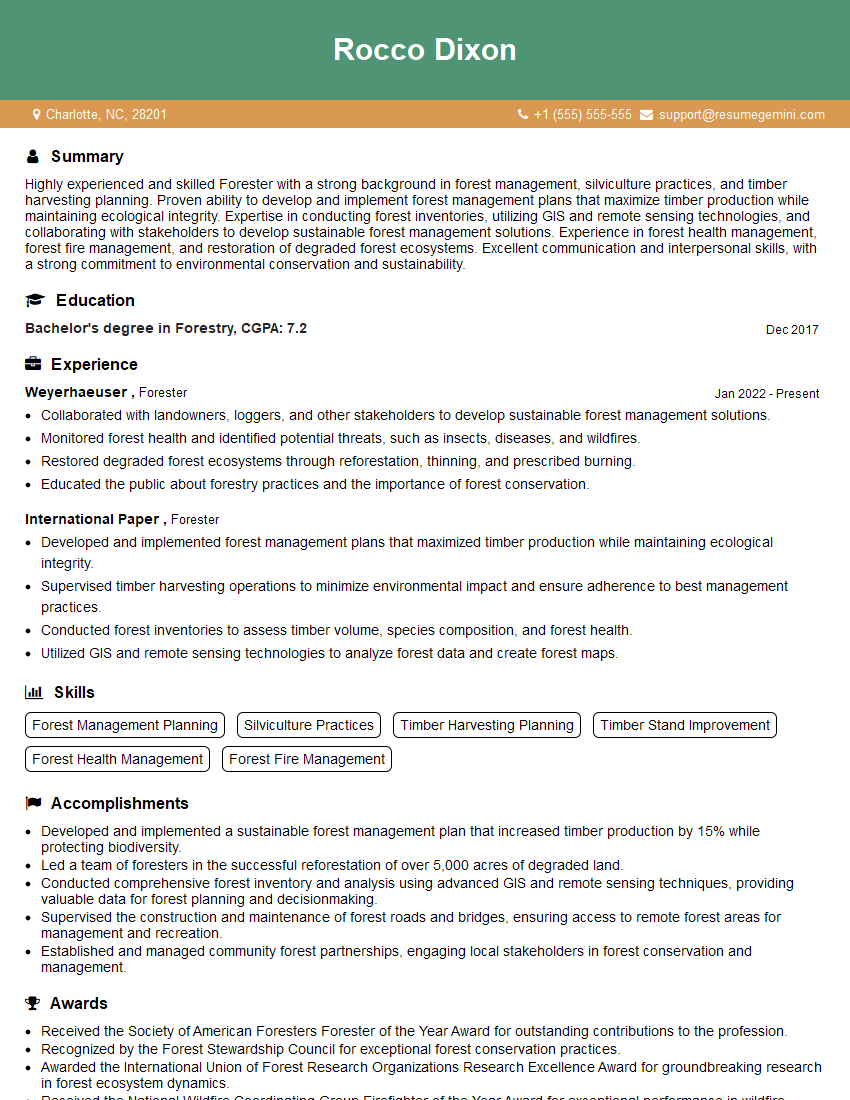
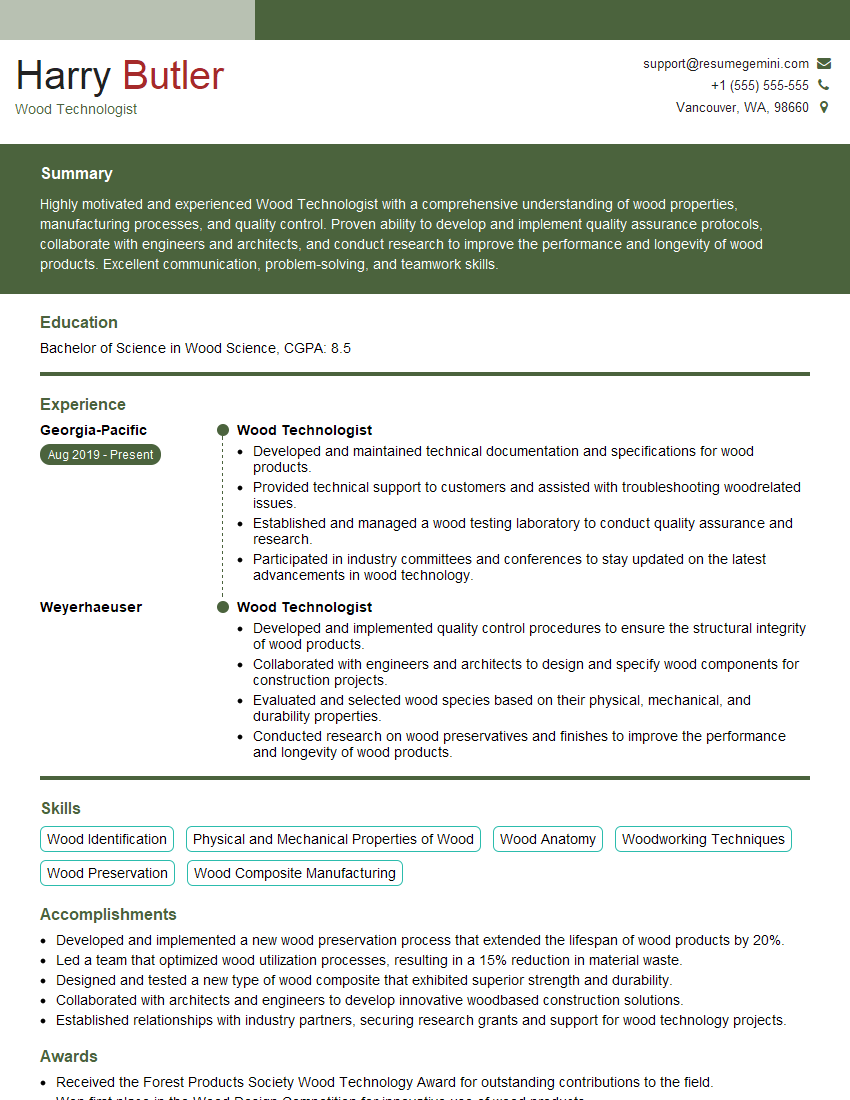
Mastering Wood Industry Standards is crucial for career advancement in this field. A strong understanding of these principles demonstrates your competence and commitment to excellence, opening doors to higher-paying positions and greater responsibility. To maximize your job prospects, create an ATS-friendly resume that effectively highlights your skills and experience. ResumeGemini is a trusted resource to help you build a professional and impactful resume that stands out. Examples of resumes tailored to Wood Industry Standards are available to guide you.
Explore more articles
Users Rating of Our Blogs
Share Your Experience
We value your feedback! Please rate our content and share your thoughts (optional).
What Readers Say About Our Blog
To the interviewgemini.com Webmaster.
Very helpful and content specific questions to help prepare me for my interview!
Thank you
To the interviewgemini.com Webmaster.
This was kind of a unique content I found around the specialized skills. Very helpful questions and good detailed answers.
Very Helpful blog, thank you Interviewgemini team.