Interviews are opportunities to demonstrate your expertise, and this guide is here to help you shine. Explore the essential Experience in splicing and terminating wires interview questions that employers frequently ask, paired with strategies for crafting responses that set you apart from the competition.
Questions Asked in Experience in splicing and terminating wires Interview
Q 1. Explain the difference between crimping and soldering wire terminations.
Crimping and soldering are two distinct methods for terminating wires, each with its own advantages and disadvantages. Crimping uses a crimping tool to compress a connector onto the wire, creating a mechanical connection. Soldering, on the other hand, uses heat and solder to create a metallic bond between the wire and the connector.
Think of crimping like fastening two pieces of metal with a clamp – it’s quick and relatively easy. Soldering is more like welding – it creates a stronger, more durable, and often more waterproof connection, but requires more skill and specialized equipment. Crimping is often preferred for speed and ease in applications where a less robust connection is acceptable, such as connecting wires in a low-voltage circuit. Soldering is favored when a higher level of reliability and conductivity is essential, such as in high-current applications or outdoor environments.
For instance, I once had to quickly connect several wires in a temporary lighting setup for an event. Crimping was the perfect solution due to its speed and simplicity. However, when wiring a critical component in a piece of machinery, soldering offered the superior reliability and resistance to vibration and shock.
Q 2. What safety precautions are essential when splicing and terminating wires?
Safety is paramount when working with electricity. Always start by de-energizing the circuit completely before commencing any work. Use appropriate personal protective equipment (PPE), including safety glasses to protect your eyes from sparks and flying debris, insulated gloves to prevent electrical shocks, and appropriate clothing to minimize risk. Ensure adequate ventilation, especially when soldering, as fumes can be hazardous. Never work alone; a second person should always be present for safety and assistance. Additionally, familiarize yourself with the specific hazards of the materials you are handling; for example, some chemicals used in soldering can be corrosive or toxic. Always dispose of waste materials responsibly and adhere to all relevant safety regulations.
One time, I was working on a live circuit, ignoring the safety protocols, and received a minor electric shock. That served as a stark reminder to always prioritize safety. Since then, I’ve become a strong advocate for meticulous safety practices and trained my team accordingly.
Q 3. Describe the process of terminating a coaxial cable.
Terminating a coaxial cable involves carefully preparing the cable and attaching a connector to ensure a proper signal transmission. The process generally involves stripping the outer jacket, carefully removing the dielectric, and stripping the inner conductor. Specific steps depend on the type of connector being used (e.g., F-type, BNC, RCA).
- Strip the outer jacket: Using a coaxial cable stripper, carefully remove the outer jacket, exposing the braided shielding.
- Remove dielectric: Gently remove the dielectric insulation from the inner conductor, exposing a small section of the central conductor.
- Crimp or solder: Attach the connector, ensuring proper alignment and a secure connection. Use a crimping tool for compression connectors, or a soldering iron for solder connections.
- Secure shielding: Ensure the braided shielding is properly connected to the connector to ensure grounding and signal integrity.
Proper coaxial cable termination is crucial for applications like cable television, internet, and RF signal transmission. A poorly terminated cable can lead to signal loss, interference, and a degraded connection.
Q 4. How do you identify different types of wire gauges?
Wire gauges refer to the diameter of a wire, with larger numbers indicating thinner wires. The American Wire Gauge (AWG) system is commonly used in North America. You can identify different wire gauges by using a wire gauge tool, which has a series of numbered holes that correspond to different AWG sizes. Alternatively, you can use a wire gauge chart or a digital caliper to accurately measure the diameter of the wire. This diameter then can be cross-referenced against a AWG chart to ascertain the gauge.
For example, 12 AWG wire is thicker and capable of carrying more current than 22 AWG wire. Choosing the correct gauge is crucial for ensuring sufficient current carrying capacity and preventing overheating or damage to the wire.
Q 5. What are the common types of wire connectors?
There are numerous types of wire connectors, each suited to specific applications and wire types. Some common examples include:
- Wire nuts: Used for joining multiple wires of the same size and material.
- Crimp connectors: These connectors come in various sizes and shapes. They’re used to attach wires to terminals and require a crimping tool for proper installation.
- Solderless connectors: These connectors are similar to crimp connectors, but use a clamping mechanism to create the connection.
- Screw terminals: They are often used in industrial settings to create a secure and lasting connection, particularly for higher current applications.
- Splices and connectors for fiber optics: These are specialized connectors that require specific tools and techniques due to the delicate nature of fiber optic cables.
Selecting the appropriate connector is vital to ensuring a safe and reliable electrical connection. Incorrect selection could result in loose connections, arcing, potential fire hazards, and system failures.
Q 6. Explain the steps involved in splicing fiber optic cables.
Splicing fiber optic cables is a more specialized procedure than splicing copper wires and requires precision and specialized equipment. The process generally involves:
- Prepare the fibers: Clean the ends of the fiber optic cables and cleave them using a fiber optic cleaver to create a perfectly flat and perpendicular surface.
- Align the fibers: Carefully align the fibers within a fusion splicing machine or mechanical splice. This alignment is crucial for optimal light transmission.
- Fuse or splice: Either use a fusion splicer to melt the ends of the fibers together, creating a strong and permanent bond (fusion splicing), or use a mechanical splice to physically connect the fibers.
- Test the splice: Use an optical power meter to verify the loss of optical signal across the splice.
Fiber optic splicing is essential for telecommunications, high-speed data transmission, and other applications demanding high bandwidth and minimal signal loss. Poor splicing can lead to significant signal degradation and network outages. This demands accuracy and use of proper specialized tools, not the same as with copper wire.
Q 7. What tools are needed for splicing and terminating various types of wires?
The tools needed for splicing and terminating wires vary depending on the type of wire and the termination method. Essential tools include:
- Wire strippers: For removing insulation from wires without damaging the conductors.
- Crimping tools: For securely attaching crimp connectors.
- Soldering iron and solder: For creating soldered connections.
- Screwdrivers: For working with screw terminals.
- Voltage testers: To ensure the circuit is de-energized before working.
- Multimeter: To test the continuity and integrity of the connection.
- Coaxial cable stripper and connectors: For working with coaxial cables.
- Fiber optic cleaver, fusion splicer, or mechanical splicer: For splicing fiber optic cables.
- Safety glasses, insulated gloves, and other appropriate PPE: To protect the technician.
Having the right tools is crucial for efficient and safe work. I always make sure my toolbox is fully stocked with the necessary equipment before embarking on any wiring project. A poorly equipped technician risks inefficiency, damage to equipment, or even injury.
Q 8. How do you test the continuity of a wire after splicing or termination?
Testing the continuity of a wire after splicing or termination is crucial to ensure a secure and functional electrical connection. We use a multimeter, set to the continuity test mode (often symbolized by a diode icon). The multimeter will usually beep if there’s a continuous path.
Here’s how I do it:
- Connect the multimeter leads: One lead to one end of the spliced/terminated wire, and the other lead to the other end.
- Check for continuity: A continuous tone or a low resistance reading (ideally close to zero ohms) indicates a good connection. A lack of tone or a high resistance reading suggests a break in the wire or a poor connection.
- Visual inspection: Always visually inspect the splice or termination for any loose wires, insufficient solder, or other potential problems. This can help pinpoint the exact location of the fault if the continuity test fails.
For example, if I’m working on a car’s wiring harness and after splicing two wires together, I will always test the continuity to make certain that the circuit is complete and the electrical signal can flow unhindered. A failed continuity test would mean I need to redo the splice, ensuring clean, secure contact and sufficient solder.
Q 9. Describe your experience with different wire insulation types.
My experience encompasses a wide variety of wire insulation types. The choice of insulation depends heavily on the application; voltage, temperature, and environmental factors all play a significant role.
- PVC (Polyvinyl Chloride): This is a common, cost-effective insulation used for general-purpose wiring in low-voltage applications. It’s relatively easy to work with but has limitations in high-temperature or harsh environments.
- XLPE (Cross-Linked Polyethylene): This is a superior insulation offering better heat resistance and flexibility compared to PVC. It’s frequently used in power cables for higher voltage applications.
- Teflon (PTFE): Teflon insulation boasts excellent high-temperature resistance and is often found in applications requiring exposure to extreme heat or chemicals.
- Silicone Rubber: This insulation provides great flexibility and resistance to high temperatures and chemicals, making it suitable for demanding environments.
- Thermoplastic Elastomers (TPE): Offers good flexibility, abrasion resistance and is often color-coded for easy identification.
In my previous role, I worked extensively with XLPE insulated cables in a high-voltage power distribution system. Understanding the specific properties of each insulation type is essential to choosing the right cable for the job and ensuring safe and reliable performance.
Q 10. What are the common causes of faulty wire terminations?
Faulty wire terminations stem from several common causes. The most frequent culprits are:
- Insufficient stripping: Not removing enough insulation can lead to poor contact and increased resistance.
- Damaged conductors: Nicked or broken strands within the wire compromise conductivity and can create hotspots.
- Poor crimping or soldering: Improperly crimped connectors or poorly soldered joints result in weak, unreliable connections.
- Corrosion: Oxidation on the wire or connector can increase resistance and degrade the connection.
- Incorrect wire gauge: Using a wire gauge incompatible with the connector or application creates stress and potential failure points.
- Loose connections: Vibrations or movement can loosen connections over time.
For instance, a poorly soldered connection on a circuit board might lead to intermittent failure, while a corroded terminal block in a control panel could result in a complete circuit outage. Careful attention to detail during each step of the termination process is crucial to prevent these issues.
Q 11. How do you troubleshoot a faulty wire connection?
Troubleshooting a faulty wire connection involves a systematic approach. I begin with:
- Visual inspection: Checking for obvious damage, loose connections, or signs of corrosion.
- Continuity testing: Using a multimeter to check for a continuous path through the wire.
- Voltage testing: (with appropriate safety precautions) Measuring voltage at various points to identify where the circuit is interrupted.
- Resistance testing: Measuring resistance to identify high-resistance points in the circuit.
- Tracing the circuit: Following the wire’s path to pinpoint the exact location of the fault.
- Component testing: If the problem isn’t with the wiring itself, checking the associated components (e.g., switches, relays) for malfunctions.
For example, if a light fixture isn’t working, I might first check the bulb. If the bulb is fine, I’d use a multimeter to test the continuity of the wiring from the power source to the fixture and then check for voltage at different points in the circuit to isolate the fault. This methodical approach helps me rapidly identify and rectify the problem.
Q 12. What are the safety regulations you adhere to when working with high-voltage wires?
Safety is paramount when working with high-voltage wires. My adherence to safety regulations includes:
- Lockout/Tagout procedures: De-energizing the circuit and using lockout/tagout devices to prevent accidental re-energization.
- Personal Protective Equipment (PPE): Wearing appropriate PPE, including insulated gloves, safety glasses, and arc flash suits (where necessary).
- Proper grounding: Ensuring that the system is properly grounded to prevent electrical shock.
- Working with a partner: Never working alone on high-voltage systems, allowing for immediate assistance in case of an emergency.
- Following company safety protocols: Adhering strictly to the company’s safety procedures and obtaining any necessary permits or approvals.
- Awareness of surroundings: Maintaining situational awareness to avoid accidental contact with other energized equipment or personnel.
Working with high voltage necessitates extreme caution and meticulous attention to detail. A moment of carelessness could have severe consequences.
Q 13. Explain the importance of proper wire stripping techniques.
Proper wire stripping techniques are crucial for ensuring a reliable and safe electrical connection. Improper stripping can damage the wire strands, leading to poor contact, increased resistance, and potential safety hazards.
Here are key aspects of proper wire stripping:
- Using the correct tool: Using a wire stripper designed for the specific wire gauge to prevent damaging the conductor.
- Stripping to the correct length: Removing only the necessary amount of insulation to ensure proper contact with the terminal or connector without exposing too much of the bare wire.
- Avoiding nicking or damaging the conductors: Stripping cleanly and carefully to avoid damaging the wire strands, which can lead to poor connections and potential overheating.
- Proper preparation of the wire ends: Keeping the stripped ends clean and free from debris or oxidation ensures good electrical contact.
Think of it like preparing wood for a perfect joinery. If you don’t remove just the right amount of material carefully, you won’t get a strong joint. Similarly, careful wire stripping ensures that the connection is secure and reliable.
Q 14. How do you handle different wire colors and their coding systems?
Wire color coding systems vary depending on the application and regional standards, but the underlying principle is consistent: to provide clear identification and facilitate quick circuit tracing.
I am familiar with several coding systems, including those specified in various industry standards (e.g., NEC in the US). I carefully reference any wiring diagrams or schematics before beginning any work. My process involves:
- Identifying the system: Determining the specific color coding system used in the given project or electrical panel.
- Consulting diagrams: Always referring to the appropriate wiring diagrams or schematics to understand the function of each wire and its corresponding color code.
- Using a color code chart (if necessary): If working on a less familiar system, I’ll refer to a standard color code chart to confirm the wire’s designation.
- Consistent labeling: Adding additional labels (especially on complex systems) can help clarify wiring assignments and aid in future troubleshooting.
Incorrect wire identification can lead to serious problems. For instance, connecting a neutral wire to a hot wire could cause a short circuit or fire, so accurate color identification and documentation are crucial.
Q 15. What are your experiences with different types of cable jackets?
My experience encompasses a wide range of cable jacket types, each demanding a slightly different approach to splicing and termination. Understanding the jacket material is crucial for selecting the appropriate tools and techniques. For instance:
PVC (Polyvinyl Chloride): This is a common, relatively easy-to-work-with jacket. It’s flexible and generally requires standard wire strippers.
XLPE (Cross-Linked Polyethylene): More durable and resistant to heat and chemicals than PVC, XLPE requires specialized tools as it can be tougher to strip cleanly. I’ve found using a rotary stripper with a proper setting minimizes damage to the inner conductors.
Teflon (PTFE): Used in high-temperature applications, Teflon jackets are very slippery and require meticulous care during stripping to avoid nicking the conductors. I often use a specialized Teflon stripper to prevent damage.
Hypalon: This is a very tough, abrasion-resistant material commonly found in industrial settings. It requires sharp, heavy-duty wire strippers to avoid tearing.
Recognizing the jacket type allows me to choose the right tools and prevent damage to the cable during the process, ensuring a clean and efficient splice or termination.
Career Expert Tips:
- Ace those interviews! Prepare effectively by reviewing the Top 50 Most Common Interview Questions on ResumeGemini.
- Navigate your job search with confidence! Explore a wide range of Career Tips on ResumeGemini. Learn about common challenges and recommendations to overcome them.
- Craft the perfect resume! Master the Art of Resume Writing with ResumeGemini’s guide. Showcase your unique qualifications and achievements effectively.
- Don’t miss out on holiday savings! Build your dream resume with ResumeGemini’s ATS optimized templates.
Q 16. How do you prepare a wire for splicing or termination?
Preparing a wire for splicing or termination involves a few critical steps:
Identify the wire type: Determining the gauge, material (copper, aluminum, etc.), and number of conductors is essential for selecting the correct tools and termination methods.
Measure and mark: Accurately measure the required length for stripping. Using a marker or scribe helps maintain accuracy.
Strip the insulation: Using appropriate wire strippers (according to the jacket type and wire gauge), carefully remove the insulation, exposing only the required length of the conductor. Avoid nicking the conductor; this can compromise the connection’s integrity. I often use a visual inspection with magnification to ensure a clean strip.
Prepare the conductor: This may involve cleaning the conductor (using sandpaper or a wire brush if necessary) to remove any oxidation or debris, especially critical for good electrical contact. I frequently use an anti-oxidant paste to ensure a durable, low-resistance contact.
Careful preparation is vital for reliable and safe connections.
Q 17. What are the benefits and drawbacks of different splicing methods?
Various splicing methods offer unique advantages and disadvantages:
Twisting and soldering: This traditional method offers good conductivity, but soldering requires specialized equipment and skill, and it can be time-consuming. It’s also not as mechanically robust as other methods.
Crimping: This method is faster and generally more robust mechanically, relying on compression to create a secure connection. However, the quality depends heavily on the proper crimping tool and technique. An improperly crimped connection can lead to high resistance and failure.
Splice connectors: These pre-fabricated connectors simplify the process, particularly for novice technicians. However, the quality can vary greatly depending on the brand and type of connector, and they may be less suitable for high-current applications.
The choice of splicing method is determined by factors such as the wire gauge, the application requirements (current carrying capacity, mechanical stress), and the available tools and expertise. In my experience, crimping offers a great balance of speed, reliability and robustness for a wide range of applications, given proper tool usage and quality connectors.
Q 18. Describe your experience with using wire strippers and crimpers.
I have extensive experience using a variety of wire strippers and crimpers, adapting my tool selection based on the job at hand. For example:
Wire strippers: I use both manual and automatic wire strippers depending on the volume and type of work. Manual strippers provide greater precision for smaller gauge wires, while automatic strippers are much more efficient for larger-scale projects. I’m proficient with both, selecting the tools based on the wire type and the demands of the project.
Crimpers: I’ve used both hand crimpers and hydraulic crimpers, again depending on the job and wire gauge. Hand crimpers are suitable for smaller wires and lighter-duty applications, while hydraulic crimpers are necessary for larger conductors that require significantly more force for a proper crimp. Accurate crimp depth is key; I always calibrate my crimpers regularly and visually inspect each crimp to ensure a solid connection.
Proper tool selection and maintenance are critical to achieving consistent and reliable results.
Q 19. How do you ensure a proper connection between wires in a splice?
Ensuring a proper connection involves several checks and techniques:
Visual inspection: After stripping and preparing the wires, I meticulously check for any nicks, cuts, or damage to the conductors. This ensures optimal contact between the conductors, minimizing resistance and potential failure.
Proper crimping (if applicable): A fully crimped connector shows no visible gaps or indentations. If using a hand crimper, I apply firm and even pressure. I visually check the crimped section for defects to verify that the connection has been made correctly.
Continuity testing: I always use a multimeter to test the continuity of the splice, verifying a low resistance reading indicates a good connection. A high resistance reading may indicate a faulty connection that needs further attention.
Insulation: Finally, proper insulation is crucial to prevent short circuits or exposure of the conductors to moisture or damage. I use heat-shrink tubing or other appropriate insulation materials and double-check the integrity of the insulation.
This multi-faceted approach minimizes the risk of connection failure.
Q 20. What are the differences between twisted pair, coaxial, and fiber optic cables?
These cable types have distinct characteristics:
Twisted Pair: Consists of multiple pairs of insulated copper wires twisted together. The twisting reduces electromagnetic interference (EMI). Commonly used in telephone lines and Ethernet networks. Splicing and termination typically involve RJ45 connectors or other modular plugs.
Coaxial Cable: Features a central conductor surrounded by an insulator, a conductive shield, and an outer jacket. The shield protects the signal from EMI and allows for higher bandwidth than twisted pair. Used in cable television, internet connections, and radio frequency applications. Termination typically involves connectors like F-type or BNC.
Fiber Optic Cable: Transmits data as pulses of light through a thin glass or plastic fiber. Offers significantly higher bandwidth and longer transmission distances than copper cables. Immune to EMI. Splicing involves precisely aligning the fiber ends and using specialized fusion splicers or mechanical connectors. Terminations are often with specialized connectors like SC, ST, or LC.
Each cable type requires specialized tools and techniques for splicing and termination, reflecting their different physical and electrical properties.
Q 21. How do you manage the slack in a cable after termination?
Managing cable slack after termination is crucial for preventing strain on the connection and ensuring longevity. Here’s how I approach it:
Neatly coiled excess: I neatly coil the excess cable, avoiding kinks or sharp bends that can damage the cable or cause premature failure. Proper coiling distributes the stress evenly.
Secure fastening: I use cable ties, straps, or other appropriate methods to secure the coiled cable to a nearby structure or mounting point, preventing it from dangling or becoming a tripping hazard.
Strain relief: A strain relief is often necessary to prevent stress on the termination point. This might involve using a cable clamp or a specialized boot to distribute the force over a larger area.
Proper routing: Careful cable routing helps avoid excess bending or tension, keeping the cables away from sharp edges and potential sources of damage.
By following these steps, I ensure the cable is protected and the termination remains secure and reliable for the long term.
Q 22. Explain the importance of color coding in electrical wiring.
Color coding in electrical wiring is absolutely crucial for safety and efficiency. It’s like a visual language that instantly tells you which wire carries what kind of current – whether it’s hot, neutral, ground, or part of a specific circuit. This immediate identification prevents accidental shocks, short circuits, and incorrect connections. Without it, troubleshooting and maintenance become incredibly dangerous and time-consuming.
- Safety: Quickly identifying the hot wire (usually black or red) prevents accidental contact and potential electrocution.
- Efficiency: Color coding speeds up installation and troubleshooting, minimizing downtime and errors.
- Compliance: Most electrical codes mandate specific color schemes for safety and standardization.
For example, in the US, black is typically hot, white is neutral, and green or bare copper is ground. These colors aren’t arbitrary; they’re internationally recognized to facilitate collaboration and understanding between electricians.
Q 23. Describe a time you had to troubleshoot a complex wiring problem.
During a renovation project, I encountered a perplexing wiring issue in an older building. The previous electrician hadn’t followed a consistent color code, and several wires had been improperly spliced. The circuit powering the kitchen outlets was intermittent, and the lights in the adjacent hallway flickered constantly.
My troubleshooting involved systematically tracing each wire back to its source using a wire tracer and multimeter. I meticulously documented the existing wiring, carefully noting the colors and their connections. I discovered that a faulty splice in the neutral wire was the main culprit, causing uneven current distribution. After carefully replacing the splice using proper techniques (stripping the correct amount of insulation, twisting the wires securely, and using appropriately sized wire connectors), the problem was resolved. This highlighted the vital role of proper documentation and meticulous attention to detail in complex wiring scenarios.
Q 24. What is your experience with different types of wire connectors (e.g., RJ45, BNC)?
I have extensive experience with a variety of wire connectors, including RJ45 (Ethernet), BNC (coaxial), and various terminal blocks. Understanding the specific requirements of each connector is key. For example, RJ45 connectors require precise wire crimping and a specific T568A or T568B wiring standard for proper network connectivity. A slight error can lead to network failures. BNC connectors, used for coaxial cables, require a firm connection to ensure a strong signal without signal loss. Terminal blocks are versatile and used for various applications, offering easy connection and disconnection of wires.
Proper preparation, using the right tools, and attention to detail are paramount in achieving reliable connections with these diverse connectors. For example, crimping tools for RJ45 need to be calibrated for proper pressure and ensure good contact with all eight wires. Improper crimping will lead to signal loss and/or connection failure.
Q 25. How do you ensure the integrity of a terminated connection?
Ensuring the integrity of a terminated connection is paramount. It’s all about minimizing resistance and maximizing signal transmission (for data) or current carrying capacity (for power). Several steps are crucial:
- Proper Stripping: Carefully strip the insulation to expose the correct amount of wire, avoiding nicking the conductor.
- Secure Connections: Use the appropriate wire connectors and ensure they create a strong, mechanically secure connection. Avoid loose wires.
- Testing: Use a multimeter to test the continuity of the connection and check for any shorts or opens. For data connections, testing the signal transmission using the appropriate equipment is essential.
- Visual Inspection: Always visually inspect the connection to make sure it’s clean, and the wires are properly seated.
- Strain Relief: Secure the connection to prevent stress or movement that could damage it over time.
Think of it like building a strong bridge: every component needs to be properly assembled and tested to ensure stability and longevity.
Q 26. What are the industry standards for wire splicing and termination?
Industry standards for wire splicing and termination are crucial for safety and reliability. These standards vary depending on the application (residential, commercial, industrial) and geographic location, but some key aspects are consistent:
- National Electrical Code (NEC) (US): A comprehensive set of standards governing electrical installations in the United States.
- International Electrotechnical Commission (IEC): Develops international standards for electrical equipment and installations.
- Local Regulations: Always check local building codes and regulations for specific requirements in your area.
These standards typically cover wire gauge selection, connector types, splicing methods, grounding practices, and safety precautions. Adherence to these standards is non-negotiable, ensuring consistent quality and reducing risks.
Q 27. Describe your experience working with different types of termination hardware.
My experience encompasses a broad range of termination hardware, including:
- Wire Nuts: Commonly used for connecting wires of the same gauge in residential applications.
- Split-bolt Connectors: Suitable for joining larger wires or where a more robust connection is needed.
- Crimp Connectors: Offer secure, vibration-resistant connections, particularly useful in automotive or industrial settings.
- Terminal Blocks: Versatile for various wiring applications, offering easy connection and disconnection.
- Heat Shrink Tubing: Provides insulation and strain relief to splices, protecting them from environmental factors.
The selection of appropriate hardware depends heavily on the wire gauge, application, and environmental conditions. For example, in high-vibration environments, crimp connectors would be more suitable than wire nuts.
Q 28. How would you handle a situation where you encounter damaged wiring during a termination job?
Encountering damaged wiring during a termination job necessitates careful evaluation and a methodical approach:
- Safety First: Ensure the power is turned off and the area is safe before proceeding. Always use appropriate personal protective equipment (PPE).
- Assess the Damage: Carefully inspect the extent of the damage. Is it just insulation damage, or is the conductor compromised?
- Repair or Replace: If the conductor is damaged, the wire needs to be replaced, ensuring the replacement wire matches the gauge and type of the original. If only the insulation is damaged, a careful repair using electrical tape or heat-shrink tubing may suffice.
- Proper Termination: Once the wire is repaired or replaced, proceed with the termination process using proper techniques and appropriate hardware.
- Testing: Thoroughly test the connection to ensure continuity and the absence of shorts or opens.
- Documentation: Document any repairs or replacements to ensure future maintenance and troubleshooting is easier.
Ignoring damaged wiring can have severe consequences. Replacing or properly repairing damaged wiring ensures a safe and reliable connection.
Key Topics to Learn for Experience in splicing and terminating wires Interview
- Wire Stripping Techniques: Understanding various methods for safely and efficiently stripping wire insulation without damaging the conductor. This includes selecting the appropriate tools for different wire gauges and insulation types.
- Splicing Methods: Mastering different splicing techniques such as Western Union splice, twist-on connectors, crimp connectors, and solder splicing. Know the strengths and weaknesses of each method and when to apply them.
- Termination Methods: Familiarity with various termination methods including ring terminals, lug terminals, and screw terminals. Understanding proper torque specifications and the importance of secure connections.
- Wire Gauges and Ampacity: Understanding the relationship between wire gauge, ampacity (current carrying capacity), and application. Knowing how to select the appropriate wire gauge for a given application to ensure safety and proper function.
- Color Codes and Identification: Proficiency in identifying and interpreting wire color codes to ensure proper circuit connectivity and safety. Understanding industry standards and variations.
- Safety Procedures: Demonstrating a thorough understanding of safety procedures related to working with electricity, including lockout/tagout procedures, proper use of personal protective equipment (PPE), and hazard identification.
- Troubleshooting and Diagnostics: Ability to troubleshoot common wiring problems, such as short circuits, open circuits, and poor connections. Understanding diagnostic techniques to identify and rectify issues.
- Code Compliance: Familiarity with relevant electrical codes and regulations to ensure compliance and safe installation practices.
Next Steps
Mastering the skills of splicing and terminating wires is crucial for advancement in many technical fields. A strong foundation in these techniques demonstrates attention to detail, problem-solving ability, and a commitment to safety – all highly valued attributes in the workplace. To maximize your job prospects, creating a compelling and ATS-friendly resume is essential. ResumeGemini is a trusted resource that can help you build a professional resume that highlights your skills and experience effectively. Examples of resumes tailored to showcasing experience in splicing and terminating wires are available to guide you through the process.
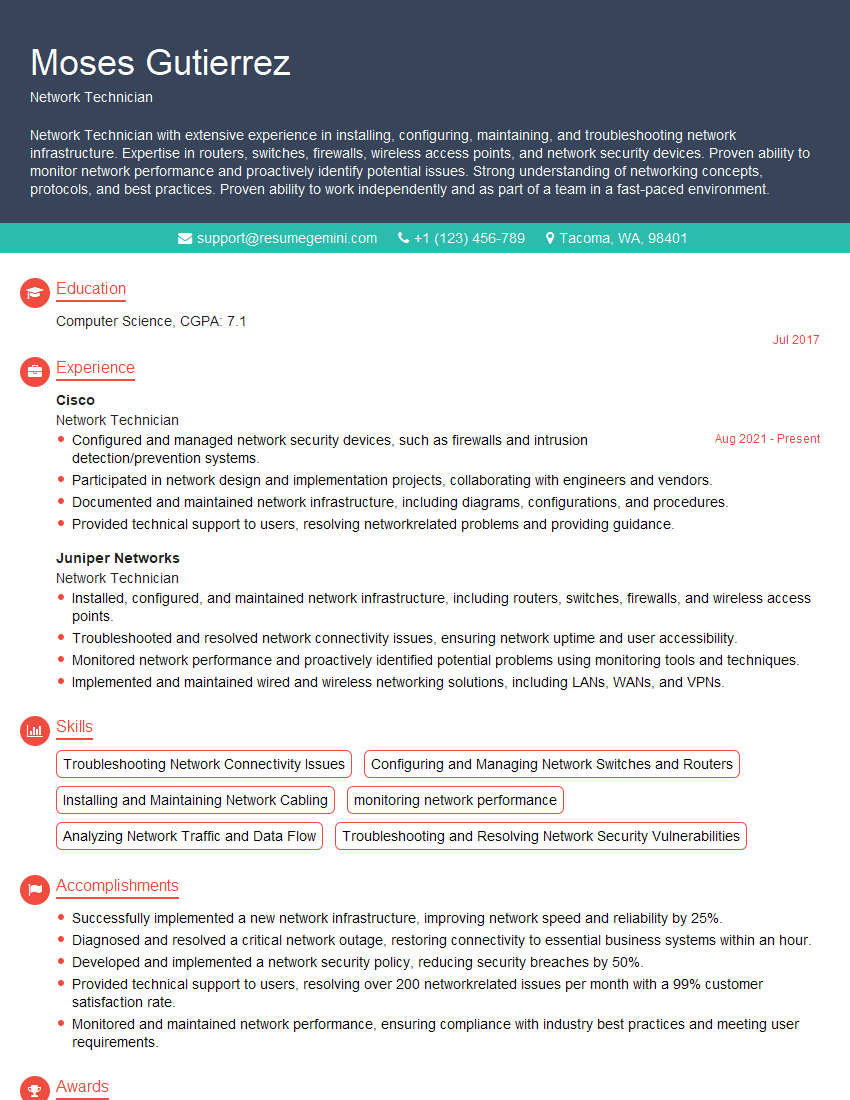
Network Technician Resume Sample

Maintenance Technician Resume Sample

Electronics Technician Resume Sample
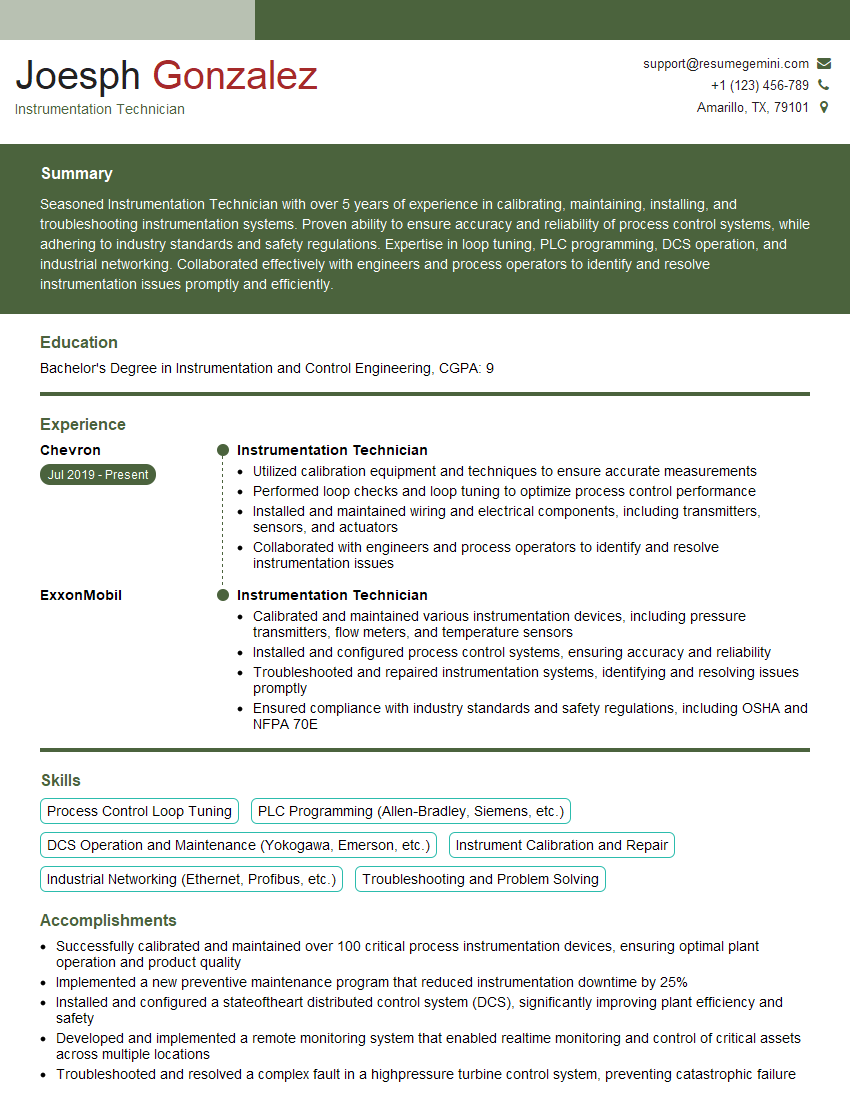
Instrumentation Technician Resume Sample
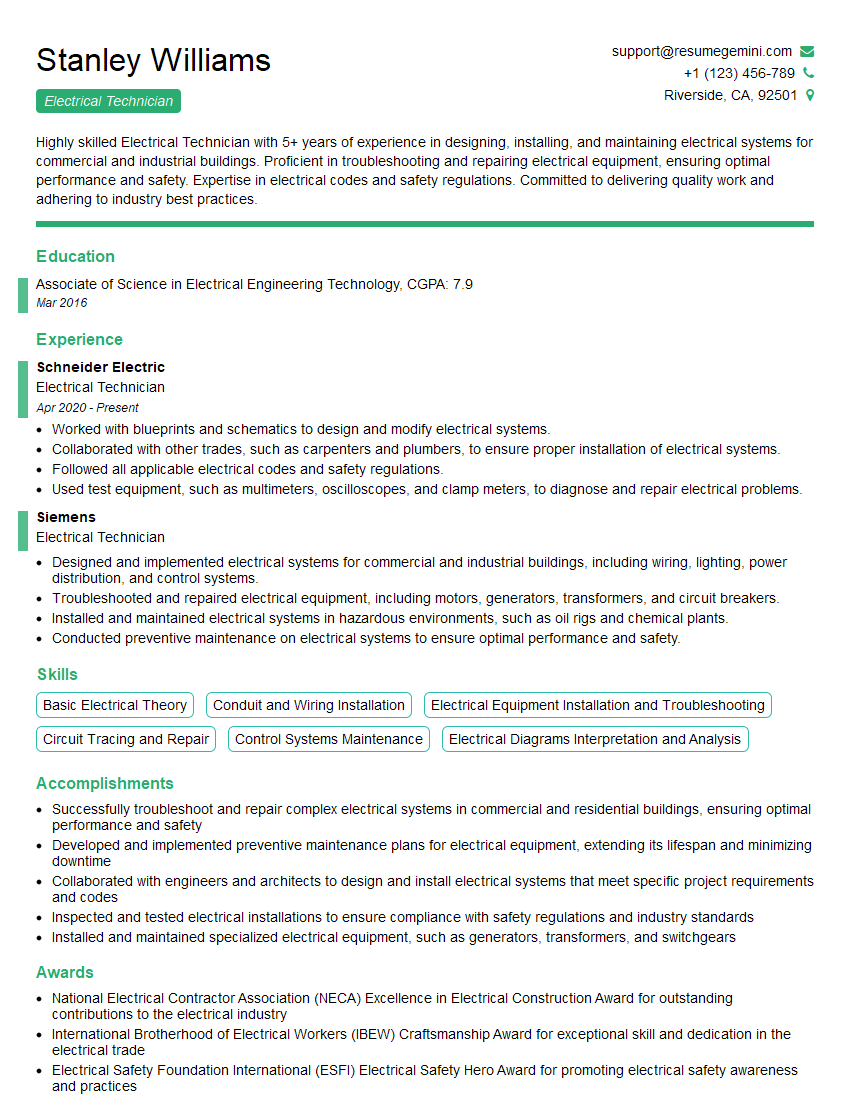
Electrical Technician Resume Sample

Field Service Technician Resume Sample

Line Technician Resume Sample
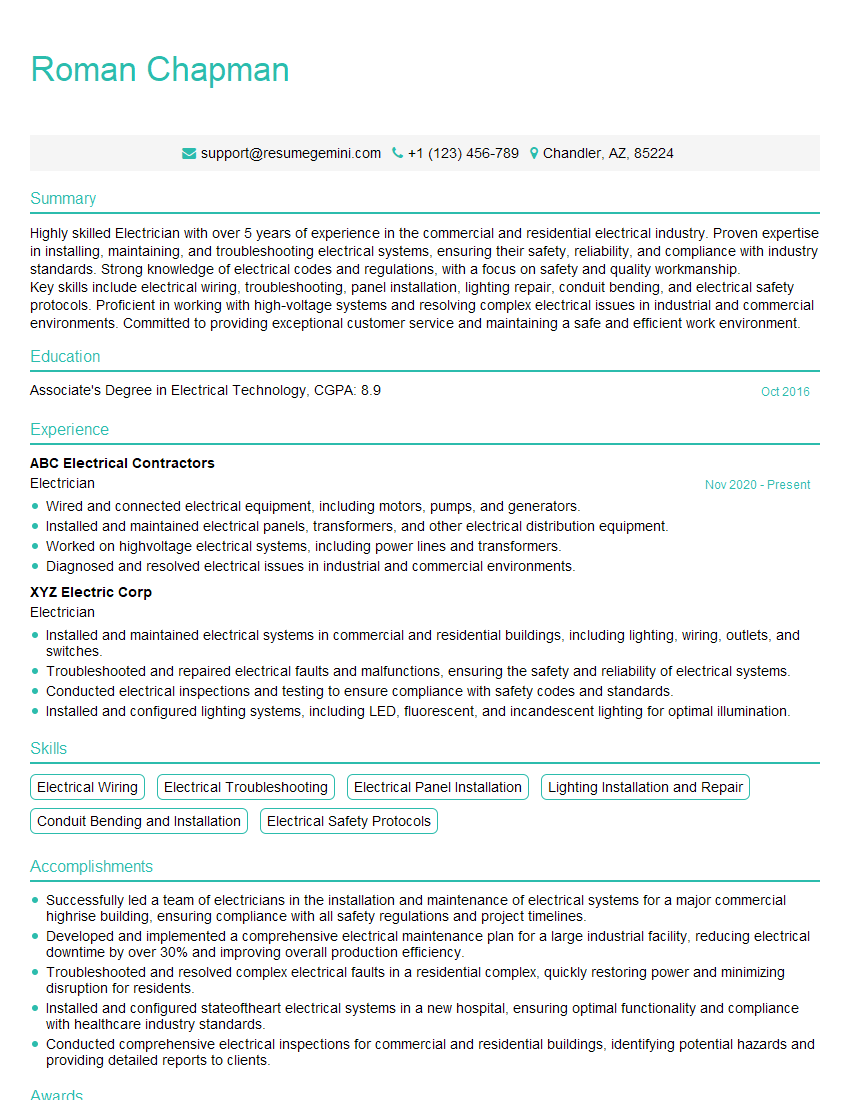
Electrician Resume Sample
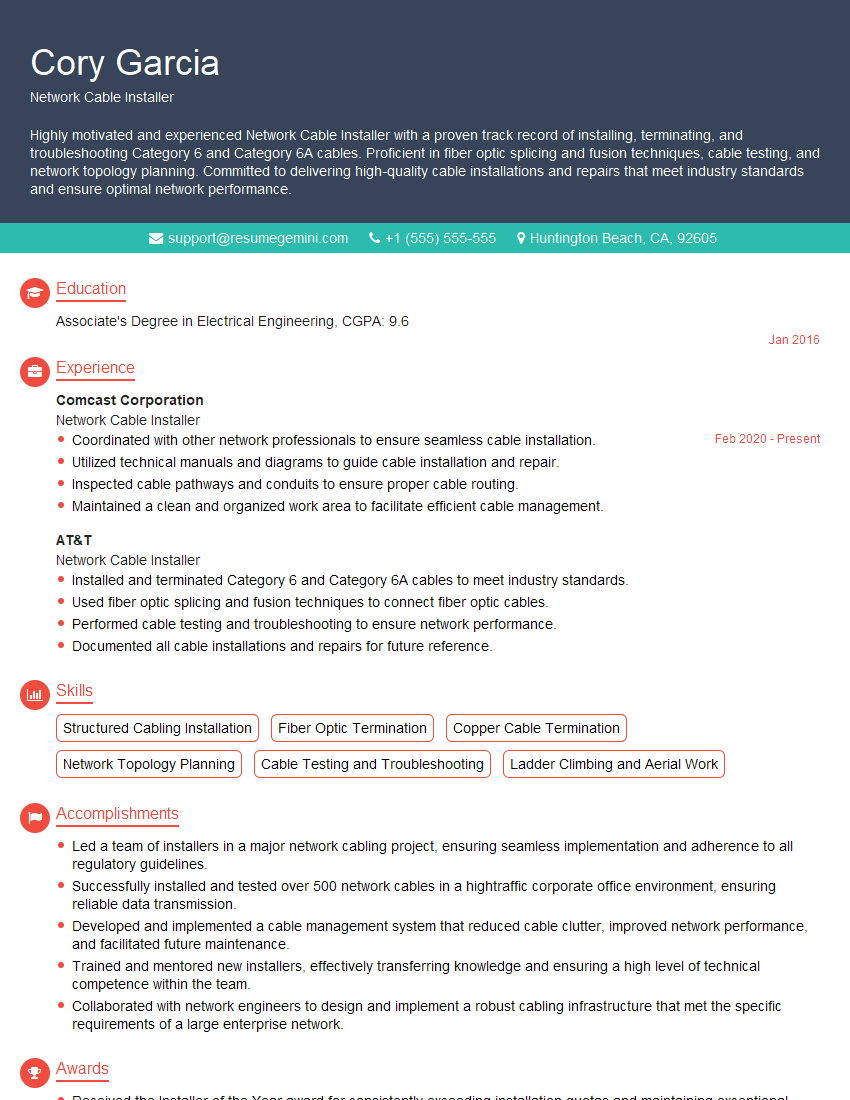
Network Cable Installer Resume Sample
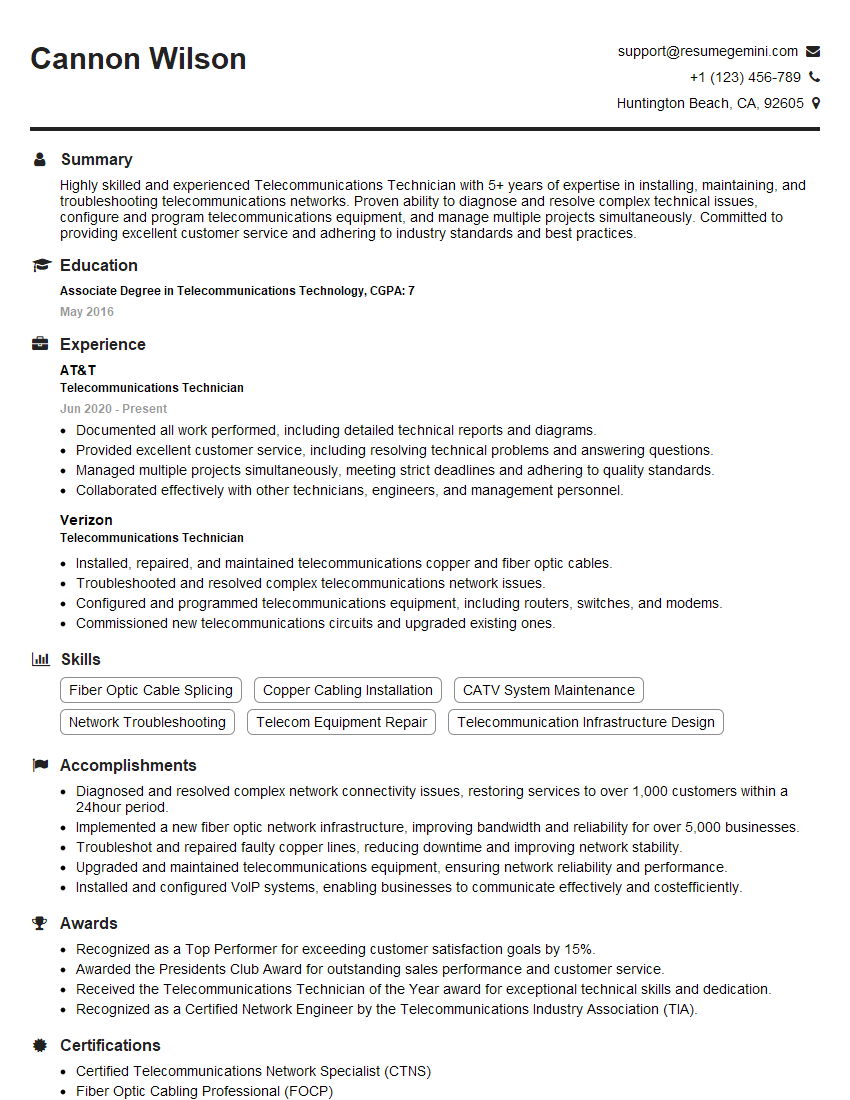
Telecommunications Technician Resume Sample

Control Systems Technician Resume Sample

Wireman Resume Sample
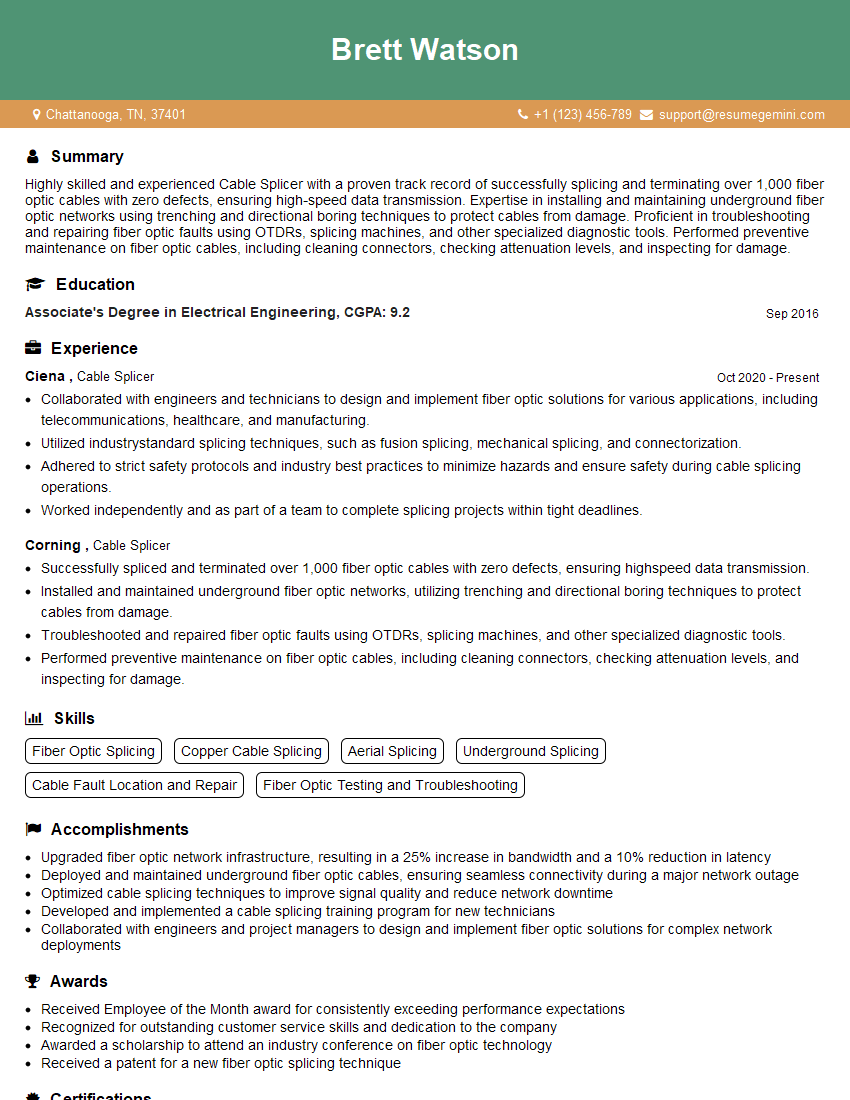
Cable Splicer Resume Sample
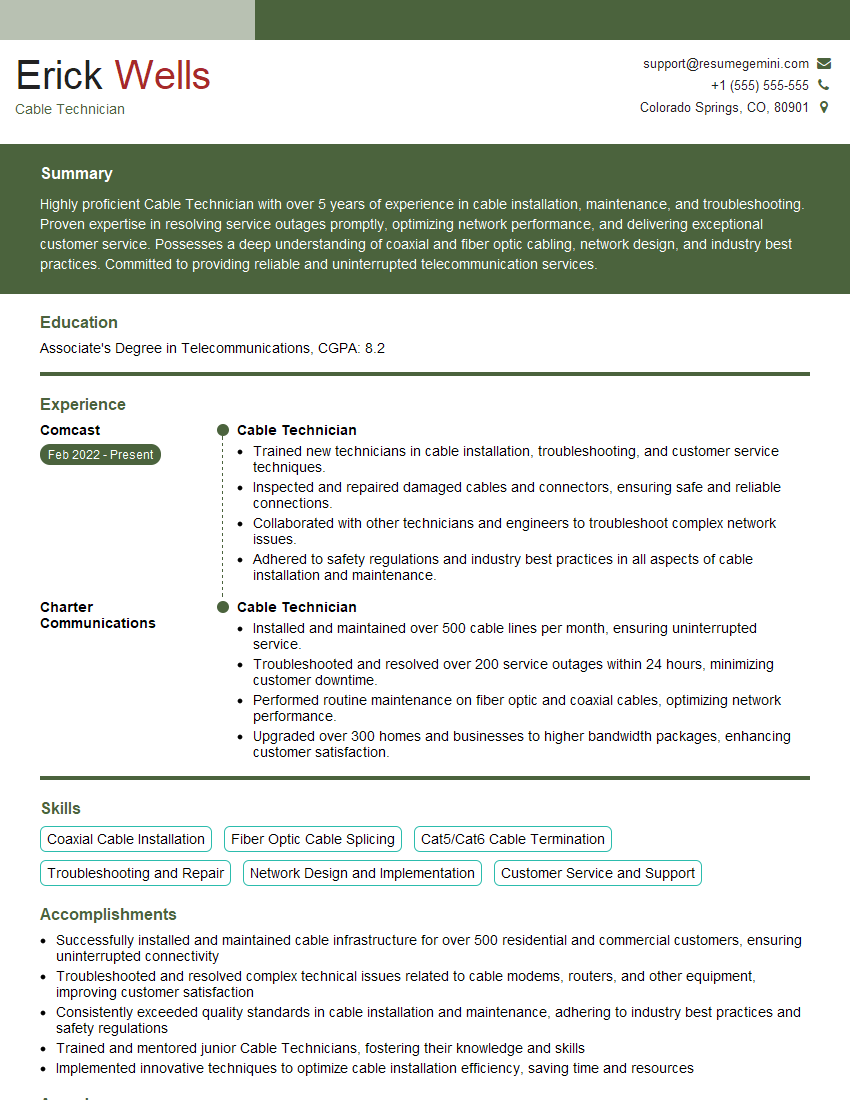
Cable Technician Resume Sample

Fiber Optic Splicer Resume Sample

Splicing Technician Resume Sample
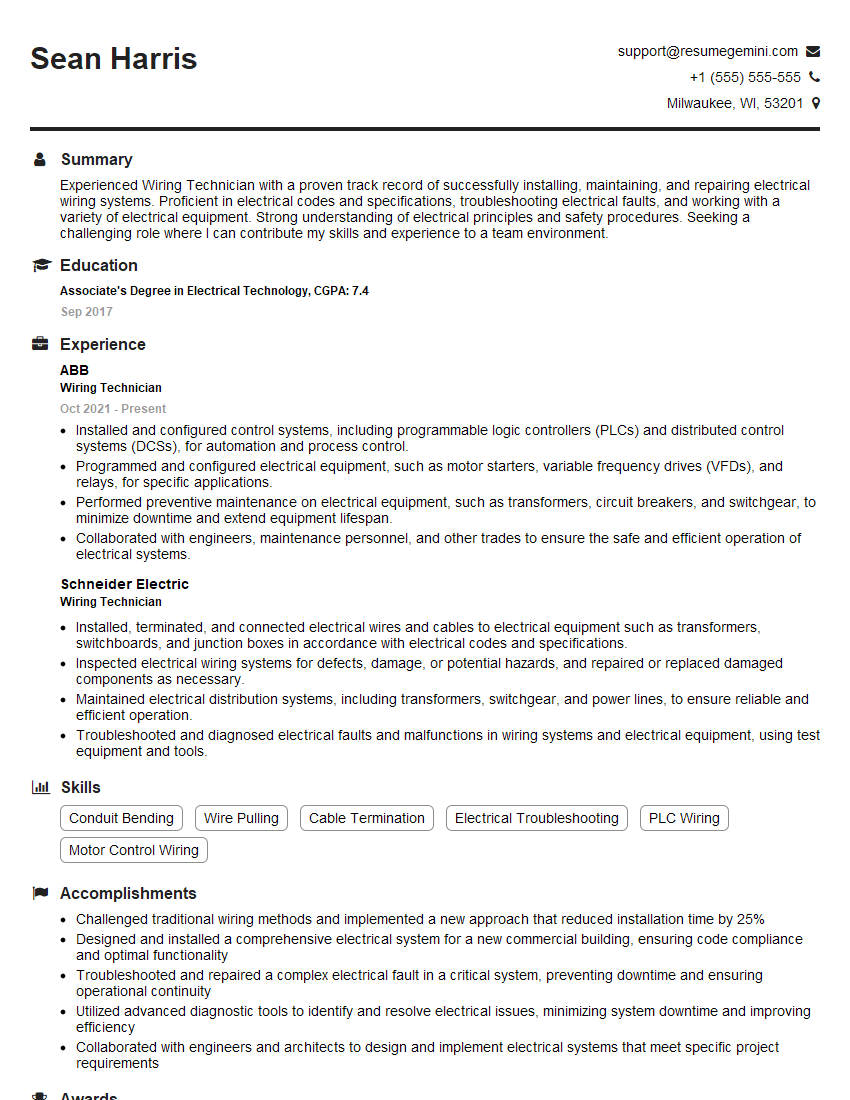
Wiring Technician Resume Sample
- Network Technician
- Maintenance Technician
- Electronics Technician
- Instrumentation Technician
- Electrical Technician
- Field Service Technician
- Line Technician
- Electrician
- Network Cable Installer
- Telecommunications Technician
- Control Systems Technician
- Wireman
- Cable Splicer
- Cable Technician
- Fiber Optic Splicer
- Splicing Technician
- Wiring Technician
Explore more articles
Users Rating of Our Blogs
Share Your Experience
We value your feedback! Please rate our content and share your thoughts (optional).
What Readers Say About Our Blog
To the interviewgemini.com Webmaster.
Very helpful and content specific questions to help prepare me for my interview!
Thank you
To the interviewgemini.com Webmaster.
This was kind of a unique content I found around the specialized skills. Very helpful questions and good detailed answers.
Very Helpful blog, thank you Interviewgemini team.