Are you ready to stand out in your next interview? Understanding and preparing for Breast Reconstruction interview questions is a game-changer. In this blog, we’ve compiled key questions and expert advice to help you showcase your skills with confidence and precision. Let’s get started on your journey to acing the interview.
Questions Asked in Breast Reconstruction Interview
Q 1. Describe the different techniques used in breast reconstruction.
Breast reconstruction aims to restore the breast’s shape and volume after mastectomy or lumpectomy. Several techniques exist, broadly categorized into two main approaches: autologous reconstruction (using the patient’s own tissue) and implant-based reconstruction (using breast implants).
- Autologous Reconstruction: This uses tissue from another part of the body to create a new breast. Common flaps include the Transverse Rectus Abdominis Musculocutaneous (TRAM) flap, Deep Inferior Epigastric Perforator (DIEP) flap, Superior Gluteal Artery Perforator (SGAP) flap, and Lumbar-thoracic flap. The chosen flap depends on factors like patient anatomy, body habitus, and surgeon expertise.
- Implant-Based Reconstruction: This involves placing a saline or silicone implant under the chest muscle or directly beneath the skin. This is often a simpler and shorter procedure compared to autologous techniques. It may be performed immediately after mastectomy or later. Sometimes, a tissue expander is used to gradually stretch the skin before implant placement.
- Combination Techniques: Some patients benefit from a combination approach. For example, a patient might have an implant placed after a partial autologous reconstruction to fine-tune the final shape.
The choice of technique is highly individualized and requires careful consideration of the patient’s overall health, body habitus, and aesthetic goals. A thorough discussion with the patient ensures the best approach is selected.
Q 2. Explain the advantages and disadvantages of DIEP flap versus TRAM flap reconstruction.
Both DIEP and TRAM flaps are autologous techniques, but they differ significantly in their approach. The DIEP flap uses only the fat and skin from the lower abdomen, leaving the abdominal muscles intact. The TRAM flap includes the abdominal muscles, which are either partially or totally transposed to the chest.
- DIEP Flap Advantages: Less abdominal muscle disruption leading to reduced risk of abdominal muscle weakness or hernia; better cosmetic outcome in the abdomen; less post-operative pain; potential for a larger breast reconstruction.
- DIEP Flap Disadvantages: Requires specialized microsurgical expertise; longer operative time; higher risk of flap failure if the microsurgical anastomosis fails.
- TRAM Flap Advantages: Established technique; less technically demanding than DIEP; possible to immediately reconstruct the abdomen following transfer of the flap (though this is debated).
- TRAM Flap Disadvantages: Increased risk of abdominal muscle weakness, hernia, and abdominal wall laxity; potential for longer recovery time and more post-operative pain; generally leads to a smaller breast reconstruction than DIEP.
The choice between DIEP and TRAM depends on individual patient factors and the surgeon’s expertise. A patient with significant abdominal muscle laxity might be better suited for a DIEP flap, while a patient with a smaller body habitus might be more suitable for a TRAM flap. A thorough evaluation is crucial for selecting the optimal approach.
Q 3. How do you manage complications such as seroma or infection in breast reconstruction?
Complications like seroma (fluid collection) and infection are not uncommon after breast reconstruction. Careful management is crucial to prevent long-term issues.
- Seroma Management: Small seromas often resolve spontaneously. Larger seromas are managed by needle aspiration, which involves using a needle to drain the fluid. In some cases, a small drain might be placed to facilitate ongoing drainage.
- Infection Management: Suspected infections require immediate attention. Treatment typically involves intravenous antibiotics and surgical debridement (removal of infected tissue) if necessary. In severe cases, surgical revision may be needed. Prophylactic antibiotics are commonly used during and after surgery to reduce the risk of infection.
Preventing these complications begins with meticulous surgical technique, strict aseptic practices, and optimal postoperative care, including wound management and patient education. Regular follow-up appointments allow for early detection and management of any complications.
Q 4. What are the key considerations for implant-based breast reconstruction?
Implant-based breast reconstruction offers several advantages, primarily its relative simplicity and shorter operative time compared to autologous techniques. However, careful consideration is needed regarding several key aspects:
- Implant Type: Saline or silicone implants are available, each with advantages and disadvantages regarding safety, feel, and longevity. Silicone implants are generally considered to have a more natural feel.
- Implant Placement: Implants can be placed beneath the chest muscle (subpectoral) or directly beneath the skin (submuscular). Subpectoral placement provides better coverage and a more natural look, but may be associated with more postoperative pain and restricted movement.
- Capsular Contracture: The formation of scar tissue around the implant, potentially causing pain, hardening, and changes in shape, remains a potential complication requiring careful follow-up and, if needed, surgical revision.
- Implant Rupture/Leakage: Though rare with modern implants, the risk exists and necessitates regular monitoring and, if necessary, implant replacement.
- Patient Expectations: A thorough discussion with the patient about the benefits and limitations of implant reconstruction is critical, including the potential need for future revisions and the possibility of implant complications.
Choosing the right implant type and placement technique requires careful consideration of the patient’s anatomy, expectations, and the surgeon’s experience.
Q 5. Discuss the role of radiation therapy in breast reconstruction.
Radiation therapy after breast cancer surgery can impact breast reconstruction. The effects of radiation can include increased risk of complications, such as: fibrosis (scar tissue formation), skin changes (radiation dermatitis), and implant failure (if an implant is used). The timing of radiation therapy relative to reconstruction is also crucial.
- Pre-operative radiation: Less common, but may be used in certain cases. Reconstruction often follows after the radiation course is complete and the tissue has healed.
- Post-operative radiation: More common. This requires careful consideration regarding the timing of reconstruction. Waiting until the radiation is completed is usually preferred to minimize complications, although some techniques may be used concurrently, especially with immediate reconstruction.
- Radiation-related complications: These may necessitate revision surgery and impact the final aesthetic outcome. Patients undergoing radiation therapy typically require more meticulous wound care and closer follow-up.
Close collaboration between the surgeon, radiation oncologist, and patient is crucial to optimize the treatment plan and minimize the risks of complications. The use of tissue expanders may be less favorable when radiation is used. The patient should be fully informed about the possible impacts of radiation on their reconstruction outcomes.
Q 6. How do you counsel patients on the risks and benefits of different reconstruction options?
Counseling patients about breast reconstruction involves a multi-faceted approach focused on shared decision-making. The conversation should be patient-centered, addressing individual needs, preferences, and expectations. The following steps are key to effective patient counseling:
- Education: Clearly explaining the different reconstruction options (autologous vs. implant-based, specific flap choices), emphasizing the advantages, disadvantages, and potential complications of each. Using visual aids, such as photographs and diagrams can be extremely helpful.
- Risk Assessment: Openly discussing the potential risks and complications associated with each procedure, including surgical risks, anesthetic risks, and potential for revision surgeries.
- Realistic Expectations: Managing patient expectations is critical. Reconstruction may not perfectly replicate the pre-surgical breast; achieving symmetry may be challenging. It’s essential to set realistic goals for the procedure.
- Individualized Plan: Developing a plan tailored to the patient’s specific anatomy, health status, and preferences. Considering the patient’s lifestyle, health history, and preferences regarding scars is crucial.
- Follow-up: Scheduling regular follow-up appointments to monitor healing, address any concerns, and provide ongoing support. Encouraging open communication is critical for successful outcomes.
The goal is to empower patients with the knowledge to make informed choices about their treatment and help them understand that breast reconstruction is a journey, not a single event.
Q 7. Describe your experience with immediate versus delayed breast reconstruction.
Both immediate and delayed breast reconstruction have their place in practice. Immediate reconstruction is performed at the same time as the mastectomy, while delayed reconstruction occurs after the mastectomy.
- Immediate Reconstruction Advantages: Avoids a second surgical procedure; potentially less emotional burden; psychological benefit of immediately achieving a more natural appearance; may facilitate better radiotherapy outcomes in certain situations.
- Immediate Reconstruction Disadvantages: Potential for increased operative time and complexity; higher risk of complications due to the immediate surgical environment; may not be feasible in all cases, for example, due to patient health or tumor characteristics.
- Delayed Reconstruction Advantages: Allows time for healing and assessment of the surgical site; lower risk of complications from concurrent procedures; potential for improved aesthetic outcomes due to better tissue assessment; the patient might be better positioned to emotionally manage a multi-stage reconstructive process.
- Delayed Reconstruction Disadvantages: Requires two surgical procedures; potential for increased psychological distress caused by the waiting period between mastectomy and reconstruction.
The decision about immediate versus delayed reconstruction is individualized and requires a careful discussion between the patient and the surgical team, taking into account numerous factors, including patient preferences, tumor characteristics, potential for immediate radiotherapy, surgical feasibility, and overall health.
In my experience, both approaches have proven successful depending on individual circumstances. I prioritize shared decision-making with my patients to ensure the best approach is selected for their specific situation.
Q 8. Explain your approach to managing patients with significant skin or tissue deficits.
Managing patients with significant skin or tissue deficits in breast reconstruction requires a multi-faceted approach. It’s crucial to carefully assess the extent of the defect, considering both the size and location of the tissue loss and the quality of the remaining tissue. This assessment guides the selection of the optimal reconstruction technique.
For instance, if there’s a large skin defect, we might utilize a combination of local flaps (using nearby tissue) and skin grafts to cover the area. In cases where tissue is severely compromised, we’ll often need to employ more advanced techniques such as free tissue transfer, which involves relocating a tissue flap from another part of the body, often the abdomen or back. This procedure provides healthy, well-vascularized tissue for reconstruction. We tailor the approach based on factors such as the patient’s overall health, body habitus, and aesthetic goals.
Let’s say a patient has undergone a mastectomy with significant skin and muscle loss due to extensive tumor involvement. A traditional local flap might be insufficient. We might consider a TRAM flap (Transverse Rectus Abdominis Myocutaneous flap), transferring tissue from the lower abdomen, or a DIEP flap (Deep Inferior Epigastric Perforator flap), a more refined technique that minimizes abdominal scarring. The selection depends on factors such as the patient’s body composition and the surgeon’s expertise.
Q 9. What are the psychological considerations in breast reconstruction?
Psychological considerations are paramount in breast reconstruction. The loss of a breast is a significant physical and emotional event, impacting body image, self-esteem, and sexuality. Therefore, a holistic approach is crucial, incorporating psychological support throughout the journey.
- Pre-operative counseling: Open communication and realistic expectations are essential. I discuss various options, potential outcomes, and limitations, empowering patients to make informed decisions.
- Addressing anxieties: Patients often experience anxiety about the surgery, recovery, and the final aesthetic result. We provide resources and support to address these concerns, connecting patients with support groups or mental health professionals if necessary.
- Long-term support: Breast reconstruction is often a multi-stage process. Ongoing support, including follow-up appointments and access to resources, is critical for positive long-term outcomes. Post-operative counseling can be invaluable in helping patients adapt to the changes in their bodies.
For example, I often find that patients benefit from meeting with a therapist or support group even before the surgery to prepare them psychologically for what is to come. This can greatly influence their experience and recovery process.
Q 10. How do you incorporate patient preferences into the surgical plan?
Patient preferences are central to my surgical planning. I believe the best outcome is achieved when the surgery aligns with the patient’s individual goals and expectations. This starts with a thorough discussion of available options.
I present different reconstruction techniques, explaining their advantages, disadvantages, and potential complications in clear, understandable terms. I show patients photos of previous reconstructions to help visualize the possible results. We also discuss factors like the patient’s lifestyle, physical limitations, and overall health. If appropriate, I provide detailed 3D imaging or simulations to assist with decision-making.
For instance, a patient might prioritize minimal scarring, leading us to explore less invasive techniques. Another might be more concerned with breast symmetry and volume. The surgical plan reflects these individual preferences, and there is ample room for collaboration throughout this process. The final decision is always the patient’s.
Q 11. Describe your experience with nipple-areola reconstruction techniques.
Nipple-areola reconstruction is the final touch that often completes the aesthetic restoration after breast reconstruction. Several techniques are available, each with its advantages and disadvantages. These range from tattooing to grafting tissue from other areas of the body. The best approach depends on individual factors, including the amount of remaining skin and the patient’s aesthetic preferences.
For instance, I may use local flaps of skin from the surrounding tissue to reconstruct the areola. Alternatively, if sufficient tissue is not available, we might utilize a tattoo technique to create the areola’s pigmentation and shape. This is a more artistic approach, requiring a high degree of skill and attention to detail. We work to achieve a natural appearance, ensuring symmetry and blending with the surrounding skin.
Ultimately, the goal is to create a nipple-areola complex that is natural in appearance and aesthetically pleasing to the patient. This often involves multiple procedures and requires patience and careful planning.
Q 12. How do you manage patients with complex medical histories?
Managing patients with complex medical histories requires a cautious and individualized approach. This includes patients with diabetes, heart conditions, or those who have undergone prior radiation therapy. We need to meticulously evaluate their health status to determine their suitability for surgery and to tailor the surgical plan to minimize risks.
For example, patients with diabetes might have slower wound healing, requiring close monitoring and potential adjustments to the surgical technique. Patients with a history of radiation therapy may have compromised tissue, necessitating careful planning and possibly the use of more advanced reconstruction techniques. Thorough pre-operative consultations with specialists, such as cardiologists or endocrinologists, are common to ensure patient safety.
We must carefully balance the benefits of breast reconstruction against potential surgical risks and complications, prioritizing the patient’s overall health and well-being. Open and honest communication is critical, ensuring that patients understand the complexities and make well-informed decisions.
Q 13. What is your experience with using free flaps in breast reconstruction?
Free flaps are advanced reconstructive techniques that involve transferring a tissue flap, complete with its blood supply, from a donor site (usually the abdomen or back) to the recipient site (the breast). My experience with free flaps is extensive, covering a wide range of flap types, including TRAM flaps, DIEP flaps, and others. These offer superior aesthetic results and versatility, particularly in cases of significant tissue loss.
I find free flaps particularly useful in patients who have undergone mastectomies with extensive tissue removal due to large tumors or prior radiation. The procedure offers the possibility of achieving excellent breast shape and projection. However, it is a more complex surgery with a longer recovery period. The selection of an appropriate free flap depends on factors such as the size and location of the defect, the patient’s overall health, and available donor sites.
Post-operative management for free flap reconstruction requires close monitoring of flap viability to ensure adequate blood flow. This involves regular assessments of the flap’s color, temperature, and capillary refill. We are prepared to manage potential complications, such as flap failure, through prompt intervention.
Q 14. Explain your understanding of the lymphatic system and its relevance to breast reconstruction.
Understanding the lymphatic system is crucial in breast reconstruction. The lymphatic system plays a vital role in draining fluid and immune cells from the breast. Disruption of the lymphatic system during a mastectomy or other breast surgery can lead to lymphedema, a condition characterized by swelling and fluid retention in the arm or chest.
In planning breast reconstruction, I carefully consider the potential impact on the lymphatic system. Minimally invasive techniques and careful dissection are employed to preserve lymphatic vessels whenever possible. Post-operative management may include strategies to reduce the risk of lymphedema, such as lymphatic massage, compression therapy, and exercise. Educating patients about early signs and symptoms of lymphedema and the importance of preventative measures is also critical.
For example, I might use sentinel lymph node biopsy rather than axillary lymph node dissection (ALND) to minimize lymphatic disruption. This technique identifies the first lymph nodes to which cancer cells are likely to spread, allowing for targeted treatment while reducing the risk of lymphedema.
Q 15. How do you address concerns regarding body image and self-esteem in breast reconstruction patients?
Addressing body image and self-esteem concerns in breast reconstruction patients is paramount. It’s a multifaceted approach that begins even before surgery. We initiate discussions about realistic expectations, emphasizing that reconstruction aims to improve, not necessarily perfectly replicate, the pre-surgery appearance. This involves showing patients photos of previous reconstructions and explaining the various techniques available, allowing them to make informed choices aligned with their personal goals.
Post-operatively, we provide ongoing support through regular follow-up appointments. This includes opportunities to discuss any emotional responses to their new body image. We often collaborate with psychologists or support groups specializing in breast cancer and reconstruction, providing patients with access to additional resources and peer support. For example, I recently referred a patient struggling with adjusting to her new body to a support group, and her feedback on the positive impact was incredibly rewarding.
Open communication is key. Patients need to feel comfortable expressing their feelings without judgment. We create a safe space for honest conversations, addressing anxieties and celebrating milestones together. This holistic approach addresses not only the physical aspects of reconstruction but also the crucial emotional and psychological well-being of the patient.
Career Expert Tips:
- Ace those interviews! Prepare effectively by reviewing the Top 50 Most Common Interview Questions on ResumeGemini.
- Navigate your job search with confidence! Explore a wide range of Career Tips on ResumeGemini. Learn about common challenges and recommendations to overcome them.
- Craft the perfect resume! Master the Art of Resume Writing with ResumeGemini’s guide. Showcase your unique qualifications and achievements effectively.
- Don’t miss out on holiday savings! Build your dream resume with ResumeGemini’s ATS optimized templates.
Q 16. Describe your experience with revision surgery in breast reconstruction.
Revision surgery in breast reconstruction is a common occurrence, as achieving perfect symmetry and aesthetic results is often challenging. My experience encompasses a wide range of revisions, from minor adjustments like implant repositioning or capsulectomy (removal of scar tissue around the implant) to more complex procedures involving tissue rearrangement or implant exchange.
I carefully evaluate the patient’s concerns and assess the surgical possibilities. For instance, a patient might experience asymmetry due to implant malposition or capsular contracture (a condition causing hardening and tightening of the breast tissue around the implant). In these cases, revision surgery involves addressing the underlying cause and refining the final aesthetic outcome. Complex revisions might require multiple stages and careful planning. Detailed preoperative imaging, such as MRI or CT scans, is often helpful in assessing the underlying anatomy and planning the procedure.
Throughout the revision process, maintaining open communication with the patient is vital. Realistic expectations are set, and potential limitations are discussed. The goal is to improve the patient’s satisfaction and achieve the best possible aesthetic result within the constraints of their individual anatomy and the limits of surgical techniques.
Q 17. What is your approach to managing post-operative pain in breast reconstruction patients?
Managing post-operative pain is crucial for patient comfort and recovery in breast reconstruction. My approach is multi-modal and patient-specific, tailored to individual needs and pain tolerances. It starts with meticulous surgical technique aiming to minimize trauma to tissues.
We employ a combination of strategies including pre-emptive analgesia (pain medication before surgery), regional nerve blocks (injecting anesthetic near nerves to reduce pain), and multimodal analgesia (using a combination of pain medications, such as opioids, NSAIDs, and adjuvant analgesics like gabapentin). We often instruct patients in techniques like deep breathing exercises, positioning, and ice application to help minimize swelling and pain.
Regular pain assessments are conducted throughout the recovery period to monitor effectiveness and adjust the pain management plan as needed. Patient education is a critical part of my strategy, teaching them how to manage their pain, recognize warning signs, and when to contact the clinic. For example, we might provide a detailed written plan detailing medication schedules, recommended exercises, and contact information for any urgent concerns.
Q 18. Discuss your familiarity with different types of breast implants.
My familiarity with breast implants encompasses a wide range of shapes, sizes, and surface textures. We carefully consider the patient’s individual anatomy, desired aesthetic outcome, and overall health when selecting an implant.
Common types include saline-filled and silicone-filled implants. Saline implants are filled with sterile saline solution, while silicone implants are filled with a silicone gel. Both types come in different shapes (round or anatomical) and surface textures (smooth or textured). Textured implants are designed to reduce the risk of capsular contracture, but there are ongoing debates and research about their long-term safety profile.
The choice of implant is a highly individualized decision. We discuss the advantages and disadvantages of each type and help the patient make the best choice for their unique circumstances. This includes considering factors like body habitus, skin elasticity, and potential risks. It’s a shared decision-making process that involves extensive patient education and discussion.
Q 19. How do you monitor patients for complications after breast reconstruction?
Post-operative monitoring is crucial to detect and manage potential complications early. Our protocol includes regular follow-up appointments, encompassing clinical examination and imaging as needed.
We carefully monitor for signs of infection (redness, swelling, pain, fever), hematoma (blood collection), seroma (fluid collection), implant malposition, capsular contracture, and other potential complications. Imaging techniques such as ultrasound or mammography may be used to assess implant position and tissue integrity.
Patients are educated about warning signs and encouraged to contact us immediately if they notice any unusual symptoms. This proactive approach allows us to intervene promptly and minimize the impact of potential complications. For example, early detection of an infection allows for prompt initiation of antibiotic treatment, potentially preventing more serious complications.
Q 20. Explain your experience with using autologous tissue versus alloplastic materials.
My experience with autologous tissue (using the patient’s own tissue) versus alloplastic materials (implants) is extensive, and the choice depends heavily on individual patient factors. Autologous reconstruction, such as the TRAM flap (Transverse Rectus Abdominis Muscle) or DIEP flap (Deep Inferior Epigastric Perforator flap), utilizes abdominal tissue to create a breast mound. This offers a natural feel and avoids the need for implants.
Alloplastic reconstruction uses breast implants to create the breast mound. This is often quicker and less invasive than autologous reconstruction, but carries the risk of implant-related complications.
The decision often involves a detailed discussion of the pros and cons of each approach, considering factors such as the patient’s body habitus, abdominal wall laxity, previous abdominal surgeries, and personal preferences. For example, a patient with significant abdominal laxity might not be a suitable candidate for a TRAM flap, while a patient desiring a quicker recovery time might opt for implants. We strive to provide patients with the best possible outcome, tailored to their individual needs and wishes.
Q 21. Describe your approach to addressing patient concerns and expectations.
Addressing patient concerns and expectations begins from the first consultation and continues throughout the entire process. I foster open communication, actively listening to the patient’s goals, understanding their anxieties, and managing expectations realistically.
We discuss the various reconstruction options, their associated risks and benefits, and the limitations of surgery. I use visual aids, such as photos and diagrams, to clarify technical aspects and help patients visualize the potential outcomes.
I find that setting realistic expectations is crucial to a positive experience. While we strive for the best possible results, I emphasize that perfect symmetry is rarely achievable. Addressing concerns proactively, providing emotional support, and involving the patient in the decision-making process leads to better outcomes and increased patient satisfaction. For example, if a patient expects a perfect reconstruction without scars, I explain the anatomical limitations and the realistic scarring that can be expected.
Q 22. What is your understanding of the role of adjuvant therapies in breast reconstruction?
Adjuvant therapies, such as chemotherapy, radiation therapy, and hormonal therapy, play a crucial role in breast reconstruction, particularly in patients with breast cancer. Their purpose isn’t directly related to the reconstruction itself, but rather to eliminate or reduce the risk of cancer recurrence. The timing and type of adjuvant therapy significantly influence the reconstruction plan. For example, if a patient requires radiation therapy to the chest wall after a mastectomy, we might delay reconstruction until after radiation is complete to minimize complications like skin damage and poor implant integration. In some cases, we might opt for a staged approach, using a tissue expander initially and then proceeding with a permanent implant or autologous reconstruction after radiation.
Consider a patient undergoing a mastectomy and axillary lymph node dissection for breast cancer. If she receives adjuvant chemotherapy, we might wait for the completion of the chemotherapy before proceeding with reconstruction to ensure her overall health is optimal and to lessen the risk of complications associated with compromised immunity. Conversely, if her cancer is deemed low-risk and she doesn’t require adjuvant chemotherapy, reconstruction could proceed sooner.
Q 23. How do you manage patients with comorbidities that may impact surgical outcomes?
Managing patients with comorbidities requires a highly individualized approach. Before undertaking any surgical procedure, a thorough assessment of the patient’s overall health is essential. This involves reviewing their medical history, current medications, and results from relevant tests (e.g., cardiac function, pulmonary function). Conditions like diabetes, heart disease, or chronic lung disease can significantly increase the risk of surgical complications. For instance, a patient with poorly controlled diabetes may be at higher risk of infection and wound healing complications. We might optimize their medical management pre-operatively by working closely with other specialists, such as cardiologists or endocrinologists, to improve their overall health and minimize surgical risks. In some cases, delaying reconstruction until comorbid conditions are better managed may be the safest option. We always prioritize patient safety, making modifications to the surgical plan or even recommending alternative reconstruction options if necessary.
For example, a patient with severe heart disease might be a better candidate for a less extensive procedure, or a different reconstruction method altogether, to minimize the surgical burden and associated stress on her cardiovascular system.
Q 24. Discuss your experience with different types of skin expanders.
I have extensive experience with various skin expanders. The choice of expander depends on factors like the patient’s anatomy, the size of the defect, and the desired aesthetic outcome. Common types include round, shaped, and tissue expanders with different filling mechanisms. Round expanders are frequently used for initial tissue expansion, while shaped expanders offer better contouring. The filling mechanism can vary; some are filled with saline solution via a port under the skin, while others are filled with silicone gel. The advantages and disadvantages must be carefully weighed. Saline-filled expanders are easier to monitor and allow for a more gradual expansion, reducing the risk of complications. However, saline-filled expanders can wrinkle or become less predictable in shape over time. Silicone-filled expanders maintain their shape better but offer less flexibility in adjusting expansion.
In my practice, I frequently use both saline and silicone-filled expanders, tailoring the selection to each patient’s individual needs. Patient preference and anatomical considerations often guide the decision-making process.
Q 25. Explain your experience in using fat grafting techniques in breast reconstruction.
Fat grafting, also known as lipotransfer, is a valuable technique in breast reconstruction, particularly for augmenting volume after mastectomy or lumpectomy. It involves harvesting fat from another area of the body (typically the abdomen, thighs, or hips) using liposuction, processing the fat, and then injecting it into the breast. The advantages of fat grafting include the use of the patient’s own tissue, resulting in a more natural look and feel, and the potential for improved contour and nipple-areola complex reconstruction. However, fat grafting has limitations; only a portion of the grafted fat survives, requiring multiple procedures to achieve the desired volume. The long-term results and the overall success rate can vary. This is why we use pre-operative imaging and assessment, meticulously evaluating the patient’s fat reserves.
I have successfully used fat grafting in numerous cases, often combining it with other techniques such as implant-based reconstruction or other autologous flap procedures. Careful patient selection and meticulous surgical technique are key to optimizing the results and minimizing complications. Post-operative management, including compression garments, is also crucial.
Q 26. How do you communicate effectively with patients and their families?
Effective communication is the cornerstone of patient care. I believe in providing clear, concise, and honest information to patients and their families throughout the entire reconstructive process. This includes a detailed explanation of the surgical options, potential risks and benefits, and realistic expectations. I encourage patients to ask questions and address their concerns, creating a safe and supportive environment. I utilize visual aids, such as anatomical diagrams and before-and-after photos, to help patients understand complex medical concepts. I tailor my communication style to each patient’s individual needs, acknowledging that different patients have different levels of medical literacy and emotional coping mechanisms. I always involve family members or support persons when appropriate, ensuring a collaborative decision-making process.
One strategy I find helpful is to schedule a second consultation after providing initial information, allowing patients to process information and ask follow-up questions.
Q 27. Describe your approach to integrating a multidisciplinary team in patient care.
A multidisciplinary approach is fundamental in breast reconstruction. My typical team includes surgeons (plastic, general, and oncologic), medical oncologists, radiation oncologists, radiologists, pathologists, nurses, and physical therapists. Regular team meetings involving the patient are conducted to ensure that everyone is informed and working together towards a common goal. This coordination minimizes delays, reduces the chance of conflicts, and facilitates appropriate treatment plans tailored to the patient’s specific needs. Early integration of this team in the decision-making process, starting from initial diagnosis and treatment planning, optimizes outcomes.
For instance, a case involving radiation therapy would involve close collaboration with the radiation oncologist to coordinate the timing of reconstruction and minimize complications.
Q 28. How do you stay current with advances in breast reconstruction techniques?
Staying current with advancements in breast reconstruction is crucial for providing optimal patient care. I maintain my expertise through continuous professional development activities such as attending national and international conferences, participating in workshops, and reading relevant peer-reviewed journals. I am also actively involved in professional societies and maintain memberships in relevant organizations, engaging in continuing medical education courses. Staying informed about new techniques, technologies, and research findings ensures that my practice reflects the latest evidence-based standards. Moreover, collaboration with colleagues and participation in research studies are important ways to keep abreast of emerging trends. I am committed to incorporating novel and innovative techniques whenever appropriate and safe, while still prioritizing patient safety and effective outcomes.
Examples of advancements I actively follow include developments in 3D printing for implants, refinements in fat grafting techniques, and novel flap design modifications that are aimed at better symmetry and scar concealment.
Key Topics to Learn for Breast Reconstruction Interview
- Surgical Techniques: Understanding various reconstruction methods (e.g., autologous tissue flaps, implants, DIEP flap, TRAM flap), their indications, contraindications, and potential complications.
- Oncoplastic Surgery: Knowledge of breast-conserving techniques, incorporating reconstruction principles into breast-cancer surgery to maximize cosmetic outcomes.
- Implant-Based Reconstruction: Familiarity with different implant types, placement techniques, potential complications (e.g., capsular contracture, infection), and management strategies.
- Autologous Tissue Reconstruction: Deep understanding of various flaps (e.g., DIEP, SIEA, TRAM), their anatomy, surgical techniques, and perioperative management.
- Patient Selection and Counseling: Ability to assess patient anatomy, medical history, and preferences to recommend the most suitable reconstruction plan and manage patient expectations.
- Post-Operative Care and Complications: Knowledge of wound healing, potential complications (e.g., seroma, hematoma, infection), and management strategies.
- Aesthetic Considerations: Understanding the principles of breast symmetry, nipple-areola reconstruction, and achieving optimal aesthetic results.
- Imaging Interpretation: Ability to interpret relevant imaging studies (e.g., mammograms, ultrasounds, CT scans) to inform surgical planning and assess post-operative outcomes.
- Advanced Reconstruction Techniques: Familiarity with emerging techniques and technologies in breast reconstruction.
- Ethical Considerations: Understanding the ethical implications of breast reconstruction, including informed consent and shared decision-making.
Next Steps
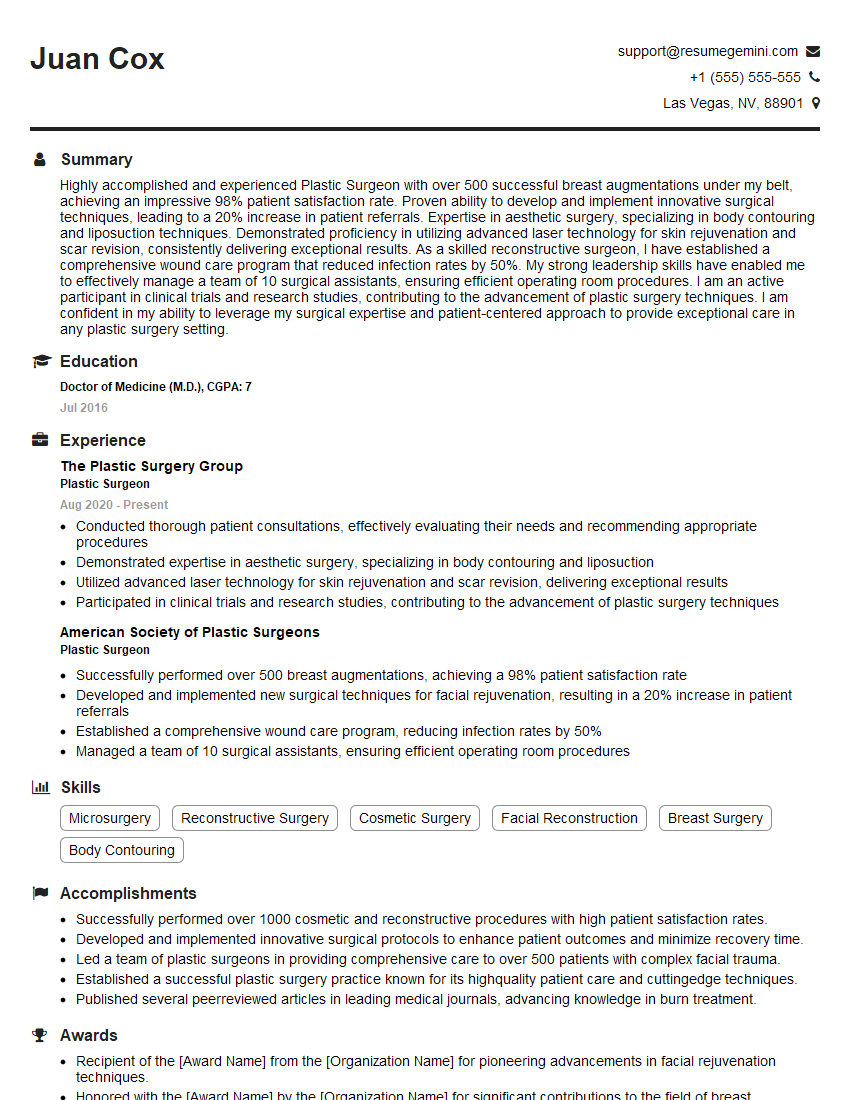
Mastering breast reconstruction is crucial for career advancement in surgical oncology and plastic surgery, opening doors to specialized fellowships and leadership roles. A well-crafted, ATS-friendly resume is essential for showcasing your skills and experience to potential employers. To significantly enhance your job prospects, we strongly encourage you to leverage the power of ResumeGemini. ResumeGemini provides a user-friendly platform for building professional resumes optimized for Applicant Tracking Systems (ATS). Examples of resumes tailored specifically to breast reconstruction are available to guide you through the process.
Explore more articles
Users Rating of Our Blogs
Share Your Experience
We value your feedback! Please rate our content and share your thoughts (optional).
What Readers Say About Our Blog
To the interviewgemini.com Webmaster.
Very helpful and content specific questions to help prepare me for my interview!
Thank you
To the interviewgemini.com Webmaster.
This was kind of a unique content I found around the specialized skills. Very helpful questions and good detailed answers.
Very Helpful blog, thank you Interviewgemini team.