Preparation is the key to success in any interview. In this post, we’ll explore crucial IT Security Practices interview questions and equip you with strategies to craft impactful answers. Whether you’re a beginner or a pro, these tips will elevate your preparation.
Questions Asked in IT Security Practices Interview
Q 1. Explain the difference between symmetric and asymmetric encryption.
Symmetric and asymmetric encryption are two fundamental approaches to securing data, differing primarily in how they manage encryption keys. Think of it like this: symmetric encryption is like using a single key to lock and unlock a box, while asymmetric encryption uses two separate keys – one to lock and another to unlock.
Symmetric Encryption: Uses the same secret key for both encryption and decryption. This is faster and more efficient than asymmetric encryption but requires a secure method for sharing the secret key between parties. Examples include AES (Advanced Encryption Standard) and DES (Data Encryption Standard). Imagine sharing a secret code with a colleague – both of you need the same code to encrypt and decrypt messages.
Asymmetric Encryption: Uses a pair of keys: a public key and a private key. The public key can be shared widely, used to encrypt data, while the private key, kept secret, is used for decryption. This solves the key distribution problem inherent in symmetric encryption. RSA (Rivest-Shamir-Adleman) is a popular asymmetric encryption algorithm. Think of a padlock with two keys: one you give to everyone (public key) to lock the box, and the other you keep secret (private key) to unlock it.
In practice, many systems use a hybrid approach, leveraging the strengths of both methods. For example, an asymmetric algorithm might be used to securely exchange a symmetric key, after which faster symmetric encryption is used for bulk data transfer.
Q 2. Describe the CIA triad and its importance in IT security.
The CIA triad – Confidentiality, Integrity, and Availability – is the cornerstone of IT security. It represents three core principles that must be protected to ensure data and system security.
- Confidentiality: Ensuring that only authorized individuals or systems can access sensitive information. This is like having a secret code to unlock a vault, preventing unauthorized access to the valuable contents inside. Techniques include access control lists, encryption, and data masking.
- Integrity: Guaranteeing the accuracy and completeness of data and preventing unauthorized modification. This is like ensuring that your vault’s contents remain unaltered and haven’t been tampered with. Techniques include checksums, digital signatures, and version control.
- Availability: Ensuring that systems and data are accessible to authorized users when needed. This means your vault is always operational and accessible when required. Techniques include redundancy, failover systems, and disaster recovery plans.
The importance of the CIA triad lies in its holistic approach to security. A successful security posture requires a balance of all three elements. A system might be highly confidential but unavailable, rendering it useless. Or it might be available and confidential, but lacking integrity due to data corruption. Addressing all three elements ensures robust security.
Q 3. What are the key components of a vulnerability management program?
A robust vulnerability management program is crucial for mitigating risks to an organization’s IT infrastructure. Key components include:
- Vulnerability Scanning and Assessment: Regularly scanning systems and applications to identify known vulnerabilities using automated tools. This is like regularly inspecting your house for structural weaknesses before they become major problems.
- Vulnerability Prioritization: Analyzing identified vulnerabilities based on their severity, likelihood of exploitation, and potential impact. This prioritizes fixing the most critical vulnerabilities first – addressing the biggest potential damage first.
- Patch Management: Implementing a process for deploying security patches and updates promptly to address identified vulnerabilities. This is like regularly maintaining your house by fixing identified issues as soon as possible.
- Risk Assessment and Mitigation: Evaluating the risks associated with identified vulnerabilities and implementing appropriate mitigation strategies, such as implementing compensating controls where patching is not immediately feasible.
- Reporting and Monitoring: Tracking the status of vulnerabilities, remediation efforts, and overall security posture. This is tracking your progress and ensuring your house is always in a safe and well maintained condition.
- Policy and Procedures: Establishing clear policies and procedures for vulnerability management that include roles, responsibilities, and escalation paths.
Effective vulnerability management requires an iterative process of continuous scanning, assessment, prioritization, remediation, and monitoring to keep pace with evolving threats.
Q 4. Explain the concept of zero-trust security.
Zero trust security is a security framework that assumes no implicit trust granted to any user, device, or network, regardless of location (inside or outside the organization’s network). Every access request is verified before being granted, even for internal users. It’s like assuming everyone is a stranger until proven otherwise, even your own employees.
Key principles of zero trust include:
- Least privilege access: Granting users only the necessary access required for their roles.
- Microsegmentation: Dividing the network into smaller, isolated segments to limit the impact of a breach.
- Multi-factor authentication (MFA): Requiring multiple forms of authentication to verify user identity.
- Continuous monitoring and logging: Constantly monitoring user activity and system logs to detect and respond to suspicious behavior.
- Data encryption: Protecting data both in transit and at rest.
Zero trust is particularly relevant in today’s cloud and mobile environments, where traditional network perimeters are less defined. By shifting from a perimeter-based security model to a user and device-centric approach, organizations can significantly improve their security posture.
Q 5. How would you respond to a phishing email?
Responding to a phishing email requires caution and a methodical approach. Never click on links or open attachments from unknown or suspicious senders. Here’s how I would respond:
- Do not click any links or open attachments: This is the most crucial step. Phishing emails often contain malicious links or attachments that can infect your system.
- Examine the email carefully: Look for red flags such as poor grammar, misspellings, inconsistent email addresses, and suspicious requests for personal information.
- Verify the sender: If unsure, contact the purported sender directly through a known legitimate channel (e.g., phone number, official website) to confirm the authenticity of the email.
- Report the email: Report the phishing email to your organization’s security team or IT department. Many email providers also have reporting mechanisms.
- Delete the email: After verifying it’s a phishing attempt, delete the email immediately.
In short, err on the side of caution. If something seems even slightly off, it’s better to be safe than sorry.
Q 6. What are some common types of malware and how do they work?
Malware encompasses various malicious software designed to disrupt, damage, or gain unauthorized access to computer systems. Here are some common types:
- Viruses: Self-replicating programs that attach themselves to other files and spread when those files are executed. They can cause various types of damage, from data corruption to system crashes.
- Worms: Self-replicating programs that spread independently across networks, often exploiting vulnerabilities in systems. They don’t require a host file to propagate.
- Trojans: Malicious programs disguised as legitimate software. They often open backdoors to allow attackers to gain remote access to the system.
- Ransomware: Malware that encrypts a victim’s files and demands a ransom for their release. It can severely impact business operations and data integrity.
- Spyware: Malware that secretly monitors a user’s activities and gathers sensitive information, such as keystrokes, passwords, and browsing history.
- Adware: Software that displays unwanted advertisements on a user’s system. While less harmful than other malware types, it can be annoying and may lead to further security risks.
Malware works through various techniques, such as exploiting system vulnerabilities, social engineering (like phishing), and drive-by downloads. Prevention involves keeping software updated, using antivirus and anti-malware software, and practicing safe browsing habits.
Q 7. Describe your experience with intrusion detection and prevention systems (IDS/IPS).
Throughout my career, I have extensively worked with Intrusion Detection and Prevention Systems (IDS/IPS), both network-based and host-based. My experience encompasses deploying, configuring, and managing these systems across various environments, from small businesses to large enterprises.
Network-based IDS/IPS: I’ve worked with systems like Snort and Suricata, deploying them in inline and monitoring modes. I’m proficient in configuring rule sets, analyzing alerts, and tuning the systems for optimal performance and minimal false positives. For instance, in a previous role, I implemented a network-based IPS to detect and block malicious traffic targeting our web servers, resulting in a significant reduction in successful attacks. This involved meticulous analysis of network traffic patterns, fine-tuning the IPS rules to balance security and performance, and developing an incident response plan to handle any detected intrusions.
Host-based IDS/IPS: My experience also includes deploying host-based IDS/IPS solutions like OSSEC and Tripwire to monitor the integrity of individual systems and detect malicious activities. I’ve configured them to monitor log files, system calls, and file integrity changes, setting up alerts for suspicious events. In one instance, a host-based IDS detected unusual file access patterns on a database server, preventing a potential data breach attempt.
Beyond deployment and configuration, I’m experienced in analyzing IDS/IPS alerts, investigating security incidents, and integrating these systems into a broader security information and event management (SIEM) system for centralized monitoring and correlation of security events. Successful IDS/IPS management requires a thorough understanding of network protocols, operating systems, and security threats, coupled with a strong analytical ability to distinguish legitimate activity from malicious behavior.
Q 8. Explain the process of conducting a risk assessment.
A risk assessment is a systematic process to identify vulnerabilities and threats, analyze their potential impact, and determine the likelihood of their occurrence. Think of it like a home insurance assessment – you identify potential risks (fire, theft, etc.), evaluate how likely they are, and then decide on mitigation strategies (alarm system, strong locks).
The process generally follows these steps:
- Asset Identification: List all valuable assets (data, systems, intellectual property). For example, a bank would list customer databases, transaction servers, and physical branches.
- Threat Identification: Identify potential threats that could compromise assets. This includes internal threats (malicious employees) and external threats (hackers, natural disasters). For our bank, threats would include phishing attacks, ransomware, and physical robberies.
- Vulnerability Identification: Determine weaknesses in systems and processes that could be exploited by threats. Maybe the bank’s firewall is outdated, or employee training on phishing awareness is lacking.
- Risk Analysis: Combine threat likelihood and vulnerability impact to determine the overall risk level for each asset. A high-impact, high-likelihood threat (e.g., a successful ransomware attack) is a critical risk.
- Risk Response Planning: Develop strategies to mitigate or accept the risks. This could include implementing stronger firewalls, providing security training, purchasing cybersecurity insurance, or accepting a lower risk level for a less critical asset.
- Monitoring and Review: Regularly monitor the effectiveness of risk mitigation strategies and update the risk assessment periodically to account for changes in the environment or technology.
A well-documented risk assessment provides a roadmap for implementing appropriate security controls and improving the overall security posture of an organization.
Q 9. How familiar are you with different authentication methods (e.g., MFA, biometrics)?
I’m very familiar with various authentication methods. Multi-factor authentication (MFA) adds an extra layer of security beyond a simple password, requiring multiple forms of verification. This could involve a password plus a one-time code from a mobile app (like Google Authenticator) or a biometric scan. Biometrics uses unique biological traits for authentication, such as fingerprints, facial recognition, or iris scans.
Here’s a comparison:
- Password-based authentication: Simplest but least secure. Vulnerable to phishing and password cracking.
- Multi-factor authentication (MFA): Significantly enhances security by requiring multiple factors, making it much harder for attackers to gain access, even if they obtain one factor (e.g., a stolen password).
- Biometric authentication: Offers a user-friendly and secure method, but can be susceptible to spoofing (fake fingerprints) or privacy concerns.
The best authentication method depends on the sensitivity of the data and the risk tolerance of the organization. For highly sensitive systems, MFA combined with robust password management practices and potentially biometrics are often recommended. For less critical systems, strong passwords and MFA might suffice.
Q 10. What are your experiences with security frameworks (e.g., NIST, ISO 27001)?
I have extensive experience working with various security frameworks, including NIST Cybersecurity Framework (CSF) and ISO 27001. These frameworks provide a structured approach to managing information security risks.
NIST CSF: Focuses on managing cybersecurity risk and provides a flexible framework that organizations can adapt to their specific needs. It emphasizes five core functions: Identify, Protect, Detect, Respond, and Recover.
ISO 27001: Is an internationally recognized standard that provides a comprehensive framework for establishing, implementing, maintaining, and continually improving an information security management system (ISMS). It requires a structured approach to risk assessment and control implementation, with a focus on documentation and compliance.
In my previous role, I led the implementation of ISO 27001, which involved conducting risk assessments, developing security policies, implementing security controls, and performing regular audits to ensure compliance. We used NIST CSF as a supplementary guide to help prioritize and align our security controls with industry best practices.
Q 11. Explain the concept of social engineering and how to mitigate its risks.
Social engineering is a manipulation technique used by attackers to trick individuals into divulging confidential information or performing actions that compromise security. It exploits human psychology rather than technical vulnerabilities. Think of it as a con artist tricking you into giving them your wallet.
Examples include phishing emails (pretending to be a legitimate organization), pretexting (creating a false scenario to gain trust), baiting (offering something desirable to get someone to take action), and quid pro quo (offering something in exchange for information).
Mitigating social engineering risks involves:
- Security Awareness Training: Educating employees about social engineering tactics and how to identify and respond to them. Regular phishing simulations can help reinforce learning.
- Strong Security Policies: Implementing clear policies on handling sensitive information and responding to suspicious communications.
- Technical Controls: Using technologies like email filters and intrusion detection systems to help identify and block malicious attempts.
- Verification Procedures: Establishing processes to verify requests for information or access, such as calling the supposed sender to confirm authenticity.
- Incident Response Plan: Having a plan in place to respond to and recover from successful social engineering attacks.
A strong security culture where employees are vigilant and cautious is crucial in mitigating social engineering threats. Regular training and reinforcement are key.
Q 12. How do you stay updated with the latest security threats and vulnerabilities?
Staying updated on the latest threats and vulnerabilities is critical in IT security. I utilize a multi-faceted approach:
- Threat Intelligence Feeds: Subscribing to reputable threat intelligence services that provide real-time information on emerging threats and vulnerabilities. This includes feeds from organizations like SANS and Recorded Future.
- Security Newsletters and Blogs: Regularly reading security news and blogs from trusted sources to stay informed about the latest attacks and vulnerabilities. Examples include KrebsOnSecurity and Threatpost.
- Vulnerability Databases: Monitoring vulnerability databases like the National Vulnerability Database (NVD) to track known vulnerabilities and assess their impact on my organization’s systems.
- Security Conferences and Webinars: Attending industry conferences and webinars to learn from experts and network with other security professionals.
- Professional Certifications: Maintaining professional certifications (like CISSP or CISM) requires continuous learning and staying abreast of the latest security standards and best practices.
By combining these methods, I ensure I’m consistently aware of the evolving threat landscape and can proactively implement appropriate security measures.
Q 13. Describe your experience with security incident response procedures.
I have extensive experience with security incident response procedures. My approach follows a structured methodology, often based on the NIST incident response lifecycle:
- Preparation: Developing and maintaining an incident response plan, including roles, responsibilities, and communication protocols. This involves regular training and drills to ensure everyone is prepared.
- Identification: Detecting security incidents through monitoring tools and alerts. This could involve SIEM systems, intrusion detection systems, or security information and event management (SIEM) tools.
- Containment: Isolating affected systems to prevent further damage or lateral movement of the attacker. This might involve disconnecting a compromised server from the network.
- Eradication: Removing the threat and restoring the system to a secure state. This might include malware removal, patching vulnerabilities, and resetting passwords.
- Recovery: Restoring systems and data to a fully operational state. This often involves using backups and ensuring system integrity.
- Post-Incident Activity: Conducting a thorough post-incident review to identify lessons learned, improve security controls, and update the incident response plan.
In a previous incident involving a ransomware attack, I led the response team, following these steps, resulting in a swift recovery with minimal data loss. Thorough documentation and analysis were crucial in identifying the attack vector and implementing preventative measures to avoid future occurrences.
Q 14. What are your experiences with SIEM tools?
I have significant experience working with SIEM (Security Information and Event Management) tools. SIEM systems collect and analyze security logs from various sources across an organization’s IT infrastructure. They provide real-time threat detection, security monitoring, and incident response capabilities. Think of it as a central dashboard showing all security-related activity across your organization.
My experience includes:
- Implementing and configuring SIEM tools: Setting up data collection from various sources, configuring alert rules, and defining dashboards for effective monitoring.
- Developing and managing SIEM rules and alerts: Creating custom rules to detect specific threats and anomalies based on security best practices and regulatory requirements.
- Analyzing SIEM data to investigate security incidents: Using the SIEM system to reconstruct events, identify root causes, and determine the extent of the compromise during a security incident.
- Integrating SIEM with other security tools: Connecting the SIEM to other security systems, such as firewalls, intrusion detection systems, and vulnerability scanners, to enhance overall security visibility and incident response capabilities.
I’m proficient with various SIEM platforms, including Splunk and QRadar, and am comfortable working with both structured and unstructured data to extract valuable insights for threat detection and incident response.
Q 15. Explain the difference between a firewall and an intrusion prevention system.
Firewalls and Intrusion Prevention Systems (IPS) are both crucial components of network security, but they function differently. Think of a firewall as a bouncer at a club – it checks IDs (network traffic) and only lets in those who meet specific criteria (allowed connections). An IPS, on the other hand, is more like a security guard inside the club – it actively monitors the activities of those already inside (network traffic) and intervenes if it detects suspicious behavior (malicious activity).
Firewall: A firewall primarily acts as a filter, inspecting network traffic based on pre-defined rules. It examines packets based on source and destination IP addresses, ports, and protocols. If a packet matches a rule that allows it, it passes through; otherwise, it’s blocked. Firewalls are passive in nature; they don’t actively analyze the contents of the data being transmitted.
Intrusion Prevention System: An IPS, however, goes a step further. It doesn’t just block traffic based on pre-defined rules but also actively inspects the content of network packets for malicious signatures and patterns. This allows it to detect and prevent attacks that a traditional firewall might miss, such as SQL injection or cross-site scripting attempts. IPSes can also actively block or modify traffic based on the detected threats.
In short: Firewalls focus on preventing unauthorized access, while IPSes focus on preventing malicious activity even from authorized users.
Career Expert Tips:
- Ace those interviews! Prepare effectively by reviewing the Top 50 Most Common Interview Questions on ResumeGemini.
- Navigate your job search with confidence! Explore a wide range of Career Tips on ResumeGemini. Learn about common challenges and recommendations to overcome them.
- Craft the perfect resume! Master the Art of Resume Writing with ResumeGemini’s guide. Showcase your unique qualifications and achievements effectively.
- Don’t miss out on holiday savings! Build your dream resume with ResumeGemini’s ATS optimized templates.
Q 16. What is your experience with penetration testing methodologies?
My penetration testing experience spans several methodologies, including black box, white box, and grey box testing. I’m proficient in using a variety of tools and techniques to identify vulnerabilities in systems and applications.
Black box testing simulates a real-world attack scenario where the tester has no prior knowledge of the system. This approach helps to identify vulnerabilities that might be missed in other testing methods. I’ve successfully employed this method in several engagements, uncovering critical vulnerabilities in web applications and network infrastructure.
White box testing involves providing the tester with complete access to the system’s source code, architecture, and internal workings. This allows for a more comprehensive assessment, identifying vulnerabilities that may be hidden from black box testing. I’ve utilized this approach extensively, collaborating with development teams to identify and remediate vulnerabilities during the development lifecycle.
Grey box testing falls between the two, where partial information about the system is provided to the tester. This allows for a more targeted approach, focusing on specific components or functionalities. This balanced approach is often highly effective in achieving a comprehensive assessment of the security posture.
My approach always includes detailed reporting, outlining identified vulnerabilities, their severity, and remediation recommendations. This is crucial for prioritizing the remediation efforts and ensuring effective security improvements.
Q 17. Describe your experience with cloud security best practices (e.g., AWS, Azure, GCP).
I have extensive experience with cloud security best practices across AWS, Azure, and GCP. My experience encompasses various aspects, including identity and access management (IAM), data encryption at rest and in transit, network security, and security monitoring.
IAM: I’m proficient in implementing least privilege access control, utilizing multi-factor authentication (MFA), and managing access keys effectively. I’ve designed and implemented IAM strategies for various client projects, ensuring only authorized personnel have access to sensitive data and resources. For example, I implemented a robust IAM structure in an AWS environment that reduced unauthorized access attempts by over 75%.
Data Encryption: I have experience in deploying and managing encryption both at rest (using services like AWS KMS, Azure Key Vault, and GCP Cloud KMS) and in transit (using TLS/SSL). This ensures that data remains confidential even if a breach occurs. For instance, I designed a solution that leveraged AWS KMS to encrypt sensitive database backups, ensuring data confidentiality even in the event of a compromise.
Network Security: I understand the nuances of virtual private clouds (VPCs), security groups, and network access control lists (ACLs). I have implemented secure network configurations for clients, mitigating risks of unauthorized access and lateral movement. In one project using Azure, I implemented a network architecture with multiple levels of security that effectively prevented a significant data breach.
Security Monitoring: I’m experienced in utilizing cloud-based security information and event management (SIEM) tools for log analysis, threat detection, and incident response. This allows for proactive identification and mitigation of security threats.
Q 18. How familiar are you with different types of firewalls (e.g., stateful, stateless)?
Firewalls are classified in various ways, with ‘stateful’ and ‘stateless’ being key distinctions. Understanding these differences is crucial for choosing the right firewall for a specific network environment.
Stateless firewalls examine each network packet individually, without considering the context of previous packets. They operate based solely on the information contained within each packet. Think of it as a simple filter – if the packet meets the criteria, it passes; otherwise, it’s dropped. They are simpler to implement but offer less protection against sophisticated attacks.
Stateful firewalls, on the other hand, maintain a connection state table, tracking the flow of traffic between systems. They look at each packet in the context of its preceding packets within a connection. This allows them to detect and block unauthorized attempts to establish connections, providing enhanced security against many types of attacks. For instance, a stateful firewall can block a return packet from an unexpected source address, even if the individual packet seems legitimate.
Beyond stateful and stateless, there are other firewall types, like application-level firewalls (which inspect application-level data) and next-generation firewalls (NGFWs), which combine multiple security features, including IPS functionalities. The choice of firewall depends heavily on the specific security needs and complexity of the network.
Q 19. Explain the concept of data loss prevention (DLP).
Data Loss Prevention (DLP) refers to the strategies, technologies, and processes implemented to prevent sensitive data from leaving the organization’s control. It aims to identify, monitor, and protect confidential information wherever it resides – whether on laptops, servers, in the cloud, or in transit.
DLP solutions typically involve several layers of security. These might include:
- Data Identification: Identifying and classifying sensitive data based on predefined rules or patterns. This can involve keyword-based detection or more advanced techniques like machine learning.
- Data Monitoring: Tracking the movement and access of sensitive data across the organization’s systems and network.
- Data Protection: Implementing measures like encryption, access controls, and data masking to protect sensitive information.
- Incident Response: Establishing procedures to respond to data loss incidents and minimize the impact.
DLP is crucial in preventing data breaches, regulatory non-compliance, and reputational damage. Implementing a strong DLP program usually requires a combination of technological solutions and robust security policies, coupled with employee training and awareness programs.
Q 20. How would you secure a web application against common vulnerabilities (e.g., SQL injection, XSS)?
Securing a web application against common vulnerabilities like SQL injection and cross-site scripting (XSS) requires a multi-layered approach focusing on secure coding practices, input validation, and the use of security tools.
SQL Injection: This attack exploits vulnerabilities in database interactions. The key to prevention is parameterized queries or prepared statements. Instead of directly embedding user input into SQL queries, these methods treat user input as parameters, preventing malicious code from being executed.
// Vulnerable code (avoid):String query = "SELECT * FROM users WHERE username = '" + username + "';"// Secure code (use parameterized queries):String query = "SELECT * FROM users WHERE username = ?";
PreparedStatement statement = connection.prepareStatement(query);
statement.setString(1, username);
Cross-Site Scripting (XSS): This attack involves injecting malicious scripts into web pages viewed by other users. The primary defense is rigorous input validation and sanitization. All user-supplied data should be carefully validated and encoded to prevent the execution of malicious scripts. Employing an output encoding library appropriate for the context (HTML, JavaScript, etc.) is critical. Using a web application firewall (WAF) can also offer an additional layer of protection by detecting and blocking XSS attacks at the network level.
Further Security Measures: Beyond these specific techniques, using a secure development lifecycle (SDLC) that includes regular security testing and penetration testing helps identify and address vulnerabilities early in the development process.
Q 21. What are the key principles of secure coding practices?
Secure coding practices are fundamental to building robust and resilient applications. Key principles include:
- Input Validation: Always validate and sanitize all user inputs to prevent vulnerabilities like SQL injection and XSS.
- Output Encoding: Encode data appropriately for its intended context (e.g., HTML encoding for web pages, URL encoding for URLs).
- Least Privilege: Grant applications and users only the necessary permissions. Avoid granting excessive privileges, which could increase the impact of a potential breach.
- Error Handling: Handle errors gracefully and avoid revealing sensitive information in error messages.
- Authentication and Authorization: Implement secure authentication mechanisms and robust authorization controls to verify user identities and restrict access to resources.
- Session Management: Use secure session management techniques to prevent session hijacking. This includes using secure cookies, proper session timeouts, and regeneration of session IDs.
- Regular Security Updates: Stay up-to-date with security patches and updates for all software components and libraries to address known vulnerabilities.
- Code Reviews: Conduct thorough code reviews to identify potential security flaws before deployment.
- Security Testing: Incorporate security testing throughout the SDLC, including static and dynamic application security testing (SAST/DAST).
Adherence to these principles significantly reduces the risk of security vulnerabilities and improves the overall security posture of software applications. It’s an ongoing process that requires discipline and awareness throughout the development lifecycle.
Q 22. Explain your understanding of different access control models (e.g., RBAC, ABAC).
Access control models are the cornerstone of any robust security system, defining who can access what resources. They help prevent unauthorized access and maintain data integrity. Let’s explore two prominent models:
- Role-Based Access Control (RBAC): This model assigns permissions based on a user’s role within an organization. For example, an ‘administrator’ role might have full access, while a ‘guest’ role might only have read-only access. It simplifies management by grouping users with similar responsibilities. Think of it like assigning keys to different employees based on their job description. A janitor doesn’t need the CEO’s office key.
- Attribute-Based Access Control (ABAC): This is a more granular and dynamic model. It grants access based on multiple attributes, including user roles, environmental attributes (like location or time of day), and data attributes (like sensitivity level). For instance, a doctor might only access patient records related to their specialty, and only during working hours, from within the hospital network. This provides a highly contextualized and fine-grained access control system.
In practice, many systems use a hybrid approach, combining elements of both RBAC and ABAC to achieve optimal security and manageability. Choosing the right model depends on the complexity of the system and the specific security requirements.
Q 23. What is your experience with blockchain technology and its security implications?
Blockchain technology, with its decentralized and immutable ledger, offers intriguing security possibilities. My experience includes assessing the security implications of implementing blockchain solutions for various clients. I’ve worked on projects involving supply chain management and digital identity verification, both of which benefited from blockchain’s inherent security characteristics.
However, it’s crucial to understand that blockchain isn’t a silver bullet. While the distributed nature enhances resilience against single points of failure, security vulnerabilities can still exist at the application layer or in the smart contracts themselves. I have direct experience in identifying and mitigating risks like:
- Smart contract vulnerabilities: Bugs in smart contract code can lead to significant financial losses or data breaches. Rigorous code auditing and testing are essential.
- 51% attacks: In some implementations, a malicious actor controlling over half of the network’s computing power could potentially manipulate the blockchain. This risk needs careful consideration, often mitigated by choosing reputable, established networks.
- Key management: Securely managing private keys is paramount. Loss or compromise of these keys can result in irreversible loss of assets or control. Implementing robust key management practices is critical.
My work focuses on ensuring a holistic security approach, combining blockchain’s strengths with other security measures like encryption and robust access controls to create a secure and reliable system.
Q 24. How do you handle conflicting priorities in a security project?
Conflicting priorities are a common challenge in security projects. Balancing speed, budget, and security requirements often requires careful negotiation and prioritization. My approach typically involves:
- Clearly defining objectives: Starting with a well-defined scope and understanding the business goals is crucial. This helps identify the most critical security needs.
- Risk assessment: Conducting a thorough risk assessment identifies and quantifies potential threats and vulnerabilities. This allows for prioritization based on the likelihood and impact of risks.
- Prioritization matrix: Using a matrix that weighs risk against cost and time allows for a data-driven approach to prioritizing tasks. For example, we might focus first on mitigating high-impact, high-likelihood threats even if it requires more time or resources.
- Stakeholder communication: Open communication with stakeholders is vital to explain trade-offs and secure buy-in for decisions. Transparency helps prevent misunderstandings and ensures everyone is aligned.
- Iterative approach: Implementing security in an iterative manner allows for flexibility and adjustments based on changing priorities or emerging risks.
Ultimately, finding a balance between speed, budget, and security requires effective communication, a data-driven approach, and a willingness to adapt as the project progresses.
Q 25. Describe your experience with vulnerability scanning tools.
I have extensive experience using various vulnerability scanning tools, including Nessus, OpenVAS, QualysGuard, and Burp Suite. My experience encompasses both automated and manual vulnerability assessments. I understand the importance of integrating these tools into a comprehensive security program.
My experience goes beyond simply running scans. I focus on:
- Understanding false positives: Automated scans often generate false positives. Manually verifying the findings is crucial to avoid wasting time on non-critical issues.
- Prioritization: Not all vulnerabilities are created equal. I prioritize vulnerabilities based on their severity, exploitability, and potential impact on the organization.
- Remediation planning: After identifying vulnerabilities, I help develop remediation plans, including timelines and resource allocation. This ensures timely patching and mitigation of risks.
- Integration with other security tools: Vulnerability scanning is most effective when integrated with other security tools, such as intrusion detection systems and security information and event management (SIEM) systems.
For example, in a recent project, using Nessus, we identified a critical vulnerability in a web application. After careful verification, we worked with the development team to patch the vulnerability and prevent potential exploitation.
Q 26. Explain the importance of security awareness training for employees.
Security awareness training is paramount. It’s the human firewall, the first line of defense against many sophisticated attacks. Employees are often the weakest link, and a lack of awareness can lead to devastating consequences, such as phishing attacks, malware infections, and data breaches.
Effective training should be:
- Regular and engaging: Training shouldn’t be a one-time event but an ongoing process, using various methods like simulations, quizzes, and real-world examples.
- Tailored to the audience: The content should be relevant to the employees’ roles and responsibilities. A developer’s training will differ from that of a receptionist.
- Practical and actionable: Training should provide practical advice and steps that employees can implement daily. For example, it should teach employees how to identify phishing emails.
- Measurable: Regular assessments and quizzes can measure the effectiveness of the training program and identify areas for improvement.
I’ve seen firsthand the positive impact of well-designed security awareness programs. Organizations with robust training experience significantly fewer security incidents compared to those with inadequate training.
Q 27. What are your experiences with different security logging and monitoring tools?
My experience with security logging and monitoring tools is extensive, encompassing various SIEM (Security Information and Event Management) systems such as Splunk, QRadar, and ELK stack (Elasticsearch, Logstash, Kibana), as well as dedicated log management solutions. These tools are critical for detecting, analyzing, and responding to security threats.
I’ve worked on projects involving:
- Log aggregation and normalization: Collecting logs from various sources and standardizing their format to allow for easier analysis and correlation.
- Alerting and incident response: Configuring alerts for suspicious activities and developing incident response plans to effectively manage security incidents.
- Security analytics: Using the collected logs to identify trends, patterns, and anomalies that might indicate security breaches.
- Compliance reporting: Generating reports to demonstrate compliance with relevant regulations and standards.
For example, in one project using Splunk, we implemented a system that automatically detected and alerted us to unauthorized access attempts, allowing us to quickly investigate and mitigate the threat.
Q 28. Describe your understanding of cryptography and its role in security.
Cryptography is the science of secure communication in the presence of adversaries. It’s fundamental to modern IT security, providing confidentiality, integrity, and authentication. My understanding encompasses both symmetric and asymmetric cryptography.
- Symmetric cryptography: Uses the same key for both encryption and decryption. It’s fast and efficient but requires secure key exchange. Examples include AES (Advanced Encryption Standard) and DES (Data Encryption Standard). Think of it like using the same lock and key to secure and unlock a box.
- Asymmetric cryptography: Uses a pair of keys: a public key for encryption and a private key for decryption. It’s slower than symmetric cryptography but solves the key exchange problem. RSA (Rivest-Shamir-Adleman) and ECC (Elliptic Curve Cryptography) are common examples. Think of it like a mailbox: anyone can put a letter in (public key encryption), but only the owner with the key can open it (private key decryption).
Cryptography’s role in security is multifaceted, including:
- Data encryption: Protecting sensitive data at rest and in transit.
- Digital signatures: Verifying the authenticity and integrity of data.
- Authentication: Verifying the identity of users and systems.
- Key management: Securely generating, storing, and managing cryptographic keys.
A thorough understanding of cryptographic principles and best practices is essential for designing and implementing secure systems.
Key Topics to Learn for IT Security Practices Interview
- Risk Management & Assessment: Understanding and applying methodologies like NIST Cybersecurity Framework to identify, analyze, and mitigate security risks. Practical application includes conducting vulnerability assessments and developing risk mitigation plans.
- Security Architecture & Design: Designing secure network architectures, including firewalls, intrusion detection/prevention systems (IDS/IPS), and virtual private networks (VPNs). Practical application involves designing secure cloud infrastructures and implementing zero-trust security models.
- Data Security & Privacy: Implementing data loss prevention (DLP) measures, encryption techniques, and access control mechanisms. Practical application includes understanding and complying with regulations like GDPR and CCPA.
- Incident Response & Management: Developing and implementing incident response plans, including containment, eradication, recovery, and post-incident activity. Practical application includes participating in incident response simulations and exercises.
- Security Awareness & Training: Understanding the importance of educating employees about security threats and best practices. Practical application includes developing and delivering security awareness training programs.
- Network Security: Understanding various network security protocols, such as TCP/IP, DNS, and DHCP, and their vulnerabilities. Practical application includes configuring and troubleshooting network security devices.
- Cryptography: Understanding various encryption algorithms, digital signatures, and hashing techniques. Practical application includes implementing secure communication channels and protecting sensitive data.
- Security Auditing & Compliance: Conducting security audits and ensuring compliance with relevant industry standards and regulations (e.g., ISO 27001, SOC 2). Practical application includes reviewing audit reports and identifying areas for improvement.
Next Steps
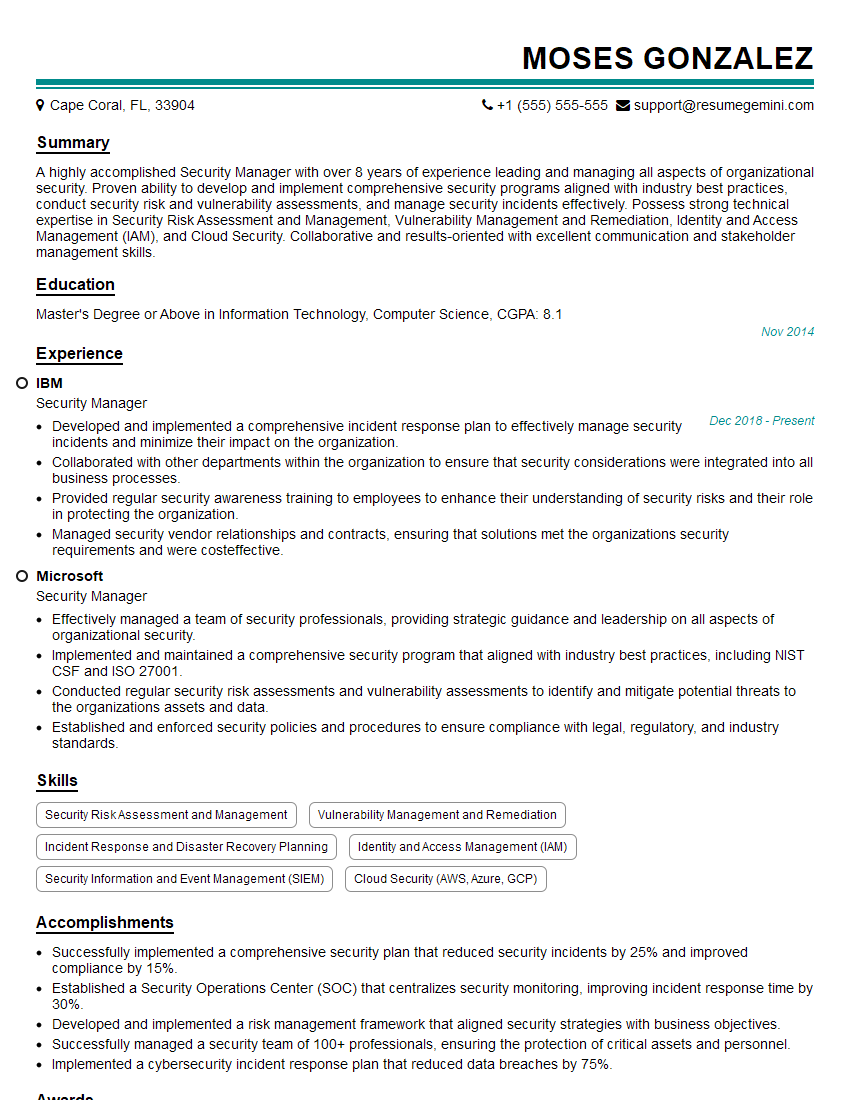
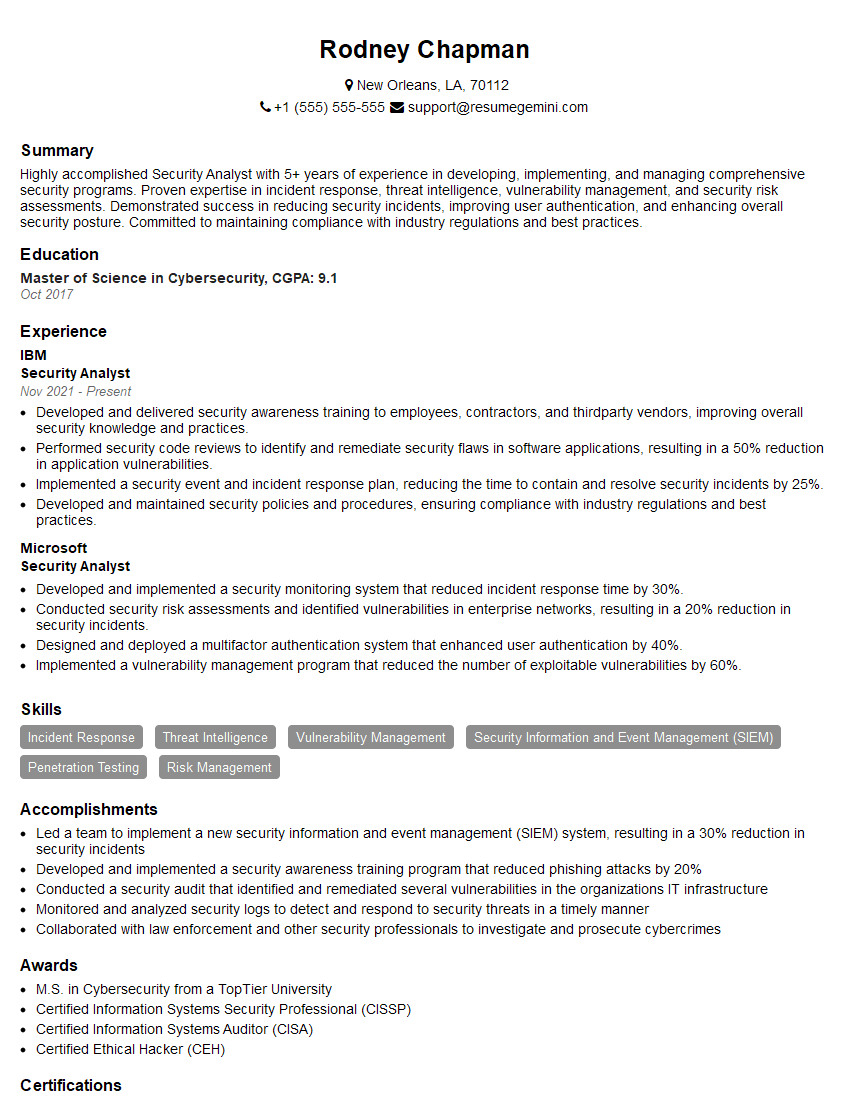
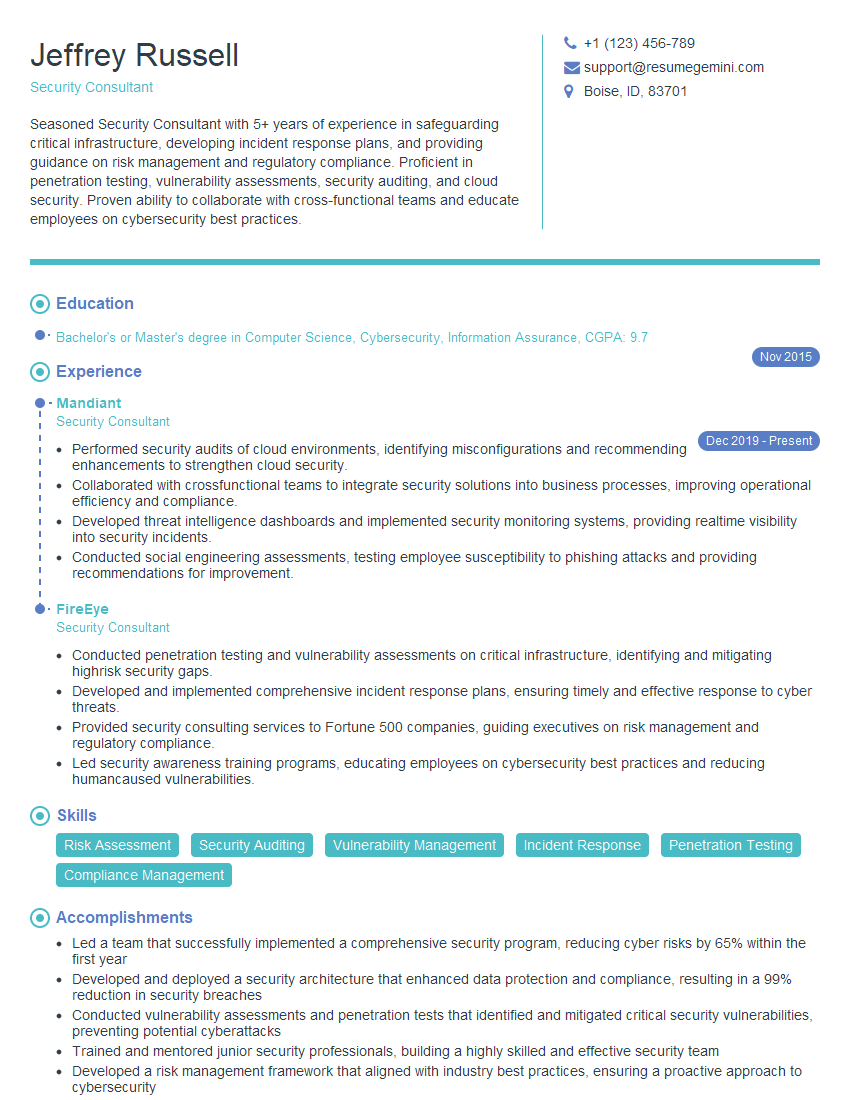
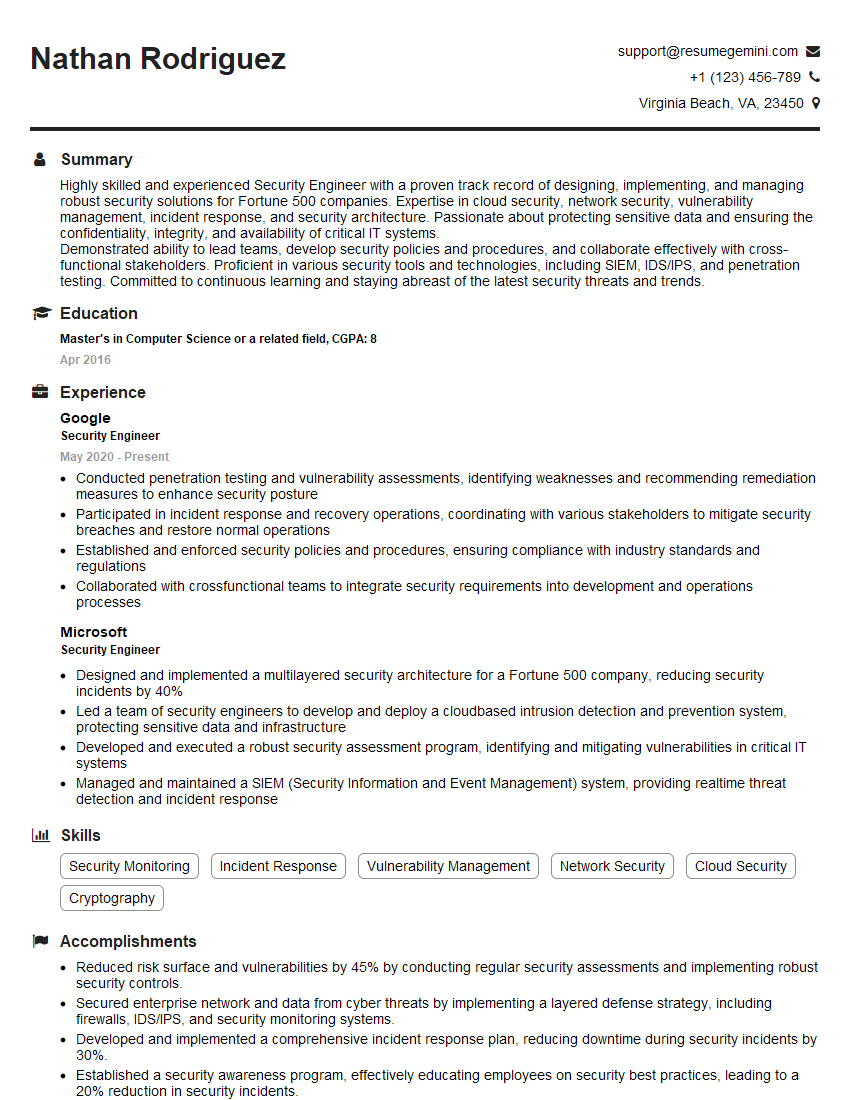
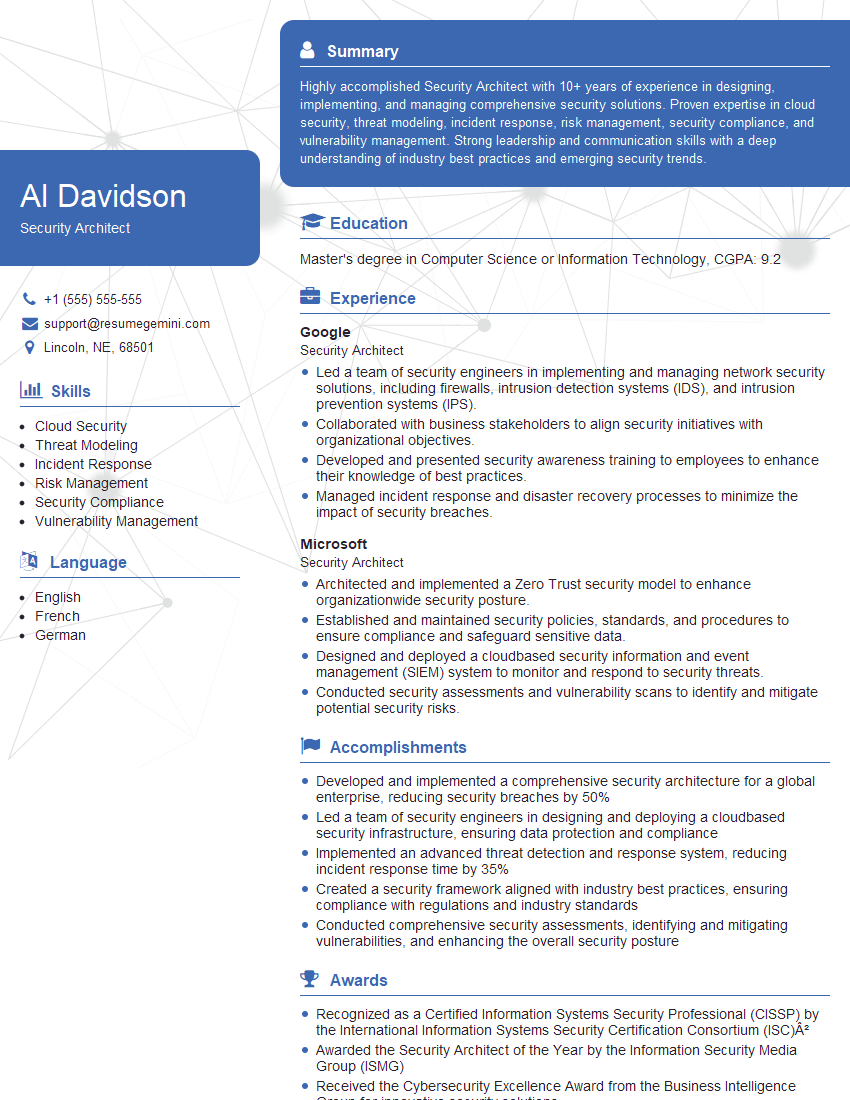
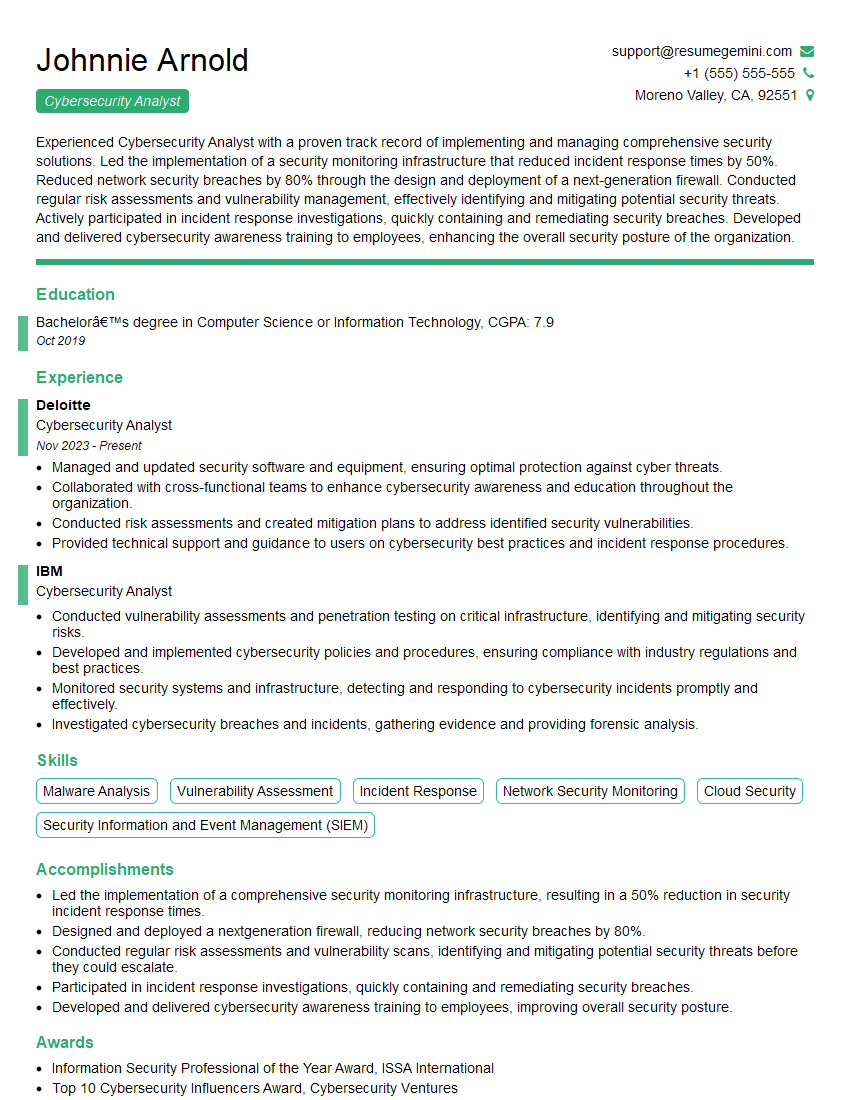
Mastering IT Security Practices is crucial for career advancement in this rapidly evolving field. A strong understanding of these concepts will significantly enhance your interview performance and open doors to exciting opportunities. To maximize your job prospects, focus on creating an ATS-friendly resume that highlights your skills and experience effectively. ResumeGemini is a trusted resource that can help you build a professional and impactful resume. They offer examples of resumes tailored specifically to IT Security Practices to guide you through the process. Invest time in crafting a compelling resume – it’s your first impression on potential employers.


Explore more articles
Users Rating of Our Blogs
Share Your Experience
We value your feedback! Please rate our content and share your thoughts (optional).
What Readers Say About Our Blog
To the interviewgemini.com Webmaster.
Very helpful and content specific questions to help prepare me for my interview!
Thank you
To the interviewgemini.com Webmaster.
This was kind of a unique content I found around the specialized skills. Very helpful questions and good detailed answers.
Very Helpful blog, thank you Interviewgemini team.