The thought of an interview can be nerve-wracking, but the right preparation can make all the difference. Explore this comprehensive guide to Proficient in Reading Electrical Blueprints interview questions and gain the confidence you need to showcase your abilities and secure the role.
Questions Asked in Proficient in Reading Electrical Blueprints Interview
Q 1. Explain the purpose of a schematic diagram.
A schematic diagram is a simplified representation of an electrical system, focusing on the components and their interconnections rather than the physical layout. Think of it as a blueprint’s logic map. It shows how different parts of the system interact, illustrating the flow of electricity. This helps electricians and engineers understand the system’s functionality, troubleshoot problems, and design modifications.
For example, a schematic might show how a switch controls a light, illustrating the power source, the switch, the wiring, and the light fixture, without showing the exact physical location of each component within a building.
Schematic diagrams are crucial for understanding complex electrical systems because they abstract away unnecessary details, allowing for focused analysis of the electrical functions.
Q 2. Describe the difference between a single-line diagram and a wiring diagram.
The key difference lies in their level of detail and purpose. A single-line diagram (SLD) provides a high-level overview of a power system, showing the major components and their connections using simplified symbols. It’s excellent for planning and visualizing the overall system’s architecture. Think of it as a road map highlighting major highways and cities, ignoring smaller streets.
A wiring diagram, on the other hand, shows the detailed physical layout of the wiring and components within a specific circuit or piece of equipment. It provides precise information about wire sizes, colors, connections, and terminal points. This is like a detailed street map showing every street, building, and intersection.
For instance, an SLD might depict a substation, transformers, and feeders, while a wiring diagram would illustrate the internal connections within a specific motor control center.
Q 3. Identify three common symbols used in electrical blueprints and explain their meaning.
Circuit Breaker: Represented by a rectangle with a symbol indicating its tripping mechanism (e.g., thermal, magnetic). Circuit breakers protect circuits from overloads and short circuits. Imagine them as a safety valve for your electrical system, automatically cutting off power to prevent damage or fire.
Ground Symbol: Typically a triangle with a short vertical line connected to it. This signifies the grounding point of a circuit, providing a path for fault currents to safely return to the earth, preventing electric shocks. It’s like a lightning rod, directing electrical surges away from sensitive equipment and people.
Light Fixture: Often depicted as a circle with a cross inside representing the bulb. This symbol indicates where lighting is installed and serves as a guide for placement during construction. Different shapes within the circle may indicate specific types of fixtures (e.g., a fluorescent light might be depicted differently than an incandescent bulb).
Q 4. How do you interpret voltage and amperage ratings from an electrical blueprint?
Voltage and amperage ratings are typically shown near components or on data tables within the blueprint. Voltage (measured in volts) indicates the electrical potential difference across the component, while amperage (measured in amperes) represents the current flowing through it. Finding these ratings is crucial for selecting appropriate equipment and ensuring safety.
For example, a motor might be labeled as ‘240V, 10A’. This means it requires a 240-volt power supply and will draw up to 10 amperes of current when running. Incorrectly supplying voltage or ignoring amperage ratings could lead to overheating, damage, or fire.
Always double-check these ratings against the available power supply to ensure compatibility and safety.
Q 5. Explain the significance of conduit size and type designations on a blueprint.
Conduit size and type designations are vital for ensuring proper wiring protection and safety. The size (e.g., 1/2”, 3/4”, etc.) indicates the conduit’s internal diameter, which determines the number and size of wires it can accommodate. The type (e.g., PVC, EMT, rigid conduit) specifies the material and its properties, determining its suitability for various environments (indoor, outdoor, hazardous locations). This information ensures sufficient space for wires and appropriate protection against environmental factors and mechanical damage.
For example, a designation like ‘1/2” EMT’ indicates that a 1/2-inch diameter electrical metallic tubing (EMT) conduit is to be used for a particular circuit. Using the wrong size or type of conduit could result in overheating, damage to wires, or non-compliance with building codes.
Q 6. How do you identify the different types of electrical components (switches, breakers, etc.) on a blueprint?
Electrical components are identified using standardized symbols. Switches are typically represented by simple switches symbols showing the number of poles, while breakers are represented by rectangular symbols with labels indicating their amperage ratings and sometimes their type (e.g., GFCI, AFCI). Other symbols indicate specific components such as transformers, motors, and various types of lighting. The blueprint legend usually defines each symbol used in the drawing.
For instance, a single-pole switch might be represented by a simple line diagram showing the connection points, while a double-pole switch would have two sets of connection points, and the symbol for a GFCI breaker will clearly show its designation. Familiarizing oneself with the standard symbols is crucial for correctly interpreting electrical drawings.
Q 7. Describe the process of tracing a circuit path on an electrical blueprint.
Tracing a circuit involves systematically following the path of wires and components from the power source to the load. Start at the power source (e.g., a panel board) and follow the wires, noting the connections at each junction point, switch, breaker, or other component. Pay attention to wire numbering or labeling to maintain continuity. Use the symbols and annotations on the blueprint to understand the function of each component.
For example, to trace a circuit for a ceiling light, you would start at the breaker supplying power to the light fixture in the panel board. You’d follow the wire from that breaker, across junction boxes and through various components if any, eventually reaching the light switch and the fixture itself. This systematic approach helps prevent errors in understanding the system.
Careful attention to detail is critical during this process, as even a minor mistake can lead to incorrect conclusions.
Q 8. How do you determine the proper wire size for a specific application based on the blueprint?
Determining the proper wire size is crucial for safety and efficiency. Electrical blueprints specify the load (power consumption in watts) of each circuit. To find the right wire size, you need to calculate the amperage (current in amps) using Ohm’s Law (Power = Voltage x Current) and then consult the National Electrical Code (NEC) tables. The NEC provides charts specifying the minimum wire gauge (size) for a given amperage, taking into account factors like insulation type and installation method (e.g., in conduit or open air).
Example: A blueprint shows a circuit supplying a 2400-watt electric range at 240 volts. Using Ohm’s Law (Current = Power / Voltage), we calculate the amperage: 2400W / 240V = 10A. Consulting the NEC table, we’d then find the appropriate wire gauge for a 10-amp circuit, considering the installation method. It might suggest 12 AWG wire. Always round up to the next larger gauge for safety.
Practical Application: Incorrect wire sizing can lead to overheating, fire hazards, and voltage drop, affecting equipment performance. Understanding this process ensures a safe and efficient electrical system.
Q 9. Explain the importance of grounding and bonding symbols on an electrical blueprint.
Grounding and bonding symbols are vital for safety. Grounding connects non-current-carrying metal parts of equipment to earth, preventing dangerous voltage buildup. Bonding connects multiple metal parts together to ensure they are at the same electrical potential, reducing the risk of shock hazards. On blueprints, these are typically represented by specific symbols (e.g., a ground symbol looks like a triangle, while bonding might use a different symbol depending on the blueprint standard).
Importance: These symbols alert electricians to the necessary grounding and bonding connections. Failure to correctly implement these connections creates significant safety risks, potentially leading to electrocution or equipment damage. Think of grounding as a safety net – it provides a path for fault currents to safely flow to the earth, instead of through a person.
Example: A blueprint might show a grounding symbol connected to the metal enclosure of a motor, indicating it needs to be grounded to protect against electric shock. It might also show a bonding connection between multiple metal enclosures in a panelboard ensuring they are electrically continuous.
Q 10. How do you identify potential hazards or code violations from an electrical blueprint?
Identifying hazards and code violations requires careful review of the blueprint against the NEC. Look for things like insufficient wire sizing (as discussed earlier), lack of grounding/bonding, improper circuit protection (incorrect breaker sizes), insufficient spacing between conductors, and violations of specific code rules regarding wiring in hazardous locations. A thorough understanding of the NEC is essential for this task.
Example: A blueprint showing a 15-amp circuit with 14 AWG wire feeding multiple outlets and high-wattage appliances could indicate a hazard because 14 AWG is rated for up to 15 amps, but exceeding the amperage rating of multiple appliances could overload the circuit and cause a fire. It’s vital to verify the total load on the circuit to ensure it doesn’t exceed 80% of the breaker’s rating.
Practical Application: Identifying these violations before construction prevents costly rework and eliminates safety risks. The consequences of ignoring code violations can range from fines to legal action.
Q 11. How are panel schedules used in conjunction with electrical blueprints?
Panel schedules are tables listing the circuits within each electrical panel, along with circuit breaker sizes, wire sizes, and descriptions of what each circuit supplies. They act as a summary of the electrical system, complementing the information provided in the electrical blueprints. Think of them as an index for the more detailed graphical information.
Example: A panel schedule will list Circuit 1 as a 20-amp breaker supplying lighting in Area A, with 12 AWG wire. This corresponds to specific wiring shown on the blueprint. Cross-referencing allows for easy verification of the panel’s contents and the circuit details.
Practical Application: Panel schedules enable electricians to quickly verify the correct breakers and wire sizes are installed during construction and troubleshooting.
Q 12. What is the purpose of a riser diagram, and how do you interpret it?
A riser diagram shows the vertical routing of wires, typically in multi-story buildings or complex systems. It illustrates how circuits travel from floor to floor or between different levels, including the type and quantity of cables in each raceway. It’s particularly useful for tracing cables in vertical shafts or conduits.
Interpretation: Riser diagrams typically use schematic symbols to represent conduits, cables, and equipment connections. Following these symbols allows for a clear understanding of the pathway cables take through a building. This is essential for installation, maintenance, and troubleshooting, preventing confusion about where wires run.
Example: A riser diagram might show a conduit running from the basement electrical room, up through each floor, and supplying power to various outlets and lighting fixtures on each level.
Q 13. Describe how to determine the load calculation for a circuit from the blueprint.
Determining the load calculation for a circuit involves adding up the power consumption (in watts) of all the devices connected to that circuit. This information is usually available from the device’s nameplate or specifications. The blueprint indicates which devices are served by each circuit.
Step-by-Step:
- Identify all loads connected to the circuit on the blueprint.
- Determine the wattage of each load.
- Sum the wattage of all the loads.
- Divide the total wattage by the voltage of the circuit (usually 120V or 240V) to find the total amperage.
- Compare the calculated amperage to the circuit breaker rating; the amperage should not exceed 80% of the breaker rating.
Example: A circuit serves three lights (each 60W), two receptacles (each assuming a maximum load of 180W), and one 100W fan. The total load is (3 * 60W) + (2 * 180W) + 100W = 640W. For a 120V circuit, the current is 640W / 120V = 5.3A. A 15-amp breaker would be suitable.
Q 14. Explain the difference between a plan view and a detail view in an electrical blueprint.
In electrical blueprints, plan views show the layout of electrical components from a bird’s-eye perspective, typically looking down. Detail views provide enlarged, magnified views of specific components or sections of the system. Think of plan views as an overview and detail views as a close-up.
Plan View: Shows the location of receptacles, switches, lighting fixtures, and panelboards in relation to walls and other architectural elements. It gives a general overview of the electrical system’s layout.
Detail View: Offers a larger-scale view of a specific area, like a junction box showing wire connections, or a specific electrical panel layout, highlighting the placement and wiring of individual components. This helps illustrate detailed information not easily conveyed in the plan view.
Example: A plan view might show a lighting fixture placed in a particular location in a room, while a detail view might show the connection of that fixture to the junction box and the specific wire types used.
Q 15. How do you interpret symbols representing different types of lighting fixtures on a blueprint?
Electrical blueprints use standardized symbols to represent lighting fixtures. Understanding these symbols is crucial for accurate interpretation. For instance, a simple circle might represent a standard incandescent light, while a more complex symbol with internal lines or shading could indicate a fluorescent fixture, LED, or even an emergency exit light. The symbol itself usually provides a basic indication of the fixture type, but details like wattage and specific model are often found in accompanying specifications or a parts list. Think of it like a visual shorthand; each symbol carries a lot of information concisely.
For example, a circle with a cross inside might represent a recessed light fixture, while a circle with a wavy line inside might indicate a fluorescent tube light. A detailed legend or key within the blueprint always defines the symbols used in that specific project.
- Incandescent: Often a simple circle.
- Fluorescent: Usually a circle with a wavy line or parallel lines inside.
- LED: May be represented by a circle with an arrow or a specific LED symbol.
- High-Intensity Discharge (HID): Usually shown with a more complex symbol, often with indications of size and shape.
Career Expert Tips:
- Ace those interviews! Prepare effectively by reviewing the Top 50 Most Common Interview Questions on ResumeGemini.
- Navigate your job search with confidence! Explore a wide range of Career Tips on ResumeGemini. Learn about common challenges and recommendations to overcome them.
- Craft the perfect resume! Master the Art of Resume Writing with ResumeGemini’s guide. Showcase your unique qualifications and achievements effectively.
- Don’t miss out on holiday savings! Build your dream resume with ResumeGemini’s ATS optimized templates.
Q 16. What are the safety precautions you take when working with electrical blueprints and related equipment?
Safety is paramount when working with electrical blueprints and related equipment. Before even touching any equipment, I always ensure I’ve thoroughly reviewed the blueprint to understand the system’s layout and potential hazards. I’d never attempt to work on live equipment without proper lockout/tagout procedures in place. This is a critical step to prevent electrical shock and injury. Beyond that, I always wear appropriate personal protective equipment (PPE), including safety glasses and insulated gloves. Working in teams allows for additional oversight and a second set of eyes to identify potential risks. I also frequently review the safety regulations and standards applicable to the specific project and location.
A crucial aspect is understanding the limitations of my knowledge. If I encounter something I’m unsure about, I don’t hesitate to seek clarification from a supervisor or a more experienced colleague. Rushing or attempting tasks beyond my competence is reckless and could lead to accidents.
Q 17. Describe your experience using different types of electrical blueprint software.
I’m proficient with several electrical blueprint software packages. My experience includes using AutoCAD Electrical, Revit, and EPLAN. Each has its strengths. AutoCAD Electrical excels in creating detailed schematics and panel layouts. Revit’s strength lies in its integration with Building Information Modeling (BIM) for larger-scale projects. EPLAN provides powerful tools for managing complex control systems. My experience with these programs spans from creating and modifying existing blueprints to generating reports and collaborating with design teams. The specific software used isn’t as critical as the ability to interpret and work with the data produced—regardless of the format.
For example, I’ve used AutoCAD Electrical to generate detailed panel layouts, including wire lists and terminal assignments, for a large industrial control system project. In Revit, I’ve collaborated on projects involving large commercial buildings, using the software to coordinate electrical design with structural and MEP (Mechanical, Electrical, Plumbing) systems.
Q 18. How would you identify a potential short circuit based on a blueprint?
Identifying a potential short circuit on a blueprint requires careful analysis of the circuit pathways. A short circuit occurs when there’s an unintended connection between two points of differing potential, creating an abnormally low impedance path. On a blueprint, this might be indicated by an unintended connection between two wires carrying different voltages, or a wire that’s touching a grounded metal component. Look for things that appear unusual or violate standard wiring practices. Incorrect wiring, poorly insulated connections, or damage to insulation due to wear and tear are major culprits. Additionally, check for any errors in the design or documentation. This is best checked by comparing the actual wiring with the design specified in the blueprint.
For instance, two hot wires unexpectedly connected without a load would be a clear indication of a potential short. Similarly, a hot wire touching a ground symbol could indicate a short to ground. This might be indicated in a schematic through the wrong wire connections.
Q 19. Explain how to interpret a one-line diagram showing a power distribution system.
A one-line diagram simplifies a complex power distribution system by representing each component with a single line. Think of it as a high-level overview. Transformers, switchgear, circuit breakers, and loads (motors, lighting, etc.) are depicted as symbols connected by lines representing conductors. The diagram often indicates voltage levels, transformer ratings, and protective device sizes. It’s a valuable tool for understanding the overall power flow and identifying potential bottlenecks or weak points. The symbols and their placement visually show the electrical flow.
For example, a large circle might represent a transformer, a smaller rectangle might be a circuit breaker, and a simple square can denote a motor. By tracing the lines and noting the components, one can determine the power source and how it distributes to the different loads.
Q 20. How do you use an electrical blueprint to troubleshoot a malfunctioning system?
Troubleshooting using a blueprint is a systematic process. First, I would isolate the malfunctioning part of the system. Then, I’d carefully trace the circuit path on the blueprint from the source to the point of failure. This helps identify potential points of failure, such as faulty components, loose connections, or wiring errors. Comparing the blueprint to the physical system often reveals inconsistencies. The blueprint provides a roadmap for systematically checking each component and connection along the identified path.
For instance, if a motor isn’t working, I’d use the blueprint to trace its power supply. I’d check the circuit breaker, wiring, and the motor’s control circuit to identify the cause. This approach is far more efficient than randomly testing components.
Q 21. Describe your experience interpreting symbols for motor controls and relay logic.
My experience interpreting symbols for motor controls and relay logic is extensive. Understanding these symbols is critical for comprehending how industrial control systems function. Symbols for motor starters, contactors, relays, and programmable logic controllers (PLCs) are often shown with specific notations. These notations indicate their function (normally open or normally closed contacts), coil voltage, and connection points. Ladder logic diagrams are particularly important here; they visually represent the logic sequence of the control system using graphical symbols for relays, timers, and counters. Reading ladder diagrams requires understanding boolean logic and the sequence of operations.
For example, a standard contactor symbol shows normally open and normally closed contacts, indicating how the circuit closes or opens based on the contactor’s coil energization. The coil voltage is also usually indicated on the symbol. This is critical in troubleshooting, understanding how the system works, and making modifications if needed.
Q 22. How would you use a blueprint to identify the location of a specific circuit breaker?
Locating a specific circuit breaker on a blueprint involves understanding the electrical schematic’s organization. Typically, blueprints include a panel schedule, a legend, and detailed diagrams of the electrical system. First, I’d refer to the panel schedule, which lists each circuit breaker within a panel, indicating its number, amperage, and often the circuits it serves. This schedule will typically reference the panel’s location within the building. Next, I’d locate the panel on the floor plan or other relevant blueprint drawing. The panel’s position will be clearly shown, often with a symbol and a number referencing the panel schedule. Finally, I’d use the breaker number from the schedule to identify its precise position within the panel’s diagram, usually shown in a detailed view of the panel itself. For instance, if the schedule shows breaker #12 as a 20-amp breaker for the kitchen outlets, and the panel location is identified as ‘Panel A’ on the building’s ground floor plan, I would find ‘Panel A’, and then find the #12 breaker within its schematic.
Q 23. Explain how you would identify the type and size of a particular conductor in an electrical blueprint.
Identifying conductor type and size on an electrical blueprint involves examining the line weight and symbols used. The line’s thickness typically corresponds to the conductor’s size (AWG). Thicker lines represent larger conductors, carrying higher amperage. A legend within the blueprint provides a key relating line thickness to wire gauge. For example, a thick line might represent a 10 AWG copper conductor, while a thinner line would be a 14 AWG conductor. The type of conductor (e.g., copper, aluminum) is typically indicated by a symbol accompanying the line. Sometimes, it’s specified directly next to the line or referenced in a materials schedule that accompanies the blueprint. For example, a filled circle might represent copper, and a dashed line along the conductor may signify aluminum. This information is crucial for ensuring the system’s safety and compliance with relevant codes; a thinner wire carrying a high amperage is a fire hazard.
Q 24. Describe the procedure for checking compliance with relevant electrical codes using a blueprint.
Checking compliance with electrical codes using a blueprint requires a thorough review of the drawings against the applicable code requirements (e.g., NEC in the US). This involves several steps: First, I’d verify that the panel sizes and breaker ratings align with the load calculations and the size of the conductors used, preventing overload. Second, I’d examine conductor routing and protection, ensuring that they meet the code’s requirements for proper insulation, grounding, and bonding, and protection from damage or overload. Third, I’d check for proper spacing and clearances between conduits, boxes, and other equipment, as outlined in the code. Fourth, I would examine details concerning grounding, GFCI protection, and AFCI protection, ensuring all safety features mandated by the code are included and correctly implemented within the blueprint’s design. Fifth, I’d check for proper labeling, ensuring all components are clearly identified and labeled as required by the code. Non-compliance could lead to serious safety issues, so a careful and methodical review is critical.
Q 25. How do you interpret symbols representing various types of transformers and their ratings?
Transformer symbols on blueprints vary but usually include a representation of the transformer’s core and windings. A simple representation might show two coils on a central core. The transformer’s ratings (voltage, kVA, etc.) are usually indicated numerically either next to the symbol or within a separate transformer schedule that references each transformer in the drawing. For example, a symbol might show ‘120/240V, 15kVA’ next to it, indicating a single-phase transformer stepping down voltage from 120V to 240V with a capacity of 15 kilovolt-amperes. More complex transformers may have multiple coils, representing multiple phases or voltage levels, each with associated ratings. Understanding these symbols and ratings allows for the proper selection and sizing of transformers to meet the building’s electrical needs.
Q 26. Describe your experience using electrical blueprints in coordination with other building plans (HVAC, plumbing, etc.)
Coordinating electrical blueprints with other building plans (HVAC, plumbing, etc.) is essential for successful construction. I have extensive experience in this area. For example, on a recent project, I used the electrical blueprints to locate conduit runs for lighting and power circuits, ensuring they avoided conflicts with HVAC ductwork and plumbing pipes shown on their respective plans. This coordination often involves overlaying different plans digitally, or using a multi-disciplinary software to avoid conflicts. This collaboration prevents costly rework during the construction process. In this particular instance, careful coordination prevented unnecessary cuts, rerouting, and changes to already-installed elements. The ability to quickly identify potential clashes is crucial for optimizing design efficiency and reducing overall project costs and delays. I frequently use this coordination in my work to ensure a successful project outcome.
Q 27. Explain your experience with different electrical blueprint scales and their implications.
Electrical blueprints are drawn to various scales, which affect the interpretation of dimensions and distances. Common scales include 1/4″ = 1′, 1/8″ = 1′, and 1/2″ = 1′. Understanding the scale is paramount, as misinterpretation can lead to costly errors. A scale of 1/4″ = 1′ means that every 1/4 inch on the blueprint represents one foot in the actual building. A smaller scale, like 1/8″ = 1′, shows more of the building layout on a single sheet but requires more precise measurements. On a larger-scale drawing, like 1/2″ = 1′, more detail is visible, making it easier to identify small components and their locations, but the plan might need multiple sheets to display the entire building. My experience encompasses working with various scales, adapting my interpretation and measurement techniques based on the scale used in the blueprint.
Key Topics to Learn for Proficient in Reading Electrical Blueprints Interview
- Schematic Symbols and Notation: Understand the meaning and application of various symbols representing components like switches, breakers, transformers, motors, and control devices. Practice identifying and interpreting different symbol variations across various standards.
- Wiring Diagrams and Schematics: Learn to trace circuits, identify power sources, understand load distribution, and follow the flow of electricity through a system. Practice interpreting both single-line and multi-line diagrams.
- Panel Layouts and Wiring: Gain familiarity with interpreting panel schedules and identifying the physical location of components within electrical panels. Understand the practical implications of wiring configurations and safety considerations.
- One-Line Diagrams: Master interpreting simplified representations of complex electrical systems, focusing on power flow and major components. Practice identifying voltage levels, transformer connections, and protective devices.
- Troubleshooting and Problem Solving: Develop skills in using blueprints to diagnose electrical faults. Practice identifying potential issues based on circuit diagrams and applying logical reasoning to solve problems.
- Electrical Codes and Standards (NEC, IEC): Familiarize yourself with relevant safety standards and regulations. Understanding these standards will demonstrate a commitment to safe practices.
- Interpreting Electrical Calculations: Understand how to apply formulas and calculations related to voltage, current, resistance, and power to interpret information found on blueprints and in accompanying documentation.
Next Steps
Mastering the ability to proficiently read electrical blueprints is crucial for advancement in many electrical engineering and technical roles. It demonstrates a fundamental understanding of electrical systems and significantly improves troubleshooting capabilities. To maximize your job prospects, crafting an ATS-friendly resume is essential. ResumeGemini is a trusted resource that can help you build a professional and impactful resume showcasing your expertise in reading electrical blueprints. Examples of resumes tailored to highlight this skill are available on ResumeGemini, allowing you to create a winning application.

Electrical Superintendent Resume Sample
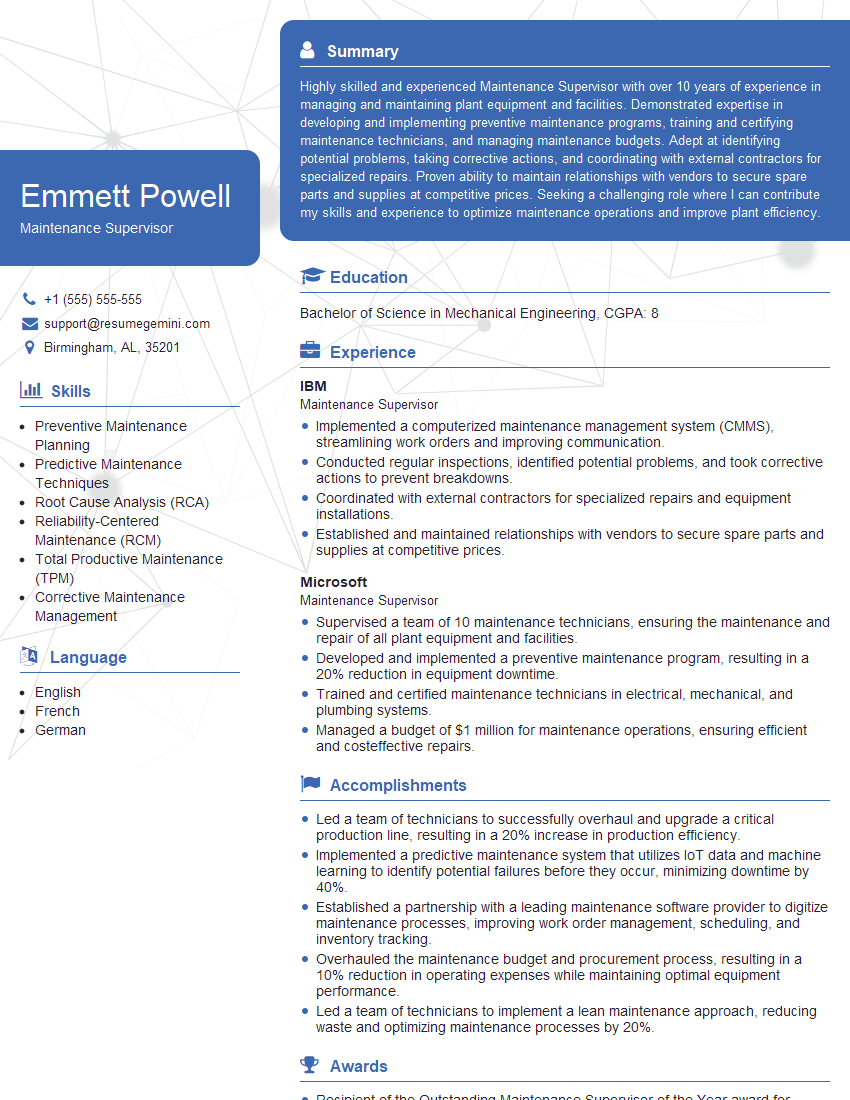
Maintenance Supervisor Resume Sample
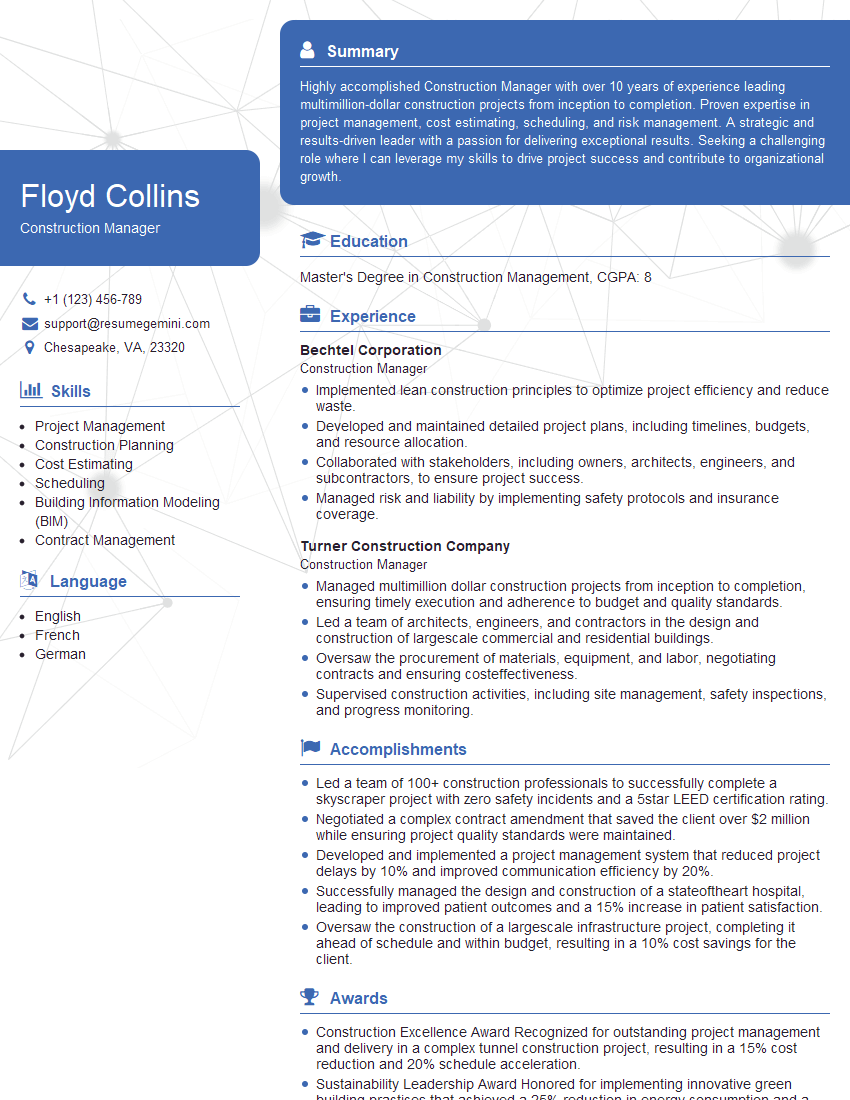
Construction Manager Resume Sample

Project Engineer Resume Sample

Electrical Estimator Resume Sample

Automation Engineer Resume Sample
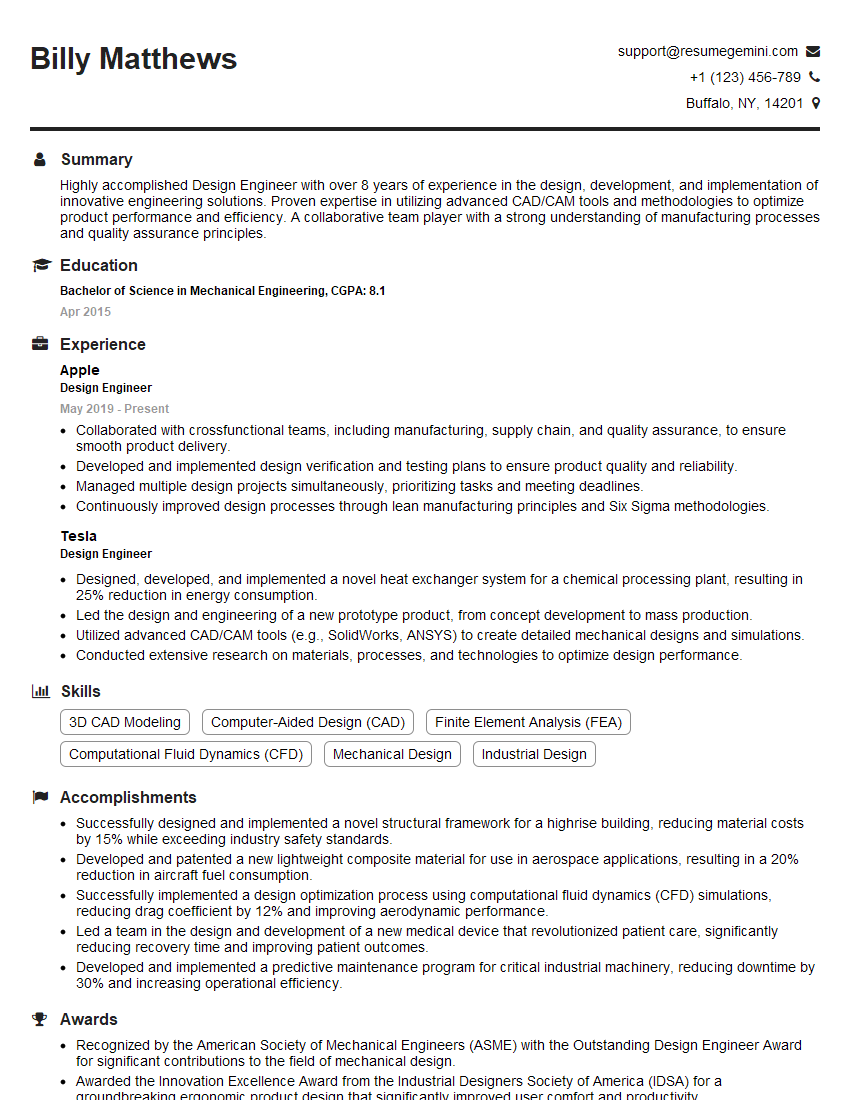
Design Engineer Resume Sample

Field Service Engineer Resume Sample
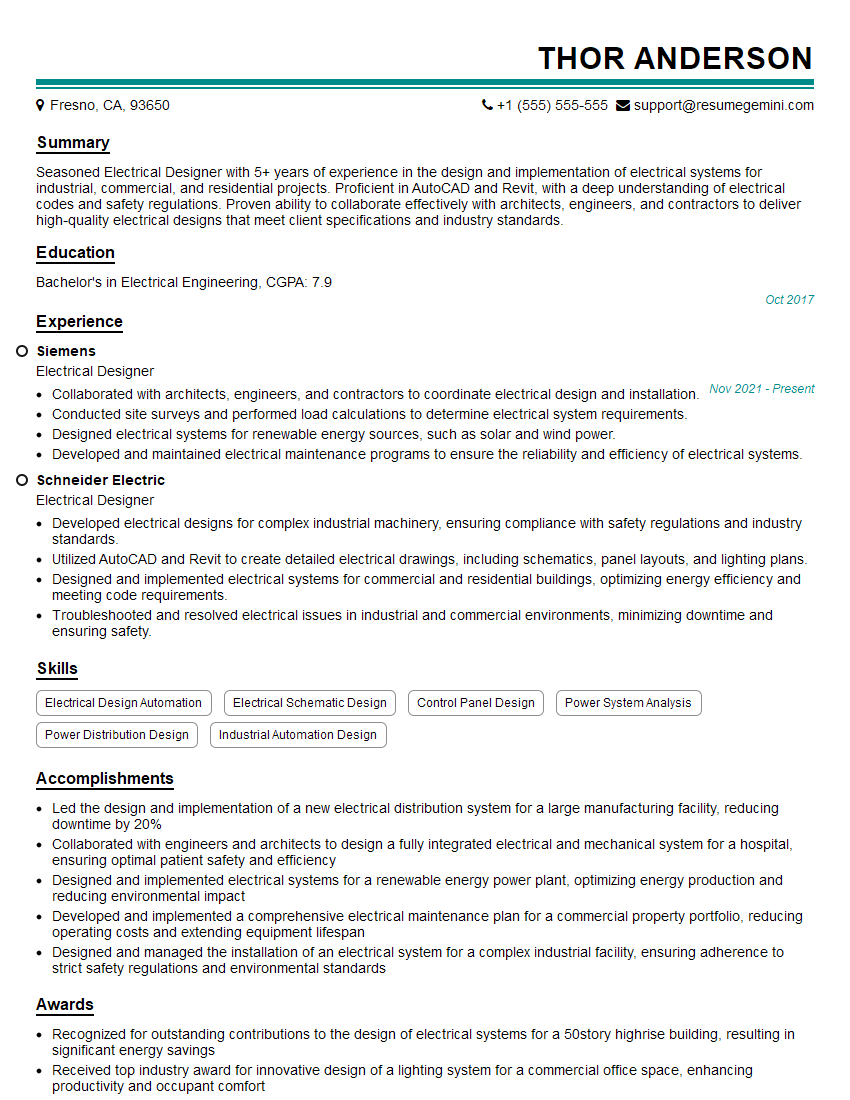
Electrical Designer Resume Sample

Electrical Engineer Resume Sample
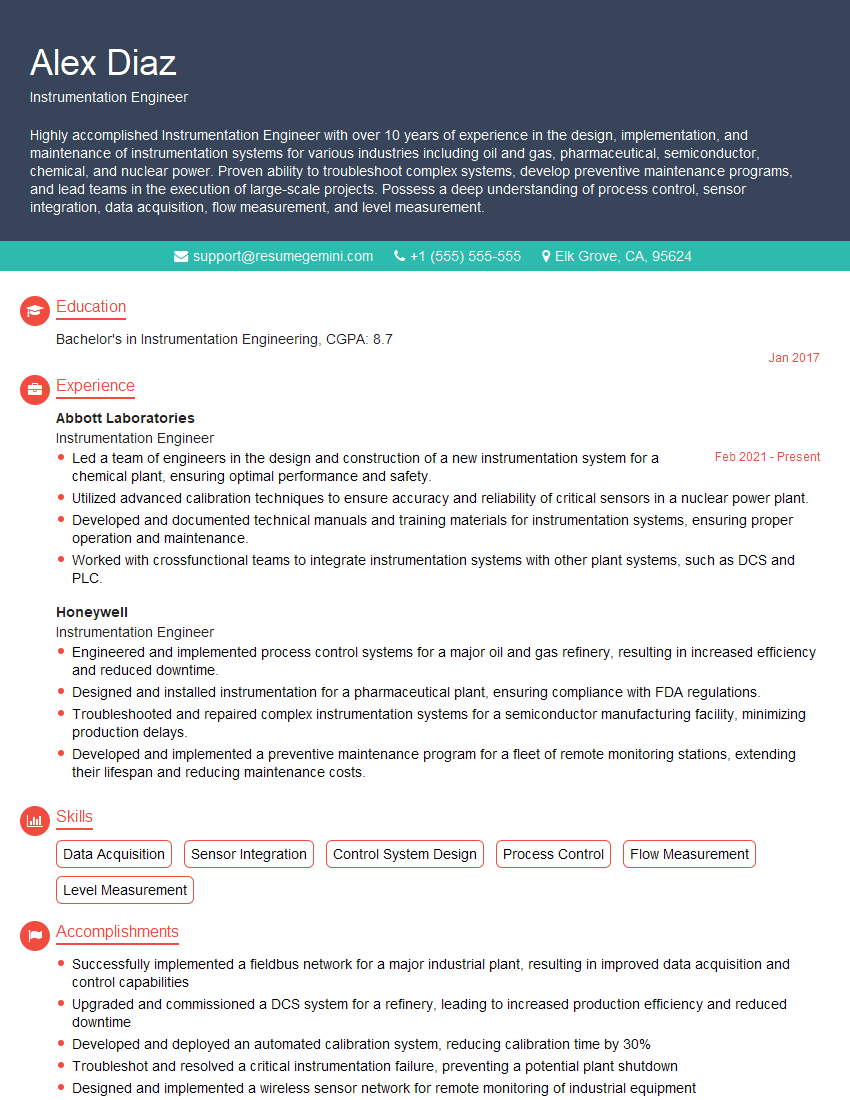
Instrumentation Engineer Resume Sample
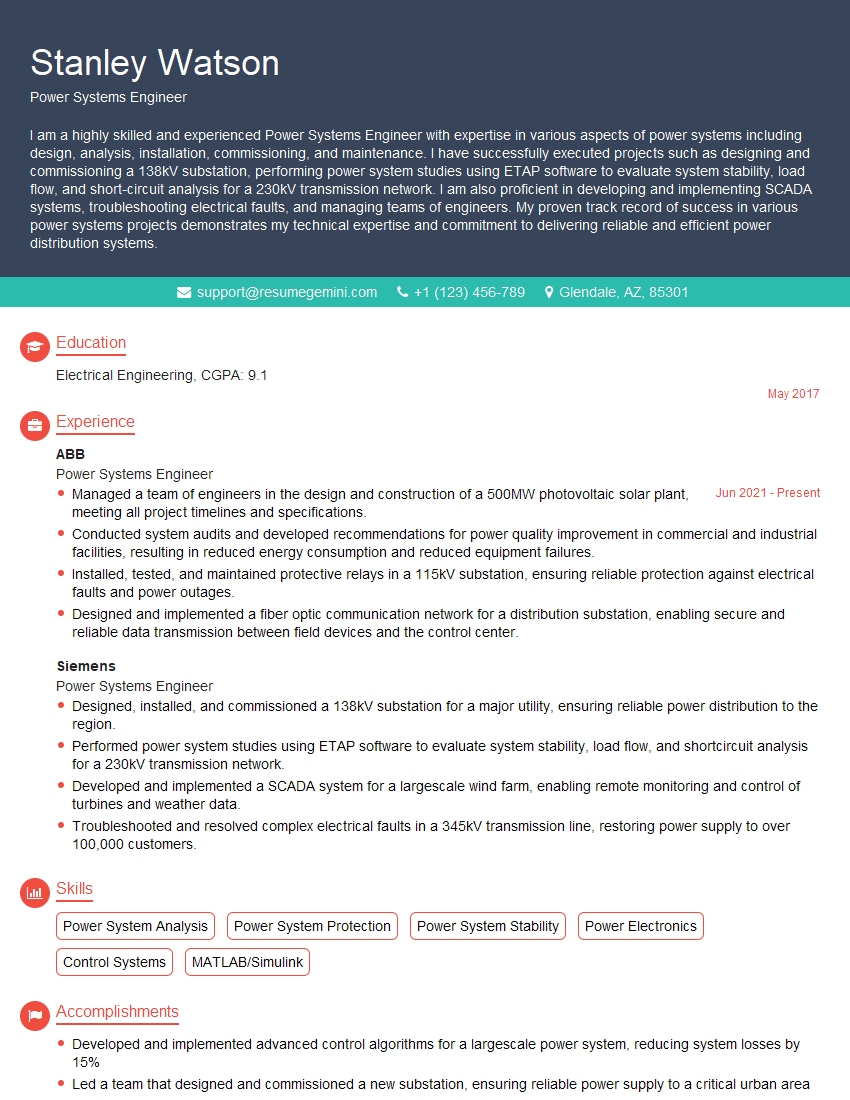
Power Systems Engineer Resume Sample
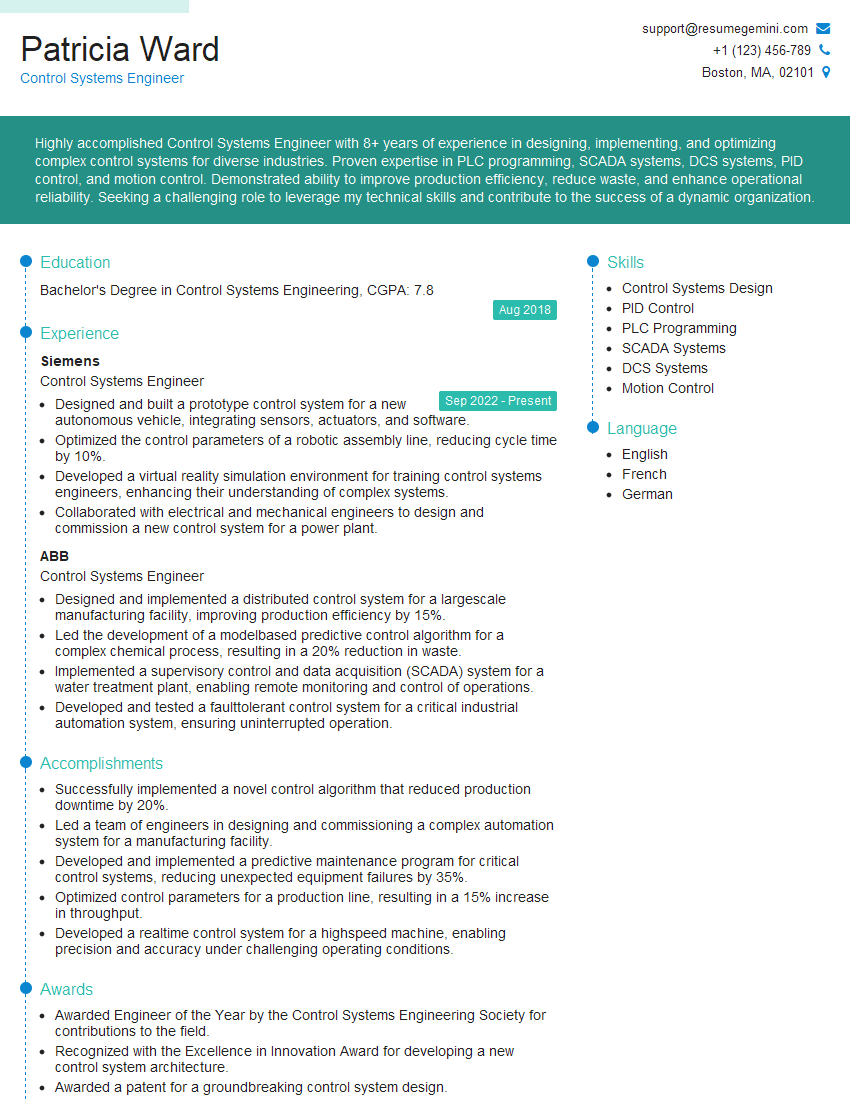
Control Systems Engineer Resume Sample
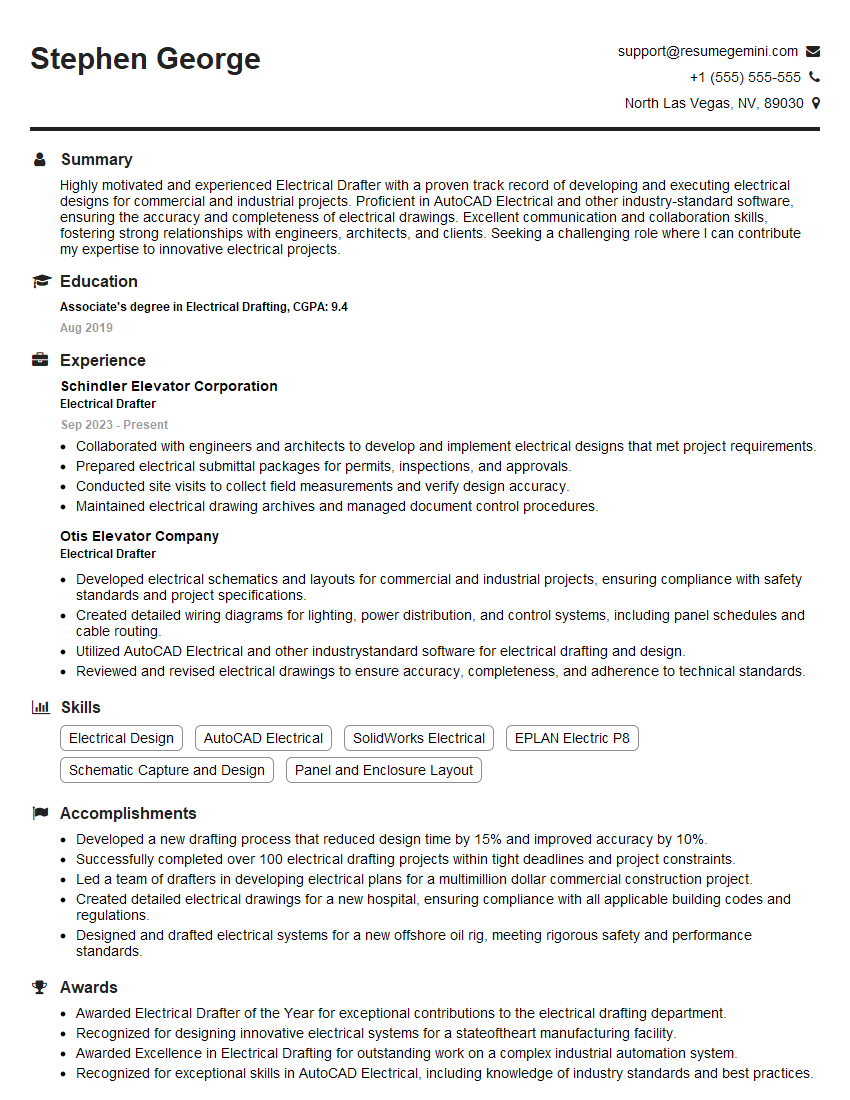
Electrical Drafter Resume Sample
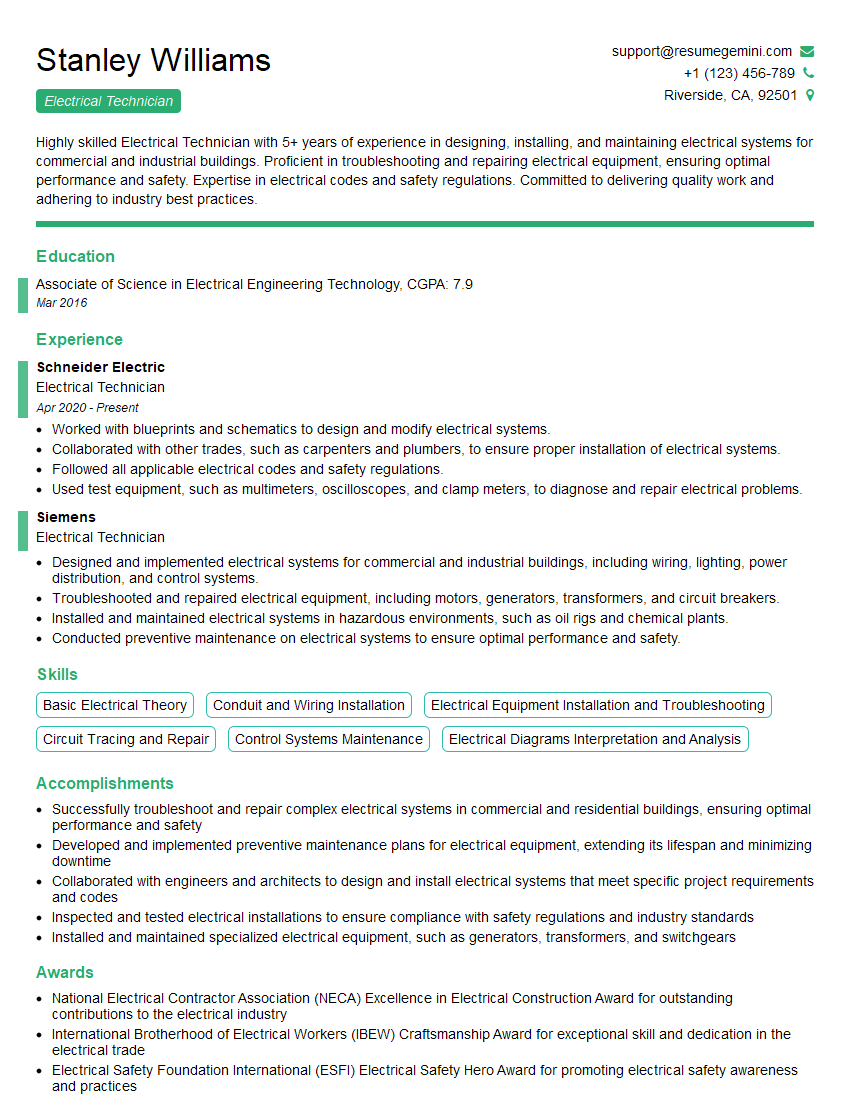
Electrical Technician Resume Sample

Blueprint Reader Resume Sample
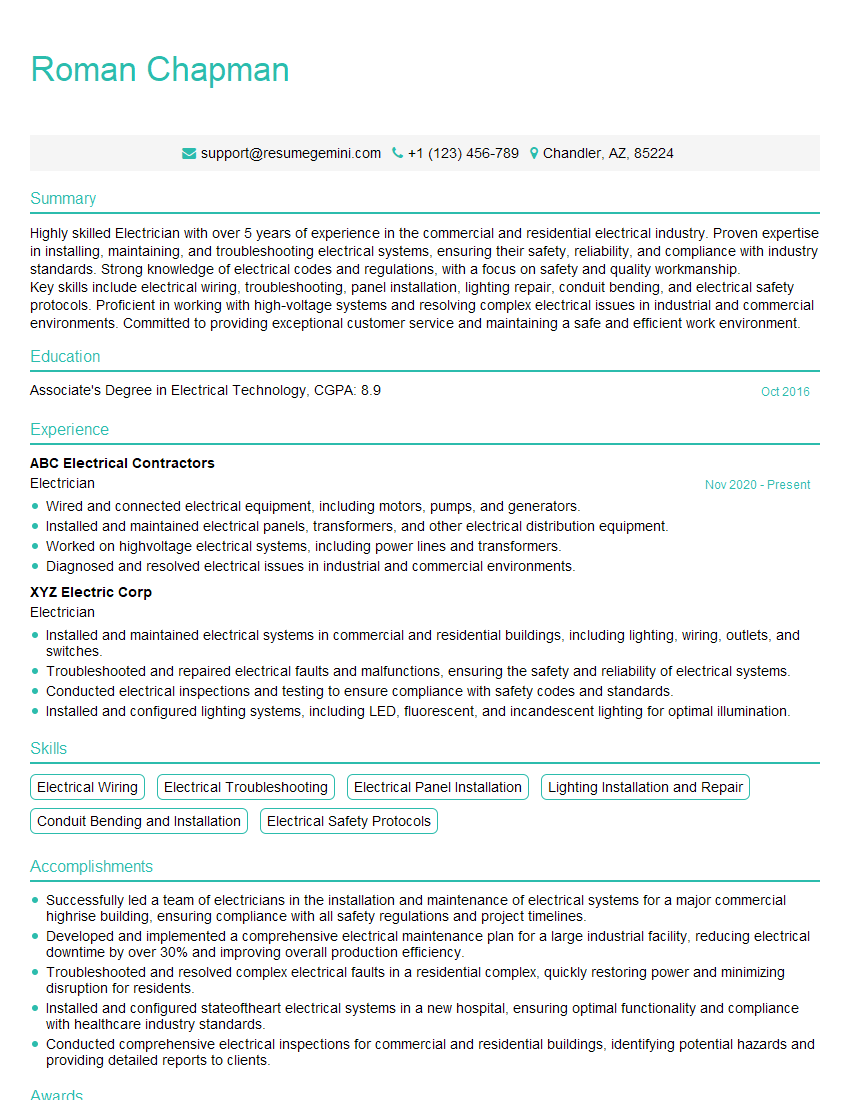
Electrician Resume Sample

Maintenance Electrician Resume Sample
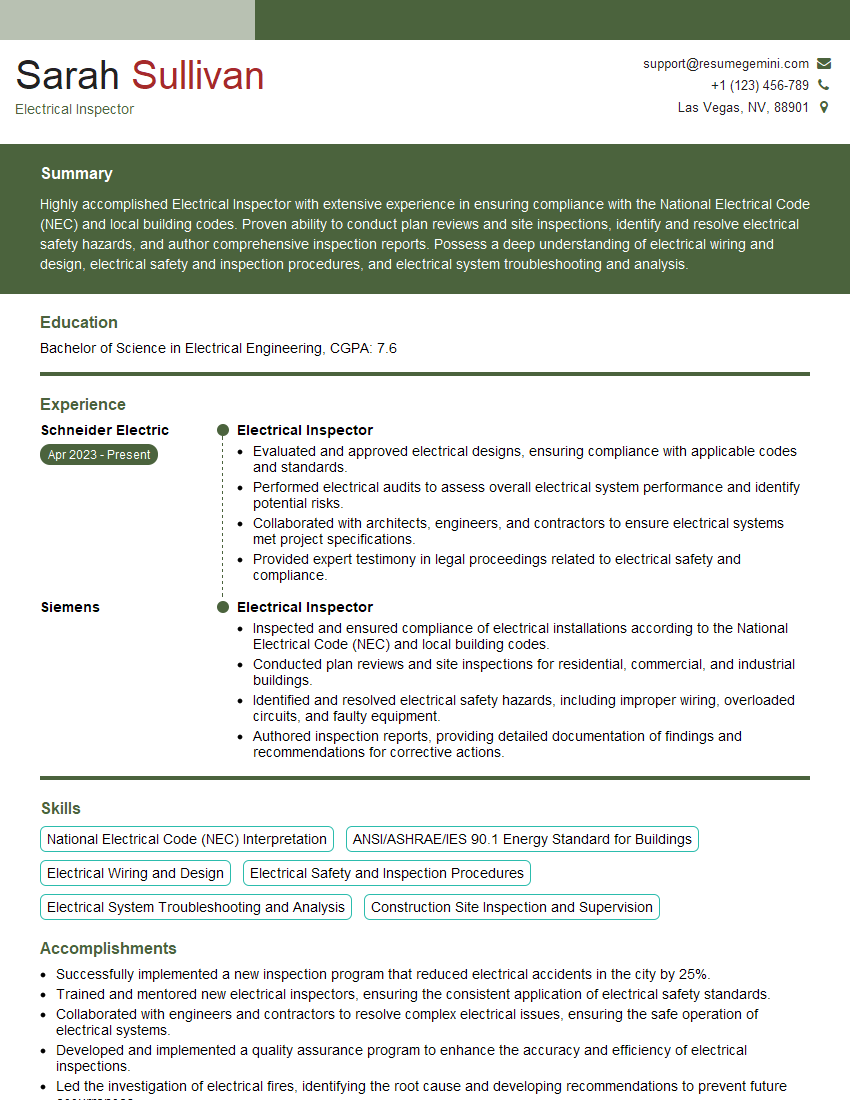
Electrical Inspector Resume Sample
- Electrical Superintendent
- Maintenance Supervisor
- Construction Manager
- Project Engineer
- Electrical Estimator
- Automation Engineer
- Design Engineer
- Field Service Engineer
- Electrical Designer
- Electrical Engineer
- Instrumentation Engineer
- Power Systems Engineer
- Control Systems Engineer
- Electrical Drafter
- Electrical Technician
- Blueprint Reader
- Electrician
- Maintenance Electrician
- Electrical Inspector
Explore more articles
Users Rating of Our Blogs
Share Your Experience
We value your feedback! Please rate our content and share your thoughts (optional).
What Readers Say About Our Blog
To the interviewgemini.com Webmaster.
Very helpful and content specific questions to help prepare me for my interview!
Thank you
To the interviewgemini.com Webmaster.
This was kind of a unique content I found around the specialized skills. Very helpful questions and good detailed answers.
Very Helpful blog, thank you Interviewgemini team.