Every successful interview starts with knowing what to expect. In this blog, we’ll take you through the top Transurethral Surgery interview questions, breaking them down with expert tips to help you deliver impactful answers. Step into your next interview fully prepared and ready to succeed.
Questions Asked in Transurethral Surgery Interview
Q 1. Describe the indications for transurethral resection of the prostate (TURP).
Transurethral resection of the prostate (TURP) is a surgical procedure used to treat benign prostatic hyperplasia (BPH), also known as an enlarged prostate. It’s indicated when medical management fails to provide adequate symptom relief or when complications arise. Specifically, TURP is indicated for men experiencing:
- Obstructive urinary symptoms like frequent urination, weak urine stream, hesitancy, straining to urinate, nocturia (frequent nighttime urination), and incomplete bladder emptying.
- Significant urinary retention requiring intermittent catheterization.
- Recurrent urinary tract infections (UTIs) due to urinary retention.
- Bladder stones secondary to urinary obstruction.
- Bladder damage from chronic urinary retention.
Essentially, if a man’s enlarged prostate significantly impacts his quality of life due to urinary problems, and conservative treatments haven’t worked, TURP becomes a viable option. Consider, for instance, a 70-year-old patient experiencing severe nocturia, leading to sleep deprivation and impacting his overall well-being. In such cases, TURP might be considered after unsuccessful medication trials.
Q 2. What are the contraindications for TURP?
While TURP is a highly effective procedure, certain contraindications exist. These are situations where the risks of the surgery outweigh the potential benefits. Key contraindications include:
- Active urinary tract infection (UTI): The infection needs to be treated first to prevent its spread during surgery.
- Severe cardiovascular disease: TURP requires general or spinal anesthesia, posing risks for individuals with unstable cardiac conditions.
- Bleeding disorders or uncontrolled coagulopathy: The risk of excessive bleeding during and after surgery is significantly increased.
- Severe neurologic disorders: These can affect the patient’s ability to cooperate during the procedure and recovery.
- Narrowed urethral stricture: This can hinder the insertion of the resectoscope.
- Inability to tolerate bladder catheterization: Post-operative bladder catheterization is essential, and patients with this difficulty present increased risk.
Proper assessment of the patient’s overall health is crucial before proceeding with TURP. For example, a patient with a history of heart failure would necessitate a thorough cardiovascular evaluation before considering the procedure.
Q 3. Explain the steps involved in performing a TURP.
TURP involves using a specialized instrument called a resectoscope, inserted through the urethra. The procedure generally follows these steps:
- Anesthesia: Spinal or general anesthesia is administered.
- Resectoscope insertion: The resectoscope, equipped with a cutting loop or roller, is carefully advanced into the urethra and bladder.
- Prostatic tissue resection: The surgeon uses the resectoscope to systematically remove the excess prostatic tissue obstructing the urethra. This is done under direct vision, with the tissue being simultaneously cut and coagulated to minimize bleeding.
- Irrigation and hemostasis: The bladder is continuously irrigated with fluid to clear debris and maintain visibility. The surgeon ensures meticulous hemostasis (stopping bleeding) throughout the procedure.
- Catheter placement: A three-way catheter is placed into the bladder to facilitate continuous irrigation and drainage post-operatively.
- Closure: No suturing is typically required.
The entire process takes approximately 1-2 hours, depending on the size of the prostate and the extent of resection required. Imagine it as carefully sculpting away the excess prostate tissue to create a wider passage for urine flow.
Q 4. What are the potential complications of TURP?
While TURP is generally safe and effective, potential complications exist. These can include:
- Bleeding: This is the most common complication, ranging from minor bleeding to life-threatening hemorrhage. Post-operative bleeding requires careful monitoring and management.
- Transurethral resection syndrome (TUR syndrome): This rare but serious complication involves fluid absorption during surgery, leading to hyponatremia (low sodium levels) and other electrolyte imbalances. Symptoms can include nausea, vomiting, confusion, and seizures.
- Urinary tract infection (UTI): The risk of infection is elevated due to catheterization and manipulation of the urinary tract.
- Urethral stricture: Scar tissue can form in the urethra, narrowing it and causing obstructive symptoms.
- Retrograde ejaculation: Semen may flow into the bladder instead of out the urethra, resulting in infertility in some cases.
- Impotence: Nerve damage during surgery is a rare but possible complication.
- Incontinence: Though rare, temporary or permanent incontinence can occur.
Careful patient selection and meticulous surgical technique help minimize these risks. Post-operative monitoring is crucial for early detection and management of complications.
Q 5. How do you manage bleeding during a TURP?
Bleeding management during TURP is crucial. Strategies involve:
- Careful tissue resection: Precise cutting and coagulation techniques minimize bleeding during the procedure itself.
- Continuous irrigation: The bladder is continuously irrigated with fluid to wash away blood clots and maintain clear visibility.
- Bipolar resection: This technique uses bipolar electrodes, reducing the risk of excessive fluid absorption and bleeding compared to the monopolar technique.
- Use of hemostatic agents: In cases of persistent bleeding, topical hemostatic agents can be applied.
- Post-operative monitoring: Close monitoring of urine output and hemoglobin levels is essential to detect and manage post-operative bleeding.
- Blood transfusion: In cases of significant blood loss, blood transfusion may be necessary.
Imagine a skilled surgeon using a precision tool to carefully remove the tissue, simultaneously cauterizing the blood vessels to prevent excessive bleeding. Post-operative monitoring is like keeping a watchful eye on the patient’s recovery to intervene if necessary.
Q 6. Describe the difference between TURP and transurethral incision of the prostate (TUIP).
Both TURP and transurethral incision of the prostate (TUIP) are minimally invasive procedures used to treat BPH, but they differ significantly in their approach. TURP involves resecting (removing) prostatic tissue, while TUIP involves incising (cutting) it. In TURP, a significant amount of prostate tissue is removed, creating a larger urethral opening. In TUIP, only a few strategically placed incisions are made in the prostate, relieving the obstruction. Think of it this way: TURP is like removing a large portion of a blockage, while TUIP is like making small cuts to alleviate the pressure.
Q 7. When is TUIP preferred over TURP?
TUIP is generally preferred over TURP in specific situations:
- Smaller prostate glands: TUIP is more suitable for men with smaller prostates (typically less than 30 grams).
- Lower risk of complications: TUIP carries a lower risk of bleeding and TUR syndrome compared to TURP.
- Shorter operative time: TUIP is usually a quicker procedure.
- Patients with higher surgical risk: For men with significant comorbidities that increase the surgical risk, TUIP may be a safer alternative.
For example, a patient with a relatively small prostate and a history of bleeding disorders might be a better candidate for TUIP. The choice between TURP and TUIP depends on various factors, and the surgeon makes this decision after a thorough assessment of the patient’s condition and prostate size.
Q 8. What are the advantages and disadvantages of using monopolar versus bipolar resection in TURP?
The choice between monopolar and bipolar resection in Transurethral Resection of the Prostate (TURP) depends heavily on the specific clinical scenario and surgeon preference. Both techniques utilize electrosurgery to resect prostatic tissue, but differ significantly in their energy delivery and safety profiles.
- Monopolar Resection: This traditional method uses a single active electrode to deliver high-frequency current. The current passes through the tissue to a grounding pad, usually placed on the patient’s thigh. It offers the advantage of high cutting and coagulation power, making it efficient for larger prostates. However, it carries a higher risk of inadvertent burns due to stray current, particularly if the irrigation fluid is conductive. The risk of TURP syndrome is also notably higher with monopolar systems.
- Bipolar Resection: In bipolar resection, the current flows between two electrodes located close together on the resectoscope. This localized current path minimizes the risk of stray current and reduces the potential for burns and TURP syndrome. It’s generally preferred for patients with a higher bleeding risk or those at increased risk of TURP syndrome, for instance, patients with cardiac issues or those who are dehydrated. Bipolar resection can however be less efficient, especially for larger prostates, requiring more time for the procedure.
In summary: Monopolar is powerful and faster but riskier; bipolar is safer but potentially slower and less efficient. The ideal approach depends on a careful assessment of the patient’s overall health and the size and characteristics of the prostate.
Q 9. How do you manage bladder spasms post-TURP?
Managing post-TURP bladder spasms is crucial for patient comfort and recovery. These spasms are typically caused by bladder irritation from the surgery and can be quite painful. Our approach is multi-faceted.
- Medication: We commonly prescribe antispasmodics such as oxybutynin or tolterodine to relax the bladder muscle. Analgesics, like NSAIDs or opioids (in severe cases), are used to manage pain.
- Fluid Management: Adequate hydration is crucial. We encourage patients to drink plenty of fluids to help flush out irritants.
- Catheter Management: The catheter itself can sometimes exacerbate spasms. We carefully monitor for signs of infection or blockage and provide appropriate catheter care instructions. In cases of persistent severe spasms, we may consider temporary catheter removal under careful monitoring.
- Patient Education: Educating the patient about the causes and management of bladder spasms empowers them to cope better. This includes advising them about potential symptoms and what to do in case of severe spasm.
In cases where spasms are severe or refractory to standard treatment, a referral to a urologist specializing in pelvic floor dysfunction may be necessary. They might suggest further investigation into the cause of the spasms or explore other treatment options.
Q 10. What are the different types of resectoscopes used in transurethral surgery?
Several types of resectoscopes are used in transurethral surgery, each with its own characteristics and advantages.
- Standard Resectoscopes: These are the most common type, featuring a working element at the distal end for cutting and coagulation. They are available in various sizes and designs, allowing for adaptation to the specific needs of the procedure.
- Bipolar Resectoscopes: As discussed earlier, these use a bipolar system for energy delivery, reducing the risk of electrosurgical complications.
- Plasma Kinetic Resectoscopes: These utilize plasma energy for tissue ablation, potentially offering advantages in hemostasis and minimizing the risk of TUR syndrome by using less irrigation fluid.
- Laser Resectoscopes: These devices use laser energy for tissue resection. Different laser types (e.g., Holmium:YAG, KTP) have different properties and applications. Laser resection often provides better hemostasis and may be particularly useful in specific situations, such as resection of large adenomas or in patients with a history of bleeding disorders.
The choice of resectoscope depends on factors such as prostate size, patient comorbidities, and surgeon preference. Each type offers distinct benefits and drawbacks, and a thorough evaluation of the patient’s clinical picture should be performed before selecting the most suitable device.
Q 11. Explain the principles of electrosurgery in transurethral procedures.
Electrosurgery is fundamental to transurethral procedures. It utilizes high-frequency alternating current to cut and coagulate tissue. The principles involve generating heat within the tissue by the passage of this current. The process can be understood through two main mechanisms:
- Cutting: High-frequency current rapidly heats the tissue, causing vaporization and incision. The speed of the process minimizes bleeding.
- Coagulation: Lower-frequency current, or different settings on the electrosurgical generator, causes slower heating, denaturing proteins and causing coagulation (clotting) of blood vessels, helping to reduce bleeding during surgery.
The electrical energy is delivered via the resectoscope’s electrode, and the surgical field is irrigated with a fluid solution that acts as a conductor for the current and helps to remove resected tissue fragments. Proper grounding is crucial to prevent electrical burns in the patient. Modern electrosurgical units have sophisticated safety mechanisms to monitor and regulate current delivery, enhancing the safety of these procedures. Careful technique and continuous monitoring are essential for minimizing potential complications.
Q 12. How do you monitor fluid balance during transurethral surgery?
Precise fluid balance monitoring during transurethral surgery is paramount to prevent TURP syndrome. The high fluid volumes used for irrigation can lead to fluid overload if not carefully managed. Our monitoring strategies include:
- Precise Fluid Input and Output Measurement: We meticulously record the amount of irrigation fluid infused and the amount of fluid returned. This allows us to calculate the fluid balance accurately.
- Blood Pressure and Heart Rate Monitoring: Changes in blood pressure and heart rate can indicate early signs of fluid overload or electrolyte imbalance.
- Electrolyte Monitoring: We may periodically check serum electrolytes (sodium, potassium) to detect any imbalances. This is crucial because absorption of irrigation fluid can cause significant electrolyte changes and lead to TURP syndrome.
- Urine Output Monitoring: The patient’s urine output is monitored. Low urine output can signal fluid overload, particularly if it does not correspond to the volume of irrigant being used.
- Weight Monitoring: This can be a useful adjunct to assess fluid balance, though it is more frequently employed in longer surgeries.
These monitoring parameters help us proactively detect potential problems and adjust fluid management accordingly, minimizing the risk of complications.
Q 13. What are the different irrigation solutions used and their advantages/disadvantages?
Several irrigation solutions are used during transurethral surgery, each with its own set of advantages and disadvantages.
- Glycine: This is a frequently used solution because of its relatively low conductivity and low osmolarity. It is commonly preferred for monopolar resection. However, significant absorption of glycine can lead to metabolic acidosis.
- Sorbitol: This solution has higher osmolarity and less tendency to cause acidosis than glycine. However, its higher conductivity means it carries an increased risk of electrosurgical burns with monopolar systems. It’s often preferred with bipolar systems.
- Mannitol: Another option, but its use has declined in favor of glycine and sorbitol due to its potential side effects.
- Electrolyte solutions (e.g., Ringer’s lactate): While offering electrolyte replenishment, the high conductivity increases the risk of electrosurgical complications and should be employed with caution and preference for bipolar systems.
The choice of irrigation solution depends on the type of resectoscope being used (monopolar vs. bipolar), the specific needs of the patient, and the potential for irrigant absorption. A thorough understanding of the properties of each solution is crucial for safe and effective surgery.
Q 14. Describe your experience with managing TUR syndrome.
TUR syndrome, characterized by hyponatremia (low sodium levels in the blood) and fluid overload, is a serious complication of transurethral surgery. My experience in managing TUR syndrome emphasizes prompt recognition and aggressive treatment. Early signs, like nausea, vomiting, altered mental status, and hypertension or hypotension, are crucial indicators.
Management includes:
- Immediate cessation of irrigation: Stopping the flow of irrigation fluid is the first crucial step.
- Fluid Restriction: Limiting further fluid intake is essential to prevent further dilution of electrolytes.
- Electrolyte Correction: Intravenous administration of hypertonic saline solution is often used to correct hyponatremia. Careful monitoring of serum electrolytes is critical.
- Supportive Care: This may include oxygen therapy, monitoring vital signs, and managing any associated symptoms like nausea and vomiting.
- Furosemide: Diuretic that may be utilized to increase diuresis and promote electrolyte balance, though not universally favored due to risk of potassium depletion.
In severe cases, intensive care unit (ICU) admission may be necessary for close monitoring and treatment. Prevention is key: rigorous fluid balance monitoring during the procedure is our primary strategy to minimize this risk.
I have personally managed several cases of TUR syndrome, and each one underscores the importance of vigilant monitoring, rapid diagnosis, and prompt, decisive treatment to ensure the best possible patient outcomes. Early detection and swift intervention are critical for survival and minimizing long-term complications.
Q 15. How do you assess the adequacy of resection during a TURP?
Assessing the adequacy of resection during a Transurethral Resection of the Prostate (TURP) is crucial for achieving successful symptom relief and preventing complications. We primarily rely on visual inspection during the procedure itself, aiming for a smooth, evenly resected prostatic bed. Think of it like sculpting – we want a uniform surface, not a bumpy one.
Several factors contribute to this assessment:
- Visual inspection: The surgeon directly visualizes the prostatic bed through the resectoscope. A pale, homogenous appearance suggests complete resection. Residual tissue will appear darker and more irregular.
- Palpation: Gentle palpation with the resectoscope sheath helps determine the remaining prostatic tissue. This provides a tactile confirmation of the visual assessment.
- Intraoperative measurements: While not universally used, some surgeons may utilize intraoperative ultrasound or other imaging modalities to assess the completeness of resection.
- Flowmetry: Although not directly visualizing the resection, flowmetry (measuring urine flow rate) during surgery can indirectly suggest the extent of resection. A significant improvement indicates successful resection.
Ultimately, achieving a smooth, uniformly resected prostatic bed with minimal bleeding is the goal. Experience and judgment are key to balancing thorough resection with the risk of complications such as excessive bleeding or perforation.
Career Expert Tips:
- Ace those interviews! Prepare effectively by reviewing the Top 50 Most Common Interview Questions on ResumeGemini.
- Navigate your job search with confidence! Explore a wide range of Career Tips on ResumeGemini. Learn about common challenges and recommendations to overcome them.
- Craft the perfect resume! Master the Art of Resume Writing with ResumeGemini’s guide. Showcase your unique qualifications and achievements effectively.
- Don’t miss out on holiday savings! Build your dream resume with ResumeGemini’s ATS optimized templates.
Q 16. What are the postoperative instructions for patients undergoing TURP?
Post-operative instructions after a TURP are critical for a successful recovery. They focus on preventing complications like bleeding, infection, and urinary retention. Instructions are tailored to the patient’s individual needs but generally include:
- Fluid intake: Patients are encouraged to drink plenty of fluids to help flush out the urinary tract and prevent clot formation, reducing the risk of post-operative obstruction.
- Catheter care: A catheter is usually in place for several days, and patients are instructed on proper hygiene to prevent infection. Specific care instructions, including cleaning techniques and signs of infection, are provided.
- Medication management: Patients are prescribed antibiotics to prevent infection and pain medication to manage discomfort. They’re given clear instructions on dosage, timing, and potential side effects.
- Follow-up appointments: Regular follow-up appointments are scheduled to monitor healing, check for complications, and evaluate urinary function. This allows for timely intervention if any issues arise.
- Activity restrictions: Patients are advised to avoid strenuous activity and heavy lifting for several weeks to allow for proper healing.
- Dietary recommendations: A balanced diet is recommended, and some surgeons may advise against consuming certain foods (e.g. those high in oxalates) to help reduce potential bladder irritation.
Clear and concise instructions, often provided in written form and reinforced verbally, are crucial to patient understanding and compliance. We emphasize the importance of contacting the clinic immediately if any concerning symptoms develop.
Q 17. How do you prevent and manage post-operative infection after TURP?
Preventing and managing post-operative infection after a TURP is paramount. Infections are a serious complication that can prolong hospital stay and lead to significant morbidity. Our approach is multi-faceted:
- Prophylactic antibiotics: Broad-spectrum antibiotics are administered before the procedure to reduce the risk of bacterial infection.
- Aseptic technique: Strict adherence to aseptic techniques during the procedure is crucial to minimize the risk of introducing bacteria. This involves meticulous sterilization of instruments and the surgical field.
- Catheter care: Proper catheter care is essential to prevent urinary tract infections. Patients are educated on hygienic practices and signs of infection.
- Fluid management: Adequate fluid intake helps flush bacteria from the urinary tract, reducing infection risk.
- Early detection and treatment: Close monitoring for signs of infection, including fever, chills, and cloudy urine, allows for prompt diagnosis and treatment with appropriate antibiotics.
- Surgical irrigation: During the procedure, we use sterile irrigation solutions to continuously flush debris and bacteria from the surgical field.
If an infection does occur, prompt treatment with intravenous antibiotics tailored to the causative organism is essential. Regular monitoring of vital signs and blood work is crucial to assess the patient’s response to treatment.
Q 18. Describe your experience with different types of urethral strictures and their management.
Urethral strictures, narrowings of the urethra, can be challenging to manage. The approach depends on several factors, including the location, length, and severity of the stricture. I’ve encountered various types, including:
- Bulbar strictures: These are common, often resulting from trauma or infection. Management can involve urethral dilation, internal urethrotomy, or urethral reconstruction.
- Membranous strictures: Located at the membranous urethra, these are often more complex and may require more advanced techniques such as buccal mucosal graft urethroplasty or a penile skin graft.
- Penile strictures: These can result from trauma, infection, or iatrogenic causes (caused by medical treatment). Management strategies are similar to those for bulbar strictures.
- Posterior urethral strictures: These are often associated with significant challenges. They frequently involve complex reconstructive procedures.
My approach involves a thorough history and physical exam, including urethroscopy and imaging (such as retrograde urethrography) to assess the stricture. The choice of management depends on the individual patient’s specific situation and includes less invasive options such as dilation before progressing to more involved procedures if needed. Patient selection for specific surgical techniques is critical for optimal outcomes.
Q 19. Discuss your approach to evaluating a patient with hematuria.
Evaluating a patient presenting with hematuria (blood in the urine) requires a systematic approach to identify the underlying cause, which can range from benign to life-threatening conditions.
My approach typically involves:
- Detailed history: This includes questions about the nature of the hematuria (gross vs. microscopic, duration, associated symptoms such as pain or frequency), recent illnesses or infections, family history of kidney disease or cancer, and medication use.
- Physical examination: A complete physical exam, including a digital rectal examination (DRE) to assess the prostate, is crucial.
- Urinalysis and urine culture: These tests help detect infection, stones, or other abnormalities in the urine.
- Imaging studies: Depending on the clinical findings, imaging modalities such as ultrasound, CT scan, or MRI may be used to identify abnormalities in the kidneys, bladder, or urethra.
- Cystoscopy: This procedure allows direct visualization of the bladder and urethra, helping identify lesions or abnormalities.
- Biopsy: If a suspicious lesion is identified, a biopsy may be necessary to determine whether it is benign or malignant.
The diagnostic workup is tailored to the patient’s presentation and risk factors. It’s important to consider both benign and malignant causes, and prompt investigation is crucial, especially in cases of gross hematuria.
Q 20. How do you differentiate between benign prostatic hyperplasia (BPH) and prostate cancer?
Differentiating between benign prostatic hyperplasia (BPH) and prostate cancer requires a multi-faceted approach. Both can present with similar symptoms, such as urinary frequency, urgency, and nocturia, but their underlying mechanisms and management are vastly different.
Key differentiating factors include:
- Digital Rectal Examination (DRE): While BPH typically feels like a smooth, enlarged prostate, prostate cancer might feel hard, nodular, or asymmetric. However, DRE is not definitive.
- Prostate-specific antigen (PSA) blood test: An elevated PSA level can suggest BPH or prostate cancer, but it’s not specific to either condition. Further investigation is necessary.
- Transrectal Ultrasound (TRUS) with biopsy: TRUS is used to guide biopsies to sample suspicious areas of the prostate. Histopathological examination of the biopsy samples confirms the diagnosis of prostate cancer.
- Uroflowmetry: This test measures the rate of urine flow. While often affected in both conditions, patterns might provide some clues.
- Post-void residual (PVR) urine volume measurement: An elevated PVR, suggesting incomplete bladder emptying, is frequently seen in both BPH and prostate cancer.
A thorough evaluation combining these methods, considering the patient’s age, symptoms, and risk factors, is crucial for accurate diagnosis. It’s important to remember that BPH and prostate cancer can co-exist.
Q 21. What imaging modalities are used to evaluate the prostate?
Several imaging modalities are used to evaluate the prostate, each with its own strengths and limitations. The choice depends on the clinical question.
- Transrectal Ultrasound (TRUS): This is the most commonly used imaging modality for prostate evaluation. It allows for real-time visualization of the prostate gland, guiding biopsies for cancer detection.
- Magnetic Resonance Imaging (MRI): MRI provides excellent anatomical detail and is increasingly used for prostate cancer staging, particularly multiparametric MRI (mpMRI), which combines different MRI sequences to better characterize prostate lesions.
- Computed Tomography (CT): CT scans are less frequently used for primary prostate evaluation but can be helpful in assessing the extent of disease, particularly in advanced stages of prostate cancer.
- Nuclear medicine scans (e.g., bone scan): These are used to detect bone metastases in advanced prostate cancer.
The selection of the appropriate imaging modality is guided by the clinical scenario. For example, TRUS-guided biopsy is commonly used for cancer detection, while mpMRI is frequently used to pre-select biopsy targets, enhancing the efficiency and accuracy of the procedure.
Q 22. What are the long-term risks associated with TURP?
Long-term risks associated with Transurethral Resection of the Prostate (TURP) are thankfully less frequent than short-term complications, but they’re crucial to discuss with patients. These can include:
- Retrograde ejaculation: This is the most common long-term complication. Essentially, semen travels backward into the bladder instead of out the urethra during orgasm. It’s usually not harmful but can impact fertility in some cases. I always explain to my patients that this is a possible outcome, and its impact on their quality of life can vary greatly.
- Urinary incontinence: While usually temporary, some men experience persistent stress incontinence or urge incontinence after TURP, particularly those with pre-existing bladder conditions. We take measures during and after the surgery to minimize this risk.
- Erectile dysfunction: Nerve damage during the procedure is a rare but possible cause of erectile dysfunction, and its likelihood depends greatly on the surgical technique and the patient’s pre-existing condition.
- Stricture: Scarring within the urethra can lead to a narrowing of the passage, causing urinary obstruction. Regular follow-up visits help detect and manage this complication.
- TURP syndrome: This is a rare but serious complication that involves fluid absorption during surgery, causing electrolyte imbalances. We carefully monitor fluid balance during the procedure to mitigate this risk.
The frequency of these complications varies widely based on factors such as the surgeon’s experience, the patient’s overall health, and the size of the prostate.
Q 23. How do you counsel patients about the risks and benefits of TURP?
Counseling patients about TURP involves a balanced approach. I begin by clearly explaining the patient’s diagnosis and the underlying condition causing their symptoms, emphasizing the severity of their symptoms and how they impact their daily lives. Then, I outline the treatment options, including TURP, highlighting both the benefits and risks. For TURP specifically, I explain in detail the procedure itself, using simple language and visual aids if necessary. I delve into both short-term risks (e.g., bleeding, urinary retention) and the long-term risks detailed in the previous answer. We discuss their specific concerns and expectations. Importantly, I offer realistic alternatives, like watchful waiting or medication, explaining the potential advantages and disadvantages of each approach. Finally, I encourage open communication and answer all their questions thoroughly, ensuring they are fully informed before making a decision. It’s a collaborative process, not just a lecture.
Q 24. Describe your experience with holmium laser enucleation of the prostate (HoLEP).
My experience with HoLEP (Holmium Laser Enucleation of the Prostate) has been overwhelmingly positive. I’ve performed numerous HoLEP procedures, and I find it offers significant advantages in many cases. The precise nature of the laser allows for meticulous enucleation (removal) of the prostate tissue, minimizing collateral damage. This leads to less bleeding, quicker recovery times, and lower rates of complications compared to TURP in many patients. The ability to enucleate large prostates effectively without the need for extensive resection makes HoLEP a suitable option for a broader range of patients, including those with very large glands. I find the learning curve is steeper than TURP, but mastering the technique yields exceptional results.
Q 25. What are the advantages and disadvantages of HoLEP compared to TURP?
Compared to TURP, HoLEP boasts several advantages:
- Less bleeding: HoLEP’s use of a laser minimizes bleeding, resulting in a shorter hospital stay and reduced need for transfusions.
- Faster recovery: Patients often experience quicker recovery with less post-operative discomfort.
- Lower risk of complications: The precise nature of laser enucleation reduces the risk of several complications, such as retrograde ejaculation, incontinence, and stricture.
- Suitable for larger prostates: HoLEP can effectively manage very large prostates, something that poses more challenges to TURP.
However, HoLEP also has some disadvantages:
- Steeper learning curve: Mastering the HoLEP technique requires more training and experience than TURP.
- Longer procedure time: HoLEP procedures typically take longer than TURP.
- Higher initial cost: The laser equipment for HoLEP is more expensive than the equipment used for TURP.
The choice between HoLEP and TURP depends on the individual patient’s characteristics, the surgeon’s experience, and available resources.
Q 26. Describe your experience with GreenLight laser vaporization of the prostate.
GreenLight laser vaporization is another excellent minimally invasive approach for treating benign prostatic hyperplasia (BPH). My experience shows it to be a safe and effective technique, particularly well-suited for patients with moderate to severe BPH who are not good candidates for other procedures due to comorbidities or large prostate size. The vaporization process is gentler on the surrounding tissue than resection, leading to less bleeding and a faster recovery. I find that patient satisfaction is consistently high following GreenLight laser vaporization, and it’s a good option for those seeking a less invasive alternative to TURP. Similar to HoLEP, it does have a steeper learning curve than TURP, requiring specialized training and equipment.
Q 27. How do you manage patients with recurrent urinary retention after TURP?
Managing recurrent urinary retention after TURP requires a thorough evaluation to determine the underlying cause. This often involves a detailed history, physical examination, uroflowmetry, post-void residual measurement, and possibly cystoscopy to rule out stricture, bladder neck contracture, or other obstructions. Treatment strategies depend on the cause. If it’s due to a stricture, dilation or internal urethrotomy may be necessary. If bladder neck contracture is the issue, a transurethral incision or further surgical intervention might be considered. In some cases, medication adjustments or changes in fluid intake are sufficient. Persistent retention can also indicate the need for a re-evaluation of the initial TURP procedure. In the rare cases where non-surgical measures fail, a further surgical procedure, such as a Holmium laser enucleation or another open surgical procedure, may be required. Regular follow-up is key to ensuring timely intervention and preventing complications.
Q 28. What are the current trends and advancements in transurethral surgery?
Current trends in transurethral surgery are focused on minimally invasive techniques, improved outcomes, and personalized medicine. We’re seeing a rise in the use of advanced laser technologies, such as those mentioned previously, as well as waterjet ablation systems. These aim to reduce bleeding, shorten recovery time, and improve long-term outcomes. There’s a growing emphasis on utilizing advanced imaging techniques, like 3D ultrasound, to improve procedural precision. Furthermore, research is exploring novel energy sources and minimally invasive approaches, such as robotic-assisted transurethral surgery. The field is also moving towards more personalized treatment strategies, tailoring the surgical approach to the individual patient’s anatomy, symptoms, and overall health. For example, selecting the optimal procedure based on prostate size, comorbidities, and patient preferences. This approach allows us to further minimize risks and improve patient experience.
Key Topics to Learn for Transurethral Surgery Interview
- Transurethral Resection of the Prostate (TURP): Understand the indications, contraindications, procedure steps, potential complications, and postoperative management. Consider variations of the technique and advancements in instrumentation.
- Transurethral Incision of the Prostate (TUIP): Compare and contrast TUIP with TURP, focusing on patient selection criteria, procedural differences, and outcomes. Discuss the role of minimally invasive approaches.
- Transurethral Resection of Bladder Tumors (TURBT): Master the techniques involved, including identification of tumor margins, appropriate specimen handling, and assessment of depth of invasion. Explore the importance of pathology correlation.
- Electrocautery and Energy Sources: Demonstrate a thorough understanding of different energy sources used in transurethral surgery (e.g., monopolar, bipolar, plasma vaporization) and their respective advantages and limitations. Be prepared to discuss safety protocols.
- Complications and Management: Anticipate potential complications (e.g., bleeding, perforation, fluid overload, infection) and articulate effective strategies for prevention and management. Showcase your problem-solving skills in this area.
- Postoperative Care and Patient Education: Outline the key aspects of postoperative care, including pain management, catheter management, and patient education regarding recovery expectations and potential complications. Discuss the importance of follow-up care.
- Instrumentation and Technology: Familiarize yourself with the various instruments used in transurethral surgery, including resectoscopes, sheaths, and accessories. Discuss advancements in technology and their impact on surgical outcomes.
- Anesthesia Considerations: Understand the specific anesthetic considerations for transurethral procedures, including fluid management and hemodynamic monitoring.
Next Steps
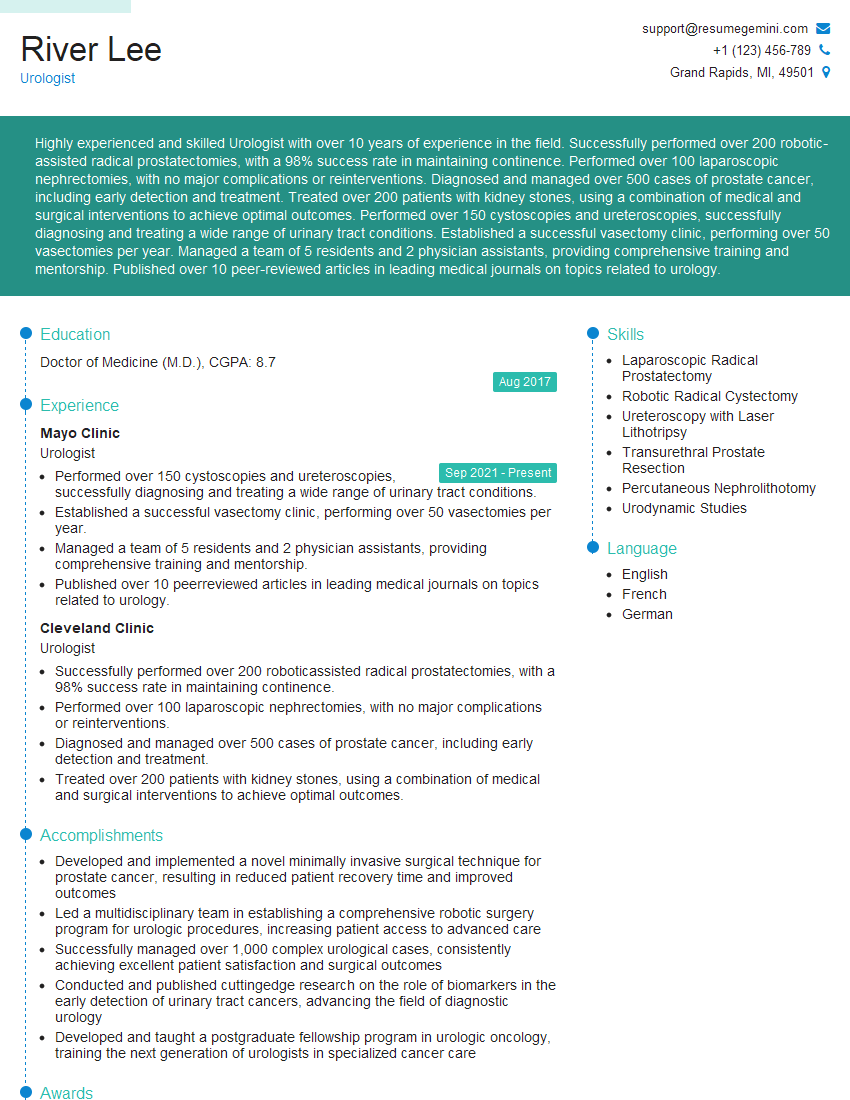
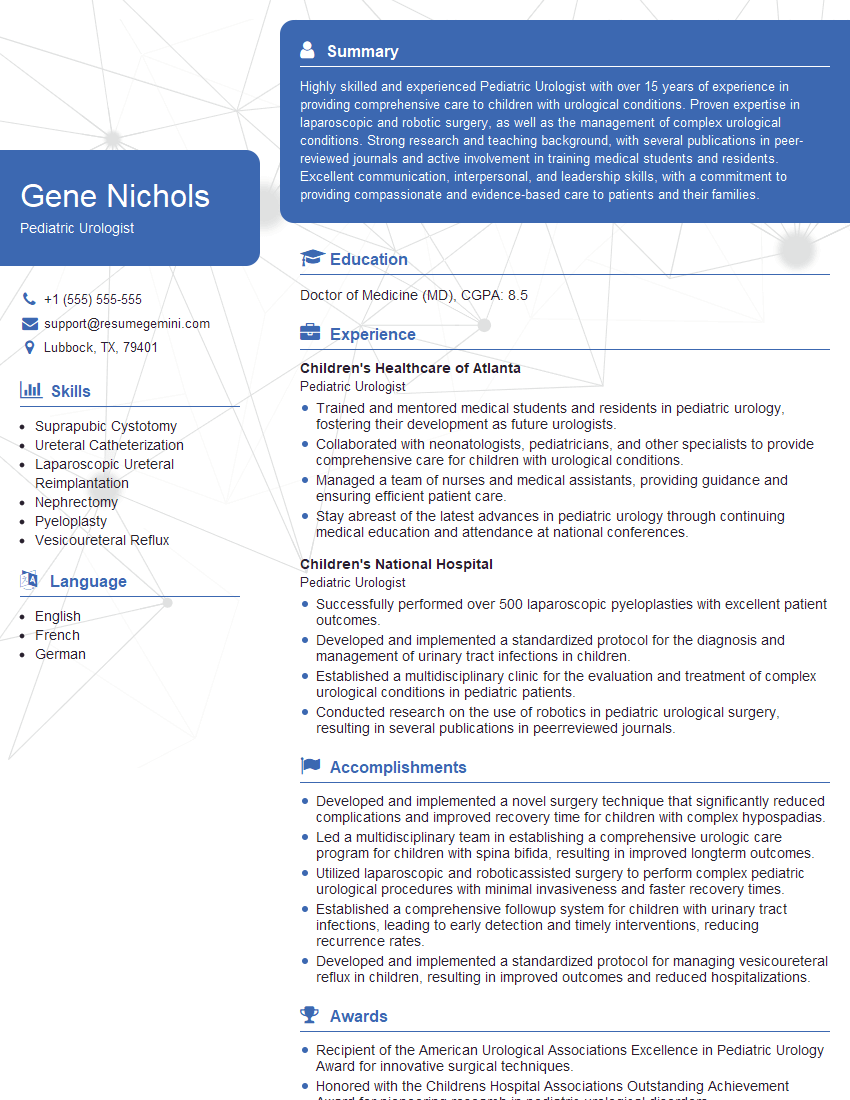
Mastering Transurethral Surgery opens doors to exciting career opportunities and positions you as a highly skilled and sought-after surgeon. To maximize your job prospects, a well-crafted, ATS-friendly resume is crucial. ResumeGemini is a trusted resource that can help you build a powerful resume showcasing your expertise. ResumeGemini provides examples of resumes tailored specifically to Transurethral Surgery, helping you present your skills and experience effectively. Invest time in crafting a compelling resume to significantly increase your chances of landing your dream job.
Explore more articles
Users Rating of Our Blogs
Share Your Experience
We value your feedback! Please rate our content and share your thoughts (optional).
What Readers Say About Our Blog
To the interviewgemini.com Webmaster.
Very helpful and content specific questions to help prepare me for my interview!
Thank you
To the interviewgemini.com Webmaster.
This was kind of a unique content I found around the specialized skills. Very helpful questions and good detailed answers.
Very Helpful blog, thank you Interviewgemini team.