The right preparation can turn an interview into an opportunity to showcase your expertise. This guide to Forensic Psychological Assessment interview questions is your ultimate resource, providing key insights and tips to help you ace your responses and stand out as a top candidate.
Questions Asked in Forensic Psychological Assessment Interview
Q 1. Describe the differences between competency to stand trial and criminal responsibility.
Competency to stand trial and criminal responsibility are distinct legal concepts, both crucial in the criminal justice system, but addressing different aspects of a defendant’s mental state. Competency to stand trial focuses on the defendant’s present ability to understand the charges against them and assist in their own defense. It’s a procedural issue; the trial can’t proceed if the defendant lacks this competency. This involves understanding the nature of the proceedings, the charges, potential penalties, and the roles of key players like the judge, jury, and attorney. They also need to be able to communicate effectively with their attorney and assist in building their defense. For instance, a defendant experiencing a severe psychotic episode might be deemed incompetent because they’re unable to understand the proceedings or rationally assist their lawyer.
Criminal responsibility, on the other hand, concerns the defendant’s mental state at the time of the crime. It addresses the question of whether the defendant’s mental state negates their culpability for the alleged offense. This is a substantive issue, determining whether the individual should be held legally accountable for their actions. The most common example is the insanity defense, which argues that due to a severe mental illness, the defendant lacked the capacity to understand the wrongfulness of their actions or to conform their conduct to the law. Imagine a case where someone commits a violent act during a dissociative fugue state – they may be competent to stand trial later, but their mental state at the time of the crime would be heavily scrutinized in determining criminal responsibility.
Q 2. Explain the concept of malingering in forensic psychological assessment.
Malingering in forensic psychological assessment refers to the intentional fabrication or exaggeration of psychological symptoms to achieve a specific external goal. This is a significant challenge, as it can severely impact the accuracy and fairness of evaluations. Individuals might feign mental illness to avoid criminal responsibility, obtain disability benefits, or gain leniency in sentencing. Detecting malingering requires a thorough assessment that goes beyond simply taking the individual’s statements at face value.
We use a multi-faceted approach. This includes reviewing collateral information (medical records, witness statements), administering specific psychological tests designed to detect malingering (e.g., the Structured Interview of Reported Symptoms, SIRS), and carefully scrutinizing the consistency and plausibility of the individual’s reported symptoms and behaviors. Inconsistencies between self-report and observed behavior, or between different assessments, are major red flags. For example, a defendant claiming profound amnesia might demonstrate surprisingly detailed knowledge of the events surrounding the crime when presented with certain cues, suggesting deliberate deception.
Q 3. What are the key ethical considerations in conducting forensic psychological evaluations?
Ethical considerations are paramount in forensic psychological evaluations. Our primary duty is to the court, which means providing objective, unbiased, and scientifically sound evaluations. This requires adherence to several ethical principles:
- Confidentiality: While we obtain information from various sources, we must carefully protect the confidentiality of the individuals involved, particularly when dealing with sensitive personal information. Exceptions include situations mandated by law, such as reporting child abuse or imminent threats to harm others.
- Competence: We must only undertake evaluations within our area of expertise. If a case requires specialized knowledge (e.g., neuropsychological assessment), we should refer the individual to a qualified professional.
- Objectivity and Impartiality: We must maintain neutrality and avoid allowing personal biases or beliefs to influence our evaluations. We aim to present all relevant information, even if it doesn’t support the referral question.
- Informed Consent: Individuals should be fully informed about the nature, purpose, and limitations of the evaluation before consenting to participate. This includes understanding the potential use of the findings and their right to refuse or withdraw from the evaluation at any point.
- Avoiding Conflicts of Interest: We must carefully manage any potential conflicts of interest that might compromise our objectivity. For instance, having a personal relationship with a party involved in the case would necessitate recusal.
Q 4. Discuss various methods for assessing risk of violence or recidivism.
Assessing risk of violence or recidivism is a complex process requiring a comprehensive approach. We don’t rely on any single method but integrate several sources of information:
- Clinical Interviews: These provide valuable insights into an individual’s history, symptoms, and current mental state. We explore factors such as past violent behavior, substance abuse, anger management problems, and social support.
- Psychological Testing: Specific instruments assess personality traits, psychopathology, and cognitive functioning that may be linked to violence risk. For example, Hare’s Psychopathy Checklist-Revised (PCL-R) is often used.
- Actuarial Risk Assessment Tools: These tools use statistical algorithms based on validated predictors of violence or recidivism. Examples include the Static-99R and the Violence Risk Appraisal Guide (VRAG). These are valuable for objective risk estimation, but don’t capture all the nuances of individual cases.
- Review of Collateral Information: We gather information from multiple sources, such as police reports, medical records, and school records, to build a complete picture.
It’s crucial to remember that risk assessment is probabilistic, not deterministic. The goal isn’t to predict with certainty whether someone will re-offend, but to identify factors that increase or decrease the likelihood and guide appropriate management strategies.
Q 5. How do you approach the integration of different data sources (e.g., interviews, records, test results) in forming a conclusion?
Integrating diverse data sources requires a systematic and critical approach. It’s not simply about accumulating information but carefully weighing its reliability and relevance to the referral question. I utilize a structured process:
- Data Collection: Thorough collection of data from all relevant sources (interviews, records, test results).
- Data Evaluation: Critical evaluation of each data source, considering its strengths and limitations. For example, self-reported information is susceptible to bias, while official records may lack crucial contextual details.
- Hypothesis Generation: Formulation of hypotheses based on initial data analysis. We ask ourselves: What is the most plausible explanation for this individual’s behavior and current mental state?
- Hypothesis Testing: Testing these hypotheses by examining the consistency of data across different sources. Do the interview data align with the test results and collateral information? Discrepancies require careful scrutiny and explanation.
- Conclusion Formulation: Development of a comprehensive conclusion that integrates all relevant information, highlighting both supporting and conflicting data. This includes clearly stating the limitations of the findings and uncertainties.
This process allows for a nuanced and comprehensive understanding of the individual, which is vital for informed decision-making in forensic contexts.
Q 6. What are the limitations of psychological testing in forensic contexts?
While psychological testing provides valuable information in forensic contexts, it’s essential to acknowledge its limitations:
- Test Validity and Reliability: Tests can only measure what they were designed to measure. Some tests might not be equally valid or reliable across different populations or contexts. A test’s validity and reliability should always be critically assessed before interpretation.
- Test Interpretation: Test scores are not inherently diagnostic; interpretation requires clinical judgment and integration with other information. Test scores should never be the sole basis for forensic decisions.
- Response Bias and Malingering: Individuals may deliberately distort their responses, intentionally trying to present themselves in a favorable light (or unfavorable, in the case of malingering). These biases significantly impact the accuracy and reliability of test results.
- Cultural and Linguistic Bias: Some tests may be culturally or linguistically biased, potentially leading to inaccurate or unfair assessments of individuals from diverse backgrounds. This requires careful consideration of appropriate test selection and administration.
- Limited Scope: Psychological tests cannot assess all aspects of an individual’s personality, behavior, or mental state. They provide only a snapshot of certain aspects of functioning.
Q 7. Describe your experience with conducting forensic interviews with children.
My experience with conducting forensic interviews with children involves a thorough understanding of child development, trauma, and interview techniques specifically designed for this vulnerable population. I utilize a developmentally sensitive approach, tailoring my communication and questioning style to the child’s age and cognitive abilities.
Key aspects of my approach include creating a safe and comfortable environment, building rapport, employing open-ended questions, and using neutral, non-leading prompts to elicit accurate and detailed information. I avoid suggestive questioning or pressure tactics that could contaminate the child’s recollection. Prioritizing the child’s well-being is paramount, and if there’s any indication of trauma or abuse, appropriate referral procedures are followed. I’m proficient in using evidence-based interviewing techniques like the NICHD Investigative Interview Protocol to enhance the reliability and validity of the information obtained. Furthermore, understanding potential biases in child testimony and employing techniques that minimize these biases are central to my approach. This is crucial to ensure the integrity of the forensic investigation and the child’s welfare.
Q 8. Explain your understanding of different types of memory biases and their implications for forensic assessments.
Memory biases are systematic errors in remembering events, significantly impacting forensic assessments. They distort recall, leading to inaccurate accounts of incidents. Several types exist, including:
- Confirmation bias: Favoring information confirming pre-existing beliefs, ignoring contradictory evidence. For example, a witness might selectively remember details that support their initial assumptions about the defendant’s guilt.
- Availability heuristic: Overestimating the likelihood of events easily recalled, often vivid or recent. A highly publicized crime might influence a witness’s recollection of a less prominent, but similar, event.
- Suggestibility: Adopting suggestions made during questioning. Leading questions from investigators can subtly influence a witness’s memory, creating false memories.
- Telescoping: Distorting the timeline of events, pushing them closer or further in time than they actually occurred. A witness might mistakenly place an event several months prior to the actual incident.
In forensic evaluations, these biases can compromise the reliability of witness testimonies, victim statements, and even self-reported information from defendants. It’s crucial to account for these biases when analyzing evidence and formulating conclusions. Techniques like cognitive interviewing, which focus on recreating the context of the event to enhance recall, are employed to mitigate the influence of memory biases.
Q 9. How do you ensure objectivity and avoid bias in your forensic evaluations?
Objectivity and avoiding bias are paramount in forensic evaluations. My approach involves several strategies:
- Structured interviews and assessments: Standardized instruments minimize subjective interpretation and ensure consistent data collection across cases.
- Multiple sources of information: Relying on diverse sources – interviews, records, collateral contacts – offers a more comprehensive and balanced perspective, reducing reliance on a single, potentially biased, account.
- Self-reflection and awareness of personal biases: Regularly examining my own assumptions and potential biases is crucial. I engage in supervision to identify and address any unconscious biases impacting my evaluations.
- Blind review of information: When possible, reviewing case details without identifying information about the individual minimizes the influence of pre-conceived notions.
- Maintaining professional boundaries: Avoiding personal relationships with those involved in the case and maintaining strict adherence to ethical guidelines are essential for upholding objectivity.
For example, in a case involving allegations of child abuse, I would strive to approach the evaluation without preconceived notions about the child or the accused. I would use structured interviews to gather information from all relevant parties, and review all available documentation, while constantly reflecting on my own interpretations.
Q 10. Explain the concept of informed consent in the context of forensic assessments.
Informed consent is fundamental in forensic assessments. It means the individual undergoing the evaluation understands the purpose, procedures, and implications of the assessment before participating. This includes:
- Nature of the assessment: Clearly explaining the reasons for the evaluation and what information will be collected.
- Procedures involved: Describing the tests, interviews, and other methods used.
- Use of information: Specifying where and how the information obtained will be used (e.g., court, treatment planning).
- Confidentiality limitations: Explaining any exceptions to confidentiality, such as mandated reporting requirements.
- Right to refuse or withdraw: Emphasizing the individual’s right to refuse participation at any point or to withdraw consent.
For example, before conducting a competency to stand trial evaluation, I will explain to the defendant that the assessment will determine their ability to understand the charges against them and assist in their defense, and how that information will be used by the court. The defendant must understand they can refuse the assessment, but the court may still make a determination based on other information available.
Q 11. Discuss the role of forensic psychologists in civil litigation.
Forensic psychologists play a crucial role in civil litigation, often providing expert testimony on a range of issues. Examples include:
- Personal injury cases: Assessing the extent and impact of psychological injuries, such as PTSD or depression, resulting from an accident or negligence.
- Child custody evaluations: Evaluating the psychological well-being of parents and children, helping to determine the best interests of the child in custody disputes.
- Workers’ compensation claims: Assessing the psychological impact of workplace stress, harassment, or injuries.
- Disability evaluations: Determining the extent of a person’s psychological disability and its impact on their ability to work or function independently.
- Product liability cases: Evaluating emotional distress or psychological harm caused by a defective product.
In civil cases, the forensic psychologist’s role involves providing objective and scientifically grounded opinions, grounded in data, that aid the court in making fair and informed decisions. The focus is often on assessing the current psychological state and its relationship to the legal issues at hand, rather than focusing on criminal responsibility.
Q 12. How do you handle conflicting information or contradictory evidence in your assessments?
Handling conflicting information requires a systematic approach:
- Thorough investigation: Investigate all potential sources of the conflict, including reviewing documents, conducting interviews, and evaluating the credibility of sources.
- Critical evaluation of evidence: Weigh the credibility of the information. Consider the source’s reliability, biases, and motivations. Look for corroborating evidence that supports one account over another.
- Consider alternative explanations: Explore multiple explanations that could account for discrepancies. Are there gaps in information? Are there different perspectives on the same event?
- Documentation of the process: Clearly document all sources of information, the reasoning behind weighing evidence, and the resulting conclusions, demonstrating transparency and providing a detailed explanation of the decision-making process.
- Acknowledging uncertainty: If the conflict cannot be resolved, it’s essential to acknowledge the uncertainty in the report, outlining the limitations of the evaluation and the conflicting information.
For example, if a child custody evaluation reveals conflicting accounts of parental behavior from the parents themselves and from teachers, a thorough review of the evidence is needed. Corroborating evidence from teachers and additional interviews, if necessary, can help determine the accuracy of the reports.
Q 13. What are some common challenges faced in conducting forensic psychological assessments?
Conducting forensic psychological assessments presents various challenges:
- Ethical dilemmas: Balancing the need for objectivity with the potential for conflicts of interest.
- Maintaining confidentiality: Navigating the legal and ethical considerations of confidentiality within a legal context.
- Dealing with resistant or uncooperative individuals: Obtaining accurate information can be challenging from individuals who are unwilling or unable to fully participate in the assessment process.
- Time constraints and caseload pressures: Ensuring thorough and accurate evaluations within the often limited timeframes of legal proceedings.
- The adversarial nature of legal proceedings: Navigating the opposing perspectives and potential biases of legal representatives.
- Access to information: Securing all relevant information can be challenging, especially regarding records from different agencies or institutions.
For example, a forensic psychologist evaluating a defendant’s competency might face challenges obtaining complete medical records or overcoming the defendant’s reluctance to cooperate with the evaluation.
Q 14. Describe your experience working with diverse populations in forensic settings.
My experience encompasses working with diverse populations in forensic settings, including individuals from various cultural, ethnic, socioeconomic, and linguistic backgrounds. I am adept at tailoring my approach to account for these factors. This involves:
- Cultural sensitivity: Understanding and respecting cultural differences in communication styles, beliefs, and attitudes. This includes utilizing interpreters when necessary and employing assessment tools culturally appropriate for the individual.
- Addressing language barriers: Utilizing qualified interpreters to ensure accurate communication and effective assessment.
- Understanding socioeconomic factors: Recognizing how factors like poverty, trauma, and access to resources can influence behavior and psychological functioning.
- Utilizing culturally informed assessments: Employing validated measures that have been adapted or shown to be applicable across diverse populations.
- Seeking supervision and consultation: Consulting with colleagues or supervisors with expertise in specific cultural groups when necessary, ensuring ethical and culturally competent evaluation.
For example, when evaluating a refugee who experienced significant trauma in their home country, it is essential to utilize culturally sensitive methods, understand their experiences within the context of their cultural background, and potentially use culturally adapted assessment tools.
Q 15. Explain the concept of reliability and validity in forensic psychological assessment.
Reliability and validity are cornerstones of any sound forensic psychological assessment. Reliability refers to the consistency of a measure. A reliable test will produce similar results under similar conditions. Think of it like a well-calibrated scale – it consistently gives the same weight for the same object. In forensic psychology, we assess reliability through methods like test-retest reliability (giving the same test at different times) and inter-rater reliability (multiple clinicians independently evaluating the same data). Validity, on the other hand, refers to the accuracy of a measure – does it actually measure what it claims to measure? A valid test for depression accurately assesses the presence and severity of depressive symptoms, not anxiety or other unrelated conditions. We ensure validity by examining content validity (does the test cover all relevant aspects?), criterion validity (does it correlate with other established measures?), and construct validity (does it accurately measure the theoretical construct it’s designed to assess?). For example, in assessing competency to stand trial, a valid test would accurately measure the defendant’s understanding of legal proceedings, not just their intelligence. A low reliability or validity significantly compromises the credibility and usefulness of our findings.
Career Expert Tips:
- Ace those interviews! Prepare effectively by reviewing the Top 50 Most Common Interview Questions on ResumeGemini.
- Navigate your job search with confidence! Explore a wide range of Career Tips on ResumeGemini. Learn about common challenges and recommendations to overcome them.
- Craft the perfect resume! Master the Art of Resume Writing with ResumeGemini’s guide. Showcase your unique qualifications and achievements effectively.
- Don’t miss out on holiday savings! Build your dream resume with ResumeGemini’s ATS optimized templates.
Q 16. What are some common forensic psychological instruments you use?
The specific instruments I use depend on the referral question. However, some commonly employed tools include the Minnesota Multiphasic Personality Inventory-2-RF (MMPI-2-RF) for personality assessment, the Millon Clinical Multiaxial Inventory-IV (MCMI-IV) for personality disorders, the Wechsler Adult Intelligence Scale-Fourth Edition (WAIS-IV) for cognitive functioning, and various structured clinical interviews like the SCID-5 (Structured Clinical Interview for DSM-5 disorders). For forensic evaluations specifically, I often use instruments designed to assess risk of violence (e.g., HCR-20), competency to stand trial (e.g., the MacArthur Competence Assessment Tool-Criminal Adjudication), or sanity at the time of the offense (e.g., evaluating the individual’s understanding of right from wrong). The choice of instrument always depends on a thorough clinical evaluation of the individual and is tailored to answer the specific questions posed in the referral.
Q 17. Discuss your understanding of different legal standards used in forensic evaluations.
Forensic evaluations often involve navigating complex legal standards. In competency to stand trial evaluations, we might apply the Dusky Standard, requiring the defendant to possess sufficient present ability to consult with their lawyer with a reasonable degree of rational understanding and a factual understanding of the proceedings against them. In insanity evaluations, the standard varies by jurisdiction; some use the M’Naghten Rule, which focuses on the defendant’s inability to understand the nature and quality of their act or know that it was wrong, while others use a broader standard, like the ALI (American Law Institute) standard that considers the defendant’s inability to conform their conduct to the requirements of the law. Understanding these varying standards is critical in ensuring our evaluations align with legal requirements and are admissible in court. Each standard requires a nuanced and thorough clinical assessment, taking into account the specific criteria of that standard and its application within the context of the case.
Q 18. How do you manage confidentiality concerns in forensic contexts?
Confidentiality in forensic contexts is intricate. While ethical principles generally dictate confidentiality, it’s often limited by legal requirements. I clearly explain the limits of confidentiality at the outset of the evaluation. For example, I inform individuals that information regarding the potential harm to self or others cannot be kept confidential. Documentation is meticulously maintained to ensure it is appropriately protected and accessible only to authorized individuals. I also follow all relevant legal mandates regarding disclosure of information, such as court orders or subpoenas. This balance between ethical considerations and legal obligations is carefully navigated to ensure both the client’s rights and the integrity of the legal process are respected.
Q 19. Describe your approach to providing expert testimony in court.
My approach to expert testimony emphasizes objectivity, clarity, and adherence to ethical guidelines. I carefully review all relevant case materials and my own assessment findings prior to testimony. I prepare a detailed report that serves as the foundation for my testimony, ensuring all conclusions are firmly grounded in data and professional judgment. In court, I strive to present my findings in a clear, concise, and jargon-free manner. I am prepared to explain my methodology, rationale, and the limitations of my conclusions. My goal is to assist the court in understanding the relevant psychological issues, without advocating for any particular side. My commitment is to present a balanced and accurate account of my professional findings.
Q 20. How do you prepare for and handle cross-examination in court?
Preparing for cross-examination involves anticipating potential challenges to my findings and methodology. I carefully review my report, identifying potential points of vulnerability and developing clear, concise responses. I practice answering questions, ensuring my answers are precise and unambiguous, avoiding speculation or unnecessary jargon. During the cross-examination itself, I maintain a calm and professional demeanor. I listen carefully to the questions, ensuring I understand them before responding. If I don’t know the answer, I admit it frankly. Honesty, clarity, and sticking to the facts are crucial for maintaining credibility during this critical phase of the legal process. My focus is on the accurate and unbiased presentation of my findings.
Q 21. Explain the differences between a forensic clinical assessment and a forensic neuropsychological assessment.
While both forensic clinical and forensic neuropsychological assessments are conducted within a legal context, they differ significantly in focus and methodology. A forensic clinical assessment evaluates a broad range of psychological functioning, including personality, emotional state, cognitive abilities (at a general level), and behavioral patterns relevant to legal issues. It may assess competency, sanity, risk assessment, or other clinically relevant aspects of the case. A forensic neuropsychological assessment, however, focuses specifically on brain-behavior relationships. It uses standardized tests and procedures to identify and quantify cognitive deficits, memory impairments, and other neurocognitive issues that may be related to brain injury, disease, or other neurological conditions that are relevant to the legal proceedings. For instance, a clinical assessment might determine whether an individual is competent to stand trial, while a neuropsychological assessment would aim to clarify the extent of any cognitive impairments that could affect their ability to participate in legal proceedings. They may be conducted separately or used to complement one another for a comprehensive understanding of the individual’s psychological functioning.
Q 22. Describe your experience with conducting assessments related to personal injury claims.
My experience in conducting assessments related to personal injury claims is extensive. I’ve worked on numerous cases involving a wide range of injuries, from minor soft tissue damage to severe traumatic brain injuries and psychological trauma. These assessments typically involve a comprehensive evaluation to determine the extent and nature of the psychological injuries sustained as a result of the accident. This includes a detailed clinical interview, psychological testing (e.g., MMPI-2-RF, PAI, neuropsychological testing), and review of relevant medical and legal records. For example, in one case involving a car accident, I assessed the plaintiff’s post-traumatic stress disorder (PTSD) symptoms, anxiety, and depression, correlating them with the accident’s impact on their daily functioning and capacity to work. My report then detailed these findings, offering a clear and concise opinion on the nature and severity of their psychological injuries and their causal link to the accident. The process meticulously follows ethical guidelines and adheres to the highest standards of scientific rigor.
Q 23. How do you ensure the cultural sensitivity of your assessments?
Cultural sensitivity is paramount in forensic psychological assessments. Ignoring cultural factors can lead to misinterpretations and inaccurate conclusions. I ensure cultural sensitivity by:
- Utilizing culturally appropriate assessment tools: Selecting tests that have been validated across different cultural groups or using adaptations designed to minimize bias.
- Conducting culturally informed interviews: Being aware of and adapting to diverse communication styles, beliefs, and values. This includes being mindful of nonverbal cues that may vary across cultures.
- Seeking consultation when needed: Consulting with colleagues or experts who have specialized knowledge of the specific cultural background of the individual being assessed. This ensures I avoid imposing my own cultural framework onto the assessment.
- Considering the sociocultural context: Understanding how sociocultural factors such as immigration status, socioeconomic background, and experiences of discrimination may influence an individual’s presentation and psychological functioning.
Q 24. Discuss the importance of proper documentation in forensic evaluations.
Proper documentation is the cornerstone of any forensic evaluation. It’s crucial for several reasons:
- Legal defensibility: Thorough documentation protects against challenges to the findings. A well-written report clearly outlines the methodology, findings, and conclusions, making it easily understandable and defensible in a court of law.
- Transparency and accountability: Detailed records allow for scrutiny of the assessment process. They show the rationale behind decisions and choices made throughout the evaluation, contributing to transparency and accountability.
- Continuity of care: Comprehensive documentation facilitates the continuation of care for the individual. It ensures that future clinicians can understand the history and the course of treatment.
- Research and quality improvement: Detailed documentation allows for review and analysis of assessment practices. This supports both research on forensic psychological assessment and improvements in the quality of future evaluations.
Q 25. How do you utilize forensic psychological literature to support your assessments?
Forensic psychological literature is indispensable to supporting my assessments. I use it to:
- Stay current with best practices: I regularly review peer-reviewed articles and research findings on assessment techniques, diagnostic criteria, and relevant legal precedents.
- Support diagnostic formulations: I draw upon empirical evidence to support my diagnoses and interpretations of test results, demonstrating the validity and reliability of my conclusions.
- Address specific issues: If a particular issue arises during the assessment, I consult the relevant literature to inform my understanding and approach to the issue. For instance, when assessing PTSD, I rely on the DSM-5 criteria and relevant research findings on the diagnostic features and treatment of PTSD.
- Enhance the quality of my reports: My reports integrate relevant literature, showcasing the scientific basis for my findings and strengthening the overall credibility and persuasiveness of my opinions.
Q 26. What are some potential consequences of inadequate forensic evaluations?
Inadequate forensic evaluations can have far-reaching and severe consequences:
- Inaccurate legal decisions: Incorrect assessments can lead to unjust legal outcomes, impacting individuals’ lives, liberties, and financial well-being.
- Ineffective treatment: Misdiagnoses or inaccurate assessments can lead to inappropriate treatment plans, hindering recovery and potentially causing harm.
- Ethical violations: Failing to follow ethical guidelines and best practices can result in disciplinary actions or legal repercussions for the evaluator.
- Erosion of public trust: Poor quality forensic evaluations undermine public confidence in the justice system and mental health professions.
Q 27. Describe your experience working within a multidisciplinary team in forensic settings.
Collaboration is essential in forensic settings. I’ve worked extensively with multidisciplinary teams, including attorneys, psychiatrists, neuropsychologists, social workers, and medical doctors. These collaborations are invaluable because:
- Comprehensive understanding: Each professional brings unique expertise, contributing to a holistic understanding of the case. This collaborative approach reduces the likelihood of overlooking crucial information.
- Efficient information exchange: Regular communication and information sharing streamline the assessment and reporting process, facilitating efficient case management.
- Enhanced objectivity: Diverse perspectives help to minimize biases and improve the overall objectivity of the evaluation.
- Improved treatment planning: Collaboration helps in developing comprehensive and effective treatment plans tailored to the individual’s needs.
Q 28. Explain your understanding of the implications of forensic psychological findings on legal decisions.
Forensic psychological findings significantly impact legal decisions. They can influence:
- Criminal cases: Assessments related to competency to stand trial, criminal responsibility (insanity pleas), risk assessment, and sentencing recommendations significantly influence court proceedings and outcomes.
- Civil cases: Evaluations in personal injury claims, child custody disputes, and disability claims inform decisions about damages, child placement, and eligibility for benefits.
- Guardianship cases: Assessments determining an individual’s capacity to manage their affairs can determine who will serve as their guardian.
Key Topics to Learn for Forensic Psychological Assessment Interview
- Ethical Considerations in Forensic Assessment: Understanding the ethical principles governing forensic practice, including confidentiality, informed consent, and potential conflicts of interest. Practical application: Analyzing case scenarios involving ethical dilemmas and identifying appropriate responses.
- Assessment Methods and Instruments: Mastering the use and interpretation of various psychological tests (e.g., intelligence tests, personality inventories, projective techniques) relevant to forensic contexts. Practical application: Critically evaluating the strengths and limitations of different assessment tools in specific forensic settings (e.g., child custody evaluations, competency to stand trial).
- Clinical Interviewing Techniques: Developing effective communication and rapport-building skills for conducting comprehensive interviews with diverse populations within forensic contexts. Practical application: Designing interview protocols tailored to specific assessment goals and adapting techniques to individual client needs.
- Report Writing and Testimony: Mastering the skills necessary to write clear, concise, and legally sound forensic reports and to effectively present expert testimony in court. Practical application: Structuring reports to meet legal requirements and anticipating potential challenges during cross-examination.
- Specific Forensic Applications: Gaining a strong understanding of various forensic applications, including criminal responsibility evaluations, civil commitment proceedings, and risk assessment. Practical application: Applying theoretical models of risk assessment to real-world case examples and formulating appropriate recommendations.
- Understanding the Legal System: Familiarity with relevant legal concepts and procedures to ensure your assessments are both clinically sound and legally defensible. Practical application: Analyzing case law and statutes relevant to forensic psychological assessment.
Next Steps
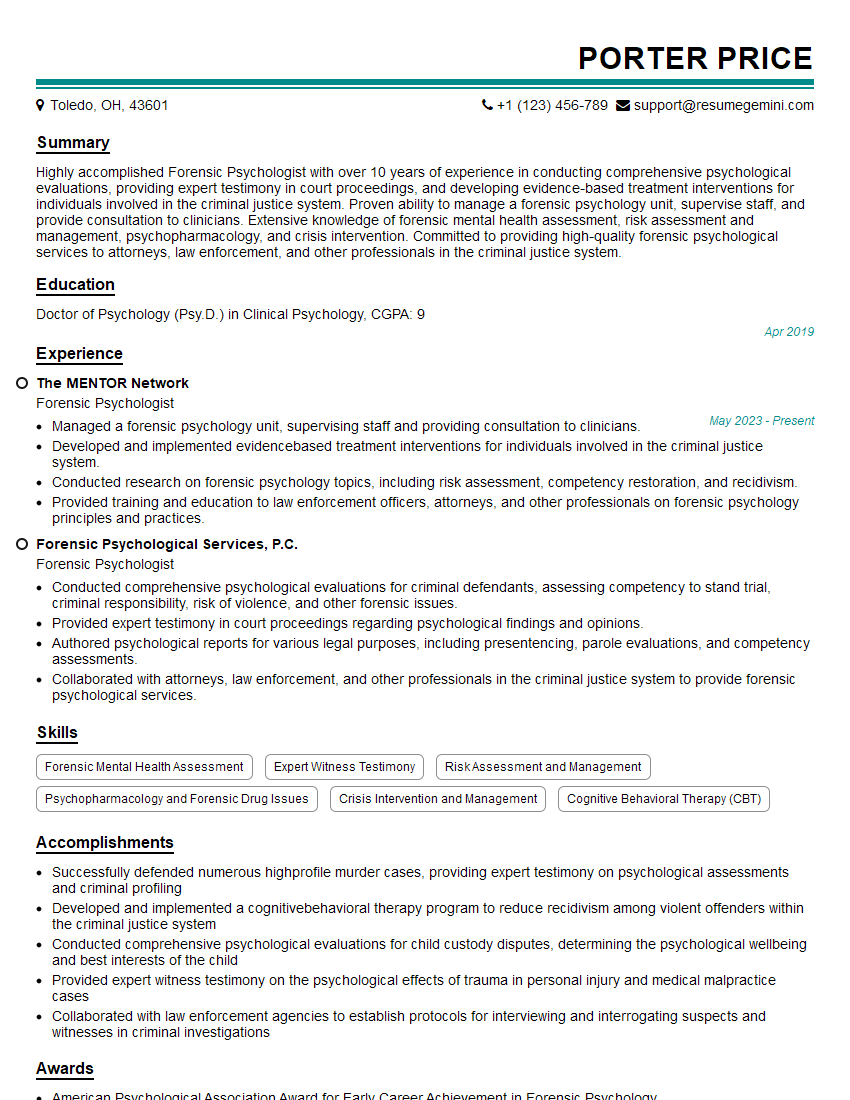
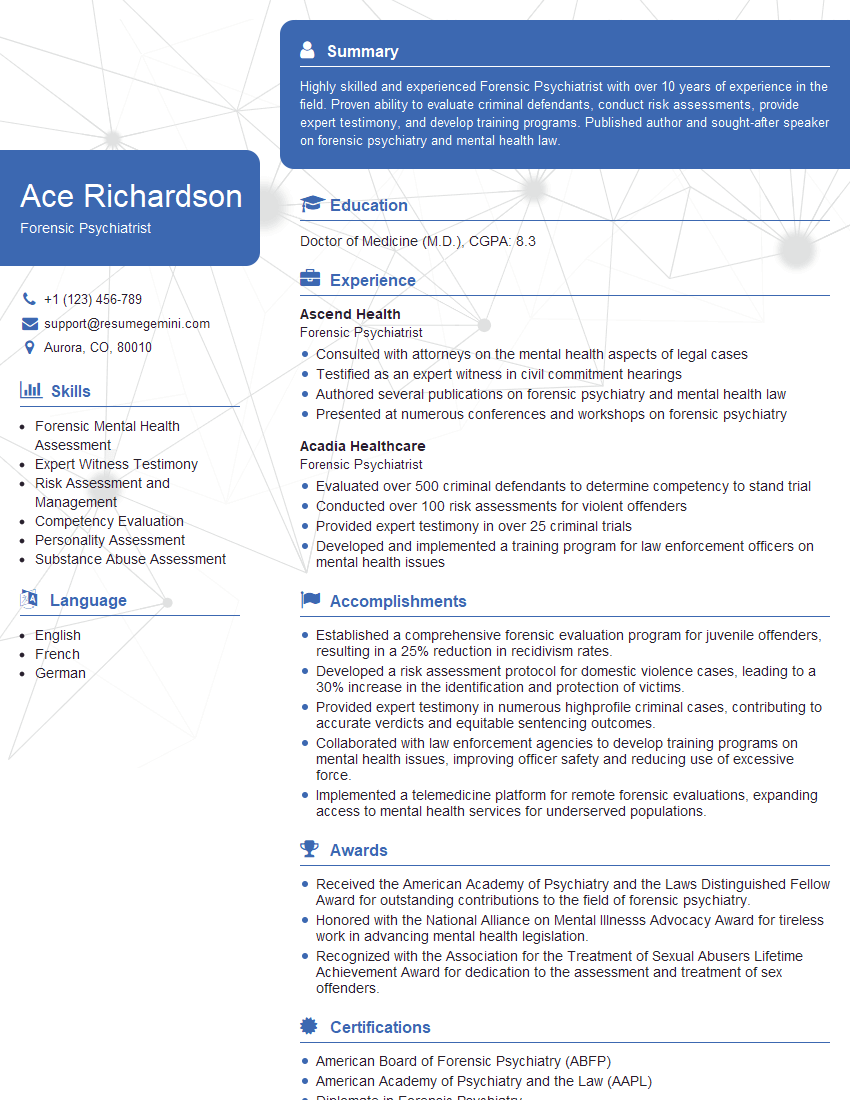
Mastering Forensic Psychological Assessment is crucial for career advancement in this specialized field. A strong understanding of these key concepts will significantly enhance your interview performance and open doors to exciting opportunities. To further strengthen your candidacy, focus on building an ATS-friendly resume that highlights your skills and experience effectively. ResumeGemini is a trusted resource for creating professional and impactful resumes. We offer examples of resumes tailored to Forensic Psychological Assessment to help you present yourself in the best possible light. Utilize these resources to elevate your job prospects and land your dream role.

Explore more articles
Users Rating of Our Blogs
Share Your Experience
We value your feedback! Please rate our content and share your thoughts (optional).
What Readers Say About Our Blog
To the interviewgemini.com Webmaster.
Very helpful and content specific questions to help prepare me for my interview!
Thank you
To the interviewgemini.com Webmaster.
This was kind of a unique content I found around the specialized skills. Very helpful questions and good detailed answers.
Very Helpful blog, thank you Interviewgemini team.