Cracking a skill-specific interview, like one for Point-Supported Glazing, requires understanding the nuances of the role. In this blog, we present the questions you’re most likely to encounter, along with insights into how to answer them effectively. Let’s ensure you’re ready to make a strong impression.
Questions Asked in Point-Supported Glazing Interview
Q 1. Explain the principles of point-supported glazing systems.
Point-supported glazing systems, unlike traditional framed systems, suspend glass panels using discrete points of contact, rather than continuous framing. Imagine a spider’s web – the glass is the web, and the fixings are the points of support. This creates a sleek, minimalist aesthetic, maximizing transparency and views. The principles revolve around distributing the loads (weight of the glass, wind, snow) efficiently through these carefully selected points to the supporting structure. This requires precise calculations and robust fixings capable of withstanding significant forces.
The system relies on the glass’s inherent strength and stiffness to span the distance between the support points. The design must carefully consider factors like glass thickness, type (laminated, tempered, etc.), the spacing and location of the fixings, and the overall structural loading.
Q 2. Describe different types of point-fixings used in point-supported glazing.
Point fixings come in various designs, each suited to specific applications and aesthetic preferences. Common types include:
- Spider fittings: These consist of a central hub with multiple arms that grip the glass edge. They offer high load-bearing capacity and are highly versatile.
- Clamp fixings: These use a clamping mechanism to secure the glass, often with concealed features for a cleaner look. They are suitable for smaller panels.
- Dowel fixings: These involve drilling holes in the glass and inserting robust dowels that connect to the supporting structure. They are less common due to potential glass damage during drilling.
- Concealed fixings: These aim to completely hide the fixing points, creating a truly frameless appearance. They are often more complex to install and require more precise engineering.
The choice of fixing depends on several factors, including glass thickness, panel size, load requirements, aesthetic considerations, and ease of installation.
Q 3. What are the advantages and disadvantages of point-supported glazing compared to other glazing systems?
Point-supported glazing offers several advantages over traditional framed systems:
- Maximized transparency: The minimal framing creates unobstructed views.
- Sleek aesthetics: The frameless or near-frameless design is architecturally appealing.
- Increased natural light: More light penetrates through the glass due to the absence of large frame members.
However, there are also disadvantages:
- Higher cost: Point-supported systems typically require more specialized engineering and installation, leading to higher costs.
- Complex design and installation: Precise calculations and skilled installation are essential.
- Potential for higher maintenance: Sealant joints require regular inspection and maintenance.
- Limited panel sizes: Depending on glass type and fixing systems, there may be practical limitations on panel size.
The choice between point-supported and framed glazing depends on the project’s specific requirements, budget, and aesthetic goals.
Q 4. How do you ensure the structural integrity of a point-supported glazing system?
Ensuring structural integrity involves a multi-faceted approach:
- Finite Element Analysis (FEA): This sophisticated software simulates the behavior of the system under various loads (wind, snow, seismic activity), allowing for optimization of the design.
- Proper material selection: Selecting high-quality glass (tempered or laminated) and robust fixings rated for the anticipated loads is crucial.
- Precise calculations: Accurate calculations of loads, stresses, and deflections are essential to ensure the system’s safety.
- Careful installation: The installation process must strictly adhere to manufacturer guidelines to ensure the fixings are correctly positioned and secured.
- Regular inspections: Periodic inspections identify any potential issues, such as sealant deterioration or loose fixings, early on.
A thorough understanding of structural engineering principles and adherence to building codes are paramount in achieving structural integrity.
Q 5. Explain the importance of sealant selection in point-supported glazing.
Sealant selection is critical. The sealant acts as a weather barrier, preventing water ingress and maintaining the structural integrity of the system. An improperly selected sealant can lead to leaks, glass failure, and potential structural damage. Factors to consider include:
- Durability: The sealant must withstand UV exposure, temperature fluctuations, and weathering.
- Movement capability: The sealant needs flexibility to accommodate thermal expansion and contraction of the glass and framing.
- Adhesion: It must adhere strongly to both the glass and the support structure.
- Chemical compatibility: The sealant should be compatible with all materials in the system.
High-performance structural sealants specifically designed for point-supported glazing systems are typically recommended. Regular inspection and timely replacement of deteriorated sealant is crucial for long-term performance.
Q 6. Describe the process of designing a point-supported glazing system.
Designing a point-supported glazing system is a complex process involving several steps:
- Architectural design: Determining the size, shape, and location of the glazing panels.
- Structural analysis: Calculating loads (dead load, live load, wind load, seismic load).
- Glass selection: Determining the appropriate glass type and thickness based on load requirements and aesthetic considerations.
- Fixing selection: Choosing the appropriate fixing type and configuration based on load requirements, aesthetics, and ease of installation.
- Sealant selection: Choosing a suitable sealant based on durability, movement capabilities, and chemical compatibility.
- Detailing: Developing detailed drawings and specifications for all components.
- Fabrication and installation: Manufacturing the components and installing the system according to the design specifications.
This process requires collaboration between architects, structural engineers, glazing contractors, and manufacturers to ensure the system’s successful implementation.
Q 7. How do you account for wind loads and seismic activity in point-supported glazing design?
Wind loads and seismic activity pose significant challenges in point-supported glazing design. These loads must be accounted for to ensure the safety and integrity of the system:
- Wind load calculations: Detailed wind load calculations are performed using recognized engineering standards, considering factors like building height, location, and surrounding topography. These calculations determine the forces acting on the glass panels.
- Seismic design: Seismic design considers the potential for ground shaking and building movement during an earthquake. The system must be designed to withstand these forces without failure. This often involves specifying ductile connections and employing seismic bracing.
- Safety factors: Safety factors are incorporated into the design to account for uncertainties and variations in material properties and construction tolerances.
- Testing and verification: Testing of the design and components may be required to validate the system’s performance under extreme conditions.
Ignoring these loads can lead to catastrophic failures, emphasizing the importance of rigorous analysis and design in high-risk environments.
Q 8. What are the common failure modes of point-supported glazing systems?
Point-supported glazing, while elegant, is susceptible to several failure modes. These are often related to stress concentrations, material fatigue, and improper installation. Common failures include:
- Glass breakage: This can result from excessive wind loads, impacts, thermal stresses (differential expansion/contraction between the glass and the frame), or faulty point fixings. Imagine a spiderweb – if one point fails, the stress is redistributed, potentially causing a cascade failure.
- Point fixing failure: The fixings themselves can fail due to corrosion (especially in coastal environments), fatigue from repeated loading (wind, vibration), or improper installation leading to insufficient bearing area. Think of it like repeatedly bending a paperclip – it eventually breaks.
- Gasket failure: Deterioration of gaskets can compromise the seal, allowing water ingress, leading to corrosion and potential glass breakage. A failing gasket is like a leaky faucet; a small problem that can cause significant damage over time.
- Structural failure of supporting structure: This is less common with the glazing itself but crucial to the system’s integrity. A weak supporting structure cannot adequately transfer loads to the building, increasing risk to the glass.
Understanding these failure modes is key to preventative maintenance and responsible design.
Q 9. How do you inspect and maintain a point-supported glazing system?
Inspecting and maintaining a point-supported glazing system requires a systematic approach. Regular inspections, ideally annually or more frequently in harsh environments, are vital. This involves:
- Visual inspection: Check for cracks in the glass, corrosion of fixings, signs of gasket deterioration (e.g., shrinkage, cracking, discoloration), and damage to the supporting structure. Look for even the smallest anomalies—they might be early indicators of a larger problem.
- Load testing (where feasible): While this might not be practical for every system, a load test, using specialized equipment, can assess the system’s strength and identify weaknesses.
- Non-destructive testing (NDT): Methods like ultrasonic testing can help detect internal flaws in the glass or fixings without causing damage.
- Tightness checks: Check the seal around the glazing to ensure water isn’t entering the system.
- Regular cleaning: Keeping the system clean helps identify potential issues and prevents deterioration of components.
Maintenance involves replacing damaged gaskets, tightening loose fixings, and repairing or replacing corroded components. Regular preventative maintenance is far cheaper than emergency repairs.
Q 10. What are the safety precautions involved in installing point-supported glazing?
Installing point-supported glazing requires strict adherence to safety protocols due to the inherent risks involved in handling large glass panels at height. Key safety precautions include:
- Proper training and certification: Installers must be adequately trained and certified to handle the equipment and procedures involved.
- Fall protection: Appropriate harnesses, lifelines, and scaffolding are essential, especially during high-level installations.
- Safe handling of glass: Using suction cups, specialized lifting equipment, and appropriate hand protection is critical to prevent glass breakage and injury.
- Proper use of tools and equipment: The installation process often involves power tools and specialized equipment which requires appropriate training and adherence to manufacturer’s safety guidelines.
- Risk assessment: A thorough risk assessment before the installation identifies and mitigates potential hazards.
- Use of personal protective equipment (PPE): This includes safety glasses, gloves, and appropriate footwear.
Failing to follow these precautions can result in serious injuries or fatalities.
Q 11. Explain the role of gaskets and spacers in point-supported glazing.
Gaskets and spacers play critical roles in point-supported glazing systems. They are crucial for both structural integrity and weather resistance.
- Gaskets: These create a weathertight seal around the glass, preventing water ingress. They act like a barrier, keeping the elements out. Different materials are chosen depending on the environment (e.g., silicone for durability and resistance to UV degradation). Properly chosen and installed gaskets are vital in preventing corrosion and consequent glass breakage.
- Spacers: Spacers are used to maintain a consistent distance between the glass and the frame, ensuring even stress distribution. They help to prevent points from over-stressing, much like distributing weight evenly across a table’s legs.
The proper selection and installation of both gaskets and spacers are paramount for the longevity and performance of the glazing system. A failure in either component can compromise the entire system.
Q 12. Describe the different types of glass used in point-supported glazing.
The choice of glass in point-supported glazing depends on factors such as aesthetic requirements, structural performance needs, and environmental conditions. Common types include:
- Laminated glass: Consists of two or more layers of glass bonded together with a PVB (polyvinyl butyral) interlayer. This provides enhanced strength, safety (reduces shattering), and sound insulation. It’s like a safety net for the glass, holding it together even if cracked.
- Toughened (tempered) glass: Heat-treated glass, significantly stronger than annealed glass. It’s more resistant to breakage, but it shatters into small, relatively harmless pieces if it does break. It’s stronger but less forgiving than laminated glass.
- Insulating glass units (IGUs): Two or more layers of glass separated by a spacer filled with desiccant and inert gas (e.g., argon). These offer improved thermal insulation and reduced noise transmission. They act as an insulation layer, keeping heat inside and noise outside.
- Specialty glasses: This may include coatings for enhanced solar control, self-cleaning properties, or decorative effects.
Selecting the appropriate type of glass is critical for ensuring the system meets performance and safety requirements.
Q 13. How do you calculate the required size and spacing of point fixings?
Calculating the required size and spacing of point fixings is a complex process that requires detailed engineering calculations. It’s not something that can be done with a simple formula. Several factors are considered including:
- Glass dimensions and weight: Larger and heavier panels require more and stronger fixings.
- Wind load: The expected wind pressure on the glazing significantly impacts the fixing requirements. Coastal areas and high-rise buildings require more robust fixings.
- Thermal loads: Differential expansion and contraction due to temperature changes can put significant stress on the system. This needs to be factored in.
- Glass type and properties: Different types of glass have different strengths and require different fixing designs.
- Building codes and standards: These dictate minimum requirements for the system’s structural integrity.
Software and engineering expertise are typically required to perform these calculations accurately. Ignoring these calculations can lead to catastrophic system failure.
Q 14. What are the relevant building codes and standards for point-supported glazing?
Point-supported glazing is subject to various building codes and standards, which vary depending on location and project specifics. These standards address structural safety, wind resistance, water tightness, and other critical performance aspects. Relevant standards often include:
- National building codes (e.g., IBC in the US): These provide overall structural requirements for buildings and their components.
- Glass and glazing standards (e.g., ASTM, EN standards): These specify requirements for the glass itself, its properties, and installation methods.
- Wind load standards (e.g., ASCE 7): These establish procedures for calculating wind loads on buildings, which are crucial for designing robust glazing systems.
- Local ordinances: Local regulations and requirements often supplement national codes.
Consultants specializing in structural engineering and building codes are often necessary to ensure compliance with all applicable standards. Ignoring these standards can lead to legal issues and potential safety hazards.
Q 15. Explain the process of troubleshooting a faulty point-supported glazing system.
Troubleshooting a faulty point-supported glazing system requires a systematic approach. It’s like detective work – we need to identify the culprit causing the problem, whether it’s a faulty fitting, damaged glass, or an issue with the installation. We start by visually inspecting the entire system, looking for obvious signs of damage, such as cracked glass, loose fixings, or sealant failure.
Next, we check for movement in the glazing units. Any excessive movement indicates a problem with the fixings or the supporting structure. We then test the functionality of the fixings, making sure they’re securely tightened and operating as intended. If the problem is water leakage, we carefully examine the sealant and glazing gaskets for any gaps or degradation. Instrumentation, like a thermal camera, can be used to detect heat transfer indicating faulty seals or poor fitting placement.
Finally, if the problem remains unidentified, we may need to remove sections of the glazing to further investigate internal issues. The systematic nature of this process – visual inspection, movement tests, fixing checks, and advanced investigation – is key to successfully identifying and resolving the fault.
Career Expert Tips:
- Ace those interviews! Prepare effectively by reviewing the Top 50 Most Common Interview Questions on ResumeGemini.
- Navigate your job search with confidence! Explore a wide range of Career Tips on ResumeGemini. Learn about common challenges and recommendations to overcome them.
- Craft the perfect resume! Master the Art of Resume Writing with ResumeGemini’s guide. Showcase your unique qualifications and achievements effectively.
- Don’t miss out on holiday savings! Build your dream resume with ResumeGemini’s ATS optimized templates.
Q 16. Describe your experience with different types of point-fixing systems (e.g., spider fittings, concealed fixings).
My experience encompasses a wide range of point-fixing systems. I’ve worked extensively with spider fittings, which are visually striking and offer a high degree of flexibility in design. They’re particularly useful for large, complex glazing systems, allowing for diverse panel configurations. I’m proficient in installing and troubleshooting various spider fitting types, from those with adjustable arms for precise alignment to those with integrated gaskets for enhanced water tightness.
I’ve also worked with concealed fixings, which prioritize aesthetics by hiding the fixings from view. These systems, often employing specialized channels and clips, require meticulous precision during installation to guarantee structural integrity and water resistance. I’m familiar with various concealed fixing mechanisms, including those employing magnets or specialized clamping systems. Each system presents unique challenges and necessitates specific installation expertise; therefore, I always consult the manufacturer’s installation guides.
Q 17. How do you ensure water tightness in a point-supported glazing system?
Water tightness in point-supported glazing is paramount; it’s the difference between a beautiful, functional building and one with potential water damage. We achieve this through a multi-layered approach. Firstly, the selection of high-quality, durable silicone sealant is crucial. This sealant forms a crucial barrier against water ingress, and its proper application is critical. I always ensure sufficient sealant depth and careful tooling to ensure a smooth, continuous bead.
Secondly, the proper design and installation of the glazing gaskets are essential. These gaskets, often made from EPDM or similar materials, provide a second line of defense against water infiltration, creating a compression seal around the perimeter of the glazing unit. Regular inspection and replacement of gaskets are part of the preventive maintenance process. Thirdly, the precision of the fixings is critical – any misalignment or improper tightening can compromise the seal. Careful attention to detail and adherence to manufacturer’s specifications during installation is non-negotiable.
Finally, proper design considers the potential impact of wind-driven rain, incorporating elements like angled glazing to direct water away from vulnerable areas. Using structural silicone that effectively absorbs movement and has high-performance capabilities is also a best practice.
Q 18. Explain the importance of thermal considerations in point-supported glazing design.
Thermal considerations are vital in point-supported glazing design, impacting both energy efficiency and occupant comfort. Poorly designed systems can lead to significant heat loss in winter and heat gain in summer, increasing energy costs and potentially impacting the building’s environmental performance. We mitigate these issues through careful selection of glass types, such as insulated glazing units (IGUs) with low-E coatings that reduce heat transfer. These coatings act as a mirror, reflecting heat back where it belongs, keeping the interior warm in winter and cool in summer.
The design of the frame and fixings also influences thermal performance. Thermal breaks incorporated into the framing system interrupt the conductive path of heat transfer, minimizing heat loss. Furthermore, sophisticated thermal modelling software allows for the prediction and optimization of thermal performance before construction, enabling the selection of optimal materials and configurations. Overlooking this aspect can lead to substantial long-term energy penalties, highlighting the critical importance of considering thermal performance from the design phase onwards.
Q 19. What software do you use for designing and analyzing point-supported glazing systems?
I regularly use several software packages for the design and analysis of point-supported glazing systems. These tools are crucial for ensuring structural integrity, water tightness, and thermal performance. For structural analysis, I commonly use finite element analysis (FEA) software such as ANSYS or ABAQUS to model the behavior of the system under various load conditions, including wind loads and seismic activity. This ensures the system can withstand expected forces without failure. Autodesk Revit and Vectorworks are used for creating detailed 3D models and drawings, facilitating accurate visualizations of the design.
Furthermore, specialized glazing design software helps in selecting appropriate glass types, calculating thermal performance, and analyzing stress distributions. The use of these tools is not optional but necessary to ensure an efficient and safe end product. These tools significantly improve accuracy, reduce the risk of errors, and ensure the system’s long-term durability and reliability.
Q 20. Describe your experience with different types of glass (e.g., laminated, tempered, insulated).
My experience with various glass types is extensive, and the choice of glass significantly impacts the overall performance of a point-supported glazing system. Laminated glass, composed of two or more layers of glass bonded together with a PVB interlayer, offers enhanced safety and security by holding the glass together in the event of breakage, minimizing the risk of injury and preventing glass from falling. It also provides excellent sound insulation. Tempered glass, heat-strengthened to increase its strength, is frequently used in point-supported systems where high strength and durability are required.
Insulated glazing units (IGUs) are vital for thermal efficiency, comprising two or more panes of glass separated by a gas-filled cavity. This significantly reduces heat transfer, improving the building’s energy performance and occupant comfort. The selection of glass type depends on factors such as required strength, thermal performance, acoustic properties, and safety regulations. Each type presents its own installation requirements and considerations, needing specific expertise and careful handling to avoid damage.
Q 21. How do you manage tolerances and dimensional accuracy in point-supported glazing installation?
Managing tolerances and dimensional accuracy is crucial for successful point-supported glazing installation, it’s the foundation for a smoothly functioning and leak-free system. We start with precise fabrication of the glazing components, ensuring that all dimensions are within the specified tolerances. The fabrication process often uses CNC machinery to achieve high levels of accuracy.
During the installation process, we employ various techniques to maintain dimensional accuracy, including the use of laser levels and precise measuring tools. We carefully check the alignment and plumbness of the supporting structure and glazing panels, correcting any deviations before proceeding with the fixing process. Regular inspections and quality control measures are carried out at each stage of the process. Any discrepancies must be addressed immediately. Careful planning and coordination between different trades during construction is essential for maintaining the required dimensional accuracy. Failure to do so can lead to stress concentrations, leaks, and even structural failure of the glazing system, highlighting the importance of precise measurements and rigorous quality control.
Q 22. How do you address issues related to glass breakage or damage?
Glass breakage in point-supported glazing is a serious concern, demanding immediate and thorough attention. My approach is multifaceted, starting with a careful investigation to determine the root cause. This could involve examining the glass itself for flaws (like stress fractures or manufacturing defects), assessing the structural integrity of the supporting system (checking for corrosion, loose fixings, or misalignment), and analyzing environmental factors (impact from objects, thermal stress from extreme temperature changes, or even seismic activity).
Once the cause is identified, the solution is tailored. Minor damage might involve simple repairs like replacing a cracked pane or tightening loose fittings. However, significant structural issues require a more extensive approach, possibly necessitating complete system inspection, recalculation of loads, and even partial or complete system replacement, following strict engineering standards and building codes. For example, I once dealt with a case of repeated glass breakage due to wind-induced vibrations. By modifying the glazing system with additional dampers and optimizing the supporting structure’s stiffness, we eliminated the problem permanently. Documentation throughout the process is crucial for insurance claims and future maintenance.
Q 23. Explain your understanding of different types of sealants and their applications.
Sealants are critical in point-supported glazing, ensuring watertightness and preventing air infiltration. We use various types, each with specific applications:
- Silicone Sealants: Excellent adhesion to most substrates, high elasticity, and good UV resistance. Often used for general sealing around the perimeter of the glazing units and for filling gaps.
- Polyurethane Sealants: High strength and durability, excellent for larger joints and areas prone to movement. We frequently use them in structural glazing applications to bond the glass to the frame.
- Hybrid Sealants: Combine properties of silicone and polyurethane, offering a balance of elasticity and strength. Ideal for situations requiring both flexibility and high adhesion.
- Butyl Sealants: Primarily used for primary glazing seals, creating a weatherproof barrier. They offer excellent adhesion but are less elastic than silicone or polyurethane.
Selecting the right sealant is crucial and depends on factors like the specific application, the materials being joined, and the anticipated movement and environmental conditions. Each project necessitates a careful sealant specification, paying attention to manufacturers’ guidelines and testing where required.
Q 24. Describe your experience working with various materials used in point-supported glazing systems.
My experience encompasses a wide range of materials in point-supported glazing. This includes, but isn’t limited to:
- Glass: From standard annealed glass to high-performance laminated, tempered, and insulated glass units (IGUs) with varying thicknesses and properties to meet specific design requirements and load conditions.
- Stainless Steel: Frequently used for fittings, spider fittings, and other structural components due to its strength, corrosion resistance, and aesthetic appeal.
- Aluminum: Often used for framing systems or support structures, though the selection depends on the design loads and desired aesthetic.
- Structural Silicone: Forms the structural bond between the glass and the support system. Its properties directly influence the system’s performance.
- Neoprene: Used in various gaskets and spacers for weather sealing and isolating vibration.
Understanding the properties of each material and their interaction within the system is vital. For example, the thermal expansion coefficient of the glass and the frame must be considered to prevent stress build-up and potential cracking.
Q 25. How do you handle unexpected challenges during the installation of a point-supported glazing system?
Unexpected challenges are inevitable in any construction project, and point-supported glazing is no exception. My strategy involves proactive planning and robust problem-solving skills. This begins with thorough site surveys and detailed design reviews to identify potential issues beforehand. However, if unforeseen problems arise during installation (such as inaccurate measurements, material defects, or site conditions differing from the plans), my approach is methodical:
- Assessment: Thoroughly assess the nature and extent of the challenge, documenting everything with photos and notes.
- Risk Evaluation: Determine the potential safety risks and impact on the project schedule and budget.
- Problem Solving: Develop a range of solutions, carefully considering their feasibility, cost, and impact on the overall project.
- Decision Making: Select the optimal solution, consulting with relevant stakeholders like architects, engineers, and clients.
- Implementation: Implement the chosen solution, meticulously documenting every step.
- Review: Review the outcome, identify lessons learned, and adjust future project planning accordingly.
For instance, once we encountered an unexpected discrepancy in the building’s structural steel during a high-rise installation. We immediately halted the work, informed the client and engineers, and collaboratively devised a revised installation plan to ensure safety and project success. Clear communication and teamwork are key to overcoming these unforeseen obstacles.
Q 26. Explain your experience with quality control procedures in point-supported glazing projects.
Quality control is paramount throughout the point-supported glazing process. Our procedures start with rigorous material selection and verification against specifications. We ensure that all components meet the required standards, testing glass strength and sealant properties as needed. During installation, we conduct regular inspections to verify proper alignment, sealant application, and adherence to the design drawings and specifications. We also utilize precision measuring tools and advanced leveling systems to ensure accuracy. After installation, final quality checks confirm the system’s watertightness, structural integrity, and overall performance. This often involves pressure testing, visual inspection, and thermal analysis.
Regular maintenance schedules and post-installation inspections are equally important for long-term quality. This helps us detect potential issues early, preventing costly repairs later. We maintain thorough documentation at every stage, providing a clear audit trail of the project’s quality and compliance.
Q 27. How do you ensure compliance with health and safety regulations during the installation and maintenance of point-supported glazing systems?
Health and safety are paramount. We adhere to all relevant regulations and employ stringent safety procedures throughout every stage – from design and fabrication to installation and maintenance. Our procedures include:
- Risk Assessments: Identifying and mitigating potential hazards, including working at heights, handling heavy materials, and using power tools.
- Method Statements: Detailing safe working practices for each task.
- Personal Protective Equipment (PPE): Ensuring all personnel wear appropriate safety equipment like harnesses, helmets, safety glasses, and gloves.
- Training and Competence: Ensuring that all personnel are adequately trained and competent in their tasks.
- Regular Safety Audits: Conducting regular inspections to identify and address any safety concerns.
- Emergency Procedures: Establishing and regularly reviewing emergency procedures for different scenarios.
Compliance with health and safety regulations is not merely a formality; it’s a fundamental part of our ethos. It’s crucial to prevent accidents and ensure the well-being of our team and others on the site. We use fall protection systems for high-rise projects and maintain detailed records of all safety-related activities.
Key Topics to Learn for Point-Supported Glazing Interview
- Structural Analysis: Understanding load calculations, stress distribution, and deflection in point-supported glazing systems. Consider different glazing materials and their properties.
- Component Selection: Familiarize yourself with various types of point supports (e.g., spider fittings, clamps), sealants, and glazing materials. Know the factors influencing component choice for specific applications.
- Installation Techniques: Understand best practices for installation, including accurate measurements, precise alignment, and proper sealant application to ensure water tightness and structural integrity.
- Code Compliance and Regulations: Be aware of relevant building codes and safety standards pertaining to point-supported glazing systems in your region. This demonstrates responsibility and awareness of potential liabilities.
- Maintenance and Troubleshooting: Familiarize yourself with common issues, such as sealant failure, breakage, or leaks. Knowing how to identify and address these problems shows practical experience.
- Material Science: Understand the properties of different glass types (laminated, tempered, etc.) and their suitability for point-supported applications. This demonstrates a deeper technical understanding.
- Design Considerations: Explore the interplay between architectural design, structural engineering, and the selection of appropriate point-supported glazing systems. Understanding the aesthetic and functional requirements of a project is crucial.
Next Steps
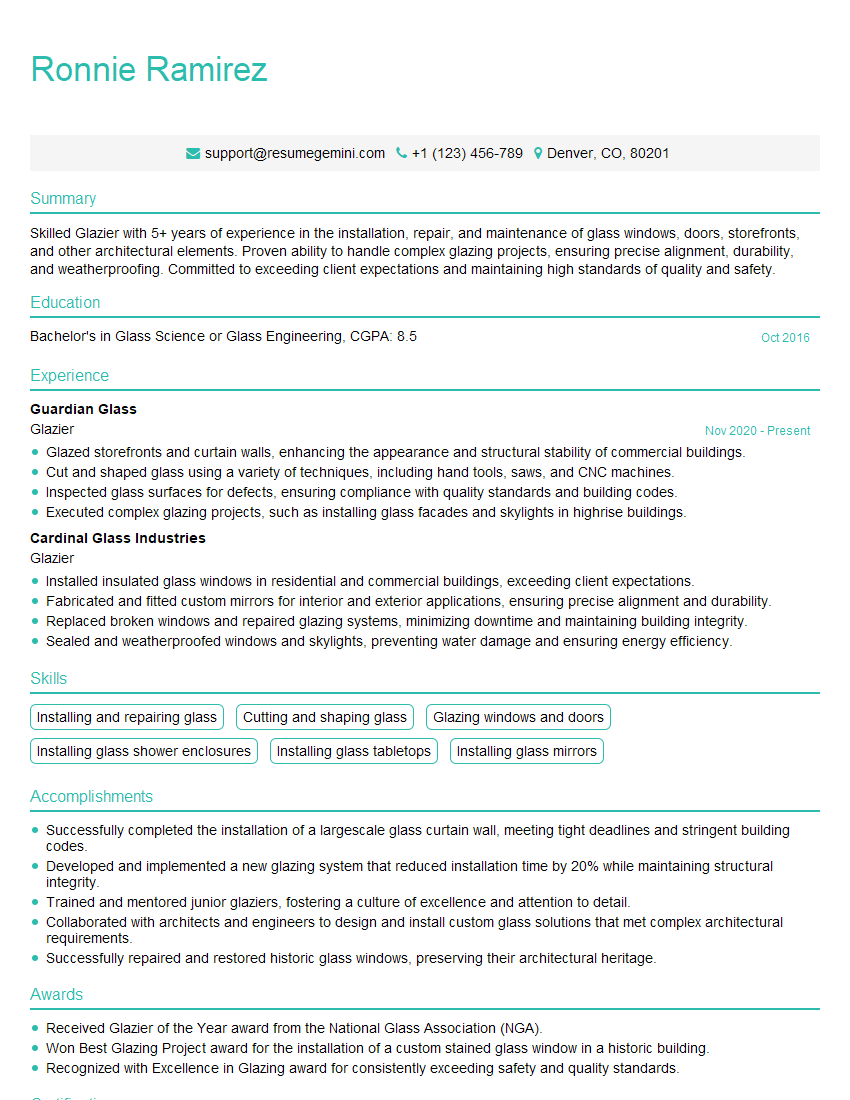
Mastering Point-Supported Glazing opens doors to exciting opportunities in the construction and architectural industry. A strong understanding of this specialized area will significantly enhance your career prospects and make you a highly sought-after candidate. To maximize your job search success, crafting an ATS-friendly resume is crucial. ResumeGemini is a valuable tool to help you build a professional and impactful resume that highlights your skills and experience effectively. We provide examples of resumes tailored to Point-Supported Glazing to help you create the perfect application.
Explore more articles
Users Rating of Our Blogs
Share Your Experience
We value your feedback! Please rate our content and share your thoughts (optional).
What Readers Say About Our Blog
To the interviewgemini.com Webmaster.
Very helpful and content specific questions to help prepare me for my interview!
Thank you
To the interviewgemini.com Webmaster.
This was kind of a unique content I found around the specialized skills. Very helpful questions and good detailed answers.
Very Helpful blog, thank you Interviewgemini team.