Preparation is the key to success in any interview. In this post, we’ll explore crucial Telehealth and E-Therapy interview questions and equip you with strategies to craft impactful answers. Whether you’re a beginner or a pro, these tips will elevate your preparation.
Questions Asked in Telehealth and E-Therapy Interview
Q 1. Describe your experience with HIPAA compliance in a telehealth setting.
HIPAA compliance in telehealth is paramount. It’s essentially about ensuring the privacy and security of Protected Health Information (PHI) during virtual care. This involves adhering to all the rules and regulations of the Health Insurance Portability and Accountability Act, even though the delivery method has changed. My experience involves meticulous adherence to these rules across all aspects of telehealth practice.
- Secure Communication: I only use HIPAA-compliant platforms for video conferencing, messaging, and data storage. This includes verifying that the platform has Business Associate Agreements (BAAs) in place, demonstrating their commitment to data security.
- Patient Authorization: I always obtain explicit patient consent before initiating telehealth sessions and clearly explain how their information will be used and protected.
- Data Encryption: I ensure that all transmitted and stored patient data is encrypted both in transit and at rest. This protects against unauthorized access even if a breach were to occur.
- Staff Training: All staff members involved in telehealth are thoroughly trained on HIPAA regulations and their responsibilities regarding patient data privacy. Regular updates ensure continued compliance.
- Breach Response Plan: A comprehensive breach response plan is in place to address any potential security incidents, including notification procedures and remediation steps.
For example, I recently had a patient who was concerned about the security of their information. I took the time to explain our protocols, including the use of end-to-end encryption and our BAA with the telehealth platform. This reassured the patient and built trust.
Q 2. Explain the advantages and disadvantages of using different telehealth platforms.
Different telehealth platforms offer varying advantages and disadvantages. The best choice depends on factors such as budget, features needed, and technical expertise.
- Video Conferencing Platforms (e.g., Zoom, Doxy.me): These are often user-friendly and widely accessible. Advantages include face-to-face interaction and ease of use. However, some require additional security measures to be HIPAA compliant and may lack specialized features for mental health.
- Dedicated Telehealth Platforms (e.g., Teladoc, Amwell): These platforms are designed specifically for telehealth and often include features like integrated billing, e-prescribing, and patient portals. They generally offer robust security features and HIPAA compliance. Disadvantages can include higher costs and potential vendor lock-in.
- Phone-Based Telehealth: This is a simple and accessible option, especially for patients with limited internet access or technological skills. The advantage is its simplicity and wide reach. However, it lacks the visual component which can be crucial for certain assessments and therapeutic approaches.
For instance, I use a dedicated telehealth platform for most clients due to its robust security features and integration with my electronic health record (EHR). However, I occasionally use phone calls for brief check-ins with patients who prefer this modality or have limited internet access.
Q 3. How would you address technical difficulties during a telehealth session?
Technical difficulties during telehealth sessions are inevitable. My approach focuses on proactive prevention and reactive problem-solving.
- Pre-Session Check: Before each session, I conduct a brief tech check with the client to ensure their audio and video are working correctly and their internet connection is stable. This often involves simple troubleshooting steps like checking microphone settings.
- Alternative Methods: If a video connection fails, I immediately switch to a phone call to maintain continuity of care. This minimizes disruption and prevents the session from being completely lost.
- Troubleshooting Support: I provide clear instructions and readily available support if a client encounters technical issues during the session. I try to empower them to solve minor problems themselves before stepping in.
- Session Rescheduling: If technical problems are insurmountable, I reschedule the session, ensuring the client is comfortable and confident in their ability to participate in the future.
For example, I recently experienced a power outage during a session. I immediately switched to a phone call, completing the session without any significant interruption to the client’s treatment.
Q 4. What strategies do you employ to build rapport with clients in a virtual environment?
Building rapport virtually requires conscious effort and adaptability. It’s about creating a connection despite the physical distance.
- Active Listening & Empathy: Paying close attention to the client’s verbal and nonverbal cues, even through a screen, is crucial. I use verbal affirmations and reflective listening to demonstrate empathy.
- Personalized Approach: I tailor my communication style to suit each client’s personality and communication preferences.
- Nonverbal Communication: I am mindful of my own nonverbal cues, maintaining good posture and engaging facial expressions to enhance connection.
- Utilizing Technology Effectively: I may share my screen to show relevant resources or use virtual whiteboards to engage in collaborative activities.
- Creating a Comfortable Environment: I encourage clients to find a quiet space where they feel safe and comfortable, creating a shared sense of a secure therapeutic space.
For example, I recently worked with a client who was initially hesitant about telehealth. By actively listening to their concerns, using a warm and reassuring tone, and explaining the session structure, I was able to build a strong therapeutic relationship very quickly.
Q 5. Describe your experience with different telehealth modalities (video, phone, etc.).
My experience encompasses various telehealth modalities, each with its strengths and limitations.
- Video Conferencing: This is my primary modality due to its ability to facilitate nonverbal communication, facial expressions, and body language reading. It’s particularly effective for therapy styles that benefit from visual cues.
- Phone Calls: I use phone calls for brief check-ins, medication management follow-ups, or when clients lack reliable internet access. This modality focuses on verbal communication and is efficient for simple updates.
- Text Messaging (Secure): For certain clients, secure text messaging is useful for quick questions or reminders between sessions. However, this approach should be used cautiously due to its limitations in fully conveying emotional nuance.
- Asynchronous Communication: Using secure email or patient portals for sharing documents or exchanging information outside of real-time sessions. This enables flexibility for both the client and provider.
The choice of modality depends on the client’s needs, the nature of the session, and the therapeutic goals. For example, a client with social anxiety might benefit from starting with phone sessions before transitioning to video conferencing.
Q 6. How do you ensure patient privacy and data security in telehealth?
Ensuring patient privacy and data security in telehealth requires a multifaceted approach.
- HIPAA Compliance: As previously mentioned, strict adherence to HIPAA regulations is fundamental. This includes using HIPAA-compliant platforms and following all data security protocols.
- Strong Passwords & Two-Factor Authentication: I encourage all patients to use strong, unique passwords and enable two-factor authentication where available, adding an extra layer of security.
- Secure Data Storage: All client data is stored on encrypted servers within HIPAA compliant systems.
- Data Minimization: I only collect and store the minimum necessary PHI needed for treatment and billing purposes.
- Regular Security Audits: I participate in regular security audits and updates to ensure my systems are protected against evolving threats.
- Privacy Policies & Informed Consent: I clearly communicate privacy practices to patients and obtain their informed consent before initiating any telehealth services.
For instance, I recently implemented a new security protocol that includes two-factor authentication for access to the client portal, enhancing overall security and strengthening client confidence in the confidentiality of their data.
Q 7. How do you manage client emergencies in a telehealth context?
Managing client emergencies in a telehealth context requires a clear and rapid response protocol.
- Emergency Contact Information: I always obtain up-to-date emergency contact information from all clients at the beginning of our therapeutic relationship.
- Clear Communication Plan: I explicitly communicate my emergency response protocol with the client so that they know what to expect in a crisis.
- Immediate Action: In case of a life-threatening emergency, I immediately contact emergency services (911) and provide them with the necessary information to facilitate a rapid response.
- Referral to In-Person Care: If the situation requires in-person care, I will assist the client in finding and accessing appropriate services.
- Post-Crisis Follow-up: I always follow up with the client after an emergency to provide support and assess their needs.
For example, I once had a client express suicidal ideation during a telehealth session. I immediately followed my emergency protocol, contacting emergency services and their emergency contact person. I subsequently provided them with support and ensured appropriate follow-up care.
Q 8. What are your strategies for effective communication in virtual settings?
Effective communication in telehealth requires a multifaceted approach that goes beyond simply transferring in-person techniques to a virtual setting. It hinges on actively cultivating a strong therapeutic alliance, even across a screen.
- Active Listening and Nonverbal Cues: I pay close attention not only to the client’s words but also their body language, facial expressions, and tone of voice, even through a video screen. A slight hesitation, a change in posture – these can be subtle indicators of deeper emotions. For instance, if a client avoids eye contact frequently, I might gently inquire if something is troubling them beyond the topic at hand.
- Clear and Concise Language: I use straightforward language, avoiding jargon or overly technical terms. I regularly check for understanding, asking clarifying questions like, “Does that make sense?” or “Can you tell me more about that?” This ensures we’re on the same page and avoids misunderstandings that could arise easily in a virtual context.
- Utilizing Technology Effectively: I’m proficient with various telehealth platforms and ensure the technology is working optimally before each session. A poor internet connection or technical glitches can derail the therapeutic process, so addressing these proactively is crucial. This includes testing microphones, cameras, and screen sharing functionalities before the client joins.
- Empathy and Validation: Even in a virtual setting, empathy remains paramount. I actively strive to create a safe and supportive space by verbally acknowledging and validating the client’s feelings. A simple, “I understand how challenging that must be,” can go a long way in building trust.
For example, during a session with a client struggling with anxiety, I might observe their fidgeting and rapid speech. By acknowledging these nonverbal cues and validating their discomfort, I can transition into exploring the underlying cause of their anxiety more effectively.
Q 9. How do you handle cultural differences or language barriers in telehealth?
Addressing cultural differences and language barriers in telehealth demands sensitivity, proactive planning, and the utilization of appropriate resources. Ignoring these factors can significantly compromise the effectiveness of therapy and create distrust.
- Cultural Competence Training: I’ve undertaken extensive training in cultural competence, enabling me to understand and respect diverse perspectives and practices. This includes awareness of different communication styles, family dynamics, and beliefs about mental health.
- Language Access Services: For clients with language barriers, I utilize certified interpreters. I ensure the interpreter is culturally competent and understands the nuances of the therapeutic process, not just direct translation. It is crucial to establish clear communication protocols with the interpreter to ensure confidentiality and therapeutic integrity.
- Cultural Adaptation of Techniques: I tailor my therapeutic approach to be culturally sensitive. For example, my approach to family involvement might vary depending on the client’s cultural background and family structure. I actively seek to understand and integrate their cultural values into the therapeutic process.
- Building Trust: Establishing trust takes time and patience, especially with culturally diverse clients. I begin sessions by making a deliberate effort to understand their cultural background and individual preferences. This builds rapport and creates a more comfortable space for them to openly share.
In a recent case, I worked with a client from a collectivist culture. I adapted my approach to include family members in the sessions, which aligned with their cultural norms, facilitating better communication and support.
Q 10. What is your experience with telehealth documentation and billing procedures?
Telehealth documentation and billing procedures require meticulous attention to detail and compliance with relevant regulations. Inaccurate documentation or billing errors can lead to serious consequences, including legal issues and financial penalties.
- Electronic Health Records (EHR): I am proficient in utilizing EHR systems to maintain accurate and comprehensive client records. This includes documenting session details, treatment plans, progress notes, and relevant clinical data. I ensure all entries adhere to HIPAA guidelines.
- HIPAA Compliance: I adhere strictly to HIPAA regulations regarding confidentiality and data security. This includes utilizing secure telehealth platforms and implementing measures to protect client information from unauthorized access.
- Coding and Billing: I possess a thorough understanding of telehealth-specific CPT (Current Procedural Terminology) codes and billing procedures. I accurately code sessions based on the services provided and ensure timely submission of claims to insurance providers.
- Auditing and Compliance: I regularly audit my documentation and billing to ensure accuracy and compliance. Staying updated on changes in regulations and best practices is crucial for maintaining compliance.
For example, I use specific CPT codes for telehealth visits that clearly distinguish them from in-person sessions. I meticulously document the platform used, the duration of the session, and the services provided to facilitate accurate billing.
Q 11. How familiar are you with different types of telehealth technologies?
My familiarity with telehealth technologies extends beyond basic video conferencing. I’m comfortable using a variety of platforms and tools to ensure clients receive the best possible care.
- Video Conferencing Platforms: I am proficient in using platforms such as Zoom, Doxy.me, and others, understanding their features and limitations. I select the platform that best suits the client’s needs and technical capabilities.
- Secure Messaging Systems: I utilize secure messaging systems for communication between sessions, adhering to HIPAA guidelines. This allows for efficient communication and quick response times while maintaining client privacy.
- Patient Portals: I’m experienced with patient portals that allow clients to access their records, schedule appointments, and communicate securely with providers. This enhances convenience and engagement.
- Remote Monitoring Tools: While not always applicable, depending on the therapeutic needs, I’m familiar with integrating remote patient monitoring tools for certain conditions, allowing for continuous data collection and more comprehensive care.
Choosing the right platform is critical. For instance, for a client concerned about security, I might opt for a platform with robust encryption features. For a client with limited tech skills, a user-friendly interface is paramount.
Q 12. Explain your approach to managing client expectations in a virtual environment.
Managing client expectations in a virtual environment is critical for a successful therapeutic experience. Mismanaged expectations can lead to frustration and hinder progress.
- Pre-Session Orientation: I conduct a thorough pre-session orientation to explain the telehealth process, technical requirements, and expectations for participation. This includes outlining session structure, communication protocols, and any potential limitations of the virtual environment.
- Addressing Technical Issues Proactively: I provide clear instructions on troubleshooting technical difficulties. If clients encounter problems, I provide support and alternative solutions. This minimizes disruption and frustration.
- Transparency and Realistic Expectations: I’m upfront about the potential challenges of telehealth, such as technical glitches or differences in nonverbal communication. I set realistic expectations about the pace and nature of therapy in this setting.
- Open Communication and Feedback: I encourage open communication and seek regular feedback from clients regarding their experience. Addressing concerns promptly fosters trust and enhances the therapeutic alliance.
For example, I clearly communicate that while the virtual setting offers flexibility, it might not fully replicate the in-person experience. This sets a realistic expectation, preventing unrealistic comparisons and potential disappointment.
Q 13. Describe your experience working within a telehealth team.
Effective teamwork is fundamental to providing high-quality telehealth services. Collaboration enhances efficiency and ensures comprehensive client care.
- Interprofessional Collaboration: I frequently collaborate with other healthcare professionals, such as psychiatrists, medical doctors, and social workers, to provide integrated care. Secure platforms facilitate seamless information sharing and coordinated care planning.
- Case Conferencing: I participate in regular case conferences with team members to discuss complex cases, share insights, and develop collaborative treatment plans. These discussions ensure a holistic approach to client care.
- Shared Documentation: I contribute to shared documentation systems, ensuring all relevant professionals have access to updated information. This streamlines care and avoids duplicative efforts.
- Communication Protocols: I follow established communication protocols within the team to ensure timely and efficient information exchange. This includes utilizing secure messaging systems and scheduling regular team meetings.
In one instance, collaborating with a psychiatrist allowed us to adjust a client’s medication based on their progress in therapy, resulting in improved outcomes. The seamless exchange of information through secure platforms facilitated this successful collaborative approach.
Q 14. How do you ensure patient engagement in a virtual therapy session?
Ensuring patient engagement in virtual therapy requires creativity and a tailored approach that goes beyond simply conducting a session via video call. It requires fostering active participation and building a strong rapport, even across a distance.
- Interactive Activities: I incorporate interactive exercises, such as guided imagery, mindfulness practices, or brief questionnaires, to actively engage clients and make the sessions more dynamic.
- Personalized Approach: I tailor the sessions to the client’s specific preferences and learning style, ensuring the content and delivery methods are engaging and relevant.
- Utilizing Technology: I might utilize shared documents, visual aids, or relevant online resources to enhance engagement and understanding.
- Regular Check-ins and Feedback: I regularly check in with clients to gauge their engagement and address any concerns or barriers to participation. Open communication and obtaining feedback is critical in ensuring sessions remain productive and engaging.
- Building a Strong Therapeutic Alliance: Even in a virtual environment, building a strong therapeutic relationship is key to enhancing engagement. This includes active listening, empathy, and validation.
For example, for a client struggling with motivation, I might use a collaborative goal-setting document to enhance their involvement and promote a sense of ownership in the therapy process.
Q 15. Explain your approach to assessing patient needs remotely.
Assessing patient needs remotely requires a multi-faceted approach that adapts the standard clinical interview to the virtual environment. It’s crucial to build rapport quickly and establish trust, which can be more challenging online. I begin by using a structured intake form that gathers essential demographic, medical, and psychosocial information. This digital form allows for pre-session data gathering, ensuring efficient use of session time.
During the first session, I utilize active listening and open-ended questions to understand the patient’s presenting problem, its impact on their life, and their goals for therapy. I pay close attention to nonverbal cues visible on video, such as facial expressions and body language, supplementing this with careful attention to their verbal communication. For example, if a patient describes feeling overwhelmed, I might ask clarifying questions about their daily routines, social support systems, and coping mechanisms, adapting my questioning to the specifics of their remote situation. I also might use validated screening tools adapted for online use to assess for specific conditions, like depression or anxiety. Finally, I always discuss the technical aspects of telehealth with the patient, ensuring they feel comfortable and supported in utilizing the technology.
Unlike in-person assessments, I incorporate measures to ensure technological accessibility and reliability. This may involve collaborating with the patient to troubleshoot technical issues or suggesting alternative platforms.
Career Expert Tips:
- Ace those interviews! Prepare effectively by reviewing the Top 50 Most Common Interview Questions on ResumeGemini.
- Navigate your job search with confidence! Explore a wide range of Career Tips on ResumeGemini. Learn about common challenges and recommendations to overcome them.
- Craft the perfect resume! Master the Art of Resume Writing with ResumeGemini’s guide. Showcase your unique qualifications and achievements effectively.
- Don’t miss out on holiday savings! Build your dream resume with ResumeGemini’s ATS optimized templates.
Q 16. How do you handle situations where a patient’s technology is limiting their access?
Addressing technology limitations is paramount in telehealth. My approach is proactive and involves a tiered strategy. First, I conduct a thorough technology assessment during the initial contact. This involves understanding the patient’s internet access, device capabilities (smartphone, computer, tablet), and technical proficiency.
If a patient lacks reliable internet access, I explore alternative solutions, such as offering sessions via phone calls (although this limits nonverbal communication), or scheduling sessions during times when internet connectivity is more stable. If a device poses a barrier, I might suggest utilizing a public library computer, or, if the financial burden is a factor, explore options for affordable devices or assistance programs. For patients with low technological literacy, I provide clear and simple instructions, utilizing visual aids when possible. I also consider offering sessions that are less technology-dependent, perhaps using a combination of phone calls and email to supplement video sessions. The key is flexibility and collaboration.
For example, I recently worked with a patient in a rural area with limited internet. We scheduled shorter sessions, focusing only on the most pressing issues to minimize reliance on continuous connectivity. We also supplemented video sessions with email communication for sharing resources or homework assignments.
Q 17. Describe your experience with telehealth software and applications.
My experience encompasses a range of telehealth platforms, including HIPAA-compliant video conferencing software such as Zoom and Doxy.me, secure messaging systems, and patient portals. I’m proficient in using these platforms to conduct individual and group therapy sessions, manage patient records, and share educational materials. My familiarity with these platforms extends beyond simple usage to include understanding their security features, privacy protocols, and data handling processes. I’m adept at troubleshooting technical difficulties and ensuring the security of patient information, which is an integral component of ethical telehealth practice.
Beyond commercial platforms, I’m comfortable using integrated electronic health record (EHR) systems that incorporate telehealth capabilities, allowing for seamless integration of telehealth interactions within a larger clinical workflow. I also understand the importance of keeping up to date with the latest developments in telehealth technology and integrate new, secure and user-friendly tools into my practice as needed.
Q 18. How would you address a client experiencing significant technical difficulties during a session?
Addressing significant technical difficulties during a session requires a calm and collaborative approach. My immediate response is to empathize with the client’s frustration and reassure them that we will work through the issue together. I then proceed in a structured manner:
- Assess the problem: I ask clarifying questions to pinpoint the source of the difficulty (internet outage, software glitch, hardware malfunction).
- Offer troubleshooting steps: I provide simple, clear instructions, such as checking internet connectivity, restarting the application, or ensuring the device’s audio and video are enabled.
- Suggest alternative solutions: If the problem persists, I offer to reschedule the session, transition to a phone call, or use a different platform.
- Document the issue: I thoroughly document the technical difficulty, the steps taken to resolve it, and the outcome in the patient’s electronic health record.
For instance, if the video freezes repeatedly, I’ll first suggest checking the patient’s internet speed. If that doesn’t resolve the issue, we’d switch to audio-only for the remainder of the session, or reschedule.
Q 19. Explain your understanding of the legal and ethical considerations of telehealth.
Legal and ethical considerations in telehealth are paramount. These include adherence to HIPAA regulations for patient privacy and data security, state licensing requirements for telehealth practice, informed consent procedures, and ethical guidelines for maintaining professional boundaries in a virtual setting.
HIPAA Compliance: I ensure all telehealth platforms used meet HIPAA standards for data encryption and security. This includes using only secure video conferencing platforms and employing secure methods for storing and transmitting patient data. Licensure: I am aware of and comply with the specific state licensure requirements for providing telehealth services across state lines. This is particularly critical for practitioners working with clients located outside their immediate jurisdiction. Informed Consent: Before commencing telehealth services, I obtain informed consent from each patient. This includes explicit consent for the use of telehealth technology, discussion of the inherent risks and limitations of telehealth, and clarification of privacy practices. Professional Boundaries: Maintaining professional boundaries in a virtual setting requires heightened awareness. This includes being mindful of the physical setting in which both the provider and client are located, setting clear session times, and adhering to professional communication protocols. It is also essential to avoid dual relationships and ensure ethical and appropriate referrals when necessary.
Q 20. How would you address a client’s reluctance to use technology for therapy?
Addressing client reluctance to use technology for therapy requires patience, understanding, and a collaborative approach. I begin by acknowledging and validating their concerns. Technology can feel daunting, especially for older adults or those with limited tech experience.
My approach is to normalize their feelings and educate them about the benefits of telehealth. I emphasize the convenience and flexibility it offers, including reduced travel time and increased accessibility. I explain the security measures I take to protect their privacy. I then offer a gradual introduction to technology, starting with simpler tools like secure email communication or a brief introductory video call. I am patient and provide hands-on support, walking them through the process step by step. For those strongly resistant, I explore alternative modes of communication that maintain confidentiality, such as telephone sessions, recognizing that the choice of mode must prioritize the patient’s comfort and ability to benefit from therapy. The key is to make the technology feel less intimidating and more of a tool to facilitate their healing process.
Q 21. What are the limitations of telehealth compared to in-person therapy?
While telehealth offers significant advantages, it has limitations compared to in-person therapy. One key limitation is the absence of the full range of non-verbal cues. While video conferencing allows for some observation of body language, subtle cues might be missed, potentially impacting the accuracy of assessment and therapeutic rapport.
Another limitation is the potential for technological glitches and disruptions, which can disrupt the therapeutic process and create frustration. Additionally, telehealth may not be suitable for all clients, especially those who require hands-on intervention or who have significant cognitive or sensory impairments that make the use of technology challenging. Finally, there can be challenges related to privacy and confidentiality, although these concerns can be mitigated by using secure telehealth platforms and adhering to strict protocols. The therapeutic relationship, while still buildable through telehealth, may also require more intentional work to foster the same level of trust and connection as an in-person setting. It’s crucial to be transparent about these limitations with clients and make appropriate adaptations in the treatment plan when necessary.
Q 22. How do you maintain professional boundaries in a virtual therapeutic relationship?
Maintaining professional boundaries in telehealth is crucial, even though the setting is virtual. It requires conscious effort and adherence to ethical guidelines. Think of it like this: the same principles that apply in an in-person session apply online, but with added considerations for the virtual environment.
- Clear Session Structure: I begin and end sessions at the designated time, clearly stating the start and end. This helps establish a structured framework, mirroring the experience of a face-to-face meeting.
- Confidentiality Agreements: I ensure all clients review and agree to a comprehensive confidentiality agreement that explicitly addresses the unique aspects of telehealth, including data security and the risks of virtual communication.
- Appropriate Self-Disclosure: While some self-disclosure can build rapport, I remain mindful to keep it professional and relevant to the therapeutic process. I avoid oversharing personal information, which could blur professional boundaries.
- Dual Relationships: I strictly avoid dual relationships, such as becoming friends with clients or engaging in other interactions outside the therapeutic context, even online.
- Technology Use: I am careful about using technology appropriately. I would never add a client on social media or engage in informal communication outside of designated telehealth platforms.
Q 23. How do you ensure the security of client data during telehealth sessions?
Data security in telehealth is paramount. I use HIPAA-compliant platforms and adhere strictly to all relevant data privacy regulations. This is not simply a matter of checking a box; it’s an ongoing commitment.
- HIPAA-Compliant Platforms: I only use telehealth platforms that are certified as HIPAA-compliant, ensuring they meet rigorous standards for the protection of Protected Health Information (PHI).
- Secure Communication Channels: All communication, including video sessions, messaging, and file sharing, is conducted through secure, encrypted channels provided by the chosen platform.
- Password Protection and Access Control: I use strong, unique passwords and implement multi-factor authentication whenever possible to prevent unauthorized access. I also limit access to client data to only authorized personnel.
- Data Encryption: I ensure that all client data, both in transit and at rest, is encrypted using industry-standard encryption protocols. This protects information from unauthorized access even if there’s a breach.
- Regular Security Audits: I conduct regular security audits and updates to the software and hardware used for telehealth, staying proactive in mitigating potential risks. I am also familiar with incident response procedures should a breach occur.
Q 24. What strategies do you use to maintain professional boundaries in a virtual setting?
Maintaining boundaries in a virtual setting involves many of the same practices as in-person sessions, but with a heightened awareness of the unique challenges of the digital space.
- Dedicated Workspace: I conduct sessions from a designated, private space to ensure confidentiality and minimize distractions.
- Professional Attire and Demeanor: I maintain a professional appearance and demeanor throughout the session to project a sense of professionalism and respect.
- Time Management: I adhere strictly to scheduled session times and clearly communicate any changes or cancellations in advance.
- Technological Limitations: I am transparent about technological limitations and any potential interruptions that might occur during a session.
- Client Education: I educate clients about appropriate online behavior and the importance of maintaining boundaries, such as not adding me to social media.
Q 25. How would you integrate telehealth with in-person care?
Integrating telehealth and in-person care offers a flexible and comprehensive approach to treatment. The best integration strategy depends on the patient’s needs and preferences and the nature of the therapeutic intervention.
- Blended Approach: This model combines both telehealth and in-person sessions, allowing for flexibility based on individual circumstances. For example, a patient might have initial assessments in person and then transition to telehealth for ongoing therapy.
- Phased Transition: This approach uses telehealth as a stepping stone toward in-person care, or vice-versa. It could be utilized for clients who are initially hesitant about in-person visits, or for those transitioning to reduced frequency of in-person sessions.
- Augmenting In-Person Care: Telehealth can supplement in-person care by providing access to additional resources or support between sessions. For example, a client might have a weekly in-person meeting and use a telehealth platform for check-ins throughout the week.
- Crisis Management: Telehealth can play a vital role in crisis situations, offering a way to quickly reach a client in need of immediate support, even when an in-person meeting isn’t possible.
Q 26. What is your experience with asynchronous telehealth interventions (e.g., email, messaging)?
Asynchronous telehealth, such as email and messaging, presents both opportunities and challenges. While it can enhance client engagement and convenience, it requires careful management to avoid blurring boundaries or compromising confidentiality.
- Clear Expectations and Guidelines: I clearly define the purpose and limitations of asynchronous communication with clients, specifying response times and appropriate topics of discussion.
- Structured Communication: I encourage clients to use the platform’s designated messaging system rather than personal email or text messaging. This provides better organization and security.
- Appropriate Use: I limit asynchronous communication to routine updates, quick questions, or scheduling changes, avoiding complex therapeutic discussions. I’ll often schedule a synchronous session if a more in-depth conversation is needed.
- Confidentiality Maintenance: I ensure that all asynchronous communications are conducted through HIPAA-compliant platforms and are appropriately documented in the client’s record.
- Professional Tone: I maintain a professional tone in all communications, even if responding to an informal question from a client. Maintaining professionalism reinforces the boundaries of the therapeutic relationship.
Q 27. Describe your experience with using telehealth for specific populations (e.g., elderly, children).
My experience with telehealth across various populations demonstrates its adaptability and potential benefits, though it also requires tailored approaches.
- Elderly Clients: I work with elderly clients by offering sessions at times convenient for them and providing clear, simple instructions for technology use. I also make sure to accommodate for any physical or cognitive impairments that might affect their ability to use technology.
- Children and Adolescents: Telehealth with children requires close collaboration with parents or guardians and adaptations to session length and structure. Engaging activities and age-appropriate communication are crucial. Privacy concerns around location and parental involvement are paramount.
- Individuals with Disabilities: I adapt my approach based on the individual’s needs, ensuring accessibility through assistive technologies, and I collaborate with the client to find effective communication strategies.
In all cases, I prioritize building trust and rapport, adapting my approach to each client’s specific needs and comfort level with technology. A successful telehealth experience hinges on understanding and addressing potential barriers for each client.
Q 28. How would you handle a situation where a patient expresses suicidal ideation during a telehealth session?
If a patient expresses suicidal ideation during a telehealth session, my immediate priority is ensuring their safety. My response is guided by my professional training and adherence to ethical guidelines.
- Assess the Immediate Risk: I immediately assess the level of immediate risk by asking specific questions about their suicidal thoughts and plans.
- Provide Support and Validation: I offer emotional support and validate their feelings without judgment.
- Develop a Safety Plan: Collaboratively, we develop a safety plan that includes strategies to cope with suicidal thoughts and connect with support systems.
- Connect with Support Systems: I connect the patient with appropriate resources, such as crisis hotlines, mental health professionals, or family members.
- Document Everything: I thoroughly document the entire interaction, including the patient’s statements, the safety plan, and all contact made with support systems.
- Follow Up: I follow up with the patient as soon as possible to check on their wellbeing. Depending on the situation, I might schedule an in-person appointment.
In cases of imminent danger, I would not hesitate to contact emergency services or involve their local emergency mental health crisis team.
Key Topics to Learn for Telehealth and E-Therapy Interviews
- Understanding the Telehealth Landscape: Explore the different models of telehealth delivery (synchronous vs. asynchronous), relevant legislation (HIPAA compliance), and reimbursement models.
- Technology & Platforms: Familiarize yourself with various telehealth platforms (video conferencing, patient portals), their functionalities, and potential technical challenges. Discuss your experience with troubleshooting technical issues and ensuring patient privacy.
- Clinical Applications of E-Therapy: Discuss the effective application of evidence-based therapeutic approaches within the telehealth setting. Consider the specific challenges and adaptations required for different modalities (CBT, DBT, etc.).
- Building Rapport & Therapeutic Alliance Remotely: Explore strategies for establishing trust and a strong therapeutic relationship through virtual interactions. Discuss nonverbal communication cues and their importance in a digital environment.
- Ethical Considerations: Understand the ethical implications of telehealth practice, including informed consent, confidentiality, and managing crises remotely. Discuss your approach to boundary setting in a virtual context.
- Data Security & Privacy: Demonstrate a clear understanding of data protection measures, patient privacy regulations, and best practices for secure telehealth operations.
- Assessment & Treatment Planning in E-Therapy: Discuss adapting traditional assessment methods for the virtual environment and creating effective treatment plans that leverage telehealth tools.
- Crisis Management & Safety Planning: Describe your protocols for managing patient crises remotely, including escalation procedures and safety planning strategies.
Next Steps
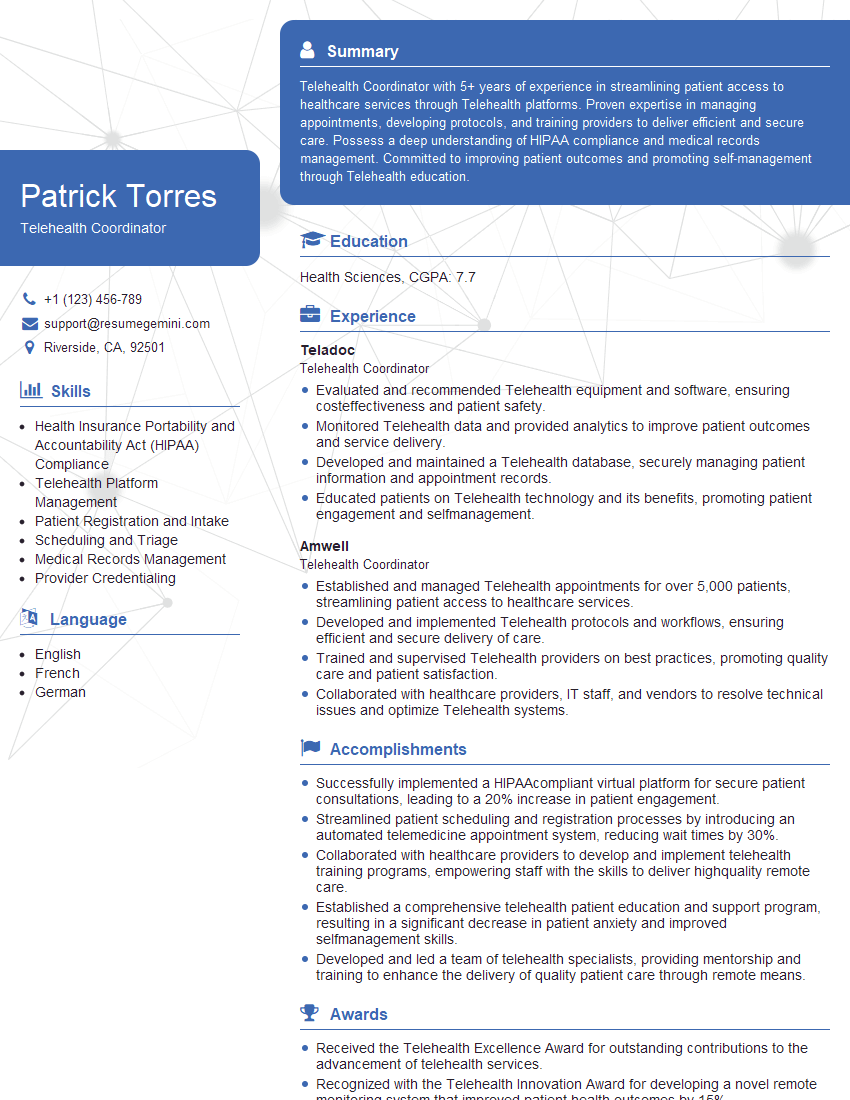
Mastering Telehealth and E-Therapy is crucial for career advancement in the rapidly evolving mental health field. These skills are highly sought after, opening doors to diverse and rewarding opportunities. To maximize your job prospects, creating a strong, ATS-friendly resume is essential. ResumeGemini is a trusted resource to help you build a professional and impactful resume that highlights your qualifications effectively. ResumeGemini provides examples of resumes tailored to Telehealth and E-Therapy roles, giving you a head start in showcasing your skills and experience.
Explore more articles
Users Rating of Our Blogs
Share Your Experience
We value your feedback! Please rate our content and share your thoughts (optional).
What Readers Say About Our Blog
To the interviewgemini.com Webmaster.
Very helpful and content specific questions to help prepare me for my interview!
Thank you
To the interviewgemini.com Webmaster.
This was kind of a unique content I found around the specialized skills. Very helpful questions and good detailed answers.
Very Helpful blog, thank you Interviewgemini team.