The right preparation can turn an interview into an opportunity to showcase your expertise. This guide to Glass Breakage Repair interview questions is your ultimate resource, providing key insights and tips to help you ace your responses and stand out as a top candidate.
Questions Asked in Glass Breakage Repair Interview
Q 1. Describe your experience with different types of glass (e.g., tempered, laminated, annealed).
My experience encompasses a wide range of glass types, each with unique properties and repair considerations. Annealed glass, the most common type, is relatively inexpensive and easy to cut but shatters into sharp shards when broken. This necessitates careful handling and often complete replacement rather than repair. Tempered glass, significantly stronger than annealed glass, is used in applications where safety is paramount, such as car windows and shower doors. When it breaks, it crumbles into small, relatively harmless pieces, but repair is usually not feasible; replacement is necessary. Finally, laminated glass consists of two or more layers of glass bonded together with a layer of polyvinyl butyral (PVB) interlayer. This interlayer holds the glass fragments together upon breakage, making it a safer option. While small cracks in laminated glass can sometimes be repaired using specialized resins, larger damage typically requires replacement.
For example, I once worked on a project repairing a large storefront window made of annealed glass. The repair involved a meticulous process of removing the damaged section and installing a custom-cut replacement piece, ensuring a seamless finish. In contrast, a recent job involving a cracked laminated windshield required a different approach. Because the crack was relatively small and contained within the PVB layer, I was able to use a resin injection technique to stabilize it, preventing further propagation.
Q 2. Explain the process of repairing a cracked window pane.
Repairing a cracked window pane depends heavily on the type of glass and the extent of the damage. Minor cracks in annealed glass might be repairable with specialized glass repair kits that use a resin to fill and consolidate the crack, improving its structural integrity and preventing further propagation. However, this method only works for small, hairline cracks. Larger cracks or damage to tempered or laminated glass generally necessitates replacement.
The process typically involves:
- Assessment: Carefully examine the damage to determine the extent and feasibility of repair.
- Cleaning: Thoroughly clean the area around the crack to ensure proper adhesion of the resin.
- Resin Application: Inject the resin into the crack using a specialized applicator. The resin is designed to cure, filling and strengthening the crack.
- Curing: Allow the resin to cure completely according to the manufacturer’s instructions. This may involve UV light exposure.
- Finishing: Once cured, excess resin is carefully removed, and the repaired area may be polished to achieve a smooth surface.
It’s crucial to remember that not all cracks are repairable. A severely damaged pane may compromise structural integrity, requiring a complete replacement for safety and to maintain energy efficiency.
Q 3. How do you assess the severity of glass damage before initiating repairs?
Assessing the severity of glass damage is crucial before undertaking any repairs. I use a systematic approach, considering several factors:
- Type of glass: The type of glass (annealed, tempered, laminated) significantly influences repairability. Tempered glass, for instance, is usually not repairable due to its safety characteristics.
- Size and location of the crack: Small, hairline cracks are more likely to be repairable than large, spiderweb cracks or cracks that extend to the edges of the glass.
- Presence of chips or punctures: Significant chips or punctures usually mean replacement, as they often compromise the glass’s structural integrity.
- Structural impact: Evaluate whether the damage compromises the window’s ability to maintain its load-bearing capacity, insulation properties, and weatherproofing. If it does, replacement is almost always necessary.
For example, a small crack in a secondary window pane might be repairable, while a large crack in a primary exterior window, particularly in severe weather conditions, would necessitate replacement for safety and energy efficiency reasons.
Q 4. What safety measures do you employ when handling broken glass?
Safety is my top priority when handling broken glass. I always wear appropriate personal protective equipment (PPE), including:
- Safety glasses: To protect my eyes from flying debris.
- Gloves: To prevent cuts and abrasions.
- Closed-toe shoes: To protect my feet.
In addition to PPE, I use careful techniques such as:
- Controlled removal: Damaged glass is removed carefully, using tools designed to minimize the risk of shattering.
- Proper disposal: Broken glass is carefully collected and disposed of in puncture-resistant containers to prevent injuries.
- Work area protection: The work area is carefully protected to prevent the spread of glass shards.
If dealing with very large or hazardous pieces of broken glass, I would always recommend contacting a professional glass removal service.
Q 5. Describe your experience with different glass repair techniques.
My experience includes a variety of glass repair techniques, ranging from simple crack repairs to more complex replacement procedures. For minor cracks, I typically employ resin injection, using specialized resins that penetrate and bond the crack, strengthening and stabilizing the glass. For larger cracks or complete replacements, I often utilize techniques that involve precise measurements, careful cutting of replacement glass, and professional-grade installation methods. These methods vary based on the specific type of glass, window frame construction, and overall job requirements. For example, I have experience with techniques such as:
- Resin injection repair for minor cracks
- Full pane replacement for major damage
- Partial pane replacement for localized damage
- Glazing techniques for securing new glass in existing frames
Each technique demands precision, expertise, and the right tools to ensure a secure, long-lasting, and visually appealing outcome.
Q 6. What are the common causes of glass breakage?
Glass breakage can stem from various causes, both accidental and intentional. Some of the most common include:
- Impact damage: This is a leading cause, encompassing everything from accidental collisions with objects to deliberate vandalism. The force of the impact determines the extent of the damage.
- Thermal stress: Sudden and significant temperature changes can cause glass to crack or shatter. This is especially true for annealed glass, which is more susceptible to thermal shock than tempered glass.
- Manufacturing defects: While less common, manufacturing flaws during the glass production process may weaken the glass, making it more prone to breakage.
- Improper installation: Incorrect installation of glass can create stress points, making it more vulnerable to damage.
- Age and deterioration: Over time, glass can degrade, becoming more brittle and susceptible to cracking.
- Seismic activity: In earthquake-prone areas, seismic activity can cause significant glass breakage.
Understanding these causes helps in preventative maintenance and informs the choice of repair techniques.
Q 7. How do you determine the appropriate type of glass for a specific repair job?
Choosing the appropriate glass type for a repair job is critical. It depends on various factors, including:
- The location and function of the glass: A storefront window will have different requirements than a bathroom window, for example.
- Safety considerations: Areas with high traffic or potential for impact may require safety glass (tempered or laminated).
- Aesthetic requirements: The glass should match the existing window’s appearance.
- Budget: Different types of glass have varying costs.
- Energy efficiency: Consider the use of low-E glass to improve insulation.
For instance, replacing a broken window in a high-traffic commercial building would necessitate the use of safety glass, such as tempered or laminated glass. Meanwhile, a simple interior window might use annealed glass for cost effectiveness. The decision-making process is informed by these criteria, aiming for a balance between functionality, safety, aesthetics, and cost.
Q 8. What tools and equipment are essential for effective glass breakage repair?
Effective glass breakage repair requires a range of tools and equipment, depending on the type and extent of the damage. For basic repairs, you’ll need tools for precise cutting and safety. For more complex situations, specialized equipment might be necessary.
- Safety Gear: Safety glasses, gloves, dust mask (especially when dealing with older glass that might contain lead).
- Measuring and Cutting Tools: Glass cutter (oil-fed is preferred for cleaner cuts), measuring tape, straight edge, and a glass scoring tool.
- Installation Tools: Putty knife, glazing points or clips (depending on the type of glass), suction cups (for handling large panes), and a rubber mallet.
- Cleaning and Preparation: Glass cleaner, rags, and a scraper.
- Sealing and Weatherproofing: Glazing compound (putty), silicone sealant (for more modern installations), and painter’s tape.
- Specialized Equipment (for larger jobs): Glass lifter, wet saw (for precise cuts on thicker glass), and potentially a diamond blade for very hard materials.
Think of it like baking a cake – you wouldn’t try to bake a complex cake without the right measuring cups, oven, and ingredients. Similarly, having the right tools is essential for a successful and safe glass repair.
Q 9. How do you handle emergency glass repair situations?
Emergency glass repair demands swift action and prioritizes safety. My approach involves a three-step process:
- Assessment and Stabilization: First, I secure the area, preventing further damage or injury. This might involve boarding up the broken area with plywood or a strong plastic sheet to protect against the elements or further breakage. I then assess the extent of the damage and the type of glass involved.
- Temporary Repair: The next step involves a temporary fix. This could be anything from applying strong tape (though this is less effective in the long-run) to installing a temporary pane of plexiglass. The goal is to restore safety and minimize environmental impact immediately.
- Scheduling a Permanent Repair: Once the immediate danger is mitigated, I schedule a permanent repair. This involves thoroughly cleaning and evaluating the existing framework, measuring the needed glass, and sourcing the appropriate replacement.
For example, I once responded to a call where a storefront window had shattered. I quickly boarded it up with plywood to prevent theft and exposure to weather, then contacted the client to schedule a replacement the following morning.
Q 10. Explain your experience with measuring and cutting glass.
Accurate measuring and cutting are fundamental to glass repair. I’ve honed my skills through years of experience, working with various glass types and thicknesses.
The process typically starts with precise measurements, using a high-quality measuring tape. Then, I transfer these measurements to the glass, using a sturdy straight edge. Scoring the glass with a glass cutter requires a steady hand and consistent pressure to ensure a clean break. I use an oil-fed cutter for smoother cuts, reducing chipping. After scoring, I use a pair of pliers or a simple break to snap the glass along the scored line. For complex cuts, I utilize a wet saw, which provides a more precise and controlled cut, particularly for thicker glass and curved surfaces.
I’ve worked on projects ranging from replacing small window panes to installing large, custom-cut glass shower doors. This involved adapting my techniques to match the material and the desired result.
Q 11. Describe your experience with installing different types of glass.
My experience encompasses a wide array of glass types, including annealed (standard float glass), tempered (safety glass), laminated (used in windshields and security applications), and insulated glass units (IGUs). Each type demands a different approach to installation.
- Annealed Glass: Relatively easy to cut and install, commonly used in interior applications.
- Tempered Glass: Stronger and safer, requiring more care during handling and installation; once broken, it shatters into small, relatively harmless pieces.
- Laminated Glass: Consists of two or more layers of glass bonded together with a plastic interlayer, offering enhanced safety and security. It’s more difficult to cut and often requires specialized tools.
- Insulated Glass Units (IGUs): Composed of two or more glass panes separated by a sealed air or gas space, offering excellent insulation. These require careful handling to avoid damaging the seal.
For example, when installing an IGU, I always use suction cups to avoid any stress on the unit’s delicate seal. Similarly, when installing tempered glass for a shower enclosure, I ensure proper support and use glazing points and clips to secure it safely.
Q 12. How do you ensure the proper sealing and weatherproofing of repaired glass?
Proper sealing and weatherproofing are crucial for preventing leaks, drafts, and energy loss. My methods depend on the type of glass and the existing frame.
For older frames, I typically use glazing compound (putty), which is applied to create a watertight seal between the glass and the frame. It’s a time-tested method, but requires some skill to achieve a neat and effective seal. For more modern applications, I prefer high-quality silicone sealant. This offers excellent adhesion and flexibility, making it suitable for various frame materials. I always ensure a clean surface before applying the sealant, removing any dust or debris. The sealant is then applied smoothly, avoiding gaps or air pockets. For larger glass installations, I might incorporate glazing points or clips for added security and support before sealing.
Think of the seal as the glue holding everything together. A poor seal can lead to problems like drafts, water damage, and energy inefficiency.
Q 13. What are your methods for cleaning and preparing glass surfaces before repair?
Thorough cleaning and preparation are essential for a successful and long-lasting repair. Before any repair work commences, I meticulously clean the glass surface. My process includes:
- Removing Existing Sealant or Putty: Carefully remove any old sealant or putty using a putty knife or scraper, ensuring a clean surface.
- Cleaning the Glass: Wash the glass thoroughly with a glass cleaner and a clean, lint-free cloth. This removes any dirt, dust, grease, or other contaminants that could interfere with adhesion.
- Inspecting the Frame: Carefully examine the frame for any damage, rot, or other issues that might need addressing before installing the new glass.
- Surface Preparation: I ensure the glass and frame surfaces are completely dry before applying new sealant. If necessary, I use isopropyl alcohol to remove any residual contaminants.
Imagine trying to stick a sticker to a dirty window. It simply won’t adhere properly. Likewise, a clean surface is critical for a successful and lasting seal.
Q 14. How do you handle customer concerns and complaints related to glass repair?
Handling customer concerns and complaints is a vital aspect of my job. I approach each situation with empathy and professionalism. My approach involves:
- Active Listening: I patiently listen to the customer’s concerns, allowing them to fully express their dissatisfaction.
- Understanding the Issue: I ask clarifying questions to thoroughly understand the nature of the problem.
- Offering Solutions: I propose solutions based on the nature of the issue, whether it’s a minor adjustment or a full replacement. I explain the steps involved and the expected timeline.
- Following Up: I always follow up with the customer to ensure their satisfaction. This demonstrates commitment and builds trust.
For example, I once had a client complain about a minor leak around a recently installed window. I promptly returned, investigated the problem, resealed the area, and ensured the leak was completely resolved. Addressing issues promptly and effectively maintains customer loyalty and builds a positive reputation.
Q 15. Describe your experience with different types of sealants and adhesives used in glass repair.
Selecting the right sealant or adhesive is crucial for successful glass repair. The choice depends heavily on the type of glass, the frame material, and the severity of the damage. My experience encompasses a wide range of products, each with its own strengths and weaknesses.
- Silicone Sealants: These are versatile, weather-resistant, and relatively inexpensive. I often use them for smaller cracks or chips in windows and shower doors, particularly where flexibility is needed to accommodate movement in the structure. However, they can be messy to apply and require careful cleaning to achieve a professional finish. I’ve found neutral cure silicone to be the best option for most applications, avoiding acidic types which can corrode metal.
- Polyurethane Sealants: These offer superior strength and adhesion compared to silicones, making them ideal for larger repairs or structural glazing applications. They are more durable and can withstand greater stress, but they require more precise application and often need a specialized gun for dispensing. I prefer these for repairs involving significant weight or stress on the glass.
- Epoxy Adhesives: Epoxies are excellent for bonding broken pieces of glass back together, creating a strong, almost invisible repair. They’re often used in conjunction with other sealants to provide a robust, long-lasting solution. However, they have a limited working time and require careful mixing for optimal strength. I’ve had great success using two-part epoxy systems with specialized glass fillers for intricate repairs.
- Structural Glazing Sealants: These high-performance sealants are designed for large-scale projects, offering exceptional weather resistance, UV protection, and long-term durability. They’re commonly used in curtain wall systems and other large glass facades, and I’ve used several types, including silicone-based and polysulfide sealants, carefully following manufacturer guidelines for optimal performance.
In each case, proper surface preparation is paramount. Cleaning the glass and frame thoroughly to remove dust, dirt, and any existing sealant ensures optimal adhesion and a durable repair.
Career Expert Tips:
- Ace those interviews! Prepare effectively by reviewing the Top 50 Most Common Interview Questions on ResumeGemini.
- Navigate your job search with confidence! Explore a wide range of Career Tips on ResumeGemini. Learn about common challenges and recommendations to overcome them.
- Craft the perfect resume! Master the Art of Resume Writing with ResumeGemini’s guide. Showcase your unique qualifications and achievements effectively.
- Don’t miss out on holiday savings! Build your dream resume with ResumeGemini’s ATS optimized templates.
Q 16. Explain your knowledge of building codes and regulations related to glass installation.
Building codes and regulations regarding glass installation and repair vary depending on location and the specific application. However, some common themes emerge. I am familiar with codes concerning:
- Safety Glazing: Codes often mandate safety glass (tempered or laminated) in high-risk areas such as doors, windows near walkways, and shower enclosures. This is critical to minimize the risk of injury from broken glass. The codes will specify the type and thickness of safety glass required for specific applications, and I am always meticulous in my adherence to this.
- Impact Resistance: In certain situations, like storefront windows or hurricane-prone regions, the codes may require glass with a higher level of impact resistance. This often means using laminated or specially treated glass designed to withstand significant forces. I’ve worked on projects where the use of such glass was specifically called out in the building plans and ensured strict adherence to specified standards.
- Energy Efficiency: Some codes encourage or require the use of energy-efficient glazing to reduce heat transfer. This might involve using low-E coatings or double/triple-paned glass. I am accustomed to working with these types of glass units and understand the importance of handling them correctly during installation and repair to avoid damage.
- Accessibility: Regulations might address accessibility requirements for individuals with disabilities, for instance, specifying the minimum clear openings in glass doors or windows. This consideration is key during any repairs, ensuring the modified areas remain compliant.
Before starting any project, I always thoroughly review the relevant building codes and permits to ensure compliance and avoid potential legal issues. Ignoring these codes can result in costly rework, fines, or even liability for injury.
Q 17. How do you estimate the cost of glass repair projects?
Estimating the cost of glass repair involves a methodical approach, considering several key factors:
- Type and Size of Glass: Different types of glass (e.g., tempered, laminated, insulated) have varying costs. The size of the damaged area directly impacts material costs.
- Labor Costs: The complexity of the repair (e.g., simple crack versus a shattered pane) dictates the time and skill required, influencing labor costs.
- Accessibility: Hard-to-reach areas increase labor costs due to the extra time and equipment needed. For instance, repairing a high-rise window involves more equipment and precautions, hence higher expenses.
- Frame Repair: If the frame is also damaged, this adds significant expense, as the repair might require carpentry, welding, or other specialized skills.
- Additional Materials: The use of sealants, adhesives, fillers, or specialized tools will also be included in the cost estimation.
I typically provide detailed estimates that break down these components separately, ensuring transparency for my clients. I often use industry-standard pricing guides along with my experience to arrive at an accurate cost, avoiding surprises later in the project.
For example, a simple crack repair in a small window might cost a few hundred dollars, whereas replacing a large storefront window might cost several thousand, accounting for the material, specialized handling, and potential frame repairs.
Q 18. How do you handle situations where glass damage is extensive?
Extensive glass damage requires a different approach than minor repairs. Safety is the paramount concern. My procedure involves:
- Securing the Area: The first step is to secure the damaged area to prevent further damage or injury. This may involve boarding up the opening or using protective barriers.
- Assessment of Damage: A thorough assessment determines the extent of the damage to both the glass and the surrounding frame. This informs the repair strategy.
- Professional Removal: Carefully removing the damaged glass is crucial, using appropriate safety equipment. This step is often more complex and time-consuming than simple repairs.
- Frame Repair (if needed): Any damage to the frame must be addressed before installing the new glass. This might involve carpentry, welding, or other specialist work.
- Installation of Replacement Glass: The new glass is installed using appropriate techniques and sealants to ensure a secure and weathertight fit. This frequently involves precise measurements and installation methods to maintain structural integrity.
In cases of severe damage, I may subcontract specialized work, like structural repair of a damaged frame, to qualified professionals to ensure the best outcome. For instance, a significant impact that compromises the structural integrity of the building may necessitate the involvement of structural engineers and specialized contractors.
Q 19. Describe your experience working with different types of glass frames and structures.
My experience covers a wide array of glass frames and structures:
- Aluminum Frames: Common in commercial buildings and modern residential construction. These require specific techniques to avoid damaging the frame during repair or replacement.
- Wood Frames: Traditional and often found in older buildings. These require careful handling to avoid damaging the wood during the repair process. I’m familiar with various wood types and their susceptibility to moisture.
- Vinyl Frames: Popular in residential construction for their low maintenance. I know how to work with these frames without causing damage to the vinyl.
- Steel Frames: Used in commercial buildings and require specialized tools and techniques for repairs.
- Custom Frames: Some projects involve unique frame designs requiring customized solutions. I have the adaptability to work with unique shapes and materials.
Understanding the properties and requirements of each frame type is crucial to ensure a successful and lasting repair. For example, the expansion and contraction properties of wood frames must be considered to prevent sealant failure, and the careful use of shims is crucial when installing glass within aluminum frames to ensure proper fit and prevent stress on the glass.
Q 20. What are the common challenges faced during glass breakage repair?
Common challenges in glass breakage repair include:
- Difficult Access: Reaching high windows or those in awkward locations can present significant logistical challenges, requiring specialized equipment and safety measures.
- Weather Conditions: Inclement weather can delay or complicate repairs, especially for exterior glass. I plan carefully to avoid delays and ensure safe working conditions.
- Matching Glass: Finding an exact match for replacement glass, especially with older or unique types, can be difficult. I have contacts with glass suppliers and expertise in identifying appropriate substitutes.
- Structural Issues: Underlying structural problems, such as frame rot or damage, can complicate repairs and require additional expertise or coordination with other trades.
- Hidden Damage: Sometimes, the extent of the damage is not immediately apparent. Thorough inspection is crucial to avoid overlooking potential problems that could lead to future issues.
Effective problem-solving is crucial. I use my experience and knowledge to anticipate and address these challenges proactively, keeping projects on schedule and within budget. For example, a difficult-to-reach window might require using a specialized lift, and the discovery of hidden structural damage requires communicating clearly with the client and obtaining any necessary additional approvals.
Q 21. How do you ensure the structural integrity of the repaired glass?
Ensuring structural integrity after glass breakage repair is vital. I employ several strategies:
- Proper Sealant Selection and Application: Using the right sealant for the job and applying it correctly is fundamental. This includes proper surface preparation, sufficient curing time, and appropriate sealant thickness.
- Accurate Measurements and Installation: Precise measurements and careful installation are essential to prevent stress on the glass. I use specialized tools and techniques to ensure a perfect fit.
- Frame Stability: Addressing any frame damage before installing new glass is crucial. This may involve carpentry, welding, or other specialist repairs. A compromised frame can transfer stress to the new glass, potentially leading to failure.
- Structural Glazing Techniques: For large-scale projects, I might employ structural glazing techniques using high-performance sealants and robust support systems to ensure the long-term stability and watertightness of the glazing. This is crucial for curtain wall systems or other large-scale glass installations.
- Inspection and Testing (if needed): For high-risk applications, additional inspection or testing may be necessary to ensure the structural integrity of the repaired glass system.
My meticulous attention to detail and use of appropriate techniques ensure the repaired glass maintains structural integrity and meets all safety and building code requirements. This commitment to quality reduces the likelihood of future problems and provides my clients with peace of mind.
Q 22. Explain your understanding of different types of glass defects.
Understanding glass defects is crucial for effective repair. Defects can range from minor imperfections to significant structural weaknesses. We categorize them based on their cause and location.
- Manufacturing Defects: These occur during the glass production process. Examples include bubbles (small air pockets within the glass), stones (small inclusions of other materials), and scratches or imperfections on the surface. These are usually noticeable during inspection.
- Thermal Stress Defects: These arise from uneven heating or cooling, leading to internal stresses within the glass. This can manifest as spontaneous breakage, often due to temperature fluctuations, or the development of small cracks (often called ‘heat cracks’). Think of a glass suddenly shattering on a hot day after being cooled rapidly.
- Mechanical Defects: These are caused by physical impact or stress. This includes chips, cracks (ranging from hairline fractures to large, spiderweb-like cracks), and even complete shattering. The severity dictates the repair approach – simple chip repairs versus full replacement.
- Chemical Defects: Although less common, chemical etching or degradation can weaken the glass structure over time, making it susceptible to breakage. This might occur due to exposure to certain chemicals or corrosive environments.
Identifying the type of defect is the first step towards choosing the appropriate repair method. A simple chip can be filled, while a large crack might necessitate replacement.
Q 23. Describe your problem-solving skills related to glass repair.
My problem-solving approach to glass repair is systematic and methodical. I follow a structured process:
- Assessment: Carefully examine the damage, noting its type, size, location, and any potential underlying issues. Is it a simple crack, or is there further damage hidden beneath the surface?
- Diagnosis: Determine the cause of the breakage (if possible). Was it impact damage, thermal stress, or a pre-existing defect? Understanding the cause helps prevent future occurrences.
- Planning: Select the appropriate repair technique based on the assessment and diagnosis. This might involve filling small chips, laminating cracked glass, or completely replacing the broken pane.
- Repair: Execute the chosen repair method carefully, paying attention to detail and safety precautions. This might involve specialized tools and resins.
- Testing: After repair, I thoroughly inspect the work to ensure structural integrity and visual appeal.
- Documentation: Record the repair process, materials used, and any relevant observations for future reference. This is very helpful for potential warranties.
For instance, if a client reports a shattered window, I wouldn’t jump straight to replacement. I’d first investigate – was it a break-in, a rock hitting it, or a manufacturing defect? My strategy adapts to the specific circumstance.
Q 24. How do you maintain your tools and equipment?
Maintaining my tools and equipment is paramount for safety and efficiency. It’s like a chef maintaining their knives – crucial for quality work. I follow a rigorous cleaning and storage procedure:
- Cleaning: After each job, I meticulously clean all tools, removing any glass shards, resin residue, or dust. This prevents cross-contamination and ensures the longevity of my tools.
- Sharpening/Calibration: Tools like glass cutters require regular sharpening to maintain their precision. I calibrate measuring instruments frequently to guarantee accuracy.
- Storage: All tools are stored in designated, organized containers to prevent damage and loss. Sharp tools are always covered or sheathed.
- Regular Inspections: I regularly inspect equipment for any signs of wear or damage. Damaged tools are repaired or replaced immediately.
- Maintenance Log: I keep a detailed maintenance log, tracking cleaning, sharpening, and inspections. This helps me schedule preventative maintenance effectively.
Neglecting tool maintenance not only compromises the quality of my work but also creates safety hazards. A dull cutter, for instance, can increase the risk of injury.
Q 25. What are the common safety hazards associated with glass breakage repair?
Glass breakage repair involves inherent safety hazards. My top priorities are always the safety of myself and others:
- Sharp Glass Fragments: The most obvious hazard. I always wear cut-resistant gloves and safety glasses, and carefully collect and dispose of broken glass fragments using appropriate methods (such as sealed containers).
- Falling Glass: During removal or replacement, there’s a risk of glass falling. I always secure the area, using proper scaffolding or support if necessary. I work carefully and methodically, ensuring secure removal.
- Cutting Tools: Glass cutters, scoring wheels, and other tools are sharp. I always use them carefully and store them safely when not in use.
- Chemicals: Some resins and adhesives used in repairs can be irritating or harmful. I always wear appropriate personal protective equipment (PPE) and work in well-ventilated areas, following the manufacturer’s safety guidelines.
- Lifting Injuries: Handling large glass panes requires proper lifting techniques to avoid strain or injury. I use appropriate lifting equipment when necessary and utilize proper body mechanics.
Thorough safety planning and the use of appropriate PPE are essential for mitigating these risks.
Q 26. How do you manage your time effectively during a repair project?
Effective time management is critical in this profession. I use a combination of strategies:
- Prioritization: I prioritize tasks based on urgency and importance. Emergency repairs take precedence over scheduled maintenance.
- Scheduling: I use a digital calendar and scheduling app to plan my day and week, allocating time for specific tasks and allowing buffer time for unexpected delays. This helps to ensure efficiency and reduces potential stress.
- Organized Workspace: A clean and organized workspace minimizes time wasted searching for tools or materials. Everything has its place.
- Efficient Workflow: I have developed efficient workflows for common repair tasks, allowing me to complete them quickly without sacrificing quality. This comes from experience and continuous improvement.
- Realistic Estimates: I provide clients with realistic time estimates for repairs, avoiding over-promising and setting myself up for stress.
For example, I might schedule smaller repairs in the morning and dedicate afternoons to larger jobs. This optimized scheduling ensures productivity without rushing. My time management skills allow me to consistently meet deadlines and client expectations.
Q 27. Describe your experience working independently and as part of a team.
I’m comfortable working both independently and as part of a team. The nature of the job sometimes requires solo work, other times teamwork.
Independent Work: I’m adept at self-managing my tasks, troubleshooting problems, and meeting deadlines without direct supervision. This is crucial for on-site repairs where I might be the sole representative of the company.
Teamwork: For larger projects or complex repairs, effective teamwork is essential. I value open communication, collaboration, and a shared commitment to quality. I actively participate in discussions, contribute my expertise, and support my colleagues. On a team, I’ve found that diverse perspectives improve efficiency and lead to better solutions. For example, one person could be removing a damaged pane, while the other prepares the new glass for installation.
In both scenarios, my strong work ethic, professionalism, and commitment to quality remain consistent.
Q 28. How do you stay updated on the latest advancements in glass repair techniques?
Staying updated is vital in a field with ongoing advancements. I utilize several methods:
- Industry Publications: I regularly read industry magazines and journals to learn about new techniques, materials, and technologies.
- Trade Shows and Conferences: Attending industry events provides an opportunity to network with other professionals and learn firsthand about the latest developments.
- Online Resources and Courses: Online platforms offer a wealth of information, including tutorials, webinars, and online courses. I regularly explore these to enhance my knowledge.
- Manufacturer Websites: Staying informed about the specifications and advancements made by manufacturers of glass and repair materials is key to keeping my work current and efficient.
- Mentorship and Networking: Connecting with experienced professionals offers valuable insights and allows for the sharing of best practices. This is an important part of continuing education.
For example, recently I learned about a new type of resin with improved bonding properties and quicker curing time through an online course. This directly improved my efficiency and the quality of my repairs.
Key Topics to Learn for Glass Breakage Repair Interview
- Types of Glass: Understanding the properties of different glass types (e.g., annealed, tempered, laminated) and their impact on repair techniques.
- Damage Assessment: Developing skills in accurately assessing the extent and type of glass damage to determine the most appropriate repair method.
- Repair Techniques: Mastering various glass repair techniques, including resin injection, crack filling, and surface restoration.
- Safety Procedures: Understanding and adhering to all relevant safety protocols when handling glass and using repair materials.
- Material Selection: Knowing which repair materials are best suited for different types of glass and damage scenarios.
- Tools and Equipment: Familiarity with the various tools and equipment used in glass breakage repair, including their proper use and maintenance.
- Cost Estimation: Developing the ability to accurately estimate the cost of repairs based on the type and extent of damage.
- Customer Interaction: Practicing effective communication skills to interact professionally with clients and address their concerns.
- Troubleshooting: Developing problem-solving skills to identify and address common issues encountered during the repair process.
- Industry Standards and Regulations: Understanding relevant industry standards and regulations related to glass repair and safety.
Next Steps
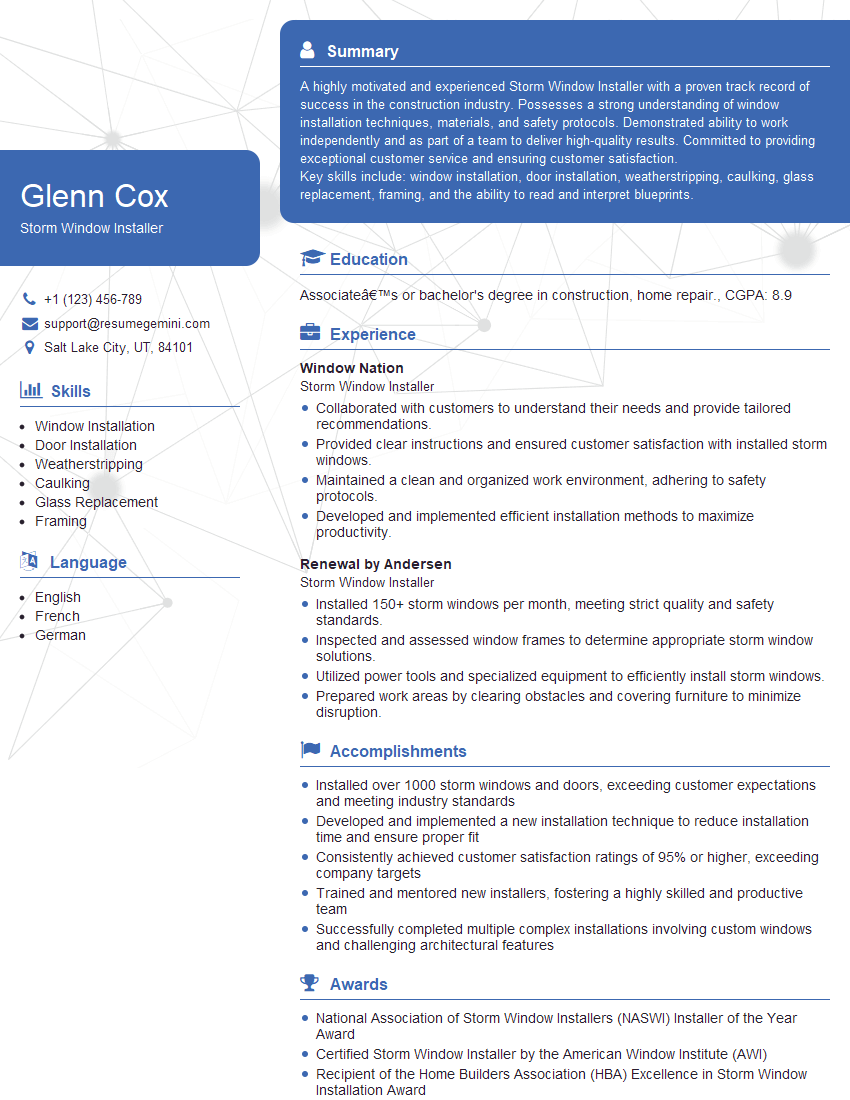
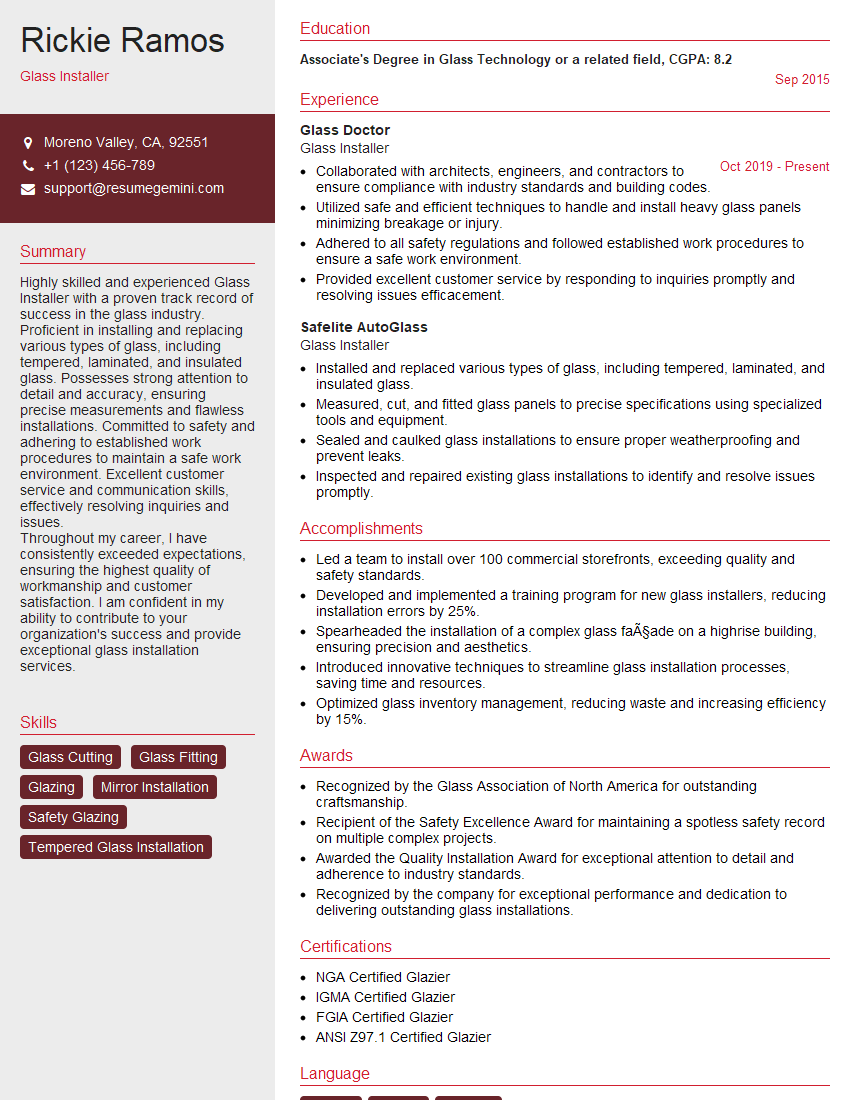
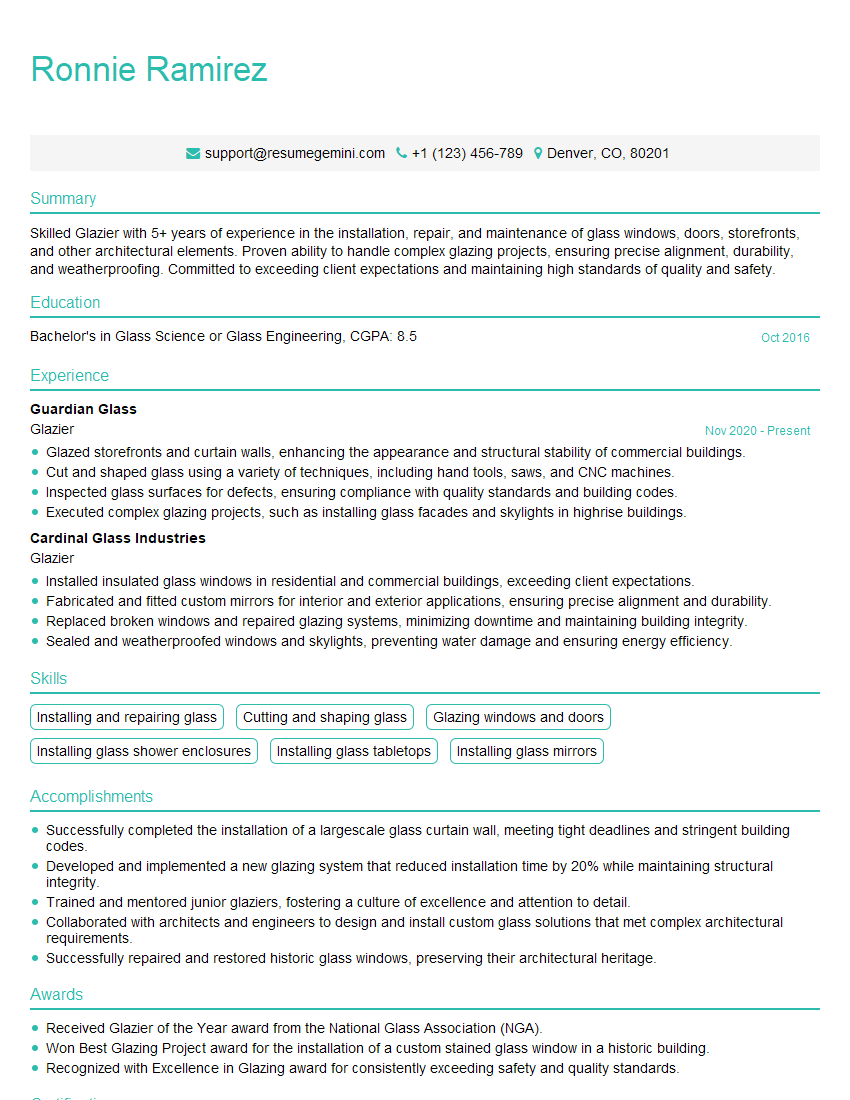
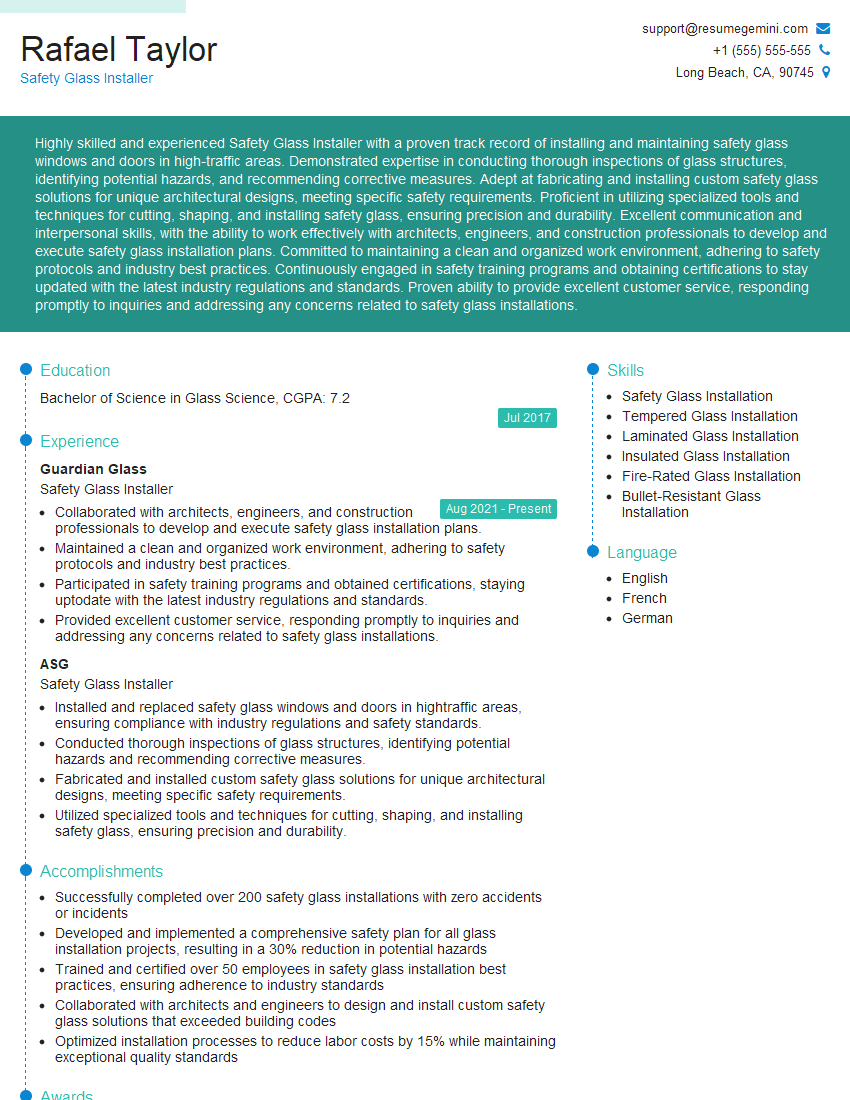
Mastering glass breakage repair opens doors to a rewarding career with excellent growth potential in a consistently in-demand field. To maximize your job prospects, focus on creating a strong, ATS-friendly resume that showcases your skills and experience effectively. ResumeGemini is a trusted resource that can help you build a professional and impactful resume, ensuring your qualifications shine. Examples of resumes tailored to Glass Breakage Repair are available to help guide you through the process.
Explore more articles
Users Rating of Our Blogs
Share Your Experience
We value your feedback! Please rate our content and share your thoughts (optional).
What Readers Say About Our Blog
To the interviewgemini.com Webmaster.
Very helpful and content specific questions to help prepare me for my interview!
Thank you
To the interviewgemini.com Webmaster.
This was kind of a unique content I found around the specialized skills. Very helpful questions and good detailed answers.
Very Helpful blog, thank you Interviewgemini team.