Interviews are more than just a Q&A session—they’re a chance to prove your worth. This blog dives into essential Consultation and Supervision interview questions and expert tips to help you align your answers with what hiring managers are looking for. Start preparing to shine!
Questions Asked in Consultation and Supervision Interview
Q 1. Describe your experience in conducting needs assessments for clients.
Conducting a thorough needs assessment is the cornerstone of effective consultation. It involves systematically gathering information to understand a client’s challenges, goals, and resources. My approach is multifaceted and starts with active listening to understand the client’s perspective. This is followed by a review of relevant documentation, interviews with key stakeholders, and potentially surveys or focus groups depending on the context and scale of the need. For example, when consulting with a school struggling with low student engagement, I’d interview teachers, students, parents, and administrators to get a holistic picture. I then analyze the gathered data, identifying patterns and root causes, to create a clear and actionable picture of the needs. This assessment isn’t just about identifying problems; it’s about understanding the context in which those problems exist.
Q 2. Explain your approach to developing and implementing consultation plans.
Developing and implementing a consultation plan is a collaborative process. It begins with the needs assessment, using its findings to establish clear, measurable, achievable, relevant, and time-bound (SMART) goals. The plan outlines specific strategies and interventions, including timelines and responsibilities. For instance, if the needs assessment revealed a lack of teacher training on a specific pedagogical approach, the plan would include scheduling training sessions, developing relevant materials, and establishing mechanisms for ongoing support. Crucially, the plan is flexible and adaptable; it’s a living document that evolves as the consultation progresses. Regular check-ins and feedback loops are vital for ensuring the plan remains aligned with the evolving needs and context. I always involve the client in this process to ensure ownership and buy-in.
Q 3. How do you ensure confidentiality and ethical practices in your work?
Confidentiality and ethical practice are paramount. I adhere strictly to professional codes of conduct, ensuring all information shared by clients remains private unless legally obligated to disclose. This includes using secure methods for storing and transmitting data. I clearly articulate my confidentiality policies at the outset of any engagement and obtain informed consent before proceeding. Transparency is key; clients should know how their data will be used and protected. I also manage potential conflicts of interest proactively, disclosing any potential biases or competing commitments. Ethical considerations guide every aspect of my work, ensuring fairness, impartiality, and respect for client autonomy.
Q 4. Describe a time you had to adapt your consultation approach based on client needs.
In one instance, I was consulting with a non-profit organization facing significant financial challenges. My initial plan focused on streamlining their administrative processes. However, during the process, it became clear that their core funding model was unsustainable. Adapting my approach required shifting the focus from administrative efficiency to a more strategic review of their fundraising and resource allocation. This involved helping them explore new funding streams, develop more targeted grant proposals, and implement more robust financial management practices. The initial plan was valuable, but the successful outcome hinged on my ability to recognize the deeper, underlying issue and adjust my strategy accordingly.
Q 5. How do you measure the success of your consultation interventions?
Measuring the success of consultation interventions is crucial. I employ a variety of methods, including quantitative and qualitative data. Quantitative data might involve tracking key performance indicators (KPIs) like reduced staff turnover, improved client satisfaction scores, or increased sales figures. Qualitative data comes from client feedback through interviews, surveys, or focus groups, offering valuable insights into the impact of the intervention on their lived experience. I also regularly review progress against the SMART goals established in the consultation plan. A balanced approach, combining quantitative and qualitative data, provides a comprehensive understanding of the intervention’s overall effectiveness and areas for improvement.
Q 6. Explain your experience in providing supervision to junior staff.
Providing supervision to junior staff involves fostering their professional growth and development while ensuring the quality of their work. My approach is based on a supportive, collaborative relationship, utilizing a combination of individual and group supervision sessions. Individual sessions focus on case discussions, exploring challenges, and providing constructive feedback. Group supervision creates a learning environment where junior staff can learn from each other’s experiences and share best practices. I utilize reflective practice techniques, encouraging supervisees to critically examine their own work and identify areas for improvement. Regular feedback, ongoing support, and a focus on ethical decision-making are critical components of effective supervision.
Q 7. Describe your approach to mentoring and coaching individuals.
Mentoring and coaching are closely related yet distinct. Mentoring focuses on long-term career development, providing guidance, support, and advocacy. Coaching is more targeted and goal-oriented, focused on specific skills development or performance improvement. My approach integrates both, tailoring my support to the individual’s needs. I employ a strengths-based approach, focusing on the individual’s capabilities and potential for growth. Active listening, providing constructive feedback, and collaboratively setting goals are essential. I often utilize various coaching models and tools, adapted to the specific needs of the individual. This holistic approach ensures that the individual is equipped not only with the necessary skills but also with the confidence and self-awareness to thrive in their professional journey.
Q 8. How do you handle conflicts between supervisees or within a team?
Conflict resolution among supervisees or within a team requires a delicate balance of fairness, empathy, and decisive action. My approach starts with active listening to understand each individual’s perspective, ensuring everyone feels heard and validated. This often involves separate conversations to fully grasp the nuances of the situation and avoid escalating the conflict.
Next, I facilitate a structured dialogue, guiding the team towards identifying the root cause of the disagreement. This might involve clarifying roles, responsibilities, or expectations. I emphasize collaborative problem-solving, encouraging the team to brainstorm solutions together.
For example, in a previous supervisory role, two team members had a clash stemming from differing interpretations of project deadlines. By holding separate initial meetings and then bringing them together with a clear process, we were able to identify communication breakdowns as the core issue. We implemented a daily check-in system and a revised project timeline which resolved the conflict and improved team communication moving forward. In instances where the conflict persists despite these interventions, I may need to implement more direct interventions, such as mediating directly or, in serious cases, involving HR. The key is to address the conflict constructively, focusing on the issue rather than personalities, and promoting a culture of respect and open communication.
Q 9. How do you provide constructive feedback and address performance issues?
Providing constructive feedback and addressing performance issues is crucial for professional development and team success. My approach emphasizes a supportive and collaborative environment. I begin by establishing a trusting relationship with the individual, creating a safe space for open and honest communication. Feedback sessions are scheduled in advance, allowing both parties adequate time to prepare.
During the feedback session, I use the SBI (Situation-Behavior-Impact) model to structure my feedback. This means describing the specific situation, outlining the observed behavior, and clearly explaining the impact of that behavior on the team or project. I avoid vague generalizations and focus on observable actions and their consequences. For instance, instead of saying ‘you’re not a team player,’ I might say ‘In the last team meeting, you interrupted several colleagues and didn’t fully engage in the group discussion, which resulted in a less efficient meeting and missed opportunities for input.’
Following the SBI model, I actively listen to the individual’s perspective and explore potential contributing factors before co-creating a plan for improvement. This might involve offering additional training, mentoring, or assigning tasks designed to help them develop the needed skills. I emphasize progress tracking and regular check-ins to ensure the plan is effective and adjust it accordingly. Finally, I celebrate achievements and acknowledge progress, even incremental ones, to foster motivation and maintain a positive work relationship.
Q 10. Explain your experience in developing and delivering training programs.
I have extensive experience in designing and delivering training programs across a range of topics, including conflict resolution, leadership development, and effective communication. My process starts with a thorough needs assessment, identifying the specific learning objectives and participant skill gaps. I leverage a variety of methodologies, tailoring the training to the learners’ needs and learning styles.
For example, a recent program I developed focused on enhancing team collaboration. It included interactive workshops, case study analyses, and role-playing exercises. The program was designed to be practical and hands-on, allowing participants to apply the learned concepts immediately in their workplace. Pre and post-training assessments were used to evaluate the program’s effectiveness and measure participant learning outcomes. I’ve also integrated technology effectively, using online learning platforms, interactive simulations, and virtual reality to improve engagement and accessibility. The success of my programs is measured by improved participant performance, positive feedback, and ultimately, tangible improvements in team or organizational effectiveness.
Q 11. How do you manage multiple projects and competing deadlines as a consultant?
Managing multiple projects and competing deadlines as a consultant necessitates strong organizational skills and a proactive approach. I utilize project management methodologies, often employing agile principles to prioritize tasks, manage resources, and track progress effectively. My preferred approach involves creating detailed project plans with clearly defined milestones, timelines, and responsibilities.
I use tools such as project management software (e.g., Asana, Trello) to track tasks, manage dependencies, and monitor progress against deadlines. Regular communication with clients and stakeholders is essential to keep everyone informed, manage expectations, and address any potential roadblocks proactively. I also prioritize delegation and teamwork, efficiently assigning tasks to the right individuals and leveraging the strengths of each team member. When faced with conflicting priorities, I use prioritization matrices (like Eisenhower’s Urgent/Important matrix) to assess the relative importance and urgency of each task, ensuring the most critical projects are addressed first. Through meticulous planning, effective communication, and skilled resource allocation, I consistently deliver high-quality results even under pressure.
Q 12. Describe your experience working with diverse stakeholders.
Working with diverse stakeholders is an integral part of my consulting experience. I believe that appreciating and understanding diverse perspectives is vital for successful projects. My approach centers around building rapport with individuals from varying backgrounds, acknowledging their unique experiences, and creating a safe and inclusive space for collaboration.
I actively seek to understand the needs and priorities of each stakeholder group. This includes conducting thorough needs assessments, employing active listening techniques, and ensuring clear and culturally sensitive communication. I consciously use inclusive language, adapting my communication style to different audiences. For instance, I ensure I use appropriate terminology and avoid jargon that might be misunderstood. I frequently utilize visual aids and diverse communication formats to accommodate varying learning styles and preferences. I actively seek feedback to ascertain that communication is effective and that all stakeholders feel their voices are heard. This sensitivity to diverse viewpoints enables the creation of solutions that meet the needs of all stakeholders involved.
Q 13. How do you stay current with best practices in consultation and supervision?
Staying current with best practices in consultation and supervision is a continuous process. I actively engage in ongoing professional development through various means. I regularly attend conferences, workshops, and webinars related to consultation, supervision, and relevant fields such as psychology, organizational behavior, and leadership.
I actively participate in professional organizations and networks to stay abreast of emerging trends and best practices. I read professional journals and research articles to remain informed on the latest evidence-based approaches in my field. I also engage in peer supervision and mentorship opportunities, learning from colleagues and sharing experiences. Staying updated ensures that my practice remains relevant, ethical, and effective. I see it as an essential component of professional responsibility and a commitment to providing high-quality service to my clients and supervisees.
Q 14. Explain your experience with data analysis and reporting in consultation projects.
Data analysis and reporting are critical components of my consultation projects. I utilize quantitative and qualitative data to assess the effectiveness of interventions and demonstrate the impact of my work. I’m proficient in various statistical software packages and data analysis techniques. I use data to inform my recommendations, supporting my findings with clear evidence-based conclusions.
For example, in a recent project focused on improving employee satisfaction, we collected data through surveys, focus groups, and performance reviews. I then used statistical analysis to identify trends, pinpoint areas for improvement, and measure the impact of our interventions. The findings were presented in clear and concise reports, incorporating both quantitative data (e.g., employee satisfaction scores) and qualitative insights (e.g., themes emerging from focus group discussions). These reports provided clear evidence of project success and informed future strategies. Ultimately, data-driven decision making ensures that my consultations are evidence-based, effective, and demonstrably impactful.
Q 15. How do you build rapport and trust with clients and supervisees?
Building rapport and trust is foundational to effective consultation and supervision. It’s about creating a safe and collaborative space where clients and supervisees feel comfortable being vulnerable and open. I achieve this through several key strategies:
- Active Listening and Empathy: I focus intently on understanding their perspective, validating their feelings, and reflecting back what I hear to ensure accuracy. For example, if a supervisee expresses frustration with a challenging case, I might say, “It sounds like you’re feeling overwhelmed by the complexity of this situation.”
- Establishing Clear Boundaries and Expectations: From the outset, I clearly communicate my role, the scope of the work, confidentiality protocols, and the process we’ll be following. This provides a sense of security and predictability.
- Authenticity and Self-Disclosure (appropriately): Sharing relevant personal experiences (while maintaining professional boundaries) can foster connection. For instance, I might share a brief anecdote about a similar challenge I faced in my career, demonstrating relatability and understanding.
- Non-judgmental Approach: Creating a space free from judgment is crucial. This means actively suspending my own biases and creating an environment where individuals feel safe exploring their thoughts and feelings without fear of criticism.
- Regular Check-ins: Throughout the consultation or supervision process, I regularly check in to assess how the client or supervisee is feeling, whether they feel understood, and if they have any questions or concerns. This demonstrates ongoing commitment to the relationship.
Essentially, building rapport and trust is an ongoing process that requires consistent attention and genuine engagement.
Career Expert Tips:
- Ace those interviews! Prepare effectively by reviewing the Top 50 Most Common Interview Questions on ResumeGemini.
- Navigate your job search with confidence! Explore a wide range of Career Tips on ResumeGemini. Learn about common challenges and recommendations to overcome them.
- Craft the perfect resume! Master the Art of Resume Writing with ResumeGemini’s guide. Showcase your unique qualifications and achievements effectively.
- Don’t miss out on holiday savings! Build your dream resume with ResumeGemini’s ATS optimized templates.
Q 16. Describe your experience in facilitating group discussions and workshops.
I have extensive experience facilitating group discussions and workshops, both in-person and virtually. My approach emphasizes active participation, inclusivity, and a structured yet flexible format.
- Structured Facilitation: I use proven techniques like brainstorming, role-playing, case studies, and group problem-solving exercises to engage participants and achieve learning objectives. For instance, when facilitating a workshop on trauma-informed care, I might use a case study to explore how different approaches might impact a client’s experience.
- Creating a Safe and Respectful Environment: I establish ground rules to ensure everyone feels comfortable sharing their perspectives. This includes emphasizing confidentiality, active listening, and respectful dialogue.
- Active Management of Group Dynamics: I’m skilled in managing diverse personalities and preventing groupthink. I encourage participation from all members, address potential conflicts constructively, and redirect conversations when necessary to stay on track.
- Adaptability: I’m always prepared to adjust my facilitation style based on the group’s dynamics and the specific needs of the workshop. If a particular activity isn’t resonating, I’m ready to adapt or introduce a different approach.
- Utilizing Technology Effectively (for virtual workshops): I’m proficient in using various virtual platforms and tools to ensure seamless engagement and collaboration in online settings. This includes breakout rooms, polls, and interactive whiteboards.
My goal is to create a collaborative learning environment where participants feel empowered to share their experiences and gain valuable insights.
Q 17. How do you deal with challenging or resistant clients?
Dealing with challenging or resistant clients requires patience, empathy, and a flexible approach. The key is to understand the underlying reasons for their resistance.
- Active Listening and Empathy: I start by actively listening to understand their perspective and concerns. Often, resistance stems from fear, mistrust, or past negative experiences. I aim to validate their feelings and create a safe space for them to express their concerns.
- Collaboration and Shared Goal Setting: I work collaboratively with the client to establish shared goals and a plan to achieve them. This helps to shift the focus from resistance to collaboration towards a mutually beneficial outcome.
- Gentle Confrontation (when appropriate): If the resistance is hindering progress, I might gently confront the issue in a non-judgmental way. This involves clearly stating my observations without attacking the client’s character or defensiveness.
- Exploring Underlying Issues: I explore potential underlying issues that might be fueling the resistance, such as past trauma, fear of change, or lack of trust in the process.
- Referral: In some cases, referral to another professional might be the most appropriate course of action. This is particularly true if the client’s issues are beyond the scope of my expertise or if there are significant safety concerns.
It’s important to remember that building trust takes time, and progress may not always be linear. Patience and persistence are crucial when working with resistant clients.
Q 18. Explain your approach to managing risk and liability in consultation work.
Managing risk and liability in consultation work is paramount. My approach involves a multi-faceted strategy:
- Professional Liability Insurance: I maintain comprehensive professional liability insurance to protect myself against potential claims of negligence or malpractice.
- Clear Contracts: I use detailed contracts that outline the scope of work, fees, confidentiality agreements, and limitations of liability. This helps to establish clear expectations and protect both myself and the client.
- Ethical Practice: I adhere strictly to ethical guidelines and best practices in the field. This includes maintaining client confidentiality, avoiding conflicts of interest, and documenting all consultations thoroughly.
- Informed Consent: I ensure that clients provide informed consent for all services provided. This means that they understand the nature of the work, the potential risks and benefits, and their rights as clients.
- Supervision and Consultation (for myself): I regularly engage in supervision and consultation to ensure that I am practicing ethically and effectively, and to discuss any challenging cases or ethical dilemmas that may arise. This helps to mitigate risk and ensures best practice.
- Continuing Education: Staying updated on relevant laws, regulations, and best practices through continuous professional development is crucial for mitigating risk and enhancing competence.
Risk management is an ongoing process that requires vigilance and attention to detail.
Q 19. How do you balance client needs with organizational policies and procedures?
Balancing client needs with organizational policies and procedures is a crucial aspect of effective consultation. It requires navigating a delicate balance between advocacy for the client and adherence to organizational guidelines.
- Understanding Organizational Context: I begin by thoroughly understanding the organization’s mission, values, policies, and procedures. This includes familiarizing myself with any relevant legal and regulatory requirements.
- Advocacy Within Ethical Boundaries: I advocate for the client’s needs while remaining mindful of the organization’s policies. This might involve finding creative solutions that meet both the client’s needs and the organizational constraints.
- Open Communication: I maintain open and honest communication with all stakeholders, including clients, supervisors, and administrators. This ensures transparency and facilitates collaboration in finding solutions.
- Negotiation and Compromise: Sometimes, finding a perfect solution that satisfies everyone isn’t possible. In these cases, negotiation and compromise are essential to reaching a mutually acceptable outcome.
- Documentation: I meticulously document all communication, decisions, and actions taken, ensuring a clear record of the process and justification for decisions made.
This balance requires skillful negotiation and ethical decision-making to ensure both client well-being and organizational compliance.
Q 20. Describe your experience in developing and implementing evaluation plans.
Developing and implementing evaluation plans is critical for assessing the effectiveness of consultation interventions. My approach is data-driven and utilizes a mixed-methods approach.
- Defining Clear Objectives and Outcomes: I begin by clearly defining the specific objectives and desired outcomes of the consultation. This forms the basis for developing appropriate evaluation measures.
- Selecting Appropriate Methods: I select evaluation methods that are aligned with the objectives and the context of the intervention. This might include quantitative methods like surveys and pre- and post-tests, or qualitative methods such as interviews and focus groups.
- Data Collection and Analysis: I develop a systematic plan for data collection and analysis, ensuring that data is collected reliably and validly. I use appropriate statistical methods or qualitative data analysis techniques to interpret the findings.
- Reporting and Dissemination: I prepare clear and concise reports that summarize the findings of the evaluation and provide recommendations for improvement. These reports are shared with relevant stakeholders.
- Iterative Approach: I embrace an iterative approach to evaluation, using findings to inform ongoing adjustments and improvements to the consultation process.
By systematically evaluating the effectiveness of my interventions, I can continuously improve my practice and ensure that clients receive the highest quality of service.
Q 21. How do you ensure the sustainability of your consultation interventions?
Ensuring the sustainability of consultation interventions involves building capacity within the organization or system to continue the work beyond my involvement. My strategies include:
- Training and Capacity Building: I provide training and mentoring to staff members within the organization to equip them with the knowledge and skills to implement and sustain the changes initiated through the consultation.
- Knowledge Transfer: I facilitate the transfer of knowledge and skills through workshops, documentation, and ongoing support. This might involve creating manuals, training materials, or online resources.
- Empowerment and Ownership: I actively involve staff members in all stages of the consultation process, empowering them to take ownership of the changes being implemented. This fosters a sense of investment and commitment to sustain the work.
- Building Internal Support Systems: I work to build internal support systems within the organization, such as mentorship programs or peer support groups, to maintain momentum after my departure.
- Advocacy for Resources: I advocate for the allocation of necessary resources to sustain the intervention, such as funding, staff time, or technology.
Ultimately, sustainability is about building capacity and creating a self-sustaining system that can continue to benefit from the intervention long after the formal consultation is complete.
Q 22. Explain your experience in using various consultation models (e.g., collaborative, expert).
My experience encompasses a range of consultation models, adapting my approach to the specific needs of the consultee and the situation. The collaborative model is my preferred approach in most cases. This involves a partnership where I work alongside the consultee, sharing expertise and brainstorming solutions together. This fosters a sense of ownership and empowers the consultee to implement changes effectively. For example, when consulting with a school counselor facing burnout, we collaboratively explored strategies for time management, self-care, and boundary setting. The expert model, on the other hand, is more appropriate in situations requiring specialized knowledge or immediate intervention, such as a crisis situation. In this model, I provide direct guidance and expertise, acting as a resource and problem-solver. For instance, I’ve used this model when providing consultation to a team facing a sudden ethical dilemma, offering a framework for decision-making based on established ethical guidelines.
I find that the most effective consultations often involve a blend of both models, starting with a collaborative approach and transitioning to a more expert approach if needed, ensuring a flexible and responsive service.
Q 23. Describe your approach to documentation and record keeping in supervision.
Documentation in supervision is crucial for accountability, maintaining professional standards, and ensuring continuity of care. My approach prioritizes clear, concise, and objective record-keeping. I use a structured format, typically including the date, names of supervisees involved, key discussion points, agreed-upon action plans, and any relevant observations. I also document any significant events or challenges encountered during the supervision session. This might include a supervisee’s progress on a case, the exploration of a challenging ethical situation, or a discussion concerning personal well-being. I am meticulous about confidentiality, ensuring that all records are securely stored and accessed only by authorized personnel. Furthermore, I adhere to relevant legal and ethical guidelines for record keeping, ensuring compliance with data protection regulations. Think of it like a detailed map of the supervisory journey, charting the progress and growth of the supervisee.
Q 24. How do you ensure the ongoing professional development of supervisees?
Ensuring the ongoing professional development of supervisees is a core aspect of my role. This involves a multifaceted approach. First, I encourage self-reflection by providing regular feedback based on observations during sessions and review of submitted work. I also facilitate regular opportunities for supervisees to identify their professional goals and create personalized development plans. I offer guidance on resource identification, helping them find relevant training programs, workshops, or continuing education opportunities aligned with their aspirations. We explore various learning strategies, like reflective journaling, peer supervision, case consultations, and attending professional development conferences. For instance, I might suggest a supervisee attend a workshop on trauma-informed care or join a peer supervision group to learn from their colleagues’ experiences. This tailored approach empowers supervisees to become proactive learners and enhances their professional capabilities continuously.
Q 25. How do you handle ethical dilemmas in supervision?
Ethical dilemmas are inevitably part of the supervisory process. My approach involves a structured process to address such issues. First, I create a safe and supportive environment where supervisees feel comfortable discussing their concerns without judgment. Next, we collaboratively explore the ethical principles involved, referring to relevant ethical codes and guidelines. We then analyze the situation using various ethical decision-making frameworks, such as the four principles approach (autonomy, beneficence, non-maleficence, justice). We carefully consider the potential consequences of different courses of action and seek consultation from colleagues or ethical committees if needed. This process is always documented and focused on ensuring ethical practice and protecting the well-being of clients. For instance, if a supervisee is faced with a conflict of interest, we meticulously unpack the situation, exploring options within the ethical guidelines to resolve it ethically and professionally.
Q 26. Describe a time you had to address a critical incident during supervision.
In one instance, a supervisee experienced a critical incident involving a client’s suicide attempt. The supervisee was understandably distressed and struggling to process the event. My immediate response was to prioritize their emotional well-being, providing a safe and supportive space for them to express their feelings and discuss the experience. We explored the supervisee’s self-care strategies and worked collaboratively to develop a plan for managing the emotional impact of the incident. We reviewed the case collaboratively, focusing on identifying any potential systemic issues or areas for improvement in the supervisee’s practice. This included exploring whether existing protocols and resources were adequate and supportive. We also discussed strategies for self-reflection and emotional regulation, as well as the importance of seeking external support if needed. The process underscored the importance of providing both immediate crisis intervention and long-term support for supervisees facing challenging situations.
Q 27. Explain your experience in advocating for supervisees’ professional growth.
Advocating for supervisees’ professional growth is an integral part of my role. This goes beyond simply providing supervision; it involves actively supporting their career aspirations. I actively assist in identifying opportunities for professional development and networking, helping supervisees build connections with potential mentors or collaborators within their field. I also support their efforts to present their work at conferences or publish their research. I act as a reference, writing letters of support and testimonials when needed. For instance, I recently helped a supervisee secure a position in a leading research institute by reviewing her application materials and providing a strong recommendation highlighting her skills and potential. Ultimately, my goal is to empower supervisees to become confident, skilled, and influential professionals within their chosen fields.
Q 28. How do you maintain your own professional development in consultation and supervision?
Maintaining my own professional development is paramount for effective consultation and supervision. I regularly engage in continuing education activities, attending workshops and conferences focused on supervision, consultation, and related fields. I actively participate in peer supervision groups, engaging in reflective practice with colleagues to enhance my skills and broaden my perspectives. I also continuously review relevant literature, staying abreast of the latest research and best practices. Furthermore, I seek out mentorship opportunities, learning from experienced professionals in the field. I view my own development as a lifelong pursuit, essential for maintaining the highest standards of practice and providing the best possible support to my supervisees and consultees. Just as I encourage self-reflection in my supervisees, I prioritize self-reflection and continual learning in my own professional journey.
Key Topics to Learn for Consultation and Supervision Interview
- Ethical Considerations in Consultation and Supervision: Understanding boundaries, confidentiality, and the legal framework governing these practices. Practical application: Analyzing case studies to identify potential ethical dilemmas and proposing solutions.
- Different Models of Supervision: Exploring various approaches like psychodynamic, cognitive-behavioral, and systemic supervision. Practical application: Identifying the most suitable model for a given case and justifying your choice.
- Effective Communication and Feedback Techniques: Mastering active listening, providing constructive criticism, and facilitating self-reflection in supervisees. Practical application: Role-playing scenarios to practice giving and receiving feedback effectively.
- Consultation Models and Approaches: Understanding different consultation models (e.g., expert, process, collaborative) and adapting approaches to various contexts. Practical application: Developing a consultation plan for a hypothetical organizational challenge.
- Case Conceptualization and Intervention Planning: Developing comprehensive case understandings and designing tailored interventions. Practical application: Analyzing a case study to develop a structured intervention plan.
- Self-Reflection and Professional Development: Understanding the importance of continuous learning and self-awareness in consultation and supervision roles. Practical application: Identifying your own strengths and areas for professional growth.
- Diversity, Equity, and Inclusion in Supervision and Consultation: Addressing bias, cultural sensitivity, and promoting equitable practice. Practical application: Analyzing how cultural factors might influence the supervisory relationship and adapt accordingly.
Next Steps
Mastering consultation and supervision skills significantly enhances your career prospects, opening doors to leadership roles and specialized expertise within your field. A strong resume is crucial for showcasing your qualifications to potential employers. Creating an ATS-friendly resume increases your chances of getting your application noticed. We recommend using ResumeGemini, a trusted resource for building professional resumes, to optimize your application materials. Examples of resumes tailored to Consultation and Supervision are available to guide you. Invest time in crafting a compelling resume that highlights your unique skills and experience in this field; it’s a critical step in your career advancement journey.
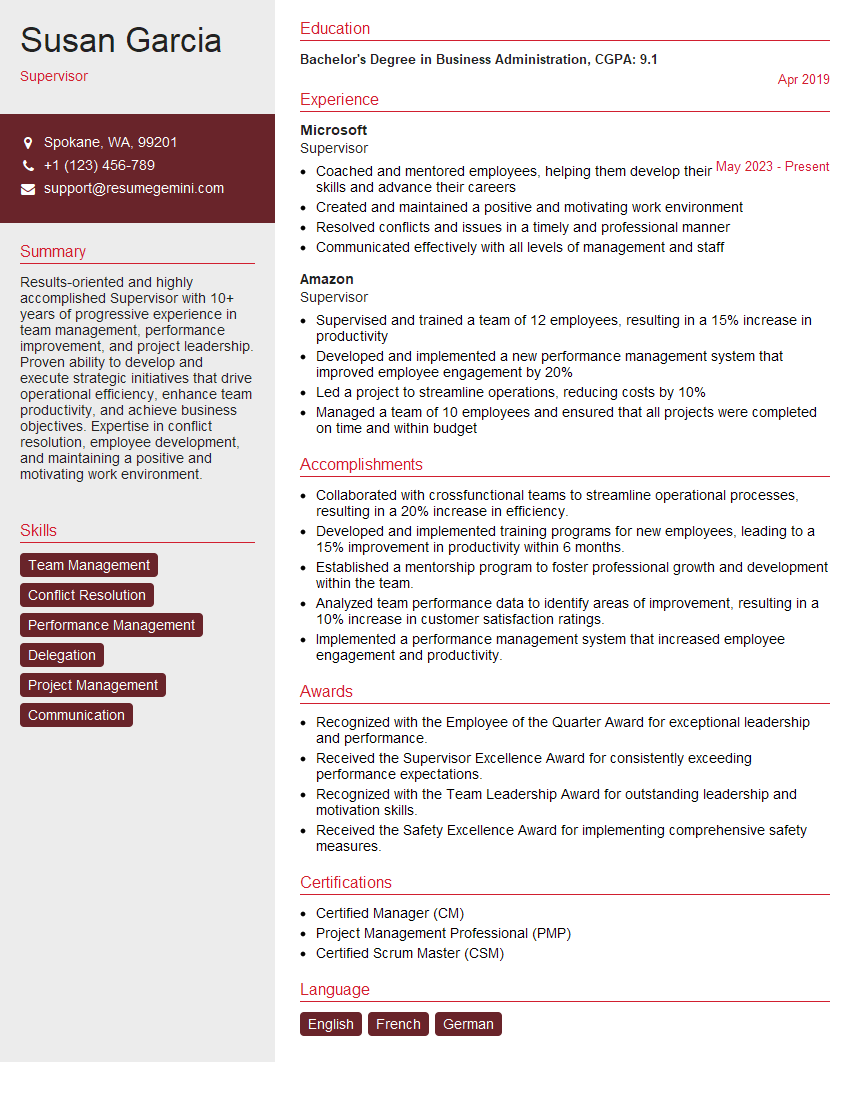
Supervisor Resume Sample
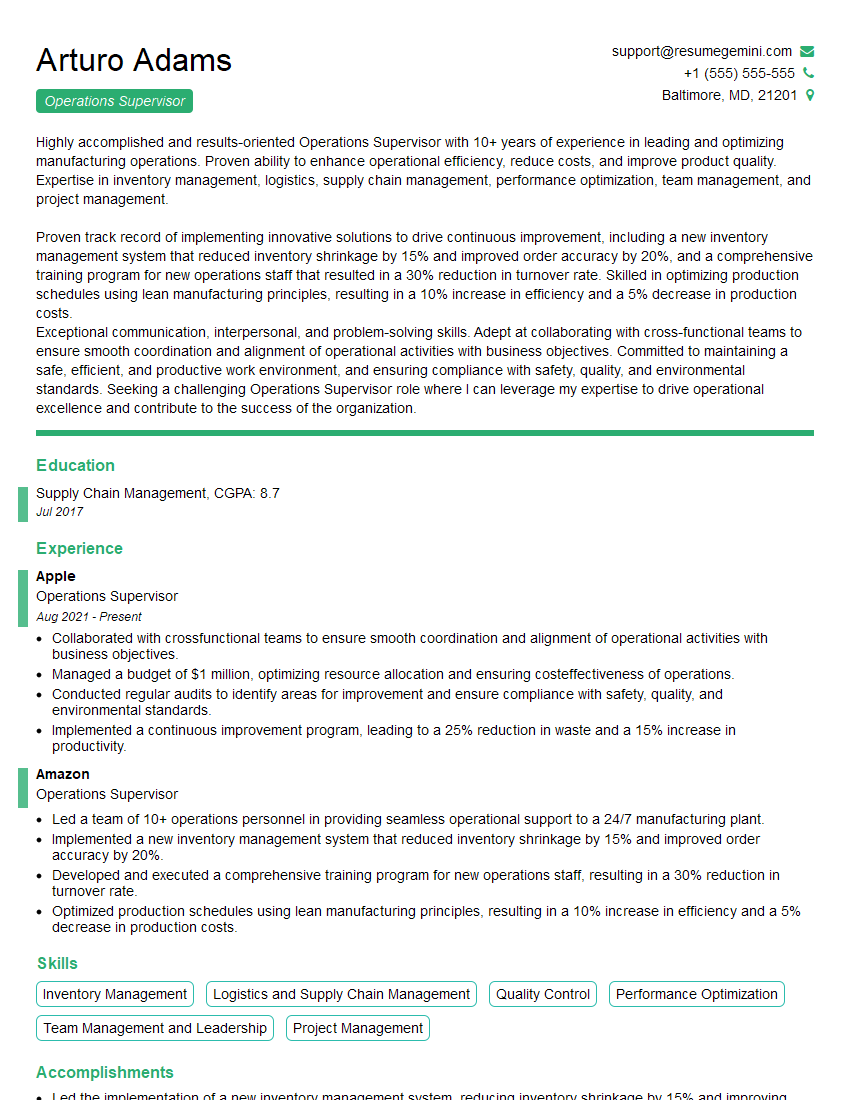
Operations Supervisor Resume Sample
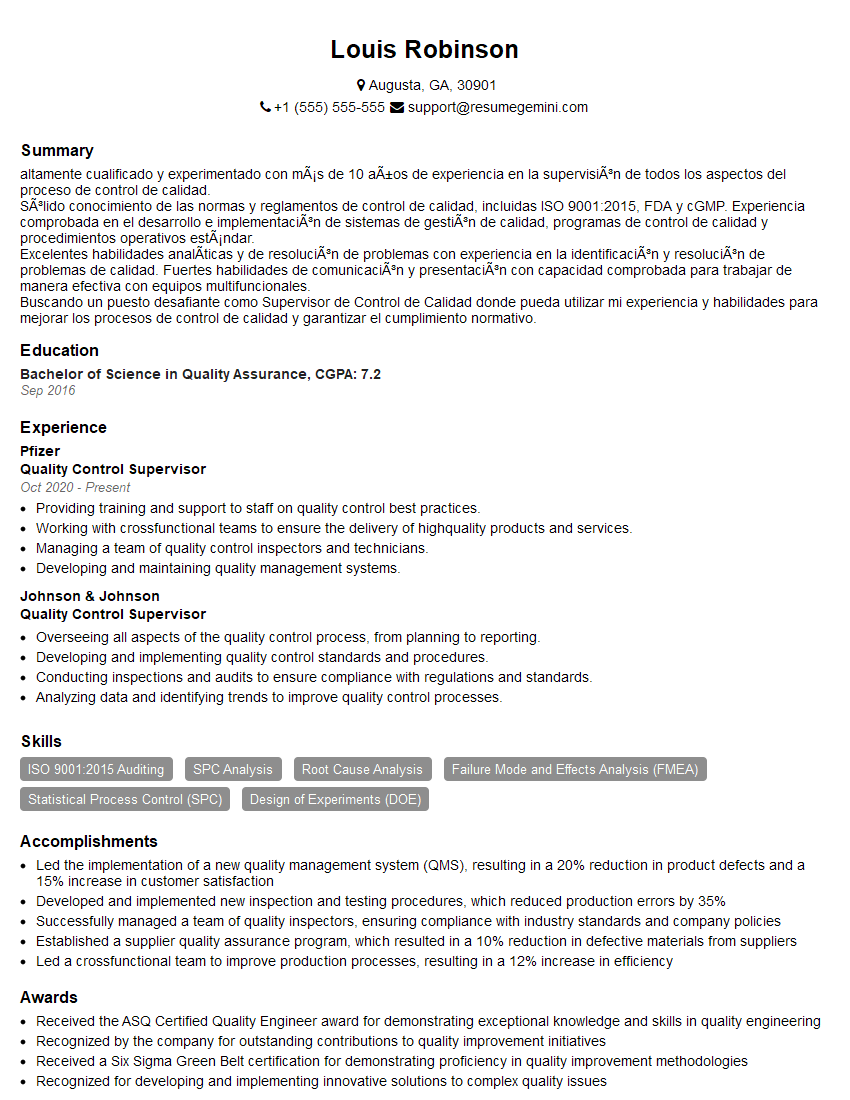
Quality Control Supervisor Resume Sample
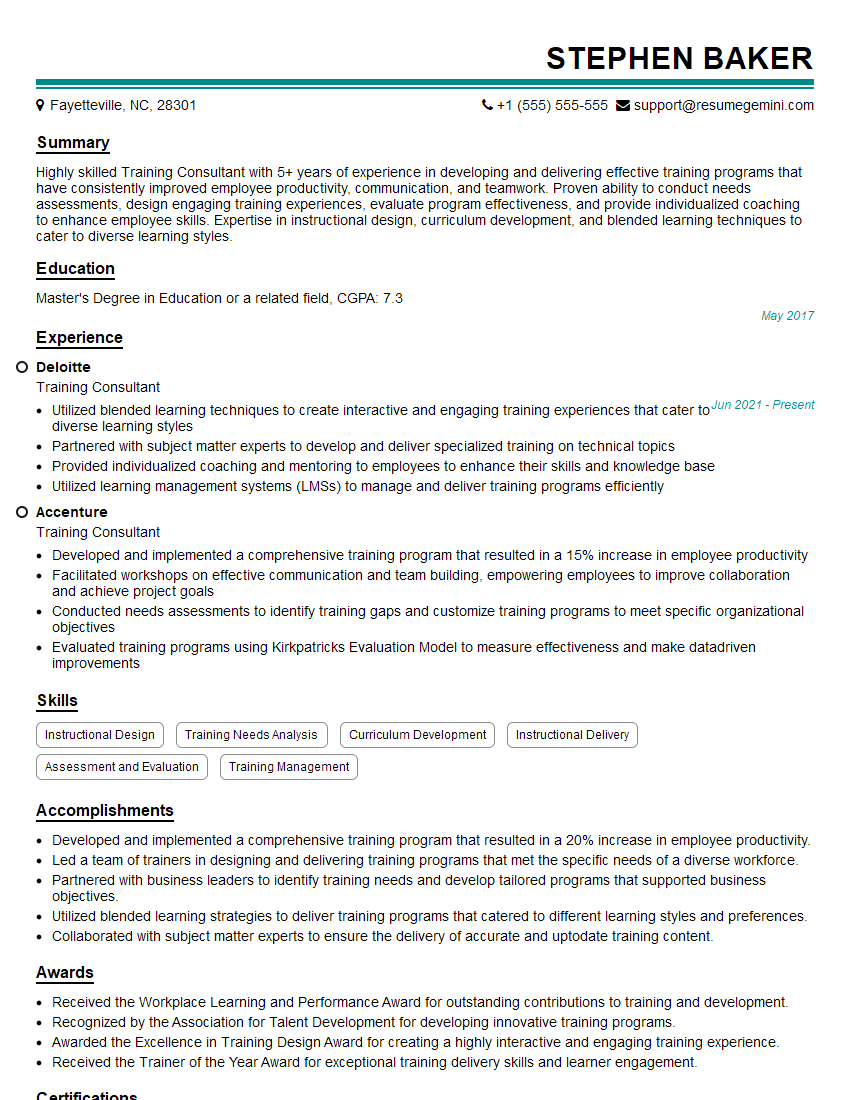
Training Consultant Resume Sample
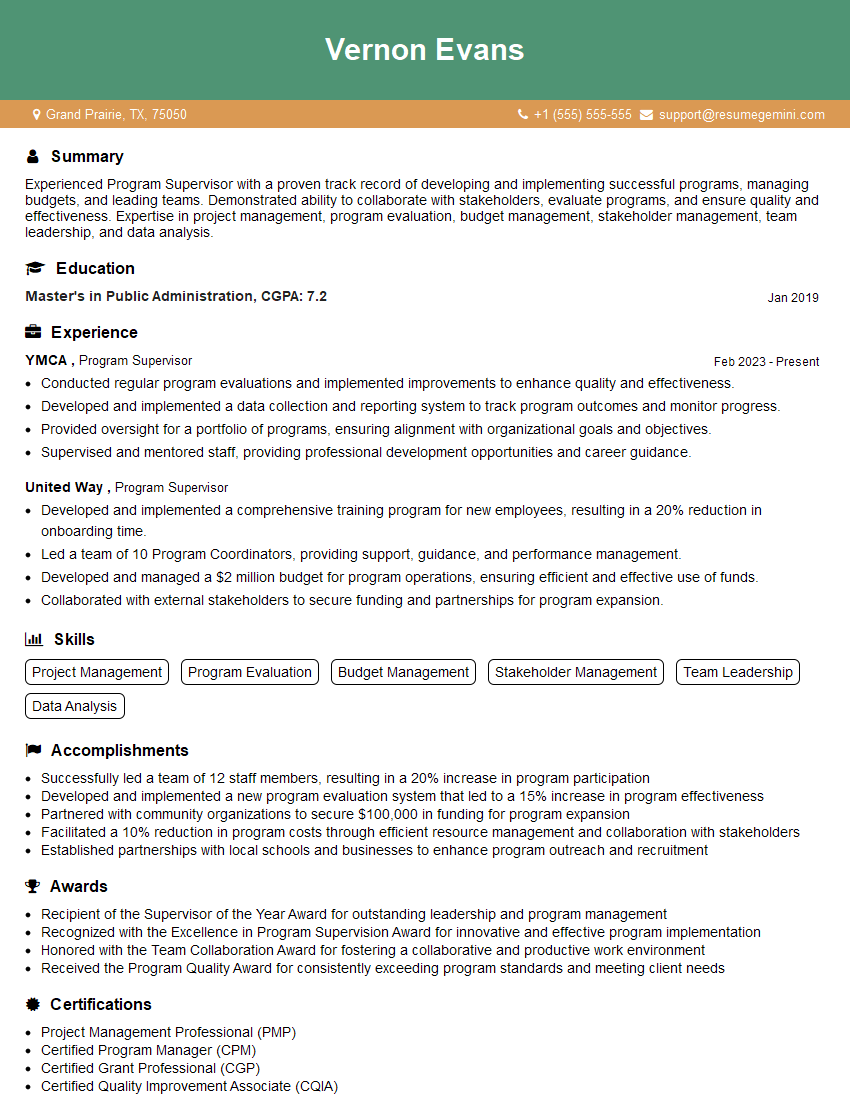
Program Supervisor Resume Sample
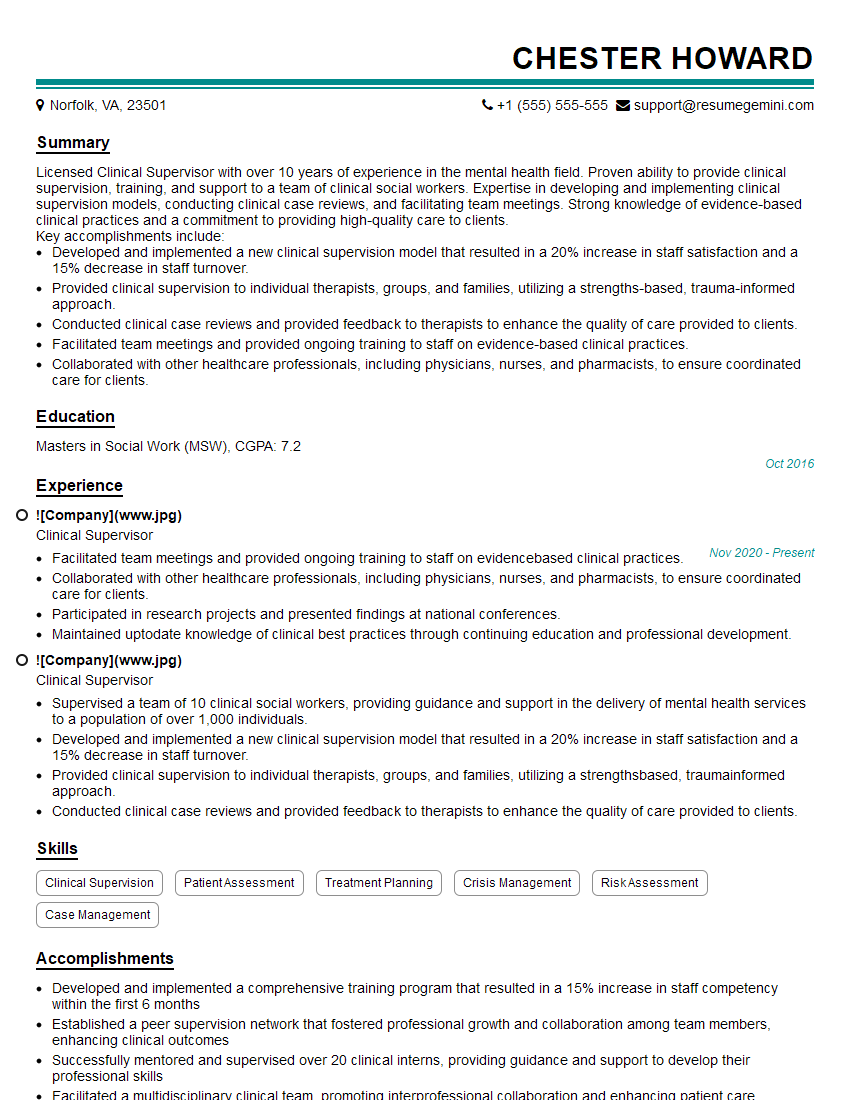
Clinical Supervisor Resume Sample
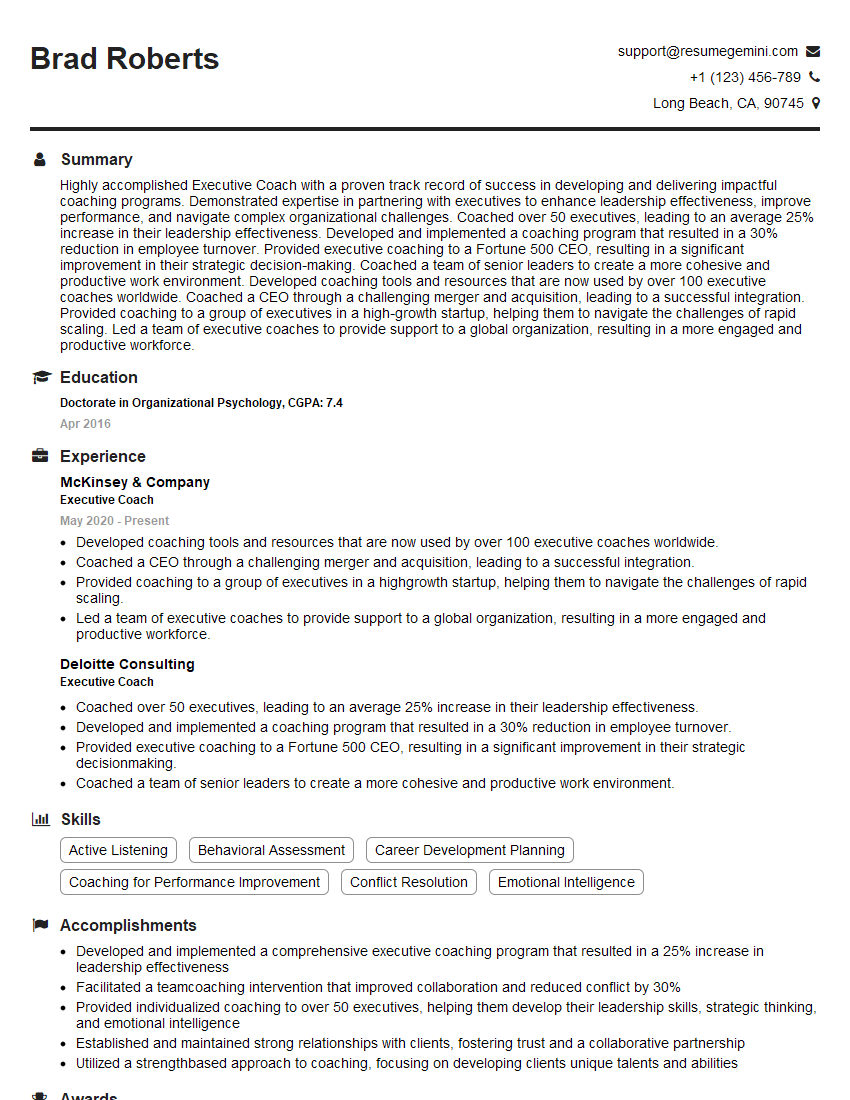
Executive Coach Resume Sample
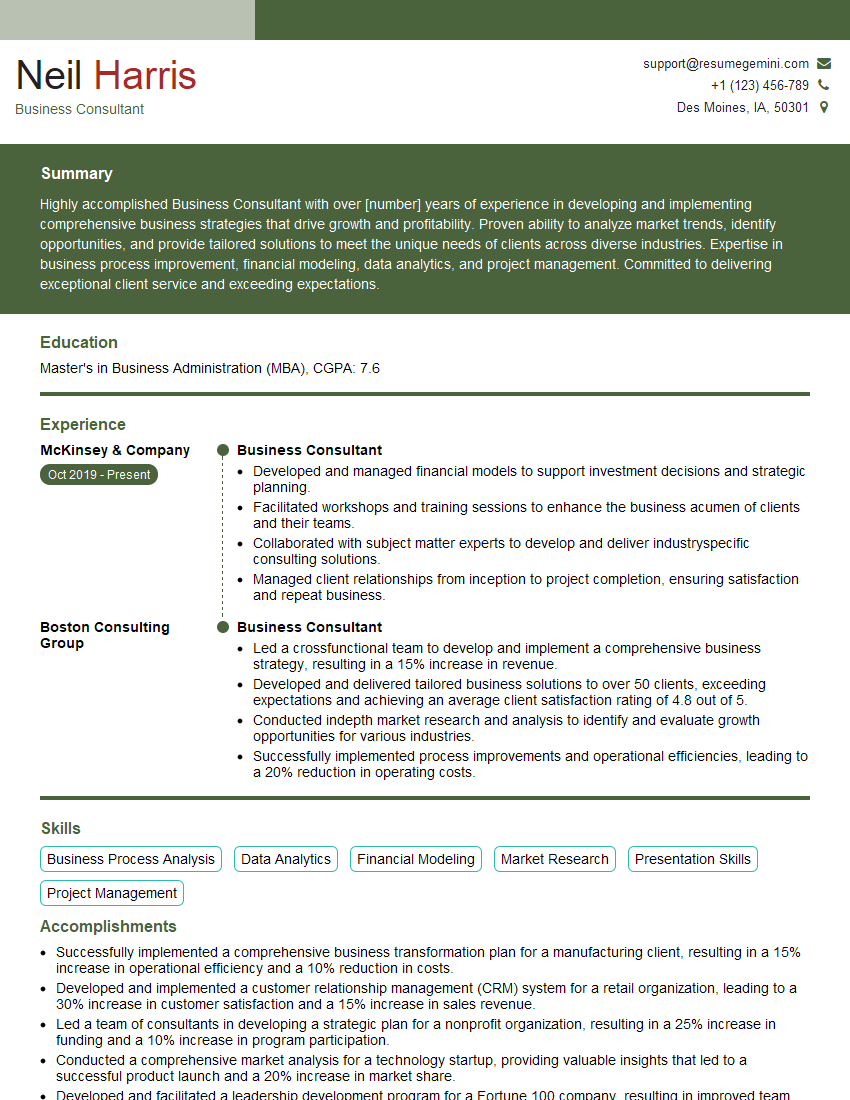
Business Consultant Resume Sample
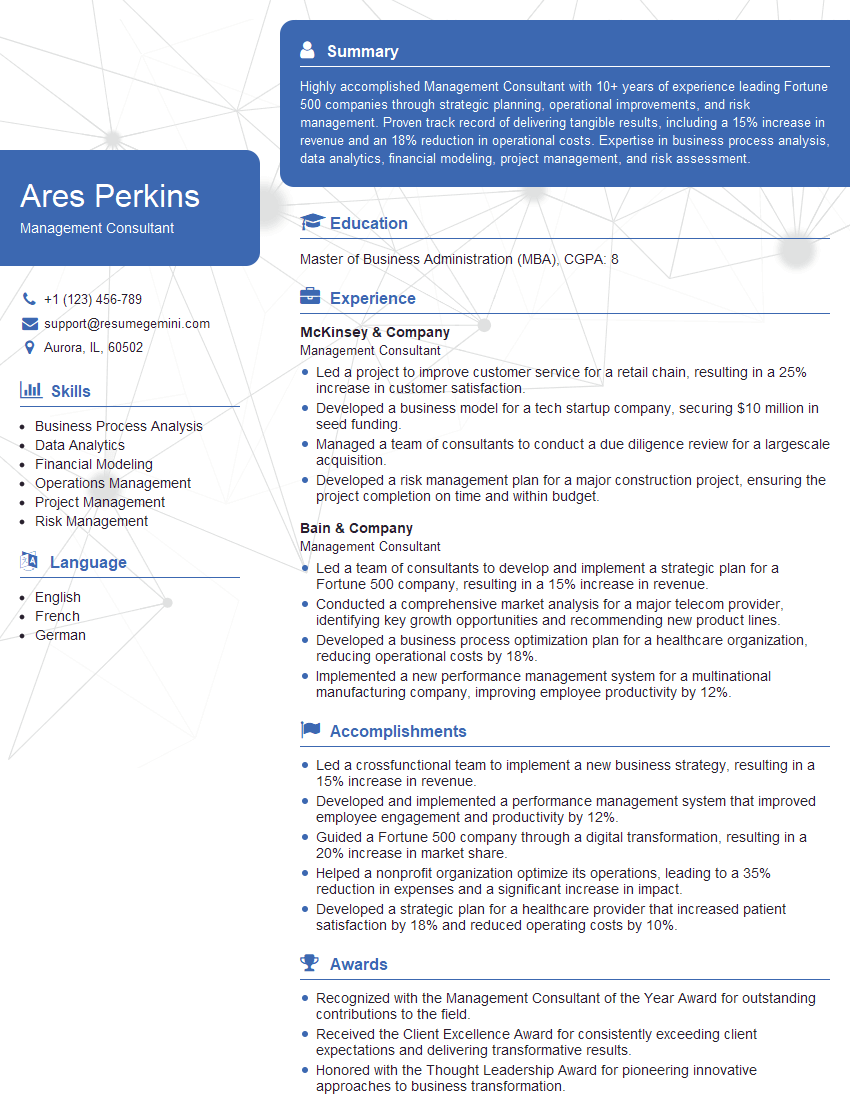
Management Consultant Resume Sample
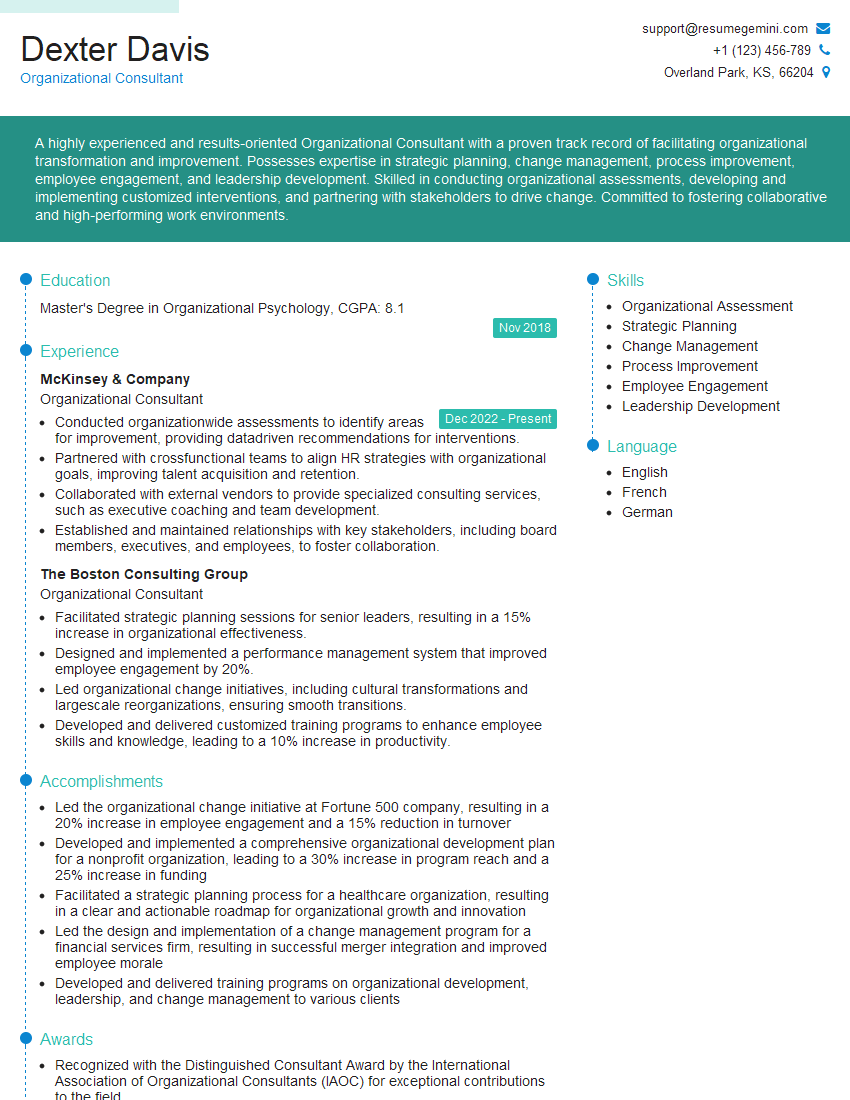
Organizational Consultant Resume Sample
Explore more articles
Users Rating of Our Blogs
Share Your Experience
We value your feedback! Please rate our content and share your thoughts (optional).
What Readers Say About Our Blog
To the interviewgemini.com Webmaster.
Very helpful and content specific questions to help prepare me for my interview!
Thank you
To the interviewgemini.com Webmaster.
This was kind of a unique content I found around the specialized skills. Very helpful questions and good detailed answers.
Very Helpful blog, thank you Interviewgemini team.