Every successful interview starts with knowing what to expect. In this blog, we’ll take you through the top Writing and Publications interview questions, breaking them down with expert tips to help you deliver impactful answers. Step into your next interview fully prepared and ready to succeed.
Questions Asked in Writing and Publications Interview
Q 1. Describe your experience with different writing styles (e.g., AP, Chicago, MLA).
My experience spans a wide range of writing styles, each demanding a different approach to structure, tone, and citation. I’m proficient in AP (Associated Press) style, known for its brevity and clarity, often used in journalism; Chicago style, which is more detailed and frequently used in academic books and humanities publications; and MLA (Modern Language Association) style, commonly used in the humanities and literature.
- AP Style: Imagine writing a news article – concise, factual, and objective. For example, in AP, dates are written as Month Day, Year (e.g., June 15, 2024), unlike Chicago which might use June 15, 2024.
- Chicago Style: This style allows for more narrative flexibility but demands meticulous footnoting or endnotes for sources. It’s perfect for in-depth analyses, where detailed sourcing is paramount. Think of a scholarly book reviewing historical events – extensive notes are crucial.
- MLA Style: This focuses on in-text citations and a Works Cited page, ideal for literary essays and research papers. It emphasizes author-page references within the text itself. For instance, (Smith 27) would refer to page 27 of Smith’s work.
Adapting between these styles is crucial for professional success, requiring attention to detail and adherence to specific guidelines. I’ve successfully applied these styles in various projects, ensuring accuracy and maintaining the integrity of the source material.
Q 2. How do you ensure accuracy and consistency in your writing?
Accuracy and consistency are cornerstones of credible writing. My approach involves a multi-stage process:
- Thorough Research: I begin with meticulous research, verifying all information from reputable sources. This lays a strong foundation for factual accuracy.
- Style Guide Adherence: I meticulously follow the chosen style guide (AP, Chicago, MLA, etc.), ensuring consistent formatting, citation, and terminology throughout the document. This minimizes inconsistencies and errors.
- Fact-Checking and Verification: Before submitting, I cross-reference all facts and figures with multiple credible sources to eliminate errors and ensure accuracy.
- Internal Consistency Checks: I actively look for inconsistencies in terminology, tone, and formatting within the text itself. Using ‘find and replace’ tools helps with consistent terminology.
- Using a Style Guide Checklist: I maintain a style guide checklist specific to the project which helps pinpoint common mistakes.
This systematic approach minimizes errors and strengthens the credibility of my work. For example, in a scientific paper, inaccurate data can have severe consequences, so rigorous fact-checking is indispensable.
Q 3. Explain your process for editing and proofreading a complex document.
Editing and proofreading a complex document is a layered process. My approach involves multiple passes:
- First Pass (Macro-Edit): I focus on the big picture – structure, argument flow, clarity, and overall organization. I check for logical sequencing, strong thesis statements, and effective transitions. Is the argument compelling and well-supported?
- Second Pass (Micro-Edit): This focuses on sentence-level issues – grammar, punctuation, style, word choice, and tone. I use grammar and style checkers as tools, but also rely on my own careful reading. Are sentences concise and impactful?
- Third Pass (Proofreading): This is the final check for typos, spelling errors, formatting inconsistencies, and any remaining mechanical errors. I often read the document aloud to catch subtle mistakes.
- Fourth Pass (Fact-Check): A final review of the facts and figures to ensure accuracy.
Using different colored pens or highlighting tools for each pass helps visualize the process. This method ensures that I approach each stage with a clear focus, producing a polished and error-free document. Think of it like building a house; you wouldn’t paint before ensuring the foundation is strong.
Q 4. How do you manage multiple writing projects simultaneously?
Managing multiple writing projects simultaneously requires a robust organizational system. My strategy centers on:
- Prioritization and Time Blocking: I prioritize tasks based on deadlines and importance, allocating specific time blocks for each project. This prevents feeling overwhelmed.
- Project Management Tools: I utilize project management software (e.g., Asana, Trello) to track deadlines, progress, and tasks for each project. This keeps everything organized and visible.
- Detailed Outlines and Schedules: For each project, I create a detailed outline and schedule, breaking down large tasks into smaller, manageable steps. This allows for focused effort.
- Regular Breaks and Focused Work Sessions: I incorporate regular breaks to maintain focus and prevent burnout. The Pomodoro Technique (25-minute work intervals with short breaks) is helpful.
- Clear Communication: If working with a team, maintaining clear and consistent communication is crucial to ensure everyone is aligned and deadlines are met.
This approach ensures efficient workflow, meeting deadlines without compromising quality. It’s similar to a chef managing multiple dishes simultaneously – careful planning and organization are key.
Q 5. What software and tools are you proficient in for writing and publishing?
I’m proficient in a variety of software and tools essential for writing and publishing:
- Microsoft Word and Google Docs: For creating and editing documents.
- Grammarly and ProWritingAid: For grammar and style checking.
- Adobe InDesign: For designing and formatting complex layouts for publications.
- Adobe Acrobat Pro: For creating and managing PDF documents.
- Zotero and Mendeley: For managing and citing research sources.
- Various CMS platforms (see below): For website content creation and management.
These tools enhance efficiency and ensure a professional finish for every project. Choosing the right tool for the specific task is crucial for maximizing productivity.
Q 6. Describe your experience with content management systems (CMS).
My experience with Content Management Systems (CMS) includes both front-end and back-end operations. I’ve worked extensively with WordPress, Drupal, and Wix. My understanding encompasses:
- Content Creation and Editing: Creating, editing, and publishing content within the CMS interface.
- Template Customization: Modifying templates to achieve specific design requirements.
- Plugin and Extension Management: Installing and managing plugins and extensions to enhance functionality and SEO.
- User Management: Managing user roles and permissions.
- SEO Optimization: Implementing SEO best practices to improve website visibility.
Understanding CMS functionality is key for creating and managing online content effectively. For example, optimizing WordPress posts for search engines (SEO) requires understanding plugins like Yoast SEO and implementing appropriate keywords.
Q 7. How do you adapt your writing style to different target audiences?
Adapting writing style to different target audiences is critical for effective communication. My approach involves:
- Audience Research: I begin by thoroughly researching the target audience – their age, education level, interests, and technical expertise.
- Tone and Language: I adjust the tone and language to match the audience’s expectations. A scientific article requires a formal tone and precise language, while a blog post for the general public should be more conversational.
- Level of Detail: I adjust the level of detail based on the audience’s knowledge. Technical audiences require more in-depth explanations, while general audiences prefer simpler language.
- Visuals and Formatting: I use visuals and formatting to enhance readability and engagement. Charts and graphs are suitable for technical audiences, while images and infographics work well for general audiences.
- Testing and Feedback: Where possible, I test the content on a sample of the target audience and incorporate their feedback.
Imagine writing a technical manual versus a children’s story – the language, tone, and level of detail differ drastically. This adaptability ensures that the message resonates with the intended readers.
Q 8. How do you conduct research for your writing projects?
My research process is rigorous and adaptable, depending on the project’s scope and complexity. It always begins with a clear understanding of the assignment’s goals and target audience. I then formulate a research plan, identifying key terms and concepts. This plan typically involves several stages:
- Preliminary Research: This involves brainstorming, reviewing existing knowledge, and identifying primary and secondary sources. For example, if writing about the impact of social media on teenage mental health, I’d start by looking at existing literature reviews and reports from organizations like the American Psychological Association.
- Source Evaluation and Selection: I critically evaluate sources for credibility, bias, and relevance. I prioritize peer-reviewed articles, reputable organizations, and government data. I always cross-reference information from multiple sources to ensure accuracy.
- Data Collection: This phase involves actively gathering information, whether through interviews, surveys, observations, or analyzing existing data sets. If the topic requires primary research, I design a robust methodology and ensure ethical considerations are met.
- Data Analysis and Synthesis: Once the data is gathered, I meticulously analyze it, looking for patterns, trends, and contradictions. This stage often involves summarizing, paraphrasing, and synthesizing information from various sources into a coherent narrative.
- Citation and Documentation: Maintaining academic integrity is paramount. I meticulously cite all sources using a consistent citation style (MLA, APA, Chicago, etc.), ensuring proper attribution and avoiding plagiarism.
This structured approach ensures comprehensive and accurate research, forming the foundation of a strong and credible piece of writing.
Q 9. What strategies do you use for SEO optimization in your writing?
SEO optimization is crucial for maximizing the reach and impact of my writing. My strategy combines keyword research with a focus on creating high-quality, engaging content. It’s not about stuffing keywords; it’s about naturally integrating them within the text to enhance readability and search engine relevance. My approach involves:
- Keyword Research: I use tools like Google Keyword Planner, Ahrefs, or SEMrush to identify relevant keywords with high search volume and low competition. This helps me target specific audience searches.
- On-Page Optimization: This includes optimizing title tags, meta descriptions, headings (H1-H6), and image alt text with relevant keywords. I also ensure the content is well-structured, readable, and easily scannable.
- Content Optimization: The focus remains on creating high-quality, informative, and engaging content that naturally incorporates keywords. I aim to answer user queries comprehensively and provide valuable information.
- Link Building (Off-Page Optimization): While not directly within my writing, I work with other stakeholders to ensure the content is promoted through relevant backlinks from authoritative websites. This enhances the site’s authority and improves search rankings.
- Content Promotion: Sharing the content on social media and other relevant platforms increases visibility and drives traffic.
For example, if writing a blog post about ‘best hiking trails near Denver,’ I’d strategically incorporate these keywords throughout the article, using variations like ‘top hiking trails,’ ‘Denver hiking routes,’ etc., while maintaining a natural writing style.
Q 10. Describe your experience with writing for various media (e.g., print, web, social media).
My writing experience spans diverse media, each presenting unique challenges and opportunities. I’ve adapted my style and approach to suit the specific requirements of each platform:
- Print Media: This requires a more formal tone, meticulous editing, and a focus on clear, concise language. I’ve written articles for magazines and newspapers, focusing on impactful storytelling and adherence to style guides.
- Web Writing: This often involves shorter, more scannable content with a focus on clear headings, bullet points, and visual elements. I’ve created website content, blog posts, and online articles, optimizing for readability and SEO.
- Social Media: Writing for social media demands brevity, engaging language, and a strong understanding of the platform’s nuances. I’ve crafted compelling captions, tweets, and social media posts to promote content and engage audiences.
Adapting my writing style to suit the platform’s audience and constraints is a key skill I’ve honed over time. Each medium demands a different approach, and understanding these nuances is critical for effective communication.
Q 11. How do you handle feedback and criticism on your writing?
I view feedback and criticism as invaluable tools for improvement. I actively seek constructive criticism and treat it as an opportunity to refine my work. My approach involves:
- Active Listening: I carefully consider all feedback, seeking to understand the reviewer’s perspective.
- Objective Evaluation: I separate personal feelings from the critique, focusing on the validity and relevance of the suggestions.
- Selective Implementation: I don’t automatically accept every suggestion. I evaluate each point carefully, considering its impact on the overall piece and its alignment with the project goals.
- Dialogue and Clarification: If I’m unclear about a comment, I seek clarification from the reviewer. Open communication is essential for a productive exchange.
- Reflection and Learning: Even if I don’t implement a specific suggestion, I reflect on the feedback to understand areas for future improvement.
For example, if a reviewer suggests a different angle for a story, I’ll consider whether that suggestion strengthens the narrative. Even negative feedback can be valuable, helping me identify weaknesses and areas for growth.
Q 12. What is your experience with fact-checking and verification?
Fact-checking and verification are integral to my writing process. Accuracy is paramount, and I employ a multi-layered approach to ensure the reliability of information:
- Source Verification: I meticulously verify all sources, cross-referencing information from multiple reputable sources.
- Data Validation: If working with statistical data, I carefully examine the methodology and look for potential biases.
- Expert Consultation: For complex or specialized topics, I seek expert opinions to validate information and ensure accuracy.
- Peer Review: I often have colleagues or editors review my work to catch potential errors or inconsistencies.
- Documentation: I maintain detailed records of my sources and verification process, ensuring traceability and transparency.
I understand the consequences of publishing inaccurate information and prioritize rigorous fact-checking to maintain credibility and uphold ethical standards.
Q 13. Describe your experience with collaborating with designers and other stakeholders.
Collaboration is essential in many writing projects. I’ve worked effectively with designers and other stakeholders, fostering a spirit of open communication and mutual respect. My approach involves:
- Clear Communication: I ensure clear and concise communication of project goals, deadlines, and expectations.
- Active Listening: I listen attentively to the ideas and perspectives of other team members.
- Constructive Feedback: I provide timely and constructive feedback on design concepts and other contributions.
- Flexibility and Adaptability: I’m flexible and adaptable to changes and suggestions from other stakeholders.
- Shared Understanding: I ensure everyone shares a common understanding of the project’s goals and vision.
For example, working with a designer on a brochure, I would provide detailed text content, discuss the target audience, and collaborate on the visual layout to ensure a cohesive and effective final product.
Q 14. How do you handle tight deadlines and pressure?
Handling tight deadlines and pressure is a crucial skill in writing. My approach is a combination of planning, prioritization, and efficient time management:
- Detailed Planning: I break down large projects into smaller, manageable tasks, creating a realistic timeline.
- Prioritization: I prioritize tasks based on urgency and importance, focusing on critical elements first.
- Time Blocking: I allocate specific time blocks for writing, research, and editing, minimizing distractions.
- Efficient Workflow: I maintain an organized workflow, using tools and techniques to streamline the writing process.
- Stress Management: I practice effective stress management techniques, ensuring I maintain focus and productivity under pressure.
For example, if facing a tight deadline, I might use the Pomodoro Technique (working in focused bursts with short breaks) to maintain concentration and avoid burnout. Effective planning and self-awareness are key to navigating pressure successfully.
Q 15. How do you ensure the accessibility of your written content?
Ensuring accessibility in written content means making it understandable and usable by everyone, regardless of disability. This involves considering various impairments like visual, auditory, motor, and cognitive differences.
- Clear and Concise Language: Avoid jargon, complex sentence structures, and ambiguous wording. Think of writing for a diverse audience, including those with lower literacy levels.
- Proper Heading Structure: Use descriptive headings (H1, H2, etc.) to create a logical structure. This helps screen readers navigate the content and users quickly scan for information.
- Alternative Text for Images: Every image needs descriptive alt text (
<img src="image.jpg" alt="A descriptive caption of the image">). This allows screen readers to convey the image’s meaning to visually impaired users. - Captions and Transcripts for Multimedia: Videos and audio files require captions and transcripts for accessibility. This caters to individuals who are deaf or hard of hearing.
- Color Contrast: Ensure sufficient contrast between text and background colors to make the text easily readable for people with low vision. Tools are available to test color contrast ratios.
- Keyboard Navigation: All interactive elements must be navigable using only a keyboard. This is crucial for users with motor impairments.
For example, in a technical document, I would avoid overly technical terms unless defined clearly. I’d ensure every chart has a concise, descriptive caption and accompanying data in tabular format for screen readers.
Career Expert Tips:
- Ace those interviews! Prepare effectively by reviewing the Top 50 Most Common Interview Questions on ResumeGemini.
- Navigate your job search with confidence! Explore a wide range of Career Tips on ResumeGemini. Learn about common challenges and recommendations to overcome them.
- Craft the perfect resume! Master the Art of Resume Writing with ResumeGemini’s guide. Showcase your unique qualifications and achievements effectively.
- Don’t miss out on holiday savings! Build your dream resume with ResumeGemini’s ATS optimized templates.
Q 16. What is your experience with legal and ethical considerations in writing and publishing?
Legal and ethical considerations are paramount in writing and publishing. Copyright infringement, plagiarism, defamation, and privacy violations are key areas of concern.
- Copyright: I always ensure I have the right to use any copyrighted material, obtaining permission when necessary. This includes images, quotes, and any pre-existing content.
- Plagiarism: I meticulously avoid plagiarism by properly citing all sources using a consistent citation style (e.g., APA, MLA, Chicago). Paraphrasing accurately and using quotation marks for direct quotes are crucial.
- Defamation: I’m cautious about making statements that could harm someone’s reputation. Unless I can verify the truth of a statement and its relevance, I avoid it. In sensitive areas, legal review is advisable.
- Privacy: I never publish personal information without consent. This includes names, addresses, and other identifying details. Anonymization techniques are employed when reporting on individuals in sensitive contexts.
For instance, in a biography, I would obtain the subject’s consent for publication and accurately represent their experiences. Any potentially sensitive details would be carefully considered and possibly omitted or presented anonymously if necessary.
Q 17. Describe your experience with different publishing platforms and workflows.
My experience spans various publishing platforms and workflows, from traditional print media to digital platforms and self-publishing.
- Traditional Publishing: I have worked with publishers, handling manuscript submission, editorial feedback, and the entire production process including copyediting, proofreading, and typesetting.
- Digital Publishing: I have experience publishing ebooks on platforms like Amazon Kindle Direct Publishing (KDP) and creating content for websites and blogs, optimizing for SEO and user experience.
- Self-Publishing: I’ve also guided authors through self-publishing, advising on cover design, formatting, marketing, and distribution strategies.
- Workflows: I’m proficient in using content management systems (CMS) like WordPress, project management tools like Asana or Trello for collaborative writing projects, and various writing and editing software.
For example, when working on a print book, I would adhere to the publisher’s style guide and deadlines meticulously. For an ebook, I would optimize the formatting for different e-readers and consider aspects like cover design and metadata for better discoverability.
Q 18. How do you measure the success of your writing projects?
Measuring the success of writing projects depends on the project’s goals. There’s no single metric; it’s a multifaceted assessment.
- Engagement Metrics (Digital): Website traffic, social media shares, likes, comments, and time spent on page are key indicators of audience engagement for online content.
- Sales Figures (Books): Book sales data reflects the market reception and commercial success of a book.
- Reader Feedback: Reviews, testimonials, and direct feedback provide valuable insights into audience satisfaction and impact.
- Brand Impact (Corporate): For corporate writing, success is measured by improved brand awareness, lead generation, and sales conversion rates.
- Impact (Non-profit): For non-profit work, success might involve changes in public awareness, policy shifts, or increased fundraising.
For a blog post, I’d track page views and social media shares. For a book, I’d monitor sales and reader reviews. In corporate settings, I might track the impact on leads or customer conversions.
Q 19. What are your strategies for improving your writing skills?
Improving writing skills is an ongoing process. My strategies include continuous learning and practice.
- Reading Widely: I read extensively in various genres and styles, paying attention to sentence structure, word choice, and narrative techniques.
- Writing Regularly: Consistent practice is key. I maintain a writing journal, experiment with different styles, and actively seek writing opportunities.
- Seeking Feedback: I actively seek constructive criticism from peers, editors, and mentors. Beta readers provide invaluable feedback on readability and clarity.
- Taking Courses and Workshops: I participate in writing courses and workshops to learn new techniques and refine existing skills.
- Studying Style Guides: Familiarizing myself with various style guides (e.g., AP, Chicago) helps me refine my writing consistency and accuracy.
For example, I might dedicate time each week to writing short stories or blog posts, then share them with a trusted critique partner for feedback.
Q 20. Describe your experience with working with style guides and brand guidelines.
Style guides and brand guidelines provide crucial frameworks for consistent and effective writing. They dictate everything from tone and voice to formatting and terminology.
- Understanding the Guide: I thoroughly review the style guide or brand guidelines before starting any project to understand the rules and expectations.
- Consistency: I meticulously follow the guidelines throughout the writing process, ensuring consistency in style, tone, and terminology.
- Adaptation: I adapt my writing style to match the specific requirements of the guide, even if it differs from my personal preferences.
- Querying: When unsure about a guideline’s application, I clarify with the relevant authority rather than making assumptions.
For instance, writing for a scientific journal requires adherence to a strict style guide, while writing marketing materials necessitates following brand voice guidelines to maintain a consistent brand identity.
Q 21. How do you incorporate visuals and multimedia into your writing?
Visuals and multimedia significantly enhance writing, making it more engaging and accessible. I strategically incorporate them to complement the text.
- Choosing Relevant Visuals: I select images, charts, graphs, and videos that directly support the text and enhance understanding.
- Appropriate Placement: Visuals are placed strategically to avoid disrupting the flow of the text. Captions and alt text are always included.
- Accessibility Considerations: I ensure that all visuals are accessible to users with disabilities, including alt text for images and captions for videos.
- Copyright and Licensing: I always ensure I have the right to use any copyrighted visuals, obtaining necessary permissions or using royalty-free resources.
For example, in a report, I’d use charts to present data more clearly than just using text. In a blog post, a relevant image or video could enhance reader engagement.
Q 22. What is your process for creating compelling headlines and introductions?
Crafting compelling headlines and introductions is crucial for grabbing a reader’s attention and setting the stage for a successful piece. My process involves a multi-step approach: first, I thoroughly understand the target audience and the core message. Then, I brainstorm multiple headline options, focusing on keywords, strong verbs, and a clear value proposition. I assess these options based on factors like conciseness, intrigue, and accuracy. For introductions, I aim to hook the reader immediately, perhaps with a compelling anecdote, a startling statistic, or a provocative question. The introduction should clearly state the main topic and provide a roadmap of what the reader can expect. For example, instead of a bland headline like “Marketing Strategies,” I might opt for something more engaging such as “5 Marketing Hacks to Skyrocket Your Sales” or “Unlocking Exponential Growth: A New Marketing Paradigm.” Similarly, an introduction shouldn’t simply state the topic but immediately draw the reader in. I might begin a piece on sustainable agriculture with a story about a small farm’s success using innovative techniques, thereby instantly establishing relevance and interest.
Q 23. How do you handle plagiarism and copyright issues?
Plagiarism and copyright infringement are serious issues. My approach is proactive and preventative. Before starting any project, I conduct thorough research and clearly distinguish between my original ideas and those that require attribution. I meticulously cite all sources using a consistent citation style (e.g., APA, MLA, Chicago). I utilize plagiarism detection software like Turnitin to verify the originality of my work. If I’m unsure about fair use or copyright, I consult legal resources and seek clarification when necessary. For example, I might paraphrase or summarize information rather than directly quoting long passages, always providing proper attribution. I also understand the nuances of Creative Commons licenses and ensure I comply with any restrictions associated with using licensed materials. Addressing plagiarism and copyright proactively ensures the integrity of my work and protects both my clients and myself from legal repercussions.
Q 24. Describe your experience with different types of publications (e.g., books, articles, reports).
My experience spans a broad range of publications. I’ve written everything from in-depth investigative reports for academic journals to concise, engaging blog posts for corporate websites. I’ve also worked on several book projects, contributing chapters and even ghostwriting an entire manuscript. In each case, my approach adapts to the specific requirements of the publication. For example, academic reports require a rigorous approach with meticulous attention to data analysis and formal language. In contrast, blog posts necessitate a more conversational tone and a focus on clear and concise communication. My work with books allowed me to delve into more detailed narratives and explore complex themes, developing my ability to maintain reader engagement across extended texts.
Q 25. What is your experience with working with editors and publishers?
I have a strong track record of collaborating effectively with editors and publishers. I view them as invaluable partners in the publication process. I understand the role of an editor in refining and polishing a manuscript and I actively solicit their feedback throughout the process. I am responsive to their suggestions and willing to make necessary revisions to improve the clarity, accuracy, and overall quality of my work. I’ve found that clear communication and a proactive approach—providing regular updates and addressing concerns promptly—are key to successful collaborations. For instance, I proactively schedule regular check-in meetings with my editor to discuss progress and address any challenges that arise. This collaborative approach ensures the project aligns with the publisher’s vision and stylistic preferences.
Q 26. How do you stay up-to-date on industry trends and best practices?
Staying current in the writing and publishing industry requires continuous learning. I regularly read industry publications like Writer’s Digest and subscribe to relevant newsletters. I attend workshops and conferences to learn about new writing techniques and publishing trends. I also actively participate in online communities and forums where writers discuss best practices and share their experiences. I closely follow the work of successful authors and publications, analyzing their writing styles and approaches. Moreover, I stay updated on technological advancements that affect publishing, such as changes in digital publishing platforms or the use of AI-powered writing tools. This continuous learning enables me to adapt my skills and strategies to remain competitive and deliver high-quality work.
Q 27. Explain your understanding of different writing formats (e.g., long-form, short-form, blog posts).
Understanding different writing formats is crucial. Long-form content like books, in-depth articles, or white papers demands a different approach than short-form content such as tweets or social media updates. Long-form requires a strong narrative structure, meticulous planning, and a focus on sustained reader engagement. Short-form writing necessitates brevity, impact, and a clear, concise message. Blog posts sit somewhere in between, often combining elements of both. They demand clear, concise language but also need to engage the reader and possibly prompt them to take action. My approach always begins with understanding the intended platform and audience and adapting my style accordingly. For example, a scientific paper will use precise technical language, while a blog post on the same subject might use analogies and simpler terms to reach a broader audience.
Q 28. How do you use data and analytics to inform your writing strategy?
Data and analytics play an increasingly important role in informing writing strategies. I use website analytics to understand audience engagement—which pieces perform well, what topics resonate, and what content needs improvement. Social media analytics provide insights into how readers interact with my content and what kind of messaging triggers responses. For example, I might track click-through rates on headlines to optimize their effectiveness or monitor social media shares to gauge reader interest in different topics. This data helps refine my approach, allowing me to tailor my content to specific audience preferences and achieve better results. I also use keyword research tools to identify relevant topics and optimize my writing for search engines, expanding my reach and impact.
Key Topics to Learn for Your Writing and Publications Interview
- Content Strategy & Planning: Understanding audience needs, developing editorial calendars, and aligning content with overall business goals. Practical application: Describe a time you developed a content strategy from scratch or significantly improved an existing one.
- Writing Styles & Techniques: Mastering various writing styles (e.g., journalistic, technical, creative) and applying appropriate tone, voice, and style guides. Practical application: Prepare examples demonstrating your versatility in different writing styles.
- SEO & Content Optimization: Utilizing keyword research, on-page optimization, and other SEO best practices to improve content visibility and reach. Practical application: Discuss how you would optimize a blog post for search engines.
- Editing & Proofreading: Developing keen attention to detail and applying grammar, punctuation, and style rules effectively. Practical application: Be prepared to discuss your editing process and how you ensure accuracy.
- Publication Processes & Workflow: Understanding the steps involved in publishing content, from initial concept to final distribution, including collaboration with designers and other stakeholders. Practical application: Describe your experience managing a publication project from start to finish.
- Content Management Systems (CMS): Familiarity with popular CMS platforms (e.g., WordPress, Drupal) and their functionalities. Practical application: Discuss your experience using a CMS and highlight your proficiency.
- Data Analysis & Reporting: Tracking key performance indicators (KPIs) and analyzing content performance to inform future strategy. Practical application: Explain how you would measure the success of a content marketing campaign.
Next Steps
Mastering the art of Writing and Publications is crucial for a successful and fulfilling career. It opens doors to diverse roles with significant impact. To maximize your job prospects, create a compelling and ATS-friendly resume that highlights your skills and achievements. ResumeGemini is a trusted resource that can help you build a professional and effective resume. They provide examples of resumes tailored to Writing and Publications, ensuring your application stands out. Take the time to craft a resume that showcases your unique strengths and experience in this field – it’s your first impression!

Communications Manager Resume Sample

Social Media Manager Resume Sample
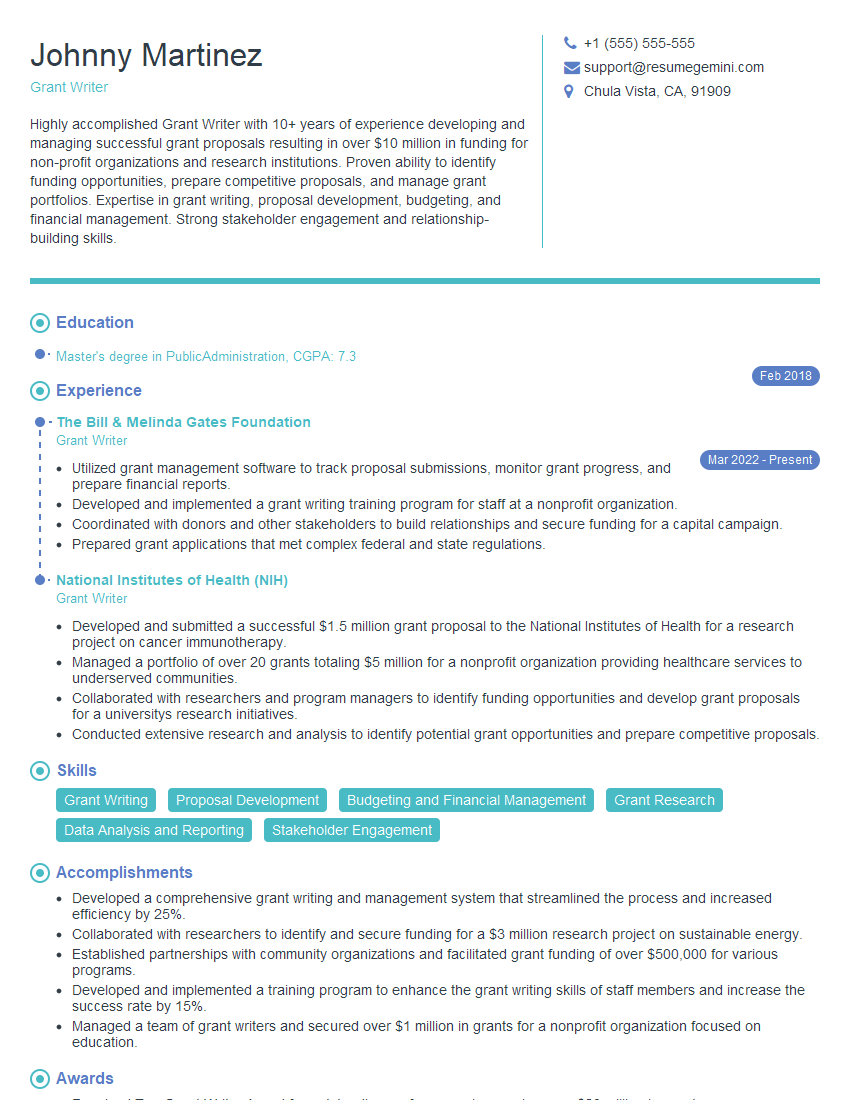
Grant Writer Resume Sample
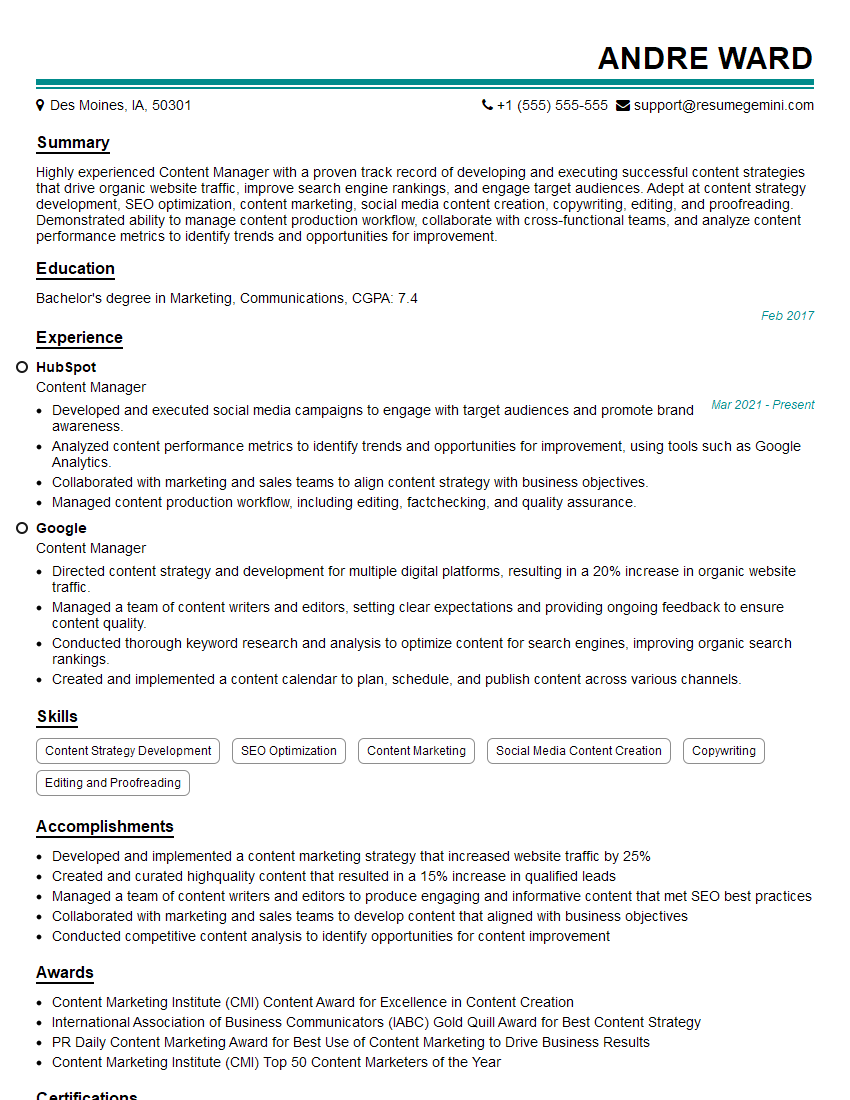
Content Manager Resume Sample
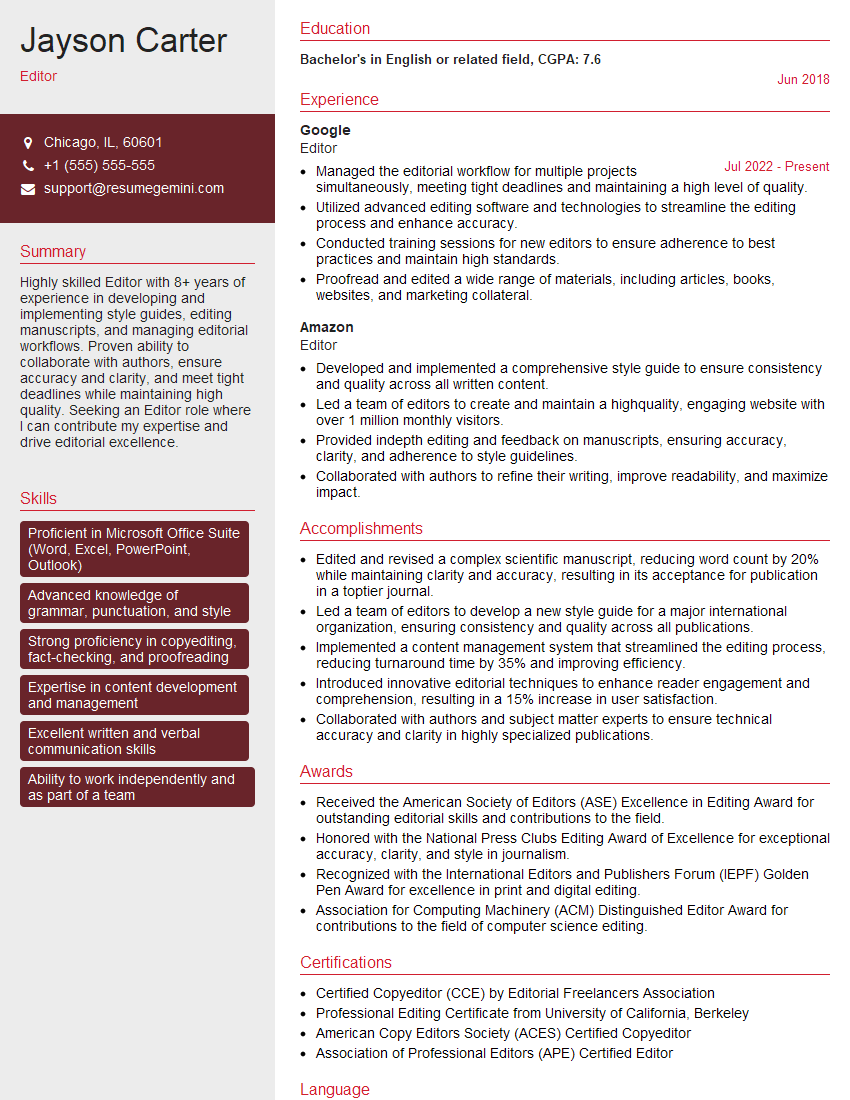
Editor Resume Sample
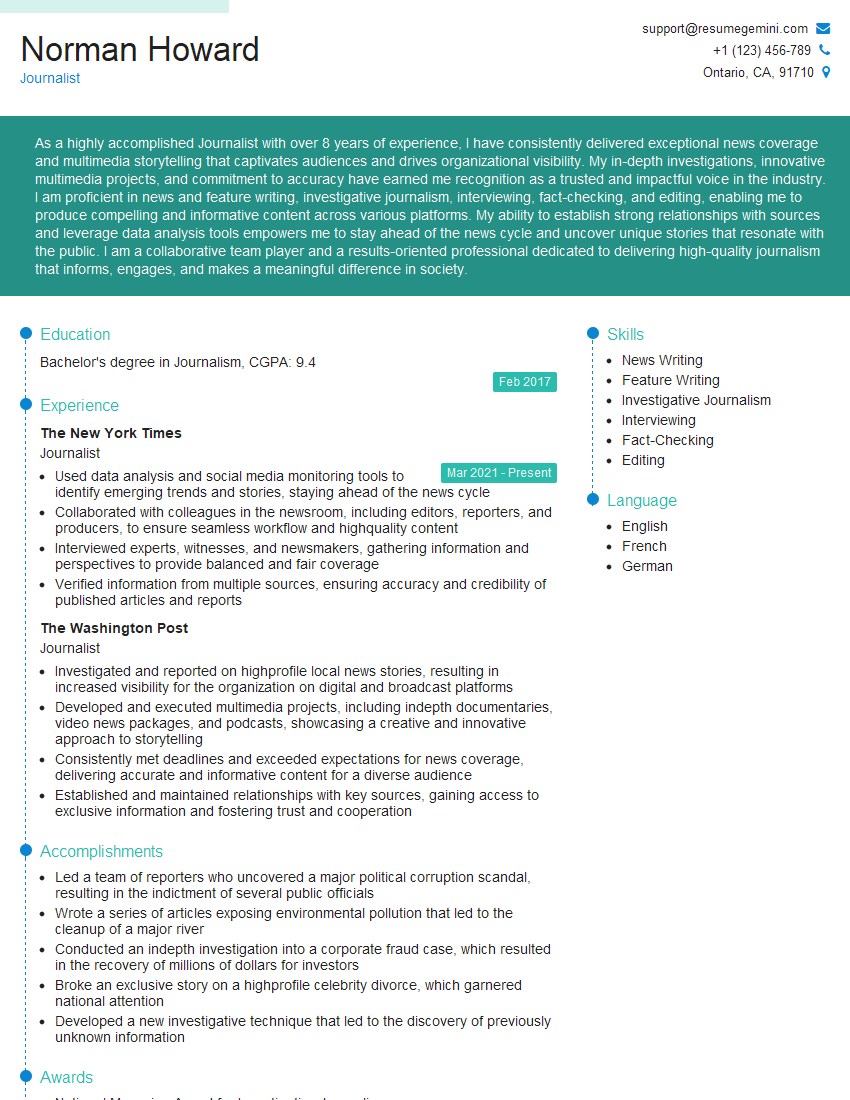
Journalist Resume Sample
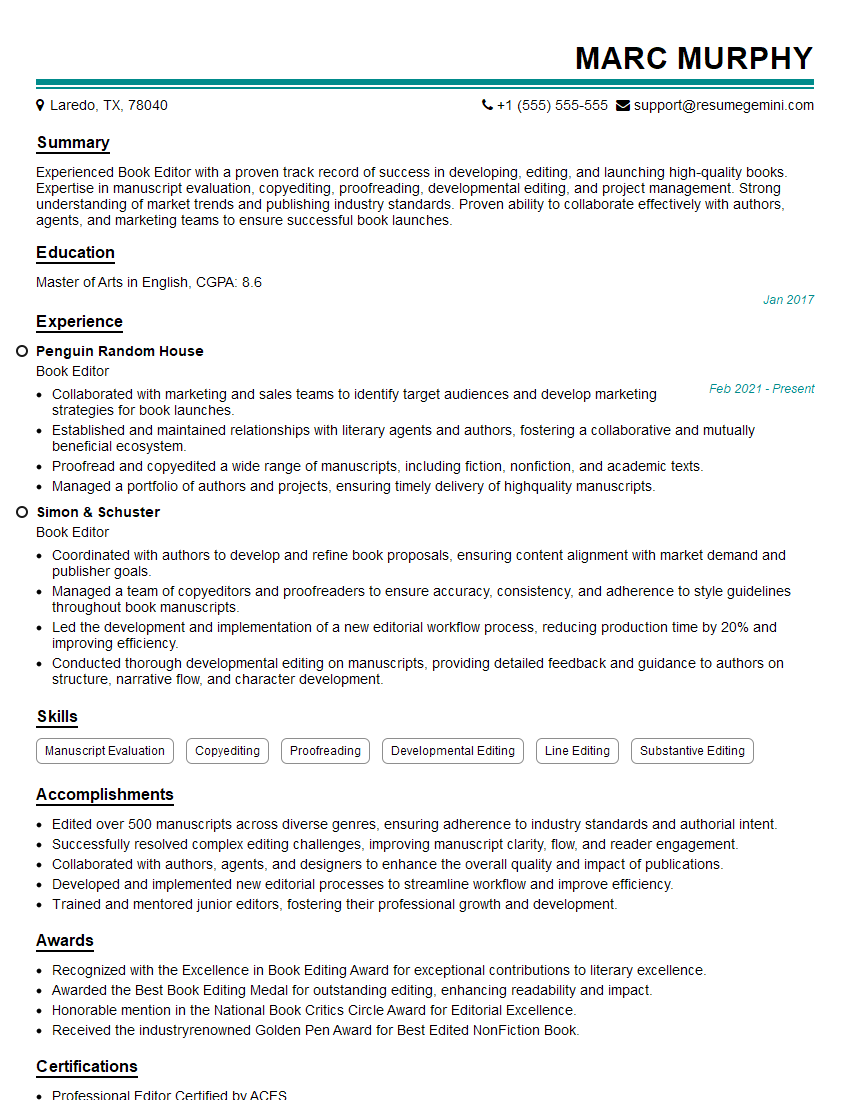
Book Editor Resume Sample
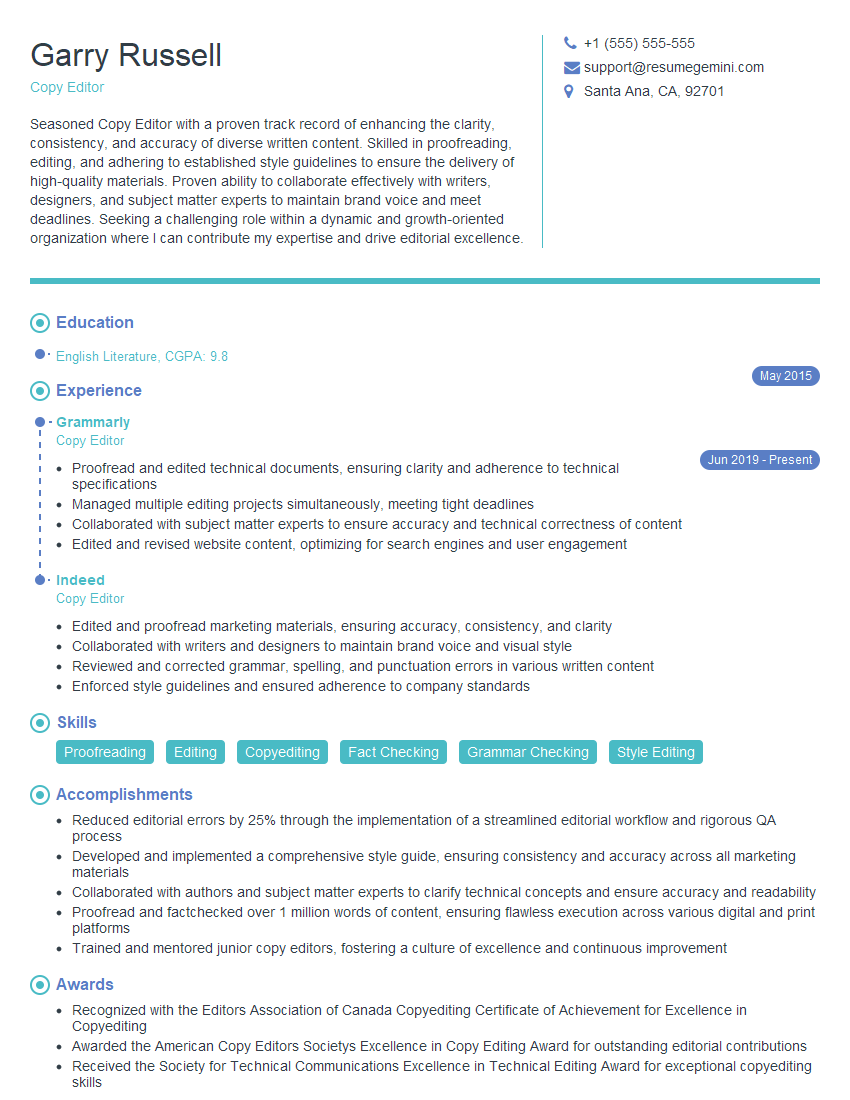
Copy Editor Resume Sample
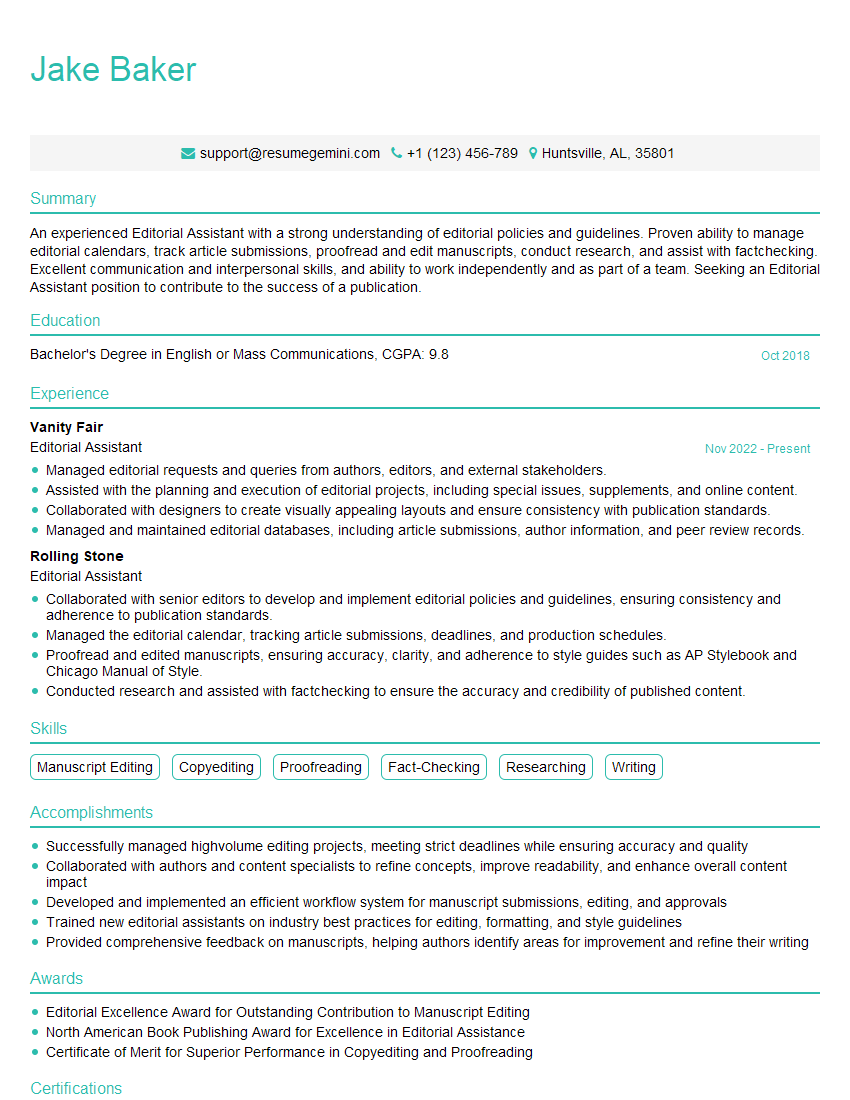
Editorial Assistant Resume Sample
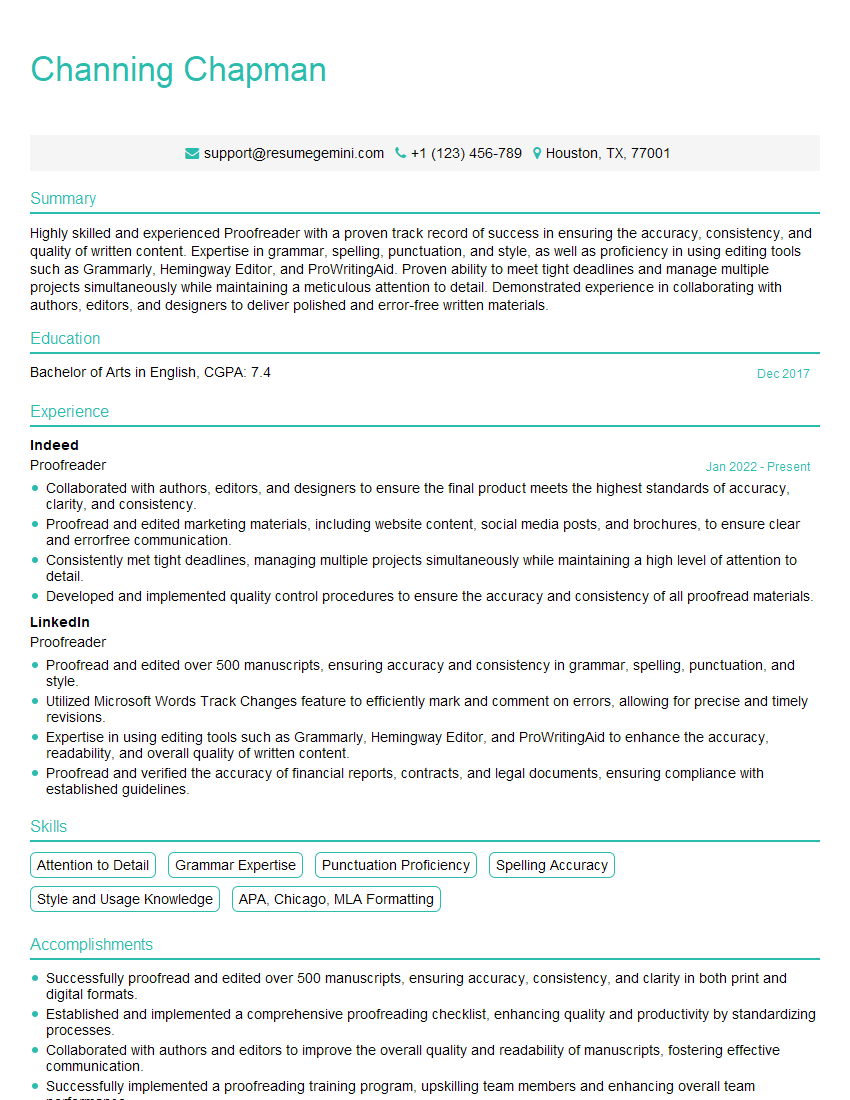
Proofreader Resume Sample
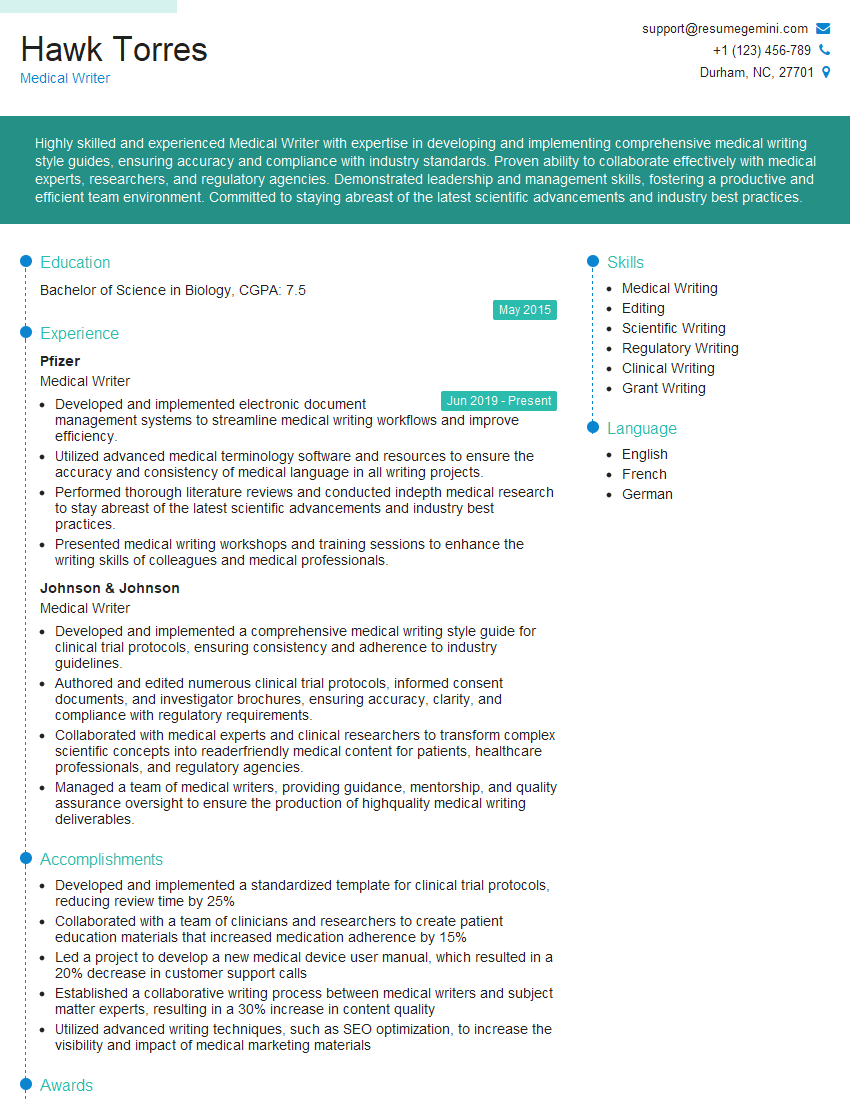
Medical Writer Resume Sample

Technical Writer Resume Sample

Copywriter Resume Sample
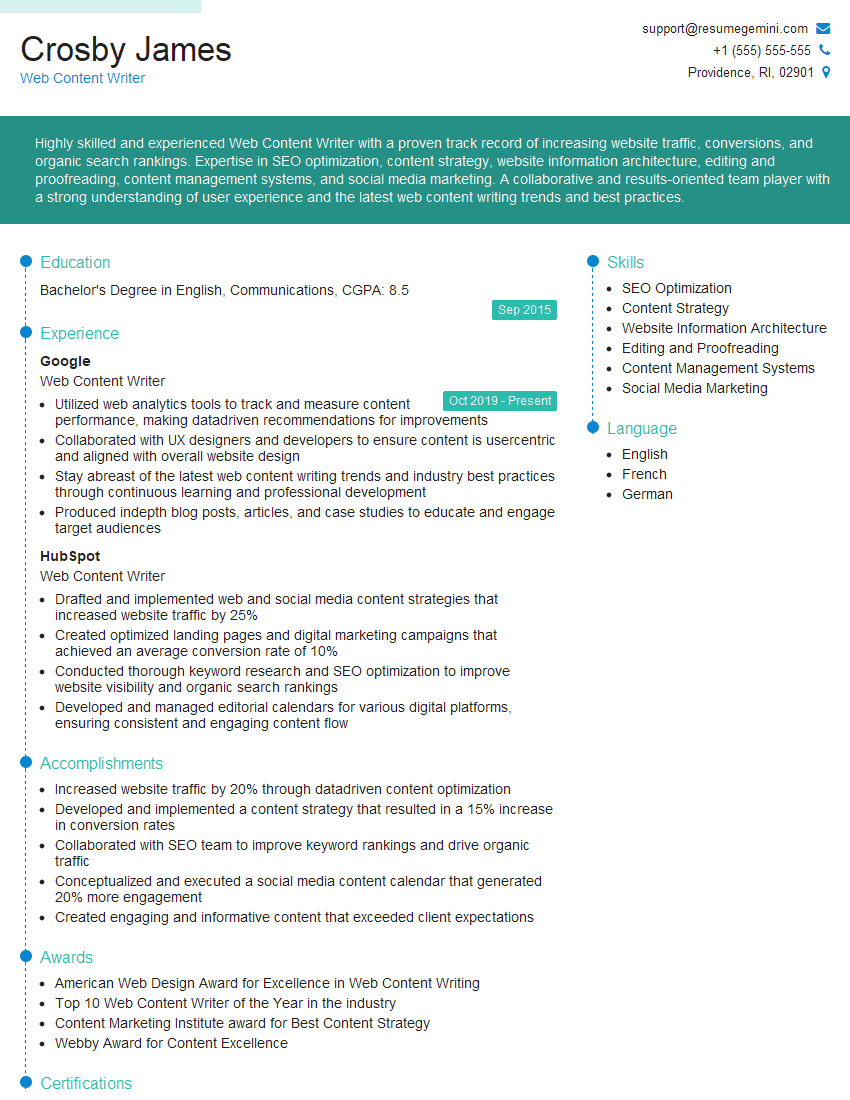
Web Content Writer Resume Sample
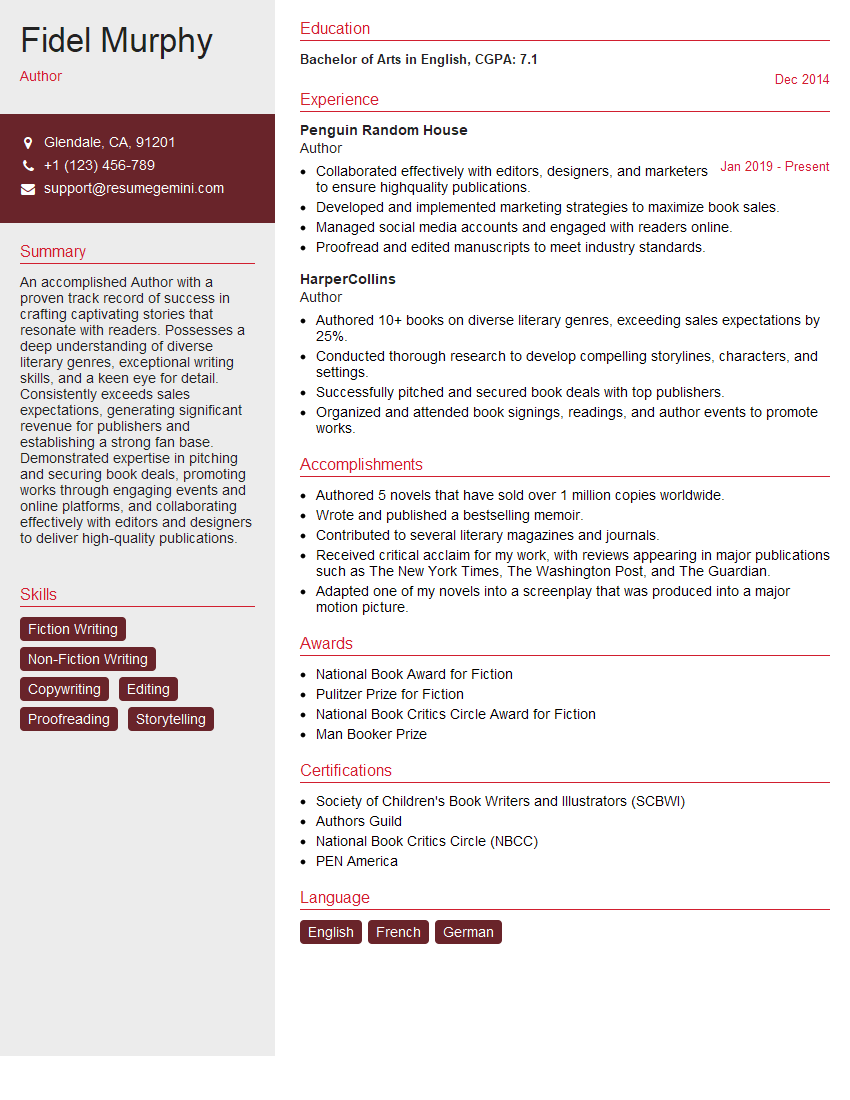
Author Resume Sample
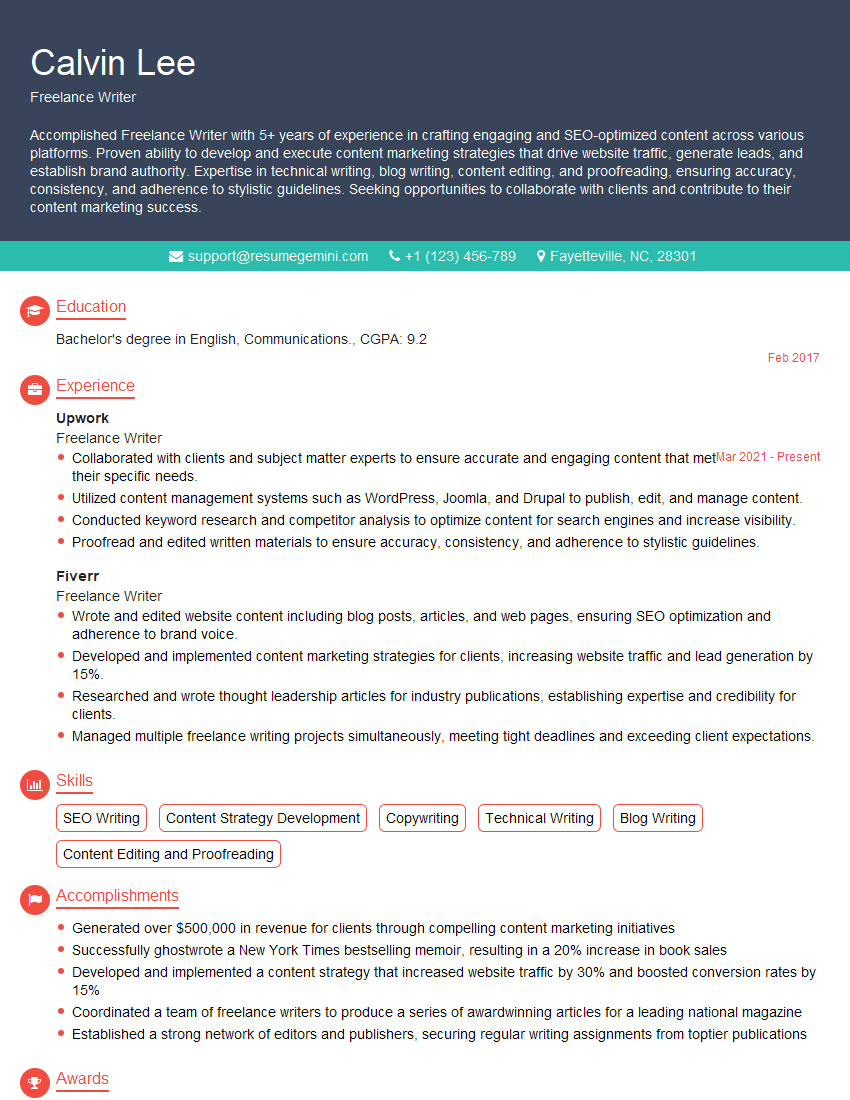
Freelance Writer Resume Sample
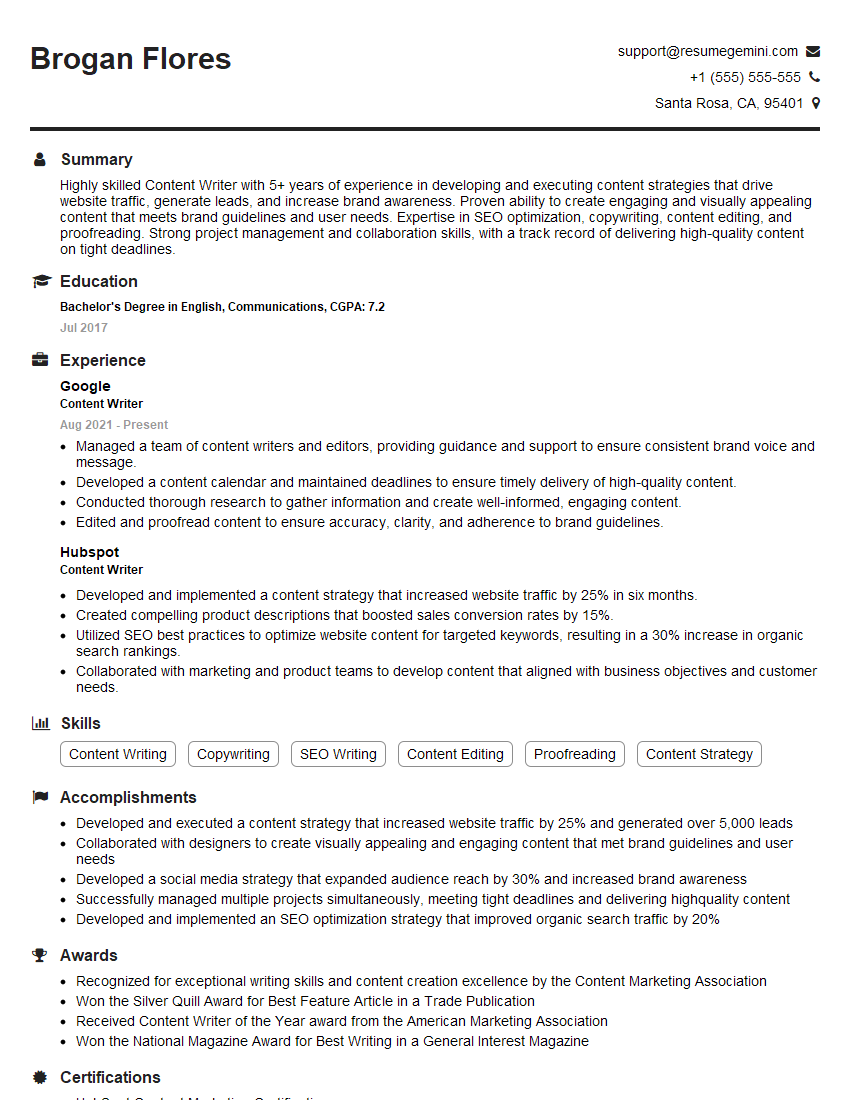
Content Writer Resume Sample
Explore more articles
Users Rating of Our Blogs
Share Your Experience
We value your feedback! Please rate our content and share your thoughts (optional).
What Readers Say About Our Blog
To the interviewgemini.com Webmaster.
Very helpful and content specific questions to help prepare me for my interview!
Thank you
To the interviewgemini.com Webmaster.
This was kind of a unique content I found around the specialized skills. Very helpful questions and good detailed answers.
Very Helpful blog, thank you Interviewgemini team.