The thought of an interview can be nerve-wracking, but the right preparation can make all the difference. Explore this comprehensive guide to Skill in crisis management interview questions and gain the confidence you need to showcase your abilities and secure the role.
Questions Asked in Skill in crisis management Interview
Q 1. Describe your experience developing and implementing a crisis communication plan.
Developing and implementing a crisis communication plan is a crucial aspect of proactive risk management. It involves a structured process that anticipates potential crises, defines communication strategies, and designates roles and responsibilities. The process typically begins with a thorough risk assessment, identifying potential crises and their likelihood and impact. This informs the development of tailored communication strategies for each scenario.
For example, during my time at a large multinational corporation, we developed a comprehensive plan for a product recall. This involved creating pre-written press releases, social media posts, and internal communication templates. We established a dedicated crisis communication team, defined escalation procedures, and designated spokespersons. We also conducted training sessions to ensure everyone understood their roles and responsibilities. The plan’s effectiveness was tested through simulations, allowing us to refine our procedures and identify potential weaknesses before a real crisis occurred. Regular review and updates ensured its relevance and efficacy.
The final plan was a detailed document outlining communication protocols, media engagement strategies, internal communication plans (employee communication is critical during a crisis), and stakeholder engagement strategies. It also included contact lists for key personnel and stakeholders. The result was a streamlined and efficient response to the eventual product recall, minimizing negative impact and maintaining public trust.
Q 2. How do you prioritize tasks during a crisis situation?
Prioritizing tasks during a crisis requires a systematic approach to ensure the most critical issues are addressed first. I use a combination of techniques, including the ‘Prioritization Matrix’ (urgency/importance matrix) and a clear understanding of the overall crisis management goals. The matrix helps categorize tasks based on urgency and importance, guiding decision-making. Critical tasks that directly impact safety, legal compliance, or reputation are always prioritized.
For instance, in a data breach scenario, the immediate priority would be to contain the breach, notify affected individuals, and engage law enforcement if necessary. Secondary priorities would include damage control communications and internal investigation. This approach prevents being overwhelmed and ensures resources are allocated efficiently. Effective delegation is crucial. Assigning tasks based on individual expertise allows for quicker resolutions.
Furthermore, regular reassessment of priorities is necessary, as the situation evolves. The initial priorities might shift as new information emerges or the situation changes. This flexibility ensures that the response remains effective and adaptable.
Q 3. Explain your approach to risk assessment and mitigation.
My approach to risk assessment and mitigation is a proactive, multi-stage process. It begins with identifying potential threats—both internal and external—through brainstorming sessions, SWOT analysis, and reviewing past incidents. Once identified, these threats are analyzed to determine their likelihood and potential impact. This often involves using quantitative and qualitative data to assess the risk level.
For example, if we identify a potential supply chain disruption as a high-risk event, we might implement mitigation strategies such as diversifying our suppliers, building up inventory, or developing contingency plans. Similarly, a potential cyberattack might be mitigated through enhanced cybersecurity measures, employee training, and incident response plans.
The mitigation strategies are documented, and their effectiveness is regularly reviewed and updated. This proactive approach minimizes the impact of potential crises, enhances organizational resilience, and allows for a more controlled and effective response when a crisis does occur.
Q 4. What methods do you use to effectively communicate during a crisis?
Effective communication during a crisis is paramount. My approach utilizes a multi-channel strategy tailored to the specific audience and the nature of the crisis. This involves using clear, concise, and consistent messaging across all platforms.
This might include press releases, social media updates, internal communication systems, and direct contact with key stakeholders. It’s important to be transparent and honest, even when dealing with incomplete information. Providing regular updates, even if it’s to simply state that the situation is ongoing and they are working diligently on a solution, reassures stakeholders.
I also prioritize active listening and feedback mechanisms, creating two-way communication. A centralized communication hub during a crisis allows for efficient management of information flow and ensures consistent messaging.
Q 5. How do you maintain composure and make rational decisions under pressure?
Maintaining composure and making rational decisions under pressure requires a combination of preparation, training, and self-awareness. Extensive crisis management training equips you with the tools and strategies to handle stressful situations. This includes training in decision-making under pressure, stress management techniques, and the ability to effectively delegate tasks.
Personally, I employ mindfulness techniques, such as deep breathing exercises, to manage stress and maintain focus. I also prioritize delegation of tasks to competent individuals, freeing myself to focus on the most crucial decisions. This approach prevents being overwhelmed and ensures that all aspects of the crisis are being addressed effectively.
Having a clear crisis management plan in place provides a structured approach, minimizing uncertainty and promoting decisive action.
Q 6. Describe a time you had to make a difficult decision during a crisis. What was the outcome?
During a major product malfunction that led to potential safety concerns, I had to make the difficult decision to initiate a widespread product recall, despite significant financial implications. The initial assessment, though incomplete, suggested a potential for serious harm. Delaying the recall, while potentially saving money, would risk further damage to our reputation and, more importantly, public safety.
While the recall was incredibly costly, the swift and decisive action demonstrated our commitment to customer safety and minimized the long-term damage. Open communication with customers, transparency regarding the issue, and a proactive approach to rectifying the situation ultimately protected the company’s reputation, fostering trust and loyalty.
The outcome was successful in terms of safety and public perception, though financially challenging. The experience underscored the importance of prioritizing safety and ethical considerations above short-term financial gains in crisis situations.
Q 7. How do you build and maintain relationships with stakeholders during a crisis?
Building and maintaining relationships with stakeholders during a crisis is critical for effective crisis management. Proactive relationship building *before* a crisis is paramount. This involves regular communication, understanding their concerns, and establishing trust. During a crisis, maintaining open and transparent communication is key. This includes providing regular updates, actively listening to concerns, and addressing questions honestly and promptly.
I prioritize empathy and understanding in all communications. Emphasizing shared goals and working collaboratively strengthens relationships. For example, in a crisis involving a community, I would emphasize our shared interest in resolving the issue quickly and safely, demonstrating a sincere commitment to their well-being.
Regular feedback mechanisms and opportunities for dialogue build trust and help address concerns proactively, resulting in more resilient relationships, even in the face of a challenging crisis.
Q 8. What are your strategies for managing conflicting priorities during a crisis?
Managing conflicting priorities during a crisis requires a structured approach prioritizing the most critical issues. Think of it like triage in a hospital – you address the most life-threatening injuries first. I utilize a prioritization matrix, often using a combination of urgency and impact. Each task is evaluated based on how urgently it needs to be addressed and its overall impact on the situation. High-urgency, high-impact tasks are tackled immediately, while lower-priority items are delegated or deferred.
For example, during a product recall, containing the immediate risk to consumers (high urgency, high impact) takes precedence over long-term reputational damage control (high impact, lower urgency in the initial stages). Clear communication and transparent decision-making are vital. Regularly reviewing the matrix and adapting to changing circumstances is crucial for maintaining effectiveness.
- Step 1: Identify all tasks and challenges.
- Step 2: Assign an urgency and impact score to each task (e.g., High/Medium/Low).
- Step 3: Prioritize tasks based on the matrix.
- Step 4: Delegate tasks as appropriate.
- Step 5: Regularly review and adjust the prioritization based on new information.
Q 9. How familiar are you with various crisis communication channels (social media, press releases, etc.)?
I’m highly proficient in utilizing various crisis communication channels. My experience encompasses crafting and disseminating press releases, engaging with stakeholders via social media platforms (Twitter, Facebook, LinkedIn, etc.), coordinating internal communications, and managing media inquiries. I understand the nuances of each channel – for instance, the immediacy of social media versus the more formal tone of a press release. I’m also adept at monitoring social media sentiment to gauge public perception and address misinformation quickly and effectively.
During a crisis, a multi-channel approach is crucial. Press releases provide a formal record, while social media allows for rapid updates and engagement. Internal communication keeps employees informed and aligned, reducing anxiety and promoting a united response. A well-defined communication plan with pre-approved messages and designated spokespeople is essential for maintaining a consistent and credible message.
Q 10. Describe your experience with crisis simulation exercises or drills.
I’ve participated extensively in numerous crisis simulation exercises and drills across various sectors, including healthcare, manufacturing, and finance. These simulations have ranged from tabletop exercises, where we discuss hypothetical scenarios, to full-scale simulations involving multiple stakeholders and agencies. These exercises are invaluable for identifying weaknesses in our response plans, improving team coordination, and refining communication protocols. For instance, a recent drill involving a cybersecurity breach allowed us to test our incident response plan, improve our communication protocols with law enforcement, and fine-tune our data recovery strategies. The feedback from these simulations, both positive and negative, contributes to an improved readiness plan.
Q 11. How do you measure the effectiveness of your crisis response?
Measuring the effectiveness of a crisis response is multifaceted. Key Performance Indicators (KPIs) are essential and can include the speed of containment, the reduction of negative impacts (financial losses, reputational damage, etc.), the speed and accuracy of information dissemination, and overall stakeholder satisfaction. We use qualitative and quantitative data. Quantitative data includes metrics like the number of affected individuals, the financial cost of the crisis, and recovery time. Qualitative data comes from post-crisis surveys, interviews, and focus groups with stakeholders to gather feedback on the effectiveness of our response.
For example, after a data breach, we’d measure the number of affected individuals, the time taken to resolve the issue, the cost of remediation, and the level of customer satisfaction post-resolution. These metrics provide crucial insights for improving future responses.
Q 12. How do you identify and address the root causes of a crisis?
Identifying the root causes of a crisis involves a thorough investigation using a structured approach. This often involves assembling a root cause analysis (RCA) team comprising individuals with diverse expertise relevant to the specific crisis. We employ techniques such as the ‘5 Whys’ methodology, where we repeatedly ask ‘why’ to uncover the underlying causes. We also conduct thorough reviews of relevant data, including incident reports, logs, and other documentation, and conduct interviews with individuals who were involved in or affected by the crisis.
For example, if a product defect led to a recall, the 5 Whys might reveal: Why did the defect occur? Because of a faulty component. Why was the faulty component used? Because quality control failed. Why did quality control fail? Due to inadequate training. By systematically investigating and understanding the underlying issues, we can implement preventative measures to reduce the likelihood of similar crises in the future.
Q 13. Explain your understanding of different crisis response frameworks (e.g., NIST, ISO).
I’m familiar with various crisis response frameworks, including NIST (National Institute of Standards and Technology) Cybersecurity Framework and ISO 22301 (Business Continuity Management). NIST provides guidance on managing cybersecurity risks, while ISO 22301 offers a comprehensive standard for establishing a Business Continuity Management System (BCMS). These frameworks provide a structured approach to crisis management, outlining best practices for preparedness, response, recovery, and mitigation. I leverage these frameworks to build robust and adaptable crisis management plans tailored to specific organizational needs and contexts.
Both frameworks highlight the importance of proactive planning, risk assessment, and regular testing and review of plans. They offer a systematic method for identifying potential threats, developing mitigation strategies, and ensuring effective response capabilities.
Q 14. How do you ensure the accuracy and timeliness of information during a crisis?
Ensuring the accuracy and timeliness of information is paramount during a crisis. We establish a centralized communication hub, often utilizing dedicated crisis communication software, to manage information flow. This hub allows for controlled dissemination of accurate and timely information to all relevant stakeholders. This system often includes a rigorous vetting process for all information before release, often involving multiple points of verification to ensure accuracy.
We also leverage multiple sources of information to verify facts, and implement a system for correcting errors promptly and transparently if they occur. Dedicated communication teams are responsible for coordinating information flow and ensuring that updates are provided in a timely manner via appropriate channels. Clear communication protocols and regular briefings are crucial to maintaining transparency and building confidence amongst stakeholders.
Q 15. What strategies do you use to prevent future crises?
Preventing future crises relies heavily on proactive risk assessment and mitigation. It’s not about avoiding all problems, but minimizing their likelihood and impact. My strategy involves a multi-pronged approach:
- Comprehensive Risk Assessment: Regularly identifying potential threats – from supply chain disruptions to reputational damage to natural disasters – through scenario planning and vulnerability analyses. This includes utilizing SWOT (Strengths, Weaknesses, Opportunities, Threats) analyses and PESTLE (Political, Economic, Social, Technological, Legal, Environmental) analyses to gain a holistic view.
- Robust Contingency Planning: Developing detailed plans for each identified risk, outlining response procedures, communication strategies, and resource allocation. These plans should be regularly tested and updated through tabletop exercises and simulations.
- Strengthening Internal Processes: Improving internal communication, streamlining decision-making processes, and fostering a culture of safety and compliance. This includes regular training for all employees on relevant crisis protocols.
- Building Strong Relationships: Cultivating relationships with key stakeholders, including government agencies, community leaders, and media outlets, to facilitate information sharing and collaborative responses during a crisis.
- Monitoring and Early Warning Systems: Implementing systems to monitor for early warning signs of potential crises, such as social media sentiment analysis, competitor intelligence, and industry news tracking.
For example, in a previous role, we used predictive modeling to forecast potential supply chain disruptions based on geopolitical instability. This allowed us to proactively secure alternative suppliers and avoid a significant production halt.
Career Expert Tips:
- Ace those interviews! Prepare effectively by reviewing the Top 50 Most Common Interview Questions on ResumeGemini.
- Navigate your job search with confidence! Explore a wide range of Career Tips on ResumeGemini. Learn about common challenges and recommendations to overcome them.
- Craft the perfect resume! Master the Art of Resume Writing with ResumeGemini’s guide. Showcase your unique qualifications and achievements effectively.
- Don’t miss out on holiday savings! Build your dream resume with ResumeGemini’s ATS optimized templates.
Q 16. How do you manage the emotional impact of a crisis on yourself and your team?
Managing the emotional toll of a crisis on myself and my team is crucial for effective response. It requires a combination of self-care and team support:
- Self-Care: Prioritizing sleep, healthy eating, and regular exercise. Recognizing my own stress levels and seeking support from mentors or therapists when needed. Taking breaks and practicing mindfulness techniques to avoid burnout.
- Team Support: Creating a safe space for open communication and emotional expression within the team. Regular check-ins to gauge team morale and address concerns. Providing access to employee assistance programs (EAPs) or mental health resources.
- Debriefing Sessions: Conducting post-crisis debriefings to process experiences, learn from mistakes, and acknowledge team accomplishments. This provides a valuable opportunity for emotional release and reflection.
- Celebrating Successes: Acknowledging and celebrating the team’s successes and resilience throughout the crisis. This reinforces positive experiences and builds team morale.
During a particularly challenging product recall, I instituted daily team huddles focused not just on logistics, but also on sharing concerns and offering support. This helped us navigate the emotional strain and maintain a cohesive, effective team.
Q 17. How do you handle media inquiries during a crisis?
Media relations during a crisis are critical for managing public perception and maintaining trust. My approach involves:
- Designated Spokesperson: Establishing a single, well-trained spokesperson to deliver consistent, accurate messaging to the media.
- Proactive Communication: Issuing timely and transparent statements to address concerns and provide updates. Avoiding speculation and sticking to confirmed facts.
- Media Training: Providing media training for key personnel to ensure confident and professional interactions with journalists.
- Media Monitoring: Closely monitoring media coverage to identify potential issues or misinformation and proactively correct inaccuracies.
- Building Relationships: Cultivating strong relationships with key journalists to facilitate open communication and build trust.
In one instance, we faced a social media-driven crisis involving a misinterpreted product feature. By quickly acknowledging the confusion, providing a clear explanation, and engaging directly with concerned users through social media channels, we averted significant reputational damage.
Q 18. Describe your experience with legal and regulatory compliance in crisis management.
Legal and regulatory compliance are paramount during a crisis. My experience includes:
- Understanding Relevant Laws: Being thoroughly familiar with all applicable laws and regulations concerning crisis response, such as data privacy, consumer protection, and environmental regulations.
- Legal Counsel: Close collaboration with legal counsel throughout the crisis to ensure all actions are compliant and to minimize legal risk.
- Documentation: Maintaining meticulous records of all actions taken, communications made, and decisions reached to create a clear audit trail.
- Internal Investigations: Conducting thorough internal investigations to determine the root cause of the crisis and identify areas for improvement.
- Government Reporting: Complying with all required government reporting requirements in a timely manner.
During a product safety incident, our adherence to stringent reporting protocols, in close collaboration with our legal team, significantly mitigated the potential for hefty fines and lawsuits.
Q 19. How do you delegate tasks effectively during a crisis?
Effective delegation during a crisis relies on clear communication, trust, and a well-defined structure. My approach involves:
- Clear Roles and Responsibilities: Establishing clear roles and responsibilities for each team member, ensuring no overlap or gaps in coverage.
- Matching Tasks to Skills: Delegating tasks to individuals based on their expertise and experience to optimize efficiency.
- Regular Communication: Maintaining frequent communication with team members to provide updates, answer questions, and address any challenges.
- Empowerment: Empowering team members to make decisions within their areas of responsibility to speed up response time.
- Monitoring Progress: Regularly monitoring progress to ensure tasks are completed on time and according to plan.
Using a project management tool like Asana, combined with regular stand-up meetings, proved incredibly helpful in delegating and tracking tasks efficiently during a recent supply chain disruption.
Q 20. How do you manage conflicting information during a crisis?
Conflicting information during a crisis can be extremely challenging. My approach focuses on:
- Verification and Validation: Prioritizing the verification of information through multiple sources to ensure accuracy and reliability.
- Data Triangulation: Gathering information from diverse sources to identify patterns and cross-validate data.
- Transparency and Open Communication: Communicating clearly with stakeholders about the uncertainties and the process for resolving conflicting information.
- Expert Consultation: Seeking expert opinion from relevant specialists to help resolve discrepancies.
- Decision-Making Framework: Establishing a clear decision-making framework to guide the resolution of conflicting information, prioritizing speed and accuracy.
During a data breach incident, we used a combination of internal security logs, external threat intelligence feeds, and forensic analysis to reconcile conflicting reports and determine the extent of the breach.
Q 21. What is your experience with crisis recovery planning?
Crisis recovery planning is as crucial as crisis response. My experience involves developing comprehensive plans that address:
- Damage Assessment: Thoroughly assessing the damage caused by the crisis, including financial losses, reputational damage, and operational disruptions.
- Restoration of Operations: Developing detailed plans for restoring normal operations, prioritizing critical functions and allocating resources effectively.
- Communication Strategy: Developing a communication strategy to inform stakeholders about the recovery process and reassure them of the organization’s commitment to regaining their trust.
- Financial Recovery: Developing plans for financial recovery, including insurance claims, securing funding, and cost-cutting measures.
- Lessons Learned: Conducting a thorough review of the crisis response to identify lessons learned and improve future preparedness.
Following a significant natural disaster that impacted our facilities, our pre-established recovery plan, which detailed the restoration of power, communications, and supply chains, allowed us to resume operations far sooner than initially projected.
Q 22. How do you utilize technology to enhance crisis management?
Technology is absolutely crucial for effective modern crisis management. It allows for faster communication, better data analysis, and more efficient resource allocation. Think of it as amplifying our human capabilities.
Communication: Tools like Slack, Microsoft Teams, or dedicated crisis communication platforms enable real-time updates and coordinated responses among multiple teams and stakeholders, even across geographical boundaries. Imagine a product recall – instant notification to consumers via SMS and social media is vital.
Data Analysis: Data analytics platforms help us track the crisis’s evolution in real-time. Social media listening tools, for example, can identify emerging narratives and public sentiment, allowing for proactive communication and mitigation strategies. During a cybersecurity breach, we can monitor affected systems and track the spread of malware to contain the damage.
Resource Management: Software designed for emergency response can optimize resource allocation during a crisis. For instance, mapping software can show the locations of impacted areas, helping us prioritize aid delivery during a natural disaster.
Automation: Automation of routine tasks, like sending out pre-written communication templates or escalating incidents based on pre-defined thresholds, frees up human resources to focus on strategic decision-making.
Q 23. Describe your experience with crisis training and development.
My crisis training and development has been extensive and multifaceted. It’s not a one-time event but a continuous learning process.
Formal Training: I’ve completed several certifications in crisis communication, incident management, and business continuity planning, including the Certified Emergency Manager (CEM) program.
Simulations & Tabletop Exercises: I’ve participated in numerous simulations and tabletop exercises that replicate real-world crises. These exercises are invaluable for practicing our plans, identifying weaknesses, and honing our team’s collaborative skills. For example, simulating a major data breach allowed us to refine our communication protocol and response times.
On-the-Job Experience: My career has provided countless opportunities to apply crisis management theory in practice. Each incident, from minor disruptions to major events, has been a learning experience, solidifying my understanding and refining my strategies.
I’m a firm believer in continuous learning. I actively seek out new training opportunities, attend conferences, and stay up-to-date on the latest best practices in crisis management.
Q 24. How do you ensure your crisis management plan is regularly updated and tested?
A crisis management plan is only as good as its last update. Regular updates and testing are crucial to ensure its relevance and effectiveness.
Regular Review: I recommend a formal review at least annually, or more frequently after significant organizational changes or industry events. This includes a thorough assessment of the plan’s accuracy, comprehensiveness, and appropriateness.
Testing and Drills: Tabletop exercises, simulations, and even informal walk-throughs are vital for identifying weaknesses in the plan. These exercises reveal communication gaps, resource limitations, or decision-making bottlenecks before a real crisis occurs. The scenario should be realistic to simulate actual challenges. For example, we regularly simulate a server outage to test our IT incident response plan.
Communication Channels: Verify that all communication channels specified in the plan are functioning and readily accessible to all personnel involved. Regular testing of alerts and communication systems ensures timely and effective communication during a crisis.
Documentation and Updates: After each review and test, I make sure that any necessary updates are documented, communicated, and integrated into the plan. Version control is critical for tracking changes and ensuring everyone is working from the most current version.
Q 25. Describe a time a crisis management plan failed. What did you learn?
During a product recall, our initial communication strategy lacked the clarity and transparency needed. We underestimated the speed at which misinformation spread online. Our plan hadn’t fully accounted for social media’s rapid dissemination of information, resulting in a delay in addressing public concerns. This led to significant damage to our brand reputation.
The experience highlighted several critical lessons:
Importance of speed and transparency: Immediate and truthful communication is paramount. Delay only fuels speculation and mistrust.
Social media monitoring: Robust social media monitoring is essential to track the narrative and proactively address misinformation.
Dedicated communication team: A well-trained and dedicated crisis communication team is indispensable. Clear roles and responsibilities are vital.
Regular plan updates: We needed to incorporate social media management as a core element of our crisis communication plan.
The failure became a valuable learning experience, leading to a complete overhaul of our communication strategy and the incorporation of social media monitoring and engagement as crucial elements in our revised crisis management plan.
Q 26. How do you utilize data analytics in crisis management?
Data analytics plays a vital role in enhancing crisis management’s effectiveness. It helps us make informed decisions, predict potential problems, and track the impact of our interventions.
Predictive Analytics: Using historical data, we can identify patterns and trends that might indicate future crises. For instance, analyzing sales data might reveal potential product defects before they become widespread problems.
Real-time Monitoring: During a crisis, we use data analytics tools to monitor key performance indicators (KPIs). For example, tracking website traffic and social media sentiment can help us assess public reaction to our crisis response.
Resource Allocation: By analyzing data on impacted areas, we can optimize resource allocation. In a natural disaster, analyzing population density and damage assessment data helps prioritize rescue and relief efforts.
Impact Assessment: Data analytics helps measure the crisis’s overall impact, including financial losses, reputational damage, and operational disruptions. This helps us justify resource allocation and evaluate the success of our interventions.
For instance, during a supply chain disruption, we can use data analytics to identify alternative suppliers and assess their capacity to meet our needs, minimizing the impact on our operations.
Q 27. How do you assess the reputational impact of a crisis and plan for recovery?
Assessing reputational impact and planning for recovery is a critical aspect of crisis management. It involves a systematic approach to understanding the damage, formulating a recovery strategy, and rebuilding trust.
Reputation Assessment: We use social media listening tools, media monitoring services, and surveys to gauge public perception and identify areas of concern. Sentiment analysis tools help quantify the negative impact.
Recovery Strategy: The recovery strategy depends on the nature and severity of the crisis. It might involve issuing apologies, correcting misinformation, providing compensation, improving internal processes, or enhancing transparency.
Communication Plan: A clear and consistent communication plan is vital for rebuilding trust. This involves proactive communication, transparency, and empathy in addressing stakeholder concerns.
Monitoring and Evaluation: Continuous monitoring is crucial to track the effectiveness of recovery efforts. We use data analytics to measure shifts in public opinion and adjust our strategy accordingly.
For example, after a data breach, we might implement stronger security measures, offer credit monitoring services to affected customers, and proactively communicate about steps taken to prevent future incidents. Transparency is key to regaining trust.
Key Topics to Learn for Crisis Management Interviews
- Crisis Communication Strategies: Understanding the importance of rapid, accurate, and consistent messaging across all channels. Consider practical applications like drafting press releases, social media engagement plans, and internal communication strategies.
- Risk Assessment and Mitigation: Learn to identify potential crisis scenarios, analyze vulnerabilities, and develop proactive mitigation plans. Explore case studies showcasing successful risk management and the impact of preventative measures.
- Incident Command Systems (ICS): Familiarize yourself with ICS principles and their application in managing complex crises. This includes understanding roles, responsibilities, and the importance of coordination and collaboration.
- Stakeholder Management: Master the art of effectively communicating with and managing expectations of diverse stakeholders (employees, customers, media, government agencies) during a crisis.
- Crisis Response Planning & Execution: Develop a strong understanding of the crisis management lifecycle, from preparation and prevention to response and recovery. Practice outlining and executing response plans.
- Post-Crisis Analysis and Improvement: Learn how to conduct thorough post-incident reviews to identify areas for improvement in future crisis response efforts. This includes evaluating the effectiveness of implemented strategies.
- Ethical Considerations in Crisis Management: Explore the ethical dilemmas that may arise during a crisis and how to navigate them responsibly and transparently.
Next Steps
Mastering crisis management skills significantly enhances your career prospects across various industries. Demonstrating proficiency in this area showcases your ability to handle pressure, think strategically, and lead effectively – highly valued attributes in today’s competitive job market. To maximize your chances of landing your dream role, invest time in crafting a strong, ATS-friendly resume that highlights your relevant skills and experience. ResumeGemini is a trusted resource that can help you build a professional and impactful resume. Examples of resumes tailored to crisis management skills are available within ResumeGemini to guide your preparation.
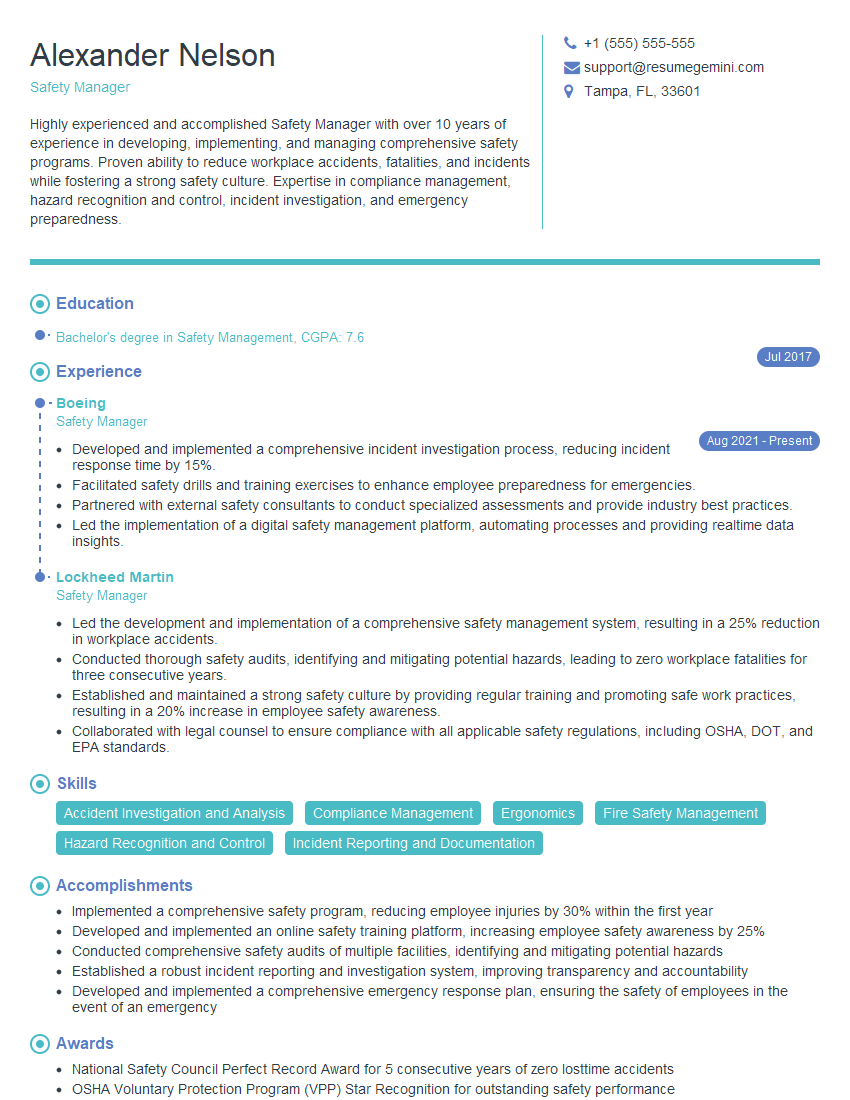
Safety Manager Resume Sample
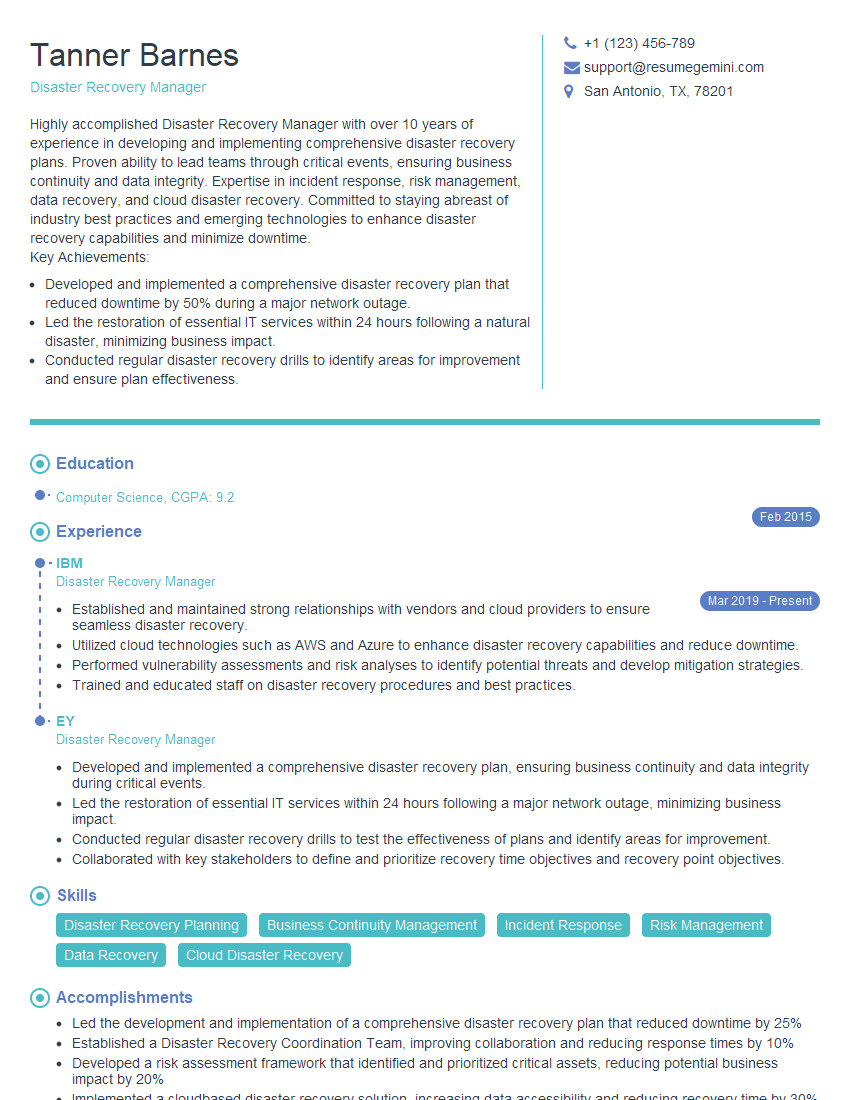
Disaster Recovery Manager Resume Sample
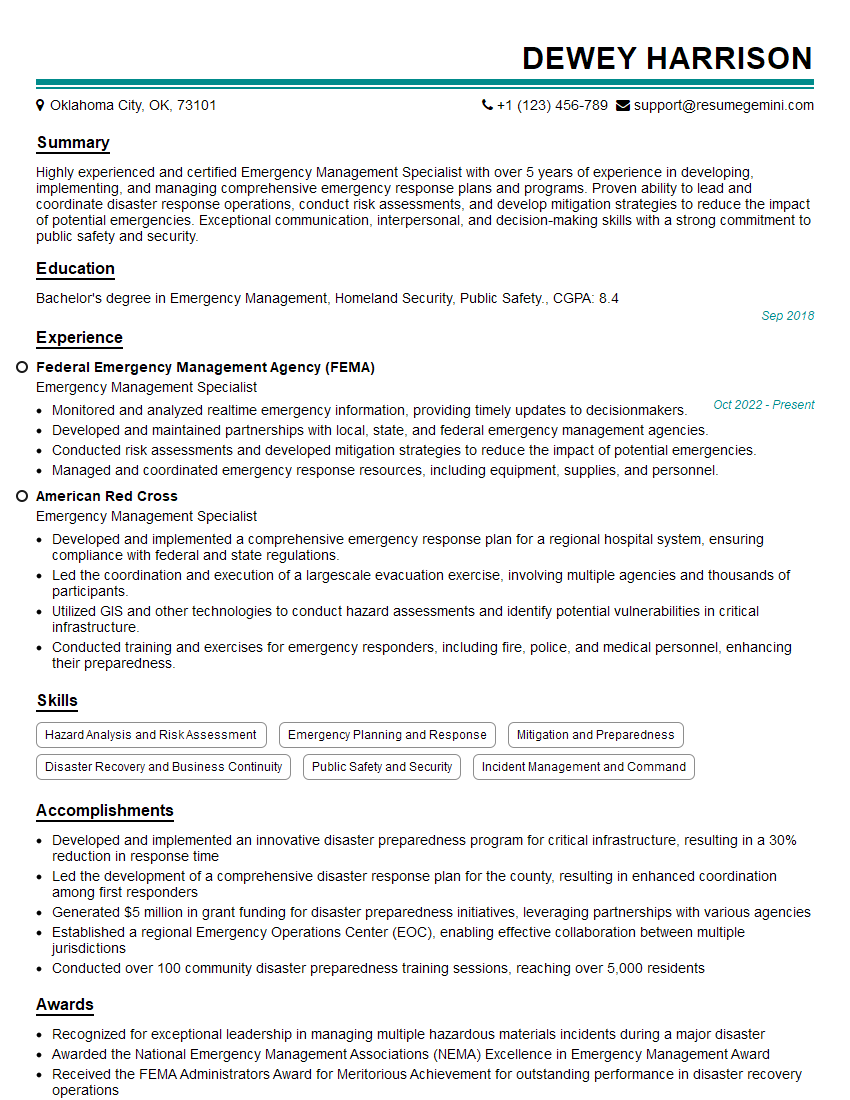
Emergency Management Specialist Resume Sample

Compliance Officer Resume Sample
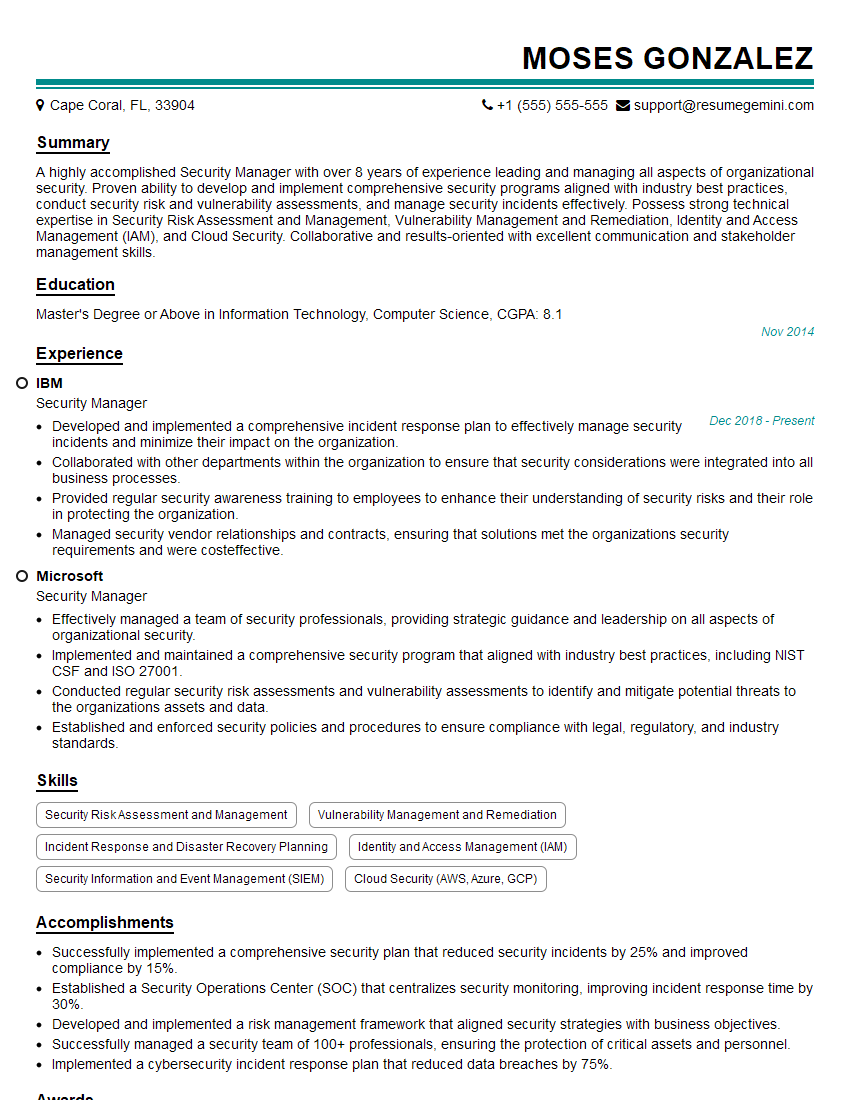
Security Manager Resume Sample
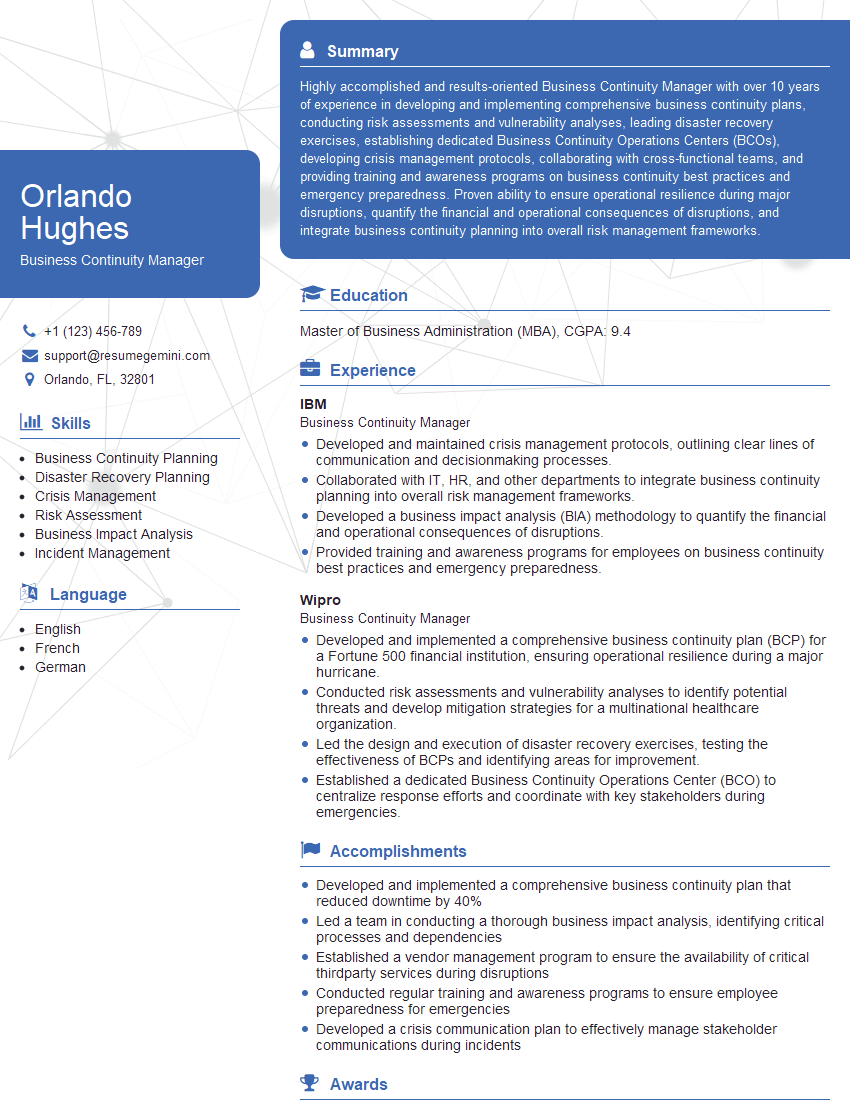
Business Continuity Manager Resume Sample
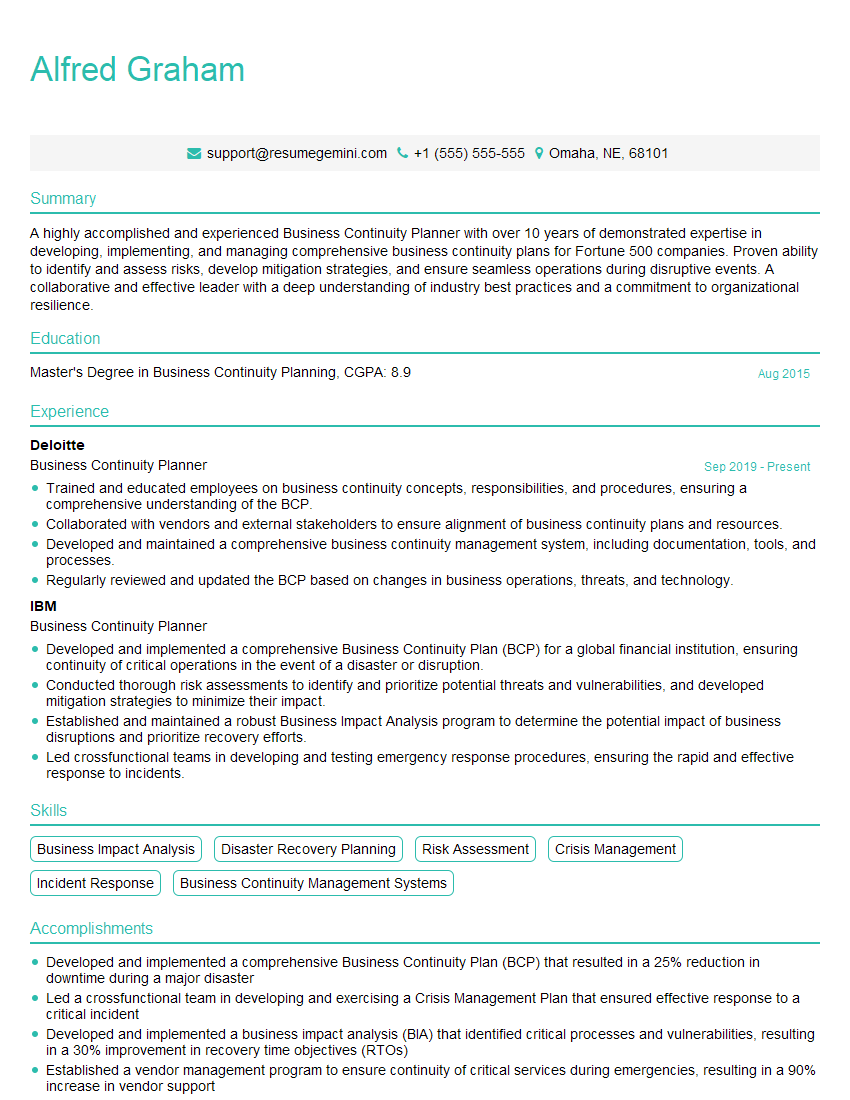
Business Continuity Planner Resume Sample
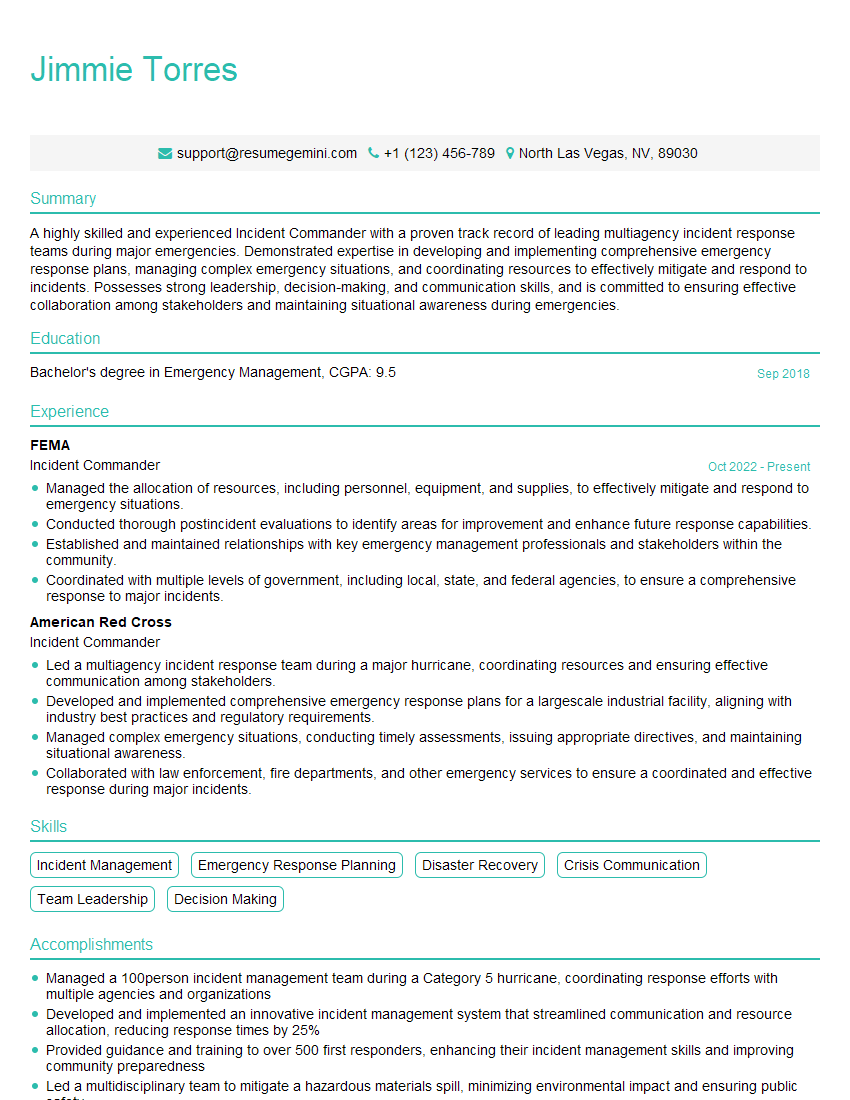
Incident Commander Resume Sample
Explore more articles
Users Rating of Our Blogs
Share Your Experience
We value your feedback! Please rate our content and share your thoughts (optional).
What Readers Say About Our Blog
To the interviewgemini.com Webmaster.
Very helpful and content specific questions to help prepare me for my interview!
Thank you
To the interviewgemini.com Webmaster.
This was kind of a unique content I found around the specialized skills. Very helpful questions and good detailed answers.
Very Helpful blog, thank you Interviewgemini team.