Preparation is the key to success in any interview. In this post, we’ll explore crucial Radiation Oncology Physics interview questions and equip you with strategies to craft impactful answers. Whether you’re a beginner or a pro, these tips will elevate your preparation.
Questions Asked in Radiation Oncology Physics Interview
Q 1. Explain the inverse square law in radiation physics.
The inverse square law is a fundamental principle in radiation physics stating that the intensity of radiation decreases proportionally to the square of the distance from the source. Imagine a light bulb: the closer you are, the brighter it appears; the farther you move, the dimmer it becomes. This isn’t just about brightness; it’s about the actual amount of light energy hitting a specific area. In radiation, this means that if you double the distance from the source, the radiation intensity decreases to one-fourth (1/2²) its original value. Tripling the distance reduces the intensity to one-ninth (1/3²).
Mathematically, it’s expressed as: I1/I2 = d2²/d1², where I represents intensity and d represents distance. This law is crucial in radiation therapy treatment planning because it helps us calculate the dose delivered at various points within the patient, especially when considering the source-to-surface distance (SSD) and the depth of the tumor.
For example, if a source delivers 100 cGy at 10 cm, at 20 cm, the dose will be 25 cGy (100 * (10/20)² = 25).
Q 2. Describe the process of treatment planning for IMRT.
Intensity-Modulated Radiation Therapy (IMRT) treatment planning is a complex process involving several steps. It begins with image acquisition, typically using CT, MRI, and/or PET scans. These images are then contoured by radiation oncologists and physicists to delineate the target volume (tumor) and organs at risk (OARs). Next, a treatment plan is created using sophisticated software that calculates the optimal beam arrangements and intensities needed to deliver a prescribed dose to the target while minimizing radiation to healthy tissues. This involves inverse planning, where the desired dose distribution is specified, and the software determines the beam parameters that achieve this.
The plan optimization algorithm considers various factors, such as dose constraints for the target and OARs, beam angles, and intensity modulation. The physicist then reviews the plan, ensuring it meets clinical requirements and quality assurance standards. This involves evaluating dose-volume histograms (DVHs), which graphically represent the dose distribution to the target and OARs, and assessing the plan’s conformity and homogeneity. Finally, the plan is approved and implemented on the linear accelerator.
Imagine trying to sculpt a figure from clay. IMRT is like having many tiny tools, each delivering a precise amount of ‘clay removal’ (radiation) from different angles, to shape the final figure (dose distribution) precisely. The goal is to remove the unwanted clay (tumor) while preserving as much of the surrounding structure (OARs) as possible.
Q 3. What are the different types of radiation used in cancer treatment?
Various types of radiation are employed in cancer treatment, each with unique characteristics affecting its use and efficacy. The most common are:
- Photon radiation (X-rays and Gamma rays): These are the most frequently used in external beam radiation therapy (EBRT). X-rays are produced by linear accelerators (LINACs), while gamma rays are emitted by radioactive sources like Cobalt-60 (though less common now). They interact with tissue through photoelectric effect, Compton scattering, and pair production, leading to ionization and DNA damage.
- Electron radiation: Electrons are also produced by LINACs and deposit their energy over a shorter range than photons, making them useful for treating superficial tumors or skin lesions. They are particularly advantageous in situations where sparing underlying healthy tissues is crucial.
- Proton radiation: Protons have a unique dose distribution, with a sharp dose fall-off (Bragg peak) at the end of their range. This property allows for precise targeting of tumors while minimizing dose to surrounding tissues, making them highly suitable for treating tumors near critical organs.
- Heavy-ion radiation (e.g., carbon ions): Similar to protons, these ions have a Bragg peak, but with a higher relative biological effectiveness (RBE), meaning they cause more damage to DNA per unit dose than photons. They are used for specific cancers where their enhanced biological effect can be beneficial.
The choice of radiation type depends on factors such as tumor location, size, depth, and proximity to critical organs. The radiation oncologist and physicist work together to select the optimal radiation modality for each patient.
Q 4. How do you calculate the dose delivered to a target volume?
Calculating the dose delivered to a target volume is a multi-step process relying heavily on treatment planning software. The software uses sophisticated algorithms to model the radiation transport through the patient’s anatomy. The process begins with defining the target volume and organs at risk (OARs) on the medical images. Then, the treatment plan, which specifies beam parameters like energy, intensity, and angle, is created. The software then calculates the dose distribution using Monte Carlo simulations or analytical models. The calculation considers factors such as the beam energy, the attenuation and scatter of radiation in tissue, and the inverse square law.
The dose is typically reported in Gray (Gy), which represents the absorbed energy per unit mass of tissue. The target volume’s dose is usually described by several parameters including:
- Prescribed dose: The total dose planned to be delivered to the target volume.
- Mean dose: The average dose received by the target volume.
- Minimum dose: The lowest dose received by any point within the target volume.
- Maximum dose: The highest dose received by any point within the target volume.
Accurate dose calculation requires precise knowledge of patient anatomy and radiation properties. Regular quality assurance procedures are essential to ensure the accuracy of these calculations.
Q 5. Explain the concept of dose heterogeneity.
Dose heterogeneity refers to the variation in radiation dose across the target volume and surrounding tissues. An ideal situation would be a perfectly uniform dose throughout the target, but this is rarely achievable in practice due to various factors including:
- Beam geometry: The shape and size of the radiation beams, and the angles from which they are delivered, significantly influence the dose distribution.
- Tissue inhomogeneities: Different tissues attenuate radiation differently (e.g., bone absorbs more radiation than soft tissue), leading to dose variations.
- Organ motion: Movement of the target volume or surrounding organs during treatment can result in dose variations.
Dose heterogeneity can be both beneficial and detrimental. In some cases, a higher dose in certain areas of the target may be acceptable if it improves the overall tumor control probability. However, excessive heterogeneity can lead to underdosing of some parts of the tumor or overdosing of adjacent healthy tissues, impacting treatment outcomes and potentially increasing side effects. The goal is to achieve a balance between adequate tumor coverage and minimizing the dose to healthy tissues. Modern treatment planning techniques like IMRT and VMAT are specifically designed to minimize dose heterogeneity.
Q 6. What are the different types of brachytherapy sources?
Brachytherapy involves placing radioactive sources directly into or near the tumor. A variety of sources are available, each with its unique properties:
- Iodine-125 (125I): A low-energy seed commonly used in prostate brachytherapy. Its long half-life allows for permanent implantation.
- Palladium-103 (103Pd): Another low-energy seed frequently used in prostate brachytherapy. It has a shorter half-life than 125I.
- Cesium-137 (137Cs): A higher-energy source that was historically used in various brachytherapy applications but has been largely replaced by other sources.
- Iridium-192 (192Ir): A higher-energy source often used in temporary brachytherapy applications, such as interstitial or intracavitary treatments. It’s often used for gynecological cancers and head and neck cancers.
- Americium-241 (241Am): Commonly used as a source for calibration devices in brachytherapy.
The choice of brachytherapy source depends on factors like the tumor location, size, and desired dose distribution. The specific activity, geometry, and shielding of the source are all carefully considered during treatment planning to ensure the optimal balance between therapeutic effect and minimizing radiation exposure to surrounding tissues.
Q 7. Describe the role of quality assurance in radiation oncology physics.
Quality assurance (QA) in radiation oncology physics is paramount for ensuring patient safety and treatment accuracy. It encompasses a comprehensive set of procedures and checks performed at various stages of the treatment process to verify that the equipment, processes, and delivered dose are within acceptable tolerances. This includes:
- Treatment planning QA: Verification of dose calculations, organ-at-risk delineation, and dose-volume histograms (DVHs) using independent calculations and visual inspection.
- Machine QA: Regular checks of the linear accelerator’s output, beam alignment, and other parameters to ensure it functions correctly and delivers the prescribed dose accurately. This includes daily, weekly and monthly QA tests.
- Image QA: Assessment of image quality to ensure accurate contouring of target volumes and organs at risk. Verification of image registration and fusion techniques.
- Dosimetry QA: Regular calibration of dosimeters and verification of dose calculations using ionization chambers and thermoluminescent dosimeters (TLDs).
- Treatment delivery QA: Verification of treatment parameters (e.g., beam energy, fluence, and MU) prior to each treatment session, often utilizing electronic portal imaging (EPI) and other advanced techniques.
QA is a continuous process involving physicists, dosimetrists, and radiation therapists, and helps minimize errors, prevent treatment deviations, and ultimately improve patient safety and treatment outcomes. Robust QA procedures help build confidence in the delivery of precise and accurate radiation therapy.
Q 8. How do you ensure patient safety during radiation therapy?
Patient safety in radiation therapy is paramount and relies on a multi-layered approach. It starts with meticulous treatment planning, ensuring the target tumor receives the prescribed dose while minimizing radiation exposure to healthy tissues. This involves sophisticated imaging techniques like CT and MRI to precisely delineate the tumor and organs at risk. Furthermore, we use advanced treatment planning systems (TPS) that allow for dose optimization and verification. Before treatment begins, we conduct several verification steps. These include double-checking patient identification, verifying the treatment plan against the images, and performing a simulation to ensure accurate positioning. During treatment, daily imaging techniques, such as cone-beam computed tomography (CBCT), are used to verify the patient’s setup and adjust for any anatomical changes. Finally, we continuously monitor patient response, side effects, and any potential complications, adjusting the treatment plan as needed. Regular quality assurance checks on equipment and processes ensure consistent accuracy and safety. For example, a daily linac quality assurance check ensures optimal machine performance.
Q 9. What are the potential side effects of radiation therapy?
Radiation therapy, while highly effective, can unfortunately cause side effects. The severity and type of side effects depend on several factors, including the area being treated, the total radiation dose, and the individual patient’s sensitivity. Common side effects can include fatigue, skin reactions (redness, dryness, or peeling), nausea and vomiting (especially with abdominal or pelvic treatments), hair loss in the treatment area, and changes in bowel or bladder habits. More severe side effects, although less common, can include radiation pneumonitis (lung inflammation), esophagitis (esophagus inflammation), or fibrosis (scarring) in the irradiated area. For example, radiation to the chest for lung cancer might lead to lung inflammation and shortness of breath. These potential side effects are discussed extensively with patients before treatment begins, and we implement strategies to mitigate them whenever possible, such as using medications or supportive care.
Q 10. Explain the concept of biological effective dose (BED).
Biological Effective Dose (BED) is a more biologically relevant metric than the physical dose (Gray, Gy) alone. It accounts for both the physical dose delivered and the inherent radiosensitivity of the tissue being irradiated. The formula commonly used is: BED = nd α/β, where ‘n’ is the number of fractions, ‘d’ is the dose per fraction, and α/β is the ratio of the linear and quadratic components of the cell survival curve. The α/β ratio reflects the tissue’s radiosensitivity; a higher α/β ratio implies a greater sensitivity to radiation. For example, early-responding tissues like skin and intestine tend to have higher α/β ratios than late-responding tissues like spinal cord. Using BED allows us to compare treatment plans with different fractionation schedules (e.g., daily vs. twice-daily treatment) and better predict the biological effects of radiation on different tissues. This is crucial for optimizing treatment plans to maximize tumor control and minimize side effects.
Q 11. Describe the different types of radiation detectors used in radiation oncology.
Various radiation detectors are used in radiation oncology, each with its specific application. Ionization chambers are used for routine dosimetry in the treatment room, measuring the dose delivered to the patient. Film dosimetry, while less common now, provides a 2D spatial dose distribution, useful for checking the treatment field shape. Diodes are small, solid-state detectors often used in quality assurance and for measuring dose profiles. Thermoluminescent dosimeters (TLDs) are small crystals that store energy from radiation exposure and release light when heated, providing a measure of accumulated dose. Finally, we use advanced electronic portal imaging devices (EPIDs) and electronic brachytherapy applicators which integrate advanced detectors to provide real-time imaging and dose verification during treatment delivery, ensuring precision and safety.
Q 12. How do you perform a dose calculation for a complex treatment plan?
Dose calculation for a complex treatment plan is a sophisticated process involving advanced treatment planning systems (TPS). The process begins with the acquisition of high-resolution images (CT, MRI) to precisely define the target volume (tumor) and organs at risk (OARs). The radiation oncologist then contours these volumes on the images. The TPS utilizes sophisticated algorithms (typically Monte Carlo or convolution/superposition) to calculate the dose distribution resulting from the planned radiation beams. The physicist reviews the dose distribution to ensure it meets the prescribed dose to the target while minimizing dose to OARs. This may involve iterative adjustments to beam angles, weights, and energy. Dose volume histograms (DVHs) are generated which graphically show the relationship between the dose delivered and the volume of tissue receiving that dose. These DVHs are essential for assessing the treatment plan’s efficacy and potential side effects. Multiple calculations and plan iterations are often required to achieve an optimal balance between tumor control and normal tissue sparing. For example, a complex plan for a pancreatic cancer case might require multiple IMRT or VMAT beams to conform the dose to the tumor while sparing the spinal cord and stomach.
Q 13. What are the different types of treatment delivery systems?
Several treatment delivery systems exist in radiation oncology. The most common are linear accelerators (LINACs), which use high-energy x-rays or electrons to deliver radiation. These are versatile machines capable of various treatment techniques, including three-dimensional conformal radiation therapy (3D-CRT), intensity-modulated radiation therapy (IMRT), and volumetric modulated arc therapy (VMAT). Brachytherapy involves placing radioactive sources directly within or near the tumor, delivering a high dose to the tumor while minimizing exposure to surrounding tissues. Proton therapy uses protons instead of photons (x-rays) to deliver radiation. Protons have a defined range, allowing for precise dose delivery while sparing healthy tissues. Each system has unique characteristics, and the choice of system depends on the patient’s tumor type, location, and overall health.
Q 14. Explain the concept of linear energy transfer (LET).
Linear Energy Transfer (LET) refers to the rate at which energy is deposited by ionizing radiation along its track through a medium. It’s measured in keV/μm (kiloelectronvolts per micrometer). High-LET radiation, such as alpha particles and neutrons, deposits energy densely along a short track, causing significant biological damage. Low-LET radiation, like photons (x-rays), deposits energy sparsely along a longer track. This difference in LET impacts the biological effectiveness of radiation. High-LET radiation is generally more biologically effective per unit dose than low-LET radiation, meaning it causes more damage to DNA. For example, proton therapy, while considered low LET, has a Bragg peak that results in a higher localized dose, making it more effective than conventional photon therapy. Understanding LET is important for designing radiation therapies, particularly when considering particle therapy such as proton or carbon ion therapy, where LET plays a significant role in treatment efficacy.
Q 15. What is the role of CT simulation in radiation therapy planning?
CT simulation is the cornerstone of radiation therapy planning. It’s essentially a highly detailed 3D imaging process using a computed tomography (CT) scanner to create a precise anatomical map of the patient’s tumor and surrounding healthy tissues. This detailed map is crucial because it provides the foundation for the radiation oncologist to carefully delineate the target volume (the tumor) and organs at risk (OARs) – vital structures that must be spared from high radiation doses.
Think of it like an architect creating blueprints for a building. The CT scan is the blueprint; it shows the exact location, size, and shape of the tumor and other critical structures. The radiation oncologist then uses this information to plan the best way to deliver radiation to the tumor while minimizing damage to the surrounding healthy tissues. The process involves contouring the target volumes and organs at risk on the CT images, using specialized software to define the 3D treatment areas.
For example, in a lung cancer case, the CT simulation will show the tumor’s location within the lung, its proximity to the heart, esophagus, and spinal cord, allowing the treatment planner to craft a plan to maximize tumor coverage while minimizing damage to these sensitive structures.
Career Expert Tips:
- Ace those interviews! Prepare effectively by reviewing the Top 50 Most Common Interview Questions on ResumeGemini.
- Navigate your job search with confidence! Explore a wide range of Career Tips on ResumeGemini. Learn about common challenges and recommendations to overcome them.
- Craft the perfect resume! Master the Art of Resume Writing with ResumeGemini’s guide. Showcase your unique qualifications and achievements effectively.
- Don’t miss out on holiday savings! Build your dream resume with ResumeGemini’s ATS optimized templates.
Q 16. Describe the process of commissioning a new treatment machine.
Commissioning a new treatment machine is a rigorous process ensuring its accuracy and safety before it’s used on patients. It involves a series of meticulous tests and measurements to verify that the machine delivers radiation as intended, meeting stringent quality assurance standards. This multi-step process typically includes:
- Acceptance testing: Verification of the machine’s mechanical and electrical components, ensuring everything works as per the manufacturer’s specifications.
- Dosimetry: Precise measurements of the radiation beam’s output, profile, and other characteristics, using calibrated detectors. This step ensures that the dose delivered is accurate and consistent.
- Image quality assurance: Assessing the quality of the images produced by the machine’s imaging systems (e.g., kV imaging, CBCT), crucial for treatment planning and verification.
- Treatment planning system (TPS) verification: Ensuring that the treatment planning software accurately calculates and models the dose distribution delivered by the machine.
- Quality assurance (QA) protocols: Establishing ongoing QA procedures for regular checks of machine parameters and dose delivery accuracy, often involving daily, weekly, and monthly QA checks.
Consider it akin to testing a new aircraft before its first flight – multiple checks are needed to ensure safety and performance are optimal. Failing to adequately commission a treatment machine can lead to inaccurate dose delivery, potentially harming the patient.
Q 17. Explain the concept of relative biological effectiveness (RBE).
Relative Biological Effectiveness (RBE) is a crucial concept in radiation oncology. It quantifies the relative effectiveness of different types of radiation in causing biological damage, specifically cell death. A higher RBE indicates that a particular type of radiation is more effective at causing damage than another, for the same physical dose.
For example, protons have a higher RBE than photons (X-rays or gamma rays) because they deposit their energy more densely in the target volume. This means that a lower physical dose of protons may be sufficient to achieve the same biological effect (tumor control) as a higher physical dose of photons. This is particularly important in radiotherapy, where the goal is to maximize tumor control while minimizing damage to surrounding healthy tissues. Different radiation types, like protons, carbon ions, and neutrons, will have varying RBEs compared to photons.
Understanding RBE is crucial in optimizing treatment plans, choosing the most effective radiation modality for a specific tumor type, and determining appropriate dose levels. Factors influencing RBE include the type of radiation, the dose rate, and the biological characteristics of the target tissue.
Q 18. How do you account for organ motion during treatment planning?
Organ motion presents a significant challenge in radiation therapy. During treatment, organs can move due to respiration, peristalsis (movement of the digestive tract), or other physiological processes. This motion can lead to inaccurate dose delivery and reduced treatment efficacy. To account for this, several strategies are employed:
- 4D-CT imaging: Acquiring CT scans throughout the respiratory cycle provides a 4D dataset depicting organ motion. This allows for the creation of motion-compensated treatment plans.
- Image-guided radiotherapy (IGRT): Using real-time imaging (e.g., kV or CBCT) during treatment to track organ motion and adjust the beam position accordingly. This ensures that the radiation beam remains accurately targeted to the tumor despite motion.
- Respiratory gating: Delivering radiation only during specific phases of the respiratory cycle when the tumor is in a favorable position. This minimizes the impact of respiratory motion.
- Motion-adaptive radiotherapy: Techniques that allow the treatment machine to track and respond to organ motion in real-time. This approach offers highly accurate dose delivery even during substantial organ motion.
Imagine trying to hit a moving target with a dart; accounting for organ motion is similar, requiring sophisticated techniques to ensure accurate dose delivery.
Q 19. What are the different types of treatment verification techniques?
Treatment verification techniques are crucial for ensuring that the radiation is delivered as planned. These techniques verify the accuracy of the treatment plan and machine setup before, during, and after treatment. Common methods include:
- Portal imaging: Taking images of the radiation beam as it passes through the patient. This provides a visual check of the beam’s position and shape.
- Cone-beam computed tomography (CBCT): Acquiring 3D images of the patient during treatment. This allows for precise comparison of the patient’s position to the treatment plan and for adjustments if necessary.
- Electronic portal imaging device (EPID): A device located in the treatment head that captures images of the radiation field during treatment, allowing for real-time monitoring of the beam.
- Treatment planning system (TPS) calculations and dose calculations: Various dosimetric calculations and checks to ensure the dose calculations in the TPS match the physical measurements.
These verification techniques act like quality checks in a manufacturing process, ensuring that the treatment is delivered with the intended accuracy and precision.
Q 20. Explain the concept of electron equilibrium.
Electron equilibrium refers to a condition where the number of electrons entering a small volume of tissue is equal to the number of electrons leaving it. This is essential for accurate dose calculations in radiation therapy, particularly with photon beams. When electron equilibrium exists, the dose deposited in the tissue is primarily due to secondary electrons generated by the interaction of the photon beam with the tissue atoms, ensuring accurate dose deposition.
Imagine a room with people entering and leaving at the same rate. Electron equilibrium is similar, with the number of electrons entering and exiting a small volume of tissue balanced. A lack of electron equilibrium, usually at the surface of the patient’s skin, can lead to an underestimation of the dose delivered in the superficial layers. This is why build-up layers or bolus materials are sometimes used to achieve electron equilibrium at the skin surface and enable proper dose delivery.
In practice, electron equilibrium is generally achieved at a depth of about 1 cm in tissue for megavoltage photon beams. Accurate dosimetry requires consideration of electron equilibrium to ensure the correct dose is delivered to the target volume.
Q 21. Describe the process of designing a shielding plan for a radiation therapy department.
Designing a shielding plan for a radiation therapy department is crucial for protecting staff, patients, and the public from unnecessary radiation exposure. This involves careful consideration of several factors:
- Radiation sources: Identifying all potential radiation sources, such as linear accelerators (LINACs), brachytherapy sources, and radioactive materials.
- Occupancy factors: Determining the time spent in different areas of the department by staff and visitors. High-occupancy areas require more shielding.
- Use factors: Considering the fraction of time a radiation beam is directed towards a particular wall or barrier.
- Shielding materials: Selecting appropriate shielding materials, such as lead, concrete, or other high-density materials, based on the energy of the radiation and the required level of shielding.
- Regulatory compliance: Ensuring that the shielding plan meets all relevant national and international regulations for radiation protection.
The design process typically involves detailed radiation transport calculations using specialized software to determine the required thickness of shielding materials for each area. Think of it as designing a fortress to protect against radiation, carefully calculating the required thickness of walls to ensure safety. Failure to adequately shield a radiation therapy department can lead to significant radiation exposure and health risks.
Q 22. What are the regulatory requirements for radiation safety in your region?
Radiation safety regulations in my region (assuming a North American context) are primarily governed by the Nuclear Regulatory Commission (NRC) and state-level agencies. These regulations aim to minimize radiation exposure to patients, staff, and the public. Key aspects include strict licensing requirements for facilities and personnel, comprehensive safety programs outlining procedures for handling radioactive materials, regular equipment calibrations and quality assurance checks, detailed documentation of all procedures, and robust emergency response plans. Specific regulations cover aspects like shielding design, waste disposal, personnel monitoring (using dosimeters to track exposure), and limits on radiation doses for both occupational and public exposure. Non-compliance can result in significant penalties and legal ramifications.
For example, the NRC sets limits on the amount of radiation a radiation therapist can receive annually, and facilities must demonstrate compliance through regular monitoring and record-keeping. Similarly, strict protocols exist for handling and disposing of used radioactive sources, ensuring they don’t pose a risk to the environment or public.
Q 23. Explain the different types of radiation interactions with matter.
Radiation interacts with matter primarily through two mechanisms: photoelectric effect and Compton scattering. These interactions determine how radiation deposits energy in the body, ultimately impacting the dose delivered to the tumor and surrounding healthy tissues.
Photoelectric Effect: This occurs when a photon (X-ray or gamma ray) interacts with an inner shell electron of an atom. The photon transfers all its energy to the electron, causing it to be ejected. The resulting vacancy is filled by another electron, releasing a characteristic X-ray. This interaction is energy-dependent; it’s more likely at lower energies and higher atomic numbers (Z). Think of it like a perfectly elastic collision where the entire energy of the ball (photon) is transferred to a stationary object (electron).
Compton Scattering: This is an inelastic scattering process where a photon interacts with an outer shell electron, transferring only part of its energy to the electron. The scattered photon continues in a different direction with reduced energy. This interaction is less dependent on the atomic number and is more prevalent at higher photon energies. Imagine this as a billiard ball collision where both balls move after the impact, with the energy split between them.
Other less frequent interactions include pair production (at energies above 1.02 MeV), where a photon interacts with the nucleus and creates an electron-positron pair, and Rayleigh scattering (coherent scattering), where a photon scatters elastically without energy loss.
Q 24. How do you calculate the dose from a brachytherapy source?
Calculating the dose from a brachytherapy source involves using a combination of mathematical models and measurements. The specific technique depends on the source geometry and the distribution of radioactive material. Generally, it relies on the inverse square law to account for distance and the anisotropy function to consider the non-uniformity of radiation emission from the source. Dose calculation algorithms consider these factors along with the source’s activity (measured in Becquerels or Curie) and its dwell time in the patient.
Many treatment planning systems (TPS) employ sophisticated algorithms (e.g., Monte Carlo methods, analytical models) to simulate the dose distribution from the source(s), taking into account the tissue composition and geometry. These algorithms use the activity, position, and time of each source to compute a three-dimensional dose distribution. The total dose at a specific point is often expressed in Gray (Gy).
For example, the dose at a point P from a single source is inversely proportional to the square of the distance from the source to P, and the anisotropy function is a correction to this inverse square law to reflect uneven emission from the radioactive source.
Q 25. What are the limitations of different treatment planning algorithms?
Different treatment planning algorithms have varying strengths and weaknesses. The choice of algorithm depends on factors like the treatment modality (IMRT, VMAT, proton therapy), the tumor location, and the desired treatment plan quality.
Convolution/Superposition Algorithms: These are relatively fast but can be less accurate in representing complex dose distributions, particularly in cases with significant tissue heterogeneity. They rely on pre-calculated dose kernels to represent the dose from individual beams.
Monte Carlo Algorithms: These are highly accurate because they simulate individual photon and electron interactions statistically. However, they require significant computational power and time, making them less suitable for rapid treatment plan optimization.
Analytical Algorithms: These algorithms utilize mathematical formulas to calculate the dose distribution and are generally faster than Monte Carlo but may have limitations in handling complex geometries or tissue heterogeneities.
Limitations commonly include challenges in accurately modelling tissue heterogeneity, handling complex beam geometries, accounting for electron transport, and computational speed. The choice of algorithm involves a trade-off between accuracy and computational efficiency.
Q 26. Describe the importance of patient-specific quality assurance (PSQA).
Patient-specific quality assurance (PSQA) is crucial for ensuring the accuracy and safety of radiation therapy. It involves verifying that the planned treatment is actually delivered as intended for each individual patient. PSQA goes beyond general quality assurance checks by directly focusing on the specifics of each patient’s plan. This includes verification of the treatment plan parameters (dose, field size, beam angles), imaging comparisons (e.g., comparing the planned CT to the daily CBCT images), and dosimetry checks (e.g., using ionization chambers or films).
The importance of PSQA lies in mitigating errors that could lead to underdosing (compromising tumor control) or overdosing (causing severe side effects). For example, a small error in the patient setup or beam positioning could significantly alter the dose distribution. PSQA protocols help identify and rectify these errors before they affect the patient, providing an extra layer of safety and accuracy.
Q 27. How would you handle a situation where there is a discrepancy between the planned and delivered dose?
A discrepancy between planned and delivered dose is a serious event requiring immediate investigation. The first step is to systematically review all aspects of the treatment delivery process.
Analyze the Treatment Machine Logs: Thoroughly examine the machine logs to identify any malfunction or deviation from the planned parameters (e.g., incorrect beam energy, wrong collimator settings, unintended beam interruptions).
Review Patient Setup and Imaging: Compare the planned CT images with the daily images acquired (CBCT, kV images) during treatment delivery to assess whether the patient’s positioning was accurate. Significant deviations in setup could lead to dose discrepancies.
Check Dosimetry: Review the results of any in-vivo or independent dosimetry measurements performed during treatment delivery.
Investigate the Treatment Planning System: Ensure there were no errors in the treatment planning process, including the contouring, dose calculation, and plan optimization.
Consult with the Team: Engage in a collaborative discussion with physicists, dosimetrists, and radiation therapists to determine the root cause of the discrepancy.
Once the root cause is identified, corrective actions are implemented to prevent recurrence. This could involve recalibrating equipment, refining treatment planning protocols, improving patient setup procedures, or retraining staff. The patient’s clinical team needs to be informed, and appropriate clinical decisions made in response to the identified dose discrepancy.
Q 28. Explain the concept of a treatment chart review.
A treatment chart review is a comprehensive audit of a patient’s radiation therapy plan and delivery. It’s a crucial quality assurance measure involving a thorough examination of the entire treatment process, from initial planning to the final delivered dose. The review aims to identify potential errors or areas for improvement and to ensure compliance with established protocols and standards.
The review typically involves checking the accuracy of the patient’s identification, verifying the treatment plan parameters against the physician’s prescription, assessing the quality of the image sets used for planning and treatment delivery, and comparing the planned and delivered dose distributions. Additionally, the review assesses the patient’s treatment record for completeness and adherence to safety protocols. Any discrepancies found during the review require investigation and potential corrective actions to prevent future errors. Treatment chart reviews contribute significantly to the overall quality, safety, and effectiveness of radiation therapy.
Key Topics to Learn for Radiation Oncology Physics Interview
- Treatment Planning: Understanding treatment planning systems (TPS), dose calculation algorithms (e.g., convolution/superposition, Monte Carlo), and optimization techniques. Practical application involves designing optimal treatment plans that balance tumor control and normal tissue sparing.
- Radiation Dosimetry: Mastering concepts of dose calculation, including absorbed dose, dose distributions, and isodose lines. Practical applications include quality assurance procedures and accurate dose reporting. Consider exploring different dosimetry techniques and their limitations.
- Radiobiology: Grasping fundamental radiobiological principles, including cell survival curves, linear-quadratic model, and relative biological effectiveness (RBE). This is crucial for understanding treatment response and optimizing fractionation schemes.
- Medical Imaging: Familiarity with various imaging modalities used in radiation oncology (CT, MRI, PET) and their role in treatment planning and image fusion techniques. Practical applications involve image registration and contouring.
- Quality Assurance and Safety: Understanding quality assurance protocols for treatment machines and treatment planning systems. This involves knowledge of safety regulations and procedures to ensure patient safety and treatment accuracy. Explore topics like linac calibration and QA for brachytherapy.
- Brachytherapy: Knowledge of brachytherapy principles, including dose calculation methods specific to brachytherapy (e.g., TG-43). This includes understanding different brachytherapy techniques and their applications.
- Advanced Treatment Techniques: Familiarity with advanced treatment techniques such as intensity-modulated radiation therapy (IMRT), volumetric modulated arc therapy (VMAT), proton therapy, and stereotactic radiosurgery (SRS)/stereotactic body radiation therapy (SBRT). Focus on understanding their principles and clinical applications.
Next Steps
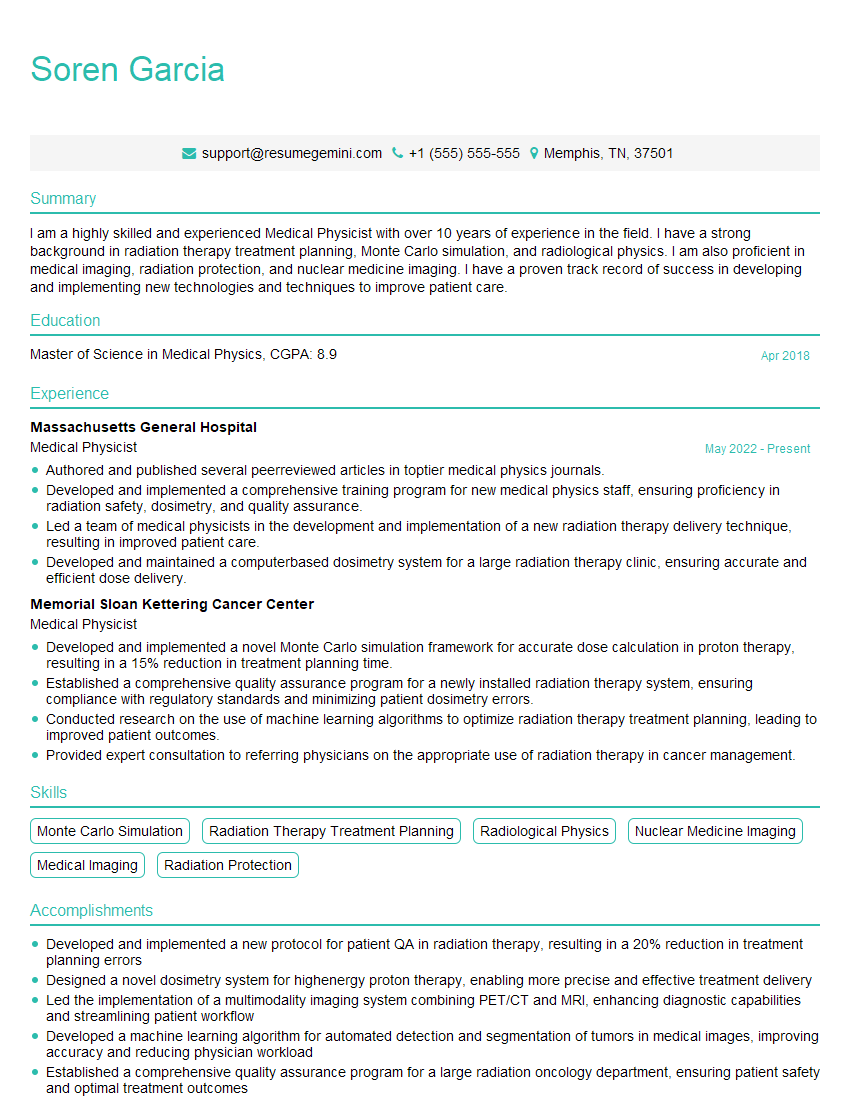
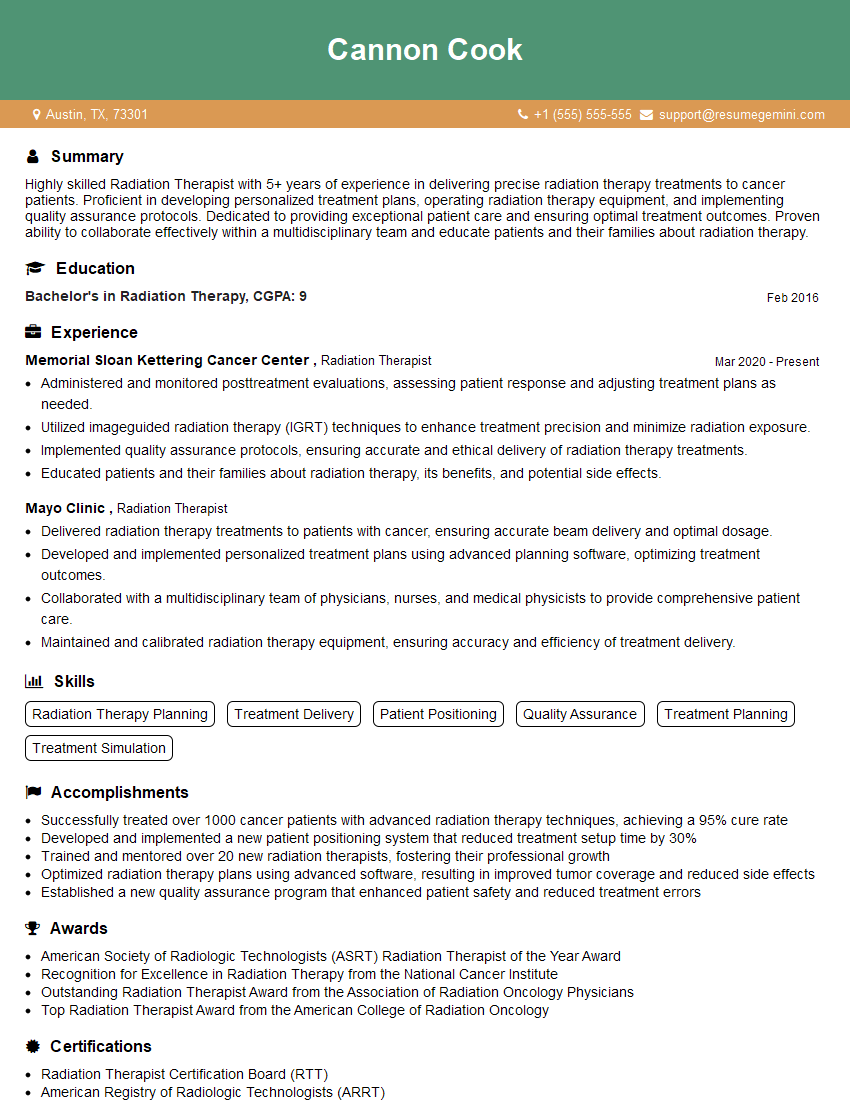
Mastering Radiation Oncology Physics is essential for a successful and rewarding career in this vital field. A strong understanding of these principles allows you to contribute meaningfully to patient care and advance your expertise. To enhance your job prospects, creating a compelling and ATS-friendly resume is critical. We highly recommend using ResumeGemini, a trusted resource for building professional resumes. ResumeGemini provides examples of resumes tailored to Radiation Oncology Physics to help you present your skills and experience effectively. This will significantly increase your chances of landing your dream job.

Explore more articles
Users Rating of Our Blogs
Share Your Experience
We value your feedback! Please rate our content and share your thoughts (optional).
What Readers Say About Our Blog
To the interviewgemini.com Webmaster.
Very helpful and content specific questions to help prepare me for my interview!
Thank you
To the interviewgemini.com Webmaster.
This was kind of a unique content I found around the specialized skills. Very helpful questions and good detailed answers.
Very Helpful blog, thank you Interviewgemini team.