Preparation is the key to success in any interview. In this post, we’ll explore crucial Expertise in psychological research methods interview questions and equip you with strategies to craft impactful answers. Whether you’re a beginner or a pro, these tips will elevate your preparation.
Questions Asked in Expertise in psychological research methods Interview
Q 1. Explain the difference between qualitative and quantitative research methods.
Qualitative and quantitative research methods represent distinct approaches to understanding the world. Qualitative research focuses on exploring complex social phenomena through in-depth analysis of non-numerical data, such as interviews, observations, and text. It aims to understand the ‘why’ behind behaviors and experiences, providing rich contextual information. Quantitative research, on the other hand, emphasizes numerical data and statistical analysis to identify patterns, relationships, and test hypotheses. It seeks to measure and quantify variables to establish generalizable findings. Think of it this way: qualitative research is like painting a detailed portrait, capturing nuances and individual stories, while quantitative research is like creating a statistical map, highlighting overall trends and patterns.
- Qualitative Example: A researcher conducting in-depth interviews with individuals experiencing anxiety to understand their coping mechanisms and emotional experiences.
- Quantitative Example: A researcher using surveys to measure the correlation between hours of sleep and academic performance in a large student sample.
Q 2. Describe the strengths and weaknesses of various sampling techniques (e.g., random sampling, stratified sampling).
Sampling techniques are crucial for selecting participants in a research study. The goal is to obtain a sample that accurately reflects the broader population of interest. Different techniques have different strengths and weaknesses:
- Random Sampling: Every member of the population has an equal chance of being selected. Strength: Minimizes sampling bias, allowing for generalizability. Weakness: Can be impractical or impossible with large or geographically dispersed populations. It might not represent subgroups adequately.
- Stratified Sampling: The population is divided into subgroups (strata), and random samples are drawn from each stratum. Strength: Ensures representation of key subgroups, improving the accuracy of findings related to those groups. Weakness: Requires detailed knowledge of the population to define strata accurately; can be complex to implement.
- Convenience Sampling: Selecting participants based on their accessibility. Strength: Easy and inexpensive. Weakness: High risk of sampling bias, limiting the generalizability of findings. Results may not be representative of the broader population.
- Snowball Sampling: Participants refer other potential participants. Strength: Useful for accessing hard-to-reach populations. Weakness: High risk of bias due to the referral process; sample might not be representative.
Choosing the right sampling technique depends on the research question, resources available, and the desired level of generalizability. For instance, if studying a rare disease, snowball sampling might be necessary, while surveying national opinions requires a robust, stratified random sample.
Q 3. What are the key ethical considerations in psychological research?
Ethical considerations are paramount in psychological research. Protecting participants’ well-being and rights is crucial. Key ethical principles include:
- Informed Consent: Participants must understand the study’s purpose, procedures, risks, and benefits before agreeing to participate. They must be free to withdraw at any time.
- Confidentiality and Anonymity: Protecting participants’ identities and data privacy is essential. Data should be stored securely and analyzed anonymously whenever possible.
- Beneficence and Non-maleficence: Researchers should maximize potential benefits and minimize risks to participants. The study should not cause undue stress or harm.
- Justice: Researchers should ensure fair and equitable selection of participants and distribution of benefits and burdens.
- Deception: Only justifiable under specific circumstances, with debriefing afterward.
Ethical review boards (IRBs) scrutinize research proposals to ensure ethical standards are met. A researcher’s commitment to ethical conduct is fundamental to maintaining public trust in the field.
Q 4. How do you ensure the reliability and validity of your research instruments?
Ensuring the reliability and validity of research instruments is critical for producing trustworthy findings.
- Reliability refers to the consistency of the instrument’s measurements. A reliable instrument produces similar results under similar conditions. Methods for assessing reliability include test-retest reliability (consistency over time), internal consistency (consistency among items within the instrument), and inter-rater reliability (consistency among different raters).
- Validity refers to the accuracy of the instrument’s measurements – does it actually measure what it intends to measure? Types of validity include content validity (does the instrument cover the entire domain of interest?), criterion validity (does it correlate with other measures of the same construct?), and construct validity (does it accurately reflect the underlying theoretical construct?).
For example, if creating a questionnaire to measure depression, test-retest reliability would assess whether a person gets similar scores if they complete it twice. Content validity would require ensuring the questions comprehensively cover the various symptoms of depression. Criterion validity might be established by comparing the questionnaire scores with those from a well-established depression diagnosis scale. Establishing both reliability and validity involves rigorous testing and refinement of the instrument.
Q 5. Explain the concept of statistical significance and its importance in research.
Statistical significance indicates the probability that the observed results are not due to chance alone. It’s usually expressed as a p-value. A statistically significant result (typically p < .05) suggests that the findings are unlikely to have occurred randomly. The importance lies in distinguishing between true effects and random fluctuations. A statistically significant finding strengthens the confidence in the research findings, suggesting a real relationship or effect exists between variables. However, it doesn’t automatically mean the effect is large or clinically meaningful. A small, statistically significant effect might be practically irrelevant. Context and effect size are equally important considerations.
Q 6. Describe different types of statistical tests and when they are appropriate.
Many statistical tests exist, each suited for different types of data and research questions.
- t-tests: Compare the means of two groups. For example, comparing the average test scores of a treatment group and a control group.
- Analysis of Variance (ANOVA): Compares the means of three or more groups. For instance, comparing the effectiveness of three different therapies on anxiety levels.
- Chi-square test: Analyzes the association between categorical variables. For example, examining whether there is a relationship between gender and voting preference.
- Correlation: Measures the strength and direction of the linear relationship between two continuous variables. For example, assessing the correlation between hours of exercise and stress levels.
- Regression analysis: Predicts the value of one variable based on the values of other variables. For example, predicting exam scores based on study time and prior GPA.
The choice of statistical test depends on the nature of the data (nominal, ordinal, interval, ratio), the number of groups being compared, and the research question. Incorrectly choosing a test can lead to misleading conclusions.
Q 7. How do you handle missing data in your research?
Missing data is a common challenge in research. Ignoring it can bias results. Several strategies exist for handling missing data:
- Deletion: Removing participants or variables with missing data. Listwise deletion removes the entire case; pairwise deletion uses available data for each analysis. Weakness: Reduces sample size and can lead to bias if data is not missing at random.
- Imputation: Replacing missing values with estimated values. Methods include mean imputation (replacing with the mean of the variable), regression imputation (predicting missing values using other variables), and multiple imputation (creating multiple plausible datasets with imputed values). Strength: Retains more data. Weakness: Can introduce bias if not done carefully.
The best approach depends on the pattern of missing data (missing completely at random, missing at random, missing not at random) and the amount of missing data. Careful consideration of the implications of each method is crucial for avoiding bias.
Q 8. What are the different types of validity (e.g., construct, content, criterion)?
Validity in research refers to the accuracy and trustworthiness of your findings. There are several types, each addressing different aspects of this accuracy.
- Construct Validity: This assesses whether your measurement instrument accurately reflects the theoretical construct you’re trying to measure. For example, if you’re measuring ‘anxiety,’ does your questionnaire truly capture the multifaceted nature of anxiety, or does it inadvertently measure something else like nervousness or irritability? Establishing construct validity often involves comparing your measure to other established measures of the same construct (convergent validity) and showing it differs from measures of related but distinct constructs (discriminant validity).
- Content Validity: This focuses on whether your measure comprehensively covers all aspects of the construct. Imagine creating a test on ‘knowledge of American history.’ Content validity would ensure the test includes questions across various periods and aspects of American history, not just focusing on one specific era.
- Criterion Validity: This examines how well your measure predicts an outcome or correlates with a criterion. For example, a good aptitude test for medical school should predict future performance in medical school. This can be concurrent (does the measure correlate with a current criterion?) or predictive (does the measure predict a future criterion?).
These types of validity are intertwined and essential for ensuring the meaningfulness and generalizability of your research findings.
Q 9. Explain the difference between internal and external validity.
Internal and external validity are crucial aspects of research design, addressing different questions about the strength and generalizability of your conclusions.
- Internal Validity: This refers to the confidence you can have that the independent variable (the thing you manipulate) caused the observed change in the dependent variable (the thing you measure). High internal validity means you can confidently rule out alternative explanations for your results. For instance, in a drug trial, high internal validity ensures you’re confident the drug, and not some other factor, improved participants’ health.
- External Validity: This refers to the generalizability of your findings to other populations, settings, and times. High external validity means your results are likely to hold true in different contexts. If your drug trial only used participants from one demographic, its external validity to other populations is limited.
Ideally, you want both high internal and external validity, but sometimes there’s a trade-off. For example, highly controlled laboratory experiments often have high internal validity but may have lower external validity due to their artificial setting.
Q 10. What are some common threats to internal and external validity?
Threats to both internal and external validity can significantly compromise research findings. Some common threats include:
- Internal Validity Threats:
- History: Unforeseen events between measurements affecting the dependent variable.
- Maturation: Natural changes in participants over time (e.g., aging, learning).
- Testing: Prior testing influencing subsequent testing.
- Instrumentation: Changes in measurement instruments over time.
- Regression to the Mean: Extreme scores tending towards the average on subsequent measurements.
- Selection Bias: Differences between groups at the start of the study.
- External Validity Threats:
- Sampling Bias: The sample doesn’t accurately represent the population of interest.
- Reactive Effects of Testing: Pre-testing influencing participants’ responses to the treatment.
- Interaction of Selection and Treatment: The treatment may only work for a specific type of participant.
- Multiple Treatment Interference: Participants receiving multiple treatments simultaneously, making it hard to isolate the effect of one.
- Situational Factors: The specific context of the study may limit generalizability.
Understanding and addressing these threats is critical for producing robust and reliable research.
Q 11. How do you control for confounding variables in your research design?
Controlling for confounding variables—variables that influence both the independent and dependent variables, obscuring the true relationship—is essential for establishing causality. Several strategies can be employed:
- Random Assignment: Randomly assigning participants to different groups helps distribute confounding variables evenly across groups, minimizing their impact.
- Matching: Matching participants on relevant characteristics before assignment ensures similar distributions of confounding variables across groups.
- Statistical Control: Using statistical techniques like analysis of covariance (ANCOVA) to statistically remove the influence of confounding variables from the analysis.
- Stratification: Separating the sample into subgroups based on the confounding variable and then analyzing each subgroup separately.
- Careful Study Design: Designing the study to minimize the influence of confounding variables from the outset (e.g., choosing a suitable control group).
The choice of method depends on the specific research design and the nature of the confounding variables.
Q 12. Describe your experience with different data analysis software (e.g., SPSS, R, SAS).
I have extensive experience with various statistical software packages, including SPSS, R, and SAS. My proficiency spans data cleaning, transformation, analysis, and visualization.
- SPSS: I’m highly proficient in SPSS, using it frequently for conducting various statistical tests (t-tests, ANOVA, regression), managing large datasets, and creating clear visualizations for presentations and reports. For instance, in a recent project analyzing survey data, I used SPSS to conduct factor analysis to identify underlying dimensions of participants’ responses.
- R: I’m also very comfortable with R, particularly its flexibility and power in handling complex data analyses and generating high-quality graphics. I utilize R packages such as
ggplot2for creating compelling visualizations andlme4for mixed-effects modeling, which are very useful in longitudinal studies and studies with hierarchical data. - SAS: While I use SAS less frequently than SPSS and R, I have sufficient experience to conduct basic statistical analyses and data manipulation within this environment. I find SAS particularly useful when dealing with very large datasets requiring efficient processing.
My expertise in these packages allows me to choose the most appropriate tool for each research project, ensuring efficient and accurate data analysis.
Q 13. Explain your familiarity with different research designs (e.g., experimental, correlational, quasi-experimental).
My research experience encompasses a broad range of designs:
- Experimental Designs: These designs involve manipulating an independent variable to observe its effect on a dependent variable, allowing for causal inferences. I’ve utilized various experimental designs, including randomized controlled trials (RCTs), within-subjects designs, and factorial designs. For example, in a study investigating the effect of a new teaching method, I used a randomized controlled trial, randomly assigning students to either the new method or a control group to assess the effectiveness of the method.
- Correlational Designs: These designs examine the relationships between variables without manipulating them, allowing for the identification of associations but not causal conclusions. I’ve used correlational designs to explore relationships between personality traits and academic performance, for example. The strength and direction of the relationship are crucial elements we consider.
- Quasi-Experimental Designs: These designs resemble experimental designs but lack random assignment. I’ve used quasi-experimental designs in situations where random assignment wasn’t feasible (e.g., studying the impact of a school policy on student outcomes), carefully considering the limitations in drawing causal inferences given the lack of random assignment.
The choice of design depends on the research question, ethical considerations, and resource availability. Understanding the strengths and limitations of each design is critical for interpreting the findings.
Q 14. How do you interpret correlation coefficients?
Correlation coefficients, typically represented by ‘r,’ indicate the strength and direction of a linear relationship between two variables. The value of ‘r’ ranges from -1 to +1.
- Strength: The absolute value of ‘r’ indicates the strength of the relationship. An ‘r’ of 0 indicates no linear relationship, while an ‘r’ close to 1 (positive or negative) indicates a strong linear relationship.
- Direction: The sign of ‘r’ indicates the direction of the relationship. A positive ‘r’ suggests that as one variable increases, the other also increases (positive correlation). A negative ‘r’ suggests that as one variable increases, the other decreases (negative correlation).
For example, an ‘r’ of 0.8 indicates a strong positive correlation, while an ‘r’ of -0.6 indicates a moderate negative correlation. It’s important to remember that correlation does not equal causation. A strong correlation merely suggests a relationship, not that one variable causes the other.
Interpreting correlation coefficients requires considering the context of the study, the sample size, and the potential presence of confounding variables. Statistical significance testing (p-values) should also be considered.
Q 15. What is the difference between a Type I and a Type II error?
Type I and Type II errors are both potential mistakes in hypothesis testing. Imagine you’re a detective investigating a crime. A Type I error, also known as a false positive, is like accusing an innocent person. You conclude there’s a significant effect (the person is guilty) when in reality, there isn’t (they’re innocent). A Type II error, or a false negative, is the opposite – you fail to accuse a guilty person. You conclude there’s no significant effect (the person is innocent) when, in fact, there is (they’re guilty).
In statistical terms, a Type I error occurs when you reject the null hypothesis (the default assumption of no effect) when it’s actually true. The probability of making a Type I error is represented by alpha (α), typically set at 0.05 (5%). A Type II error occurs when you fail to reject the null hypothesis when it’s false. The probability of making a Type II error is beta (β), and its complement (1-β) is the statistical power of your test.
Example: Let’s say we’re testing a new drug. A Type I error would be concluding the drug is effective when it’s not. A Type II error would be concluding the drug is ineffective when it actually is effective.
Career Expert Tips:
- Ace those interviews! Prepare effectively by reviewing the Top 50 Most Common Interview Questions on ResumeGemini.
- Navigate your job search with confidence! Explore a wide range of Career Tips on ResumeGemini. Learn about common challenges and recommendations to overcome them.
- Craft the perfect resume! Master the Art of Resume Writing with ResumeGemini’s guide. Showcase your unique qualifications and achievements effectively.
- Don’t miss out on holiday savings! Build your dream resume with ResumeGemini’s ATS optimized templates.
Q 16. Explain the concept of effect size and its importance.
Effect size quantifies the magnitude of an effect observed in a study. It’s not just about whether an effect is statistically significant (p-value < 0.05), but how large or important that effect is in practical terms. Think of it like this: A tiny, statistically significant effect might be irrelevant in the real world, while a large effect, even if not statistically significant due to small sample size, could be highly meaningful.
Several different effect size measures exist, depending on the type of data (e.g., Cohen’s d for differences between means, Pearson’s r for correlations). The importance of effect size lies in its ability to aid in interpretation and replication of findings. A large effect size suggests the results are more likely to be replicated in future studies, and it implies greater practical significance. A small effect size, even if statistically significant, might indicate a weak relationship or a finding that’s less likely to translate to real-world applications.
Example: Imagine two studies investigating the effect of exercise on mood. Study A finds a small, statistically significant effect (p < 0.05, Cohen's d = 0.2), while Study B finds a large, statistically significant effect (p < 0.01, Cohen's d = 0.8). Even though both are significant, Study B's larger effect size indicates a stronger and likely more meaningful relationship between exercise and mood.
Q 17. How do you choose the appropriate statistical test for your research question?
Selecting the appropriate statistical test is crucial for drawing valid conclusions. The choice depends on several factors:
- Type of research question: Are you comparing means, proportions, or examining relationships between variables?
- Type of data: Is your data continuous (e.g., weight, height), categorical (e.g., gender, treatment group), or ordinal (e.g., ranking)?
- Number of groups: Are you comparing two groups or more?
- Assumptions of the test: Many tests have assumptions about the distribution of data (e.g., normality, equal variances). Violating these assumptions can lead to inaccurate results.
For example, if you’re comparing the means of two independent groups with normally distributed data, an independent samples t-test is appropriate. If you have multiple groups, ANOVA (analysis of variance) would be more suitable. If your data is non-parametric (violates normality assumptions), consider using non-parametric alternatives like the Mann-Whitney U test or Kruskal-Wallis test.
A flowchart or decision tree can be helpful in guiding this process. Many statistical software packages (like SPSS or R) offer tools to assist in choosing the correct test.
Q 18. Describe your experience with qualitative data analysis techniques (e.g., thematic analysis, grounded theory).
I have extensive experience with qualitative data analysis techniques, particularly thematic analysis and grounded theory. Thematic analysis involves systematically identifying, analyzing, and reporting patterns (themes) within data. It’s flexible and can be used with various data types (interviews, texts, observations). My process typically involves:
- Familiarization: Reading and rereading the data to get a general sense.
- Coding: Identifying meaningful segments of text and assigning codes to them.
- Theme development: Grouping codes into broader themes that represent recurring patterns.
- Theme review: Refining and defining themes.
- Report writing: Presenting the themes and their supporting data.
Grounded theory is more inductive, aiming to develop a theory grounded in the data itself. It involves constant comparison of data to identify core concepts and categories. I have employed this approach in studies exploring emerging phenomena, allowing the theory to emerge organically from the data. Both approaches require careful attention to detail, reflexivity (acknowledging researcher bias), and rigorous documentation of the analysis process.
Q 19. How do you ensure the trustworthiness of qualitative research findings?
Ensuring trustworthiness in qualitative research is paramount. It involves demonstrating the credibility, transferability, dependability, and confirmability of the findings. This is achieved through various strategies:
- Prolonged engagement: Spending sufficient time with the participants and data to gain a deep understanding.
- Member checking: Sharing findings with participants to ensure they accurately reflect their experiences.
- Peer debriefing: Discussing the analysis process with colleagues to gain alternative perspectives and identify potential biases.
- Audit trail: Maintaining detailed records of the data collection and analysis process, allowing for transparency and scrutiny.
- Triangulation: Using multiple data sources (e.g., interviews, observations, documents) to corroborate findings.
By employing these strategies, researchers enhance the confidence in the quality and validity of their qualitative findings, strengthening their contribution to the field.
Q 20. Explain the principles of informed consent in research.
Informed consent is a cornerstone of ethical research. It ensures participants are fully aware of the study’s purpose, procedures, risks, and benefits before they agree to participate. It’s not simply a signature on a form; it’s an ongoing process of communication and transparency. Key principles include:
- Voluntariness: Participants must be free to participate or withdraw at any time without penalty.
- Comprehension: Information about the study must be presented in a clear, accessible manner, tailored to the participants’ understanding.
- Disclosure: Participants must be informed about all aspects of the study, including potential risks and benefits, as well as their rights.
- Competence: Participants must have the capacity to understand the information and make an informed decision.
Informed consent forms should be concise, easy to understand, and written in a language accessible to all participants. It is crucial to obtain separate consent if using data for purposes other than those initially described.
Q 21. How do you protect the confidentiality and anonymity of participants?
Protecting participant confidentiality and anonymity is crucial. Strategies include:
- Data anonymization: Removing identifying information from data (e.g., names, addresses) before analysis.
- Data encryption: Protecting data through secure storage and transmission methods.
- Limited access: Restricting access to data to only authorized personnel.
- Coding system: Assigning unique codes to participants to replace identifying information.
- Secure storage: Storing data in a secure location, either physically or electronically.
- De-identification of data: Removing all direct identifiers from the data.
The level of protection needed depends on the sensitivity of the data and the specific research context. It’s important to adhere to relevant ethical guidelines and regulations when managing participant data.
Q 22. Describe your experience with literature reviews and systematic reviews.
Literature reviews and systematic reviews are crucial for summarizing existing research in a field. A literature review is a broader, more narrative summary of relevant studies, often exploring a topic’s evolution and key themes. A systematic review, however, is more rigorous and employs a predetermined methodology to minimize bias. It involves a comprehensive search strategy, clearly defined inclusion/exclusion criteria, and a standardized approach to data extraction and analysis. The goal is to synthesize the findings of multiple studies to arrive at a more robust conclusion than any single study could provide.
In my experience, I’ve conducted both types. For instance, I conducted a literature review on the effectiveness of cognitive behavioral therapy (CBT) for anxiety disorders, exploring various approaches and outcomes reported across different studies. This helped establish a foundation for a subsequent research project. More recently, I participated in a systematic review examining the impact of mindfulness-based interventions on stress reduction, employing PRISMA guidelines (Preferred Reporting Items for Systematic reviews and Meta-Analyses) to ensure transparency and rigor. This involved meticulously searching databases, screening abstracts, extracting data, assessing risk of bias, and ultimately synthesizing the results quantitatively through meta-analysis.
- Literature Review: Exploratory, narrative, less structured methodology.
- Systematic Review: Rigorous, predefined methodology, often quantitative synthesis (meta-analysis).
Q 23. How do you develop a research proposal?
Developing a strong research proposal is a multifaceted process. It begins with a compelling research question – one that is both significant and feasible. This question should be grounded in a thorough literature review, highlighting gaps in existing knowledge. Next, I develop a hypotheses or research aims, clearly stating what I expect to find. The proposal then outlines the research design, including the chosen methodology (e.g., experimental, correlational, qualitative), participant selection criteria, data collection methods, and data analysis plan. Crucially, I also detail the ethical considerations, ensuring adherence to relevant guidelines and obtaining necessary approvals. Finally, the proposal should include a timeline and a budget, outlining the resources needed to complete the research.
For example, in a recent proposal for studying the effect of social media use on adolescent self-esteem, I outlined a quantitative approach using surveys and correlational analysis, addressing ethical concerns about data privacy and informed consent. The timeline outlined specific milestones, and the budget detailed costs associated with participant recruitment, data analysis software, and publication fees.
Q 24. Explain your experience with grant writing and funding applications.
Grant writing is a critical skill for securing funding for research projects. I have experience writing grant proposals for various funding agencies, including the National Institutes of Health (NIH) and private foundations. This process usually involves carefully crafting a compelling narrative that highlights the significance of the research problem, the innovation of the proposed approach, the feasibility of the project, and the potential impact of the findings. It requires a clear understanding of the funder’s priorities and a strong track record of successful research.
A successful grant proposal often includes a comprehensive budget justification, a detailed timeline, and letters of support from collaborators and mentors. I’ve found that tailoring the proposal to the specific agency’s guidelines and emphasizing the translational potential of the research often increases the chances of securing funding. For example, in one successful grant application, I meticulously highlighted the potential for my findings to inform the development of novel interventions for depression, aligning with the funder’s focus on improving mental health outcomes.
Q 25. Describe a time you had to overcome a challenge in your research.
During a study on the effectiveness of a new therapeutic intervention, we encountered unexpected high attrition rates among participants. This threatened the statistical power of our analysis and the validity of our findings. To overcome this challenge, we employed several strategies. First, we thoroughly analyzed the data to identify potential reasons for dropout, discovering that the intervention’s intensity was a contributing factor. Second, we revised the intervention protocol to make it less demanding while maintaining its core components. Third, we implemented strategies to improve participant engagement, such as personalized feedback and additional support sessions. These modifications considerably improved retention rates in subsequent phases of the study.
This experience highlighted the importance of flexibility and adaptability in research. It taught me the value of ongoing data monitoring, proactive problem-solving, and the necessity of adapting research protocols to meet the evolving needs of participants.
Q 26. How do you disseminate your research findings?
Disseminating research findings is crucial for advancing scientific knowledge and influencing practice. I employ various methods to ensure my research reaches the appropriate audiences. This includes publishing in peer-reviewed journals, presenting at national and international conferences, and creating accessible summaries for the general public. For example, I recently published my findings on the role of social support in coping with stress in a leading psychology journal. This publication contributed to the broader understanding of stress management strategies. In addition, I presented this research at a major psychology conference and created a blog post that summarized the key findings for a wider audience. I’m also engaged in translating my findings into practical guidelines that can be used by clinicians and educators.
Choosing the right dissemination strategy depends on the target audience and the nature of the findings. Academic journals are ideal for a detailed presentation of the methodology and results. Conferences allow for direct interaction and feedback, and public outreach promotes broader understanding and impact.
Q 27. What are your career aspirations in the field of psychological research?
My career aspirations involve combining rigorous research with impactful application. I aspire to become a leading researcher in the field of clinical psychology, focusing on the development and evaluation of innovative interventions for mental health disorders. I aim to secure a tenure-track position at a research-intensive university where I can mentor students, collaborate with colleagues, and secure sustained funding for my research program. I’m also committed to translating my research findings into evidence-based practices that can benefit individuals and communities. My long-term goal is to contribute significantly to the advancement of psychological science and to improve the lives of those struggling with mental health challenges.
Key Topics to Learn for Expertise in Psychological Research Methods Interview
- Research Design: Understand various research designs (experimental, correlational, quasi-experimental, qualitative) and their strengths and weaknesses. Be prepared to discuss the appropriateness of different designs for addressing specific research questions.
- Data Analysis: Demonstrate proficiency in statistical analysis techniques relevant to psychological research, including descriptive statistics, t-tests, ANOVA, correlation, regression, and potentially more advanced methods depending on your experience. Be ready to interpret results and discuss limitations.
- Measurement & Psychometrics: Show understanding of reliability and validity in psychological measurement. Discuss different types of scales (e.g., Likert, ratio), and the importance of selecting appropriate measures for your research questions.
- Ethical Considerations: Showcase your knowledge of ethical principles in research, including informed consent, confidentiality, and potential biases. Be prepared to discuss how ethical considerations influence research design and data collection.
- Literature Review & Synthesis: Demonstrate your ability to critically evaluate existing research and synthesize findings to inform your own work. Be prepared to discuss current trends and debates within your area of expertise.
- Qualitative Research Methods: Discuss your familiarity with qualitative approaches such as interviews, focus groups, thematic analysis, and grounded theory. Highlight your ability to analyze qualitative data and integrate it with quantitative findings (mixed methods).
- Problem-Solving & Critical Thinking: Be ready to discuss methodological challenges encountered in your past research and how you overcame them. This demonstrates your critical thinking and problem-solving skills.
Next Steps
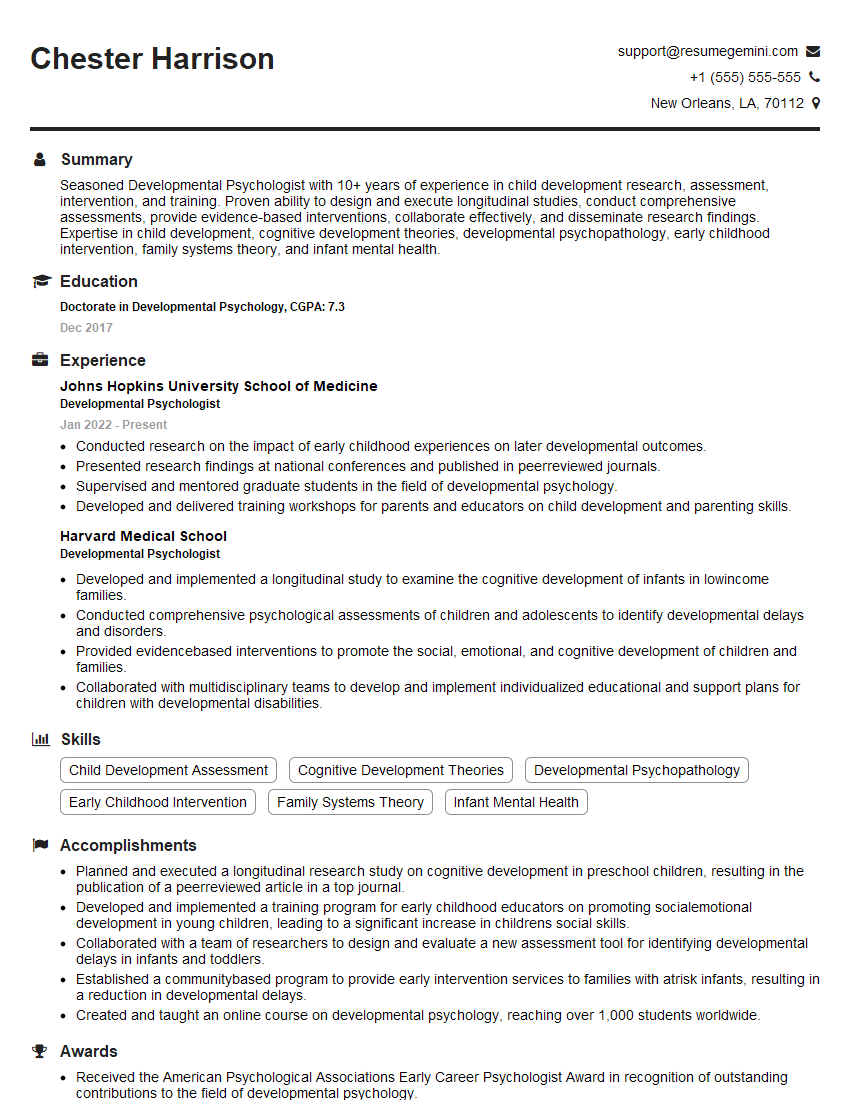
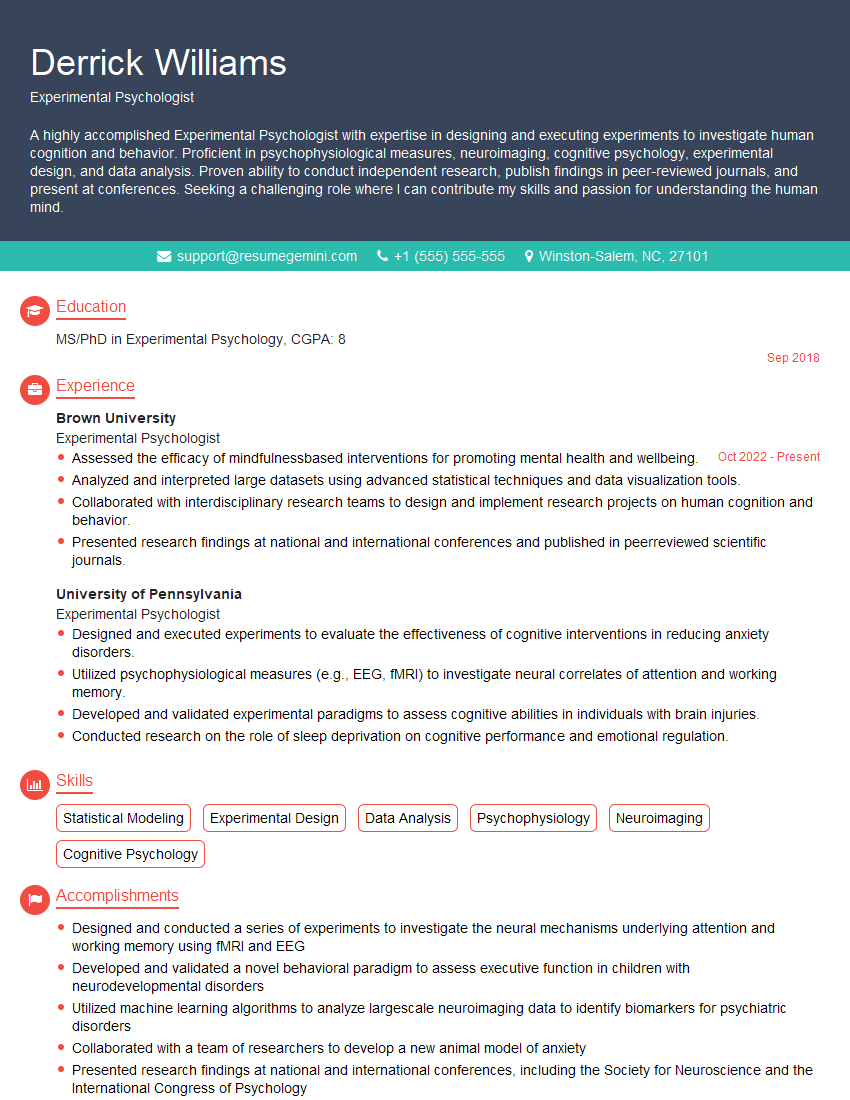
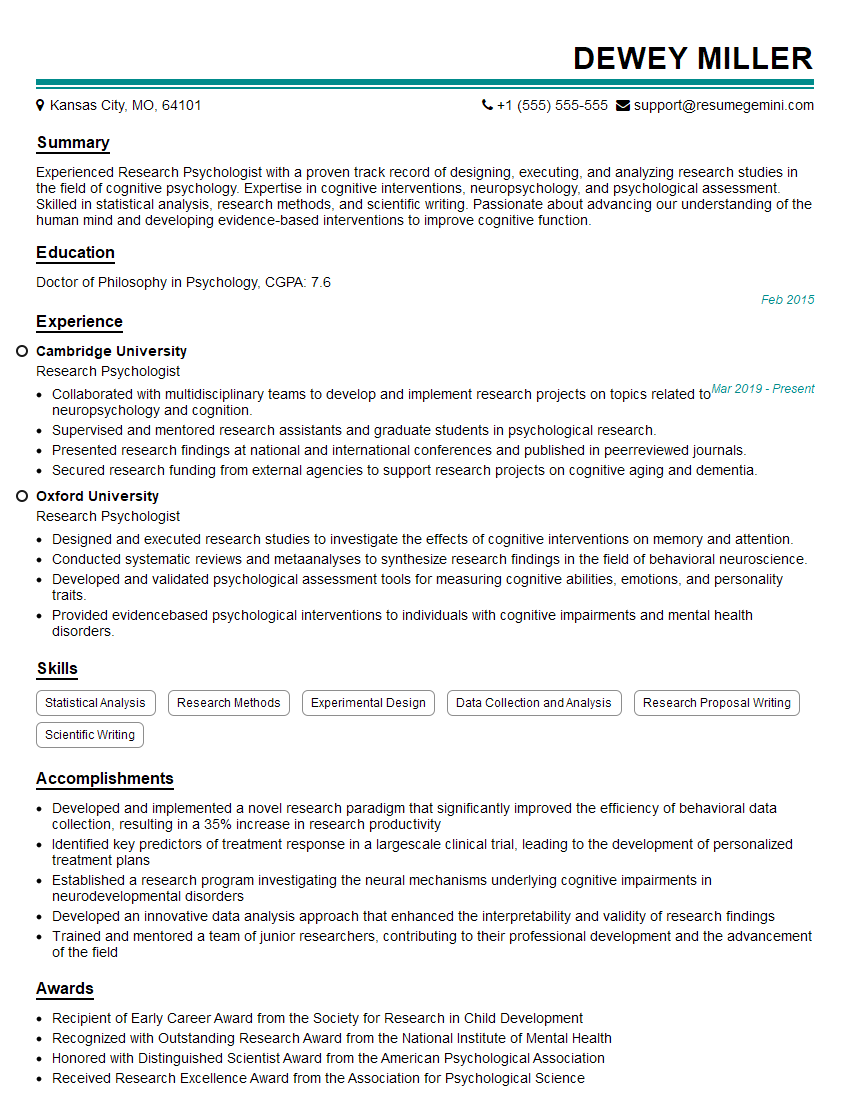
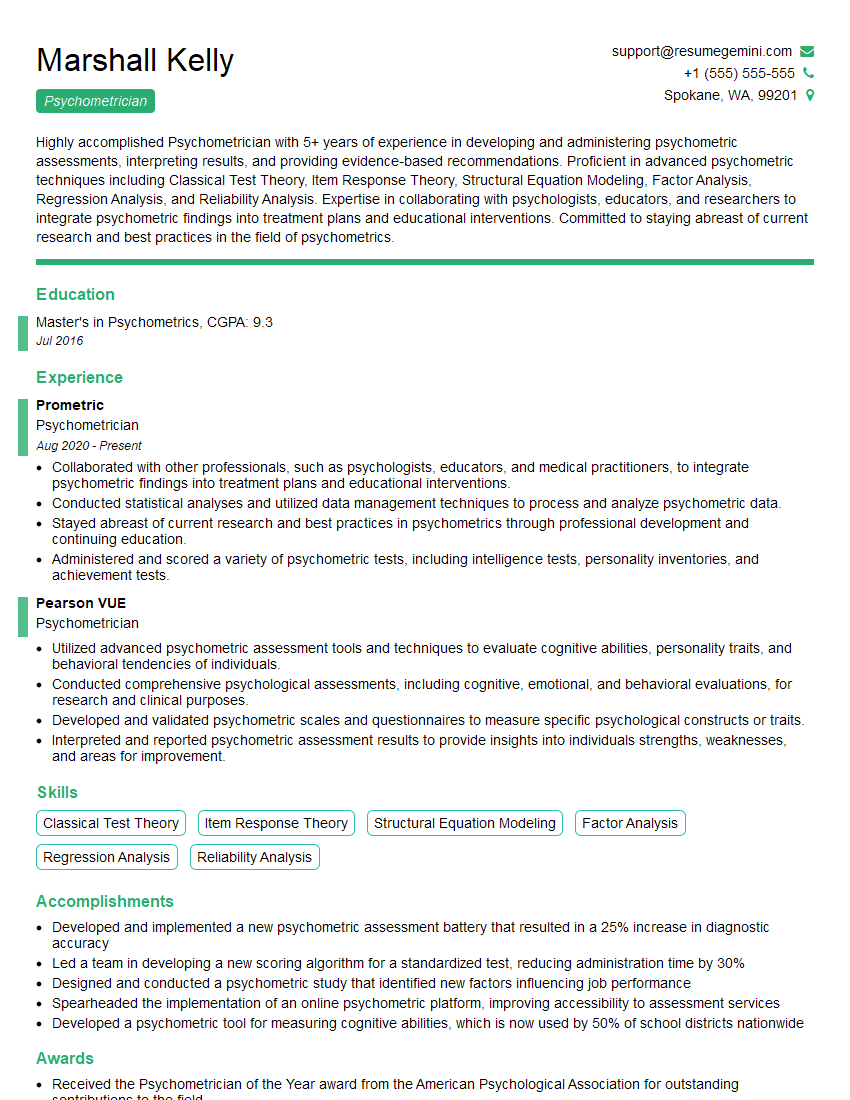
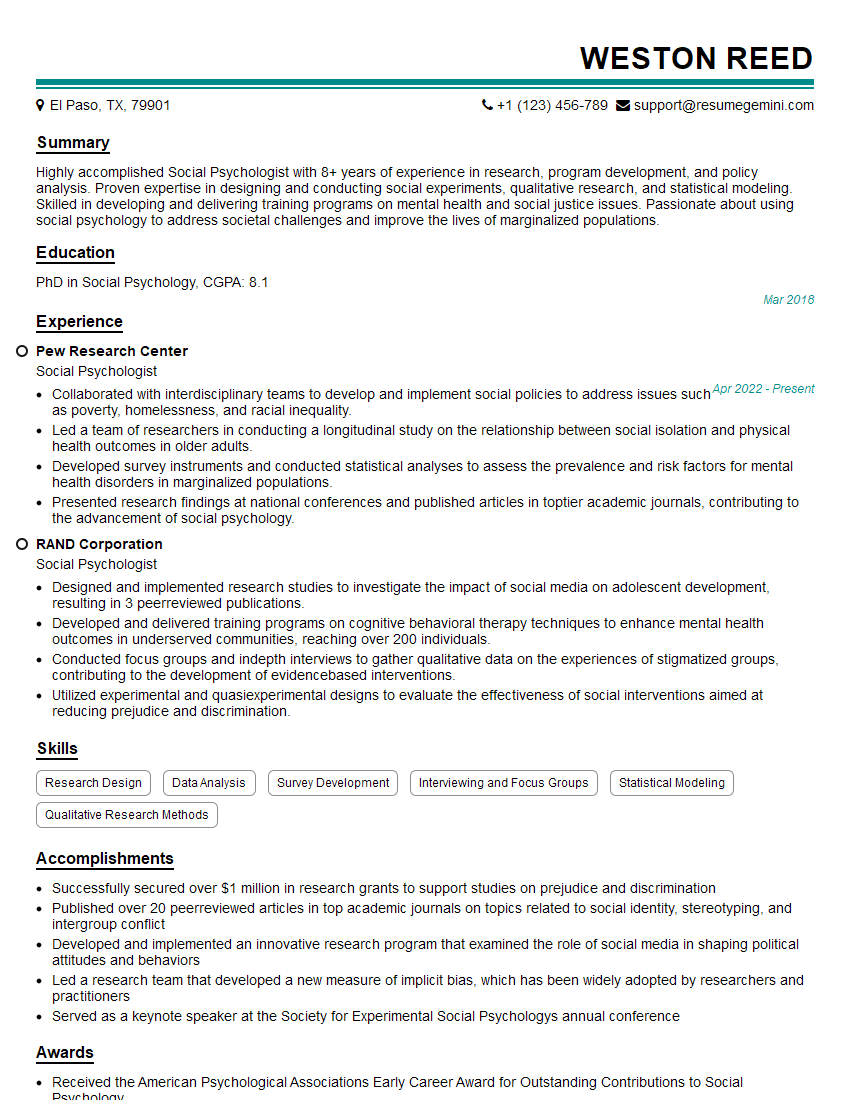
Mastering psychological research methods is crucial for career advancement in academia, research institutions, and various applied settings. A strong understanding of these methods will make you a highly competitive candidate. To enhance your job prospects, invest time in creating an ATS-friendly resume that effectively highlights your skills and experience. ResumeGemini is a trusted resource that can help you build a professional and impactful resume. We offer examples of resumes tailored to expertise in psychological research methods to guide you through the process.
Explore more articles
Users Rating of Our Blogs
Share Your Experience
We value your feedback! Please rate our content and share your thoughts (optional).
What Readers Say About Our Blog
To the interviewgemini.com Webmaster.
Very helpful and content specific questions to help prepare me for my interview!
Thank you
To the interviewgemini.com Webmaster.
This was kind of a unique content I found around the specialized skills. Very helpful questions and good detailed answers.
Very Helpful blog, thank you Interviewgemini team.