Cracking a skill-specific interview, like one for Foreign Policy Expertise, requires understanding the nuances of the role. In this blog, we present the questions you’re most likely to encounter, along with insights into how to answer them effectively. Let’s ensure you’re ready to make a strong impression.
Questions Asked in Foreign Policy Expertise Interview
Q 1. Explain the concept of ‘soft power’ and provide a contemporary example.
Soft power, a concept coined by Joseph Nye, refers to a country’s ability to influence others through attraction rather than coercion. It’s about shaping preferences, making others *want* to do what you want them to do, unlike hard power, which relies on military or economic might. This influence is achieved through cultural appeal, political values, and foreign policies that are seen as legitimate and beneficial.
A contemporary example is South Korea’s soft power. Its K-pop music, K-dramas, and technological advancements have garnered global fans and admiration, fostering positive perceptions of South Korea and influencing cultural trends worldwide. This positive image translates into greater economic and diplomatic influence, making it easier for South Korea to build alliances and advance its interests on the global stage. It’s not forcing anyone to do anything; instead, it’s creating an environment where other nations are drawn to South Korea’s culture and innovation.
Q 2. Analyze the impact of globalization on national sovereignty.
Globalization’s impact on national sovereignty is complex and multifaceted. While it has undeniably increased interconnectedness and interdependence, leading to some erosion of state control, it hasn’t entirely obliterated national sovereignty.
- Increased Interdependence: Globalization fosters economic, political, and cultural interconnectedness. This means national economies are more vulnerable to global shocks, and states must cooperate to address transnational issues like climate change or pandemics. This cooperation can limit a state’s absolute autonomy in decision-making.
- Rise of Non-State Actors: Globalization has empowered non-state actors like multinational corporations and NGOs, challenging the traditional state-centric view of international relations. These actors can influence domestic policies and international affairs, potentially diminishing state control.
- Diffusion of Norms and Ideas: The rapid spread of information and ideas through globalization can influence domestic policies, potentially leading to pressure on states to conform to international norms and standards on human rights, environmental protection, etc. This, however, can also be seen as a positive reinforcement of values.
- Continued State Power: Despite these challenges, states retain significant power. They still control borders, maintain military forces, and can choose to engage or disengage from international agreements and organizations. National identity and culture remain important factors shaping state policy.
Ultimately, globalization represents a shift in the balance of power, not a complete collapse of national sovereignty. States must adapt by engaging in international cooperation while strategically protecting their national interests.
Q 3. Compare and contrast realism and liberalism in international relations theory.
Realism and liberalism are two prominent theoretical perspectives in international relations, offering contrasting views on the nature of international politics.
- Realism: Realism views the international system as anarchic – lacking a central authority to enforce rules – and states as the primary actors. It emphasizes state power, national interest, and security competition. Realists believe that states are inherently self-interested and driven by a desire for survival and dominance. They are more likely to focus on military capabilities and strategic alliances.
- Liberalism: Liberalism posits a more optimistic view, emphasizing cooperation and interdependence. It highlights the roles of international organizations, NGOs, and other actors in shaping international outcomes. Liberals believe that cooperation is possible, even in an anarchic system, and that shared interests and institutions can mitigate conflict. They are more likely to highlight economic interdependence and international law.
Comparison: Both theories acknowledge the existence of an anarchic international system. However, realism emphasizes conflict and power struggles, while liberalism highlights cooperation and shared interests. Realists see the world through a lens of zero-sum gains (one state’s gain is another’s loss), while liberals envision positive-sum gains (all parties can benefit from cooperation).
Contrast: The key difference lies in their assumptions about human nature and the possibility of cooperation. Realists are pessimistic, assuming states will always act in their self-interest, leading to conflict. Liberals are more optimistic, believing that cooperation is achievable through international institutions and shared norms.
Q 4. Describe the role of international organizations in conflict resolution.
International organizations (IOs) play a crucial role in conflict resolution through various mechanisms.
- Diplomacy and Negotiation: IOs like the United Nations (UN) provide platforms for states to engage in diplomatic negotiations and conflict resolution. They facilitate communication, mediation, and peace talks, offering neutral ground and expertise.
- Peacekeeping Operations: The UN deploys peacekeeping forces to conflict zones to maintain peace and security, separating warring parties, monitoring ceasefires, and protecting civilians. These operations often require significant international cooperation and resources.
- Peacebuilding: After a conflict ends, IOs contribute to peacebuilding efforts, assisting in rebuilding institutions, promoting reconciliation, and fostering economic recovery. This involves a long-term commitment to supporting sustainable peace.
- Sanctions and Enforcement: IOs can impose sanctions on states that violate international law or engage in aggressive behavior. While not always effective, sanctions can put pressure on states to change their behavior.
- International Law and Justice: IOs like the International Criminal Court (ICC) contribute to conflict resolution by prosecuting individuals responsible for war crimes, crimes against humanity, and genocide. This promotes accountability and helps prevent future atrocities.
The effectiveness of IOs in conflict resolution varies depending on the specific context, the willingness of states to cooperate, and the resources available. However, they remain essential actors in preventing and resolving conflicts, promoting international peace and security.
Q 5. Assess the effectiveness of sanctions as a foreign policy tool.
Sanctions, as a foreign policy tool, aim to influence the behavior of a target state through restrictions on trade, finance, or other economic activities. Their effectiveness is highly debated and context-dependent.
- Potential Effectiveness: Sanctions can be effective in achieving specific policy goals, such as deterring nuclear proliferation or combating terrorism, when applied strategically and in conjunction with other diplomatic efforts. They can exert economic pressure, potentially forcing concessions from the target state.
- Limitations: Sanctions are often criticized for their unintended consequences. They can harm civilian populations, provoke backlash, and strengthen the resolve of targeted regimes. Their success depends heavily on international cooperation, as circumvention efforts can undermine their impact. For instance, sanctions may incentivize a targeted regime to seek partnerships with alternative powers.
- Factors Affecting Effectiveness: The effectiveness of sanctions depends on various factors: the strength of the sanctions regime (level of participation by other states), the economic resilience of the target state, the existence of alternative trading partners, and the political will of the target state’s leaders.
In summary, sanctions are a powerful tool, but their effectiveness is not guaranteed. They require careful planning, strong international cooperation, and consideration of potential unintended consequences. A comprehensive strategy that combines sanctions with other diplomatic and economic tools often yields better results.
Q 6. Discuss the challenges of humanitarian intervention.
Humanitarian intervention, the use of military force by one or more states in another state without its consent, to prevent or stop widespread human rights violations, poses significant challenges.
- Sovereignty and Non-Intervention: The core challenge is the tension between a state’s sovereignty and the international community’s responsibility to protect populations from atrocities. Intervention can be seen as a violation of national sovereignty, undermining the principle of non-interference in internal affairs.
- Defining Humanitarian Crises: Determining when a situation constitutes a legitimate basis for intervention is difficult. There is no universally agreed-upon threshold for intervention, and decisions can be influenced by political considerations rather than purely humanitarian concerns. This can lead to selective intervention, where crises in some states receive attention while others are ignored.
- Effectiveness and unintended consequences: Even when intervention is deemed necessary, its effectiveness is not guaranteed. Interventions can inadvertently worsen the situation, prolonging conflicts and causing civilian casualties. Post-intervention stability and reconstruction are also major challenges requiring significant resources and international cooperation.
- National Interests vs. Humanitarian Concerns: Intervention decisions are often influenced by national interests, creating concerns that humanitarian concerns may be secondary to strategic goals. This can erode the credibility and legitimacy of interventions.
In conclusion, humanitarian intervention presents a complex dilemma. Striking a balance between respecting state sovereignty, addressing human rights violations, and ensuring the effectiveness and legitimacy of interventions remains a key challenge for the international community.
Q 7. Evaluate the impact of climate change on global security.
Climate change poses a significant threat to global security, exacerbating existing conflicts and creating new ones. It’s not simply an environmental issue; it’s a multifaceted security challenge.
- Resource Scarcity: Climate change is predicted to worsen water scarcity, leading to competition for resources and potential conflicts between states or communities. This is particularly relevant in regions already facing water stress.
- Mass Migration and Displacement: Rising sea levels, extreme weather events, and environmental degradation will likely displace millions of people, potentially triggering mass migrations and increasing the risk of conflict over scarce resources and territory in host countries.
- Increased Instability: Climate change can destabilize regions by exacerbating poverty, inequality, and food insecurity, making them more vulnerable to conflict and extremism. This can create a breeding ground for civil unrest and political instability.
- Transboundary Environmental Issues: Many climate change impacts, such as river flows and air pollution, transcend national borders, requiring international cooperation to address them effectively. However, cooperation can be difficult to achieve, especially in the face of national self-interests.
Addressing climate change’s security implications requires a multifaceted approach involving mitigation (reducing greenhouse gas emissions) and adaptation (adjusting to the effects of climate change). International cooperation is crucial to address this global challenge effectively and prevent it from becoming a major driver of conflict.
Q 8. Analyze the role of technology in modern diplomacy.
Technology has revolutionized modern diplomacy, impacting communication, information gathering, and strategic decision-making. It’s no longer just about face-to-face meetings and formal documents.
- Enhanced Communication: Instantaneous communication via email, video conferencing, and social media platforms allows for quicker responses to international crises and fosters greater collaboration among diplomats. Think of the immediate coordination required during a global pandemic or a natural disaster – technology is essential.
- Big Data Analytics: Governments leverage data analytics to understand global trends, predict potential conflicts, and tailor their diplomatic strategies accordingly. Analyzing social media sentiment, for instance, can provide valuable insights into public opinion in other countries.
- Cyber Diplomacy: The digital realm has opened a new frontier for diplomacy, requiring nations to navigate cybersecurity challenges and develop strategies to protect their digital assets and influence online narratives. This includes managing cyberattacks, disinformation campaigns, and the use of social media for influencing public opinion.
- Public Diplomacy: Technology plays a huge role in public diplomacy, allowing governments to directly engage with foreign populations through social media, online campaigns, and digital cultural exchanges. This provides opportunities to improve understanding and shape global perceptions.
However, the increased use of technology also presents challenges, including the spread of misinformation, the risk of cyberattacks targeting diplomatic infrastructure, and the digital divide that can exacerbate existing inequalities between nations.
Q 9. Explain the concept of ‘smart power’ and its application.
Smart power is a foreign policy strategy that combines hard power (military strength and economic sanctions) with soft power (cultural influence, diplomacy, and public engagement). It’s about using the right tools for the right job, adapting to specific situations and leveraging all available resources to achieve foreign policy objectives.
- Hard Power Examples: Military intervention, economic sanctions, trade agreements.
- Soft Power Examples: Cultural exchange programs, educational initiatives, international aid, and positive media representation.
Application: The US strategy in post-Cold War Europe provides a good example of smart power. While the military presence (hard power) offered security, the US also invested heavily in diplomatic relations, economic partnerships, and cultural exchange programs (soft power), fostering stronger alliances and lasting stability. Similarly, China’s ‘Belt and Road Initiative’ demonstrates a blend of economic incentives (hard power) coupled with cultural exchanges and infrastructure development (soft power) to extend its influence globally.
The effective application of smart power demands careful assessment of context, understanding the strengths and weaknesses of both hard and soft power options, and coordinating these strategies for maximum impact.
Q 10. Discuss the implications of rising great power competition.
Rising great power competition, primarily between the US and China, has profound implications for the international system. It is reshaping geopolitical landscapes, influencing alliances, and creating new uncertainties.
- Geopolitical Restructuring: The competition is leading to a multipolar world order, with power shifting away from the traditional unipolar structure dominated by the US. This is evident in the growing influence of regional powers and the formation of new alliances.
- Technological Competition: The race for technological dominance, particularly in artificial intelligence, 5G, and space technology, is a central element of this rivalry, driving investment in research and development and raising concerns about security and intellectual property.
- Economic Warfare: Trade disputes, sanctions, and efforts to control critical resources are increasingly used as tools of competition, impacting global trade flows and economic stability.
- Military Buildup: The competition is resulting in a military buildup by both countries, increasing the risk of miscalculation and accidental conflict. Increased military activity in contested regions further increases tension.
- Ideological Competition: The competition extends to the ideological realm, with both countries promoting their political and economic models globally. This ideological clash further complicates international relations.
Managing great power competition requires a sophisticated approach, including strengthening international institutions, promoting dialogue and cooperation on shared challenges, and focusing on areas where common interests exist. Failure to manage this competition effectively risks escalating tensions and potentially leading to conflict.
Q 11. Analyze the role of non-state actors in international relations.
Non-state actors, such as multinational corporations, international organizations, non-governmental organizations (NGOs), and terrorist groups, play a significant role in shaping international relations. Their influence is both pervasive and multifaceted.
- Multinational Corporations: Their economic power and global reach allow them to influence government policies, impact local economies, and shape global trade patterns. Their operations often transcend national borders, making them significant players in international relations.
- International Organizations: Organizations like the UN and the World Bank play a crucial role in shaping global norms, coordinating international responses to crises, and providing platforms for international cooperation. Their influence is shaped by their mandates and membership.
- NGOs: NGOs contribute significantly to humanitarian aid, advocacy, and monitoring of human rights. They can exert pressure on governments and international organizations to address human rights abuses and promote sustainable development.
- Terrorist Groups: These actors use violence and intimidation to pursue political or ideological goals. Their actions can destabilize regions, create humanitarian crises, and significantly influence foreign policy decisions.
Understanding the role of non-state actors is crucial for effective foreign policy decision-making. Governments must engage with these diverse actors, taking into account their varying motives and capabilities, to address global challenges effectively. Ignoring these actors’ influence would be a serious oversight.
Q 12. Describe the challenges of cybersecurity in the international arena.
Cybersecurity challenges in the international arena are growing exponentially, posing significant risks to national security, economic stability, and international cooperation. These challenges stem from the increasing reliance on interconnected digital systems and the malicious use of cyber technologies.
- State-sponsored Cyberattacks: Nations are increasingly using cyberattacks to steal intellectual property, disrupt critical infrastructure, conduct espionage, and even wage cyber warfare. Attribution and response mechanisms are often complex and challenging.
- Cybercrime: Transnational organized crime syndicates engage in cyber theft, fraud, and extortion, impacting businesses and individuals globally. Their operations often cross borders, requiring international cooperation to combat.
- Disinformation and Propaganda: The spread of misinformation and propaganda through social media and other online platforms poses a major threat to democratic processes and international stability. These campaigns can manipulate public opinion and influence elections.
- Critical Infrastructure Vulnerabilities: Interconnected power grids, financial systems, and other vital infrastructures are vulnerable to cyberattacks, potentially causing widespread disruption and harm. Protecting this infrastructure requires robust security measures and international cooperation.
Addressing these challenges requires a multi-faceted approach involving international cooperation, development of cybersecurity norms, improved information sharing, and investment in cybersecurity infrastructure and defense mechanisms.
Q 13. Evaluate the effectiveness of multilateral diplomacy in addressing global issues.
Multilateral diplomacy, involving multiple countries working together to address global issues, is a cornerstone of the international system. Its effectiveness varies depending on the specific issue and the willingness of participating nations to cooperate.
- Strengths: Multilateral diplomacy offers a platform for collective action, leveraging the resources and expertise of multiple states. It fosters consensus-building and can lead to more sustainable and effective solutions than unilateral actions. The UN’s role in peacekeeping and humanitarian aid exemplifies this.
- Weaknesses: Reaching consensus among many actors can be challenging and time-consuming, slowing down decision-making processes. The principle of state sovereignty can sometimes impede collective action, as nations may prioritize national interests over collective goals. This was seen in the slow international response to the initial stages of the COVID-19 pandemic.
- Effectiveness Varies: Multilateral diplomacy is effective at addressing issues with broad international consensus, like climate change or global health. It faces greater challenges when dealing with issues where national interests are highly divergent, such as territorial disputes or trade conflicts.
Improving the effectiveness of multilateral diplomacy requires strengthening international institutions, promoting transparency and accountability, and addressing power imbalances among participating nations.
Q 14. Discuss the role of public diplomacy in shaping foreign policy outcomes.
Public diplomacy plays a vital role in shaping foreign policy outcomes by fostering understanding, influencing perceptions, and building support for a nation’s foreign policy goals. It engages directly with foreign publics to promote a positive image and advance national interests.
- Shaping Perceptions: Governments utilize public diplomacy to counter negative stereotypes, promote cultural exchange, and build positive relationships with other nations. This can include sponsoring cultural events, educational programs, and media initiatives.
- Building Support for Policies: Public diplomacy efforts aim to garner support for specific foreign policy initiatives, such as trade agreements or military interventions. This may involve explaining the rationale for these policies and addressing public concerns.
- Influencing Public Opinion: Governments use public diplomacy to influence public opinion in other countries, promoting their values and ideals and countering misinformation or negative narratives. This is often done through strategic communication campaigns and engagement with social media.
- Crisis Management: During crises, public diplomacy is crucial for communicating with foreign publics, alleviating concerns, and building trust. This is especially important during times of conflict or natural disasters.
Effective public diplomacy requires careful consideration of target audiences, strategic messaging, and the use of appropriate communication channels. It is a crucial complement to traditional diplomacy, helping to build a positive international image and secure broader support for foreign policy goals.
Q 15. Analyze the impact of economic sanctions on target countries.
Economic sanctions are penalties imposed by one or more countries on another country, usually to pressure it to change its behavior. They can range from targeted measures against specific individuals or entities to broad restrictions on trade and finance. The impact of these sanctions is complex and varies depending on factors like the target country’s economic structure, the scope and stringency of the sanctions, and the international political context.
- Economic Hardship: Sanctions directly restrict access to vital resources and markets, leading to economic decline, inflation, unemployment, and reduced living standards. Think of the sanctions imposed on Iran, which significantly impacted its oil exports and access to international finance.
- Political Instability: Economic hardship can trigger political unrest, protests, and even regime change. This was arguably a factor in the 2011 uprisings in some Arab countries, although other factors were also crucial.
- Humanitarian Consequences: Sanctions can negatively impact vulnerable populations, especially the poor, through reduced access to food, medicine, and other essential goods. The humanitarian consequences of sanctions on Iraq in the 1990s are a stark example.
- Unintended Consequences: Sanctions can have unintended consequences, such as harming the economies of countries imposing them or creating black markets that undermine the sanctions’ effectiveness. The sanctions against Cuba, intended to cripple the government, have arguably strengthened its resilience and fostered a system of self-reliance.
- Limited Effectiveness: The effectiveness of sanctions is often debated. They are rarely successful in achieving their stated goals quickly and completely; countries under sanction may find ways to circumvent restrictions, and sanctions may backfire by increasing support for the targeted regime.
Understanding these impacts requires careful analysis of the specific context. Sanctions should not be viewed in isolation; they must be considered alongside other foreign policy tools and regional dynamics. For example, the effectiveness of sanctions against Russia following its invasion of Ukraine is still being assessed and is influenced by factors beyond mere economic pressures.
Career Expert Tips:
- Ace those interviews! Prepare effectively by reviewing the Top 50 Most Common Interview Questions on ResumeGemini.
- Navigate your job search with confidence! Explore a wide range of Career Tips on ResumeGemini. Learn about common challenges and recommendations to overcome them.
- Craft the perfect resume! Master the Art of Resume Writing with ResumeGemini’s guide. Showcase your unique qualifications and achievements effectively.
- Don’t miss out on holiday savings! Build your dream resume with ResumeGemini’s ATS optimized templates.
Q 16. Compare and contrast different approaches to terrorism.
Approaches to combating terrorism vary significantly based on philosophical, political, and strategic considerations. Generally, we can categorize them into several key approaches:
- Military Approach: This involves the use of military force to directly target terrorist organizations and their infrastructure. Examples include drone strikes, ground invasions, and bombing campaigns. This approach is often criticized for its potential to cause civilian casualties, fuel anti-Western sentiment, and create a cycle of violence.
- Law Enforcement Approach: This relies on intelligence gathering, surveillance, arrests, prosecutions, and working with international partners to dismantle terrorist networks. This approach focuses on preventing attacks through intelligence and investigation. The success of this approach depends heavily on effective intelligence gathering and international cooperation.
- Political Approach: This approach addresses the root causes of terrorism, such as poverty, political marginalization, and grievances. It may involve diplomatic efforts, promoting good governance, economic development, and addressing human rights abuses. This is a long-term strategy that requires significant investment and commitment, and its effectiveness can be challenging to measure in the short term.
- Counter-Narrative Approach: This involves challenging the ideology and propaganda used by terrorist groups to recruit and inspire members. This might include public awareness campaigns, engagement with communities vulnerable to recruitment, and promoting alternative narratives. This is a crucial element in long-term counter-terrorism efforts, as it aims to undercut the very foundations of terrorist organizations.
- Hybrid Approaches: In reality, most successful counter-terrorism strategies utilize a combination of these approaches. There’s no one-size-fits-all solution, and adapting to the specific circumstances and nature of the terrorist groups is paramount. For example, the global fight against ISIS involved military operations, intelligence gathering, support for local forces, and attempts to counter ISIS’s narrative.
The effectiveness of each approach depends on a multitude of contextual factors, including the specific nature of the terrorist organization, the political landscape, and the resources available. Finding the optimal balance between these approaches is a critical challenge in counter-terrorism policy.
Q 17. Discuss the challenges of managing nuclear proliferation.
Nuclear proliferation, the spread of nuclear weapons to additional countries or actors, poses a significant threat to global security. Managing this proliferation is exceedingly challenging due to several factors:
- State Actors: The primary challenge lies in preventing states from acquiring nuclear weapons or further developing their existing arsenals. This requires a complex interplay of diplomacy, sanctions, and international agreements, such as the Nuclear Non-Proliferation Treaty (NPT).
- Non-State Actors: The rise of non-state actors, such as terrorist organizations, seeking to obtain nuclear materials or weapons presents another major challenge. This necessitates international cooperation in securing nuclear materials and preventing illicit trafficking.
- Technological Advancement: Technological advances in nuclear technology can make it easier for states or non-state actors to develop nuclear weapons. This necessitates constant vigilance and the development of new technologies and strategies to deter or detect such activities.
- Verification and Enforcement: Verifying compliance with international agreements and enforcing sanctions is extremely difficult, given the clandestine nature of nuclear weapons programs. This makes effective monitoring and verification crucial to deterring proliferation.
- Geopolitical Tensions: Nuclear proliferation is often intertwined with existing geopolitical tensions and regional conflicts. This makes finding common ground among competing states and fostering cooperation challenging.
Managing nuclear proliferation requires a multi-faceted approach, involving strengthened international cooperation, enhanced security measures, diplomatic efforts, and the development of effective verification mechanisms. The International Atomic Energy Agency (IAEA) plays a crucial role in monitoring nuclear activities and promoting cooperation, but its effectiveness hinges on the cooperation of member states.
Q 18. Evaluate the effectiveness of international law in regulating state behavior.
International law, a body of rules and principles governing relations between states, aims to regulate state behavior and promote peaceful coexistence. Its effectiveness in achieving this goal is complex and often debated.
- Enforcement Challenges: One of the major challenges is the lack of a central enforcement authority. Compliance with international law largely depends on the willingness of states to abide by it. There is no global police force to compel states to follow the rules.
- State Sovereignty: States are inherently reluctant to cede sovereignty to international bodies. This can hinder the enforcement of international law, particularly when it clashes with national interests.
- Power Asymmetries: The power imbalance between states can also affect the effectiveness of international law. Powerful states may be more likely to violate international law with impunity, while weaker states may lack the resources to defend their rights.
- Interpretational Ambiguity: The language of international law treaties can be ambiguous, leading to disputes over interpretation and enforcement. The absence of a universally accepted judicial system to interpret and resolve these disputes further complicates matters.
- Selective Compliance: States often selectively comply with international law, adhering to the rules that serve their interests while ignoring those that do not. This highlights the limitations of legal frameworks lacking strong mechanisms for enforcement.
Despite these challenges, international law does play a significant role in shaping state behavior. It provides a framework for negotiation, dispute resolution, and the creation of norms that can influence state conduct. However, its effectiveness depends largely on the political will of states to comply with its provisions and the development of stronger enforcement mechanisms.
Q 19. Analyze the role of international trade in promoting global cooperation.
International trade plays a crucial role in fostering global cooperation by creating interdependencies and mutual benefits among nations. It acts as a powerful engine for economic growth and promotes peace and stability.
- Economic Interdependence: Trade creates economic interdependence, as countries become reliant on each other for goods and services. This interdependence reduces the incentive for conflict, as states become more reliant on peaceful relations for economic prosperity. The strong economic ties between the US and Canada are a prime example of this interdependence.
- Specialization and Efficiency: Trade allows countries to specialize in the production of goods and services where they have a comparative advantage, leading to greater efficiency and overall economic growth. This enhances global productivity and wealth.
- Technological Diffusion: Trade facilitates the diffusion of technology and knowledge across borders. This fosters innovation and improves living standards globally.
- Cultural Exchange: International trade also promotes cultural exchange and understanding between nations, fostering tolerance and reducing cultural misunderstandings.
- Multilateral Cooperation: Trade negotiations and agreements, such as the World Trade Organization (WTO), require multilateral cooperation, fostering dialogue and collaboration among countries on economic issues.
However, it’s crucial to acknowledge that international trade is not without its challenges. Trade imbalances, protectionist policies, and the exploitation of workers in developing countries can undermine its positive impacts. Fair trade practices and equitable distribution of benefits are essential to harnessing the full potential of international trade in promoting global cooperation.
Q 20. Describe the challenges of achieving sustainable development goals.
The Sustainable Development Goals (SDGs), adopted by the United Nations in 2015, represent a comprehensive agenda to address global challenges and promote sustainable development by 2030. Achieving these goals faces significant hurdles:
- Funding Gaps: Securing adequate funding for the SDGs is a major challenge. Many developing countries lack the financial resources to implement the necessary programs and initiatives.
- Implementation Challenges: Translating the ambitious goals into concrete actions and policies at the national and local levels is a complex process. Effective governance, institutional capacity, and coordination are crucial for successful implementation.
- Data Gaps: Accurate and reliable data are essential for monitoring progress and making informed decisions. Many countries lack the capacity to collect and analyze the necessary data to track SDG progress.
- Interconnectedness of Goals: The SDGs are interconnected and addressing one goal often requires addressing others. This complexity necessitates a holistic approach that considers the interlinkages between the various goals.
- Political Will and Commitment: Achieving the SDGs requires strong political will and commitment from governments, civil society, and the private sector. Prioritizing the SDGs over other national interests can be a significant challenge.
- Climate Change: Climate change exacerbates many of the challenges related to the SDGs, impacting food security, water resources, and human health.
Overcoming these challenges requires a collaborative effort involving governments, international organizations, civil society, and the private sector. Innovative financing mechanisms, effective monitoring and evaluation systems, and a strong commitment to sustainable practices are essential for making progress towards achieving the SDGs.
Q 21. Explain the concept of ‘regime change’ and its consequences.
‘Regime change’ refers to the replacement of a government, often through external intervention. It can be achieved through various means, including military invasion, sanctions, or support for opposition groups. The consequences of regime change are multifaceted and often unpredictable.
- Instability and Violence: Regime change often leads to instability and violence, as the new government struggles to establish control and address the underlying causes of conflict. This can create power vacuums that are exploited by extremist groups, leading to further conflict and humanitarian crises. The aftermath of the Iraq War serves as a prime example.
- Humanitarian Crisis: Regime change can trigger humanitarian crises, as infrastructure is destroyed, services are disrupted, and populations are displaced. Access to food, water, and medical care may be compromised, leading to suffering and death.
- Unintended Consequences: Regime change often produces unintended consequences. The new government may be less stable or more repressive than the previous one, leading to greater human rights abuses. The interventions in Libya and Afghanistan highlight the potential for unforeseen negative outcomes.
- Economic Disruption: Regime change frequently disrupts the economy, as investment dries up, trade collapses, and production is interrupted. This can lead to economic hardship and social unrest.
- Regional Instability: Regime change in one country can destabilize the entire region, as neighboring countries are affected by the spillover effects of the conflict. The Syrian Civil War’s impact on neighboring countries serves as a striking example.
Decisions regarding regime change must be made with extreme caution. The long-term consequences can be severe, and the benefits must be carefully weighed against the risks. Successful regime change requires careful planning, international cooperation, and a long-term commitment to rebuilding the country and promoting stability. Often, less interventionist approaches focused on supporting democratic reform and good governance are preferred to mitigate negative consequences.
Q 22. Discuss the role of cultural diplomacy in fostering international understanding.
Cultural diplomacy leverages cultural exchange to promote understanding and cooperation between nations. It goes beyond traditional political and economic engagements, using art, music, literature, education, and other cultural expressions to build bridges and foster empathy. Think of it as people-to-people diplomacy, creating a sense of shared humanity that transcends national borders.
For example, the exchange programs like Fulbright scholarships allow students and scholars from different countries to study and live together, fostering personal connections and promoting mutual understanding. Similarly, international film festivals showcase diverse narratives and perspectives, promoting dialogue and breaking down stereotypes. Successful cultural diplomacy initiatives demonstrate that shared cultural experiences can significantly improve international relations, laying the groundwork for resolving conflicts and building lasting partnerships.
- Increased understanding: Exposure to different cultures dismantles prejudices and fosters appreciation for diverse perspectives.
- Improved communication: Cultural exchange programs improve language skills and intercultural communication competence.
- Strengthened relationships: Shared cultural experiences create a sense of community and build trust between nations.
Q 23. Analyze the impact of misinformation and disinformation on international relations.
Misinformation and disinformation, often spread through social media and other digital platforms, severely impact international relations. Misinformation is unintentional, incorrect information, while disinformation is intentionally false information designed to deceive. Both erode trust in institutions, governments, and the media, polarizing societies and fueling conflict.
For instance, the spread of false narratives about foreign interventions or internal political affairs can exacerbate tensions between nations, leading to diplomatic crises or even armed conflict. Disinformation campaigns, often funded by state actors or extremist groups, can manipulate public opinion, sow discord, and undermine democratic processes. Combating this requires international cooperation to establish fact-checking mechanisms, promote media literacy, and hold social media platforms accountable for the content they host. The challenge lies in striking a balance between freedom of speech and the need to protect societies from the harmful effects of false narratives.
- Erosion of trust: Constant exposure to false narratives erodes trust in reliable sources of information.
- Political polarization: Misinformation fuels division and makes constructive dialogue more difficult.
- Increased conflict: False narratives can be used to justify aggression and violence.
Q 24. Describe the challenges of managing refugee crises.
Managing refugee crises presents a complex set of challenges for both the countries hosting refugees and the international community. These challenges span humanitarian, economic, social, and political dimensions.
Firstly, providing basic necessities like food, shelter, and medical care to large numbers of refugees requires significant resources and logistical planning. Secondly, integrating refugees into host societies can strain public services such as education and healthcare, potentially leading to social tensions. Thirdly, determining refugee status and ensuring their safety and protection from persecution and exploitation is crucial. Finally, finding durable solutions, such as repatriation, resettlement in third countries, or local integration, requires international cooperation and significant financial investment. The Syrian refugee crisis, for example, highlights the enormous scale and complexity of these challenges, impacting neighboring countries and the international community for years.
- Humanitarian needs: Providing food, shelter, and medical care to large populations.
- Social integration: Addressing potential social tensions and facilitating integration into host communities.
- Legal frameworks: Ensuring fair and efficient processing of asylum claims.
- International cooperation: Sharing the burden and coordinating efforts for durable solutions.
Q 25. Evaluate the role of economic interdependence in preventing conflict.
Economic interdependence, the interconnectedness of national economies through trade, investment, and financial flows, can be a significant factor in preventing conflict. When countries are economically intertwined, they have a strong incentive to avoid actions that could disrupt trade or investment relationships, potentially harming their own economic well-being. This mutual benefit acts as a deterrent against conflict.
For example, the European Union’s extensive trade network and economic integration have significantly reduced the likelihood of conflict between member states. The extensive economic ties between the United States and China, despite their geopolitical rivalry, also serve as a restraint on direct military confrontation. However, economic interdependence is not a foolproof guarantee against conflict; political tensions and ideological differences can still outweigh economic incentives in certain circumstances. Moreover, unequal economic relationships can create resentment and instability, potentially leading to conflict. Therefore, while economic interdependence can be a significant factor in preventing conflict, it must be coupled with other measures to ensure peaceful and stable international relations.
- Mutual economic benefit: Interconnected economies create incentives for peaceful cooperation.
- Reduced risk of conflict: Economic ties increase the costs of conflict for all parties involved.
- Increased communication and cooperation: Economic partnerships often lead to increased diplomatic engagement.
Q 26. Discuss the implications of artificial intelligence for national security.
Artificial intelligence (AI) presents both opportunities and challenges for national security. On one hand, AI can significantly enhance national security capabilities through applications such as advanced surveillance systems, autonomous weapons systems, and improved cybersecurity defenses. On the other hand, the proliferation of AI technologies raises concerns about their potential misuse, including the development of autonomous weapons, the erosion of privacy, and the potential for AI-enabled cyberattacks.
The use of AI in autonomous weapons systems, for example, raises significant ethical and strategic concerns, as these systems could potentially make decisions about the use of lethal force without human intervention. Similarly, the increasing sophistication of AI-enabled cyberattacks poses a significant threat to critical infrastructure and national security systems. International cooperation is crucial to establish norms and regulations governing the development and use of AI in the military and security sectors, to mitigate potential risks and ensure responsible innovation.
- Enhanced capabilities: AI can improve surveillance, cybersecurity, and defense systems.
- Autonomous weapons: The ethical and strategic implications of AI-powered weapons systems.
- Cybersecurity threats: The potential for AI-enabled cyberattacks to disrupt critical infrastructure.
- Privacy concerns: The use of AI for surveillance raises concerns about privacy and civil liberties.
Q 27. Analyze the role of international cooperation in addressing pandemics.
International cooperation is essential for effectively addressing pandemics. Global health crises like the COVID-19 pandemic transcend national borders, requiring a coordinated international response to contain outbreaks, develop and distribute vaccines and treatments, and mitigate the pandemic’s economic and social consequences. The World Health Organization (WHO) plays a vital role in coordinating this response, but its effectiveness relies on the willingness of nations to collaborate and share information.
The COVID-19 pandemic highlighted the challenges of international cooperation, including vaccine nationalism, unequal access to healthcare resources, and the spread of misinformation. Effective international cooperation requires strong global health governance, equitable access to vaccines and therapeutics, and improved mechanisms for sharing information and coordinating responses to future pandemics. International agreements and funding mechanisms are crucial for building pandemic preparedness and ensuring a more equitable and effective global response to future health crises.
- Information sharing: Rapid and transparent exchange of data on outbreaks and virus mutations.
- Vaccine development and distribution: Ensuring equitable access to vaccines and treatments.
- Resource mobilization: Pooling resources and coordinating financial assistance.
- Global health governance: Strengthening international institutions and mechanisms for pandemic preparedness and response.
Q 28. Explain the concept of ‘humanitarian diplomacy’ and its application.
Humanitarian diplomacy uses diplomatic tools and approaches to address humanitarian crises and protect vulnerable populations. It complements traditional diplomacy by prioritizing human rights and well-being, often involving engagement with non-state actors like NGOs and international organizations. It’s about using diplomatic influence to alleviate suffering and protect people affected by conflict, natural disasters, or other emergencies.
For example, humanitarian diplomacy might involve negotiating access for humanitarian aid to conflict zones, advocating for the release of political prisoners, or mediating disputes to prevent violence against civilians. The efforts of international organizations like the International Committee of the Red Cross (ICRC) in negotiating access to prisoners of war or ensuring protection of civilians during armed conflict exemplifies humanitarian diplomacy. It requires a delicate balance between protecting human lives and navigating complex political realities, often requiring skillful negotiation and building trust with diverse actors.
- Negotiating access to humanitarian aid: Securing safe passage for aid workers and supplies.
- Advocating for the protection of civilians: Promoting human rights and preventing violence against vulnerable populations.
- Mediating conflicts: Working to resolve disputes peacefully and prevent further humanitarian crises.
- Building partnerships: Collaborating with NGOs and other actors to enhance humanitarian effectiveness.
Key Topics to Learn for Foreign Policy Expertise Interview
- International Relations Theories: Understand key theoretical frameworks like realism, liberalism, constructivism, and their application to contemporary global issues. Consider how these theories inform policy decisions.
- Geopolitics and Geo-economics: Analyze the interplay of geography, power dynamics, and economic interests in shaping foreign policy. Practice applying this understanding to current global events and regional conflicts.
- Diplomacy and Negotiation: Explore the art and science of diplomatic engagement, including conflict resolution, treaty negotiation, and international cooperation. Consider case studies where diplomatic solutions were successful or unsuccessful.
- International Organizations and Law: Familiarize yourself with the roles and functions of key international organizations (UN, EU, NATO, etc.) and the principles of international law. Be prepared to discuss their impact on foreign policy decisions.
- National Security and Defense Policy: Understand the strategic considerations involved in national security, including military strategy, arms control, and counterterrorism. Analyze how these elements intersect with broader foreign policy goals.
- Economic Sanctions and Trade Policy: Examine the use of economic tools in foreign policy, including sanctions, tariffs, and trade agreements. Be able to analyze their effectiveness and potential unintended consequences.
- Human Rights and Humanitarian Intervention: Explore the ethical considerations and practical challenges involved in promoting human rights and engaging in humanitarian interventions abroad. Consider different perspectives on interventionism.
- Public Diplomacy and Strategic Communication: Understand the importance of shaping public opinion and narratives in the context of foreign policy. Analyze successful and unsuccessful campaigns of public diplomacy.
Next Steps
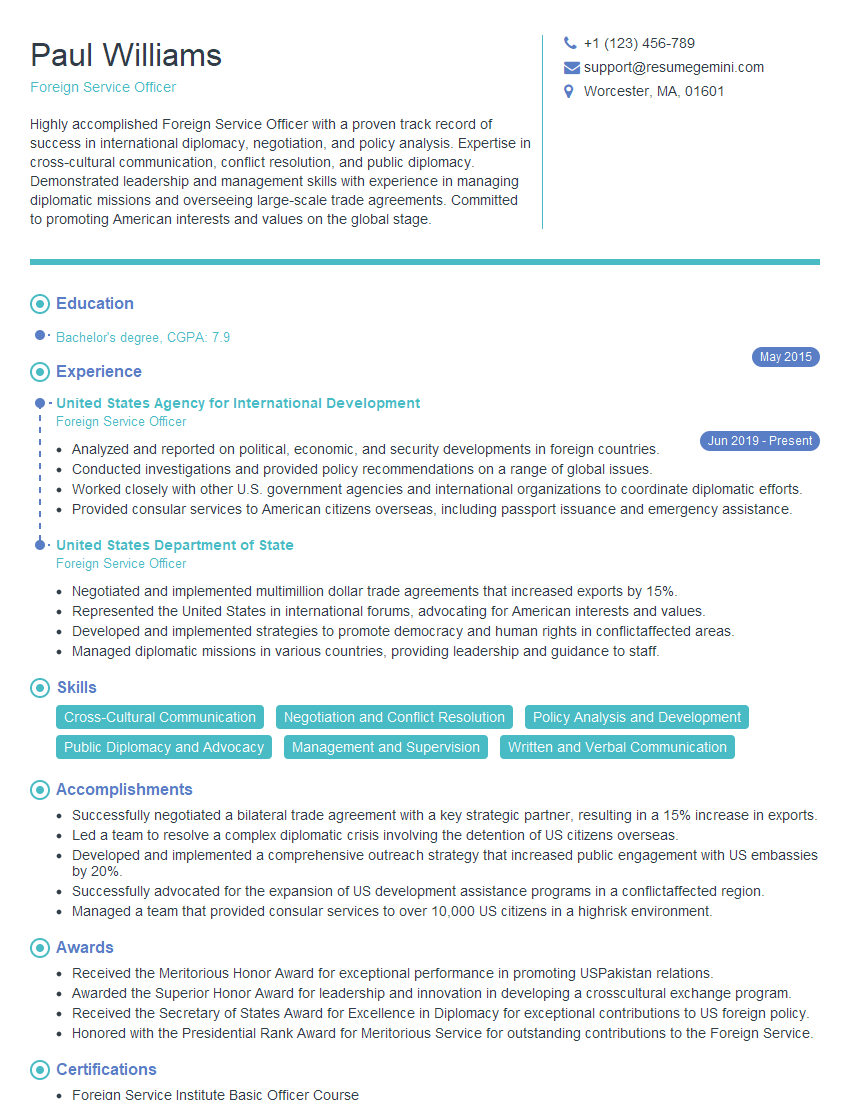
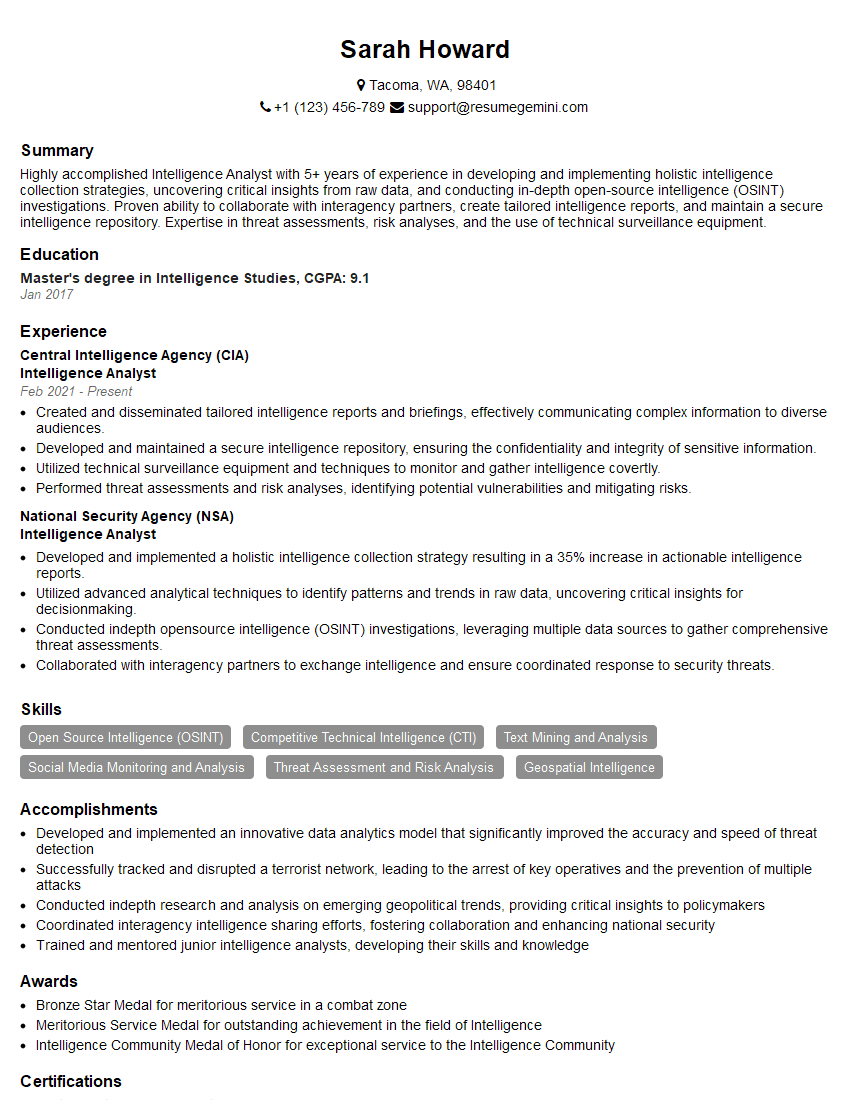
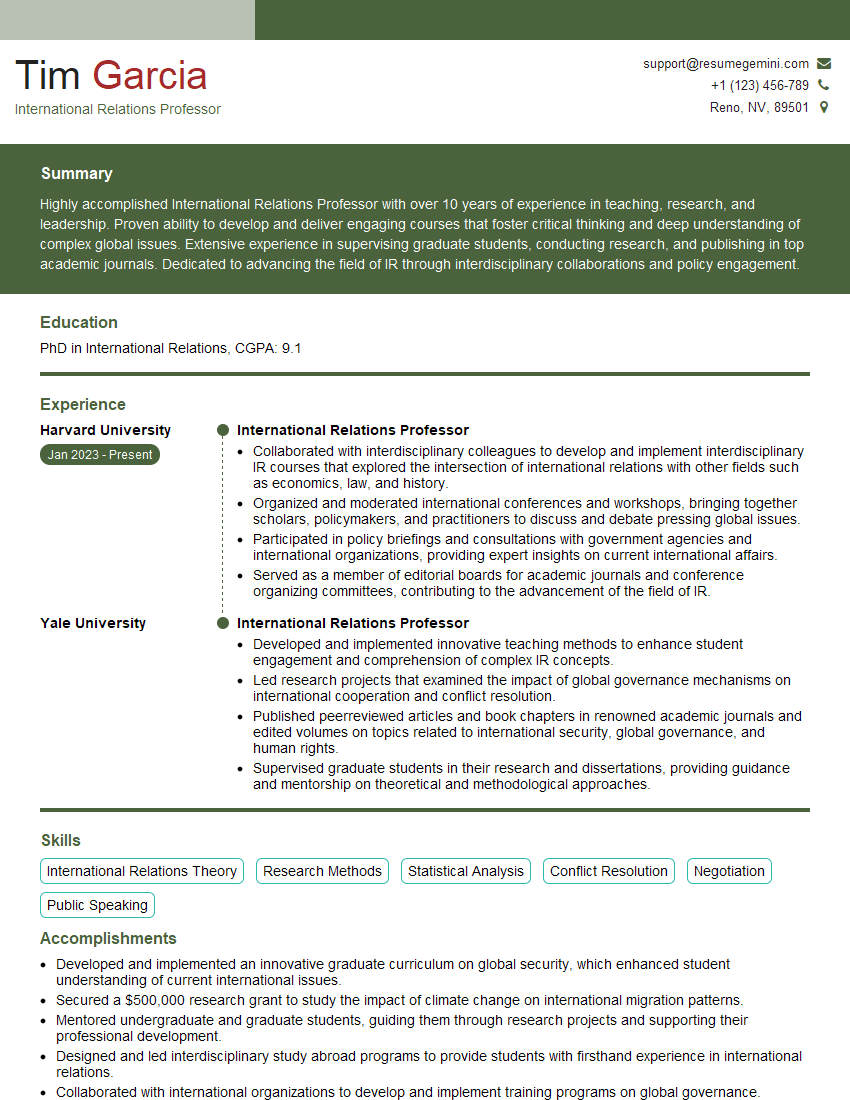
Mastering Foreign Policy Expertise is crucial for a successful career in international affairs, offering opportunities in government, non-profit organizations, and the private sector. To maximize your job prospects, creating a strong, ATS-friendly resume is essential. ResumeGemini is a trusted resource that can help you build a professional and impactful resume tailored to your unique skills and experience. Examples of resumes specifically designed for candidates with Foreign Policy Expertise are available to guide you. Invest time in crafting a compelling resume—it’s your first impression on potential employers.
Explore more articles
Users Rating of Our Blogs
Share Your Experience
We value your feedback! Please rate our content and share your thoughts (optional).
What Readers Say About Our Blog
To the interviewgemini.com Webmaster.
Very helpful and content specific questions to help prepare me for my interview!
Thank you
To the interviewgemini.com Webmaster.
This was kind of a unique content I found around the specialized skills. Very helpful questions and good detailed answers.
Very Helpful blog, thank you Interviewgemini team.