Unlock your full potential by mastering the most common Second Language Proficiency (if applicable) interview questions. This blog offers a deep dive into the critical topics, ensuring you’re not only prepared to answer but to excel. With these insights, you’ll approach your interview with clarity and confidence.
Questions Asked in Second Language Proficiency (if applicable) Interview
Q 1. Describe your proficiency level in [Target Language] using a recognized framework (e.g., CEFR).
My proficiency in Spanish is at a C1 level according to the Common European Framework of Reference for Languages (CEFR). This means I can understand a wide range of demanding, longer texts, and recognise implicit meaning. I can express myself fluently and spontaneously without much obvious searching for expressions. I can use language flexibly and effectively for social, academic, and professional purposes. I can produce clear, well-structured, detailed text on complex subjects, showing controlled use of organisational patterns, connectors and cohesive devices.
This assessment is based on years of formal study, extensive immersion experiences in Spanish-speaking countries, and continuous use of the language in both personal and professional contexts. I’ve successfully navigated complex business negotiations, delivered presentations, and written reports all in Spanish, further solidifying my C1 proficiency.
Q 2. What are your strengths and weaknesses in [Target Language] speaking?
My strengths in Spanish speaking lie in fluency and clarity. I can comfortably engage in extended conversations on a variety of topics, adapting my register and style to suit the context. I’m confident in expressing complex ideas and opinions. However, a weakness is sometimes incorporating idiomatic expressions seamlessly. While I understand them readily, spontaneously employing them in conversation requires conscious effort. I might occasionally pause to search for the perfect idiom, which could briefly disrupt the natural flow of speech. I’m actively working on expanding my repertoire of idiomatic expressions through focused practice and immersion.
Q 3. How would you handle a situation where you encounter unfamiliar vocabulary during a conversation in [Target Language]?
Encountering unfamiliar vocabulary is a normal part of any language conversation. My approach is multifaceted. First, I’d try to infer the meaning from the context of the conversation and surrounding words. If that’s insufficient, I might politely ask for clarification – perhaps using a circumlocution to describe what I think the word might mean, inviting the speaker to confirm or correct my understanding. For example, instead of saying, “I don’t understand ‘desafuero,'” I might say, “I’m not sure I understand the word you used to describe the unusual behavior; could you explain it differently?” Finally, I might discreetly make a note of the word to look up later to strengthen my vocabulary for future conversations.
Q 4. How do you stay current with your [Target Language] skills?
Maintaining fluency in Spanish requires consistent effort. I stay current through a combination of methods. I regularly read Spanish newspapers and literature, watch Spanish-language films and TV shows, and listen to podcasts and music. I also make a point of engaging in conversations with native speakers, either through online language exchange platforms or in-person interactions. This constant immersion ensures that I remain up-to-date with current vocabulary, idiomatic expressions, and cultural nuances. Additionally, I use language learning apps for vocabulary reinforcement and grammar practice.
Q 5. Describe a time you had to adapt your communication style to suit a different cultural context.
During a business trip to Mexico, I realised that my usual direct communication style, while effective in the US, was perceived as overly assertive in the Mexican business context. I initially struggled to establish rapport, facing some initial misunderstandings. Observing my colleagues’ interactions, I adapted my approach by incorporating more indirect language, focusing on building relationships through small talk and demonstrating respect for hierarchy. I learned to emphasize collaboration and consensus-building, which ultimately led to more productive and harmonious business dealings. This experience highlighted the importance of cultural sensitivity and adaptability in communication.
Q 6. Explain the difference between formal and informal language in [Target Language].
Formal and informal language in Spanish differ significantly, primarily through vocabulary, verb conjugation, and sentence structure. Formal Spanish, often used in professional settings or when addressing someone of higher status, employs the formal ‘usted’ (you) form. It often utilizes more complex sentence structures and avoids colloquialisms. Informal Spanish, used among friends and family, uses the informal ‘tú’ (you) form and embraces a wider range of colloquial expressions, slang, and contractions. For example, “Buenos días, señorita” is formal, while “Hola, ¿qué tal?” is informal.
Q 7. How do you approach translating nuanced expressions from [Target Language] to English (or vice versa)?
Translating nuanced expressions requires careful consideration of cultural context and connotations. A direct word-for-word translation often fails to capture the intended meaning. My approach involves deep understanding of the source language’s cultural context and the target language’s nuances. For example, translating a Spanish saying like ‘Echarle flores a alguien’ (literally ‘to throw flowers at someone’) requires going beyond the literal meaning of ‘to praise someone.’ I would convey the meaning using an equivalent English expression like ‘to shower someone with praise’ or ‘to butter someone up’, capturing the similar level of positivity and sometimes subtle insincerity depending on context.
I would often research similar expressions in both languages to find the closest equivalent conveying not only the literal meaning but also the emotional weight and cultural significance of the original expression. This process involves using dictionaries, language corpora, and exploring cultural contexts.
Q 8. What resources do you use to improve your [Target Language] skills?
To maintain and improve my Spanish skills, I employ a multifaceted approach. It’s not just about passively absorbing information; it’s about active engagement and consistent practice.
Immersion: I regularly watch Spanish-language films and TV shows, listen to podcasts and music, and read Spanish novels and news articles. This helps me naturally absorb vocabulary and grammar in context.
Active Learning: I utilize language learning apps like Duolingo and Memrise for vocabulary building and grammar exercises. These apps gamify the learning process, making it more engaging and less daunting.
Conversation Practice: I actively seek opportunities to converse in Spanish. This includes participating in online language exchange groups (like HelloTalk or Tandem), attending local Spanish conversation meetups, and engaging with native speakers whenever possible. This is crucial for fluency.
Formal Study: I occasionally supplement my learning with online courses or textbooks to focus on specific grammatical concepts or vocabulary areas I want to strengthen. This allows for a deeper dive into specific areas I find challenging.
The key is consistency. Even dedicating just 30 minutes a day to one or more of these activities makes a significant difference over time.
Q 9. Describe your experience with interpreting or translating.
My experience with interpreting and translating is primarily focused on informal settings, though I’ve had some experience in a professional context. I’ve volunteered to translate documents for non-profit organizations working with Spanish-speaking communities, which honed my skills in written translation. Furthermore, I’ve frequently acted as an interpreter in social situations, bridging communication gaps between Spanish and English speakers. This involved more than just word-for-word translation; I had to ensure cultural nuances were appropriately conveyed.
One notable experience involved interpreting during a community meeting where there was a significant cultural misunderstanding regarding a proposed community project. My ability to accurately convey both the intent and the subtle cultural implications helped diffuse the tension and lead to a positive outcome.
Q 10. How would you handle a misunderstanding in a conversation due to cultural differences?
Handling misunderstandings due to cultural differences requires sensitivity, patience, and a proactive approach. It’s not merely about translating words; it’s about understanding the underlying cultural context.
Clarification: First, I’d politely ask for clarification to ensure I fully understand the other person’s perspective. This often involves rephrasing their statements to confirm my understanding.
Active Listening: I would actively listen, paying attention not just to their words, but also to their body language and tone of voice. This helps identify non-verbal cues that might reveal underlying emotions or misunderstandings.
Cultural Sensitivity: I’d acknowledge the cultural differences and frame my response in a way that respects those differences. For instance, directness in one culture might be perceived as rude in another. Adapting communication style is key.
Empathy and Patience: Patience and understanding are essential. It’s important to allow time for the other person to express their thoughts and feelings without interruption.
Seeking External Help: If the misunderstanding is complex or involves sensitive topics, I wouldn’t hesitate to seek help from a mediator or someone with expertise in intercultural communication.
The goal is to create a safe space for open communication and mutual understanding.
Q 11. How proficient are you in reading and writing [Target Language]?
My proficiency in reading and writing Spanish is advanced. I can comfortably read complex texts such as literary works, academic papers, and legal documents. My writing skills allow me to produce clear, grammatically correct, and stylistically appropriate documents in Spanish, including essays, reports, and business correspondence. While I’m not a professional writer, I am confident in my ability to express complex ideas in written Spanish with nuance and accuracy.
Q 12. Provide examples of your experience using your language skills in a professional setting.
In a previous role at a non-profit organization, I regularly used my Spanish skills to communicate with Spanish-speaking clients. This involved everything from taking detailed case histories and explaining complex medical procedures to offering emotional support and bridging communication gaps with their families. This experience required a high degree of cultural sensitivity and effective communication, ensuring that information was accurately conveyed and understood.
In another instance, during a volunteer trip to a Spanish-speaking country, I utilized my Spanish language skills to successfully navigate unexpected challenges, like resolving a travel itinerary issue, communicating with local authorities, and assisting others in need. These experiences reinforced the importance of clear and effective communication in diverse contexts.
Q 13. How do you handle the pressure of communicating in [Target Language] under time constraints?
Communicating under time constraints requires a proactive and adaptable approach. It’s about prioritizing clarity and efficiency while maintaining accuracy.
Preparation: If possible, I’ll prepare beforehand by researching the topic and anticipating potential questions or points of discussion. This reduces the need for on-the-spot translation and minimizes the risk of errors.
Concise Language: I’ll focus on using concise and straightforward language, avoiding unnecessary details or complex grammatical structures. Simplicity and clarity are paramount under pressure.
Prioritization: I’ll prioritize conveying the most important information first. This ensures that the core message is delivered even if time runs out before all details can be shared.
Note-Taking: If possible, I will utilize note-taking to help keep track of information and ensure I don’t miss any crucial details.
Self-Regulation: Maintaining composure and managing stress is vital. Deep breaths and a calm demeanor can help maintain clarity and focus under pressure.
Q 14. Can you describe a time when your language skills helped you resolve a conflict or problem?
During a volunteer project at a community center, a disagreement arose between two members of a community group—one English speaking and one Spanish speaking—regarding the allocation of funds for a community event. The disagreement became heated due to miscommunication and cultural misunderstandings about the decision-making process.
Using my bilingual skills, I was able to act as a mediator. I carefully listened to both sides, ensuring I accurately translated their concerns and expressed their perspectives to the other party in a culturally sensitive way. I helped to clarify the misunderstanding, highlighting the different cultural approaches to conflict resolution. Through patience and clear communication in both languages, I helped them reach a compromise that satisfied both parties. This experience underscored the valuable role language skills can play in conflict resolution and building bridges between cultures.
Q 15. How would you assess the language proficiency of another person?
Assessing someone’s language proficiency requires a multifaceted approach, going beyond simply testing vocabulary and grammar. I typically use a combination of methods, including:
- Formal Tests: Standardized tests like the TOEFL or IELTS provide a quantifiable measure of reading, writing, listening, and speaking skills. These are excellent for objective comparisons, especially in professional settings.
- Informal Assessments: I’d engage in natural conversations, asking open-ended questions to gauge fluency, accuracy, and the ability to express complex ideas. Observing their communication in real-world scenarios, such as presenting or participating in group discussions, is also very informative.
- Portfolio Review: If appropriate, reviewing writing samples (essays, reports, emails) offers insights into grammatical accuracy, vocabulary range, and overall writing style.
- Specific Task Observation: I might ask the individual to complete specific tasks, such as summarizing a text, writing an email, or giving a short presentation, to assess their skills in specific contexts. This allows for a more targeted and practical assessment.
By combining these approaches, I gain a holistic understanding of the individual’s language abilities, considering both their strengths and weaknesses. This comprehensive approach allows for a more nuanced and accurate evaluation.
Career Expert Tips:
- Ace those interviews! Prepare effectively by reviewing the Top 50 Most Common Interview Questions on ResumeGemini.
- Navigate your job search with confidence! Explore a wide range of Career Tips on ResumeGemini. Learn about common challenges and recommendations to overcome them.
- Craft the perfect resume! Master the Art of Resume Writing with ResumeGemini’s guide. Showcase your unique qualifications and achievements effectively.
- Don’t miss out on holiday savings! Build your dream resume with ResumeGemini’s ATS optimized templates.
Q 16. What are some common grammatical errors in [Target Language] and how can they be avoided?
Let’s assume the target language is Spanish. Common grammatical errors in Spanish often stem from:
- Verb Conjugation: Incorrect tense, mood, or person agreement is very frequent. For example, confusing yo hablo (I speak) with yo habla (incorrect). This can be avoided through consistent practice with verb drills and focused study on irregular verbs.
- Gender and Number Agreement: Nouns, adjectives, and articles must agree in gender (masculine/feminine) and number (singular/plural). Errors like using a masculine adjective with a feminine noun are common. This requires rote memorization and diligent attention to detail.
- Prepositions: Spanish uses prepositions differently than English in many instances, leading to errors. For instance, ‘en‘ (in/on/at) can be tricky. Learning prepositional phrases and their usage in context is key.
- Word Order: While generally flexible, correct word order is crucial in complex sentences. This requires understanding sentence structure and the function of different word classes.
To avoid these errors, I recommend consistent practice with grammar exercises, immersion in the language (through reading, listening, and speaking), and using language learning apps that provide feedback and correction.
Q 17. What strategies do you use to improve your comprehension of [Target Language] spoken at a fast pace?
Understanding fast-paced speech in any language requires strategic listening skills. My approach involves:
- Focusing on Key Words and Phrases: Instead of trying to understand every single word, I concentrate on grasping the main ideas and supporting keywords. This requires active listening and anticipating the flow of the conversation.
- Contextual Clues: I use the surrounding context, including nonverbal cues like body language, to help infer meaning. For example, even if I miss a word, the overall context might make the meaning clear.
- Repetition and Clarification: Don’t hesitate to ask for clarification or to politely request a repetition of something I didn’t understand. This is a crucial strategy for effective communication.
- Practice and Exposure: The more I expose myself to fast-paced speech (through movies, podcasts, conversations), the better my brain becomes at processing information quickly. Think of it like training a muscle: the more you use it, the stronger it gets.
Think of it like listening to a song in a foreign language – at first, you might only catch a few words, but with repeated listening, you begin to recognize patterns and understand more.
Q 18. How familiar are you with the different dialects or accents of [Target Language]?
My familiarity with Spanish dialects and accents is substantial. I’m aware of the significant variations across Spain (Castilian, Andalusian, Catalan) and Latin America (Mexican, Argentinean, Colombian, etc.). These variations encompass not only pronunciation but also vocabulary and grammar. For example, the word for ‘you’ changes significantly depending on formality and region. I understand the importance of these differences in effective cross-cultural communication. I’ve actively sought out media and resources representing these different dialects to broaden my comprehension and avoid misunderstandings. While I may not be fluent in every dialect, my knowledge allows me to adapt my communication style and understanding to ensure effective interaction.
Q 19. Describe your experience working with language technology tools (e.g., translation software).
I have extensive experience using various language technology tools, including Google Translate, DeepL, and specialized translation software for specific domains (e.g., medical translation software). I understand their limitations and strengths. I primarily use these tools as aids, not replacements, for human translation. For instance, I might use them for quick translations of short texts or to look up unfamiliar words, but I always critically evaluate their output and rely on my linguistic expertise to ensure accuracy and cultural appropriateness. I’m also proficient in using CAT (Computer-Assisted Translation) tools, which assist in managing translation projects and maintaining consistency in terminology.
Q 20. How would you adapt your communication style when working with clients from different linguistic backgrounds?
Adapting my communication style to clients from different linguistic backgrounds is paramount. My strategies include:
- Clear and Concise Language: I avoid jargon and overly complex sentence structures, opting for simple and direct language.
- Visual Aids: When possible, I use visuals (charts, diagrams, images) to support communication and reduce reliance on language alone.
- Active Listening: I pay close attention to nonverbal cues and actively seek clarification to ensure understanding.
- Cultural Sensitivity: I’m mindful of cultural nuances in communication styles, such as directness, formality, and personal space.
- Patience and Understanding: I’m patient and understanding of potential language barriers, creating a comfortable and non-judgmental environment for communication.
Ultimately, effective communication requires empathy, adaptability, and a willingness to bridge the linguistic and cultural gaps.
Q 21. How do you handle situations where you are unsure of the correct terminology in [Target Language]?
When unsure of the correct terminology in Spanish, I employ several strategies:
- Contextual Inference: I try to infer meaning from the surrounding context and use synonyms or circumlocution (talking around the word) to convey the intended meaning.
- Consulting Dictionaries and Resources: I rely on reputable dictionaries (both monolingual and bilingual) and specialized terminology databases to find the most accurate and appropriate term.
- Asking for Clarification or Confirmation: I don’t hesitate to ask native speakers for help or confirmation if I’m unsure about the best way to express something.
- Learning from Mistakes: I make a note of the words or phrases I struggled with and actively seek opportunities to use them correctly in the future. Learning a language is an iterative process.
This multi-pronged approach helps me navigate uncertainties and maintain the accuracy and effectiveness of my communication.
Q 22. Describe your experience using [Target Language] in written communication (e.g., emails, reports).
My experience with written communication in Spanish is extensive, encompassing various professional contexts. I’ve drafted and edited numerous emails, reports, and presentations, focusing on clarity, precision, and cultural sensitivity. For instance, I recently prepared a comprehensive market analysis report in Spanish for a client in Spain. This required not only fluency but also understanding the specific business lexicon and stylistic preferences of the Spanish market. Another example involves regular email correspondence with colleagues in Latin America, where I’ve adapted my writing style to maintain a professional yet personable tone, reflecting the nuances of their communication culture. I consistently strive to ensure my written Spanish is not only grammatically correct but also easily understood by the intended audience.
Q 23. How do you ensure the accuracy and consistency of your translations?
Accuracy and consistency in translation are paramount. My approach is multi-faceted. First, I utilize a combination of high-quality translation software and reputable dictionaries to ensure precise vocabulary and grammatical correctness. Second, I meticulously verify the accuracy of terminology, especially in specialized fields like law or medicine, consulting specialized dictionaries and glossaries where needed. Third, I always maintain a style guide, ensuring consistency in terminology, punctuation, and formatting throughout the translation. Finally, I conduct rigorous self-editing and proofreading, often reviewing my work after a period of time to catch any overlooked errors. Think of it like polishing a gemstone – multiple stages of refining are needed to achieve perfection. I also employ the strategy of comparing my translation to the original source text to check for accuracy and meaning equivalence.
Q 24. How familiar are you with the ethical considerations of translation and interpretation?
Ethical considerations are foundational to my translation work. I am acutely aware of the importance of confidentiality, maintaining the strictest privacy concerning sensitive information. This includes adhering to non-disclosure agreements and responsible handling of client data. Furthermore, I understand the importance of cultural sensitivity and avoid perpetuating harmful stereotypes or biases in my translations. I strive for accuracy and neutrality, representing the source text fairly and avoiding any subjective interpretation that might misrepresent the original author’s intent. It is crucial to remember that I act as a bridge between cultures, and ethical conduct is essential to maintaining trust and accuracy.
Q 25. What are the key challenges you’ve encountered in using your second language proficiency?
One major challenge is the ever-evolving nature of language. New slang, idioms, and expressions constantly emerge, requiring continuous learning and adaptation. Another hurdle is the difference in cultural context and assumptions. A phrase perfectly acceptable in one context might be inappropriate or misunderstood in another. For example, the informal “tú” versus the formal “usted” in Spanish is crucial for maintaining appropriate professional relations depending on the context. Finally, maintaining consistent accuracy under pressure, especially when facing tight deadlines, can be demanding. To overcome these challenges, I consistently engage in ongoing language study, immerse myself in authentic language materials, and prioritize careful planning and time management in professional settings.
Q 26. How would you describe your cultural awareness in relation to [Target Language] speakers?
My cultural awareness concerning Spanish speakers is informed by years of study and personal experience. I understand that Spanish-speaking cultures are incredibly diverse, with significant variations in customs, social norms, and communication styles across different regions and countries. This understanding informs my approach to translation and communication. For instance, I am well aware that direct communication styles might be seen as rude in some Latin American contexts, requiring a more nuanced and indirect approach. I actively seek to understand and respect these cultural differences, incorporating this awareness into my work to ensure my communications are both accurate and appropriately contextualized.
Q 27. Describe a time when you had to interpret for someone. What challenges did you encounter?
During a medical appointment, I interpreted for a Spanish-speaking patient and their doctor. The key challenge was the highly specialized medical terminology. Ensuring accurate and concise conveyance of complex medical information while maintaining sensitivity and compassion was crucial. The patient was visibly anxious, and conveying the physician’s complex instructions clearly and empathetically was crucial. To overcome this, I paused frequently to clarify terminology with both the patient and the physician, ensuring mutual understanding. This involved explaining complex terminology in simple, easily understood terms, focusing on precision and context. It highlighted the importance of not just linguistic proficiency but also cultural sensitivity and emotional intelligence in interpretation settings.
Q 28. How do you maintain your language proficiency over time, particularly if you aren’t using it daily?
Maintaining language proficiency requires consistent effort. Even without daily use, I employ several strategies. I regularly read Spanish literature and news articles, listen to Spanish-language podcasts, and watch Spanish-language films and television shows. I also try to interact with native speakers whenever possible, whether through online language exchange platforms or by participating in cultural events. Active engagement with the language, even in small ways, is key to preventing stagnation and maintaining fluency. Think of it like a muscle – it needs to be exercised regularly to stay strong. This proactive approach guarantees I remain fluent and capable of using my language skills effectively in both professional and personal contexts.
Key Topics to Learn for Second Language Proficiency Interview
Mastering a second language opens doors to exciting career opportunities. To ace your interview, focus on these key areas:
- Communication Skills: Demonstrate your ability to clearly and effectively communicate in your second language, both verbally and in writing. Consider how you’d handle nuanced conversations and different communication styles.
- Cultural Awareness and Sensitivity: Highlight your understanding of cultural differences and how they impact communication. Prepare examples demonstrating your ability to navigate cultural nuances effectively in professional settings.
- Listening Comprehension: Show your proficiency in understanding spoken language, including accents and colloquialisms. Practice active listening and demonstrate your ability to extract key information from conversations.
- Reading and Writing Proficiency: Showcase your ability to understand complex texts and write professionally in your second language. Prepare examples of your written work in that language.
- Problem-Solving in a Multilingual Environment: Consider scenarios where language barriers might arise in a professional context, and explain how you would effectively address them.
- Specific Language Skills (if applicable): Depending on the job, you may need to highlight skills like interpreting, translating, or specific technical vocabulary within your second language.
Next Steps
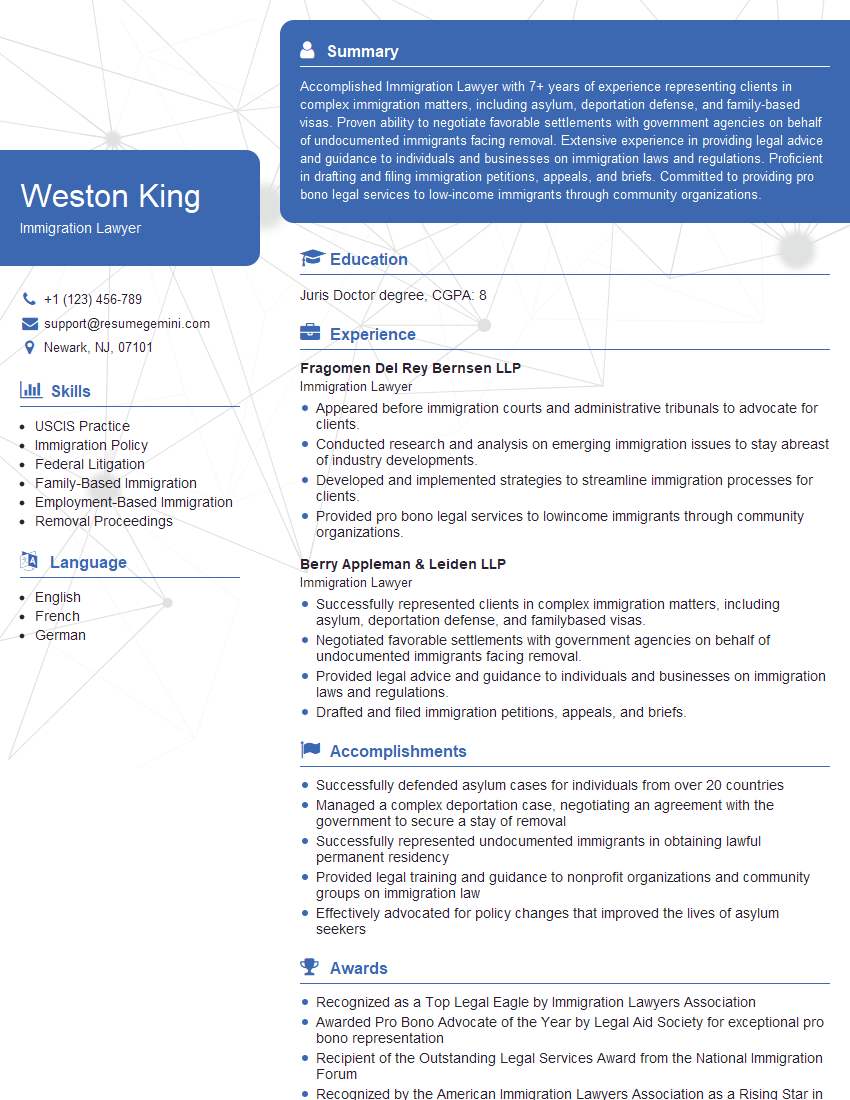
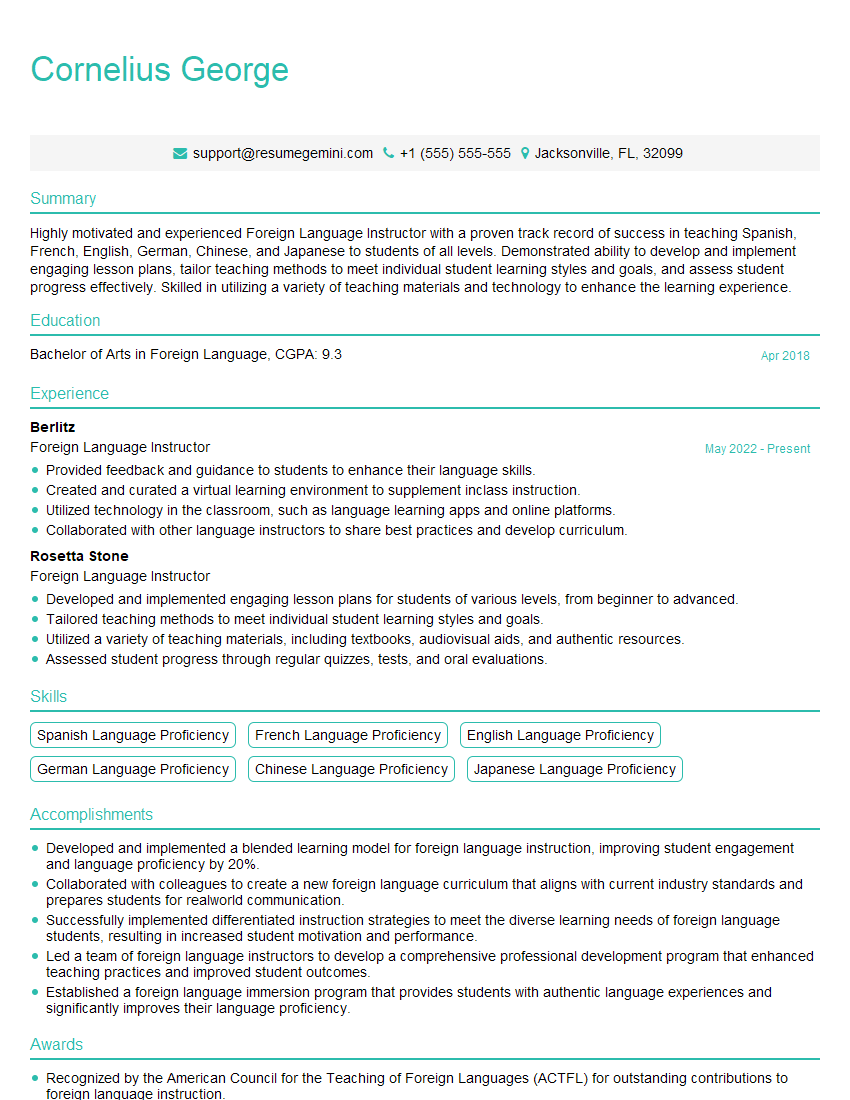
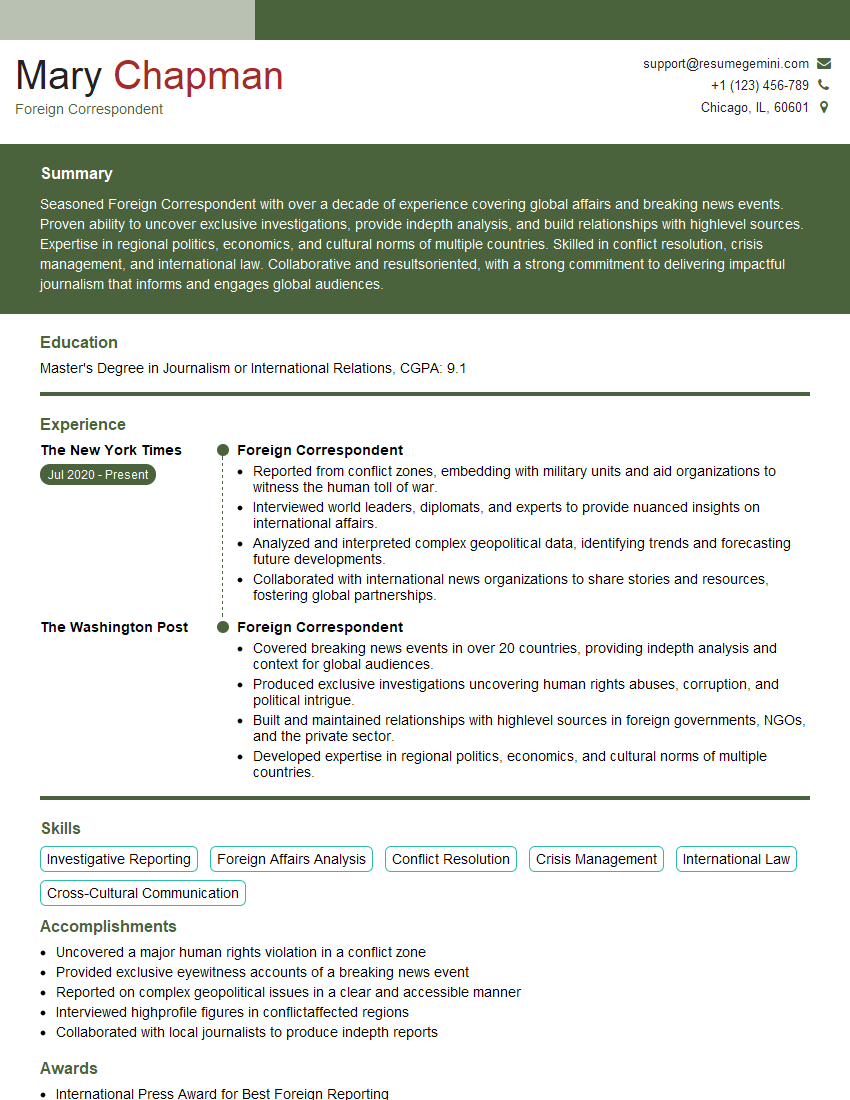
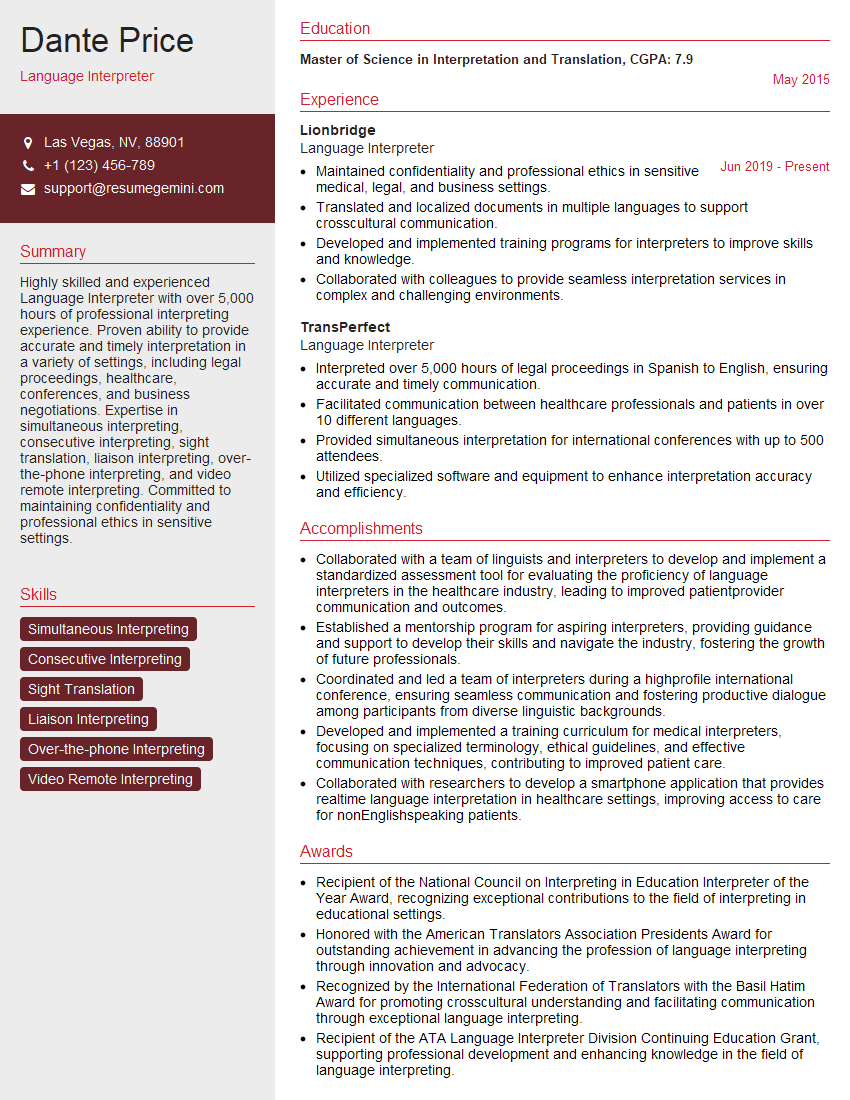
Proficiency in a second language significantly enhances your career prospects, making you a more valuable and adaptable candidate. A well-crafted resume is crucial for showcasing this valuable skill. To make your resume stand out and easily parsed by Applicant Tracking Systems (ATS), focus on using keywords relevant to your second language skills and the specific job requirements. ResumeGemini is a trusted resource to help you build a professional and ATS-friendly resume that highlights your unique qualifications. We provide examples of resumes tailored to demonstrate Second Language Proficiency, helping you present your skills effectively to potential employers.
Explore more articles
Users Rating of Our Blogs
Share Your Experience
We value your feedback! Please rate our content and share your thoughts (optional).
What Readers Say About Our Blog
To the interviewgemini.com Webmaster.
Very helpful and content specific questions to help prepare me for my interview!
Thank you
To the interviewgemini.com Webmaster.
This was kind of a unique content I found around the specialized skills. Very helpful questions and good detailed answers.
Very Helpful blog, thank you Interviewgemini team.