The thought of an interview can be nerve-wracking, but the right preparation can make all the difference. Explore this comprehensive guide to Chiropractic Spinal Manipulation interview questions and gain the confidence you need to showcase your abilities and secure the role.
Questions Asked in Chiropractic Spinal Manipulation Interview
Q 1. Describe the different types of spinal manipulation techniques.
Chiropractic spinal manipulation encompasses a variety of techniques, all aimed at restoring proper joint mechanics and reducing nerve irritation. These techniques can be broadly categorized by the type of thrust used and the specific area being treated.
- High-velocity, low-amplitude (HVLA) thrusts: This is the most commonly recognized type, involving a quick, precise, and gentle adjustment. Think of it like a very controlled ‘pop’. The goal is to restore proper joint movement by breaking up adhesions or reducing joint restriction. This is often used for facet joint dysfunction.
- Mobilization techniques: These involve slower, gentler movements within the joint’s range of motion. These are often used in cases where HVLA isn’t appropriate due to patient sensitivity or the nature of the spinal lesion, such as in patients with osteoporotic bone.
- Soft tissue techniques: These aren’t directly manipulative to the joints but address muscle tension and fascial restrictions that may be contributing to spinal dysfunction. Examples include massage, muscle energy techniques, and instrument-assisted soft tissue mobilization (IASTM).
- Diversified technique: This is a common approach employing a combination of HVLA thrusts, mobilizations, and other manual techniques, tailored to the individual patient’s needs.
- Specific techniques: Several techniques focus on particular spinal regions or conditions, like the Gonstead technique (emphasizing precise locating of subluxations) or the Thompson drop table technique (utilizing a specialized table to assist in the adjustment).
The choice of technique depends on a thorough assessment of the patient’s condition, considering factors like age, spinal pathology, and the patient’s tolerance.
Q 2. Explain the biomechanics of spinal manipulation.
The biomechanics of spinal manipulation are complex and involve the interplay of several factors. The goal is to restore proper joint motion and reduce nerve compression or irritation. A successful adjustment results in a cavitation sound (the ‘pop’) – often due to a rapid change in pressure within the joint capsule causing the release of gases dissolved in the synovial fluid. This cavitation doesn’t directly heal the problem, but it signifies a change in joint mechanics.
When a joint is restricted, it may lead to altered movement patterns, resulting in muscle strain, ligamentous stress, and possibly nerve root impingement. Spinal manipulation aims to address this by:
- Restoring joint kinematics: The adjustment improves the range of motion and proper biomechanical alignment, lessening stress on the joint structures. Imagine a stiff hinge in a door; the adjustment acts like lubricating and realigning it.
- Reducing muscle spasm: Muscle spasms frequently accompany joint dysfunction. By improving joint position and movement, manipulation can lessen the tension and reduce muscle guarding.
- Decreasing nerve irritation: Manipulation can alleviate nerve compression or irritation by freeing up space around nerves and reducing inflammation, improving nerve conduction.
- Stimulating mechanoreceptors: The manipulation stimulates the mechanoreceptors within the joint and surrounding tissues. This provides proprioceptive input to the nervous system, helping to improve joint awareness and control. This is believed to be a contributor to the long term effects of manipulation.
Understanding these biomechanical changes allows for proper diagnosis and individualized treatment planning.
Q 3. What are the contraindications for spinal manipulation?
Contraindications to spinal manipulation are situations where it could be harmful or ineffective. These can be absolute contraindications (meaning manipulation should never be performed) or relative contraindications (where the benefits must be carefully weighed against the potential risks).
- Absolute contraindications: These include conditions like certain fractures, tumors, active infections (such as osteomyelitis) near the spine, rheumatoid arthritis in a severely unstable condition, vertebrobasilar insufficiency (reduced blood flow to the brain), and severe osteoporosis with significant risk of fracture.
- Relative contraindications: These are more nuanced and require careful consideration. Examples include pregnancy (though gentle adjustments are sometimes considered in certain situations), recent spinal surgery, severe spinal stenosis, and conditions involving hypermobility.
A thorough history taking, physical examination, and potentially further imaging (X-rays, MRI) are essential to accurately identify contraindications.
Q 4. How do you assess the suitability of a patient for spinal manipulation?
Assessing a patient’s suitability begins with a comprehensive examination and a detailed medical history. We need to determine if the patient’s symptoms are consistent with conditions that might respond well to spinal manipulation and rule out conditions where manipulation might be harmful.
This involves:
- Reviewing the medical history: Any past surgeries, medical conditions, medications, and trauma is carefully reviewed.
- Physical examination: This includes evaluating posture, spinal range of motion, muscle strength, reflexes, and neurologic status. Palpation for muscle tenderness and joint restriction is important.
- Orthopedic and neurological tests: Specific tests are used to detect nerve root involvement, joint instability, or other musculoskeletal problems.
- Imaging studies (if indicated): X-rays, CT scans, or MRI may be necessary to rule out serious conditions like fractures, tumors, or significant spinal stenosis.
Based on this information, a judgment is made regarding whether spinal manipulation is appropriate. If there are any concerns, further consultation with other healthcare professionals might be necessary. A collaborative approach is often beneficial for the patient’s wellbeing.
Q 5. Describe your approach to patient examination before spinal manipulation.
My approach to patient examination before spinal manipulation is methodical and thorough. It’s not just about finding the ‘problem area’, but understanding the whole picture.
The examination includes:
- Subjective findings: This begins with a detailed interview, gathering information about the patient’s chief complaint, medical history, lifestyle, and symptoms. I’ll ask about the onset, location, character, and aggravating/relieving factors of their pain.
- Objective findings: A physical examination follows, assessing posture, spinal mobility (range of motion), muscle strength and tone, and any tenderness to palpation. I will perform orthopedic and neurologic tests to determine the involvement of nerves and rule out other possible conditions.
- Postural assessment: This helps to identify imbalances and possible compensations that contribute to the patient’s symptoms. For example, a forward head posture might lead to neck pain and upper back discomfort.
- Static and dynamic palpation: I’ll carefully feel the spine to assess joint mobility, muscle tension, and any tissue texture abnormalities.
- Neurological examination: This is to check for any signs of nerve root compression, such as altered reflexes, sensory changes, or muscle weakness.
The findings from this comprehensive examination guide the selection of appropriate manipulation techniques.
Q 6. How do you determine the appropriate force and direction for spinal manipulation?
Determining the appropriate force and direction for spinal manipulation is crucial for safety and effectiveness. It’s not a ‘one-size-fits-all’ approach.
The force and direction are determined by:
- The specific spinal segment involved: Each segment of the spine has a unique anatomy and biomechanics. The force and direction of the adjustment are tailored to the specific joint and its dysfunction.
- The patient’s size and build: A smaller, lighter patient would require less force than a larger, heavier patient. The force is always adjusted to accommodate individual patient differences.
- The tissue response: Palpation during the examination provides important clues to tissue resistance and the amount of force needed to overcome the restriction. I’ll consider the sensitivity and tolerance of the patient in determining how much force to use.
- The patient’s response to the adjustment: Feedback from the patient is valuable. If the patient experiences increased pain or discomfort, the force or direction needs to be adjusted.
- Clinical experience: Years of experience allow for fine-tuned judgments of appropriate force, direction, and technique choice.
Often, the correct direction is identified through precise palpation and passive range of motion assessments of the involved spinal segment.
Q 7. What are the potential risks and complications associated with spinal manipulation?
While generally safe and effective, spinal manipulation, like any medical procedure, carries potential risks and complications. However, the incidence of serious complications is low.
- Temporary soreness or stiffness: This is quite common and usually resolves within a day or two. It’s often treated with ice packs and rest.
- Headache: In rare instances, manipulation of the cervical spine can cause a headache. This is usually transient but requires careful attention and assessment.
- Dizziness or lightheadedness: This can sometimes occur, particularly in patients with underlying conditions affecting blood pressure or vestibular function.
- Rare serious complications: While extremely rare, serious complications, such as stroke, spinal cord injury, or nerve root damage, can occur. The risk is greatly increased by pre-existing conditions, poor technique, or ignoring contraindications.
These risks are mitigated by adhering to proper assessment and treatment protocols, carefully considering contraindications, and possessing the necessary skills and training. Open communication with the patient about the potential risks and benefits is essential.
Q 8. How do you manage patient discomfort during and after spinal manipulation?
Managing patient discomfort during and after spinal manipulation is paramount. It involves a multi-pronged approach focusing on patient education, proper technique, and post-treatment care.
Before the adjustment: I thoroughly explain the procedure, answering all questions and addressing any concerns. I use gentle palpation to identify the areas of restriction and explain what they might feel. This helps manage anxiety and sets realistic expectations. I might also offer relaxation techniques, such as deep breathing exercises.
During the adjustment: The goal is to make the adjustment as comfortable as possible. This involves using the appropriate force and speed tailored to the individual patient and the specific area being treated. Communication is crucial; I regularly check in with the patient to ensure their comfort level. For example, if a patient reports discomfort, I will adjust my technique, perhaps using a lower force or a different approach.
After the adjustment: Post-treatment care is critical. I provide advice on appropriate rest and activity levels, and I recommend ice or heat application as needed. I often suggest gentle stretches or exercises to help promote healing and reduce any lingering soreness. I schedule follow-up appointments to monitor progress and make necessary adjustments to the treatment plan. If a patient reports significant or persistent pain, I’ll assess whether the approach needs modification or if other therapies are indicated.
Q 9. How do you differentiate between spinal manipulation and other treatment modalities?
Spinal manipulation, also known as chiropractic adjustment, is a highly specific hands-on technique focusing on restoring joint mechanics. It differs from other modalities in its targeted approach and the use of controlled, high-velocity, low-amplitude thrusts to address joint dysfunction.
Here’s a comparison:
- Spinal Manipulation: Uses precise adjustments to restore joint motion and reduce nerve irritation. Focuses on the musculoskeletal system primarily.
- Physiotherapy: Employs various techniques like exercise, manual therapy (including some forms of mobilization, but not typically the high-velocity thrusts of chiropractic), modalities (e.g., ultrasound, electrical stimulation), and patient education to improve movement and function.
- Massage Therapy: Focuses on soft tissue manipulation to relieve muscle tension and improve circulation.
- Osteopathic Manipulation: Shares similarities with chiropractic but often uses broader techniques involving stretching and mobilization in addition to high-velocity adjustments.
- Medication: Addresses pain and inflammation through pharmacological intervention, often used in conjunction with other therapies, not a direct manipulation technique.
While there can be overlap, the core difference lies in the specific application of controlled, high-velocity thrusts characteristic of spinal manipulation, aimed at restoring joint mechanics.
Q 10. Describe your experience with specific spinal manipulation techniques (e.g., Gonstead, Diversified).
My experience encompasses a wide range of spinal manipulation techniques. I am proficient in both Gonstead and Diversified techniques, among others. Each approach has its unique strengths and is applied based on the patient’s specific needs.
Gonstead Technique: This is a highly specific technique that emphasizes the precise location and correction of vertebral subluxations. It relies heavily on instrumentation to pinpoint areas of misalignment, using a highly detailed approach to diagnose and correct the problem. I use this technique frequently for patients with severe lower back pain and sciatica where precise adjustments are crucial. For example, a patient with a suspected rotated vertebra will need a highly specific adjustment using this technique.
Diversified Technique: This is a more general approach, utilizing a variety of adjusting techniques adapted to the specific patient. It’s versatile and allows me to address different spinal segments and adjust the approach based on the patient’s response. This is a good option for many patients, as it allows for flexibility in technique. For example, I may use a diversified adjustment for a patient experiencing generalized neck pain and stiffness.
Choosing the right technique involves a thorough assessment of the patient, considering their individual biomechanics, medical history, and tolerance.
Q 11. Explain the principles of adjusting different spinal segments (cervical, thoracic, lumbar).
Adjusting different spinal segments requires a nuanced understanding of the biomechanics of each region. While the underlying principle – restoring joint motion – remains constant, the technique varies based on the segment’s anatomical features and movement capabilities.
- Cervical Spine (Neck): Adjustments here necessitate caution due to the proximity to the brain stem and delicate structures. I typically utilize gentler, lower-force adjustments, often employing specific hand placements to achieve precise corrections. The goal is to restore proper alignment and reduce nerve compression. I might use a variety of techniques including side-posture adjustments or gentle mobilization.
- Thoracic Spine (Mid-back): The thoracic spine has limited movement due to the rib cage. Adjustments often focus on improving rib articulation and restoring rotational movement. These adjustments might involve more rotational thrusts, employing specific leverage points to achieve the necessary correction. I often use diversified techniques or thoracic specific mobilization.
- Lumbar Spine (Lower back): Adjustments here are often more forceful due to the larger size and weight-bearing capacity of the vertebrae. I use diversified techniques, depending on the specific problem identified. This might involve prone adjustments, side-posture adjustments, or drop-table techniques to create the force necessary to mobilize the restricted segment. Correcting lumbar subluxations can often provide considerable relief from lower back pain and referred leg pain (sciatica).
Each adjustment is carefully planned and executed to minimize risk and maximize effectiveness. It’s crucial to adapt the force and technique to the patient’s individual needs and the nature of the spinal dysfunction.
Q 12. How do you document your spinal manipulation procedures?
Thorough documentation is essential for providing quality care and maintaining legal compliance. My documentation includes:
- Patient demographics: Name, age, date of birth, contact information.
- Chief complaint: Reason for the visit (e.g., low back pain, neck pain).
- History of present illness (HPI): Detailed description of the symptoms, onset, duration, aggravating and relieving factors.
- Past medical history (PMH): Relevant medical conditions, surgeries, allergies.
- Physical examination findings: Results of orthopedic and neurological examinations, range of motion assessment, palpation findings identifying areas of muscle tension, joint restrictions, and tenderness.
- Imaging reports: If applicable, reports from X-rays or other imaging studies.
- Spinal manipulation details: Specific techniques used (e.g., Gonstead, Diversified), segments treated, force applied, patient response.
- Treatment plan: Outline of the proposed course of treatment, including frequency of visits, home exercises, and patient education.
- Progress notes: Record of each visit, including patient response to treatment, any modifications to the treatment plan.
Using a standardized format and electronic health record system ensures clear, comprehensive, and easily accessible documentation.
Q 13. How do you integrate spinal manipulation with other therapies (e.g., physiotherapy, exercise)?
Integrating spinal manipulation with other therapies often leads to more comprehensive and effective patient outcomes. It’s a holistic approach that addresses various aspects of the patient’s condition.
Physiotherapy: I often collaborate with physiotherapists to incorporate therapeutic exercise programs designed to improve strength, flexibility, and posture. For example, a patient with chronic low back pain might receive spinal manipulation to address joint restrictions and physiotherapy to strengthen core muscles and improve posture.
Exercise: I prescribe targeted exercises to complement spinal manipulation and promote long-term improvement. This might involve core strengthening, stretching, and postural correction exercises. Patients are guided through proper exercise technique to avoid re-injury or exacerbation of symptoms.
Other Modalities: Depending on the patient’s condition, I may incorporate other therapies, such as soft tissue mobilization or ultrasound, to address muscle spasms, inflammation, or trigger points. It’s vital to adopt an interdisciplinary approach for optimizing patient care. The patient’s progress and response will always guide the integration of these therapies.
Q 14. How do you counsel patients about the expected outcomes of spinal manipulation?
Counseling patients about expected outcomes is a vital part of my practice. It ensures realistic expectations and encourages patient participation in their recovery. I begin by explaining the limitations of spinal manipulation. While it is highly effective, it’s not a cure-all for all conditions.
Realistic Expectations: I emphasize that the recovery process varies based on factors like the nature and severity of the condition, the patient’s overall health, and their adherence to the treatment plan. I explain that some patients may experience immediate relief, while others may require a series of treatments to see significant improvement.
Communication: I explain the possible benefits, risks, and alternative treatments. I encourage patients to actively participate in their treatment by adhering to home exercises and making necessary lifestyle changes. I also emphasize the importance of open communication throughout the treatment process, encouraging patients to report any concerns or setbacks. For example, I might tell a patient that they are likely to experience some soreness after the adjustment, but that it should improve within a day or two. I emphasize the importance of staying hydrated and maintaining proper posture. The goal is to empower the patient to take an active role in their recovery journey.
Follow-up: Regular follow-up appointments allow us to monitor progress, adjust the treatment plan as needed, and address any questions or concerns. This fosters a collaborative relationship built on trust and mutual understanding.
Q 15. Describe your approach to managing patients with complex spinal conditions.
Managing patients with complex spinal conditions requires a holistic and individualized approach. It begins with a thorough history and physical examination, going beyond simply assessing the spine. We consider the patient’s overall health, including medical history, lifestyle factors (diet, exercise, stress levels), and any other musculoskeletal issues. This comprehensive assessment helps identify contributing factors to the spinal condition, allowing for a targeted treatment plan.
For instance, a patient presenting with chronic lower back pain might also have limited hip mobility and weak core muscles. Simply addressing the spine might offer temporary relief but not resolve the underlying problem. My approach involves a combination of chiropractic spinal manipulation, targeted exercises to strengthen supporting muscles, soft tissue mobilization to improve flexibility, and patient education on posture and ergonomics. We might also utilize modalities such as ultrasound or electrical stimulation to manage pain and inflammation. In complex cases, collaboration with other healthcare professionals, such as neurologists, orthopedists, or physiatrists, is crucial for optimal patient care. The goal is not just to alleviate symptoms but to address the root cause and empower the patient to manage their condition long-term.
Career Expert Tips:
- Ace those interviews! Prepare effectively by reviewing the Top 50 Most Common Interview Questions on ResumeGemini.
- Navigate your job search with confidence! Explore a wide range of Career Tips on ResumeGemini. Learn about common challenges and recommendations to overcome them.
- Craft the perfect resume! Master the Art of Resume Writing with ResumeGemini’s guide. Showcase your unique qualifications and achievements effectively.
- Don’t miss out on holiday savings! Build your dream resume with ResumeGemini’s ATS optimized templates.
Q 16. How do you handle patient concerns or adverse events related to spinal manipulation?
Patient safety is paramount. While spinal manipulation is generally safe, adverse events can occur, such as temporary headaches or muscle soreness. Open communication is key. I actively discuss potential risks and benefits with each patient before beginning treatment. If an adverse event does occur, I immediately assess the situation, providing appropriate care and follow-up. This might include modifying the treatment plan, recommending rest, applying ice or heat, or referring the patient to other specialists if necessary. Thorough documentation of all interactions, including the adverse event, treatment provided, and patient’s response, is essential for both legal and professional reasons. I also encourage patient feedback to continually improve the safety and effectiveness of my practice. Transparency and proactive communication build trust and ensure the patient feels heard and cared for.
Q 17. Explain the role of imaging (X-ray, MRI) in guiding spinal manipulation.
Imaging plays a vital, albeit supporting, role in guiding spinal manipulation. X-rays provide valuable information about bone structure, identifying fractures, dislocations, or degenerative changes like arthritis. This helps rule out contraindications to manipulation. MRI scans, on the other hand, offer detailed views of soft tissues, such as intervertebral discs, ligaments, and spinal cord. This is particularly helpful in cases of suspected nerve impingement or other soft tissue injuries. However, it is important to remember that imaging is just one piece of the puzzle. The clinical examination remains the cornerstone of diagnosis and treatment planning. Imaging can confirm suspicions raised during the physical examination but should not dictate treatment in isolation. For example, a patient might have degenerative changes on X-ray, but if they are asymptomatic and the physical examination is unremarkable, manipulation might not be necessary. The decision to manipulate is always based on a combination of imaging findings, clinical presentation, and the patient’s overall health.
Q 18. How do you stay up-to-date with current research and best practices in spinal manipulation?
Staying current in chiropractic is a continuous process. I regularly attend continuing education courses and conferences, focusing on the latest research and best practices in spinal manipulation. I subscribe to peer-reviewed journals, such as the Journal of Manipulative and Physiological Therapeutics, and actively participate in professional organizations like the American Chiropractic Association. This ensures I’m familiar with emerging techniques, updated guidelines, and evidence-based approaches to patient care. Furthermore, I actively seek out relevant research articles through databases like PubMed, critically appraising the methodology and findings to ensure they are applicable to my clinical practice. This commitment to lifelong learning allows me to provide patients with the most effective and up-to-date care.
Q 19. Describe your experience with patient education regarding spinal health and manipulation.
Patient education is an integral part of my practice. I believe empowered patients are more likely to achieve optimal outcomes. I explain the anatomy and physiology of the spine in simple terms, avoiding jargon. I discuss the cause of their condition, the treatment plan, and the expected outcomes. I also emphasize the importance of lifestyle modifications, such as proper posture, ergonomic adjustments at work, regular exercise, and stress management. For instance, I might show a patient how to maintain proper posture while sitting at a computer or demonstrate specific exercises to strengthen their core muscles. I provide written materials, videos, or access to online resources to reinforce the information. This collaborative approach ensures the patient understands their condition and actively participates in their recovery. I believe in patient autonomy; they need to understand their choices and be involved in decision-making.
Q 20. How do you assess the effectiveness of spinal manipulation in your patients?
Assessing the effectiveness of spinal manipulation is multi-faceted. I use a combination of objective and subjective measures. Subjective measures include pain scales (visual analog scales or numerical rating scales), functional assessments (e.g., range of motion, ability to perform daily activities), and patient-reported outcomes. Objective measures might include range of motion measurements using a goniometer, strength testing, and postural assessments. Regular follow-up appointments allow for ongoing monitoring of progress and adjustments to the treatment plan as needed. For example, if a patient reports decreased pain and improved range of motion following a series of adjustments, it indicates the effectiveness of the treatment. If not, we re-evaluate the diagnosis, treatment plan, and consider other options. Documentation of these assessments helps track progress and demonstrate the overall efficacy of care.
Q 21. What are the ethical considerations in providing spinal manipulation?
Ethical considerations are paramount in providing spinal manipulation. Informed consent is fundamental. Patients must fully understand the risks and benefits of the procedure before agreeing to treatment. Maintaining patient confidentiality, adhering to professional standards of care, and avoiding conflicts of interest are crucial. It’s also ethical to refer patients to other healthcare professionals when appropriate, rather than attempting to treat conditions outside of my scope of practice. Maintaining professional boundaries and avoiding any form of exploitation or undue influence on the patient is vital. Continuing education and staying updated on ethical guidelines ensures I maintain the highest standards of professional conduct.
Q 22. How do you address patient expectations regarding the results of spinal manipulation?
Managing patient expectations is crucial for a successful chiropractic experience. I begin by thoroughly explaining the process and potential benefits of spinal manipulation, emphasizing that results vary depending on individual factors like the condition’s severity, overall health, and adherence to the treatment plan. I avoid making guarantees and instead use realistic language, explaining that while many patients experience significant relief, it’s a collaborative effort requiring active patient participation. For example, I might say, ‘While spinal manipulation often provides substantial pain relief and improved mobility, the number of sessions needed varies greatly. We’ll monitor your progress closely and adjust the plan as needed.’ I also emphasize the importance of lifestyle factors such as diet, exercise, and stress management, which can significantly impact the outcome.
I use visual aids like diagrams or videos to illustrate the mechanics of spinal manipulation and its impact on the body. This helps patients understand the process better and builds trust. Open communication throughout the treatment process is key. I encourage patients to ask questions and voice any concerns they have, reinforcing that their comfort and understanding are priorities.
Q 23. Describe a situation where you had to modify your treatment plan due to a patient’s response to spinal manipulation.
I recall a patient with chronic lower back pain who initially responded well to high-velocity, low-amplitude thrust manipulation. However, after several sessions, she reported increased pain and stiffness. This indicated that the initial treatment plan might be exacerbating her condition. I immediately modified the approach, reducing the intensity and frequency of the manipulations. Instead, I incorporated soft tissue mobilization techniques, such as myofascial release, to address muscle tightness and improve flexibility. We also incorporated stretches and exercises to strengthen her core muscles. We also considered other factors like her activity levels and stress. We implemented a more gradual, gentle approach, and within a few weeks, she reported significant pain reduction and improved mobility. This case highlights the importance of adaptability in chiropractic care; the treatment plan must be responsive to the patient’s unique response.
Q 24. How do you ensure patient safety during spinal manipulation procedures?
Patient safety is paramount in my practice. Before any spinal manipulation, a thorough history and physical examination are conducted to identify potential contraindications, such as recent fractures, infections, tumors, or certain cardiovascular conditions. I carefully assess the patient’s spinal mobility and identify any areas of instability or restriction. I obtain informed consent, ensuring the patient understands the procedure, its benefits, risks, and alternatives. Throughout the procedure, I maintain clear communication with the patient, monitoring their comfort level and response to the treatment. I use appropriate techniques and avoid forceful manipulations. If a patient experiences discomfort or pain, I immediately stop and reassess the situation. I also regularly review and update my knowledge and skills through continuing education courses to stay abreast of the latest safety guidelines and best practices. This comprehensive approach ensures that spinal manipulation is performed in a safe and effective manner.
Q 25. Describe your understanding of the relevant legal and regulatory requirements for spinal manipulation.
My understanding of legal and regulatory requirements for spinal manipulation is comprehensive and continuously updated. I am aware of all relevant state licensing regulations, including the scope of practice for chiropractors. I strictly adhere to patient confidentiality laws (HIPAA in the US) and maintain accurate and detailed patient records. I am familiar with malpractice insurance requirements and professional liability considerations. I ensure that all my diagnostic and treatment procedures align with the accepted standards of care within the chiropractic profession. This includes appropriate documentation of the treatment plan, patient progress, and any adverse events. I am also up-to-date on any changes or updates to the regulations governing chiropractic care. Regular participation in professional development programs keeps me informed about legal and regulatory changes, minimizing the risk of non-compliance.
Q 26. What is your approach to managing patients with specific conditions like scoliosis or spondylosis?
Managing patients with scoliosis or spondylosis requires a tailored approach. For scoliosis, the treatment focuses on addressing the specific curve pattern and severity. This may involve spinal manipulation to improve spinal alignment and reduce pain, but also incorporating rehabilitative exercises to strengthen muscles, improve posture, and reduce the progression of the curvature. In some cases, referral to an orthopedist or other specialist may be necessary for more advanced cases. For spondylosis (degenerative joint disease of the spine), the focus is on pain management and improving joint mobility. Spinal manipulation can help relieve pain and stiffness, but it’s often combined with modalities like ultrasound or electrical stimulation to reduce inflammation. A comprehensive plan may include therapeutic exercises, ergonomic advice to reduce stress on the spine, and patient education about lifestyle modifications. The goal is to improve functional mobility and reduce pain, enhancing the patient’s quality of life.
Q 27. How do you explain the benefits and risks of spinal manipulation to patients?
Explaining the benefits and risks of spinal manipulation is an essential part of informed consent. I use clear, concise language, avoiding jargon. I explain that the benefits can include pain relief, improved range of motion, reduced muscle spasms, and improved posture. I also detail the potential risks, which are generally minor and may include temporary soreness, stiffness, or bruising. More serious complications are extremely rare. I emphasize the importance of selecting a qualified and experienced chiropractor. I present this information in a balanced way, allowing the patient to make an informed decision about whether or not to proceed with the treatment. I use analogies to help patients understand complex concepts. For example, I might compare a spinal adjustment to loosening a stiff joint, highlighting the potential for improved movement and function. Open dialogue and answering all questions are crucial to build trust and ensure the patient feels comfortable and informed.
Q 28. Explain your understanding of the relationship between spinal manipulation and other healthcare professionals.
Collaboration with other healthcare professionals is essential for optimal patient care. I frequently work with medical doctors, physical therapists, orthopedists, neurologists, and other specialists. The relationship involves open communication and shared decision-making. For example, if a patient presents with symptoms that suggest a serious underlying condition, I would promptly refer them to the appropriate specialist for further evaluation and treatment. Conversely, I may receive referrals from other healthcare providers for patients who could benefit from chiropractic care. Information sharing is key; I might share patient records and treatment plans with other providers to ensure a holistic approach to care. This collaborative model leverages the expertise of various professionals, providing the patient with comprehensive and coordinated care. I actively participate in interprofessional educational initiatives to improve communication and understanding among different healthcare disciplines.
Key Topics to Learn for Chiropractic Spinal Manipulation Interview
- Biomechanics of the Spine: Understand the intricate mechanics of spinal movement, including joint articulation, muscle actions, and ligamentous support. Consider the implications of spinal dysfunction on posture and movement.
- Palpation Techniques: Master the art of identifying spinal subluxations and other musculoskeletal abnormalities through skilled palpation. Practice describing your palpation findings clearly and concisely.
- Adjustment Techniques: Familiarize yourself with various chiropractic adjustment techniques (e.g., Diversified, Gonstead, Activator). Understand the indications, contraindications, and potential risks associated with each technique. Be prepared to discuss your preferred approach and rationale.
- Patient Assessment and Diagnosis: Discuss the importance of a thorough history taking, physical examination, and diagnostic imaging interpretation (X-ray, MRI) in formulating a diagnosis and treatment plan. Highlight your ability to differentiate between various spinal conditions.
- Treatment Planning and Progress Monitoring: Explain how you would develop a comprehensive treatment plan, including the frequency and duration of treatment, and how you would monitor patient progress. Discuss outcome measures and patient education.
- Evidence-Based Practice: Demonstrate your understanding of current research in chiropractic spinal manipulation. Be prepared to discuss the effectiveness of chiropractic care for specific spinal conditions and cite relevant literature.
- Safety and Risk Management: Thoroughly understand the potential risks and complications associated with chiropractic spinal manipulation and how to mitigate those risks. Discuss your approach to informed consent and patient safety.
- Ethical Considerations: Discuss the ethical considerations involved in providing chiropractic care, including professional boundaries, patient confidentiality, and appropriate referral practices.
Next Steps
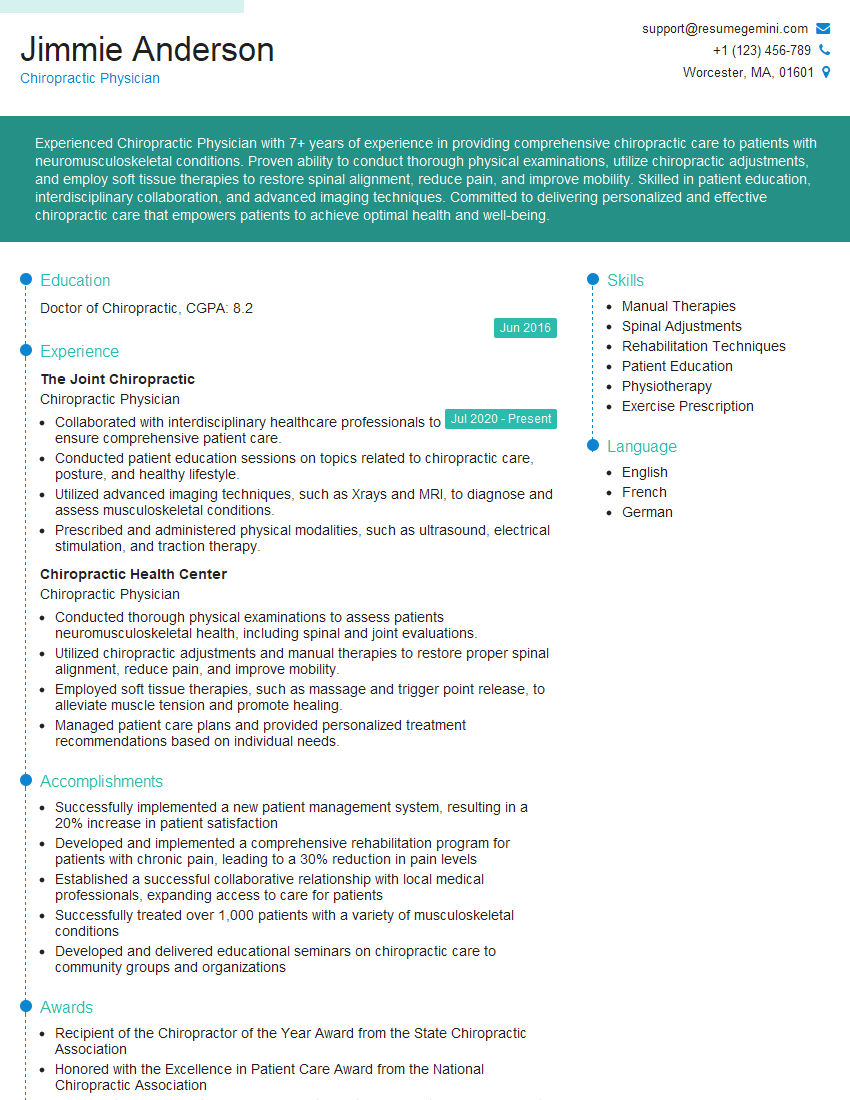
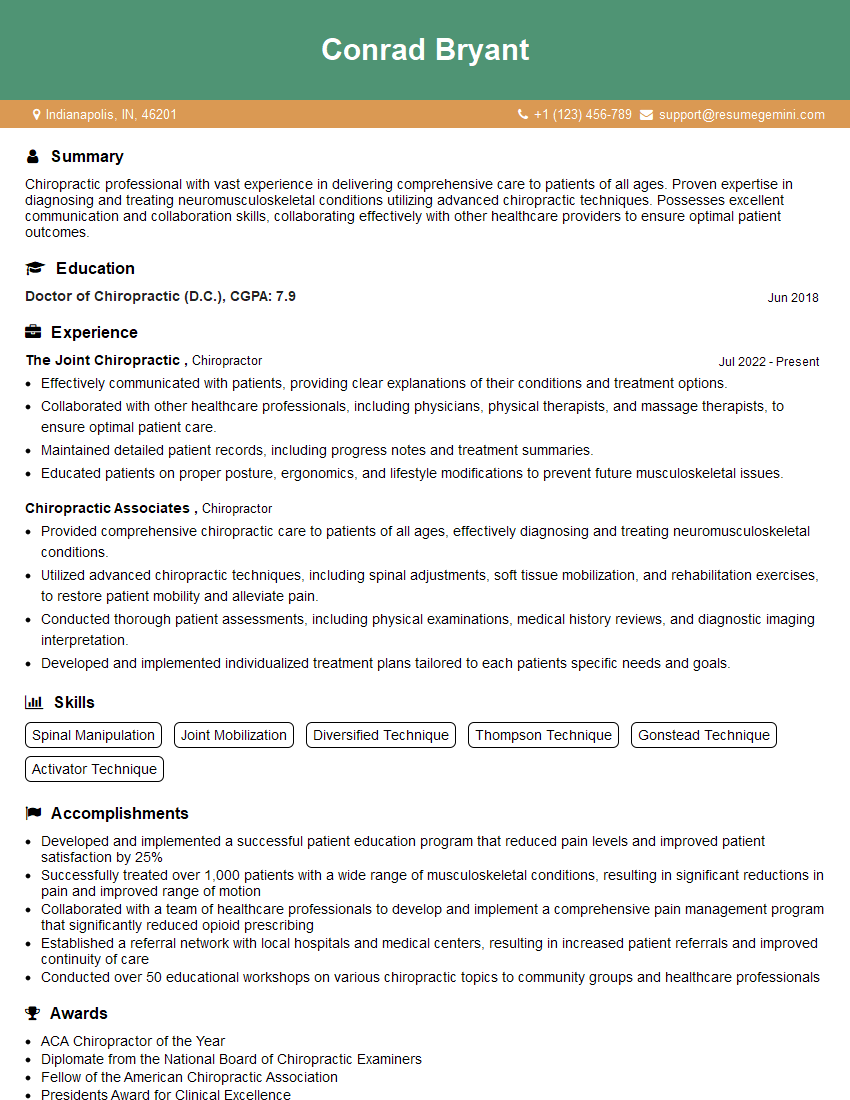
Mastering Chiropractic Spinal Manipulation is crucial for career advancement in this field. A strong understanding of these concepts will significantly enhance your interview performance and open doors to exciting opportunities. To increase your job prospects, crafting an ATS-friendly resume is paramount. ResumeGemini is a trusted resource that can help you build a professional and impactful resume. We provide examples of resumes tailored to Chiropractic Spinal Manipulation to guide you in creating a document that showcases your skills and experience effectively. Take the next step towards your dream career today!
Explore more articles
Users Rating of Our Blogs
Share Your Experience
We value your feedback! Please rate our content and share your thoughts (optional).
What Readers Say About Our Blog
To the interviewgemini.com Webmaster.
Very helpful and content specific questions to help prepare me for my interview!
Thank you
To the interviewgemini.com Webmaster.
This was kind of a unique content I found around the specialized skills. Very helpful questions and good detailed answers.
Very Helpful blog, thank you Interviewgemini team.