Feeling uncertain about what to expect in your upcoming interview? We’ve got you covered! This blog highlights the most important Transit Signal Prioritization interview questions and provides actionable advice to help you stand out as the ideal candidate. Let’s pave the way for your success.
Questions Asked in Transit Signal Prioritization Interview
Q 1. Explain the fundamental principles of Transit Signal Prioritization (TSP).
Transit Signal Prioritization (TSP) fundamentally aims to improve the efficiency and reliability of public transit by giving buses and trains priority at traffic signals. Instead of waiting at red lights like other vehicles, transit vehicles receive extended green times or early green signals, reducing delays and improving overall travel times. Think of it like having a dedicated fast lane at intersections for buses – minimizing wasted time stuck in traffic.
This is achieved through various technologies that detect approaching transit vehicles and communicate this information to the traffic signal controller, which then adjusts signal timings accordingly. The core principle is optimizing signal timings for the benefit of the transit system, balancing the needs of transit with the needs of other road users.
Q 2. Describe different TSP technologies and their functionalities.
Several technologies enable TSP. One common approach is using inductive loop detectors embedded in the roadway. These detect the presence of vehicles by sensing changes in the electromagnetic field. When a transit vehicle, identified by its unique transponder signal, approaches, the system triggers a priority request.
Another technology is video detection, utilizing cameras to identify and track transit vehicles. This method is particularly useful for detecting vehicles in areas where loop detectors are impractical to install, like curves or medians. Advanced systems use GPS-based tracking, where the location of the transit vehicle is transmitted to the traffic signal controller, allowing for proactive signal adjustments.
Finally, dedicated short-range communication (DSRC) technologies, such as those based on IEEE 802.11p, allow for direct communication between the transit vehicle and the traffic signal controller, providing real-time updates on vehicle location and speed. Each of these methods has its own strengths and weaknesses relating to cost, accuracy, and complexity.
Q 3. What are the key performance indicators (KPIs) used to evaluate TSP effectiveness?
Key Performance Indicators (KPIs) for evaluating TSP effectiveness include:
- Transit vehicle delay reduction: Measured as the average time saved per transit vehicle at signalized intersections.
- Transit travel time reduction: The overall reduction in travel time for transit vehicles along a corridor.
- Bus bunching reduction: TSP can help mitigate bus bunching, where multiple buses arrive at the same stop closely together, leading to uneven service.
- On-time performance improvement: The percentage increase in transit vehicles arriving on schedule.
- Fuel consumption reduction: Lower idling times at intersections lead to fuel savings.
- Greenhouse gas emission reduction: A reduction in idling translates to lower emissions.
These KPIs are usually measured before and after TSP implementation, allowing for a quantitative assessment of its impact.
Q 4. How does TSP improve transit reliability and reduce travel times?
TSP significantly improves transit reliability and reduces travel times by minimizing delays at intersections. By providing priority to transit vehicles, it creates more predictable and consistent travel times. Imagine a bus route that usually experiences unpredictable delays due to traffic; TSP would reduce those unpredictable delays, leading to more consistent arrival times at stops and better adherence to schedules.
This increased reliability benefits both passengers and transit operators. Passengers enjoy a more dependable service, encouraging greater ridership. Operators can better optimize schedules and resource allocation, leading to cost savings and improved operational efficiency. The reduction in travel time is a direct result of the minimized delays, making transit a more attractive and competitive mode of transportation compared to private vehicles.
Q 5. Explain the role of communication protocols (e.g., NTCIP) in TSP systems.
Communication protocols like NTCIP (National Transportation Communications for ITS Protocol) are crucial for TSP systems. NTCIP provides a standardized framework for communication between various ITS (Intelligent Transportation Systems) devices, including transit vehicles, traffic signal controllers, and central management systems.
NTCIP ensures interoperability by defining how different components exchange information. For TSP, this means defining messages for requesting priority, providing vehicle location and ID, and acknowledging the granted priority. Without a standard protocol like NTCIP, integrating various equipment from different vendors would be significantly more complex and costly. It’s the common language that allows all these different pieces of the system to work together seamlessly.
For example, a transit vehicle might send an NTCIP message indicating its approach to an intersection. The traffic signal controller receives this message, processes it, and sends back an NTCIP message confirming the granted priority, resulting in the coordinated signal timing changes.
Q 6. Describe the process of designing and implementing a TSP system.
Designing and implementing a TSP system involves several key steps:
- Needs assessment and feasibility study: This determines the potential benefits, identifies suitable locations for TSP implementation, and evaluates the technical feasibility.
- System design: Selecting appropriate technologies (e.g., loop detectors, video detection), defining communication protocols, and designing the system architecture.
- Hardware procurement and installation: This includes installing detectors, communication equipment, and upgrading traffic signal controllers.
- Software development and integration: Developing or procuring the necessary software to manage the system and process information.
- Testing and commissioning: Thorough testing of the system to ensure proper functioning and performance.
- Deployment and operation: Activating the system and monitoring its performance using KPIs.
- Ongoing maintenance and optimization: Regular maintenance and adjustments based on performance data.
Throughout this process, collaboration between transit agencies, traffic engineers, and technology providers is essential.
Q 7. What are the challenges in integrating TSP with other ITS applications?
Integrating TSP with other ITS applications presents several challenges:
- Data integration: Combining data from various sources (e.g., TSP, adaptive traffic control, incident management) requires a robust data integration strategy.
- Communication protocol compatibility: Ensuring compatibility between different communication protocols used by various ITS applications can be complex.
- System interoperability: Ensuring that different systems work together seamlessly and efficiently requires careful planning and coordination.
- Conflict resolution: Prioritizing transit vehicles while ensuring fair treatment of other road users requires sophisticated algorithms and conflict resolution strategies.
- Cost and complexity: Integrating multiple ITS applications can be costly and complex, requiring significant investment in hardware, software, and expertise.
Addressing these challenges requires careful planning, standardized communication protocols, and a holistic approach to ITS system design and management.
Q 8. How do you address conflicts between transit signal priority and other traffic demands?
Balancing transit signal priority (TSP) with other traffic demands is a crucial aspect of effective traffic management. It’s a delicate act of optimization, as prioritizing transit can sometimes lead to increased congestion for other road users. We use several strategies to mitigate this.
Adaptive Control Systems: These systems dynamically adjust signal timings based on real-time traffic conditions. Sensors monitor traffic flow for all vehicles, and the system prioritizes transit only when it won’t significantly impact other traffic. For example, if a bus is approaching an intersection but the general traffic flow is light, the system gives the bus priority. However, if the intersection is already congested with other vehicles, the priority might be reduced or delayed.
Dedicated Bus Lanes and Transitways: Separating transit from general traffic reduces the need for constant prioritization at intersections. This is a more structural solution that works best in high-transit areas.
Optimization Algorithms: Sophisticated algorithms are used to model traffic flow and predict the impact of different prioritization strategies. These algorithms often involve simulations and consider various performance metrics, such as average travel time for all road users, delay for transit vehicles, and overall network efficiency. We look for optimal solutions that balance transit performance with the impact on other traffic.
Prioritization Tiers: Instead of an all-or-nothing approach, we can implement a system of priority tiers. For example, emergency vehicles might have the highest priority, followed by buses during peak hours, and then other vehicles. This allows for a flexible approach that adapts to real-time needs.
Q 9. Explain the concept of adaptive signal control in the context of TSP.
Adaptive signal control is the heart of a modern TSP system. Instead of using fixed signal timings, an adaptive system continuously monitors traffic conditions and adjusts signal timings in real-time. In the context of TSP, this means that the system dynamically grants priority to transit vehicles only when it is beneficial and won’t negatively impact other road users.
Imagine a scenario where a bus is approaching an intersection. A traditional fixed-time signal might not give the bus sufficient green time, leading to delays. An adaptive system, however, monitors the bus’s approach and, if it detects a sufficient gap in other traffic, extends the green time to allow the bus to proceed quickly. Conversely, if the intersection is heavily congested, the system might prioritize other vehicles to minimize overall delay.
This adaptability is achieved through the use of various sensors and algorithms. The system gathers data on vehicle counts, speeds, and queue lengths. These data are then fed into an algorithm that adjusts the signal timings to optimize various performance metrics, such as average travel time, delay for transit vehicles, and overall network efficiency.
Q 10. How do you handle data acquisition and analysis for TSP system optimization?
Data acquisition and analysis are fundamental to TSP system optimization. We use a multi-faceted approach:
Sensor Data: This is the raw material for analysis. We gather data from various sensors, including loop detectors, video cameras, and GPS devices on transit vehicles. Data includes vehicle counts, speeds, queue lengths, occupancy, and GPS coordinates (for transit vehicles).
Data Cleaning and Preprocessing: Raw data often contains errors and inconsistencies. We employ techniques to clean and preprocess the data, ensuring accuracy and reliability before analysis.
Data Analysis Techniques: We use statistical methods and machine learning algorithms to analyze the data. This might involve identifying patterns, correlations, and anomalies in traffic flow. We also use historical data to model future traffic behavior.
Performance Metrics: We track key performance indicators (KPIs) such as transit vehicle delays, average travel times for all vehicles, and overall network efficiency. These metrics are crucial for evaluating the effectiveness of the TSP system.
Model Calibration and Validation: We build and calibrate traffic simulation models using the collected data. These models are validated against real-world observations to ensure accuracy.
Through iterative data collection and analysis, we can refine our TSP strategies and ensure optimal performance. We often use data visualization tools to identify bottlenecks and areas for improvement.
Q 11. What are the different types of sensors used in TSP systems and their limitations?
Several types of sensors are employed in TSP systems, each with its own strengths and limitations:
Inductive Loop Detectors: These are embedded in the pavement and detect vehicles passing over them. They’re reliable for counting vehicles but limited in their ability to provide information on vehicle type or speed.
Video Image Processing (VIP): Cameras capture video footage, and software algorithms analyze the images to detect and classify vehicles, providing richer data on vehicle type, speed, and trajectory. However, VIP systems can be expensive and sensitive to weather conditions.
GPS-based Tracking: GPS devices on transit vehicles provide precise location data, enabling real-time tracking and accurate prediction of arrival times. This is crucial for effective TSP, but relies on the availability and accuracy of GPS signals.
LiDAR and Radar: These technologies provide distance and speed measurements, allowing for more accurate vehicle detection and tracking. However, they tend to be expensive and require careful calibration.
Selecting the appropriate sensor type depends on factors such as budget, available infrastructure, desired level of detail, and environmental conditions. A common approach involves using a combination of sensors for a comprehensive view of traffic conditions.
Q 12. Describe your experience with TSP modeling and simulation tools.
My experience with TSP modeling and simulation tools is extensive. I’ve worked extensively with tools like CORSIM, VISSIM, and SUMO. These tools allow us to build detailed models of the transportation network, simulating traffic flow under various scenarios. This is vital in designing and evaluating TSP strategies before implementation.
For instance, using VISSIM, we can model a specific intersection and input data on bus arrival times, traffic volumes, and signal timings. The simulation allows us to test different TSP algorithms and see their impact on various performance metrics like bus delays, overall network delay, and queue lengths. This helps us optimize the system before deployment, minimizing disruption and maximizing efficiency.
I also have experience with custom-built simulation models, tailored to the specific characteristics of the network. These models often include advanced features such as adaptive control algorithms and dynamic transit vehicle routing. This allows for a more nuanced understanding of the system’s behavior and its responsiveness to different traffic conditions.
Q 13. How do you ensure the safety and security of a TSP system?
Safety and security are paramount in TSP system design and implementation. Several measures are essential:
Redundancy: The system should be designed with redundancy to ensure continued operation even in case of sensor or communication failures. This might involve backup sensors or communication channels.
Cybersecurity: Robust cybersecurity measures are crucial to protect the system from unauthorized access and cyberattacks. This includes secure network configurations, access control mechanisms, and regular security audits.
Fail-safe Mechanisms: The system should be designed with fail-safe mechanisms to prevent unintended consequences in case of errors or malfunctions. For instance, if a sensor fails, the system should revert to a default mode that prioritizes safety.
Regular Testing and Maintenance: Regular testing and maintenance are critical to ensure the system’s continued reliability and safety. This includes checking sensor accuracy, software updates, and system backups.
Human-in-the-loop: While automation is key, human oversight is crucial, especially during initial deployment and in critical situations. Operators should have the ability to override the system if necessary.
By carefully considering these factors, we can build a TSP system that is both efficient and safe.
Q 14. Explain your understanding of different TSP algorithms and their suitability for various scenarios.
Various TSP algorithms exist, each with its strengths and weaknesses, making them suitable for different scenarios.
Actuated Control: This algorithm prioritizes transit based on real-time detection of approaching vehicles. It’s simple and effective but can be sensitive to sensor failures and might not be ideal for dense networks with complex interactions.
Offset Optimization: This method adjusts the signal timings to ensure buses arrive at intersections during green phases. It’s effective for predictable transit schedules but less effective for systems with frequent schedule variations.
Model Predictive Control (MPC): This sophisticated approach uses traffic models to predict future traffic conditions and optimize signal timings accordingly. It’s very effective but requires substantial computational power and accurate traffic data.
Reinforcement Learning (RL): This cutting-edge approach uses machine learning to learn optimal signal control strategies through trial and error. While potentially very powerful, it requires extensive training data and computational resources.
The choice of algorithm depends on several factors including the size and complexity of the network, the availability of data, the predictability of transit schedules, and the computational resources available. Often, hybrid approaches combining multiple algorithms prove most effective.
Q 15. What are the ethical considerations when implementing TSP systems?
Ethical considerations in Transit Signal Prioritization (TSP) are crucial, as it involves manipulating traffic signals to benefit a specific mode of transport – transit vehicles. This raises concerns about fairness and equity. For example, prioritizing buses might lead to increased delays for other road users, potentially impacting emergency vehicles or causing congestion elsewhere. We need to ensure that any TSP implementation doesn’t disproportionately disadvantage certain groups or create new safety hazards.
- Fairness and Equity: Careful consideration must be given to the potential impact on all road users. Algorithms should be designed to minimize negative impacts on non-transit users while maximizing benefits for transit riders. This often involves balancing competing interests through sophisticated modeling and simulation.
- Transparency and Accountability: The decision-making process and the parameters used in the TSP system should be transparent and accessible to the public. This helps build trust and allows for informed public discourse. Regular performance audits and reports are necessary to ensure accountability.
- Data Privacy: TSP systems often rely on real-time data collected from various sources. Robust data privacy measures are essential to protect the personal information of individuals. Anonymisation and data aggregation techniques are important considerations.
- Accessibility: TSP systems should be designed to be accessible to all users, including individuals with disabilities. This might involve ensuring that pedestrian crossings remain appropriately timed and safe, even with transit prioritization in effect.
In practice, we address these concerns through robust community engagement, transparent data sharing, and the use of ethical algorithms designed to minimize negative externalities. We also undergo rigorous impact assessments to identify and mitigate potential problems before deployment.
Career Expert Tips:
- Ace those interviews! Prepare effectively by reviewing the Top 50 Most Common Interview Questions on ResumeGemini.
- Navigate your job search with confidence! Explore a wide range of Career Tips on ResumeGemini. Learn about common challenges and recommendations to overcome them.
- Craft the perfect resume! Master the Art of Resume Writing with ResumeGemini’s guide. Showcase your unique qualifications and achievements effectively.
- Don’t miss out on holiday savings! Build your dream resume with ResumeGemini’s ATS optimized templates.
Q 16. Describe your experience in troubleshooting and maintaining TSP systems.
My experience in troubleshooting and maintaining TSP systems involves a multi-faceted approach combining technical expertise with problem-solving skills. I’ve worked on systems using various communication protocols, from dedicated short-range communications (DSRC) to cellular networks. Typical troubleshooting involves identifying the root cause of issues such as:
- Communication failures: Loss of signal, network congestion, or faulty communication hardware between the transit vehicle and the traffic signal controller can be diagnosed using network monitoring tools and communication logs.
- Signal timing errors: Incorrect signal timing configurations causing unexpected delays can be identified by reviewing the system logs and comparing them to real-time observations.
- Hardware malfunctions: Faulty sensors or controllers are identified through testing and replacement, often requiring coordination with city infrastructure teams.
- Software bugs: Software updates are managed through version control and rigorous testing in simulation environments before deployment. In-field debugging might require remote access to system components and analysis of detailed system event logs.
A recent example involved a situation where bus prioritization was unexpectedly slow. Through meticulous log analysis, we discovered a faulty GPS sensor on a particular bus, causing inaccurate location data and delaying the green light activation. Replacing the sensor quickly resolved the issue. Preventive maintenance, including regular software updates and hardware inspections, is also critical in minimizing disruptions and improving system reliability.
Q 17. How do you handle unexpected events or system failures in a TSP system?
Handling unexpected events or system failures requires a layered approach, prioritizing safety and minimizing disruption. We utilize redundant systems and fail-safes to ensure system resilience. In the event of a failure, the system is designed to revert to a pre-defined state, such as default signal timings, to ensure traffic continues to flow safely. Our response plan includes:
- Real-time monitoring: The system uses dashboards to monitor key performance indicators and alert us to anomalies or failures.
- Automated alerts: Automated emails and notifications are sent to relevant personnel when critical failures occur.
- Remote diagnostics: Remote access to system components allows for troubleshooting and diagnosis without on-site visits in many cases.
- On-site intervention: In situations requiring immediate attention, on-site personnel are dispatched to address the issue promptly.
- Escalation procedures: A clear escalation path is established to ensure that issues are addressed by the appropriate level of expertise in a timely manner.
For instance, if a communication link fails, the system automatically reverts to a default operational mode, which prioritizes safety. Meanwhile, the operations team is immediately notified and begins troubleshooting the communication issue using remote diagnostics. Regular system testing and disaster recovery exercises are essential to refine our response capabilities.
Q 18. What is your experience with different types of transit vehicles and their impact on TSP design?
Different transit vehicles impact TSP design significantly due to variations in their size, speed, acceleration, and braking characteristics. Consider these examples:
- Buses: Larger buses require longer green light durations and more significant signal adjustments than smaller vehicles. Their acceleration and deceleration rates also influence the optimal signal timing.
- Light Rail Vehicles (LRVs): LRVs have unique operational characteristics, such as longer stopping distances, and require more sophisticated coordination with adjacent intersections. Their fixed routes allow for more precise predictions and optimizations.
- Electric Buses: Their regenerative braking systems might require adjustments in signal timing algorithms to account for their slightly altered braking profiles.
TSP design must accommodate these differences through vehicle-specific parameters in the control algorithms. We might use different prioritization strategies for buses versus LRVs. For example, a bus might receive a longer green light duration compared to a LRV that might only get a small green-time extension. Data from various transit vehicle types is crucial for effective TSP model calibration and optimization. This often involves integrating data from various sources such as Automatic Vehicle Location (AVL) systems and Automatic Passenger Counting (APC) systems.
Q 19. Explain your experience with real-time data analysis for TSP optimization.
Real-time data analysis is fundamental to TSP optimization. We utilize various data sources to refine our algorithms and ensure optimal performance. These include:
- Automatic Vehicle Location (AVL) data: Provides real-time location and speed of transit vehicles, enabling precise prioritization based on current position and schedule adherence.
- Traffic signal data: Provides real-time information on signal timings, queue lengths, and overall traffic flow, which are critical for accurate modeling of traffic conditions.
- Passenger data: Passenger occupancy data from Automatic Passenger Counting (APC) systems helps optimize prioritization based on demand and passenger loading levels.
- Weather data: Incorporating weather information allows for adjustments to signal timings based on changing traffic conditions due to precipitation or other weather-related incidents.
We use advanced analytical techniques such as machine learning and data mining to analyze this data and identify patterns and anomalies that inform adjustments to our algorithms. For example, we use machine learning models to predict future transit vehicle arrivals based on historical data and current conditions. This proactive approach reduces the likelihood of conflicts and ensures more efficient prioritization.
Q 20. How do you evaluate the cost-effectiveness of a TSP system?
Evaluating the cost-effectiveness of a TSP system involves a comprehensive assessment of both costs and benefits. We use a cost-benefit analysis (CBA) framework that considers both tangible and intangible factors.
- Costs: These include the initial investment in hardware, software, installation, and integration with existing infrastructure. Ongoing maintenance, software updates, and operational costs are also considered.
- Benefits: These are measured in terms of reduced transit travel times, improved fuel efficiency, reduced emissions, increased ridership, and improvements in overall traffic flow. The benefits are quantified using metrics like average travel time savings, reduced delays, and fuel consumption reductions.
To illustrate, we might calculate the return on investment (ROI) based on the reduction in transit operating costs compared to the initial investment. We also conduct sensitivity analyses to assess the impact of different assumptions and uncertainties on the cost-benefit ratio. Life-cycle cost analysis is performed to account for all costs over the system’s lifespan. Intangible benefits such as improved air quality and reduced greenhouse gas emissions are often valued using shadow prices or other techniques.
Q 21. Describe your experience with stakeholder engagement in TSP projects.
Stakeholder engagement is critical for successful TSP projects. We employ a multi-stage approach that begins with initial community outreach and continues throughout the project lifecycle.
- Community Meetings: Early engagement involves holding public meetings and workshops to introduce the project, gather feedback, and address concerns from residents, businesses, and transit agencies.
- Surveys and Online Feedback: Surveys and online platforms are used to gather a wider range of opinions and gather data on traffic patterns and travel behavior.
- Technical Presentations: Detailed presentations are provided to stakeholders, such as city council members and transit authorities, to explain technical aspects of the system.
- Data Sharing: Transparency in data sharing is crucial. We make system performance data publicly accessible to foster trust and accountability.
- Post-Implementation Evaluation: After implementation, feedback is collected to continuously improve the system and address any unforeseen issues.
For example, in a recent project, we held several public meetings to discuss the proposed TSP system with residents and business owners. We addressed their concerns regarding potential traffic impacts and adapted the system design based on their input. Ongoing dialogue with the community has been essential to ensure the system meets the needs of all stakeholders.
Q 22. What are some common mistakes to avoid when designing a TSP system?
Designing a Transit Signal Prioritization (TSP) system requires careful planning to avoid pitfalls that can compromise efficiency and safety. Common mistakes include:
Insufficient data collection and analysis: A TSP system relies heavily on accurate data about bus routes, schedules, and traffic patterns. Inadequate data leads to poorly optimized signal timings and ineffective prioritization. For example, relying solely on historical data without considering real-time traffic fluctuations can cause delays.
Ignoring the impact on other traffic: Prioritizing transit vehicles shouldn’t excessively hinder other road users. Poorly designed TSP systems can lead to increased congestion and frustration for general traffic, negating the benefits for transit.
Lack of flexibility and adaptability: Traffic conditions are dynamic. A rigid TSP system unable to adjust to unexpected events (accidents, road closures) will be ineffective. The system needs to be adaptable to real-time changes.
Inadequate communication infrastructure: Reliable and robust communication between the buses, signal controllers, and central management system is crucial. Using outdated or unreliable technologies can lead to system failures and loss of prioritization benefits.
Insufficient stakeholder engagement: Successful TSP implementation requires collaboration with transit agencies, traffic engineers, and the community. Neglecting stakeholder input can lead to resistance and ultimately, system failure. For instance, a lack of communication with local businesses about potential disruptions during implementation can create negative perceptions.
Q 23. How do you ensure the long-term sustainability of a TSP system?
Long-term sustainability of a TSP system requires a multifaceted approach:
Regular maintenance and updates: The system’s hardware and software require routine maintenance and upgrades to ensure optimal performance. This includes replacing outdated components and updating software to incorporate new algorithms and features.
Data quality assurance: Continuously monitoring and validating data accuracy is essential. Implementing data quality checks and validation processes will prevent the system from relying on inaccurate information and thus, making ineffective decisions.
Adaptive control strategies: The system should incorporate adaptive control strategies that adjust to changing traffic patterns and demand over time. Machine learning techniques can be applied to improve the system’s ability to learn and adapt.
Funding and resource allocation: Securing long-term funding for maintenance, upgrades, and personnel is crucial. A clear demonstration of the system’s cost-effectiveness in terms of reduced travel times, fuel consumption, and emissions can help secure ongoing funding.
Community engagement: Ongoing engagement with stakeholders is essential for addressing any issues that arise and garnering continued support. Regular feedback mechanisms should be in place to ensure the system meets the needs of all road users.
Q 24. Describe your experience with different types of communication networks used in TSP systems.
My experience encompasses various communication networks used in TSP systems, each with its strengths and weaknesses:
Dedicated Short-Range Communications (DSRC): DSRC offers high bandwidth and reliable communication for real-time data exchange between buses and signal controllers. It’s especially useful in dense urban environments where reliable communication is critical. However, the initial infrastructure investment can be significant.
Cellular networks (3G/4G/5G): Cellular networks provide a widely available and cost-effective alternative, especially for larger geographical areas. However, reliability can be affected by network congestion and signal strength issues.
Wireless Fidelity (WiFi): WiFi is suitable for short-range communication, but its reliability can be affected by interference. It’s often used as a supplementary technology in conjunction with other communication networks.
In several projects, I’ve integrated a hybrid approach, combining DSRC for high-bandwidth, real-time communication with cellular backup for improved reliability and wider coverage.
Q 25. How do you deal with data integrity and validation in TSP systems?
Data integrity and validation are critical in TSP systems. My approach involves:
Data source verification: Ensuring the reliability and accuracy of data sources, such as GPS devices on buses and traffic sensors, through regular calibration and verification. This may involve comparing data from multiple sources for consistency checks.
Data cleansing and transformation: Cleaning the data to remove outliers and inconsistencies and transforming it into a usable format for the TSP algorithm. This often involves handling missing values and dealing with noisy data.
Real-time data validation: Implementing real-time checks to identify and flag any data anomalies immediately. For example, if a bus reports a speed significantly exceeding the speed limit, a flag is triggered for investigation.
Redundancy and backup systems: Implementing redundant data sources and backup systems to ensure data availability in case of failures. This might include using multiple GPS receivers on each bus or multiple communication channels.
Audit trails: Maintaining detailed audit trails of all data modifications to track changes and ensure data integrity. This enables tracing any discrepancies back to their origin.
Q 26. What are the future trends in TSP technology?
The future of TSP technology points towards:
Increased reliance on AI and machine learning: AI-powered algorithms will enable more adaptive and efficient signal control strategies. Machine learning will be used to optimize signal timings in response to real-time traffic conditions and learn from historical data.
Integration with other ITS systems: TSP systems will be more tightly integrated with other Intelligent Transportation Systems (ITS) components, such as adaptive traffic management systems and connected vehicle technologies, to provide a holistic transportation management solution.
Enhanced data analytics and visualization: Advanced data analytics will provide deeper insights into the performance of TSP systems, allowing for continuous improvement and optimization. Interactive dashboards will help visualize real-time system performance and facilitate decision-making.
Expansion of communication technologies: The use of 5G and other advanced communication technologies will provide even faster and more reliable data exchange, enabling more responsive and efficient signal control.
Focus on sustainability and environmental impact: TSP systems will be designed to minimize fuel consumption and emissions, contributing to more sustainable transportation systems.
Q 27. Describe your proficiency in programming languages relevant to TSP (e.g., Python).
I’m proficient in Python, a crucial language in TSP development. I utilize its extensive libraries like pandas for data manipulation and analysis, numpy for numerical computations, and scikit-learn for machine learning algorithms. For example, I’ve used Python to:
Develop algorithms for optimizing signal timings based on real-time traffic data and bus schedules.
Build simulations to test and evaluate the performance of different TSP strategies under various traffic scenarios.
Create data visualization tools to monitor system performance and identify areas for improvement.
Interface with databases to store and manage large amounts of transportation data.
# Example Python code snippet for data analysis: import pandas as pd data = pd.read_csv('traffic_data.csv') # ... further data processing and analysis ...
Q 28. Explain how you would approach optimizing a TSP system for a specific geographical area.
Optimizing a TSP system for a specific geographical area involves a systematic approach:
Data acquisition and analysis: Gather comprehensive data on the area’s road network, traffic patterns, bus routes, and schedules. This might involve using traffic sensors, GPS data from buses, and publicly available traffic data sources.
Network modeling: Develop a detailed model of the road network, incorporating information about signal timings, intersection geometry, and lane configurations. Specialized software tools are often used for this purpose.
Algorithm selection and parameter tuning: Choose appropriate TSP algorithms (e.g., adaptive signal control algorithms), considering factors like the complexity of the network and the computational resources available. Tune the algorithm parameters to optimize performance based on the collected data and the specific needs of the area.
Simulation and testing: Simulate the performance of the TSP system using the developed model. This allows for testing different scenarios and identifying potential bottlenecks or issues before deploying the system. This may involve microscopic simulation software which is computationally intensive.
Deployment and monitoring: Deploy the system and continuously monitor its performance using real-time data. Make adjustments and fine-tune the system’s parameters as needed to ensure optimal efficiency and minimize delays for both transit and general traffic.
Stakeholder engagement: Engage with transit agencies, traffic engineers, and the community to gather feedback and address any concerns.
Key Topics to Learn for Transit Signal Prioritization Interview
- Fundamentals of Traffic Signal Control: Understanding basic signal timing, cycle lengths, and phasing is crucial. Explore different signal control strategies and their impact on traffic flow.
- Transit Signal Priority (TSP) Technologies: Become familiar with various TSP technologies, including actuated systems, preemption systems, and adaptive control systems. Understand their advantages and limitations.
- Communication Protocols and Data Integration: Grasp the importance of communication between transit vehicles and traffic signal controllers. Explore different communication protocols and how data is used for real-time optimization.
- Performance Measurement and Evaluation: Learn how to measure the effectiveness of TSP systems. Familiarize yourself with key performance indicators (KPIs) such as bus delay reduction, travel time savings, and fuel efficiency improvements.
- Network-Wide Optimization: Understand how TSP interacts with the broader traffic management system. Explore strategies for optimizing TSP across a network of signals to maximize overall efficiency.
- Practical Applications and Case Studies: Research successful TSP implementations in different cities and contexts. Analyze their design, challenges, and outcomes. This will help you demonstrate your understanding of real-world applications.
- Problem-Solving and Troubleshooting: Be prepared to discuss common challenges in TSP implementation and maintenance, such as communication failures, conflicting priorities, and unexpected events. Show your ability to identify and solve problems using a systematic approach.
Next Steps
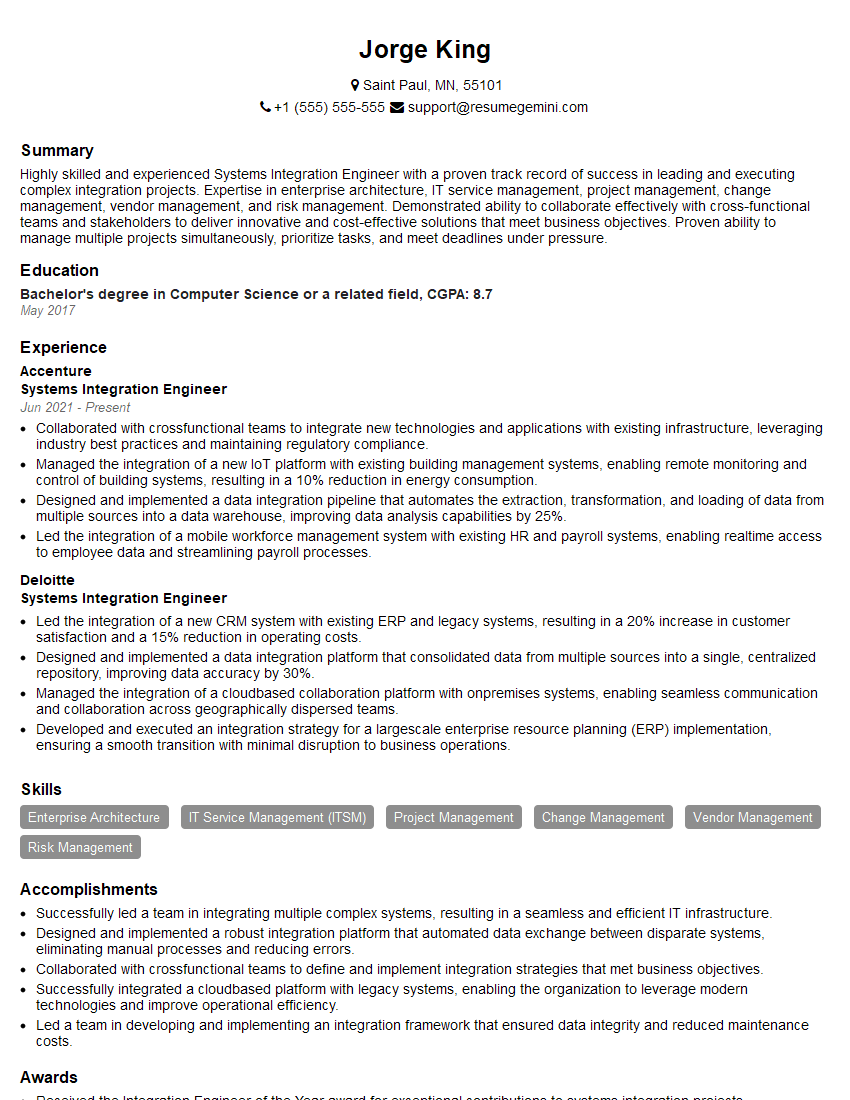
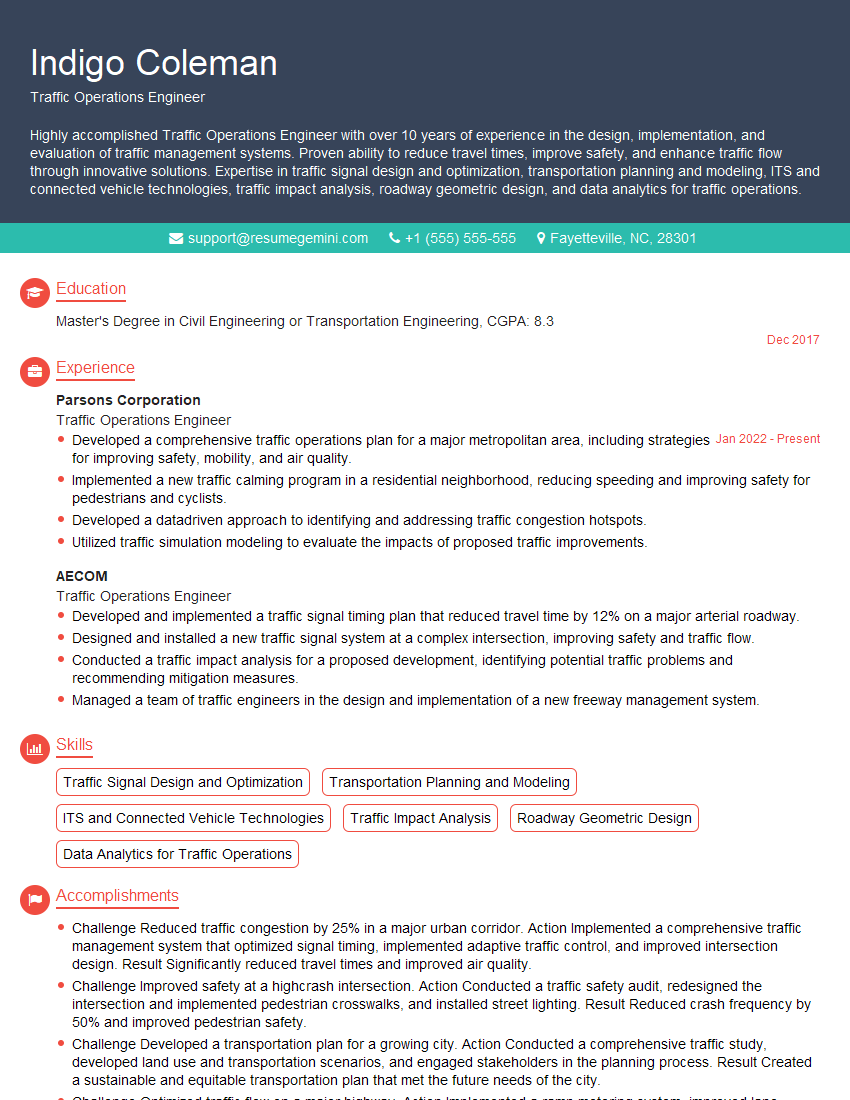
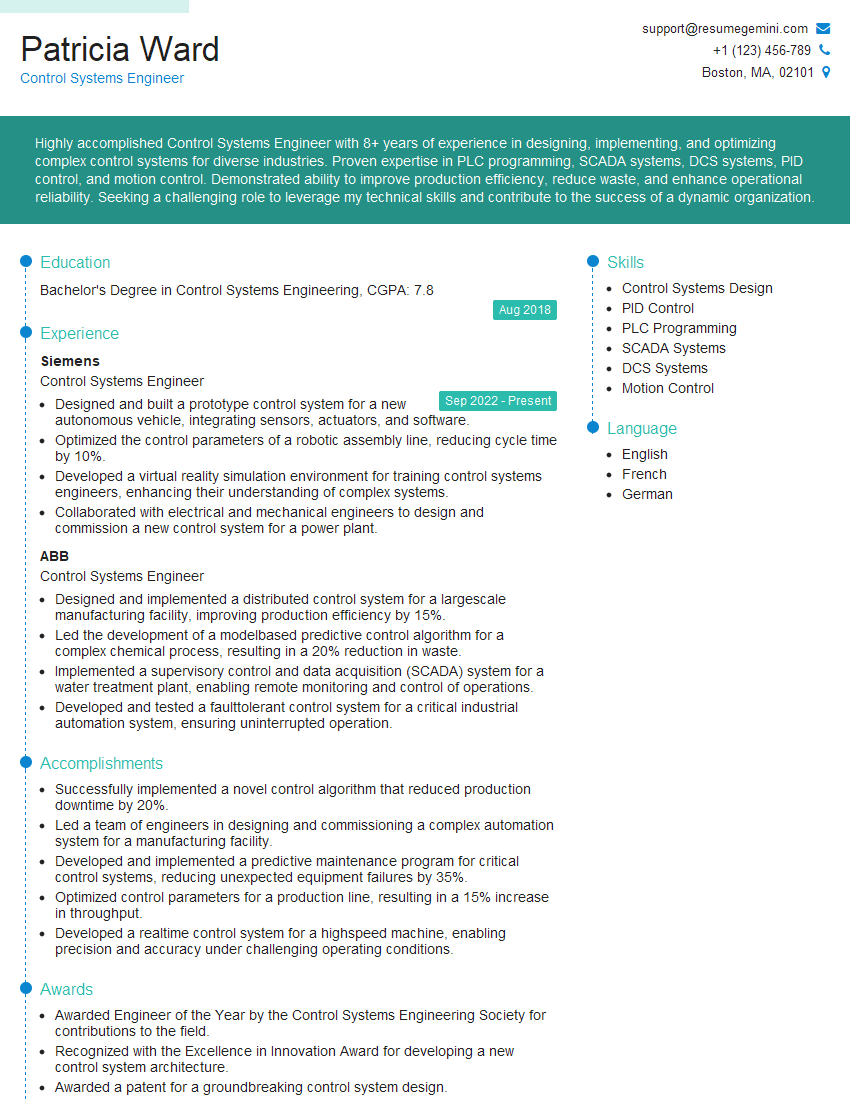
Mastering Transit Signal Prioritization opens doors to exciting career opportunities in intelligent transportation systems and urban planning. A strong understanding of this field demonstrates valuable expertise in optimizing traffic flow and improving public transportation efficiency. To maximize your job prospects, it’s essential to craft a compelling and ATS-friendly resume that highlights your skills and experience effectively. ResumeGemini is a trusted resource to help you build a professional resume that stands out. We provide examples of resumes tailored to Transit Signal Prioritization to give you a head start. Invest time in creating a strong resume – it’s your first impression with potential employers.
Explore more articles
Users Rating of Our Blogs
Share Your Experience
We value your feedback! Please rate our content and share your thoughts (optional).
What Readers Say About Our Blog
To the interviewgemini.com Webmaster.
Very helpful and content specific questions to help prepare me for my interview!
Thank you
To the interviewgemini.com Webmaster.
This was kind of a unique content I found around the specialized skills. Very helpful questions and good detailed answers.
Very Helpful blog, thank you Interviewgemini team.