Cracking a skill-specific interview, like one for Workplace Wellness Programs Development, requires understanding the nuances of the role. In this blog, we present the questions you’re most likely to encounter, along with insights into how to answer them effectively. Let’s ensure you’re ready to make a strong impression.
Questions Asked in Workplace Wellness Programs Development Interview
Q 1. Describe your experience developing and implementing a comprehensive workplace wellness program.
Developing and implementing a comprehensive workplace wellness program requires a strategic, multi-faceted approach. It’s not just about offering a gym membership; it’s about creating a culture of health and well-being. In my previous role at [Company Name], I spearheaded the development of a program that encompassed physical, mental, and financial wellness.
We started by conducting a thorough needs assessment, surveying employees to understand their priorities and concerns regarding their well-being. This informed the program’s design, ensuring relevance and engagement. The program included:
- Physical Wellness: Subsidized gym memberships, on-site fitness classes (yoga, Zumba, etc.), health screenings, and health challenges (e.g., step competitions).
- Mental Wellness: Access to employee assistance programs (EAPs), mindfulness workshops, stress management training, and mental health awareness campaigns.
- Financial Wellness: Workshops on budgeting, debt management, and retirement planning, as well as access to financial counseling resources.
Implementation involved phased roll-out, starting with pilot programs to gather feedback and make adjustments before full-scale launch. We utilized various communication channels – intranet, emails, posters, team meetings – to promote participation and ensure program visibility. Regular communication, including updates, success stories, and employee feedback sessions, was crucial for maintaining engagement.
Q 2. What metrics do you use to measure the success of a wellness program?
Measuring the success of a wellness program requires a balanced approach using both quantitative and qualitative data. Key metrics include:
- Participation Rates: Tracking the number of employees participating in different program components. Low participation might indicate a need to review program offerings or marketing strategies.
- Health Risk Assessments: Analyzing changes in biometric data (e.g., blood pressure, cholesterol, BMI) before and after program implementation to assess improvements in health indicators.
- Employee Surveys: Gathering feedback on program satisfaction, perceived impact on well-being, and suggestions for improvement. Open-ended questions provide valuable qualitative insights.
- Healthcare Costs: Monitoring changes in healthcare utilization and costs. While a direct causal link might be difficult to establish, a well-designed program may contribute to lower costs over time.
- Absenteeism and Presenteeism: Tracking employee absences and presenteeism (being at work but unproductive due to health issues) to assess program impact on productivity.
- Employee Engagement and Morale: Using surveys or pulse checks to measure employee satisfaction and overall engagement, which can indirectly reflect program effectiveness.
It’s important to establish baseline data before implementing the program to facilitate meaningful comparisons and assess the program’s true impact.
Q 3. How would you address employee resistance to participating in a wellness program?
Addressing employee resistance to wellness programs requires a sensitive and empathetic approach. Resistance stems from various factors, including perceived lack of time, privacy concerns, skepticism about program effectiveness, or past negative experiences. Here’s a step-by-step approach:
- Understand the Reasons: Conduct surveys or focus groups to understand employee concerns and tailor the program to address specific needs and anxieties.
- Promote Voluntary Participation: Emphasize that participation is voluntary and that the program aims to support, not mandate, healthy choices. Avoid coercive or punitive measures.
- Address Privacy Concerns: Clearly communicate how employee data will be handled and protected. Ensure data is anonymized whenever possible.
- Offer Diverse Options: Provide a wide range of activities and programs to cater to different interests, preferences, and physical capabilities. One size doesn’t fit all.
- Highlight Success Stories: Share testimonials from employees who have benefited from the program to inspire others and demonstrate its value.
- Make it Convenient and Accessible: Offer programs during lunch breaks, after work hours, or remotely. Make it easy for employees to participate.
- Focus on the Positive: Promote the benefits of wellness – improved health, increased energy, stress reduction, and improved productivity – rather than dwelling on negative aspects.
Building trust and fostering a culture of support is crucial to overcoming employee resistance.
Q 4. Explain your experience with budgeting and resource allocation for wellness initiatives.
Budgeting and resource allocation for wellness initiatives require careful planning and prioritization. The budget should align with the overall organizational goals and reflect the scope of the program. My approach involves:
- Define Program Goals and Objectives: Clearly outline what the program aims to achieve, which helps justify the allocated resources.
- Estimate Costs: Determine the costs associated with different program components (e.g., gym memberships, workshops, technology, staff time).
- Identify Funding Sources: Explore various funding options, such as company contributions, employee contributions, grants, or cost savings from reduced healthcare claims.
- Prioritize Initiatives: Based on the needs assessment and cost-benefit analysis, prioritize initiatives with the highest potential impact and ROI.
- Track Expenditures: Monitor spending throughout the program’s implementation and make adjustments as needed.
- Measure ROI: Assess the return on investment through metrics like improved employee health, reduced absenteeism, and enhanced productivity.
For example, in a previous project, we secured funding through a combination of company contributions and a health insurance provider’s wellness incentive program. This collaborative approach allowed us to offer a comprehensive program with minimal impact on the company’s budget.
Q 5. How do you stay current on trends and best practices in workplace wellness?
Staying current on trends and best practices in workplace wellness requires continuous learning and engagement with the field. My strategies include:
- Professional Development: Attending conferences, workshops, and webinars related to workplace wellness. This provides access to the latest research and best practices from experts.
- Professional Networks: Engaging with professional organizations like the Wellness Council of America (WELCOA) or the American College of Sports Medicine (ACSM) to stay updated on industry news and trends.
- Industry Publications and Research: Reading relevant journals, articles, and reports on workplace wellness to stay informed about emerging trends and evidence-based interventions.
- Online Resources: Following reputable online resources, blogs, and websites dedicated to workplace wellness to access timely information and insights.
- Benchmarking: Researching successful wellness programs in other organizations to identify best practices and adapt them to my own context.
By actively participating in these activities, I ensure my knowledge and strategies remain current and relevant, allowing me to design and implement effective and innovative wellness programs.
Q 6. Describe your experience using wellness technology and data analytics.
Wellness technology and data analytics play a crucial role in enhancing the effectiveness and impact of workplace wellness programs. My experience includes utilizing various technologies and analytical tools to:
- Track Participation and Engagement: Using platforms to monitor employee participation in various wellness activities, providing insights into program effectiveness.
- Collect Biometric Data: Utilizing wearable devices and health screening tools to gather data on employees’ health indicators and track progress over time.
- Personalize Wellness Recommendations: Analyzing collected data to provide personalized recommendations to employees based on their specific needs and risk factors.
- Measure Program Outcomes: Employing data analytics techniques to evaluate the impact of wellness initiatives on employee health, productivity, and healthcare costs.
- Data-Driven Decision Making: Using data insights to inform program adjustments, improve effectiveness, and optimize resource allocation.
For instance, I’ve used platforms that integrate with wearable devices to collect fitness data, allowing us to track employee activity levels and provide personalized feedback. This data-driven approach facilitated more targeted interventions and demonstrably improved program outcomes.
Q 7. How would you create a wellness program that caters to a diverse workforce?
Creating a wellness program for a diverse workforce requires a deep understanding of the unique needs, preferences, and cultural backgrounds of employees. It’s about inclusivity, not just representation. My approach involves:
- Needs Assessment: Conducting thorough needs assessments that capture the diverse perspectives of the workforce. This might involve using multiple languages, formats, and methods to ensure accessibility.
- Culturally Sensitive Programs: Offering programs that are sensitive to cultural norms and practices. This could involve considering dietary restrictions, religious observances, and family structures in the program’s design.
- Diverse Program Offerings: Providing a wide range of activities that cater to diverse interests and abilities. This might include offering activities that appeal to different age groups, fitness levels, and cultural backgrounds.
- Accessible Resources: Ensuring accessibility to program materials and resources, including translation services, disability accommodations, and inclusive communication strategies.
- Inclusive Communication: Using communication channels and styles that resonate with a diverse workforce. This may involve using multiple languages, incorporating visuals, and employing inclusive language.
- Feedback Mechanisms: Providing multiple avenues for employees to provide feedback on the program, ensuring their voices are heard and their concerns addressed.
For example, in a previous project with a globally diverse workforce, we offered culturally relevant health education materials, wellness workshops in multiple languages, and fitness activities tailored to different preferences and physical limitations. This ensured that the program was accessible and engaging for everyone.
Q 8. How do you ensure employee privacy and data security in a wellness program?
Employee privacy and data security are paramount in any wellness program. We must adhere to strict regulations like HIPAA (in the US) and GDPR (in Europe), and build trust with employees. This starts with transparent communication about how data will be collected, used, and protected. We use anonymization techniques wherever possible, reporting aggregate data rather than individual results. For instance, instead of reporting that ‘John Doe’ has high blood pressure, we might report that ‘20% of participants showed elevated blood pressure readings’. Access to individual data is strictly limited to authorized personnel, and we employ strong security measures such as encryption and secure data storage to prevent unauthorized access. We also regularly conduct security audits and employee training to reinforce best practices.
Furthermore, informed consent is crucial. Employees must understand what data is being collected, why it’s being collected, and how it will be used before participation. They should have the right to access, correct, or delete their data at any time. Providing clear and accessible privacy policies is essential for maintaining trust and compliance.
Q 9. What strategies do you use to promote employee engagement and participation?
Promoting engagement and participation requires a multi-pronged approach that caters to diverse employee needs and preferences. We begin by conducting thorough needs assessments to understand what aspects of wellness are most relevant to our workforce. This could involve surveys, focus groups, or one-on-one interviews. Based on these findings, we develop a program offering a variety of activities, including those that address physical health (e.g., fitness challenges, on-site gym memberships), mental health (e.g., mindfulness workshops, stress management programs), and financial wellness (e.g., budgeting seminars, debt management resources).
We also leverage gamification techniques, such as points-based systems and leaderboards, to make participation more fun and motivating. Regular communication through emails, newsletters, and intranet postings keeps employees informed about upcoming events and program updates. We build a sense of community by encouraging peer-to-peer support and team-based challenges. Recognizing and rewarding participation is also essential; this could involve gift cards, public acknowledgment, or extra time off. Finally, we constantly solicit feedback to adjust the program and ensure it remains engaging and relevant.
Q 10. How would you address a specific health concern, such as high stress levels, within the workplace?
Addressing high stress levels requires a multifaceted approach that combines education, resources, and support. We’d start by educating employees about the sources and effects of stress and providing practical strategies for stress management. This might include workshops on mindfulness, time management, or relaxation techniques. We’d then make available resources such as employee assistance programs (EAPs) that offer confidential counseling and support services. We could also implement workplace changes to mitigate stressors, such as adjusting workloads, improving communication, or providing more autonomy. For example, we might implement flexible work arrangements, offer quiet spaces for breaks, or introduce stress-reduction initiatives like yoga classes during lunch.
Data-driven decision making is key. We might conduct stress surveys to assess the prevalence and sources of stress within the organization. We’d then use the findings to inform our interventions and measure the program’s effectiveness. It’s important to remember that stress management is an ongoing process, not a one-time fix. Regular follow-up and ongoing support are essential for long-term success.
Q 11. Describe your experience with creating and delivering wellness workshops or training sessions.
I have extensive experience in designing and delivering engaging wellness workshops and training sessions. My approach focuses on interactive learning, blending didactic instruction with practical exercises and group discussions. For example, in a workshop on stress management, I might incorporate mindfulness exercises, role-playing scenarios, and group brainstorming sessions to help participants develop effective coping strategies. I tailor the content and delivery style to the specific audience and their needs. For instance, a workshop for executives might focus on time management and leadership skills, while a workshop for entry-level employees might focus on work-life balance and building resilience.
I use various tools and techniques to enhance engagement, such as visual aids, case studies, and real-life examples. Post-workshop evaluations help me assess the effectiveness of the sessions and make improvements for future offerings. I always ensure that the workshops align with the overall objectives of the wellness program and integrate seamlessly with other initiatives.
Q 12. How do you evaluate and adapt a wellness program based on feedback and data?
Evaluation and adaptation are vital for any successful wellness program. We collect data from various sources, including participation rates, program feedback surveys, health screenings, and biometric data (with appropriate consent and anonymization). This data helps us measure the program’s effectiveness in achieving its goals, such as improving employee health and well-being, reducing absenteeism, and boosting productivity. Feedback from surveys and focus groups provides qualitative insights into employee satisfaction and identifies areas for improvement.
Based on this data, we adapt the program accordingly. For instance, if participation in a particular activity is low, we might explore alternative offerings or promotional strategies. If feedback reveals that employees find a particular aspect of the program unhelpful or difficult to access, we may modify the program or introduce additional support resources. Regular program reviews and adjustments ensure that it remains relevant, engaging, and effective in meeting the needs of the workforce.
Q 13. What is your experience with integrating wellness programs with other HR initiatives?
Integrating wellness programs with other HR initiatives is crucial for maximizing their impact. For example, we can align wellness goals with performance management systems by incentivizing healthy behaviors. This could involve rewarding employees for achieving wellness goals, such as participating in health screenings or completing a fitness challenge. Wellness initiatives can also be integrated with recruitment and onboarding programs to attract and retain top talent. Highlighting the company’s commitment to employee well-being can make it a more attractive employer.
Furthermore, we can collaborate with other HR departments, such as benefits and compensation, to ensure that the wellness program aligns with the overall employee benefits package. This might involve offering discounts on gym memberships or integrating wellness programs with employee insurance plans. A cohesive approach helps to reinforce the organization’s commitment to employee well-being and creates a more supportive and healthy work environment.
Q 14. How do you manage conflicting priorities and deadlines in a fast-paced wellness environment?
Managing conflicting priorities and deadlines in a fast-paced wellness environment requires effective time management and prioritization skills. I use project management tools and techniques such as Gantt charts and Kanban boards to visualize tasks, deadlines, and dependencies. I break down large projects into smaller, manageable tasks, and prioritize them based on urgency and importance. This allows me to focus my efforts on the most critical activities first and ensure that deadlines are met.
Regular communication and collaboration with stakeholders, such as HR colleagues, program participants, and vendors, are crucial for maintaining transparency and addressing any potential conflicts. I also build in buffer time for unexpected delays or challenges and regularly review my schedule to adjust priorities as needed. Flexibility and adaptability are essential for navigating a fast-paced environment, and continuous learning helps me refine my skills and approach.
Q 15. How do you collaborate effectively with stakeholders, including employees, management, and vendors?
Effective stakeholder collaboration is the cornerstone of a successful workplace wellness program. I approach this by establishing open communication channels from the outset. This involves regular meetings with employees at all levels – from frontline workers to senior management – to understand their needs, concerns, and preferences. I utilize surveys, focus groups, and one-on-one interviews to gather diverse perspectives.
With management, I focus on demonstrating the program’s alignment with organizational goals, such as improved productivity and reduced healthcare costs. I present data-driven proposals, outlining projected ROI and showcasing best practices. For vendors, I create clear Requests for Proposals (RFPs) detailing specific requirements and evaluation criteria, ensuring transparency and accountability. Throughout the process, I maintain meticulous documentation and actively seek feedback to ensure everyone feels heard and involved.
For example, in a previous role, I successfully navigated conflicting priorities between management (focused on cost-effectiveness) and employees (desiring a broader range of activities). By conducting thorough needs assessments and presenting a phased implementation plan with measurable goals, I was able to build consensus and secure buy-in from all stakeholders.
Career Expert Tips:
- Ace those interviews! Prepare effectively by reviewing the Top 50 Most Common Interview Questions on ResumeGemini.
- Navigate your job search with confidence! Explore a wide range of Career Tips on ResumeGemini. Learn about common challenges and recommendations to overcome them.
- Craft the perfect resume! Master the Art of Resume Writing with ResumeGemini’s guide. Showcase your unique qualifications and achievements effectively.
- Don’t miss out on holiday savings! Build your dream resume with ResumeGemini’s ATS optimized templates.
Q 16. Describe your experience with health risk assessments and health screenings.
Health risk assessments (HRAs) and health screenings are vital components of a comprehensive wellness program. My experience encompasses administering various types of HRAs, from simple online questionnaires assessing lifestyle factors (diet, exercise, smoking) to more detailed assessments incorporating biometric data. I’m proficient in interpreting the results to identify areas of risk within the employee population.
Regarding health screenings, I have extensive experience organizing and managing on-site events, coordinating with healthcare professionals, and ensuring HIPAA compliance. These screenings typically include biometric measurements (blood pressure, cholesterol, blood glucose) and other tests depending on the needs of the organization. I understand the importance of providing pre- and post-screening counseling to help employees understand their results and take appropriate action.
For instance, in a previous project, we used HRA data to tailor wellness initiatives. We noticed a high prevalence of stress and sedentary lifestyles. This led to the introduction of on-site yoga classes, stress management workshops, and standing desk options, all directly addressing employee needs identified through the assessment process.
Q 17. How familiar are you with relevant legislation and regulations related to workplace wellness?
Familiarity with relevant legislation and regulations is crucial. I have a strong understanding of the Health Insurance Portability and Accountability Act (HIPAA), the Americans with Disabilities Act (ADA), and the Genetic Information Nondiscrimination Act (GINA. HIPAA dictates how employee health information is handled; ADA requires reasonable accommodations for employees with disabilities; and GINA prevents discrimination based on genetic information.
I ensure that all wellness program activities adhere to these regulations. This includes obtaining informed consent before collecting any health data, maintaining strict confidentiality, offering program participation on a voluntary basis, and avoiding any practices that could be perceived as discriminatory. Staying updated on any changes in legislation is an ongoing process that I prioritize.
For example, when designing an incentive program, I carefully structure it to avoid any coercive elements that might violate ADA guidelines. This often involves offering a range of incentives that cater to diverse employee needs and preferences, rather than focusing on one single, potentially exclusionary, reward.
Q 18. What is your approach to promoting a culture of health and wellbeing within an organization?
Cultivating a culture of health and well-being requires a multifaceted approach. It goes beyond simply implementing a wellness program; it’s about integrating well-being into the organization’s fabric. I start by partnering with leadership to embed wellness into the organizational values and mission statement, demonstrating a clear commitment from the top down.
Next, I utilize various strategies such as promoting open communication about mental health, fostering a supportive work environment, and providing resources and training for managers to support employee well-being. This includes training on topics such as stress management, conflict resolution, and recognizing the signs of burnout. I also utilize internal communication channels (e.g., newsletters, intranet, company meetings) to regularly share health and wellness tips, success stories, and promote participation in program activities.
For example, I’ve successfully implemented a ‘Wellness Wednesday’ initiative where healthy snacks were provided and employees were encouraged to participate in a short group activity promoting physical activity or mindfulness. These small, consistent actions contribute significantly to a positive and supportive environment.
Q 19. How do you motivate employees to adopt healthy habits both at work and outside of work?
Motivating employees to adopt healthy habits requires a combination of strategies focused on both intrinsic and extrinsic motivation. Extrinsic motivation involves offering incentives, such as gift cards, discounts on gym memberships, or extra vacation days. These incentives should be well-designed to align with program goals and be offered fairly.
Intrinsic motivation, on the other hand, focuses on fostering a sense of personal ownership and empowerment. This is achieved through education, providing personalized support, celebrating successes, and creating a supportive community among employees. I utilize various techniques such as goal setting workshops, peer support groups, and creating challenges and competitions to encourage participation. A key aspect is to emphasize the positive impact of healthy habits on overall well-being, rather than simply focusing on weight loss or physical fitness.
For instance, in one organization, we implemented a step-counting challenge using a fitness tracking app. Employees formed teams and competed against each other, fostering healthy competition and camaraderie, while also promoting physical activity.
Q 20. Explain your experience with developing and implementing incentive programs for wellness participation.
Developing and implementing incentive programs requires careful planning and consideration of several factors. Firstly, I conduct a needs assessment to understand what motivates employees, ensuring fairness and inclusivity. Incentives should be tailored to individual preferences and needs, and should not discriminate against specific groups. Secondly, the program design must be transparent and easy to understand, with clear eligibility criteria and participation guidelines.
I’ve utilized a variety of incentives, including financial rewards, gift cards, extra vacation time, and recognition programs. The key is to link incentives directly to the achievement of specific wellness goals, such as completing an HRA, participating in a health screening, or achieving a certain level of physical activity. I also focus on creating a system for tracking progress and distributing rewards fairly and efficiently.
In one case, we implemented a tiered incentive system, where employees earned points for participating in different wellness activities. These points could then be redeemed for various rewards, providing employees with choices and a sense of control. The system was easy to track using a dedicated platform and was received very well by employees.
Q 21. How do you measure the ROI of a workplace wellness program?
Measuring the ROI of a workplace wellness program involves a multi-faceted approach that goes beyond simply calculating cost savings. While reduced healthcare costs and decreased absenteeism are key metrics, a holistic approach is necessary. I use a combination of quantitative and qualitative data to evaluate the effectiveness of the program.
Quantitative data includes metrics such as healthcare cost reductions, absenteeism rates, presenteeism (being at work but not fully productive), workers’ compensation claims, and employee participation rates. Qualitative data is collected through employee feedback surveys, focus groups, and interviews to assess employee satisfaction, perceived improvements in well-being, and overall program impact.
A crucial step is to establish baseline data before the program’s implementation. This allows for comparison and accurate measurement of the impact of the program over time. Furthermore, the ROI calculation should consider both direct and indirect costs and benefits. A well-designed evaluation plan is key to demonstrating the value of the program and justifying ongoing investment.
For example, in a previous role, we calculated the ROI by comparing healthcare costs, absenteeism rates, and productivity levels before and after implementing the wellness program. This involved careful analysis of HR data and employee feedback, allowing us to quantify both the financial and non-financial benefits of the program.
Q 22. What are your strategies for evaluating the long-term effectiveness of a wellness program?
Evaluating the long-term effectiveness of a wellness program goes beyond simply looking at participation rates. It requires a multi-faceted approach focusing on sustained behavioral change and its impact on key organizational outcomes. I employ a robust evaluation strategy incorporating both quantitative and qualitative methods.
- Quantitative Data: This involves tracking key metrics over time, such as changes in employee health risk assessments (e.g., BMI, blood pressure, cholesterol), absenteeism rates, healthcare costs, presenteeism (employees present but not productive), and employee engagement scores (measured via surveys).
- Qualitative Data: This includes gathering feedback through employee surveys, focus groups, and individual interviews to understand the program’s perceived impact on well-being, stress levels, and work-life balance. Analyzing this qualitative data provides valuable insights into the employee experience and helps identify areas for improvement.
- Return on Investment (ROI): A crucial aspect is calculating the ROI of the program. This involves comparing the costs of implementing the program against the savings realized from reduced healthcare costs, improved productivity, and decreased absenteeism. This data strengthens the business case for continued investment in wellness.
- Longitudinal Studies: Ideally, the evaluation should involve longitudinal studies, tracking the same group of employees over an extended period (e.g., 2-3 years) to assess the sustained impact of the program on their health and well-being. This allows for a more accurate assessment of long-term effectiveness.
For example, in a previous role, we tracked employee participation in our wellness program alongside their healthcare claims data. Over three years, we observed a 15% reduction in healthcare costs directly attributable to increased program participation, demonstrating a clear ROI and justifying the ongoing investment.
Q 23. Describe your experience with promoting mental health and wellbeing in the workplace.
Promoting mental health and well-being is paramount in today’s workplace. My approach involves creating a culture of support and understanding, focusing on both preventative measures and access to resources. This includes:
- Education and Awareness: Conducting workshops and training sessions to educate employees on mental health conditions, stress management techniques, and available resources. This helps reduce stigma and encourage help-seeking behaviors.
- Stress Management Programs: Implementing programs like mindfulness training, yoga, or stress reduction workshops to equip employees with coping mechanisms for stress and anxiety.
- Employee Assistance Programs (EAPs): Promoting and readily providing access to confidential counseling services and mental health support through EAPs. Clear and accessible communication about EAP benefits is vital.
- Flexible Work Arrangements: Offering flexible work arrangements, such as remote work options or flexible hours, can reduce stress and improve work-life balance.
- Leadership Training: Equipping managers with the skills to identify and support employees experiencing mental health challenges. This includes training on recognizing signs of distress and providing compassionate support.
In a previous company, we implemented a mindfulness program and saw a significant reduction in reported stress levels, as evidenced by our annual employee engagement surveys. This highlights the effectiveness of proactive mental health initiatives.
Q 24. How would you handle a situation where an employee expresses concerns about their health?
When an employee expresses health concerns, my priority is to create a safe and supportive environment where they feel comfortable sharing their concerns. My response follows a structured approach:
- Active Listening: I would listen attentively and empathetically, allowing the employee to fully express their concerns without interruption.
- Validation and Empathy: I would acknowledge and validate their feelings, emphasizing that their health and well-being are important.
- Referral and Resources: I would offer appropriate resources, such as the company’s EAP, health clinics, or relevant health professionals. I would clarify any uncertainties about available company support systems.
- Confidentiality: I would assure the employee of strict confidentiality and only share information with authorized personnel, such as HR, if necessary and with the employee’s consent. This builds trust and encourages open communication.
- Follow-up: I would follow up with the employee to check on their progress and offer continued support. This demonstrates genuine care and encourages ongoing engagement with support systems.
It’s important to remember that I am not a medical professional, so my role is to guide and support the employee in accessing appropriate medical care and resources.
Q 25. How do you communicate effectively with employees about wellness program updates and opportunities?
Effective communication is key to the success of any wellness program. My strategy involves a multi-channel approach to ensure maximum reach and engagement:
- Intranet/Company Portal: A dedicated section on the company intranet provides easy access to program information, updates, resources, and upcoming events.
- Email Communication: Regular email newsletters keep employees informed about new initiatives, deadlines, and success stories. Personalized emails based on employee interests can further enhance engagement.
- Internal Communication Platforms: Utilizing platforms like Slack or Microsoft Teams for quick announcements, Q&A sessions, and informal communication about wellness activities.
- Posters and Flyers: Physical posters and flyers in common areas serve as visual reminders and promote participation in wellness events.
- Manager Communication: Encouraging managers to actively promote the wellness program to their teams and facilitate participation. Managers are important champions of a successful program.
- Town Hall Meetings: Regular town hall meetings or all-hands presentations provide an opportunity to showcase program achievements and encourage participation.
For example, I once used a gamified approach on our internal communication platform, awarding points for participation in different wellness activities. This boosted engagement significantly, making it fun and encouraging to get involved.
Q 26. What is your experience with different wellness program modalities (e.g., mindfulness, fitness, nutrition)?
I have extensive experience with various wellness program modalities, tailoring the approach to the specific needs and preferences of the workforce. My experience includes:
- Mindfulness Programs: I’ve designed and implemented mindfulness-based stress reduction programs, incorporating techniques like meditation, deep breathing exercises, and yoga. These programs have been effective in reducing stress and improving focus.
- Fitness Initiatives: This includes organizing fitness challenges, subsidizing gym memberships, and providing access to on-site fitness facilities or group fitness classes. I consider diverse fitness preferences and ensure inclusivity.
- Nutrition Programs: I’ve developed workshops and resources focusing on healthy eating habits, providing nutritional guidance, and promoting healthy food choices in the workplace. This may include cooking demonstrations or partnerships with nutritionists.
- Ergonomics Assessments: I’ve incorporated ergonomic assessments and workstation adjustments to reduce musculoskeletal issues and promote healthy posture.
- Financial Wellness: I’ve helped to implement financial wellness workshops to educate employees on budgeting, debt management, and retirement planning.
A successful program often involves a combination of modalities to address various aspects of well-being. For instance, a holistic approach might combine mindfulness practices with physical activity and healthy nutrition for optimal results.
Q 27. How do you ensure the sustainability of a workplace wellness program over time?
Ensuring the long-term sustainability of a workplace wellness program requires careful planning and ongoing commitment. Key strategies include:
- Secure Leadership Buy-in: Strong support from senior leadership is crucial to securing ongoing funding and resources. Demonstrating the ROI of the program is essential.
- Integration into Company Culture: Wellness initiatives should be integrated into the company culture, not treated as a standalone program. This requires consistent messaging and reinforcement.
- Data-Driven Decision Making: Regularly evaluating program effectiveness and making data-driven adjustments is essential to maintain relevance and impact. Regular evaluation shows the value of the program and identifies areas for improvement.
- Employee Involvement: Involving employees in the design and implementation of the program ensures that it meets their needs and preferences. This increases ownership and buy-in.
- Champions and Ambassadors: Identifying internal wellness champions among employees can help promote and sustain the program over time. These employees can be invaluable in encouraging peers and providing support.
- Continuous Improvement: Regularly review and update the program based on feedback, employee needs, and evaluation data. A static program will eventually lose its relevance and impact.
For instance, we once established a wellness committee composed of employees from different departments. Their input was invaluable in shaping the program’s direction and ensuring its ongoing relevance and success.
Q 28. Describe a time you had to overcome a challenge in developing or implementing a wellness program.
In a previous role, we faced a challenge when launching a new wellness program. Despite significant initial enthusiasm, participation rates declined after the first few months. We identified the problem to be a lack of engagement and a feeling that the program wasn’t relevant to all employees.
To overcome this, we took the following steps:
- Employee Feedback: We conducted anonymous surveys and focus groups to gather feedback on what employees found engaging and what areas needed improvement.
- Program Redesign: Based on the feedback, we redesigned the program to offer a wider variety of activities catering to different interests and fitness levels. This included adding activities like walking groups and team sports, alongside the existing individual-focused initiatives.
- Targeted Communication: We segmented our communication strategies to tailor our messaging to different employee groups. This increased relevance and engagement.
- Incentivization: We introduced a points-based reward system for participation, offering small incentives for achieving milestones. This helped motivate employees.
- Partnerships: We collaborated with local fitness studios and health professionals to provide discounts and specialized workshops. This broadened the reach and appeal of the program.
Through these measures, we successfully revitalized the wellness program, significantly increasing participation rates and achieving our health and wellness goals.
Key Topics to Learn for Workplace Wellness Programs Development Interview
- Needs Assessment & Program Design: Understanding the specific health needs and risk factors within a target workplace population through surveys, focus groups, and health data analysis. Designing programs tailored to address these identified needs.
- Program Implementation & Management: Developing a detailed implementation plan, securing necessary resources (budget, personnel, technology), and effectively managing program logistics, including marketing and communication strategies.
- Health Promotion & Education Strategies: Designing engaging and effective health promotion campaigns covering topics like nutrition, physical activity, stress management, and mental health. Utilizing diverse communication channels to reach employees.
- Evaluation & Measurement: Establishing clear metrics to track program effectiveness and participant engagement. Utilizing data analysis to measure ROI and make data-driven adjustments to program design and implementation.
- Legal & Ethical Considerations: Understanding relevant legislation (e.g., HIPAA, ADA) and ethical guidelines related to employee health data privacy and program participation. Ensuring program activities are inclusive and equitable.
- Collaboration & Stakeholder Management: Building strong relationships with key stakeholders (e.g., HR, management, employees, health professionals) to ensure program buy-in, support, and effective communication.
- Budgeting & Resource Allocation: Developing and managing program budgets effectively, ensuring optimal allocation of resources to maximize impact and ROI.
- Technology & Wellness Platforms: Familiarity with various wellness technologies (e.g., health tracking apps, online platforms) and their applications in program development and delivery.
Next Steps
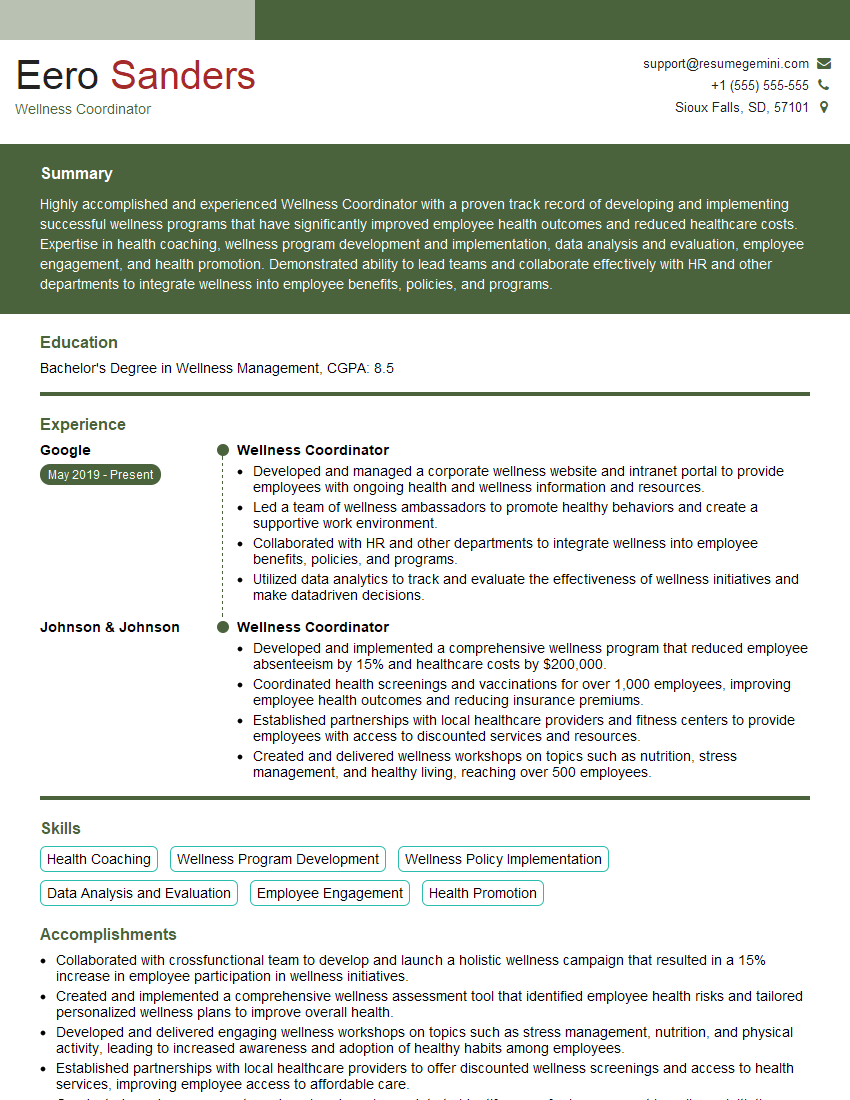
Mastering Workplace Wellness Programs Development opens doors to exciting career opportunities in a rapidly growing field. Demonstrating expertise in this area significantly enhances your marketability and positions you for leadership roles. To maximize your job prospects, crafting an ATS-friendly resume is crucial. ResumeGemini is a trusted resource that can help you build a professional and impactful resume. We provide examples of resumes tailored to Workplace Wellness Programs Development to guide you in creating a compelling application that showcases your skills and experience.
Explore more articles
Users Rating of Our Blogs
Share Your Experience
We value your feedback! Please rate our content and share your thoughts (optional).
What Readers Say About Our Blog
To the interviewgemini.com Webmaster.
Very helpful and content specific questions to help prepare me for my interview!
Thank you
To the interviewgemini.com Webmaster.
This was kind of a unique content I found around the specialized skills. Very helpful questions and good detailed answers.
Very Helpful blog, thank you Interviewgemini team.