The thought of an interview can be nerve-wracking, but the right preparation can make all the difference. Explore this comprehensive guide to Landfill Gas Flare Stack Monitoring and Maintenance interview questions and gain the confidence you need to showcase your abilities and secure the role.
Questions Asked in Landfill Gas Flare Stack Monitoring and Maintenance Interview
Q 1. Describe your experience with landfill gas flare stack monitoring systems.
My experience with landfill gas flare stack monitoring systems spans over 15 years, encompassing design, installation, commissioning, and ongoing maintenance across diverse landfill sites. I’ve worked extensively with various monitoring technologies, from basic flame detection systems to sophisticated SCADA (Supervisory Control and Data Acquisition) systems integrating real-time gas flow, pressure, and temperature data. This includes experience with both open and enclosed flare systems, as well as various types of ignition systems.
I’ve been involved in projects using different monitoring approaches, such as:
- Flame detection systems: Utilizing UV, infrared, or both, to confirm continuous flame presence. These provide immediate alerts if the flame is extinguished.
- Gas flow and pressure monitoring: Measuring the volume and pressure of the incoming landfill gas, essential for optimizing flare operation and preventing system overload.
- Temperature monitoring: Tracking the temperature at key points in the stack to identify potential blockages or overheating.
- SCADA integration: Connecting multiple monitoring points into a central system for remote monitoring, data logging, and automated alerts. This allows for proactive maintenance and rapid response to malfunctions.
This hands-on experience has equipped me with a deep understanding of the nuances of these systems, allowing for effective troubleshooting and preventative maintenance strategies.
Q 2. Explain the process of inspecting a landfill gas flare stack for damage or defects.
Inspecting a flare stack involves a systematic approach, prioritizing safety. It typically begins with a visual inspection from a safe distance, checking for signs of corrosion, damage to the stack structure, or any obvious blockages. This is often followed by a closer examination, usually requiring specialized access equipment (such as elevated platforms or harnesses) and adherence to stringent safety protocols.
The inspection process includes:
- Visual assessment: Checking for cracks, pitting, rust, or other signs of corrosion on the stack’s exterior. We also look for damage to the supporting structure and any evidence of leaks.
- Internal inspection (if accessible): Using specialized equipment (e.g., borescopes or drones) to check for blockages, deposits, or internal damage. This might involve shutting down the flare temporarily.
- Ignition system inspection: Verifying the functionality of the ignition system, checking for worn-out components, gas leaks, or malfunctions.
- Pressure and flow checks: Measuring gas pressure and flow at various points to ensure proper operation and identify any restrictions.
- Documentation: Thorough photographic and written documentation of all findings, including measurements, locations, and severity of any identified issues.
Think of it like a doctor’s checkup – we’re looking for any signs of trouble before it becomes a major problem.
Q 3. What are the common causes of flare stack malfunctions?
Flare stack malfunctions can stem from various sources, often interconnected. Common causes include:
- Blockages: Deposits of condensed water, solids, or other materials within the stack can restrict gas flow and lead to pressure build-up. This is particularly prevalent in colder climates.
- Ignition system failure: Malfunctions in the pilot light or igniter can cause flame extinction, potentially leading to the release of unburnt gas.
- Corrosion: Prolonged exposure to corrosive gases can degrade the stack’s material, resulting in leaks or structural instability. This is accelerated by exposure to moisture.
- Erosion: High gas velocities can erode the internal lining of the stack, potentially causing damage and leaks.
- Insufficient gas flow: If the incoming gas supply is insufficient, it may not sustain a stable flame.
- Electrical faults: Problems with the monitoring and control systems, including sensors or power supply issues, can also lead to malfunctions.
Understanding these potential causes is crucial for effective preventative maintenance and timely troubleshooting.
Q 4. How do you troubleshoot a malfunctioning flare stack?
Troubleshooting a malfunctioning flare stack is a systematic process that prioritizes safety. It begins with a thorough assessment of the monitoring system data to identify the nature and extent of the problem. This is often followed by a visual inspection and, if necessary, more in-depth investigations.
The troubleshooting process might include:
- Reviewing monitoring data: Analyzing data from gas flow meters, pressure sensors, temperature sensors, and flame detection systems to pinpoint the root cause.
- Visual inspection: Checking for visible signs of damage, blockages, or leaks.
- Testing the ignition system: Verifying the functionality of the igniter and pilot light.
- Cleaning or replacing components: Removing blockages or replacing damaged components as needed. This could involve cleaning the stack interior or replacing a faulty igniter.
- Pressure testing: Checking for leaks in the system.
- Calibration of instruments: Verifying the accuracy of monitoring instruments.
For instance, if the flame is extinguished and monitoring data shows low gas flow, we’d investigate the source of the low flow – a potential blockage or a malfunction in the gas supply system.
Q 5. What safety procedures must be followed when working on a flare stack?
Safety is paramount when working on a flare stack. The procedures must adhere to strict regulations and industry best practices. This necessitates using appropriate Personal Protective Equipment (PPE) and following a comprehensive lock-out/tag-out procedure to prevent accidental ignition or gas release. Specific safety protocols include:
- Lockout/Tagout Procedures: Isolating the system to prevent accidental energization before commencing any maintenance.
- Confined Space Entry Permits: Obtaining necessary permits and following procedures if accessing confined spaces within or around the stack.
- Respiratory Protection: Using appropriate respiratory protection to avoid exposure to hazardous gases.
- Fall Protection: Using harnesses and other fall protection equipment, particularly during visual inspections of elevated structures.
- Hot Work Permits: Obtaining necessary permits and following hot work procedures if welding or other hot work is involved.
- Gas Detection: Regularly monitoring the atmosphere for flammable and toxic gases.
A detailed safety plan is crucial, outlining all potential hazards and the mitigation strategies. Regular safety briefings and training are essential for all personnel involved.
Q 6. What are the regulatory requirements for landfill gas flare stack operation and maintenance?
Regulatory requirements for landfill gas flare stack operation and maintenance vary depending on the location and governing authorities, but common themes include emission limits, safety standards, and operational records.
Typical regulatory requirements include:
- Emission Limits: Compliance with environmental regulations concerning the emission of pollutants, including methane, carbon monoxide, and volatile organic compounds. These often involve regular monitoring and reporting.
- Safety Standards: Adherence to relevant safety codes and standards related to the design, construction, operation, and maintenance of the flare stack system. This involves complying with codes such as OSHA or equivalent local regulations.
- Operational Records: Maintaining detailed records of all aspects of operation and maintenance, including inspection reports, maintenance logs, and emission monitoring data. These records are crucial for demonstrating compliance and for troubleshooting future issues.
- Permitting: Obtaining and maintaining necessary permits and licenses for the operation and maintenance of the flare stack.
Staying informed about updates to local regulations and industry best practices is critical for continued compliance.
Q 7. Explain the importance of regular maintenance on a landfill gas flare stack.
Regular maintenance on a landfill gas flare stack is crucial for ensuring safe and efficient operation while minimizing environmental impact and regulatory compliance risk. Preventive maintenance helps prevent costly repairs and potential environmental damage caused by malfunctions.
The importance of regular maintenance can be summarized as:
- Safety: Preventative maintenance reduces the risk of accidents caused by equipment failures, leaks, or other malfunctions.
- Environmental Protection: Regular inspection and maintenance ensure the flare operates efficiently, minimizing the release of unburnt gases into the atmosphere.
- Regulatory Compliance: Helps maintain compliance with environmental and safety regulations, reducing the risk of penalties.
- Cost Savings: Preventive maintenance is far more cost-effective than emergency repairs; minor issues are addressed promptly before they become major problems.
- System Efficiency: Ensures optimal gas flow and combustion, leading to greater efficiency and reduced fuel consumption (where applicable).
Think of it as regular servicing for your car – it’s essential to prevent major breakdowns and ensure longevity.
Q 8. What types of sensors and instruments are used to monitor landfill gas flare stacks?
Monitoring landfill gas flare stacks requires a suite of sensors and instruments to ensure efficient and safe operation. These instruments continuously monitor key parameters, providing real-time data crucial for preventing failures and environmental hazards.
Gas Flow Meters: These measure the volume of landfill gas flowing to the flare stack, crucial for determining combustion efficiency and identifying leaks. Examples include ultrasonic flow meters and orifice plates.
Temperature Sensors: These are strategically placed along the flare stack and in the combustion zone to monitor the temperature of the gas. High temperatures indicate efficient combustion, while low temperatures may indicate a problem. Thermocouples and RTDs (Resistance Temperature Detectors) are commonly used.
Pressure Sensors: Monitoring pressure at various points along the stack helps detect blockages and ensures proper gas flow. Pressure transmitters are essential for this purpose.
Flame Detectors: These are crucial safety devices. Ultraviolet (UV) and infrared (IR) flame detectors ensure continuous flame monitoring and trigger alarms if the flame fails.
Gas Analyzers: These devices measure the composition of the landfill gas, specifically looking at the concentrations of methane (CH₄), carbon dioxide (CO₂), and other potentially harmful components. This data helps optimize combustion and identify potential problems. Examples include infrared gas analyzers.
Emission Monitoring Systems: These systems measure pollutants emitted from the flare, such as carbon monoxide (CO), nitrogen oxides (NOx), and particulate matter (PM), ensuring compliance with environmental regulations. Continuous emission monitoring systems (CEMS) are frequently employed.
The specific instrumentation employed depends on the size and complexity of the landfill gas flare system and applicable environmental regulations. Proper calibration and regular maintenance of these sensors and instruments are paramount to ensure data accuracy and system reliability.
Q 9. How do you interpret data from flare stack monitoring systems?
Interpreting data from flare stack monitoring systems involves a systematic approach, combining automated alerts with skilled operator judgment. We look for patterns and deviations from established baselines to identify potential problems.
Real-time Monitoring: We continuously monitor all parameters, watching for deviations from the normal operating range. For example, a sudden drop in temperature, or a rise in unburnt methane indicates potential issues.
Trend Analysis: We regularly analyze historical data to identify long-term trends. This helps us anticipate potential maintenance needs, such as gradual wear and tear on components.
Alarm Thresholds: Pre-defined alarm thresholds trigger alerts when critical parameters exceed safe operating limits. These thresholds are based on manufacturer recommendations, safety standards, and operational experience.
Data Logging and Reporting: All data is meticulously logged and used to generate comprehensive reports. These reports assist in identifying patterns, assessing the system’s performance, and demonstrating compliance with environmental regulations. The data may also be used to optimize system settings.
Root Cause Analysis: In the event of a malfunction, a thorough investigation is carried out to identify the root cause and implement corrective measures to prevent future incidents. This might include reviewing operational logs, inspecting equipment, and analyzing gas composition.
For example, a sustained increase in CO emissions despite stable gas flow and temperature could indicate incomplete combustion, perhaps due to a problem with the air intake or the igniter. Understanding the interrelation of different parameters is crucial for effective troubleshooting.
Q 10. Describe your experience with different types of flare stacks (e.g., elevated, ground-mounted).
My experience encompasses both elevated and ground-mounted flare stacks, each with its unique design and operational considerations.
Elevated Flare Stacks: These are typically taller structures designed to disperse combustion products at a higher altitude, minimizing the impact on nearby communities and the environment. The height is carefully calculated to ensure safe dispersion. The advantages include better dispersion of pollutants, reduced ground-level impact and generally safer for personnel. However, they are more complex, expensive to construct, and require more extensive maintenance.
Ground-Mounted Flare Stacks: These are shorter and simpler structures, often used in smaller landfill facilities. They are less expensive to build and maintain, but the dispersion of combustion products may be more localized. A significant drawback is potential for greater environmental impact at ground level. They also need careful siting to ensure safety. For example, we need to consider wind direction and prevailing weather patterns to avoid dangerous buildup of pollutants.
In both cases, safety and environmental compliance are paramount. The design, construction, and maintenance must adhere to strict regulations and best practices. We use detailed engineering drawings and operational procedures for each type. Regular inspections and maintenance are crucial for both types to prevent malfunctions and ensure safe operation.
Q 11. What are the potential environmental consequences of flare stack failure?
Flare stack failure can have severe environmental consequences, potentially leading to significant air pollution and safety hazards.
Uncontrolled Release of Greenhouse Gases: A failure can result in the uncontrolled release of methane (CH₄), a potent greenhouse gas, significantly contributing to climate change.
Air Pollution: Incomplete combustion can lead to the release of harmful pollutants like carbon monoxide (CO), volatile organic compounds (VOCs), and particulate matter (PM), affecting air quality and potentially harming human health.
Ground Water Contamination: While less direct, a major fire or explosion might contaminate groundwater through the release of hazardous substances.
Fire and Explosion Hazards: A flare stack failure can lead to uncontrolled fires and explosions, causing damage to property and posing risks to workers and nearby communities.
Odor Nuisance: The release of odorous gases, especially if combustion is incomplete, can cause significant odor nuisance to surrounding areas, impacting the quality of life.
The severity of these consequences depends on the nature and duration of the failure, the amount of landfill gas released, and the prevailing meteorological conditions. Mitigation strategies, including comprehensive monitoring and robust safety protocols, are essential to minimize these risks.
Q 12. How do you ensure the safe disposal of flare stack waste?
There isn’t typically ‘waste’ in the traditional sense from a properly functioning flare stack. The primary products are carbon dioxide and water vapor. However, there are situations where waste management becomes relevant.
Soot and Particulate Matter: Incomplete combustion might lead to the accumulation of soot and particulate matter on internal components. This needs to be removed periodically during scheduled maintenance and disposed of according to local regulations, often through hazardous waste disposal channels.
Spent Catalysts (If Applicable): Some advanced flare systems utilize catalysts to improve combustion efficiency. Spent catalysts need careful disposal following manufacturer guidelines and local environmental regulations, sometimes requiring special handling due to their chemical composition.
Contaminated Materials: Any components or materials that come into contact with landfill gas during maintenance or repairs could be contaminated and require specialized handling and disposal.
All waste disposal procedures must comply with relevant environmental regulations to prevent soil and water contamination. Detailed records of waste generation, handling, and disposal are meticulously maintained to demonstrate compliance.
Q 13. Explain your understanding of different types of flare stack ignition systems.
Flare stack ignition systems are crucial for reliable and safe operation. Several types exist, each with advantages and disadvantages.
Pilot Flame Ignition: This is a common and relatively simple system, using a continuously burning pilot flame to ignite the incoming landfill gas. It’s reliable and easy to maintain but consumes some fuel. Regular inspection and maintenance are crucial to maintain a consistent pilot flame.
Spark Ignition: This system uses a high-voltage spark to ignite the gas. It’s often used in conjunction with a flame detection system, automatically reigniting the flame if it goes out. It avoids the constant fuel consumption of a pilot flame. A safety system must be in place to prevent the igniter from firing when the flare is not needed.
Electrically Heated Igniter: These systems use an electrically heated element to ignite the gas. They are relatively low-maintenance, reliable, and easily integrated into automated systems.
The choice of ignition system depends on factors like the size and type of the flare stack, the composition of the landfill gas, safety requirements, and cost considerations. A properly designed and maintained ignition system is critical for ensuring safe and efficient operation and minimizing environmental impact.
Q 14. Describe your experience with pneumatic or hydraulic systems associated with flare stacks.
Pneumatic and hydraulic systems play important roles in the operation and safety of landfill gas flare stacks. These systems control various components, from valves and actuators to emergency shutdown systems.
Pneumatic Systems: These use compressed air to actuate valves and other components. They are relatively simple, cost-effective, and easy to maintain. However, they can be susceptible to leaks and require a reliable air supply. We might use pneumatic actuators for opening and closing the flare stack valve.
Hydraulic Systems: These utilize hydraulic fluid under pressure to provide powerful and precise control of actuators. They offer greater control and force compared to pneumatic systems, particularly useful in larger and more complex flare stacks. They tend to be more robust, offering better performance in extreme weather. However, they are more complex, expensive to maintain, and require careful handling of hydraulic fluids.
Regular maintenance is crucial for both pneumatic and hydraulic systems, focusing on leak detection, fluid level checks, and component inspection. Proper maintenance prevents malfunctions and ensures the safe and efficient operation of the flare stack. Failure of these systems can lead to serious safety issues, so preventive maintenance is key.
Q 15. How do you manage and document maintenance activities on a flare stack?
Managing and documenting flare stack maintenance is crucial for safety, regulatory compliance, and system longevity. We utilize a Computerized Maintenance Management System (CMMS) to meticulously track all activities. This system allows for scheduled preventative maintenance, work order generation, parts tracking, and detailed records of completed tasks. For each maintenance event, the CMMS stores information including date, time, personnel involved, work performed (with specific details like parts replaced or adjustments made), and any observed issues. We also include before and after photos, and any relevant test data. This comprehensive documentation is essential for demonstrating compliance to environmental agencies and for identifying trends that might predict future problems. For example, if we see a recurring issue with a specific component, we can proactively address it in future maintenance cycles.
Furthermore, we maintain a comprehensive set of operating and maintenance manuals, readily available to all personnel involved in flare stack operations. These manuals detail procedures for every task, from routine inspections to major overhauls. This ensures consistency and safety across all maintenance activities.
Career Expert Tips:
- Ace those interviews! Prepare effectively by reviewing the Top 50 Most Common Interview Questions on ResumeGemini.
- Navigate your job search with confidence! Explore a wide range of Career Tips on ResumeGemini. Learn about common challenges and recommendations to overcome them.
- Craft the perfect resume! Master the Art of Resume Writing with ResumeGemini’s guide. Showcase your unique qualifications and achievements effectively.
- Don’t miss out on holiday savings! Build your dream resume with ResumeGemini’s ATS optimized templates.
Q 16. What are the key performance indicators (KPIs) for a landfill gas flare stack?
Key Performance Indicators (KPIs) for a landfill gas flare stack are essential for evaluating its efficiency, safety, and environmental impact. We monitor several critical KPIs, including:
- Flare tip temperature: This indicates efficient combustion. Consistent high temperatures suggest optimal operation, while low temperatures might indicate incomplete combustion or issues with gas flow.
- Gas flow rate: Monitoring the volume of landfill gas being processed ensures the system handles the expected load. Significant variations might point to leaks in the gas collection system or changes in landfill gas production.
- Pressure drop across the flare stack: Increased pressure drop indicates potential blockages or fouling, requiring immediate attention.
- Frequency and duration of flaring: This data informs us about the overall performance of the landfill gas management system. High frequency or long durations could signal problems with the collection system or other processing equipment.
- Emissions monitoring data: Regular monitoring of emissions (e.g., VOCs, NOx) ensures compliance with environmental regulations. This data is crucial for identifying potential pollution issues and implementing corrective actions.
We use data analytics to analyze these KPIs to identify trends and potential problems before they escalate into major incidents.
Q 17. How do you handle emergency situations involving a landfill gas flare stack?
Emergency situations involving a flare stack, such as a fire or significant leak, require swift and decisive action. Our emergency response plan is rigorously tested and regularly reviewed. The plan outlines the following steps:
- Immediate isolation: The first priority is to isolate the affected section of the flare system to prevent further escalation.
- Emergency shutdown procedures: We initiate the emergency shutdown procedures outlined in our operating manuals. This typically involves shutting down the gas supply and activating any automated safety systems.
- Emergency services notification: We immediately contact local emergency services, including fire and rescue personnel, and inform relevant authorities.
- Personnel evacuation: If necessary, we evacuate personnel from the area surrounding the flare stack.
- Damage assessment and repair: After the immediate emergency is resolved, a thorough investigation is conducted to identify the root cause and make necessary repairs. This investigation often involves reviewing maintenance logs and conducting inspections to prevent future occurrences.
Regular safety training for all personnel is crucial for effective emergency response. Drills and simulations help prepare the team for various scenarios.
Q 18. What are the common types of problems related to flare tip maintenance?
Flare tip maintenance is critical for ensuring efficient combustion and preventing environmental issues. Common problems include:
- Clogging and fouling: Accumulation of solids or liquids in the flare tip can restrict gas flow, leading to incomplete combustion and potentially hazardous conditions. This often requires cleaning or replacement of the tip.
- Erosion and corrosion: High temperatures and corrosive gases can erode or corrode the flare tip material over time, compromising its structural integrity. Regular inspections and timely replacement are essential.
- Damage from flame impingement: Uneven flame distribution can cause localized overheating and damage to the flare tip. This can be caused by issues with the gas distribution system.
- Leaks: Cracks or other defects in the flare tip can lead to the release of unburnt gases, posing both safety and environmental hazards.
Regular inspections, using methods like visual inspections, thermal imaging, and pressure testing, are crucial for early detection of these problems.
Q 19. Explain your knowledge of different types of combustion systems used in flare stacks.
Several combustion systems are used in flare stacks, each with its own advantages and disadvantages. The most common types include:
- Open flaring: This is the simplest type, involving direct combustion of the gas in the atmosphere. It’s inexpensive but produces visible flames and can generate air pollution.
- Elevated flare systems: These systems raise the flare tip to disperse combustion products over a wider area, mitigating ground-level impacts. They require more complex engineering and construction but reduce the risk of local environmental damage.
- Closed vent systems: In this case, rather than flaring the gas directly into the atmosphere, a closed combustion system is used to treat and burn the gas. These systems are more efficient and produce lower emissions, but involve higher initial capital costs.
- Thermal oxidizers: These are more advanced systems that use high-temperature oxidation to completely combust landfill gas, minimizing air pollution. They are highly efficient but are also more complex and expensive to operate and maintain.
The choice of combustion system depends on factors such as gas composition, emission regulations, budget, and environmental considerations. The selection process needs to consider trade-offs between cost and efficiency along with environmental impact.
Q 20. What is your experience with pressure relief valves associated with flare stacks?
Pressure relief valves (PRVs) are critical safety devices in flare stack systems. They are designed to automatically vent excess pressure to the flare system, preventing catastrophic equipment failure in case of over-pressurization. My experience includes the selection, installation, testing, and maintenance of PRVs in various landfill gas flare stack applications. We carefully select PRVs based on the operating pressure and gas flow characteristics of the system. Regular inspections and testing, including functional testing and pressure testing, are essential to ensure their proper operation. We document all testing and maintenance activities in the CMMS.
Furthermore, we understand the importance of regular calibration of the PRVs to guarantee accurate response to pressure surges. Failure of a PRV to operate correctly could lead to a dangerous overpressure situation, and therefore, consistent maintenance and testing are paramount. We also regularly review and update our safety procedures that address PRV failure scenarios.
Q 21. How do you perform a pressure test on a landfill gas flare stack?
Pressure testing a landfill gas flare stack is a crucial component of its maintenance and safety program. The goal is to identify any leaks or weaknesses in the system before they lead to failures. The process typically involves these steps:
- Isolation: The flare stack is isolated from the gas supply and other connected systems.
- Pressurization: The flare stack is pressurized to a specific pressure, usually higher than its normal operating pressure but within its design limits. The pressurization method depends on the system design; it may involve using compressed air or nitrogen.
- Leak detection: We use various methods to detect leaks, including visual inspection, pressure gauges, and potentially specialized leak detection equipment (e.g., soap solution, electronic leak detectors). We carefully monitor the pressure to identify any significant pressure drops, which indicate the presence of a leak.
- Documentation: All pressure test data, including the pressure applied, duration of the test, and locations of any detected leaks, are meticulously recorded.
- Repair: Any leaks identified during the test are carefully repaired before the system is returned to service.
The pressure testing procedure is outlined in detail in our operating and maintenance manuals and is performed by trained and qualified personnel. The frequency of pressure testing is dictated by regulations and our own risk assessment procedures; typically, annual or biannual testing is standard practice.
Q 22. Describe your experience with NOx and other emission monitoring related to flare stacks.
Monitoring NOx and other emissions from landfill gas flare stacks is crucial for environmental compliance. My experience involves utilizing various monitoring technologies, including extractive and non-extractive systems. Extractive systems, such as chemiluminescence analyzers, directly sample the gas stream and provide real-time measurements of NOx concentrations. Non-extractive methods, like open-path FTIR (Fourier Transform Infrared Spectroscopy), measure emissions across a path without direct sampling.
I’ve worked extensively with data acquisition and analysis, ensuring accurate reporting and compliance with regulatory limits. For instance, in one project, we identified a spike in NOx emissions due to a malfunctioning pilot flame. By analyzing the data and cross-referencing it with operational logs, we quickly pinpointed the issue and implemented corrective actions. This prevented further environmental damage and significant penalties. Beyond NOx, I’ve also monitored other emissions such as CO, CO2, and VOCs (Volatile Organic Compounds), using a combination of analyzers tailored to specific emission targets.
Understanding the relationship between operational parameters and emission levels is critical. For example, variations in landfill gas composition can directly affect emission levels. Therefore, comprehensive monitoring coupled with gas composition analysis provides a complete picture of flare stack performance and environmental impact.
Q 23. How do you calculate the heating value of landfill gas?
The heating value of landfill gas (LFG) is crucial for designing and operating flare stacks, as it dictates the necessary combustion air and flare tip sizing. It’s typically expressed in British Thermal Units per standard cubic foot (BTU/scf) or megajoules per standard cubic meter (MJ/scm).
Calculating the heating value involves analyzing the LFG composition, primarily methane (CH4) and carbon dioxide (CO2), along with trace components like hydrogen (H2), nitrogen (N2), and oxygen (O2). We use gas chromatography (GC) for this analysis. Once the composition is known, the heating value is calculated using the following approach: Each constituent gas has a known higher heating value (HHV). The overall heating value is then the weighted average of the individual gas components’ HHV based on their respective concentrations.
Example: If the LFG composition is 50% CH4, 48% CO2, and 2% other gases, and the HHV of CH4 is approximately 1000 BTU/scf, then the approximate HHV of the LFG is 0.5 * 1000 BTU/scf = 500 BTU/scf (ignoring the contributions of minor components for simplicity). Accurate determination of the heating value is crucial for effective flare design and ensures complete combustion while minimizing the risk of incomplete burning or excess emissions. Regular gas composition analysis is recommended to ensure that design parameters remain accurate over the life of the landfill.
Q 24. What are the different types of materials used in flare stack construction?
Flare stack construction employs materials capable of withstanding high temperatures and corrosive environments. The choice of materials depends on several factors including the LFG composition, operating temperature, and environmental conditions.
Common materials include:
- Carbon Steel: Used for the majority of the flare stack structure due to its strength and cost-effectiveness, especially for lower temperature applications. However, it requires protection against corrosion.
- Stainless Steel: Employed in sections exposed to high temperatures and corrosive gases, especially where chloride or sulfide compounds are present. Various grades are selected based on the specific corrosive environment.
- Alloy Steels: Offer enhanced corrosion resistance and high-temperature capabilities, often used in critical sections like the flare tip.
- Refractory materials: Used to line the flare tip and internal components to withstand extreme temperatures and prevent oxidation.
Proper material selection is critical to ensure the long-term structural integrity and safety of the flare stack, preventing costly repairs and potential safety hazards.
Q 25. Explain your experience with different types of flare stack pilot systems.
Pilot systems are crucial for reliable ignition and sustained combustion within the flare stack. I’ve worked with several types:
- High-pressure pilot systems: These provide a high-velocity gas stream directly to the flare tip, ensuring reliable ignition even with highly variable landfill gas flows. They are robust and reliable but consume more gas.
- Low-pressure pilot systems: These are less gas-intensive but require careful design to maintain stable ignition under varying conditions. They are often more economical to operate.
- Electrically ignited pilot systems: These employ an electric spark for ignition, offering good safety features and potential for remote activation. They are safer for the operator but depend on a reliable power supply.
- Multiple pilot systems: Often used to ensure redundancy and increased reliability, especially in critical applications.
The selection of the pilot system depends on the specific requirements, including LFG flow rate variability, environmental conditions, safety regulations, and cost considerations. Proper pilot system maintenance is vital, including regular inspection of the pilot flame, pilot gas supply, and ignition components. Maintaining the integrity of the pilot system directly impacts the flare’s reliability and safety.
Q 26. How do you maintain the integrity of the flare stack’s structural components?
Maintaining the structural integrity of a flare stack involves regular inspections, preventative maintenance, and timely repairs. This is crucial for both safety and environmental compliance.
My approach includes:
- Regular visual inspections: These identify potential issues like corrosion, cracking, or damage due to environmental factors. Inspections should be conducted at specified intervals based on environmental conditions and operational history.
- Non-destructive testing (NDT): Methods like ultrasonic testing, radiographic testing, and magnetic particle inspection are used to detect internal flaws or defects without damaging the structure.
- Corrosion monitoring: This involves regularly measuring corrosion rates to predict the remaining lifespan of components and plan timely replacements. This often requires specialized techniques.
- Preventative maintenance: This includes regular painting, application of protective coatings, and replacement of damaged or worn-out components.
- Structural analysis: Regular structural analysis evaluates the overall integrity of the flare stack, particularly after major events or significant changes in operational conditions.
Documentation is critical, with detailed records of inspections, maintenance activities, and repair work. This ensures compliance and allows tracking of the flare stack’s performance over time. A well-maintained flare stack ensures its operational efficiency, preventing environmental incidents and minimizing operational disruptions.
Q 27. Describe your understanding of the environmental regulations governing landfill gas emissions.
My understanding of environmental regulations governing landfill gas emissions is extensive. These regulations vary by jurisdiction, but common themes include minimizing air pollutants such as methane, volatile organic compounds (VOCs), and NOx emissions. The primary legislation is typically at a national or state level, supplemented by local ordinances.
Key aspects I’m familiar with:
- Permitting requirements: These outline permitted emission levels for various pollutants and often require regular reporting and monitoring.
- Emission limits: These are legally mandated limits on the concentration and mass emission rates of pollutants from the flare stack.
- Monitoring and reporting requirements: Regular monitoring of emissions is typically required, with data submitted to regulatory authorities in specified formats and frequencies.
- Compliance testing: Periodic inspections and compliance testing are often necessary to verify the proper operation of the flare stack and demonstrate adherence to regulations.
- Penalty provisions: Non-compliance with emissions regulations can result in significant financial penalties and potential legal actions.
Staying up-to-date on the specific regulations for the geographical location of a landfill project is crucial for compliance. Failure to meet environmental regulations can result in significant fines and reputational damage.
Q 28. Explain your experience with the use of predictive maintenance techniques for flare stacks.
Predictive maintenance techniques are crucial for optimizing flare stack operation and preventing unplanned downtime. This approach relies on analyzing data and applying statistical models to predict potential equipment failures before they occur.
My experience includes leveraging various data sources, including:
- Operational data: This includes parameters like gas flow rates, pressure, temperature, and pilot flame status.
- Sensor data: Data from emission monitors, pressure sensors, temperature sensors, and other instruments are analyzed for anomalies.
- Vibration data: Vibration sensors can detect early signs of equipment wear and tear, such as bearing degradation.
These data sets are processed using advanced analytics techniques, such as machine learning algorithms, to identify patterns and predict potential issues. For example, by analyzing vibration data from a flare stack’s motor, we might be able to predict bearing failure weeks in advance, allowing for scheduled maintenance to prevent an unexpected shutdown. This prevents major disruptions, optimizes maintenance schedules, and extends the life of the flare stack components. In essence, predictive maintenance transforms reactive maintenance into proactive maintenance, maximizing operational efficiency and minimizing environmental risk.
Key Topics to Learn for Landfill Gas Flare Stack Monitoring and Maintenance Interview
- Flare Stack System Overview: Understanding the components (flare tip, knockout drum, piping, etc.), their functions, and how they interact within the overall landfill gas management system.
- Monitoring Techniques and Instrumentation: Familiarity with pressure gauges, temperature sensors, flow meters, and other instruments used to monitor flare stack performance and identify potential issues. Understanding data logging and analysis methods.
- Safety Procedures and Regulations: Knowledge of relevant safety standards, permit requirements, and emergency response protocols specific to landfill gas flare stack operations. This includes lockout/tagout procedures and personal protective equipment (PPE).
- Maintenance Procedures and Schedules: Understanding preventative maintenance schedules, routine inspections, troubleshooting common problems (e.g., pilot light failure, pressure fluctuations), and performing necessary repairs.
- Troubleshooting and Problem-Solving: Ability to diagnose malfunctions, identify root causes, and implement effective solutions to maintain optimal flare stack operation and prevent environmental incidents.
- Environmental Compliance: Understanding emission regulations and reporting requirements related to landfill gas flaring. Knowledge of air quality monitoring and compliance procedures.
- Emergency Response: Familiarity with emergency shutdown procedures, and how to react to various malfunctions or unexpected events, ensuring safety and environmental protection.
- Data Analysis and Reporting: Ability to interpret monitoring data, identify trends, and generate reports to demonstrate compliance and system performance.
Next Steps
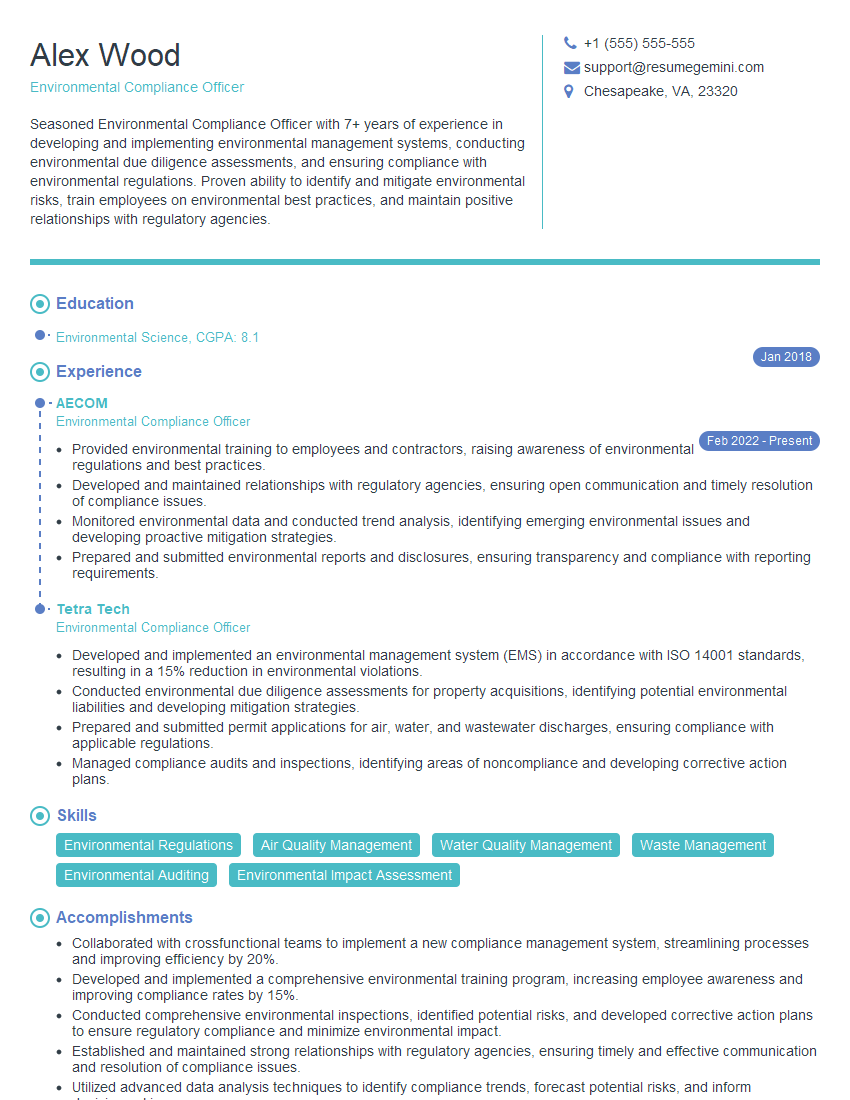
Mastering Landfill Gas Flare Stack Monitoring and Maintenance opens doors to rewarding careers in environmental engineering and waste management. Proficiency in this area demonstrates a strong commitment to safety, environmental responsibility, and technical expertise – highly valued attributes in today’s job market. To maximize your chances of landing your dream role, a well-crafted, ATS-friendly resume is crucial. ResumeGemini is a trusted resource that can help you build a professional resume that highlights your skills and experience effectively. Examples of resumes tailored to Landfill Gas Flare Stack Monitoring and Maintenance are available to guide you. Take the next step towards your career goals – invest time in crafting a compelling resume that showcases your abilities and secures that interview!
Explore more articles
Users Rating of Our Blogs
Share Your Experience
We value your feedback! Please rate our content and share your thoughts (optional).
What Readers Say About Our Blog
To the interviewgemini.com Webmaster.
Very helpful and content specific questions to help prepare me for my interview!
Thank you
To the interviewgemini.com Webmaster.
This was kind of a unique content I found around the specialized skills. Very helpful questions and good detailed answers.
Very Helpful blog, thank you Interviewgemini team.