Interviews are more than just a Q&A session—they’re a chance to prove your worth. This blog dives into essential Landfill Gas Plant Operation and Maintenance interview questions and expert tips to help you align your answers with what hiring managers are looking for. Start preparing to shine!
Questions Asked in Landfill Gas Plant Operation and Maintenance Interview
Q 1. Describe your experience with landfill gas collection systems.
Landfill gas (LFG) collection systems are crucial for capturing methane and other gases generated within a landfill. These systems typically consist of a network of wells, pipes, and headers designed to extract LFG from the waste mass. My experience encompasses various collection system designs, from simple low-pressure systems in smaller landfills to complex, high-vacuum systems employed in larger, more active sites. I’ve worked with both horizontal and vertical well configurations, choosing the optimal design based on factors like landfill topography, waste composition, and gas production rate. For example, in one project, we utilized a combination of horizontal and vertical wells to effectively extract gas from a landfill with varying waste density. We also implemented a sophisticated monitoring system to optimize well placement and ensure efficient gas capture. Experience also includes troubleshooting issues like well clogging, pipe leaks, and vacuum loss through systematic inspections, pressure testing, and the strategic use of vacuum pumps and other specialized equipment.
Q 2. Explain the process of landfill gas extraction and processing.
Landfill gas extraction and processing involves several key steps. First, the LFG is extracted from the landfill through the collection system I described earlier. This gas is a mixture primarily of methane (CH4) and carbon dioxide (CO2), along with trace amounts of other volatile organic compounds (VOCs). The extracted gas then undergoes processing to remove contaminants like siloxanes (which can damage engines) and moisture. This often involves filtration and dehydration stages. Following this, the processed LFG can be used in several ways: it can be flared (burned to reduce emissions), used to generate electricity via engines or turbines, or even upgraded to pipeline-quality renewable natural gas (RNG). The choice of processing method and end-use depends on factors like gas quality, regulatory requirements, and economic viability. For example, a landfill with a high methane concentration and close proximity to a power grid might be more suitable for electricity generation, while a site with lower methane content may be better suited for flaring or upgrading to RNG. The entire process requires careful monitoring and control to ensure optimal efficiency and safety.
Q 3. What are the common safety hazards associated with landfill gas operations?
Landfill gas operations present several significant safety hazards. The most prominent is the risk of explosion and fire due to the highly flammable nature of methane. Proper ventilation, leak detection, and regular safety inspections are essential. Another critical hazard is asphyxiation from oxygen displacement, as methane can displace oxygen in confined spaces, creating an oxygen-deficient atmosphere. Exposure to hazardous gases such as hydrogen sulfide (H2S) and VOCs is another concern; these can cause respiratory problems and other health issues, necessitating the use of proper personal protective equipment (PPE) and monitoring systems. Furthermore, working with heavy machinery and in potentially unstable landfill environments introduces the risks of equipment malfunctions and ground subsidence. A comprehensive safety program incorporating regular training, emergency response planning, and adherence to strict safety protocols is absolutely crucial for mitigating these risks.
Q 4. How do you monitor and control landfill gas production?
Monitoring and controlling LFG production involves a multi-faceted approach. We use a network of sensors to measure various parameters, including gas flow rates at individual wells, pressure differentials within the collection system, and the composition of the extracted gas (methane, carbon dioxide, and other components). This data is continuously monitored using SCADA (Supervisory Control and Data Acquisition) systems. These systems provide real-time information and allow for remote monitoring and control. Based on this data, we can adjust the vacuum levels in different sections of the collection system to optimize gas extraction. We also employ predictive modeling techniques to forecast future gas production based on historical data and landfill characteristics. This helps in proactive management of the system, anticipating potential issues and optimizing resource allocation. For example, a decline in gas production in a specific area may indicate well clogging, prompting targeted maintenance.
Q 5. Describe your experience with troubleshooting equipment malfunctions in a landfill gas plant.
Troubleshooting equipment malfunctions in a landfill gas plant requires a systematic approach. I usually begin by identifying the specific issue and its symptoms. This often involves reviewing SCADA data and conducting on-site inspections. For example, a sudden drop in gas flow rate might indicate a blockage in the pipeline or a malfunctioning compressor. After pinpointing the problem, I perform diagnostic tests to isolate the cause. This may involve pressure testing pipelines, checking electrical connections, analyzing gas composition, or inspecting the mechanical components of the equipment. Then, based on the diagnosis, I implement the appropriate repair or replacement strategy. This could range from simple repairs like replacing a faulty valve or sensor to more complex interventions such as replacing a section of pipeline or repairing a gas engine. In one instance, a recurring engine shutdown was ultimately traced to a faulty fuel filter; its replacement restored full operational capacity.
Q 6. How do you ensure compliance with environmental regulations related to landfill gas?
Ensuring compliance with environmental regulations related to landfill gas is critical. This involves adhering to emission limits for methane, VOCs, and other pollutants, as set forth by local, regional, and national regulations. Regular monitoring and reporting of emissions are crucial. We use continuous emission monitoring systems (CEMS) to track emissions data, and this information is meticulously documented and submitted to regulatory agencies as required. We also maintain detailed records of all maintenance and repair activities, as these can impact emissions. Furthermore, we are committed to continuous improvement of our operations, implementing best practices to minimize environmental impact. This may involve upgrading equipment to improve efficiency, adopting new technologies to reduce emissions, and actively participating in industry initiatives focused on environmental sustainability. Regular audits and inspections by regulatory bodies are part of the compliance process, which we actively facilitate and support.
Q 7. What are the different types of landfill gas engines and their operating principles?
Several types of engines are used in landfill gas power generation. The most common are internal combustion engines (ICE), typically reciprocating engines similar to those used in vehicles, but adapted to handle the specific characteristics of LFG. These engines operate on the principle of burning the fuel-air mixture to generate power, which drives a generator to produce electricity. Another option is gas turbines, which operate on a different thermodynamic cycle, using expanding gas to drive a turbine connected to a generator. Gas turbines generally offer higher efficiencies at larger scales but require higher quality fuel compared to ICEs. Additionally, microturbines are smaller and less expensive, providing a cost-effective option for smaller facilities. The choice of engine depends on various factors, including the quantity and quality of LFG available, power generation needs, capital costs, and maintenance considerations. The operating principles involve carefully controlling the fuel-air ratio, managing engine speed and temperature, and employing emission control systems to meet environmental regulations.
Q 8. Explain the process of biogas upgrading.
Biogas upgrading is the process of transforming raw biogas, a mixture primarily of methane (CH4) and carbon dioxide (CO2), into a higher-quality fuel, often called biomethane, that meets pipeline-quality standards or is suitable for other specific applications. This usually involves removing CO2 and other impurities like water vapor, siloxanes, and hydrogen sulfide (H2S).
Several methods exist, each with its own advantages and disadvantages. Physical methods like pressure swing adsorption (PSA) use pressure changes to selectively adsorb CO2, while chemical methods such as amine scrubbing employ chemical solvents to absorb CO2. Membrane separation uses specialized membranes with high permeability to methane and low permeability to CO2. The choice of method depends on factors like biogas composition, desired purity, capital costs, and operating conditions. For instance, a plant with high CO2 concentration might benefit from amine scrubbing, while a plant prioritizing low capital investment may opt for membrane separation, despite potentially lower purity.
Imagine it like refining crude oil into gasoline: raw biogas is the crude oil, and biomethane is the refined gasoline, ready for use in a wider range of applications, including injection into natural gas grids.
Q 9. What is your experience with flare systems and their maintenance?
Flare systems are crucial safety devices in landfill gas plants, designed to safely burn excess or unusable gas. My experience encompasses their complete lifecycle: installation, commissioning, operation, and maintenance. This includes regular inspections to ensure proper functionality, checking for leaks, and performing routine maintenance such as cleaning the flare tip and pilot burner. I’m proficient in troubleshooting flare system malfunctions, identifying the root cause—whether it’s a blockage, faulty ignition system, or pressure issues—and implementing effective repairs.
For example, during my time at [Previous Company Name], we experienced a flare system malfunction due to a blockage in the pipe leading to the flare. By systematically checking the entire system, we pinpointed the blockage, cleared it, and restored the flare’s functionality, preventing potential environmental hazards and ensuring plant safety. I also have experience with different flare types, including elevated flares, ground flares, and enclosed flares, selecting the appropriate type based on plant-specific needs and regulatory requirements.
Q 10. How do you manage landfill gas emissions?
Managing landfill gas emissions is paramount for environmental protection and regulatory compliance. A multi-pronged approach is essential, starting with effective gas collection systems. This involves installing a sufficient network of wells, strategically positioned within the landfill to maximize gas capture. Regular monitoring of well pressures and gas flow rates is critical to identify any leaks or underperforming wells. These systems must be designed to handle variations in gas production, which changes with the age and decomposition rate of waste within the landfill.
Beyond collection, effective upgrading or beneficial use of the collected gas is a significant factor in emissions reduction. Converting biogas to biomethane for injection into the natural gas grid or using it as a fuel source for on-site power generation drastically minimizes emissions. If upgrading isn’t feasible, responsible flaring remains a necessary, albeit less efficient, method to manage excess gas. Finally, regular leak detection and repair programs, using techniques like infrared cameras, are crucial to minimize fugitive emissions from the entire gas management system.
Q 11. Describe your experience with SCADA systems in landfill gas plants.
SCADA (Supervisory Control and Data Acquisition) systems are the backbone of modern landfill gas plants, providing real-time monitoring and control of the entire process. My experience includes configuring, operating, and troubleshooting SCADA systems, from data acquisition to alarm management and reporting. I’m proficient in various SCADA platforms, including [Mention Specific Platforms, e.g., Wonderware, Siemens WinCC], and understand their integration with other plant systems, such as the gas analyzer network.
For instance, at [Previous Company Name], I was responsible for implementing a new SCADA system to improve monitoring capabilities. This involved integrating data from various sensors and analyzers, developing custom alarm thresholds, and generating detailed reports for compliance and operational efficiency. Using SCADA, we identified a recurring issue with a compressor that was causing pressure fluctuations. This allowed for timely maintenance and prevented more significant issues down the line.
Q 12. What are the different types of sensors and analyzers used in a landfill gas plant?
A range of sensors and analyzers are vital for monitoring and controlling a landfill gas plant’s operations. Gas composition analyzers continuously measure the concentrations of methane (CH4), carbon dioxide (CO2), and other components like oxygen (O2), hydrogen sulfide (H2S), and siloxanes. These are usually gas chromatographs or infrared (IR) analyzers. Pressure sensors monitor pressure across the gas collection and processing systems, ensuring optimal operating conditions. Flow meters measure gas flow rates through pipelines and equipment. Temperature sensors provide information on the temperature of the gas and various equipment components.
In addition, level sensors track the levels of liquids in various storage tanks and treatment units. Other sensors may include those for humidity, moisture content, and potentially more specialized sensors depending on the specific processes involved. For example, a plant using amine scrubbing would include sensors specific to the amine solution’s concentration and pH levels.
Q 13. How do you perform routine maintenance on landfill gas equipment?
Routine maintenance is crucial for ensuring the safe and efficient operation of landfill gas equipment. This involves regular inspections of all equipment, including gas wells, pipelines, blowers, compressors, and processing units. Checks include looking for leaks, corrosion, wear and tear, and ensuring proper functionality. Cleaning and lubrication are also essential tasks, as is replacing worn-out parts. The frequency of these tasks depends on the specific equipment and manufacturer’s recommendations, but often follows a preventative maintenance schedule.
For instance, gas well heads need regular inspection for leaks and corrosion. Pipelines require periodic checks for damage and potential leaks, often using sophisticated leak detection techniques. Blowers and compressors require lubrication and filter changes, while gas processing equipment requires scheduled inspections and cleaning depending on the technology employed. Detailed logs and records are maintained to document all maintenance activities, ensuring compliance and providing a history for future maintenance planning.
Q 14. Describe your experience with predictive maintenance techniques.
Predictive maintenance is a proactive approach that leverages data analysis and machine learning to predict when equipment is likely to fail. This contrasts with reactive maintenance, which only addresses issues after they occur. My experience includes implementing predictive maintenance programs using data from SCADA systems, sensors, and historical maintenance records. This includes analyzing vibration data from rotating equipment like compressors and blowers to detect early signs of wear, and using temperature sensors to monitor potential overheating issues.
For example, we used vibration analysis on a critical compressor at [Previous Company Name]. By monitoring vibration patterns over time, we detected a subtle change indicating potential bearing failure. This allowed us to schedule maintenance before a catastrophic failure, minimizing downtime and avoiding expensive emergency repairs. The use of predictive maintenance reduces downtime, extends the lifespan of equipment, and optimizes maintenance costs by preventing unexpected failures.
Q 15. How do you handle emergencies and unplanned shutdowns in a landfill gas plant?
Emergency response in a landfill gas plant is paramount. Our protocol begins with immediate isolation of the affected system – this might involve shutting down a specific component, like a compressor or flare, to prevent further damage or hazards. We have a detailed emergency response plan, regularly practiced through drills, that outlines roles and responsibilities for each team member. This includes contacting emergency services if necessary and implementing site evacuation procedures. Following a shutdown, a thorough root cause analysis is conducted. This involves reviewing operational data logs, inspecting equipment, and interviewing personnel. The goal is not just to restore functionality but to prevent recurrence. For example, if a compressor fails due to overheating, we’d investigate the cooling system, potentially replacing components or adjusting operational parameters. This post-incident analysis helps us refine our preventative maintenance schedule and emergency procedures, continuously improving our safety record.
Career Expert Tips:
- Ace those interviews! Prepare effectively by reviewing the Top 50 Most Common Interview Questions on ResumeGemini.
- Navigate your job search with confidence! Explore a wide range of Career Tips on ResumeGemini. Learn about common challenges and recommendations to overcome them.
- Craft the perfect resume! Master the Art of Resume Writing with ResumeGemini’s guide. Showcase your unique qualifications and achievements effectively.
- Don’t miss out on holiday savings! Build your dream resume with ResumeGemini’s ATS optimized templates.
Q 16. What is your experience with biogas purification and upgrading technologies?
My experience encompasses various biogas upgrading techniques. I’ve worked extensively with pressure swing adsorption (PSA) for CO2 removal, creating a biomethane product suitable for injection into the natural gas grid. We’ve also explored water scrubbing methods, effective for removing H2S, a corrosive contaminant. The choice of technology depends heavily on the specific composition of the landfill gas and the desired end-product. For instance, if a high-purity biomethane is needed, PSA is often favored, while water scrubbing is more economical for less stringent purity requirements. I’ve been involved in the design, commissioning, and ongoing optimization of several biogas upgrading plants, including troubleshooting issues related to adsorption capacity, regeneration cycles, and membrane integrity. My work has involved selecting appropriate technologies based on economic and environmental considerations, always aiming for maximum efficiency and minimizing waste.
Q 17. Explain the principles of gas compression and its importance in landfill gas processing.
Gas compression is crucial in landfill gas processing because it increases the gas pressure, making it suitable for various downstream applications. Think of it like this: you wouldn’t try to power a car engine with air pressure directly from a bicycle pump; you need higher pressure for effective power generation. Similarly, landfill gas needs to be compressed to achieve efficient energy recovery. The principles involve using rotating equipment such as centrifugal or reciprocating compressors to reduce gas volume and increase pressure. Centrifugal compressors are suitable for large gas volumes at lower pressure ratios, while reciprocating compressors handle smaller volumes but achieve much higher pressures. The choice depends on factors like gas flow rate, pressure requirements, and capital costs. The compressed gas then becomes readily available for use in engines, turbines, or for transportation to other processing facilities. Effective compression is essential for maximizing energy production and minimizing flaring, a practice that releases greenhouse gases into the atmosphere.
Q 18. Describe your experience with different types of gas turbines.
I’ve had hands-on experience with various gas turbine types commonly used in landfill gas applications. These range from simple-cycle turbines, ideal for smaller plants, to more complex combined-cycle configurations offering higher efficiencies. Specifically, I’ve worked with reciprocating engines, which are robust and relatively easy to maintain, and aeroderivative turbines, which are more efficient but demand greater expertise. In one project, we successfully integrated a combined-cycle system that involved a gas turbine connected to a steam turbine, significantly increasing overall energy production from the landfill gas. My expertise includes not only the operational aspects but also the maintenance and troubleshooting of these turbines. This involves understanding the intricate dynamics of combustion, blade erosion, and overall system performance. Regular inspections, predictive maintenance based on data analytics, and prompt attention to any unusual vibrations or temperature fluctuations are critical for maintaining turbine efficiency and longevity.
Q 19. How do you ensure the efficient operation of a landfill gas plant?
Efficient landfill gas plant operation requires a multi-faceted approach. First, we optimize gas collection by regularly inspecting and maintaining the well network. This includes leak detection and repair, ensuring that the maximum amount of gas is captured. Secondly, we employ advanced monitoring systems, collecting real-time data on gas flow rates, pressure, composition, and equipment performance. This data informs preventative maintenance, enabling us to address potential issues before they cause major disruptions. Thirdly, we focus on process optimization. This involves fine-tuning parameters such as compressor settings and engine operation to maximize energy generation. Regular training of personnel on best practices and emergency procedures is paramount. Think of it like a well-tuned engine: continuous monitoring, preventative maintenance, and optimized settings are key to ensuring both efficiency and reliability.
Q 20. How do you manage the disposal of landfill gas byproducts?
Disposal of byproducts depends on their nature. For example, condensate (water extracted from the gas stream) often needs to be treated to remove contaminants before discharge. This could involve processes like filtration, biological treatment, or chemical neutralization. Other byproducts, like solid residues from gas purification processes, might need to be landfilled according to environmental regulations. Strict adherence to environmental permits and regulations is crucial. We meticulously document all waste streams, monitor their composition, and ensure their disposal aligns with best environmental practices. A well-managed byproduct disposal strategy is crucial not only for environmental compliance but also for minimizing operational costs and avoiding potential environmental liabilities.
Q 21. What are the key performance indicators (KPIs) for a landfill gas plant?
Key Performance Indicators (KPIs) for a landfill gas plant typically focus on three key areas: environmental performance, operational efficiency, and economic viability. Environmental KPIs might include methane capture rate (measuring how much gas is successfully recovered), flaring reduction rate (aiming for zero flaring), and emissions of pollutants such as volatile organic compounds (VOCs). Operational KPIs would include gas flow rate, gas pressure, energy output (kWh), uptime of equipment, and maintenance costs. Economic KPIs would include revenue generation from energy sales, operational expenditure, and return on investment (ROI). Regular monitoring and reporting on these KPIs are essential for evaluating plant performance, identifying areas for improvement, and ensuring the plant remains financially sound and environmentally responsible.
Q 22. How do you interpret data from various monitoring systems in a landfill gas plant?
Interpreting data from a landfill gas plant’s monitoring systems is crucial for efficient and safe operation. We rely on a variety of sensors and systems that continuously monitor gas composition (methane, carbon dioxide, etc.), pressure, flow rates, and the performance of various equipment like blowers, engines, and flares. My approach involves a multi-step process:
Data Acquisition: This involves collecting data from different sources – SCADA systems (Supervisory Control and Data Acquisition), online gas analyzers, pressure gauges, and flow meters. Data is often logged automatically and can be accessed remotely or on-site.
Data Validation: Checking for anomalies and outliers is critical. A sudden drop in methane concentration, for instance, could signal a leak or a problem in the collection system. I use statistical methods and historical data to identify unusual readings and investigate their causes. For example, comparing current readings to seasonal trends or past maintenance events.
Trend Analysis: This involves looking at data trends over time to identify patterns. A gradual decline in gas production could indicate a reduction in waste decomposition. Visualizing data using charts and graphs helps to easily spot significant changes.
Diagnostic Interpretation: Based on trends and anomalies, I determine potential problems. High carbon dioxide levels might point towards inefficient biodegradation or insufficient air circulation in the landfill. Low pressure could suggest a blockage in the pipeline.
Actionable Insights: Ultimately, the goal is to use the data to inform decisions – whether to schedule maintenance, adjust operating parameters, or investigate potential problems. For example, identifying a gradual drop in methane concentration might lead to inspecting the landfill cover for leaks.
In my previous role, we used a sophisticated SCADA system that provided real-time data visualization and automated alerts for critical parameters. This allowed for proactive problem-solving and prevented major operational issues.
Q 23. Describe your experience with project management related to landfill gas plant operations.
My experience with project management in landfill gas plant operations encompasses various aspects from planning and execution to monitoring and closure. I’ve been involved in projects ranging from upgrading existing infrastructure (e.g., replacing aging pipelines) to constructing new gas collection and treatment systems.
For instance, I led a project to install a new biogas upgrading unit to improve the quality of biomethane produced for injection into the natural gas grid. This involved:
Project planning: Defining project scope, objectives, timelines, and budgets. This included detailed engineering design, procurement of equipment, and regulatory approvals.
Risk management: Identifying and mitigating potential risks, such as delays in equipment delivery or unforeseen site conditions. We developed contingency plans to address these risks.
Resource allocation: Efficiently managing personnel, equipment, and materials. We utilized project management software to track progress and allocate resources effectively.
Communication and coordination: Maintaining clear communication among all stakeholders, including engineers, contractors, and regulatory agencies. Regular progress meetings ensured everyone was informed and on track.
Project monitoring and evaluation: Tracking project progress against the plan and making necessary adjustments. We conducted regular inspections to ensure quality and safety.
Successful project completion resulted in a significant increase in biomethane production, exceeding initial projections and significantly improving the plant’s economic viability and environmental performance. This project highlighted the importance of proactive planning, effective communication, and risk management in large-scale infrastructure projects.
Q 24. How do you ensure the safety of workers in a landfill gas plant?
Ensuring worker safety in a landfill gas plant is paramount. Landfill gas is a flammable and potentially toxic mixture, requiring stringent safety protocols. My approach focuses on a multi-layered strategy:
Comprehensive Safety Training: All personnel receive regular training on hazard identification, emergency response procedures, use of personal protective equipment (PPE), and safe work practices specific to landfill gas environments. This includes training on confined space entry, lockout/tagout procedures, and handling of hazardous materials.
Regular Inspections and Maintenance: Equipment inspections are conducted regularly to identify and address potential hazards before they become incidents. This includes checking gas detection systems, safety equipment, and emergency shut-off mechanisms.
Emergency Response Plan: A detailed emergency response plan is in place and regularly practiced. This includes procedures for gas leaks, fires, and medical emergencies. Regular drills ensure personnel are prepared to respond effectively.
Gas Detection and Monitoring: Fixed and portable gas detection systems are used throughout the plant to monitor for potentially hazardous gas levels. Workers wear personal gas detectors and are required to immediately evacuate the area if dangerous levels are detected.
Permit-to-Work Systems: A permit-to-work system is implemented for high-risk tasks, ensuring that all necessary safety precautions are in place before work begins. This includes thorough risk assessments and appropriate safety measures.
Personal Protective Equipment (PPE): Providing and enforcing the use of appropriate PPE, including respirators, flame-resistant clothing, safety glasses, and hard hats.
For example, in a previous role, I implemented a new gas detection system that improved the response time to gas leaks significantly, preventing potential harm to workers. Continuous monitoring and proactive maintenance ensure a safe working environment.
Q 25. Describe your experience with energy efficiency measures in a landfill gas plant.
Energy efficiency measures are crucial in landfill gas plants to optimize operations and reduce costs. My experience encompasses several strategies:
Engine Optimization: Regular maintenance and tuning of engines used for power generation ensure optimal performance and fuel efficiency. This includes monitoring engine parameters, adjusting settings as needed, and promptly addressing any malfunctions.
Waste Heat Recovery: Capturing waste heat from engines or other processes for heating buildings or other plant processes can significantly reduce energy consumption and costs. This involves installing heat exchangers and integrating them into the plant’s energy management system.
Improved Gas Compression and Processing: Upgrading compressors and other gas processing equipment to more efficient models can reduce energy usage. Regular maintenance also ensures they operate at peak efficiency.
Pipeline Optimization: Optimizing the design and layout of gas collection pipelines minimizes pressure drops and reduces the energy required for gas transport. This often involves using larger diameter pipes or strategically placing booster stations.
Energy Management System (EMS): Implementing an EMS to monitor and control energy consumption throughout the plant. This system allows for real-time monitoring of energy usage and helps identify areas for improvement.
In one project, we implemented a waste heat recovery system that significantly reduced the plant’s reliance on grid electricity. This led to substantial cost savings and reduced the plant’s carbon footprint.
Q 26. What is your experience with the economic analysis and optimization of a landfill gas plant operation?
Economic analysis and optimization are essential for the long-term viability of a landfill gas plant. My experience involves:
Cost-Benefit Analysis: Conducting thorough cost-benefit analyses for proposed upgrades, expansions, or new technologies. This includes assessing the capital costs, operating expenses, and potential revenue streams associated with each option.
Financial Modeling: Developing financial models to forecast revenue, expenses, and profitability under different operating scenarios. This helps to evaluate the financial risks and returns of various investment opportunities.
Production Optimization: Identifying and implementing strategies to maximize biogas production and gas quality while minimizing costs. This may involve optimizing landfill management practices, improving gas collection efficiency, or upgrading gas treatment systems.
Revenue Stream Diversification: Exploring opportunities to diversify revenue streams beyond electricity generation. This could include selling biogas for other uses (e.g., transportation fuel) or generating revenue from carbon credits.
Performance Monitoring and Benchmarking: Regularly tracking key performance indicators (KPIs) such as energy production, operating costs, and gas quality. Comparing these KPIs to industry benchmarks helps identify areas for improvement.
In a previous role, I developed a financial model that helped secure funding for a major plant expansion project by demonstrating the long-term economic benefits.
Q 27. How do you manage the environmental impact of a landfill gas plant?
Managing the environmental impact of a landfill gas plant is a crucial aspect of responsible operation. My approach involves a holistic strategy:
Methane Emission Reduction: Minimizing methane emissions through regular monitoring of leaks, optimizing gas collection systems, and ensuring efficient flare operation (or utilizing methane for beneficial uses). Implementing regular leak detection and repair programs is essential.
Air Quality Monitoring: Regularly monitoring air quality around the plant to ensure compliance with environmental regulations. This involves measuring pollutants such as particulate matter and other emissions.
Wastewater Management: Implementing appropriate wastewater treatment processes to ensure that any wastewater generated by the plant is properly treated before discharge.
Noise Pollution Control: Minimizing noise pollution from plant equipment by using noise abatement measures such as silencers and sound barriers. Regular maintenance also helps reduce noise levels.
Environmental Compliance: Ensuring compliance with all relevant environmental regulations and permits. This includes regular reporting to environmental agencies and cooperating with inspections.
For example, I was involved in a project to implement a new flare system with advanced emission control technology, significantly reducing the environmental impact of flaring excess landfill gas.
Q 28. Describe your experience with regulatory compliance related to landfill gas plant operations.
Regulatory compliance is essential for the smooth operation of a landfill gas plant. My experience covers various aspects:
Permitting and Licensing: Obtaining and maintaining all necessary permits and licenses to operate the plant. This involves working closely with regulatory agencies and providing all required documentation.
Reporting and Record Keeping: Maintaining accurate and complete records of all plant operations, including gas production, emission levels, and maintenance activities. This information is essential for compliance reporting.
Environmental Monitoring: Conducting regular environmental monitoring to ensure compliance with emission limits and other environmental regulations. This involves collecting samples and analyzing data to verify compliance.
Safety Compliance: Ensuring compliance with all relevant safety regulations and standards. This includes developing and implementing safety protocols, providing training, and conducting regular safety inspections.
Staying Updated on Regulations: Keeping abreast of changes in environmental and safety regulations. This ensures the plant’s operations remain compliant with all current laws and standards.
In my previous role, I successfully navigated a complex regulatory approval process for a plant expansion project, ensuring timely and compliant completion.
Key Topics to Learn for Landfill Gas Plant Operation and Maintenance Interview
- Gas Collection System: Understanding the design, operation, and maintenance of various gas collection systems (e.g., horizontal and vertical wells, leachate collection systems). Practical application: Troubleshooting pressure drops and identifying leaks within the collection network.
- Gas Processing and Treatment: Familiarization with different gas processing technologies (e.g., compression, scrubbing, dehydration). Practical application: Analyzing gas composition and adjusting treatment processes to meet pipeline specifications or engine requirements.
- Engine and Generator Operation: Knowledge of internal combustion engines (ICE) used in landfill gas power generation, including their maintenance schedules and troubleshooting techniques. Practical application: Diagnosing engine performance issues and conducting routine maintenance checks.
- Instrumentation and Control Systems: Understanding the role of various sensors, controllers, and SCADA systems in monitoring and controlling the landfill gas plant. Practical application: Interpreting data from control systems to identify operational anomalies and potential safety hazards.
- Safety and Environmental Regulations: Familiarity with relevant safety procedures, environmental regulations (e.g., emission standards), and permit requirements. Practical application: Implementing safe work practices and ensuring compliance with environmental regulations.
- Troubleshooting and Problem-Solving: Developing systematic approaches to identify and resolve operational issues. Practical application: Using diagnostic tools and your knowledge of the system to pinpoint the root cause of equipment malfunctions.
- Data Analysis and Reporting: Ability to collect, analyze, and report on key performance indicators (KPIs) related to gas production, energy generation, and environmental compliance. Practical application: Presenting performance data to stakeholders and identifying areas for improvement.
Next Steps
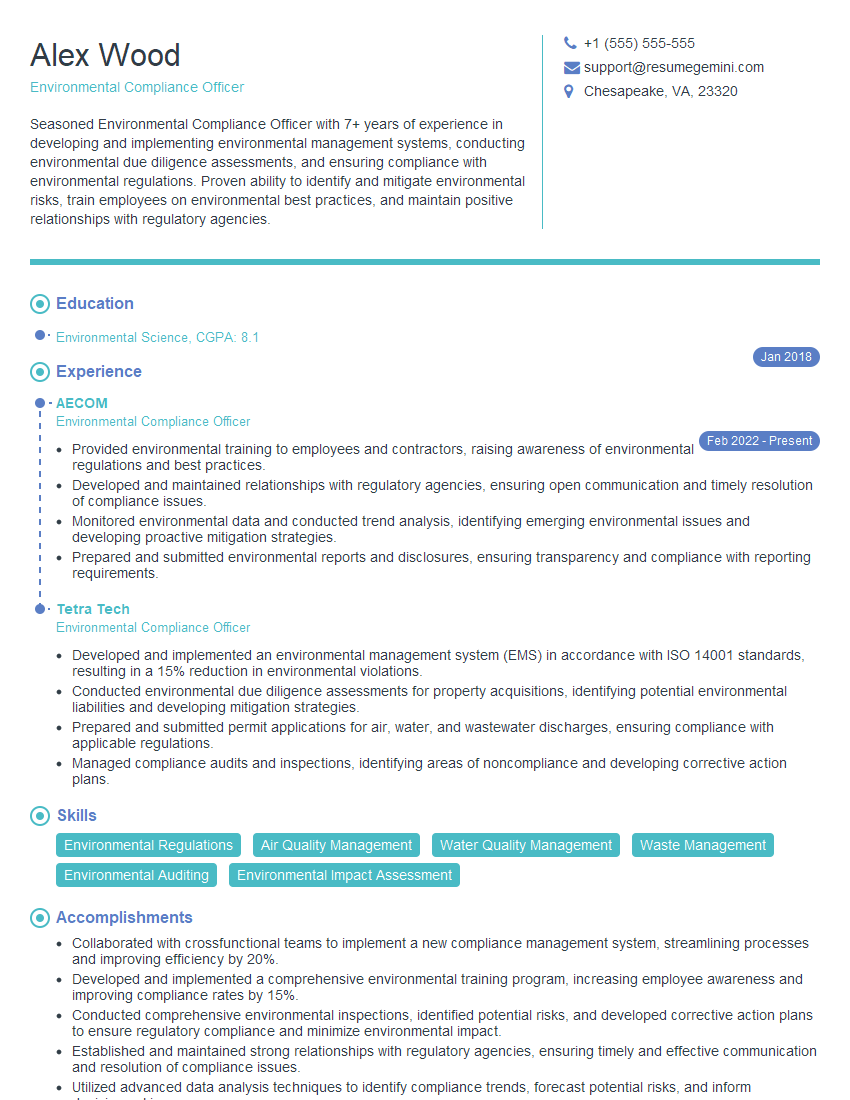
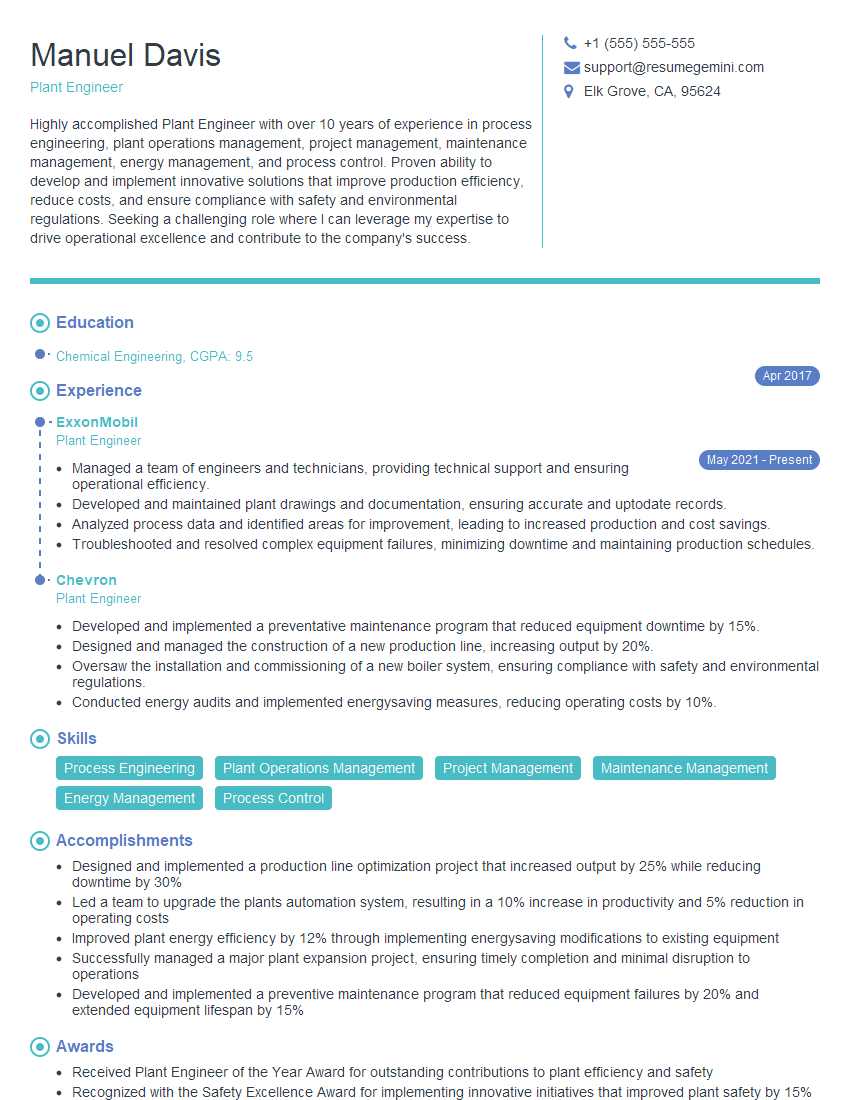
Mastering Landfill Gas Plant Operation and Maintenance opens doors to a rewarding career with significant growth potential in a vital and expanding industry. To maximize your job prospects, a well-crafted, ATS-friendly resume is crucial. ResumeGemini can help you build a professional and impactful resume that highlights your skills and experience effectively. ResumeGemini provides examples of resumes tailored specifically to Landfill Gas Plant Operation and Maintenance roles, giving you a head start in presenting yourself as the ideal candidate. Take the next step towards your dream career – build your best resume with ResumeGemini.
Explore more articles
Users Rating of Our Blogs
Share Your Experience
We value your feedback! Please rate our content and share your thoughts (optional).
What Readers Say About Our Blog
To the interviewgemini.com Webmaster.
Very helpful and content specific questions to help prepare me for my interview!
Thank you
To the interviewgemini.com Webmaster.
This was kind of a unique content I found around the specialized skills. Very helpful questions and good detailed answers.
Very Helpful blog, thank you Interviewgemini team.