Feeling uncertain about what to expect in your upcoming interview? We’ve got you covered! This blog highlights the most important Valve and Fitting Installation interview questions and provides actionable advice to help you stand out as the ideal candidate. Let’s pave the way for your success.
Questions Asked in Valve and Fitting Installation Interview
Q 1. Explain the different types of valves and their applications.
Valves are essential components in any piping system, controlling the flow of fluids. Different valve types cater to various needs. Here are some common examples:
- Gate Valves: These are on/off valves, ideal for completely stopping or allowing full flow. Think of them like a gate blocking or opening a roadway. They’re not suitable for throttling (regulating flow). Example: Shutting off water flow to a section of a building.
- Globe Valves: These valves are excellent for throttling and regulating flow. The flow is controlled by a disc moving up and down inside a globe-shaped body. Imagine adjusting the water flow in your shower – that’s a globe valve’s job. They are less efficient at full flow than gate valves.
- Ball Valves: Simple on/off valves where a rotating ball with a hole controls the flow. They’re known for their quick operation and compact design. Think of a faucet in your kitchen sink.
- Butterfly Valves: These use a rotating disc to control flow, offering good throttling capabilities and compact size, often in larger diameter pipelines. They are cost-effective but might wear faster with frequent throttling.
- Check Valves: These are non-return valves, allowing flow in only one direction. They prevent backflow, protecting equipment from damage. They are commonly found in pump discharge lines.
- Relief Valves: These valves automatically open to relieve excess pressure, protecting the system from over-pressurization. Think of them as a pressure safety net, crucial for boilers and compressed air systems.
The choice depends on the specific application’s pressure, temperature, flow rate, and the need for throttling.
Q 2. Describe the process of selecting the appropriate valve for a specific application.
Selecting the right valve is crucial for system performance and safety. The process involves careful consideration of several factors:
- Fluid Type and Properties: Is it water, gas, corrosive chemicals? The valve material must be compatible.
- Operating Pressure and Temperature: The valve’s pressure rating and temperature limits should exceed the system’s maximum values.
- Flow Rate and Control Requirements: Is it an on/off application or do you need throttling? Different valves excel at each.
- Pipe Size and Material: The valve must match the pipe diameter and material for proper connection.
- Maintenance Requirements: Consider ease of maintenance and repair. Some valves are easier to service than others.
- Budget and Installation Constraints: The cost and ease of installation often play a role in the final decision.
For instance, in a high-pressure steam line, you’d need a high-pressure rated gate or globe valve made of a suitable material like stainless steel. In a low-pressure water line, a simple ball valve might suffice.
Q 3. What are the common types of pipe fittings and their uses?
Pipe fittings connect pipes of different diameters, change direction, or branch lines. Common types include:
- Couplings: Join two pipes of the same diameter end-to-end. Think of them as pipe connectors.
- Elbows: Change the direction of the pipe, with 45° and 90° being common angles.
- Tees: Create a branch line, allowing fluid to flow in three directions.
- Crosses: Allow flow in four directions, similar to a road intersection.
- Reducers/Adapters: Connect pipes of different diameters, smoothly transitioning flow.
- Unions: Disconnectable fittings allowing for easy pipe separation, facilitating maintenance.
- Nipples: Short pipes used as connectors between other fittings.
The choice depends on the piping arrangement and flow requirements. For example, an elbow is used to turn a pipe 90 degrees, while a tee creates a branch line for water to a sink.
Q 4. How do you identify different pipe materials and their suitability for various applications?
Identifying pipe materials and their suitability is critical. Common materials include:
- Steel: Strong and durable, suitable for high-pressure applications, but prone to corrosion. Often used for underground or industrial piping.
- Copper: Excellent corrosion resistance, widely used for plumbing and domestic water systems.
- PVC (Polyvinyl Chloride): Lightweight, corrosion-resistant, and cost-effective for low-pressure applications like drainage systems.
- CPVC (Chlorinated Polyvinyl Chloride): Higher temperature resistance than PVC, suitable for hot water systems.
- ABS (Acrylonitrile Butadiene Styrene): Another plastic pipe commonly used in drainage and sewer systems.
Material selection considers factors like pressure, temperature, chemical compatibility, and cost. Using steel for a low-pressure water line would be an overkill and expensive, whereas PVC would be unsuitable for high-temperature applications.
Q 5. Explain the importance of proper torque when installing fittings.
Proper torque is vital for reliable and leak-free connections. Applying too little torque results in loose fittings and leaks, while excessive torque can damage threads or the fitting itself. Torque specifications depend on the fitting type, pipe material and size, and gasket or sealant used.
Torque wrenches are used to apply the correct amount of rotational force. These specialized tools indicate when the correct torque is reached. Improper torque can lead to costly leaks and repairs down the line. Always consult the manufacturer’s specifications for the correct torque values for each fitting.
Q 6. What are the safety precautions to be followed during valve and fitting installation?
Safety is paramount during valve and fitting installation. Key precautions include:
- Lockout/Tagout (LOTO): Always isolate power to prevent accidental energization before working on any system.
- Personal Protective Equipment (PPE): Use appropriate safety glasses, gloves, and other protective gear depending on the fluid being handled.
- Proper Lifting Techniques: Avoid injuries when handling heavy pipes and fittings. Use proper lifting equipment when necessary.
- Confined Space Entry Procedures: Follow all necessary safety procedures when working in confined spaces.
- Fire Prevention Measures: Take precautions when dealing with flammable fluids or high-temperature systems.
- Emergency Procedures: Ensure awareness of emergency procedures, including evacuation plans in case of accidents.
Failure to adhere to these safety protocols can result in serious injury or property damage.
Q 7. How do you troubleshoot a leaking valve or fitting?
Troubleshooting a leaking valve or fitting involves a systematic approach:
- Isolate the Leak: Pinpoint the exact location of the leak.
- Check for Loose Connections: Tighten fittings carefully, using the correct torque.
- Inspect Gaskets and Seals: Replace damaged or deteriorated gaskets or seals.
- Examine the Valve Stem or Disc: Look for damage or wear on valve components; possibly needing replacement.
- Check for Corrosion: Look for corrosion in the pipes or fittings that might weaken them and cause leaks.
- Test Pressure: After making repairs, test the system to ensure the leak is fixed and the system holds pressure.
- If the leak persists: Replace the faulty valve or fitting.
Remember, if you are unsure about any aspect of the troubleshooting process, always consult a qualified professional.
Q 8. Describe your experience with different types of valve actuators.
Valve actuators are the ‘muscles’ that move valves, allowing for automated control. My experience encompasses a wide range, including:
- Pneumatic Actuators: These use compressed air to provide the force for valve operation. I’ve extensively worked with diaphragm and piston actuators, understanding their advantages (simplicity, reliability) and limitations (air supply dependence, potential for leaks). For example, in a recent project involving a large water treatment plant, we used pneumatic actuators on the main isolation valves due to their proven reliability in harsh environments.
- Electric Actuators: These use electric motors for actuation, offering precise control and integration with SCADA systems. I’m familiar with various types, including rotary and linear actuators, and their suitability for different valve sizes and applications. I’ve troubleshot numerous instances of malfunctioning electric actuators, tracing issues back to faulty wiring, motor burnouts, or limit switch problems.
- Hydraulic Actuators: Used where high force is needed, these utilize hydraulic fluid. I’ve worked with these less frequently, primarily in high-pressure applications like oil and gas pipelines. They require specialized maintenance and expertise to avoid leaks and fluid contamination.
Selecting the right actuator depends critically on the application’s specific requirements, including the valve size, operating pressure, required speed, and environmental considerations.
Q 9. Explain the process of pressure testing a piping system.
Pressure testing is crucial for ensuring the integrity of a piping system before it goes into operation. It involves pressurizing the system to a specified level above the operating pressure and monitoring for leaks. The process generally follows these steps:
- System Isolation: Completely isolate the piping system section being tested from the rest of the system using blind flanges or other suitable isolation devices.
- Pressure Medium Selection: Choose a suitable pressure medium like water, air, or nitrogen. Water is common for low-pressure systems; air or nitrogen is used for higher pressures due to their inert nature.
- Pressurization: Gradually pressurize the system using a calibrated pump or compressor, monitoring the pressure using a pressure gauge. Reach the testing pressure, usually specified in the design documents (e.g., 1.5 times the operating pressure).
- Leak Detection: Carefully inspect the entire system for leaks. Visual inspection is often complemented by using soapy water to detect minor leaks that might not be immediately apparent.
- Pressure Holding Test (Optional): Maintain the test pressure for a specified duration (e.g., 30 minutes) to check for slow leaks.
- Pressure Release: Slowly release the pressure after the test.
Accurate pressure testing is essential to identify and repair any leaks before the system becomes operational, preventing potential hazards and costly repairs later on. Failure to properly pressure test a system can lead to leaks, equipment damage, and even safety risks.
Q 10. How do you interpret piping and instrumentation diagrams (P&IDs)?
Piping and Instrumentation Diagrams (P&IDs) are schematic drawings that show the piping system, equipment, instrumentation, and control systems. I interpret them by systematically reviewing different aspects:
- Line Numbers and Tags: These uniquely identify each pipe and component, allowing for tracing the flow of fluids throughout the system. For example, ‘P-101’ might represent a specific pump, and ‘L-202’ a particular pipe line.
- Pipe Sizes and Materials: The diagram indicates pipe diameters (e.g., NPS 6) and materials (e.g., carbon steel), which informs material selection and fitting choices.
- Valve Types and Locations: Different valve symbols (e.g., globe valve, ball valve) indicate the type of valve used and its location within the system. Understanding the valve types is crucial for proper selection and installation.
- Instrument Locations and Types: P&IDs show the locations of sensors, transmitters, and controllers that monitor and control process variables (e.g., pressure, temperature, flow).
- Flow Direction: Arrows indicate the flow direction of fluids through the system.
Thorough understanding of P&IDs is fundamental for successful installation and maintenance of piping systems. Misinterpretations can lead to incorrect component selection, improper installation, and operational problems.
Q 11. What are the common causes of valve failure?
Valve failure can stem from a variety of causes, broadly categorized as:
- Erosion/Corrosion: This is particularly prevalent in aggressive environments. For example, corrosive fluids can damage valve bodies and internal components, leading to leaks or failure to operate. Proper material selection is vital to mitigate this.
- Cavitation: This occurs when high-velocity fluids create vapor bubbles that implode, causing damage to valve internals. Proper valve selection and system design can reduce cavitation.
- Mechanical Wear: Repeated operation can wear down seals, stems, and other moving parts. Regular maintenance, lubrication, and timely component replacement are necessary.
- Improper Operation: Excessive pressure, temperature, or flow rates can stress valves beyond their design limits. Operator training and adherence to operating procedures are crucial.
- Foreign Object Damage (FOD): Debris entering the valve can cause damage and malfunction. Proper filtration and flushing are crucial preventative measures.
- Improper Installation: Poor installation techniques, such as incorrect alignment or inadequate support, can lead to premature valve failure.
Understanding these common failure modes enables proactive maintenance strategies, extending valve lifespan and preventing costly downtime.
Q 12. Describe your experience with different welding techniques used in pipefitting.
My experience includes various welding techniques relevant to pipefitting:
- Shielded Metal Arc Welding (SMAW): A versatile technique suitable for various pipe materials and diameters, commonly used in field applications. I’m proficient in using different electrode types (e.g., E6010, E7018) based on the material and required weld properties.
- Gas Metal Arc Welding (GMAW): Also known as MIG welding, it’s efficient for faster welding speeds on thinner materials. My expertise encompasses different shielding gases and wire feed settings for achieving high-quality welds.
- Gas Tungsten Arc Welding (GTAW): Also known as TIG welding, this precision technique is ideal for joining thinner pipes and critical components requiring high-quality welds with minimal heat distortion. I’m adept at controlling weld puddle size and arc length to produce high-quality, visually appealing welds.
Selecting the appropriate welding technique hinges on factors such as pipe material, thickness, accessibility, and required weld quality. Each technique demands precise control and adherence to safety protocols for consistent, reliable welds.
Q 13. How do you ensure proper alignment during pipefitting installation?
Ensuring proper alignment during pipefitting installation is critical for preventing stress concentrations and leaks. My approach involves a multi-step process:
- Accurate Layout: Precisely mark pipe locations and orientations based on the P&ID and engineering drawings. This involves careful measurements and verification of dimensions.
- Use of Alignment Tools: I utilize various alignment tools such as laser levels, plumb bobs, and alignment clamps to ensure pipes are correctly aligned both vertically and horizontally. For example, laser levels help to ensure the pipes are level and on the same plane, while alignment clamps maintain the correct alignment during welding.
- Pre-Assembly: Whenever possible, pre-assembling sections of pipe off-site and then carefully fitting them into their final position helps to improve accuracy and efficiency.
- Progressive Alignment: Large piping systems are aligned section by section, ensuring each section is properly aligned before connecting to the next.
- Final Verification: After assembly, the entire system is inspected to verify alignment and ensure no significant deviations from design specifications.
Improper alignment can induce stress on the piping system, leading to leaks or even pipe failure. Careful attention to alignment details is non-negotiable for long-term system reliability and safety.
Q 14. What are your experience with different types of pipe supports and hangers?
My experience with pipe supports and hangers covers a wide range of types, selected based on pipe size, material, operating temperature, pressure, and environmental factors. Examples include:
- Rigid Supports: These provide fixed points of support and are used to prevent movement. I have experience installing various types, including weld-on supports, bolted supports, and concrete saddles, choosing based on load requirements and accessibility.
- Flexible Supports: These allow for some movement and accommodate thermal expansion and contraction. My experience includes using spring hangers, constant support hangers, and sway braces. I’ve had to troubleshoot many failures caused by incorrectly sized flexible hangers leading to pipe sag and vibration issues.
- Variable Spring Hangers: These automatically compensate for changes in pipe weight due to fluid content or temperature variations. They’re essential for maintaining proper pipe alignment throughout operating conditions.
- Rod Hangers: These are used to support pipes from the ceiling or other overhead structures. Proper sizing and adjustment are critical to prevent excessive sag.
Selecting the correct type and size of support is vital to prevent pipe stresses, vibrations, and potential damage to the system. I’ve observed several projects where poor support design has led to premature failure of the piping system, reinforcing the importance of careful selection and installation.
Q 15. Explain the importance of proper insulation in piping systems.
Proper insulation in piping systems is crucial for several reasons. Think of it like wrapping a present – it protects the contents from the elements. In piping, this ‘present’ is the fluid flowing through the pipes, and the ‘elements’ are ambient temperature fluctuations.
- Energy Efficiency: Insulation minimizes heat loss (or gain) in hot or cold piping systems, significantly reducing energy consumption and operational costs. Imagine a hot water pipe without insulation; the heat radiates into the surrounding environment, wasting energy and costing you money.
- Prevent Condensation: Insulation helps prevent condensation on cold pipes in humid environments. Condensation can lead to corrosion, water damage, and the growth of mold, ultimately damaging the pipe and surrounding structures.
- Safety: Insulation protects personnel from burns or frostbite when working with extremely hot or cold pipes. It also helps to maintain the fluid’s temperature within a safe operating range.
- Material Protection: It protects the pipe itself from the elements, extending its lifespan by reducing the impact of corrosion and degradation.
For example, in a large industrial plant, the cost savings from properly insulated pipelines can be substantial, paying for the insulation investment many times over. The choice of insulation material depends on the application (temperature, environment, etc.) and can include fiberglass, foam, or mineral wool.
Career Expert Tips:
- Ace those interviews! Prepare effectively by reviewing the Top 50 Most Common Interview Questions on ResumeGemini.
- Navigate your job search with confidence! Explore a wide range of Career Tips on ResumeGemini. Learn about common challenges and recommendations to overcome them.
- Craft the perfect resume! Master the Art of Resume Writing with ResumeGemini’s guide. Showcase your unique qualifications and achievements effectively.
- Don’t miss out on holiday savings! Build your dream resume with ResumeGemini’s ATS optimized templates.
Q 16. How do you handle different types of pipe threading?
Handling different types of pipe threading requires the right tools and techniques. The most common types are NPT (National Pipe Taper) and BSP (British Standard Pipe). NPT threads are tapered, creating a tighter seal as the fitting is tightened. BSP threads are generally parallel.
- NPT Threads: These require pipe taps and dies, and care must be taken not to over-tighten, which can damage the threads. A good lubricating compound is essential to avoid galling (metal-to-metal adhesion). I’ve personally found Teflon tape to be very reliable.
- BSP Threads: These are generally easier to work with than NPT, requiring parallel dies and less careful control during tightening. However, the seal relies on a good gasket or sealant rather than the taper of the thread itself.
- Other Thread Types: Other less common types include metric threads and specialized threads for specific applications. The proper tools and understanding of the thread standard are critical for each.
In my experience, a properly threaded pipe joint is essential for preventing leaks and maintaining system integrity. Mistakes here can lead to costly repairs, downtime, and potential environmental hazards. Therefore, I always double-check my work and visually inspect each joint after installation.
Q 17. Describe your experience with various types of flanges and their installation.
Flanges provide a robust method for joining pipes, particularly in higher-pressure applications. They come in a variety of materials (cast iron, steel, stainless steel), pressure ratings, and types.
- Welding Neck Flanges: These are welded directly to the pipe, providing the strongest and most leak-resistant connection. This is my go-to for high-pressure, high-temperature systems.
- Slip-on Flanges: These slip over the pipe and are then welded. They’re faster to install than welding neck but slightly less robust.
- Blind Flanges: Solid discs used to close off a pipeline. These are crucial for isolating sections of piping for maintenance or repairs. I’ve used them often in situations where access to a valve is limited.
- Socket Weld Flanges: These are welded into a socket on the pipe end, offering a good balance between strength and ease of installation.
Flange installation requires precision. Bolting torque must be carefully controlled to ensure a proper seal without damaging the flange or gasket. I always follow the manufacturer’s specifications and use a torque wrench to guarantee consistent and correct tightening. Incorrect torque can lead to leaks or flange failure.
Q 18. Explain the concept of flow control and its importance in valve selection.
Flow control is the ability to regulate the rate at which fluid moves through a piping system. It’s paramount for many reasons.
- Process Control: Many industrial processes require precise control of flow rates. Think of a chemical plant where an incorrect flow rate could lead to a dangerous reaction or product defect. Proper valve selection is critical here.
- Pressure Regulation: Valves are used to control pressure drops across different sections of a pipeline. A pressure regulating valve prevents damage caused by excessive pressure in a section of the piping system.
- Safety: Flow control is essential for safety systems like emergency shut-off valves, which are critical for isolating systems in case of emergencies.
- Energy Efficiency: Regulating flow optimizes energy use by avoiding unnecessary pumping work.
Valve selection hinges on the required flow control characteristic. Globe valves offer excellent control, while ball valves are better for on/off applications. Butterfly valves are commonly used for larger pipelines and throttling situations. The selection process involves careful consideration of factors like flow rate, pressure, fluid viscosity, and required level of control.
Q 19. How do you determine the appropriate size of valves and fittings for a given application?
Determining the appropriate size of valves and fittings involves careful consideration of several factors.
- Flow Rate: The required flow rate dictates the minimum pipe diameter and valve size. I always consult relevant engineering standards and use flow calculation software to ensure adequate capacity. Insufficient sizing can lead to excessive pressure drops and reduced efficiency.
- Pressure: The operating pressure of the system determines the pressure rating of the valves and fittings. The chosen components must withstand the maximum anticipated pressure without failure. Using undersized fittings is a safety hazard.
- Fluid Properties: The properties of the fluid (viscosity, corrosiveness, temperature) dictate material selection for the valves and fittings. For example, corrosive fluids require valves and fittings made from corrosion-resistant materials like stainless steel.
- Accessibility and Maintenance: Consider accessibility for future maintenance and repairs. Allow enough space around valves and fittings to enable easy access. Overlooking this aspect causes issues during maintenance.
Using the wrong size can lead to a variety of problems including cavitation, erosion, unnecessary pressure drops and increased energy consumption. I always work with system schematics and perform calculations to ensure the correct sizing before proceeding with any installation.
Q 20. Describe your experience working with different types of gaskets and sealants.
Gaskets and sealants are essential for creating leak-proof joints in piping systems. The choice depends on the application.
- Gaskets: These come in various materials such as rubber, asbestos (less common now due to health concerns), PTFE, and metal. The choice depends on the fluid, temperature, and pressure. For instance, high-temperature applications often require graphite gaskets.
- Sealants: These are used to fill gaps and create a more robust seal. Common sealants include PTFE tape (Teflon tape), anaerobic sealants, and silicone sealants. I often use Teflon tape on threaded connections for ease of use and reliability. However, anaerobic sealants are preferable for flange connections to ensure a long-lasting, dependable seal.
Proper preparation of the mating surfaces is crucial for successful gasket and sealant application. Dirty or damaged surfaces can lead to leaks. I always ensure the surfaces are clean and free of debris before applying a gasket or sealant. Incorrect application can render the most high-quality gasket useless and cause significant problems down the line.
Q 21. What are your experience with different types of valve packing and their maintenance?
Valve packing is the material used to seal the stem of a valve, preventing leakage. Different types of packing are used depending on the valve type, fluid, and operating conditions.
- PTFE (Teflon): This is a common choice due to its excellent chemical resistance and temperature range. It’s fairly low-maintenance but can sometimes be prone to extrusion under high pressure.
- Graphite: Offers good resistance to high temperatures and chemicals. It often requires periodic adjustment, but it provides excellent sealing capabilities in demanding conditions.
- Braided Packing: This consists of various materials braided together, offering a good balance of cost and performance. The choice of material depends on the application.
Maintenance involves periodically adjusting the packing gland to compensate for wear and compression. Over-tightening can damage the packing or the valve stem, while under-tightening will lead to leakage. Regular inspection and maintenance prevent leaks and extend the valve’s lifespan. I follow a preventative maintenance schedule for all valves, ensuring that they are checked and packed as necessary, keeping records for traceability.
Q 22. How do you ensure the proper alignment of valves and fittings during installation?
Ensuring proper alignment of valves and fittings is crucial for preventing leaks, stress on the piping system, and ensuring efficient operation. Think of it like building with LEGOs – if the bricks aren’t aligned correctly, the whole structure becomes unstable. We use a combination of techniques to achieve this.
Pre-installation planning: Careful review of the piping and instrumentation diagrams (P&IDs) is paramount. This allows us to anticipate potential alignment challenges before they arise. We’ll often lay out components on the ground to visualize the assembly.
Laser alignment tools: For critical applications, we employ laser alignment tools to ensure precise alignment of valves and fittings, especially in long pipelines or complex systems. This provides a high level of accuracy, minimizing errors.
Use of alignment guides and fixtures: These help maintain the correct orientation during welding or bolting. Think of them as temporary supports that guide the components into their proper places. They are particularly helpful in confined spaces.
Visual inspection and verification: At each stage, visual checks are made to ensure that components are properly aligned. We also use measuring tools (like levels and squares) to verify alignment.
For example, during a recent project involving a high-pressure steam line, laser alignment was essential to prevent any misalignment that could lead to catastrophic failure. The use of these tools reduced the risk of leaks significantly.
Q 23. Explain the procedure for commissioning a new valve installation.
Commissioning a new valve installation involves a systematic process to verify its proper functionality and safety. It’s like performing a final check before a car leaves the factory. The process typically includes:
Pre-commissioning checks: This involves verifying that all components are installed correctly, connections are tight, and there are no visible defects. We’ll check for things like correct valve orientation and the absence of debris in the pipeline.
Leak testing: This critical step involves pressurizing the system to identify any leaks. We use different methods depending on the system’s pressure rating. For example, a low-pressure water line might be checked visually, while a high-pressure gas line would require specialized leak detection equipment.
Functional testing: This ensures that the valves operate as designed. We’ll cycle the valves multiple times, verifying proper opening and closing, and checking for smooth operation.
Calibration (if applicable): Certain valves, especially those with control features, require calibration to ensure accurate operation. This often involves specialized tools and calibrated instruments.
Documentation: All test results and observations are meticulously documented to ensure traceability and compliance with safety standards.
During a recent project involving a new water treatment plant, thorough commissioning prevented costly downstream problems. Identifying a small leak during the testing phase avoided potential water damage and operational disruptions.
Q 24. Describe your experience working with computerized maintenance management systems (CMMS).
My experience with CMMS (Computerized Maintenance Management Systems) is extensive. I’ve used several different systems throughout my career, including [mention specific CMMS software if comfortable, e.g., SAP PM, Maximo]. These systems are invaluable for tracking work orders, scheduling maintenance, managing inventory, and generating reports. Think of it as a centralized hub for all maintenance-related activities.
Work order management: I’m proficient in creating, assigning, and tracking work orders for valve and fitting maintenance. This allows for efficient scheduling and ensures that tasks are completed on time.
Inventory management: CMMS helps us maintain optimal stock levels of valves, fittings, and other associated parts. This minimizes downtime and prevents costly delays in the case of replacements or repairs.
Preventive maintenance scheduling: I use CMMS to schedule routine inspections and maintenance tasks for valves and fittings, extending their lifespan and minimizing the risk of failures.
Reporting and analysis: CMMS generates reports that track maintenance costs, equipment reliability, and other key performance indicators. This information is crucial for continuous improvement and informed decision-making.
In a previous role, using CMMS improved our preventive maintenance program efficiency by 25%, resulting in significant cost savings and reduced equipment downtime.
Q 25. How do you handle emergency situations during valve and fitting installation?
Emergency situations during valve and fitting installation require quick thinking and decisive action. Safety is the top priority. Our response depends on the nature of the emergency, but generally involves these steps:
Immediate isolation: If there’s a leak or other hazardous condition, the affected section of the piping system needs to be immediately isolated using shut-off valves. This minimizes the risk of further damage or injury.
Emergency shutdown procedures: We adhere to strict emergency shutdown procedures as defined in the site’s safety plan. This ensures a coordinated and safe response.
Assessment and damage control: Once the system is isolated, we assess the situation and take appropriate steps to control the damage. This may involve repairing leaks, replacing damaged components, or contacting emergency services if necessary.
Root cause analysis: After the emergency is handled, a thorough investigation is conducted to determine the root cause. This helps prevent similar incidents in the future.
Reporting and documentation: The incident is meticulously documented, including details of the event, actions taken, and any lessons learned. This is crucial for continuous improvement and safety training.
In one instance, a sudden pipe rupture required immediate action. We quickly isolated the affected area, preventing widespread damage and potential injuries. Our rapid response and adherence to safety protocols were key in mitigating the consequences.
Q 26. What are the different types of pipe hangers and their applications?
Pipe hangers are essential for supporting piping systems, preventing sagging and stress on the pipes and connections. Choosing the right hanger depends on the pipe’s size, material, weight, and the environment. Here are some common types:
Rigid hangers: These provide fixed support and are suitable for situations where minimal movement is required. They’re often used for short sections of pipe or where stability is paramount.
Spring hangers: These compensate for thermal expansion and contraction of the piping system. They’re commonly used in situations where temperature fluctuations are significant. Think of them as shock absorbers for the piping system.
Variable spring hangers: Offer adjustable support, allowing for fine-tuning of the support level. This is beneficial for installations where precise alignment is critical.
Constant support hangers: Maintain a constant load on the pipe regardless of its movement due to thermal expansion or other factors.
Trapeze hangers: These are used for supporting heavier pipes and provide multiple support points. They’re like a suspension system for pipes.
For instance, in a high-temperature steam line, spring hangers would be crucial to accommodate the thermal expansion and contraction of the pipe, preventing stress on the joints and preventing leaks.
Q 27. Describe your experience with different types of pipe insulation materials.
My experience encompasses a range of pipe insulation materials, each with its own properties and applications. The choice of material depends on factors such as temperature, pressure, chemical compatibility, and environmental considerations. Some common types include:
Fiberglass insulation: A cost-effective option suitable for moderate temperatures. It’s lightweight and easy to install but can be brittle.
Calcium silicate insulation: Excellent for high-temperature applications and offers good fire resistance. It’s more durable than fiberglass but is heavier and more expensive.
Polyurethane foam insulation: Provides excellent thermal insulation and is lightweight. It’s often used in cryogenic applications and offers good moisture resistance.
Mineral wool insulation: Similar to fiberglass but offers better fire resistance and higher temperature capabilities. It’s often used in fire-rated systems.
In a recent project involving cryogenic pipelines, polyurethane foam insulation was essential due to its excellent thermal performance at very low temperatures. The selection of the right insulation material is critical to energy efficiency and system safety.
Q 28. How do you ensure the integrity of a piping system after installation?
Ensuring the integrity of a piping system after installation is a multifaceted process that goes beyond just visual inspection. It’s like ensuring the structural soundness of a building after construction. This process involves:
Pressure testing: This is a crucial step to identify any leaks or weaknesses in the system. The pressure test is conducted at a pressure exceeding the system’s operating pressure.
Non-destructive testing (NDT): Techniques like ultrasonic testing, radiographic testing, or dye penetrant testing can be used to detect internal flaws or defects in the pipes or welds without damaging the system.
Visual inspection: A thorough visual inspection of all welds, connections, and components is performed to identify any obvious defects or anomalies. This helps catch things that pressure testing might miss.
Hydrostatic testing: This involves filling the piping system with water and pressurizing it to check for leaks. It’s a commonly used method for verifying system integrity.
Documentation and certification: All testing results and inspection findings are documented and certified to meet industry standards and regulatory requirements.
A recent project demanded meticulous integrity checks, revealing a minor weld defect which was addressed before commissioning. This proactive approach prevented potential future issues and ensured the long-term reliability of the system.
Key Topics to Learn for Valve and Fitting Installation Interview
- Types of Valves: Understanding the different types of valves (gate, globe, ball, check, etc.), their applications, and their strengths and weaknesses. Consider factors like pressure ratings and material compatibility.
- Fitting Selection and Installation: Mastering the selection of appropriate fittings based on pipe material, pressure, and fluid type. Understand proper installation techniques to ensure leak-free connections and system integrity. This includes understanding different joining methods (e.g., threading, welding, flanging).
- Pipe System Design Principles: Familiarize yourself with basic principles of pipe system design, including pressure drop calculations, flow rate considerations, and sizing of pipes and fittings. Think about scenarios requiring different pipe materials or special considerations (e.g., hazardous materials handling).
- Leak Detection and Repair: Knowing how to identify leaks, understand their causes, and effectively repair them using appropriate techniques and materials. This includes understanding the safety precautions associated with leak repair.
- Safety Regulations and Procedures: Demonstrate a strong understanding of relevant safety regulations and procedures for working with pressurized systems and potentially hazardous materials. This will show a commitment to safe work practices.
- Troubleshooting Common Issues: Develop your ability to diagnose and troubleshoot problems in valve and fitting installations. Be prepared to discuss common issues and how you would approach resolving them effectively and efficiently.
- Blueprint Reading and Interpretation: Practice interpreting piping and instrumentation diagrams (P&IDs) and other relevant blueprints to understand system layouts and specifications.
Next Steps
Mastering valve and fitting installation is crucial for a successful and rewarding career in the process industries. It opens doors to diverse roles offering both technical challenge and excellent career progression. To stand out, a well-crafted resume is essential. Make sure your resume is ATS-friendly (Applicant Tracking System-friendly), allowing recruiters to easily find and assess your qualifications. ResumeGemini is a trusted resource to help you build a professional and effective resume that highlights your skills and experience. Examples of resumes tailored to Valve and Fitting Installation are available to help guide you in crafting your perfect application.
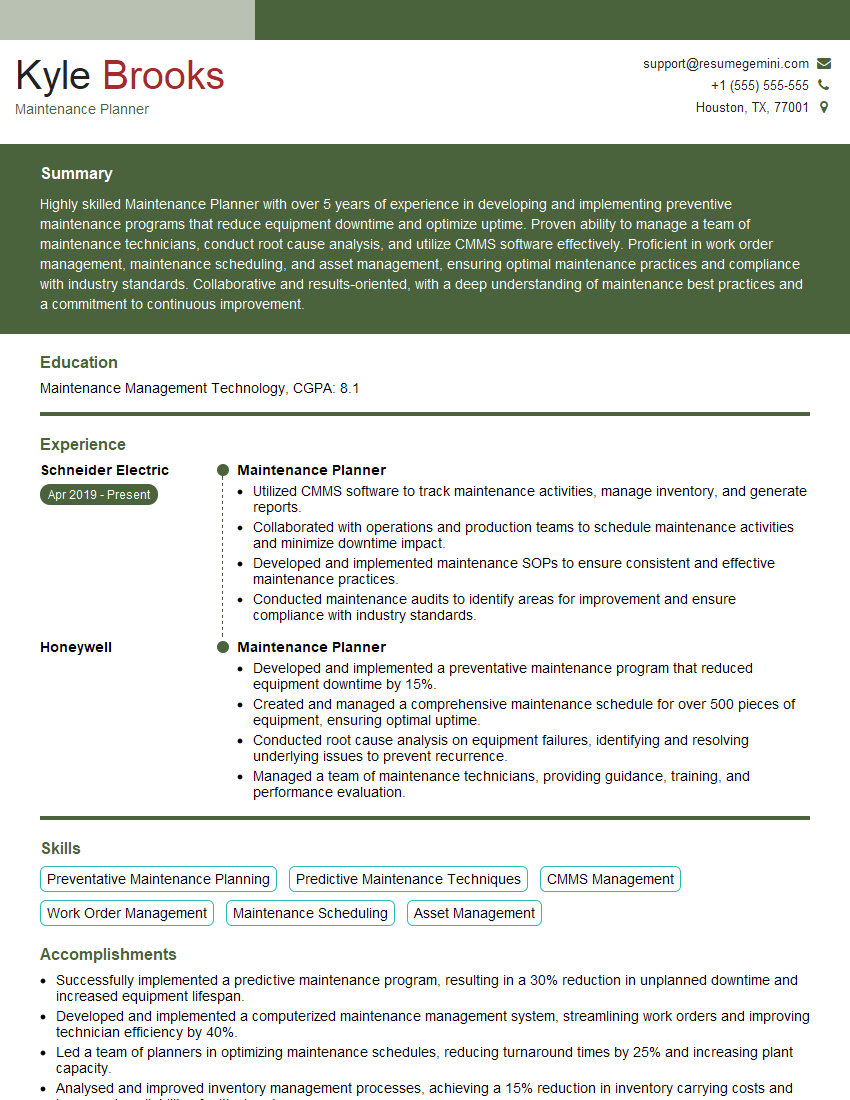
Maintenance Planner Resume Sample
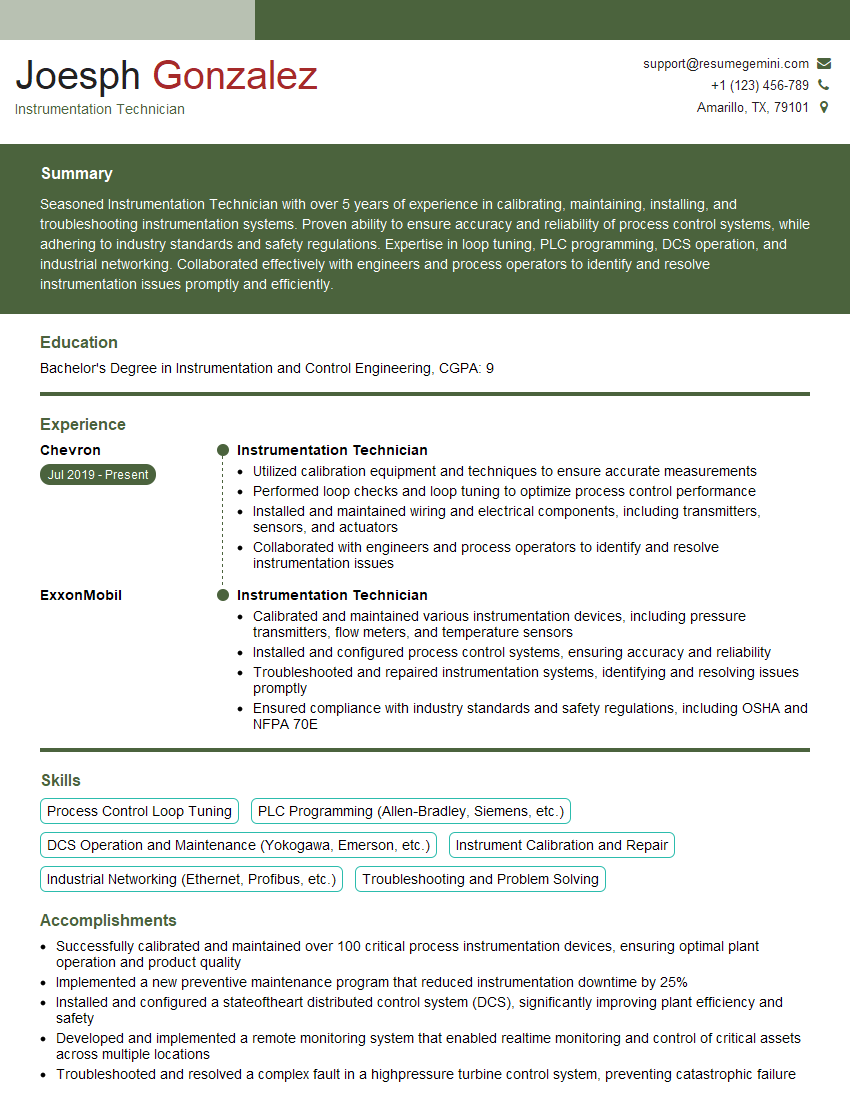
Instrumentation Technician Resume Sample
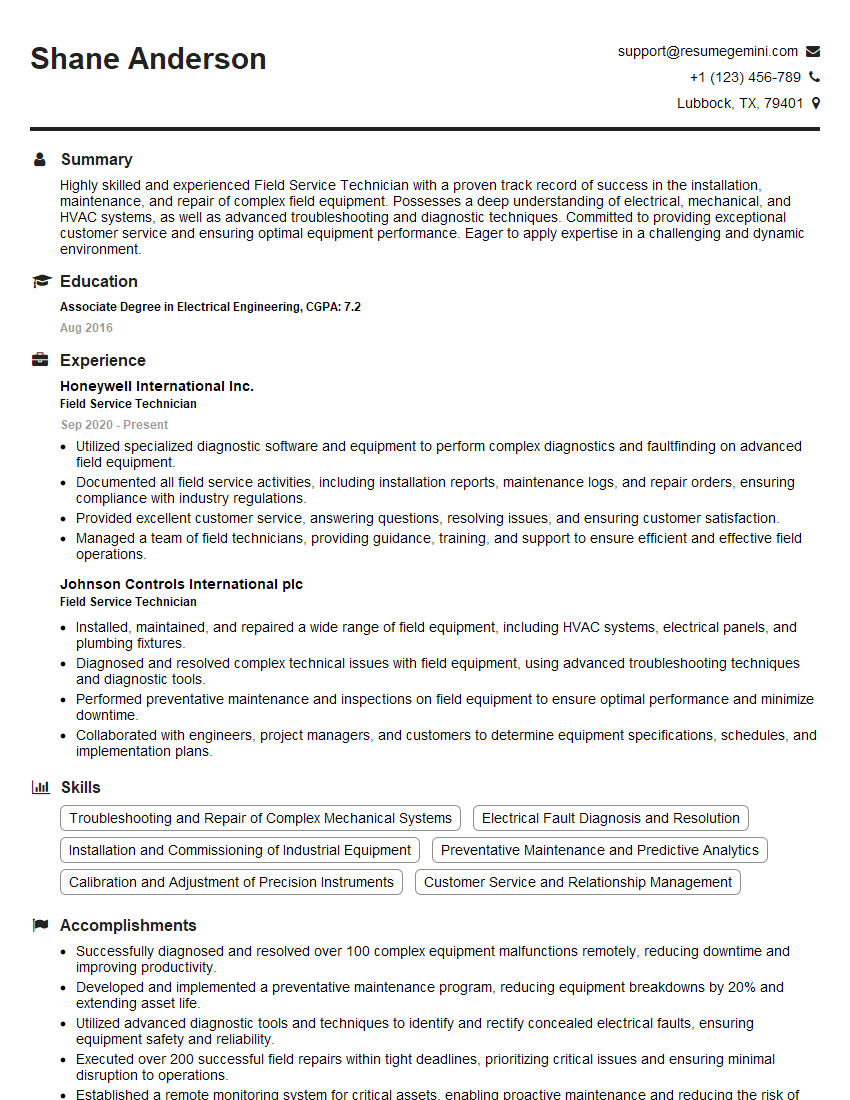
Field Service Technician Resume Sample
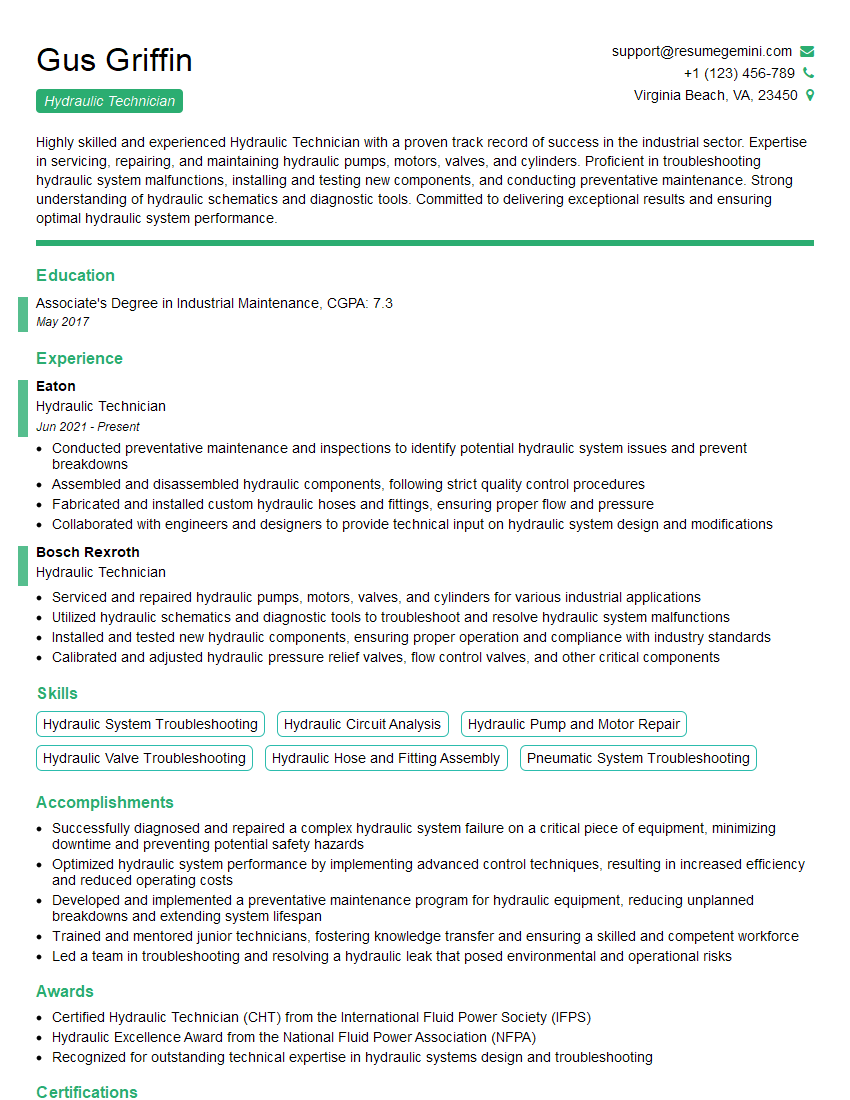
Hydraulic Technician Resume Sample
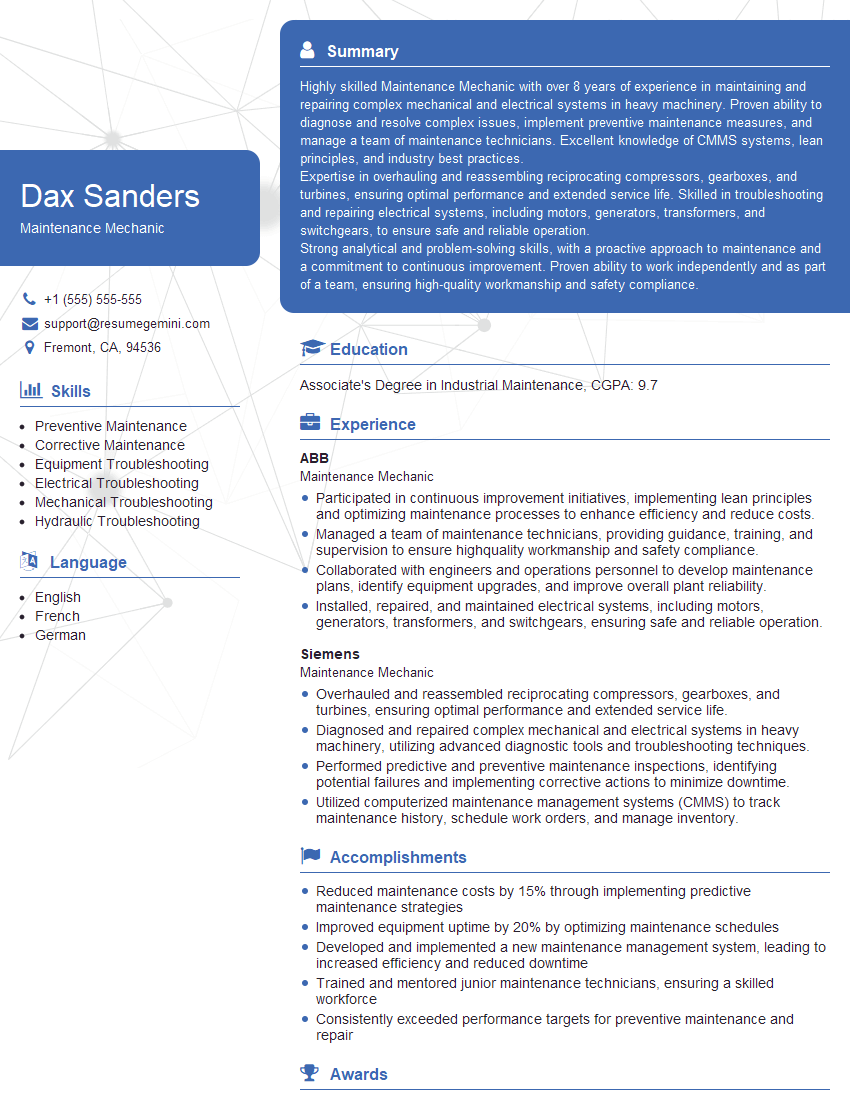
Maintenance Mechanic Resume Sample
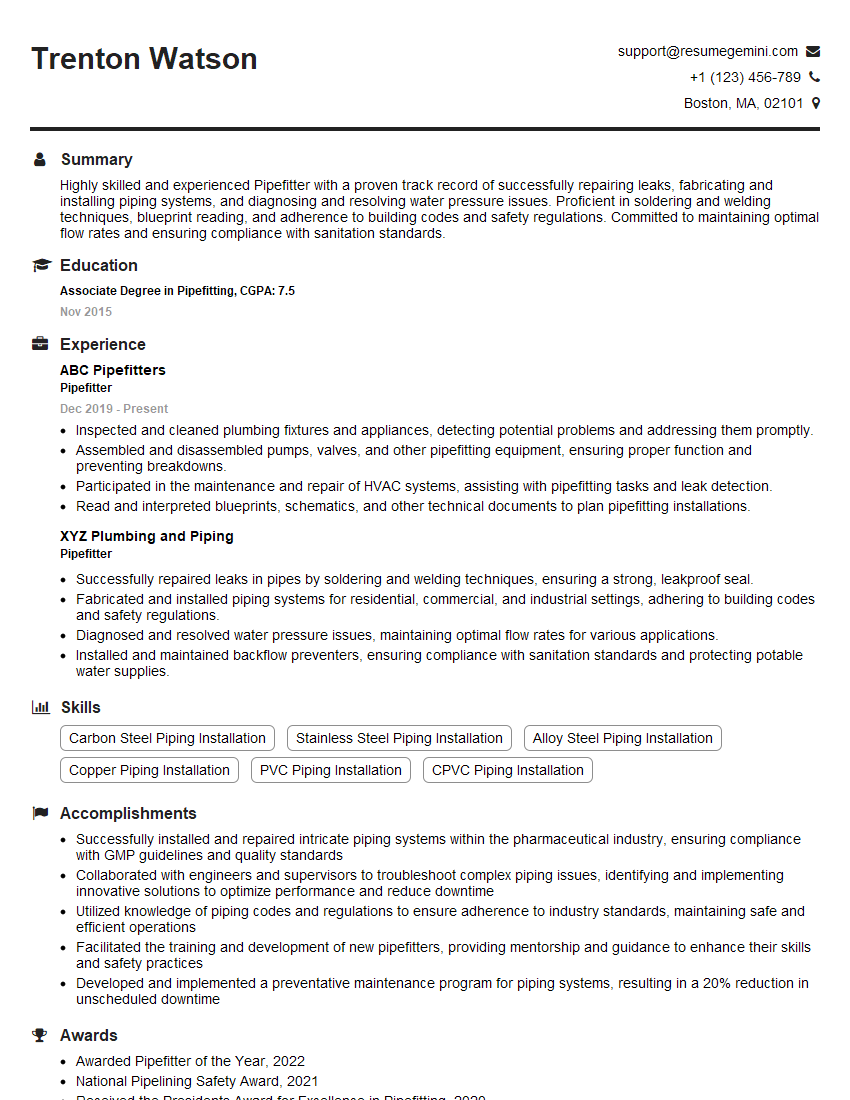
Pipefitter Resume Sample
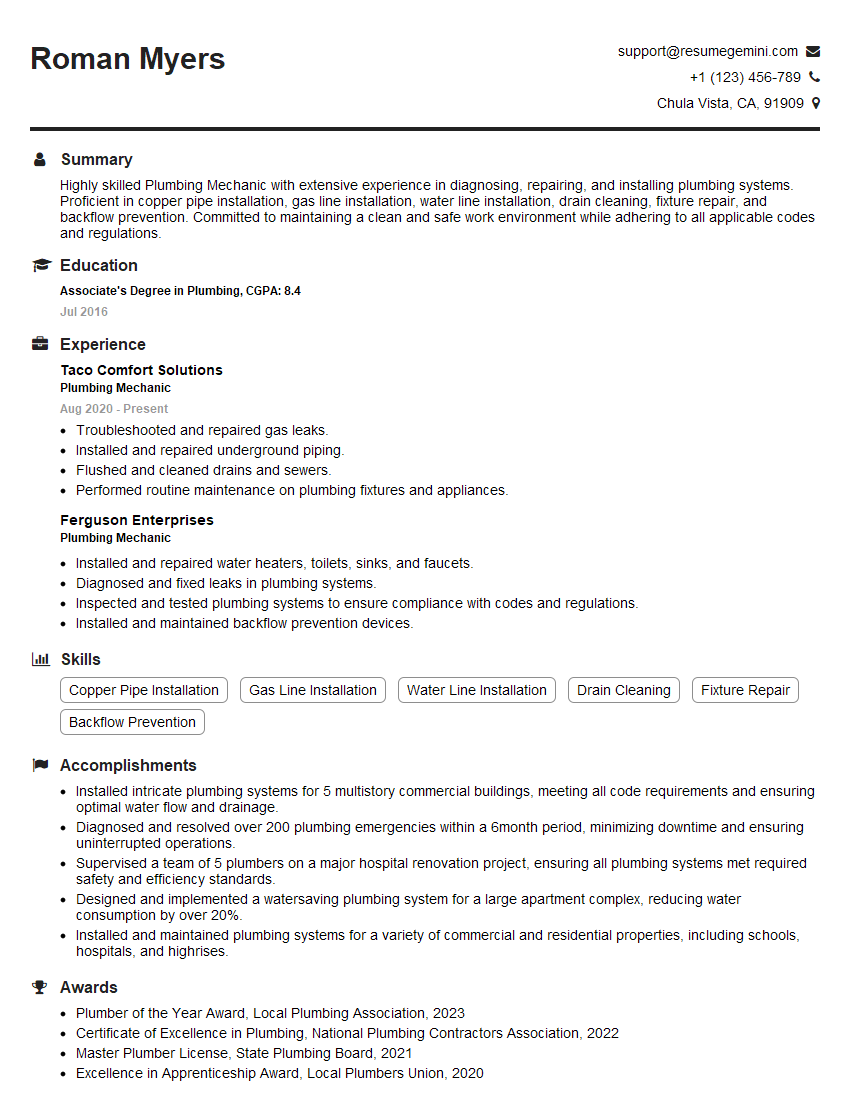
Plumbing Mechanic Resume Sample
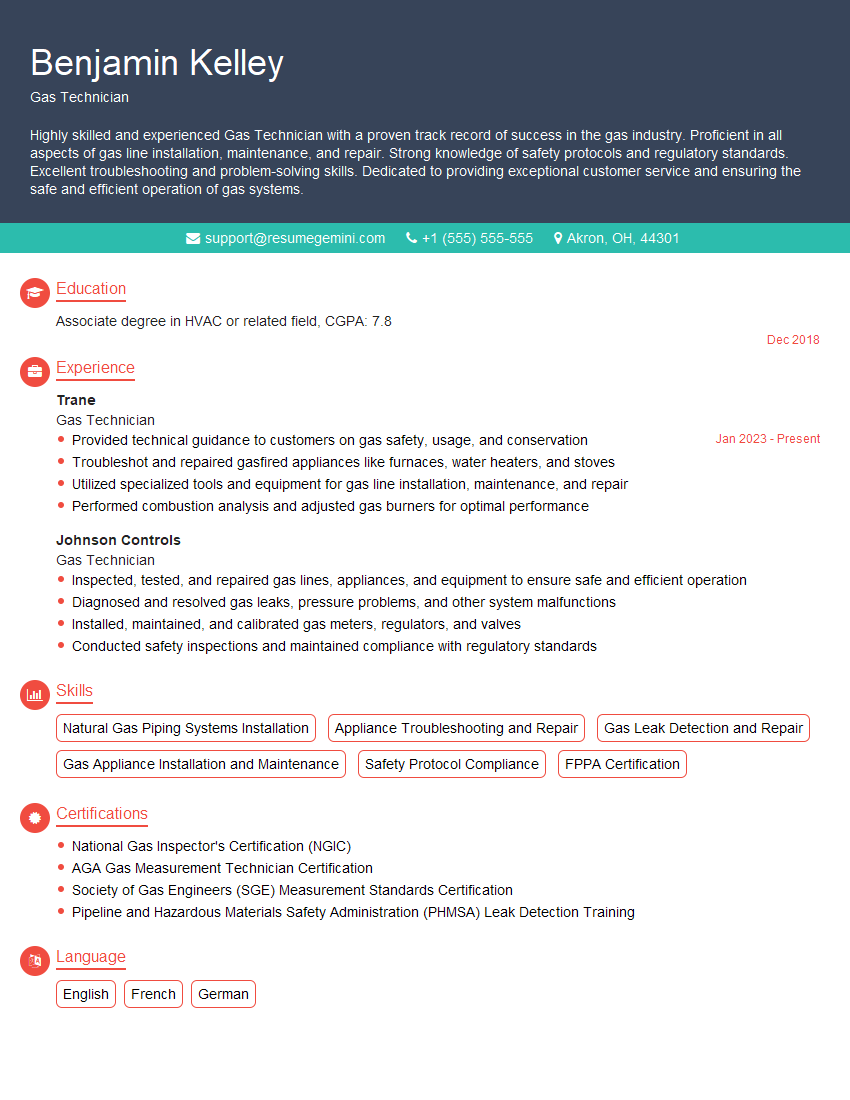
Gas Technician Resume Sample

Plant Maintenance Technician Resume Sample
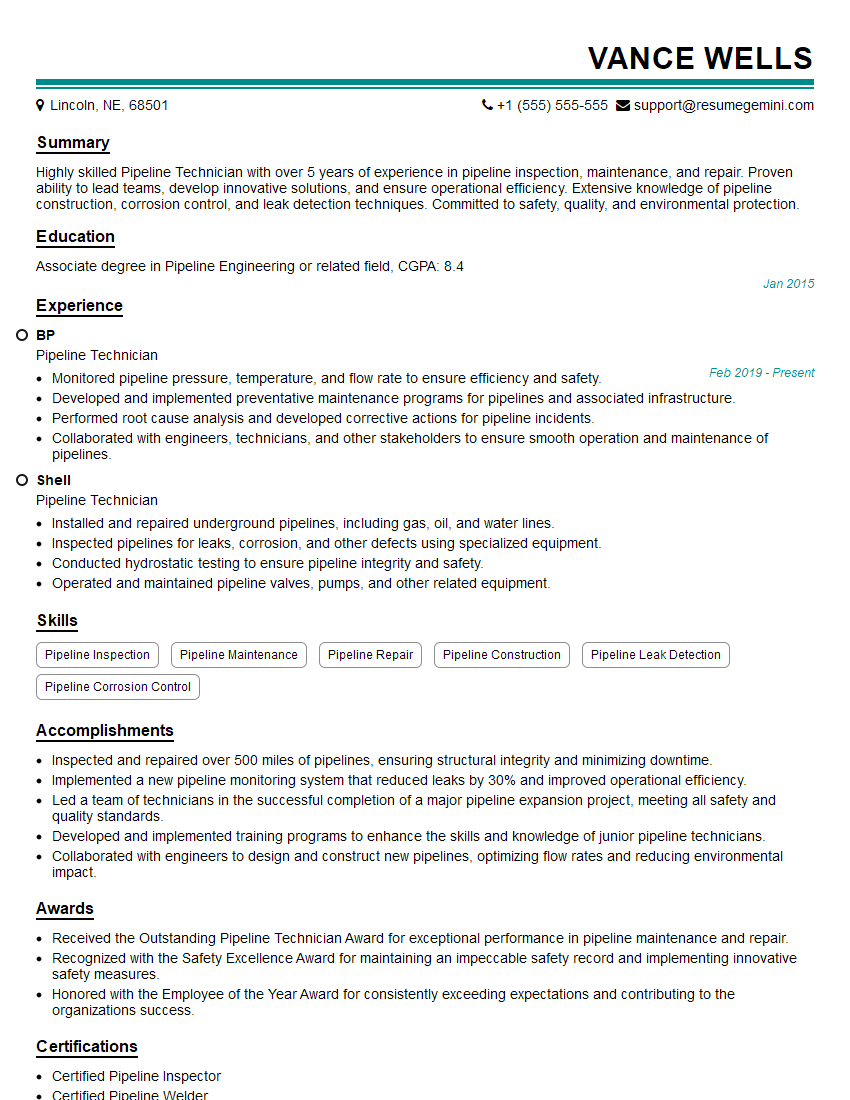
Pipeline Technician Resume Sample
Explore more articles
Users Rating of Our Blogs
Share Your Experience
We value your feedback! Please rate our content and share your thoughts (optional).
What Readers Say About Our Blog
To the interviewgemini.com Webmaster.
Very helpful and content specific questions to help prepare me for my interview!
Thank you
To the interviewgemini.com Webmaster.
This was kind of a unique content I found around the specialized skills. Very helpful questions and good detailed answers.
Very Helpful blog, thank you Interviewgemini team.