Interviews are more than just a Q&A session—they’re a chance to prove your worth. This blog dives into essential Legal and Ethical Considerations in Occupational Health interview questions and expert tips to help you align your answers with what hiring managers are looking for. Start preparing to shine!
Questions Asked in Legal and Ethical Considerations in Occupational Health Interview
Q 1. What are the key components of a comprehensive occupational health and safety program?
A comprehensive occupational health and safety program is the cornerstone of a safe and productive workplace. It’s not just about complying with regulations; it’s about fostering a culture of safety. Key components include:
- Hazard Identification and Risk Assessment: This involves systematically identifying potential hazards (e.g., chemical exposure, ergonomic risks, machinery hazards) and assessing the likelihood and severity of harm they could cause. This forms the basis for preventative measures.
- Hazard Control: This is the heart of the program. It involves implementing controls to eliminate or minimize identified hazards. This can include engineering controls (e.g., machine guarding), administrative controls (e.g., work procedures, training), and personal protective equipment (PPE).
- Emergency Preparedness and Response: Having clear emergency procedures, well-trained personnel, and the necessary equipment (e.g., first aid kits, fire extinguishers) is critical for handling incidents effectively and minimizing harm.
- Training and Education: Workers need training on safe work practices, hazard recognition, and emergency procedures relevant to their jobs. This should be ongoing and tailored to specific tasks and risks.
- Record Keeping and Reporting: Maintaining accurate records of incidents, injuries, illnesses, and safety inspections is essential for tracking progress, identifying trends, and demonstrating compliance with regulations. This also aids in continuous improvement.
- Monitoring and Evaluation: Regular monitoring of the program’s effectiveness is crucial. This might involve safety audits, inspections, and reviewing injury/illness data. Continuous improvement is key.
- Employee Participation and Involvement: A successful safety program involves active employee participation. Providing avenues for feedback, suggestions, and concerns ensures buy-in and helps identify potential hazards early on. For example, regular safety meetings or suggestion boxes can promote this.
Imagine a construction site. A comprehensive program would involve everything from proper scaffolding and harness usage (engineering controls) to regular toolbox talks about fall hazards (training) and detailed incident reporting procedures (record keeping).
Q 2. Explain the difference between OSHA and NIOSH.
OSHA (Occupational Safety and Health Administration) and NIOSH (National Institute for Occupational Safety and Health) are both crucial for workplace safety in the US, but they have distinct roles. OSHA is a regulatory agency; they set and enforce safety and health standards, conduct inspections, and issue citations for violations. Think of them as the ‘police’ of workplace safety.
NIOSH, on the other hand, is a research agency. They conduct research on workplace hazards, develop recommendations for preventing workplace injuries and illnesses, and provide technical assistance. They are the ‘scientists’ behind workplace safety. NIOSH doesn’t have enforcement powers; they advise and recommend, while OSHA enforces regulations based partly on NIOSH’s research.
For example, NIOSH might research the effects of prolonged computer use on musculoskeletal disorders, leading to OSHA guidelines on ergonomic practices.
Q 3. Describe your understanding of workers’ compensation laws.
Workers’ compensation laws are designed to protect employees who are injured or become ill on the job. They provide medical care and wage replacement benefits without requiring the employee to sue their employer. This is a ‘no-fault’ system. The key aspects include:
- Medical Care: Employers are typically responsible for providing necessary medical treatment related to the work injury or illness.
- Wage Replacement: Injured workers may receive a portion of their lost wages during their recovery period.
- Rehabilitation: Workers’ compensation may cover rehabilitation services, such as physical therapy or vocational training, to help them return to work.
- Eligibility Requirements: Eligibility usually requires that the injury or illness arose out of and in the course of employment. This is a critical aspect and can be subject to disputes.
The specifics of workers’ compensation laws vary by state. A construction worker falling from a scaffold would typically be covered under workers’ compensation, receiving medical care and lost wage payments, regardless of fault. However, if the worker was injured engaging in horseplay, that could impact eligibility.
Q 4. How would you handle a workplace incident involving a potential violation of safety regulations?
Handling a workplace incident involving a potential safety regulation violation requires a methodical approach:
- Secure the Scene: Prioritize the safety and well-being of all involved. If necessary, call emergency services.
- First Aid and Medical Attention: Provide immediate first aid to any injured personnel and ensure appropriate medical attention is sought.
- Incident Investigation: Conduct a thorough investigation to determine the facts surrounding the incident. This includes interviewing witnesses, gathering evidence (e.g., photos, videos, damaged equipment), and reviewing relevant documents (e.g., training records, safety manuals).
- Report the Incident: Report the incident to the appropriate authorities, including OSHA if required. Ensure all necessary paperwork is completed accurately and promptly.
- Corrective Actions: Based on the investigation findings, implement corrective actions to prevent similar incidents from occurring in the future. This could involve changes to procedures, equipment, or training.
- Documentation: Maintain detailed records of the incident, investigation, and corrective actions taken.
For example, if a worker suffers a laceration from a poorly guarded machine, I would secure the machine, provide first aid, conduct a thorough investigation, report the incident to OSHA, and implement corrective actions (e.g., machine guarding, retraining). Comprehensive documentation would be essential.
Q 5. What is your approach to conducting a risk assessment?
A risk assessment is a systematic process to identify hazards, analyze risks, and determine appropriate control measures. My approach follows these steps:
- Hazard Identification: Identify all potential hazards present in the workplace. This can involve walkthroughs, interviews with workers, reviewing incident reports, and consulting safety data sheets (SDS).
- Risk Analysis: For each identified hazard, analyze the likelihood of the hazard occurring and the severity of the potential harm. This often uses a matrix or scoring system to quantify risk.
- Risk Evaluation: Evaluate the identified risks based on their likelihood and severity. Prioritize the most significant risks.
- Risk Control: Develop and implement control measures to reduce or eliminate the identified risks. This often involves a hierarchy of controls: elimination, substitution, engineering controls, administrative controls, and PPE.
- Monitoring and Review: Regularly monitor the effectiveness of the implemented control measures and review the risk assessment periodically to update it as needed.
Imagine assessing the risks associated with using a particular chemical. I would identify the hazards (e.g., flammability, toxicity), analyze the likelihood and severity of exposure, determine the appropriate control measures (e.g., proper ventilation, PPE), and then continuously monitor the effectiveness of those controls.
Q 6. How do you ensure confidentiality in occupational health records?
Confidentiality of occupational health records is paramount. This is governed by various laws and regulations, including HIPAA (in the US for healthcare providers) and state-specific regulations. Ensuring confidentiality involves:
- Limited Access: Access to occupational health records should be strictly limited to authorized personnel, such as the employee, their physician, and designated occupational health professionals. Access should be controlled through password protection, secure storage, and access logs.
- Secure Storage: Records should be stored securely, both physically (locked cabinets, secure facilities) and electronically (password-protected databases, encryption).
- Data Encryption: Electronic records should be encrypted to protect against unauthorized access.
- Compliance with Regulations: Adhere to all applicable regulations regarding the handling, storage, and disposal of occupational health records.
- Employee Consent: Obtain informed consent from employees before releasing their health information to any third parties.
Imagine a situation where an employee has a confidential medical condition. Only the employee and their treating physician (with the employee’s consent) would have access to these records. The occupational health professional might need access to manage workplace accommodations, but this should be clearly defined and strictly limited to what’s necessary.
Q 7. Explain the ethical considerations involved in reporting workplace injuries.
Ethical considerations in reporting workplace injuries center around honesty, accuracy, and fairness. Key ethical considerations include:
- Truthfulness and Accuracy: Injury reports must be accurate and truthful. Omitting details or falsifying information can have serious consequences, potentially exposing workers to further harm or jeopardizing the effectiveness of safety programs.
- Confidentiality: Maintaining employee confidentiality is paramount. Information about injuries should only be shared with authorized personnel, following all legal and regulatory requirements.
- Non-Retaliation: Employees who report injuries should be protected from retaliation by their employers. This includes ensuring that reporting injuries doesn’t result in disciplinary action or job loss.
- Duty to Report: There’s a legal and ethical obligation to report certain types of workplace injuries, especially those that are serious or life-threatening.
- Fair and Impartial Investigation: Workplace injury investigations should be conducted fairly and impartially, seeking to understand the root causes of incidents rather than simply assigning blame.
Imagine a worker injuring themselves due to a faulty piece of equipment. Ethically, they should report the injury truthfully and accurately, without fear of reprisal. The investigation should focus on the root cause (faulty equipment) rather than blaming the worker, and corrective action needs to be taken. This approach balances safety, fairness, and the ethical responsibilities of both employer and employee.
Q 8. What are the legal implications of failing to provide a safe working environment?
Failing to provide a safe working environment carries significant legal implications, varying by jurisdiction but generally falling under occupational safety and health legislation. These laws mandate employers to provide a workplace free from recognized hazards that are causing or are likely to cause death or serious physical harm. Non-compliance can result in a range of penalties, including:
- Fines: Significant financial penalties can be levied, often dependent on the severity and nature of the violation.
- Legal action from employees: Employees injured due to negligence can sue their employers for compensation, leading to substantial legal costs and payouts.
- Criminal charges: In cases involving gross negligence leading to serious injury or death, employers and managers can face criminal charges, resulting in imprisonment or further substantial fines.
- Prosecution by regulatory bodies: Government agencies responsible for workplace safety can conduct investigations, issue improvement notices, and even shut down operations until safety standards are met.
- Damage to reputation: Negative publicity surrounding workplace accidents can severely damage a company’s reputation, impacting its ability to attract and retain employees and clients.
For example, a construction company failing to provide proper fall protection equipment, resulting in a worker’s serious injury, could face hefty fines, lawsuits from the injured worker, and potential criminal charges. The consequences extend beyond financial penalties, impacting the company’s standing within the industry and the well-being of its workforce.
Q 9. How do you ensure compliance with relevant health and safety legislation?
Ensuring compliance with health and safety legislation requires a proactive and multi-faceted approach. It’s not enough to simply have policies; consistent implementation and monitoring are crucial. My approach involves:
- Regular risk assessments: Identifying potential hazards and implementing control measures is paramount. This involves a systematic evaluation of the workplace, considering all potential risks, from slips and falls to exposure to hazardous substances.
- Policy development and dissemination: Clear, concise, and easily accessible policies and procedures are developed, translated into multiple languages if needed, and communicated effectively to all employees.
- Training and education: Employees must be adequately trained on safety procedures, use of equipment, and hazard recognition. Regular refresher training is essential to maintain knowledge and proficiency.
- Record-keeping: Maintaining meticulous records of risk assessments, training, incidents, and inspections is crucial for demonstrating compliance and identifying areas needing improvement. This includes documenting all safety-related activities.
- Regular inspections: Routine inspections, both scheduled and impromptu, help identify and rectify potential hazards before they cause incidents. The findings from these inspections must be documented and addressed promptly.
- Emergency preparedness: Having well-defined emergency procedures and conducting regular drills ensure readiness in case of accidents or other unforeseen events.
- Staying updated: Workplace safety legislation is constantly evolving. Staying informed about changes and updates is essential to maintain compliance.
For instance, I once worked with a manufacturing plant where we identified a lack of machine guarding as a significant hazard. By implementing new guard systems and providing comprehensive training on their use, we dramatically reduced the risk of workplace accidents.
Q 10. Describe your experience with incident investigation and reporting.
Incident investigation and reporting are critical for learning from mistakes and preventing future occurrences. My experience involves a structured, multi-step approach:
- Securing the scene: The immediate priority is to ensure the safety of everyone involved and to preserve the scene as much as possible.
- Gathering information: This involves interviewing witnesses, reviewing CCTV footage (if available), examining physical evidence, and collecting data from any monitoring equipment.
- Analyzing the root cause: This is the most important step, going beyond simply identifying what happened to understanding *why* it happened. Tools like ‘five whys’ analysis can be helpful here.
- Developing corrective actions: Based on the root cause analysis, recommendations for preventing future incidents are developed. These should be specific, measurable, achievable, relevant, and time-bound (SMART).
- Reporting: A comprehensive report is prepared, documenting the incident, the investigation findings, and the corrective actions taken. This report is shared with relevant stakeholders, including management and regulatory bodies.
- Follow-up: It’s critical to follow up on the implemented corrective actions to ensure their effectiveness.
For example, I investigated an incident where an employee suffered a minor burn due to a malfunctioning piece of equipment. Through investigation, we discovered a lack of regular maintenance as the root cause. We implemented a new preventative maintenance schedule and provided additional training on equipment safety to mitigate future risks.
Q 11. How familiar are you with various safety data sheets (SDS)?
I am very familiar with Safety Data Sheets (SDS), formerly known as Material Safety Data Sheets (MSDS). SDSs are crucial documents providing comprehensive information on hazardous chemicals, including their physical and chemical properties, health hazards, safety precautions, and emergency response procedures. My familiarity extends to:
- Understanding the 16 sections of an SDS: I can interpret the information provided in each section, including identification, hazards, composition, first aid, fire-fighting measures, accidental release measures, handling and storage, exposure controls, physical and chemical properties, stability and reactivity, toxicological information, ecological information, disposal considerations, transport information, regulatory information, and other information.
- Identifying hazards: I can accurately assess the potential hazards associated with specific chemicals based on the information provided in the SDS.
- Implementing control measures: I can develop and implement appropriate control measures, such as personal protective equipment (PPE), ventilation systems, or engineering controls, to mitigate risks associated with hazardous chemicals.
- Training employees: I can effectively train employees on the safe handling, storage, and use of hazardous materials, referencing the information within the SDS.
A recent project involved reviewing SDSs for all chemicals used in a laboratory setting to ensure proper handling, storage, and employee training protocols were in place, aligning with current regulations and best practices.
Q 12. What are your methods for communicating safety procedures to employees?
Communicating safety procedures effectively is crucial for a safe workplace. My methods involve a multi-pronged approach:
- Multiple channels: I utilize a combination of methods, including formal training sessions, toolbox talks (short, informal safety discussions), posters and signage, written manuals, and digital platforms (intranet, apps).
- Tailored communication: Communication needs to be tailored to the audience’s level of understanding and their specific roles within the workplace. Complex information should be simplified and presented in a clear and concise manner.
- Interactive methods: Using interactive methods such as quizzes, games, or simulations can improve engagement and knowledge retention.
- Regular reinforcement: Safety messages should be reinforced regularly, not just during initial training. This might involve regular safety alerts, reminders, and updates.
- Feedback mechanisms: Establishing channels for employees to provide feedback on safety procedures and suggest improvements ensures continuous improvement.
For instance, in one project, I used a combination of online modules, interactive workshops, and job-specific training manuals to teach employees about lockout/tagout procedures, ensuring comprehensive understanding and adherence to safety regulations.
Q 13. How would you address employee concerns regarding workplace safety?
Addressing employee concerns regarding workplace safety is vital. My approach involves:
- Creating a safe space for reporting: Establishing a confidential and non-retaliatory system for reporting safety concerns is paramount. This might involve a dedicated safety officer, anonymous reporting mechanisms, or an employee suggestion box.
- Prompt investigation: All concerns must be investigated promptly and thoroughly. This demonstrates a commitment to employee well-being and helps build trust.
- Transparency: Employees should be kept informed about the investigation process and the actions taken to address their concerns.
- Collaboration: Working collaboratively with employees to find solutions is essential. Their insights can often provide valuable information and lead to more effective solutions.
- Follow-up: Following up with employees to ensure their concerns have been adequately addressed builds confidence and reinforces the commitment to workplace safety.
For example, if an employee expressed concern about inadequate lighting in a specific area, I would promptly investigate, discuss potential solutions with them, implement appropriate lighting improvements, and then follow up to confirm that the issue had been satisfactorily resolved.
Q 14. Explain your understanding of ergonomics and its role in injury prevention.
Ergonomics is the science of designing the workplace and job tasks to fit the capabilities and limitations of the human body. Its role in injury prevention is crucial, as many workplace injuries are caused by repetitive movements, awkward postures, and forceful exertions. Understanding ergonomics allows for the creation of a work environment that minimizes these risk factors.
- Workplace design: Ergonomics considers the design of workstations, chairs, desks, and tools to promote neutral body postures and reduce strain.
- Job task analysis: Evaluating work tasks to identify potential ergonomic hazards, such as repetitive movements, awkward postures, and excessive force.
- Personal protective equipment (PPE): Providing appropriate PPE, such as gloves, back supports, or specialized footwear, can reduce the risk of injury.
- Training and education: Employees need training on proper lifting techniques, workstation setup, and posture maintenance to prevent injuries.
- Work-rest schedules: Implementing work-rest schedules can reduce fatigue and prevent repetitive strain injuries.
A practical example is designing a workstation for a data entry clerk. Ergonomic principles would dictate the use of an adjustable chair, a keyboard tray, and proper monitor placement to prevent neck and back strain and carpal tunnel syndrome. Ignoring these principles could lead to repetitive strain injuries, lost workdays, and increased costs for the company.
Q 15. How do you balance employee privacy with the need for health monitoring?
Balancing employee privacy with the need for health monitoring is a delicate act, requiring a strong ethical framework and transparent communication. It’s crucial to remember that health monitoring, while sometimes necessary for workplace safety, is an intrusion into an individual’s personal life. Therefore, it must be justified, proportionate, and conducted with respect for individual rights.
My approach involves several key steps:
- Justification: We only implement health monitoring programs when there’s a demonstrable need, such as in high-risk occupations or where health conditions could impact safety (e.g., mandatory hearing tests in a noisy factory).
- Transparency and Consent: Employees must be fully informed about the purpose, procedures, and potential uses of any health data collected. Their informed consent is essential. This involves clear, easy-to-understand documentation explaining the process and what will happen to their data.
- Data Minimization and Security: We collect only the minimum necessary data. Robust security measures are implemented to protect employee privacy and confidentiality, adhering to relevant data protection laws (e.g., HIPAA, GDPR). Access to data is strictly limited to authorized personnel.
- Data Retention and Disposal: We establish clear policies on how long data will be retained and how it will be securely disposed of once no longer needed.
- Regular Review and Audits: The program’s effectiveness and adherence to privacy principles are regularly reviewed and audited to ensure compliance and identify areas for improvement.
For example, in a construction company, pre-employment physicals might be necessary to ensure workers are physically capable of the job, but only relevant information directly related to job performance would be collected. Results would be shared only with the employee’s physician and potentially the safety officer, with the employee’s explicit consent.
Career Expert Tips:
- Ace those interviews! Prepare effectively by reviewing the Top 50 Most Common Interview Questions on ResumeGemini.
- Navigate your job search with confidence! Explore a wide range of Career Tips on ResumeGemini. Learn about common challenges and recommendations to overcome them.
- Craft the perfect resume! Master the Art of Resume Writing with ResumeGemini’s guide. Showcase your unique qualifications and achievements effectively.
- Don’t miss out on holiday savings! Build your dream resume with ResumeGemini’s ATS optimized templates.
Q 16. What is your approach to managing workplace stress and mental health?
Managing workplace stress and mental health is paramount for a productive and healthy workforce. Ignoring these issues can lead to decreased productivity, absenteeism, increased accidents, and even burnout. My approach is proactive and multi-faceted:
- Assessment: We conduct regular assessments to identify potential stressors in the workplace – this might involve employee surveys, focus groups, or observing workplace dynamics.
- Stress Management Programs: We implement programs like stress reduction workshops, mindfulness training, or access to employee assistance programs (EAPs). These programs provide employees with tools and resources to manage stress effectively.
- Work-Life Balance Initiatives: We encourage a healthy work-life balance through flexible work arrangements (where possible), generous vacation time, and supportive management practices.
- Open Communication and Support: Fostering a culture of open communication is vital. Employees should feel comfortable talking about their mental health concerns without fear of stigma or retribution. Managers receive training on how to support their teams and recognize signs of stress or mental health challenges.
- Ergonomic Improvements: We regularly review and improve the workspace ergonomics to minimize physical strain and discomfort, a common source of stress.
- Leadership Training: Managers are trained to identify and address employee stress, creating a supportive environment.
For example, one company I worked with implemented a ‘well-being Wednesday’ initiative, offering yoga classes, meditation sessions, and health talks. This created a space for employees to prioritize their mental health and connect with their colleagues in a supportive setting.
Q 17. How would you handle a situation where an employee refuses to follow safety protocols?
Refusal to follow safety protocols is a serious matter with potential safety consequences. My approach is based on progressive discipline, starting with education and escalating if necessary.
- Education and Counseling: The first step is to understand why the employee is not following the protocols. A private conversation is held to address concerns, provide additional training if necessary, and reinforce the importance of safety.
- Written Warning: If the behavior continues after counseling, a written warning is issued, clearly outlining the violation and the potential consequences of further non-compliance.
- Suspension: If the violation continues after a written warning, suspension without pay might be necessary to ensure compliance and demonstrate the seriousness of the situation. This allows time for further education and remediation.
- Termination: In cases of repeated and willful disregard for safety protocols, termination may be the ultimate consequence, especially if it poses a significant risk to the employee or others.
Throughout this process, documentation is meticulously maintained, ensuring a fair and consistent application of disciplinary actions. It’s critical to ensure that the employee understands the rationale behind the safety protocols and the potential dangers of non-compliance.
Q 18. Describe your experience with developing and implementing safety training programs.
I have extensive experience in developing and implementing safety training programs, focusing on creating engaging and effective learning experiences. My approach involves:
- Needs Assessment: Identifying specific safety hazards and training needs through risk assessments, incident reports, and employee feedback. This helps tailor the training to the specific context and address the most critical issues.
- Curriculum Development: Creating a comprehensive curriculum that uses a variety of learning methods, including interactive sessions, practical demonstrations, and case studies. This makes learning more engaging and relevant.
- Delivery Methods: Choosing appropriate delivery methods based on the audience and subject matter. This could range from online modules to in-person workshops, or a blended approach.
- Evaluation and Feedback: Implementing methods to assess the effectiveness of training through quizzes, practical demonstrations, and post-training evaluations. This helps identify areas for improvement and ensures the training is effective.
- Documentation and Record Keeping: Maintaining comprehensive records of training attendance, completion, and evaluation results. This is vital for compliance and demonstrates a commitment to safety.
For instance, in a previous role, I developed a comprehensive safety training program for a manufacturing plant that included interactive online modules on hazard identification, hands-on training with safety equipment, and regular refresher courses. This significantly improved safety performance and reduced incident rates.
Q 19. How do you ensure that safety equipment is properly maintained and used?
Ensuring proper maintenance and use of safety equipment is crucial for preventing accidents. My approach focuses on a combination of proactive and reactive measures:
- Regular Inspections: Implementing a schedule for regular inspections of safety equipment to identify any damage or wear and tear. This can involve visual inspections, functional tests, and calibration where applicable.
- Maintenance Procedures: Establishing clear maintenance procedures and assigning responsibility for maintaining the equipment. This involves creating checklists and documentation of maintenance activities.
- Training: Providing comprehensive training to employees on the proper use and care of safety equipment. This includes how to use the equipment correctly, when to replace it, and what to do in case of malfunctions.
- Record Keeping: Maintaining accurate records of equipment inspections, maintenance, and repairs. This helps track the equipment’s condition and identify potential problems early on.
- Inventory Management: Implementing an inventory management system to ensure adequate stock of safety equipment and prevent shortages.
- Employee Reporting: Encouraging employees to report any damaged or malfunctioning safety equipment immediately.
For example, in a laboratory setting, we would have a strict schedule for calibrating and maintaining balances, ensuring they are accurate and in good working order. Employees are trained on the procedures for using and maintaining the equipment, and any issues are reported immediately and addressed promptly.
Q 20. What is your understanding of the concept of ‘due diligence’ in occupational health?
Due diligence in occupational health refers to the proactive and preventative measures an employer takes to identify, assess, and control workplace hazards. It’s about going beyond the minimum legal requirements and demonstrating a genuine commitment to employee well-being and safety. This involves a continuous process of identifying potential risks, implementing control measures, and regularly reviewing and updating those measures.
Key aspects of due diligence include:
- Risk Assessment: Regularly assessing the workplace for hazards and identifying potential risks to employee health and safety. This may involve various methods, including workplace inspections, hazard identification checklists, and job safety analyses.
- Control Measures: Implementing effective control measures to eliminate or minimize identified hazards. This might include engineering controls (e.g., machine guarding), administrative controls (e.g., work procedures), and personal protective equipment (PPE).
- Training and Communication: Providing adequate training to employees on safety procedures and the proper use of safety equipment. Communicating risk information to employees in a clear and accessible manner is also critical.
- Monitoring and Evaluation: Regularly monitoring the effectiveness of control measures and evaluating the overall occupational health and safety performance. This may involve tracking accident rates, conducting health surveillance, and reviewing incident reports.
- Record Keeping: Maintaining accurate records of risk assessments, control measures, training, and monitoring activities. This is essential for demonstrating due diligence and compliance with legal and regulatory requirements.
Failure to exercise due diligence can lead to serious legal consequences, including fines, prosecution, and civil lawsuits. A proactive approach is significantly more effective than reacting to incidents after they occur.
Q 21. Explain the role of a safety committee in a workplace.
A safety committee plays a crucial role in promoting a safe and healthy workplace by fostering collaboration between management and employees. It serves as a forum for identifying and addressing workplace hazards, discussing safety concerns, and implementing preventative measures.
The typical functions of a safety committee include:
- Hazard Identification and Assessment: Conducting regular workplace inspections to identify hazards and assess risks to employee health and safety.
- Recommendation of Control Measures: Developing recommendations for implementing control measures to mitigate identified hazards.
- Investigating Accidents and Incidents: Investigating workplace accidents and incidents to determine root causes and recommend preventative actions.
- Reviewing Safety Policies and Procedures: Reviewing and updating safety policies and procedures to ensure they are effective and up-to-date.
- Providing Safety Training: Developing and delivering safety training programs to employees.
- Promoting Safety Awareness: Raising safety awareness among employees through various initiatives, such as safety campaigns and newsletters.
- Communicating with Management: Communicating safety concerns and recommendations to management and ensuring that appropriate actions are taken.
An effective safety committee is representative of the workforce, including employees from different departments and job classifications. Its success depends on open communication, active participation, and a commitment from both management and employees to creating a safe working environment.
Q 22. Describe your experience with conducting safety audits and inspections.
My experience with safety audits and inspections spans over ten years, encompassing various industries including manufacturing, construction, and healthcare. I’m proficient in conducting both planned and reactive audits, utilizing a systematic approach that aligns with established standards like OSHA and ISO 45001. This typically involves a pre-audit planning phase to identify key areas of concern, followed by on-site observation, documentation, and interviewing employees to gather firsthand perspectives.
For example, during a recent audit at a manufacturing plant, I identified a significant hazard related to inadequate machine guarding. My report detailed the specific deficiencies, citing relevant regulations, and proposed corrective actions, including implementing improved guarding systems and providing refresher training for machine operators. The follow-up inspection confirmed the effective remediation of the hazard. I also employ checklists and utilize specialized software for efficient data collection and analysis, enabling me to generate comprehensive reports that highlight both immediate and long-term safety concerns.
- Pre-audit planning: Defining scope, identifying potential hazards, and reviewing relevant regulations.
- On-site inspection: Observing workplace conditions, interviewing employees, and reviewing documentation.
- Report generation: Detailing findings, citing relevant regulations, and recommending corrective actions.
- Follow-up inspection: Verifying the implementation of corrective actions and assessing their effectiveness.
Q 23. How would you handle a situation where there is a conflict between cost and safety?
The conflict between cost and safety is a recurring challenge, but it’s crucial to remember that prioritizing safety should always be paramount. Cutting corners on safety measures can lead to devastating consequences, far exceeding the initial cost savings. My approach involves a thorough cost-benefit analysis, weighing the potential costs of accidents (lost productivity, medical expenses, legal liabilities) against the investment in safety improvements.
For instance, if a company is hesitant to invest in updated safety equipment, I would present data demonstrating the return on investment (ROI) by showing how preventative measures avoid costly accidents. I would also explore alternative, cost-effective solutions. Perhaps a phased implementation of safety improvements, prioritizing the highest-risk areas first, could be a viable option. Open communication and transparency with management are crucial in this process, ensuring everyone understands the rationale behind the safety decisions. Ultimately, safety is not an expense, it’s an investment in a safer and more productive workplace.
Q 24. How familiar are you with different types of personal protective equipment (PPE)?
I possess extensive familiarity with various types of personal protective equipment (PPE), including respiratory protection (e.g., respirators, masks), eye and face protection (e.g., safety glasses, goggles, face shields), head protection (e.g., hard hats), hearing protection (e.g., earplugs, earmuffs), hand protection (e.g., gloves), and foot protection (e.g., safety shoes, boots). Beyond simply knowing the different types, I understand the selection criteria based on specific hazards. For example, choosing the appropriate respirator depends on the type of airborne contaminant present. I also know the importance of proper training on the correct use, maintenance, and limitations of PPE.
Furthermore, my expertise extends to understanding the legal and regulatory requirements related to PPE, ensuring compliance with relevant standards and regulations. Improper selection or use of PPE can negate its protective effects, making thorough training and regular inspections vital.
Q 25. What are your strategies for promoting a strong safety culture in the workplace?
Building a strong safety culture requires a multi-faceted approach focusing on leadership commitment, employee engagement, and continuous improvement. It’s not just about rules and regulations; it’s about fostering a shared mindset where safety is everyone’s responsibility.
- Leadership commitment: Visible support from top management is essential. Leaders should actively participate in safety initiatives, setting a positive example and holding others accountable.
- Employee engagement: Encouraging employees to identify hazards, participate in safety meetings, and report near misses is critical. This includes providing effective training programs tailored to the specific tasks and hazards of each role.
- Communication and feedback: Open communication channels are essential for ensuring that safety concerns are addressed promptly. Regular feedback from employees helps to identify areas for improvement and enhances the overall safety culture.
- Recognition and rewards: Recognizing and rewarding safe work practices reinforces positive behaviors. This could involve incentives, awards, or public acknowledgment of outstanding safety performance.
- Continuous improvement: Regularly reviewing safety performance data, identifying trends, and implementing corrective actions are vital for continuous improvement. This should involve regular safety audits and inspections.
Q 26. How do you stay updated on changes in occupational health and safety regulations?
Staying updated on changes in occupational health and safety regulations is an ongoing process. I actively participate in professional organizations like the American Society of Safety Professionals (ASSP) and subscribe to relevant industry publications and newsletters. I also attend conferences and webinars, network with other professionals, and monitor government websites (such as OSHA in the US) for updates to regulations and guidance documents.
Regularly reviewing and updating our company’s safety programs based on the latest information is essential to ensure our practices remain compliant and best-in-class. I utilize various online resources and databases to stay informed about new research and best practices in the field.
Q 27. Describe your experience with investigating and remediating hazardous material spills.
My experience with investigating and remediating hazardous material spills involves a systematic approach prioritizing safety and environmental protection. It begins with immediate actions to secure the area, preventing further spread and protecting personnel. This involves establishing a perimeter, evacuating non-essential personnel, and implementing appropriate personal protective equipment. The next phase is thorough investigation which includes identifying the spilled material, assessing its properties (flammability, toxicity), determining the extent of the spill, and identifying potential sources of the spill.
Remediation strategies depend on the nature of the hazardous material. It might involve containment, absorption, neutralization, or specialized cleanup techniques. Documentation throughout the process is crucial, including detailed records of the incident, investigation findings, remediation steps taken, and waste disposal procedures. After remediation, follow-up measures are taken to ensure the area is safe, and employees are provided with any necessary training to prevent future incidents. This process often involves coordination with regulatory agencies and specialized contractors when necessary. For instance, in a recent incident involving a chemical spill, I coordinated with local emergency services and a specialized hazardous waste removal company to ensure safe and effective cleanup. Post-incident analysis helped identify gaps in our safety procedures and implement corrective actions to prevent similar future events.
Key Topics to Learn for Legal and Ethical Considerations in Occupational Health Interview
- Occupational Safety and Health Legislation: Understanding key acts, regulations, and standards relevant to your region (e.g., OSHA in the US). This includes knowing how these laws impact workplace practices and employee rights.
- Employee Rights and Responsibilities: Comprehending employee rights regarding safety, reporting hazards, and whistleblowing. Also, understanding employee responsibilities concerning safety protocols and reporting mechanisms.
- Confidentiality and Data Privacy: Addressing the ethical and legal implications of handling sensitive employee health information (PHI) according to HIPAA (or equivalent regulations). Practical application includes understanding data security protocols and breach response procedures.
- Risk Management and Prevention: Developing and implementing strategies for identifying, assessing, and mitigating workplace hazards. This includes understanding the role of risk assessments, safety audits, and incident investigation.
- Ethical Decision-Making Frameworks: Applying ethical principles (e.g., utilitarianism, deontology) to resolve workplace dilemmas involving safety, health, and employee well-being. Practical application involves case studies and scenario-based problem solving.
- Workplace Violence Prevention: Understanding the legal and ethical obligations related to preventing and responding to workplace violence, including harassment and bullying. This includes familiarity with relevant policies and procedures.
- Disability Discrimination and Accommodations: Navigating the legal framework surrounding reasonable accommodations for employees with disabilities, ensuring a fair and inclusive work environment.
Next Steps
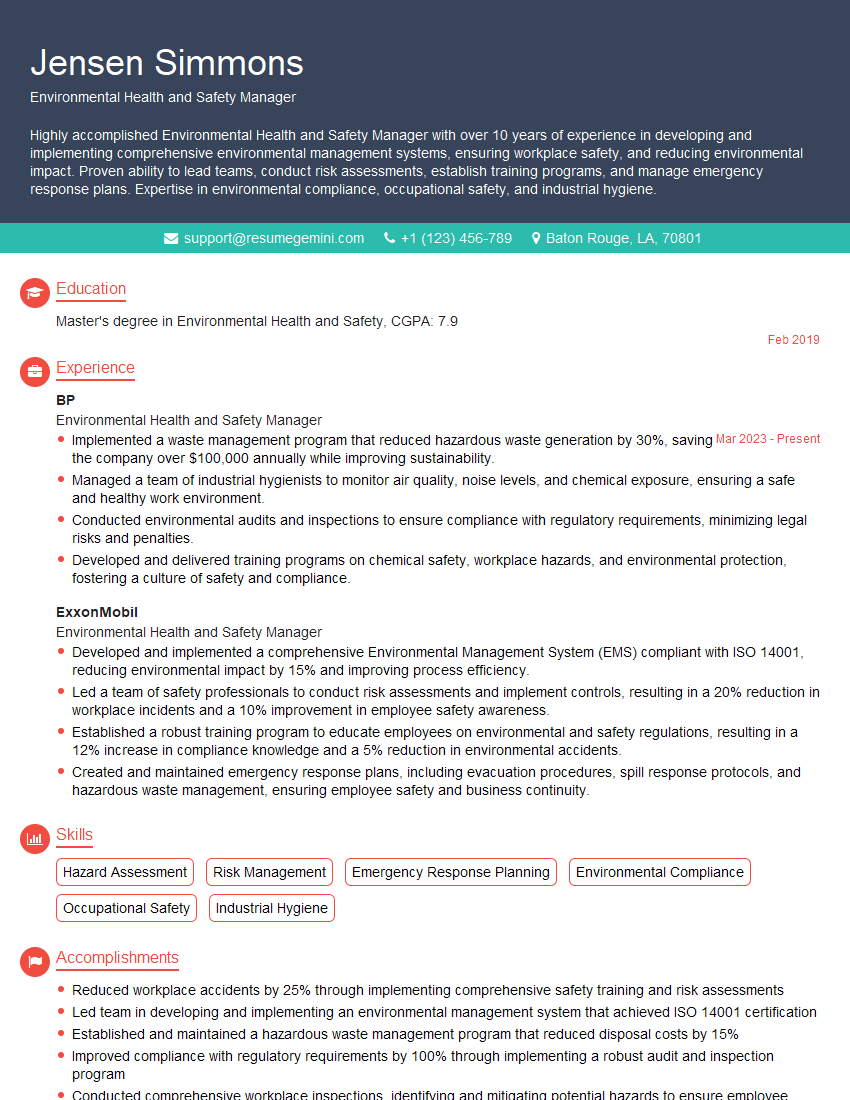
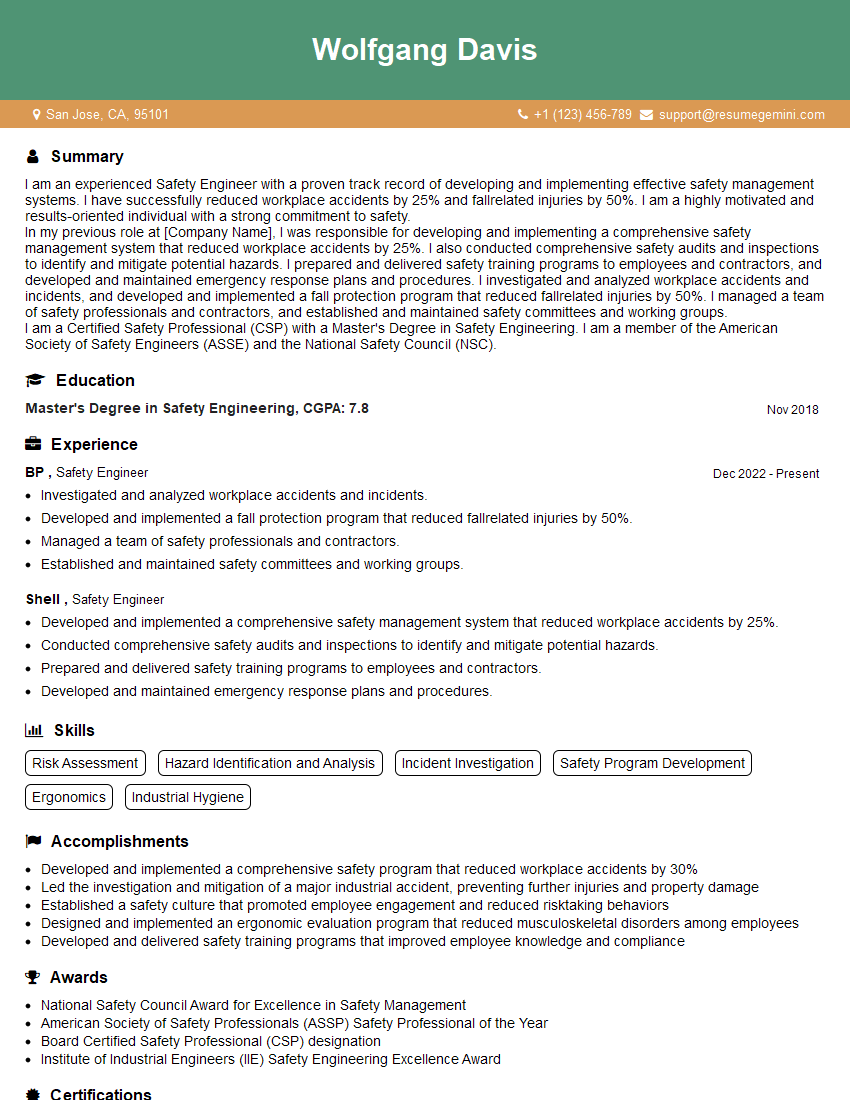
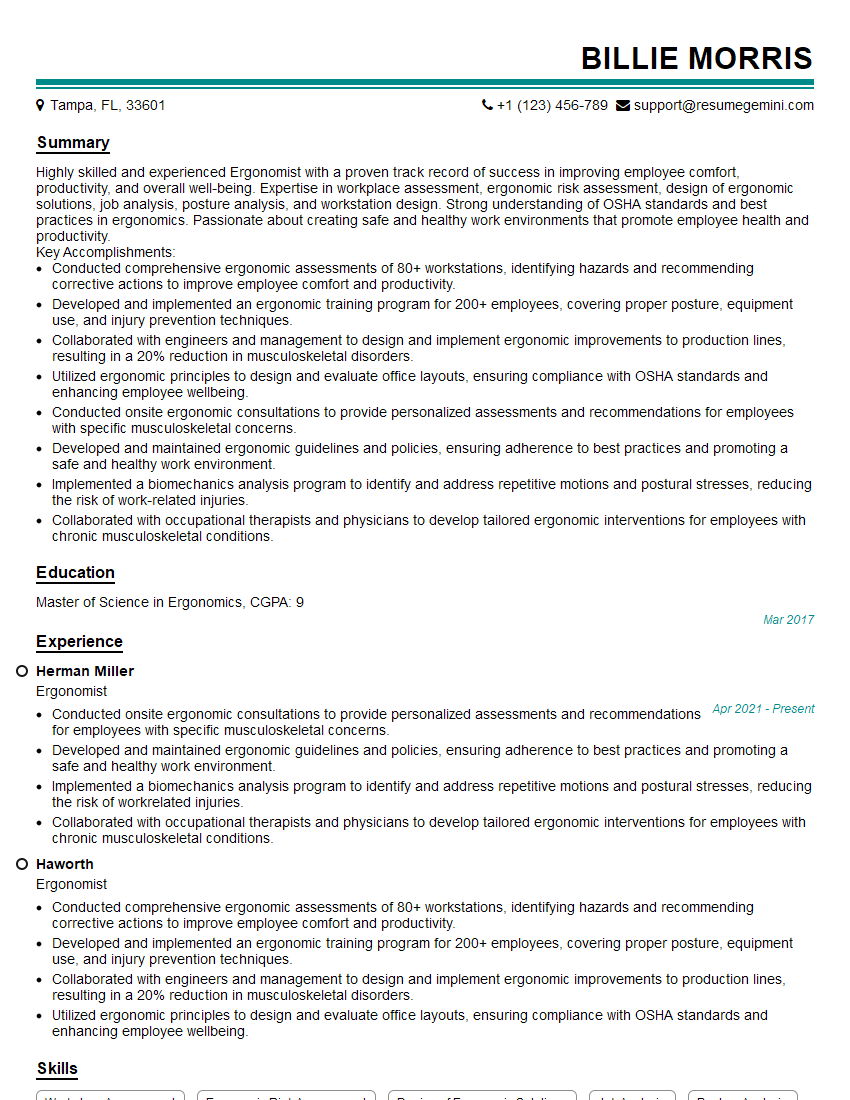
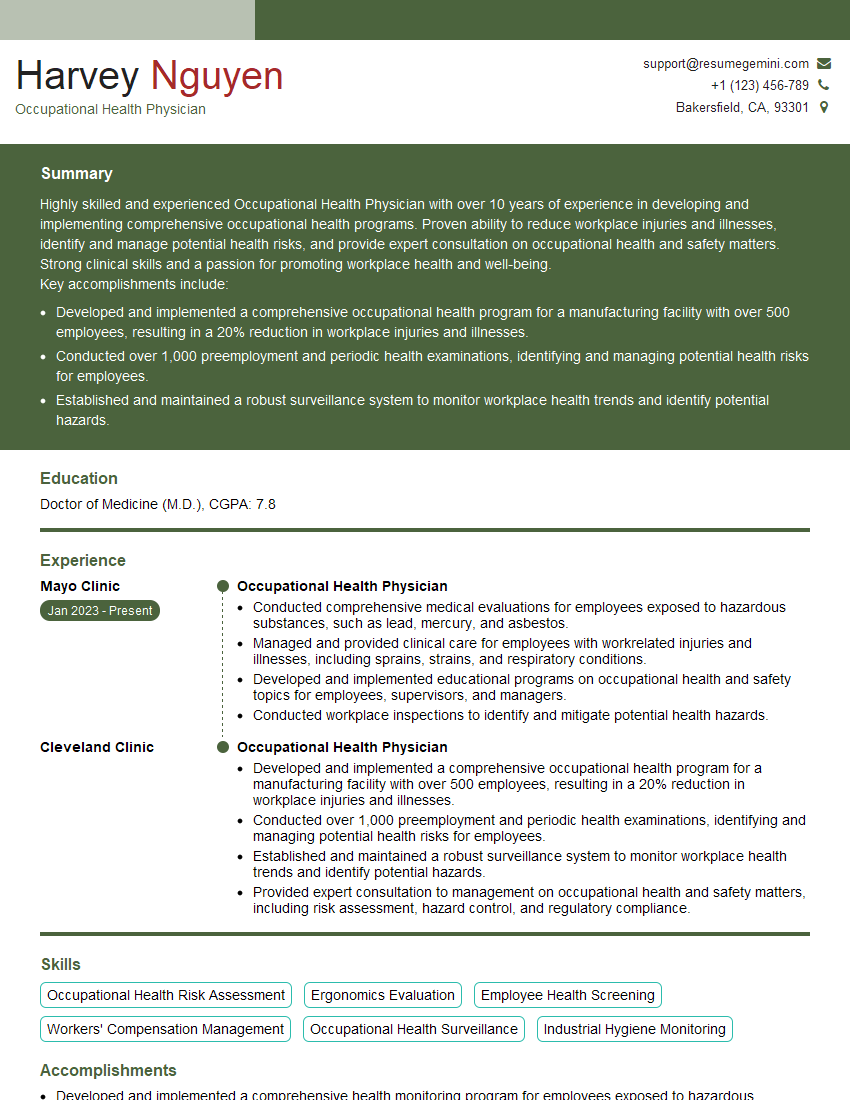
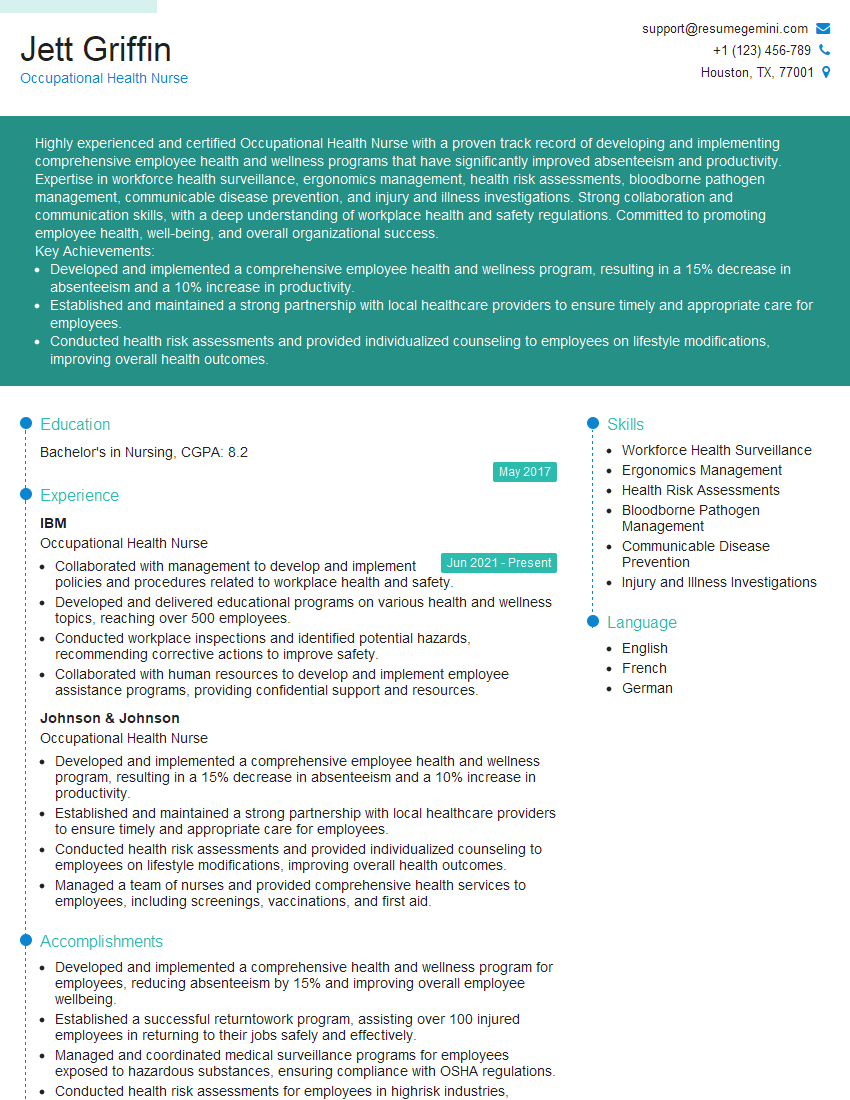
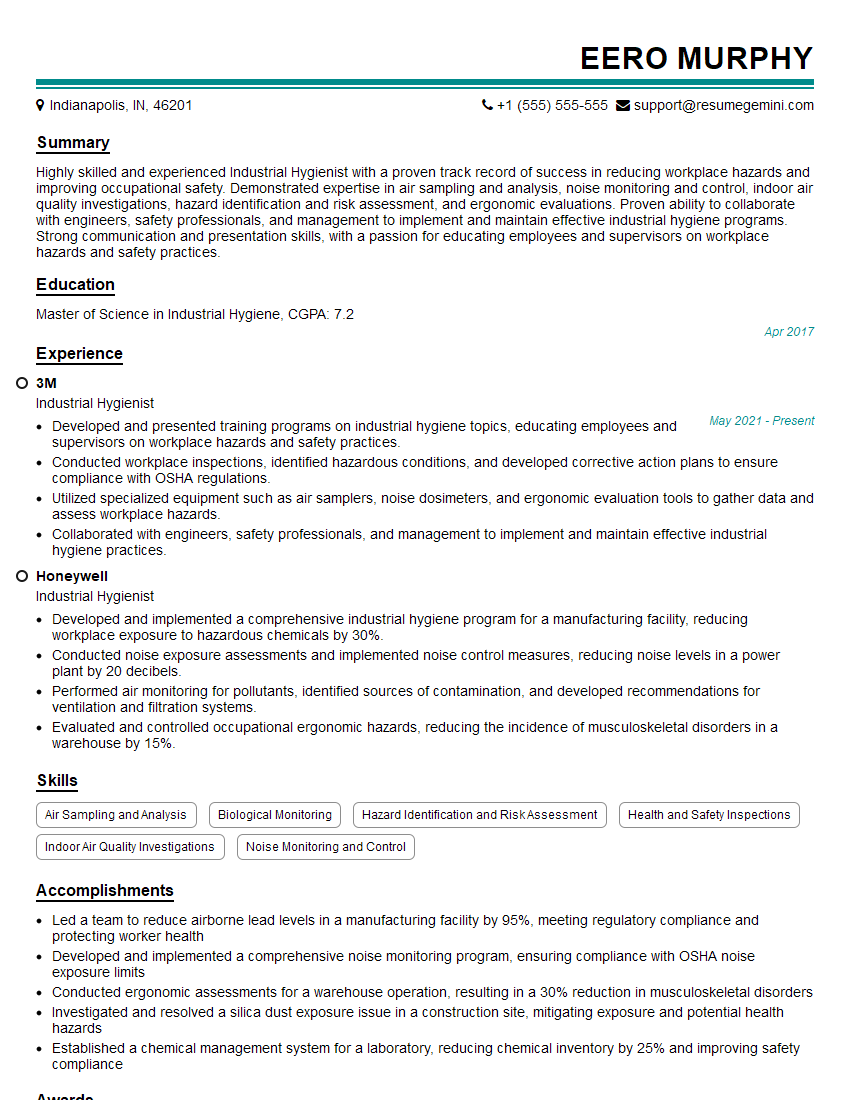
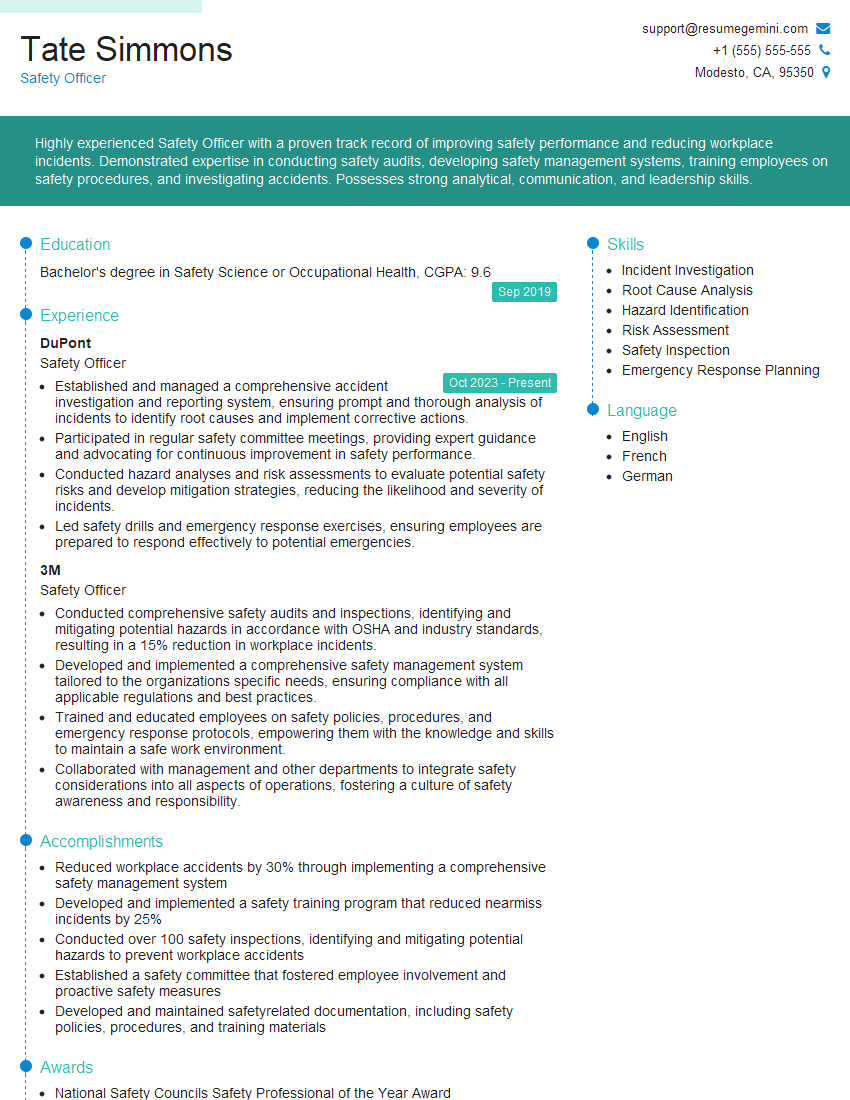
Mastering Legal and Ethical Considerations in Occupational Health significantly enhances your career prospects, demonstrating a commitment to workplace safety and employee well-being. This expertise is highly valued by employers and opens doors to leadership roles and specialized positions. To maximize your job search success, it’s crucial to present your skills effectively through a well-crafted, ATS-friendly resume. ResumeGemini is a trusted resource to help you build a compelling and professional resume that showcases your qualifications. Examples of resumes tailored to Legal and Ethical Considerations in Occupational Health are available to help guide your creation process.
Explore more articles
Users Rating of Our Blogs
Share Your Experience
We value your feedback! Please rate our content and share your thoughts (optional).
What Readers Say About Our Blog
To the interviewgemini.com Webmaster.
Very helpful and content specific questions to help prepare me for my interview!
Thank you
To the interviewgemini.com Webmaster.
This was kind of a unique content I found around the specialized skills. Very helpful questions and good detailed answers.
Very Helpful blog, thank you Interviewgemini team.