The right preparation can turn an interview into an opportunity to showcase your expertise. This guide to Pipeline Instrumentation interview questions is your ultimate resource, providing key insights and tips to help you ace your responses and stand out as a top candidate.
Questions Asked in Pipeline Instrumentation Interview
Q 1. Explain the role of pressure transmitters in pipeline monitoring.
Pressure transmitters are the backbone of pipeline monitoring, providing real-time data on pressure levels within the pipeline. This information is crucial for ensuring safe and efficient operation. They work by converting pressure into an electrical signal, which is then transmitted to a control system. This allows operators to monitor pressure changes, detect potential leaks or blockages, and make informed decisions to prevent catastrophic failures.
For example, a sudden drop in pressure might indicate a leak, while a significant increase could signal a blockage. These pressure readings are essential for maintaining optimal operating conditions and preventing costly downtime or environmental damage. Think of them as the pipeline’s blood pressure monitors, constantly providing vital signs.
Q 2. Describe different types of flow meters used in pipelines and their applications.
Several types of flow meters are used in pipelines, each with specific applications. The choice depends on factors like fluid properties, flow rate, accuracy requirements, and budget.
Coriolis flow meters: These measure mass flow rate directly by sensing the Coriolis force generated by the flowing fluid. They are highly accurate and suitable for various fluids, including those with varying density and viscosity. They’re ideal for applications requiring precise measurement, such as custody transfer.
Ultrasonic flow meters: These utilize ultrasonic waves to measure the velocity of the fluid. They are non-invasive and relatively easy to install, making them suitable for existing pipelines. They are less accurate than Coriolis meters but still provide valuable flow data.
Differential pressure flow meters (e.g., orifice plates, venturi tubes): These create a pressure drop across a restriction in the pipe, and the flow rate is calculated from the measured pressure difference. They are a cost-effective solution but require regular calibration and can cause pressure loss in the pipeline.
Turbine flow meters: These use a turbine rotor that spins proportionally to the fluid velocity. They are suitable for high flow rates but can be susceptible to wear and tear.
For instance, a refinery might use Coriolis meters for precise measurement of valuable products, while a water distribution system might utilize ultrasonic meters for their cost-effectiveness and ease of installation.
Q 3. How do you calibrate a pressure transmitter?
Calibrating a pressure transmitter involves verifying its accuracy against a known standard. This process typically involves using a highly accurate pressure calibrator, which generates precise pressure levels. The transmitter’s output is then compared to the known pressure, and any discrepancies are adjusted.
The steps generally include:
- Zeroing: Applying zero pressure and adjusting the transmitter’s output to reflect this.
- Spanning: Applying a known high pressure (the span) and adjusting the transmitter’s output to match the applied pressure.
- Verification: Checking the accuracy at several points across the pressure range.
Calibration should be performed regularly, as specified by the manufacturer, to maintain accuracy and reliability. Failing to calibrate pressure transmitters can lead to inaccurate readings, potentially compromising safety and operational efficiency. Imagine a pressure gauge showing a false low pressure – that could be disastrous!
Q 4. What are the safety considerations when working with pipeline instrumentation?
Safety is paramount when working with pipeline instrumentation. High-pressure systems and hazardous fluids demand strict adherence to safety protocols. Key considerations include:
- Lockout/Tagout procedures: Preventing accidental energy release during maintenance or repairs.
- Personal Protective Equipment (PPE): Using appropriate safety gear, such as hard hats, safety glasses, and protective clothing.
- Confined space entry procedures: Following strict protocols when entering enclosed spaces containing pipelines.
- Gas detection: Using gas detectors to monitor for potentially hazardous gases.
- Permit-to-work systems: Ensuring that all work is properly authorized and supervised.
- Emergency response planning: Having a plan in place to handle potential emergencies, such as leaks or fires.
Ignoring these safety measures can result in serious injuries or fatalities. Every precaution must be taken to ensure the safety of personnel and the environment.
Q 5. Explain the function of a control valve in a pipeline system.
A control valve regulates the flow of fluid through a pipeline. It’s a crucial component for managing pressure, flow rate, and temperature within the system. The valve’s position is controlled by an automated system based on signals from various sensors and controllers. This allows for precise control over the pipeline’s operation.
For example, a control valve might be used to maintain a constant pressure in a section of the pipeline, or to adjust the flow rate to meet demand. Think of it as a faucet controlling the flow of water, but on a much larger and more sophisticated scale. This precise control optimizes efficiency and ensures safe operation.
Q 6. Describe different types of pipeline safety systems.
Various pipeline safety systems are designed to protect pipelines and the surrounding environment from failures. These systems work in conjunction to mitigate risks.
- Pressure relief valves (PRVs): These automatically release pressure if it exceeds a predetermined level, preventing over-pressurization and potential ruptures.
- Leak detection systems: These monitor pressure, flow, and temperature to detect leaks promptly, allowing for rapid response and mitigation.
- Cathodic protection: This prevents corrosion by applying a protective current to the pipeline, extending its lifespan and reducing the risk of leaks.
- Pipeline integrity management (PIM): This comprehensive approach involves regular inspections, assessments, and maintenance to identify and address potential problems before they lead to failures.
- Emergency shutdown systems (ESD): These automatically shut down the pipeline in the event of a major incident, minimizing the potential consequences.
These systems, implemented strategically, significantly reduce the risks associated with pipeline operations.
Q 7. How do you troubleshoot a malfunctioning level transmitter?
Troubleshooting a malfunctioning level transmitter involves a systematic approach to identify the root cause. Start by checking the obvious:
- Verify power supply: Ensure the transmitter is receiving adequate power.
- Check wiring: Inspect the wiring connections for any damage or loose connections.
- Examine the sensor: Look for obstructions or damage to the sensor itself – could there be build-up, corrosion, or physical damage?
- Inspect the transmitter housing: Check for any signs of leaks or damage that could affect its operation.
- Check calibration: Verify if the transmitter has drifted significantly from its calibrated values.
- Test the output signal: Use a multimeter to check the output signal to confirm if it is within the expected range.
- Review operational logs and historical data: Look for any patterns or trends that may indicate a problem.
If these initial checks don’t identify the problem, more specialized troubleshooting might be needed, potentially requiring the help of a calibration technician or the manufacturer. Remember to always follow lockout/tagout procedures before performing any maintenance work.
Q 8. What are the common causes of pipeline leaks and how are they detected?
Pipeline leaks are a serious concern, stemming from various causes. Think of a pipeline as a complex network of arteries; any weakness can lead to a rupture. Common causes include:
- Corrosion: Over time, the pipeline material degrades, often due to exposure to chemicals or the soil itself. This is like rust slowly eating away at a metal pipe. We use cathodic protection to mitigate this.
- Mechanical Damage: External forces, such as digging activities or ground movement (earthquakes, landslides), can damage the pipeline, creating cracks or punctures. Imagine a car accidentally hitting an underground pipe.
- Manufacturing Defects: Flaws during the pipeline’s construction can lead to weaknesses that manifest as leaks later on. Think of it like a small crack in a pottery vase that eventually breaks.
- Material Degradation: Changes in temperature and pressure can cause stress on the pipeline, especially over many years. This is similar to how repeated bending weakens a metal paperclip.
- Third-party Damage: Activities like plowing or construction near the pipeline can unintentionally damage it.
Leak detection methods are crucial for safety and environmental protection. They include:
- Pressure Monitoring: A consistent drop in pressure within a segment of the pipeline signals a potential leak. This is the most basic and common method.
- Acoustic Sensors: These sensors detect the high-frequency sounds produced by escaping fluid. Think of it like listening for a hissing sound.
- Inline Inspection Tools (ILIs): These tools, often pig-shaped devices, are run through the pipeline to detect internal corrosion or defects that might lead to leaks. They provide detailed images and data of the pipeline’s interior.
- Leak Detection Systems (LDS): Complex systems that use algorithms to analyze data from various sensors to pinpoint leak locations based on pressure fluctuations and acoustic signals. This is like using a sophisticated diagnostic tool to pinpoint an issue in a car.
- Aerial Surveys: Infrared cameras can sometimes detect heat signatures associated with leaking fluids. This method is particularly useful in remote or challenging terrains.
Q 9. Explain the principles of SCADA systems in pipeline operations.
Supervisory Control and Data Acquisition (SCADA) systems are the nervous system of a pipeline network. They allow operators to monitor and control the pipeline remotely, providing real-time data and enabling proactive intervention. Think of them as a sophisticated control panel for an incredibly complex machine.
Key principles of SCADA in pipeline operations include:
- Data Acquisition: Numerous sensors throughout the pipeline collect data such as pressure, flow rate, temperature, and the status of valves. Imagine thousands of eyes reporting to a central brain.
- Data Transmission: This data is transmitted to a central control room via various communication protocols, often involving RTU’s (Remote Terminal Units) and PLC’s (Programmable Logic Controllers).
- Data Processing: The SCADA system processes the raw data, conducting checks, producing reports, and generating alerts in case of anomalies.
- Supervisory Control: Operators in the control room can remotely adjust valves, pump speeds, and other parameters to optimize pipeline operations and respond to emergencies. This enables immediate action, even for remotely located pipelines.
- Alarm and Event Management: The system generates alarms when pre-defined thresholds are exceeded, notifying operators of potential problems such as low pressure, high temperature, or leaks.
- Human-Machine Interface (HMI): A user-friendly interface provides a visual representation of the entire pipeline network, allowing operators to easily monitor its status and take action.
SCADA systems are essential for ensuring efficient, safe, and reliable pipeline operations. They provide the eyes and hands for operators to manage kilometers of pipeline remotely.
Q 10. How do you maintain pipeline instrumentation to ensure accuracy and reliability?
Maintaining pipeline instrumentation for accuracy and reliability is a continuous process, similar to regular car maintenance. Neglecting this leads to inaccurate data, potentially causing significant operational problems, safety hazards, and environmental issues.
Key aspects of maintenance include:
- Calibration: Regular calibration of sensors and instruments is crucial to ensure that measurements are accurate. This is done by comparing readings against known standards and adjusting the equipment accordingly.
- Preventive Maintenance: Scheduled maintenance activities, such as cleaning, inspecting, and replacing parts, help prevent equipment failure. This is like changing your car’s oil regularly.
- Predictive Maintenance: Using data analysis to predict potential failures based on trends and patterns in sensor readings. This helps in planning maintenance proactively, preventing unexpected downtime.
- Diagnostic Testing: Regular tests to check for malfunctioning equipment, often using specialized diagnostic tools and techniques. This helps identify problems before they escalate.
- Documentation: Meticulous record-keeping of maintenance activities, calibration results, and sensor performance is crucial. This allows for tracking the health and performance of the instrumentation over time.
- Personnel Training: Technicians need appropriate training to operate and maintain the equipment correctly, ensuring accurate readings and minimizing the risk of errors.
Effective maintenance programs extend the lifespan of the instrumentation, improving data quality and enhancing the safety and reliability of pipeline operations.
Q 11. Describe your experience with different communication protocols used in pipeline instrumentation.
Pipeline instrumentation uses a variety of communication protocols to transmit data from remote locations to the central control room. The choice of protocol depends on several factors including distance, data rate, cost, and security requirements.
My experience includes:
- Modbus: A widely used serial communication protocol for industrial automation, offering simplicity and cost-effectiveness, especially for shorter distances.
- Profibus: A fieldbus protocol that provides high-speed data transmission and is suitable for complex networks.
- Ethernet/IP: An industrial Ethernet protocol offering high bandwidth and robustness, commonly used in larger, more complex systems.
- Wireless protocols (e.g., Zigbee, LoRaWAN): Used for remote sensors in locations where cabling is difficult or impractical. These protocols are less power-hungry and ideal for battery-powered devices.
I have experience selecting and implementing the most appropriate protocol based on the specific needs of a project. For example, in a remote, harsh environment with limited access, a wireless protocol would be preferred over a wired one.
Q 12. What is the importance of data logging in pipeline operations?
Data logging in pipeline operations is paramount for several reasons. It’s like keeping a detailed diary of the pipeline’s health and performance.
Its importance includes:
- Performance Monitoring: Tracking parameters like pressure, flow rate, and temperature over time helps identify trends and potential problems. This allows for proactive maintenance and optimization of operations.
- Regulatory Compliance: Many regulations require detailed records of pipeline operations, including data on pressure, flow, and maintenance. Data logging ensures compliance.
- Incident Investigation: In case of a leak or other incident, historical data can be invaluable in determining the root cause and preventing similar occurrences in the future.
- Predictive Maintenance: Analyzing historical data can help predict equipment failures and schedule maintenance accordingly, minimizing downtime and operational costs.
- Process Optimization: Data analysis can reveal areas for improvement in pipeline operations, leading to increased efficiency and reduced energy consumption.
Without comprehensive data logging, operators are essentially flying blind. It provides the historical context for informed decision-making.
Q 13. How do you interpret data from pipeline instrumentation?
Interpreting data from pipeline instrumentation requires a combination of technical expertise and analytical skills. It’s not just about looking at numbers; it’s about understanding what those numbers *mean*.
My approach involves:
- Understanding the Context: Before interpreting data, it’s critical to understand the pipeline’s operating parameters, the location of sensors, and the purpose of each measurement.
- Data Visualization: Plotting data on graphs and charts can reveal trends and anomalies much more readily than looking at raw numerical data. This is like looking at a map instead of a list of addresses.
- Statistical Analysis: Techniques such as trend analysis, regression analysis, and outlier detection can help identify patterns and potential problems.
- Comparison to Baselines: Comparing current data to established baselines or historical data helps identify deviations from normal operating conditions.
- Correlation Analysis: Examining relationships between different parameters can provide valuable insights into the overall system behavior.
- Alarm Thresholds: Understanding and interpreting alarms is key to effective monitoring, enabling immediate responses to developing issues.
By combining these techniques, you gain a clear picture of the pipeline’s health, pinpoint potential problems, and make informed decisions to optimize operations and mitigate risks.
Q 14. Explain your experience with pipeline integrity management systems.
Pipeline Integrity Management (PIM) systems are comprehensive programs designed to ensure the safe and reliable operation of pipelines. They’re the overall strategy for maintaining the health of the entire system. They are not just reactive; they aim to prevent problems before they arise.
My experience with PIM involves:
- Risk Assessment: Identifying and evaluating potential threats to pipeline integrity, including corrosion, mechanical damage, and third-party interference.
- Data Management: Collecting and analyzing data from various sources, including SCADA systems, ILI tools, and leak detection systems.
- Inspection Planning: Developing and implementing a comprehensive inspection program to assess the condition of the pipeline and identify potential risks.
- Repair and Remediation: Managing the repair and remediation of identified defects, ensuring that repairs are made safely and effectively.
- Compliance Management: Ensuring compliance with relevant regulations and industry best practices.
- Technology Integration: Using advanced technologies, such as machine learning and data analytics, to improve the accuracy and efficiency of PIM programs.
Effective PIM programs are critical for minimizing the risk of leaks, improving safety, and ensuring the long-term sustainability of pipeline operations. It’s a holistic, proactive approach, continually assessing and addressing potential risks to maintain the integrity of the system.
Q 15. Describe your understanding of pipeline pigging and its instrumentation requirements.
Pipeline pigging is a crucial maintenance technique involving sending a specialized cleaning device, called a pig, through a pipeline to remove accumulated deposits like wax, hydrate, or corrosion products. This process requires comprehensive instrumentation to monitor the pig’s progress, ensure its safe operation, and maintain pipeline integrity.
Instrumentation requirements include:
- Pressure and Temperature Sensors: Strategically placed along the pipeline to monitor pressure drops and temperature changes caused by the pig’s passage. Significant pressure drops or temperature spikes can indicate blockages or problems. For instance, a sudden pressure surge might signal a pig malfunction or pipeline damage.
- Smart Pigs: These advanced pigs incorporate internal sensors to measure pipeline wall thickness, corrosion levels, and internal geometry. The data is then transmitted wirelessly or retrieved after the pig reaches the end of the pipeline.
- Flow Meters: To track the flow rate of the product before, during, and after the pigging operation. This helps assess the effectiveness of the cleaning process and identify potential leaks.
- Pipeline Integrity Monitoring (PIM): Systems such as inline inspection tools (ILIs) can be used in conjunction with pigging to provide a comprehensive assessment of the pipeline’s condition. Data gathered from these tools is crucial for preventative maintenance and safety.
- Data Acquisition and Control Systems: These systems collect data from all sensors and provide operators with a real-time view of the pig’s progress and the pipeline’s condition. This allows for informed decision-making and timely intervention if necessary.
Effective instrumentation for pipeline pigging is critical for safety, efficiency, and the overall lifespan of the pipeline. It prevents costly downtime and minimizes environmental risks.
Career Expert Tips:
- Ace those interviews! Prepare effectively by reviewing the Top 50 Most Common Interview Questions on ResumeGemini.
- Navigate your job search with confidence! Explore a wide range of Career Tips on ResumeGemini. Learn about common challenges and recommendations to overcome them.
- Craft the perfect resume! Master the Art of Resume Writing with ResumeGemini’s guide. Showcase your unique qualifications and achievements effectively.
- Don’t miss out on holiday savings! Build your dream resume with ResumeGemini’s ATS optimized templates.
Q 16. How do you ensure the cybersecurity of pipeline instrumentation and control systems?
Cybersecurity for pipeline instrumentation and control systems is paramount, as a successful attack could lead to significant operational disruptions, environmental damage, or even loss of life. My approach involves a multi-layered strategy:
- Network Segmentation: Isolating critical control systems from the broader corporate network minimizes the impact of a breach. This is often achieved via firewalls and VLANs.
- Access Control: Implementing strict authentication and authorization protocols, including role-based access control (RBAC), limits access to sensitive systems and data only to authorized personnel.
- Intrusion Detection and Prevention Systems (IDS/IPS): Monitoring network traffic for suspicious activity and automatically blocking or alerting on potential threats. These systems play a critical role in early detection and response to cyberattacks.
- Regular Security Audits and Penetration Testing: Regularly assessing vulnerabilities and testing the effectiveness of security measures is essential for proactive risk management. This helps identify weaknesses before they can be exploited.
- Software Updates and Patch Management: Keeping all software and firmware up-to-date is critical to patching known vulnerabilities and mitigating risks. Automated patching systems can improve efficiency and reduce human error.
- Employee Training: Educating employees about cybersecurity best practices, such as phishing awareness and password management, is a crucial component of a robust security strategy.
Implementing these measures reduces the risks associated with cyberattacks, helping ensure the safe and reliable operation of pipeline infrastructure.
Q 17. What is your experience with different types of pipeline valves and their instrumentation?
I have extensive experience with various pipeline valves and their associated instrumentation. The choice of valve and instrumentation depends heavily on factors such as the pipeline’s size, pressure, temperature, and the fluid being transported.
- Ball Valves: Often used for on/off service due to their quick operation. Instrumentation might include position switches to verify valve position and pressure sensors to monitor pressure drops across the valve.
- Gate Valves: Suitable for large pipelines and high-pressure applications, but slower to operate than ball valves. Instrumentation often includes position indicators and pressure transmitters for monitoring pressure gradients.
- Globe Valves: Used for throttling and flow control. Instrumentation commonly includes pressure transmitters, flow meters, and positioners to ensure precise control.
- Control Valves: Used for automated flow control, often incorporating actuators (pneumatic, electric, hydraulic) and positioners for precise control. Instrumentation will typically include pressure transmitters, flow meters, and position feedback sensors.
- Check Valves: Prevent backflow, typically requiring minimal instrumentation, possibly a pressure sensor to verify function.
In each case, the instrumentation ensures safe and reliable operation, provides real-time monitoring of the valve’s status, and enables remote control and monitoring via SCADA systems (Supervisory Control and Data Acquisition).
Q 18. Explain your experience with hazardous area classifications and instrumentation selection.
Hazardous area classifications, defined by standards like IEC 60079, are crucial for selecting the appropriate instrumentation to prevent explosions or fires. These classifications depend on the presence of flammable gases, vapors, or dusts. My experience encompasses working within various zones (0, 1, 2 for gases and 20, 21, 22 for dusts).
Instrumentation selection for hazardous areas demands intrinsically safe or explosion-proof equipment. For example:
- Intrinsically Safe Instruments: Designed to limit energy levels to prevent ignition. This often involves low-voltage circuits and specialized barriers.
- Explosion-Proof Enclosures: Designed to contain any internal explosions, preventing ignition of external flammable atmospheres. These enclosures are rigorously tested to meet specific standards.
- Purge and Pressurization Systems: These systems continuously purge hazardous areas with an inert gas, creating a safe environment for standard instrumentation.
Before selecting instrumentation, a thorough risk assessment is performed to determine the appropriate hazardous area classification, guiding the choice of equipment and ensuring compliance with all safety regulations.
Q 19. Describe your familiarity with different types of pipeline materials and their impact on instrumentation.
Different pipeline materials impact instrumentation selection due to varying properties like corrosion resistance, temperature tolerance, and electromagnetic interference (EMI).
- Steel Pipelines: Common but susceptible to corrosion. Instrumentation needs to account for this; for example, corrosion-resistant materials or coatings might be required for sensors.
- Plastic Pipelines (e.g., polyethylene): Offer good corrosion resistance but can be affected by UV degradation and temperature fluctuations. Instrumentation needs to be suitable for the temperature range and resistant to chemical degradation.
- Composite Pipelines: Often require specialized instrumentation due to their complex structure. Accurate measurements might need to account for variations in the pipeline’s material properties.
Material compatibility is crucial. For example, using sensors made of incompatible materials with the pipeline fluid could lead to corrosion or failure. Choosing the right materials ensures longevity and accuracy of instrumentation data.
Q 20. How do you handle emergency situations related to pipeline instrumentation failures?
Handling emergency situations involving pipeline instrumentation failures requires a structured approach:
- Immediate Response: Activate emergency response protocols, immediately isolating the affected section of the pipeline if necessary to prevent further damage or leaks. This might involve shutting down pumps, closing valves, or deploying emergency shutdown systems.
- Diagnostics and Root Cause Analysis: Using remote monitoring systems, SCADA data, and on-site diagnostics to pinpoint the cause of the failure. This is critical for effective repair and preventing recurrence.
- Repair or Replacement: Depending on the severity of the failure, the appropriate repair or replacement of the faulty instrumentation is initiated. This might involve deploying a specialized team for urgent repairs or arranging for replacement parts.
- Post-Incident Review: A thorough review of the incident is carried out to identify areas for improvement in safety procedures, maintenance practices, or instrumentation design to prevent similar incidents in the future. This often involves documenting all actions and lessons learned.
Regular maintenance, redundant systems, and rigorous testing are key to minimizing the likelihood of failures and facilitating a swift response should an emergency occur.
Q 21. Explain your understanding of loop tuning in process control systems.
Loop tuning in process control systems refers to the adjustment of controller parameters (proportional, integral, and derivative—PID) to optimize the response of a control loop. The goal is to minimize error, reduce oscillations, and maintain stability.
My experience includes using various tuning methods:
- Ziegler-Nichols Method: A simple and widely used method that uses the ultimate gain and ultimate period to determine initial PID settings. It’s a good starting point but may require further fine-tuning.
- Cohen-Coon Method: Another empirical method offering improved performance over Ziegler-Nichols, particularly for minimizing overshoot.
- Relay Feedback Method: This method uses a relay to create oscillations in the system, from which the ultimate gain and period can be determined for PID tuning.
- Auto-tuning: Many modern controllers offer auto-tuning capabilities, using advanced algorithms to automatically optimize PID settings based on process dynamics.
Effective loop tuning is essential for maintaining optimal process performance. Poorly tuned loops can lead to sluggish response, instability, or excessive oscillations, impacting product quality, efficiency, and safety. Therefore, a combination of theoretical understanding and practical experience is crucial for efficient loop tuning.
Q 22. Describe your experience with programmable logic controllers (PLCs) in pipeline applications.
Programmable Logic Controllers (PLCs) are the workhorses of automated pipeline systems. I’ve extensively used them in various roles, from designing control logic for pump stations to implementing safety shutdown systems. My experience encompasses a wide range of PLC platforms, including Allen-Bradley, Siemens, and Schneider Electric. In pipeline applications, PLCs typically manage tasks such as:
- Pump control: Regulating flow rates and pressures based on real-time data from flow meters, pressure transmitters, and level sensors.
- Valve actuation: Opening and closing valves to direct the flow of product or isolate sections of the pipeline for maintenance.
- Safety interlocks: Implementing safety measures to prevent hazardous situations, such as overpressure or under-flow conditions.
- Data acquisition and logging: Collecting operational data for analysis and reporting.
For instance, in one project, I programmed a PLC to control multiple pumps in a booster station, ensuring optimal efficiency while maintaining pressure within a specific range. The system incorporated various safety features, including high and low-pressure shutdowns and emergency stop functionality, all implemented via the PLC’s ladder logic programming.
Q 23. What is your experience with distributed control systems (DCS) in pipeline operations?
Distributed Control Systems (DCS) are crucial for managing large, complex pipeline networks. My experience with DCS, primarily with Emerson DeltaV and Honeywell Experion systems, includes system design, configuration, and troubleshooting. A DCS provides centralized monitoring and control of numerous remote sites across a pipeline. Key applications within my experience include:
- Supervisory control: Monitoring and controlling multiple pump stations, compressor stations, and other critical pipeline assets from a central location.
- SCADA integration: Integrating the DCS with Supervisory Control and Data Acquisition (SCADA) systems for enhanced visualization and data management.
- Alarm management: Configuring and managing alarm systems to ensure timely notification of critical events.
- Data historian integration: Integrating the DCS with historical data systems for performance analysis and regulatory reporting.
I recall a project where we migrated an aging SCADA system to a modern DCS, improving operational efficiency and enhancing safety. The migration involved careful planning, data migration, and thorough testing to ensure a seamless transition.
Q 24. Explain your understanding of regulatory compliance related to pipeline instrumentation.
Regulatory compliance is paramount in pipeline operations. My understanding encompasses various regulations, including those from the Pipeline and Hazardous Materials Safety Administration (PHMSA) in the US and equivalent agencies in other regions. Key areas of compliance related to instrumentation include:
- Accuracy and calibration: Ensuring that instruments are calibrated regularly to meet specified accuracy requirements.
- Safety instrumented systems (SIS): Designing and maintaining SIS to meet the required safety integrity levels (SILs).
- Data integrity: Maintaining accurate and reliable data logs for regulatory reporting and incident investigations.
- Record keeping: Maintaining comprehensive records of instrument calibration, maintenance, and repairs.
Non-compliance can lead to significant penalties, operational disruptions, and even environmental disasters. Therefore, a strong understanding of these regulations is crucial for safe and responsible pipeline operation. This includes understanding the specific requirements for different pipeline types and transported materials.
Q 25. Describe your experience with preventative maintenance programs for pipeline instrumentation.
Preventative maintenance (PM) programs are essential for ensuring the reliable operation and longevity of pipeline instrumentation. My experience includes developing and implementing PM programs that encompass:
- Scheduled inspections: Regular inspections of instruments to identify potential problems before they lead to failures.
- Calibration and testing: Periodic calibration and testing to verify instrument accuracy and performance.
- Component replacement: Replacing components at predetermined intervals or when their condition warrants it.
- Preventive repairs: Repairing minor issues before they escalate into major problems.
A well-designed PM program reduces the risk of unexpected failures, minimizes downtime, and extends the lifespan of instrumentation. I usually employ a Computerized Maintenance Management System (CMMS) to schedule and track PM activities, ensuring all tasks are completed on time and accurately documented.
Q 26. How do you use diagnostic tools to identify and resolve instrumentation problems?
Diagnosing instrumentation problems requires a systematic approach. I utilize a combination of techniques, including:
- Loop checking: Verifying the integrity of the instrument signal loop by checking wiring, connections, and signal strength.
- Data analysis: Examining historical data trends to identify patterns that might indicate developing issues.
- Specialized diagnostic tools: Using loop calibrators, communication testers, and other specialized tools to diagnose specific instrument problems.
- Manufacturer documentation: Referring to manufacturer documentation for troubleshooting information.
For example, if a pressure transmitter shows inconsistent readings, I might first check for wiring issues, then verify the calibration using a loop calibrator. If the problem persists, I would consult the manufacturer’s documentation for further diagnostics or consider replacing the faulty component.
Q 27. Explain your understanding of different types of pipeline corrosion and their detection methods.
Pipeline corrosion is a significant concern, leading to leaks and potential environmental hazards. The most common types include:
- Internal corrosion: Caused by the interaction of the transported product with the pipe material.
- External corrosion: Caused by the interaction of the soil or surrounding environment with the pipe material.
- Microbial influenced corrosion (MIC): Corrosion accelerated by the activity of microorganisms.
Detection methods vary depending on the type of corrosion and its location. They include:
- Inline inspection tools (ILIs): Used for internal inspection to detect corrosion and other defects within the pipe.
- External corrosion monitoring: Utilizing techniques such as soil resistivity measurements, stray current surveys, and close-interval surveys to assess the risk of external corrosion.
- Regular sampling and analysis: Analyzing water samples from pipeline systems to detect corrosion products and assess the corrosive nature of the environment.
Choosing the appropriate detection method is crucial, and often involves a combination of techniques based on the risk assessment and specific pipeline conditions.
Q 28. Describe your experience with pipeline leak detection systems.
Pipeline leak detection systems are critical for environmental protection and operational safety. I have experience with various systems, including:
- Pressure-based systems: Detecting leaks by monitoring changes in pipeline pressure.
- Flow-based systems: Detecting leaks by monitoring changes in flow rate.
- Acoustic leak detection: Using sensors to detect the sounds generated by leaks.
- Fiber optic leak detection: Utilizing fiber optic cables embedded within or along the pipeline to detect changes in pressure or temperature related to leaks.
The selection of a leak detection system depends on factors such as pipeline size, material, operating pressure, and the surrounding environment. These systems require regular testing and maintenance to ensure their effectiveness. A false alarm can disrupt operations, while a missed leak can have serious consequences. A key aspect of my work is optimizing the sensitivity and reliability of these systems through careful configuration and integration with other pipeline monitoring systems.
Key Topics to Learn for Pipeline Instrumentation Interview
- Measurement Principles: Understanding pressure, temperature, flow, and level measurement techniques crucial in pipelines; explore different sensor technologies and their applications.
- Instrumentation Systems: Familiarize yourself with the design, installation, and operation of complete instrumentation systems, including data acquisition and control systems. Consider practical scenarios like troubleshooting malfunctioning pressure transmitters.
- Data Acquisition and Analysis: Mastering data logging, analysis, and interpretation from pipeline instrumentation systems. Practice identifying trends and anomalies in pressure, temperature, or flow data to predict potential issues.
- Safety and Regulations: Understand relevant safety standards and regulations pertaining to pipeline instrumentation, including hazardous area classification and intrinsically safe equipment.
- Control Systems: Grasp the basics of control systems used in pipelines, including regulatory control, cascade control, and advanced process control (APC) strategies. Be ready to discuss practical applications and troubleshooting.
- Calibration and Maintenance: Develop a thorough understanding of calibration procedures and routine maintenance tasks required for pipeline instrumentation to ensure accuracy and reliability. Be prepared to discuss preventive maintenance strategies.
- SCADA Systems: Gain familiarity with Supervisory Control and Data Acquisition (SCADA) systems and their role in monitoring and controlling pipeline operations. Practice interpreting SCADA displays and identifying potential problems.
- Troubleshooting and Problem Solving: Develop your ability to systematically diagnose and troubleshoot problems in pipeline instrumentation systems. Consider case studies of common failures and their solutions.
Next Steps
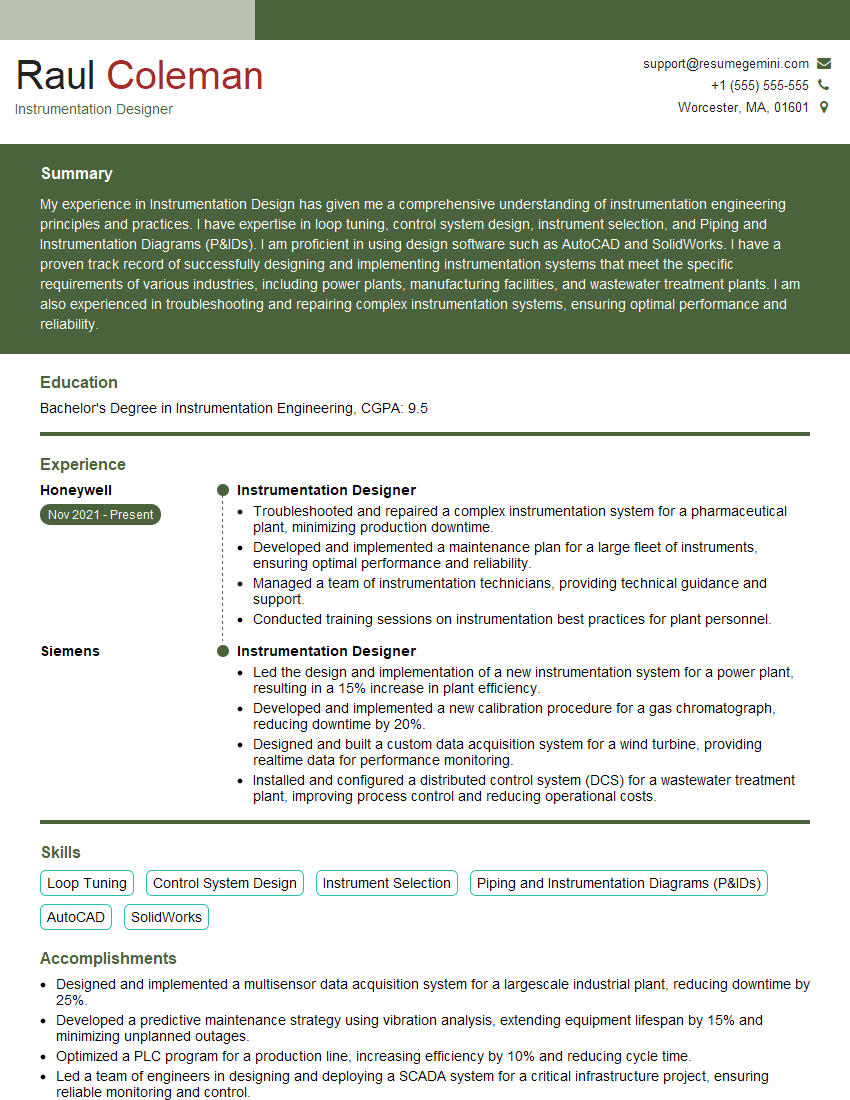
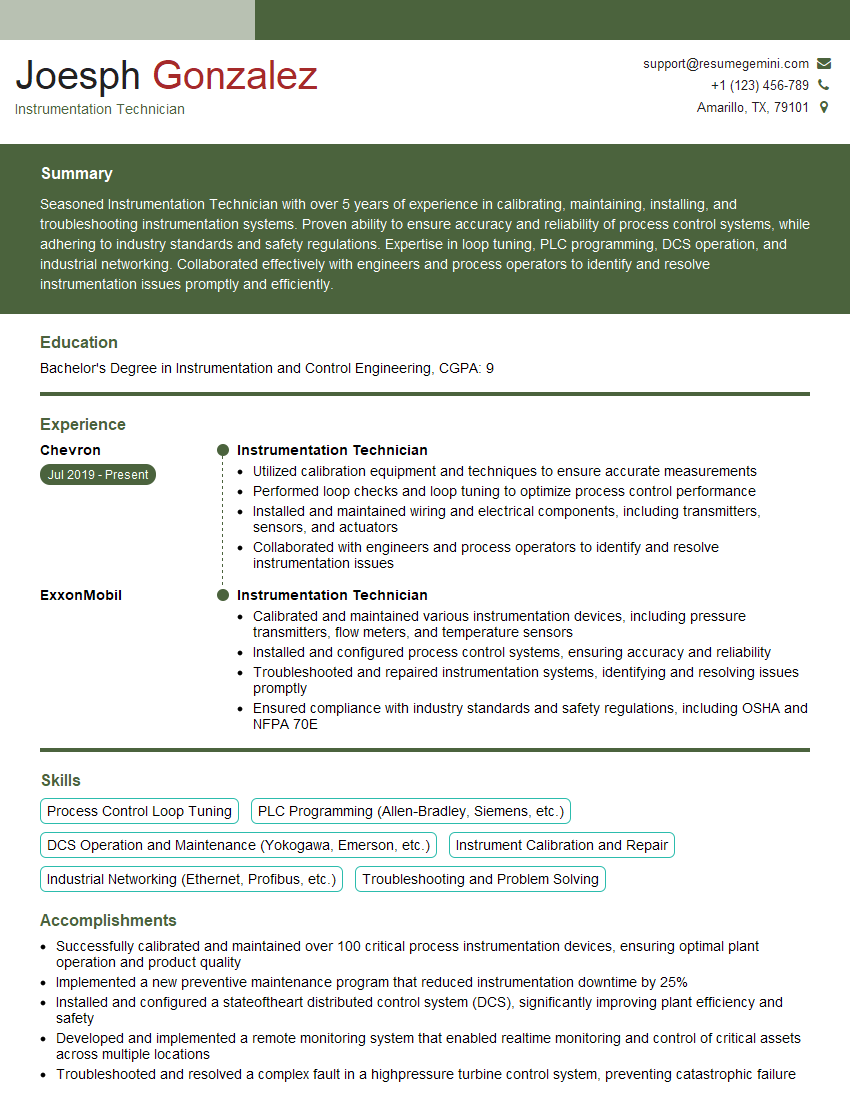
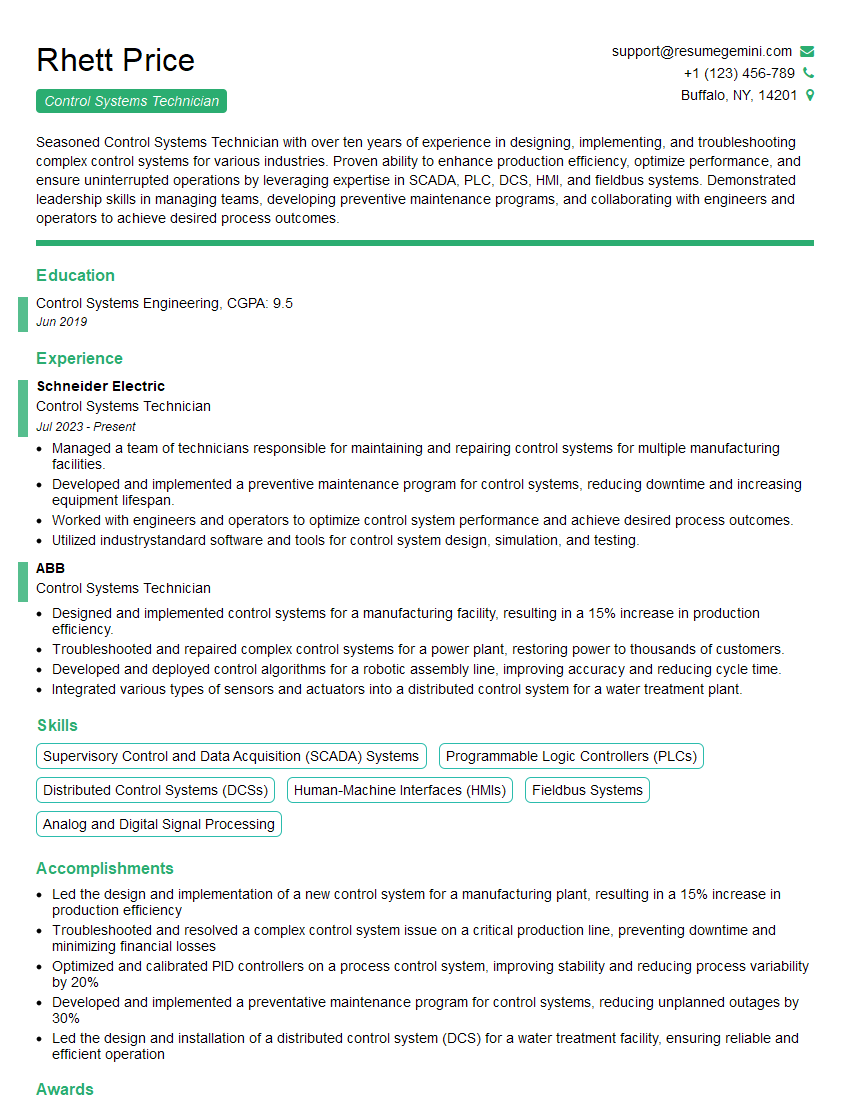
Mastering Pipeline Instrumentation opens doors to exciting career opportunities in the energy sector, offering growth potential and competitive salaries. To maximize your job prospects, crafting a strong, ATS-friendly resume is crucial. ResumeGemini is a trusted resource to help you build a professional and impactful resume that highlights your skills and experience effectively. Examples of resumes tailored to the Pipeline Instrumentation field are available to help guide you. Take the next step and build a resume that truly showcases your capabilities.
Explore more articles
Users Rating of Our Blogs
Share Your Experience
We value your feedback! Please rate our content and share your thoughts (optional).
What Readers Say About Our Blog
To the interviewgemini.com Webmaster.
Very helpful and content specific questions to help prepare me for my interview!
Thank you
To the interviewgemini.com Webmaster.
This was kind of a unique content I found around the specialized skills. Very helpful questions and good detailed answers.
Very Helpful blog, thank you Interviewgemini team.